Bambara groundnut stew is one of West Africa’s most treasured comfort foods. Indeed, this thick, hearty dish is built around an ancient legume that has nourished communities across sub-Saharan Africa for centuries. Specifically, the bambara groundnut recipe below transforms the humble bean into a rich, tomato-based stew with deep savory flavor and impressive plant-based protein. Whether you are new to West African cuisine or seeking an authentic dish to expand your repertoire, this guide covers every step from soaking to serving.
Prep Time: 20 minutes | Cook Time: 60 minutes | Servings: 6
Difficulty: Easy | Calories: ~320 per serving
What Makes Bambara Groundnut Stew Special?
This legume occupies a unique position in African cooking because it combines the starchiness of a bean with the subtle nuttiness of a peanut. Unlike common beans that turn mushy when simmered, these groundnuts hold their shape beautifully in stews. At the same time, they release enough starch to thicken the sauce naturally. Consequently, the result is a creamy, velvety stew punctuated by tender whole pieces that offer a gentle bite. Indeed, no other legume produces quite the same texture.
Across West Africa, dishes featuring this legume appear under many names. In Nigeria, the beans are ground into flour and steamed to make okpa, a beloved street food in the eastern Igbo-speaking regions. In Ghana and Cameroon, cooks simmer them whole in spiced tomato sauces nearly identical to this stew. According to agricultural researchers, the bambara groundnut ranks as Africa’s third most important legume after cowpeas and peanuts. Yet it remains virtually unknown outside the continent. However, that obscurity is changing fast because food scientists and chefs now recognize the crop’s exceptional nutritional profile and drought resistance.
From a nutritional standpoint, these beans deliver remarkable value. For instance, a single cup provides approximately 20 grams of protein, 10 grams of fiber, and significant amounts of iron, potassium, and B vitamins. Furthermore, they contain a balanced ratio of essential amino acids. As a result, they serve as a more complete protein source than many other legumes. For vegans, vegetarians, and anyone reducing meat consumption, this stew offers a deeply satisfying meal that rivals meat-based stews in both flavor and nutritional density.

Choosing the Right Bambara Groundnuts
Selecting high-quality beans is the foundation of a great stew because the groundnuts provide both the protein base and the thickening agent. Therefore, their freshness and condition directly affect the final result. Here are the forms you may encounter when shopping.
- Dried whole bambara groundnuts (best choice): Look for beans with smooth, uncracked shells and a uniform cream or brown color. Fresh dried ones cook evenly and produce the best texture. Also, avoid batches with visible insect holes or a musty smell. Generally, African grocery stores and online specialty retailers carry the most reliable supply.
- Shelled bambara groundnuts: Some vendors sell pre-shelled groundnuts that save you the step of removing the hard outer casing. These work just as well in stews and actually reduce your prep time by about 10 minutes. However, check that the exposed beans look plump and free of discoloration before purchasing.
- Bambara flour: Ground flour is primarily used for making okpa and other steamed dishes. While you could use it as a thickener, it creates a different texture than whole beans simmered in sauce. Instead, reserve the flour for steamed preparations and use whole groundnuts for this stew.
Ingredients for Bambara Groundnut Stew
Main Ingredients:
- 2 cups dried bambara groundnuts, soaked overnight
- 1 large onion, finely diced
- 3 medium tomatoes, blended into a puree
- 2 tablespoons tomato paste
- 3 tablespoons palm oil or vegetable oil
- 4 cups water or vegetable broth
Aromatics and Seasonings:
- 2 cloves garlic, minced
- 1 inch fresh ginger, grated
- 1 habanero pepper, whole (adjust to taste)
- 1 teaspoon salt
- 1/2 teaspoon ground crayfish (optional)
- 1 seasoning cube (Maggi or Knorr), crushed
- 1/2 teaspoon ground black pepper
For Garnish:
- Fresh spinach leaves or bitter leaf
- Chopped fresh parsley or cilantro
Pro tip: Soaking overnight is not optional. Unlike lentils or split peas, these beans are extremely hard when dried. Consequently, they will not soften properly without thorough soaking. So a minimum of 8 hours in room temperature water cuts cooking time in half and ensures even tenderness.
Step-by-Step Instructions
Step 1: Soak the Bambara Groundnuts
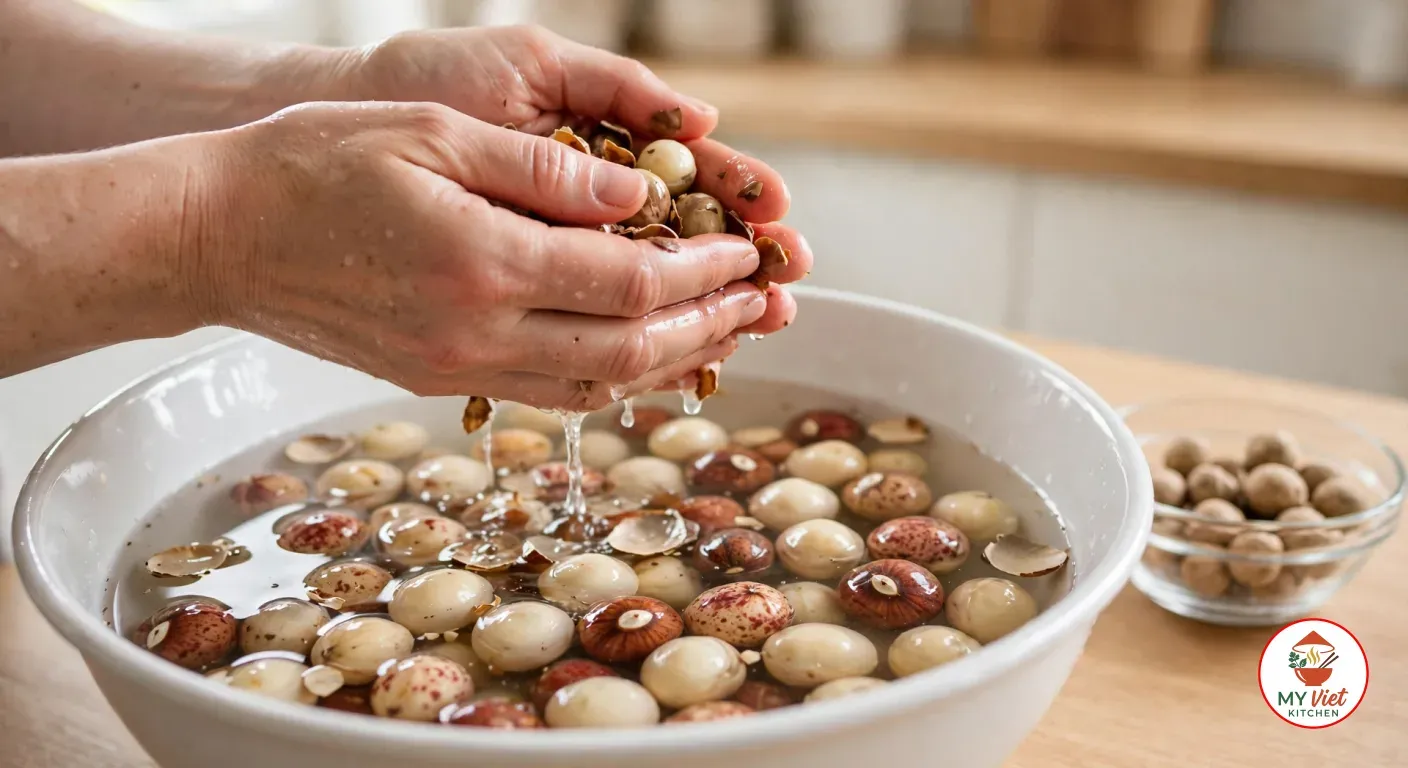
1Rinse the dried beans under cold running water to remove any dust or debris. Place them in a large bowl and cover with at least 4 inches of water. The groundnuts expand significantly as they hydrate, so use a big bowl. Then, allow them to soak for a minimum of 8 hours or overnight at room temperature. After soaking, you will notice they have nearly doubled in size. Additionally, the shells will have softened considerably. Next, drain the soaking water and rinse once more before cooking. If any shells remain tough, simply rub the beans between your palms to loosen them.
Step 2: Boil Until Tender
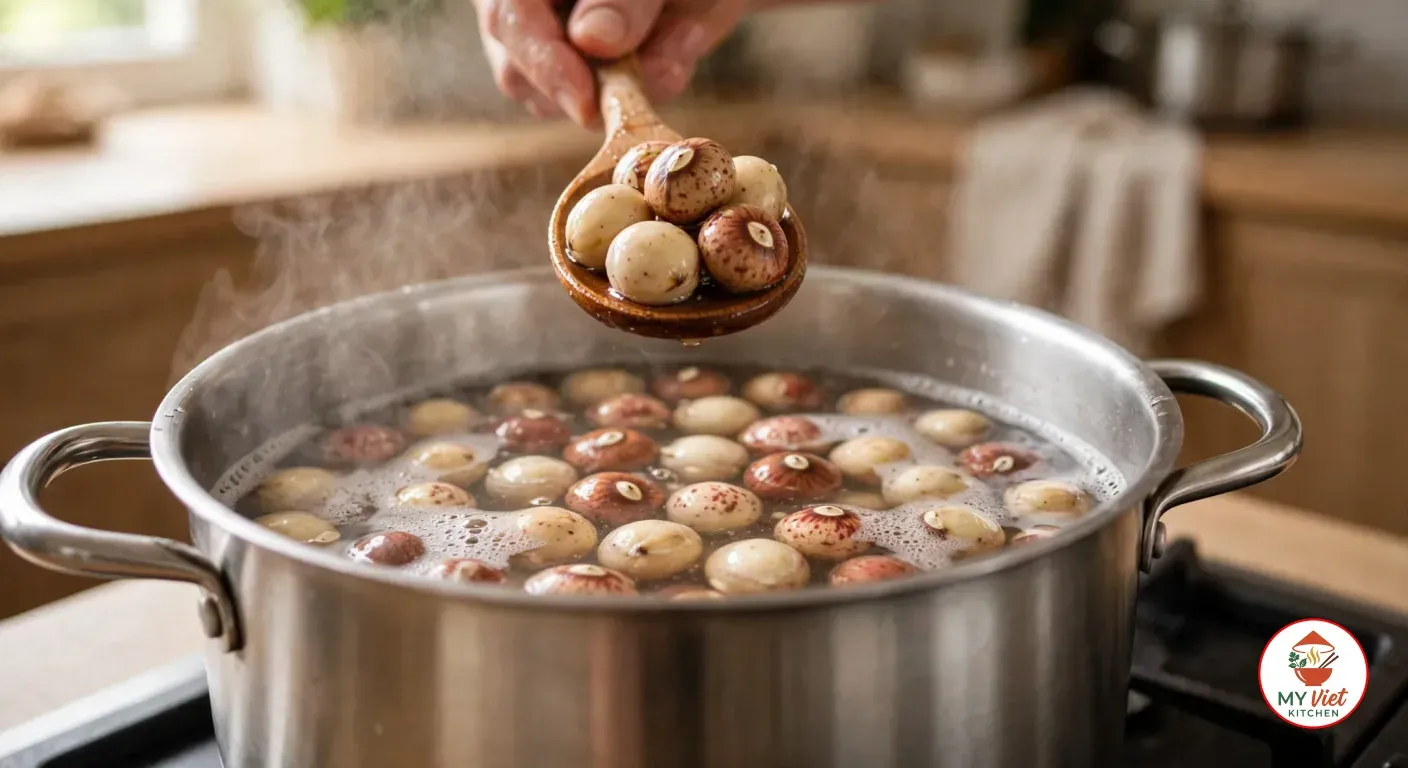
2Transfer the drained beans to a large pot and cover with fresh water. First, bring to a rolling boil over high heat, then reduce to a steady simmer. Cook for 40 to 50 minutes. Check tenderness at the 35-minute mark by pressing one between your thumb and forefinger. It should yield easily but still hold its round shape. Alternatively, if using a pressure cooker, reduce the time to about 20 minutes after reaching full pressure. Finally, drain the cooked groundnuts and set them aside.
Step 3: Prepare the Stew Base
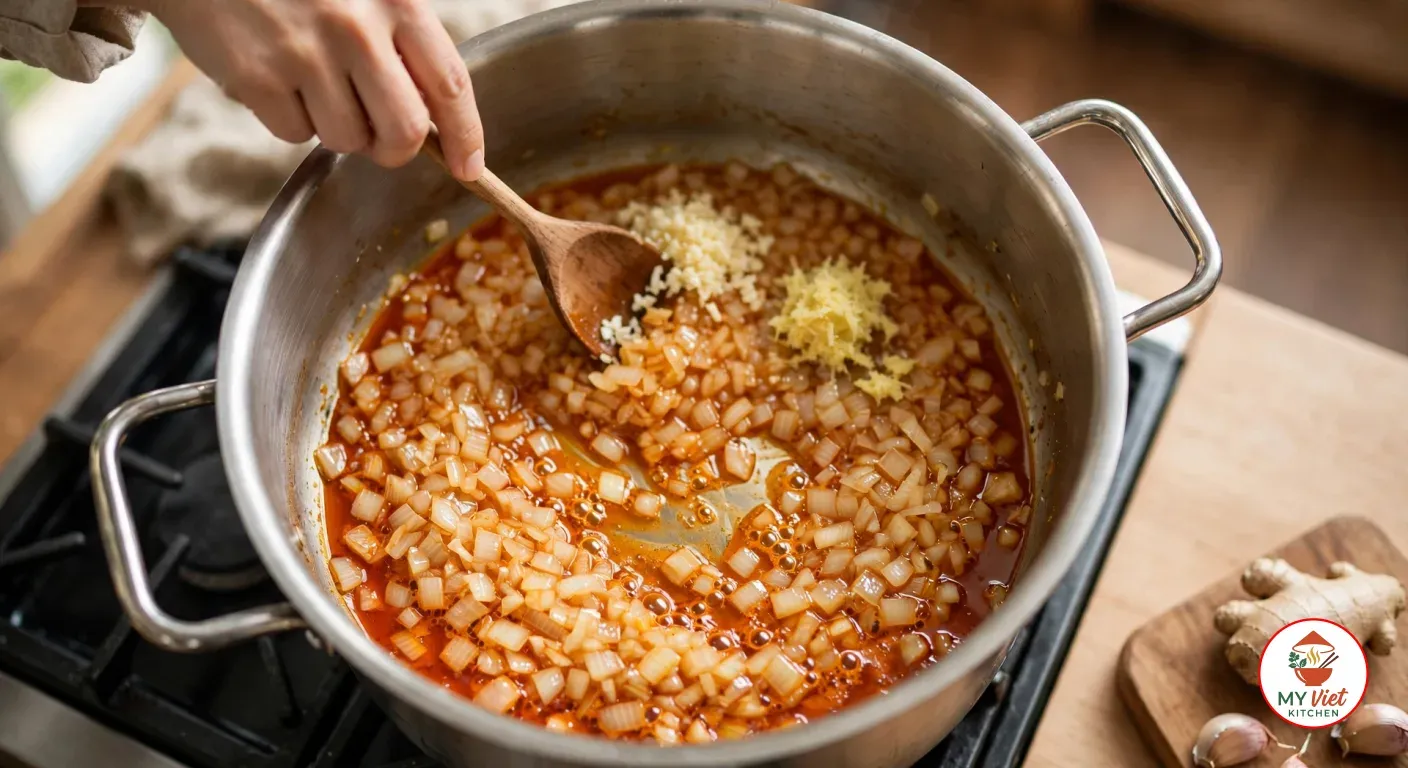
3Heat the palm oil in a heavy-bottomed pot or Dutch oven over medium heat. Palm oil is traditional for this dish. It adds a distinctive earthy, slightly sweet flavor that vegetable oil cannot replicate. Once the oil shimmers, add the diced onion. Then cook for 5 minutes, stirring occasionally, until the pieces turn soft and translucent. Next, add the minced garlic and grated ginger. Stir continuously for about 1 minute until fragrant. Essentially, this aromatic base forms the flavor foundation of the entire stew, so take care not to rush or burn these ingredients.
Step 4: Build the Tomato Sauce
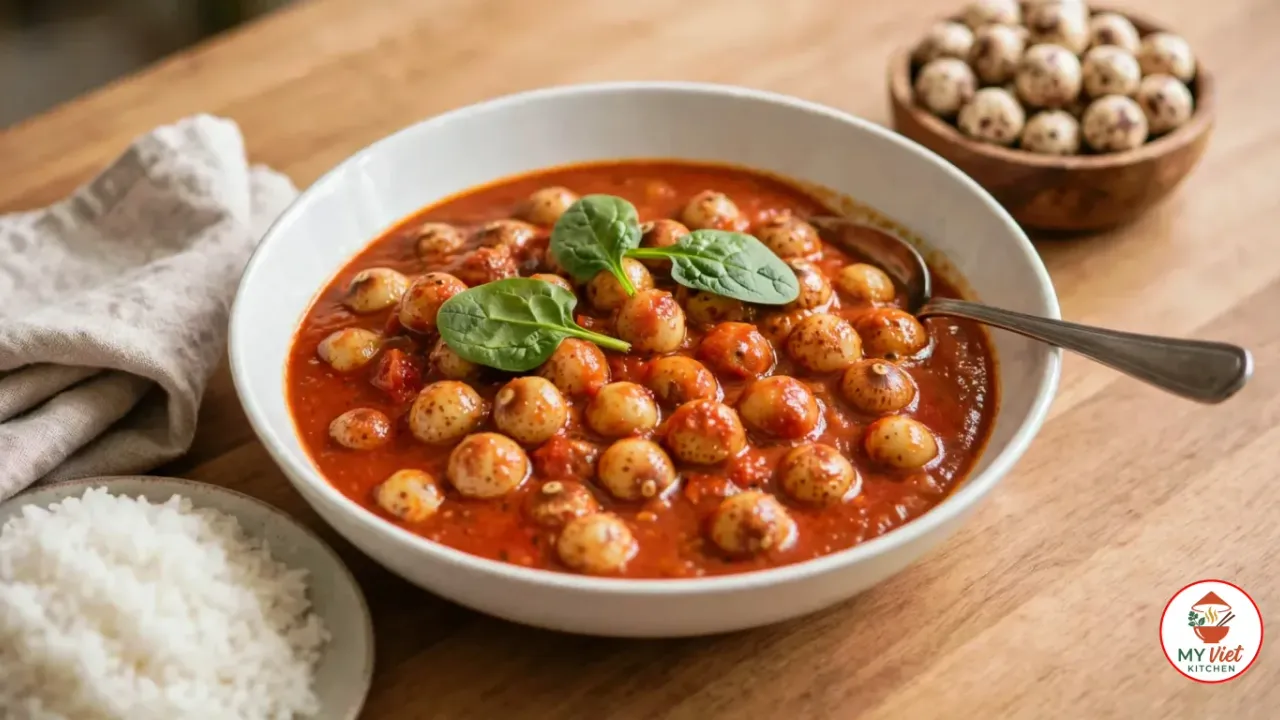
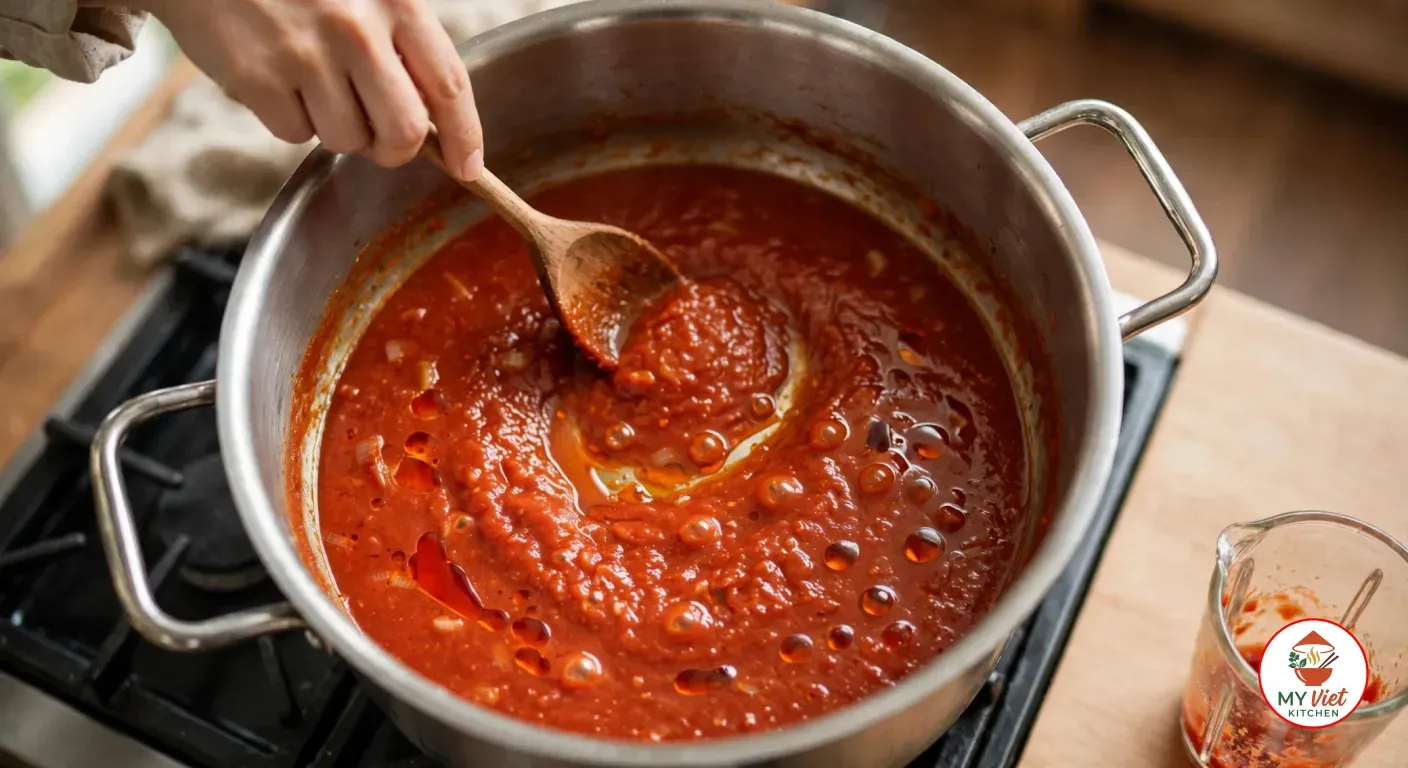
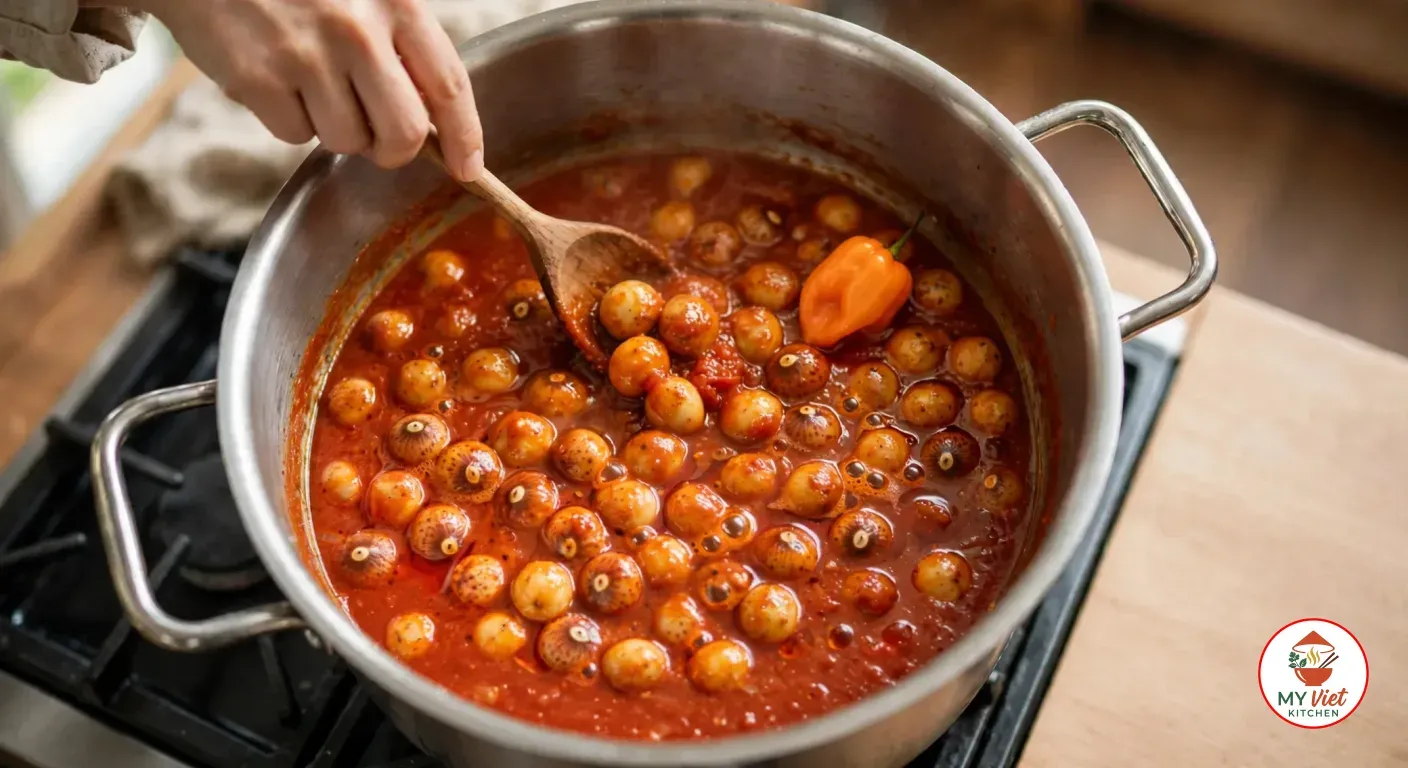
4Pour the blended tomatoes into the pot along with the tomato paste. Stir everything together and cook over medium heat for 10 to 15 minutes. During this time, the raw acidity cooks off. Meanwhile, the sauce concentrates into a rich, thick base. You will know it is ready when oil begins to float on the surface in small pools. Also, the color deepens from bright red to a darker, richer hue. Stir every 2 to 3 minutes to prevent sticking. Most importantly, this step is crucial because undercooked tomato sauce gives the stew a sharp, acidic taste.
Step 5: Simmer the Stew
5Add the cooked groundnuts to the tomato sauce and stir gently. Coat every piece with the rich sauce. Then drop in the whole habanero, ground crayfish, crushed seasoning cube, salt, and black pepper. Pour in the water or vegetable broth and bring to a boil. Afterwards, reduce the heat to low. Let the stew simmer uncovered for 20 to 25 minutes. As it simmers, the beans release starch that thickens the sauce into a velvety consistency. Stir gently every 5 minutes to prevent sticking. Finally, taste at the 15-minute mark and adjust the salt and pepper. Also, remove the habanero before serving unless you want extra heat.
Step 6: Serve the Bambara Groundnut Stew
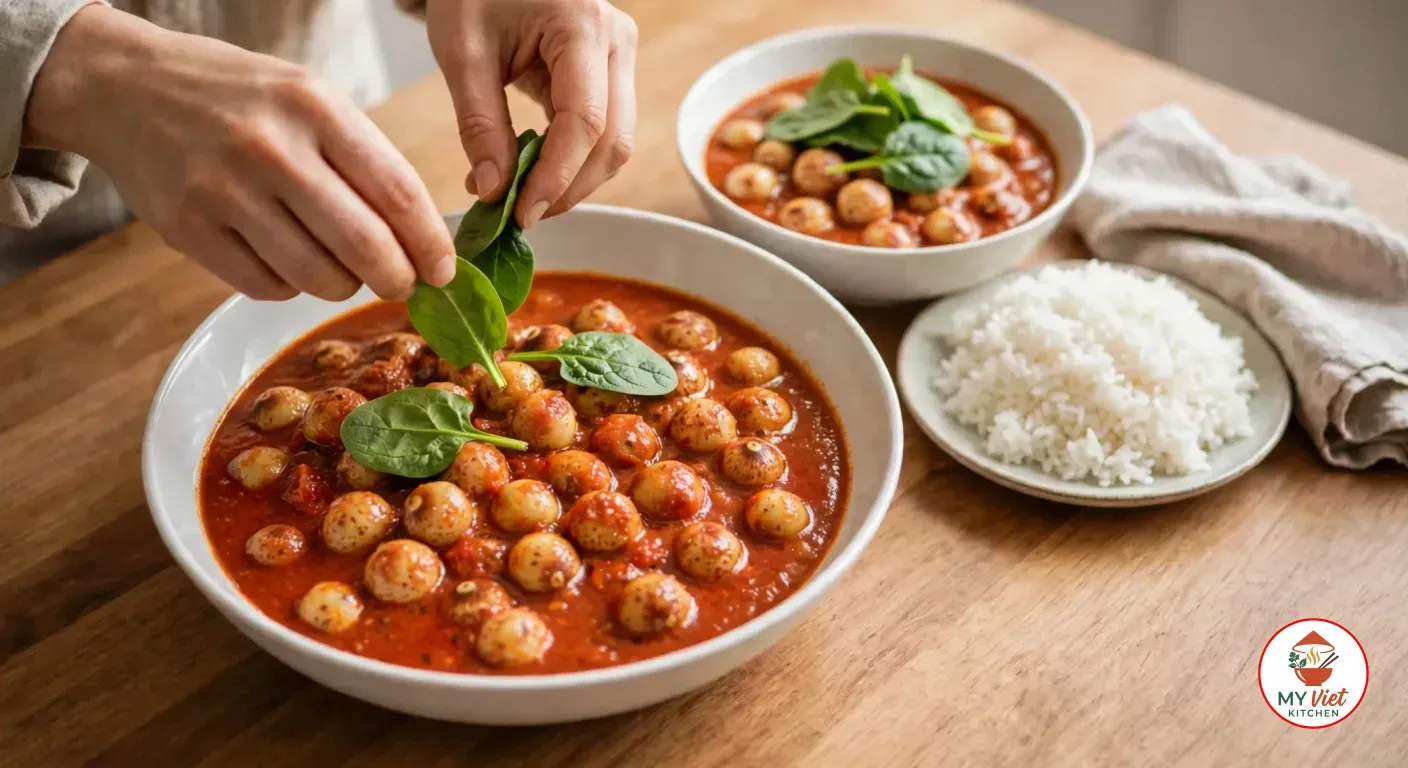
6Ladle the finished stew into deep bowls. Then garnish with fresh spinach leaves, bitter leaf, or chopped parsley. The bright green adds visual contrast to the rich, reddish-brown sauce. Serve hot alongside your preferred starch. In particular, this stew pairs traditionally with steamed white rice, pounded yam, garri, or fufu. Additionally, crusty bread works beautifully for soaking up the thick sauce. Present it family-style in the center of the table.
Expert Tips for Perfect Bambara Groundnut Stew
Soak Longer for Better Texture
While 8 hours is the minimum soaking time, a 12 to 16 hour soak produces even better results. As a result, the extended time softens the dense interior more evenly. Subsequently, the beans cook faster and develop a creamier texture. If you plan ahead, start soaking the morning before you intend to cook. Ultimately, this simple planning step saves time at the stove and guarantees tender results.
Cook the Tomato Sauce Thoroughly
Rushing the tomato sauce is the most common mistake in West African stews. Raw sauce introduces a sharp acidity that clashes with the mild, nutty flavor of the groundnuts. Take the full 10 to 15 minutes to cook it down. Instead, wait until the oil separates and rises to the surface. This visual cue tells you the water has evaporated and the natural sugars have begun to caramelize. Consequently, the result is a deep, sweet base rather than a harsh, sour one.
Use Palm Oil for Authentic Flavor
Palm oil gives this stew its characteristic golden-red color and a subtle earthy sweetness. Vegetable oil simply cannot match that depth. If you are new to palm oil, start with just 2 tablespoons. Then gradually increase the amount in future batches as you develop a taste for it. Alternatively, for a lighter stew, substitute with peanut oil. It adds a complementary nutty flavor without the intense color. However, avoid olive oil and coconut oil because their distinct flavors compete with the beans.
Bambara Groundnut Dishes Across West Africa
This legume appears in dozens of traditional dishes across the continent. Each country prepares it differently, reflecting local tastes and available ingredients. Here is how the most popular preparations compare across the region.
| Dish | Country | Preparation Method | Serving Style |
|---|---|---|---|
| Bambara Groundnut Stew | Ghana, Nigeria | Whole groundnuts simmered in tomato sauce | With rice, fufu, or yam |
| Okpa | Nigeria (Igbo) | Ground into flour, steamed in banana leaves | As a snack or breakfast |
| Bambara Porridge | Cameroon, Chad | Boiled and mashed into thick porridge | With vegetable sauce |
| Roasted Bambara | Mali, Burkina Faso | Dry-roasted in sand or pan | As a crunchy snack |
| Bambara Milk | Various | Soaked, blended, and strained | As a plant-based beverage |
Serving Suggestions
This stew is a substantial main course that pairs naturally with starchy accompaniments common throughout West Africa. In fact, the thick, protein-rich sauce clings to starches and creates a balanced meal. Here are the most traditional ways to enjoy it.
The Perfect Accompaniments:
- Steamed white rice: The neutral flavor of steamed rice lets the stew take center stage. Rice absorbs the thick sauce beautifully and stretches the meal to feed more people.
- Pounded yam: This smooth, stretchy staple from Nigeria and Ghana is the classic pairing. Pull off small pieces and scoop the stew directly for a satisfying combination of textures.
- Fufu: Whether made from cassava, plantain, or a combination, fufu is the quintessential West African accompaniment. Its mild flavor and smooth consistency complement the robust sauce perfectly.
- Crusty bread: Thick slices of crusty bread work wonderfully for dipping. This approach is popular in urban areas across West Africa where bread is widely available.
Beverage Pairings:
- Zobo (hibiscus tea): The tart, cranberry-like flavor of chilled zobo cuts through the richness of the stew. It refreshes the palate between bites. Its deep red color also makes a striking visual complement.
- Ginger beer: A homemade or artisan ginger beer adds a spicy kick that amplifies the ginger notes already present in the stew. The carbonation also helps lighten the overall eating experience.
- Palm wine: For an authentic West African experience, try palm wine. Its mildly sweet, slightly effervescent character complements the earthy tones of the stew and the palm oil base.
Storage and Reheating
Refrigerator: Store leftovers in an airtight container for up to 4 days. The stew actually improves overnight as the flavors meld and deepen. In fact, leftovers often taste even better than the fresh batch. Just allow the stew to cool completely before refrigerating.
Freezer: Freeze portions of the stew in freezer-safe containers for up to 3 months. Also, leave about an inch of headspace because the liquid expands as it freezes. For meal prep convenience, freeze individual servings that you can thaw and reheat one at a time.
Reheating: Warm the stew gently on the stovetop over medium-low heat. Stir occasionally and add a splash of water if the sauce has thickened too much. Generally, stovetop reheating takes about 10 minutes and preserves the best texture. Alternatively, you can microwave portions for 2 to 3 minutes, stirring halfway through.
Common Mistakes to Avoid
1. Skipping the Overnight Soak
These beans are exceptionally dense when dried, far denser than common beans or chickpeas. Consequently, cooking them without a thorough soak produces hard, chalky centers even after hours of boiling. However, the overnight soak hydrates the starches inside, which allows heat to penetrate evenly. So always plan ahead and give them the full 8 to 12 hours of soaking time.
2. Rushing the Tomato Sauce
Adding the beans to an undercooked tomato base produces an acidic taste. That sharpness masks the natural sweetness of the groundnuts. Therefore, the sauce needs sufficient time over heat. The water in the tomatoes must evaporate and the sugars must concentrate. So watch for oil separating and floating on the surface. Ultimately, this patience transforms a simple tomato sauce into a complex, deeply flavored foundation.
3. Overcooking the Groundnuts
While undercooked beans are unpleasant, overcooking creates a different problem. Specifically, beans boiled too long disintegrate in the stew. As a consequence, they turn the sauce into a thick, pasty mass with no distinct pieces. Instead, check at the 35-minute mark during the initial boil. Remove them from heat as soon as they are tender. After all, they will continue to soften slightly during the simmering stage.
Frequently Asked Questions
What is a bambara groundnut?
The bambara groundnut is a legume native to West Africa that grows underground, similar to a peanut. Scientifically known as Vigna subterranea, it has been cultivated across sub-Saharan Africa for thousands of years. Notably, it has a hard outer shell, a round shape, and a creamy interior that softens beautifully when cooked. In terms of flavor, it sits between a chickpea and a peanut, offering a mild nuttiness with a starchy, satisfying texture.
Are bambara groundnuts the same as peanuts?
No, they are completely different species despite both growing underground. Peanuts belong to Arachis hypogaea and are oily with a rich, fatty flavor. Bambara groundnuts belong to Vigna subterranea. Instead, they are starchier and less oily, behaving more like a bean during cooking. You cannot substitute one for the other because they cook differently and deliver different textures. In short, think of bambara beans as a bean-nut hybrid rather than a true nut.
Where can I buy bambara groundnuts?
African grocery stores are the most reliable source in North America and Europe. Look for them labeled as bambara beans, Jugo beans, or nyimo beans depending on the region. Additionally, online retailers specializing in African ingredients also stock them regularly. In the United States, cities with large West African communities like Houston, New York, and Atlanta have stores that carry them year-round.
Can I use a pressure cooker for bambara groundnuts?
A pressure cooker works exceptionally well and reduces cooking time dramatically. After soaking overnight, cook on high for about 20 minutes with a natural pressure release. This method produces tender beans in roughly half the time of stovetop boiling. An Instant Pot gives you the added convenience of a timer. It prevents the accidental overcooking that sometimes happens on the stovetop.
Variations and Adaptations
Bambara Groundnut Stew with Smoked Fish:
Add a handful of smoked catfish or stockfish during the simmering stage. The smoked fish dissolves partially into the sauce. As a result, it creates a rich umami backbone that transforms the stew into something remarkably complex. Notably, this variation is popular in coastal areas of Nigeria and Ghana where smoked fish is a kitchen staple.
Spicy Bambara Groundnut Curry:
For a fusion twist, add 1 tablespoon of curry powder and a can of coconut milk during the simmering stage. The curry spices complement the nutty flavor beautifully. Meanwhile, the coconut milk creates an even creamier sauce. Overall, this adaptation bridges West African and South Asian flavors and appeals to anyone who enjoys aromatic, spice-forward dishes.
Roasted Bambara Groundnut Snack:
For a completely different preparation, spread soaked and drained beans on a baking sheet. Toss with a drizzle of oil, salt, and spices such as paprika or cayenne. Roast at 375 degrees Fahrenheit for 30 to 35 minutes. Shake the pan halfway through until they are crunchy and golden. Essentially, these roasted beans make an addictive snack that showcases the natural nuttiness of the bambara bean in its simplest form.
The Cultural Significance of Bambara Groundnuts
These legumes carry profound cultural and agricultural importance across sub-Saharan Africa. Archaeological evidence suggests West African communities have cultivated this crop for over 5,000 years. That makes it one of the oldest domesticated plants on the continent. In particular, it serves as a critical food security crop in many rural communities. The plants grow well in poor, sandy soils where other legumes fail. Furthermore, farmers rely on them as a drought-resistant staple that produces harvests even when rainfall is scarce.
Beyond agricultural resilience, these beans hold symbolic meaning in several West African cultures. In parts of Ghana and Burkina Faso, they appear at festivals as a symbol of humility and sustenance. In Nigeria, the flour forms the basis of okpa, a beloved street food in Enugu and other Igbo cities. Okpa carries strong regional identity. For many Nigerians, the taste of bambara groundnut evokes childhood memories and a connection to ancestral foodways that transcends simple nutrition.
In recent years, food scientists have begun calling it a “climate-smart” crop. Specifically, it fixes nitrogen in the soil, tolerates drought, and provides complete nutrition in a single food. As the world searches for sustainable protein sources, this ancient West African legume is finally receiving global attention. Truly, every pot of bambara groundnut stew simmering on a stove celebrates West African culinary heritage and represents a step toward a more sustainable food future.
Conclusion
This bambara groundnut stew rewards patience with extraordinary flavor. From the overnight soak to the slow simmer, every step builds layers of taste and texture. In particular, the naturally creamy consistency, the rich tomato base, and the aromatic punch of garlic, ginger, and habanero combine beautifully. Ultimately, the result is a stew that feels both nourishing and deeply satisfying. By following the techniques in this recipe, you can bring an authentic piece of West African tradition into your own kitchen.
If you enjoyed this recipe, explore more of our African food collection for dishes from across the continent. Try our akara recipe for crispy Nigerian bean fritters, or discover alloco for the golden fried plantains that are beloved throughout West Africa.