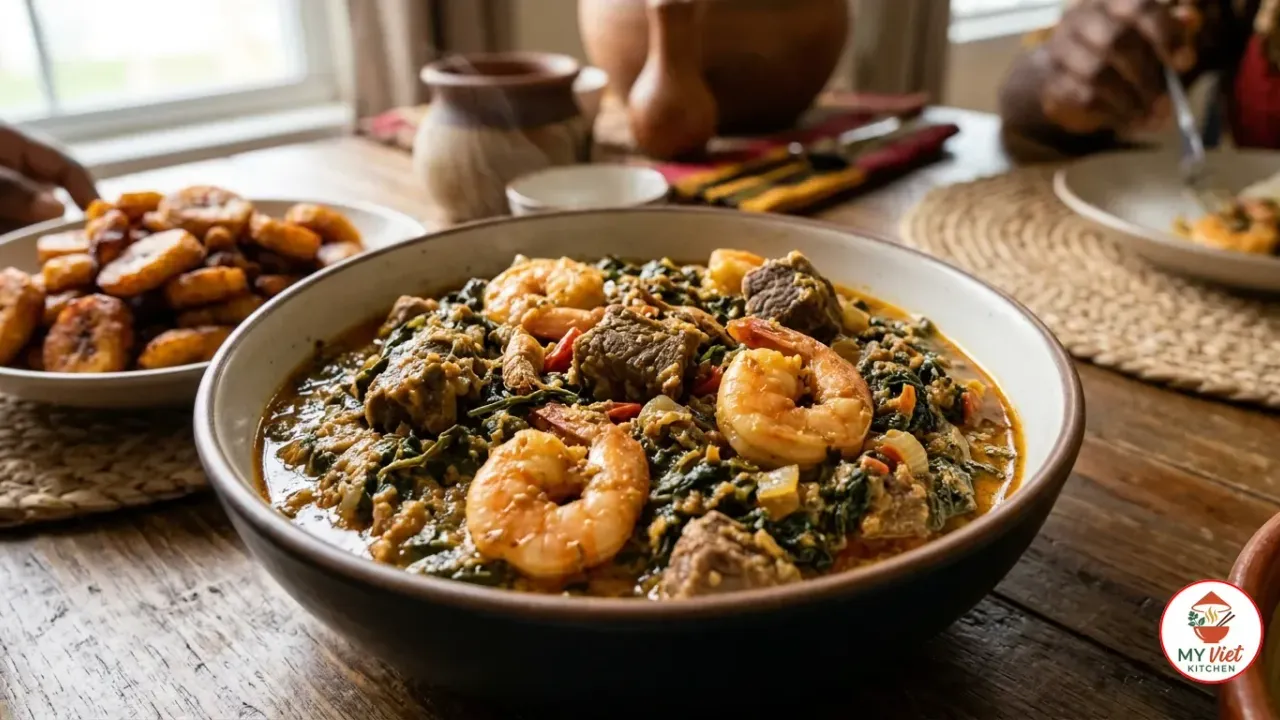
Ndole is the national dish of Cameroon and one of Central Africa’s most celebrated stews. This hearty recipe brings together bitter leaf greens, ground peanuts, crayfish, tender beef, and plump shrimp in a sauce so rich and layered that it captures the essence of Cameroonian home cooking. Also known as ndole in the Douala language, this dish appears at weddings, holidays, and family gatherings across the country. This recipe walks you through every step of making authentic ndole at home in about 90 minutes.
Prep Time: 30 minutes | Cook Time: 60 minutes | Servings: 6
Difficulty: Medium | Calories: ~520 per serving
What Makes Ndole Special?
Ndole stands apart from other African stews because it combines bitter greens with a nutty peanut base and ocean-fresh crayfish in a single pot. While many West African stews rely on tomato as the foundation, ndole builds its flavor from the interplay between the mild bitterness of the leaves and the deep, savory richness of ground peanuts and dried crayfish. As a result, every spoonful delivers a complex taste that no other African dish quite matches.
The dish traces its origins to the Douala people of coastal Cameroon. For generations, families have gathered around large pots of ndole during celebrations, naming ceremonies, and important community events. According to Cameroonian culinary tradition, serving ndole signals warmth and respect toward guests. The combination of land-based ingredients like peanuts and beef with seafood like shrimp and crayfish reflects the diversity of Cameroon’s landscape, from its lush inland farms to its Atlantic coastline.
Beyond its cultural weight, ndole earns admiration for its nutritional balance. Bitter leaves provide iron, fiber, and vitamins A and C. Peanuts contribute healthy fats and protein. The shrimp and beef offer additional protein. Furthermore, the dish is naturally gluten-free when served with plantains or yams. In short, ndole is a powerhouse meal that nourishes as deeply as it satisfies.

Choosing the Right Bitter Leaves
The bitter leaves you choose directly shape the flavor and texture of your ndole. Not all options work the same way, so here are the best choices for making this stew at home.
- Frozen bitter leaves (best choice): Available at African grocery stores, frozen bitter leaves save you significant prep time. They come already washed and blanched, so you only need to thaw and rinse them a few times before cooking. The texture holds up well in the stew.
- Fresh bitter leaves: If you can find fresh bitter leaves, they deliver the most authentic flavor and a firmer texture. However, fresh leaves require extensive washing to remove excess bitterness. Plan to wash and squeeze them at least five to eight times before they are ready for the pot.
- Dried bitter leaves: Dried leaves store well and are easy to ship. Soak them overnight in cold water, then boil for 20 minutes before washing repeatedly. They rehydrate well and work perfectly fine in ndole, though they produce a slightly different texture than fresh leaves.
Ingredients for Ndole
Main Ingredients:
- 1 pound bitter leaves (fresh or frozen, pre-washed)
- 1 cup raw peanuts, roasted and ground into a paste
- 1 pound beef stew meat, cut into bite-sized pieces
- 1 pound large shrimp, peeled and deveined
- 3 tablespoons ground crayfish
For the Aromatics:
- 1 large onion, finely chopped
- 4 cloves garlic, minced
- 1 tablespoon fresh ginger, grated
- 1 Scotch bonnet pepper, minced
- 2 Maggi seasoning cubes or bouillon cubes
- Salt to taste
For Cooking and Serving:
- 3 tablespoons palm oil or vegetable oil
- 4 cups beef broth or water
- Fried ripe plantains for serving
- Boiled yams or steamed rice (optional sides)
Pro tip: Ground crayfish is the secret weapon in ndole. It delivers a deep, savory umami that ties the peanut sauce and bitter leaves together. You can find it at African grocery stores or online. Do not skip it, as no other ingredient replicates its unique smoky, briny flavor.
Step-by-Step Instructions
Step 1: Prepare the Bitter Leaves
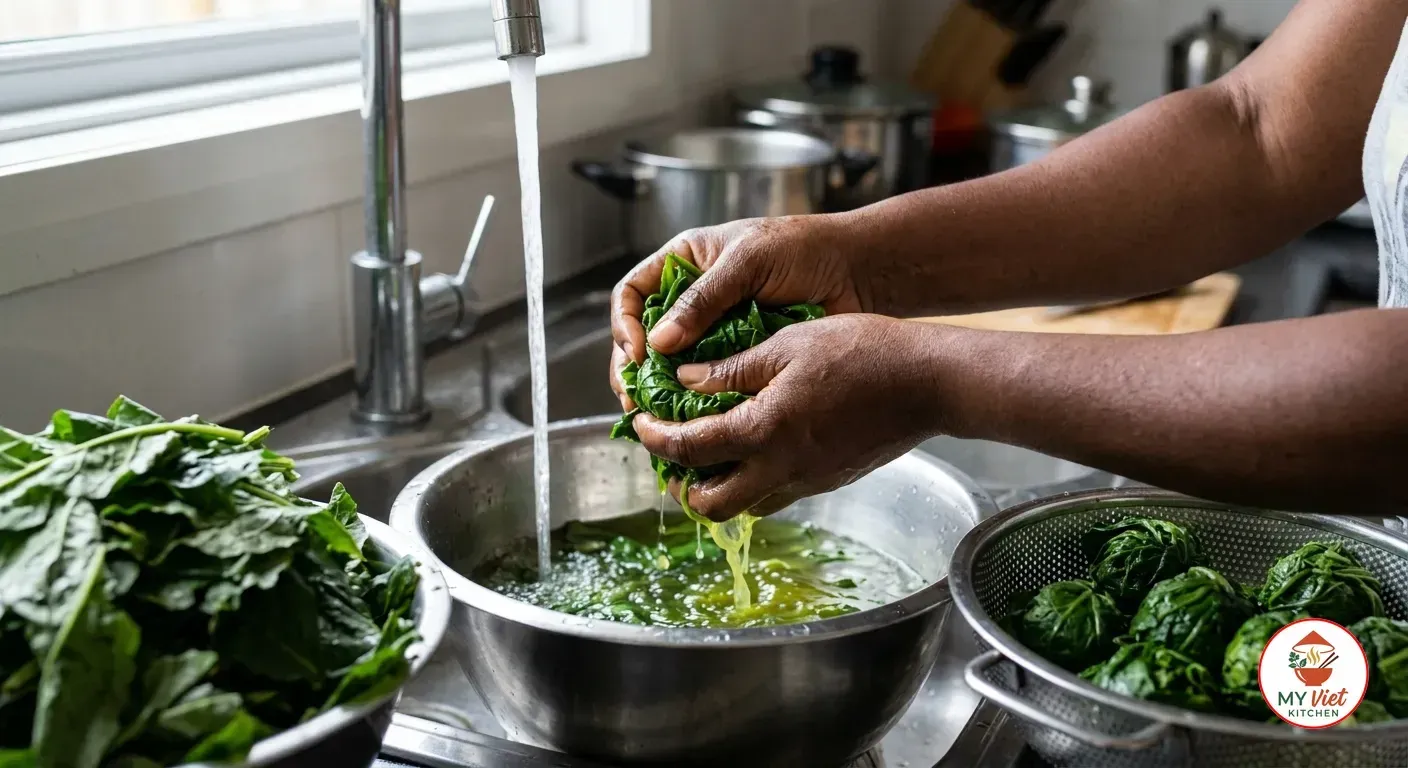
1 Start by washing the bitter leaves thoroughly. If using frozen leaves, thaw them first and then rinse in three changes of cold water, squeezing firmly each time. For fresh leaves, tear them into small pieces and wash in at least five to eight changes of water. Squeeze the leaves between your palms after each rinse to release the bitter juices.
Ultimately, the goal is to remove most of the sharp bitterness while keeping a pleasant, mild earthy undertone. Taste a small piece after washing. It should taste only slightly bitter, similar to kale or broccoli rabe. If it still tastes very harsh, wash one or two more times. Once ready, drain the leaves well and set them aside in a colander.
Step 2: Cook the Beef and Build the Base
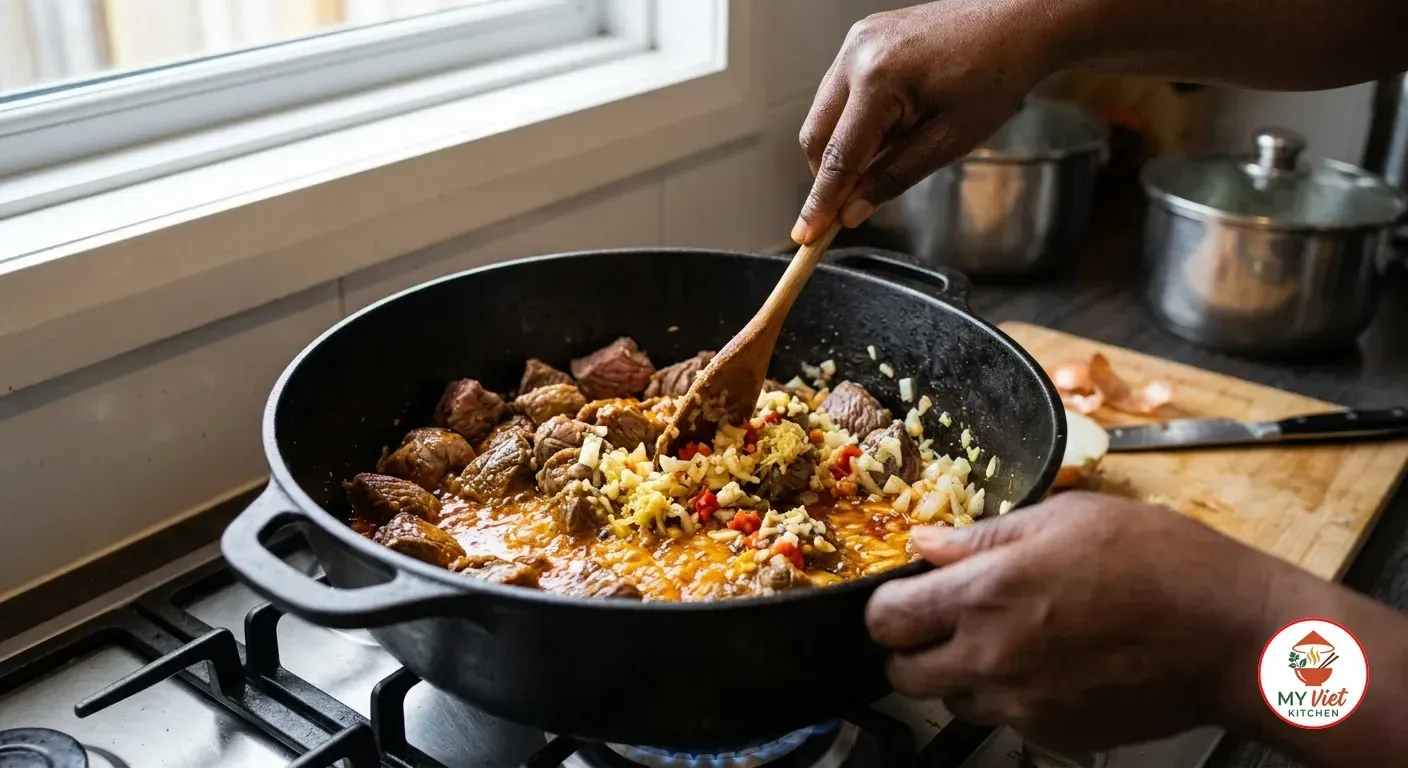
2 Season the beef pieces with salt and one crushed Maggi cube. Heat 3 tablespoons of palm oil in a large, heavy-bottomed pot over medium-high heat. When the oil is hot, add the beef in a single layer and brown on all sides for about 8 minutes total. Additionally, the deep orange color of the palm oil adds a distinctive hue to the meat.
Next, add the chopped onion, minced garlic, grated ginger, and minced Scotch bonnet pepper to the pot. Stir for 5 minutes until the onion softens and the aromatics become fragrant. Then pour in the beef broth and stir to deglaze the bottom of the pot. Cover the pot and reduce the heat to medium-low. Let the beef simmer for 30 minutes until it turns fork-tender. This slow cooking also builds a flavorful broth that forms the liquid base of the ndole sauce.
Step 3: Make the Peanut and Crayfish Paste
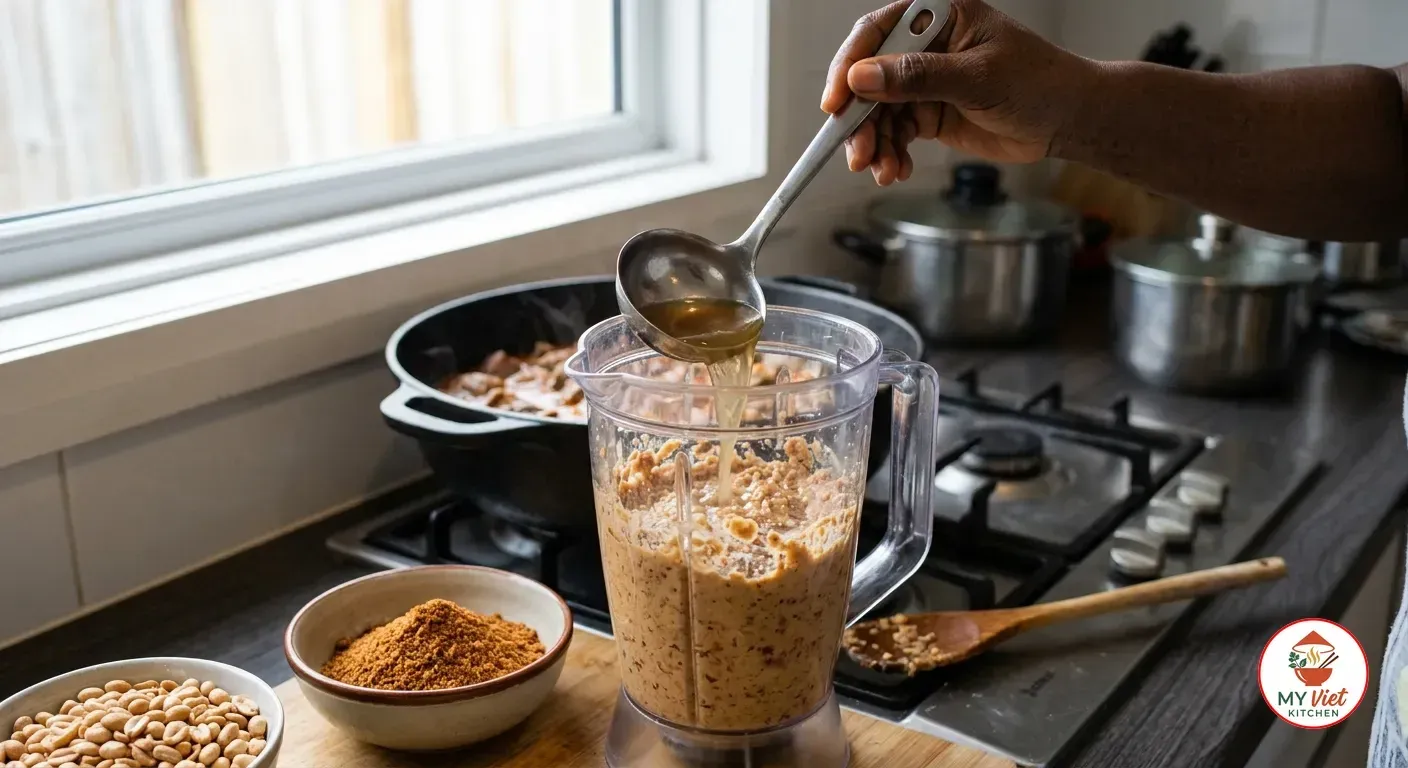
3 While the beef simmers, prepare the peanut paste. Take the roasted ground peanuts and place them in a blender or food processor. Add one cup of warm broth scooped from the simmering pot. Blend until you get a smooth, creamy paste with no lumps remaining.
Then stir the ground crayfish into the peanut paste. The crayfish dissolves slightly and adds an intense savory depth. This combined paste is what gives ndole its signature rich, nutty flavor. If the paste feels too thick, add another quarter cup of broth to thin it. Set the paste aside until the beef finishes cooking. Indeed, this peanut-crayfish mixture is the soul of the dish.
Step 4: Combine and Simmer the Stew
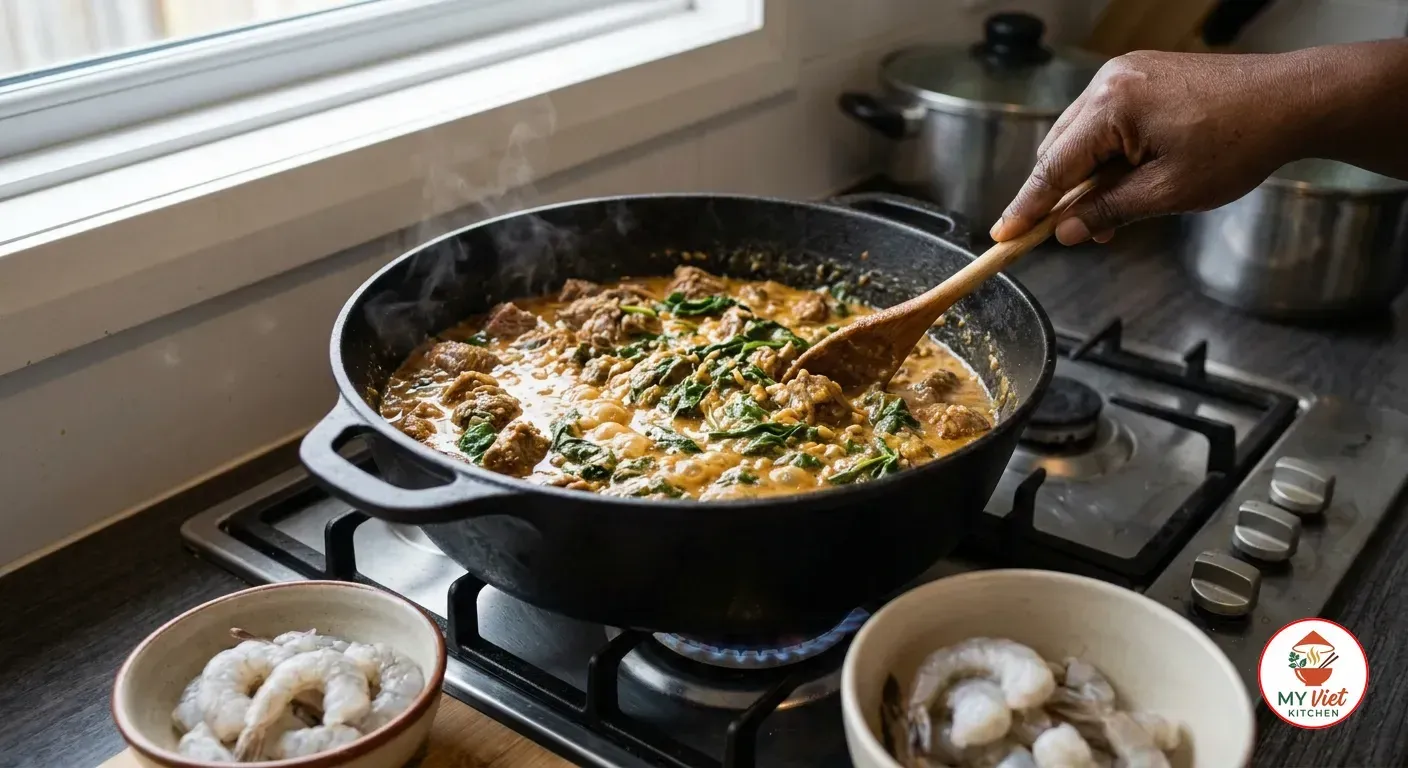
4 Once the beef is tender, add the washed and drained bitter leaves to the pot. Stir them into the broth and let them cook for 5 minutes so they start to wilt and absorb the flavors. Then pour in the peanut and crayfish paste. Stir everything together until the paste dissolves fully into the liquid.
Add the remaining Maggi cube and stir well. Let the stew simmer uncovered over medium-low heat for 15 minutes. Stir every 3 to 4 minutes to prevent the thick peanut sauce from sticking to the bottom. The sauce should reduce and thicken until it coats the leaves and meat beautifully. During the last 5 minutes, add the shrimp. Nestle them into the sauce and cook until they turn pink and curl slightly. Do not overcook the shrimp or they will become rubbery.
Step 5: Serve with Plantains or Boiled Yams
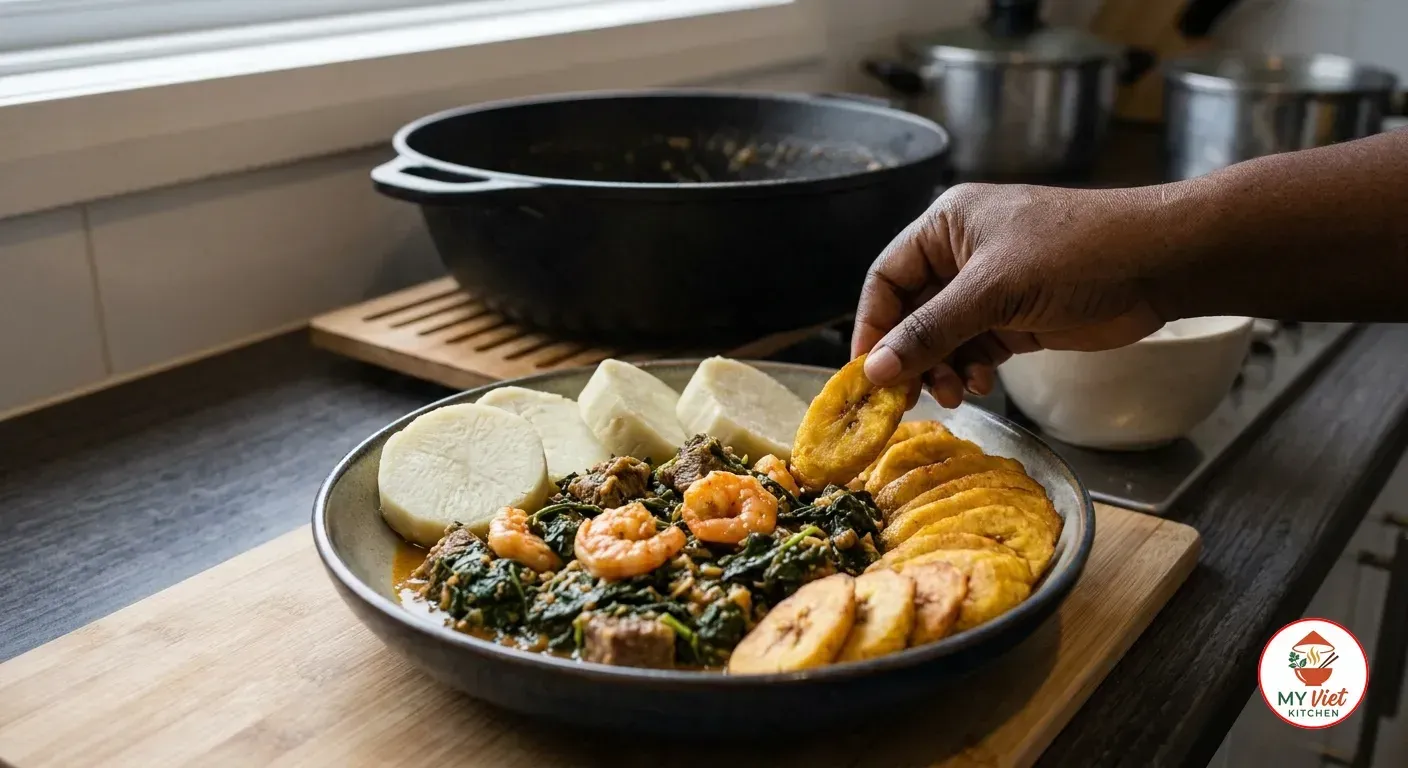
5 Taste the ndole and adjust the salt and seasoning. The sauce should be thick, creamy, and richly savory with a mild bitter undertone from the leaves. Ladle generous portions into deep bowls or onto plates. Make sure each serving includes beef, shrimp, and plenty of the peanut-coated bitter leaves.
Serve hot alongside fried ripe plantains, which add a sweet contrast to the savory stew. Boiled yams or steamed white rice also work well as accompaniments. In Cameroon, ndole often appears on a large shared platter with the plantains arranged around the edges. The combination of the rich, nutty stew and the sweet, caramelized plantains creates one of Africa’s most satisfying meals.
Expert Tips for Perfect Ndole
Wash the Bitter Leaves Thoroughly
Above all, the washing step determines whether your ndole tastes pleasantly complex or unpleasantly harsh. Rushing this process leaves too much bitterness in the leaves. Take your time and wash at least five times for fresh leaves. Frozen leaves need fewer washes since they have already gone through a blanching process. Always taste a small piece before adding the leaves to the pot.
Toast the Peanuts Before Grinding
Roasting the raw peanuts before grinding them deepens their flavor significantly. First, spread them on a baking sheet and toast at 350 degrees Fahrenheit for 10 minutes until golden and fragrant. Let them cool, then grind in a food processor. Toasted peanuts produce a richer, more aromatic paste compared to raw peanuts. This small step makes a noticeable difference in the finished stew.
Add Shrimp at the Very End
Most importantly, shrimp cook very quickly and turn tough when overcooked. So add them only during the last 5 minutes of simmering. They need just enough time to turn pink and absorb some of the peanut sauce flavor. If you add shrimp too early, they shrink and become chewy. Keeping them plump and tender elevates the entire dish.
Ndole Across Cameroon’s Regions
While ndole originated with the Douala people along the coast, different regions of Cameroon have put their own spin on this beloved dish. Here is how the stew changes depending on where you eat it.
| Region | Key Differences |
|---|---|
| Littoral (Douala, original) | Uses fresh shrimp and crayfish prominently. The peanut paste is thick and the sauce clings heavily to the bitter leaves. Often served at weddings and naming ceremonies. |
| Centre (Yaounde) | Sometimes adds smoked fish alongside the shrimp for a deeper, smokier flavor. The stew tends to be slightly thinner in consistency and served with bobolo (fermented cassava sticks). |
| West (Bamileke region) | Cooks in this region often reduce the bitterness more aggressively and add extra peanuts for a creamier, milder sauce. Palm oil use is heavier, giving the stew a deeper orange color. |
| Southwest (Anglophone region) | The Anglophone version frequently includes stockfish along with fresh shrimp. Some cooks add egusi seeds to the peanut paste for extra thickness and a slightly different nutty flavor. |
| Northwest (Bamenda) | This version sometimes substitutes huckleberry leaves for bitter leaves when they are unavailable. The stew is often spicier, with more Scotch bonnet pepper and country onions for extra heat. |
Serving Suggestions
In Cameroon, ndole arrives at the table as a main course for both everyday meals and special celebrations. The rich, thick sauce calls for a starchy companion that soaks up every drop. Here are the best ways to complete the meal.
The Perfect Accompaniments:
- Fried ripe plantains: This is the most traditional pairing for ndole. The natural sweetness of caramelized plantains creates a beautiful contrast with the savory, slightly bitter stew. Slice them on the diagonal and fry in oil until golden brown on each side.
- Boiled yams: White yams boiled until tender and served in thick slices offer a neutral, starchy base that lets the complex ndole flavors shine. The mild sweetness of the yam complements the peanut sauce perfectly.
- Bobolo (fermented cassava sticks): These cylindrical cassava rolls have a slightly sour, chewy texture that contrasts nicely with the creamy ndole sauce. Bobolo is a staple in Douala households and adds an authentic touch to the meal.
- Steamed white rice: While not the most traditional option, fluffy white rice works well for those who want a lighter accompaniment. The plain rice absorbs the rich peanut sauce and makes the meal feel more filling.
Beverage Pairings:
- Palm wine: This traditional Cameroonian drink has a sweet, slightly tangy taste that pairs naturally with the savory peanut flavors of ndole. Fresh palm wine is mildly alcoholic and very refreshing alongside rich stews.
- Ginger beer: The sharp, spicy kick of homemade ginger beer cuts through the richness of the peanut sauce and refreshes the palate between bites. Its natural sweetness also complements the bitter leaf undertones.
- Hibiscus tea (folere): Known as folere in Cameroon, this deep red tea has a tart, cranberry-like flavor. Served cold with sugar, it provides a bright and refreshing contrast to the heavy, savory stew.
Storage and Reheating
Refrigerator: Store leftover ndole in a sealed container for up to 3 days. Keep the stew separate from any plantains or rice to maintain texture. The peanut sauce thickens as it cools, and the flavors meld together even more. Many Cameroonian families agree that ndole tastes even better the next day.
Freezer: Freeze portions of the stew without the shrimp for up to 2 months in airtight containers. The shrimp do not freeze well and turn rubbery when reheated. Instead, add fresh shrimp when you reheat the stew. Thaw frozen ndole overnight in the fridge before warming it on the stove.
Reheating: Warm the stew gently in a covered pot over medium-low heat. Add a splash of water or broth because the thick peanut sauce will have thickened further in the fridge. Stir regularly to prevent sticking. If you froze the stew without shrimp, add fresh shrimp during the last 5 minutes of reheating. The stovetop method gives better results than the microwave for this particular dish.
Common Mistakes to Avoid
1. Skipping the Bitter Leaf Washing
The biggest mistake new cooks make with ndole is not washing the bitter leaves enough. Under-washed leaves produce a harshly bitter stew that overwhelms the peanut and crayfish flavors. Take the extra time to wash and squeeze them properly. If in doubt, taste a small piece before adding the leaves to the pot. The right level of bitterness should be mild and pleasant.
2. Using Raw Peanuts Without Roasting
Raw peanuts produce a bland, starchy paste that lacks the deep nutty flavor ndole demands. Always roast the peanuts first until they turn golden and smell toasty. This step triggers the Maillard reaction in the peanuts and develops complex, caramelized notes. The difference between roasted and raw peanut paste in ndole is significant enough to change the entire dish.
3. Overcooking the Shrimp
Adding shrimp too early causes them to shrink, toughen, and lose their sweet flavor. Shrimp need only 3 to 5 minutes in the hot sauce to cook through. Always add them as the very last protein, right at the end of cooking. Watch for the moment they turn pink and curl into a C shape. That means they are done. Pull the pot off the heat right after to keep them tender.
Frequently Asked Questions
Can I make ndole ahead of time?
Yes, ndole is an excellent make-ahead dish. Cook the stew fully but hold off on adding the shrimp. Let it cool and store it in the fridge. When you are ready to serve, reheat the stew gently on the stove and add fresh shrimp during the last 5 minutes. Then prepare your plantains or rice fresh for the best overall meal.
What can I substitute for bitter leaves?
If you cannot find bitter leaves, spinach or collard greens work as the closest substitutes. Spinach cooks quickly, so add it during the last 10 minutes instead of early in the process. Collard greens hold up better and provide a mild bitterness. However, neither substitute fully replicates the unique earthy flavor of true bitter leaves. Frozen bitter leaves from an online African grocery store remain the best option.
How spicy is ndole?
Traditional ndole has moderate heat from the Scotch bonnet pepper. You control the spice level by adjusting the amount of pepper. For a mild version, use only half a pepper or leave it out entirely. For more heat, add a full pepper or even two. The peanut sauce naturally tames some of the capsaicin, so the spice blends into the overall flavor rather than dominating it.
Variations and Adaptations
Smoked Fish Ndole:
Replace the beef with smoked mackerel or smoked catfish for a deeply flavorful version popular in southern Cameroon. Break the smoked fish into large chunks and add it along with the bitter leaves. The smoky flavor infuses the peanut sauce and creates an incredibly rich, complex stew. Keep the shrimp as well for a full seafood ndole.
Vegetarian Ndole:
Skip the beef and shrimp entirely. Instead, double the amount of peanuts and add firm tofu cut into cubes. Use vegetable broth in place of beef broth. You can also add mushrooms for extra umami depth. The peanut and crayfish paste provides enough savory richness to make the vegetarian version deeply satisfying. If you avoid seafood completely, substitute the crayfish with extra salt and a splash of soy sauce.
Chicken Ndole:
Replace the beef with bone-in chicken thighs for a lighter version of the dish. Brown the chicken first in palm oil, then simmer for 25 minutes instead of 30. Chicken ndole cooks faster and has a milder flavor that lets the bitter leaves and peanut sauce stand out even more. Keep the bones in during cooking because they add richness to the broth.
The Cultural Significance of Ndole
Ndole holds a place of honor in Cameroonian life that goes far beyond ordinary food. In Cameroon, preparing ndole signals that something important is happening. Families make it for weddings, baptisms, funerals, and national holidays. In fact, the dish carries so much cultural weight that many Cameroonians consider it a symbol of national identity. Consequently, you will find ndole on the menu at state dinners and diplomatic events alongside international cuisine.
The preparation of ndole is often a communal activity. Grandmothers teach daughters and granddaughters the art of washing bitter leaves, toasting peanuts, and balancing flavors. Each family guards its specific ratios and techniques. In other words, a ndole recipe is a piece of family heritage passed from generation to generation. The dish also reflects Cameroon’s incredible diversity. With over 250 ethnic groups and two official languages, Cameroon brings together many culinary traditions. Yet ndole unites them all as the one dish every group claims and celebrates.
In the Cameroonian diaspora, ndole serves as a powerful connection to home. Cameroonian communities in Paris, Brussels, London, and across North America gather around pots of ndole to celebrate, reminisce, and keep traditions alive. The aroma of peanuts and bitter leaves simmering in palm oil takes people back to their family kitchens. For more African dishes, explore our collection of African recipes including Senegalese mafe and Nigerian egusi soup.
Conclusion
Making authentic ndole at home takes patience with the bitter leaf preparation and attention to the peanut-crayfish paste. The key steps are straightforward: wash the bitter leaves thoroughly, brown the beef in palm oil, blend a smooth peanut paste with crayfish, and add the shrimp at the very end. Master these techniques and you will produce a stew that captures the heart of Cameroonian home cooking.
Whether you serve this ndole for a weeknight dinner or a festive celebration, the combination of bitter greens, creamy peanut sauce, tender beef, and succulent shrimp creates one of Africa’s most remarkable dishes. For more Central African and West African recipes, explore our growing collection of African dishes including Senegalese thieboudienne and Ethiopian doro wat.