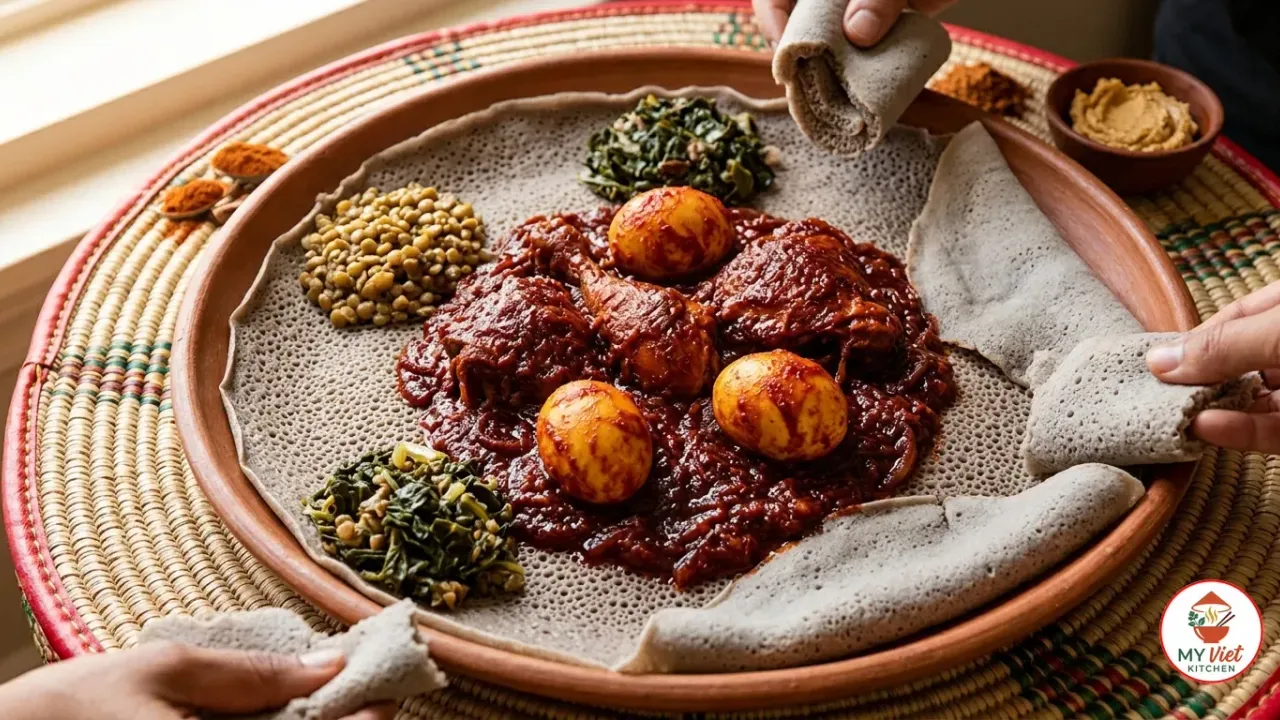
Doro wat is Ethiopia’s most revered dish, and this doro wat recipe shows you exactly how to recreate this magnificent spiced chicken stew at home. Chicken pieces simmer for hours in a deep crimson sauce built from caramelized onions, fiery berbere spice, and aromatic niter kibbeh, with hard-boiled eggs nestled into the stew during the final stretch. Also spelled doro wot or doro w’et, this dish holds a sacred place in Ethiopian culture, reserved for holidays, weddings, and the most important family gatherings.
Prep Time: 30 minutes | Cook Time: 90 minutes | Servings: 6
Difficulty: Medium | Calories: ~520 per serving
What Makes This Doro Wat Recipe Special?
Doro wat stands apart from every other chicken stew in the world because of its extraordinary depth of flavor. The sauce begins not with oil or butter but with onions alone. Six large red onions cook in a dry pot for 30 to 40 minutes until they collapse into a dark, jammy paste. This slow caramelization creates a natural sweetness that forms the foundation of this doro wat recipe. No shortcut replicates this step.
The second layer of complexity comes from berbere, the iconic Ethiopian spice blend. Berbere contains dried chilies, fenugreek, coriander, cardamom, black pepper, and a dozen other spices that vary from family to family. When you toast berbere in niter kibbeh, the fat-soluble compounds in the spices release their full aromatic potential. This technique produces a sauce with a warmth that builds slowly rather than hitting all at once.
Finally, the hard-boiled eggs distinguish this doro wat recipe from ordinary stews. Scored and added during the last 15 minutes of cooking, the eggs absorb the crimson sauce and become infused with berbere flavor. In Ethiopian tradition, each guest receives one egg and one chicken leg. This generous presentation reflects the dish’s role as a symbol of hospitality and celebration.

Choosing the Right Berbere Spice
Berbere is the soul of any great doro wat recipe. The quality and freshness of your berbere determines whether the stew tastes extraordinary or merely decent. Here are your options for sourcing this essential blend.
- Homemade berbere (best choice): Toast whole dried chilies, fenugreek seeds, coriander seeds, cardamom pods, black peppercorns, and allspice berries in a dry skillet. Then grind them together with paprika, ginger, cinnamon, and cloves. Homemade berbere tastes dramatically fresher and more aromatic than store-bought versions.
- Ethiopian grocery store berbere: If you live near an Ethiopian community, local shops sell freshly ground berbere. These blends follow traditional family recipes and offer excellent quality. Ask the shopkeeper for a berbere specifically suited for doro wat.
- Online specialty berbere: Several reputable spice companies sell high-quality berbere online. Look for brands that list individual spices rather than generic “spice blend” on the label. Check the packaging date and avoid any berbere older than six months because the volatile oils degrade quickly.
Ingredients for Doro Wat
For the Chicken:
- 1 whole chicken (about 3 pounds), cut into 8 pieces
- Juice of 2 lemons
- 2 teaspoons salt
For the Berbere Sauce:
- 6 large red onions, finely diced (about 6 cups)
- 4 tablespoons niter kibbeh (Ethiopian spiced butter)
- 4 tablespoons berbere spice blend
- 4 cloves garlic, minced
- 1 tablespoon fresh ginger, grated
- 1/2 teaspoon ground cardamom
- 1/4 teaspoon ground nutmeg
- 1 cup chicken broth or water
- Salt and black pepper to taste
For the Eggs:
- 6 hard-boiled eggs, peeled
Pro tip: Score each hard-boiled egg with 4 to 6 shallow cuts using a sharp knife before adding them to the stew. These cuts allow the berbere sauce to penetrate the egg whites, turning them a beautiful reddish-orange color and infusing them with spice flavor throughout.
Step-by-Step Instructions
Step 1: Marinate the Chicken
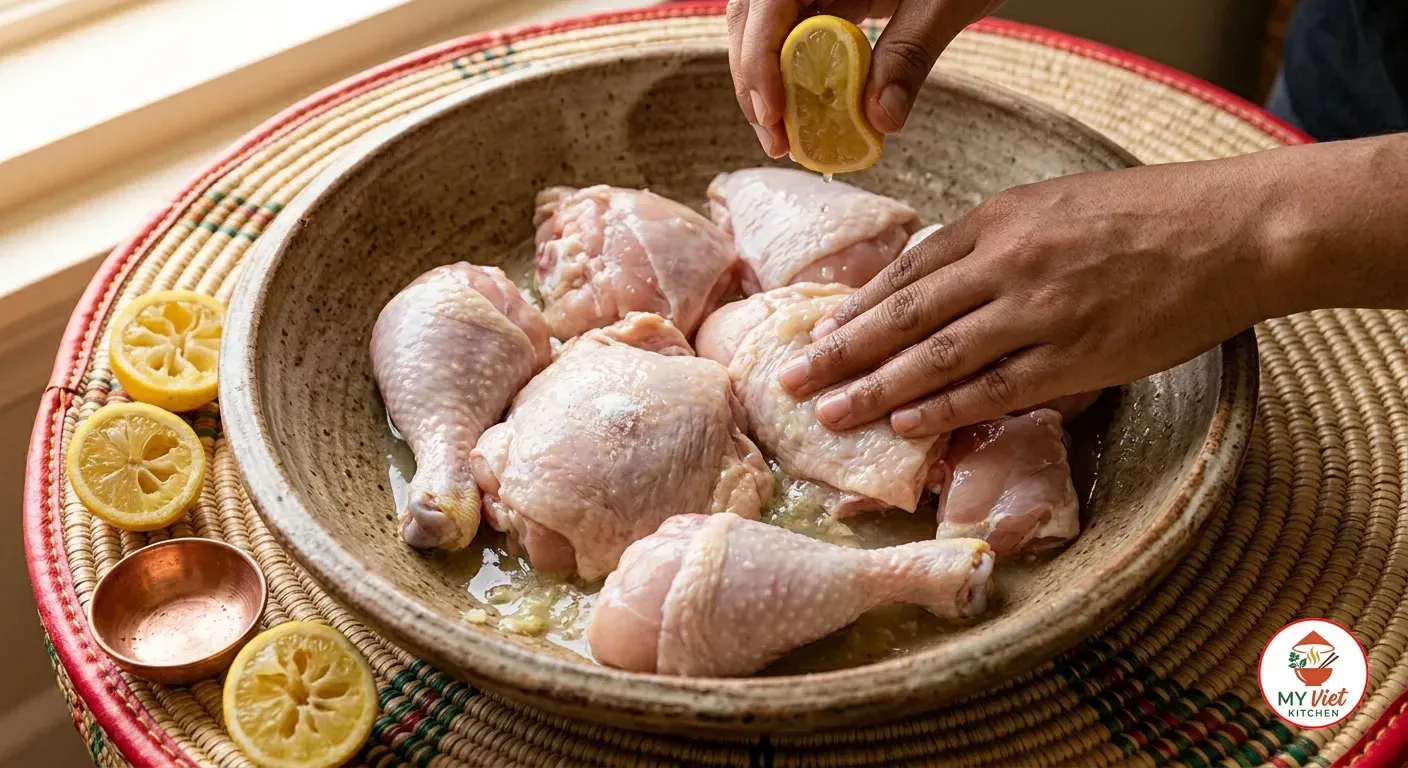
1 Clean the chicken pieces thoroughly under cold running water. Place them in a large bowl and squeeze the juice of 2 lemons over every piece. Sprinkle 2 teaspoons of salt evenly across the chicken. Massage the lemon juice and salt into the meat with your hands. Then cover the bowl and refrigerate for at least 30 minutes or up to 2 hours.
This lemon and salt marinade serves two purposes in Ethiopian cooking. First, the acid in the lemon juice tenderizes the chicken by gently breaking down the surface proteins. Second, it removes any residual gamey flavor from the meat. Ethiopian cooks consider this cleaning step essential. Rinse the chicken and pat it completely dry before adding it to the stew.
Step 2: Caramelize the Onions
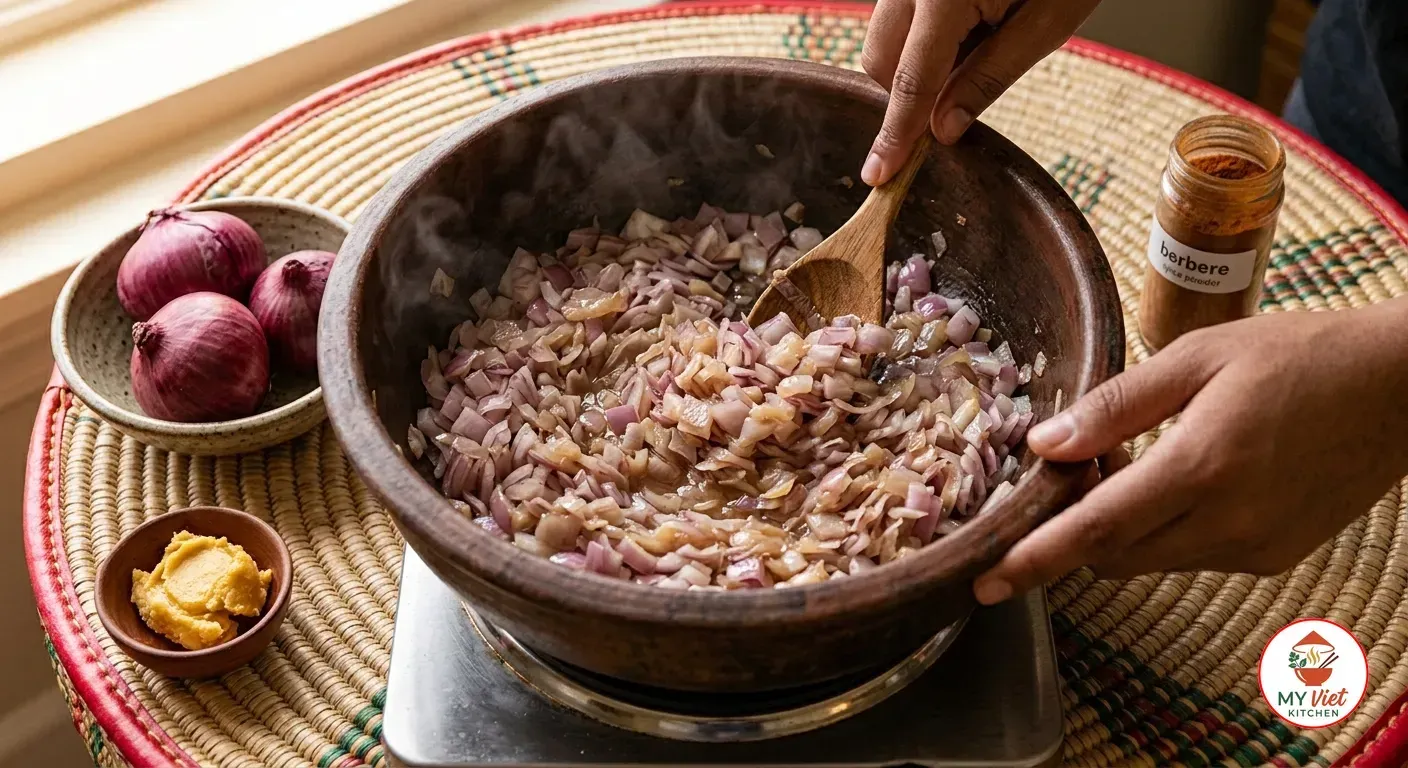
2 Dice the 6 red onions as finely as possible. Place them in a large, heavy-bottomed pot over medium heat. Do not add any oil, butter, or water. Simply stir the onions every minute or two as they begin to release their natural moisture. After about 10 minutes, the onions will soften and shrink considerably.
Continue cooking and stirring for another 20 to 30 minutes. The onions will gradually transform from a pale pink pile into a dark brown, concentrated paste. This dry caramelization technique is the signature method of Ethiopian cooking. It creates a depth of flavor that no amount of oil-based sauteing can match. If the onions stick to the bottom, reduce the heat slightly and stir more frequently. Do not add liquid. This patience is what separates an authentic doro wat recipe from a rushed imitation.
Step 3: Build the Berbere Sauce
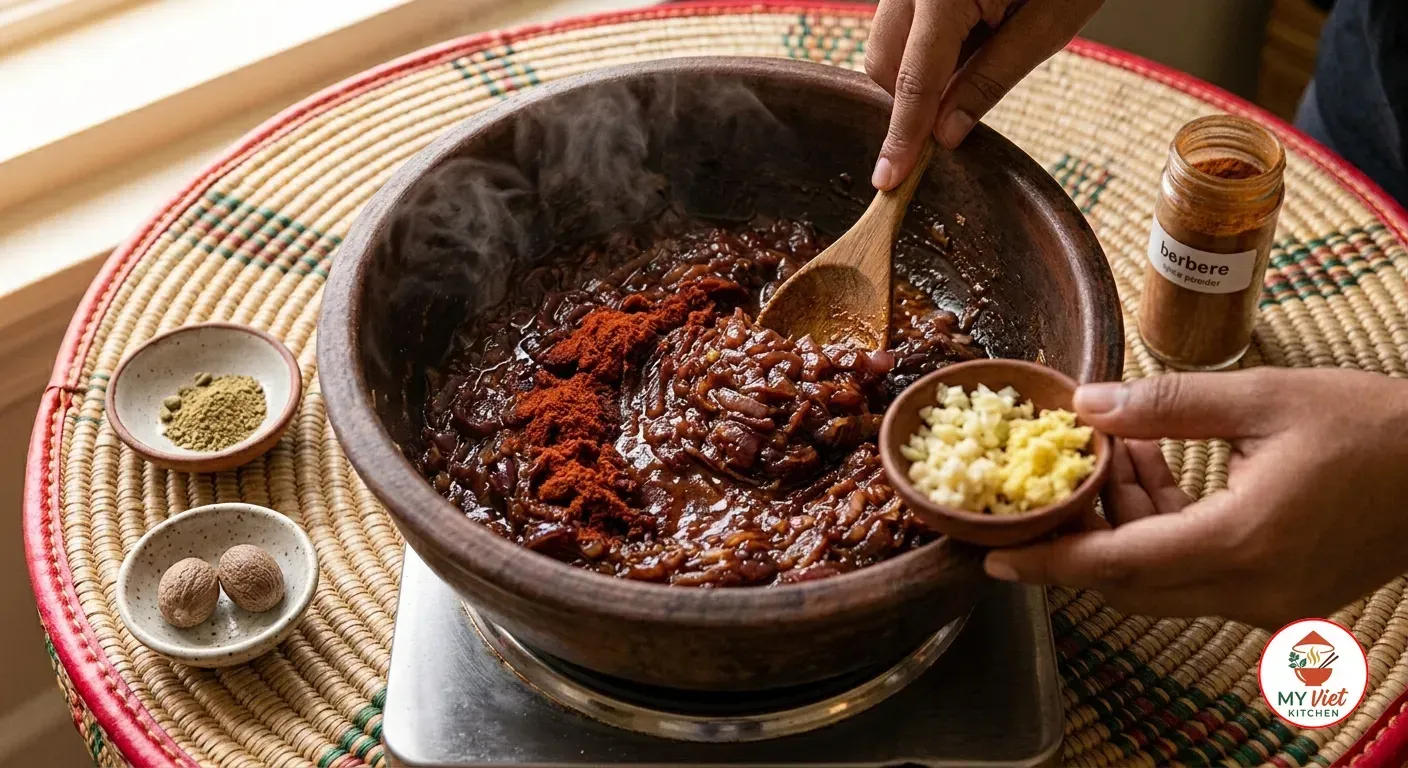
3 Once the onions reach a deep brown color, add the 4 tablespoons of niter kibbeh to the pot. Stir until the spiced butter melts completely and coats the onion paste. Then add the 4 tablespoons of berbere spice blend. Stir constantly for 3 to 5 minutes to toast the spices in the fat. This step blooms the berbere and releases its aromatic oils.
Next, add the minced garlic, grated ginger, ground cardamom, and ground nutmeg. Stir for another 2 minutes until the raw garlic smell softens. Pour in the cup of chicken broth and stir vigorously to create a smooth, thick sauce. The mixture should look like a rich, deep red paste. Taste it now and adjust the salt. The sauce should taste intensely spiced and slightly salty because the chicken will absorb and dilute the flavors during simmering.
Step 4: Simmer the Chicken
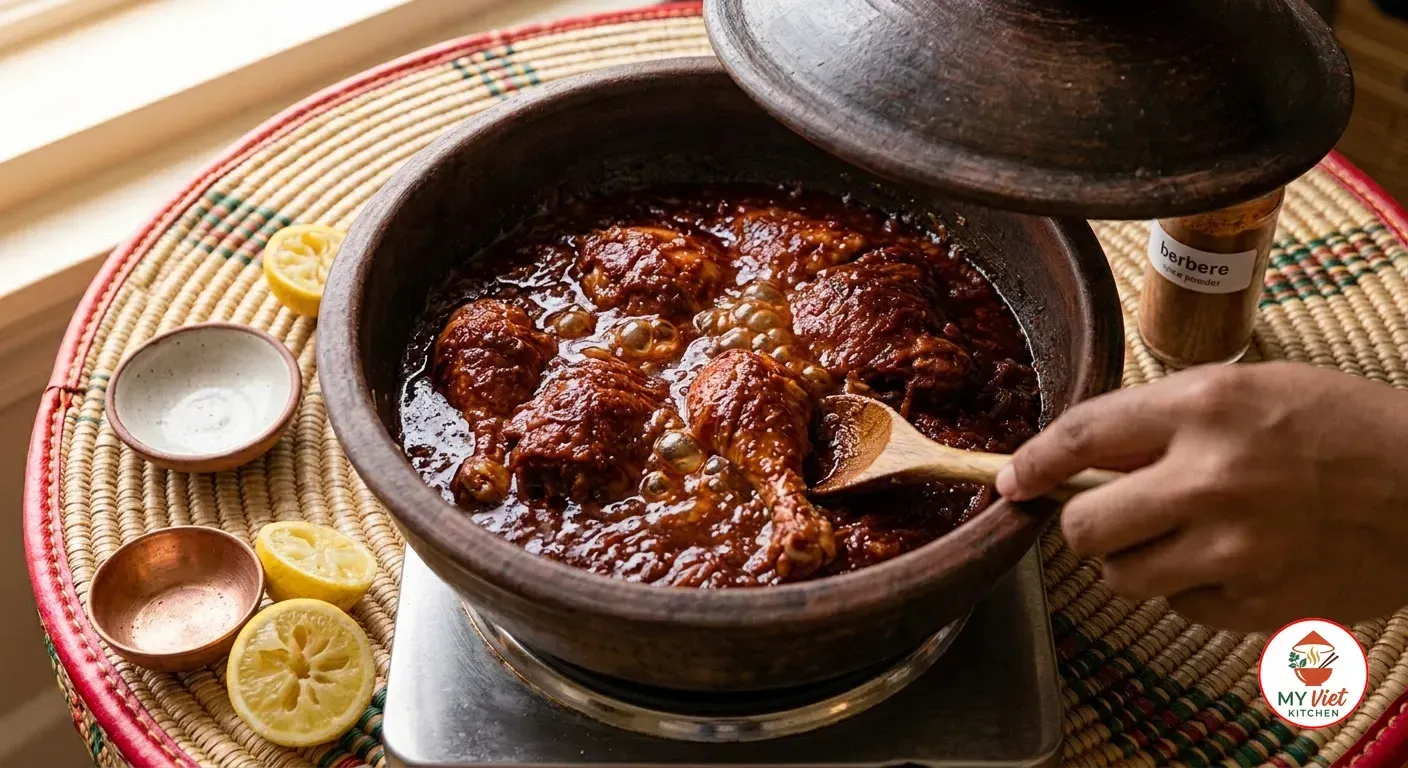
4 Rinse the marinated chicken pieces under cold water and pat them dry with paper towels. Nestle each piece into the berbere sauce, making sure every piece sits partially submerged. Cover the pot with a tight-fitting lid and reduce the heat to low. Let the chicken simmer gently for 45 minutes to 1 hour.
Turn the chicken pieces every 15 minutes to ensure even cooking. As the chicken simmers, it releases its juices into the sauce. Meanwhile, the sauce reduces and thickens around the meat. After 45 minutes, the chicken should feel tender when you pierce it with a fork. The sauce should coat the back of a spoon thickly. If it still looks thin, remove the lid and simmer for another 10 minutes to concentrate the flavors.
Step 5: Add the Eggs and Serve
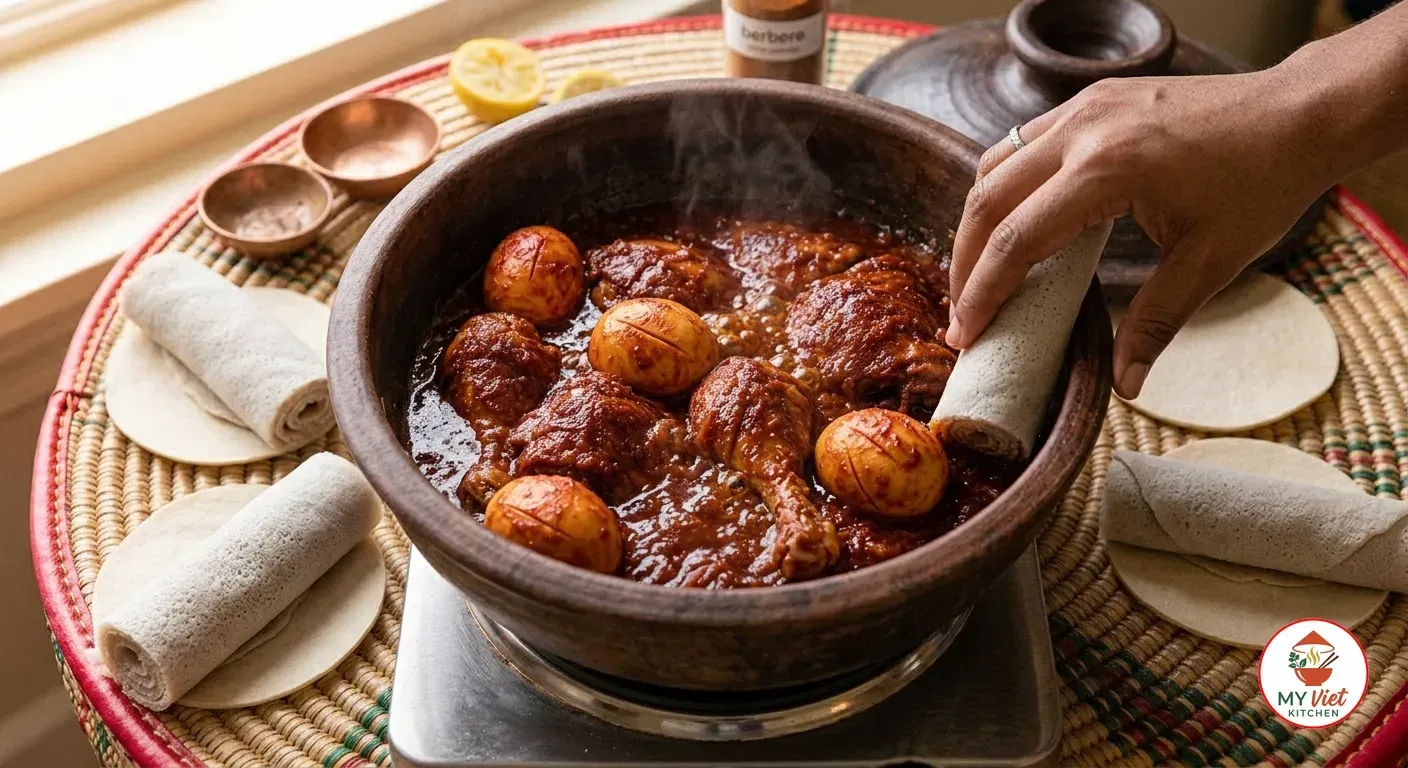
5 Score each peeled hard-boiled egg with 4 to 6 shallow cuts using a sharp knife. These scores allow the sauce to seep into the egg whites. Gently place the eggs into the simmering stew during the final 15 minutes of cooking. Spoon sauce over each egg to coat them completely.
After 15 minutes, the eggs will turn a gorgeous reddish-orange from absorbing the berbere sauce. Adjust the final seasoning with salt. Serve the doro wat directly from the pot onto a large platter lined with injera flatbread. Place the chicken pieces and eggs on the injera and spoon the thick sauce over everything. Each guest tears pieces of injera and uses them to scoop up the stew.
Expert Tips for the Perfect Doro Wat Recipe
Never Rush the Onions
The caramelized onion base is the single most important element of this doro wat recipe. If you rush this step by cranking up the heat, the onions will burn on the outside while staying raw inside. Give them a full 30 to 40 minutes over medium heat. The slow transformation from raw onion to dark paste creates natural sugars through the Maillard reaction. These sugars provide the sweetness that balances the heat of the berbere.
Toast the Berbere Properly
Adding berbere directly to liquid wastes its potential. Instead, toast it in the niter kibbeh for several minutes before adding broth. The fat extracts capsaicin and other flavor compounds from the dried spices far more effectively than water does. You will notice the color deepen and the aroma intensify during this step. However, stir constantly because berbere burns easily. Burnt berbere tastes acrid and bitter.
Use a Heavy Pot
A heavy-bottomed Dutch oven or cast iron pot distributes heat evenly, which prevents hot spots that can scorch the sauce. Thin pots concentrate heat at the bottom and cause the onions and sauce to burn during the long cooking process. If you only have a thin pot, use a heat diffuser underneath and stir more frequently. The even, gentle heat of a heavy pot produces the silkiest sauce for your doro wat recipe.
Doro Wat Compared to Other Spiced Stews
Doro wat belongs to a family of slow-cooked, spice-forward stews found across Africa, the Middle East, and South Asia. However, its dry-caramelized onion base and berbere seasoning create a flavor profile that stands entirely on its own. Here is how doro wat compares to similar dishes.
| Dish | Origin | Base | Key Spice | Distinguishing Feature |
|---|---|---|---|---|
| Doro Wat | Ethiopia | Caramelized onions | Berbere | Hard-boiled eggs, niter kibbeh |
| Chicken Tagine | Morocco | Onions and oil | Ras el hanout | Preserved lemons and olives |
| Butter Chicken | India | Tomato and cream | Garam masala | Yogurt marinade, creamy finish |
| Piri Piri Chicken | Mozambique | Chili and citrus | Bird’s eye chili | Grilled, not stewed |
| Chicken Yassa | Senegal | Onions and mustard | Black pepper | Lemon and mustard marinade |
Serving Suggestions
In Ethiopia, doro wat always arrives on a large communal platter lined with injera. Diners gather around the platter and eat with their hands, tearing pieces of the spongy flatbread to scoop up the stew. This communal style of eating reflects Ethiopian values of generosity and togetherness.
The Perfect Accompaniments:
- Injera flatbread: The only truly authentic accompaniment for doro wat. This tangy, spongy flatbread acts as both plate and utensil. Its sour flavor provides essential contrast to the rich, spicy stew. If you cannot find injera, serve the stew over steamed rice instead.
- Gomen (Ethiopian collard greens): Gently sauteed collard greens seasoned with garlic, ginger, and a touch of niter kibbeh. The mild, earthy flavor of the greens provides a cooling break between bites of the spicy doro wat.
- Azifa (green lentil salad): A cold salad made from green lentils dressed with mustard, lime juice, and diced onions. The bright acidity of azifa cuts through the richness of the stew beautifully.
- Shiro wat (chickpea stew): A smooth, mild stew made from ground chickpea flour and berbere. Serving shiro alongside doro wat creates a traditional Ethiopian mixed platter that showcases the range of Ethiopian cooking.
Beverage Pairings:
- Ethiopian coffee (buna): Ethiopia is the birthplace of coffee, and a traditional coffee ceremony often follows a meal of doro wat. The dark, fruity roast of Ethiopian coffee complements the warm spices in the stew perfectly.
- Tej (Ethiopian honey wine): This golden, slightly sweet mead balances the heat of the berbere with its honeyed smoothness. Tej is the most traditional alcoholic pairing for doro wat at celebrations and holidays.
- Tella (Ethiopian beer): A homebrew beer made from barley, hops, and gesho leaves. Its slightly bitter, earthy flavor provides a refreshing counterpoint to the richness of the stew.
- Sparkling water with lime: For a non-alcoholic option, sparkling water with fresh lime cleanses the palate between bites. The effervescence and citrus acidity refresh the mouth after each spoonful of the rich sauce.
Storage and Reheating
Refrigerator: Store doro wat in an airtight container for up to 4 days. The stew actually tastes better the next day because the flavors continue to meld and deepen as the sauce rests. Keep the eggs in the sauce so they absorb even more flavor overnight.
Freezer: Doro wat freezes well for up to 3 months. Remove the hard-boiled eggs before freezing because they develop a rubbery texture when frozen and thawed. Freeze the chicken and sauce together in airtight containers. Make fresh eggs when you reheat the stew.
Reheating: Warm doro wat gently on the stovetop over low heat. Add a splash of water or broth if the sauce has thickened too much during storage. Stir occasionally to prevent the bottom from scorching. Microwave reheating works but stir halfway through to distribute the heat evenly. Always reheat until the chicken reaches an internal temperature of 165 degrees Fahrenheit.
Common Mistakes to Avoid
1. Adding Oil to the Onions
The most common mistake in making doro wat is adding oil or butter when you start cooking the onions. Ethiopian cooking demands that the onions caramelize in their own moisture. Adding fat at this stage prevents proper caramelization and produces a greasy sauce instead of a concentrated paste. Wait until the onions are fully dark and jammy before adding the niter kibbeh.
2. Using Too Little Berbere
Doro wat should have a bold, assertive spice level. If you use only a teaspoon or two of berbere, the stew will taste like ordinary braised chicken rather than authentic Ethiopian food. Use the full 4 tablespoons called for in this recipe. The long simmering process mellows the heat considerably, so the final dish will taste balanced rather than overwhelming. Trust the recipe and add the full amount.
3. Skipping the Egg Scoring
Whole, unscored eggs sit in the sauce without absorbing any flavor. When you score the eggs with shallow knife cuts, the sauce penetrates into the egg white. This transforms the eggs from a bland afterthought into a flavorful component that carries the berbere taste in every bite. Take 30 seconds to score each egg before adding it to the stew.
4. Cooking Over High Heat
Doro wat requires patience and low heat. High heat causes the thick sauce to scorch on the bottom of the pot. It also toughens the chicken instead of making it fall-off-the-bone tender. Maintain a gentle simmer throughout the cooking process. You should see small bubbles breaking the surface occasionally, not a rolling boil. Low and slow is the only way to achieve authentic doro wat recipe results.
Frequently Asked Questions
What is doro wat?
Doro wat is Ethiopia’s most celebrated dish. It consists of chicken pieces slow-simmered in a rich, deeply spiced sauce made from caramelized onions, berbere spice blend, and niter kibbeh (Ethiopian spiced clarified butter). Hard-boiled eggs simmer alongside the chicken in the final stage. Ethiopians serve doro wat on injera flatbread during holidays such as Easter, Christmas, and New Year, as well as at weddings and important family gatherings.
What does doro wat taste like?
Doro wat delivers layers of warmth and complexity in every bite. First, the caramelized onions provide natural sweetness. Then berbere adds a building heat with notes of chili, fenugreek, and cardamom. Meanwhile, niter kibbeh contributes a buttery richness infused with aromatics. Together, these elements create a stew that tastes simultaneously spicy, sweet, savory, and deeply warming. It is not an aggressive heat but rather a slow burn that lingers pleasantly.
What is berbere spice?
Berbere is a complex Ethiopian spice blend that typically contains dried red chilies, fenugreek, coriander, cardamom, black pepper, cumin, allspice, cloves, ginger, and cinnamon. Every Ethiopian family guards their own unique berbere recipe, and the proportions vary by region and household. You can find berbere at Ethiopian grocery stores, specialty spice shops, or online. Freshly ground berbere tastes significantly better than pre-packaged versions.
Can I make doro wat without niter kibbeh?
Yes, you can substitute regular ghee or clarified butter. Add a pinch each of ground fenugreek, cardamom, and turmeric to approximate the flavor of niter kibbeh. For a dairy-free version, use coconut oil with the same spice additions. While these substitutions work, making niter kibbeh from scratch takes only 30 minutes. Therefore, it is worth the effort because the spiced butter elevates the stew significantly.
How long does doro wat take to cook?
Plan for approximately 2 hours from start to finish. The onion caramelization takes 30 to 40 minutes of patient stirring. Building the sauce requires another 10 minutes. The chicken then simmers for 45 minutes to 1 hour. While the total time seems long, most of the cooking is hands-off. You simply check and stir occasionally while the stew develops its deep flavors on its own.
Is doro wat spicy?
Doro wat has a moderate to high spice level depending on the amount of berbere you use. However, the heat is a slow, warming sensation rather than a sharp burn. The caramelized onions and niter kibbeh temper the heat significantly. If you prefer a milder version, reduce the berbere to 2 tablespoons. For an extra fiery stew, increase it to 5 or 6 tablespoons. Start with the 4 tablespoons in this doro wat recipe for an authentic experience.
Variations and Adaptations
Instant Pot Doro Wat:
Use the saute function to caramelize the onions and build the sauce directly in the Instant Pot. Add the chicken and broth, seal the lid, and cook on high pressure for 20 minutes. Allow a natural pressure release for 10 minutes before opening. Add the scored eggs and let them sit in the hot sauce for 15 minutes with the lid off. This doro wat recipe method cuts the total cooking time to about 1 hour.
Vegetarian Doro Wat (Yataklete Kilkil Style):
Replace the chicken with firm tofu or chunky vegetables such as potatoes, carrots, and green beans. Substitute vegetable broth for chicken broth and use vegan butter or coconut oil instead of niter kibbeh. Keep the eggs for a vegetarian version or omit them entirely for a vegan adaptation. The berbere sauce carries the dish even without meat.
Mild Doro Wat for Families:
Reduce the berbere to 2 tablespoons and increase the niter kibbeh to 5 tablespoons for a richer, milder sauce. Add a tablespoon of honey or sugar to the sauce after adding the broth. These adjustments tame the heat while preserving the essential flavor profile. Serve extra berbere on the side for adults who want more spice. This adaptation works well for introducing children to Ethiopian food.
Quick Weeknight Doro Wat:
Use boneless, skinless chicken thighs cut into bite-sized pieces to reduce the cooking time to 30 minutes. Finely grate the onions with a food processor instead of dicing them by hand. The grated onions caramelize in about 15 minutes. While this shortcut version lacks some depth compared to the traditional method, it still delivers a satisfying weeknight dinner in under an hour.
The Cultural Significance of Doro Wat
Doro wat is far more than a recipe in Ethiopia. It is a cultural institution that carries deep spiritual, social, and historical significance. Understanding this context transforms the act of cooking doro wat from following a recipe into participating in one of Africa’s oldest culinary traditions.
In Ethiopian Orthodox Christian tradition, doro wat holds a sacred role during religious holidays. After long fasting periods where meat and dairy are forbidden, families break the fast with a ceremonial doro wat. The dish appears at Timkat (Ethiopian Epiphany), Fasika (Easter), and Genna (Christmas). The chicken is traditionally divided into 12 pieces, one for each apostle, and the hard-boiled eggs symbolize new life and resurrection.
Beyond religious occasions, doro wat marks weddings, births, and significant family events. A bride’s skill at preparing doro wat is still a matter of pride in many Ethiopian households. The dish represents generosity because chicken was historically expensive and reserved for honored guests. Today, doro wat continues to unite Ethiopians around the communal platter, reinforcing the bonds of family and community with every shared meal. Explore more African dishes to discover the rich culinary heritage across the continent.
Conclusion
This authentic doro wat recipe brings Ethiopia’s most treasured dish to your kitchen with all its depth, warmth, and cultural significance intact. The process requires patience rather than skill. Caramelize the onions slowly until they become a dark paste. Toast the berbere in niter kibbeh until the kitchen fills with spice. Simmer the chicken low and slow until the sauce thickens and clings. Score the eggs so they absorb that magnificent berbere color. Then serve everything on injera and eat with your hands.
Ready to explore more Ethiopian and African flavors? Try our injera with wat for the perfect flatbread companion. Browse our complete collection of African dishes for more authentic recipes, including jollof rice, Moroccan tagine, and South African bobotie.