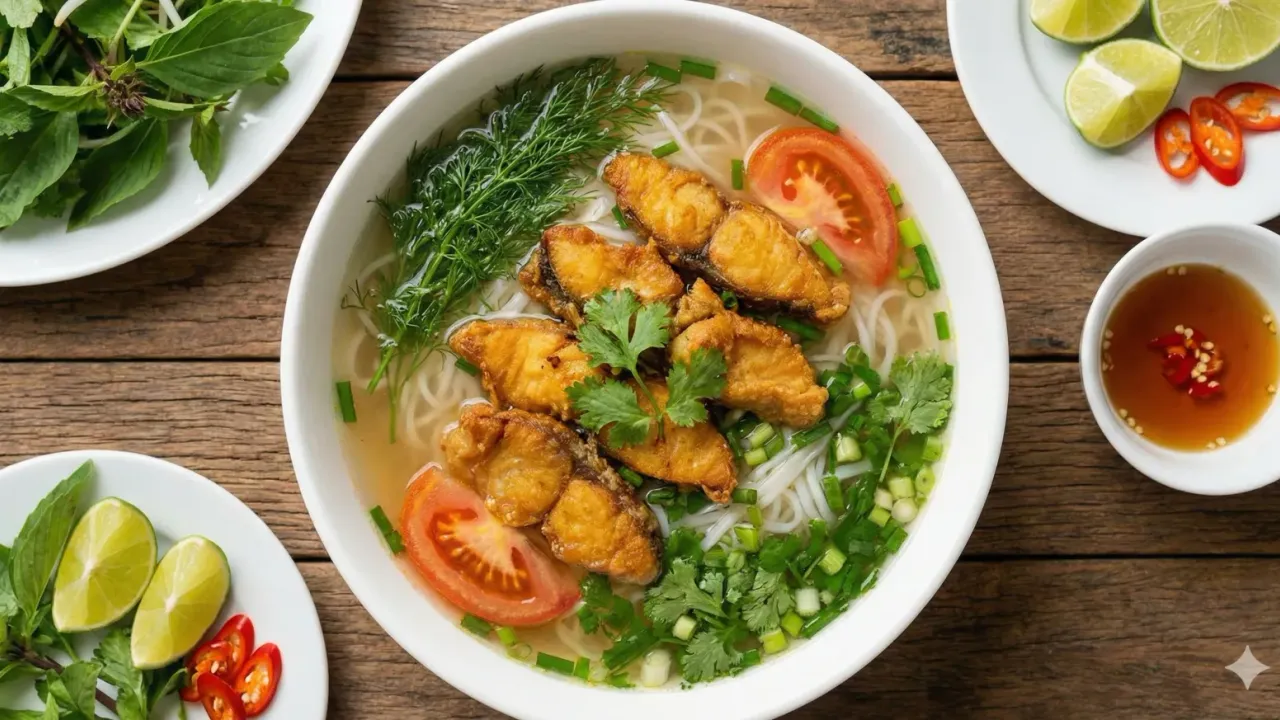
Vietnamese Fish Vermicelli Soup, known as bún cá, is a beloved comfort food. It combines crispy golden fried fish with delicate rice noodles in a clear, tangy broth. In this authentic recipe, you will learn how to recreate restaurant-quality bún cá in your home kitchen.
What makes this dish special is the contrast of textures. First, the fish is fried without any batter coating. As a result, you get a naturally crispy exterior while the inside stays moist and flavorful. Meanwhile, the broth is light yet deeply savory, enhanced with tomatoes and fresh herbs. In fact, it’s the perfect dish to serve after rich holiday meals — refreshing, cleansing, nutritious, and satisfying.
This Vietnamese Fish Vermicelli Soup recipe serves 6-8 people and takes about 90 minutes from start to finish. The key to success lies in properly frying the fish and simmering a flavorful broth from pork and fish bones. In short, let’s dive into how to make this delicious Vietnamese classic!

Table of Contents
- Ingredients You’ll Need
- Choosing the Right Fish
- Step-by-Step Recipe
- Pro Tips for Success
- Serving Suggestions
- Regional Variations
- Frequently Asked Questions
What is Vietnamese Fish Vermicelli Soup (Bún Cá)?
Bún cá is a traditional Vietnamese soup dish featuring fried fish served over rice vermicelli noodles in a clear, savory broth. Unlike other Vietnamese noodle soups like phở or bún bò Huế that use beef, bún cá showcases freshwater fish as the star protein.
The dish is characterized by:
- Crispy fried fish - no batter coating, just naturally golden and crunchy
- Clear, tangy broth - made from pork and fish bones with tomatoes
- Fresh herbs - dill, scallions, and perilla add aromatic freshness
- Rice vermicelli noodles - delicate and light
This Vietnamese Fish Vermicelli Soup is particularly popular in Northern Vietnam, especially in Hanoi. There, it’s enjoyed as a light meal that’s easy on the stomach yet incredibly flavorful. Furthermore, the Vietnamese often eat bún cá to “cleanse the palate” after rich, oily foods during Tết (Vietnamese New Year) celebrations.
Ingredients You’ll Need for Bún Cá
For the Fish:
-
1 kg (2.2 lbs) fish fillets - tilapia, carp, grass carp, or red snapper work well
-
2 limes for cleaning
-
Salt
-
Cooking oil for frying
For the Broth:
-
500g (1.1 lbs) pork bones (preferably neck bones)
-
Fish bones and heads from your fish
-
1 large onion, charred
-
1 piece ginger root (about 2 inches), charred
-
3-4 ripe tomatoes
-
Fish sauce (nước mắm)
-
Salt and seasoning powder to taste
-
Rice vinegar
For Serving:
-
500g rice vermicelli noodles (bún)
-
1 bunch dill (essential for authentic flavor!)
-
1 bunch scallions
-
1 bunch celery or cilantro
-
Fresh lettuce or water spinach
-
Perilla leaves (tía tô)
-
Vietnamese coriander (rau răm)
-
Lime wedges
-
Sliced chilies
-
Garlic and chili fish sauce for dipping
Choosing the Right Fish for Bún Cá
The type of fish you choose will significantly impact the final dish. In Vietnam, freshwater fish are traditionally used. This is because they have a sweeter, more delicate flavor. As a result, they complement the light broth perfectly.
Best Fish Options:
- Tilapia (Cá Rô Phi) - Readily available, affordable, and has firm white flesh that fries beautifully
- Grass Carp (Cá Trắm) - Traditional choice with sweet, tender meat
- Mud Carp (Cá Chép Giòn) - Prized for its firm texture
- Red Snapper (Cá Diêu Hồng) - Premium option with excellent flavor
- Catfish - Good alternative with meaty texture
Pro tip: Ask your fishmonger to fillet the fish but save the bones and head for making the broth. These parts contain gelatin and natural flavors that enrich your soup base.
Vietnamese Fish Vermicelli Soup (Bún Cá) Recipe
Prep Time: 30 minutes | Cook Time: 60 minutes | Total Time: 90 minutes | Servings: 6-8 | Calories: ~320 per serving
Instructions:
Step 1: Clean and Prep the Fish
- Clean the fish thoroughly: Rinse fish fillets under cold water. Rub with lime juice and coarse salt to remove any fishy odor. Rinse again and pat completely dry.
- Cut and season: Cut fish into bite-sized pieces (about 2 inches). The fish must be absolutely dry, or it will splatter when frying. Sprinkle lightly with salt. Then let it sit for 10 minutes to firm up the flesh.
Step 1b: Fry the Fish Without Batter
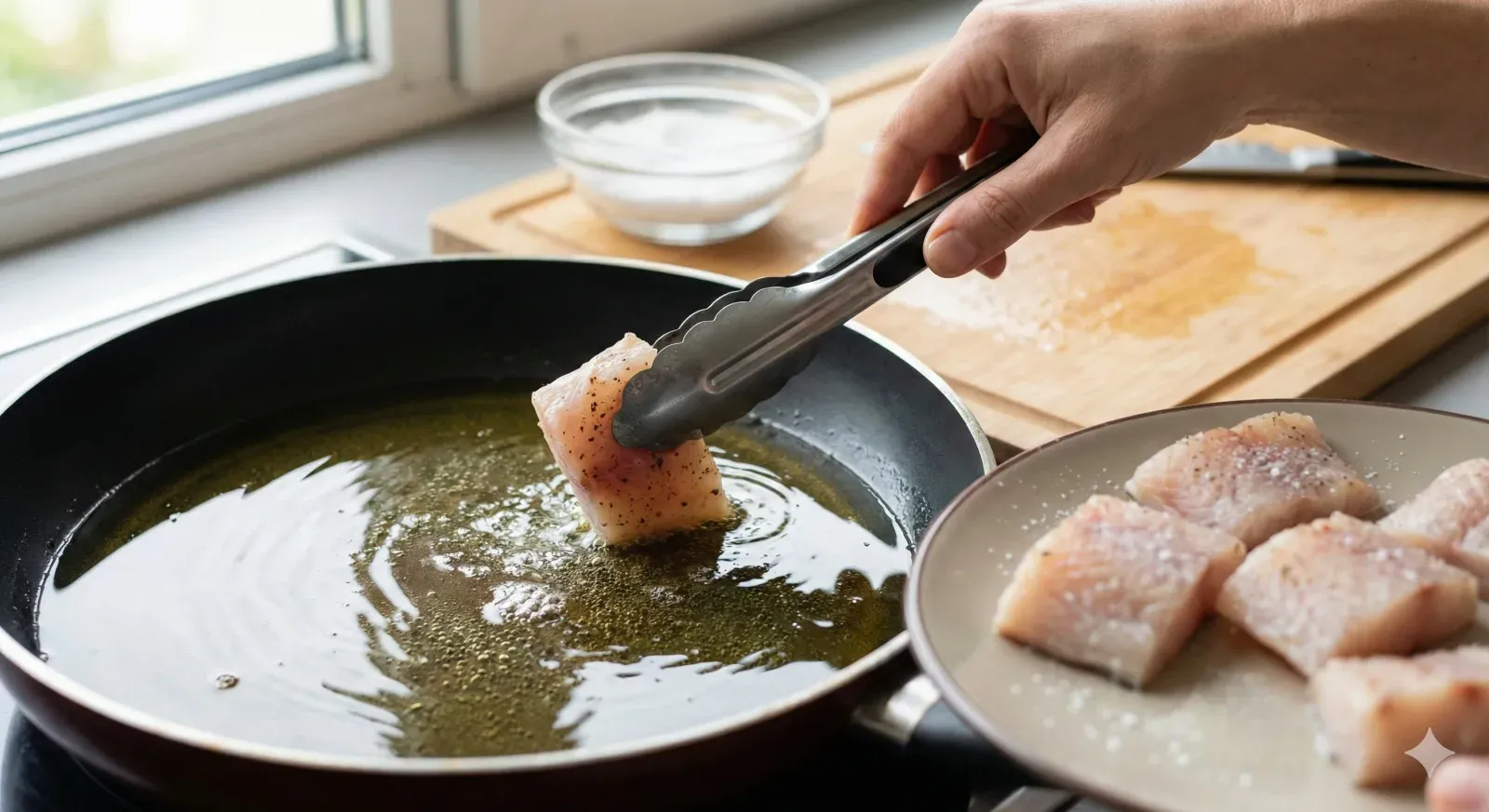
- Heat the oil gradually: First, start with a cold pan on low heat. As the pan warms up, add your cooking oil. Next, raise heat to medium. Finally, test the oil with a chopstick. If small bubbles form, the oil is ready (about 350°F/175°C).
- Fry in batches: First, don’t overcrowd the pan. Place fish pieces in the hot oil, spacing them apart to prevent sticking. The key technique is simple: DO NOT flip the fish immediately. Instead, let one side fry undisturbed for 12-15 minutes until it turns golden brown naturally. In short, patience creates that signature crispy exterior.
- Flip and finish: Once the first side is golden and crispy, carefully flip each piece. Then fry the second side for another 10-12 minutes. Finally, the fish should be golden brown on both sides — crispy outside, moist inside.
- Drain: Remove fried fish to a paper towel-lined plate to absorb excess oil. As a result, the fish stays crispy for hours. In contrast, battered fish gets soggy quickly.
Step 2: Make the Broth
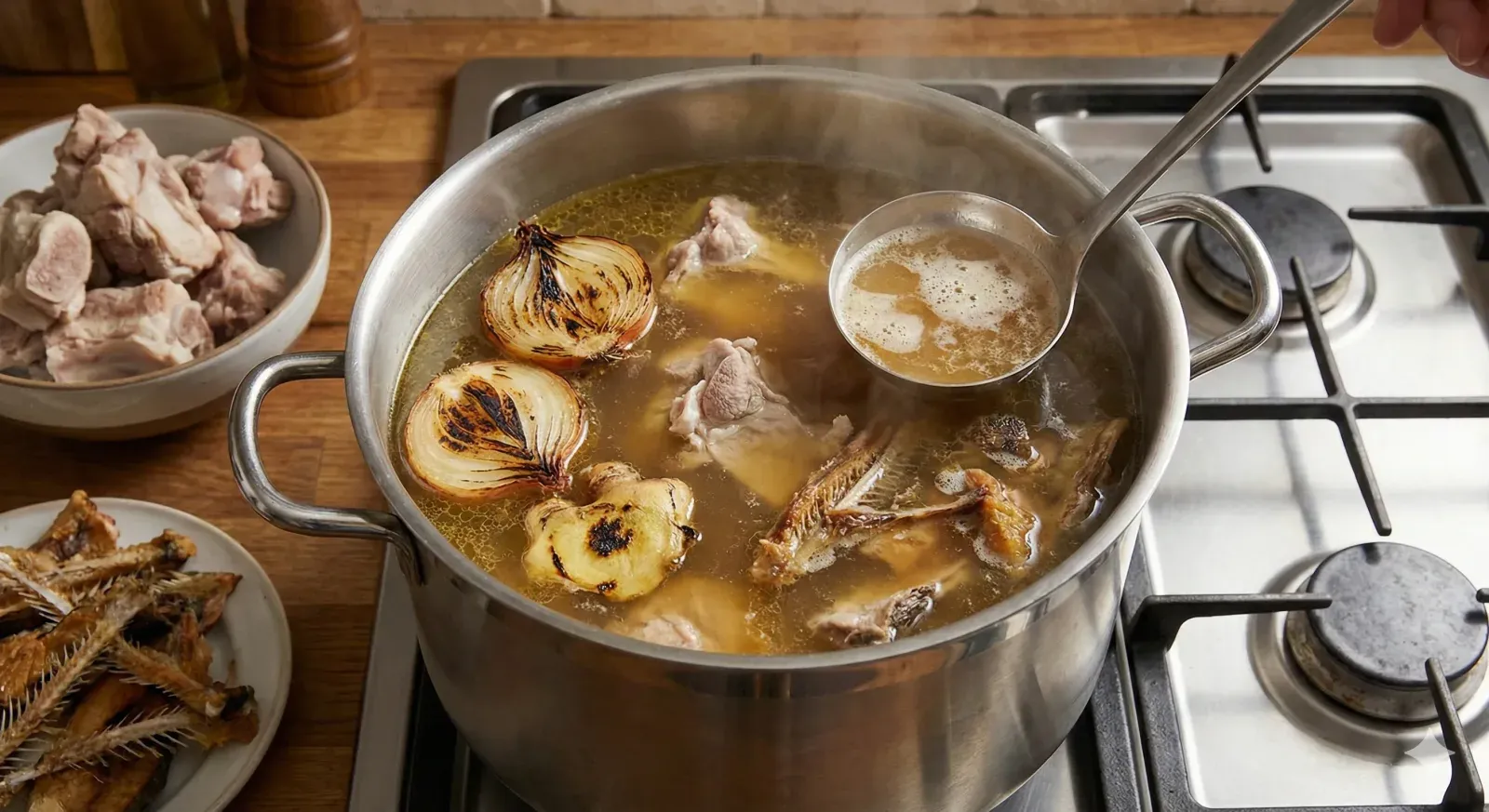
- Prepare the bones: Blanch pork bones in boiling water for 2-3 minutes to remove impurities. Drain and rinse thoroughly under cold water.
- Char aromatics: Hold onion and ginger over an open flame (or under broiler) until blackened on the outside. This adds depth and slight smokiness to the broth. Rinse off the charred exterior.
- Fry fish bones: If you have fish bones and heads, lightly fry them until aromatic. In short, this step adds extra richness.
Step 2b: Simmer and Season
- Simmer the broth: In a large pot, combine the pork bones, fish bones, charred onion, and ginger. Add about 3 liters (12 cups) of water. Bring to a boil. Then reduce to a gentle simmer. Skim off any foam during the first 15-20 minutes.
- Cook for depth of flavor: Let the broth simmer for at least 1 hour. The longer it cooks (up to 2 hours), the more flavorful it becomes. As a result, the broth turns slightly golden and tastes rich but not heavy.
- Strain and season: Strain the broth through a fine-mesh sieve. Discard the solids. Season with fish sauce, salt, and a pinch of seasoning powder. Finally, taste and adjust — the broth should be savory with a subtle sweetness.
Step 3: Prepare the Aromatics and Vegetables
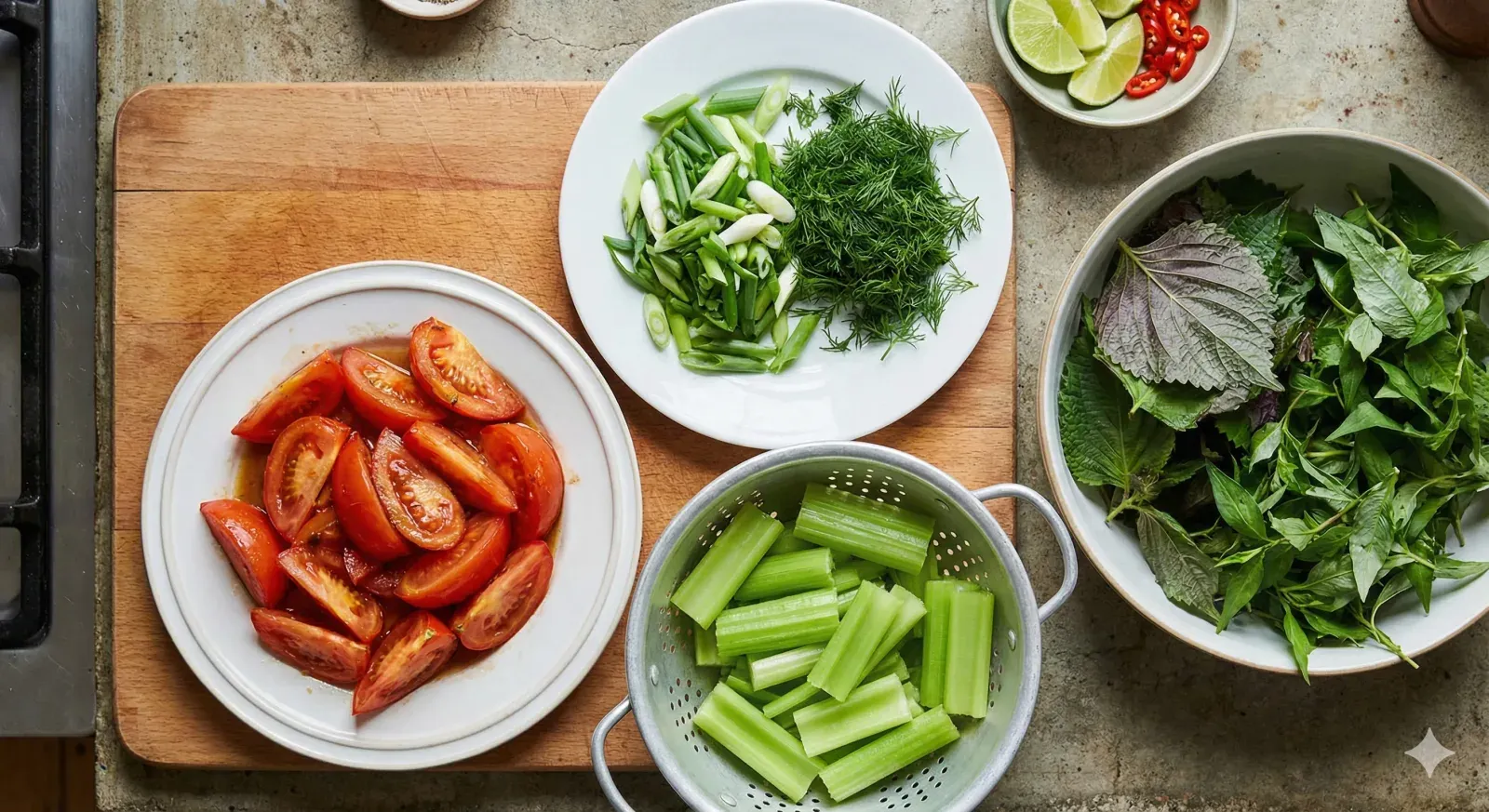
- Tomatoes: Wash tomatoes and cut into wedges (about 6-8 pieces per tomato). Heat a little oil in a pan and quickly stir-fry the tomato wedges for 1-2 minutes. They should soften slightly but still hold their shape.
- Herbs: Rinse scallions and dill thoroughly. Chop scallions into 1-inch pieces. Coarsely chop dill. The dill is essential - it gives bún cá its distinctive aromatic flavor!
- Celery: Remove tough roots from celery. Break into sections, releasing the aromatic oils. Blanch quickly in boiling water (about 30 seconds), then drain.
- Fresh herbs: Wash all serving herbs (lettuce, perilla, Vietnamese coriander) in cold water. Soak in lightly salted water for 5 minutes to remove any dirt. Drain and spin dry. Tear or cut into bite-sized pieces.
Step 4: Prepare Noodles and Assemble
- Cook vermicelli: Bring a large pot of water to a rolling boil. Add rice vermicelli noodles and cook according to package directions (usually 2-3 minutes). They should be tender but still slightly chewy. Drain and rinse under cold water to stop cooking.
- Heat the broth: Just before serving, bring the broth back to a boil. Add the stir-fried tomatoes and a splash of rice vinegar (about 1-2 tablespoons) to create that characteristic tangy note.
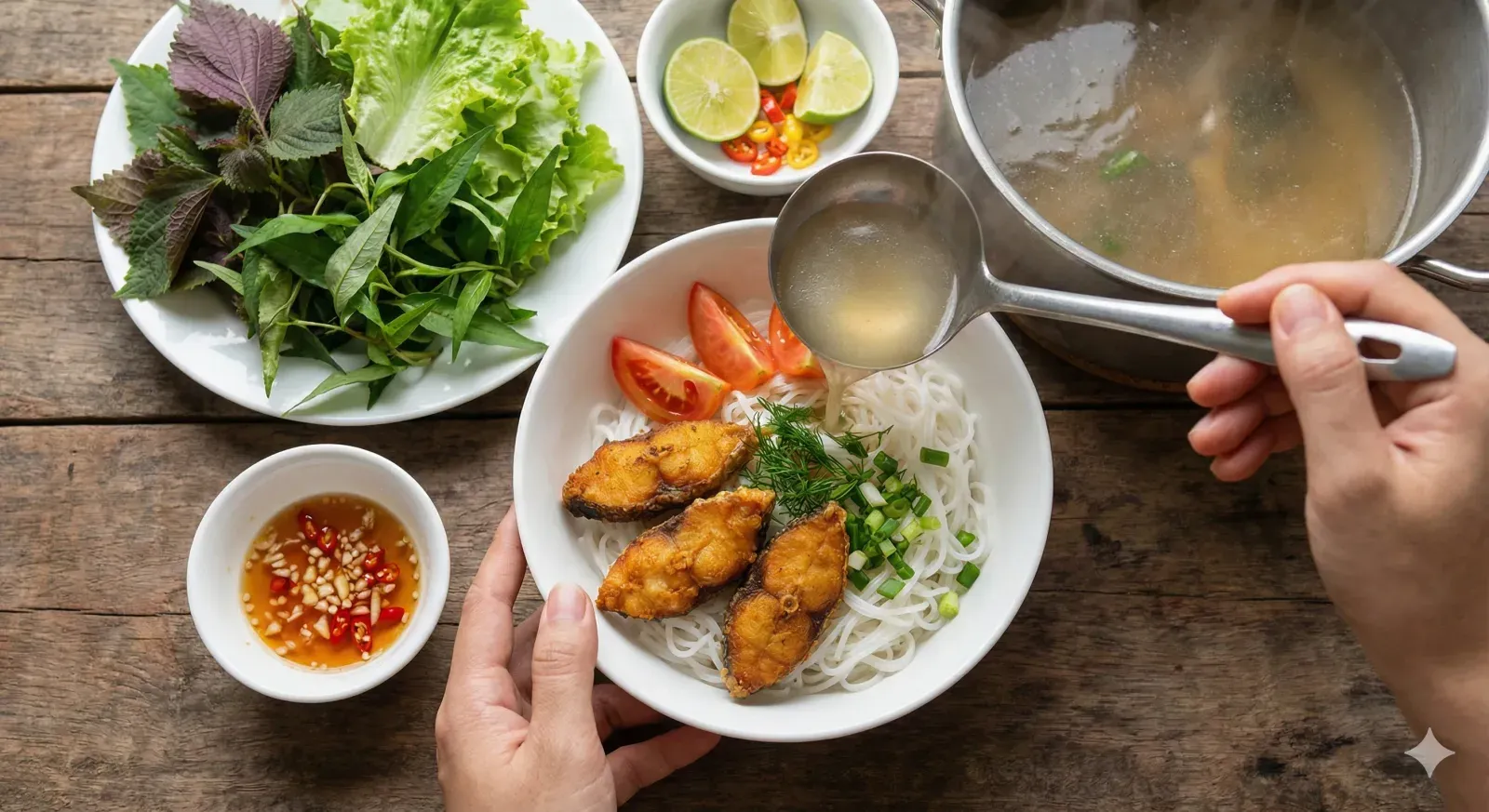
- Assemble the bowls: Place a generous portion of vermicelli noodles in each bowl. Top with 2-3 pieces of crispy fried fish. Add blanched celery, fresh tomato wedges from the broth, and sprinkle generously with chopped scallions and dill.
- Add the broth: Ladle the hot, fragrant broth over the noodles and fish. The heat will soften the herbs and release their aromas.
- Serve immediately: Serve the bún cá while hot, with a side plate of fresh herbs, lime wedges, sliced chilies, and a small bowl of fish sauce mixed with garlic and chili for dipping.
Pro Tips for Perfect Bún Cá
Why No Batter on the Fish?
Traditional bún cá uses fish fried without any batter coating. This might seem unusual, but there’s good reason:
- Battered fish becomes soggy when hot broth is poured over it
- The batter creates a gummy, unpleasant texture in the soup
- Natural frying keeps the fish crispy for hours and preserves the pure fish flavor
- Without batter, you taste the sweet, natural flavor of the fish
The Secret to Extra Crispy Fish:
- Dry is key: The fish must be completely dry before frying. Any moisture will cause splattering and prevent crispiness
- Cold pan start: Starting with a cold pan and heating gradually prevents the fish from sticking
- Don’t flip too soon: Patience is crucial. Let the first side cook fully before flipping
- Proper oil temperature: Too hot and the outside burns before the inside cooks; too cool and the fish absorbs oil and becomes greasy
- Fry in batches: Overcrowding drops the oil temperature and causes steaming instead of frying
Broth Perfection:
- Blanching bones: This step removes impurities and keeps your broth crystal clear
- Charring aromatics: The slight char adds complexity without overpowering the delicate fish flavor
- Gentle simmer: A rolling boil makes the broth cloudy; a gentle simmer keeps it clear
- Skim regularly: Remove foam and fat for a cleaner, lighter taste
- Don’t oversalt: Remember that fish sauce is salty - add it gradually
Common Mistakes to Avoid:
- Using wet fish - causes dangerous oil splattering and prevents crispiness
- Coating fish in flour or batter - makes it soggy in the broth
- Adding oil to a hot pan - causes sticking
- Flipping fish too early - breaks the pieces and prevents even browning
- Overcrowding the pan - lowers oil temperature and causes uneven cooking
- Skipping the vinegar - it’s essential for that authentic tangy flavor
How to Serve Vietnamese Fish Vermicelli Soup
Traditionally, Vietnamese Fish Vermicelli Soup is served family-style. Specifically, all components are brought to the table separately. As a result, each person can customize their own bowl.
Essential Accompaniments:
- Fresh herb plate: Lettuce, perilla leaves, Vietnamese coriander, sawtooth coriander, and mint
- Lime wedges: Essential for brightness and acidity
- Chili sauce (tương ớt): For heat lovers
- Fish sauce with garlic and chili: Mix fish sauce, water, lime juice, sugar, minced garlic, and sliced chilies for dipping the fish
- Pickled vegetables: Optional but adds nice crunch and tang
How to Eat Bún Cá:
- Add fresh herbs to your bowl according to preference
- Squeeze lime juice over everything
- Mix well to combine flavors
- Take bites of the crispy fish, alternating with noodles and broth
- Dip the fish in the garlic-chili fish sauce for extra flavor
What to Serve With Bún Cá:
This soup is quite substantial on its own, but you can serve it alongside:
- Vietnamese spring rolls (gỏi cuốn) as an appetizer
- Fried shallots for extra crunch
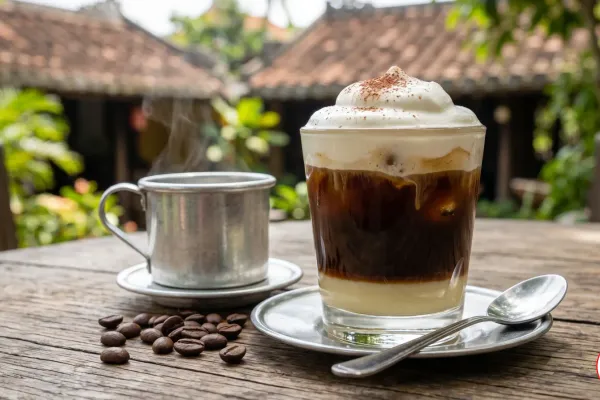
- Vietnamese iced coffee (cà phê sữa đá) as a beverage
- Fresh fruit for dessert
Regional Variations of Bún Cá
While the basic concept remains the same, different regions of Vietnam have their own takes on bún cá:
Bún Cá Chấm Hà Nội (Hanoi-Style)
This is the version featured in our recipe. Characteristics include:
- Clear, delicate broth
- Heavy use of dill (essential in Northern cuisine)
- Crispy fried fish without batter
- Served with separate dipping sauce
- Mild, subtle flavors
Bún Cá Cay Hải Phòng (Spicy Hai Phong-Style)
From the coastal city of Hai Phong:
- Much spicier with chili oil in the broth
- Uses fish paste (chả cá) in addition to fried fish
- More intense, bolder flavors
- Often includes shrimp paste (mắm tôm) for umami
- Redder broth from chilies and annatto seeds
Southern Style Variations:
- Sweeter broth with more fish sauce and sugar
- Addition of pineapple for sweetness
- More vegetables like water spinach and bean sprouts
- Sometimes uses coconut water in the broth
AdvertisementStorage and Reheating Tips
Storage:
- Broth: Store in airtight container in refrigerator for up to 3 days, or freeze for up to 3 months
- Fried fish: Best eaten fresh. Can be stored in refrigerator for 1 day, but will lose crispiness
- Noodles: Cook fresh each time for best texture. Cooked noodles become mushy when stored
- Herbs: Wash and store separately in refrigerator, wrapped in paper towels
Reheating:
- Reheat broth in a pot until boiling
- To re-crisp fish, place in 350°F (175°C) oven for 5-7 minutes
- Cook fresh noodles rather than reheating old ones
- Add fresh herbs and aromatics when serving
Make-Ahead Tips:
- Broth can be made 1-2 days in advance
- Fish can be fried earlier in the day and reheated before serving
- Prep all herbs and vegetables the night before
- Keep components separate until ready to assemble
AdvertisementFrequently Asked Questions About Bún Cá
Can I use saltwater fish instead of freshwater fish?
Yes, you can! Traditional bún cá uses freshwater fish. However, saltwater options like sea bass, grouper, or halibut work well too. They have a firmer texture and a slightly different flavor. Just make sure the fish is fresh with firm, white flesh.
Why does my fish stick to the pan when frying?
Fish sticks when the pan isn’t hot enough. It also sticks if you add fish before the oil heats up. Therefore, always start with a cold pan. Then heat gradually and add oil. Finally, heat the oil until it shimmers. Also, make sure your fish is completely dry.
Can I make this dish vegetarian?
Absolutely! Replace the fish with firm tofu, mushrooms, or mock fish. First, press and fry the tofu until crispy. Next, use vegetable broth instead of pork broth. Then season with vegetarian fish sauce or soy sauce. Finally, add dried shiitake mushrooms for extra umami.
How do I prevent the broth from being too fishy?
First, blanch all bones before making the broth. Next, char your aromatics well. Also, don’t overcook the fish bones. Ginger helps neutralize fishiness. If your broth still tastes too fishy, add more charred onion. Also add a bit of lime juice.
What can I substitute for dill?
Dill is distinctive and hard to replace. In a pinch, you can use extra cilantro with a bit of fennel fronds. The flavor won’t be the same, but it will still be tasty. However, I highly recommend fresh dill. It’s essential to authentic bún cá flavor.
Can I prepare this dish ahead for a party?
Yes! First, make the broth 1-2 days ahead and store it in the fridge. Then fry the fish earlier in the day. Also prep all herbs and vegetables the night before. When guests arrive, reheat the broth and warm the fish in the oven. Next, cook fresh noodles and assemble. Finally, set up a DIY station for guests to build their own bowls.
Why add vinegar to the broth?
The vinegar adds a subtle tanginess that’s characteristic of authentic bún cá. It brightens the flavors and cuts through any richness from the fish. Use rice vinegar for the most authentic flavor, but apple cider vinegar works in a pinch. Start with 1-2 tablespoons and adjust to taste.
How spicy is bún cá?
Traditional Hanoi-style bún cá is not spicy at all. The heat comes from the fresh chilies and chili sauce served on the side, allowing each person to adjust spiciness to their preference. If you want a spicy version, look for the Hai Phong-style (Bún Cá Cay) which incorporates chili oil into the broth.
Nutrition Information
Per serving (based on 8 servings):
- Calories: 320 kcal
- Protein: 25g
- Carbohydrates: 32g
- Fat: 12g
- Saturated Fat: 2g
- Fiber: 2g
- Sodium: 890mg
- Sugar: 3g
Note: Nutrition values are estimates and may vary based on specific ingredients used.
Final Thoughts on Making Bún Cá
Vietnamese Fish Vermicelli Soup (bún cá) is a testament to the elegance of Vietnamese cuisine. In other words, simple ingredients are transformed into something extraordinary through careful technique. The contrast of crispy fried fish against delicate noodles, all brought together in a light, tangy broth, makes this dish a true comfort food favorite.
The key to success lies in taking your time with each component. First, fry the fish patiently for maximum crispiness. Next, simmer the broth slowly for depth of flavor. Finally, prepare fresh, vibrant herbs for serving. Although it requires more effort than some soups, the result is absolutely worth it.
Whether you want a lighter meal after rich holiday feasting or simply crave a bowl of nourishing soup, this Vietnamese Fish Vermicelli Soup delivers on all fronts. Of course, once you master the technique, you can adapt it to your preferences and available ingredients.
Have you tried making bún cá at home? Share your experience in the comments below! Likewise, I’d love to hear about any variations you’ve tried or tips you’ve discovered. Additionally, if you enjoyed this recipe, please share it with friends and family who love Vietnamese food!
-
-