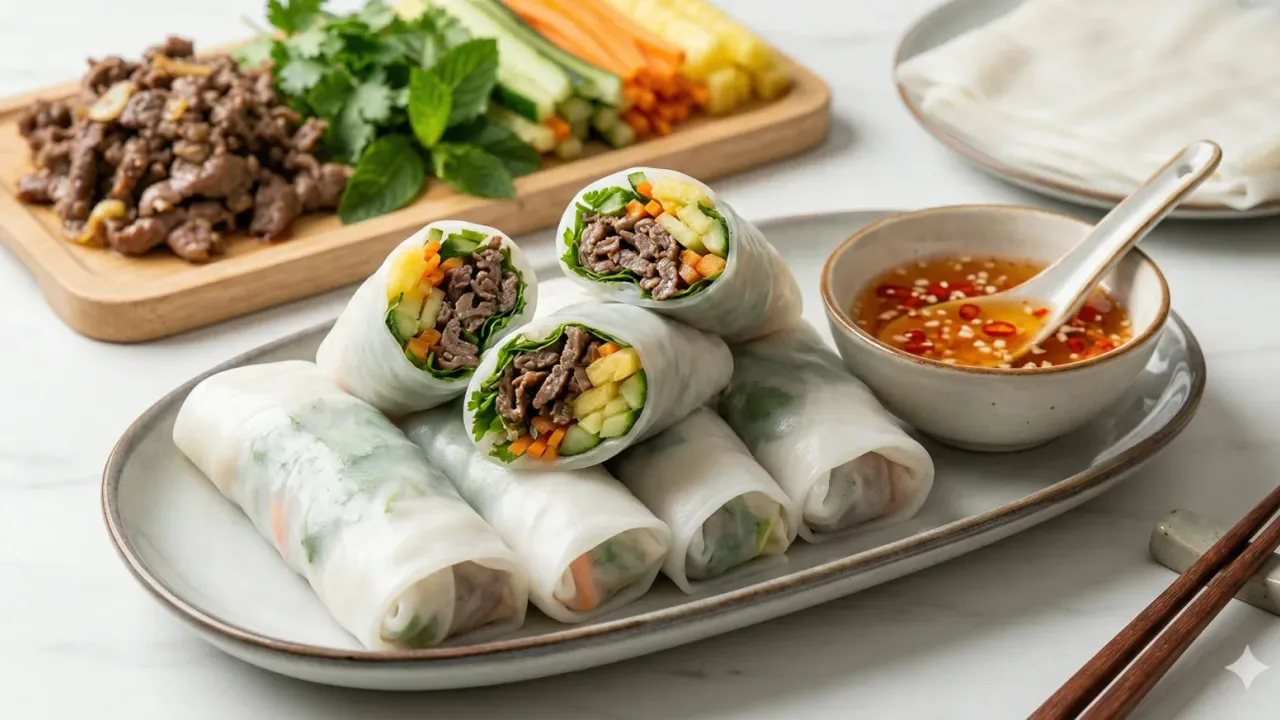
Meet Pho Cuon — the lighter, no-soup cousin of Vietnam’s most iconic noodle dish. Known in Vietnamese as Pho Cuon, these fresh pho spring rolls wrap silky rice sheets around fragrant stir-fried beef, crisp vegetables, and garden-fresh herbs, all paired with a bright, tangy dipping sauce. If you love pho but want something refreshing, quick, and endlessly customizable, this is your new weeknight favorite.
Prep Time: 20 minutes | Cook Time: 10 minutes | Servings: 4-5
Difficulty: Easy | Calories: ~320 per serving
What Makes Pho Cuon Special?
Pho Cuon originated in Hanoi, widely credited to family-run restaurants in the Ngu Xa neighborhood on West Lake. Unlike traditional pho with its long-simmered broth, Pho Cuon is a hand roll — fresh, vibrant, and assembled at the table. It became a beloved street food staple precisely because it is so effortless: no hours of bone broth, no balancing a steaming bowl. Just great ingredients, rolled together and dipped.
What sets this dish apart is the interplay of textures: the soft, pillowy pho sheet yielding to tender garlic-kissed beef, the crunch of fresh cucumber and carrot, the bright acidity of pineapple, and the fragrant lift of Vietnamese mint and cilantro. Every bite offers something different, yet the whole thing feels cohesive and satisfying.
This home version stays true to the original Hanoi street-food spirit while adding a thap cam (mixed) filling of fried tofu, egg strips, and pork roll — making it more substantial and flexible for family-style cooking.

Choosing the Right Beef
The beef is the heart of Pho Cuon. Since it is stir-fried quickly over high heat, your choice of cut matters a great deal. Here is a breakdown of what works best:
- Sirloin (thit than): The gold standard. Naturally tender, marbles well, and stays juicy even after a quick sear. Slice against the grain, as thin as possible.
- Flank steak / diem than (best choice): Slightly more flavorful than sirloin with beautiful marbling. Cut across the grain into thin strips for the most tender result.
- Beef brisket flower (bap hoa): A budget-friendly option that still delivers a sweet, soft bite when sliced thin and marinated well.
Pro tip: Never marinate beef with salt — it draws out moisture and leads to tough, dry meat when stir-fried. Use fish sauce and oyster sauce instead, which add flavor without the moisture-drawing effect of plain salt.
Ingredients for Pho Cuon
For the Beef Stir-Fry:
- 200g thinly sliced beef (sirloin, flank steak, or bap hoa), cut against the grain
- 2 tablespoons minced garlic (divided — 1 tbsp for marinade, 1 tbsp for stir-fry)
- 1/2 tablespoon oyster sauce
- 1 teaspoon fish sauce (good quality)
- 1 teaspoon seasoning powder (hat nem)
- 1 teaspoon ground black pepper
- 1 tablespoon sesame oil or fried shallot oil
- 1 teaspoon cornstarch or tapioca starch (bot nang)
Mixed Fillings:
- 200g Vietnamese pork roll (gio lua), julienned
- 2-3 pieces fried tofu, julienned
- 3-4 eggs, lightly seasoned and fried thin, then julienned
- 300g fresh pho rice sheets (banh pho tuoi), room temperature
Fresh Vegetables & Herbs:
- 1 head butter lettuce or green leaf lettuce
- 1 medium cucumber, julienned
- 1/2 fresh pineapple, julienned
- 2 medium carrots, julienned
- Fresh cilantro (rau mui)
- Vietnamese perilla or mint (rau hung)
Dipping Sauce:
- Sweet and sour fish sauce (nuoc mam chua ngot) — see detailed dipping sauce recipe
Pro tip: Soaking julienned carrots and cucumber in lightly salted rice-washing water for 10 minutes removes any bitterness and gives them a crisp, clean flavor that contrasts beautifully with the rich beef filling.
Step-by-Step Instructions
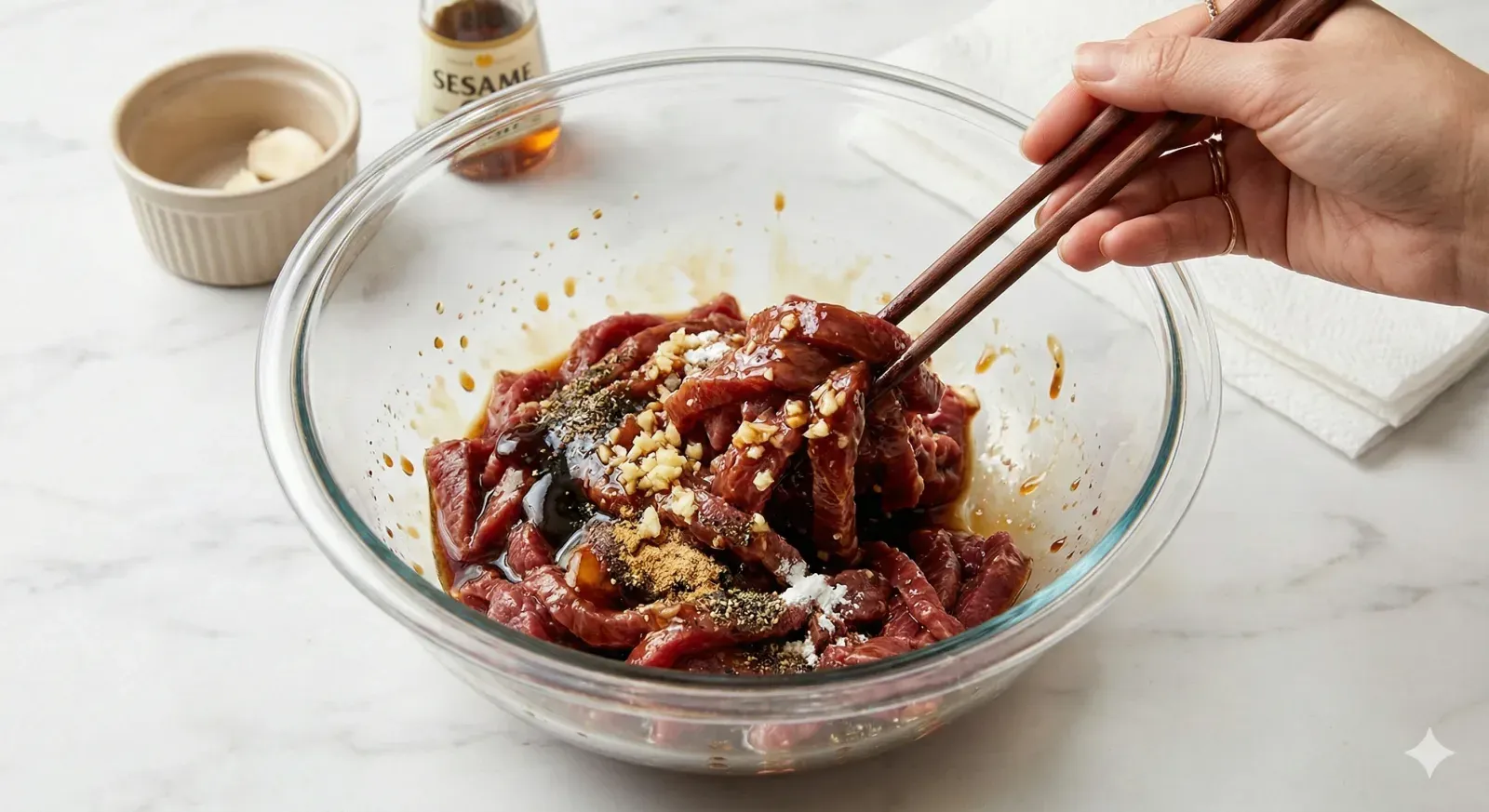
Step 1: Marinate the Beef
1In a bowl, combine thinly sliced beef with half the minced garlic (1 tablespoon), oyster sauce, fish sauce, seasoning powder, ground black pepper, sesame oil, and cornstarch. Mix thoroughly until every slice is evenly coated. Cover and let marinate for at least 15 minutes. The cornstarch creates a light coating that seals in juices during the high-heat stir-fry — do not skip this step.
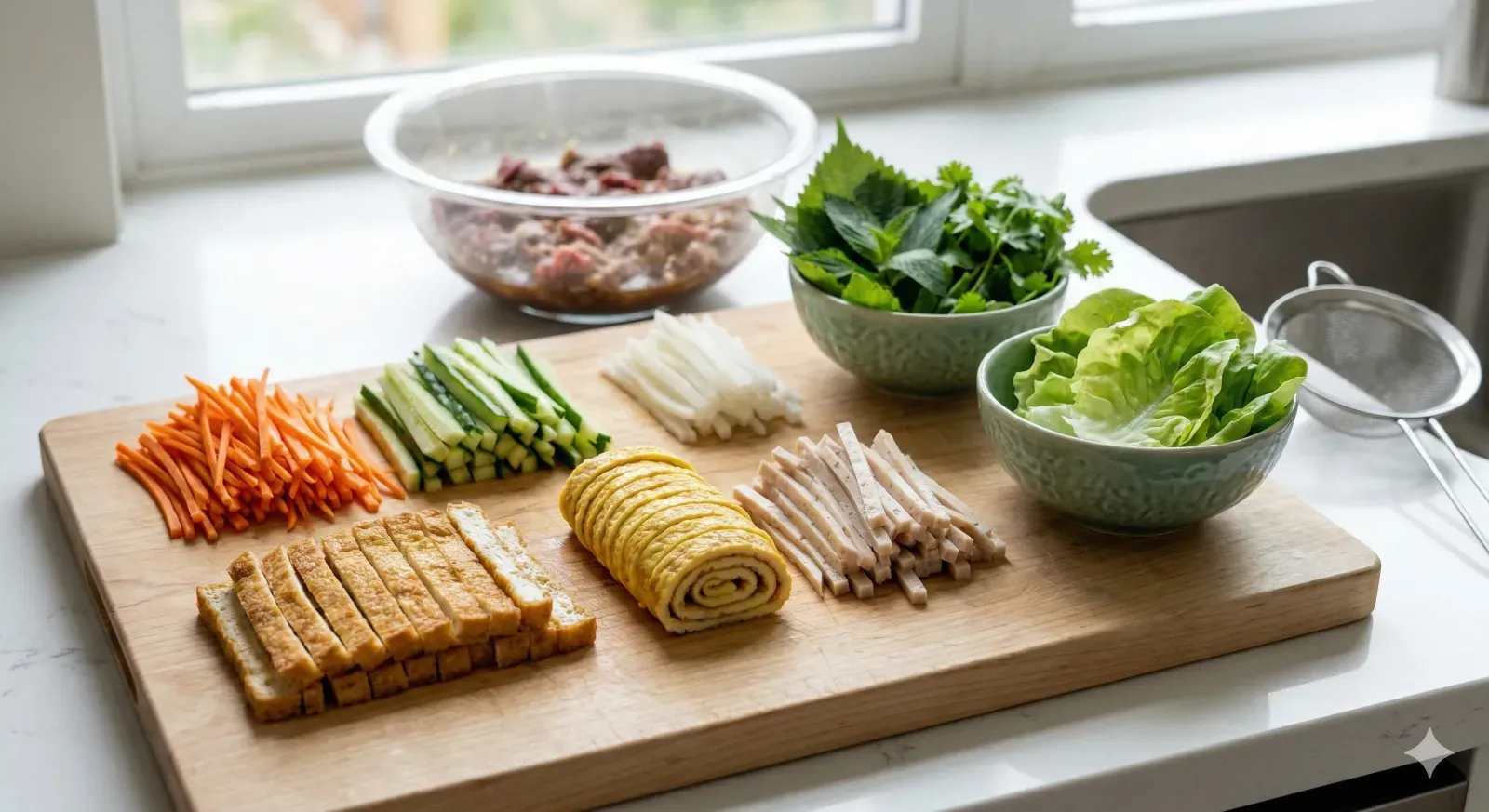
Step 2: Prepare All Fillings
2While the beef marinates, prepare everything else. Tofu: Fry until golden brown on all sides, cool completely, then slice into thin strips. Eggs: Beat with a pinch of seasoning powder, fry into a thin omelette, cool, roll and slice into strips. Gio lua: Julienne into thin strips. Carrots and cucumber: Soak in lightly salted rice-washing water for 10 minutes, rinse well, then julienne. Herbs and lettuce: Pick, rinse, soak in diluted salt water to clean, drain, and shake dry.
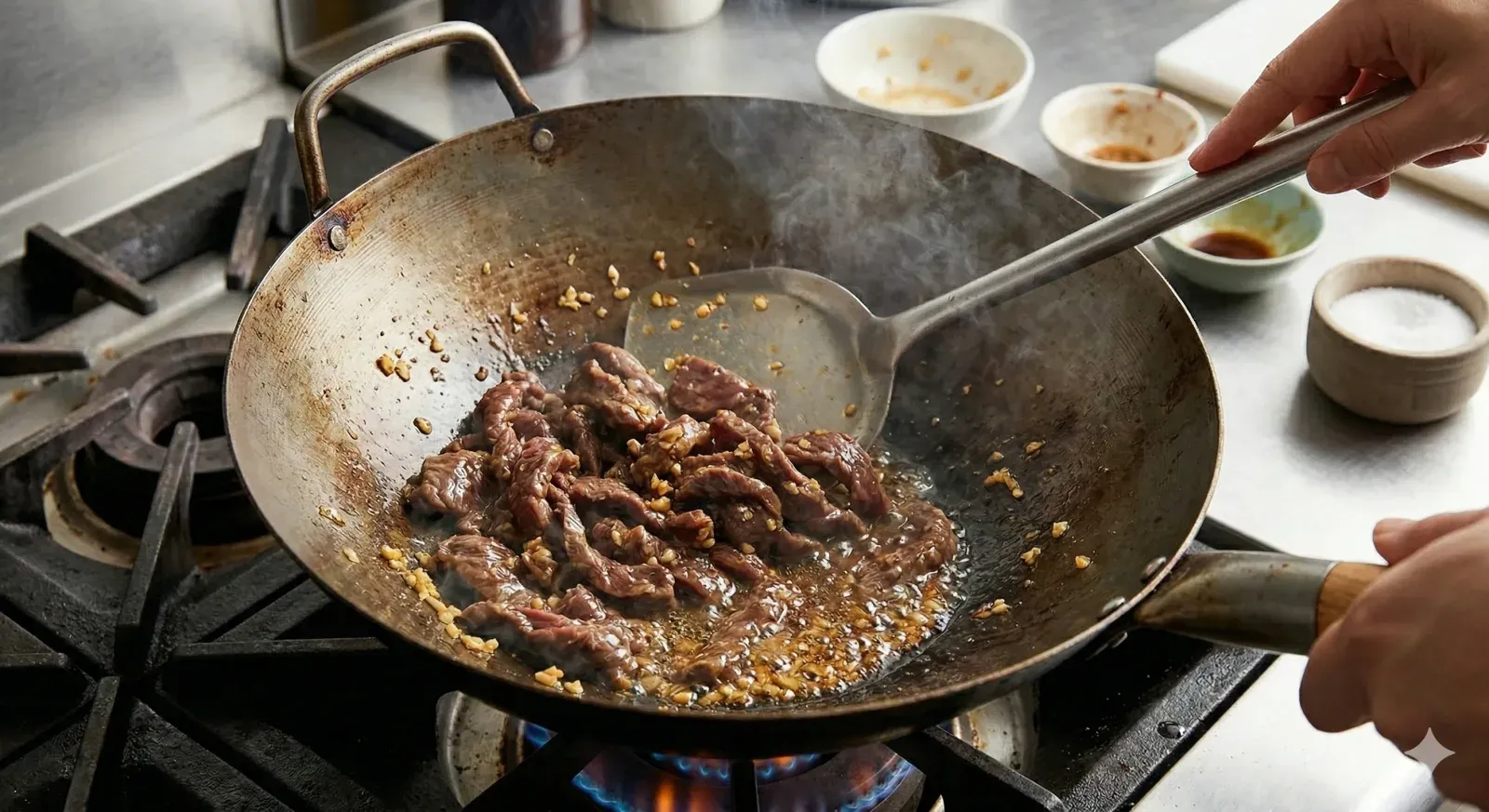
Step 3: Stir-Fry the Beef
3This step takes less than 3 minutes — and it makes all the difference. Heat a wok or large skillet over high heat. Pour in 3-4 tablespoons of cooking oil and wait until it shimmers. Toss in the remaining minced garlic and stir for about 20 seconds until golden and fragrant. Add the marinated beef and stir-fry quickly, tossing constantly until the beef just turns from pink to brown. This technique is called xao tai lan — just-cooked stir-fry. Remove from heat immediately. Do not let the beef release liquid into the pan, or it will become dry and chewy.
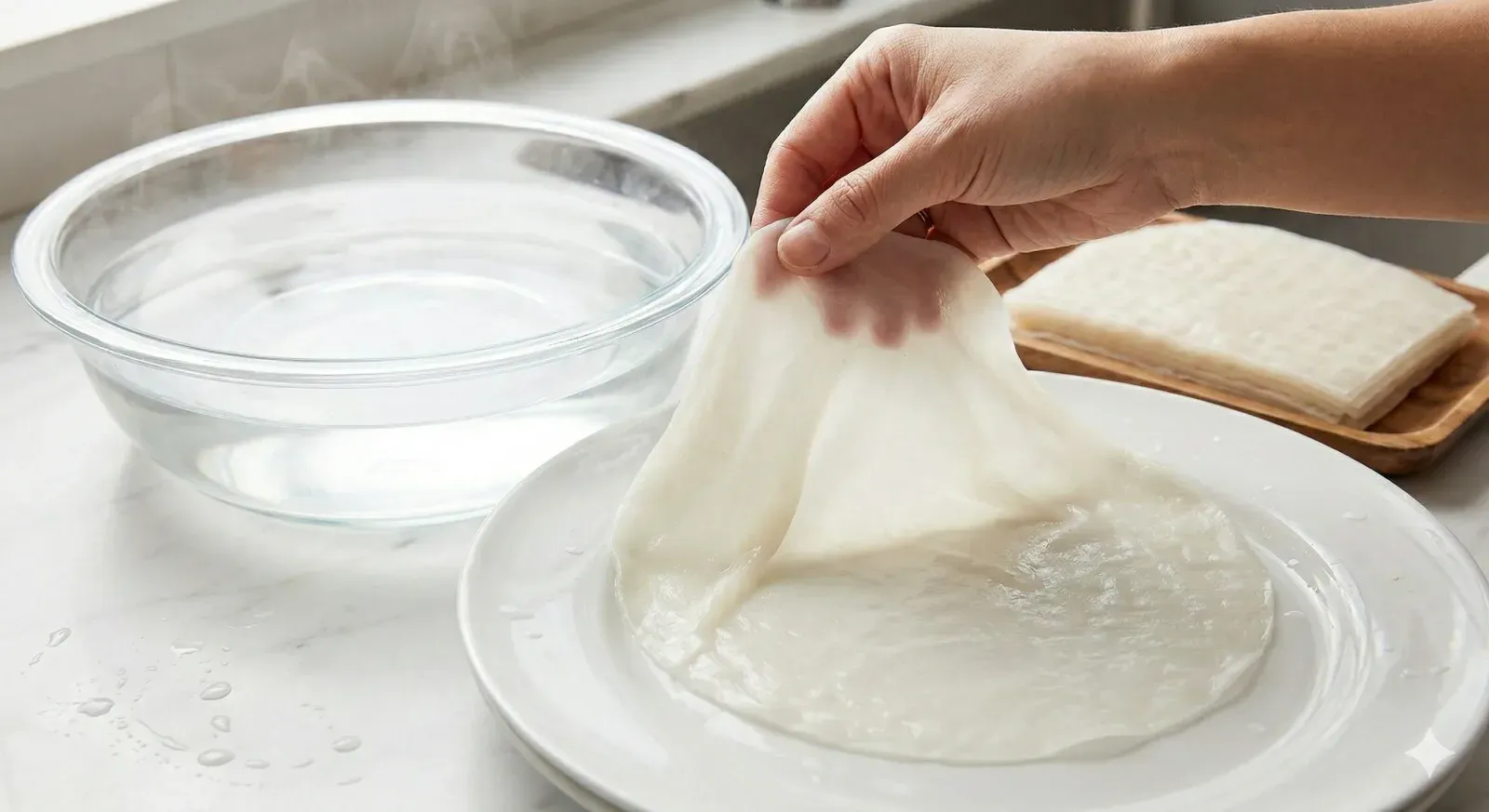
Step 4: Soften the Pho Sheets
4If your fresh pho sheets have been refrigerated, bring them to room temperature before rolling. If they are stiff, briefly dip each sheet in warm (not boiling) water for 5-10 seconds to restore flexibility. They should be soft and pliable, but not falling apart. Lay one sheet flat on a clean plate or work surface.
Step 5: Assemble the Rolls
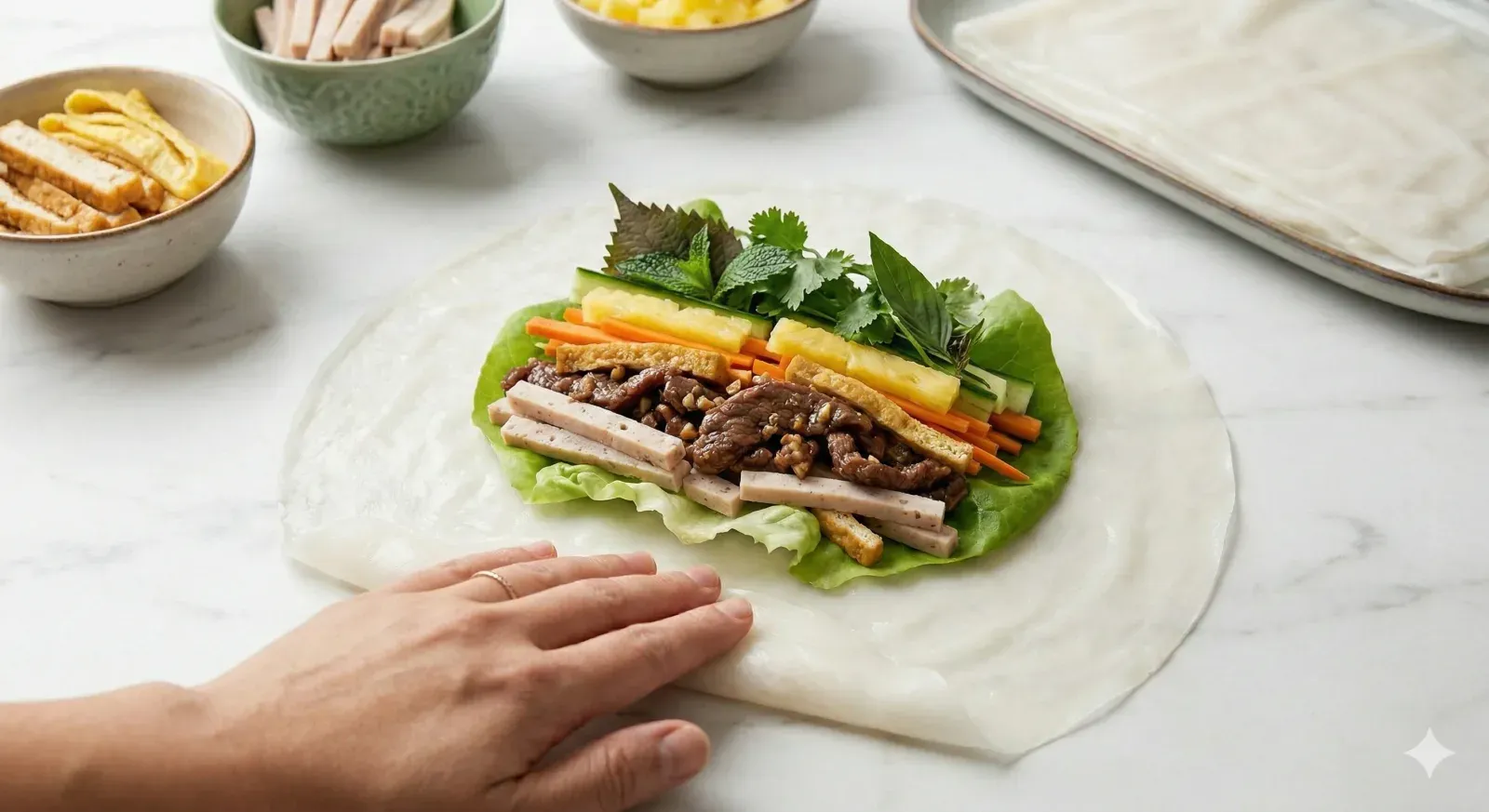
5Working with one pho sheet at a time, layer the fillings: a leaf of lettuce first (acts as a moisture barrier), then a portion of stir-fried beef, a few strips each of gio lua, egg, carrot, cucumber, pineapple, and a small handful of fresh herbs. Leave about 2cm on each side. Roll tightly from the bottom, tucking in the sides as you go. Firm, steady pressure as you roll ensures the finished roll holds its shape when sliced or picked up with chopsticks. Repeat until all fillings are used.
Step 6: Serve
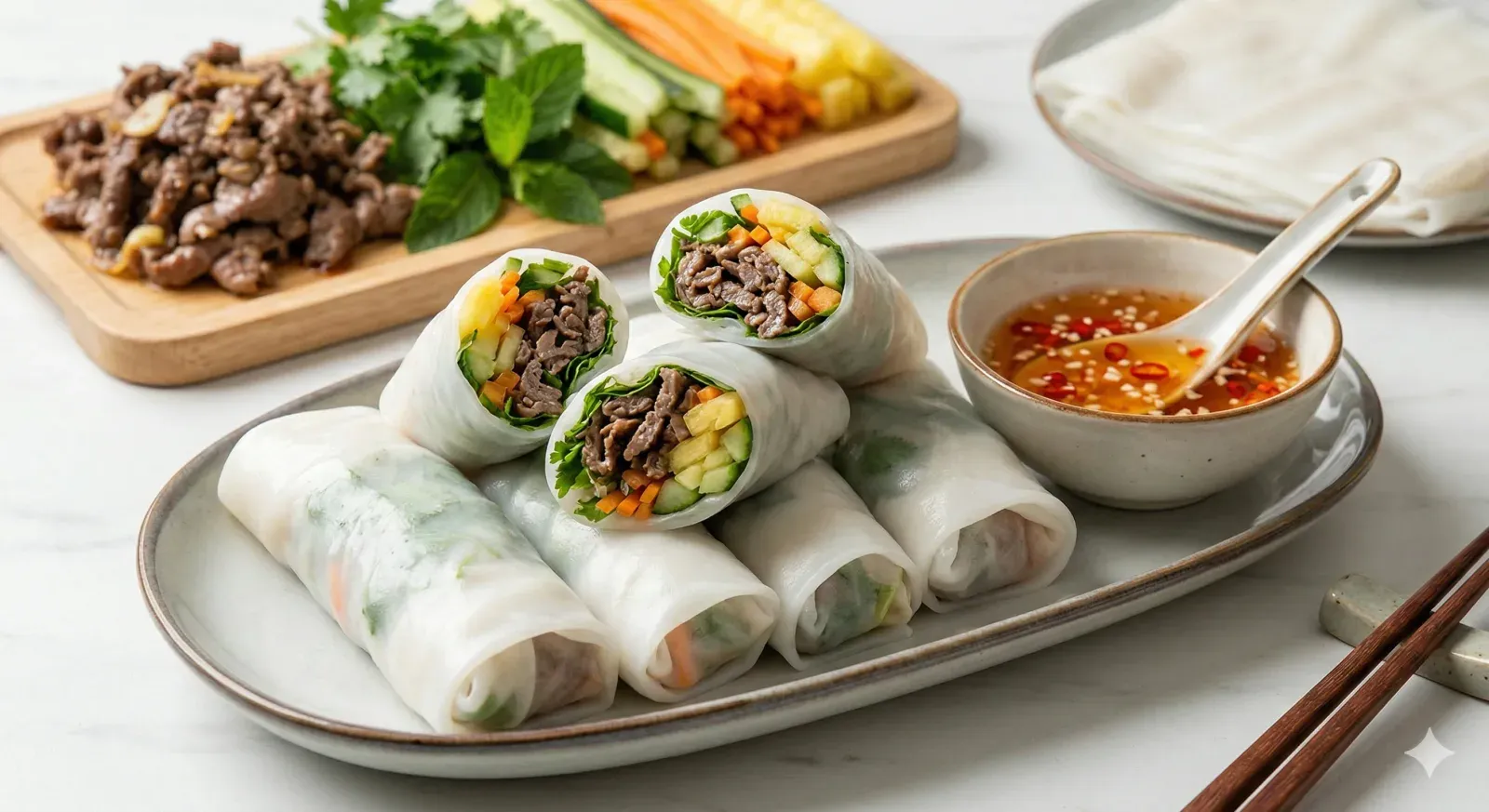
6Arrange the finished rolls on a serving platter. Slice each roll in half diagonally to reveal the colorful cross-section — a detail that makes the presentation instantly eye-catching. Serve immediately alongside a bowl of sweet and sour dipping fish sauce. Pho Cuon is at its best eaten fresh.
Expert Tips for Perfect Pho Cuon
Keep the Wok Screaming Hot
The secret to restaurant-quality stir-fried beef is high, sustained heat. Make sure your wok is properly preheated before adding oil, and cook the beef in a single, uncrowded batch. Crowding the wok drops the temperature and causes steaming instead of searing — the beef will turn gray and watery instead of caramelized and tender.
Cornstarch Is Your Secret Weapon
Adding just a teaspoon of cornstarch or tapioca starch to the marinade is a Vietnamese velveting technique. It coats the beef fibers, sealing in moisture and keeping every slice silky during the high-heat cook. The difference between velveted and plain beef is immediately noticeable in texture.
Roll Tight, Cut Clean
A loosely wrapped roll falls apart the moment you pick it up with chopsticks or try to slice it. Tuck the sides inward first (like a burrito), then roll forward firmly. Pressing gently as you roll compresses the fillings into a snug, even bundle that holds its shape beautifully.
Pho Cuon vs. Goi Cuon: What Is the Difference?
Vietnamese rolls come in many forms. Here is how Pho Cuon compares to the other popular fresh roll you may already know:
| Feature | Pho Cuon | Goi Cuon (Spring Rolls) |
|---|---|---|
| Wrapper | Fresh pho rice sheets (banh pho) | Dried rice paper (banh trang) |
| Texture | Soft, silky, chewy | Thin, slightly translucent, delicate |
| Main Protein | Stir-fried beef | Boiled shrimp and/or pork |
| Origin | Hanoi | Southern Vietnam |
| Dipping Sauce | Sweet and sour fish sauce | Hoisin peanut sauce or fish sauce |
| Served | Room temperature | Cold or room temperature |
Serving Suggestions
Pho Cuon is traditionally served as a light meal or generous appetizer in Vietnamese homes and street-food stalls. It pairs beautifully with other dishes for a full spread, or holds its own as a satisfying lunch.
The Perfect Accompaniments:
- Extra fresh herb platter: Thai basil, perilla, and mint on the side so guests can customize each bite.
- Pickled daikon and carrot (do chua): The tangy crunch cuts through the richness of the beef beautifully.
- Sliced fresh chili: For those who like heat alongside the sweet-sour dipping sauce.
Beverage Pairings:
- Vietnamese iced tea (tra da) — the classic, refreshing street-food companion
- Salted lemonade (chanh muoi) — bright acidity that mirrors the dipping sauce
- Light jasmine tea — cleanses the palate between rolls
Storage and Reheating
Refrigerator: Assembled rolls keep for up to 1 day in an airtight container. Store in a single layer, lightly covered with damp paper towels to prevent the pho sheets from drying out. Refrigeration will slightly firm the pho sheets.
Freezer: Not recommended for assembled rolls — pho sheets become gummy after thawing. The stir-fried beef, however, can be frozen for up to 1 month in an airtight container.
Reheating: Rolls are best enjoyed at room temperature. If pho sheets have stiffened in the fridge, microwave for 20-30 seconds with a damp paper towel on top to restore softness. Reheat the beef separately in a hot pan for 1 minute.
Common Mistakes to Avoid
1. Marinating Beef with Salt
Salt draws moisture out of the meat through osmosis. During stir-frying, this excess liquid drops the wok temperature, causing steaming instead of searing — the result is grey, waterlogged, chewy beef. Always use fish sauce and oyster sauce instead, which deliver flavor without the moisture-drawing effect of plain salt.
2. Overcooking the Beef
Pho Cuon beef should be stir-fried to just cooked — pink gone, but still glistening and tender. The moment it releases juice into the pan, it has already passed its peak. Work quickly, stir constantly, and pull the beef off the heat as soon as it changes color.
3. Rolling Too Loosely
A loose roll looks untidy and falls apart when eaten. Tuck the sides in firmly before rolling, use a moderate amount of filling — resist the temptation to overstuff — and apply gentle but steady pressure as you roll forward.
4. Using Cold Pho Sheets Straight from the Fridge
Cold pho sheets tear and crack easily. Always bring them to room temperature before rolling, or dip briefly in warm water to restore flexibility.
Frequently Asked Questions
What is the difference between Pho Cuon and Pho soup?
Pho Cuon uses the same fresh rice sheet noodles (banh pho tuoi) as traditional pho soup, but instead of serving them in broth, they are wrapped around stir-fried beef and fresh herbs. There is no broth — the dish is served at room temperature with a sweet-sour dipping sauce on the side.
Can I substitute the beef with another protein?
Absolutely. Chicken breast or thigh works well when marinated the same way. For a vegetarian version, extra-firm tofu, sauteed mushrooms, or plant-based meat all roll beautifully and pair well with the dipping sauce.
Where can I find fresh pho sheets (banh pho tuoi)?
Fresh pho sheets are available at most Vietnamese or Asian grocery stores in the refrigerated noodle section. If unavailable, wide, flat dried rice noodles soaked in cold water until pliable (do not boil them) make a reasonable substitute.
What dipping sauce goes with Pho Cuon?
The traditional accompaniment is nuoc mam chua ngot — a sweet and sour fish sauce dip made from fish sauce, fresh lime juice, sugar, warm water, minced garlic, and sliced fresh chili. A common starting ratio is 1 part fish sauce : 1 part lime juice : 2 parts sugar : 3 parts water, then adjusted to your taste.
Can I make Pho Cuon ahead of time?
Pho Cuon is best assembled and eaten fresh. All fillings can be prepared up to 24 hours ahead and stored separately in the refrigerator. Roll just before serving for the best texture and presentation.
Variations and Adaptations
Classic Hanoi-Style (Just Beef):
The original Ngu Xa version uses only stir-fried beef and fresh herbs — no egg, tofu, or gio lua. This minimalist approach lets the quality of the beef and herbs take center stage. Perfect when you have exceptional beef and want nothing to compete with it.
Vegetarian Pho Cuon:
Replace the beef with a mix of pan-seared king oyster mushrooms and extra-firm tofu, marinated in soy sauce, sesame oil, and garlic. Use a vegetarian dipping sauce made from soy sauce, lime juice, sugar, and chili instead of fish sauce.
Shrimp Pho Cuon:
Swap the beef for large shrimp, quickly sauteed in garlic butter with a splash of fish sauce. The natural sweetness of shrimp pairs wonderfully with pineapple and fresh mint inside the roll.
The Cultural Significance of Pho Cuon
Hanoi’s food culture is defined by restraint and refinement — dishes where every ingredient earns its place and nothing is superfluous. Pho Cuon is a perfect expression of this philosophy. Born on the shores of West Lake in the late 20th century, it emerged as an answer to a simple but inspired question: what if pho’s most celebrated element — those silky, hand-made rice sheets — could become the vessel rather than just the noodle?
For Hanoians, Pho Cuon is intrinsically linked to the lakeside restaurants of Ngu Xa, where generations of families sit outdoors on warm evenings, rolling and dipping together. It represents something precious in Vietnamese food culture: a dish that slows you down, that you assemble with your own hands, that cannot be rushed. In a world of delivery apps and instant meals, Pho Cuon insists on the pleasure of the process.
It is also a dish that embodies can bang — balance. The richness of beef balanced by the acidity of pineapple and lime. The warmth of stir-fried meat balanced by the coolness of fresh herbs. The softness of pho sheets balanced by the crunch of carrot and cucumber. In every roll, there is harmony.
Conclusion
Pho Cuon proves that some of the most beloved dishes are also the most approachable. With a handful of fresh ingredients, 30 minutes, and a hot wok, you can bring an iconic Hanoi street food experience right to your own kitchen. The key takeaways: marinate your beef well (never with salt), keep the wok hot and the stir-fry quick, bring your pho sheets to room temperature, and roll firmly. Follow those four rules and you will have rolls worthy of any Ngu Xa lakeside table.
Loved making Pho Cuon? Explore more authentic Vietnamese recipes on My Viet Kitchen — including our classic Goi Cuon (Fresh Spring Rolls), Banh Mi, and Bun Bo Hue for your next Vietnamese cooking adventure.