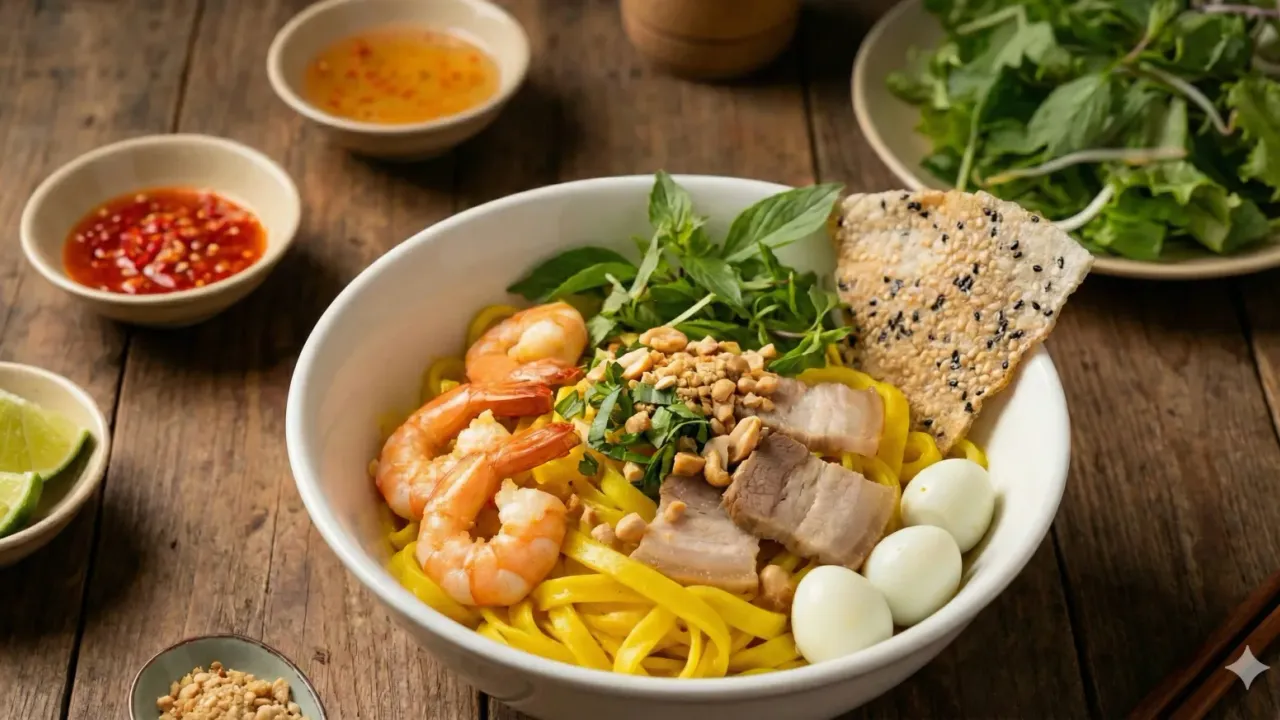
Quang noodles (Mì Quảng) with shrimp and pork is not difficult to make, but achieving the authentic flavor from Central Vietnam requires the right recipe and techniques. This comprehensive guide will show you how to create this iconic Vietnamese dish with its rich, flavorful broth and perfectly cooked proteins.
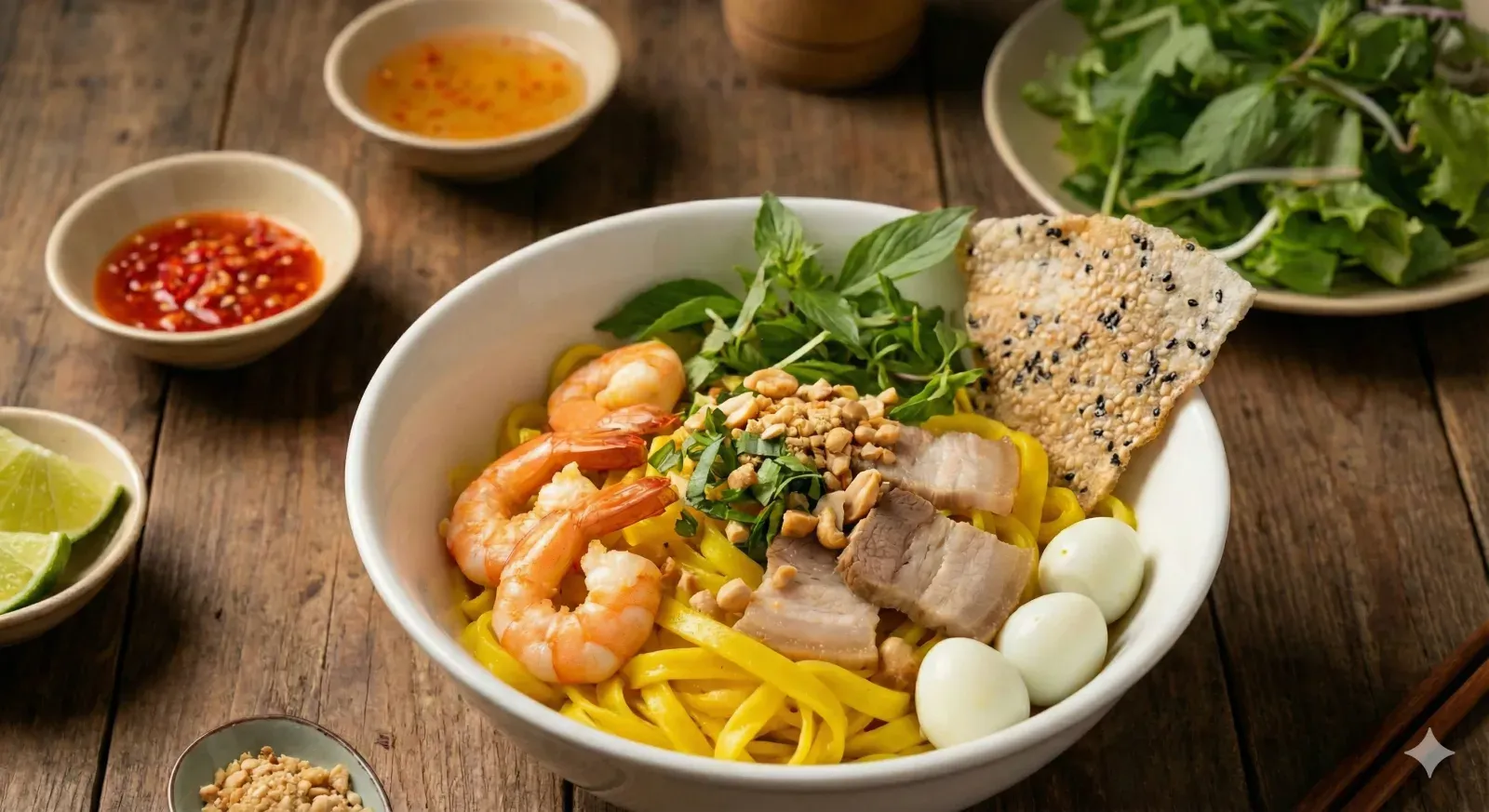
Quang noodles with shrimp and pork have become beloved far beyond their Central Vietnamese origins. With its rich, savory broth paired with sweet shrimp and tender pork, all served over chewy turmeric noodles, this dish will captivate you from the first taste. While the ingredients are readily available and the steps straightforward, mastering the authentic Quang-style flavor requires a proper recipe and insider tips.
What Are Quang Noodles (Mì Quảng)?
Mì Quảng is a signature dish and specialty from Quang Nam province in Central Vietnam. The name itself reveals its geographic origins – “Quảng” refers to the Quang region.
Originally, local residents prepared this dish to serve honored guests or during important festivals and celebrations. Quang noodles represent a harmonious blend of Vietnamese culinary culture with influences from Chinese immigrants, particularly in the historic international trading port of Hoi An.Mì Quảng is more than just food – it embodies the cultural identity of Quang people, expressed through humble, locally-sourced ingredients and meticulous, refined preparation methods.
Quang Noodles with Shrimp and Pork Recipe
Ingredients for Mì Quảng Tôm Thịt
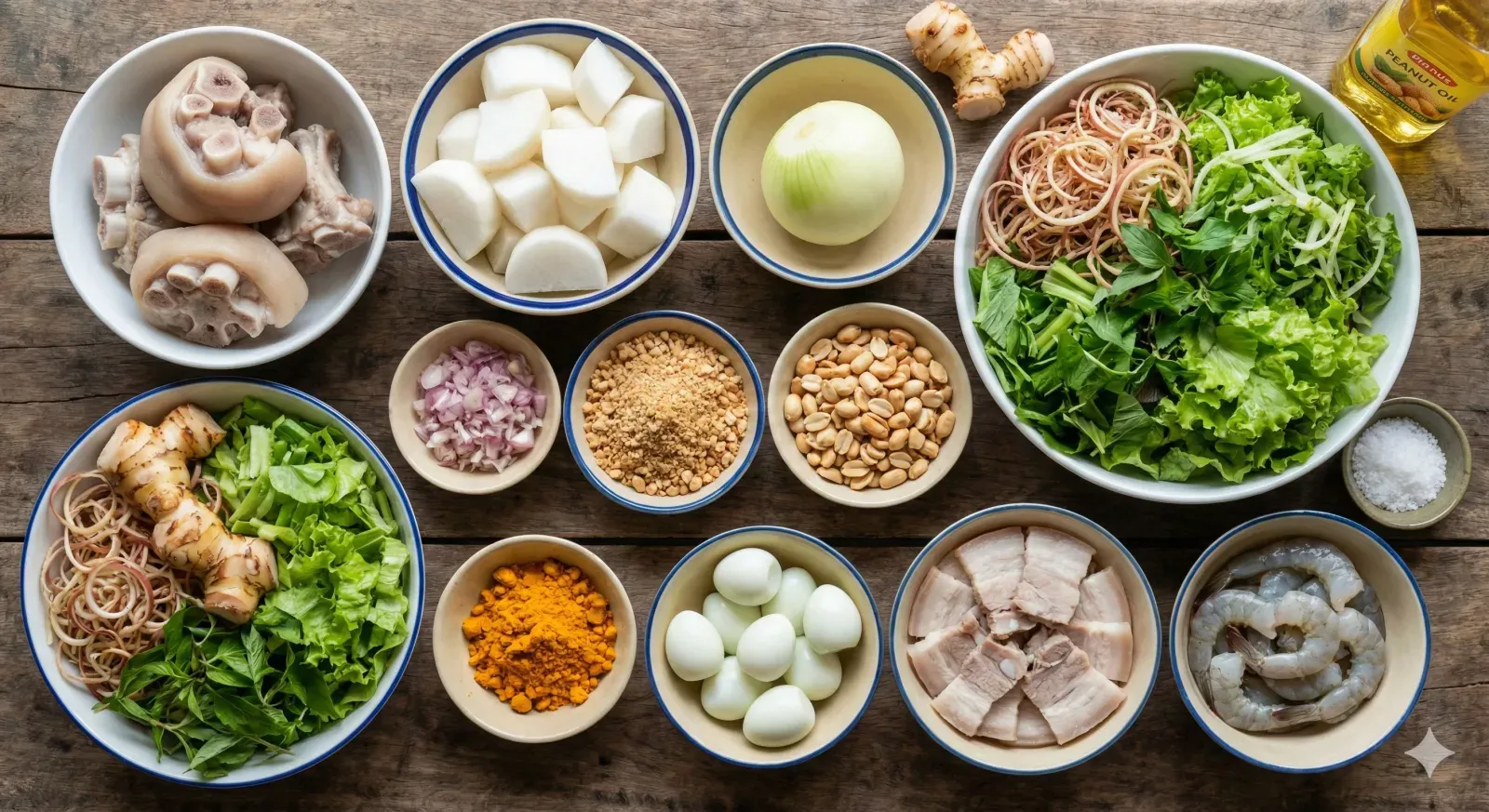
For the Broth:
-
500g pork tail bones
-
50g onion
-
50g white radish (daikon)
-
3 liters water
For the Main Proteins:
-
500g fresh shrimp
-
500g pork belly
-
20 quail eggs
For the Aromatics and Sauce:
-
100g galangal (or substitute with ginger)
-
100g peanuts
-
50g shallots
-
20g fresh turmeric
-
2 tablespoons annatto oil (or substitute with paprika oil)
-
1 cup peanut oil
For Serving:
-
Quang noodles (wide, flat rice noodles with turmeric)
-
Grilled sesame rice paper crackers
-
Hoi An chili sauce
Step-by-Step Instructions
Step 1: Prepare the Ingredients
1Bring a pot of water to boil and blanch the pork tail bones for about 5 minutes. This removes impurities and ensures a clear broth. Drain, rinse the bones thoroughly, and set aside.
Peel the onion and leave it whole. Peel the white radish and cut into large chunks.
For the galangal, rinse briefly then place in a colander and scrub to remove the silky outer layer. Use a knife to trim the dark ends, let dry, then pound or crush.
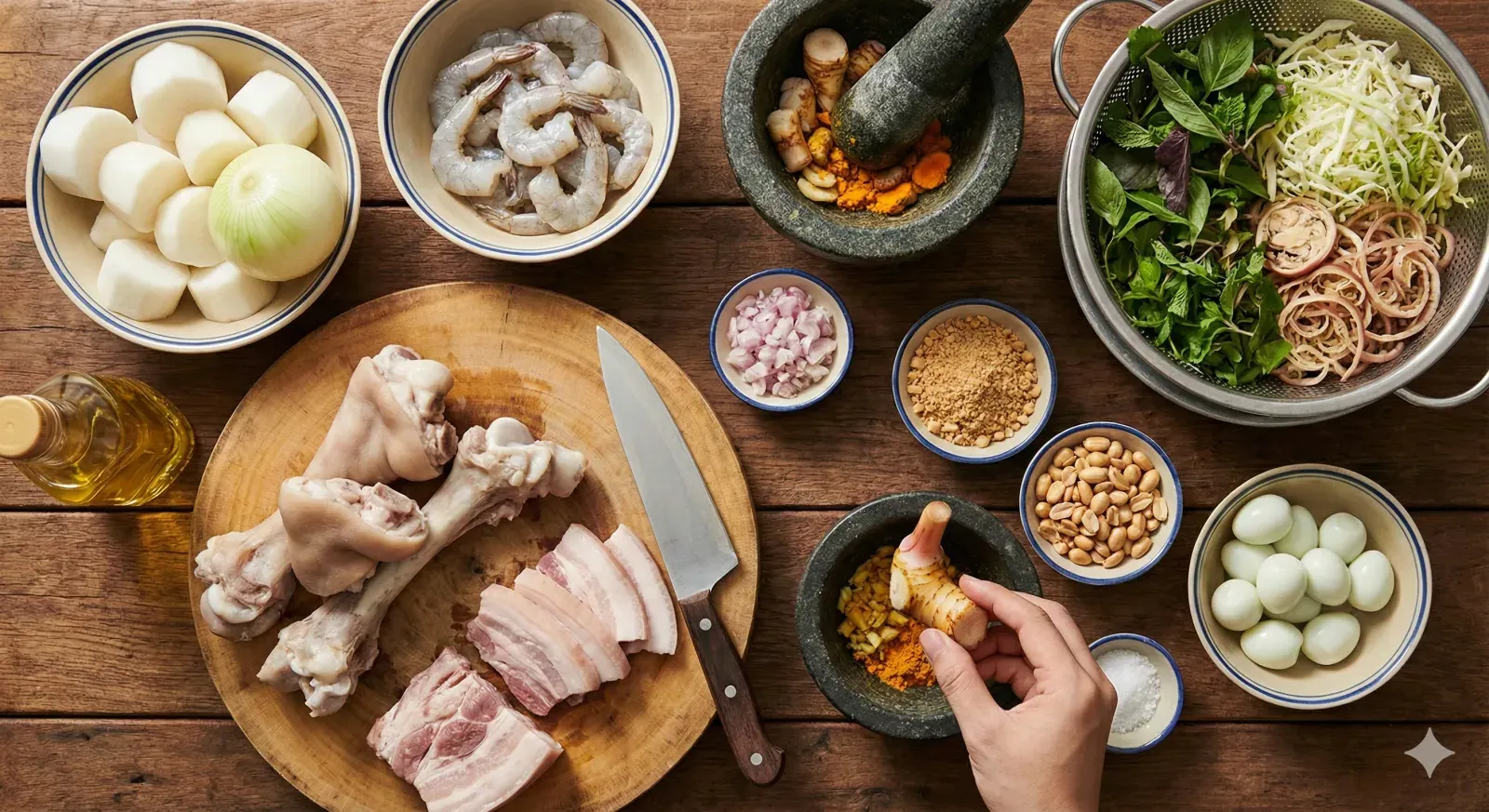
Mince the shallots finely.
Take about 20g of peanuts, rinse clean, let dry, and grind into a paste. Roast the remaining peanuts until golden.
Pound or grind the fresh turmeric.
For the accompanying vegetables, wash thoroughly. Shred the cabbage thinly. Peel the green banana and slice thinly, then soak in water with a squeeze of lime juice to prevent browning. Mix all vegetables together.
Boil the quail eggs until hard-cooked.
Briefly blanch the pork belly in boiling water seasoned with ½ teaspoon salt for about 2 minutes. Remove, rinse, drain, and slice thinly into pieces about 3cm wide.
For the shrimp, remove heads, devein by removing the dark intestinal tract, and trim the legs. Place all shrimp in a bowl with 1 teaspoon salt and rinse thoroughly twice with water. Drain well.
Heat the peanut oil in a wok until it begins to shimmer and smoke slightly, then turn off heat and let cool for about 5 minutes.
Step 2: Make the Broth
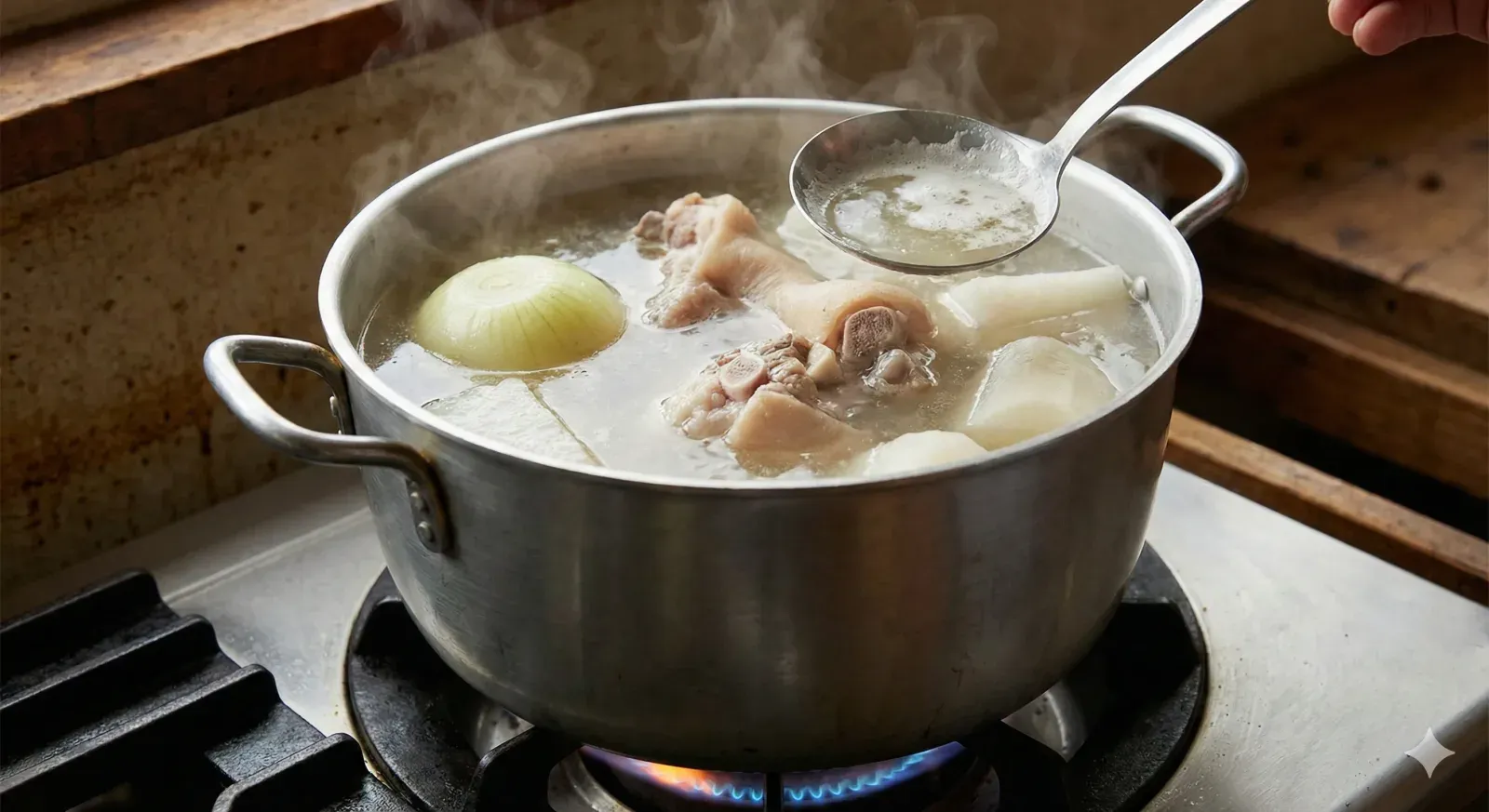
2Place the blanched bones in a pot with 3 liters of water and bring to a simmer. Cook for about 1 hour, then add the whole onion and white radish chunks. During cooking, remember to skim off any foam that rises to the surface for a clear broth.
After adding the onion and radish, simmer for an additional 30 minutes, then turn off the heat.
Step 3: Marinate the Pork Belly
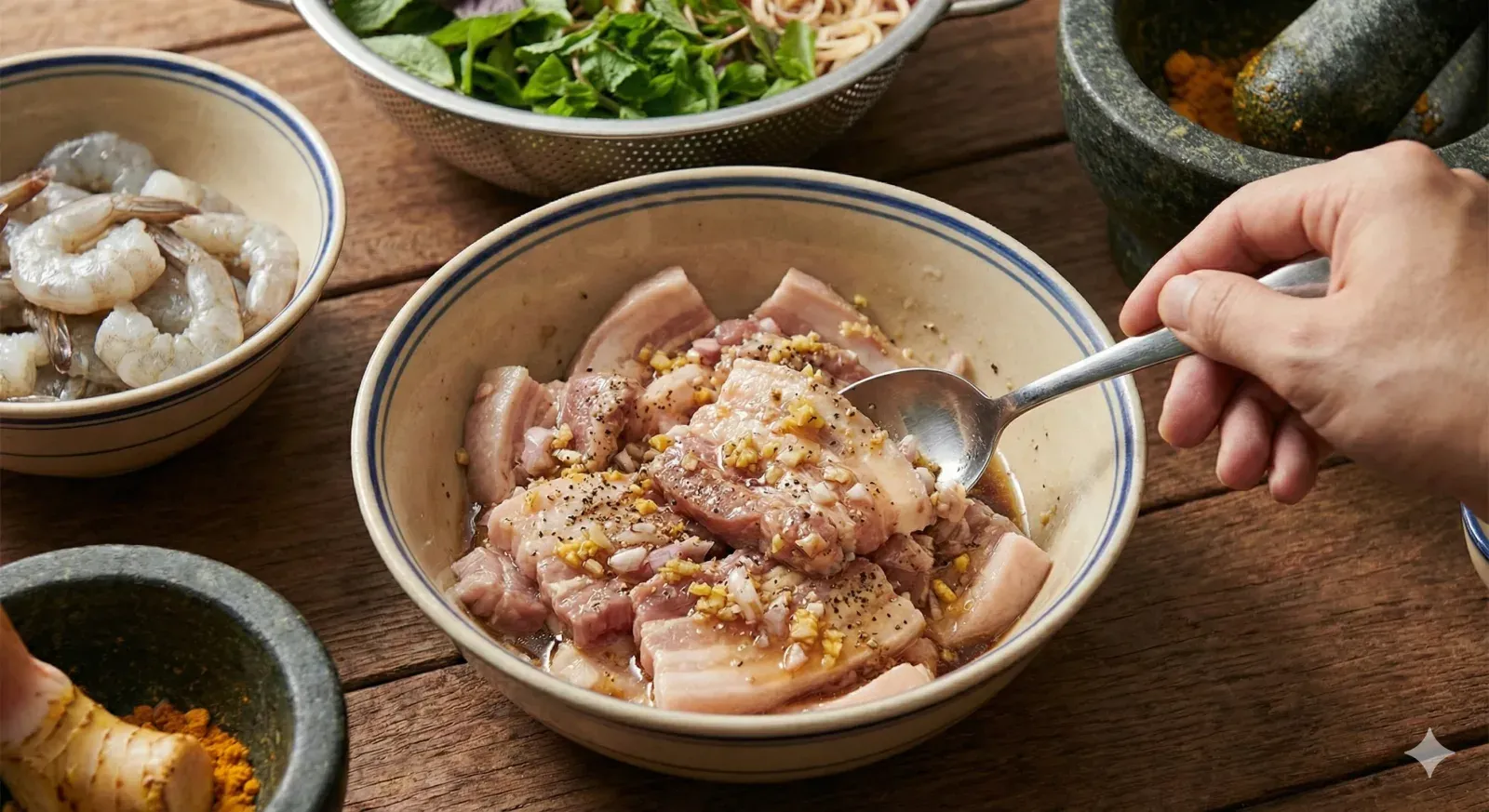
Marinate the sliced pork for 30 minutes with:
-
1 teaspoon salt
-
1 teaspoon MSG (or chicken bouillon powder)
-
1 teaspoon black pepper
-
2 teaspoons fish sauce
-
2 teaspoons minced shallots
-
1 teaspoon crushed galangal
-
1 teaspoon sugar
Mix everything together thoroughly so the pork absorbs the seasonings.
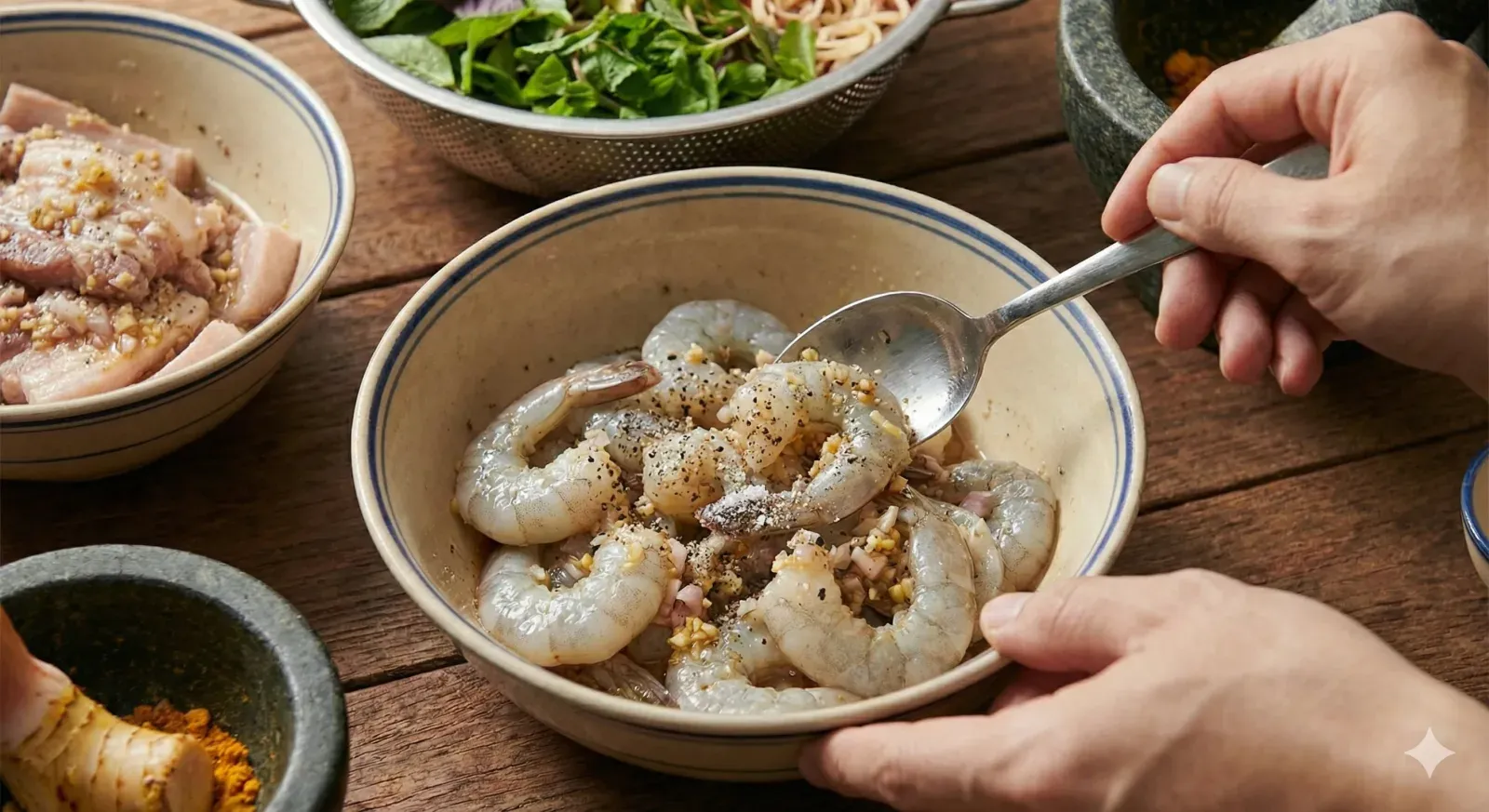
Step 4: Marinate the Shrimp
Marinate the cleaned shrimp with:
-
1 teaspoon salt
-
1 teaspoon MSG
-
1 teaspoon black pepper
-
1 teaspoon minced shallots
-
2 teaspoons minced shallots
-
1 teaspoon crushed galangal
Mix well and marinate for 30 minutes to absorb the flavors.
Step 5: Fry the Galangal
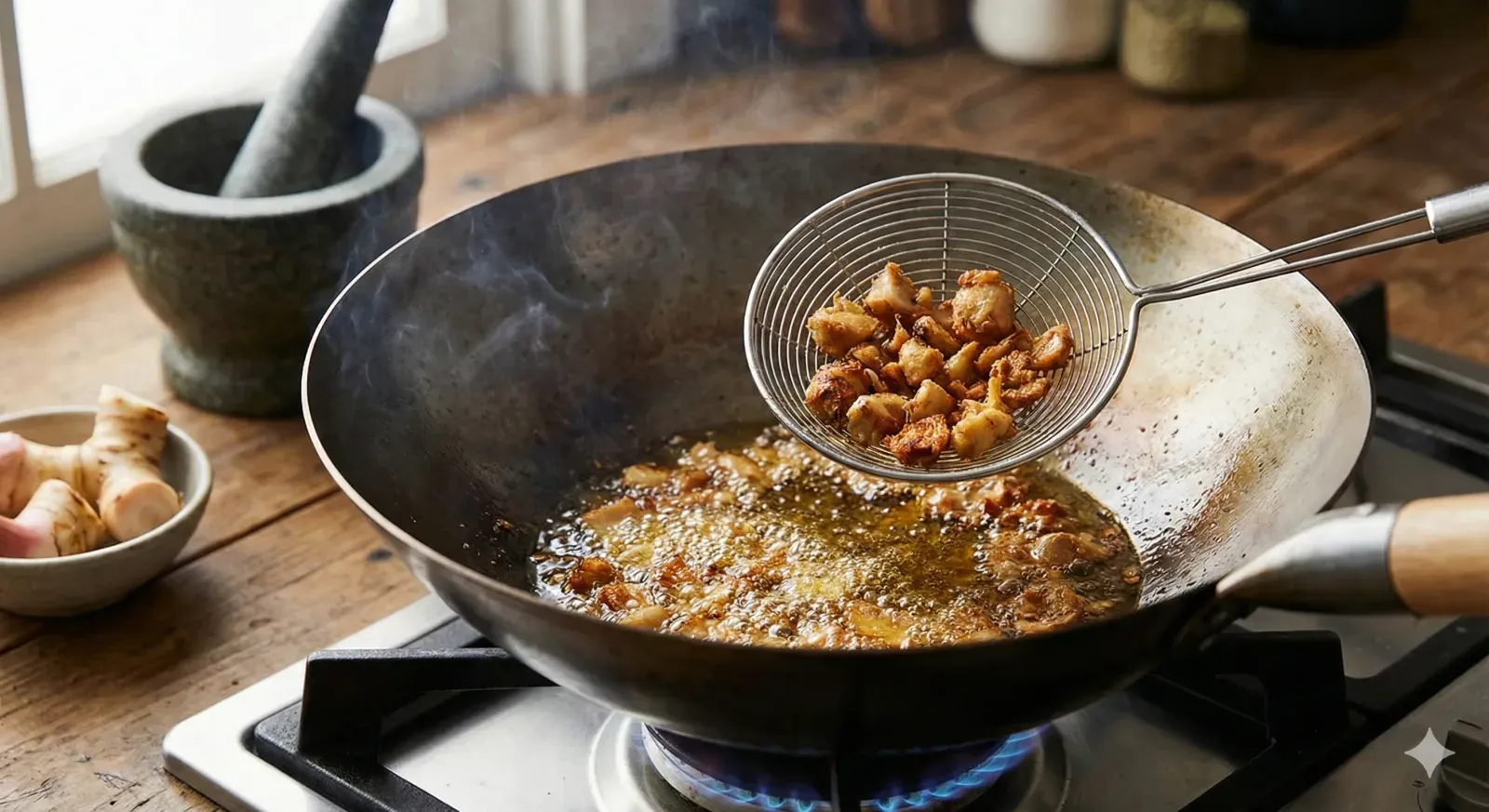
5Heat a wok over medium heat and add half of the prepared peanut oil. Once hot, add half of the crushed galangal and stir constantly until golden, crispy, and fragrant. Pour through a strainer to separate the fried galangal oil from the crispy galangal pieces. Reserve both separately.
Step 6: Stir-Fry the Shrimp
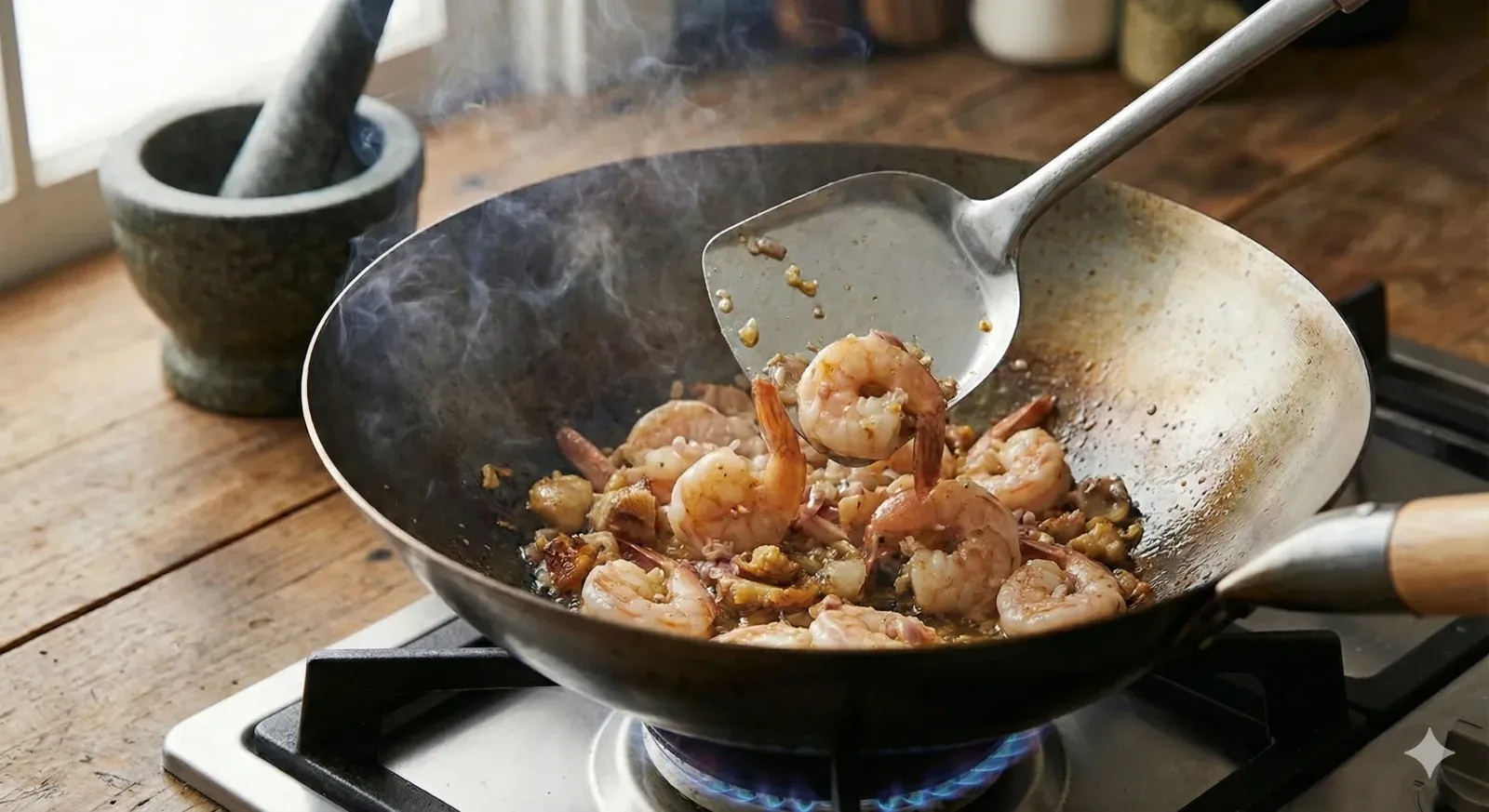
6Using the same wok from frying galangal, heat it up and quickly stir-fry the marinated shrimp just until they turn pink and opaque. Turn off the heat immediately.
Step 7: Make the Quang Noodle Sauce
7Heat a clean wok over medium heat and add about 3 tablespoons of peanut oil. Add the remaining crushed galangal and stir-fry. When it becomes fragrant, add the 20g of ground peanuts and 1 tablespoon of turmeric. Stir everything together until well combined and aromatic.
Increase to high heat and add the marinated pork. Stir-fry until fully cooked through. Next, pour in 1.5 liters of the prepared broth and add the boiled quail eggs.
Season the sauce with:
-
1 teaspoon salt
-
1 teaspoon MSG
-
2 tablespoons sugarr
-
4 tablespoons fish sauce
Add the stir-fried shrimp. For an attractive golden color, stir in 2 tablespoons of annatto oil (dầu điều).
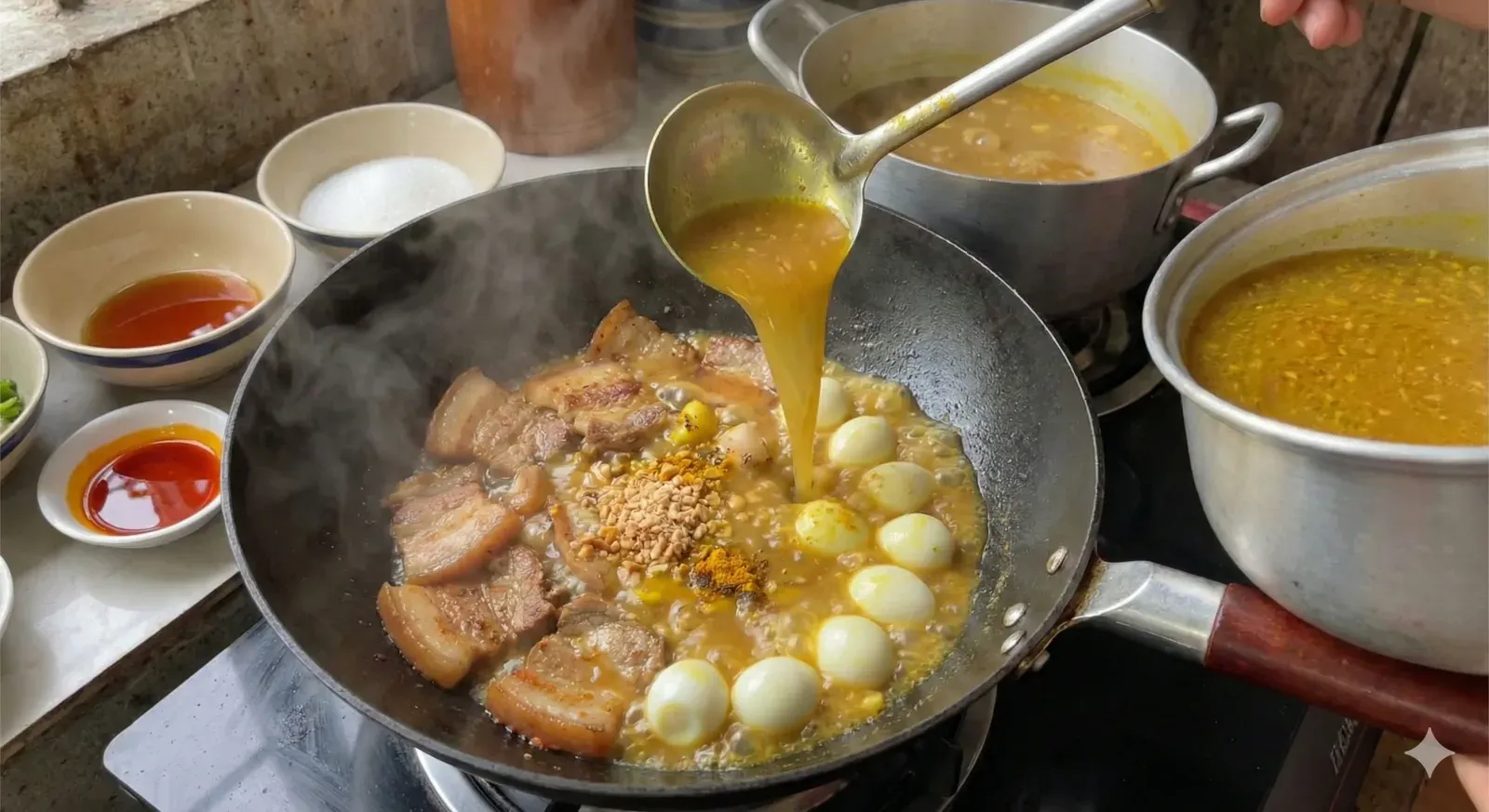
Bring the sauce to a boil, skim off any foam, and turn off the heat.
Step 8: Assemble and Serve
8Separate the Quang noodles and blanch briefly in boiling water. Place in a bowl and toss with a little of the fried galangal oil to prevent sticking.
Arrange the pork slices, shrimp, and quail eggs artfully on top. Ladle the hot sauce over the noodles. Garnish with scallions, crispy fried galangal, and roasted peanuts.
Serve immediately with the plate of mixed fresh herbs and vegetables, grilled sesame rice paper crackers (broken into pieces), and Hoi An chili sauce on the side.
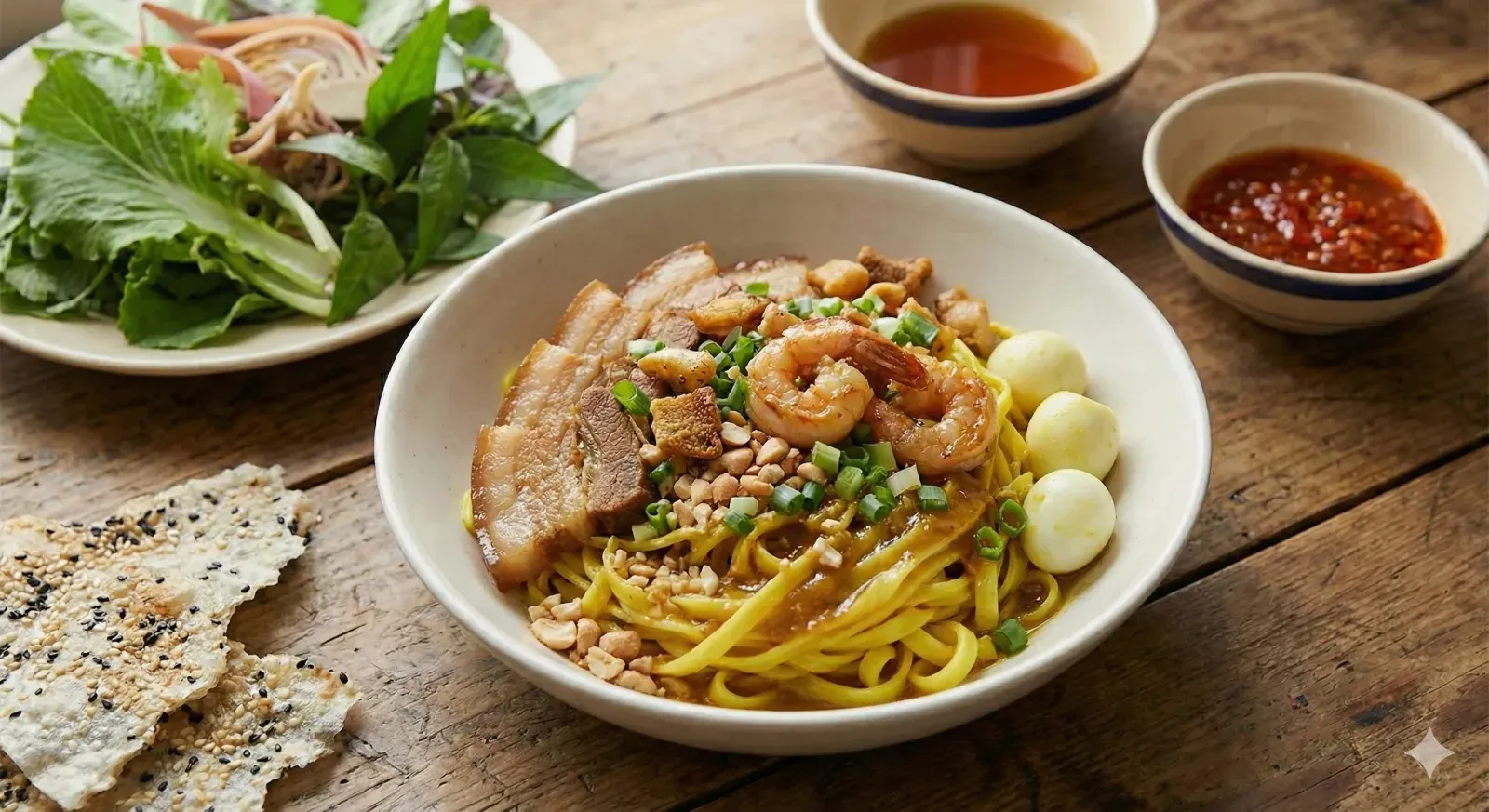
What Vegetables Should You Eat with Quang Noodles?
For an authentic bowl of Quang noodles with shrimp and pork, you should serve it with a generous plate of mixed fresh herbs and vegetables. These accompaniments balance the richness of the meat and add refreshing flavors to the dish.
Traditional vegetables typically include:
- Young mustard greens (cải non): Slightly spicy and crisp, very characteristic of Quang noodles
- Shredded banana blossom: Adds crunch and cuts through the richness
- Lettuce: Provides freshness and lightness
- Vietnamese coriander (húng lủi/rau răm): Adds distinctive aromatic flavor
- Bean sprouts: Can be eaten raw or lightly blanched, adds crunch and sweetness
Additionally, don’t forget to serve with grilled sesame rice paper broken into small pieces and crushed roasted peanuts to add nutty richness and texture to the dish.
 Advertisement
Frequently Asked Questions About Quang Noodles
Should You Use Fresh or Dried Shrimp?
When making Quang noodles, fresh shrimp is always the best choice for the shrimp and pork topping.
Fresh shrimp provides natural sweetness, firm texture, and when cooked, develops a beautiful red color that makes the bowl more appealing. River shrimp (tôm đất) is the most popular choice among Quang locals, but you can also use white leg shrimp (tôm thẻ) or tiger prawns (tôm sú).
Dried shrimp is sometimes used to add depth to the broth, but it’s not the main ingredient for the topping in shrimp and pork Quang noodles. Some places might use dried shrimp as a substitute when fresh isn’t available, but the flavor won’t compare.
Therefore, if possible, prioritize using fresh shrimp to make your Quang noodles delicious and traditionally authentic.
How Long Should You Cook Quang Noodles?
Cooking Quang noodles should follow these time guidelines:
- Simmering the broth: 1.5 – 2 hours for sweet bones and clear liquid
- Marinating meat: 30 minutes for seasonings to penetrate
- Stir-frying proteins: 1 – 2 minutes for shrimp, 4 – 5 minutes for pork
- Cooking the sauce: 15 – 20 minutes for tender meat and thickened sauce
- Blanching noodles: 1 minute (fresh noodles) or 3 – 5 minutes (dried noodles)
How Long Can You Store Cooked Quang Noodles?
You shouldn’t keep cooked Quang noodles too long, especially the sauce portion. The best storage time is same-day consumption or maximum 1-2 days if properly stored.
To ensure the dish remains fresh and safe, you should:
- Store components separately: Keep the sauce and noodles separate. This prevents the noodles from becoming swollen and mushy.
- Refrigerate: Place the sauce in an airtight container in the refrigerator. When ready to eat, simply reheat. Fresh noodles can be kept in the refrigerator for about 5-7 days if covered tightly. For longer storage (2-3 months), you can freeze the noodles.
However, Quang noodles taste best when cooked and enjoyed immediately. Storage is only a temporary solution.
Pro Tips for Perfect Quang Noodles
- Use pork bones with marrow for the richest, most flavorful broth
- Don’t skip the galangal – it’s essential for authentic flavor. Ginger can substitute but won’t be quite the same
- The sauce should be moderately thick – not too soupy like phở, but not dry either. Quang noodles traditionally have just enough sauce to coat the noodles
- Annatto oil gives the characteristic golden-yellow color. You can make it by heating oil with annatto seeds or substitute with a pinch of turmeric
- Serve immediately while everything is hot for the best experience
- Mix everything together before eating – combine the noodles, sauce, proteins, herbs, and crushed rice paper for the full flavor experience
AdvertisementConclusion
Quang noodles with shrimp and pork is a beloved Vietnamese dish that brings together complex flavors and textures in one satisfying bowl. While it requires some time and attention to detail, the result is absolutely worth it. The combination of rich, savory broth; tender, aromatic pork; sweet shrimp; and chewy turmeric noodles – all brought together with fresh herbs and crispy accompaniments – creates a truly memorable meal.
Whether you’re recreating childhood memories or discovering this Central Vietnamese specialty for the first time, this authentic recipe will guide you to success. Don’t be intimidated by the ingredient list or steps – take it one step at a time, and you’ll be rewarded with an incredible homemade Vietnamese feast.
Have you tried making Quang noodles at home? Share your experience in the comments below!
-
-
-
-
-
-