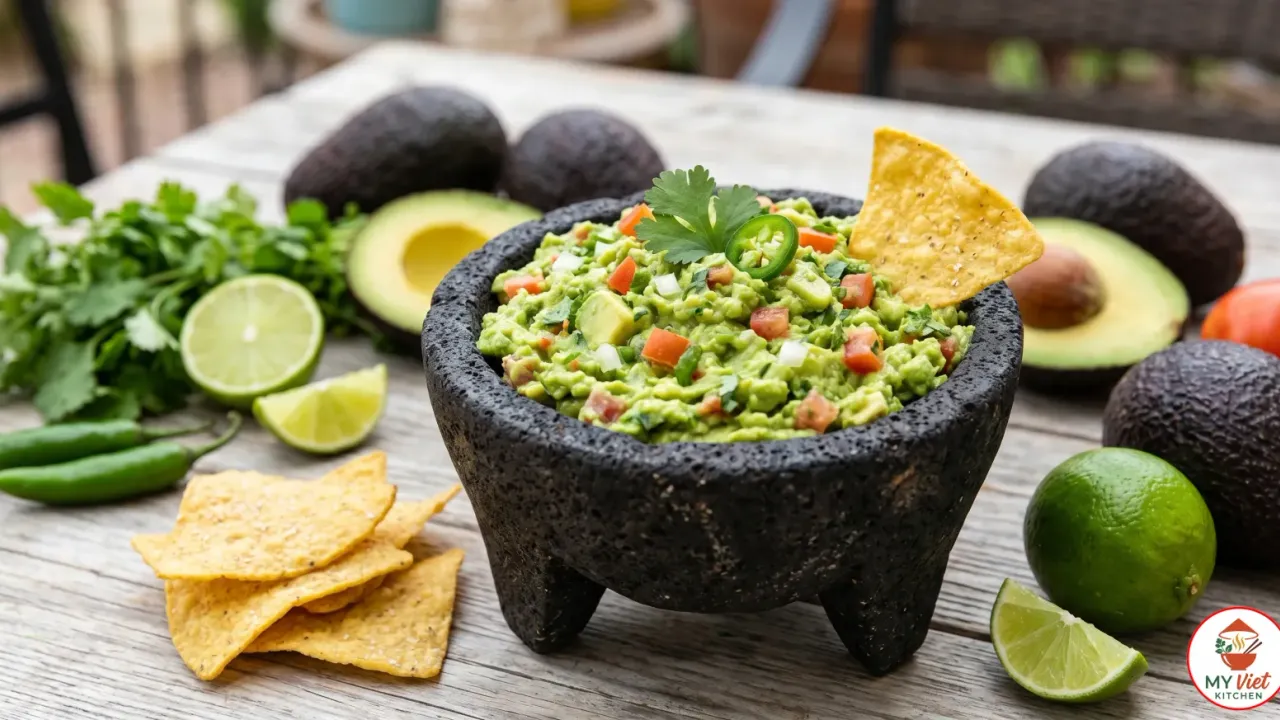
Guacamole is the single most beloved dip in Mexican cuisine, and this guacamole recipe shows you how to make the real thing at home in just 10 minutes. This chunky, vibrant avocado dip combines perfectly ripe Hass avocados with fresh lime juice, sharp white onion, fiery serrano chile, and fragrant cilantro. Born in the heartland of Mexico centuries before European contact, guacamole remains one of the purest expressions of Mexican cooking: simple ingredients, zero compromise, extraordinary flavor.
Prep Time: 10 minutes | Cook Time: 0 minutes (no cooking required) | Servings: 4
Difficulty: Easy | Calories: ~180 per serving
What Makes Guacamole Special?
Guacamole is fundamentally different from every other dip you have encountered. There is no cooking, no heating, and no processing involved. The avocado does all the heavy lifting, bringing a naturally creamy, rich texture that needs no dairy, no oil, and no thickeners. When you mash a ripe Hass avocado with a fork, you unlock a buttery, almost silky consistency that no other fruit or vegetable can deliver. This is not a dip that hides behind seasoning packets or sour cream. It is the avocado, front and center, supported by a handful of fresh ingredients that sharpen and brighten its flavor.
The genius of guacamole lies in its balance of fat, acid, heat, and freshness. Avocado provides healthy monounsaturated fat as the creamy foundation. Fresh lime juice delivers a sharp citric acid that cuts through the richness and prevents browning. Serrano chile introduces a clean, bright heat that wakes up the palate. Meanwhile, white onion and cilantro add aromatic complexity. Together, these elements create a dip that tastes complete from the first bite. Nothing is missing, and nothing needs to be added.
Guacamole traces its origins to the Aztec civilization, where it was known as ahuacamolli, from the Nahuatl words for avocado and sauce. The Aztecs mashed avocados with a stone mortar called a molcajete, combining them with tomatoes, chiles, and salt. Spanish conquistadors encountered this preparation in the early 1500s and carried the recipe back to Europe. However, the dish remained distinctly Mexican. Today, every region of Mexico has its own take on guacamole, but the core ingredients have barely changed in five hundred years.

Choosing the Right Avocados for Guacamole
The avocado is everything in this recipe. Because guacamole involves no cooking, the quality and ripeness of your avocados determine the entire outcome. Here is how to pick the best ones for your guacamole.
- Hass avocados (best choice): These have a pebbly, dark skin that turns nearly black when ripe. The flesh is dense, creamy, and rich with a nutty, buttery flavor. Hass avocados account for about 80 percent of the global avocado crop and are the only variety worth using for authentic guacamole.
- Fuerte avocados: These have a smooth, green skin and a lighter, more watery flesh. They taste milder and less creamy than Hass. While edible, they produce a thinner guacamole that lacks the richness and body you want.
- Florida avocados (Choquette or Hall): These large, bright green avocados contain significantly less fat than Hass. They are sometimes called “lite” avocados. They will not give you the creamy, luxurious texture that defines great guacamole, so avoid them for this recipe.
- Testing ripeness: Hold the avocado in your palm and press gently. A ripe avocado yields to light pressure but does not feel mushy. Check under the small stem cap at the top. If the area underneath is bright green, the avocado is perfect. If it looks brown, the fruit is overripe.
Ingredients for Guacamole
Main Ingredients:
- 3 ripe Hass avocados
- 2 tablespoons fresh lime juice (about 1 lime)
- 1/2 teaspoon fine sea salt
Fresh Aromatics:
- 1/4 cup white onion, finely diced
- 2 tablespoons fresh cilantro, chopped
- 1 serrano chile, seeded and minced
- 1 small clove garlic, minced (optional)
Finishing Touches:
- 1 medium Roma tomato, seeded and diced
- Pinch of ground cumin (optional)
- Extra lime wedges for serving
- Tortilla chips for serving
Pro tip: Use white onion, not yellow or red. White onion has a sharper, cleaner bite that cuts through the rich avocado without adding sweetness or color that competes with the green. Soak the diced onion in cold water for 5 minutes and drain before adding. This trick mellows the raw edge while keeping the crunch.
Step-by-Step Instructions
Step 1: Prepare the Avocados
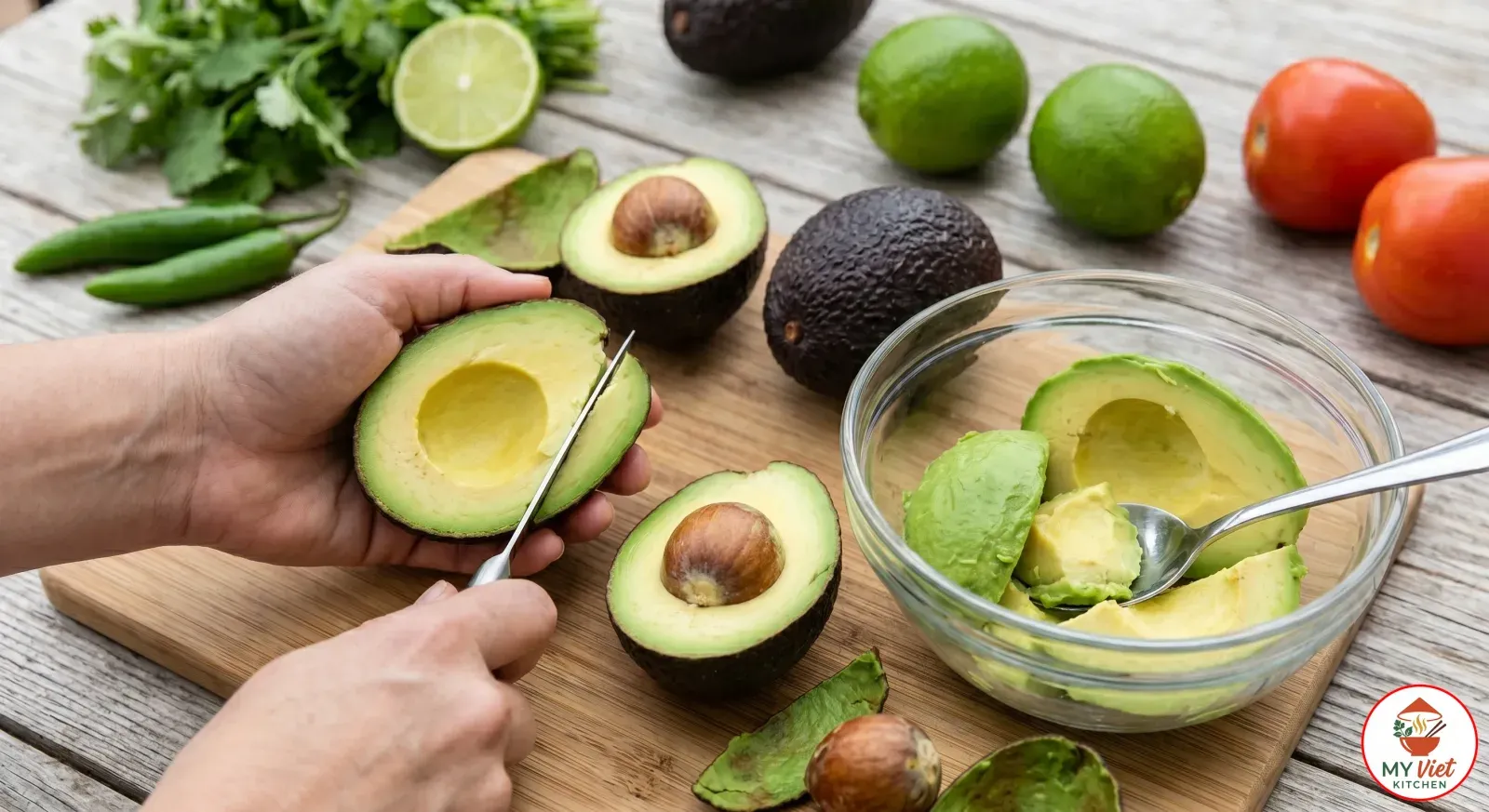
1 Cut each avocado in half lengthwise, running your knife around the pit. Twist the two halves apart gently. Remove the pit by tapping it firmly with the heel of your knife and twisting it out. Score the flesh inside each half in a crosshatch pattern, then scoop it into a large mixing bowl with a spoon. Working the avocado this way gives you a head start on the chunky texture without over-mashing later.
Choose a wide, shallow bowl rather than a deep one. A wider surface area gives you room to mash and fold without crushing the avocado into a paste. The goal is a rustic, uneven texture with distinct pieces of avocado throughout the finished guacamole.
Step 2: Mash to Your Preferred Texture
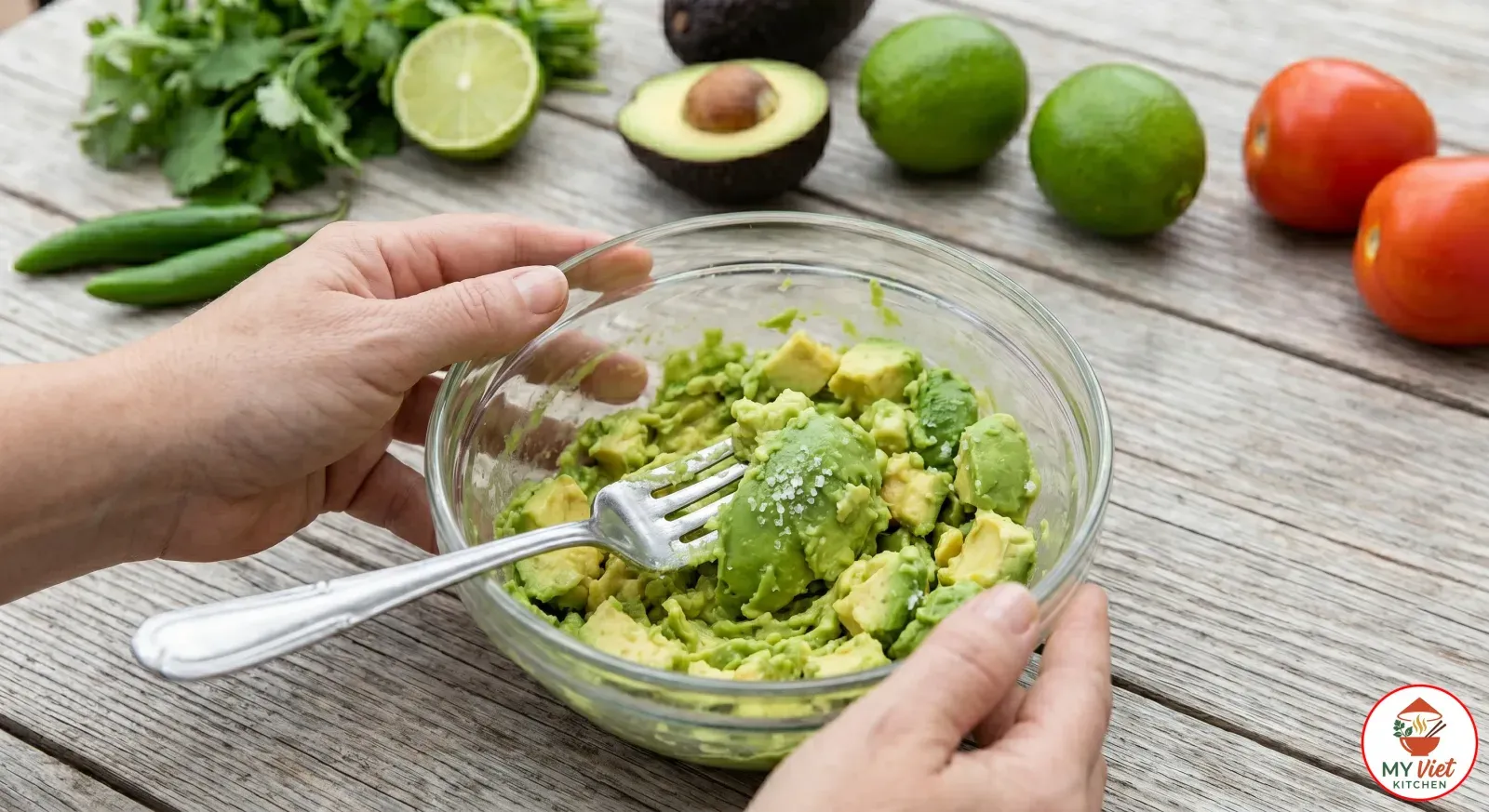
2 Add the fresh lime juice and salt directly onto the avocado. Use a fork or a potato masher to mash the mixture to your desired consistency. For authentic Mexican guacamole, leave it chunky. You want visible pieces of avocado throughout, not a smooth puree. Press and fold rather than stir, breaking up large chunks while leaving smaller ones intact.
The lime juice serves two purposes here. First, it provides the essential acid that balances the fat of the avocado. Second, the citric acid slows down enzymatic browning by lowering the pH on the surface of the exposed avocado flesh. Adding the lime at this stage, before the other ingredients, ensures maximum coverage and protection against oxidation.
Step 3: Add the Fresh Aromatics
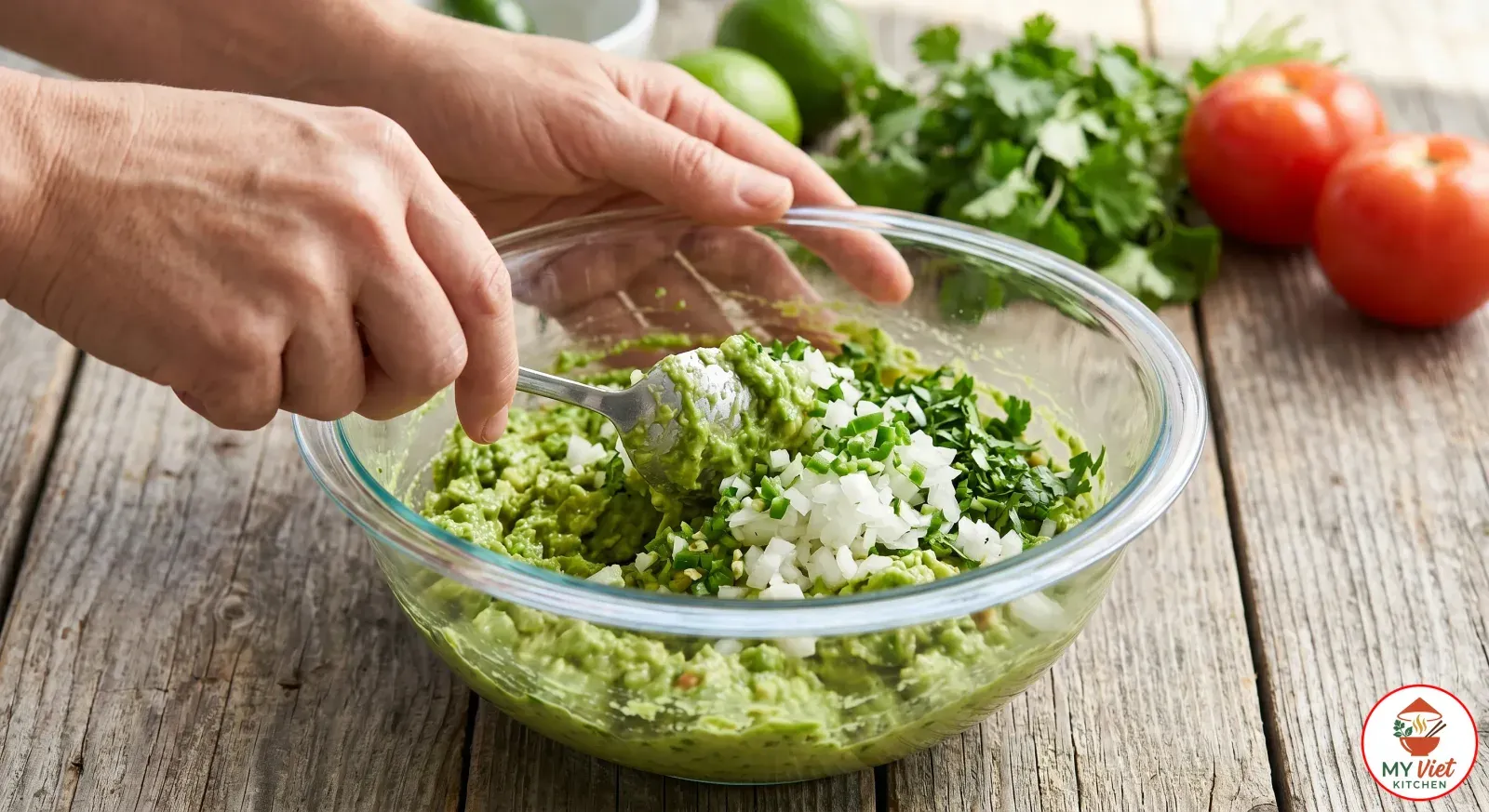
3 Fold in the finely diced white onion, the minced serrano chile, the chopped cilantro, and the optional minced garlic. Use a gentle folding motion with a spoon or spatula rather than aggressive stirring. You want these ingredients distributed evenly through the mashed avocado without turning the whole mixture into a smooth paste.
Start with half the serrano chile and taste before adding more. Serrano peppers range widely in heat from one pepper to the next, so tasting as you go prevents an overly spicy result. If you prefer less heat, use a jalapeno instead. Jalapenos are milder and slightly sweeter, though they lack the sharp, clean bite that serranos bring to traditional guacamole.
Step 4: Add the Tomato and Season
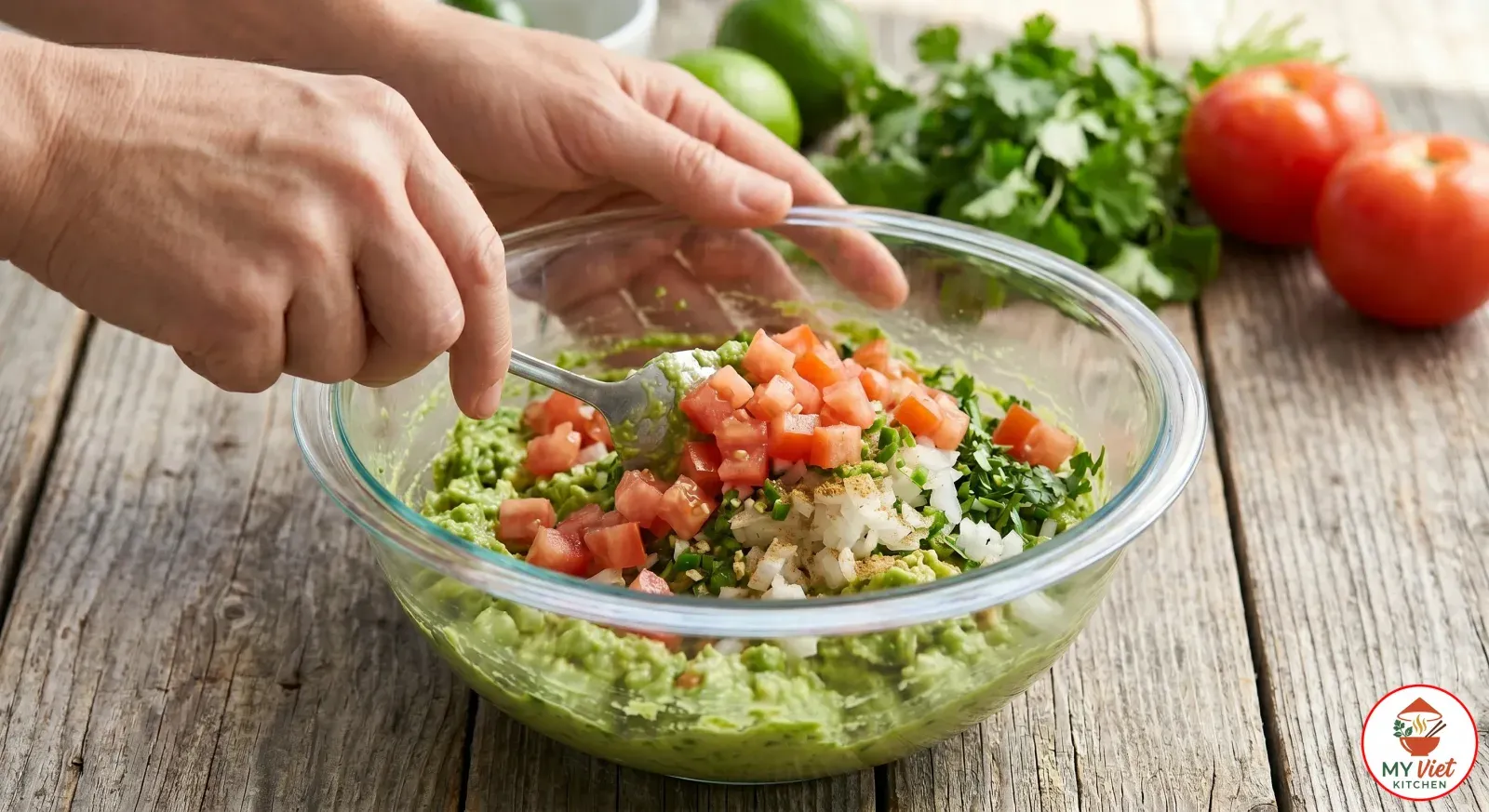
4 Gently fold in the seeded, diced Roma tomato. The tomato goes in last because it releases moisture quickly when stirred. Adding it at the end preserves the clean, distinct pieces and prevents the guacamole from becoming watery. Give the bowl two or three gentle folds, just enough to incorporate the tomato throughout.
Now taste the guacamole carefully and adjust the seasoning. You may need more salt, an extra squeeze of lime, or another pinch of chile. Add a tiny pinch of ground cumin if you like a warm, earthy undertone. The guacamole should taste bright, rich, and balanced. Every ingredient should be detectable, but nothing should dominate.
Step 5: Serve Immediately
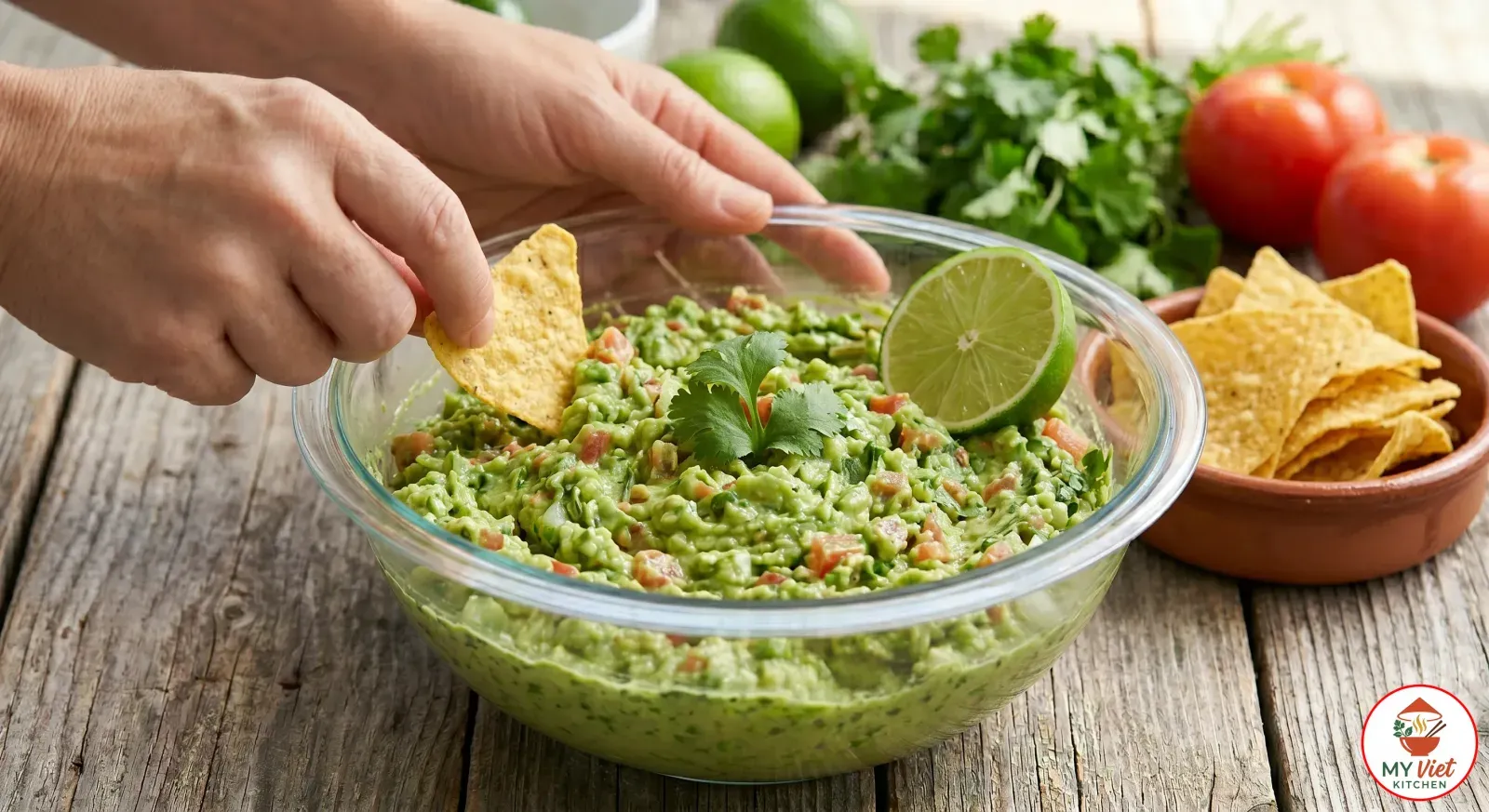
5 Transfer the finished guacamole to a serving bowl or, for a traditional presentation, serve it directly in a molcajete. Arrange tortilla chips around the bowl and add a few lime wedges on the side. Garnish with a sprig of cilantro and a thin slice of serrano chile if you like.
Guacamole tastes best when served immediately. The flavors are brightest and the texture is at its peak within the first 30 minutes. If you must hold it before serving, press a sheet of plastic wrap directly onto the surface of the guacamole so no air touches the avocado. This contact method is the most effective way to slow browning.
Expert Tips for Perfect Results
Never Use Underripe Avocados
An underripe avocado will not mash properly and tastes bitter and grassy rather than buttery and rich. If your avocados are too firm, place them in a paper bag with a banana at room temperature for one to two days. The ethylene gas from the banana accelerates ripening. Conversely, avoid overripe avocados with brown, stringy flesh. These produce guacamole with an off-putting color and a mushy, unappealing texture.
Salt Generously But Gradually
Avocado is a fatty ingredient, and fat requires adequate salt to taste its best. Under-salted guacamole tastes flat and one-dimensional no matter how much lime and chile you add. Start with half a teaspoon of fine sea salt and increase from there. Add a pinch at a time, tasting after each addition. You will know you have hit the right amount when the avocado flavor suddenly pops and becomes vivid.
Use a Molcajete for Authentic Texture
A molcajete is a traditional Mexican mortar made from volcanic stone. Grinding the guacamole ingredients in a molcajete rather than mashing with a fork produces a uniquely rough, uneven texture that releases more flavor from the onion, garlic, and chile. The porous stone also adds a subtle mineral character. While a fork and bowl work perfectly well, a molcajete elevates the experience and makes a stunning serving vessel.
Guacamole Styles Across Mexico
Guacamole is not a single recipe but a family of preparations that change from region to region. Here is how several distinct Mexican styles compare.
| Style | Region | Key Differences | Texture and Serving |
|---|---|---|---|
| Classic Guacamole | Central Mexico | Avocado, lime, salt, onion, serrano chile, cilantro, tomato | Chunky, served with chips or tacos |
| Guacamole Moreliano | Michoacan | Adds chicharron (fried pork skin) crumbled on top | Chunky with crispy topping, served with tostadas |
| Guacamole con Tomatillo | Puebla, Oaxaca | Uses roasted tomatillos instead of or alongside tomato | Tangier, slightly smoky, chunky |
| Guacamole de Molcajete | Throughout Mexico | Ground in volcanic stone mortar for rougher texture | Coarse and rustic, served in the molcajete |
| Guacamole con Chapulines | Oaxaca | Topped with toasted grasshoppers for crunch and protein | Chunky with crunchy insect garnish |
Serving Suggestions
In Mexico, guacamole appears at nearly every meal. It works as a standalone dip with chips, a topping for tacos, a side for grilled meats, or a component of a larger spread. The versatility of this avocado dip makes it one of the most useful recipes in your kitchen.
Classic Accompaniments:
- Tortilla chips: Thick, salted corn chips are the classic partner. Choose sturdy chips that can scoop without breaking. Freshly fried chips from a Mexican grocery are ideal because they stay crisp under the weight of chunky guacamole.
- Tacos al pastor or carnitas: A spoonful of guacamole on a freshly assembled taco adds creaminess and freshness that balances rich, seasoned meat beautifully. The fat from the avocado also tames the heat of spicy salsas.
- Grilled carne asada: Guacamole alongside grilled steak is a staple of Mexican gatherings. The cool, creamy dip contrasts the smoky, charred flavors of the meat and adds a layer of richness.
- Fresh vegetable sticks: For a lighter option, serve guacamole with sliced jicama, cucumber, radishes, and bell pepper strips. These crunchy vegetables add freshness and make the dish suitable for low-carb and keto diets.
Beverage Pairings:
- Classic margarita: The lime and salt in both the drink and the dip create a natural harmony. A well-made margarita with fresh lime juice mirrors the citrus in the guacamole and refreshes the palate between bites.
- Mexican lager: A cold Corona, Modelo, or Pacifico with a lime wedge is the most popular casual pairing. The light, crisp beer cuts through the richness of the avocado without overpowering the fresh flavors.
- Agua fresca de jamaica: This hibiscus flower tea is tart, floral, and refreshing. Its acidity complements the creamy avocado, making it the perfect non-alcoholic companion for guacamole at a Mexican gathering.
- Mezcal with orange slice: For a more adventurous pairing, the smoky complexity of mezcal matches the earthy richness of guacamole. Sip it alongside bites of chips and guacamole for an authentic Oaxacan experience.
Storage and Reheating
Refrigerator: Guacamole keeps for up to 24 hours in the fridge when stored properly. Press plastic wrap directly onto the surface to block all air contact. The lime juice helps slow oxidation, but some browning on the very top is normal. Simply scrape off the thin brown layer before serving, and the green guacamole underneath will still taste fresh.
Freezer: You can freeze guacamole for up to 3 months in airtight freezer bags with all the air pressed out. Thaw overnight in the refrigerator. The texture will be slightly softer after freezing, so give it a good stir and add a fresh squeeze of lime to revive the flavor. Frozen guacamole works best in smoothies, on toast, or as a taco topping rather than as a standalone dip.
Reheating: Guacamole is never heated. Like gazpacho, it is a raw preparation that should always stay cold or at room temperature. Heating avocado turns it bitter and destroys the fresh, vibrant flavor profile that makes guacamole so appealing. If the guacamole feels too cold from the fridge, let it sit at room temperature for 10 minutes before serving.
Common Mistakes to Avoid
1. Over-Mashing the Avocado
This is the most common error people make with guacamole. Blending or over-mashing turns it into a smooth, baby-food-like paste that lacks the satisfying texture of authentic Mexican guacamole. Use a fork, not a blender or food processor. Mash just until you have a mix of creamy and chunky pieces. The irregular texture is what makes hand-made guacamole special.
2. Adding Sour Cream or Mayonnaise
Authentic guacamole contains no dairy products. Sour cream and mayonnaise dilute the pure avocado flavor and change the texture into something closer to a processed dip. The avocado itself provides all the creaminess you need. Trust the ingredient and skip the additions that mask its natural richness.
3. Using Bottled Lime Juice
Bottled lime juice tastes flat and metallic compared to the bright, aromatic juice from a fresh lime. Since guacamole relies on so few ingredients, each one matters enormously. Squeeze fresh limes every time. One medium lime yields about two tablespoons of juice, which is the perfect amount for three avocados.
4. Making It Too Far in Advance
Guacamole is best within 30 minutes of preparation. The longer it sits, the more the avocado oxidizes and the flavors dull. Make it as close to serving time as possible. If you need to prepare components ahead, you can dice the onion, tomato, and chile in advance, but hold off on cutting the avocados until the last moment.
Frequently Asked Questions
What is authentic guacamole made of?
Traditional Mexican guacamole uses ripe Hass avocados, fresh lime juice, fine sea salt, white onion, serrano chile, cilantro, and tomato. Some regional versions include garlic or cumin, but the core recipe stays simple. No sour cream, no garlic powder, and no cayenne pepper appear in the authentic version.
How do you keep guacamole from turning brown?
Press plastic wrap directly onto the surface of the guacamole so no air makes contact. The lime juice also helps because its citric acid inhibits the enzyme called polyphenol oxidase that causes browning. Store it in the coldest part of your refrigerator and consume within 24 hours for the best color and taste.
Can you make guacamole ahead of time?
You can prepare guacamole up to 4 hours before serving if you seal it tightly. Press plastic wrap onto the surface, cover the bowl, and refrigerate immediately. Before serving, remove the wrap, stir gently, and taste for seasoning. You may need an extra squeeze of lime and a pinch of salt to brighten it back up after chilling.
What type of avocado is best for guacamole?
Hass avocados are the undisputed best choice. They have a higher fat content than other varieties, which gives the guacamole its signature creamy, rich texture. Look for fruits with dark, pebbly skin that yield slightly to gentle thumb pressure. Avoid Florida avocados, which are larger but more watery and less flavorful.
Is guacamole healthy?
Guacamole is exceptionally nutritious. Avocados are loaded with heart-healthy monounsaturated fats, potassium (more than bananas), dietary fiber, and vitamins C, E, K, and B6. The fresh vegetables add extra nutrients, and the lime juice provides vitamin C. Additionally, guacamole is naturally gluten-free, dairy-free, vegan, and paleo-friendly.
What is the difference between guacamole and avocado dip?
Guacamole is a specific Mexican preparation with a defined ingredient list: avocado, lime, salt, onion, chile, and cilantro. Avocado dip is a broader category that may include sour cream, mayonnaise, garlic powder, ranch seasoning, or other non-traditional ingredients. If the recipe calls for anything beyond fresh produce and salt, it is an avocado dip, not guacamole in the traditional sense.
Variations and Adaptations
Mango Guacamole:
Fold in half a cup of diced ripe mango for a sweet-savory twist that works beautifully in summer. The mango adds tropical sweetness and a burst of color. Pair this version with grilled fish tacos or shrimp for an unforgettable combination of flavors.
Pomegranate Guacamole:
Scatter pomegranate seeds over the finished guacamole for a stunning visual contrast and pops of tart sweetness. The jewel-like seeds add crunch and an antioxidant boost. This festive variation is perfect for holiday gatherings and dinner parties.
Roasted Garlic Guacamole:
Roast a whole head of garlic until soft and golden, then squeeze the cloves into the avocado before mashing. Roasted garlic is mellow, sweet, and nutty, unlike the sharp bite of raw garlic. This version pairs especially well with grilled steak and crusty bread.
Charred Tomatillo Guacamole:
Char two or three tomatillos in a dry skillet until blackened and soft, then chop and fold them into the guacamole. The smoky, tangy tomatillos add complexity and a slightly thinner consistency. This Oaxacan-inspired variation is extraordinary alongside carnitas or barbacoa.
The Cultural Significance of Guacamole
Guacamole occupies a sacred place in Mexican cuisine and culture. It is one of the oldest continuously prepared foods in the Americas, dating back at least to the 14th century Aztec empire. The Aztecs regarded the avocado as a symbol of fertility and love, and they believed guacamole possessed mystical properties. When Hernan Cortes arrived in Tenochtitlan in 1519, he recorded that the Aztecs served him ahuacamolli alongside wild turkey and tortillas. The dish had already been perfected for generations.
Today, guacamole is the centerpiece of Mexican celebrations from casual backyard gatherings to formal fiestas. On Super Bowl Sunday in the United States alone, Americans consume roughly 140 million pounds of avocados, most of them destined for guacamole. In Mexico, the avocado industry supports entire regional economies, particularly in Michoacan, which produces about 80 percent of the nation’s crop. The humble avocado dip has become a global phenomenon, yet its soul remains distinctly Mexican.
What makes guacamole culturally enduring is its simplicity. It represents a philosophy of Mexican cooking that prizes fresh, honest ingredients over elaborate technique. A grandmother in a village kitchen and a celebrated chef in Mexico City make guacamole in essentially the same way: ripe avocados, a squeeze of lime, a pinch of salt, and whatever fresh chiles and herbs are at hand. This democratic nature is what has carried the dish across borders and centuries without losing its identity.
Conclusion
This guacamole recipe gives you the authentic Mexican original in just 10 minutes. The secrets are straightforward: use perfectly ripe Hass avocados, squeeze fresh limes, keep the texture chunky, and serve it immediately. Follow these steps, and you will produce a vibrant, creamy, and irresistibly fresh dip that tastes exactly like it should. No sour cream, no shortcuts, no compromise.
Ready to explore more Mexican and Latin American classics? Browse our full Latin American dishes collection for recipes like ceviche, tacos al pastor, and churros. Each recipe brings a different flavor of Latin America to your kitchen table.