Introduction
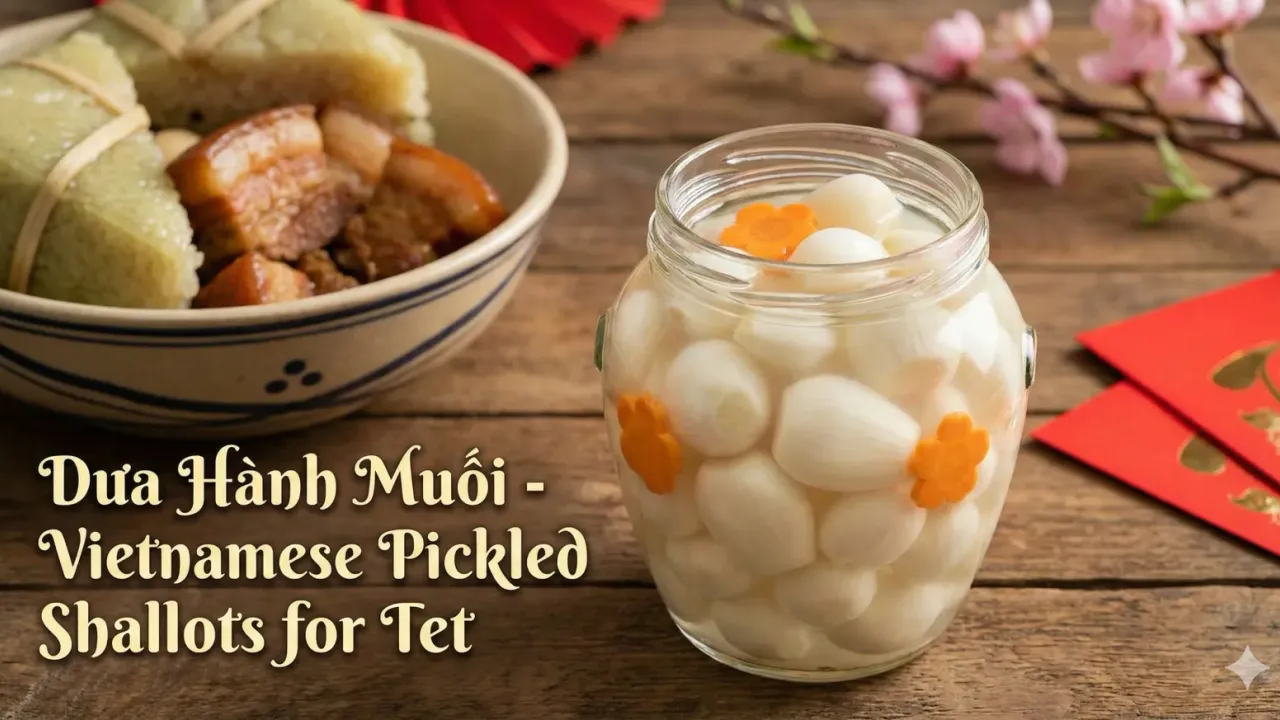
Pickled shallots, known as dưa hành muối in Vietnamese, are an essential condiment during Tet, the Vietnamese Lunar New Year celebration. This traditional fermented dish serves as a palate cleanser and digestive aid, balancing the rich, fatty foods typical of holiday feasts. With its crisp texture, mild sourness, and gentle spiciness, pickled shallots have been gracing Vietnamese tables for generations.
In this comprehensive guide, you’ll learn the authentic method for creating perfectly white, crunchy pickled shallots that will elevate your Tet celebrations or any meal throughout the year.
What Makes Vietnamese Pickled Shallots Special?
Unlike Western pickles that rely heavily on vinegar, Vietnamese pickled shallots undergo natural lacto-fermentation. This traditional preservation method not only extends the shallots’ shelf life but also creates beneficial probiotics that support digestive health—particularly important during Tet when families indulge in heavy foods like thịt thà (frozen pork) and bánh chưng (sticky rice cakes).
The key to exceptional dưa hành lies in achieving three qualities:
- Pristine whiteness - indicating proper preparation
- Satisfying crunch - showing the shallots weren’t over-processed
- Balanced flavor - a harmonious blend of mild sourness and gentle heat
Ingredients for Pickled Shallots
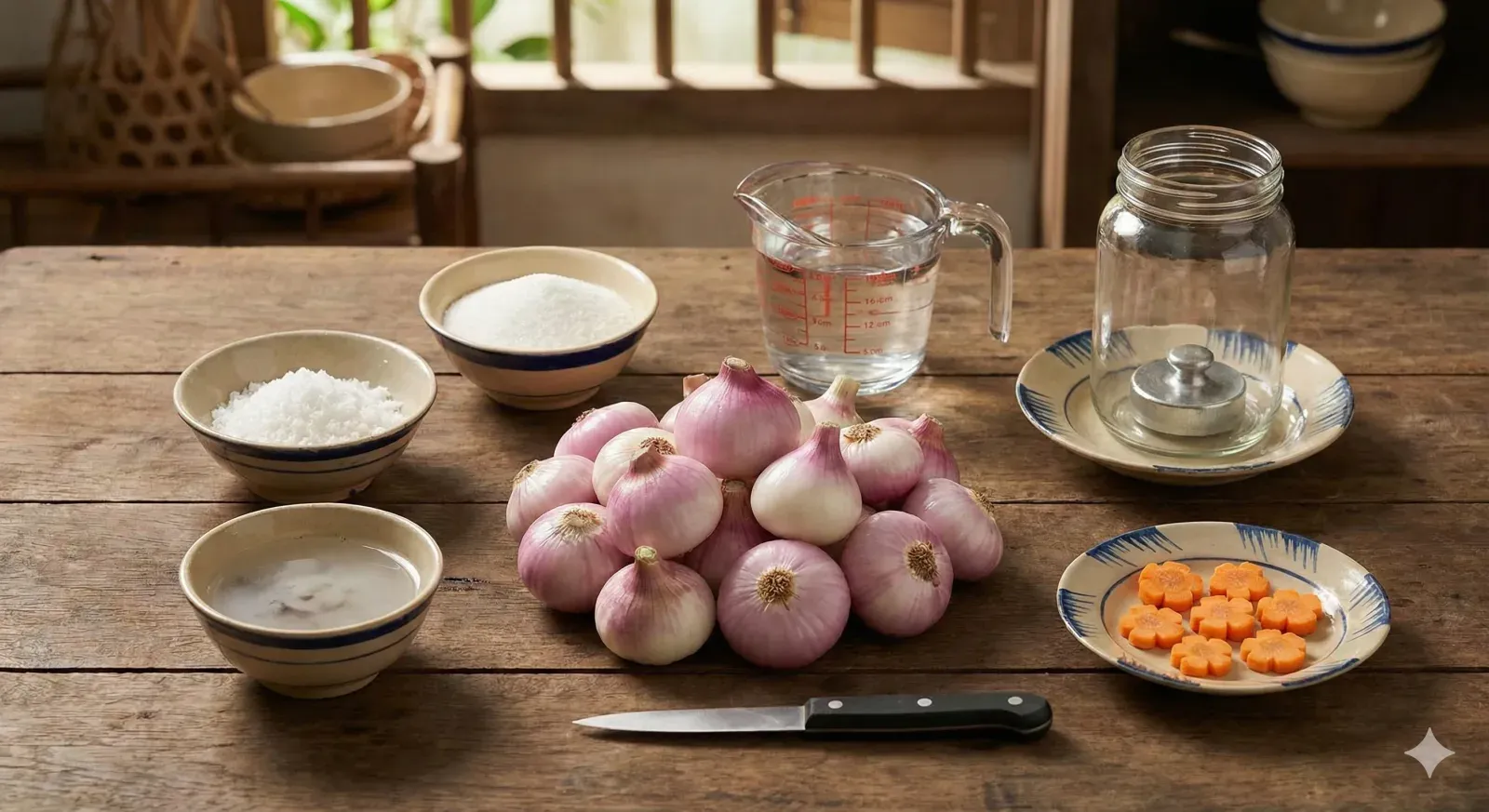
Main Ingredients:
-
1 kg fresh shallots (preferably Asian “bánh tẻ” variety)
-
3.5-4 tablespoons salt
-
1 tablespoon sugar
-
1-1.2 liters water
For Pre-treatment:
-
Wood ash water or rice washing water
-
Light salt water for soaking
Optional:
-
Carrot flowers for garnish
Equipment:
-
Clean glass jar (sterilized with boiling water and completely dried)
-
Sharp paring knife
-
Weight or small plate for pressing
Serves: 8-10 people | Prep Time: 45 minutes | Fermentation Time: 7 days | Calories: 459 kcal per serving
AdvertisementStep-by-Step Instructions
Step 1. Selecting Quality Shallots
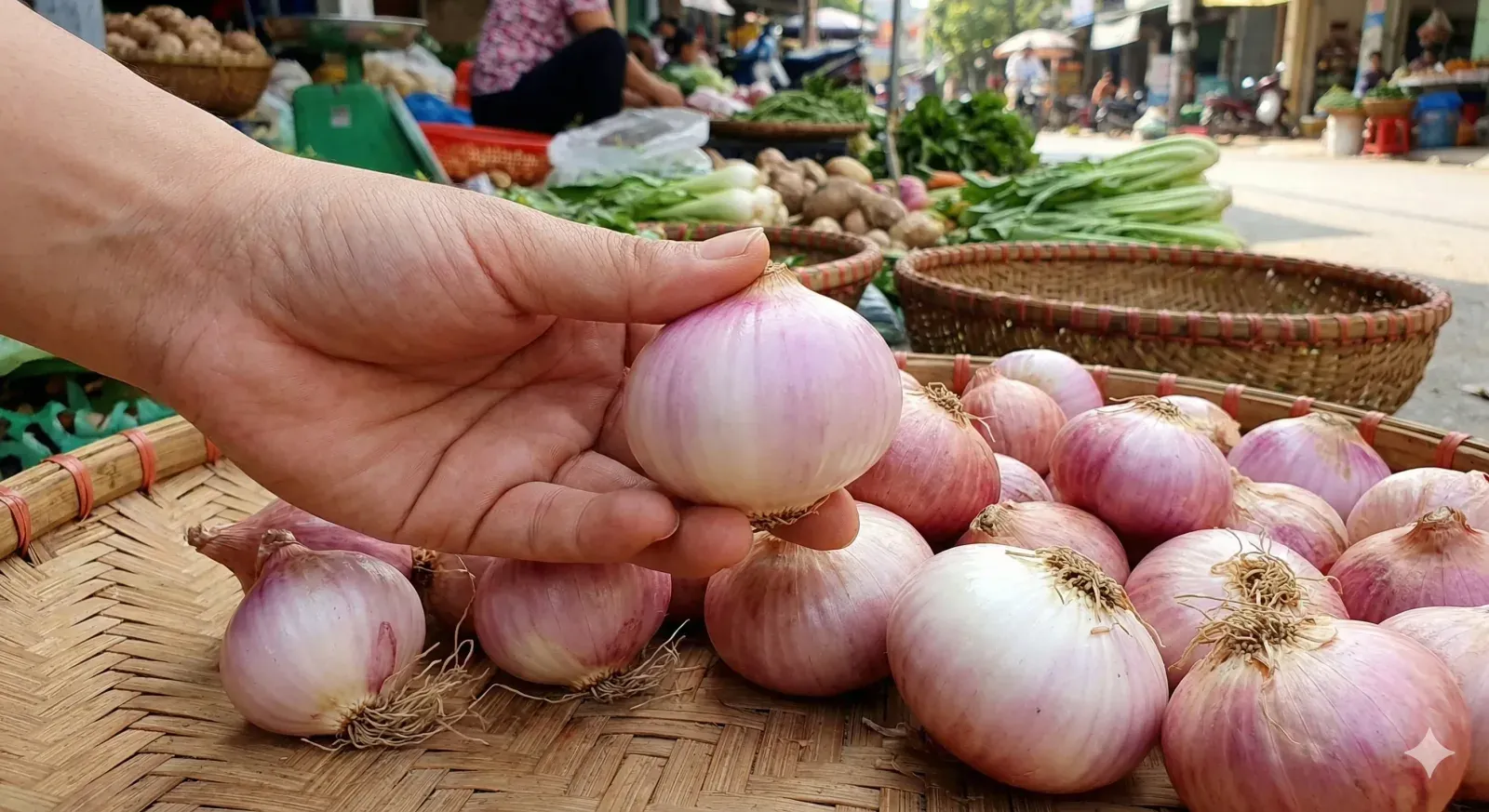
The foundation of great pickled shallots begins at the market. Choose Asian shallots (hành củ ta) with these characteristics:
- Medium size - neither too large nor too small
- Firm texture - should feel solid when gently squeezed
- Plump and round - indicating freshness and moisture
- Even coloring - pale purple or white throughout
- No soft spots - avoid any that feel mushy or show signs of mold
Pro Tip: Oversized shallots often lack the concentrated flavor and crisp texture of medium-sized bulbs.
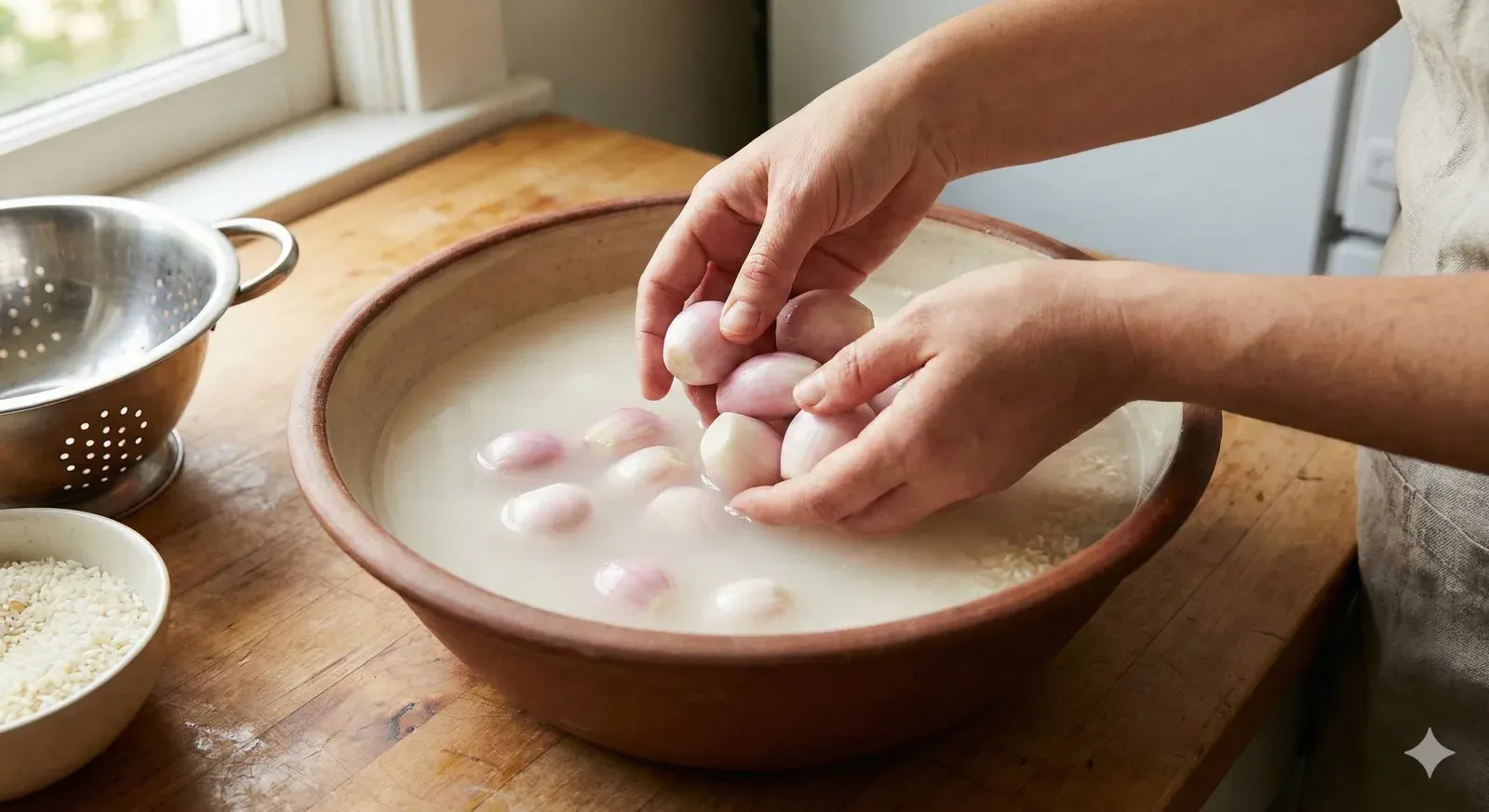
Step 2. Removing the Pungent Bite
This traditional step, documented in the 1925 Vietnamese culinary text “Thế vị tân biên” (New Compilation of Flavors), is crucial for achieving white, crispy pickles.
Traditional method using wood ash water:
- Collect ash from your cooking fire or wood stove
- Mix ash with water and let settle
- Use the clear liquid to soak shallots for 2-3 days
- This alkaline solution neutralizes harsh sulfur compounds
Modern alternative using rice washing water:
- Save the milky water from rinsing rice
- Submerge shallots for 2-3 days
- Change water daily to prevent spoilage
Both methods effectively reduce pungency while helping maintain the shallots’ bright color and firm texture.
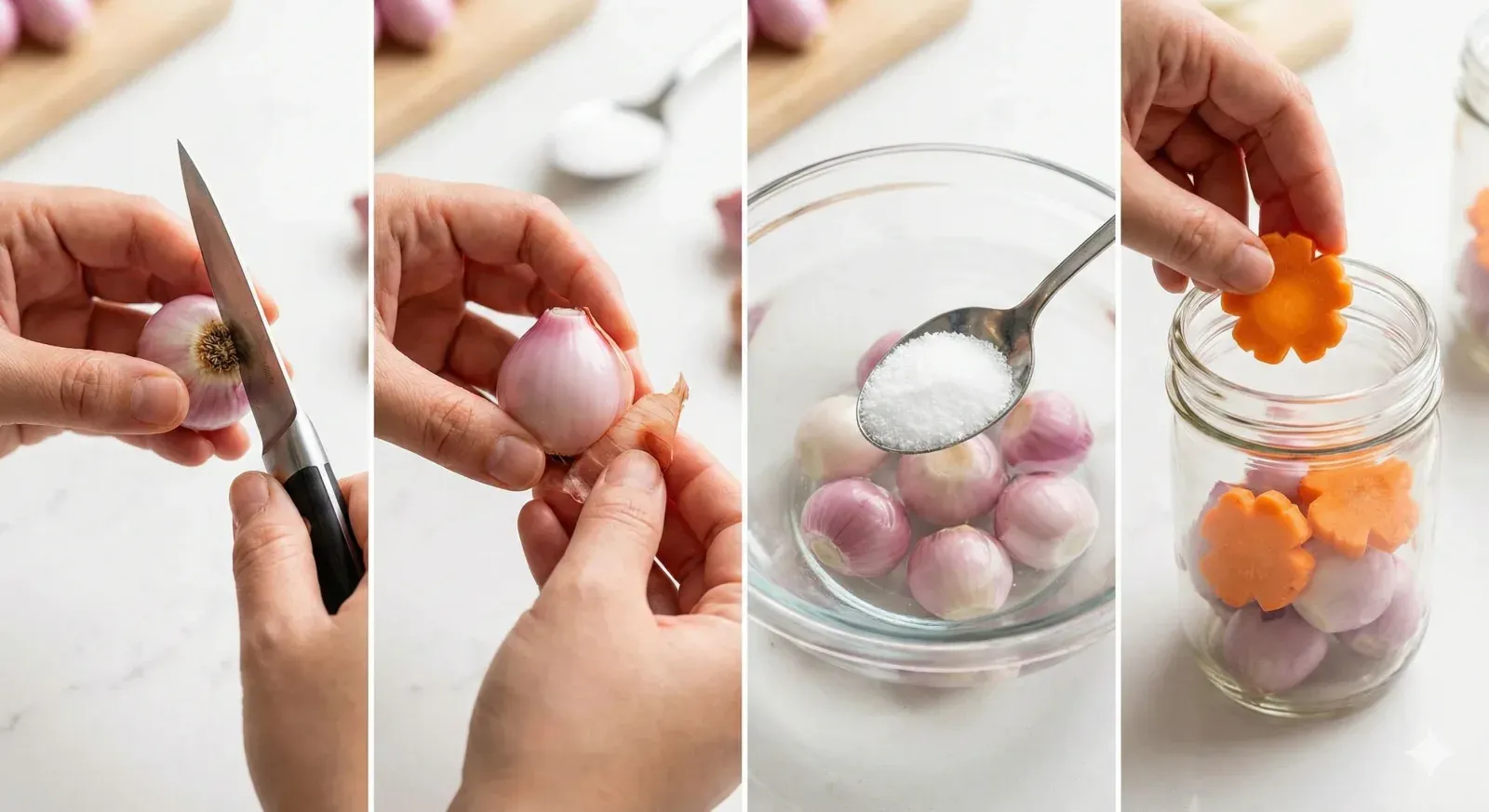
Step 3. Trimming and Sanitizing
Once your shallots have completed their preliminary soak:
- Trim the roots: Using a sharp paring knife, cut close to the root base without removing it entirely (this helps maintain the shallot’s structure)
- Remove outer skin: Peel away only the tough, dry outer layer
- Sanitizing soak: Submerge trimmed shallots in light salt water (about 1 tablespoon salt per liter) for 30 minutes
This sanitizing step serves two purposes: it further reduces pungency and prevents surface bacteria that could cause the brine to develop foam or slime during fermentation.
Optional decorative touch: Carve small carrot flowers and add them to the jar for visual appeal and a hint of sweetness.
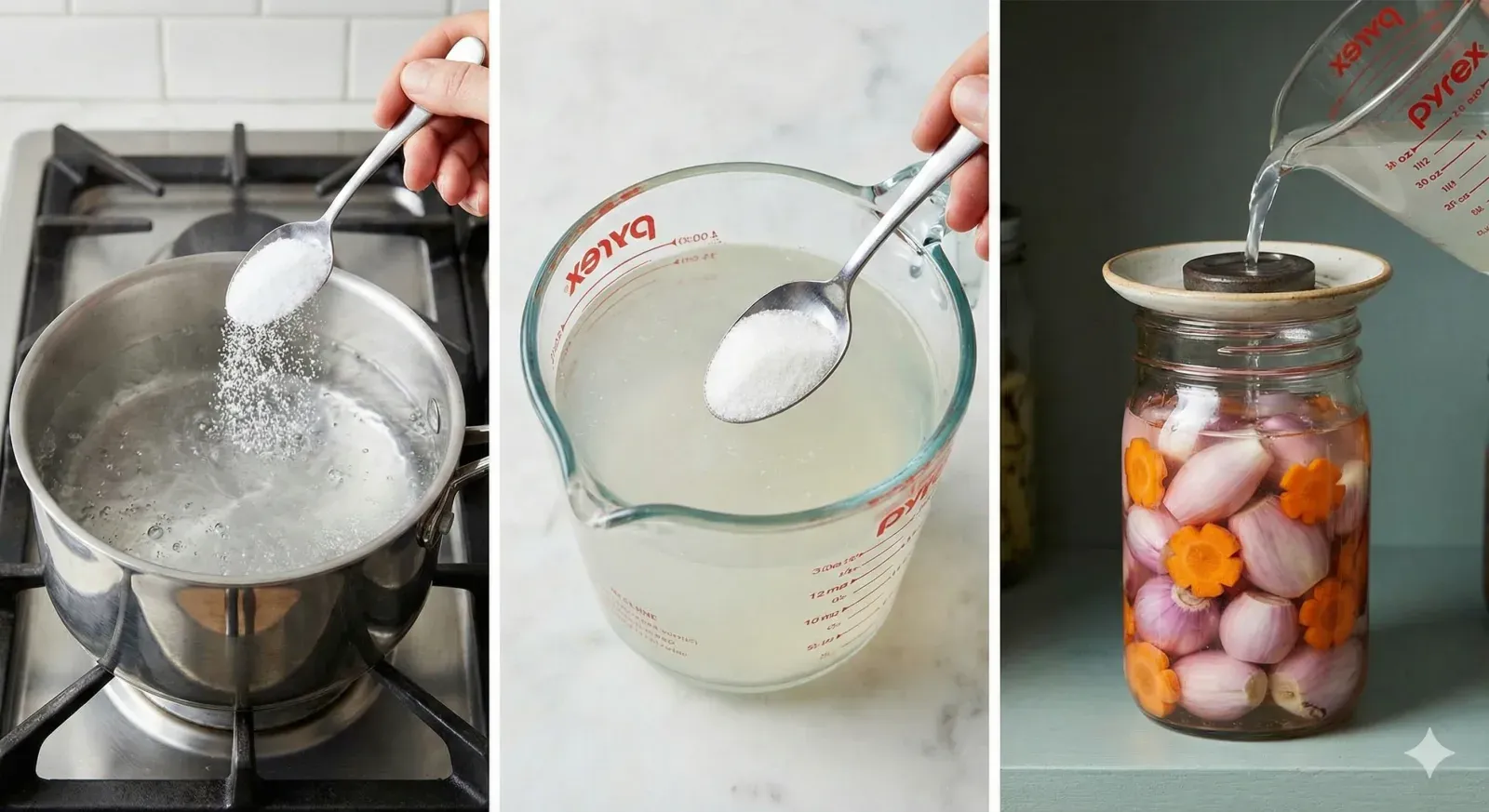
Step 4. Creating the Brine and Fermenting
The brine is simple but precise:
Brine recipe:
- Boil 1-1.2 liters of water and let cool completely (chlorinated tap water can inhibit fermentation)
- Dissolve 3.5-4 tablespoons salt thoroughly
- Add 1 tablespoon sugar to accelerate fermentation
Assembly:
- Pack shallots (and optional carrot flowers) into your sterilized glass jar
- Place a weight or small plate on top to keep shallots submerged
- Pour brine over until shallots are completely covered
- Position jar in a cool, well-ventilated area away from direct sunlight
Fermentation timeline: After approximately 7 days, your pickled shallots will be ready. You’ll know they’re properly fermented when the brine turns slightly cloudy and develops a pleasant, tangy aroma.
Step 5. The Perfect Final Product
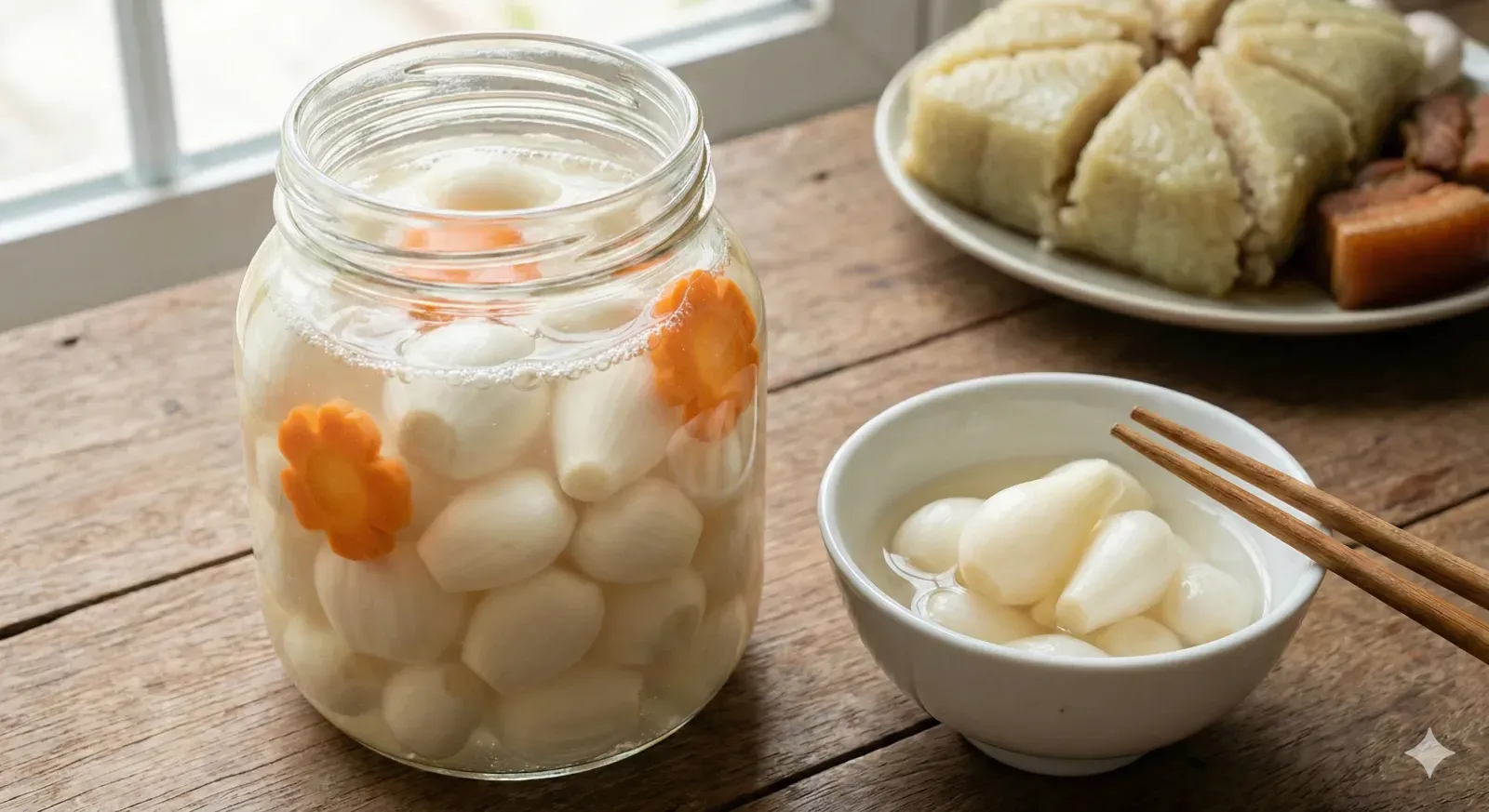
Well-made dưa hành muối should exhibit:
- Color: Bright white with no yellowing or browning
- Texture: Crisp and crunchy, never mushy
- Aroma: Fresh and appetizing with no off-odors
- Flavor: Mildly sour with gentle heat, not overpoweringly sharp
Serving and Storage Tips
Serving suggestions:
- Use clean utensils each time to prevent contamination
- Remove only what you’ll consume immediately
- Serve alongside rich Tet dishes like thịt thà, bánh chưng, or giò chả
- Pairs excellently with fatty pork dishes, cutting through richness
Storage:
- Keep jar refrigerated after opening
- Always ensure shallots remain submerged in brine
- Properly stored pickles can last several months
- Discard if you notice mold, off-odors, or sliminess
Health Benefits of Fermented Shallots
Traditional Vietnamese pickled shallots offer more than just flavor:
- Digestive support: Natural probiotics from lacto-fermentation aid gut health
- Reduced bloating: Helps digest heavy, fatty holiday foods
- Antioxidants: Shallots contain quercetin and other beneficial compounds
- Low calorie: A flavorful condiment without excessive calories
Cultural Significance
During Tet, the Vietnamese New Year, dưa hành muối holds special cultural importance. Alongside other preserved vegetables like pickled leeks (củ kiệu) and pickled mustard greens (dưa cải), these condiments represent preparation, foresight, and the preservation of tradition—values central to Vietnamese culture.
Making pickled shallots ahead of Tet ensures families can focus on celebration while maintaining access to digestive aids that make multi-course feasting more comfortable.
Common Troubleshooting
Problem: Shallots turned yellow or brown
- Cause: Inadequate pre-soaking or oxidation
- Solution: Ensure proper wood ash or rice water treatment
Problem: Soft, mushy texture
- Cause: Over-fermentation or too-warm storage
- Solution: Refrigerate sooner and monitor fermentation closely
Problem: Slimy brine or mold
- Cause: Contamination or insufficient salt
- Solution: Ensure all equipment is sterilized and shallots stay submerged
AdvertisementConclusion
Making traditional Vietnamese pickled shallots connects you to generations of culinary wisdom while providing a delicious, healthful condiment for your table. Whether you’re celebrating Tet or simply seeking to explore authentic Vietnamese flavors, dưa hành muối offers a perfect introduction to lacto-fermentation and traditional preservation methods.
The investment of just 45 minutes of active preparation yields weeks of crispy, tangy shallots that transform ordinary meals into something special. This Tet, honor tradition by preparing your own batch of pickled shallots—your family and your digestion will thank you.
Have you tried making Vietnamese pickled shallots? Share your experience and any family tips in the comments below!
-
-
-