Benachin is the crown jewel of Gambian cooking, and every spoonful tells you why. This magnificent one-pot rice dish brings together fried fish, a deeply flavored tomato sauce, and an array of hearty vegetables, all cooked in a single pot until the rice absorbs every drop of that rich, smoky broth. Known as the national dish of The Gambia and closely related to Senegalese thieboudienne, benachin delivers bold West African flavors in a format that feeds a crowd with impressive ease.
Prep Time: 25 minutes | Cook Time: 55 minutes | Servings: 6
Difficulty: Medium | Calories: ~480 per serving
What Makes Benachin Special?
Benachin stands apart from other West African rice dishes because everything cooks together in one pot. The rice does not cook separately in water. Instead, it absorbs the tomato sauce, the rendered fish oil, and the vegetable juices directly. This method infuses every grain with a deep orange-red color and a layered flavor that plain steamed rice simply cannot match. The word “benachin” itself comes from the Wolof language, meaning “one pot,” and this name perfectly describes both the technique and the philosophy behind the dish.
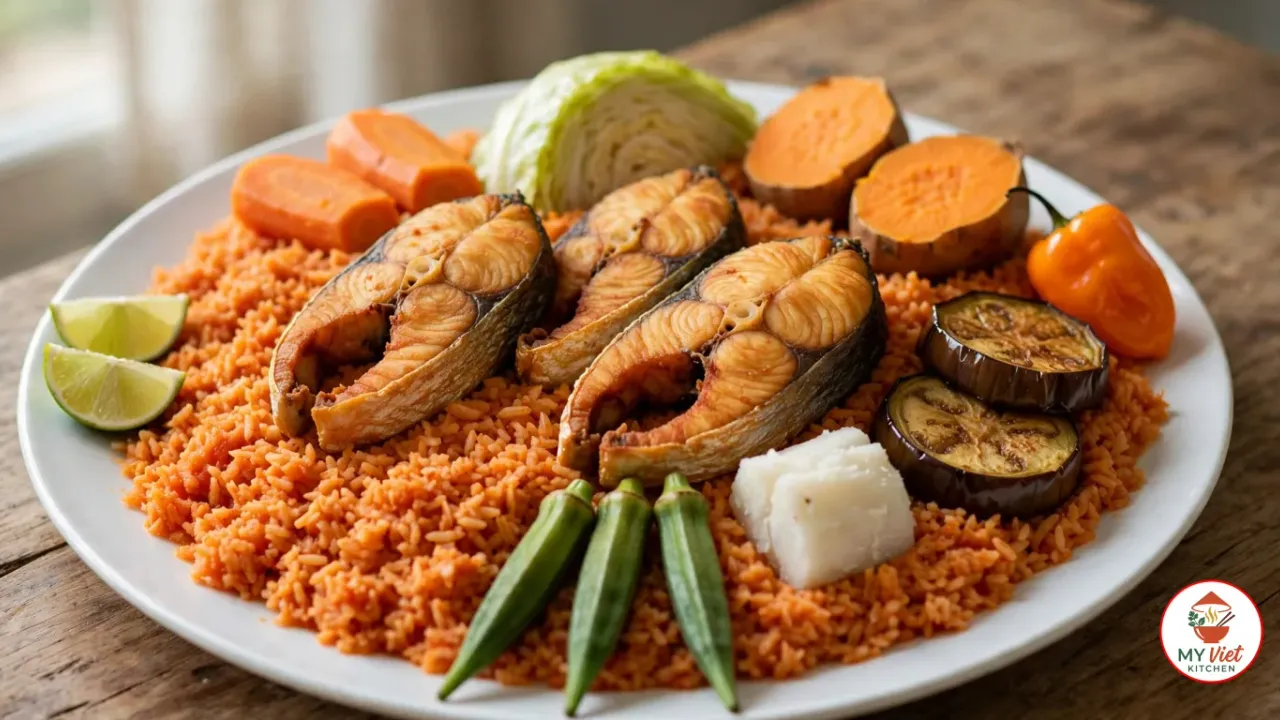
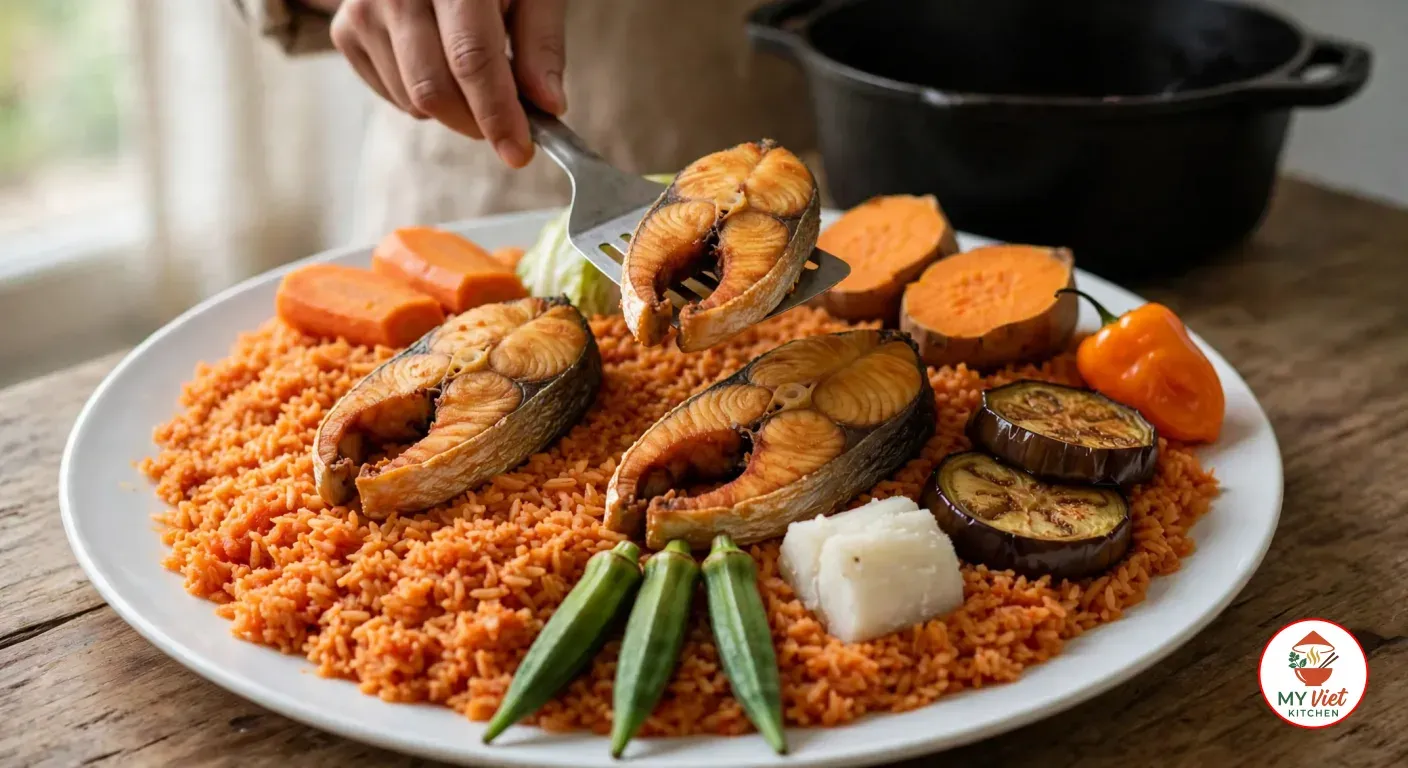
What truly sets benachin apart from Nigerian or Ghanaian jollof rice is the presentation. Gambian cooks arrange the whole vegetables and fried fish on top of the rice in an elaborate display. Carrots, sweet potatoes, cassava, cabbage wedges, and eggplant all sit proudly on a mound of richly colored rice. Diners pull vegetables and fish from the communal platter and eat them alongside scoops of the flavorful rice. According to Gambian culinary tradition, this presentation style reflects the communal values that define Gambian society.
From a nutritional perspective, benachin delivers a remarkably balanced meal in a single serving. The fish provides lean protein and omega-3 fatty acids. Sweet potatoes and carrots contribute beta-carotene and fiber. The tomato base offers lycopene, while the cabbage and eggplant add vitamins C and K. Because all the cooking liquid absorbs into the rice, none of these nutrients wash away. For families seeking a complete, nourishing meal from one pot, benachin offers extraordinary value.

Choosing the Right Fish for Benachin
The fish you select will determine whether your benachin looks stunning or falls apart on the plate. Since the fish gets fried first and then arranged on top of the finished rice, it must hold its shape throughout the entire process. Here are the best options available.
- Barracuda or grouper (traditional choice): These firm-fleshed Atlantic fish appear most commonly in Gambian markets. Their dense texture withstands frying and handling without breaking. If you live near a coastal fish market, these remain the most authentic choices for benachin.
- Red snapper (best substitute): Widely available in Western supermarkets, red snapper offers the right balance of firmness and flavor. The skin crisps beautifully during frying, and the flesh stays intact when placed on top of the rice.
- Sea bass or halibut: Both fish hold their shape well and have a mild flavor that absorbs the tomato sauce nicely. They cost more than snapper but work excellently in this recipe. Cut them into thick steaks rather than thin fillets for the sturdiest pieces.
Ingredients for Benachin
For the Fish:
- 2 pounds firm white fish fillets (barracuda, grouper, or snapper), cut into large pieces
- 1 teaspoon salt
- 1/2 teaspoon black pepper
- Juice of 1 lemon
- 1/4 cup vegetable oil for frying
For the Tomato Base:
- 6 tablespoons tomato paste
- 3 medium Roma tomatoes, blended smooth
- 1 large onion, finely diced
- 4 cloves garlic, minced
- 1 inch fresh ginger, grated
- 1 scotch bonnet pepper, whole
- 4 cups fish or chicken stock
- 2 bay leaves
- 1 vegetable stock cube
- 1 teaspoon dried thyme
Rice and Vegetables:
- 3 cups long-grain parboiled rice
- 2 medium carrots, peeled and halved lengthwise
- 1 small cabbage, quartered
- 2 medium sweet potatoes, peeled and halved
- 1 medium eggplant, cut into thick rounds
- 1 medium cassava, peeled and cut into chunks
- 4 whole okra pods
Pro tip: Always use parboiled rice for benachin, never regular long-grain or jasmine rice. Parboiled rice has been partially cooked in its husk, which makes the grains firmer and more resistant to overcooking. This matters enormously in a one-pot dish because the rice must absorb the tomato broth without turning into a sticky, mushy mass.
Step-by-Step Instructions
Step 1: Season and Fry the Fish
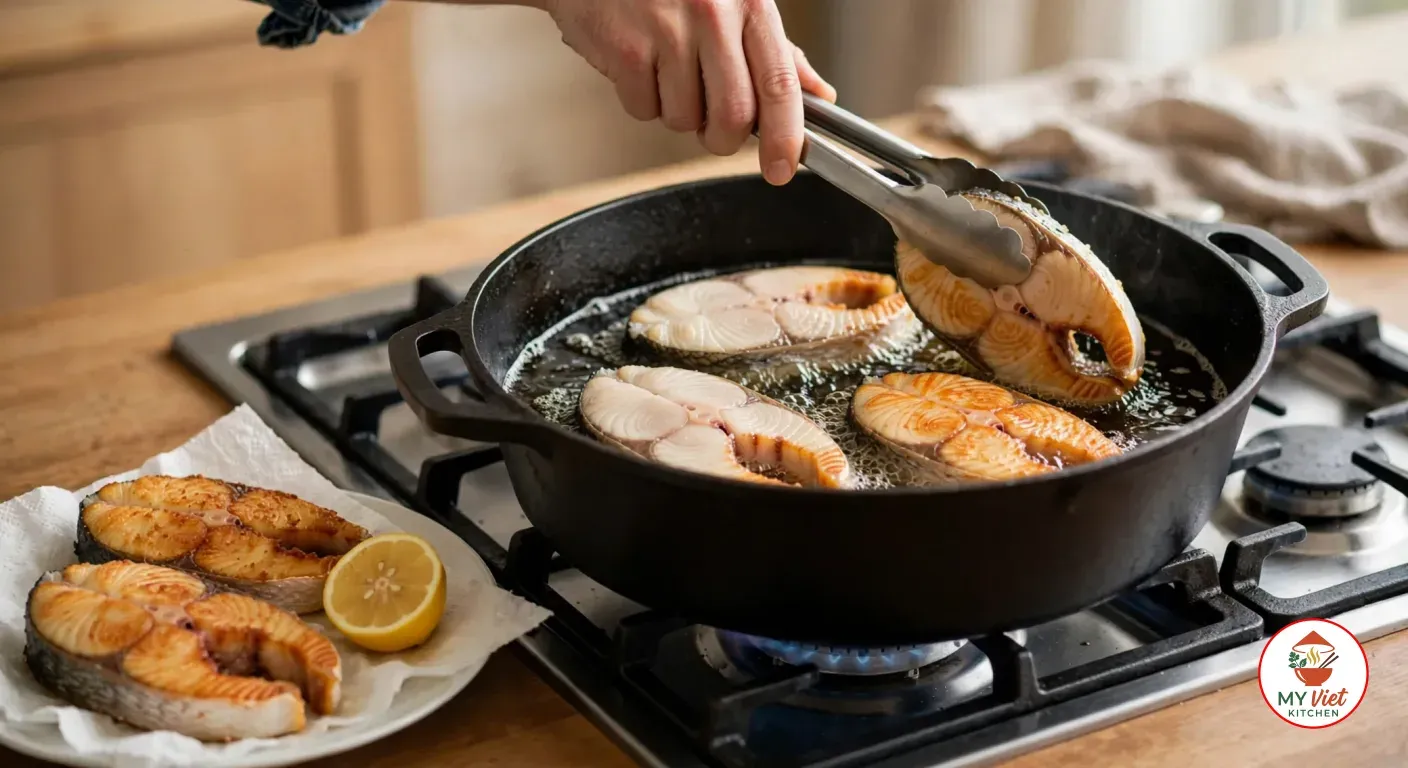
1Season the fish pieces generously with salt, black pepper, and a squeeze of fresh lemon juice. Let the fish rest for ten minutes so the seasoning penetrates the flesh. Meanwhile, heat the vegetable oil in a large heavy-bottomed pot or Dutch oven over medium-high heat. When the oil shimmers, carefully place the fish pieces in the pot. Fry for three to four minutes on each side until the exterior turns golden brown and crispy. Then remove the fish to a plate lined with paper towels. The fried fish will rejoin the dish at the very end, so handle each piece carefully to keep it intact.
Step 2: Build the Tomato Base
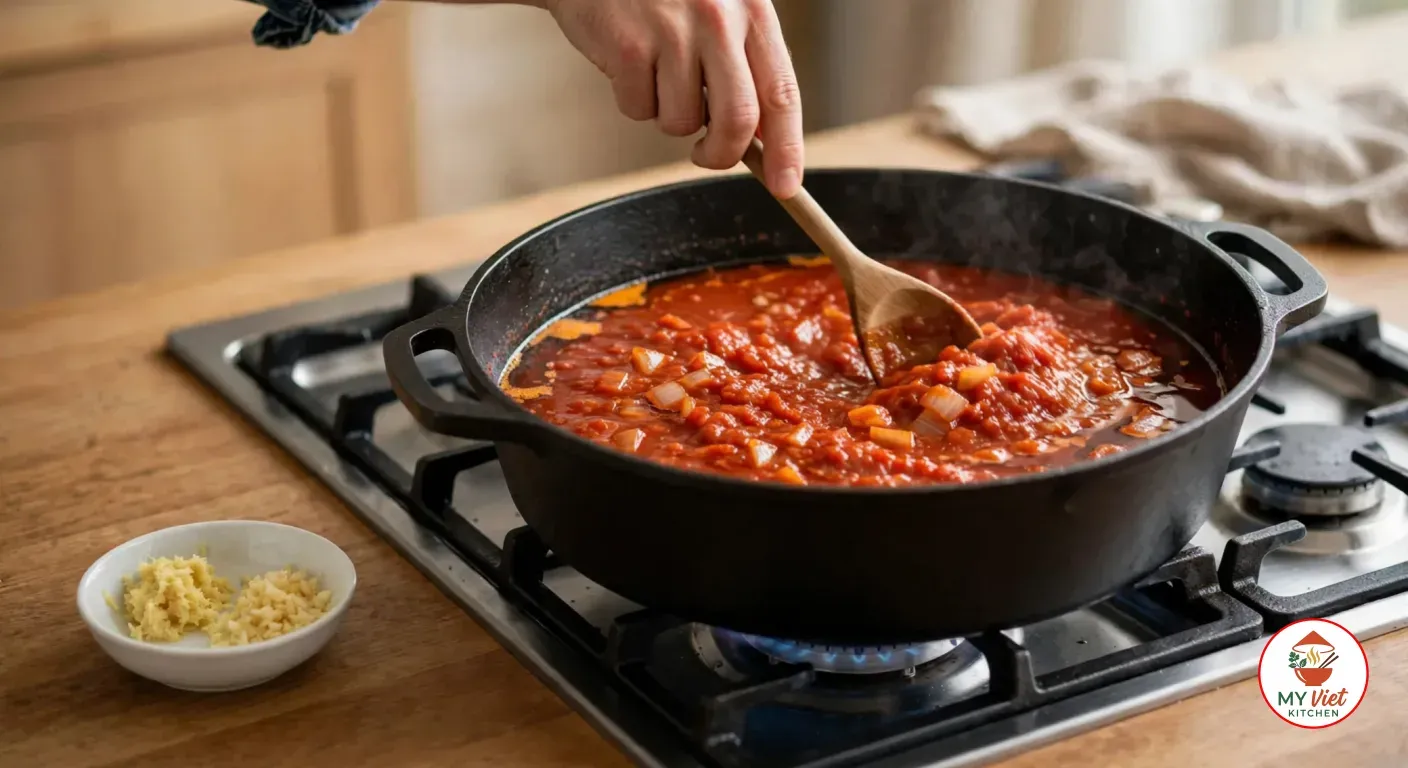
2Using the same oil from frying the fish, reduce the heat to medium. Add the diced onion and cook for five minutes until soft and translucent. Next, add the minced garlic and grated ginger. Stir for one minute until fragrant. Now add the tomato paste directly into the pot. Cook the paste for three to four minutes, stirring constantly, until it darkens to a deep brick-red color. This step is critical because it removes the raw, metallic taste from the tomato paste and concentrates its flavor through caramelization. Finally, pour in the blended tomatoes and cook for another five minutes until the oil begins to separate from the sauce and float on the surface. This oil separation signals that the tomato base has cooked properly.
Step 3: Cook the Vegetables
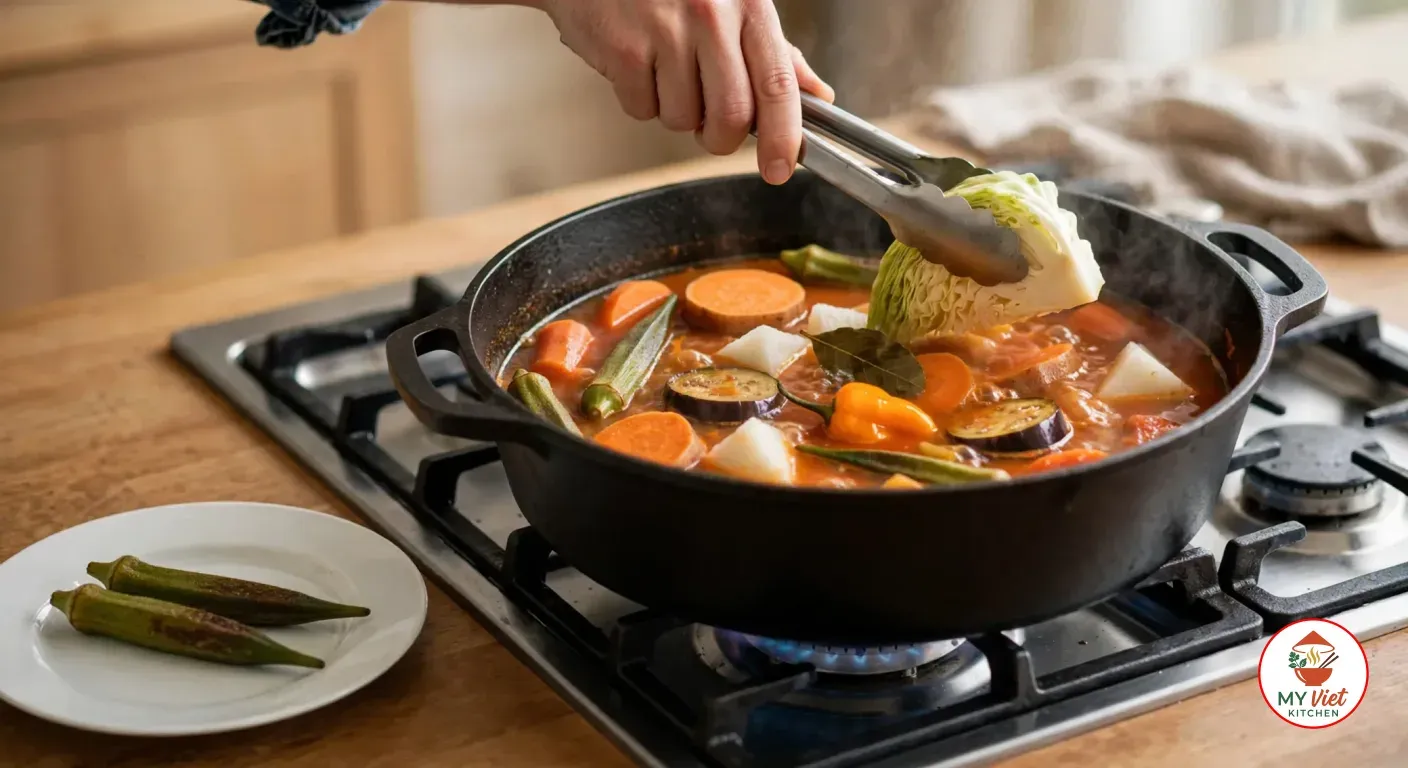
3Pour the fish or chicken stock into the tomato base and stir well. Add the bay leaves, stock cube, dried thyme, and the whole scotch bonnet pepper. Bring the liquid to a boil. Now add all the vegetables: carrots, sweet potatoes, cassava, eggplant, cabbage quarters, and okra. The vegetables need to simmer in this broth for about 15 minutes until they become just tender but not falling apart. Use tongs to remove each vegetable as it reaches the right texture. Set them aside on a separate plate. This step is essential because the vegetables cook at different rates. Cabbage and okra will finish before the cassava and sweet potatoes, so monitor each piece individually.
Step 4: Cook the Rice
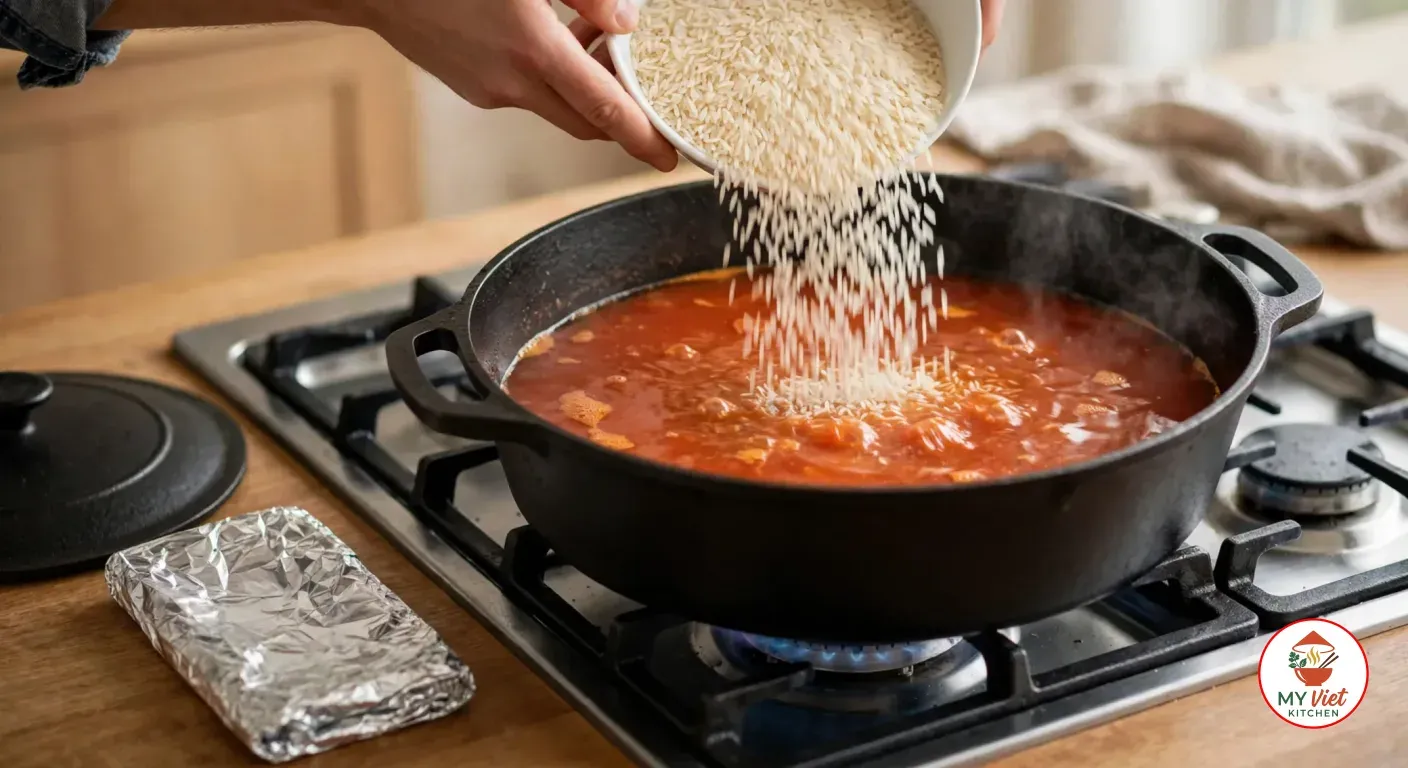
4Wash the parboiled rice in several changes of cold water until the water runs clear. Drain thoroughly. Taste the broth in the pot and adjust the salt if needed, because the rice will absorb all the remaining liquid. Add the rice to the pot and spread it evenly. The broth should cover the rice by about one inch. If you need more liquid, add hot water or stock. Bring to a rapid boil over high heat. Then immediately reduce to the lowest possible heat. Cover the pot tightly with aluminum foil first, then press the lid down firmly on top. This double seal traps all the steam inside. Cook for 25 to 30 minutes without lifting the lid at any point. The rice is ready when every grain is tender and all the liquid has absorbed completely.
Step 5: Assemble and Serve
5Remove the lid and foil carefully. Fluff the rice gently with a fork, working from the edges toward the center. The rice should have a beautiful orange-red color throughout. Transfer the rice to a large serving platter or leave it in the pot for a rustic presentation. Arrange the reserved vegetables artfully on top of the rice. Place the fried fish pieces in the center as the crowning element. Remove the bay leaves and scotch bonnet pepper before serving. In Gambian tradition, everyone gathers around the platter and eats from their side using their right hand, pulling fish and vegetables toward them.
Expert Tips for Perfect Benachin
Master the Tomato Base
The tomato base determines the final color and flavor of your benachin. Cook the tomato paste until it turns from bright red to a deep, dark brick color. This process takes three to four minutes of constant stirring. Rushing this step produces rice with a pale, washed-out color instead of the vibrant orange-red that defines authentic benachin. Gambian cooks call this moment “the oil coming out” because you can see the cooking oil separate and pool on the surface of the sauce.
Seal the Pot Properly
Covering the pot with aluminum foil before placing the lid creates an airtight seal. This traps all the steam inside, which cooks the rice evenly from top to bottom. Without this seal, steam escapes through gaps around the lid, and the top layer of rice dries out while the bottom becomes waterlogged. In Gambian kitchens, cooks often use a clean cloth or banana leaves instead of foil. The principle remains the same. Every drop of moisture must stay inside the pot.
Do Not Stir the Rice
Once the rice goes into the pot, resist all temptation to stir it. Stirring releases starch from the grains, which turns the dish gummy and sticky. Benachin rice should be fluffy with each grain separate and distinct. The only time you touch the rice is at the very end, when you fluff it gently with a fork after cooking. This restraint separates a good benachin from a great one.
Benachin vs. Thieboudienne: Understanding the Connection
Benachin and thieboudienne share the same ancestral roots, since The Gambia sits entirely within Senegal’s borders. However, each country has developed its own distinct version over centuries. Here is how the two national dishes compare.
| Feature | Benachin (Gambia) | Thieboudienne (Senegal) |
|---|---|---|
| Name meaning | “One pot” in Wolof | “Rice with fish” in Wolof |
| Fish preparation | Fried whole, placed on top | Stuffed with herb paste (rof), then fried |
| Tomato intensity | Heavy tomato paste, deep red rice | Moderate tomato, sometimes lighter color |
| Key vegetables | Cassava, sweet potato, cabbage, okra | Cassava, bitter eggplant, okra, tamarind |
| Fermented element | Rarely used | Fermented locust beans (netetu) common |
| Serving style | Large communal platter | Large communal bowl (bol) |
Serving Suggestions
In Gambian households, benachin arrives at the table as a complete meal on one large platter. The rice forms the base, the vegetables ring the edges, and the fish sits proudly in the center. Because the dish already contains protein, starch, and vegetables, it needs very little accompaniment. Still, several traditional sides elevate the experience.
The Perfect Accompaniments:
- Lime wedges: A squeeze of fresh lime juice over the rice brightens the tomato flavor and cuts through the richness. Every Gambian table sets out lime wedges alongside benachin.
- Fresh chili sauce: A side of blended scotch bonnet with onion and lime gives each diner control over the heat level. This condiment adds a sharp, fruity fire that transforms each bite.
- Tomato and onion salad: Sliced tomatoes and raw onion dressed with lime juice and a pinch of salt provide a refreshing contrast. The crunch and acidity balance the soft, stewed rice.
- Tapalapa bread: This crusty West African baguette makes an excellent tool for scooping up extra sauce from the platter. Its chewy texture pairs wonderfully with the tender rice.
Beverage Pairings:
- Attaya (Gambian mint tea): This strong green tea brewed in three rounds grows progressively sweeter. Gambians traditionally enjoy it after benachin as a digestive and social ritual.
- Baobab juice (bouye): Tangy, creamy, and slightly sweet, this traditional drink made from baobab fruit pulp complements the savory tomato rice perfectly.
- Bissap (hibiscus tea): Served ice-cold, this tart ruby-red drink provides a refreshing counterpoint to the warm, rich flavors of benachin.
Storage and Reheating
Refrigerator: Store benachin rice and vegetables in an airtight container for up to 3 days. Keep the fried fish in a separate container to maintain its texture. The rice actually tastes excellent the next day because the tomato flavors continue to develop overnight.
Freezer: Freeze the rice portion for up to 2 months in freezer-safe containers. The vegetables freeze adequately but may soften slightly upon thawing. Avoid freezing the fried fish, as it loses its crispy exterior entirely.
Reheating: Warm the rice in a covered pot over medium-low heat with a splash of water or stock. The moisture creates steam that revives the grains without making them soggy. For the fish, reheat briefly in a 375-degree oven for eight minutes to restore some crispness. Avoid microwaving the fish, because the uneven heating turns it rubbery.
Common Mistakes to Avoid
1. Using Regular Rice Instead of Parboiled
Regular long-grain rice and jasmine rice release too much starch when cooked in a tomato broth. The result is a gummy, sticky mass instead of the fluffy, separate grains that define proper benachin. Parboiled rice has already undergone a partial cooking process that strengthens the starch granules. This makes it resistant to overcooking and perfect for absorbing liquid without losing its structure.
2. Lifting the Lid During Rice Cooking
Every time you lift the lid, precious steam escapes and the internal temperature drops. The rice needs consistent, trapped steam to cook evenly. Even a quick peek releases enough moisture to leave the top layer undercooked while the bottom scorches. Trust the process and keep that lid sealed for the full 25 to 30 minutes. You will hear the bubbling slow down as the liquid absorbs, and this auditory cue tells you the rice is nearly finished.
3. Overcrowding the Pot When Frying Fish
Dropping all the fish pieces into the oil at once causes the temperature to plummet. Cold oil steams the fish instead of frying it, producing a pale, soggy exterior that falls apart easily. Fry the fish in two or three batches, giving each piece enough room to develop a golden crust. The seared surface also helps the fish hold together later when you arrange it on top of the rice.
Frequently Asked Questions
What does benachin taste like?
Benachin tastes deeply savory with a pronounced tomato richness and a subtle smokiness from the fried fish oil. The rice carries a concentrated flavor that no side dish of plain rice can match. Each vegetable adds its own note: sweet potato brings gentle sweetness, cabbage adds an earthy quality, and cassava provides a starchy heartiness. A mild warmth from the scotch bonnet pepper lingers in the background without overwhelming the other flavors.
Can I use canned tomatoes instead of fresh?
Yes, you can substitute one 14-ounce can of crushed tomatoes for the three fresh Roma tomatoes. Canned tomatoes actually work well in benachin because they contain more concentrated lycopene and produce a deeper color. However, you should still use the full amount of tomato paste, because the paste provides the thick, intense base that canned tomatoes alone cannot achieve.
Is benachin the same as thieboudienne?
Benachin and thieboudienne share the same core concept of fish and rice cooked in tomato sauce. They come from neighboring cultures, since The Gambia sits within Senegal. However, Senegalese thieboudienne often includes a fermented locust bean paste called netetu and stuffs the fish with a parsley-garlic paste called rof. Gambian benachin typically uses a simpler seasoning approach and emphasizes the tomato paste more heavily.
How do I get the smoky bottom layer of rice?
The prized bottom layer of benachin is called “xoon” in Wolof. To achieve it, increase the heat to medium during the last three minutes of cooking. The rice closest to the pot develops a toasted, slightly crispy crust that Gambian families fight over. Listen carefully for a gentle crackling sound, which tells you the crust is forming. Remove the pot from heat immediately after you hear it, because the line between perfectly toasted and burnt is very thin.
Variations and Adaptations
Chicken Benachin:
Replace the fish with bone-in chicken pieces. Season and brown the chicken first, then build the tomato base in the same pot. Simmer the chicken in the sauce for 20 minutes before adding the vegetables and rice. Chicken benachin takes longer overall but produces a richer, more savory broth because the chicken bones release gelatin and collagen into the cooking liquid. This variation appears frequently in inland Gambian communities where fresh fish is less available.
Vegetarian Benachin:
Skip the fish entirely and use vegetable stock. Double the amount of vegetables and add protein-rich options like black-eyed peas or butter beans. The tomato sauce carries enough flavor on its own to make a satisfying vegetarian version. Fry cubes of firm tofu in the oil as a substitute for the fish topping. This adaptation works beautifully during Lent or for plant-based diets.
Red Oil Benachin:
Some Gambian cooks use red palm oil instead of vegetable oil for an even deeper color and a distinctive nutty flavor. Red palm oil adds a richness that standard cooking oil cannot replicate. Use three tablespoons of red palm oil in place of the vegetable oil when building the tomato base. The palm oil also raises the vitamin A content of the dish significantly. This version is especially popular in rural areas of The Gambia.
The Cultural Significance of Benachin
Benachin holds a position of immense pride in Gambian culture. It is not just a meal but a social institution. In households across The Gambia, the midday meal almost always revolves around benachin or a similar one-pot rice dish. Families gather around a single large platter, sitting on mats on the floor in the traditional style. The most experienced cook in the household prepares the dish, and the quality of a person’s benachin carries real social weight. Gambian mothers pass their techniques to their daughters, and each family develops its own subtle variations over generations.
Beyond the home, benachin plays a role in celebrations and community events. Wedding feasts, naming ceremonies, and religious gatherings in The Gambia inevitably feature enormous platters of benachin fed to dozens of guests. During Ramadan, many families break their fast with benachin because the combination of fish, rice, and vegetables provides sustained energy after a long day of fasting. The dish also carries economic significance. Street vendors sell benachin from large pots at markets and bus stations throughout Banjul and the surrounding towns. For many Gambians, a plate of benachin from a favorite vendor is the most important meal of the day.
Conclusion
Making benachin at home rewards you with a dish that captures the soul of Gambian cooking in one magnificent pot. The technique is approachable: fry the fish, build a tomato base, cook the vegetables, then let the rice absorb every drop of that flavorful broth. Pay attention to the key details. Use parboiled rice for the right texture, seal the pot tightly during cooking, and resist the urge to stir or peek. When you lift that lid and see the deep orange-red rice crowned with golden fish and bright vegetables, you will understand why an entire nation chose this dish to represent its culinary identity.
If you enjoyed this recipe, explore more of our African food collection, including Senegalese thieboudienne, Gambian domoda, and West African jollof rice.