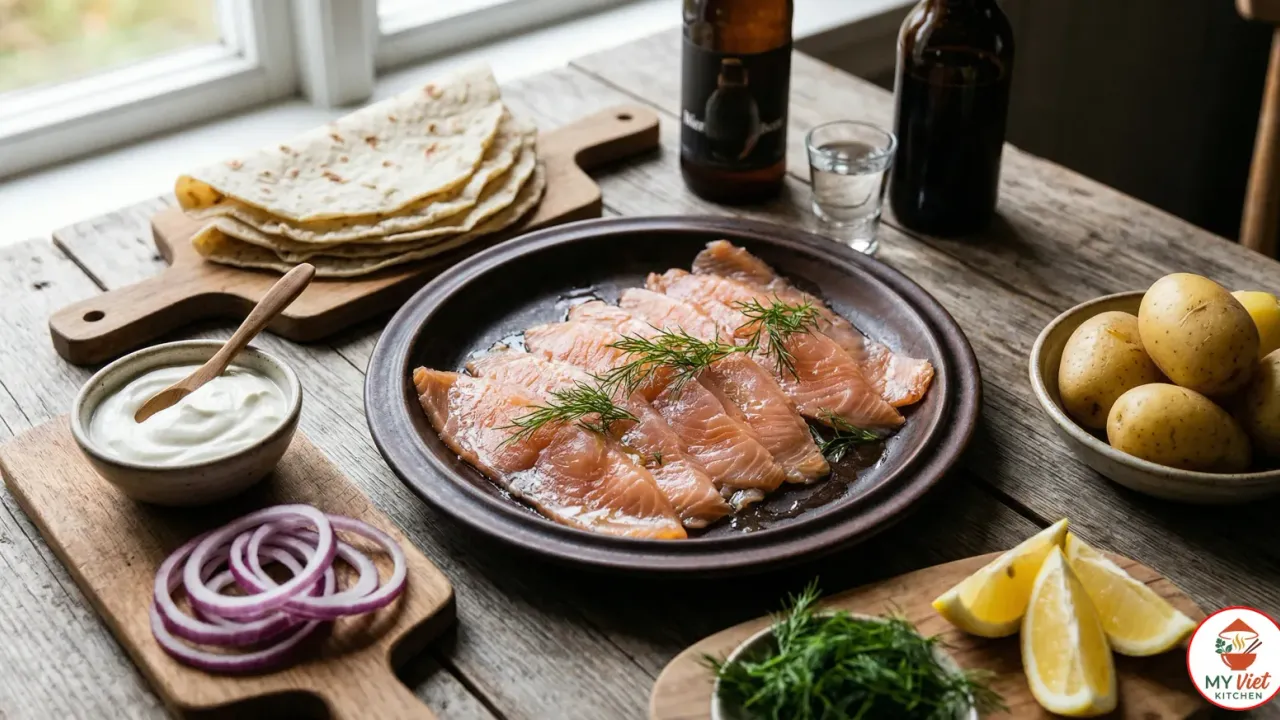
Rakfisk is Norway’s most polarizing and celebrated fermented fish, and this guide walks you through every step of making it at home. For centuries, Norwegian families in the mountain valleys of Valdres and Hallingdal have salted freshwater trout and left it to ferment through the autumn months, producing a tangy, soft-fleshed delicacy that they slice thin and eat raw with flatbread and sour cream. Whether you are a fermentation enthusiast or simply curious about this bold Scandinavian tradition, this rakfisk recipe gives you the knowledge and confidence to try it yourself.
Prep Time: 45 minutes | Fermentation Time: 2-3 months | Servings: 8
Difficulty: Hard | Calories: ~220 per serving
What Makes Rakfisk Special?
Rakfisk belongs to a rare group of foods that demand patience. Indeed, you wait months, not minutes, for this dish. Unlike smoked or pickled fish, rakfisk goes through true lacto-fermentation. Specifically, good bacteria break down the proteins in the fish over weeks. Eventually, firm raw trout turns soft, tangy, and deeply rich. The flavor lands somewhere between aged cheese and sushi, with a savory punch that rewards the bold.
The roots of this Norwegian fermented fish go back to the Middle Ages. Before fridges existed, inland Norwegians needed ways to keep their autumn trout through the long, dark winters. So they salted the fish and left it to ferment in cold sheds or buried in the ground. Over time, what began as survival food grew into a prized treat. Today, rakfisk is so loved that Norway holds a yearly festival just for it.
What truly sets rakfisk apart from other fermented fish is the balance it strikes. Swedish surstromming, for example, is famous for its intense, strong smell. Rakfisk is more subtle. Instead, a good rakfisk has a clean sour tang, a buttery soft bite, and a deep savory depth. Also, it pairs well with simple sides like bread and cream. This dish is not about shock value. Rather, it is about craft and time.

Choosing the Right Fish for Rakfisk
Firstly, the quality of your fish sets the tone for the whole recipe. Because you eat rakfisk raw after it ferments, freshness is not optional. Here are the best fish to use.
- Brown trout (best choice): This is the classic fish for rakfisk. Brown trout has firm, clean flesh with a mild sweet taste. Furthermore, it ferments well. Look for whole, fresh trout that smells like clean water, not fishy. The eyes should be bright, and the flesh should spring back when you press it.
- Rainbow trout: Easy to find at fish markets and grocery stores, rainbow trout works great for rakfisk. The flesh is a bit softer than brown trout, so the end result is creamier. Consequently, this is the best pick for home cooks who cannot get wild brown trout.
- Arctic char: If you can find it, Arctic char makes a rakfisk with a sweet, delicate flavor. The flesh is pink-orange and rich in fat. This gives the end product a silky, rich texture. Char is used in parts of northern Norway and makes a top-tier rakfisk.
Ingredients for Rakfisk
For the Fermentation:
- 2 pounds fresh whole trout, cleaned and gutted
- 1/2 cup coarse sea salt
- 1 tablespoon granulated sugar
- A large food-safe container with a tight-fitting lid
- A heavy weight or plate for pressing the fish
For Serving (Traditional Style):
- Norwegian flatbread (lefse or knekkebrод)
- Sour cream or creme fraiche
- Red onion, thinly sliced into rings
- Small boiled almond potatoes
- Lemon wedges
- Fresh dill sprigs
- Capers (optional)
- Mustard sauce (optional)
Pro tip: The salt ratio is key for safe results. Use about 4 to 5 percent salt by weight of the fish. Too little salt lets bad bacteria grow. On the other hand, too much salt stops the process and makes the fish too salty. Therefore, weigh your salt on a kitchen scale for the best results.
Step-by-Step Instructions
Step 1: Clean and Prepare the Trout
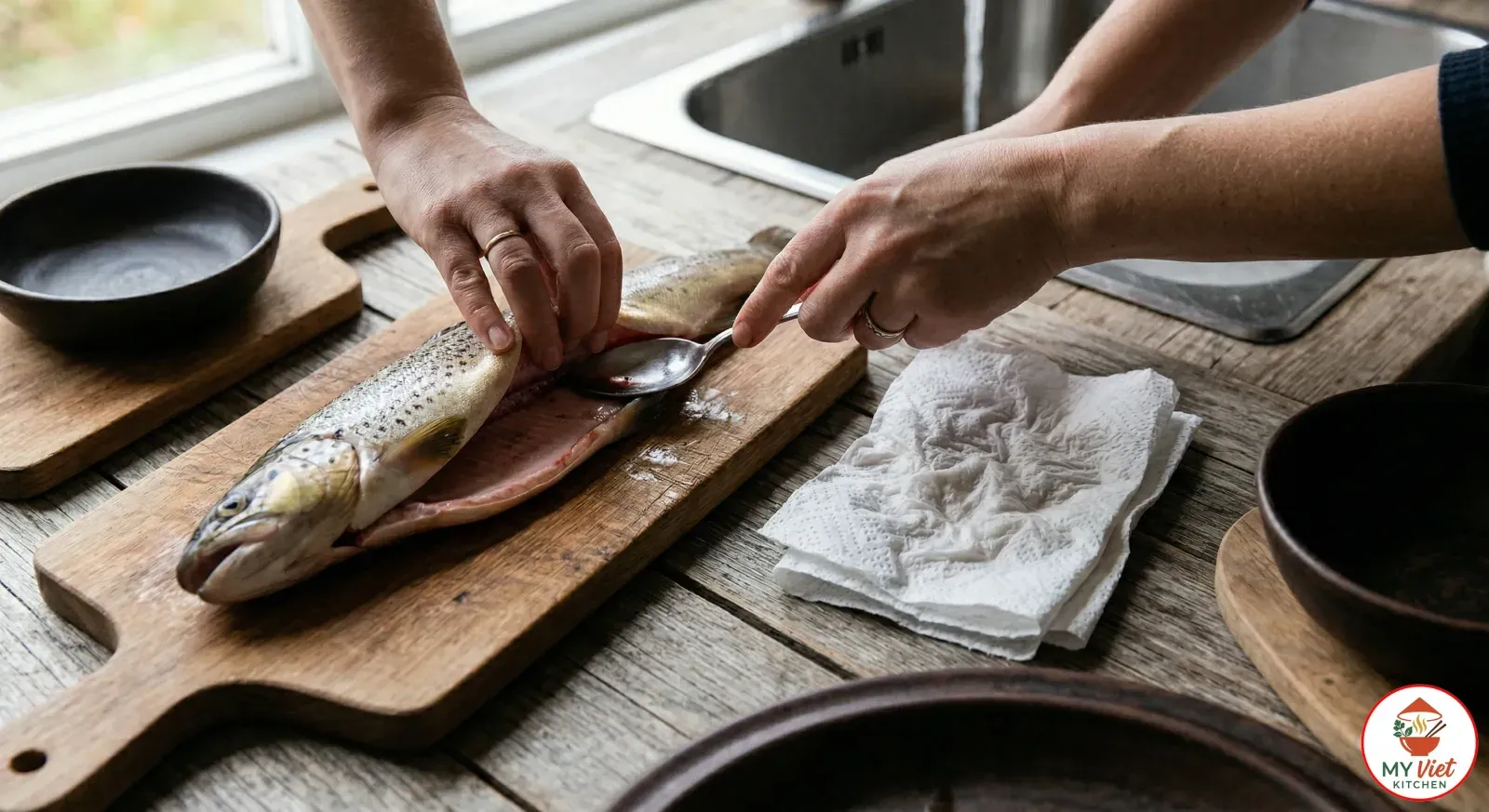
1 Start with the freshest trout you can find. Rinse each fish well under cold running water. Pay close attention to the belly cavity. Then, remove the head and tail if you like, though some Norwegian cooks leave them on. Next, pat the fish fully dry with clean paper towels. Any extra moisture on the skin can lead to bad bacteria during the ferment.
Additionally, run your fingers along the spine inside the belly to feel for any blood or thin skin. Scrape these away with the edge of a spoon. In the end, clean fish ferments better and tastes cleaner. This step takes only a few extra minutes but makes a big difference.
Step 2: Salt the Fish
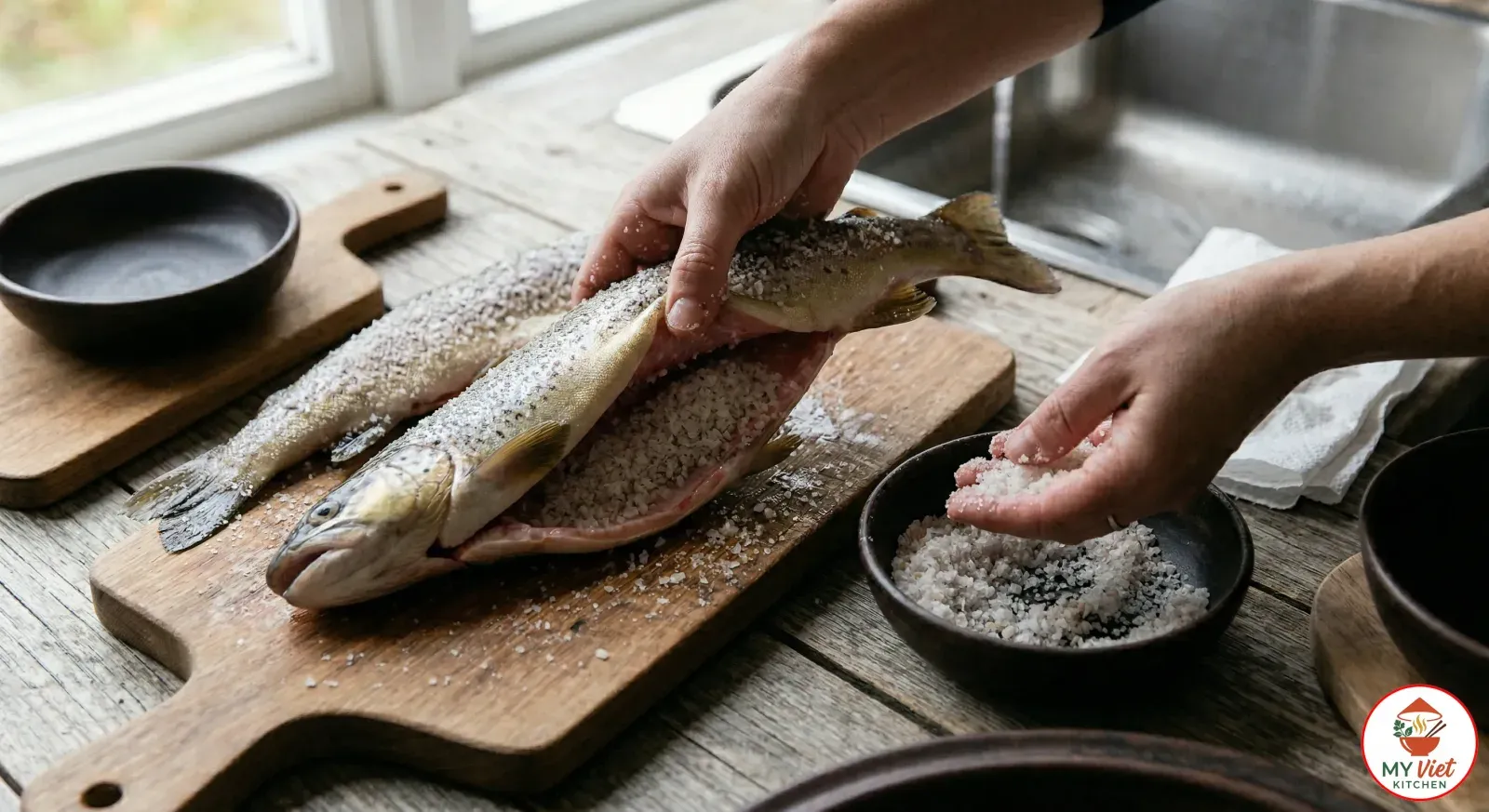
2 Mix the coarse sea salt and sugar in a small bowl. The sugar is not strictly old-school, but it feeds the good bacteria and helps start the ferment. Then, rub the salt mix over every part of the fish. Specifically, coat the belly cavity, the spine area, and both sides of the skin.
Make sure the coat is even. Also, pack a bit more salt inside the belly, since the flesh is thickest there. As a result, the salt pulls moisture out of the fish and creates a brine where good bacteria thrive and bad ones die. It is the same idea behind sauerkraut, kimchi, and other fermented foods.
Step 3: Press and Begin Fermentation
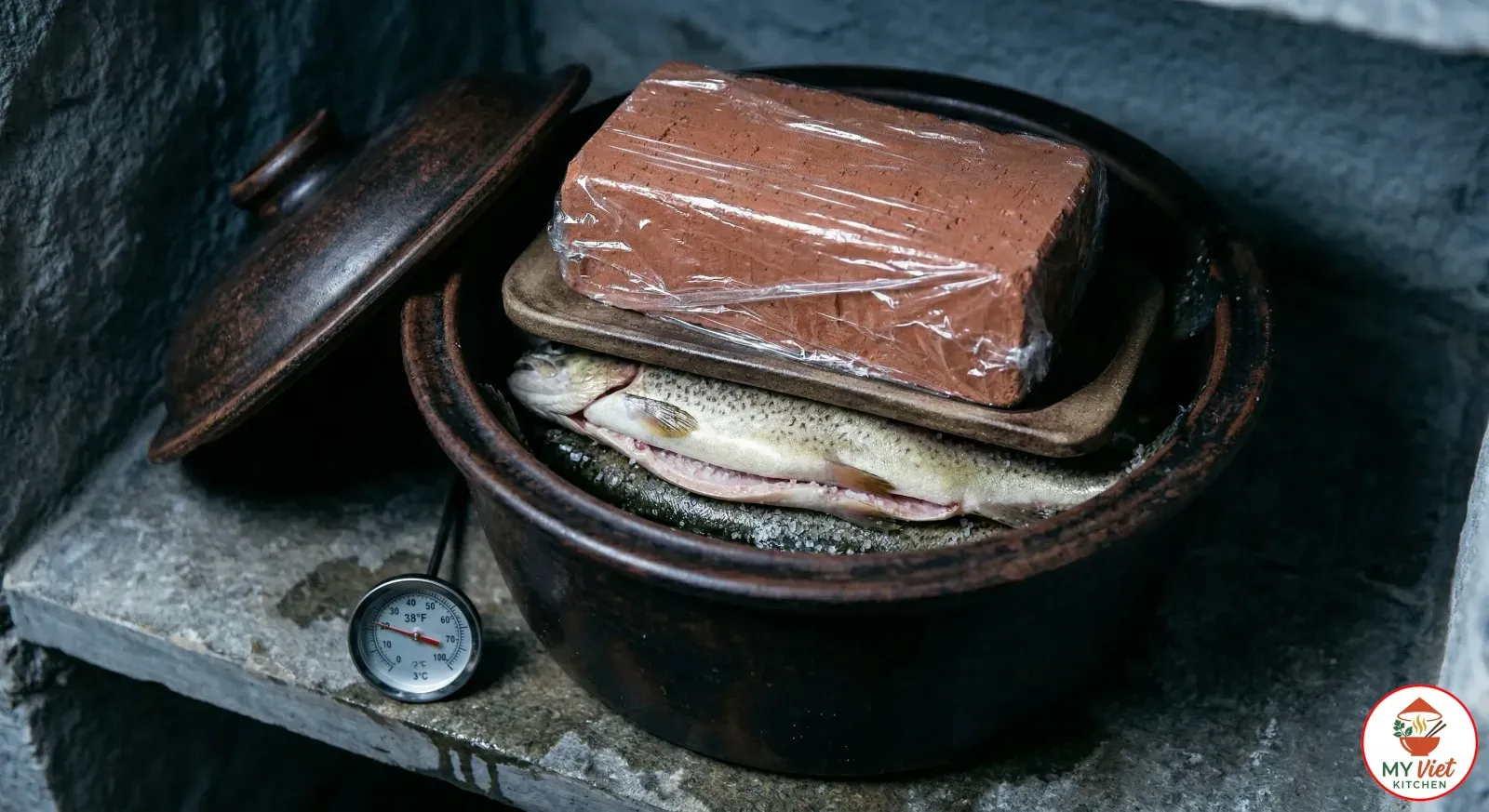
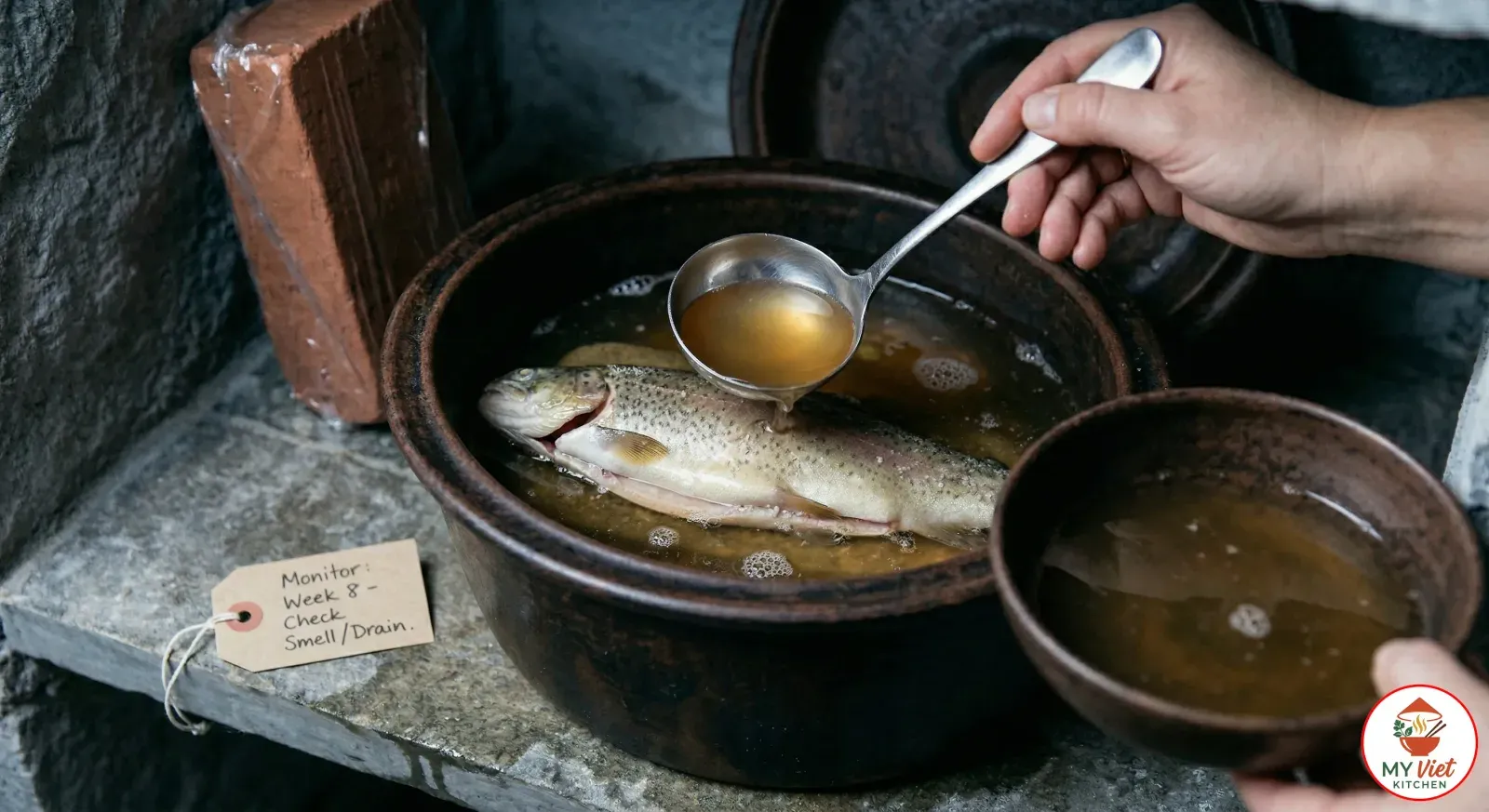
3 Layer the salted fish in a clean, food-safe box. If you have more than one fish, stack them belly to belly. This keeps the salt in touch with the thickest parts. After that, place a plate on top of the fish, then set a heavy weight on it. A jar of water or a clean brick in plastic wrap works great.
The weight presses the fish down and keeps it in the brine that forms as salt pulls out moisture. Next, cover the box with its lid and put it in a fridge or cold cellar. Keep the temperature between 36 and 40 degrees Fahrenheit. This cold setting is key because it slows the ferment to a safe pace. In the old days, Norwegian families stored the fish in cold sheds or buried pots during autumn.
Step 4: Monitor the Fermentation
4 Check the box once a week. Then, drain off any liquid that rises above the fish. The brine should smell sour and tangy, like yogurt or mild cheese. However, if you smell anything foul or like strong ammonia, something went wrong. In that case, throw the batch away and start fresh. A good ferment smells strong but clean, never rotten.
After about two months, test the fish. At this point, the flesh should feel much softer than raw fish. It will look a bit see-through and smell tangy. Then, taste a small piece. At this stage, mild rakfisk has a clean, sour flavor with a hint of sweetness. For a stronger, bolder rakfisk, simply keep fermenting for one more month. Ultimately, Norwegians love to argue about the best timing, so find the point that suits your own taste.
Step 5: Slice and Serve the Rakfisk
5 Once the ferment hits your target, take the fish out of the box. Then, gently scrape off any extra salt from the surface with the back of a knife. Next, fillet the trout if you have not done so yet. Remove the skin and any bones. Finally, slice the flesh into thin pieces at an angle for nice, wide slices.
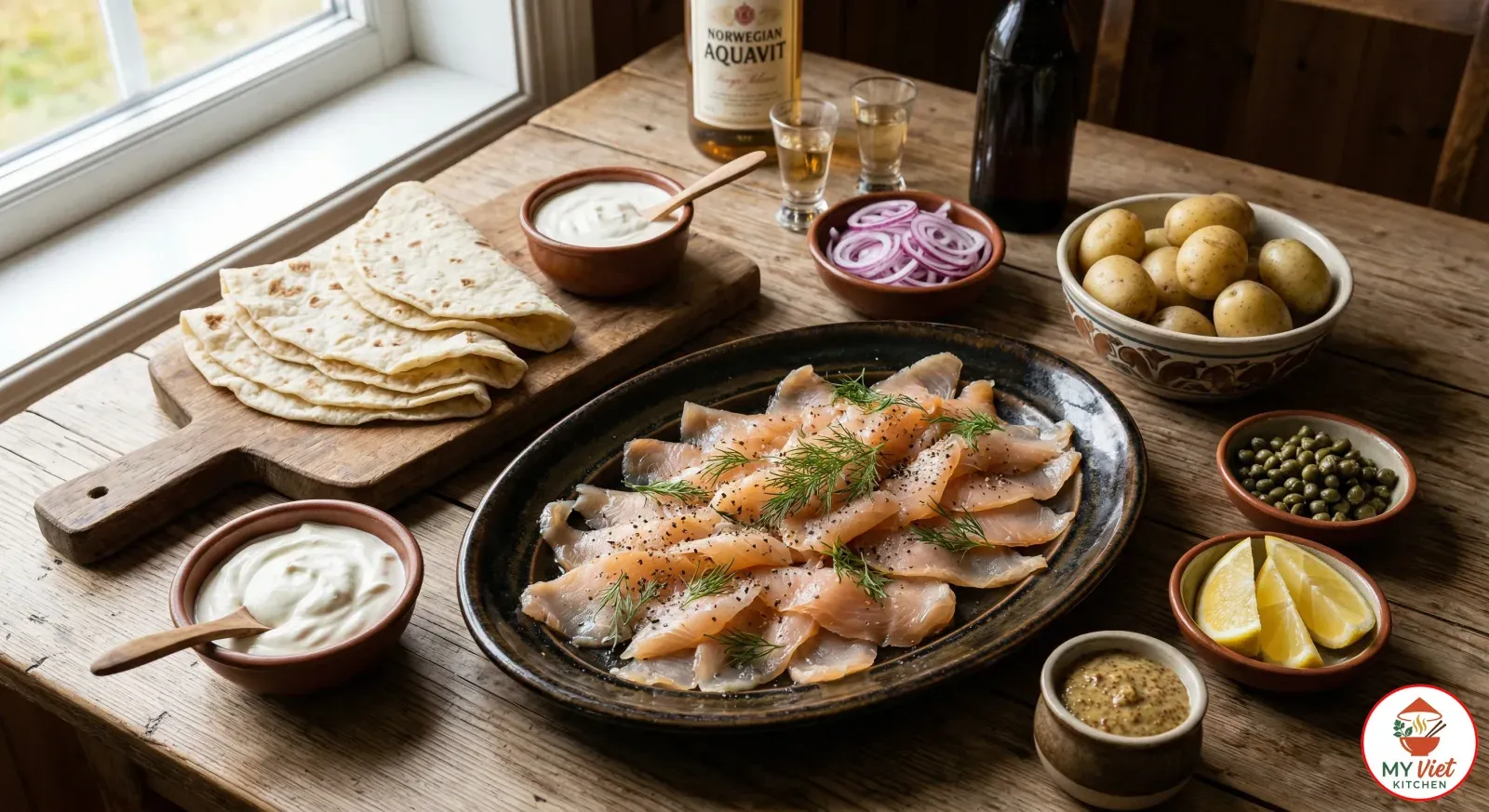
Lay the rakfisk slices on a platter. Then, set out flatbread, sour cream, thin red onion rings, boiled potatoes, lemon wedges, and fresh dill next to the fish. Each person builds their own bite. First, start with flatbread, then add sour cream, and top with a slice of rakfisk, a ring of onion, and a squeeze of lemon. This hands-on, shared style of eating is core to the Norwegian rakfisk way.
Expert Tips for Perfect Rakfisk
Temperature Control Is Everything
Temperature controls both the safety and taste of your rakfisk. Keep the fish between 36 and 40 degrees Fahrenheit at all times. Above 42 degrees, bad bacteria can grow fast. Therefore, a spare fridge or a cold garage in autumn gives you the best results. Additionally, use a thermometer to check the temp often. Never guess.
Use the Freshest Fish Possible
Since rakfisk is never cooked, the raw fish must be top quality. Buy your trout the same day you plan to salt it. If you catch it yourself, gut and clean it right away, then keep it on ice. Otherwise, fish that sat around for days will make a bad or unsafe rakfisk. Freshness is the most important thing in a good batch.
Weigh Your Salt Precisely
The salt-to-fish ratio is what stands between safe ferment and spoilage. Aim for 4 to 5 percent salt by weight. For 2 pounds of fish, that means about 1.5 to 1.8 ounces of salt. Coarse sea salt is best because it melts slowly and spreads evenly. In contrast, iodized table salt can mess with the ferment and leave a metallic taste.
Rakfisk vs. Other Fermented Fish
Fermented fish traditions exist across the globe. Each culture has its own way of preserving fish through fermentation. Here is how rakfisk stacks up against its closest cousins.
| Dish | Country | Fish Used | Fermentation Time | Flavor Profile |
|---|---|---|---|---|
| Rakfisk | Norway | Trout or char | 2-3 months | Tangy, buttery, moderately pungent |
| Surstromming | Sweden | Baltic herring | 6+ months | Extremely pungent, salty, acidic |
| Gravlax | Scandinavia | Salmon | 2-3 days (cured, not fermented) | Mild, sweet, herbal |
| Narezushi | Japan | Various freshwater fish | Several months to years | Sour, complex, rice-fermented |
| Fesikh | Egypt | Grey mullet | 2-4 weeks | Very salty, strongly pungent |
Serving Suggestions
In Norway, people always serve rakfisk cold, sliced thin, and laid out with a spread of classic sides. Building each bite is part of the fun. A proper rakfisk meal is shared, relaxed, and tied to the heart of Norwegian food culture.
Classic Accompaniments:
- Lefse (Norwegian flatbread): Soft, thin potato flatbread is the go-to base for rakfisk. Its mild taste and soft texture let the fish shine. Wrap a slice of rakfisk in lefse with a dab of sour cream for the real deal.
- Sour cream or creme fraiche: Cool, tangy sour cream tames the strong taste of the fish nicely. Spread it on flatbread before adding the rakfisk. Creme fraiche works just as well and has a slightly richer flavor.
- Red onion rings: Thin slices of red onion add a sharp, sweet crunch. They cut right through the rich fish. The bright color looks great on the plate too. Some Norwegians soak the rings in cold water first to soften the bite.
- Boiled almond potatoes: Small, waxy Norwegian potatoes, boiled until tender and served warm, give a starchy, cozy base next to the cold fish. Their buttery taste and creamy texture go hand in hand with tangy rakfisk.
Beverage Pairings:
- Aquavit: This is the classic drink to have with rakfisk. The caraway-spiced spirit cleans your palate between bites and adds herbal warmth. Serve it ice-cold in small glasses.
- Norwegian pilsner or lager: A cold, crisp beer like Ringnes or Hansa cuts through the rich fish and freshens things up. The bubbles lift the heavy, savory notes and keep you eating.
- Dry white wine: A Chablis or Muscadet with bright acid and mineral notes goes well with rakfisk. The crisp wine matches the sour tang of the fish without fighting it.
- Sparkling water with lemon: For a non-alcoholic choice, bubbly water with a squeeze of fresh lemon cleans your palate between bites. It keeps the meal light and fresh.
Storage and Shelf Life
Refrigerator: Once done, rakfisk keeps in the fridge for 2 to 3 weeks in an airtight box. The flavor will keep growing slowly, getting stronger over time. If you like it mild, eat it within the first week.
Freezer: You can freeze rakfisk for up to 3 months. Wrap each portion tightly in plastic wrap, then put them in a freezer bag. Thaw slowly in the fridge the night before you serve it. Freezing stops the ferment and locks in the flavor at that point.
Key note: Never leave rakfisk at room temperature for long. The fish is raw, so it must stay cold at all times. Throw away any rakfisk that sat out for more than two hours. When in doubt, trust your nose. Good rakfisk smells tangy and sour. It should never smell rotten.
Common Mistakes to Avoid
1. Using Fish That Is Not Fresh Enough
This is the worst mistake you can make with rakfisk. The fish is never cooked, so it must be very fresh. Fish that smells even a bit off before salting will give you a bad or unsafe result. Buy your trout the day you start. Get it from a source you trust. Freshness is not optional — it is the base of the whole process.
2. Fermenting at Too Warm a Temperature
If the temp rises above 42 degrees, bad bacteria can grow fast. Botulism is a real risk with poorly stored fermented fish. Use a thermometer to check your storage temp often. A beer fridge set to 37 degrees is ideal. Do not guess or assume your garage is cold enough.
3. Using Too Little or Too Much Salt
Salt keeps bad bacteria in check while the good ones do their work. Too little salt lets bad germs thrive. Too much salt kills the good bacteria and leaves you with overly salty, poorly fermented fish. Weigh your salt on a scale. Aim for 4 to 5 percent. In this recipe, being precise matters more than in almost any other ferment.
4. Neglecting Hygiene During Preparation
Every surface, box, and tool that touches the fish must be very clean. Wash your hands well before handling the trout. Rinse your container with boiling water or food-safe cleaner. Dirty gear brings in bad bacteria that fight the good ones. In this process, being clean is not just tidy — it is safe.
Frequently Asked Questions
What is rakfisk?
Rakfisk is a classic Norwegian treat made from trout or char. The fish is salted and left to ferment for two to three months in a cold spot. The result is a soft, tangy, bold fish that Norwegians eat raw in thin slices. They serve it with flatbread, sour cream, and onions. It has been part of Norwegian food life for ages and stays one of the most iconic fall foods in the country.
How long does rakfisk take to ferment?
Rakfisk ferments for two to three months at 36 to 40 degrees Fahrenheit. Some makers go up to six months for a stronger, bolder taste. A shorter ferment gives you a milder flavor. A longer one gives you a punchy, savory result. The right time depends on what you like best.
Is rakfisk safe to eat?
Yes, rakfisk is safe when made the right way. Use proper salting, strict cold storage, and clean tools. Norwegian makers follow tight food safety rules. The key factors are fresh fish, steady cold temps, and the right amount of salt. If you are new to this, follow a trusted recipe closely. You can also buy rakfisk from a good Norwegian maker for your first try.
What does rakfisk taste like?
Rakfisk has a rich, layered taste. It is tangy, savory, and a bit sour with a soft, buttery feel. Many people say it reminds them of strong aged cheese. Milder versions taste clean and gently sour. Longer-fermented rakfisk gets bolder and more punchy. Sour cream, flatbread, and onion help balance the strong flavor.
What fish is used for rakfisk?
Trout is the most common fish for rakfisk. Brown trout and rainbow trout both work great. Arctic char is popular too, mainly in northern Norway. It gives a slightly sweeter, richer result. The fish must be very fresh and high quality. It will never be cooked, so only use fish you fully trust.
When is rakfisk season in Norway?
Rakfisk season runs from late October through November. The fish is salted in late summer or early fall, then fermented through the cool months. The yearly Norsk Rakfiskfestival takes place in early November in Fagernes, Valdres. Thousands of guests come to taste, judge, and celebrate this iconic Norwegian treat each year.
Variations and Adaptations
Quick-Fermented Rakfisk (Shorter Cure):
If waiting two to three months feels too long, try a shorter ferment of about four to six weeks. The result will be milder and less complex, but it still has a nice tangy flavor. Use thin fillets instead of whole fish, since they ferment faster. This is a great way for beginners to try rakfisk without the full time commitment.
Rakfisk with Juniper and Herbs:
Some Norwegians add crushed juniper berries, fresh dill, or a few black peppercorns to the salt mix before packing the fish. These herbs add subtle flavor to the flesh during the long ferment. Juniper, in particular, gives a piney, slightly sweet note that goes great with the tangy taste. Use just a bit — one tablespoon of crushed juniper per batch is enough.
Smoked Rakfisk:
After the ferment is done, some makers lightly cold-smoke the rakfisk for more flavor. Cold smoking below 80 degrees for a few hours gives the fish a soft smokiness without cooking it. The mix of tangy ferment and gentle smoke makes a very tasty product. This version is popular in parts of central Norway. Try it if you have a cold smoker at home.
The Cultural Significance of Rakfisk
Rakfisk is much more than a recipe in Norway. It is a living link to the country’s past, land, and soul. For ages, the inland valleys of Valdres, Hallingdal, and Gudbrandsdalen relied on fermented fish as a key food source in the long, harsh winters. Far from the coast and its fresh catch, mountain folk made rakfisk to save their autumn trout. The custom passed from one family to the next, each one guarding its own method.
Today, rakfisk has grown from basic survival food into a cultural gem. The Norsk Rakfiskfestival in Fagernes draws over 20,000 guests each November. Makers from all over Norway compete for the title of best rakfisk. The event has become one of the country’s top food festivals. Newspapers run yearly taste tests and rankings. Oslo and Bergen restaurants put premium rakfisk on their fall menus with aquavit and fresh flatbread.
What makes this tradition last is its bond to place and season. You cannot rush rakfisk. You cannot mass-produce it or strip it from the rhythms of the year. The fish must be salted when autumn cold arrives, fermented through the dark weeks, and eaten when true winter sets in. In a world of fast food and year-round access, rakfisk reminds us that some of the best flavors need nothing more than salt, patience, and time. Making it at home links you to a food tradition that goes back to medieval Norway and lives on in its vibrant food culture today.
Conclusion
Making rakfisk at home is a rewarding challenge. It ties you to one of Norway’s oldest food traditions. The process needs fresh fish, precise salting, strict cold storage, and above all, patience. There is no shortcut to the tangy, buttery flavor that builds over months. Get these basics right, and you will make a fermented fish that rivals the best at the Rakfiskfestival in Valdres.
Ready to explore more traditional European dishes? Browse our full European dishes collection for recipes like gravlax, Jansson’s Temptation, and Scandinavian smorgasbord. Each recipe brings the authentic flavors of Northern Europe straight to your kitchen.