Ugali is the cornerstone of East African cooking, a firm cornmeal porridge that appears on dinner tables from Nairobi to Dar es Salaam every single day. Made from just white maize flour and water, this humble dish transforms into a smooth, starchy dome that pairs with everything from rich stews to grilled meats and leafy greens. This ugali recipe walks you through the authentic technique for achieving the perfect texture every time, whether you grew up eating it or are trying it for the first time.
Prep Time: 5 minutes | Cook Time: 20 minutes | Servings: 4
Difficulty: Easy | Calories: ~260 per serving
What Makes Ugali Special?
Ugali holds a position in East African cuisine that no other food can claim. It is the foundation of the meal, the starch that anchors everything else on the plate. In Kenya alone, over 90 percent of the population eats ugali regularly, and most families serve it at least once a day. Despite its simplicity, this dish carries deep cultural weight. Sharing ugali from the same plate is a gesture of trust and togetherness that defines family meals across the region.
The beauty of this dish lies in its restraint. Only two items go into the pot: cornmeal and water. Yet the technique matters a great deal. Essentially, good ugali has a smooth, lump-free texture. It holds its shape when sliced but feels soft when you pinch off a piece. It should never taste raw or gritty. The key is firm stirring over steady heat. This cooks the starch evenly and builds the stiff body that East Africans expect.
Because ugali has a mild, neutral flavor, it functions as the perfect canvas for bold accompaniments. In particular, its starchy body absorbs sauces and gravies like a sponge. A piece of ugali dipped into a rich beef stew or dragged through the juices of nyama choma becomes something greater than the sum of its parts. Consequently, understanding how to cook ugali well unlocks the full experience of East African dining.

Choosing the Right Cornmeal for Ugali
The type of cornmeal you use affects the final texture and color of your ugali significantly. Not all maize flour performs the same way, so selecting the right product is the first step toward an authentic result. Here are the best options available.
- Fine white maize flour (best choice): This is the traditional flour for ugali across Kenya, Tanzania, and Uganda. Brands like Jogoo, Pembe, and Hostess are household names in East Africa. According to food historians, white maize became the dominant variety in the region during the colonial era and remains the standard. Fine white maize flour produces the smoothest, most authentic ugali with a clean, mild taste.
- White cornmeal from Latin markets: If you cannot find East African brands, white cornmeal from Latin American grocery stores works well. Look for finely ground varieties labeled “harina de maiz” or “masa harina.” The texture is close to East African maize flour, though the grind may be slightly different. Test the consistency during cooking and adjust the water ratio as needed.
- Yellow cornmeal: Yellow cornmeal is widely available at regular supermarkets and produces a perfectly edible ugali. However, the color will be golden rather than white, and the flavor is slightly sweeter and more pronounced. In East Africa, yellow ugali is less common and sometimes associated with food relief programs rather than home cooking.
Ingredients for Ugali
Main Ingredients:
- 2 cups white cornmeal (maize flour), finely ground
- 3 cups water
- 1/2 teaspoon salt (optional, many East African cooks omit salt entirely)
Recommended Equipment:
- Heavy-bottomed saucepan or pot (at least 3-quart capacity)
- Sturdy wooden spoon or mwiko (traditional East African wooden paddle)
- Wet plate or bowl for shaping
Pro tip: A heavy-bottomed pot is essential for making ugali because it distributes heat evenly and prevents scorching on the bottom. Thin pots create hot spots that burn the cornmeal before the rest of the mixture cooks through. A wooden spoon with a flat edge works best for pressing and folding the stiff dough against the pot walls.
Step-by-Step Instructions
Step 1: Boil the Water
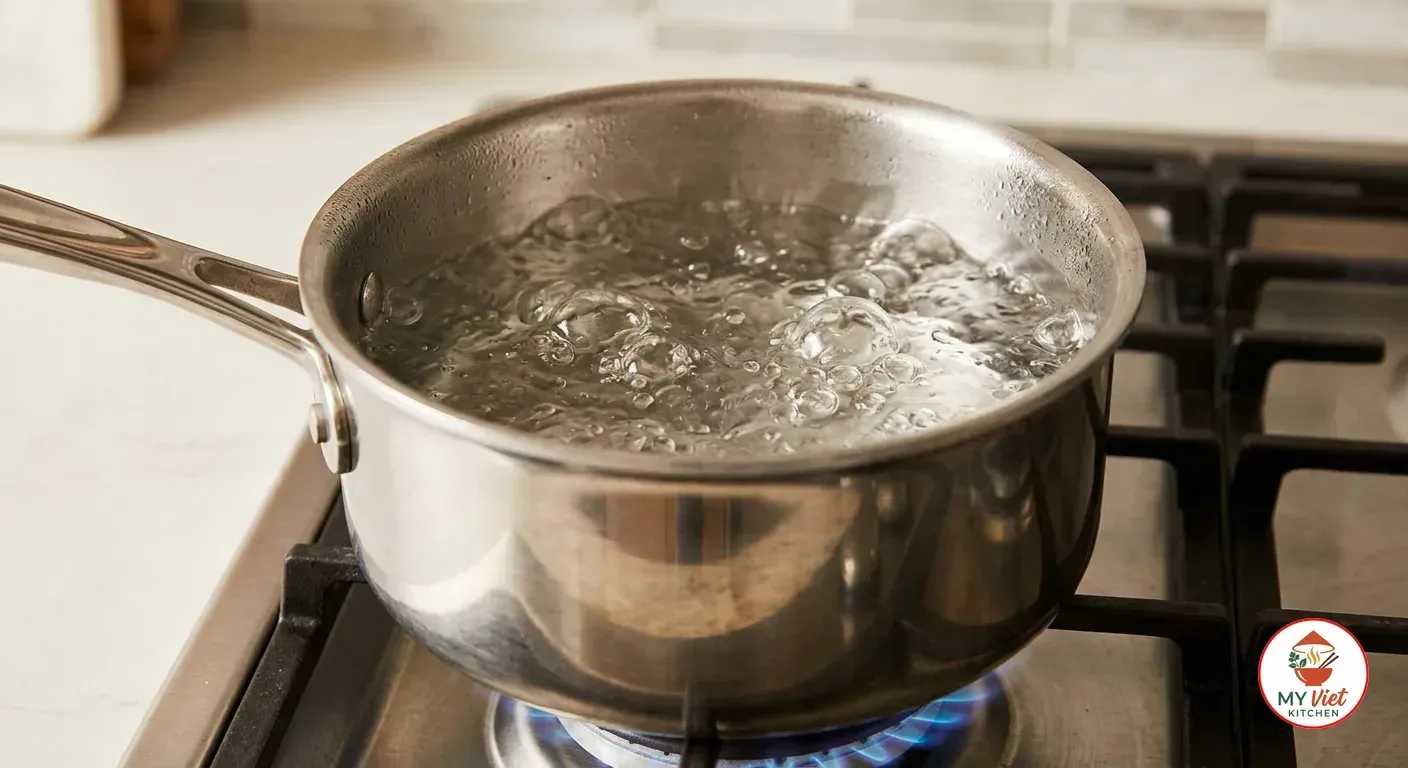
1 Pour 3 cups of water into a heavy-bottomed saucepan and bring it to a rolling boil over high heat. Add salt if you prefer seasoned ugali, though many traditional cooks skip it entirely. Use a deep pot rather than a wide, shallow one. The mixture will bubble aggressively during cooking, and a deeper pot prevents splattering. Make sure the water reaches a full, vigorous boil before you add any cornmeal.
Step 2: Add the First Round of Cornmeal
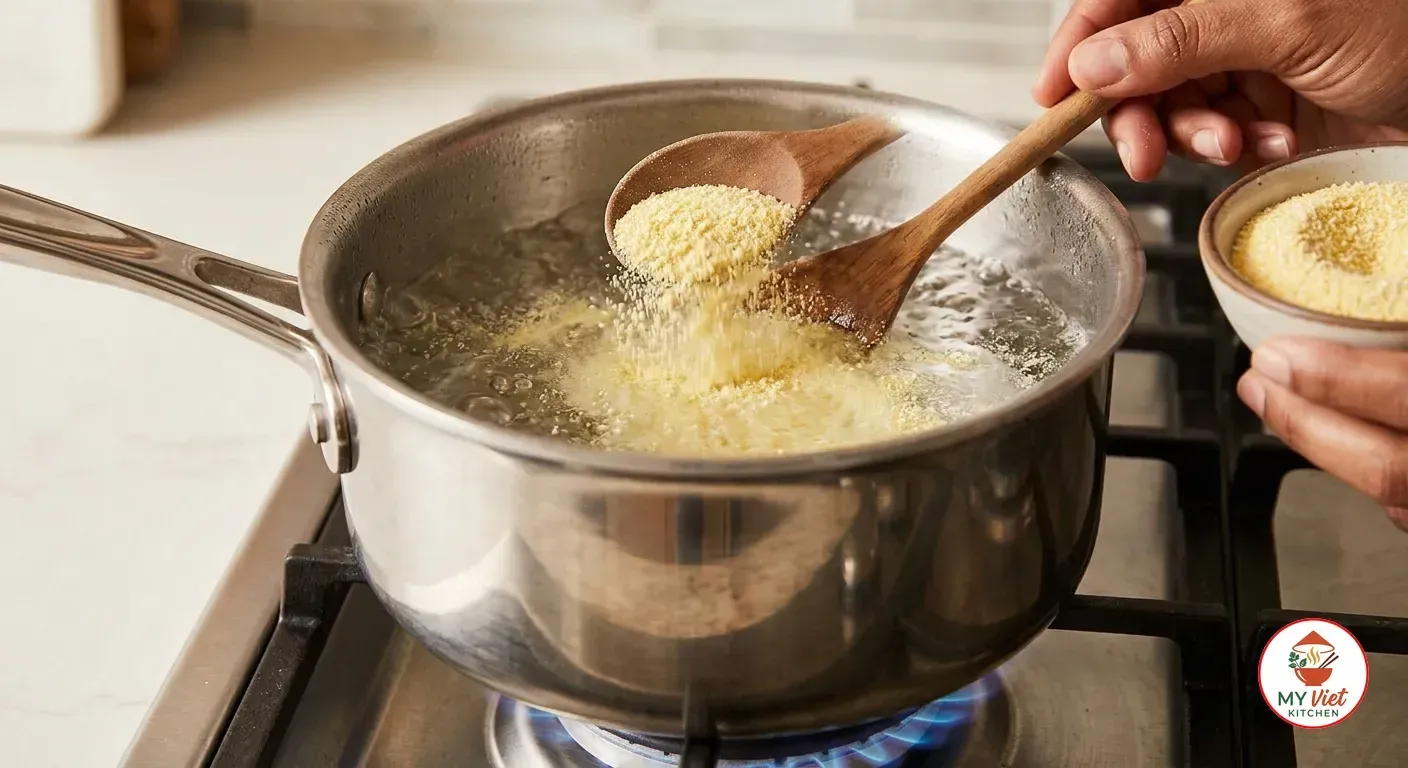
2 Reduce the heat to medium. Gradually sprinkle about one-third of the cornmeal (roughly 2/3 cup) into the boiling water while stirring constantly with a wooden spoon. Add the flour in a slow, steady stream rather than dumping it all at once. Stirring vigorously at this stage prevents lumps from forming. The mixture will resemble a thin, runny porridge at this point.
Let this thin porridge cook for 3 to 4 minutes, stirring occasionally. During this time, the starch granules absorb water and begin to swell. Essentially, this first cooking phase hydrates the cornmeal and creates a smooth base. If you skip this step and add all the flour at once, the dry cornmeal clumps around pockets of uncooked starch, and no amount of stirring fixes those lumps later.
Step 3: Add Remaining Cornmeal and Knead
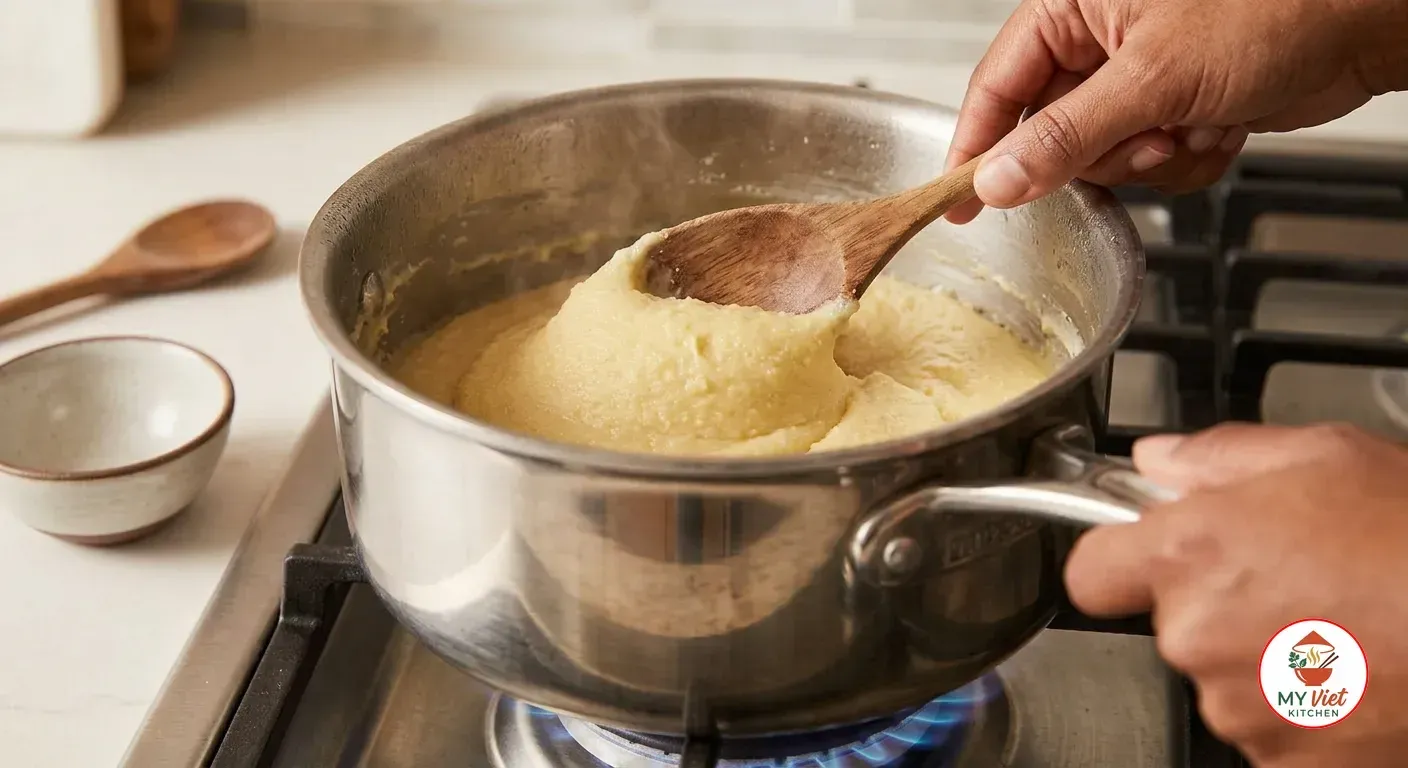
3 Now add the remaining cornmeal in small batches, about 2 to 3 tablespoons at a time. Stir firmly after each addition, pressing the mixture against the sides and bottom of the pot. The dough will thicken rapidly and become increasingly difficult to stir. This is expected. Use both hands on the spoon if needed, and press downward with force to incorporate every bit of dry flour.
Continue kneading the ugali in the pot for 5 to 8 minutes. The goal is a smooth, firm mass that pulls away from the sides of the pot cleanly. When you press the spoon into the surface, the ugali should spring back slightly. In addition, the surface should look smooth and glossy rather than rough or crumbly. If the mixture feels too dry and cracks when you press it, add a tablespoon of water and knead it in. If it feels too wet and sticky, sprinkle in more cornmeal.
Step 4: Shape and Serve
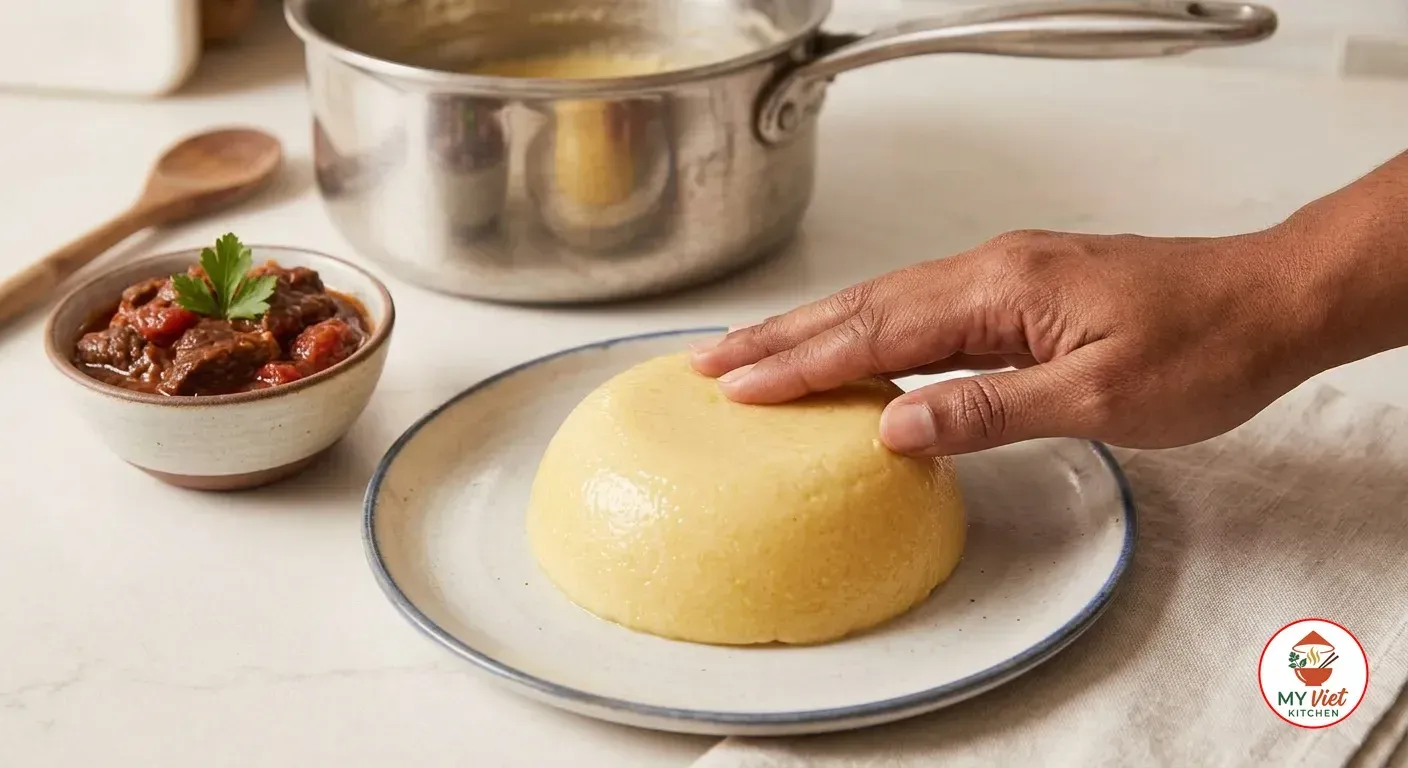
4 Reduce the heat to the lowest setting and cover the pot with a lid. Let the ugali steam for 2 to 3 minutes. This final steaming step finishes cooking any remaining raw starch and gives the surface a smooth finish. Meanwhile, wet a large plate or serving bowl with water. The moisture prevents the ugali from sticking.
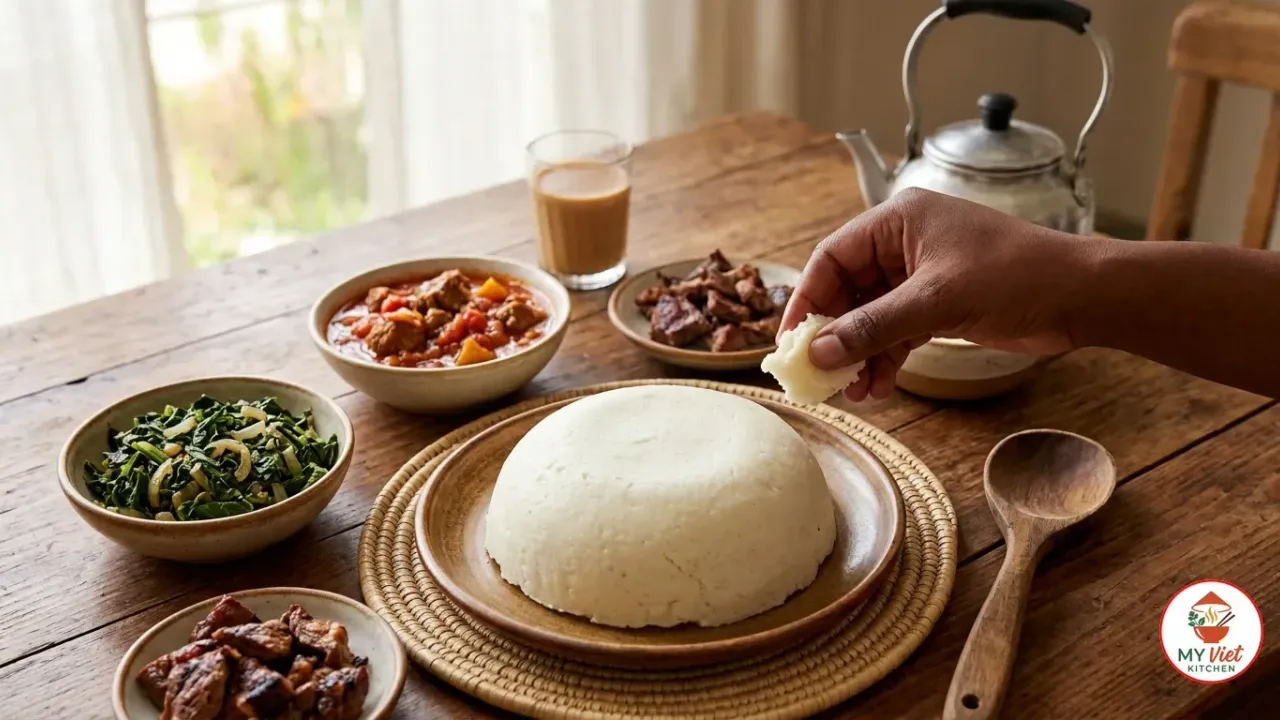
Remove the lid and scoop the ugali onto the wet plate using a wet wooden spoon or spatula. Shape it into a smooth, rounded dome by pressing and rotating the spoon around the surface. Alternatively, pack the ugali into a wet bowl, press it down firmly, and then invert the bowl onto the plate for a clean dome shape. Let it cool for 2 minutes before serving alongside your chosen stew, vegetables, or grilled meat.
Expert Tips for Perfect Ugali
Master the Water-to-Cornmeal Ratio
The standard ratio for ugali is about 1.5 parts water to 1 part cornmeal by volume. However, each brand of maize flour absorbs water at a different rate. As a result, add the cornmeal bit by bit and judge the feel as you go. In other words, do not rely on the cup measure alone. The ugali should be firm enough to hold its shape but soft enough to pinch apart. Start with less cornmeal and add more as needed.
Stir with Confidence and Strength
Making ugali is a physical task. The dough gets very stiff, and weak stirring leaves pockets of raw flour in the center. East African cooks use a flat wooden paddle called a mwiko for this job. Press the dough against the pot walls, fold it over, and repeat. The motion is much like kneading bread. After 5 to 8 minutes of firm kneading, the ugali turns from a lumpy mass into a smooth ball.
Use the Right Heat Level
Medium heat works best for the main cooking phase. High heat scorches the bottom before the center cooks through. Similarly, very low heat slows things down with no benefit. Keep the flame at steady medium until the ugali firms up. Then lower it for the final steaming step. If you smell burning, pull the pot off the heat right away and stir the bottom to fix it.
Ugali Compared to Other Cornmeal Dishes
Cornmeal-based staples appear across many cultures worldwide. Here is how East African ugali compares to similar dishes from other regions.
| Dish | Key Differences from Ugali |
|---|---|
| Ugali (East Africa) | Very firm texture, shaped into a dome, eaten by hand, no added fat or dairy, white cornmeal preferred |
| Polenta (Italy) | Creamier, often enriched with butter and Parmesan, served soft or set and sliced, yellow cornmeal standard |
| Grits (Southern USA) | Coarser grind, creamy porridge consistency, frequently made with milk, butter, and cheese, not eaten by hand |
| Sadza (Zimbabwe) | Nearly identical to ugali, uses same technique, slightly softer consistency preferred in some regions |
| Pap (South Africa) | Can range from soft porridge to firm, sometimes made with sour milk, served alongside braai meats and chakalaka |
| Fufu (West Africa) | Made from cassava, yam, or plantain rather than corn, pounded rather than stirred, stretchy and doughy texture |
Serving Suggestions
In East Africa, ugali never stands alone on the plate. It always arrives alongside a flavorful accompaniment that provides the seasoning and moisture the cornmeal lacks on its own. The combination of bland, starchy ugali with rich, saucy dishes creates a satisfying balance that defines the regional eating experience.
The Perfect Accompaniments:
- Sukuma wiki (collard greens): Sauteed collard greens with onions and tomatoes are the most common everyday partner for ugali in Kenya. The slightly bitter greens and the acidic tomatoes cut through the starchy heaviness beautifully. This combination appears on millions of Kenyan plates every single day.
- Beef or chicken stew: Rich, tomato-based meat stews are the celebratory pairing for ugali. The thick gravy soaks into the cornmeal perfectly when you scoop it up with your hands. For a classic option, try a Kenyan beef stew with potatoes, carrots, and peas.
- Nyama choma (grilled meat): Pinching off a piece of ugali and using it to grab a chunk of smoky grilled goat is one of East Africa’s greatest food experiences. The bland starch absorbs the meat juices and charcoal smokiness for an incredible bite.
- Fish stew (mchuzi wa samaki): Along the coast of Tanzania and Kenya, ugali pairs with fragrant coconut fish curry. The creamy, spiced sauce transforms each piece of ugali into something deeply flavorful and satisfying.
- Omena (dried sardines): Small dried fish sauteed with onions and tomatoes are a budget-friendly protein that millions of East Africans eat with ugali daily. The salty, savory fish provides a punchy contrast to the mild cornmeal.
Beverage Pairings:
- Chai (Kenyan milk tea): Strong black tea boiled with milk, ginger, and cardamom is the national drink of Kenya. It complements the mildness of ugali and provides warmth at dinner, especially during cooler evenings in the highlands.
- Fresh mango or passion fruit juice: Tropical fruit juices add a bright, sweet note that balances the heaviness of a ugali-centered meal. For that reason, these are popular at East African homes and restaurants alike.
- Tusker Lager: For an adult pairing, Kenya’s most famous beer works well with ugali and grilled meats. Its crisp, clean finish cleanses the palate between bites of the starchy porridge and rich stew.
Storage and Reheating
Refrigerator: Store leftover ugali in an airtight container for up to 2 days. The texture will firm up considerably in the refrigerator, but reheating restores most of the original softness. Wrap the ugali in plastic wrap before placing it in the container to prevent the surface from drying out and cracking.
Freezer: Freeze ugali for up to 1 month. Wrap individual portions tightly in plastic wrap and place them in freezer bags. Thaw overnight in the refrigerator before reheating. Frozen ugali loses some of its smooth texture, so freshly made ugali always tastes better. However, freezing works when you need to save leftovers.
Reheating: The best method involves steaming. Place the ugali in a pot, add 2 tablespoons of water, cover with a lid, and heat over low for 5 to 8 minutes. The steam softens the cornmeal without making it soggy. Alternatively, wrap the ugali in a damp paper towel and microwave for 1 to 2 minutes. Avoid reheating in a dry pan because the surface scorches before the center warms through.
Common Mistakes to Avoid
1. Adding All the Cornmeal at Once
Dumping all the cornmeal into the boiling water at the same time creates stubborn lumps that refuse to dissolve. Instead, always add the flour in stages. The first third goes in while you stir the boiling water. Then let that thin porridge cook for a few minutes before adding the rest gradually. This staged approach gives the starch time to hydrate properly and produces a smooth, uniform texture.
2. Not Stirring Firmly Enough
Gentle stirring does not work for ugali. Once the dough thickens, you must press, fold, and knead it against the pot walls with real force. Weak stirring leaves raw flour pockets in the center that taste gritty and uncooked. East African cooks call this essential kneading phase “kupiga ugali,” and they treat it as a workout. Use a sturdy wooden spoon and do not stop until the surface looks smooth and glossy.
3. Using a Thin, Lightweight Pot
A thin pot heats up in uneven patches. As a result, hot spots scorch the bottom layer of ugali while the top stays raw. Consequently, use a heavy saucepan or cast iron pot. These spread heat evenly and stop burning. If you only own a thin pot, stir more often and lower the heat a bit to make up for the uneven heat.
Frequently Asked Questions
What does ugali taste like?
Ugali has a very mild, neutral flavor with subtle corn sweetness. It tastes similar to unseasoned polenta but firmer and less creamy. By itself, ugali is intentionally bland. Its purpose is to serve as a starchy vehicle for flavorful accompaniments. When you eat it alongside a rich stew or grilled meat, the cornmeal absorbs those flavors and provides a satisfying, filling base for the meal.
Can I make ugali with other flours?
Yes, other flours work well for ugali across East Africa. Millet flour gives a darker, nuttier version that is popular in western Kenya. Sorghum flour makes a reddish-brown ugali with an earthy taste. Cassava flour yields a stickier, stretchier version. However, white cornmeal remains the top choice. For the best result, stick with fine white maize flour.
How many people does one batch of ugali feed?
This recipe feeds about 4 people as a side dish. In East Africa, where ugali is the main starch at every meal, portions tend to be large. Most families double or triple the batch based on how many sit at the table. As a general rule, use half a cup of dry cornmeal per person for a good serving with stew and greens.
Variations and Adaptations
Ugali Mayai (Ugali with Eggs):
This popular Tanzanian street food transforms leftover ugali into a savory egg dish. Slice cold ugali into flat pieces and fry them on a hot griddle. Pour beaten eggs over the ugali slices and cook until the egg sets, flipping once. The result is a crispy, golden cake with a soft cornmeal center and a protein boost from the eggs. Street vendors in Dar es Salaam serve this with kachumbari salad and hot chili sauce.
Millet Ugali:
Replace half or all of the white cornmeal with finger millet flour for a more nutritious version. Millet ugali has a darker brown color and a distinctive nutty, slightly bitter flavor that pairs exceptionally well with chicken stew and leafy greens. This variation is common in western Kenya among the Luo and Luhya communities. The technique stays exactly the same, though millet flour absorbs slightly more water.
Ugali Fries:
Let leftover ugali cool completely and firm up in the refrigerator. Then slice it into thick sticks or wedges and deep-fry or pan-fry in oil until golden brown and crispy on all sides. These ugali fries develop a crunchy exterior while staying soft inside. Serve them as a snack with chili sauce or as a creative side dish. This modern twist has gained popularity in Nairobi restaurants that put contemporary spins on traditional foods.
The Cultural Significance of Ugali
Ugali holds a sacred place in East African food culture. Indeed, it goes far beyond mere nutrition. In Kenya, the Swahili saying “hakuna chakula bila ugali” means “there is no food without ugali.” For many families, a meal without this staple does not count as a real meal. This belief runs so deep that Kenyans living abroad often name ugali as the food they miss most, above all other dishes from home.
The act of making ugali also carries deep meaning. By tradition, it falls to the women of the home. The ability to make smooth, lump-free ugali is a point of real pride. Mothers teach daughters the right stirring motion from a young age. In fact, a common Kenyan joke says that a woman who cannot cook ugali well is not ready for marriage. While views have changed, the skill still earns respect as a core part of home life.
Across East Africa, ugali adapts to local ways but keeps its core form. Kenyans shape it into a tall dome and eat it with sukuma wiki on weeknights. In Tanzania, many call it “sima” and pair it with coconut fish stew. Ugandans know it as “posho” and serve it with groundnut sauce. Regardless of the name, the shared act of pinching off a piece and scooping up stew with your hands ties millions of people to a food tradition that has fed communities for ages.
Conclusion
Making authentic ugali at home requires just two ingredients and about 20 minutes of your time, but the technique matters more than you might expect. The staged addition of cornmeal, vigorous kneading in the pot, and proper heat control all contribute to a smooth, firm porridge that holds its dome shape and tears cleanly when you pinch it. Master these details and you have the foundation of East African cooking in your kitchen.
Whether you pair your ugali with a rich beef stew, sauteed greens, or smoky grilled meat, this humble dish transforms every meal into something deeply satisfying and authentically East African. For more African recipes, explore our collection of African dishes including Kenyan nyama choma and Ethiopian doro wat.