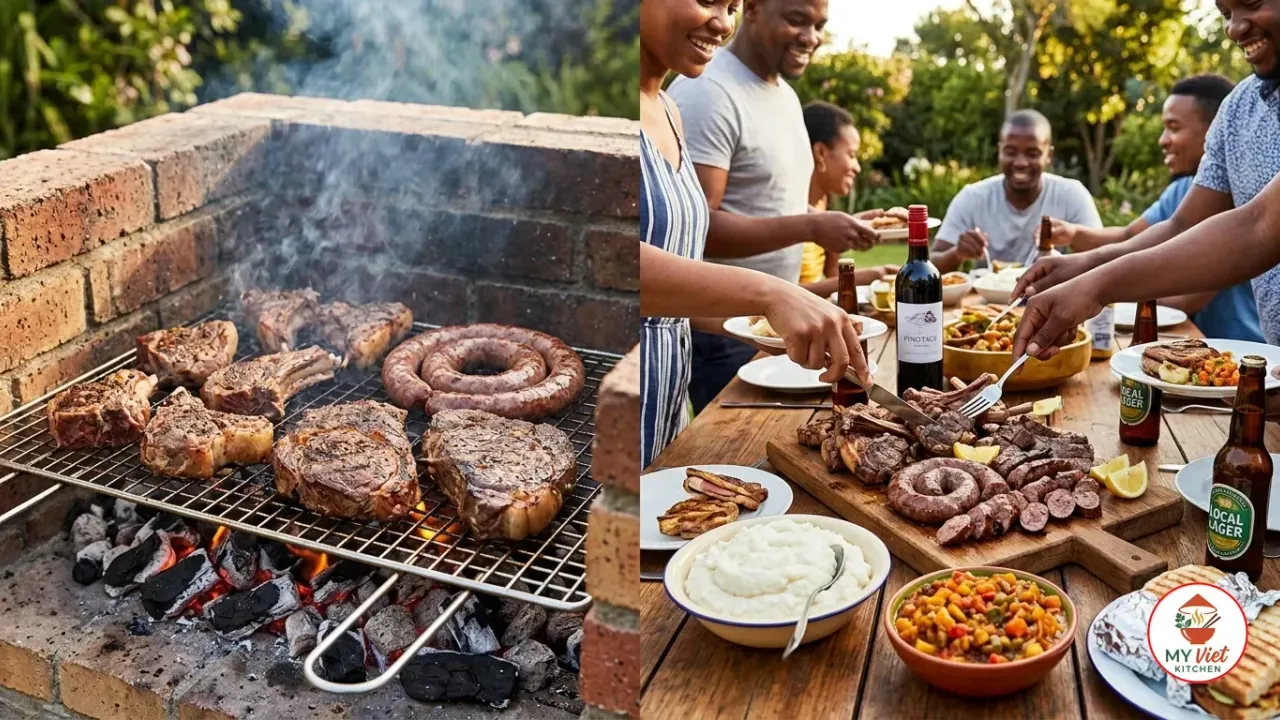
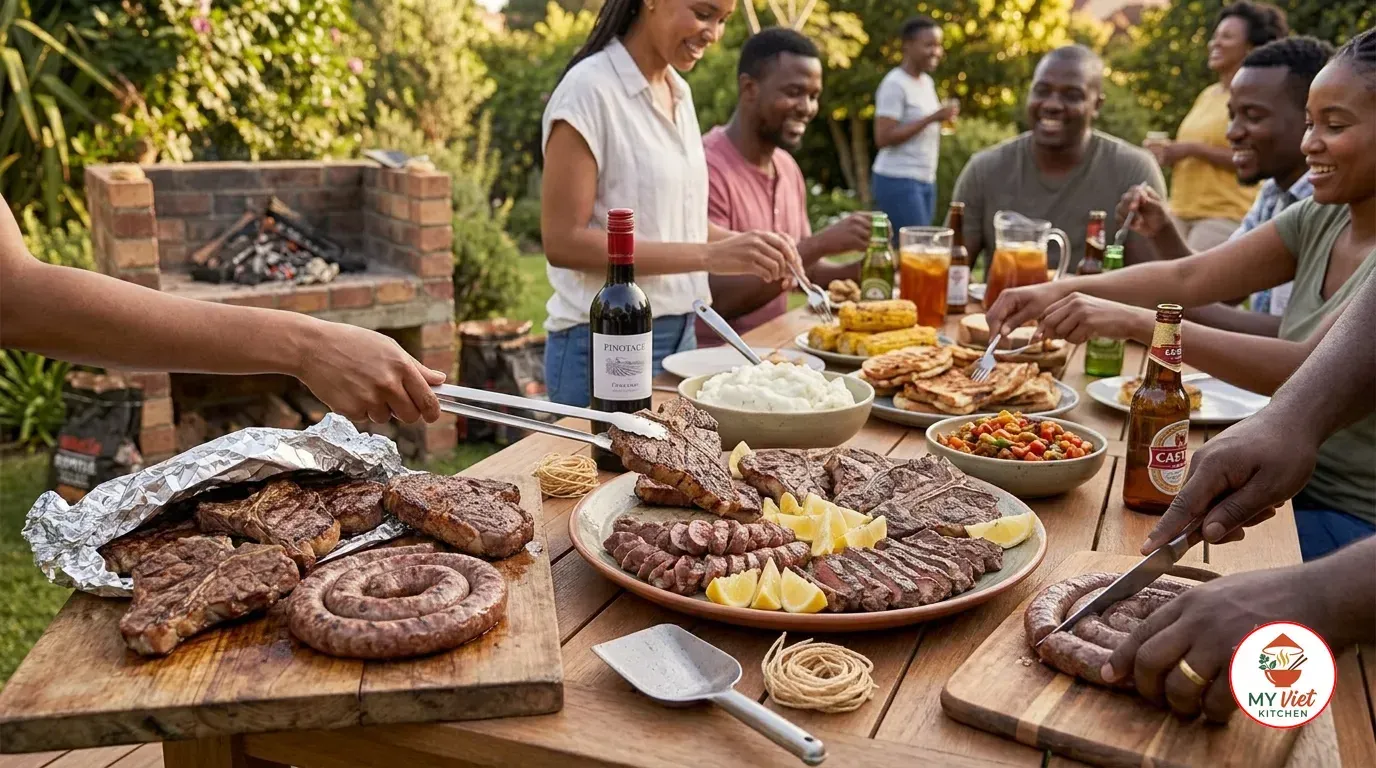
Braaivleis is the beating heart of South African food culture and one of the most treasured outdoor cooking traditions on the African continent. This fire-grilled feast features lamb chops, beef steaks, and coiled boerewors sausage seasoned with smoky spice rubs and cooked slowly over glowing hardwood coals. More than just a meal, braaivleis is a social ritual that gathers families, friends, and entire communities around an open fire. This recipe walks you through making authentic braaivleis at home with proper fire management, traditional seasonings, and the techniques that South African braai masters have perfected over generations.
Prep Time: 30 minutes | Cook Time: 45 minutes | Servings: 6
Difficulty: Medium | Calories: ~520 per serving
What Makes Braaivleis Special?
Braaivleis stands apart from ordinary grilling because of its deep connection to fire, community, and South African identity. The word itself comes from Afrikaans: braai means to roast or grill, and vleis means meat. Together they describe a cooking tradition that stretches back centuries to the earliest Dutch and indigenous communities at the southern tip of Africa. Unlike a quick backyard cookout, braaivleis takes time and care. You build a real fire, wait for the coals to glow, and then cook the meat slowly over steady heat.
What truly sets braaivleis apart is the quality and variety of meat on the grill. A proper braai includes at least three types: lamb chops with their rich, gamey flavor; thick-cut beef steaks with a bold, beefy crust; and boerewors, the iconic South African sausage made with beef, pork, and a blend of coriander, cloves, and nutmeg. Each cut cooks at a different rate. Managing them all over one fire is the skill that sets a true braai master apart from a beginner.
Beyond the food itself, braaivleis carries enormous cultural weight. South Africa even has an official holiday called National Braai Day on September 24, which coincides with Heritage Day. On this day, people from every background gather around fires across the country. The braai crosses lines of language, race, and class. As a result, it has become a strong symbol of unity in a nation with eleven languages and a deep, layered past.

Choosing the Right Meat for Braaivleis
The selection of meat makes or breaks your braaivleis. South African braai masters take this step seriously, and so should you. Here are the essential cuts for an authentic spread.
- Lamb loin chops (best choice for braai): South Africa produces exceptional lamb, and lamb chops are the crown of any braaivleis. Choose chops about 1 inch thick for the best sear-to-pink ratio. The natural fat renders over the coals and creates incredible flavor.
- Beef sirloin or rump steaks: Thick-cut beef steaks bring bold, savory depth to the braai platter. Sirloin offers a good balance of tenderness and flavor, while rump has more beefy taste and requires careful cooking to stay tender. Cut them at least 1.5 inches thick so they can develop a crust without overcooking inside.
- Boerewors sausage: No braaivleis is complete without a coil of boerewors. This coarsely ground sausage contains beef, pork, and a distinctive spice blend of coriander, cloves, and nutmeg. Buy it from a butcher who makes it fresh, because the quality varies enormously between mass-produced and handmade versions.
Ingredients for Braaivleis
Main Meats:
- 6 lamb loin chops (about 1 inch thick)
- 2 pounds beef sirloin steaks (1.5 inches thick)
- 1 ring boerewors sausage (about 1.5 pounds)
For the Spice Rub:
- 2 tablespoons coarse salt
- 1 tablespoon black pepper
- 1 tablespoon smoked paprika
- 2 teaspoons garlic powder
- 1 teaspoon ground coriander
- 1 teaspoon dried thyme
For the Basting Liquid:
- 3 tablespoons olive oil
- 2 tablespoons white wine vinegar
- 4 cloves garlic, minced
- 2 tablespoons fresh lemon juice
- 1 tablespoon brown sugar
For the Fire:
- Hardwood charcoal or briquettes (about 5 pounds)
- Firelighters or newspaper for starting
Pro tip: Season the lamb chops and beef steaks with the spice rub at least 30 minutes before grilling. This gives the salt time to draw out moisture, dissolve, and soak back into the meat. As a result, you get flavor that goes deep into the flesh rather than just sitting on the outside.
Step-by-Step Instructions
Step 1: Prepare the Spice Rub and Marinade
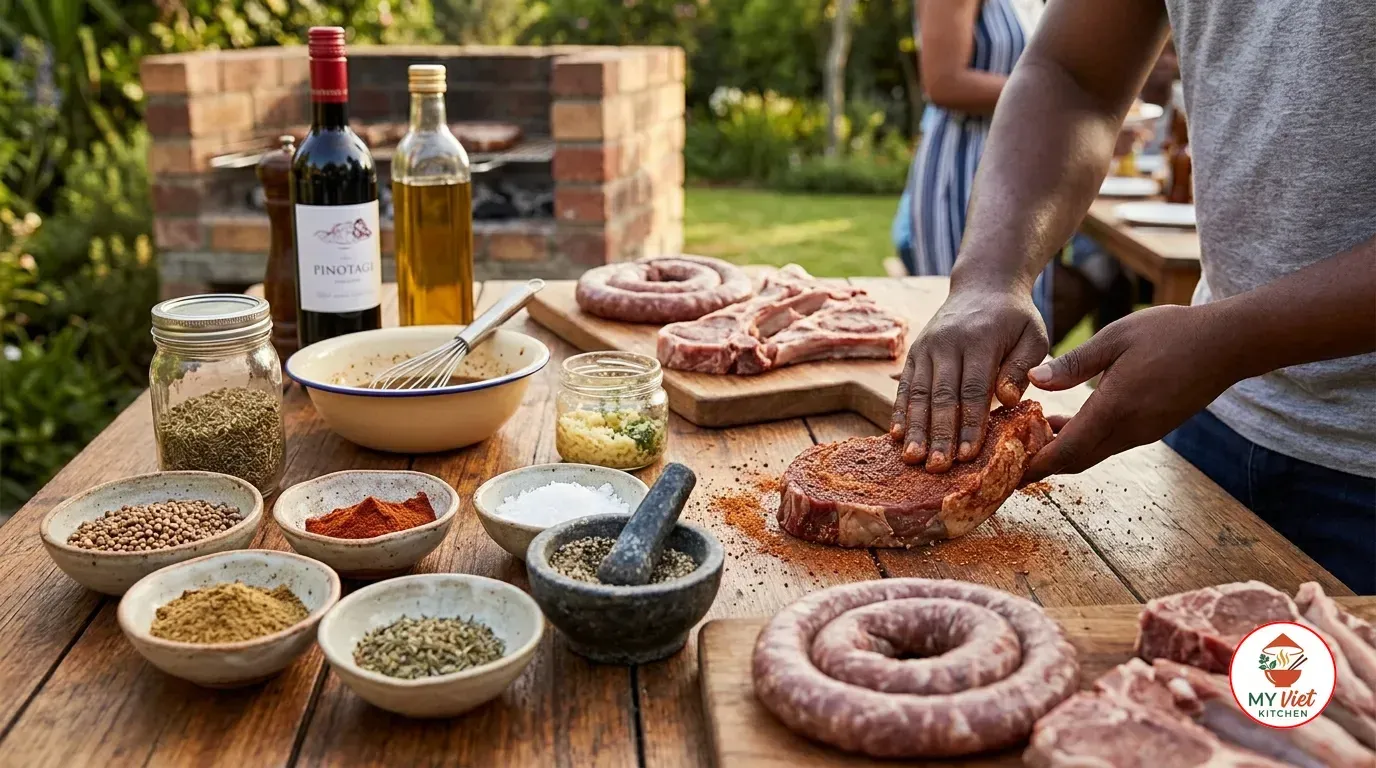
1 Start by making the spice rub. In a small bowl, combine the coarse salt, black pepper, smoked paprika, garlic powder, ground coriander, and dried thyme. Mix everything together thoroughly. The smoked paprika gives the meat a deep red color and a subtle smokiness that complements the hardwood fire.
Next, pat the lamb chops and beef steaks dry with paper towels. Then rub the spice mixture generously over every surface of each cut. Press the spices into the meat firmly so they adhere. In a separate small bowl, whisk together the olive oil, white wine vinegar, minced garlic, lemon juice, and brown sugar to create the basting liquid. Set both the seasoned meat and the basting liquid aside while you build the fire. Let the meat come to room temperature for 30 minutes before grilling.
Step 2: Build and Prepare the Fire
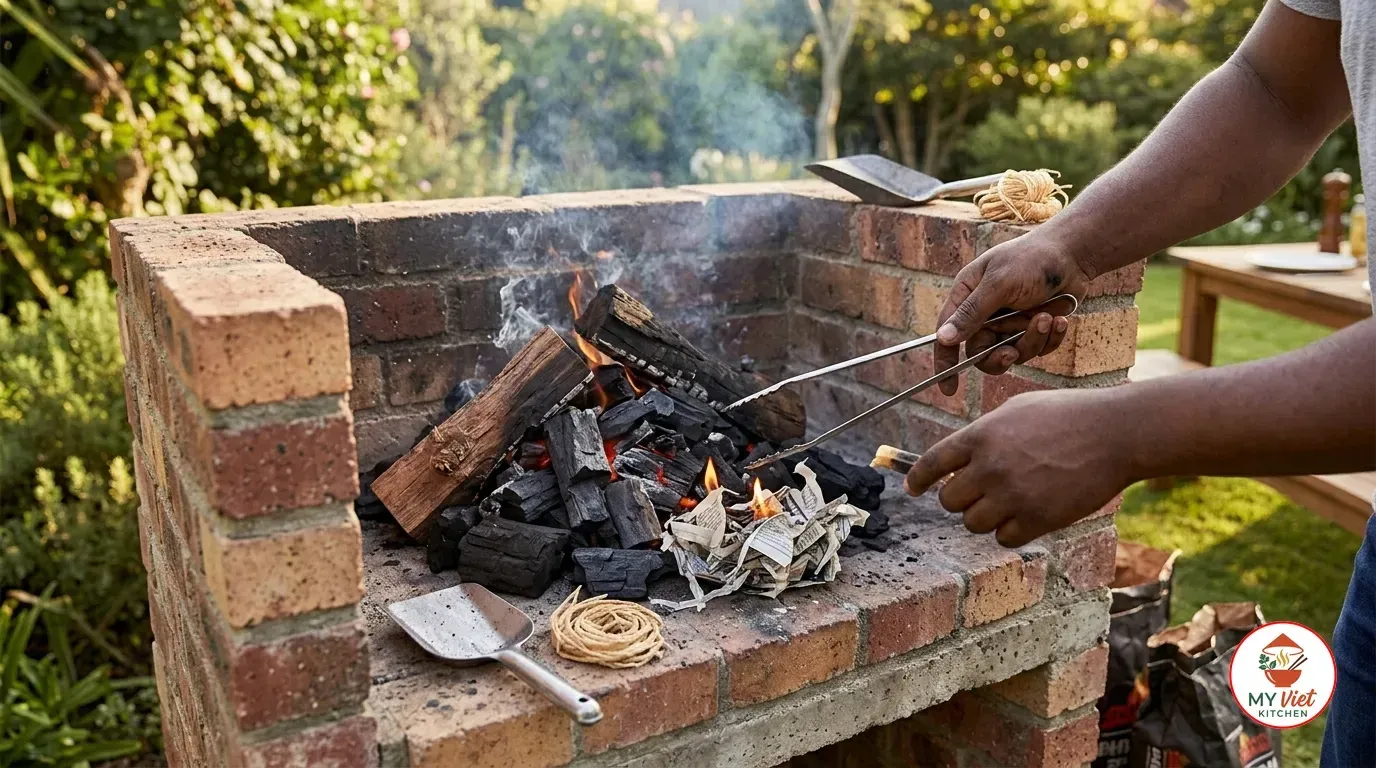
2 Building the fire correctly is the most critical skill in braaivleis. Arrange your hardwood charcoal in a pyramid shape in the center of the braai pit or grill. Place firelighters at the base and light them. Let the fire burn freely for 30 to 45 minutes without disturbing it. During this time, the flames consume the lighter materials and the charcoal begins to glow.
You know the coals are ready when they turn white-hot with a thin layer of gray ash on the surface. At this point, use a long-handled tool to spread the coals into an even layer across the fire bed. Then hold your hand about 6 inches above the grill grate. If you can hold it there for only 2 to 3 seconds before the heat forces you to pull away, the fire is at high heat and ready for searing. For a two-zone setup, push most coals to one side for direct heat and leave the other side with fewer coals for indirect cooking.
Step 3: Grill the Boerewors
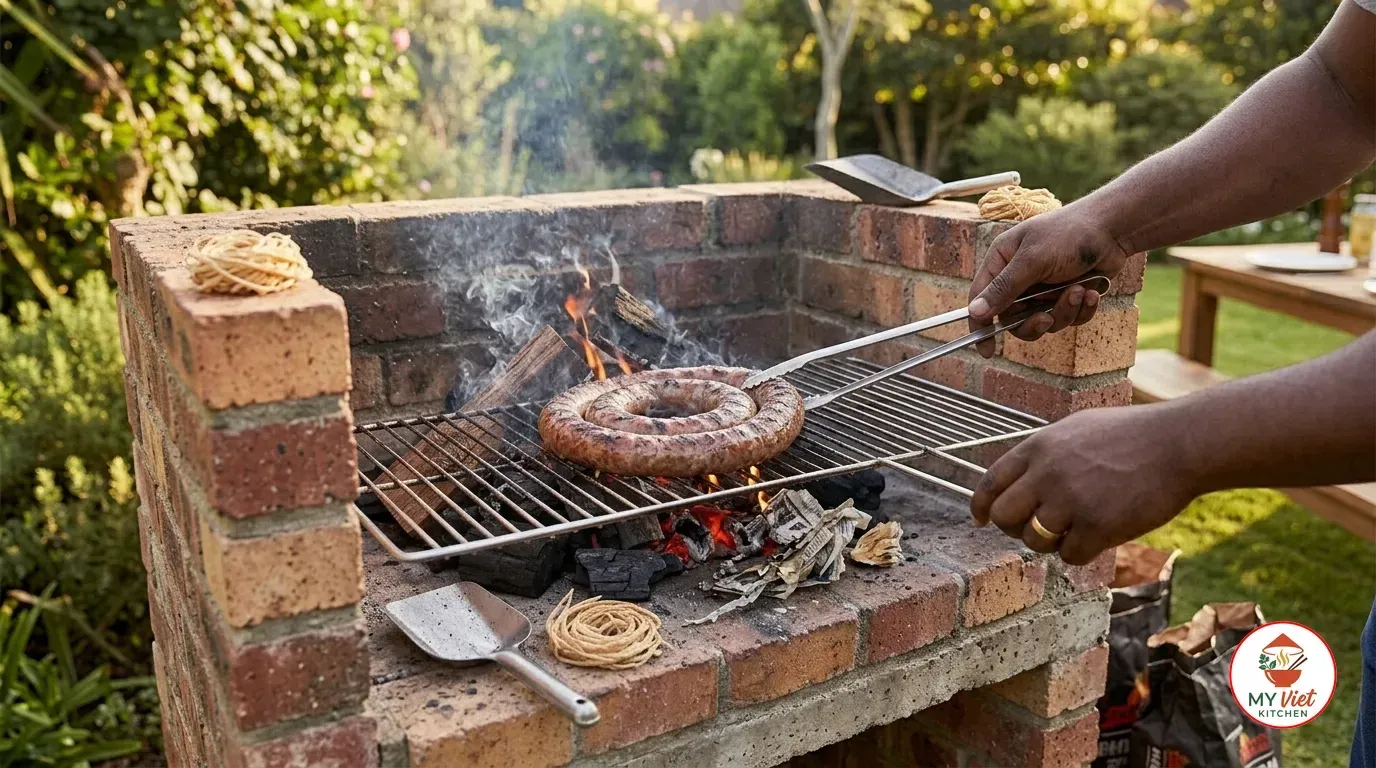
3 Place the boerewors coil on the grill grate over medium-hot coals. The sausage needs a slightly lower temperature than the steaks because its casing splits easily under intense direct heat. Cook the boerewors for 5 to 6 minutes per side, turning it carefully with tongs. Never pierce the casing with a fork because that releases the flavorful juices and fat inside.
As the boerewors cooks, the casing turns golden brown and the fat inside begins to sizzle. You will hear a gentle crackling sound that tells you the heat is right. If the fat drips onto the coals and causes flare-ups, move the sausage to a cooler zone temporarily. The boerewors reaches the perfect doneness when the internal temperature hits 160 degrees Fahrenheit and the casing is evenly browned all around. After that, transfer it to a cutting board and let it rest for 5 minutes before slicing into portions.
Step 4: Grill the Lamb Chops and Beef Steaks
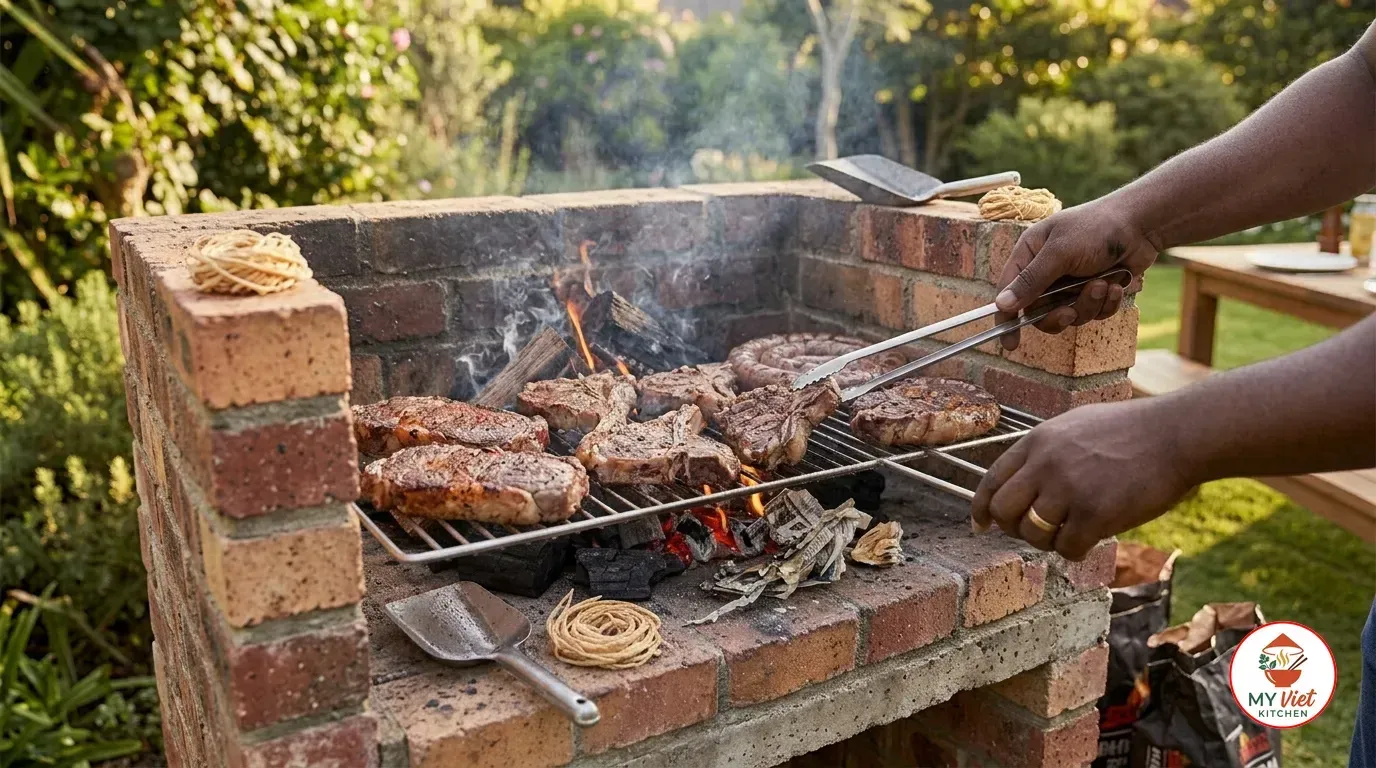
4 Now place the seasoned lamb chops and beef steaks directly over the hottest section of the coals. The strong heat starts the Maillard reaction on the surface, forming a rich, dark crust in the first minute. Sear the lamb chops for 3 to 4 minutes per side for medium-rare doneness. For the beef steaks, allow 4 to 5 minutes per side for a medium result.
During the last minute of cooking on each side, brush the meat with the vinegar-garlic basting liquid. The vinegar cuts through the richness of the fat, while the garlic and brown sugar add a savory-sweet glaze. If any fat drips and causes flames, move that piece to the cooler indirect zone until the flare-up subsides. Avoid pressing down on the steaks with a spatula because that squeezes out the juices. Instead, let the fire do the work and resist the temptation to flip the meat too often.
Step 5: Rest and Serve the Braaivleis
5 Transfer all the grilled meat to a large wooden cutting board. Let everything rest for 8 to 10 minutes before serving. Resting lets the meat fibers relax and pull the juices back from the center to the edges. If you cut into the meat immediately, those juices pour out onto the board instead of staying in every bite.
After resting, slice the boerewors into generous portions. Arrange the lamb chops, beef steaks, and boerewors on a large serving platter. Add fresh lemon wedges around the edges. Then serve the braaivleis family-style alongside pap, chakalaka, and braaibroodjies. In South Africa, everyone helps themselves from the shared platter while gathered around the fire. The braai master earns respect and compliments for perfectly cooked meat.
Expert Tips for Perfect Braaivleis
Master the Two-Zone Fire
The most important technique in braaivleis is creating a two-zone fire. Push most of the hot coals to one side of the braai for direct, high-heat searing. Leave the other side with fewer coals for indirect, gentler cooking. This setup gives you complete control over the process. You sear the meat on the hot side for a crust, then move it to the cooler side if it needs more time without burning. Professional braai masters use this method for every cut on the grill.
Use Hardwood Instead of Briquettes
Whenever possible, use real hardwood or hardwood lump charcoal instead of compressed briquettes. Hardwood burns hotter, produces better coals, and imparts a natural smoky flavor that briquettes cannot match. In South Africa, rooikrans and sekelbos are the preferred braai woods. If you cannot find those, oak, hickory, or mesquite lump charcoal delivers excellent results. You can taste the gap between real wood coals and store-bought briquettes in every single bite.
Let the Meat Rest After Grilling
Resting the grilled meat is a step that many home cooks skip, and it costs them dearly. When meat cooks over high heat, the fibers tighten and push the juices toward the center. If you cut too soon, those juices pour out onto the board. However, resting for 8 to 10 minutes lets the fibers relax and the juices flow back through the whole piece. Cover the meat loosely with foil during resting to keep it warm without trapping steam that would soften the crust.
Braaivleis vs. Other Grilling Traditions
South African braaivleis shares common ground with grilling traditions worldwide, but several key differences set it apart. Here is how the braai compares to other popular methods of cooking meat over fire.
| Tradition | Key Differences from Braaivleis |
|---|---|
| American BBQ | American barbecue focuses on low-and-slow smoking at temperatures around 225 degrees Fahrenheit for hours. Braaivleis uses higher heat and direct flames for shorter cooking times. American BBQ relies heavily on wood smoke flavor, while braaivleis emphasizes the natural taste of quality meat with simple seasoning. |
| Argentine Asado | Asado uses a large iron grill called a parrilla and often cooks whole sides of beef. Both traditions share a reverence for fire and meat quality. However, asado typically uses minimal seasoning beyond salt, while braaivleis includes spice rubs and basting liquids. Asado also features organ meats like sweetbreads more prominently. |
| Brazilian Churrasco | Churrasco uses long skewers rotated over fire and features a rodizio-style serving system. Braaivleis places individual cuts directly on a grill grate. Churrasco marinades tend to be simpler, while braaivleis spice rubs incorporate more aromatic spices like coriander and paprika. |
| Kenyan Nyama Choma | Nyama choma, meaning roasted meat in Swahili, shares the communal spirit of braaivleis. However, nyama choma typically features goat meat as the primary protein, while braaivleis centers on beef and lamb. Both traditions value simplicity and let the quality of the meat shine. |
Serving Suggestions
In South Africa, braaivleis arrives at the table as the centerpiece of a generous spread. The sides complement the smoky, rich meat with contrasting textures and flavors. Here are the traditional accompaniments that complete the braai experience.
The Perfect Accompaniments:
- Pap (maize porridge): This stiff, white porridge made from ground maize meal is the most traditional side for braaivleis. It has a mild, slightly sweet flavor that absorbs sauces beautifully. South Africans tear off small pieces and use them to scoop up meat and chakalaka together. For more about this staple, see our South African pap recipe.
- Chakalaka: This vibrant, spicy vegetable relish combines baked beans, tomatoes, peppers, and carrots with curry powder and chili. Its bright acidity and heat cut through the richness of the grilled meat perfectly. Every family in South Africa has their own chakalaka recipe. For the authentic version, check our chakalaka recipe.
- Braaibroodjies (grilled sandwiches): These are toasted sandwiches made directly on the braai grill. They contain layers of cheese, tomato, onion, and sometimes chutney between two slices of bread. The bread toasts to a golden crunch while the cheese melts inside. Braaibroodjies cook perfectly during the resting period after the meat comes off the fire.
- Mielies (grilled corn): Fresh corn on the cob goes directly onto the grill still in its husk. The husk chars on the outside while the kernels steam inside. After about 15 minutes, you peel back the husk and brush the corn with butter and salt. The smoky sweetness of grilled mielies pairs naturally with braaivleis.
Beverage Pairings:
- South African red wine: A bold Pinotage or Shiraz from Stellenbosch or Franschhoek stands up to the smoky, rich flavors of braaivleis. The tannins in the wine cut through the fat of the lamb and beef, while the fruit notes complement the spice rub.
- Castle Lager or craft beer: Cold beer is the most popular braai drink in South Africa. A crisp lager cleanses the palate between bites of rich, smoky meat. Craft IPAs with hoppy bitterness also pair well with the charred, spiced crust of the steaks.
- Rooibos iced tea: For a non-alcoholic option, chilled rooibos tea with honey and lemon offers a uniquely South African pairing. The earthy, slightly sweet flavor of rooibos refreshes the palate and does not compete with the bold flavors of the meat.
Storage and Reheating
Refrigerator: Store leftover braaivleis in a sealed container for up to 3 days. Keep the different meats together or separate them based on how you plan to use them. The boerewors holds up especially well because its fat content keeps it moist during refrigeration. Leftover braaivleis makes excellent sandwich filling the next day.
Freezer: Freeze leftover braaivleis in airtight containers for up to 2 months. Wrap individual portions in plastic wrap first, then place them in freezer bags. Thaw overnight in the refrigerator before reheating. The beef and lamb retain their flavor well after freezing, though the texture of the crust will soften slightly.
Reheating: Reheat leftover braaivleis in a hot skillet or on the braai grill rather than in the microwave. A hot pan restores some of the crispy crust that storage softened. Heat the meat over medium-high heat for 2 to 3 minutes per side until warmed through. Alternatively, slice the meat thinly and use it in sandwiches, wraps, or salads without reheating.
Common Mistakes to Avoid
1. Cooking Over Flames Instead of Coals
The most common braaivleis mistake is placing meat over active flames rather than waiting for proper coals. Direct flames char the surface while leaving the inside raw. Also, burning wood makes harsh, bitter smoke that ruins the taste. Instead, wait until the fire burns down to white-hot coals with a thin layer of ash. Those coals produce even, radiant heat that cooks the meat gradually and evenly from the outside in.
2. Piercing the Boerewors Casing
Many beginners stab the boerewors with a fork to check if it is done or to release pressure. This is a serious error because the casing holds in all the fat and juices that keep the sausage moist and flavorful. Once you puncture the casing, those juices drain onto the coals, causing flare-ups and leaving the sausage dry. Instead, use tongs to turn the boerewors gently and rely on an instant-read thermometer to check doneness.
3. Flipping the Meat Too Often
Flipping too often stops the crust from forming on the surface of the meat. Each time you flip, you restart the browning from scratch. For the best results, place the meat on the grill and leave it undisturbed for at least 3 minutes before the first flip. Then flip once and let the second side develop its own crust. Two flips total is all you need for perfectly grilled braaivleis.
Frequently Asked Questions
What wood is best for braaivleis?
In South Africa, rooikrans and sekelbos are the most popular braai woods. Rooikrans burns hot and long, while sekelbos adds a distinctive smoky aroma. If you cannot find South African woods, any dense hardwood works well. Oak, hickory, and mesquite lump charcoal deliver excellent heat and good smoke flavor. Avoid softwoods like pine because they produce harsh, resinous smoke that makes the meat taste bitter.
Can I make braaivleis on a gas grill?
While South African purists insist on wood or charcoal, you can adapt braaivleis for a gas grill. Preheat it to the highest setting and add soaked wood chips in a smoker box for some smoky flavor. The meat preparation remains exactly the same. However, gas grills do not reach the same temperatures as hardwood coals, and they lack the authentic smoky flavor. For the best experience, invest in a charcoal grill or a traditional South African braai stand.
How do I know when the coals are ready?
The hand test is the most reliable method for checking coal temperature. Hold your open palm about 6 inches above the grill grate. If you need to pull your hand away after 2 to 3 seconds, the coals are at high heat and perfect for searing steaks. If you can hold for 4 to 5 seconds, the heat is medium and better for boerewors. Alternatively, the coals should glow orange-white with a light coating of gray ash on the surface.
Variations and Adaptations
Sosaties (South African Kebabs):
Sosaties are marinated meat skewers that appear at many braai gatherings alongside the main cuts. Thread cubes of lamb or beef onto skewers alternating with dried apricots, onion wedges, and bell peppers. Marinate the assembled skewers in a Cape Malay-inspired sauce of curry powder, apricot jam, vinegar, and garlic for at least 4 hours. Then grill the sosaties over medium coals for 8 to 10 minutes, turning every 2 minutes.
Chicken Braai:
For a lighter braaivleis option, add chicken pieces to the grill. Butterfly chicken thighs and legs, then marinate them in a mixture of peri peri sauce, lemon juice, garlic, and olive oil for at least 2 hours. Grill the chicken over medium coals for 6 to 8 minutes per side. The key to chicken braai is using indirect heat after the initial sear to ensure it cooks through without burning.
Vegetarian Braai:
Even without meat, the braai fire can produce incredible food. Grill thick slices of butternut squash, halloumi cheese, portobello mushrooms, and bell peppers over medium coals. Brush them with the same vinegar-garlic basting liquid used for the meat. Additionally, wrap sweet potatoes in foil and bury them in the coals for 45 minutes until soft and caramelized inside. The smoky char from the fire transforms vegetables into something remarkable.
The Cultural Significance of Braaivleis
Braaivleis occupies a unique position in South African culture as a unifying social tradition. In a country with eleven official languages and a complex history, the braai is one of the few cultural practices that crosses every boundary. Afrikaner families braai on their farms. Zulu families braai in township backyards. Cape Malay communities braai in the Bo-Kaap. English-speaking South Africans braai in suburban gardens. The fire and the meat bring everyone to the same table regardless of background.
The braai master holds a respected role at every gathering. This person takes responsibility for building the fire, managing the coals, and cooking every piece of meat to the right level of doneness. Braai masters often guard their techniques and spice blends as closely held secrets. In many families, the role passes from parent to child over generations, along with advice about fire management, wood selection, and timing. Consequently, every braai carries the accumulated knowledge of many years and many fires.
South Africa’s National Braai Day on September 24 formalizes what millions already practice every weekend. Archbishop Desmond Tutu supported the initiative to make Heritage Day a braai day because it represents something all South Africans share. On that day, smoke rises from braai fires in every corner of the country, from Cape Town to Johannesburg to Durban. For more South African dishes that pair perfectly with a braai, explore our collection of African recipes including South African bobotie and Durban bunny chow.
Conclusion
Making authentic braaivleis at home requires three essential skills: building a proper fire with good coals, seasoning the meat with a balanced spice rub, and managing the grill so each cut reaches its ideal doneness. These techniques demand patience rather than complexity. Master them, and you will produce the same smoky, perfectly charred meat that South Africans enjoy every weekend at gatherings across the country.
Whether you fire up a traditional braai stand or use a charcoal grill, this braaivleis recipe delivers the bold flavors and communal spirit that make South African grilling legendary. Gather your friends and family, build a fire, and let the coals do the rest. For more South African and African recipes, explore our growing collection of African dishes including South African biltong and homemade boerewors.