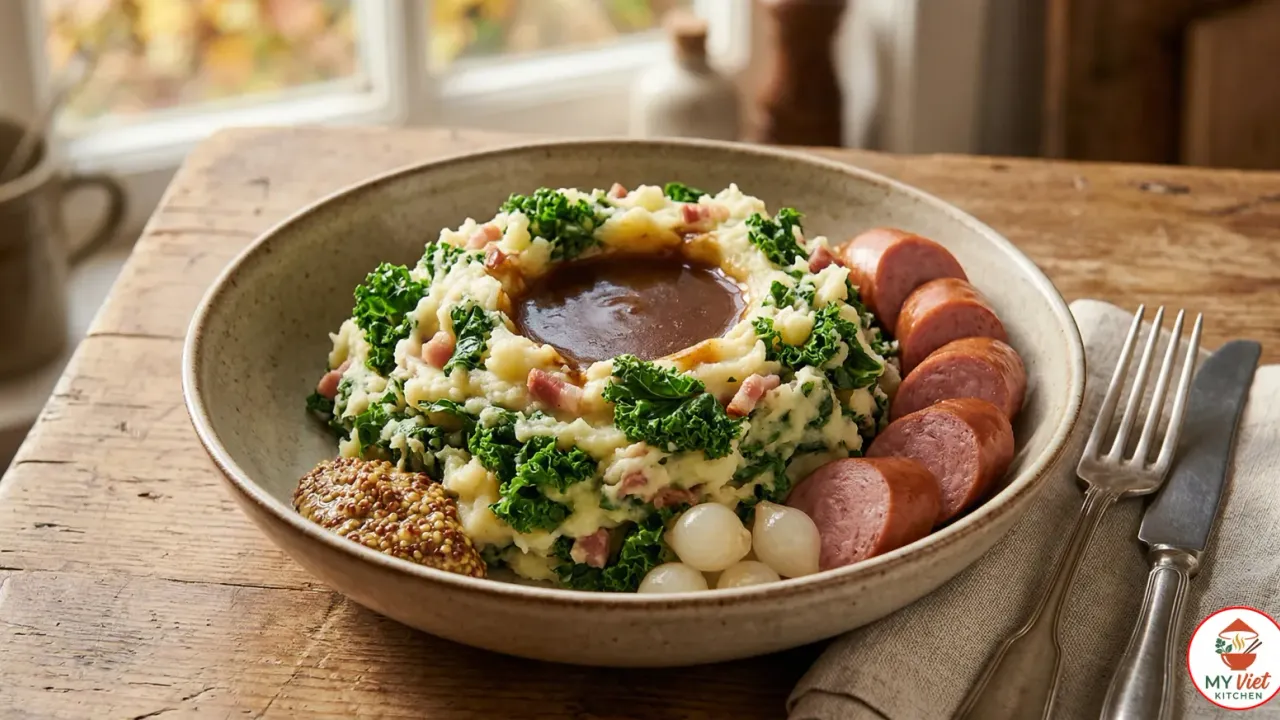
Stamppot is the ultimate Dutch comfort food, and this stamppot recipe shows you exactly how to make it at home. This hearty dish of creamy mashed potatoes folded with tender vegetables and served alongside smoky sausage has kept Dutch families warm for centuries. Whether you are new to Netherlands cuisine or craving something deeply satisfying, this stamppot recipe delivers the authentic flavor that made it a national treasure.
Prep Time: 15 minutes | Cook Time: 30 minutes | Servings: 4
Difficulty: Easy | Calories: ~520 per serving
What Makes Stamppot Special?
At its core, stamppot is elegant simplicity. The name literally means “mash pot” in Dutch, and that tells you everything about the technique. You boil potatoes and vegetables together, then mash them into a thick, rustic mixture. No blenders, no fancy equipment. Just a sturdy masher and good ingredients. This straightforward approach is what makes the dish so appealing. It lets the natural sweetness of the potatoes shine alongside whatever vegetable you choose.
What sets stamppot apart from ordinary mashed potatoes is its texture and purpose. Unlike smooth American mash, Dutch stamppot keeps some body and bite. Pieces of kale or endive peek through the creamy potato base. Furthermore, stamppot is never a side dish. In the Netherlands, it stands proudly as the main event of the meal. A tall mound of steaming mash, a fat smoked sausage leaning against it, a well of rich gravy in the center, and a streak of sharp mustard on the side. That is a proper Dutch dinner.
The origins of stamppot reach back to the Dutch Golden Age. Working families needed filling meals that were cheap, warming, and quick to prepare. Potatoes arrived in the Netherlands from the New World in the 17th century and quickly became the backbone of Dutch cooking. Paired with whatever greens grew in the garden, stamppot was born out of pure practicality. Today, it remains the most requested dish in Dutch home kitchens, especially when autumn winds begin to blow.

Choosing the Right Potato for Stamppot
The potato is the foundation of every great stamppot recipe. Picking the right variety makes all the difference between a fluffy, satisfying mash and a gluey disappointment. Here are your best choices.
- Yukon Gold (best choice): These potatoes strike the perfect balance between waxy and starchy. They mash into a creamy, golden base that holds together well without turning gummy. Their natural buttery flavor pairs beautifully with kale and sausage. Yukon Gold potatoes absorb butter and milk without becoming waterlogged.
- Russet potatoes: High in starch, russets produce a very fluffy mash. However, they can absorb too much liquid and turn dry quickly. If you choose russets, add a touch more butter and milk. They work well but require more attention during the mashing stage.
- Dutch bintje potatoes: These are the traditional choice in the Netherlands. Bintje potatoes have a floury texture that mashes beautifully. If you can find them at a specialty grocer, they will give you the most authentic stamppot. They fall apart slightly during boiling, which actually helps the mashing process.
- Red potatoes (not ideal): Waxy red potatoes hold their shape too well. They resist mashing and can leave you with a lumpy, heavy texture. For a smooth and fluffy stamppot, avoid red varieties and stick with starchy or all-purpose types.
Ingredients for Stamppot
Potato Base:
- 2.5 pounds Yukon Gold potatoes, peeled and cubed
- 4 tablespoons unsalted butter
- 1/2 cup whole milk, warmed
- 1 teaspoon salt
- 1/2 teaspoon white pepper
- 1/2 teaspoon ground nutmeg
Vegetables and Aromatics:
- 1 pound curly kale, stems removed and roughly chopped
- 1 large onion, finely diced
- 2 cloves garlic, minced
- 2 tablespoons bacon drippings or butter for sauteing
Smoked Sausage and Serving:
- 1 large smoked sausage (rookworst), about 12 ounces
- Whole grain mustard for serving
- Gravy for serving (optional)
- Crispy bacon bits (optional garnish)
Pro tip: The secret to extraordinary stamppot is warm milk, never cold. Cold milk drops the temperature of your mash instantly and tightens the starch, making the texture stiff and dense. Warm your milk gently in a saucepan or microwave before adding it. Also, use real butter rather than margarine. The milk fat in butter creates a silky mouthfeel that margarine simply cannot match.
Step-by-Step Instructions
Step 1: Boil the Potatoes
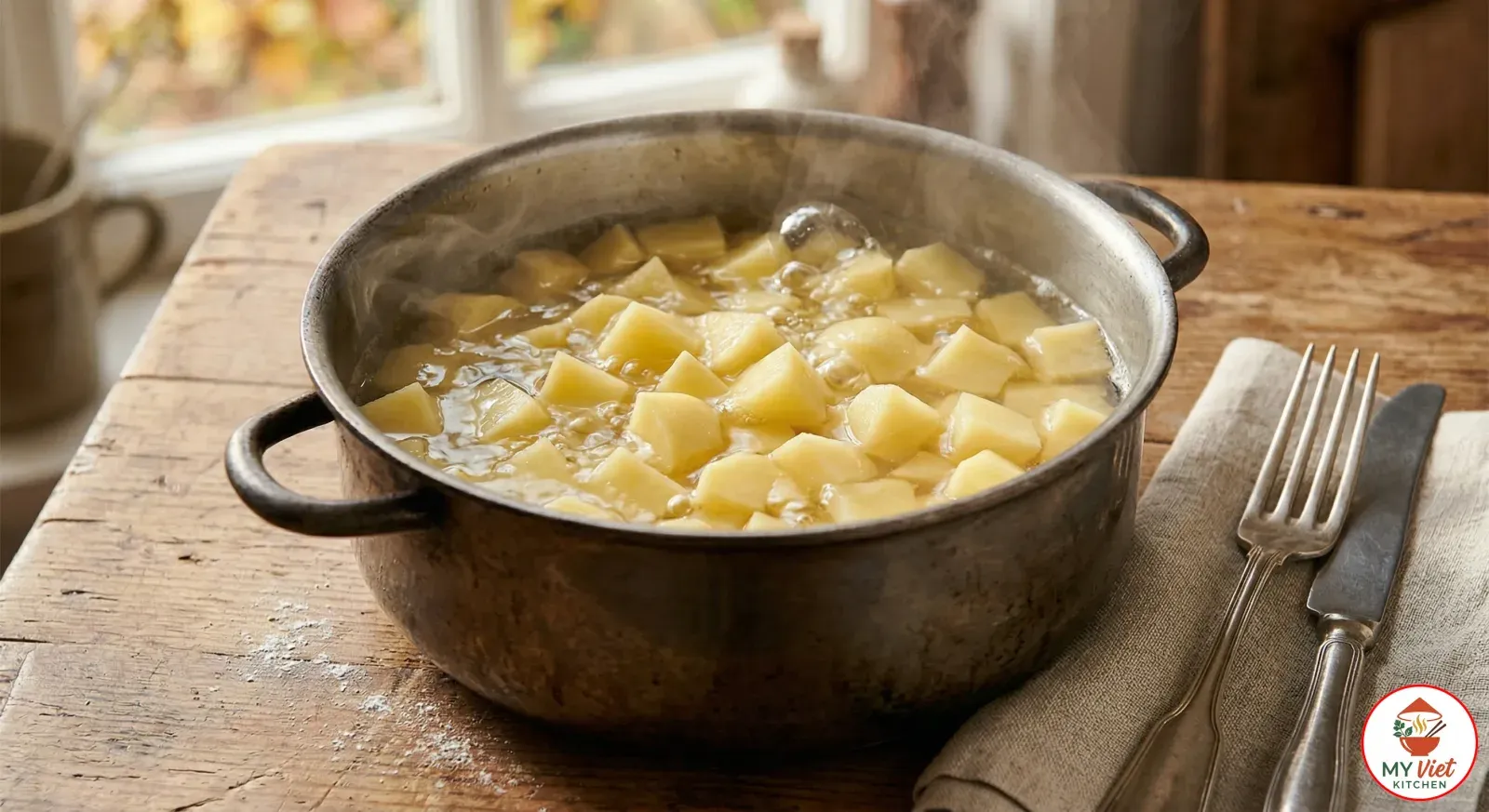
1 Peel the potatoes and cut them into even 1-inch cubes. Even sizing is important because it ensures all pieces cook at the same rate. Place the cubes in a large pot and cover with cold salted water by about an inch. Bring to a boil over high heat, then reduce to a steady simmer.
Cook for 18 to 20 minutes until the potatoes are completely fork-tender. They should break apart easily when you poke them. Drain well through a colander and return the potatoes to the hot pot. Let them sit for a full minute with the lid off so the steam escapes. This step removes excess moisture and results in a fluffier mash.
Step 2: Prepare the Kale
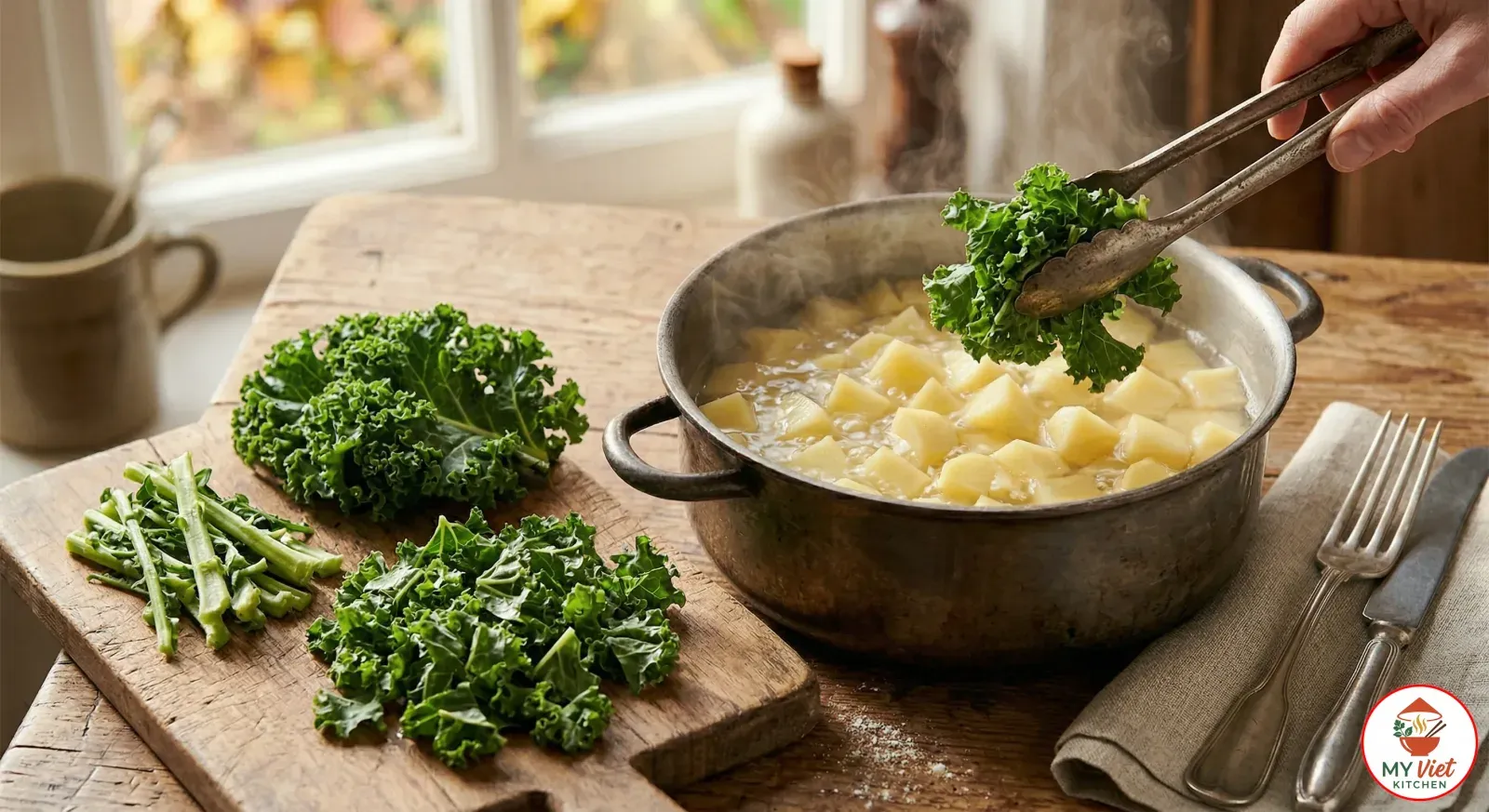
2 While the potatoes are cooking, strip the kale leaves from their tough center stems. Discard the stems or save them for stock. Chop the leaves into rough pieces about 1 inch wide. There is no need to be precise here. The kale will soften and shrink during cooking.
During the last 5 minutes of potato cooking, add the chopped kale directly to the pot. The boiling water wilts the kale quickly while keeping its vibrant color. Cooking them together saves time and allows the flavors to start melding. After draining, squeeze any extra water from the kale with the back of a spoon.
Step 3: Cook the Sausage
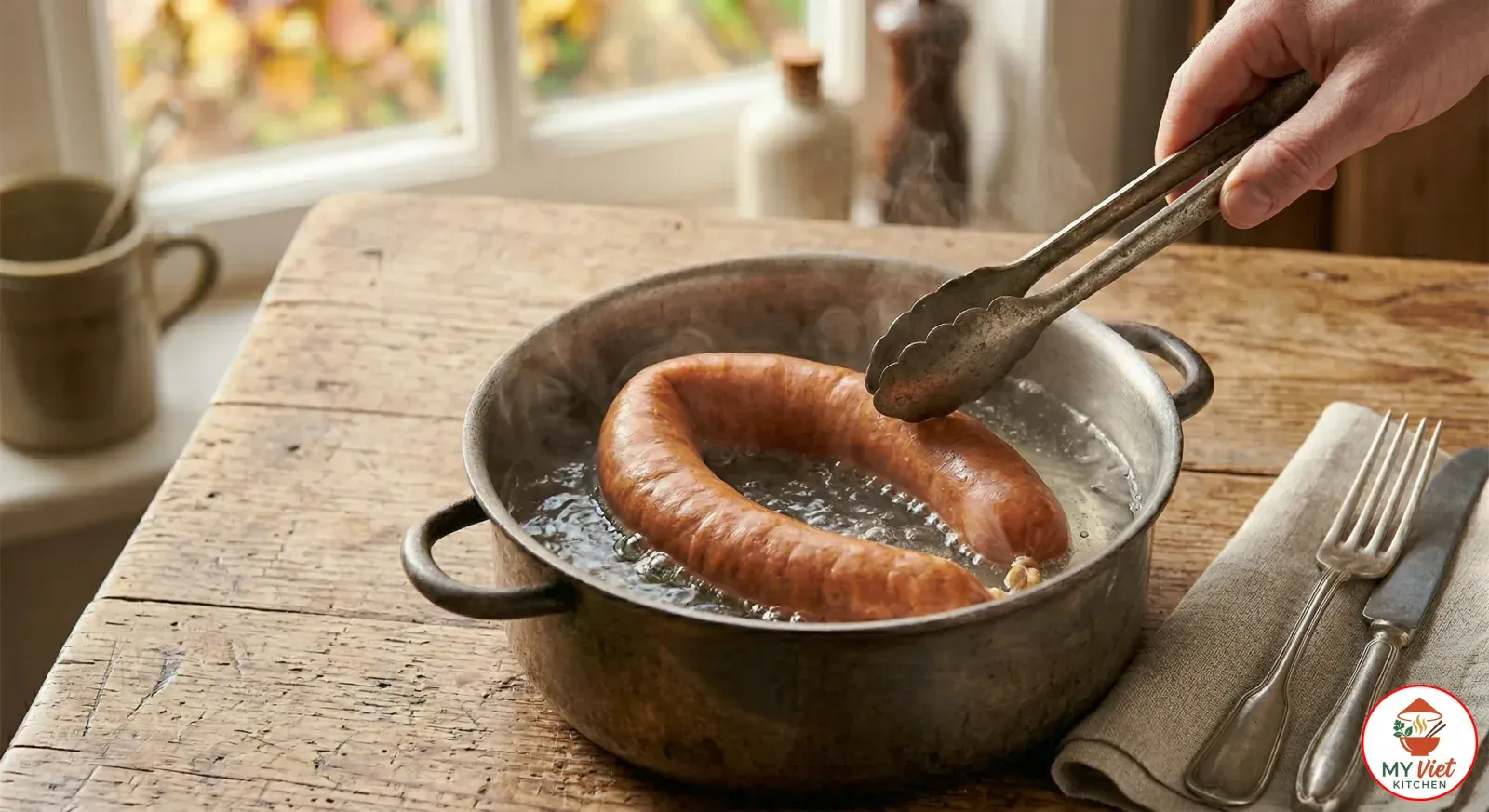
3 Place the rookworst in a separate pot of water. Bring the water to a gentle simmer over medium heat. Do not let it reach a hard boil, because aggressive bubbling can split the sausage casing and dry out the meat inside.
Simmer for 15 to 20 minutes until the sausage is heated all the way through. The internal temperature should reach 165 degrees Fahrenheit. Once done, remove the sausage from the water and keep it warm under a sheet of foil. You will slice it just before serving so it stays juicy.
Step 4: Saute the Aromatics
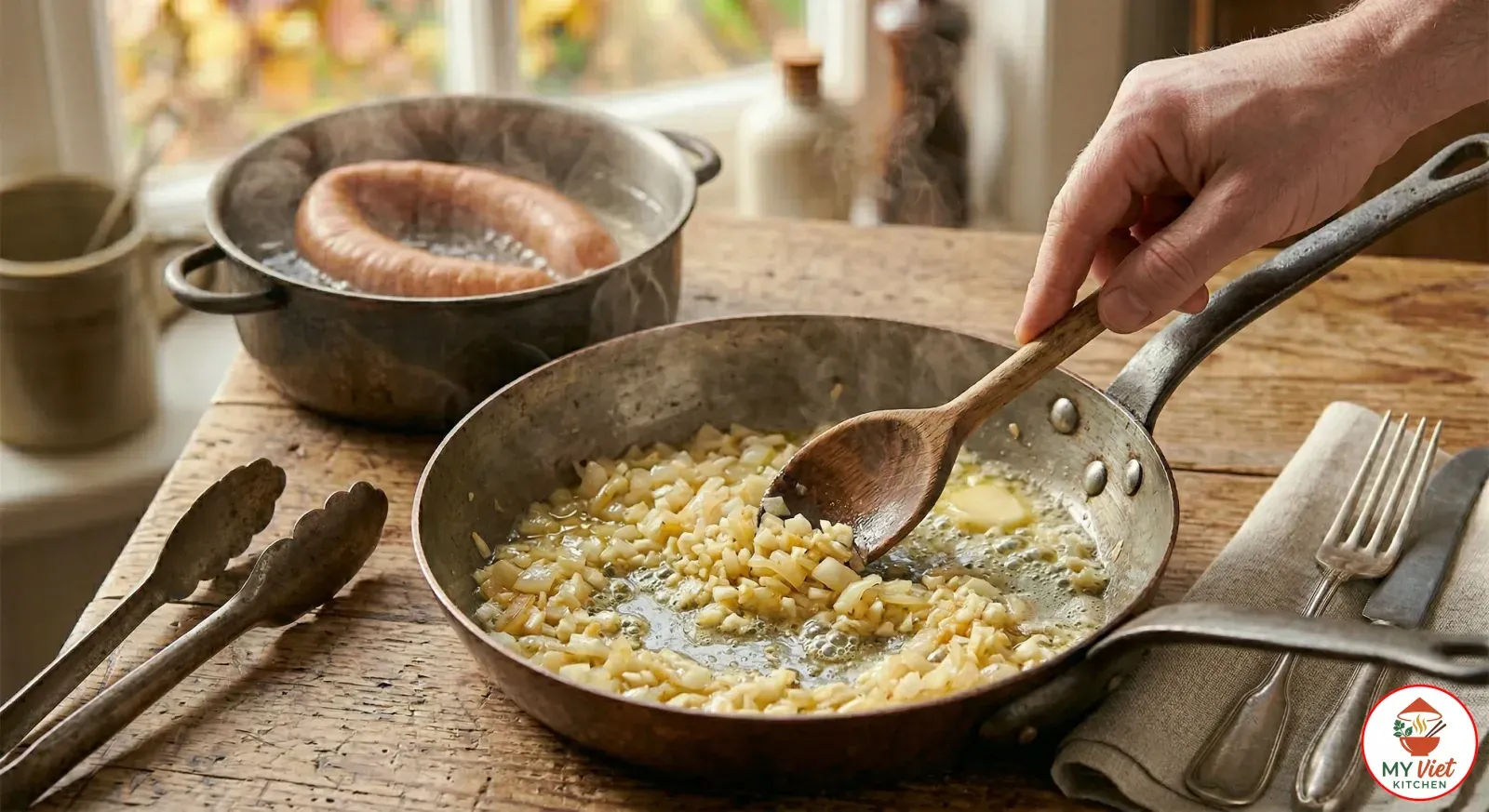
4 Melt 2 tablespoons of bacon drippings or butter in a small skillet over medium heat. Add the finely diced onion and cook for 5 to 6 minutes, stirring occasionally, until soft and light golden. The onion should be sweet and translucent, not browned or crispy.
Add the minced garlic and stir for another minute until fragrant. Be careful not to burn the garlic, as it turns bitter quickly. Remove the pan from the heat and set it aside. These sauteed aromatics add a savory depth to the mash that raw onion simply cannot deliver.
Step 5: Mash and Combine
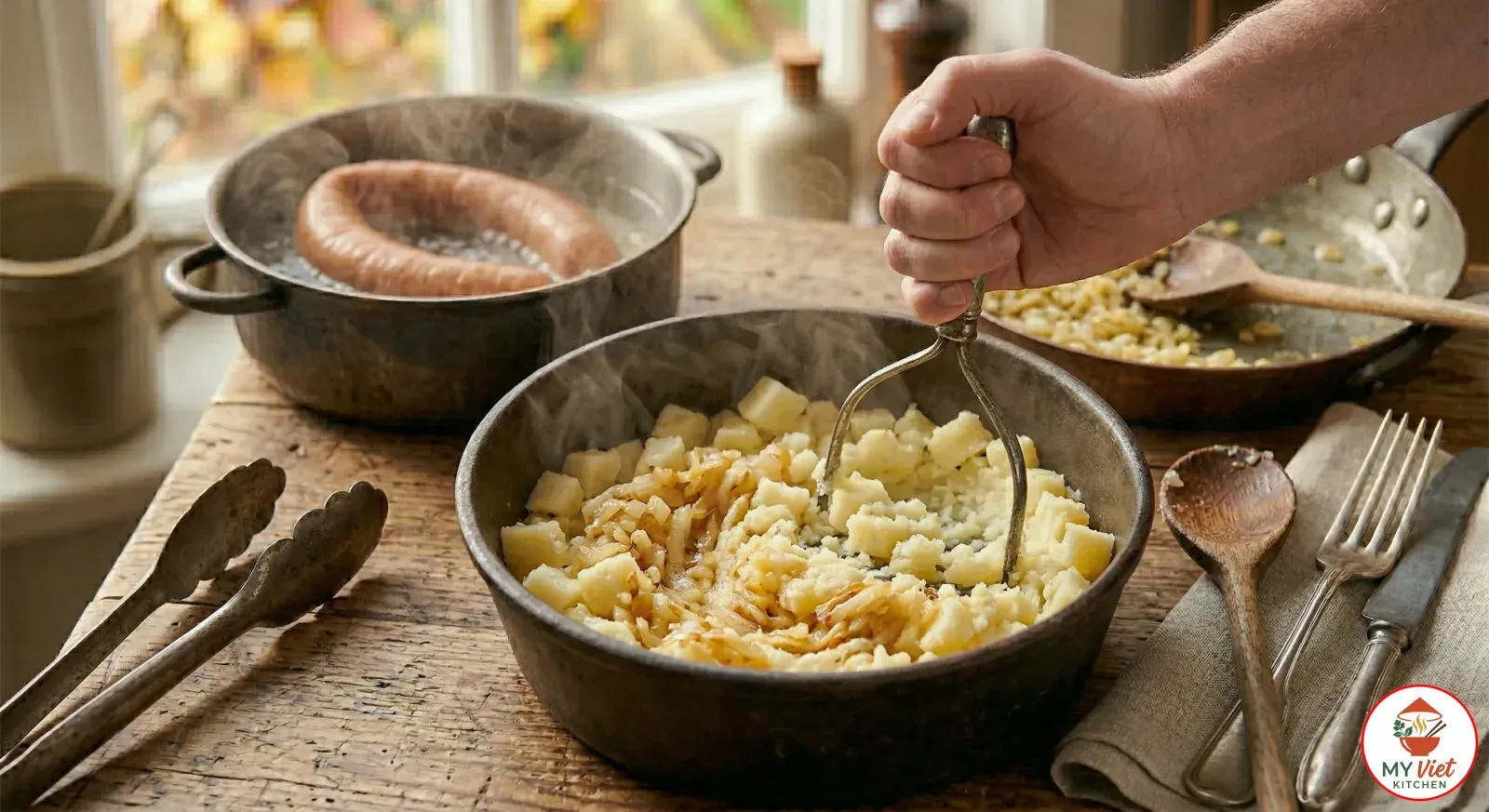
5 Add the butter to the drained potatoes and kale while everything is still hot. The heat melts the butter instantly, coating each piece in rich fat. Pour in the warmed milk gradually, mashing as you go. Season with salt, white pepper, and nutmeg.
Use a sturdy potato masher and work in firm, even strokes. Keep the texture rustic and slightly chunky. You want visible bits of kale running through the golden potato. Fold in the sauteed onion and garlic until evenly distributed. Taste the stamppot now and adjust the seasoning. The nutmeg should be subtle, adding warmth without being obvious.
Step 6: Plate and Serve
6 Mound the stamppot generously on warm plates. Create a small well in the top of the mound. If you are using gravy, pour it into the well so it pools and runs down the sides. Slice the rookworst on a diagonal into thick coins and arrange them alongside the mash.
Add a generous spoonful of whole grain mustard on the side of each plate. The sharp bite of the mustard cuts beautifully through the rich, creamy potatoes and smoky sausage. For extra indulgence, scatter crispy bacon bits over the top. Serve immediately while everything is piping hot.

Expert Tips for the Perfect Stamppot
Drain Thoroughly Before Mashing
Excess water is the biggest enemy of great stamppot. After draining the potatoes and kale, let the steam escape from the pot for at least one minute. Wet potatoes produce a watery, thin mash that lacks body. Additionally, squeeze the kale gently with the back of a spoon to remove trapped moisture. This extra step ensures your stamppot is thick and satisfying.
Keep the Texture Rustic
Resist the urge to make your stamppot perfectly smooth. In the Netherlands, this dish is meant to have character. Visible pieces of green kale through the creamy potato base create visual appeal and varied texture in each bite. A potato masher gives you the right result. Never use a food processor or immersion blender, because they will turn the starch gluey and lifeless.
Use Nutmeg Sparingly
Nutmeg is traditional in Dutch stamppot, but a little goes a long way. Start with half a teaspoon and taste before adding more. The nutmeg should provide a gentle background warmth, not dominate the dish. Freshly grated nutmeg has a much more complex flavor than pre-ground, so use whole nutmeg and a microplane if possible.
Stamppot Varieties Across the Netherlands
One of the most wonderful things about stamppot is its versatility. Dutch families rotate through different vegetable versions all winter long. Each variety has its own name and character. Here is how the main types compare.
| Variety | Main Vegetable | Flavor Profile | Best Served With |
|---|---|---|---|
| Boerenkool stamppot | Curly kale | Earthy, slightly bitter, hearty | Rookworst and gravy |
| Hutspot | Carrots and onions | Sweet, mellow, golden | Braised beef or stew meat |
| Zuurkoolstamppot | Sauerkraut | Tangy, sharp, robust | Rookworst and bacon |
| Andijviestamppot | Endive | Mild, slightly bitter, fresh | Smoked sausage and bacon bits |
| Spinaziestamppot | Spinach | Mild, creamy, delicate | Fried egg and nutmeg |
Serving Suggestions
In the Netherlands, stamppot is served as a complete meal on its own. The tall mound of mash with sausage alongside is all you need for a filling dinner. However, a few extras can elevate the experience even further.
Classic Accompaniments:
- Beef gravy: A rich, dark gravy poured into a well on top of the mash is the traditional finishing touch. It adds moisture, savory depth, and a glossy look that makes the dish irresistible.
- Whole grain mustard: Sharp, tangy mustard is non-negotiable. It cuts through the richness of the butter and sausage. Every Dutch household keeps a jar of mosterd on the table for stamppot night.
- Pickled onions or gherkins: The acidity of pickled vegetables provides a bright contrast to the creamy mash. They cleanse the palate between rich bites and keep the meal from feeling heavy.
- Crispy bacon: Crumbled bacon on top adds a salty crunch that transforms the texture. Fry thick-cut bacon until crispy and scatter it over the mash just before serving.
Beverage Pairings:
- Dutch beer: A cold Heineken, Grolsch, or Brand pilsner is the classic choice. The crisp, light bitterness of a Dutch lager balances the rich, buttery mash perfectly.
- Red wine: A medium-bodied Pinot Noir or Merlot works well with the smoky sausage and earthy kale. Choose something fruity and not too tannic for the best pairing.
- Warm apple cider: On a cold evening, warm spiced apple cider is a wonderful non-alcoholic option. Its sweetness and warmth match the cozy character of stamppot.
- Buttermilk (karnemelk): This is a traditional Dutch pairing that surprises many visitors. The tangy, slightly thick buttermilk refreshes the palate and aids digestion alongside a heavy meal.
Storage and Reheating
Refrigerator: Store leftover stamppot in an airtight container for up to 3 days. Keep the sausage stored separately so it does not dry out. The mash actually tastes even better the next day because the kale continues to release flavor into the potatoes.
Freezer: Stamppot freezes well for up to 2 months. Portion it into individual containers for easy weeknight meals. Thaw overnight in the fridge before reheating. The texture may be slightly softer after freezing, but the flavor holds up nicely.
Reheating: The stovetop is your best option. Place the stamppot in a saucepan over medium-low heat. Add a splash of milk and a pat of butter, then stir gently until heated through. This restores the creamy texture. Avoid the microwave if possible, as it can create hot spots and make the potatoes rubbery around the edges.
Common Mistakes to Avoid
1. Using Cold Milk
Adding cold milk to hot potatoes shocks the starch and produces a dense, gluey mash. Always warm your milk before adding it. This small step keeps the potatoes light and fluffy. The warm liquid also blends in more smoothly without requiring extra mashing.
2. Over-Mashing the Potatoes
Working the potatoes too aggressively breaks down the starch cells and creates a paste-like texture. Mash with firm but measured strokes. Stop as soon as the butter and milk are incorporated and the texture looks rustic. A few small lumps are perfectly fine and actually preferred in traditional stamppot.
3. Boiling the Sausage Too Hard
Rookworst should be gently simmered, never boiled aggressively. A hard boil causes the casing to split open, which lets the juices and fat escape into the water. The result is a dry, bland sausage. Keep the water at a lazy simmer with small bubbles breaking the surface.
4. Skipping the Aromatics
Plain mashed potatoes with kale can taste flat without sauteed onion and garlic. These aromatics add a savory backbone that transforms the dish from simple to special. Take the extra five minutes to cook them properly. Your stamppot will thank you with deeper, more complex flavor.
Frequently Asked Questions
What is stamppot?
Stamppot is a traditional Dutch dish made by mashing boiled potatoes together with vegetables like kale, sauerkraut, endive, or carrots. It is always served with rookworst, a Dutch smoked sausage, along with gravy and whole grain mustard. The dish is a staple of Netherlands home cooking, especially during the colder months from October through March.
What vegetables can I use in stamppot?
Curly kale is the most popular choice, creating the classic boerenkool stamppot. Other traditional options include sauerkraut, endive, carrots with onions (hutspot), and spinach. Each vegetable gives the dish a completely different character. You can also try less common versions with turnips, Brussels sprouts, or even raw endive stirred in at the last moment for a fresh bite.
What is rookworst and can I substitute it?
Rookworst is a Dutch smoked sausage made from pork and a blend of warm spices. It has a firm, meaty texture and a deeply smoky flavor. If rookworst is not available in your area, Polish kielbasa is the closest match. German bratwurst or any high-quality smoked pork sausage will also work nicely as a stand-in.
How do I keep stamppot from getting watery?
Drain both the potatoes and kale thoroughly before mashing. Let the steam escape for a full minute after draining. Squeeze excess water from the kale with the back of a spoon. Add warm milk in small amounts rather than all at once, stopping when you reach the right consistency. Stamppot should be thick and hearty, never thin or soupy.
Is stamppot gluten-free?
The base recipe of potatoes, vegetables, butter, and milk is naturally gluten-free. However, some commercial rookworst brands and packaged gravies may contain gluten as a filler or thickening agent. Always read the labels carefully if gluten is a concern. Choose certified gluten-free sausages and make your own gravy from scratch to be safe.
Can I make stamppot ahead of time?
Yes, stamppot reheats beautifully and many Dutch families say it tastes even better the next day. The kale continues to release flavor into the potatoes as it sits. Store the mash and sausage separately in airtight containers. Reheat on the stovetop with a splash of milk and a pat of butter to restore the creamy texture.
Variations and Adaptations
Hutspot (Carrot and Onion Stamppot):
This version uses carrots and onions instead of kale. Boil sliced carrots alongside the potatoes, then mash everything together with butter and a hint of nutmeg. The result is a golden, sweet mash that is milder than the kale version. Hutspot is traditionally served on October 3rd to celebrate the liberation of Leiden in 1574.
Zuurkoolstamppot (Sauerkraut Stamppot):
Fold drained sauerkraut into the mashed potatoes for a tangy, robust version. The sour bite of the kraut pairs brilliantly with smoky rookworst. Add a few pieces of crispy bacon for extra richness. This variation is particularly popular in the southern provinces of the Netherlands.
Vegan Stamppot:
Replace butter with olive oil or vegan butter, and use oat milk instead of dairy. Skip the rookworst and serve with a plant-based smoked sausage or roasted mushrooms for umami depth. Season generously with nutritional yeast for a savory, cheesy note. The essential character of the dish remains intact even without animal products.
The Cultural Significance of Stamppot
In the Netherlands, stamppot is far more than just food. It is a symbol of Dutch identity, practicality, and togetherness. The dish embodies the concept of gezelligheid, that uniquely Dutch feeling of warmth, coziness, and belonging. When the first frost arrives, Dutch families across the country fire up their kitchens for what they call stamppot season.
Stamppot also carries deep historical weight. Hutspot, the carrot and onion version, is tied directly to the Siege of Leiden in 1574. According to legend, starving citizens found a pot of hutspot left behind by retreating Spanish soldiers. To this day, the city of Leiden celebrates its liberation with a massive hutspot feast on October 3rd. Food and memory are inseparable in Dutch culture.
Beyond tradition, stamppot represents the Dutch approach to cooking: honest, unfussy, and waste-free. Whatever vegetables were in season or left in the pantry went into the pot. This resourceful spirit has kept stamppot relevant for over four centuries. In an age of complicated food trends, the simple joy of a warm plate of stamppot continues to draw people together around the dinner table.
Conclusion
This stamppot recipe gives you everything you need to bring a true taste of the Netherlands into your kitchen. The keys are quality potatoes, properly drained vegetables, warm milk, and a gentle hand with the masher. Paired with a smoky rookworst and a dollop of sharp mustard, this humble dish delivers a depth of comfort that fancy meals rarely match.
Whether you make the classic kale version or explore hutspot and sauerkraut variations, stamppot rewards simplicity and good ingredients every single time. Follow this recipe faithfully, and you will understand why the Dutch have relied on this dish for centuries. Once you try it, stamppot will earn a permanent spot in your weekly dinner rotation.
Ready to discover more hearty European comfort food? Browse our full collection of European dishes, including Irish colcannon, bangers and mash, and shepherd’s pie. Each recipe brings the same level of detail and tested technique to help you cook with confidence.