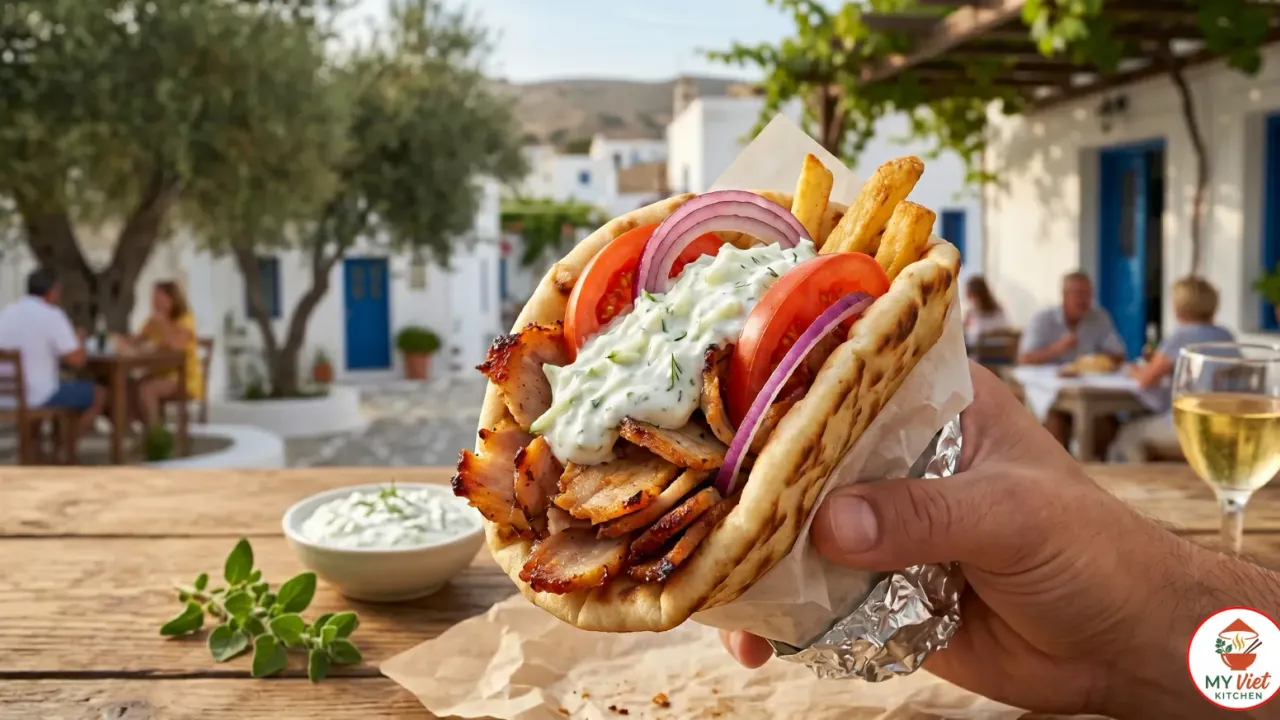
Nothing beats the aroma of Greek street food quite like gyros. Thin layers of seasoned pork are slow-roasted until the edges turn golden and crispy. Afterwards, the meat is shaved into warm pita and topped with cool tzatziki, ripe tomatoes, and sharp red onion. This iconic Greek dish has won fans around the world. Fortunately, you can now make it at home with results that rival any Athens street stall. This recipe uses a clever oven method that gives you real gyros flavor without a vertical rotisserie.
Prep Time: 25 minutes (plus 4 hours marinating) | Cook Time: 45 minutes | Servings: 6
Difficulty: Medium | Calories: ~520 per serving
What Makes Gyros Special?
Gyros holds a legendary place in Greek food culture. The word itself comes from the Greek verb “gyro,” meaning “to turn,” which describes the vertical rotisserie that defines this dish. In particular, stacks of seasoned meat rotate slowly beside a heat source. As the outer layer crisps, the cook shaves off thin slices that pile up inside warm pita. The result is crispy edges meeting a tender, juicy interior. No other cooking method can match this contrast.
What truly sets gyros apart from other grilled meat dishes is the layering technique. Unlike a solid roast, gyros meat is built from many thin slices. These slices are stacked and pressed together. As a result, the fat between the layers bastes the meat from within. This creates an extraordinary depth of flavor. So each bite gives you a mix of tender and crispy textures. That is what makes gyros so addictive.
On top of that, gyros is the king of Greek fast food. Walk down any busy street in Athens or Thessaloniki, and you will find gyros shops on nearly every corner. Naturally, their vertical spits rotate behind glass for all to see. For instance, Greeks eat gyros at all hours. They enjoy it as a quick lunch, a late-night snack after an evening out, or a casual weekend meal with friends. In this way, gyros bridges the gap between humble street food and great cooking.

Choosing the Right Meat for Gyros
The meat you pick shapes the character of your gyros. Each option brings a different flavor and texture to the wrap. So choose based on what you like best.
- Pork Shoulder (Best Choice): The most traditional meat for Greek gyros. Its marbling keeps the thin slices moist during roasting. As a bonus, the fat renders well to create those signature crispy edges.
- Chicken Thigh: The second most popular option in Greece. Dark meat stays juicy and soaks up the marinade well. It cooks faster and makes a lighter gyros that is great for warm weather.
- Lamb Leg: Rich, gamey, and full of flavor. Lamb gyros are less common in mainland Greece but popular on the islands. Alternatively, combine lamb with beef for a milder taste.
- Beef-Lamb Blend: A mix of ground beef and lamb shaped into a loaf is the typical American-style gyros. It has a denser, meatloaf-like feel that differs from real Greek gyros.
Ingredients for Gyros
For the Gyros Meat:
- 2 pounds boneless pork shoulder, thinly sliced (about 1/4 inch thick)
- 1/4 cup extra virgin olive oil
- 3 tablespoons red wine vinegar
- 4 cloves garlic, minced
- 1 medium onion, grated
- 2 teaspoons dried oregano
- 1 teaspoon ground cumin
- 1 teaspoon sweet paprika
- 1/2 teaspoon ground coriander
- 1/2 teaspoon cayenne pepper
- 1/2 teaspoon black pepper
- 1 teaspoon salt
For the Tzatziki Sauce:
- 1 cup Greek yogurt (full-fat for best results)
- 1/2 English cucumber, grated and squeezed dry
- 1 clove garlic, finely grated
- 1 tablespoon fresh dill, chopped
- 1 tablespoon extra virgin olive oil
- 1 teaspoon white wine vinegar
- Salt to taste
For Serving:
- 6 pita breads (soft, flatbread style)
- 2 medium tomatoes, sliced
- 1 medium red onion, thinly sliced into rings
- 1 cup shredded lettuce
- French fries (optional, but traditional in Greece)
- Sweet paprika for garnish
Pro tip: Ask your butcher to slice the pork shoulder thinly for you. Or, freeze the meat for 30 minutes at home to make thin slicing easier. The thinner the slices, the closer you get to real rotisserie-style gyros.
Step-by-Step Instructions
Step 1: Prepare the Marinade and Meat
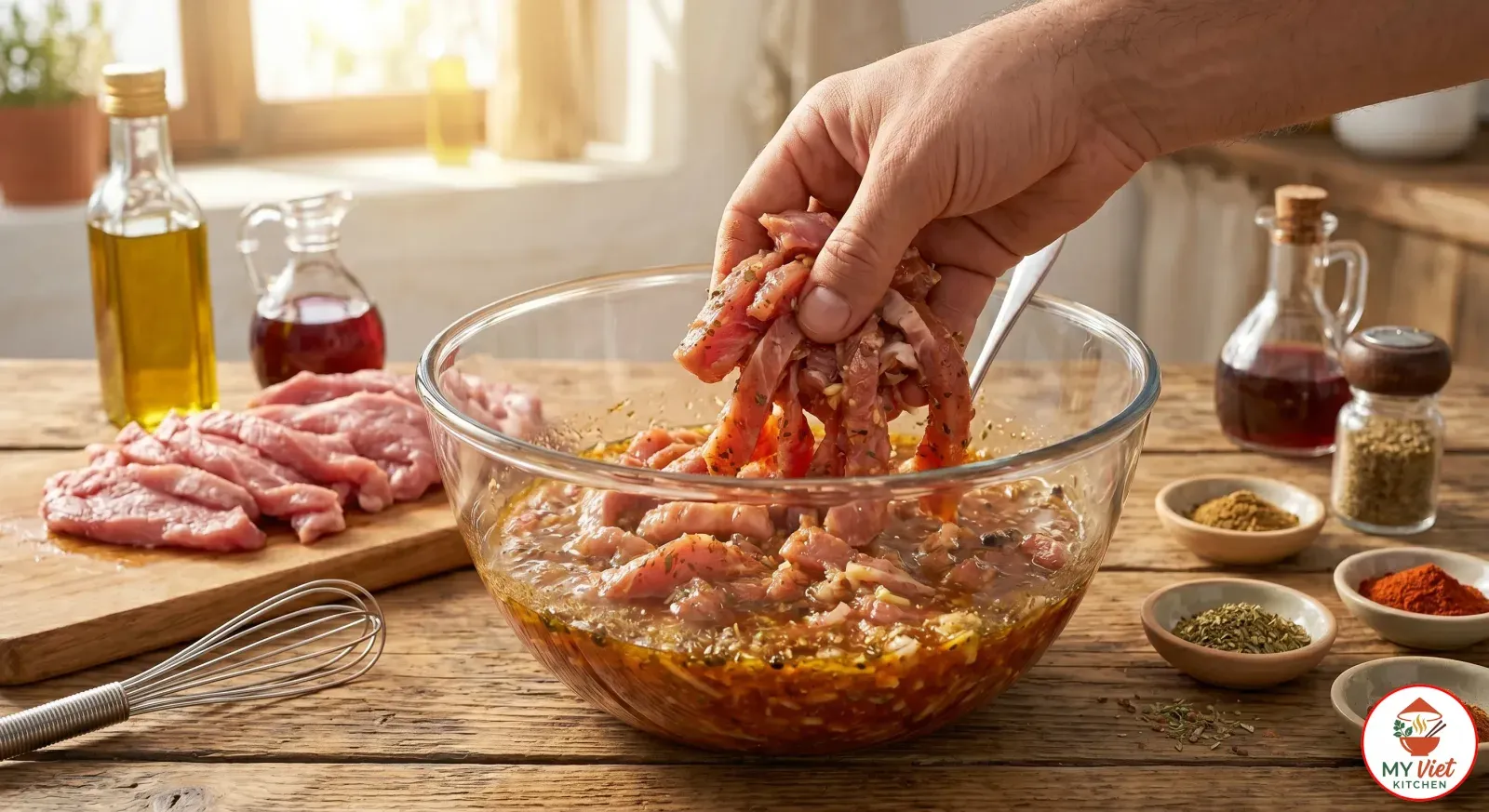
1Start by whisking together the olive oil, red wine vinegar, minced garlic, grated onion, oregano, cumin, paprika, coriander, cayenne, black pepper, and salt in a large bowl. Notably, red wine vinegar adds a sharper tang than lemon juice. It is more common in gyros marinades and also helps soften the pork fibers. Next, slice the pork shoulder into thin strips about 1/4 inch thick. Add the sliced pork to the marinade and toss until every piece is thoroughly coated. Then cover tightly with plastic wrap and refrigerate for at least 4 hours. Overnight marination gives the best, most rounded flavor.
Step 2: Make the Tzatziki Sauce
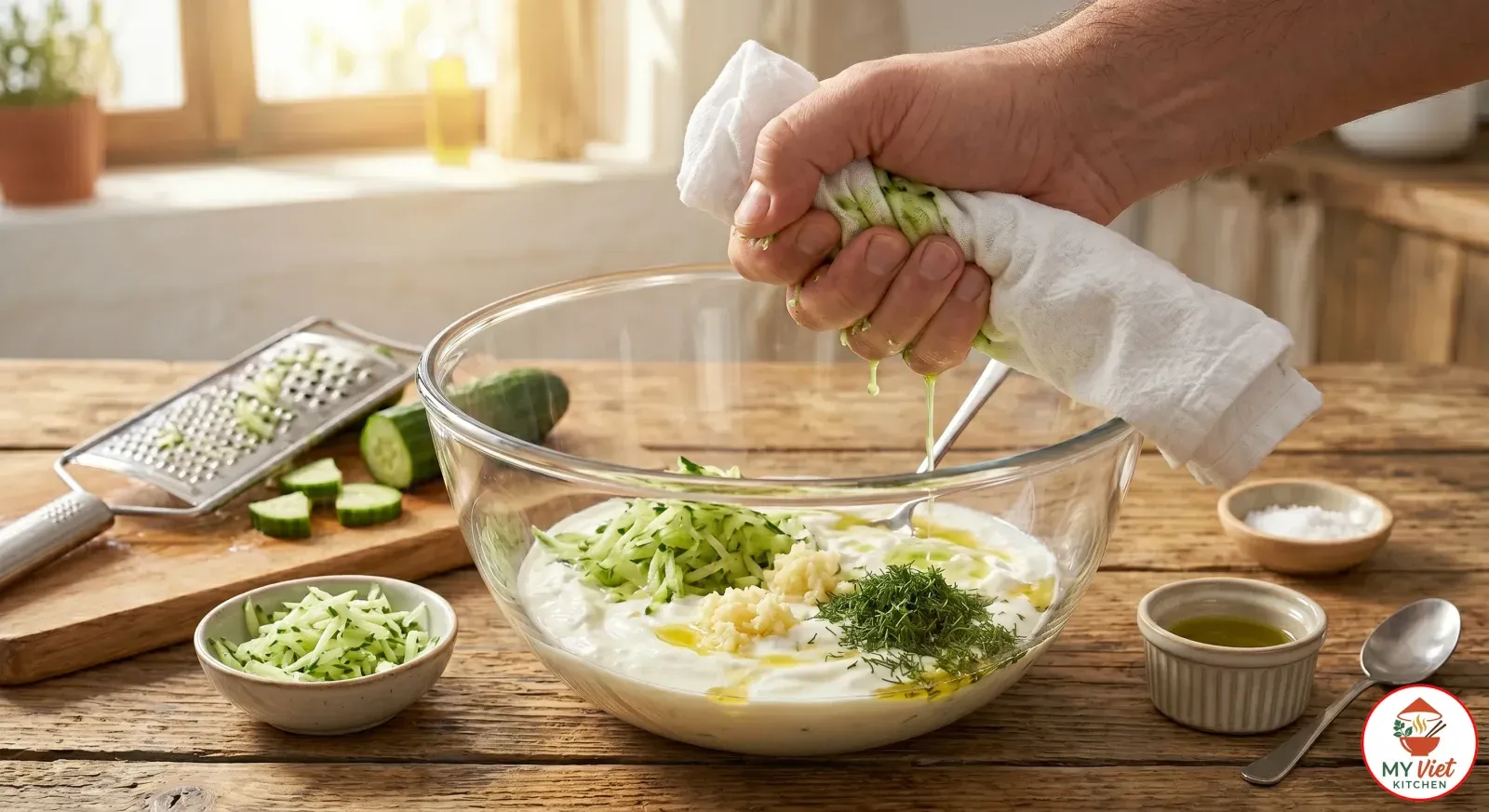
2Grate the cucumber using the large holes of a box grater. Place it in a clean kitchen towel and squeeze firmly to get every drop of moisture out. This step is key — watery tzatziki ruins the entire wrap by making the pita soggy. Then, in a medium bowl, combine the drained cucumber with Greek yogurt, grated garlic, dill, olive oil, and vinegar. Finally, season with salt and stir until smooth. After that, cover and refrigerate for at least 30 minutes. This rest lets the flavors blend into a cool sauce that goes perfectly with the warm spiced meat.
Step 3: Stack and Shape the Meat
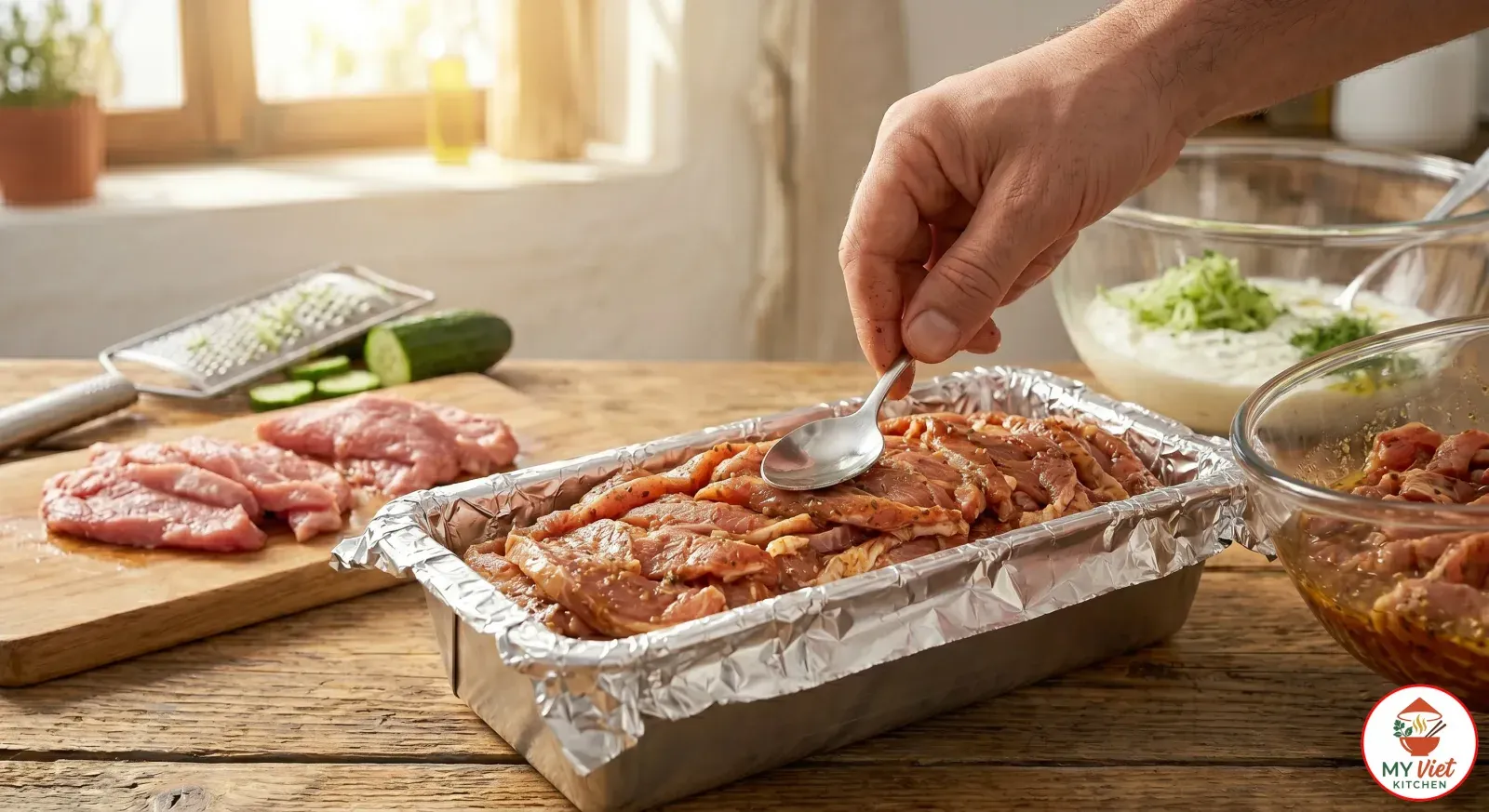
3Remove the marinated pork from the fridge about 20 minutes before cooking. Bringing it closer to room temperature helps it cook evenly. Meanwhile, line a loaf pan with foil. Leave enough overhang to fold over the top. Layer the pork slices flat inside the pan. Also, press each layer firmly to remove any air pockets. In essence, stacking and pressing is the secret to making rotisserie-style gyros at home. As a result, the tightly packed layers fuse together during roasting. When you slice them later, you get that layered look and varied texture that defines real gyros.
Step 4: Cook the Gyros Meat
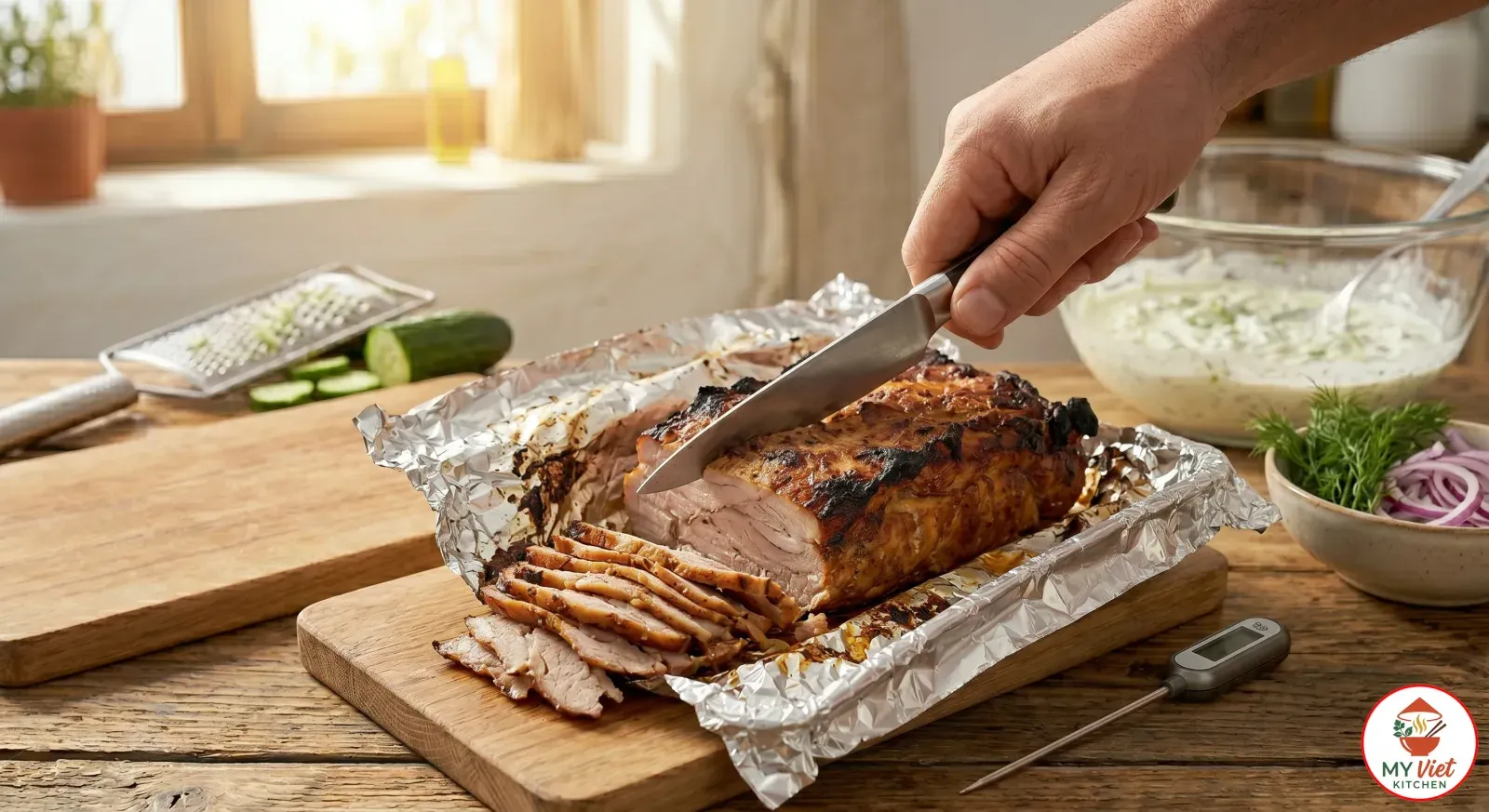
4Preheat your oven to 400 degrees Fahrenheit. Fold the foil overhang loosely over the top of the meat and roast for 25 minutes. Next, remove the foil cover and continue roasting for 10 to 15 more minutes. The top layer should turn deeply golden and the edges should begin to crisp. For maximum char, switch your oven to broil for the final 3 to 5 minutes. Watch carefully to avoid burning. Importantly, the internal temperature should reach 155 degrees Fahrenheit. Remove from the oven and let the meat rest for 10 minutes. Then, using a sharp carving knife, cut thin slices against the grain. This achieves the classic shaved gyros appearance.
Step 5: Warm the Pita and Assemble
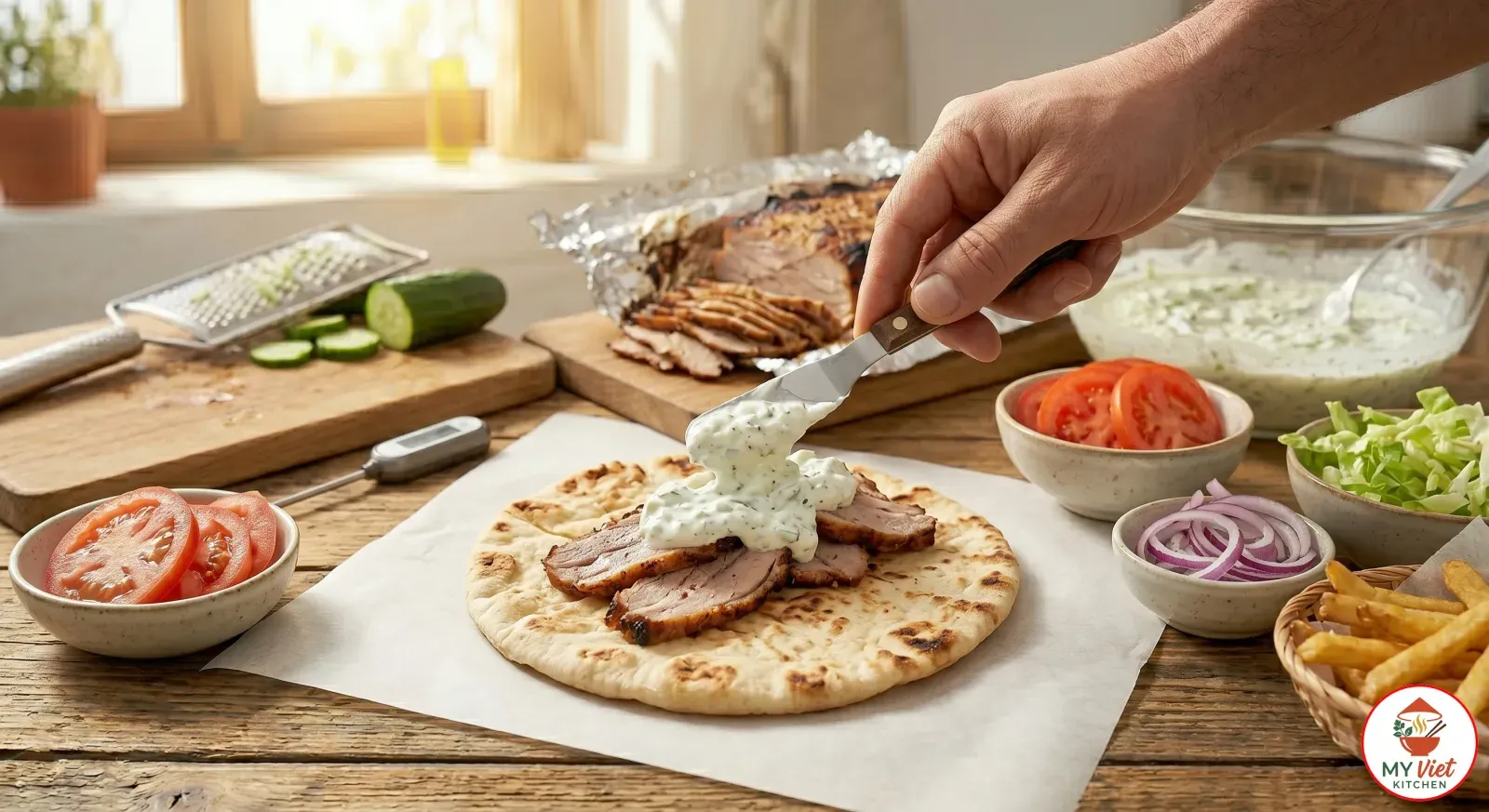
5While the meat rests, warm each pita bread in a dry skillet over medium heat for about 30 seconds per side. You want the pita soft and pliable, not crispy. Lay the warm pita flat and arrange a generous pile of thinly sliced gyros meat down the center. Then top with tomato slices, red onion rings, shredded lettuce, and a thick drizzle of tzatziki sauce. Additionally, for the full Athenian experience, tuck a handful of crispy French fries inside before rolling. Finally, fold the pita tightly around the filling. Wrap the bottom half in foil or parchment paper to hold everything together and serve immediately.
Expert Tips for Perfect Results
Slice the Meat Paper-Thin
How thick you slice the pork before marinating shapes the final texture. In other words, thinner slices create more surface area for the marinade to penetrate. They also compress together more seamlessly in the loaf pan. Therefore, partially freezing the pork for 30 minutes firms it up enough to cut clean, thin slices. Aim for 1/4 inch or thinner for the most authentic result.
Press the Meat Tightly
Air gaps between layers lead to uneven cooking. They also stop the slices from bonding. Press each layer firmly into the pan using the back of a spoon or your hands. In fact, some cooks place a heavy can on top of the foil-covered meat during the first half of cooking. This extra step makes the finished gyros hold together beautifully when sliced.
Finish Under the Broiler
The broiler is your best tool for copying the charred crust of rotisserie gyros. After roasting, just 3 to 5 minutes under the broiler creates those crispy edges. However, keep the oven door slightly ajar and watch closely. The high heat can quickly turn golden char into burnt meat.
Gyros vs. Souvlaki vs. Shawarma: What Is the Difference?
These three dishes are often confused because they share a similar serving style. However, each one has distinct characteristics. In short, they are rooted in different culinary traditions.
| Feature | Gyros (Greece) | Souvlaki (Greece) | Shawarma (Middle East) |
|---|---|---|---|
| Meat Prep | Thin slices stacked on rotisserie | Cubes threaded on skewers | Thin slices stacked on rotisserie |
| Cooking Method | Vertical rotisserie, slow-roasted | Grilled over direct high heat | Vertical rotisserie, slow-roasted |
| Primary Meat | Pork or chicken | Pork, chicken, or lamb | Chicken, lamb, or beef |
| Seasoning | Oregano, cumin, paprika | Oregano, lemon, olive oil | Cumin, turmeric, cinnamon |
| Sauce | Tzatziki | Tzatziki | Tahini, garlic sauce, or hummus |
| Bread | Soft pita (flatbread) | Soft pita (flatbread) | Laffa, pita, or lavash |
Serving Suggestions
In Greece, gyros is almost always served as a pita wrap for eating on the go. However, you can also present it as a platter for a more relaxed, sit-down meal with the meat arranged alongside the toppings and sauces.
The Perfect Accompaniments:
- Greek Salad (Horiatiki): Chunky tomatoes, cucumber, red onion, Kalamata olives, and crumbled feta dressed in olive oil. The freshness cuts through the richness of the seasoned meat perfectly.
- Crispy French Fries: A staple inside Athenian gyros wraps. Thick-cut, lightly salted fries add a satisfying crunch and hearty bulk to every bite.
- Roasted Lemon Potatoes: Potato wedges roasted with olive oil, lemon juice, and dried oregano until golden outside and creamy within.
- Spanakopita: Flaky phyllo pastry filled with spinach and feta. This classic Greek appetizer pairs wonderfully alongside a gyros platter.
- Grilled Halloumi: Slabs of salty, squeaky cheese charred on a hot pan. The salty richness complements the spiced pork beautifully.
Beverage Pairings:
- Retsina Wine: This traditional Greek white wine with a subtle pine resin flavor is a classic match for gyros and other bold Greek dishes.
- Mythos or Fix Lager: Light, crisp Greek beers that cleanse the palate between bites of rich, spiced meat.
- Ouzo with Water: Served over ice, the anise-flavored spirit turns milky white and pairs surprisingly well with the warm spices in gyros.
- Fresh Lemonade: A non-alcoholic option that refreshes and balances the savory intensity of the wrap.
Storage and Reheating
Refrigerator: Store cooked gyros meat in an airtight container for up to 4 days. Keep the tzatziki, pita, and fresh toppings stored separately to preserve their individual textures. Interestingly, the flavors of the meat deepen slightly after a day in the refrigerator.
Freezer: Cooked gyros meat freezes exceptionally well for up to 3 months. Wrap portions tightly in foil, then place inside a freezer-safe bag with the air pressed out. Thaw overnight in the refrigerator before reheating. Do not freeze the tzatziki, as the yogurt base separates upon thawing.
Reheating: For the best results, reheat sliced gyros meat in a hot skillet with a drizzle of olive oil over medium-high heat for 2 to 3 minutes per side. As a result, the edges get crispy again and the meat warms through without drying out. Alternatively, spread the slices on a baking sheet and broil for 3 minutes. Avoid the microwave. It steams the meat and ruins the crispy texture that makes gyros special.
Common Mistakes to Avoid
1. Cutting the Meat Too Thick
Thick slices of pork will not compress properly and will not develop the layered texture that defines authentic gyros. Moreover, they take longer to cook, which can dry out the outer layers. Take the time to slice the pork thinly — 1/4 inch or less — for the best results. Partially freezing the meat makes this much easier.
2. Skipping the Marinating Time
The warm spices in the gyros marinade need time to soak into the thin pork slices. A brief 30-minute soak gives flat, bland flavor. Instead, four hours is the minimum for real depth. Overnight lets the cumin, oregano, and garlic soak into every fiber.
3. Not Pressing the Meat Firmly Enough
Loosely stacked pork slices cook unevenly and fall apart when sliced. The tightly pressed layers need to bond during roasting. This only happens when you get rid of air gaps. Press each layer hard into the pan. The finished gyros should hold together as one solid block that you can slice cleanly.
4. Serving Watery Tzatziki
Cucumber holds a surprising amount of water. If you skip the squeezing step, your tzatziki will be thin and runny. It will soak through the pita and water down every other flavor. So always squeeze the grated cucumber in a clean towel until no more liquid comes out. Your tzatziki should be thick enough to hold its shape on a spoon.
Frequently Asked Questions
What meat is traditionally used for Greek gyros?
In Greece, pork is the most traditional and widely used meat for gyros. Seasoned pork slices are stacked on a vertical rotisserie and slow-roasted until the outer layers become crispy and caramelized. Chicken gyros are also extremely popular, especially during warmer months. Lamb and beef gyros, while common in American Greek restaurants, are less traditional in Greece itself.
What is the difference between gyros and souvlaki?
Gyros features thin slices of seasoned meat cooked on a vertical rotisserie and shaved off as it roasts, producing tender, layered slices. Souvlaki consists of small cubes of marinated meat grilled on skewers over direct high heat, resulting in a charred, chunky texture. Both are commonly served in pita wraps with tzatziki and similar toppings, but the cooking method and resulting texture are distinctly different.
How do you pronounce gyros correctly?
The correct Greek pronunciation is YEE-ros for the singular and YEE-ree for the plural. The word comes from the Greek verb “gyro” meaning “to turn,” referring to the rotating vertical spit used to cook the meat. In American English, the pronunciation JY-roh is also widely accepted and understood.
Can you make gyros at home without a rotisserie?
Absolutely. This recipe uses a loaf pan stacking method that closely mimics the results of a vertical rotisserie. By thinly slicing the pork, compressing it in layers, and finishing under the broiler, you achieve the same crispy-edged, tender-centered texture that defines authentic gyros. Many Greek home cooks use this exact technique.
What toppings go on authentic Greek gyros?
Traditional Greek gyros are topped with tzatziki sauce, sliced tomatoes, thinly sliced red onion, and sometimes shredded lettuce. In Athens, crispy French fries are traditionally stuffed inside the pita wrap alongside the meat and toppings. A light sprinkle of paprika or cayenne on top adds optional heat.
Is gyros healthy?
Gyros can absolutely be part of a balanced diet. A typical pork gyros pita wrap contains around 520 calories, with generous protein from the meat and beneficial probiotics from the yogurt-based tzatziki sauce. To lighten the meal, choose chicken instead of pork, load up on fresh vegetable toppings, and skip the French fries. Served with a Greek salad on the side, gyros makes a satisfying and reasonably nutritious meal.
Variations and Adaptations
Chicken Gyros:
Replace the pork with boneless, skinless chicken thighs sliced thin. Use the same marinade but add an extra tablespoon of lemon juice for brightness. Reduce the roasting time by about 10 minutes since chicken cooks faster. The result is a lighter, slightly leaner gyros that remains juicy and full of flavor.
Lamb Gyros:
Thinly sliced leg of lamb brings a richer, bolder flavor to the wrap. Add a teaspoon of cinnamon and a pinch of allspice to the marinade. These spices match the lamb’s natural gamey taste. This version is popular in Greek island cooking. It pairs well with a stronger tzatziki made with extra garlic.
Vegetarian Gyros:
Thick slabs of halloumi cheese or seasoned portobello mushrooms make an excellent meat-free alternative. Marinate the halloumi or mushrooms with the same spice blend, then pan-sear until golden on each side. Halloumi mimics the heartiness of meat well. On the other hand, mushrooms offer a deep, savory umami quality.
Gyros Bowl:
For a lower-carb option, skip the pita and serve the sliced gyros meat over a bed of fluffy rice or mixed greens. Top with all the classic fixings — tomatoes, onion, tzatziki — plus olives, feta, and olive oil. This style makes portioning easy and shows off each part on its own.
The Cultural Significance
Gyros holds a special place in modern Greek identity that goes well beyond its role as a quick meal. The dish arrived in Greece in the early 1920s. Greek refugees from Asia Minor brought the vertical rotisserie technique with them. As a consequence, within decades gyros became woven into everyday Greek life. Before long, dedicated shops popped up in every neighborhood.
Today, the gyros shop serves as a social institution in Greece. For example, friends gather around small tables, families stop in after Sunday church, and night owls line up after midnight. The sight of a rotating spit stacked with glistening meat is now as iconic as the Greek flag itself. Moreover, the affordable price makes gyros accessible to everyone. This reinforces its role as a truly democratic meal.
Beyond Greece, gyros has become one of the most recognized Greek exports in the culinary world. From food trucks in New York to late-night shops in Berlin, the rotating spit has traveled the globe. Yet despite its international fame, the best gyros still comes from small neighborhood shops in Athens and Thessaloniki. In those shops, generations of cooks have perfected the craft of seasoning, stacking, and slicing.
Conclusion
Making authentic Greek gyros at home is entirely achievable, even without a vertical rotisserie. In summary, the keys are simple. Slice the pork thin. Marinate it well. Stack the layers tightly. Finish under a hot broiler. These steps give you those crispy edges that make gyros so good. Paired with thick tzatziki and wrapped in warm pita, your homemade gyros will taste just like the real thing. This is the flavor that has made gyros a global street food legend.
Ready to explore more European classics? Browse our full collection of European dishes for more tested recipes from across the continent.