Bratwurst is the king of German street food, and this bratwurst recipe gives you every trick for cooking them to crispy, juicy perfection. These plump, well-spiced pork sausages have been a staple of German life for over 600 years. Whether you grill them at a backyard cookout or pan-fry them on a cold weeknight, bratwurst never fails to satisfy. This bratwurst recipe covers both the beer-simmer-and-grill method and a from-scratch homemade option.
Prep Time: 15 minutes | Cook Time: 25 minutes | Servings: 6
Difficulty: Easy | Calories: ~430 per serving
What Makes This Bratwurst Recipe Special?
A good bratwurst is all about balance: a crispy snap from the natural casing, a burst of juicy meat inside, and warm spice notes of white pepper, nutmeg, and ginger. What sets a great bratwurst apart from a plain grilled sausage is how you cook it. The secret is a two-step method. First, you simmer the links gently in beer and onions. Then you finish them on a hot grill or in a skillet for a golden, blistered skin.
This bratwurst recipe uses the classic Wisconsin beer bath method that German immigrants brought to the American Midwest. The beer infuses the meat with malty flavor and keeps the sausage moist during grilling. Without this step, bratwurst can dry out or split open on the grill. The beer simmer is the safety net that makes sure every bite stays juicy.
Bratwurst has been part of German food culture since at least 1313, when it first appeared in records from Nuremberg. Today, Germany has over 40 regional bratwurst styles. Each city claims its own is the best. From the thin, finger-sized links of Nuremberg to the thick, coiled sausages of Thuringia, bratwurst is woven into German identity.

Choosing the Right Bratwurst
Not all store-bought bratwurst are equal. For this bratwurst recipe, the type you choose affects the final taste. Here are your best options.
- Fresh raw bratwurst (best choice): These come in natural casings and need full cooking. They have the best flavor and snap when grilled. Look for them at a butcher shop or the fresh meat section. Brands like Johnsonville fresh brats work well too.
- Pre-cooked bratwurst: These are already smoked or cooked. They just need to be heated through and browned. They are faster but lack the deep flavor and crispy casing that fresh brats offer.
- Chicken or turkey bratwurst (lighter option): Good for a lower-fat version, but the taste and texture are not the same. They dry out faster on the grill. If you go this route, the beer simmer step is even more important to keep them moist.
Ingredients for Bratwurst
Beer Bath and Cooking:
- 6 fresh bratwurst sausages
- 2 bottles (24 oz) German lager beer
- 1 large onion, sliced into thick rings
- 2 tablespoons butter
- 1 tablespoon vegetable oil (for pan-frying)
For Serving:
- 6 hoagie-style or bratwurst buns
- Sauerkraut, drained
- Spicy brown mustard (German senf)
- Caramelized beer onions (from the bath)
Homemade Bratwurst (Optional):
- 2 pounds ground pork
- 1/2 pound ground veal
- 1 teaspoon ground white pepper
- 1/2 teaspoon ground nutmeg
- 1/2 teaspoon ground ginger
- 1 teaspoon salt
- 1/4 cup whole milk
- 1 egg
- Natural hog casings, soaked
Pro tip: Never prick bratwurst with a fork before or during cooking. Those tiny holes let the juices drain out, and you end up with a dry, sad sausage. The natural casing holds all the moisture and fat inside where it belongs. If the casing is splitting, your heat is too high.
Step-by-Step Instructions
Step 1: Beer Simmer the Bratwurst
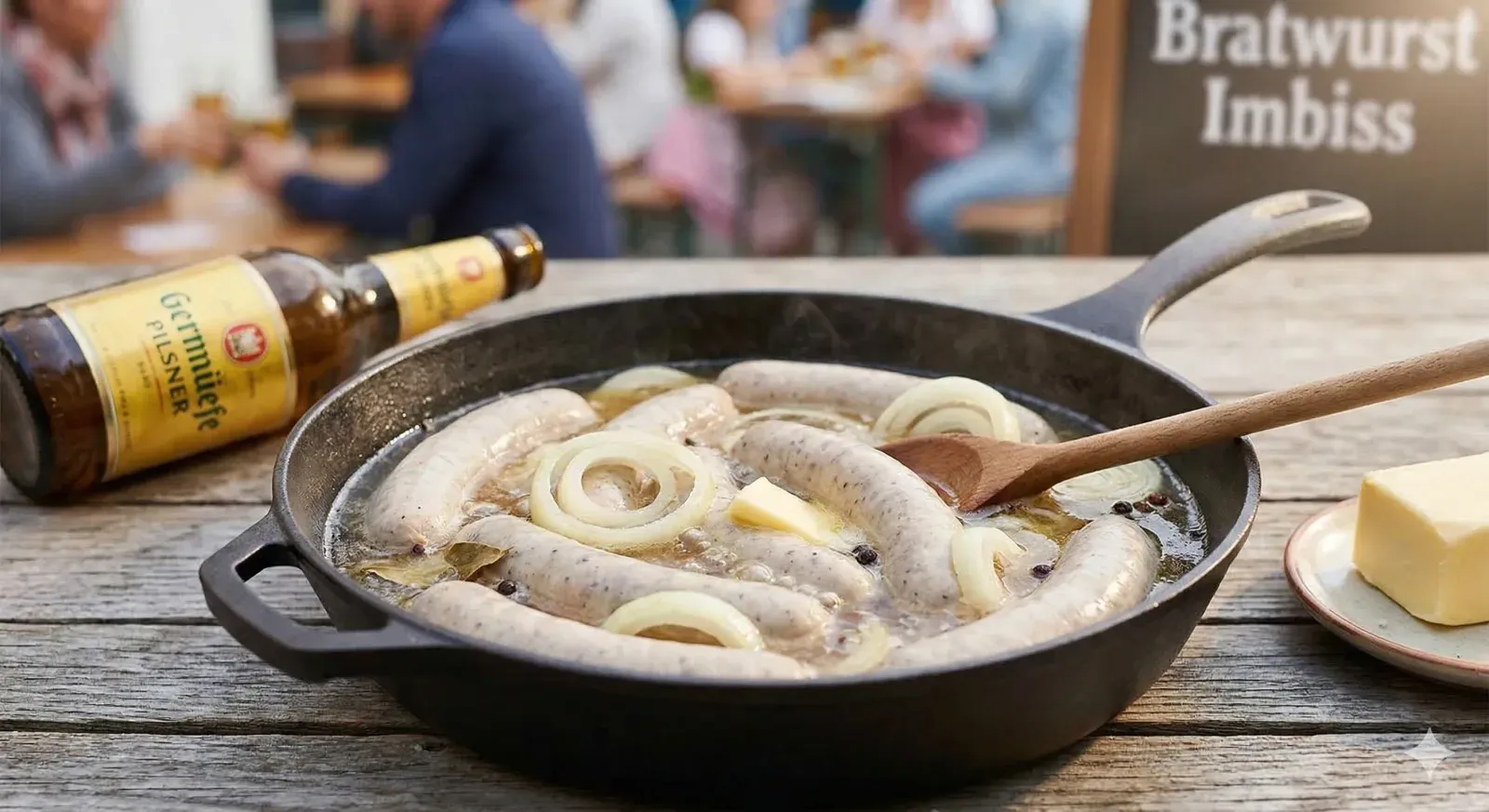
1 Place the bratwurst in a deep pan or large skillet. Add the sliced onion rings and butter. Pour in enough beer to fully cover the sausages. You will need about two bottles. Set the pan over medium heat and bring the liquid to a gentle simmer. Small bubbles should rise slowly, but the beer should not reach a rolling boil.
Simmer the bratwurst for 10 to 15 minutes. The sausages will turn from pink to a pale gray color. This means they are cooked about halfway through. The beer bath adds malty flavor and locks in moisture so the sausages stay juicy during the next step. Save the onions and some of the beer liquid for later. You will turn those onions into a sweet, caramelized topping.
Step 2: Grill or Pan-Fry to Finish
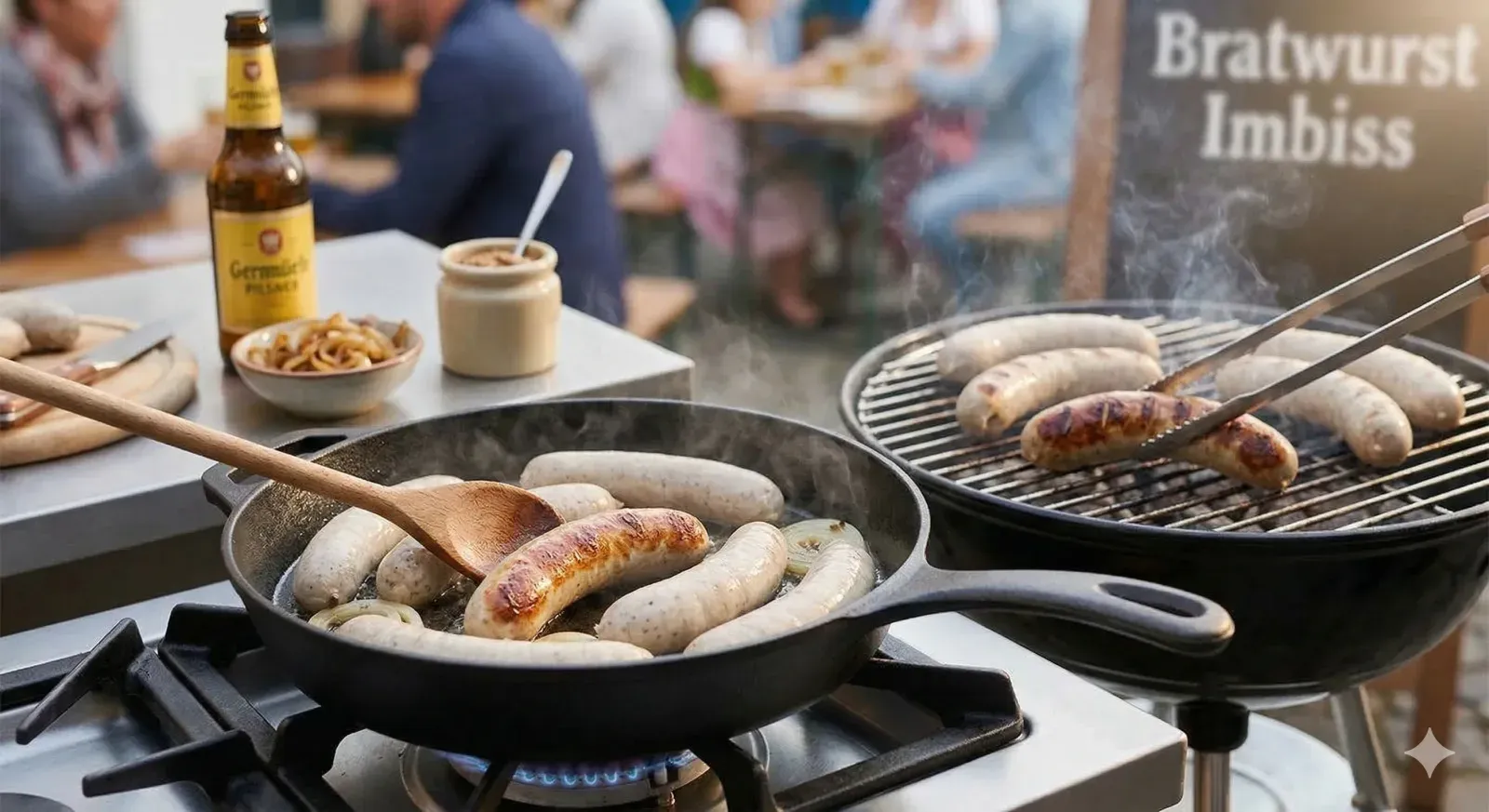
2 For grilling, preheat your grill to medium heat, about 350 degrees Fahrenheit. Remove the bratwurst from the beer bath and pat them lightly dry. Place them on the grill and cook for 4 to 5 minutes per side. Turn them only once. The skin should develop dark grill marks and a crispy, blistered texture.
For pan-frying, heat a tablespoon of oil in a large skillet over medium heat. Add the beer-simmered bratwurst and cook for 3 to 4 minutes per side until the skin is golden brown and crispy all around. Do not press down on them with a spatula, because that squeezes out the juices. Let them sit and sizzle until the casing snaps when you bite into it.
Step 3: Caramelize the Beer Onions
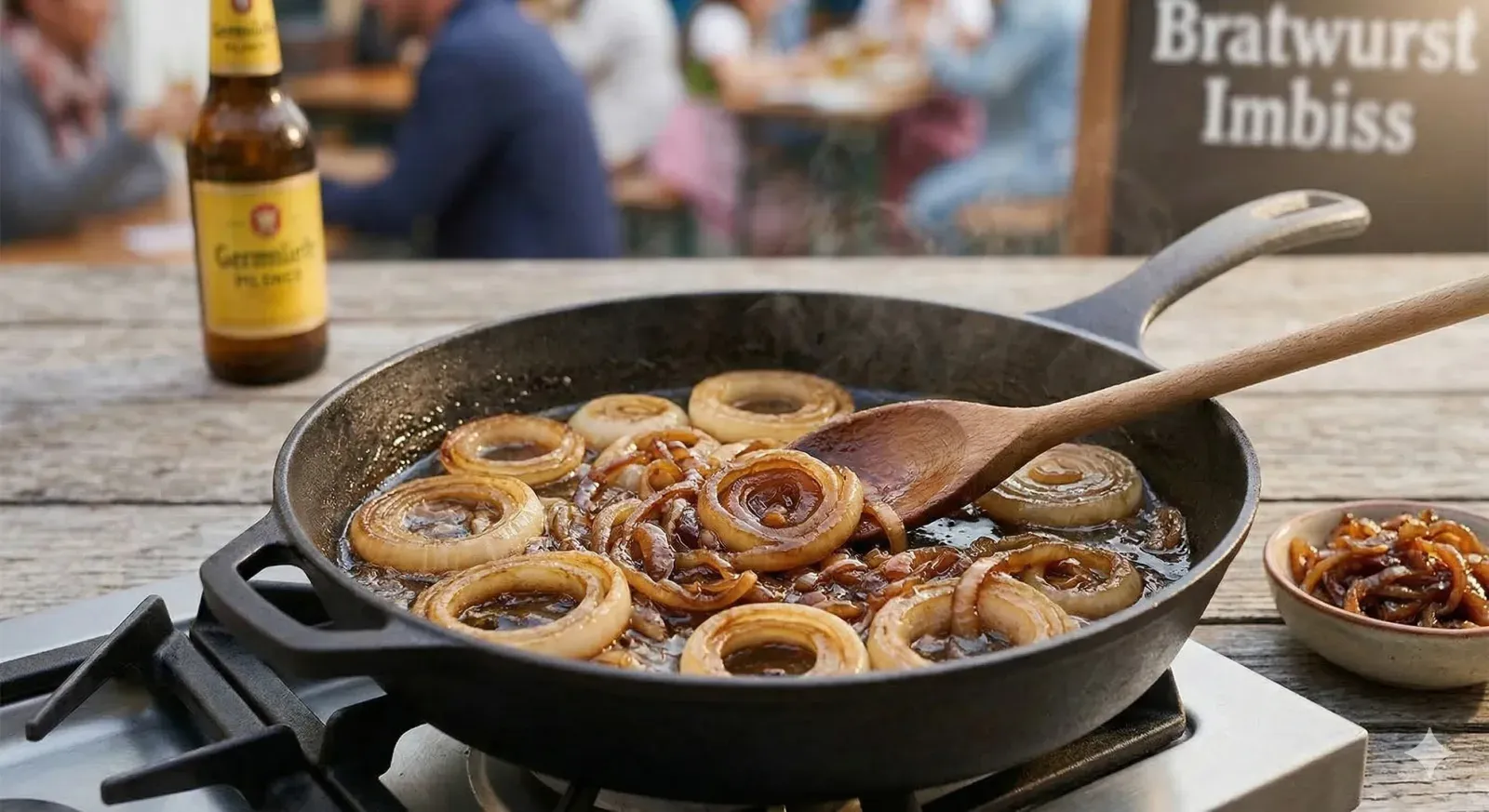
3 While the bratwurst cooks on the grill, take those beer-soaked onion rings and cook them in a skillet with a tablespoon of butter over medium heat. Stir them every couple of minutes. After about 10 minutes, they will turn deep golden brown, soft, and sweet. The leftover beer on the onions helps them caramelize into something magical.
Season the onions with a pinch of salt. If they start to dry out, splash in a little of the leftover beer from the pan. These caramelized beer onions are the star topping for your bratwurst. Their sweet, malty flavor goes perfectly with the spicy mustard and tangy sauerkraut.
Step 4: Assemble and Serve
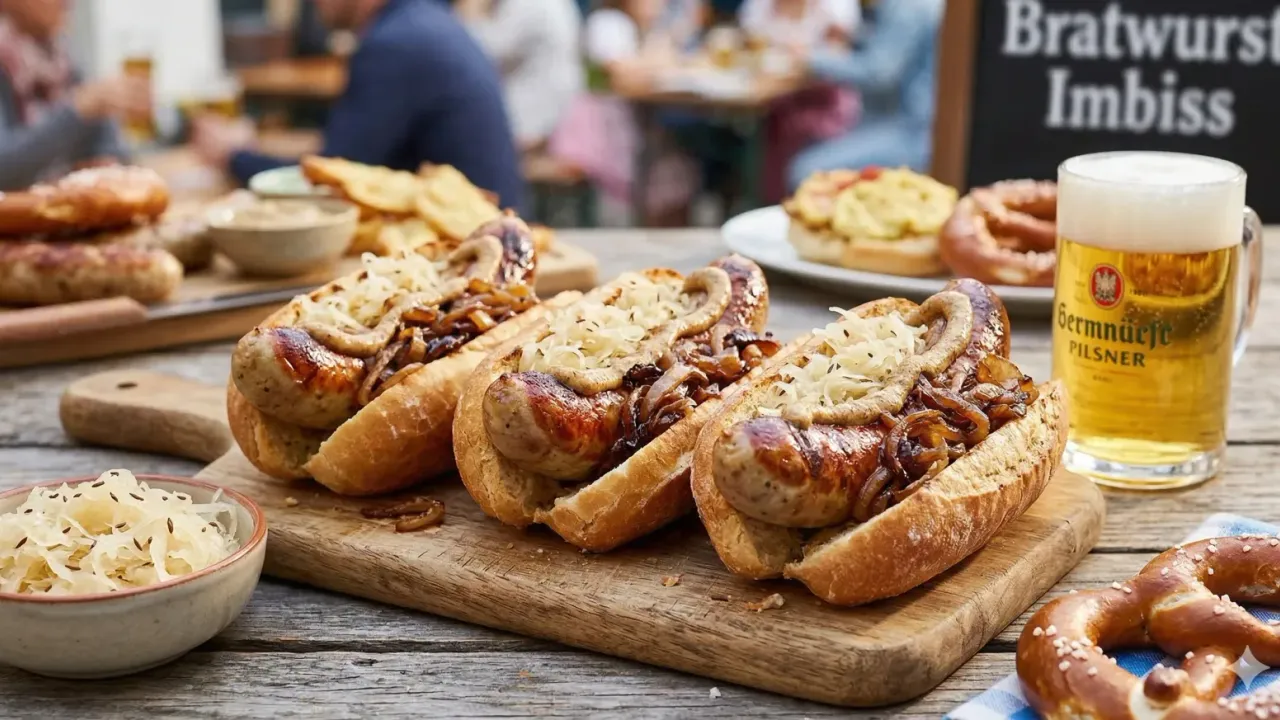
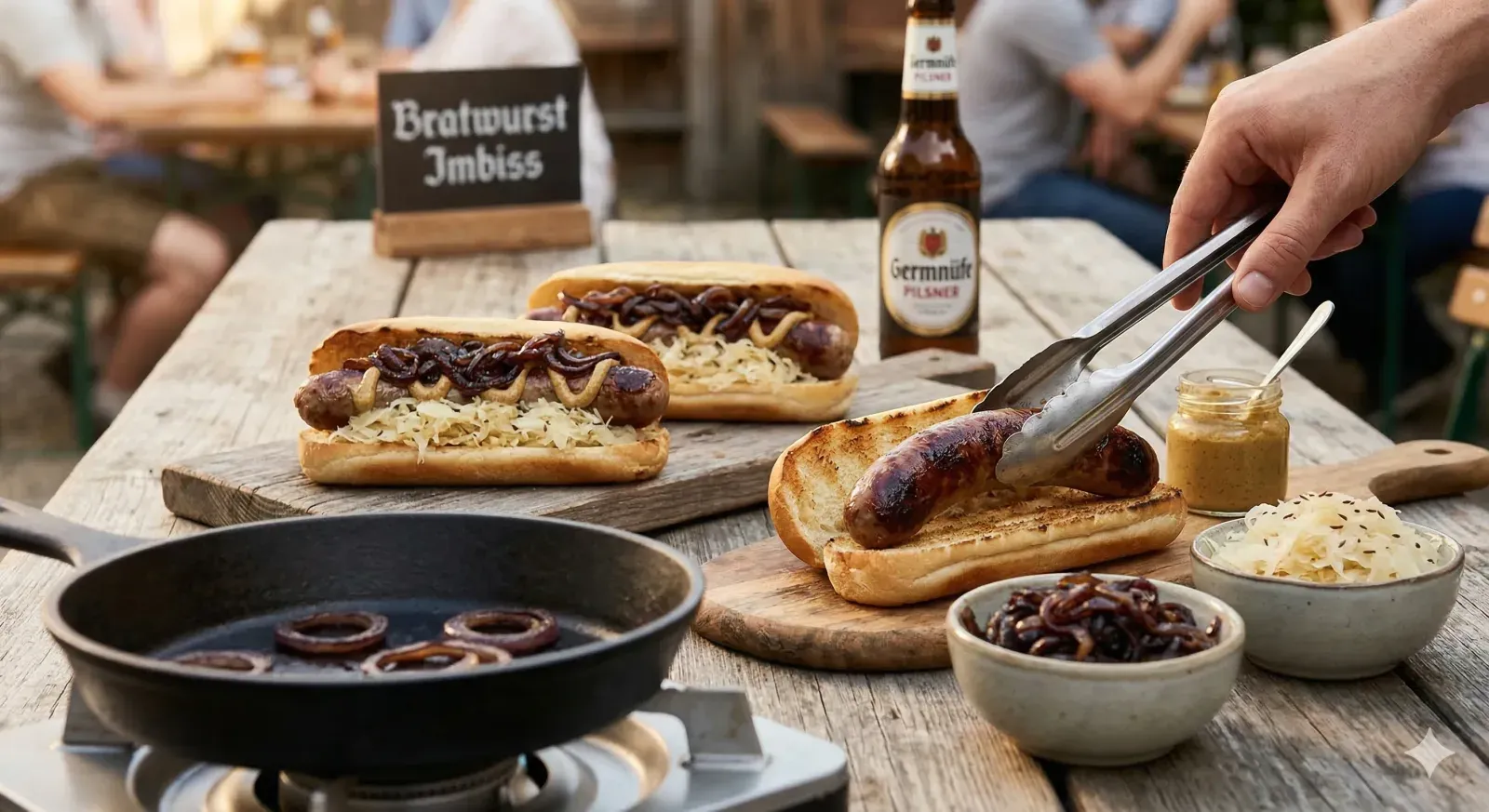
4 Toast the buns lightly on the grill or in a dry skillet for about 1 minute. A warm, slightly crispy bun holds together much better than a cold, soft one. Place each grilled bratwurst into a bun. Add a line of spicy brown mustard, a pile of sauerkraut, and a big heap of those caramelized beer onions on top.
Serve right away while everything is still hot. Put extra mustard and sauerkraut on the side so people can add more. For a true German experience, skip the ketchup entirely. In Germany, you would never put ketchup on a bratwurst. Mustard is the only proper condiment for this sausage.
Expert Tips for the Perfect Bratwurst Recipe
Never Boil, Always Simmer
A hard boil will burst the casings and turn your bratwurst ugly and dry. Keep the beer bath at a gentle simmer with tiny bubbles. Low heat cooks the sausage slowly and evenly without any risk of splitting. Think of it as a warm beer jacuzzi for your bratwurst, not a hot tub set to high.
Do Not Prick the Casing
Many people poke holes in their sausages to stop them from bursting. This is a mistake. Each hole lets precious juice and fat leak out. Instead, control the heat. If you simmer gently and grill over medium heat, the casing will stay intact. A juicy bratwurst with a snappy casing is the goal, and poking holes works against that.
Use Medium Heat on the Grill
High heat chars the outside before the inside finishes cooking. Since the bratwurst is already partly cooked from the beer simmer, medium heat is enough to crisp the skin. Turn them only once and let the grill do the work. Flipping too often stops the casing from getting that nice, snappy crunch.
Bratwurst Across Germany
Germany has dozens of regional bratwurst styles, and each one is a source of fierce local pride. Here is a look at the most famous types and what makes them unique.
| Region | Bratwurst Style | Key Features | Serving Tradition |
|---|---|---|---|
| Nuremberg | Nurnberger Rostbratwurst | Small, finger-sized, heavy on marjoram | Served 6 to 12 per plate with sauerkraut and potato salad |
| Thuringia | Thuringer Rostbratwurst | Long, coarse-ground, seasoned with caraway and garlic | Grilled over charcoal, served in a bread roll with mustard |
| Franconia | Coburger Bratwurst | Large, grilled over pinecones for smoky flavor | Served in a sliced bread roll with mustard |
| Bavaria | Weisswurst | White veal sausage, mild, no casing eaten | Boiled, served with sweet mustard and pretzel, only before noon |
| Currywurst (Berlin) | Sliced bratwurst with curry ketchup | Fried sausage doused in curry-spiced ketchup | Street food, served with fries or a bread roll |
Serving Suggestions
In Germany, bratwurst is enjoyed everywhere: at street stalls, beer gardens, festivals, and home barbecues. It is simple food done well. Here are the best sides to serve with your bratwurst.
Classic Accompaniments:
- German potato salad: A warm, tangy salad made with vinegar, bacon, and mustard instead of mayo. It is the traditional side for bratwurst at any German gathering.
- Sauerkraut: Fermented cabbage with a sharp, sour bite. It cuts through the rich, fatty sausage and aids digestion. Warm it up with a bit of caraway and apple for extra flavor.
- Soft pretzels: Big, warm Bavarian pretzels with coarse salt are the perfect partner for bratwurst and beer.
- German potato dumplings: Soft, pillowy dumplings that soak up the juices from the sausage. These are a hearty side that turns bratwurst into a full dinner.
Beverage Pairings:
- German pilsner: A crisp, clean lager that is the classic match for bratwurst. Brands like Bitburger, Warsteiner, or Jever are go-to choices.
- Hefeweizen (wheat beer): A cloudy, fruity Bavarian wheat beer that pairs well with the mild spice of the sausage. Its banana and clove notes add a nice contrast.
- Radler (beer and lemonade): A half-and-half mix of lager and sparkling lemonade. It is light, refreshing, and very popular at summer barbecues in Germany.
- Apple juice or sparkling water: For a non-alcoholic choice, sparkling apple juice is a common pick at German family cookouts.
Storage and Reheating
Refrigerator: Cooked bratwurst keeps in the fridge for 3 to 4 days in a sealed container. They are great cold in a sandwich or sliced into pasta and salads.
Freezer: Both raw and cooked bratwurst freeze well for up to 3 months. Wrap each one in plastic, then put them all in a freezer bag. Thaw in the fridge before cooking or reheating.
Reheating: Pan-fry over medium heat for 3 to 4 minutes per side to bring back the crispy casing. You can also warm them in a 350-degree oven for 10 minutes. Avoid the microwave, because it makes the casing rubbery and kills the snap.
Common Mistakes to Avoid
1. Grilling Over High Heat
Cranking the grill up to high is the fastest way to ruin bratwurst. High heat chars the outside while the inside stays raw, or the casing splits and all the juice runs out. Medium heat is the sweet spot. It gives you even cooking and a crispy, golden skin without the risk of flare-ups.
2. Pricking the Casing
Poking holes in bratwurst to stop them from bursting is a myth that will not die. Each hole drains fat and juice, leaving you with a dry sausage. Instead, control the heat and let the casing do its job. If the sausages swell, lower the heat a bit. The casing can handle it.
3. Boiling in Plain Water
Plain water washes away the flavor. If you want to pre-cook bratwurst, always use beer and onions. The beer adds malty depth and keeps the meat moist. Water just dilutes the taste and leaves you with a bland sausage. Even a cheap lager does a better job than water.
4. Skipping the Beer Bath Entirely
You can grill bratwurst from raw, but you risk split casings and uneven cooking. The beer simmer gives you a safety buffer. It partially cooks the sausage and adds flavor, so the grilling step only needs to crisp the outside. This two-step method is how the best bratwurst joints in Wisconsin do it.
Frequently Asked Questions
Should I boil bratwurst before grilling?
Do not boil them in water. Instead, simmer them gently in beer and onions. This adds flavor and cooks them partway through. Then finish on the grill for crispy skin. A hard boil splits casings and drains flavor. Keep the heat low and gentle for the best results.
What is the best beer for bratwurst?
A German lager or pilsner works best. These beers are clean, malty, and not too bitter. Stay away from hoppy IPAs and dark stouts, because they can leave a harsh taste. A basic lager from any brand will do the trick. Drink the rest while you grill.
What is the difference between bratwurst and other sausages?
Bratwurst uses a fine grind of pork and veal with white pepper, nutmeg, and ginger. It is fresh and not smoked. Knockwurst is garlicky and thicker. Weisswurst is a mild white sausage eaten with sweet mustard. Kielbasa is a Polish smoked sausage. Each has its own spice blend, grind, and cooking method.
How do I know when bratwurst is done?
Use a meat thermometer. Bratwurst is done at 160 degrees Fahrenheit inside. The skin should be golden and crispy, and the juices should run clear. After a beer simmer, the grill time is only 4 to 5 minutes per side. Cut one open to check if you are not sure.
Can I cook bratwurst in the oven?
Yes. Bake them at 400 degrees Fahrenheit for 20 minutes, turning once halfway. For extra flavor, lay them on a bed of sauerkraut and onions. The oven works well in winter when grilling is not an option. They will not get as snappy as grilled brats, but they still taste great.
What toppings go on bratwurst?
In Germany, spicy brown mustard is the classic condiment. Add sauerkraut and caramelized onions for the full experience. Some like curry ketchup, which is the base of Berlin’s famous currywurst. In the American Midwest, beer cheese sauce and jalapeños are popular additions. Keep it simple or go wild.
Variations and Adaptations
Homemade Bratwurst from Scratch:
Mix the ground pork, ground veal, white pepper, nutmeg, ginger, salt, milk, and egg in a bowl until well blended. Stuff the mixture into soaked natural hog casings using a sausage stuffer. Twist into 6-inch links. Let them rest in the fridge for a few hours so the flavors set. Then cook them the same way as store-bought brats.
Currywurst Style:
Grill or pan-fry the bratwurst, then slice it into thick coins. Drizzle with a homemade curry ketchup sauce made from ketchup, curry powder, smoked paprika, and a pinch of cayenne. Serve with crispy fries. This is Berlin’s most famous street food and a fun twist on the classic bratwurst recipe.
Beer Cheese Bratwurst:
After grilling, serve the bratwurst in a bun smothered in a warm beer cheese sauce. Melt cheddar with a splash of beer, a spoonful of mustard, and a pinch of garlic powder. This is a Midwest American favorite at tailgate parties and Oktoberfest events. It is rich, gooey, and completely over the top.
The Cultural Significance of Bratwurst
In Germany, bratwurst is not just food. It is culture. Every town has a sausage stand. Every festival has a grill. The smell of charcoal-grilled bratwurst is woven into the memory of every German childhood. At Oktoberfest, millions of bratwurst are eaten alongside pretzels and beer in massive tents filled with singing and laughter.
German immigrants carried their bratwurst traditions to America in the 1800s. The state of Wisconsin became the new heartland of bratwurst culture. Today, cities like Sheboygan hold the title of “Bratwurst Capital of the World.” The annual Bratfest in Madison is one of the largest grilling events in the country.
Bratwurst also connects to the broader story of European food culture. Every region in Germany guards its local sausage recipe with pride. Nuremberg’s tiny bratwursts have EU protection, meaning only sausages made in Nuremberg can bear the name. This fierce local pride shows how deeply Germans care about their food heritage.
Conclusion
This bratwurst recipe gives you the tools for the perfect German sausage at home. The keys are simple: simmer in beer first, grill over medium heat, and never prick the casing. Follow this bratwurst recipe and you will get crispy, juicy links that snap when you bite through. Pile them in a bun with sauerkraut, mustard, and sweet beer onions for a meal that needs nothing else.
Want more German and European classics? Browse our European dishes, including currywurst, sauerbraten, and kasespatzle. Also explore our Asian street food recipes for more global grilling ideas.