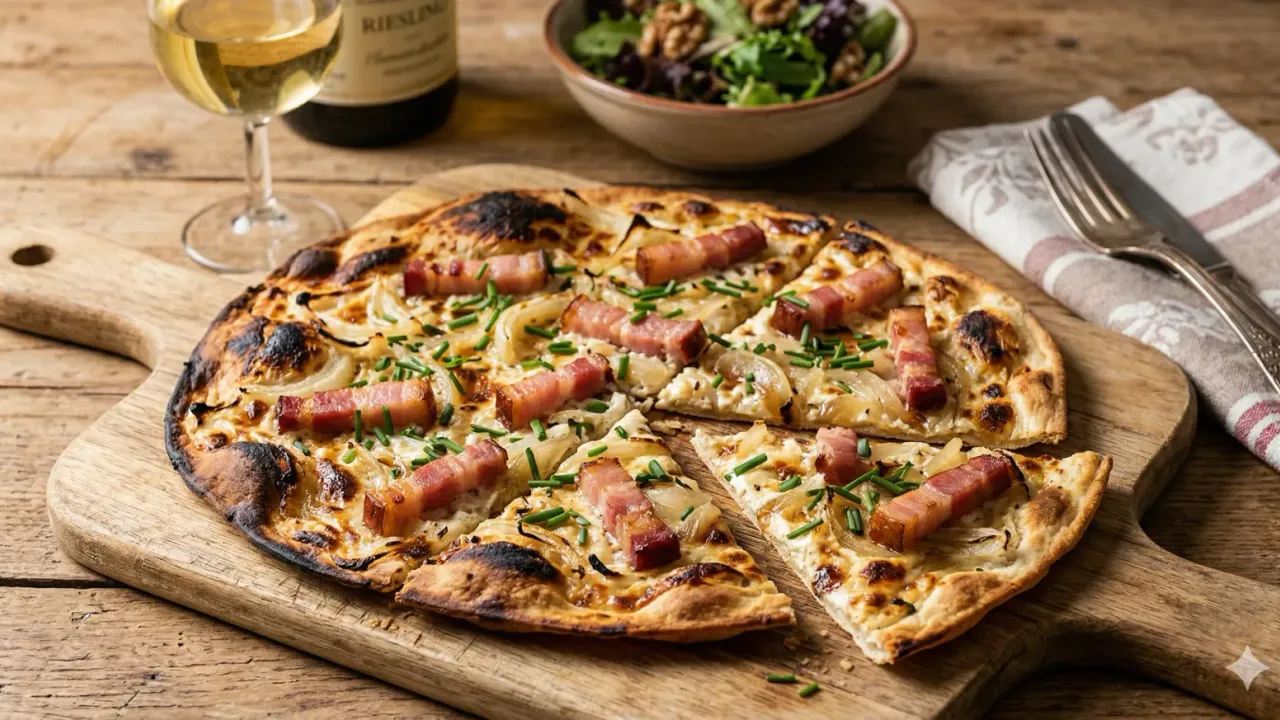
Flammkuchen is the crispy, smoky flatbread that Alsace gave to the world. This flammkuchen recipe delivers a cracker-thin base spread with tangy creme fraiche, sweet caramelized onions, and salty bacon. Born in the wood-fired bread ovens of the Franco-German borderlands, flammkuchen is one of Europe’s simplest yet most addictive dishes. You need only a handful of ingredients and a very hot oven. In about 30 minutes, you will have a golden, charred flatbread that rivals anything from a winstub in Strasbourg.
Prep Time: 20 minutes | Cook Time: 12 minutes | Servings: 4
Difficulty: Easy | Calories: ~380 per serving
What Makes Flammkuchen Special?
Flammkuchen stands apart from pizza in every meaningful way. The dough has no yeast, so it stays flat and cracker-like. Instead of tomato sauce and cheese, the base is a thin layer of creme fraiche seasoned with nutmeg and white pepper. The toppings are minimal: sweet onions and smoky lardons. That restraint is what makes flammkuchen so good. Every ingredient has a role, and nothing hides behind melted cheese.
Traditionally, bakers in Alsace used flammkuchen to test the heat of their wood-fired bread ovens. They would slide the thin dough inside before the day’s bread went in. If the edges charred within minutes, the oven was ready. Over time, this oven test became a beloved dish on its own. Today, winstubs across Strasbourg and Colmar serve flammkuchen on wooden boards alongside pitchers of Alsatian wine.
The magic of flammkuchen lies in contrast. You get the crunch of charred dough against the cool richness of creme fraiche. Sweet onions balance salty, smoky bacon. This Alsatian flatbread is proof that the best dishes often need the fewest ingredients. Every bite rewards you with texture and flavor that feel far more complex than the short ingredient list suggests.

Choosing the Right Creme Fraiche
The cream base defines your flammkuchen. A poor choice here affects the entire dish. Here are the best options for achieving that authentic Alsatian flavor and texture.
- Creme fraiche (best choice): This is the traditional base. It has a mild tang, a rich and silky texture, and it holds up beautifully under high heat. Unlike sour cream, creme fraiche does not split or curdle in a hot oven. Look for full-fat versions with at least 30 percent fat content.
- Fromage blanc blend: Many Alsatian recipes mix creme fraiche with fromage blanc for a lighter spread. Fromage blanc adds a fresh, milky tang. If you cannot find it, substitute with equal parts sour cream and cream cheese blended smooth.
- Sour cream (substitute): Sour cream works in a pinch, but it is thinner and more acidic. Stir in a tablespoon of heavy cream to thicken it. The flavor will be slightly tangier than creme fraiche, but the result is still very good.
- Greek yogurt (lighter option): Strained Greek yogurt can replace creme fraiche for a lower-fat version. However, it tastes noticeably more tart. Mix it with a bit of cream to soften the acidity. Use full-fat yogurt only, because low-fat versions water out during baking.
Ingredients for Flammkuchen
For the Dough:
- 2 cups (250g) all-purpose flour
- 1/2 teaspoon salt
- 2 tablespoons olive oil
- 1/2 cup (120ml) warm water
For the Cream Base:
- 1 cup (200g) creme fraiche
- 1/4 cup (60g) fromage blanc or sour cream
- 1/4 teaspoon freshly grated nutmeg
- Salt and white pepper to taste
For the Toppings:
- 2 large onions, thinly sliced into half-moons
- 150g (5 oz) lardons or thick-cut bacon, diced
- Fresh chives for garnish
Pro tip: Use lardons instead of regular bacon for the most authentic flammkuchen. Lardons are cut from pork belly into thick, short sticks. They render slowly in the oven and deliver a deeper, smokier flavor than thin American bacon strips. You can find them at specialty stores, or simply cut thick-sliced bacon into small batons yourself.
Step-by-Step Instructions
Step 1: Make the Dough
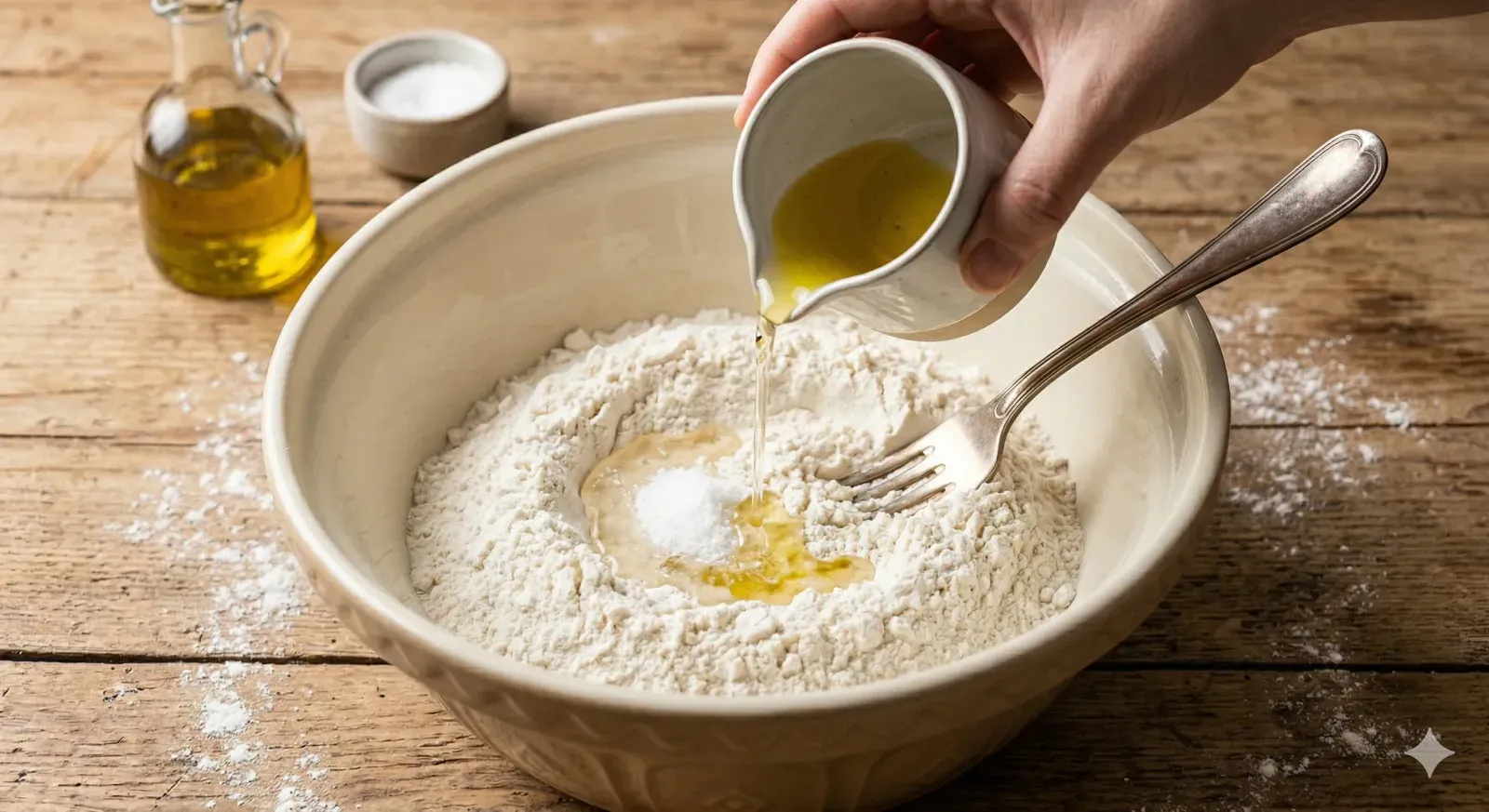
1 Combine the flour and salt in a large mixing bowl. Create a well in the center and pour in the olive oil and warm water. Stir with a fork until the mixture comes together into a shaggy mass. Turn it out onto a lightly floured surface and knead for about 5 minutes. The dough should feel smooth, soft, and slightly elastic.
Shape the dough into a ball and wrap it tightly in plastic wrap. Let it rest at room temperature for at least 30 minutes. This resting step is essential. It allows the gluten strands to relax so you can roll the dough extremely thin without it snapping back. Meanwhile, prepare your toppings and preheat the oven.
Step 2: Prepare the Cream Base and Toppings
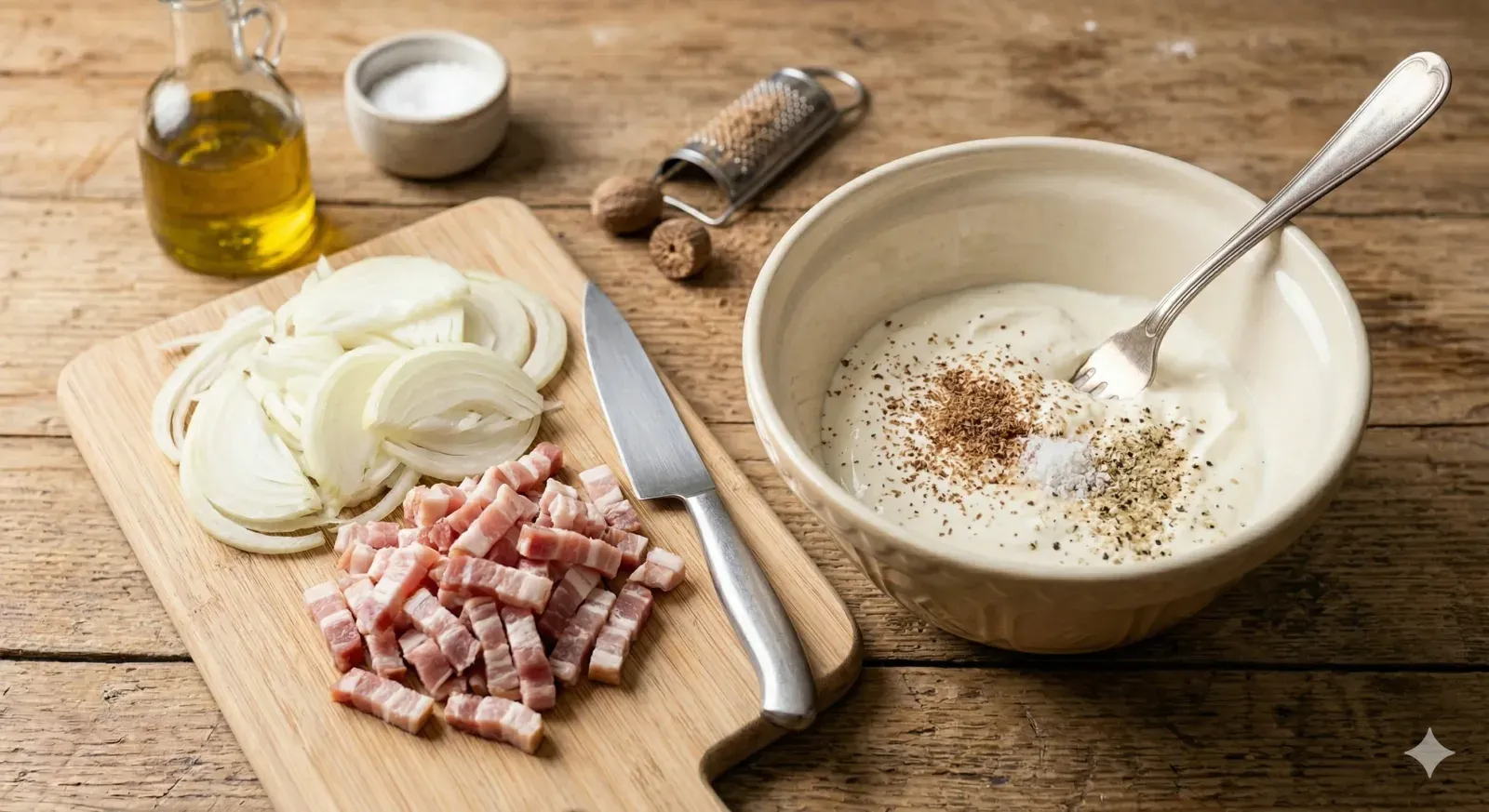
2 In a medium bowl, stir together the creme fraiche and fromage blanc until smooth. Add the nutmeg, a pinch of salt, and a few grinds of white pepper. Mix well. The cream base should be spreadable but not runny. If it feels too thick, add a teaspoon of milk to loosen it slightly.
Peel the onions and slice them into thin half-moons. Separate the layers so the pieces cook evenly in the oven. Cut the lardons or bacon into small, chunky pieces about half an inch thick. There is no need to pre-cook the bacon. The intense oven heat will render the fat and crisp the edges perfectly during baking.
Step 3: Roll the Dough Paper-Thin
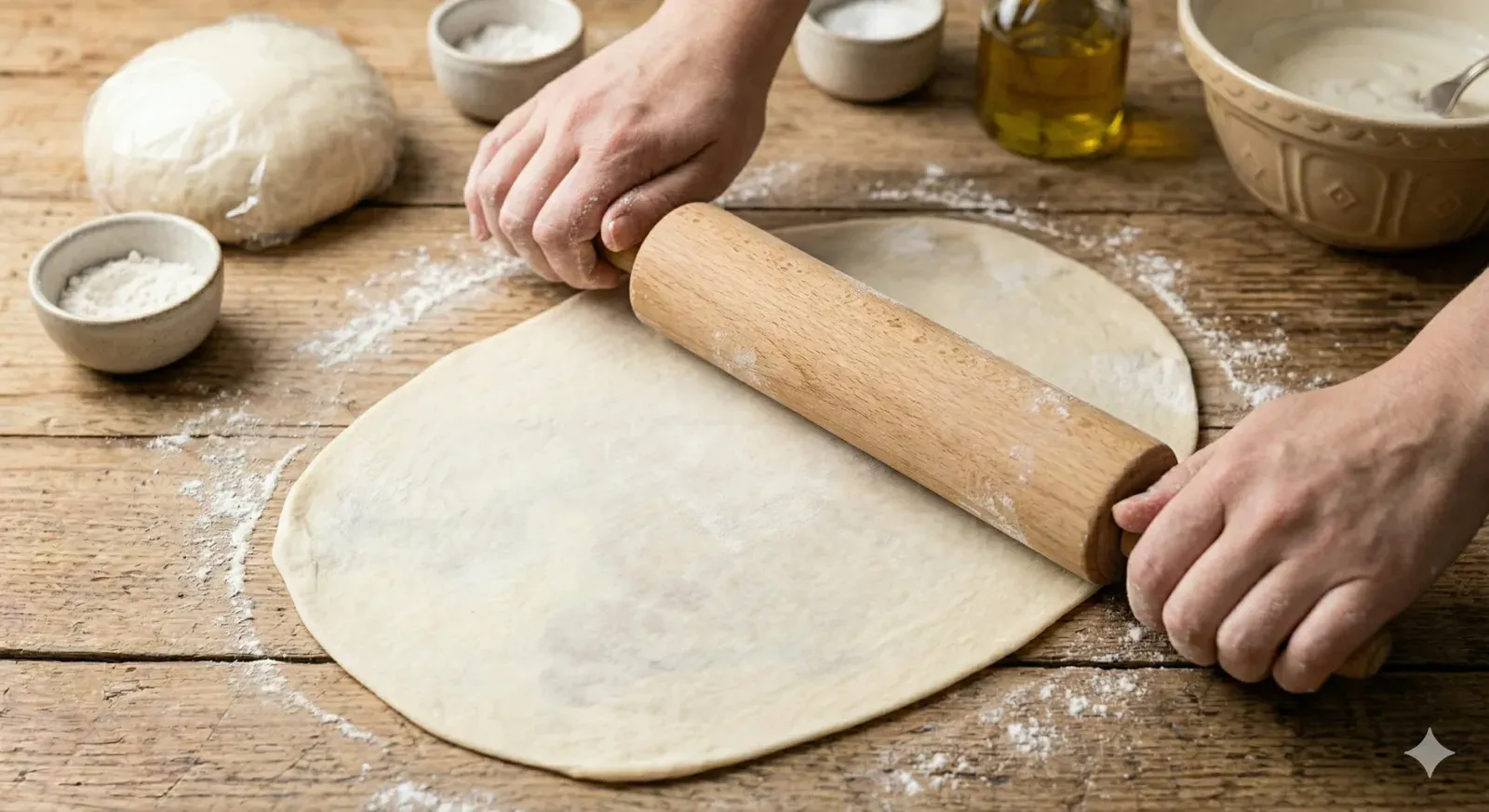
3 Preheat your oven to 500 degrees Fahrenheit (260 degrees Celsius). Place a baking sheet or pizza stone on the middle rack to heat up. A screaming hot surface is the secret to a crispy bottom. Without it, the base stays limp and doughy.
Divide the rested dough into two equal pieces. On a well-floured surface, roll one piece into a large, thin oval or rectangle. Aim for about 1 to 2 millimeters thick. You should almost be able to see the counter through the dough. If it resists and springs back, cover it with a towel and wait 5 minutes before rolling again. Repeat with the second piece.
Step 4: Assemble the Flammkuchen
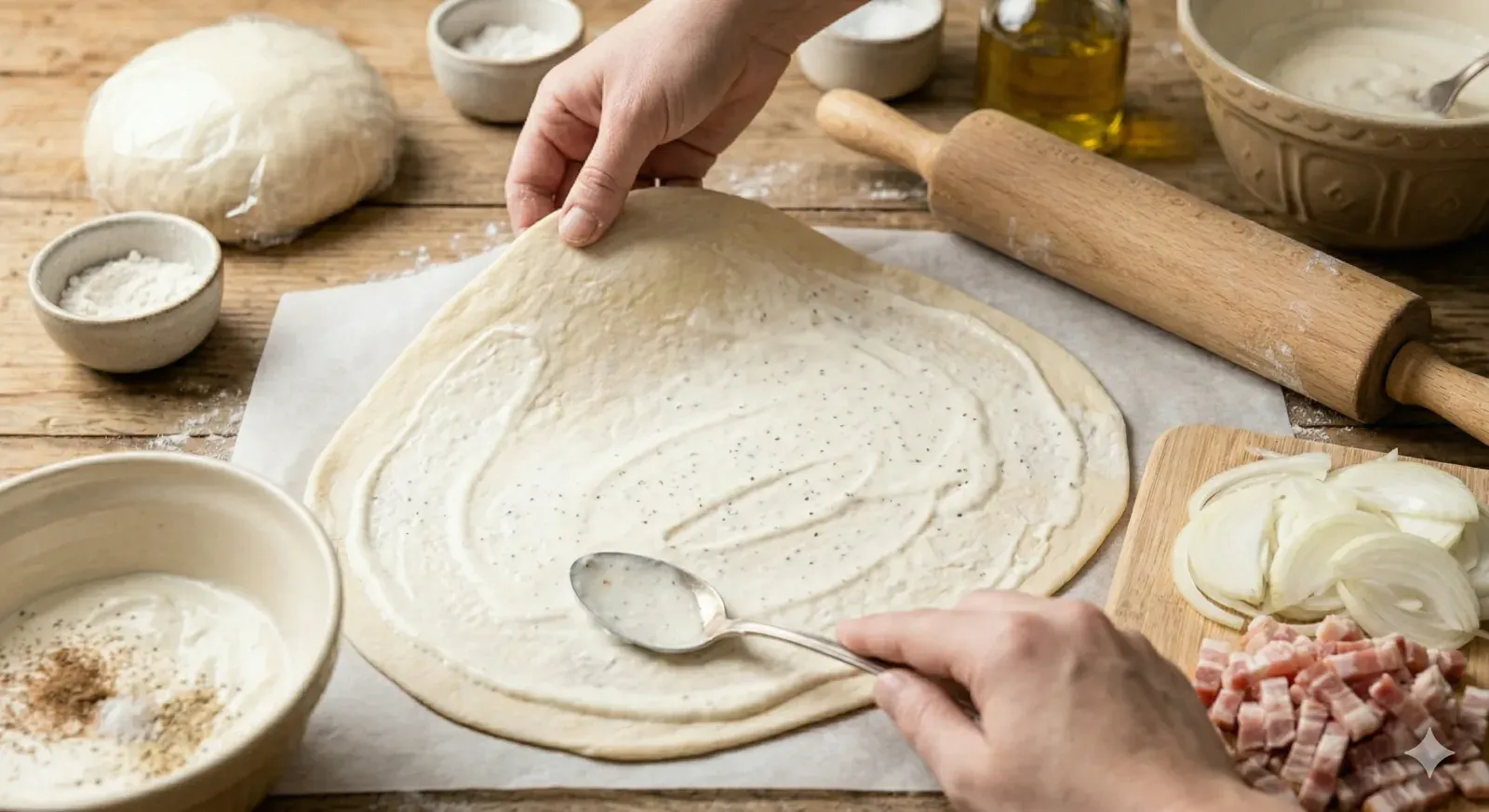
4 Transfer the rolled dough onto a sheet of parchment paper. Spread a thin, even layer of the creme fraiche mixture across the surface. Leave about a half-inch border around the edge. Less is more here. A thick layer of cream makes the center soggy, so keep it restrained.
Scatter the sliced onions evenly over the cream base. Then distribute the diced lardons across the surface. Space the toppings so every slice of the finished flammkuchen gets a fair share. Resist the urge to pile on extra ingredients. The beauty of this dish is its simplicity, and overloading the toppings defeats the purpose.
Step 5: Bake Until Charred and Crispy
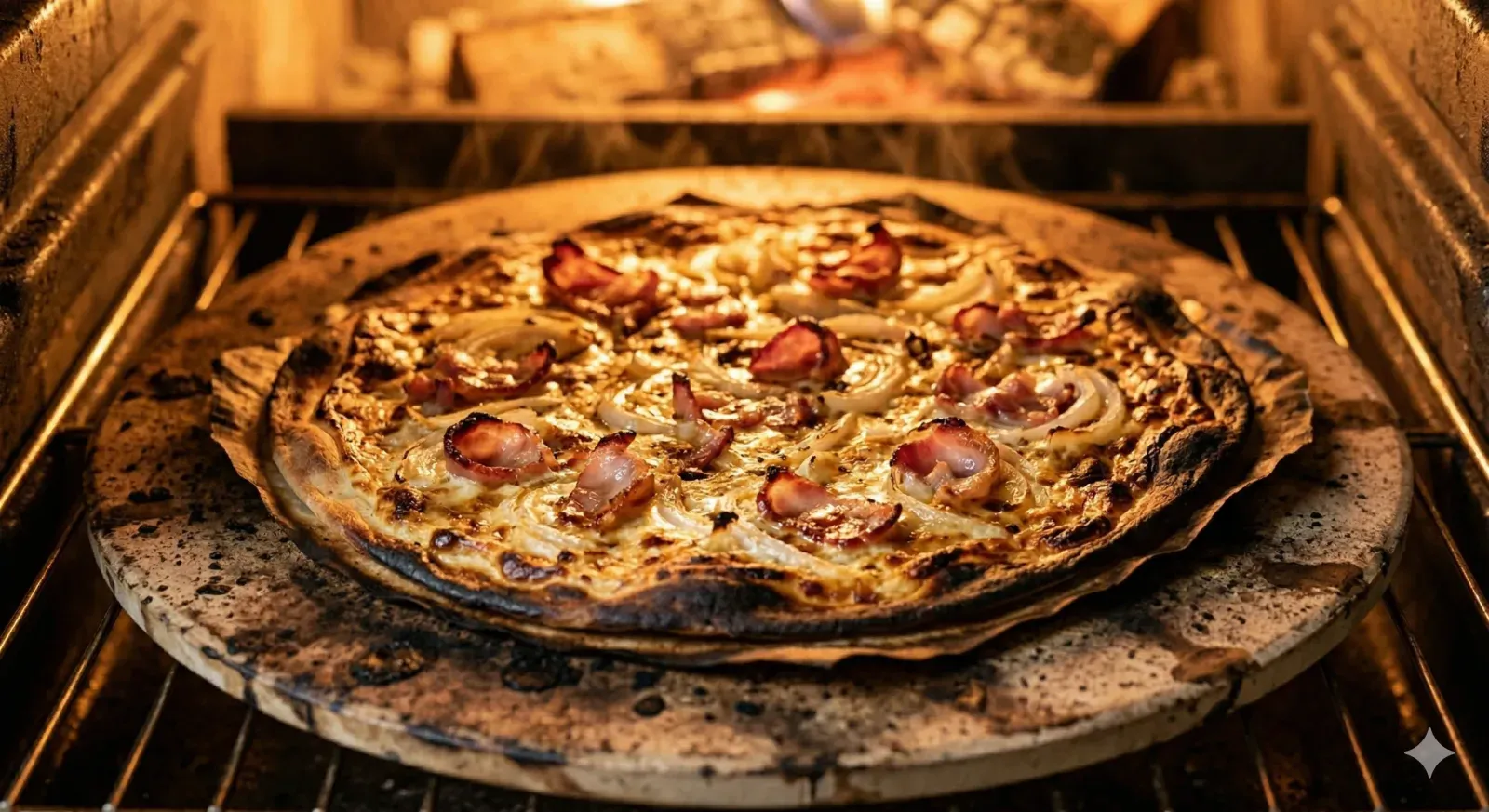
5 Slide the assembled flammkuchen, parchment and all, onto the preheated baking sheet or pizza stone. Bake for 10 to 12 minutes. Watch it carefully during the last few minutes. The edges should turn deeply charred, almost black in spots. The cream will bubble, and the lardons will render and turn golden.
Remove the flammkuchen from the oven and transfer it to a cutting board. Snip fresh chives over the top with scissors. Cut into rustic rectangles or long strips using a pizza wheel. Serve immediately while the crust is still crackling. Flammkuchen waits for no one. After a few minutes, the steam softens the crust and you lose that perfect crunch.
Expert Tips for Perfect Flammkuchen
Get the Oven as Hot as Possible
Traditional flammkuchen bakes in a wood-fired oven at over 700 degrees Fahrenheit. Your home oven will not reach that, but cranking it to 500 degrees gets you close. Preheat for at least 20 minutes with the baking sheet or pizza stone inside. The hotter the surface, the crispier the base. A weak oven temperature is the most common reason for a soggy flammkuchen.
Roll the Dough Thinner Than You Think
Most home cooks leave the dough too thick. Flammkuchen dough should be almost see-through. Think cracker, not bread. A thick base will be chewy and bready, which is the opposite of what you want. If the dough tears in a spot, just patch it with a pinch of dough and keep rolling. Thin is everything here.
Use a Light Hand with Toppings
Flammkuchen is not pizza. You do not pile it high with toppings. A thin spread of cream, a single layer of onions, and a scattering of lardons is all you need. Too much cream weighs down the dough and prevents it from crisping. Too many onions release moisture and make the center wet. Restraint is what separates good flammkuchen from a mediocre one.
Flammkuchen Across the Region
Although flammkuchen is firmly rooted in Alsace, nearby regions have developed their own versions. Each one reflects the local ingredients and traditions. Here is how the flatbread changes as you travel across the borderland.
| Region | Local Name | Key Features | Serving Tradition |
|---|---|---|---|
| Alsace (France) | Tarte flambee | Creme fraiche, onions, lardons, paper-thin crust | Served on wooden boards, shared at the table with Alsatian wine |
| Baden (Germany) | Flammkuchen | Similar to Alsatian but often with added Gruyere or Emmental | Popular at wine festivals and beer gardens along the Rhine |
| Palatinate (Germany) | Flammkuche | Slightly thicker dough, sometimes with sour cream instead of creme fraiche | Eaten at new wine festivals (Federweisser season) in autumn |
| Saarland (Germany) | Flammkuchen | Variations include potato and mushroom toppings | Served in rustic taverns alongside local Saar wines |
| Luxembourg | Flammkuch | Sometimes topped with Munster cheese and walnuts | Paired with local Moselle Riesling at outdoor markets |
Serving Suggestions
In Alsace, flammkuchen is shared food. It arrives on a wooden board at the center of the table, and everyone tears off pieces with their hands. It is meant to be eaten fast, straight from the oven, while the crust still crackles. Here are the best ways to serve it.
Classic Accompaniments:
- Mixed green salad: A simple salad dressed with mustard vinaigrette balances the richness of the cream and bacon. It adds freshness and crunch to the meal.
- Alsatian green salad with walnuts: Toss frisee or mache lettuce with toasted walnuts, a drizzle of walnut oil, and sherry vinegar. This is the classic winstub pairing.
- Pickled vegetables: Cornichons, pickled onions, or a small dish of sauerkraut cut through the richness. The acidity refreshes the palate between bites.
- More European flatbreads and appetizers: Serve flammkuchen alongside other European starters for a shared dinner spread.
Beverage Pairings:
- Alsatian Riesling: A dry, crisp Riesling from Alsace is the gold-standard match for flammkuchen. Its acidity cuts through the cream while its fruit notes complement the sweet onions.
- Pinot Blanc: Another Alsatian white with a softer, rounder character. It is gentle enough not to overpower the delicate flavors of the flatbread.
- Gewurztraminer: For a bolder pairing, this aromatic wine brings floral notes and a touch of sweetness. It plays well with the smoky bacon.
- German pilsner or wheat beer: A crisp lager or refreshing hefeweizen works beautifully if you prefer beer over wine. Both cleanse the palate and match the smoky, salty toppings.
- Sparkling apple cider: For a non-alcoholic option, sparkling cider from Normandy or a local craft variety provides the right level of acidity and sweetness.
Storage and Reheating
Refrigerator: Leftover flammkuchen keeps in the fridge for up to 2 days in an airtight container. The crust will soften, but it can be revived. Layer pieces between sheets of parchment to prevent sticking.
Freezer: You can freeze unbaked, assembled flammkuchen for up to 1 month. Place it flat on a baking sheet, freeze until solid, then wrap tightly in plastic. Bake from frozen at 500 degrees, adding 2 to 3 extra minutes. The dough also freezes well on its own after resting.
Reheating: Reheat leftover flammkuchen in a 450-degree oven for 4 to 5 minutes directly on the oven rack. This re-crisps the bottom and edges. Never use a microwave for flammkuchen. It will turn the crust into a limp, rubbery sheet. A toaster oven also works well for single portions.
Common Mistakes to Avoid
1. Dough That Is Too Thick
This is the number one mistake. Thick dough produces bread, not flammkuchen. Roll it until you can almost see your hand through it. The finished crust should shatter when you bite into it. If the dough keeps springing back, let it rest longer. Patience with the rolling step pays off in every bite.
2. Using a Cold Oven or Baking Sheet
A cold surface means the bottom of the flammkuchen never crisps properly. Always preheat your baking sheet or pizza stone for at least 20 minutes at 500 degrees. The initial blast of heat from below is what creates that crackling, golden base. Without it, you get a pale, floppy result.
3. Overloading the Toppings
More toppings do not equal better flammkuchen. Too much cream makes the center soggy. Too many onions release water and steam the dough instead of letting it crisp. Stick to a thin layer of each topping. If you can see the dough through the cream in spots, that is about right.
4. Not Eating It Immediately
Flammkuchen is best within 5 minutes of leaving the oven. The steam from the hot toppings softens the crust quickly. Cut and serve it the moment it comes out. In Alsace, restaurants send flammkuchen to the table one at a time so each one arrives fresh. Follow that approach at home for the best experience.
Frequently Asked Questions
What is flammkuchen?
Flammkuchen is a traditional Alsatian flatbread with a paper-thin crust. It is topped with creme fraiche, thinly sliced onions, and smoky lardons or bacon. The name translates to “flame cake” in German because it was originally baked in wood-fired bread ovens. In France, it is known as tarte flambee, and it remains a beloved dish on both sides of the border.
What is the difference between flammkuchen and pizza?
The differences are significant. Flammkuchen dough contains no yeast, while pizza dough is leavened. The base spread is creme fraiche rather than tomato sauce. There is no melted cheese on a traditional flammkuchen. Additionally, the dough is rolled much thinner and bakes faster. The result is a cracker-crisp crust instead of a chewy, bready one.
Can I make flammkuchen without creme fraiche?
Yes, several substitutes work well. Sour cream mixed with a tablespoon of heavy cream is the closest match. Greek yogurt adds more tang but still produces good results. You can also blend smooth ricotta with a splash of milk. However, creme fraiche gives the most authentic flavor and bakes the best without splitting.
What temperature do you bake flammkuchen?
Set your oven to the highest temperature possible, ideally 500 degrees Fahrenheit or 260 degrees Celsius. A pizza stone or preheated baking sheet is essential for crisping the bottom. The intense heat chars the edges and cooks the thin dough in just 10 to 12 minutes. This mimics the wood-fired ovens used in Alsace for centuries.
Is flammkuchen French or German?
It belongs to both cultures. Flammkuchen comes from Alsace, a region that has changed hands between France and Germany multiple times. The French call it tarte flambee, and the Germans call it flammkuchen. Both nations claim it proudly. In truth, it is a dish of the borderland itself, shaped by centuries of shared and contested history.
How do I get the dough thin enough for flammkuchen?
Rest the dough for at least 30 minutes before rolling. This relaxes the gluten strands. Roll from the center outward on a generously floured surface. The dough should be almost translucent at about 1 to 2 millimeters thick. If it keeps springing back, cover it with a towel and wait 5 more minutes. A wooden dowel or thin rolling pin gives more control than a heavy one.
Variations and Adaptations
Gratinee (Cheese) Flammkuchen:
Add a handful of grated Gruyere or Emmental cheese over the cream base before adding the other toppings. This is popular in the Baden region of Germany. The cheese melts into the creme fraiche and creates a thin, golden layer. It strays from the Alsatian original but is delicious in its own right.
Forest Mushroom Flammkuchen:
Replace the lardons with a mix of sliced wild mushrooms such as chanterelles, porcini, or cremini. Saute them briefly in butter before scattering over the cream. Add a few sprigs of fresh thyme. This vegetarian version is earthy and elegant. It pairs especially well with a glass of Alsatian Pinot Gris.
Sweet Dessert Flammkuchen:
In Alsace, dessert flammkuchen is a tradition. Spread the thin dough with a mix of creme fraiche and sugar, then top with sliced apples, cinnamon, and a drizzle of honey. Bake until the edges char and the apples caramelize. Dust with powdered sugar and serve warm. It is a stunning end to any meal.
Munster Cheese and Cumin Flammkuchen:
Alsace is famous for its pungent Munster cheese. Spread the creme fraiche base, then scatter chunks of Munster and a sprinkle of cumin seeds over the top. The cheese melts into soft, aromatic pools. This version is bold and best enjoyed with a robust Gewurztraminer to match its intensity.
The Cultural Significance of Flammkuchen
Flammkuchen is more than a flatbread. It is a symbol of Alsatian identity. This region has been passed between France and Germany four times since 1871. Through every political change, the food stayed the same. Flammkuchen carries both German and French DNA in a single dish. The dough is rustic and Germanic. The creme fraiche is unmistakably French. Together, they represent a culture that refuses to choose one side.
In villages across Alsace, flammkuchen is still baked communally in wood-fired ovens during harvest festivals. Families gather around long tables, eating round after round of freshly baked flatbread. The bakers work in rotation, sliding new flammkuchen into the oven as fast as the crowd eats them. It is a social ritual as much as it is a meal. Wine flows freely, and the evening stretches late into the autumn night.
Today, flammkuchen has spread far beyond Alsace. You can find it in restaurants across Germany, in Parisian bistros, and at food markets around Europe. Yet it remains most powerful in its homeland. Walk into any winstub in Strasbourg, order a flammkuchen and a glass of Riesling, and you will understand why this simple flatbread has survived centuries of war, politics, and changing borders.
Conclusion
This flammkuchen recipe brings the taste of Alsace into your home kitchen. The keys are straightforward: roll the dough paper-thin, keep the toppings light, and bake at the highest heat your oven allows. Follow these principles and you will get a cracker-crisp flatbread with charred edges, tangy cream, sweet onions, and salty bacon in every bite.
Flammkuchen proves that the best dishes are often the simplest. A few good ingredients, handled with care, create something far greater than their sum. Make this recipe once and it will become a regular in your kitchen. Serve it with a cold glass of Riesling and a simple salad for a meal that feels effortless yet deeply satisfying.
Looking for more European classics to try? Browse our full collection of European dishes, including bratwurst, crepes, and raclette. Each recipe brings a piece of the continent to your table.