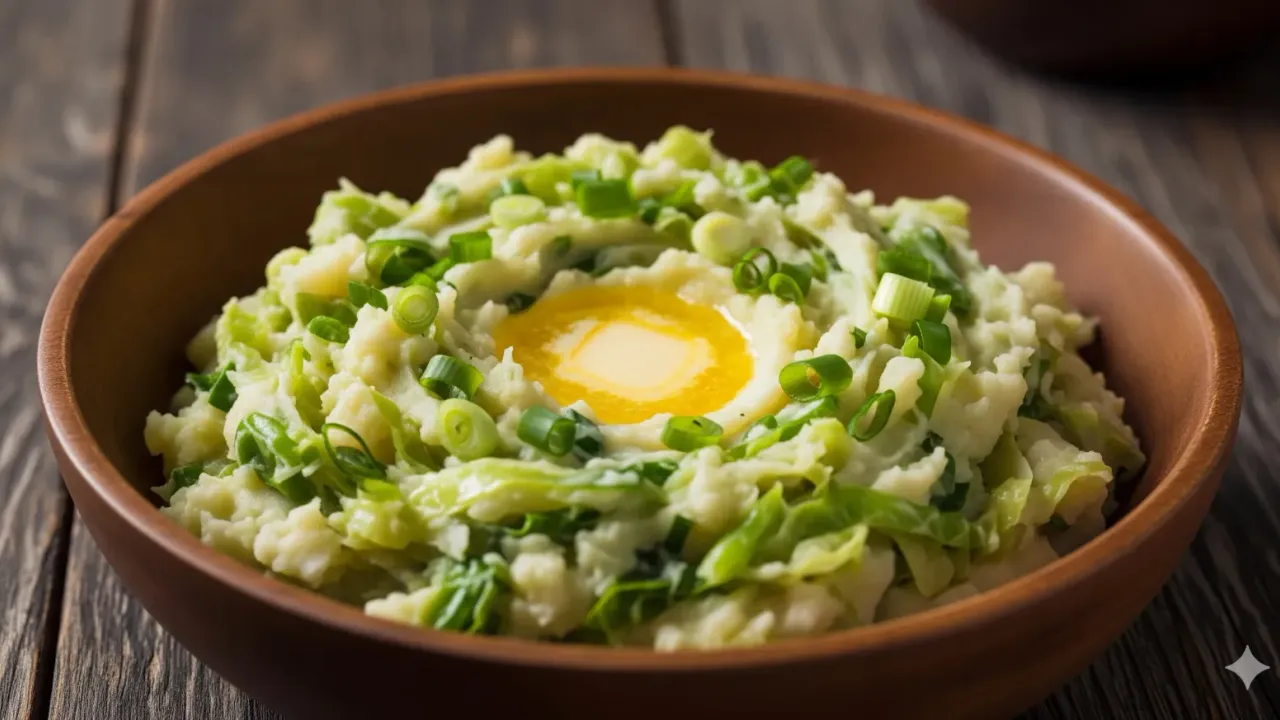
Colcannon is the heart of Irish comfort cooking. This beloved dish of creamy mashed potatoes folded with tender cabbage or kale, scallions, and generous butter has warmed Irish homes for centuries. Moreover, this traditional colcannon recipe delivers the authentic flavors of Ireland with simple ingredients and easy techniques. Whether you are celebrating St. Patrick’s Day or simply craving something warm and satisfying, colcannon belongs on your table.
Prep Time: 15 minutes | Cook Time: 30 minutes | Servings: 6
Difficulty: Easy | Calories: ~320 per serving
What Makes Colcannon Special?
Colcannon stands apart from ordinary mashed potatoes in a meaningful way. The addition of cabbage or kale transforms a plain side dish into something rich with texture and flavor. Each forkful brings creamy potato, sweet wilted greens, and the sharp bite of scallions. Generous butter ties everything together. In fact, the name “colcannon” comes from the Irish word “cal ceannann,” which means white-headed cabbage. This simple etymology reveals how central the vegetable is to the dish.
What truly makes colcannon special is its place in Irish culture. Families have served it at their tables for over 300 years. It appeared during harvest celebrations, on cold winter evenings, and especially at Halloween. Traditionally, cooks hid small charms inside the colcannon on Halloween night. Finding a ring meant marriage was coming. A coin promised wealth. Therefore, this dish carries stories and memories along with its buttery flavor.
Furthermore, colcannon proves that brilliant food does not require complicated techniques. Irish cooking values honest ingredients used well. Good potatoes, fresh greens, real butter, and a heavy hand with seasoning are all you need. The result is a dish that tastes far more complex than its ingredient list suggests. Every Irish grandmother knows this, and now you will too.

Choosing the Right Potatoes
The potato variety you choose shapes the entire texture of your colcannon. Not all potatoes mash equally, so selecting the right type matters. Here are your best options for a perfect, creamy result.
- Yukon Gold (best choice): These potatoes have a naturally buttery flavor and golden color. They mash into a smooth, creamy consistency without becoming gluey. Moreover, their moderate starch content strikes the perfect balance between fluffy and dense.
- Russet potatoes: High in starch, russets produce the fluffiest mash. They absorb butter and milk beautifully. However, they can become dry if you do not add enough liquid. Work quickly when mashing russets for the best texture.
- Maris Piper: Popular across the British Isles, this variety offers excellent mashing qualities. It holds butter well and creates a velvety smooth texture. If available at your local market, it is worth trying for an authentic result.
- Rooster potatoes: A favorite in Ireland, Roosters have red skin and floury flesh. They fall apart easily when boiled, which makes them ideal for mashing. Consequently, many Irish cooks consider this the most traditional choice for colcannon.
Ingredients for Colcannon
Main Ingredients:
- 2.5 pounds Yukon Gold potatoes, peeled and quartered
- 1/2 medium green cabbage, cored and thinly sliced (about 4 cups)
- 6 tablespoons butter, divided
- 1 cup whole milk, warmed
- 1/2 cup heavy cream
- 1 bunch scallions (green onions), thinly sliced
- Salt and white pepper to taste
- Pinch of ground nutmeg
Optional Additions:
- 2 slices bacon or rashers, crisped and crumbled
- 1 tablespoon fresh chives, finely chopped
- 1/2 cup grated Irish cheddar cheese
- 1 clove garlic, minced
- 2 tablespoons fresh parsley, chopped
For Kale Variation:
- 4 cups curly kale, stems removed and leaves chopped
- 1 extra tablespoon butter for sauteing
Pro tip: Always warm your milk and cream before adding them to the potatoes. Cold dairy cools the potatoes rapidly and makes the mash stiff and lumpy. Warm liquid blends in smoothly and keeps the colcannon light and fluffy. Additionally, use real butter rather than margarine. The flavor difference is enormous in a dish this simple.
Step-by-Step Instructions
Step 1: Boil the Potatoes
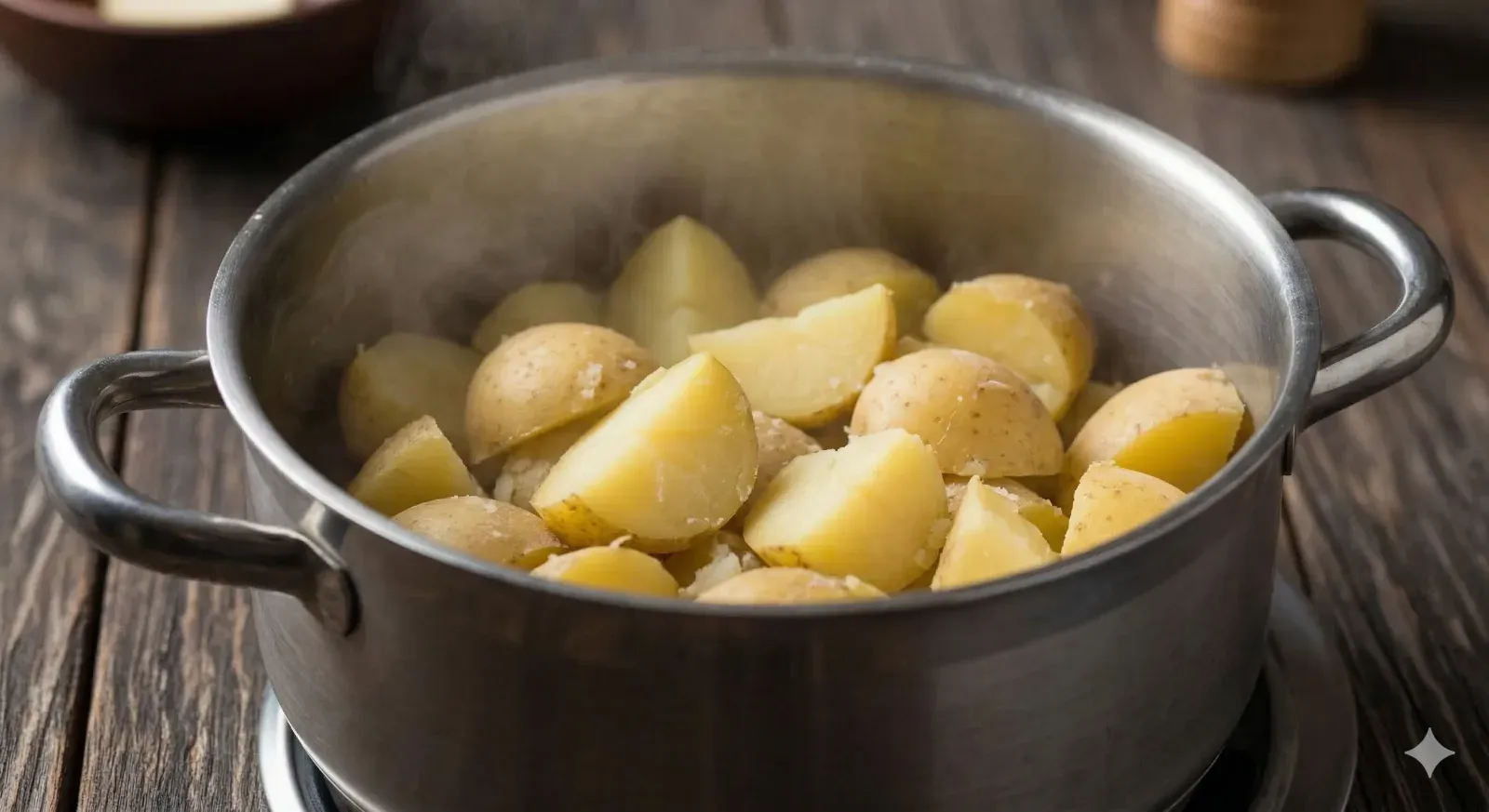
1 Place the quartered potatoes in a large pot. Cover them with cold, salted water by about two inches. Then bring the water to a boil over high heat. Once boiling, reduce to a steady simmer. Cook for 15 to 18 minutes until a fork slides through the potatoes easily. Do not overcook them, because waterlogged potatoes produce a thin, watery mash.
Drain the potatoes thoroughly in a colander. Then return them to the hot pot. Place the pot back on the stove over low heat for 2 minutes. This step drives off excess moisture. As a result, the potatoes will absorb the butter and milk more effectively. You will notice the surface of the potatoes turning slightly chalky. That is exactly what you want for rich, creamy colcannon.
Step 2: Prepare the Cabbage and Scallions
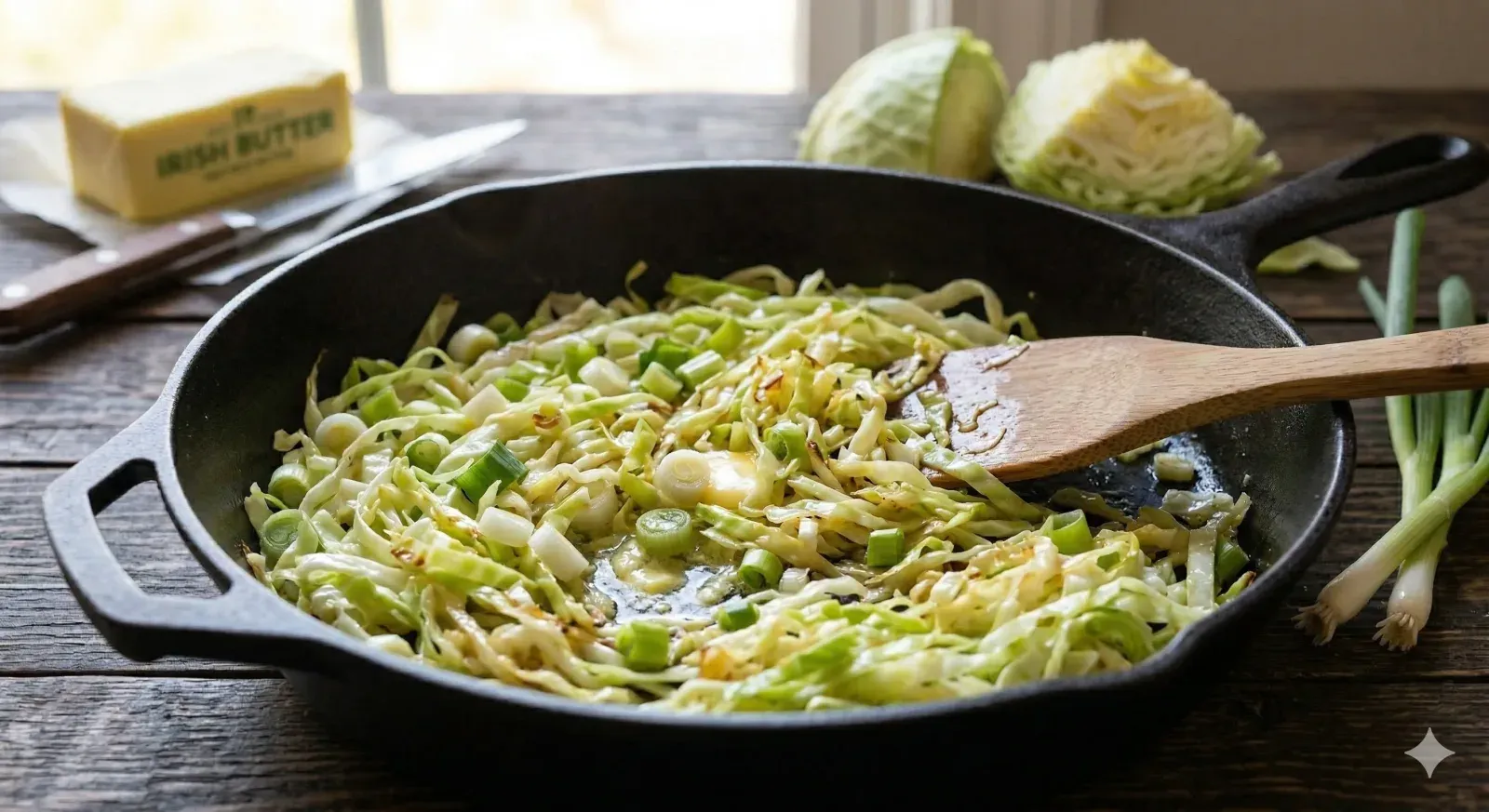
2 While the potatoes cook, prepare the greens. Melt 2 tablespoons of butter in a large skillet over medium heat. Add the thinly sliced cabbage and toss to coat it in the butter. Cook for 6 to 8 minutes, stirring occasionally. The cabbage should wilt and turn slightly golden at the edges. However, do not let it brown too much. You want tender, sweet cabbage rather than crispy leaves.
Add the sliced scallions during the last 2 minutes of cooking. Stir them into the cabbage until they soften and release their mild onion aroma. Season lightly with salt and pepper. Then remove the skillet from heat. If the cabbage seems very wet, press it gently with a spoon against the side of the pan. Squeeze out any excess liquid. Otherwise, that moisture will thin out your mashed potatoes.
Step 3: Mash the Potatoes
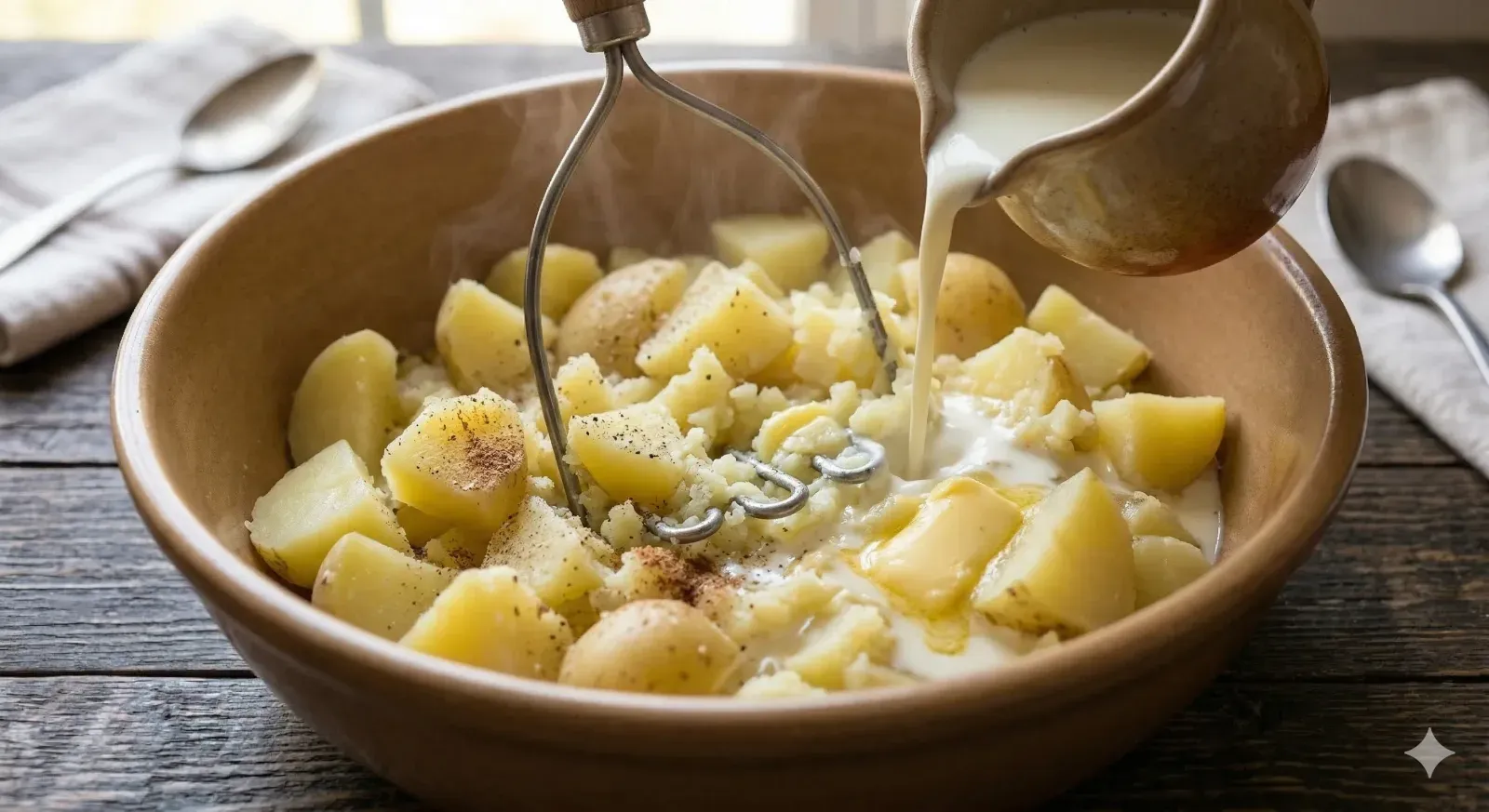
3 Heat the milk and heavy cream together in a small saucepan until just simmering. Meanwhile, mash the drained potatoes using a potato masher or ricer. Work quickly while the potatoes are still hot. Then add 3 tablespoons of butter and let it melt into the hot potatoes. Gradually pour in the warm milk mixture, mashing and stirring as you go.
Continue mashing until the potatoes are smooth and creamy. Do not use a food processor or immersion blender. These tools overwork the starch and turn potatoes gluey. Instead, a hand masher or ricer gives you the best texture. Season with salt, white pepper, and a pinch of nutmeg. The nutmeg is subtle but important. It adds a warm note that lifts the overall flavor of the colcannon.
Step 4: Combine and Serve
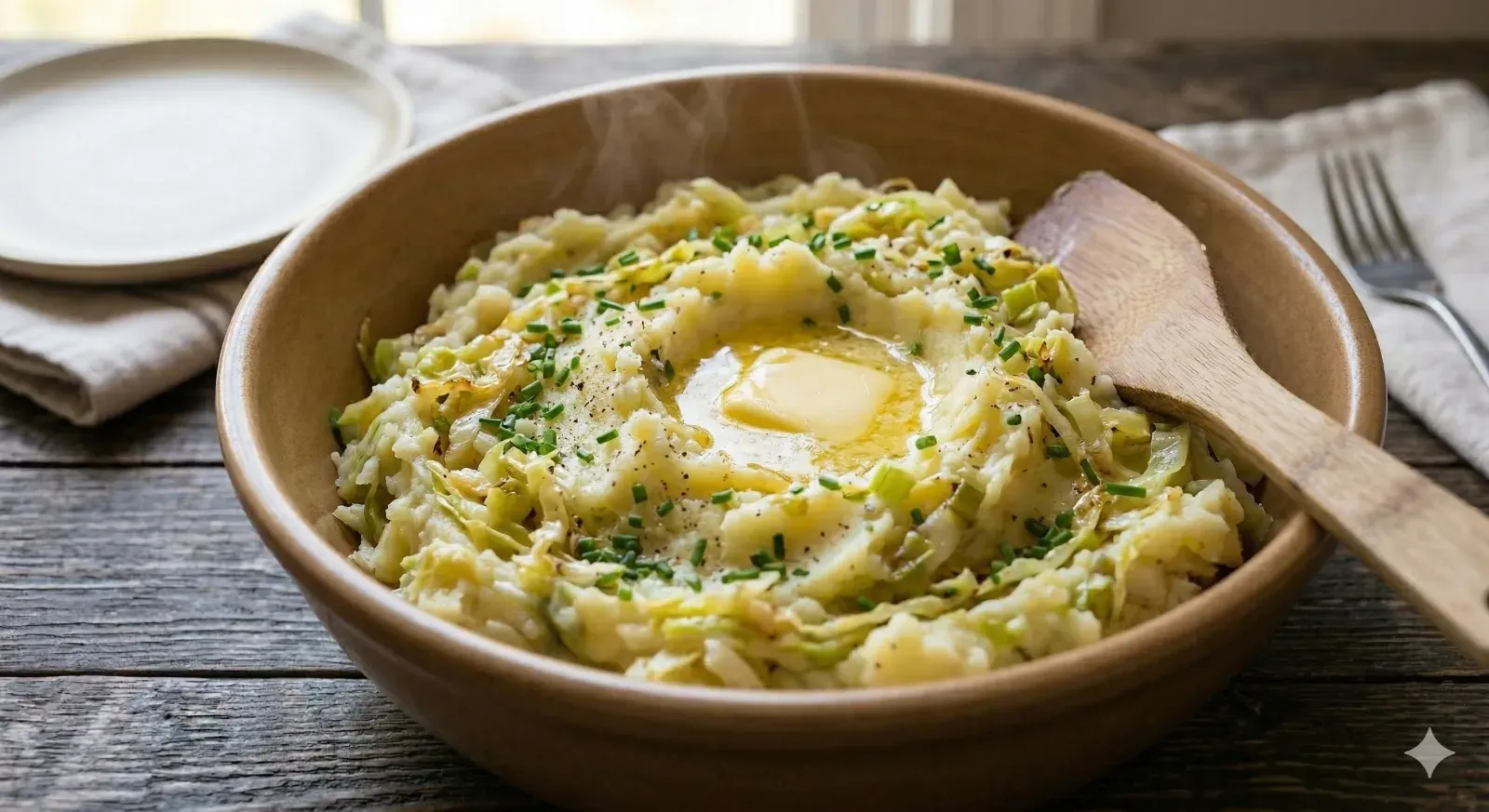
4 Fold the sauteed cabbage and scallions into the mashed potatoes. Use a large spatula or wooden spoon. Gently turn the mixture until the greens distribute evenly throughout the potato. Do not over-mix. You want visible ribbons of green woven through the creamy white potato. This visual contrast is part of what makes colcannon so appealing on the plate.
Transfer the colcannon to a warm serving bowl. Create a small well in the center with the back of a spoon. Place the remaining tablespoon of butter in the well. As the butter melts, it forms a golden pool that you can dip each forkful into. Garnish with fresh chives or an extra sprinkle of sliced scallions. Serve immediately while the colcannon is hot and steaming. In fact, this dish waits for no one.
Expert Tips for Perfect Colcannon
Steam Dry Your Potatoes
After draining the boiled potatoes, return them to the empty pot over low heat for 2 minutes. This step evaporates surface moisture. As a result, the potatoes absorb butter and cream more effectively. Skipping this step leads to a thinner, wetter mash that dilutes the richness. Professional chefs always steam-dry their potatoes before mashing. It is a small step with a big impact.
Do Not Skimp on Butter
Colcannon is not a dish for restraint. Butter is the soul of this recipe. Irish cooks traditionally use Kerrygold or another quality Irish butter with a high fat content. The butter adds richness, flavor, and a golden hue to the finished dish. Furthermore, that melting butter well in the center is not just decorative. It serves as a dipping sauce for every bite.
Slice the Cabbage Thinly
Thick chunks of cabbage create unpleasant pockets of crunch in an otherwise smooth dish. Instead, slice the cabbage into thin ribbons no wider than a quarter inch. This way, the cabbage wilts fully during sauteing. It also folds into the potato seamlessly. Consequently, every bite contains a balanced mix of potato and greens.
Use White Pepper Instead of Black
White pepper is traditional in colcannon for two reasons. First, it avoids black specks that disrupt the clean, pale appearance of the dish. Second, white pepper has a sharper, more immediate heat that blends well into creamy potatoes. Black pepper works in a pinch, but white pepper gives a more authentic result.
Colcannon vs Other Potato Dishes
Ireland and Britain have a rich tradition of potato dishes. While they may look similar, each one has a distinct identity. Here is how colcannon compares to its closest relatives.
| Dish | Key Ingredients | Origin | Key Differences |
|---|---|---|---|
| Colcannon | Mashed potatoes, cabbage or kale, scallions, butter | Ireland | Greens folded into the mash; butter well in center |
| Champ | Mashed potatoes, scallions, butter, milk | Northern Ireland | No cabbage or kale; only scallions mixed in |
| Bubble and Squeak | Leftover potatoes, cabbage, vegetables | England | Pan-fried as a patty or cake; uses leftover ingredients |
| Boxty | Grated raw potato, mashed potato, flour | Ireland | A potato pancake, not a mash; can be fried or boiled |
| Rumbledethumps | Mashed potatoes, cabbage, onion, cheese | Scotland | Baked with cheese on top; gratin-style finish |
Serving Suggestions
Colcannon traditionally serves as a generous side dish. In many Irish homes, however, it also stands alone as a simple supper. Its creamy, buttery richness pairs beautifully with hearty mains and fresh accompaniments alike.
The Perfect Accompaniments:
- Roasted lamb chops: The rich, slightly gamey flavor of lamb is a classic Irish pairing with colcannon. The creamy potatoes balance the meat’s intensity beautifully.
- Bacon and cabbage: This is the most traditional Irish combination. Boiled bacon with buttered cabbage alongside a mound of colcannon creates an iconic Irish plate.
- Grilled sausages (bangers): Pork sausages with a crispy skin pair wonderfully with the soft, buttery mash. A drizzle of onion gravy completes the meal.
- Pan-seared salmon: For a lighter option, crispy-skinned salmon adds protein and omega-3s. The mild fish does not overpower the delicate potato flavors.
- Beef stew: A thick Irish beef stew ladled next to colcannon is pure comfort. The stew’s gravy mixes into the potatoes for extra flavor.
Beverage Pairings:
- Irish stout (Guinness): The roasted, slightly bitter notes of a dry stout cut through the butter and cream. This is the most iconic pairing with any Irish meal.
- Irish red ale: A malty, smooth red ale has caramel notes that complement the sweet cabbage and buttery potatoes without overpowering them.
- White wine (Chardonnay): A lightly oaked Chardonnay mirrors the buttery richness of colcannon. Its acidity also helps cleanse the palate between bites.
- Hot Irish breakfast tea: For a non-alcoholic option, a strong cup of Barry’s or Lyons tea with milk is the quintessential Irish beverage. It pairs with everything on the table.
Storage and Reheating
Refrigerator: Store leftover colcannon in an airtight container for up to 3 days. The flavors actually develop overnight as the butter and greens meld into the potato. Press plastic wrap directly onto the surface to prevent a skin from forming.
Freezer: Colcannon freezes well for up to 2 months. Portion it into individual servings and seal in freezer bags. Press out all the air before sealing. Thaw overnight in the refrigerator before reheating.
Reheating: Reheat in a saucepan over medium-low heat. Add a splash of warm milk and a pat of butter. Stir frequently until heated through and creamy again. Alternatively, reheat in the oven at 350 degrees for 20 minutes, covered with foil. Avoid microwaving if possible, because uneven heating creates dry, rubbery patches. However, the microwave works fine for individual portions in a pinch.
Common Mistakes to Avoid
1. Using Cold Dairy
Adding cold milk or cream to hot potatoes drops the temperature instantly. As a result, the butter solidifies instead of melting in, and the mash becomes stiff and lumpy. Always warm your milk and cream before adding them. This single step makes the difference between average and exceptional colcannon.
2. Leaving the Cabbage Too Wet
Cabbage releases moisture as it cooks. If you fold soggy cabbage into the potatoes, the entire dish becomes watery. Instead, press the cooked cabbage against the side of the skillet to squeeze out excess liquid. Pat it with a paper towel if needed. Dry cabbage folds in cleanly and maintains the thick, creamy consistency.
3. Over-Mashing the Potatoes
Working the potatoes too aggressively releases excess starch. This turns them gummy and paste-like rather than fluffy. Stop mashing as soon as the lumps disappear. A few tiny lumps are far better than a gluey texture. Moreover, never use a food processor or immersion blender for mashed potatoes.
4. Skipping the Butter Well
The butter well in the center of colcannon is not optional. It is a defining feature of the dish. That melting pool of golden butter serves as a rich dipping sauce. Each forkful dragged through the butter becomes extra indulgent. Skipping it removes a key part of the colcannon experience. Therefore, always create that well and fill it generously.
Frequently Asked Questions
What is the difference between colcannon and champ?
Colcannon includes cabbage or kale folded into mashed potatoes along with scallions and butter. Champ, on the other hand, uses only scallions mixed into the mash. No cabbage or kale appears in champ. As a result, champ is lighter and simpler. Colcannon is heartier because the greens add texture and earthy flavor. Both dishes come from Ireland, but they serve slightly different purposes at the table.
Can I use kale instead of cabbage in colcannon?
Absolutely. Kale is a traditional alternative in many regions of Ireland. Curly kale works best because it wilts tender and has a mild flavor. Remove the tough center stems before chopping the leaves. Saute the kale in butter for 5 to 7 minutes until soft. Kale gives colcannon a slightly more peppery, earthy taste compared to the gentle sweetness of cabbage. Both versions are equally authentic.
What potatoes are best for colcannon?
Yukon Gold potatoes deliver the creamiest, most buttery colcannon. Their natural flavor complements the butter and cream perfectly. Russet potatoes are another solid choice, producing a fluffier, lighter mash. In Ireland, Rooster potatoes are the traditional pick. However, you should avoid waxy varieties like red potatoes. They release too much starch when overworked and produce a gluey texture.
Is colcannon served on Halloween?
Yes, colcannon holds a special place in Irish Halloween traditions. On Halloween night, families would hide small items inside the colcannon. A ring predicted marriage. Meanwhile, a coin promised wealth. Finally, a thimble foretold a single life. This custom traces back to the ancient Celtic festival of Samhain, when the boundary between the living and spirit worlds was believed to thin. Colcannon remains a centerpiece of Irish Halloween celebrations today.
Can I make colcannon ahead of time?
Yes, colcannon reheats beautifully and works well as a make-ahead dish. Prepare it fully, transfer to a buttered baking dish, and cover tightly with foil. Refrigerate for up to 24 hours. When ready, add a splash of warm milk and a pat of butter on top. Then bake at 350 degrees for 25 to 30 minutes until heated through. The texture stays creamy and the flavors even deepen overnight.
How do I keep colcannon from getting watery?
Three key steps prevent watery colcannon. First, drain the boiled potatoes thoroughly and steam-dry them in the pot for 2 minutes. Second, squeeze excess moisture from the cooked cabbage before folding it in. Third, always use warm milk and cream rather than cold. Cold dairy shocks the potato starch and creates a thin consistency. Follow these steps, and your colcannon will be thick and luxuriously creamy every time.
Variations and Adaptations
Bacon Colcannon:
Add 4 slices of crispy bacon or Irish rashers, crumbled into small pieces. Fold the bacon in along with the cabbage and scallions. The smoky, salty crunch of bacon adds an irresistible savory layer. This variation is especially popular in Northern Ireland. Render the bacon fat first, then use it to saute the cabbage for even more flavor.
Cheesy Colcannon:
Stir in half a cup of grated aged Irish cheddar after mashing the potatoes. The cheese melts into the hot mash and adds a sharp, tangy depth. For extra indulgence, transfer the colcannon to a baking dish. Sprinkle more cheese on top and broil for 3 to 4 minutes until golden and bubbling. This creates a gratin-style finish that is absolutely irresistible.
Vegan Colcannon:
Replace dairy butter with a high-quality vegan butter such as Miyoko’s. Use oat milk or coconut cream instead of dairy milk and cream. The result is surprisingly close to the original. Oat milk has a natural sweetness that complements the potatoes well. Make sure to choose a vegan butter with good flavor, because butter carries much of the dish’s character.
Colcannon Cakes:
Shape leftover colcannon into patties about 3 inches wide and half an inch thick. Coat lightly in flour. Pan-fry in butter over medium heat for 3 to 4 minutes per side until golden and crispy. These cakes make an excellent breakfast side alongside fried eggs. They also work beautifully as a starter or snack. In fact, many Irish cooks make extra colcannon specifically to have leftovers for cakes the next morning.
The Cultural Significance of Colcannon
Colcannon is deeply embedded in Irish identity. It represents the resourcefulness of Irish cooking during times when ingredients were limited. Potatoes, cabbage, and butter were staples that nearly every household could access. From these humble ingredients, Irish cooks created a dish of remarkable comfort and flavor. The recipe passed from mother to daughter through generations, each family adding their own subtle twist.
Beyond the kitchen, colcannon appears in Irish folk songs and literature. The famous song “Colcannon” describes the dish with deep affection. Its lyrics paint a picture of harvest time, when fresh potatoes and tender greens came together in celebration. Halloween traditions further cemented colcannon in Irish culture. The hidden charms turned a simple supper into a fortune-telling game that children eagerly anticipated each year.
During the Great Famine of the 1840s, potatoes took on an even deeper significance in Irish life. When the crops failed, the loss was devastating. After the famine, dishes like colcannon became symbols of survival and resilience. Serving colcannon at the family table carried emotional weight. It honored those who endured and celebrated the potato’s return. Today, colcannon connects modern Irish families to their ancestors. It reminds them that the simplest food, made with care, nourishes both body and spirit.
Conclusion
This colcannon recipe gives you a genuine taste of Ireland using ingredients you likely already have at home. The keys are straightforward: choose the right potatoes, cook the cabbage until just tender, and never hold back on butter. Follow the steps carefully, and you will produce a bowl of golden, creamy colcannon that rivals anything served in Dublin or Cork.
Whether you serve it alongside roasted lamb, pair it with crispy bacon, or enjoy it on its own with a pool of melting butter, colcannon satisfies deeply. It is honest Irish cooking at its very best. For more classic recipes from across the continent, browse our full collection of European dishes, including shepherd’s pie, goulash, and haggis.