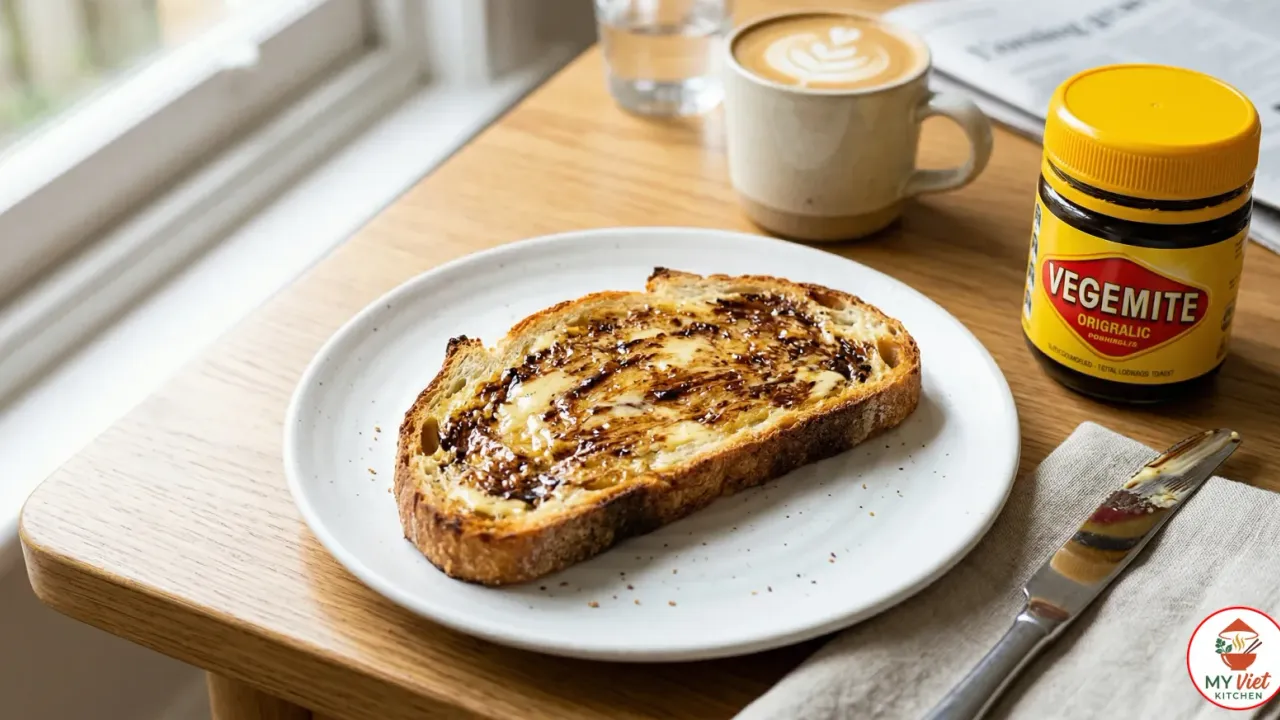
Vegemite on toast is the quintessential Australian breakfast, and mastering it is simpler than most people think. This thick, dark yeast extract spread delivers an intense hit of salty umami flavor that pairs beautifully with melted butter on crispy toast. For over 90 years, Australians have started their mornings with this iconic combination. However, first-timers often get it wrong by spreading the Vegemite too thickly. This guide shows you the authentic Australian technique for making perfect Vegemite on toast, along with creative variations and expert tips.
Prep Time: 2 minutes | Cook Time: 3 minutes | Servings: 2
Difficulty: Easy | Calories: ~190 per serving
What Makes Vegemite on Toast Special?
Vegemite on toast holds a place in Australian culture that few foods anywhere in the world can match. It is not just breakfast. It is a national symbol, a childhood memory, and a daily ritual for millions of Australians. The dish appears simple on the surface, yet it delivers a complexity of flavor that surprises first-time tasters. The deep, savory umami of the yeast extract meets the rich creaminess of melted butter, all carried on warm, crunchy toast. Every element matters, and the balance between them defines the experience.
What sets Vegemite apart from other spreads is its concentrated intensity. Made from leftover brewer’s yeast extract blended with vegetables and spices, Vegemite packs an enormous amount of flavor into a tiny amount of paste. A single teaspoon contains more umami depth than a tablespoon of soy sauce. This is precisely why the spreading technique matters so much. Too much Vegemite overwhelms the palate. Too little leaves you wondering what the fuss is about. The sweet spot, as every Australian learns from childhood, sits right in between.
A Brief History of Vegemite
Vegemite was invented in 1922 by Australian food chemist Cyril Callister. The Fred Walker Company commissioned Callister to create a spread from used brewer’s yeast, which was being discarded as waste by Australian breweries. After months of experimentation, Callister developed a thick, dark paste rich in B vitamins and bursting with savory flavor. The name “Vegemite” was chosen through a public competition.
Initially, Vegemite struggled to compete against British Marmite, which already dominated the market. However, aggressive marketing in the 1930s and widespread distribution to Australian soldiers during World War II cemented its place in the national diet. By the 1950s, Vegemite had become a household staple. According to The Conversation, the original Melbourne factory makes roughly 22 million jars every year. That works out to nearly one jar per person in a country of 26 million.

Choosing the Right Bread for Vegemite Toast
The bread you choose affects the final result more than most people realize. You want a bread that toasts well, holds up to butter, and complements the bold flavor of Vegemite without competing with it. Here are the best options to consider.
- White sandwich bread (classic choice): This is how most Australians grew up eating Vegemite toast. Standard white bread toasts evenly and has a neutral, slightly sweet flavor that balances the salty intensity of the spread. It also absorbs melted butter beautifully.
- Sourdough: The tangy flavor of sourdough pairs exceptionally well with Vegemite. The sturdy crust creates a satisfying crunch, while the open crumb holds pools of melted butter. This is the premium option for a more complex flavor experience.
- Wholemeal or multigrain: Nutty, dense, and hearty, wholemeal bread adds nutritional value and a more robust texture. The earthy grain flavor complements the yeasty notes in Vegemite rather than clashing with them.
- Crumpets (popular alternative): English-style crumpets with their spongy holes are a beloved alternative to toast. The holes trap melted butter and Vegemite in every bite, creating an incredibly indulgent experience.
Ingredients for Vegemite on Toast
Main Ingredients:
- 2 slices bread (sourdough, white, or wholemeal)
- 1 tablespoon salted butter, softened
- 1/2 to 1 teaspoon Vegemite
Optional Toppings:
- 1 ripe avocado, sliced
- 1 to 2 eggs (poached or scrambled)
- 2 slices cheddar or tasty cheese
- 1 ripe tomato, sliced
- Handful of baby spinach leaves
Pro tip: Always use salted butter rather than unsalted. The salt in the butter bridges the gap between the mild bread and the intense Vegemite, creating a more harmonious overall flavor. Additionally, make sure the butter is softened to room temperature so it spreads smoothly without tearing the hot toast.
Step-by-Step Instructions
Step 1: Toast the Bread
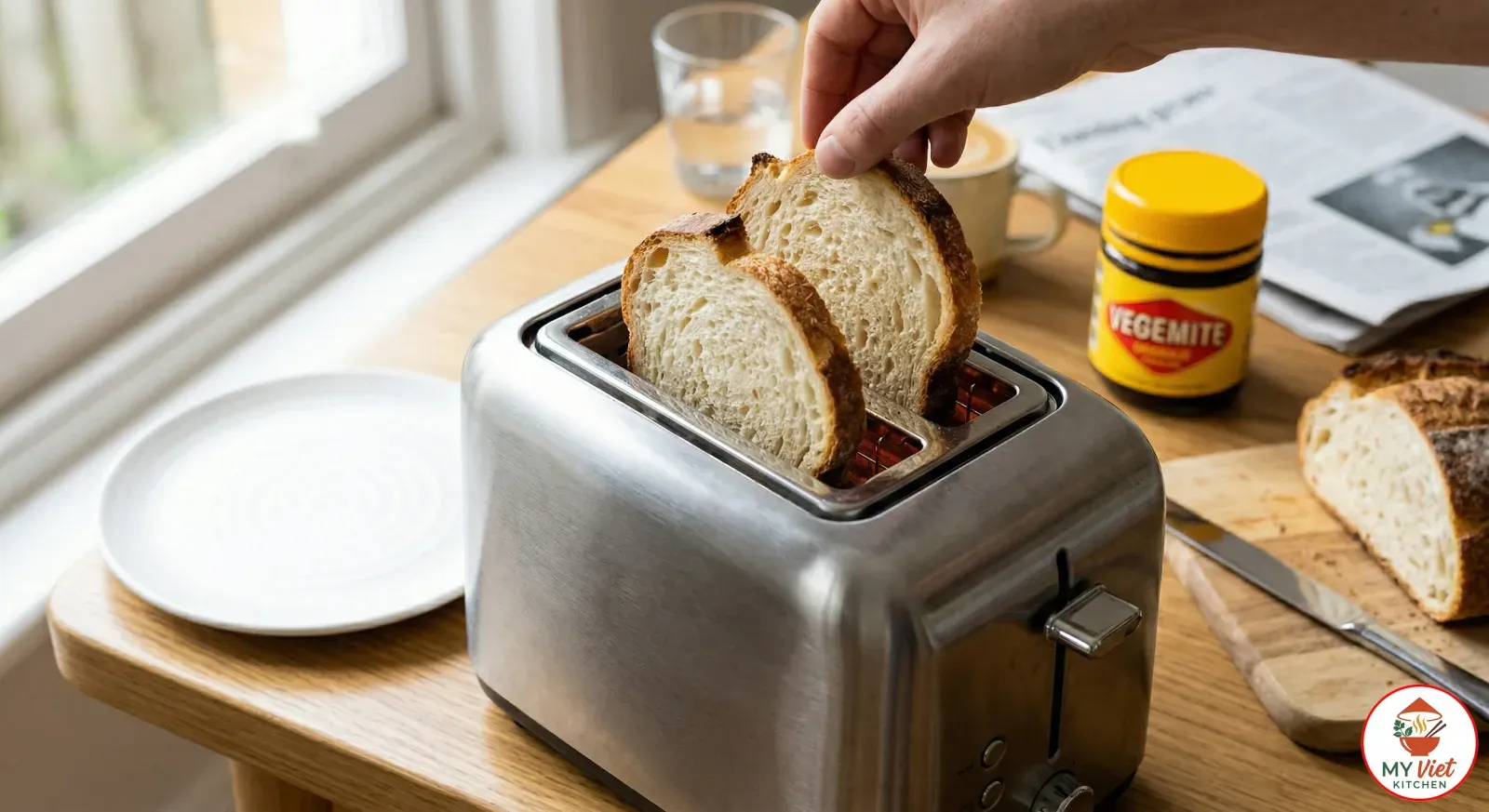
1 Place two slices of your chosen bread into a toaster or under a hot broiler. Toast until the surface turns golden brown on both sides. You want the bread crisp on the outside but still slightly soft and warm in the center. Avoid toasting too lightly, because pale toast does not provide enough structural crunch to stand up to the butter and Vegemite. Conversely, do not burn it, as charred bread adds a bitter note that clashes with the spread.
Step 2: Butter Generously While Hot
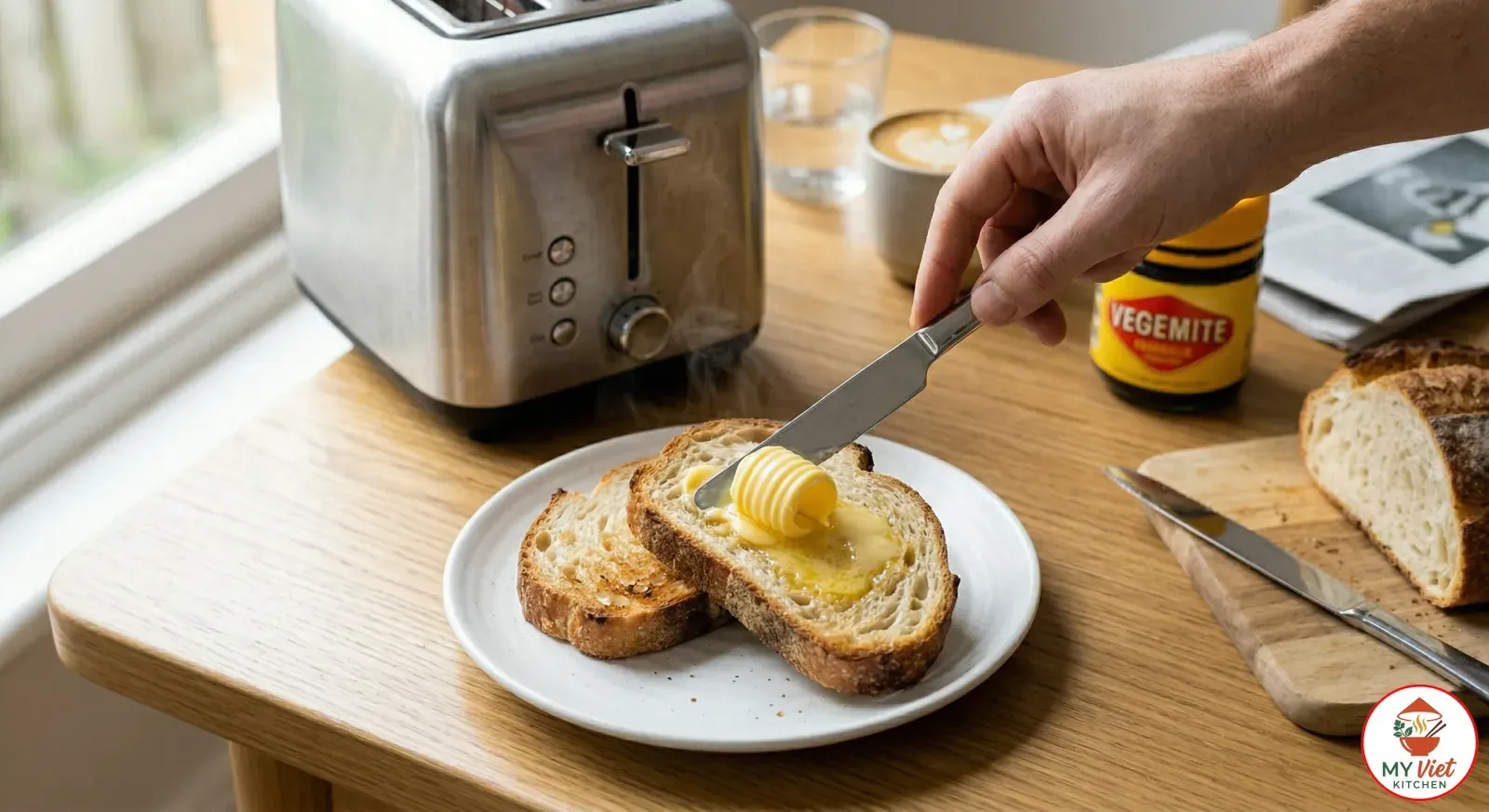
2 This step is crucial, so work quickly. As soon as the toast pops up, spread a generous layer of softened salted butter across each slice. The heat from the bread should melt the butter on contact, allowing it to soak into the surface and create a rich, creamy base layer. Do not be shy with the butter. In Australia, the standard ratio is roughly twice as much butter as Vegemite by volume. The butter serves as the flavor bridge that tames the intensity of the yeast extract while adding its own satisfying richness.
Step 3: Spread the Vegemite Thinly
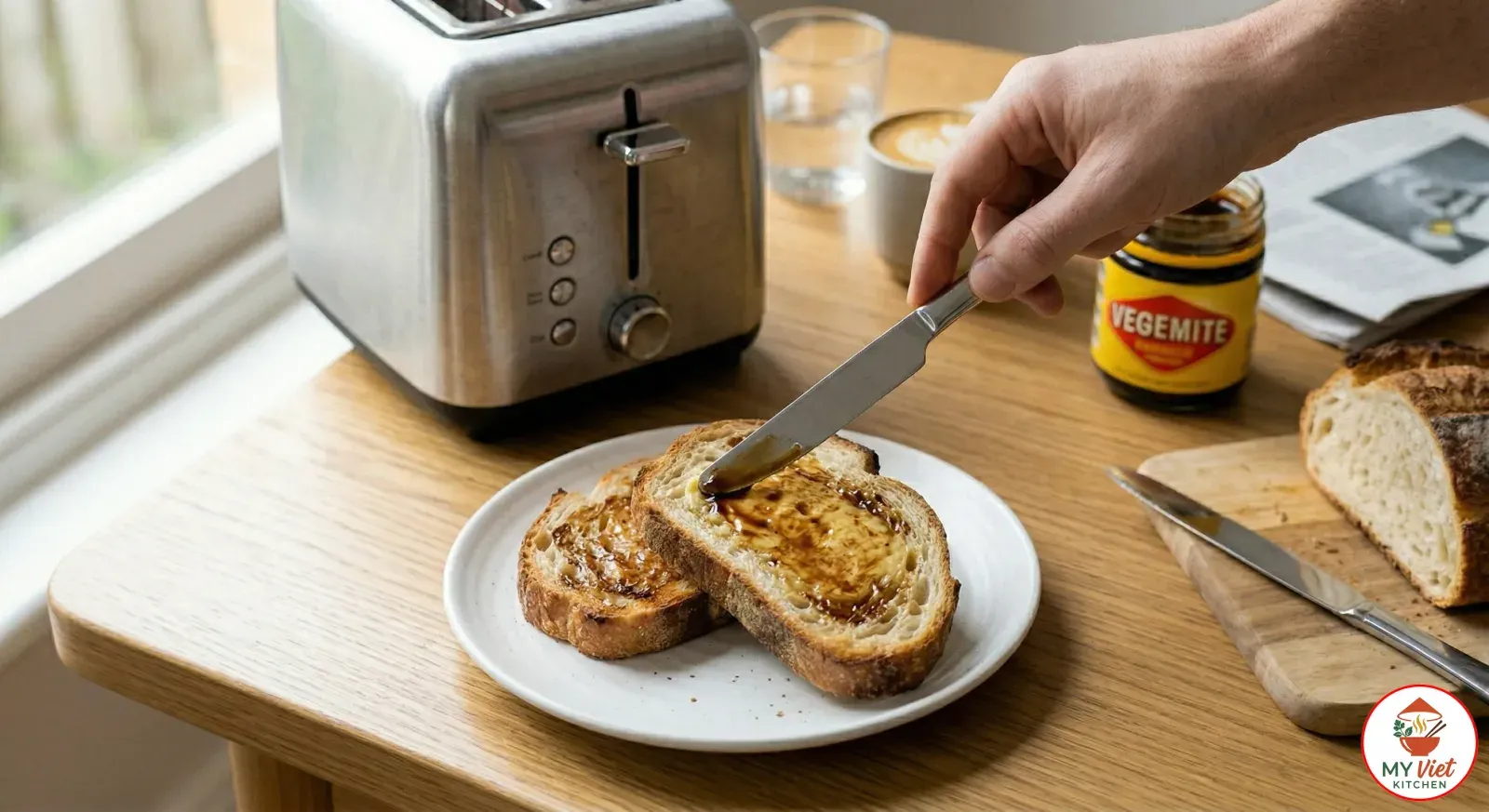
3 Now for the most important step. Scoop a small amount of Vegemite onto your knife, roughly 1/4 to 1/2 teaspoon per slice for beginners. Spread it across the buttered toast in a thin, even layer using the back of the knife. The Vegemite should tint the melted butter a light golden-brown color rather than sitting as a thick dark layer on top. Think of it as seasoning the toast, not coating it.
If you are new to Vegemite, start with less and add more on your next slice if you enjoy it. Experienced Vegemite lovers gradually build up their tolerance over years. There is no shame in a thin scrape. In fact, most Australians agree that subtlety is the mark of someone who truly understands the spread.
Step 4: Serve and Enjoy
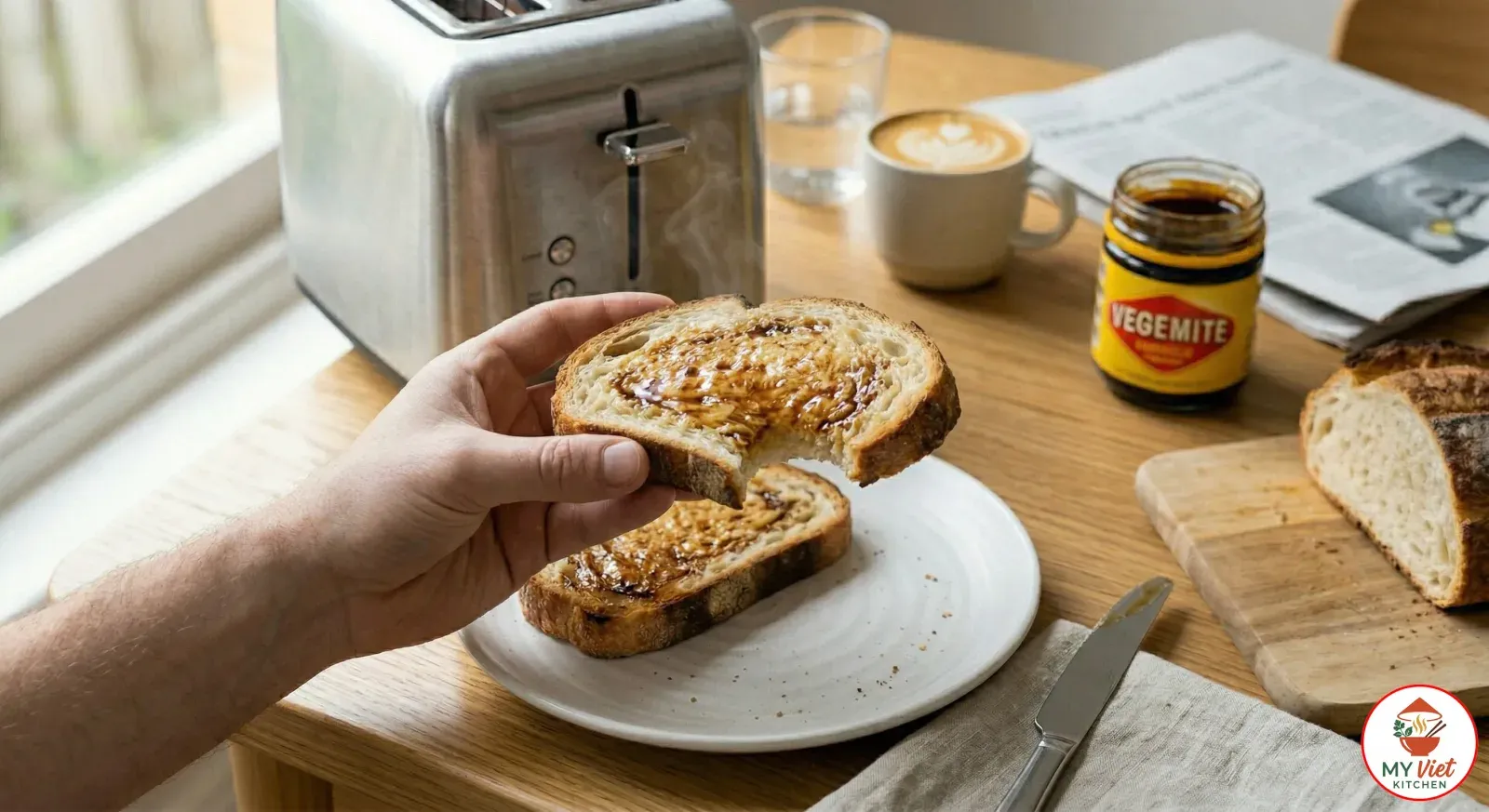
4 Cut the toast diagonally into triangles or into fingers, depending on your preference. Serve immediately while the toast is still warm and the butter remains melted. The combination should taste savory, slightly yeasty, and deeply satisfying. If desired, add optional toppings like sliced avocado, a poached egg, or melted cheese for a heartier meal. Pair it with a strong cup of tea or flat white coffee for the full Australian breakfast experience.
Expert Tips for Perfect Vegemite on Toast
The Golden Ratio: Butter to Vegemite
The most common mistake people make with Vegemite is using too much. The ideal ratio is approximately two parts butter to one part Vegemite by volume. This means if you use half a teaspoon of Vegemite, you should use at least a full teaspoon of butter. The butter does not just add flavor. It physically dilutes and distributes the Vegemite across your palate, preventing any single bite from being overwhelmingly salty. Think of butter as the canvas and Vegemite as the paint.
Speed Matters
Vegemite on toast is a dish that deteriorates rapidly. The toast loses its crunch within minutes of leaving the toaster. Cold toast with solidified butter and Vegemite is an entirely different, far less enjoyable experience. Therefore, prepare your butter and Vegemite jar before you start toasting. Have your knife ready. When the toast pops, butter and spread in one smooth motion. This urgency is something every Australian understands instinctively.
Mix Before You Spread
Some experienced Vegemite lovers use a technique where they mix the butter and Vegemite together on the knife before spreading. This creates a pre-blended mixture that distributes evenly across the toast with no risk of hitting a concentrated Vegemite pocket. Simply scoop the butter and Vegemite onto the knife together, mash them briefly, and then spread the combined mixture. This method works especially well for beginners who are still finding their preferred intensity level.
Vegemite vs. Marmite: Key Differences
Visitors to Australia often ask whether Vegemite is just Australian Marmite. While both are yeast extract spreads, they are distinctly different products with unique characteristics. The following comparison highlights the main differences between these two polarizing spreads.
| Feature | Vegemite (Australia) | Marmite (UK) |
|---|---|---|
| Origin | Melbourne, 1922 | Burton upon Trent, 1902 |
| Texture | Thick, firm paste | Smooth, syrupy |
| Color | Very dark brown, nearly black | Dark brown with reddish tint |
| Flavor | Intensely salty, malty, bitter | Milder, slightly sweet |
| Sodium per tsp | ~190mg | ~170mg |
| B vitamin content | Higher (fortified) | Moderate |
| Spreadability | Needs softening on hot toast | Spreads easily at room temperature |
Ultimately, the preference between Vegemite and Marmite comes down to what you grew up eating. Australians overwhelmingly choose Vegemite, while the British remain loyal to Marmite. Both deliver concentrated umami flavor, but Vegemite’s thicker texture and bolder taste make it the better choice for toast specifically, as it holds its position on the bread rather than sliding off.
Serving Suggestions
While Vegemite on toast is perfect on its own, Australians have developed dozens of ways to elevate this simple breakfast into a more substantial meal. Here are the most popular serving options that stay true to the Australian spirit.
The Perfect Accompaniments:
- Sliced avocado: Creamy avocado on top of Vegemite toast is a modern Australian cafe classic. The mild, buttery avocado complements the salty spread perfectly.
- Poached or scrambled eggs: Adding eggs transforms Vegemite toast into a complete protein-rich breakfast. The runny yolk of a poached egg blends beautifully with the melted butter and Vegemite.
- Melted cheese: Place a slice of cheddar or tasty cheese on your Vegemite toast and pop it under the broiler until bubbly. This combination is a beloved Australian after-school snack.
- Sliced tomato: Fresh tomato slices add juicy sweetness and acidity that balance the salty Vegemite. Finish with a crack of black pepper for the full effect.
Beverage Pairings:
- Flat white coffee: Australia’s signature coffee drink. The creamy milk offsets the saltiness of the Vegemite.
- Strong black tea with milk: The traditional Australian breakfast beverage. Tannins in the tea complement the malty yeast flavor.
- Fresh orange juice: The bright citrus acidity provides a refreshing contrast to the savory toast.
- Milo: This chocolate malt drink is another Australian icon and pairs nostalgically with Vegemite toast for a true Australian breakfast.
Storage and Shelf Life
Unopened jar: Vegemite has an incredibly long shelf life and can last for years unopened in a cool, dry pantry. The high salt content and low moisture act as natural preservatives.
Opened jar: Once opened, Vegemite lasts for up to 12 months at room temperature. There is no need to refrigerate it, although some people prefer to. Store it in the pantry with the lid tightly sealed to prevent drying out.
Prepared toast: Vegemite toast should be eaten immediately. It does not store or reheat well because the toast loses its crunch and the butter solidifies. Always prepare it fresh for the best experience.
Common Mistakes to Avoid
1. Using Too Much Vegemite
This is the number one reason people say they dislike Vegemite. Spreading it like peanut butter or Nutella is a guaranteed way to ruin the experience. Vegemite is a concentrated seasoning, not a filling. A thin scrape is all you need. If you can see a thick, opaque dark layer on your toast, you have used far too much. Scrape some off and try again. Even most Australians use only a modest amount.
2. Skipping the Butter
Eating Vegemite on dry toast without butter is harsh and unpleasant. The butter is not optional. It is an essential component that mellows the saltiness, adds richness, and creates the smooth texture that makes every bite enjoyable. Without butter, the Vegemite sits as a concentrated salty paste against dry bread. Always butter first, then add Vegemite on top.
3. Letting the Toast Go Cold
Vegemite on cold toast is a completely different experience from Vegemite on hot toast, and not in a good way. When the toast cools, the butter solidifies into a waxy layer and the Vegemite becomes harder to taste. The magic of this dish depends entirely on temperature. Hot toast melts the butter, which in turn distributes the Vegemite evenly across your palate. Prepare and eat immediately for the best result.
4. Judging It After One Bad Experience
Many international visitors try Vegemite once, use too much, skip the butter, and declare it inedible forever. Give it a fair chance by following the proper technique described in this recipe. Start thin, butter generously, and eat it warm. Most people who dislike Vegemite simply had a bad first introduction. With the correct approach, the flavor is savory, complex, and genuinely addictive.
Frequently Asked Questions
What does Vegemite taste like?
Vegemite has a concentrated savory, salty, and slightly bitter flavor with deep umami notes. It tastes yeasty and malty, similar in intensity to soy sauce or beef bouillon but in a thick, spreadable form. The flavor is overwhelming when eaten alone, which is why Australians always pair it with plenty of butter on toast. Together, they create a balanced, addictive combination that millions enjoy every morning.
How much Vegemite should you put on toast?
For beginners, start with a very thin scrape of roughly 1/4 teaspoon per slice, spread over a generous layer of butter. The Vegemite should tint the butter a light brown color rather than coat the bread thickly. Experienced fans typically use about 1/2 to 1 teaspoon per slice. The golden rule is to always use more butter than Vegemite by volume.
Is Vegemite the same as Marmite?
No, Vegemite and Marmite are different products made by different companies. Both are yeast extract spreads, but Vegemite is Australian, thicker in consistency, and stronger in flavor. British Marmite is slightly sweeter, more syrupy, and milder. New Zealand Marmite is a third distinct product altogether. Each country passionately prefers its own version of the spread.
Is Vegemite healthy?
Vegemite is a good source of B vitamins, including thiamine, riboflavin, niacin, and folate. A single teaspoon provides roughly 25 percent of the daily recommended intake of vitamin B1. It is low in calories, fat-free, and sugar-free. However, it contains about 190 milligrams of sodium per teaspoon, so people watching their salt intake should use it in moderation.
Can you cook with Vegemite?
Absolutely. Vegemite is a versatile cooking ingredient beyond just toast. Australians stir it into stews, gravies, and pasta sauces for deep umami flavor. It works beautifully as a glaze for roasted vegetables when mixed with butter. You can also dissolve a teaspoon in hot water for a quick savory broth. In many ways, it functions like miso paste or concentrated soy sauce in the kitchen.
Variations and Adaptations
Vegemite and Cheese Toast:
This is arguably the most popular Vegemite variation in Australia. Spread butter and Vegemite on your toast as usual, then lay a slice of cheddar cheese on top. Place the toast under a hot broiler for 1 to 2 minutes until the cheese melts and begins to bubble. The salty Vegemite and sharp cheese create an irresistible savory combination. Many Australians consider this comfort food at its finest.
Vegemite Avocado Toast:
Australia’s two greatest toast toppings come together in this modern classic. Prepare your Vegemite toast as described in this recipe, then top with sliced or smashed ripe avocado. The creamy, mild avocado tames the Vegemite’s intensity while adding healthy fats. Finish with a squeeze of lemon juice, a pinch of chili flakes, and a crack of black pepper. This version has become a staple at Australian cafes.
Vegemite Scrolls:
For a different format entirely, try Vegemite and cheese scrolls. Roll out puff pastry, spread with butter and Vegemite, sprinkle generously with grated cheddar, then roll into a log and slice into rounds. Bake at 400 degrees Fahrenheit for 15 minutes until golden and puffed. These scrolls are a beloved Australian lunchbox item and make excellent party snacks. If you enjoy baking with savory ingredients, explore our European dishes for more inspiration.
Vegemite Soldiers with Soft-Boiled Egg:
Cut your Vegemite toast into thin strips, known as “soldiers” in Australia and the UK. Serve them alongside a soft-boiled egg in an egg cup. Dip each Vegemite soldier into the runny yolk for a combination that is greater than the sum of its parts. The rich yolk, salty Vegemite, and buttery toast create a deeply satisfying breakfast that Australian children have loved for generations.
The Cultural Significance of Vegemite
Vegemite is more than a breakfast spread in Australia. It is a genuine cultural institution. The iconic yellow-lidded jar appears in nearly every Australian kitchen, from suburban homes to remote outback stations. It features in art, music, and national conversation. The 1959 jingle “Happy Little Vegemites” became one of the longest-running advertising campaigns in Australian history, and most Australians over 30 can still sing it from memory.
For Australians living abroad, Vegemite often represents a tangible connection to home. Expats frequently ask visiting family members to bring jars of it, and Australian specialty shops worldwide stock it as their top-selling item. The spread carries an emotional weight that goes beyond its taste. It represents childhood mornings, school lunches, and a shared identity that unites Australians across generations and geography.
Interestingly, Vegemite also serves as a cultural litmus test. Australians take quiet pride in watching international visitors try it for the first time. The reactions range from delighted surprise to dramatic disgust. Either way, it makes for memorable moments. Learning to enjoy Vegemite on toast, many Australians would argue, is the first step toward truly understanding Australian culture. If you enjoy exploring iconic dishes from around the world, check out our collection of Asian dishes and European dishes for more global recipes.
Conclusion
Making great Vegemite on toast comes down to three fundamentals: toast it golden, butter it generously, and spread the Vegemite thinly. This simple formula has sustained millions of Australian breakfasts for over a century, and it works just as well in any kitchen around the world. Whether you are an Australian missing a taste of home or a curious food lover trying Vegemite for the first time, this recipe gives you the authentic technique that makes all the difference.
Once you master the basic version, experiment with the variations above. Vegemite and cheese toast is an absolute must-try, and Vegemite avocado toast brings this century-old spread into the modern era. Above all, approach Vegemite with an open mind and a light hand. Start thin, taste, and adjust. You might just discover your new favorite breakfast. Explore more of our world recipes for your next culinary adventure.