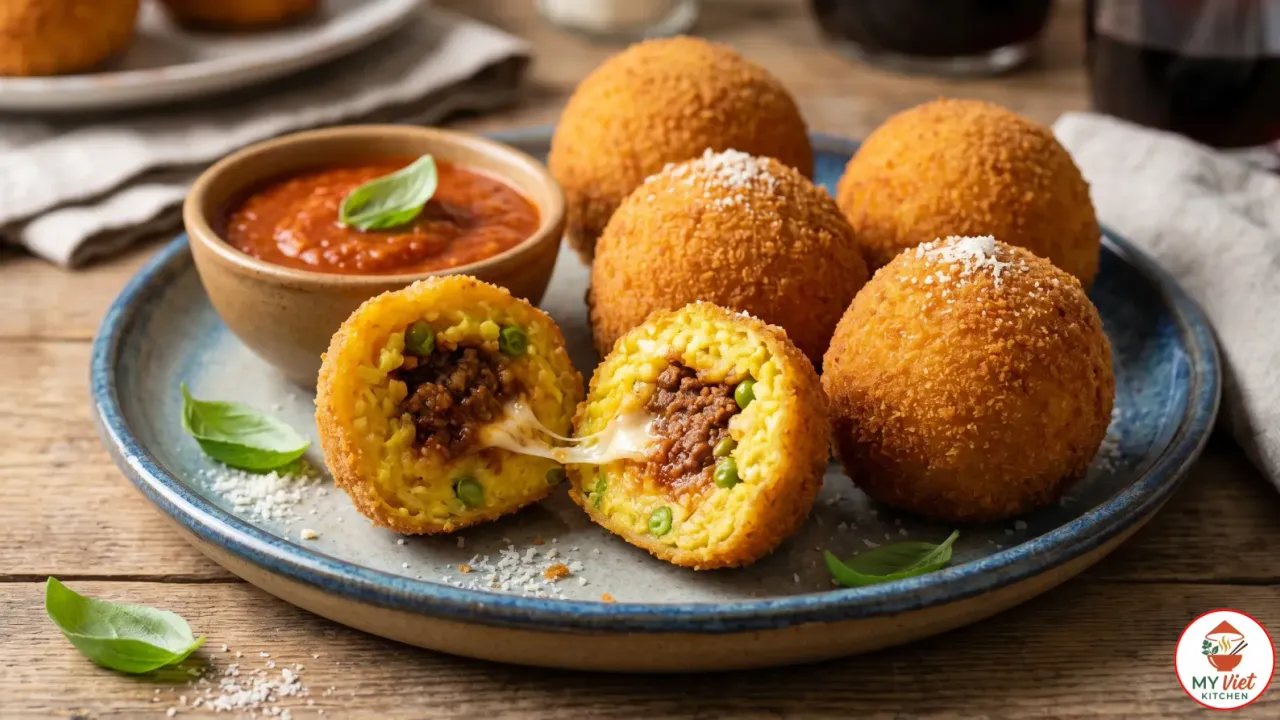
Arancini are one of the most iconic dishes in Italian street food, and one bite reveals exactly why. These golden, crispy deep-fried rice balls hide a molten center of ragù, melted mozzarella, and tender peas beneath a shattering breadcrumb crust. Born on the island of Sicily, arancini take their name from the Italian word for “little oranges” because of their round shape and golden color. This step-by-step guide shows you how to make authentic Sicilian arancini at home with a saffron-infused risotto base and a rich meat filling.
Prep Time: 45 minutes | Cook Time: 30 minutes | Servings: 12 arancini
Difficulty: Medium | Calories: ~320 per serving
What Makes Arancini Special?
Arancini hold a unique place in Italian cuisine because they transform leftover risotto into something extraordinary. In most kitchens, day-old risotto goes to waste. However, Sicilian cooks discovered centuries ago that cold risotto becomes firm enough to shape, stuff, and fry into perfect golden spheres. The result is a dish where texture and flavor work together in a way that few appetizers can match. A shattering breadcrumb shell gives way to creamy saffron rice, which yields to a warm pocket of meat sauce and stretchy melted cheese.
The origins of arancini trace back to 10th-century Sicily during Arab rule. Rice was introduced to the island by Arab traders, and the tradition of coating food in breadcrumbs before frying arrived with them as well. Over time, Sicilians made the recipe their own by adding local ingredients like ragù, pecorino, and saffron. Today, arancini are sold at bakeries, street stalls, and cafes across Sicily. In fact, they are considered a staple snack rather than a formal dish. Most Sicilians eat arancini standing up, grabbed from a glass case at the local rosticceria.
What separates great arancini from ordinary ones comes down to three elements. First, the risotto must be properly made with short-grain rice so it has enough starch to hold its shape. Second, the filling needs to be intensely flavored because it lives inside a thick wall of rice. Third, the frying temperature must be precise. Too hot and the outside burns before the center warms through. Too cool and the arancini absorb oil and turn greasy. Master these three fundamentals, and your arancini will rival any Sicilian street vendor.

Choosing the Right Rice for Arancini
Rice is the foundation of every arancini, so your choice of grain determines whether the dish succeeds or fails. You need a short-grain Italian rice with a high amylopectin starch content. This starch turns sticky as it cooks and gelatinizes as it cools, giving the risotto enough structure to hold a ball shape without crumbling. Long-grain varieties simply lack this binding ability.
- Arborio (best choice): The most widely available short-grain Italian rice. Arborio produces a creamy, starchy risotto that firms up beautifully when chilled. Its plump grains absorb flavor well and create the classic arancini texture that is tender inside with distinct grain structure. You can find Arborio at virtually any grocery store.
- Carnaroli: Often called the “king of risotto rice,” Carnaroli has even higher starch content than Arborio and a firmer grain that resists overcooking. It produces arancini with a slightly more elegant texture. However, it costs more and can be harder to find outside specialty stores.
- Vialone Nano: This smaller grain is traditional in the Veneto region and absorbs liquid quickly. It works for arancini but produces a softer, less structured ball. Use it if Arborio and Carnaroli are unavailable.
- Basmati or jasmine (not recommended): These long-grain varieties lack sufficient amylopectin starch. The risotto will not bind together and your arancini will fall apart during shaping or frying. Do not substitute them regardless of convenience.
If you enjoy working with risotto rice, try our risotto alla milanese recipe, which uses the same saffron-infused Arborio base without the frying step.
Ingredients for Arancini
Saffron Risotto:
- 2 cups Arborio rice
- 4 cups chicken broth, warmed
- 1 cup dry white wine
- 1 small yellow onion, finely diced
- 2 cloves garlic, minced
- 1/2 cup grated Parmigiano-Reggiano
- 2 tablespoons butter
- 1 tablespoon olive oil
- Pinch of saffron threads
- Salt and black pepper to taste
Ragù Filling:
- 1/2 pound ground beef
- 1/2 cup tomato passata
- 1/4 cup frozen peas
- 1/4 cup diced carrot
- 1/4 cup diced celery
- 1 tablespoon olive oil
- Salt and black pepper to taste
Breading and Frying:
- 4 ounces fresh mozzarella, cut into 12 small cubes
- 2 cups all-purpose flour
- 4 large eggs, beaten
- 3 cups fine dried breadcrumbs
- Vegetable oil for deep frying
Pro tip: The risotto must be completely cold and firm before you start shaping. Spread it on a baking sheet in a thin layer and refrigerate for at least 2 hours, or ideally overnight. Warm risotto is impossible to shape and will fall apart the moment it hits the oil. Making the risotto a day ahead actually improves the final arancini because the starch fully sets.
Step-by-Step Instructions
Step 1: Make the Saffron Risotto
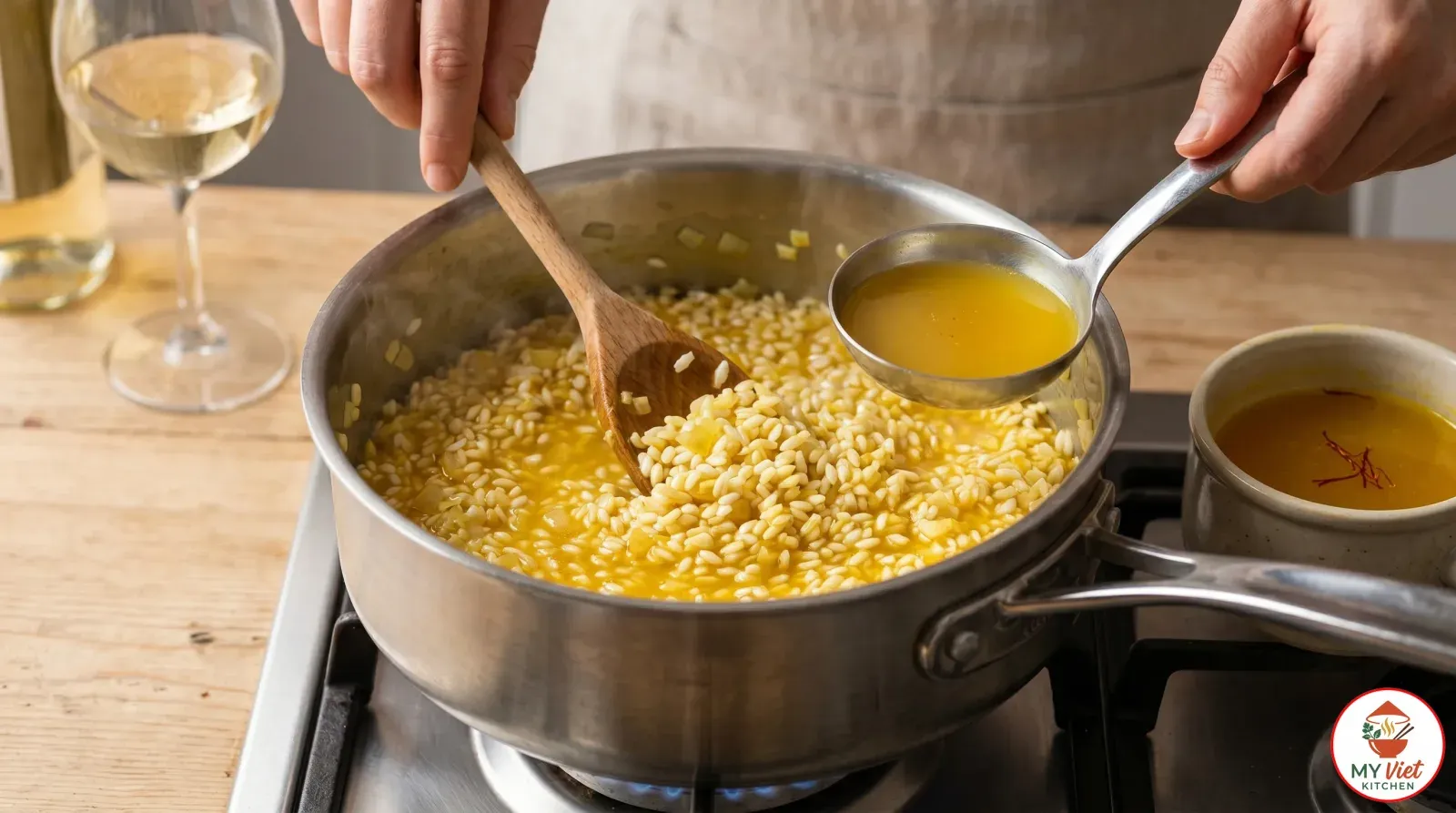
1 Heat the olive oil and 1 tablespoon of butter in a heavy-bottomed saucepan over medium heat. Add the diced onion and cook for 5 minutes until it turns translucent and soft. Stir in the garlic and cook for 30 seconds until fragrant. Add the Arborio rice and toast it, stirring constantly, for 2 minutes. The grains should become slightly translucent at the edges.
Pour in the white wine and stir until the rice absorbs it completely. Meanwhile, dissolve the saffron threads in the warm chicken broth. Then begin adding the saffron broth one ladle at a time, stirring frequently. Wait until each addition is nearly absorbed before adding the next. This process takes about 18 minutes. The finished risotto should be al dente and slightly thicker than you would serve for eating, because it needs to firm up when cooled. Remove from heat and stir in the remaining tablespoon of butter and the Parmigiano-Reggiano. Season with salt and pepper. Spread the risotto in a thin, even layer on a rimmed baking sheet and let it cool to room temperature. Then cover with plastic wrap and refrigerate for at least 2 hours.
Step 2: Prepare the Ragù Filling
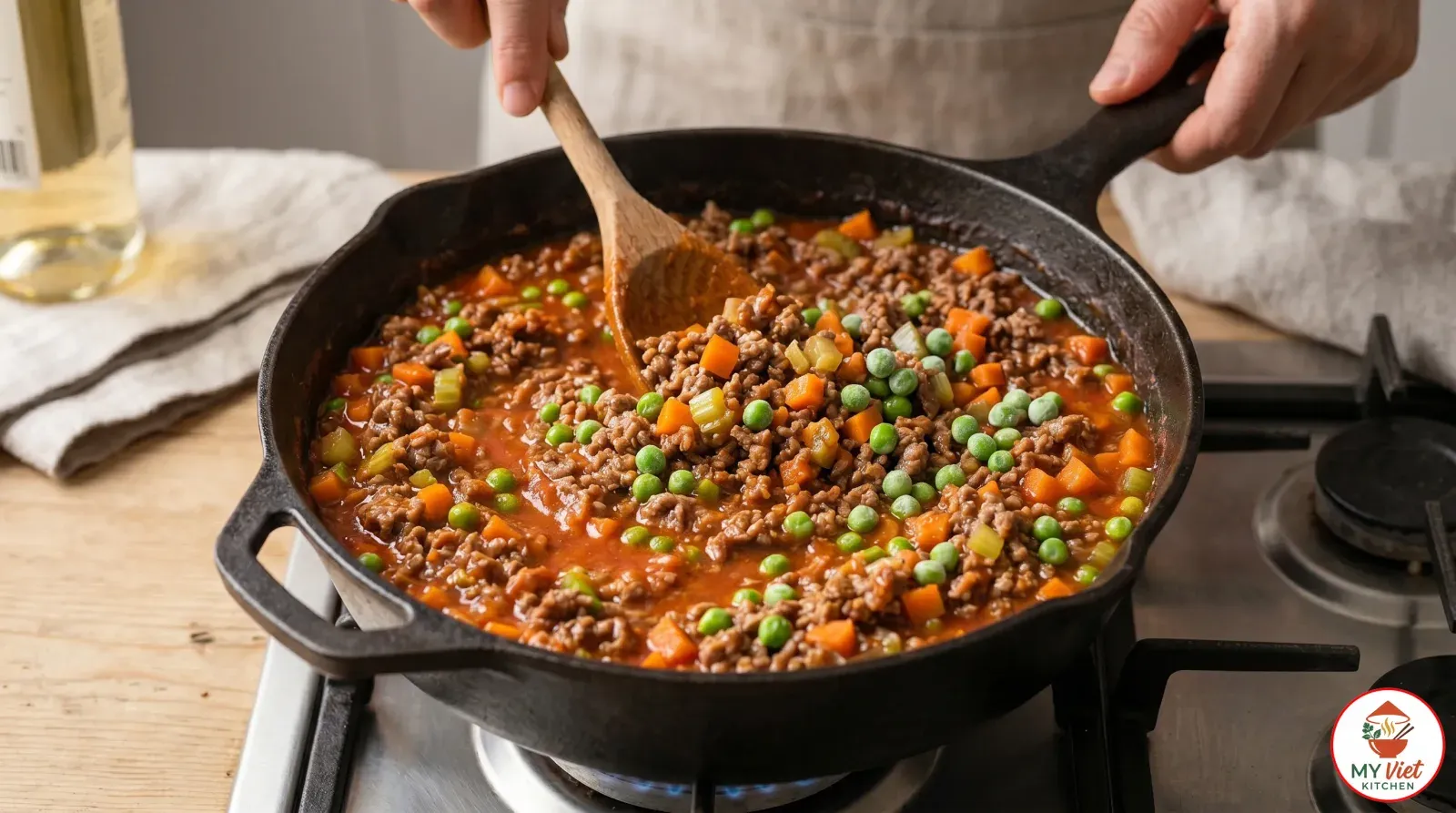
2 While the risotto chills, prepare the ragù filling. Heat a tablespoon of olive oil in a skillet over medium-high heat. Add the ground beef and break it into fine crumbles with a wooden spoon. Cook for 5 minutes until the meat browns evenly. Then add the diced carrot and celery with a pinch of salt. Stir and cook for another 5 minutes until the vegetables soften.
Pour in the tomato passata and stir to combine. Add the frozen peas and reduce the heat to medium-low. Let the ragù simmer gently for 15 minutes, stirring occasionally, until the sauce thickens and most of the liquid evaporates. The filling should be thick enough to hold its shape on a spoon, because a wet filling will make the arancini soggy from the inside. Season with salt and pepper, then transfer to a bowl and let it cool completely. You can refrigerate this alongside the risotto if you are preparing ahead.
Step 3: Shape the Arancini
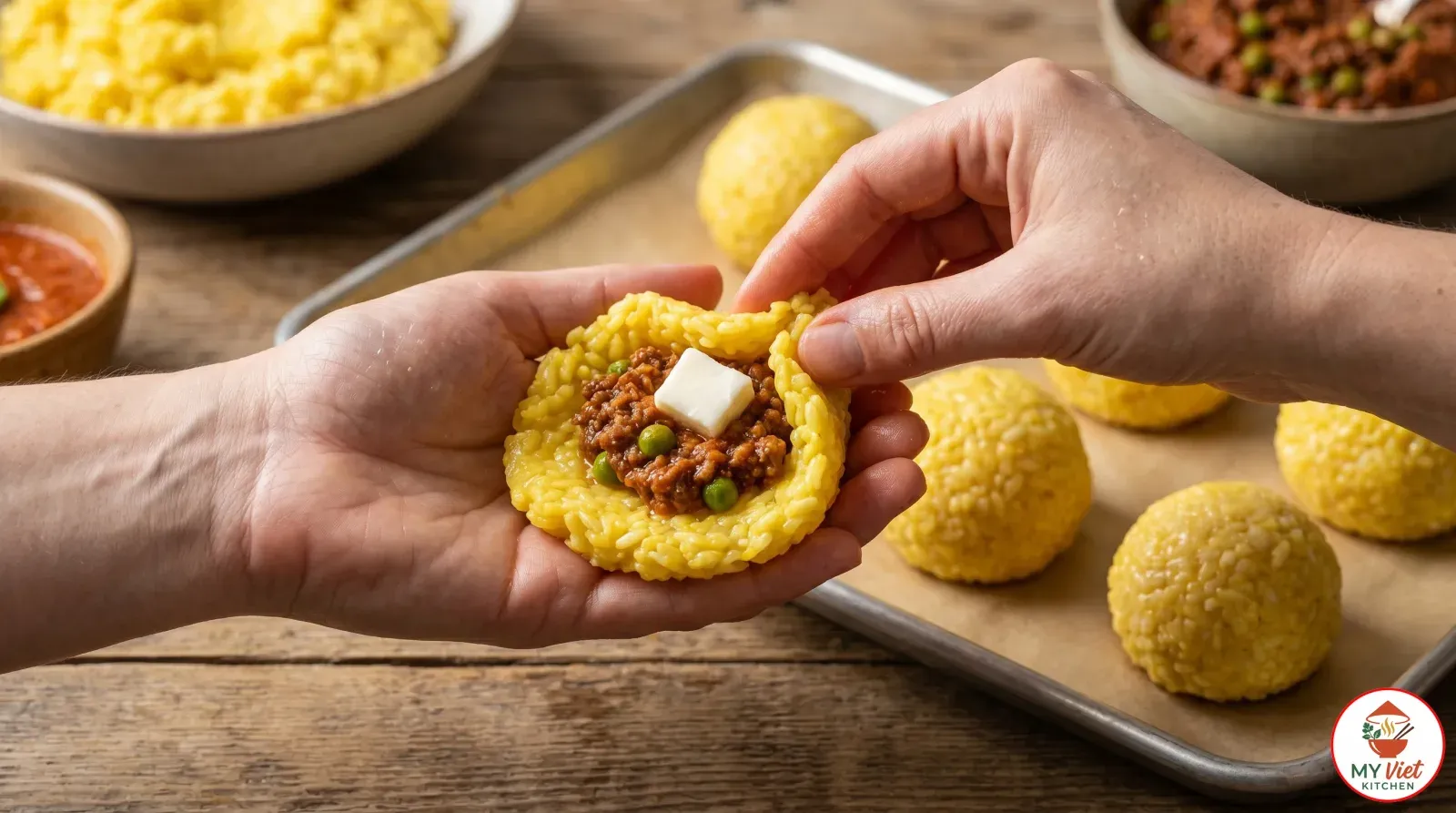
3 Wet your hands lightly with water to prevent sticking. Take about 1/3 cup of the chilled risotto and place it in the palm of your hand. Flatten it into a disc roughly 4 inches across. Place a generous spoonful of the ragù filling in the center, followed by one cube of fresh mozzarella. Now carefully fold the edges of the rice over the filling, pressing gently to seal everything inside.
Roll the ball between your palms until it forms a smooth, compact sphere about the size of a large orange. If you prefer the Catania style, shape it into a pointed cone instead. Make sure there are no cracks or thin spots in the rice layer, because any opening will cause the arancini to burst during frying. Place each shaped arancini on a parchment-lined baking tray. Repeat until you have used all the risotto. This recipe yields approximately 12 arancini.
Step 4: Bread the Arancini
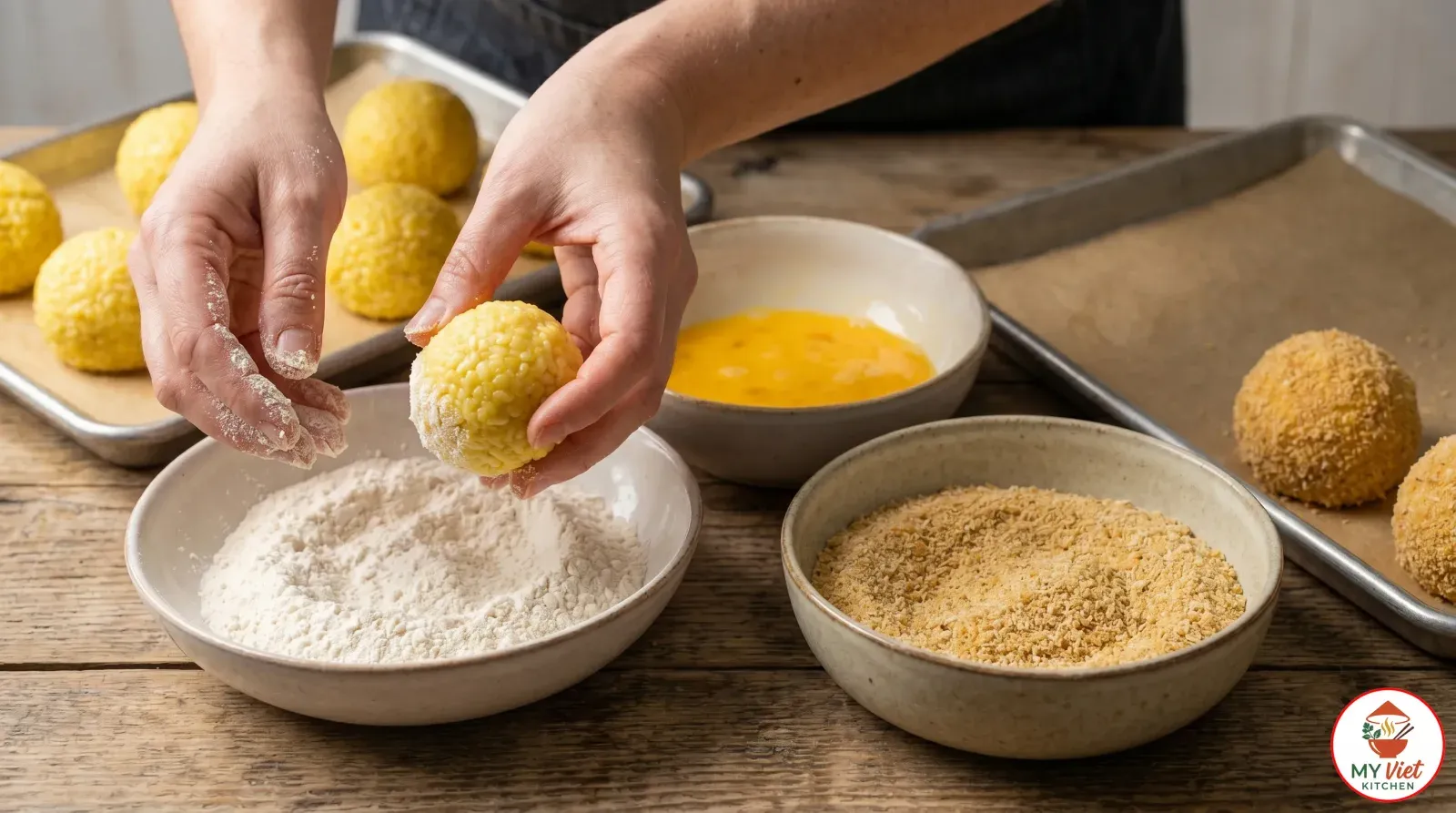
4 Set up a three-station breading assembly. Place the flour in one shallow bowl, the beaten eggs in a second bowl, and the dried breadcrumbs in a third bowl. Working with one arancini at a time, roll it in the flour until evenly coated, then shake off any excess. Dip it into the beaten egg, turning to coat completely and letting any extra drip off. Finally, roll it through the breadcrumbs, pressing gently so the crumbs adhere in an even layer.
Place the breaded arancini back on the parchment-lined tray. For the crispiest possible crust, refrigerate the breaded arancini for 30 minutes before frying. This firms up the coating and helps it set properly when it hits the hot oil. A chilled coating is far less likely to crack or fall off during cooking.
Step 5: Deep-Fry Until Golden
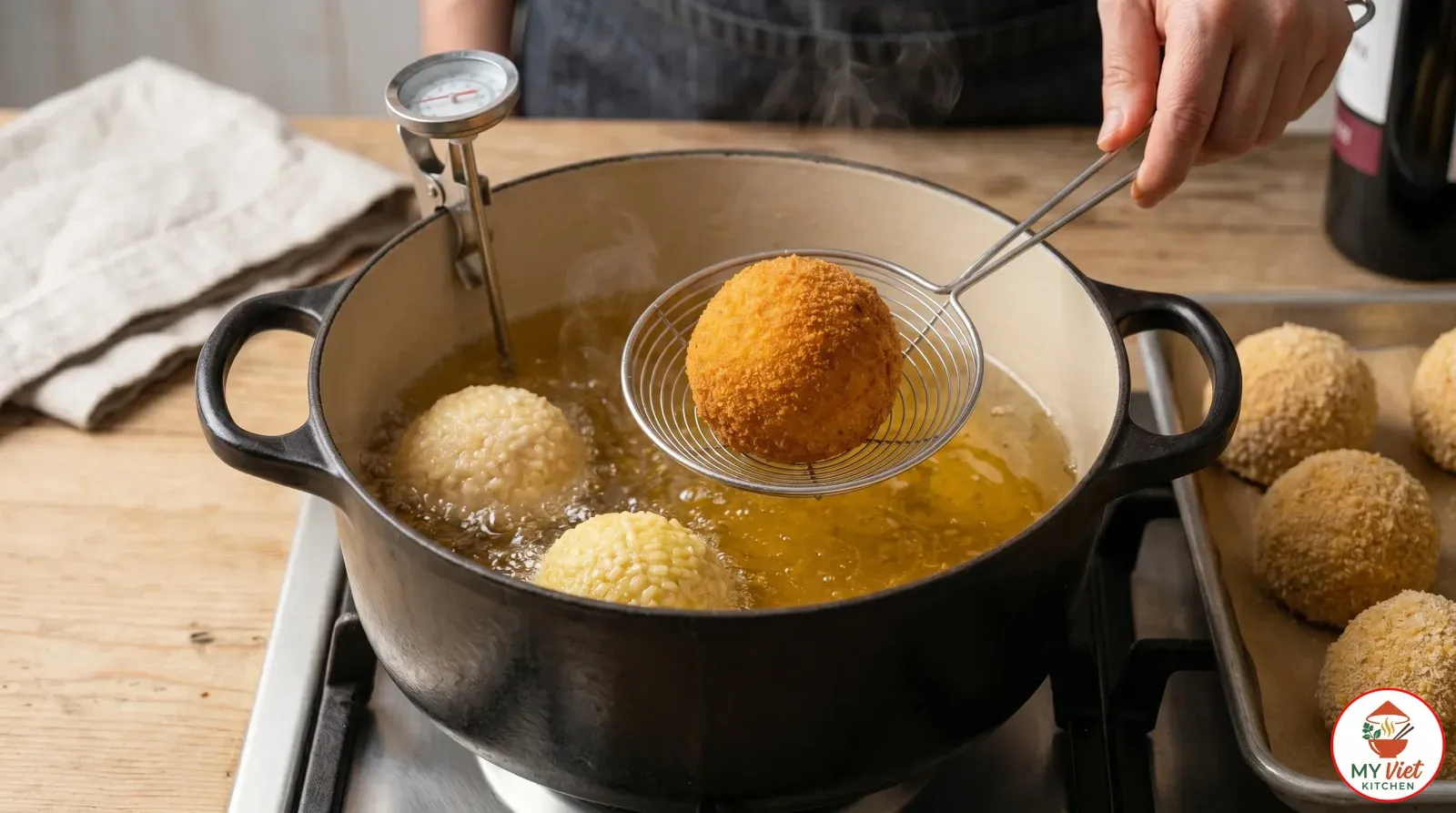
5 Pour vegetable oil into a deep, heavy-bottomed pot to a depth of at least 3 inches. Heat the oil to 350 degrees Fahrenheit, using a deep-fry thermometer to monitor the temperature closely. When the oil reaches the correct temperature, carefully lower 3 to 4 arancini into the pot using a slotted spoon or spider strainer. Do not overcrowd the pot, because too many arancini at once will drop the oil temperature dramatically.
Fry for 4 to 5 minutes, turning the arancini occasionally with a slotted spoon so they brown evenly on all sides. They are done when the exterior turns a deep, uniform golden brown. The color should resemble the skin of a ripe orange, which is exactly how the dish earned its name. Remove the finished arancini with a slotted spoon and place them on a wire rack set over a baking sheet. Let them rest for 3 minutes before serving. This resting period allows the mozzarella inside to settle slightly so it does not burst out when you bite in.
Step 6: Serve with Marinara Sauce
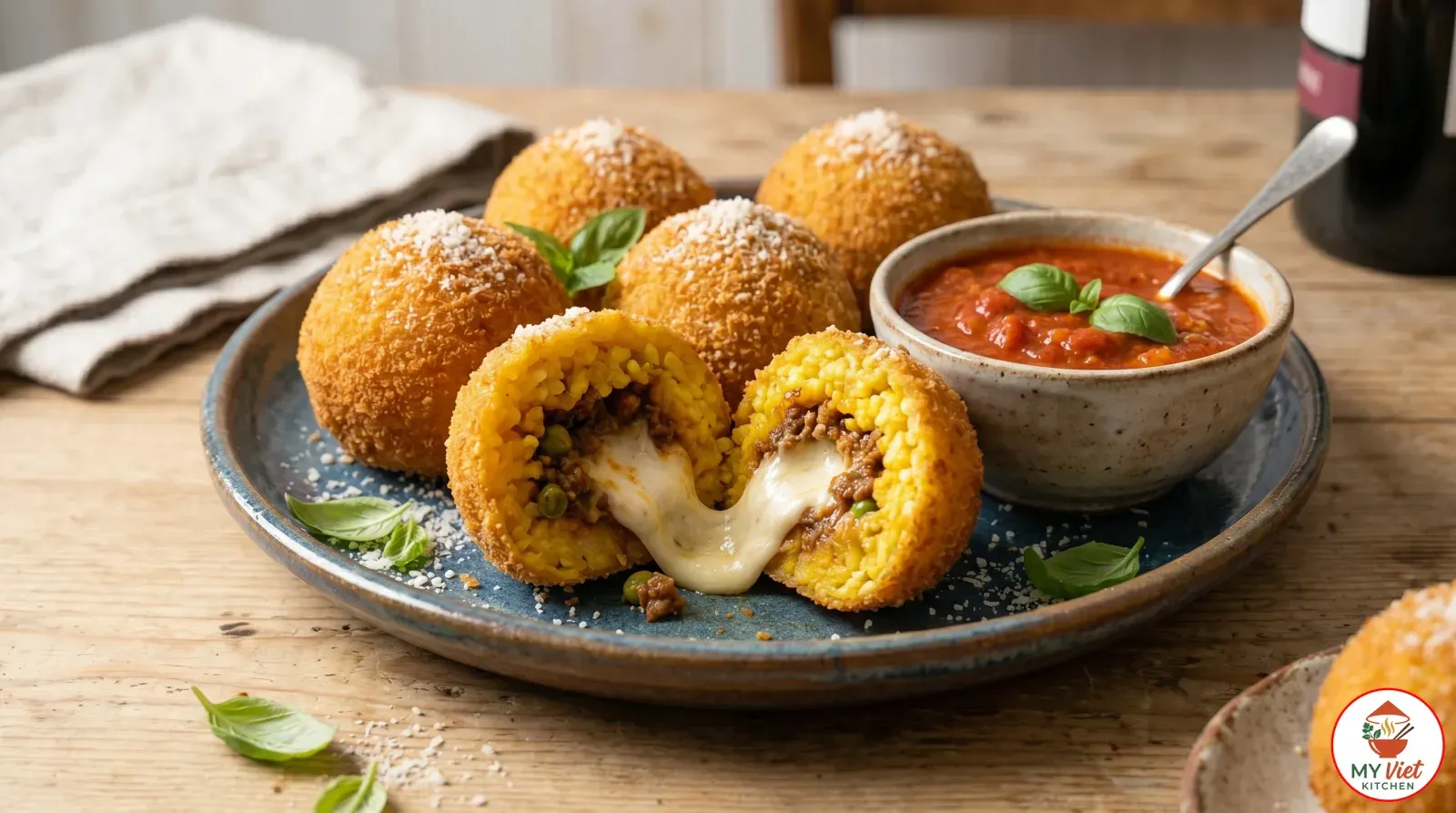
6 Arrange the finished arancini on a warm serving platter. Serve them alongside a bowl of warmed marinara sauce for dipping. For a beautiful presentation, cut one arancini in half to showcase the layers of golden crust, saffron rice, ragù, and stretchy melted mozzarella. Garnish with fresh basil leaves and a light dusting of grated Parmigiano-Reggiano. Serve immediately while the arancini are still hot and the cheese inside remains molten.
Expert Tips for Perfect Arancini
Make the Risotto Thicker Than Normal
When making risotto for arancini, cook it slightly thicker and drier than you normally would for serving. A loose, creamy risotto meant for the plate will be too wet to shape into firm balls. Reduce the amount of broth by about half a cup compared to a standard risotto recipe. The finished risotto should pull away from the sides of the pan cleanly. Once it chills, it needs to be stiff enough to mold in your hands without collapsing.
Temperature Control Is Everything
Maintaining a consistent oil temperature of 350 degrees Fahrenheit is the single most important factor in frying arancini. If the oil drops below 325 degrees, the breadcrumb coating absorbs oil instead of crisping. The arancini become greasy and heavy. If the oil climbs above 375 degrees, the crust burns before the center heats through, leaving you with a dark shell around cold rice. Use a deep-fry thermometer and adjust the flame between batches. Allow the oil to recover fully before adding the next round.
Seal Every Crack
Before breading, inspect each arancini carefully for cracks, thin spots, or exposed filling. Even a tiny opening will cause the rice ball to split open during frying. The expanding steam and melting cheese need a fully sealed shell to stay contained. If you spot a crack, wet your fingers and press a small piece of risotto over it as a patch. Taking an extra 30 seconds per ball prevents the disappointment of crumbled arancini in your fryer.
Arancini Across Sicily: Regional Comparison
While arancini follow the same basic concept across Sicily, the eastern and western halves of the island have developed distinct traditions. The differences are a source of passionate debate among Sicilians. Here is how the two main styles compare.
| Feature | Catania (East Sicily) | Palermo (West Sicily) |
|---|---|---|
| Name | Arancini (masculine) | Arancine (feminine) |
| Shape | Cone or pointed peak | Round ball |
| Inspiration | Mount Etna volcano | Oranges (arance) |
| Classic filling | Ragù, peas, mozzarella | Ragù, peas, mozzarella |
| Popular variation | Butter, ham, béchamel | Pistachio, speck |
| Size | Large (fist-sized) | Medium to large |
| Saffron | Always | Sometimes omitted |
Both styles produce outstanding arancini. The recipe in this guide follows the traditional Catania approach with ragù filling and saffron rice, but you can shape them as balls or cones based on your preference. The flavor remains the same regardless of geometry.
Serving Suggestions
In Sicily, arancini are most commonly eaten as a street snack or a hearty appetizer. They are substantial enough to serve as a light meal on their own, especially when paired with a fresh salad. For a dinner party, present them as a stunning antipasto course before a main of carbonara or another Italian pasta dish.
The Perfect Accompaniments:
- Marinara sauce: The classic dipping sauce. Its bright acidity cuts through the richness of the fried rice.
- Arugula salad: Peppery arugula with lemon vinaigrette provides a fresh, bitter contrast to the savory arancini.
- Caponata: This sweet and sour Sicilian eggplant relish is the traditional vegetable side on the island.
- Focaccia: Warm, olive-oil-rich Italian bread rounds out an Italian appetizer spread beautifully.
Beverage Pairings:
- Nero d’Avola: Sicily’s signature red wine has enough body and fruit to match the rich filling.
- Grillo or Catarratto: Crisp Sicilian white wines that provide a refreshing contrast to the fried exterior.
- Italian lager: A cold Peroni or Moretti cuts through the oil beautifully and keeps the mood casual.
- Sparkling water with lemon: For a non-alcoholic option, the bubbles and citrus cleanse the palate between bites.
Storage and Reheating
Refrigerator: Store cooked arancini in an airtight container in the refrigerator for up to 3 days. The breadcrumb crust will soften slightly during storage, but reheating restores much of the crunch.
Freezer: Arancini freeze exceptionally well for up to 3 months. You can freeze them either before or after frying. For uncooked arancini, bread them fully, freeze on a tray until solid, then transfer to freezer bags. Fry directly from frozen, adding 1 to 2 minutes of frying time. For already-fried arancini, cool completely before freezing in a single layer.
Reheating: The best method is the oven. Place the arancini on a wire rack set over a baking sheet and reheat at 375 degrees Fahrenheit for 12 to 15 minutes until the crust crisps and the center reaches 165 degrees. Avoid the microwave entirely, because it makes the breadcrumb coating rubbery and soggy. If reheating from frozen, add 5 minutes to the oven time.
Common Mistakes to Avoid
1. Using Warm Risotto
This is the most common reason arancini fail. Warm or room-temperature risotto is soft, sticky, and impossible to shape into balls that hold together. The starch in the rice needs to fully set by chilling for at least 2 hours. Cold risotto becomes firm and pliable, similar to clay, which makes shaping easy and clean. If you are in a rush, spread the risotto thin on a sheet pan and place it in the freezer for 45 minutes instead.
2. Overfilling the Rice Balls
The temptation to stuff each arancini with as much ragù and mozzarella as possible is real. However, too much filling weakens the rice shell and makes the ball impossible to seal properly. A thin layer of rice will crack during frying, causing the filling to leak into the oil. Use roughly one tablespoon of ragù and one small cube of mozzarella per ball. The rice wall should be at least 1/2 inch thick on all sides.
3. Frying at the Wrong Temperature
Oil that is too cool creates soggy, oil-logged arancini. Oil that is too hot burns the crust while leaving the inside cold. Always use a thermometer and maintain a steady 350 degrees Fahrenheit throughout the frying process. After each batch, let the oil return to temperature before adding the next round. This patience is what separates crispy, golden arancini from greasy, dark ones.
4. Skipping the Resting Period
Cutting into arancini the instant they leave the fryer causes the molten mozzarella to spill out in a rush. Let them rest on the wire rack for a full 3 minutes after frying. During this time, the cheese settles from liquid to stretchy, and the internal temperature equalizes. The arancini will still be perfectly hot and the mozzarella will still pull beautifully, but you will not burn your mouth or lose the filling.
Frequently Asked Questions
What is the best rice for arancini?
Arborio rice is the best choice for making arancini because of its high starch content. The starch creates a sticky, cohesive risotto that holds its shape when formed into balls. Carnaroli rice also works well and is slightly more forgiving. Avoid long-grain varieties like basmati or jasmine. They lack the starch needed to bind arancini together and will cause the balls to crumble.
Can you bake arancini instead of frying them?
Yes, you can bake arancini at 400 degrees Fahrenheit for 25 to 30 minutes. Spray them generously with olive oil before baking for a crispy exterior. However, baked arancini will not achieve the same deep golden crust or satisfying crunch as the fried version. The texture is more firm than crispy. For the most authentic results, deep frying is strongly recommended.
Why are my arancini falling apart when frying?
Arancini fall apart during frying for three main reasons. The risotto may not be cold enough, so always refrigerate it for at least 2 hours before shaping. The rice may be undercooked and lacking enough starch to bind properly. Or the oil temperature may be too low, causing the breadcrumb coating to absorb oil and weaken before it sets. Make sure the oil reaches 350 degrees Fahrenheit before frying.
What is the difference between arancini and arancine?
Arancini and arancine refer to the same dish but reflect a regional naming difference within Sicily. In eastern Sicily, particularly Catania, they are called arancini (masculine plural) and often shaped into cones representing Mount Etna. In western Sicily, especially Palermo, they are called arancine (feminine plural) and shaped into round balls resembling oranges. The fillings and preparation technique are essentially the same.
Can you freeze arancini before frying?
Absolutely. Arancini freeze beautifully before or after frying. Bread the arancini completely, place them on a parchment-lined tray, and freeze until solid. Then transfer to a freezer bag for up to 3 months. Fry them directly from frozen without thawing, adding 1 to 2 extra minutes of frying time. Do not thaw them first, because this causes the coating to become soggy and fragile.
Variations and Adaptations
Arancini al Burro (Butter Arancini):
This popular variation from northern Sicily replaces the ragù with a filling of béchamel sauce, cubed ham, and mozzarella. The name “al burro” means “with butter.” The béchamel adds a creamy, luxurious quality that contrasts with the crispy exterior. To make it, prepare a thick béchamel with 2 tablespoons each of butter and flour plus 1 cup of whole milk, then fold in diced cooked ham and mozzarella cubes. Chill the béchamel before using it as the filling.
Pistachio Arancini:
Sicily’s famous Bronte pistachios inspired this modern variation. Replace the ragù with a pistachio pesto made from blended pistachios, Parmigiano-Reggiano, olive oil, and a touch of garlic. Use cubed provola cheese instead of mozzarella for a smokier flavor. Roll the finished arancini in crushed pistachios mixed with breadcrumbs for a stunning green-flecked crust. This version has become extremely popular in Catania’s trendy street food scene.
Vegetarian Arancini:
For a meat-free version, replace the beef ragù with sautéed mushrooms, sun-dried tomatoes, and spinach. Use vegetable broth for the risotto instead of chicken broth. The mozzarella center remains, providing that essential stretchy cheese pull. This adaptation works particularly well because mushrooms bring the earthy depth that the meat ragù normally provides.
Air Fryer Arancini:
Shape and bread the arancini exactly as described in the main recipe. Spray them generously with olive oil on all sides. Place them in the air fryer basket in a single layer, leaving space between each one. Cook at 380 degrees Fahrenheit for 12 to 15 minutes, turning halfway through. The result is a lighter arancini with a crispy shell and significantly less oil. They will not be quite as golden as deep-fried versions, but the texture comes remarkably close.
The Cultural Significance of Arancini
Arancini are far more than just fried rice balls. In Sicily, they carry deep cultural weight as a symbol of resourcefulness, regional pride, and communal celebration. The dish likely originated as a way to use leftover risotto, transforming yesterday’s meal into today’s treasure. This philosophy of waste-nothing cooking runs through Italian food culture, and arancini represent it at its most delicious. According to Italian Food Excellence, the tradition of making arancini stretches back to at least the 10th century during Arab rule in Sicily.
Every December 13th, Sicilians celebrate the Feast of Santa Lucia by eating arancini instead of bread and pasta. Legend holds that a famine struck Palermo on Santa Lucia’s feast day, and a ship of grain arrived to save the starving population. The people were so hungry that they ate the grain without grinding it into flour, cooking rice and other whole grains in simple preparations. Today, Sicilians honor that memory by avoiding bread products on December 13th and eating arancini, cuccìa, and other grain-based dishes.
The debate between eastern and western Sicily over the correct name and shape of arancini is a source of genuine, if good-natured, rivalry. Catanians insist on arancini shaped as cones. Palermitani maintain that arancine must be round. Food scholars, soccer fans, and grandmothers have all weighed in. This passionate disagreement reflects how deeply arancini are woven into Sicilian identity. A dish that inspires such fierce loyalty is clearly more than the sum of its ingredients.
If you enjoy exploring Italian food traditions, you might also love our recipes for panna cotta and focaccia, two other Italian classics that reward patience and good ingredients.
Conclusion
Making arancini at home is absolutely achievable, even though the dish might seem intimidating at first glance. The process breaks down into simple, manageable stages: cook risotto, make filling, shape, bread, and fry. Each step is straightforward on its own. The key to success is patience. Let the risotto chill thoroughly, keep the filling thick and dry, seal every crack before breading, and maintain steady oil temperature while frying. Follow these principles and your arancini will emerge from the oil golden, crunchy, and irresistible.
Whether you serve them as an appetizer, a party snack, or a satisfying lunch, arancini deliver a combination of textures and flavors that few other dishes can match. The crunch of the breadcrumb shell, the creaminess of saffron risotto, the savory depth of ragù, and the stretchy melt of mozzarella create a complete sensory experience in every bite. Once you master this recipe, you will find yourself making arancini again and again. Explore more of our European dishes for your next culinary adventure.