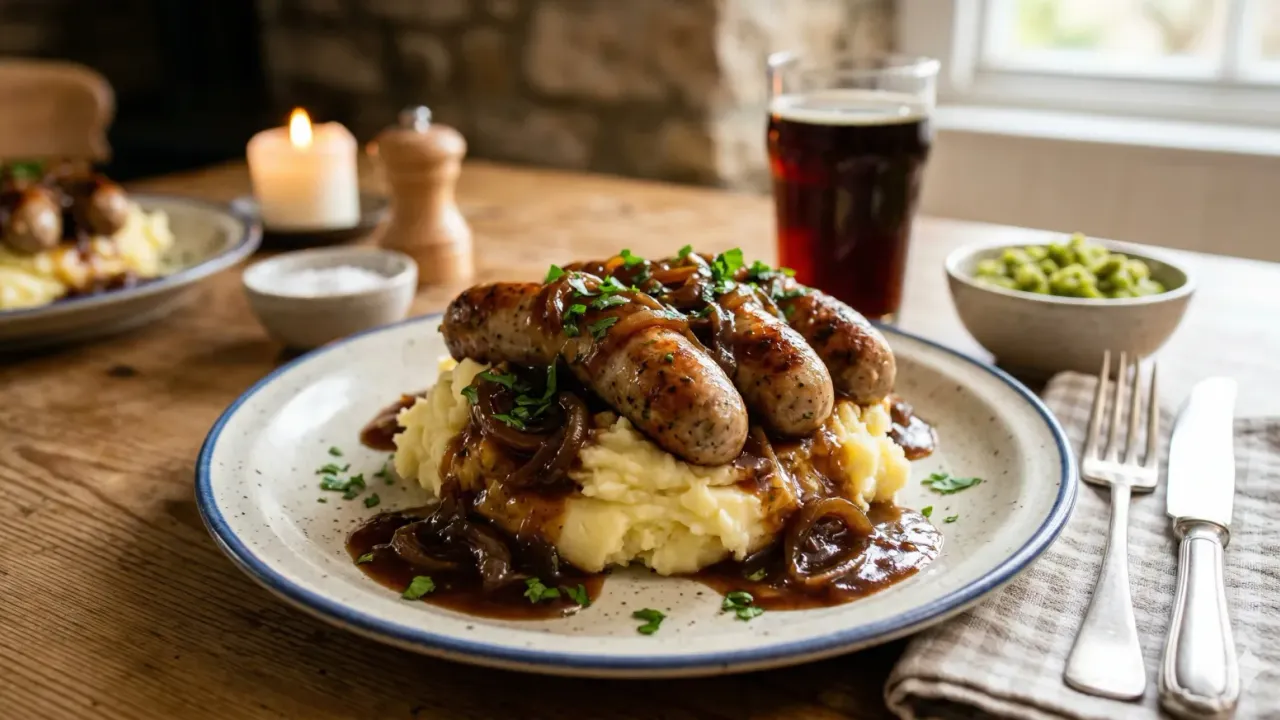
Bangers and mash is the heart and soul of British comfort food. This beloved English dish pairs plump, herb-seasoned pork sausages with creamy mashed potatoes and a rich onion gravy. Few meals are simpler to prepare, yet few deliver as much warmth on a cold evening. Whether you grew up eating it in a London pub or you are trying it for the first time, this bangers and mash recipe walks you through every step for a perfect plate.
Prep Time: 15 minutes | Cook Time: 40 minutes | Servings: 4
Difficulty: Easy | Calories: ~580 per serving
What Makes Bangers and Mash Special?
Bangers and mash earns its place as a national treasure through sheer simplicity. Three components sit on the plate: sausages, mashed potatoes, and onion gravy. None of these elements is complicated on its own. However, when they come together, they create something far greater than the sum of its parts. The crispy, caramelized skin of the sausage cracks open to reveal juicy, seasoned pork. Buttery mash catches every drop of gravy. And the gravy itself, made from slowly cooked onions and stock, ties the entire dish into a savory, soul-warming meal.
What truly sets bangers and mash apart is its deep roots in everyday British life. This is not a dish that belongs to fine dining or special occasions. Instead, it is honest, working-class food that has fueled families for generations. Pubs across England serve it daily. School canteens dish it out at lunchtime. Grandmothers pass the recipe down through decades. Its staying power proves that great food does not need to be fancy. It just needs to taste like home.
The beauty of bangers and mash also lies in its adaptability. You can dress it up with a red wine and shallot gravy for a dinner party. Alternatively, you can keep it rustic with thick sausages and chunky mash for a weeknight supper. Every region in Britain puts its own spin on the dish, from the peppered Cumberland sausage in the northwest to the sage-heavy Lincolnshire banger in the east. No two plates are exactly the same, and that is part of the charm.

Choosing the Right Sausages
The sausage is the star of bangers and mash. Your choice of banger will define the entire dish. Not all sausages are created equal, so here is what to look for.
- Cumberland sausages (classic choice): These thick, coiled sausages come from the Lake District in northwest England. They are seasoned with black pepper, nutmeg, and herbs. Cumberland sausages have a coarse grind that gives them a satisfying, meaty texture. Look for ones with at least 70 percent pork content for the best flavor.
- Lincolnshire sausages: These are the other great traditional choice. Sage is the dominant flavor, along with thyme and nutmeg. The grind is coarser than most supermarket sausages. Lincolnshire bangers have a distinctly herbal, earthy taste that pairs beautifully with onion gravy.
- Butcher-shop sausages (premium option): A good local butcher will make sausages fresh with high meat content and natural casings. These bangers have the best snap and flavor. Ask for a traditional pork sausage with herbs, and you will get something far better than any supermarket brand.
- Supermarket sausages (budget-friendly): These work in a pinch, but check the label carefully. Aim for at least 70 percent meat content. Cheap sausages contain too much bread filler and water, which makes them mushy and bland. Spending a little more on quality pays off in taste.
Ingredients for Bangers and Mash
Sausages:
- 8 thick pork sausages (Cumberland or Lincolnshire)
- 1 tablespoon vegetable oil
Mashed Potatoes:
- 2 pounds Yukon Gold or Maris Piper potatoes, peeled and quartered
- 4 tablespoons butter
- 1/3 cup whole milk, warmed
- Salt and white pepper to taste
Onion Gravy:
- 2 large onions, thinly sliced
- 1 tablespoon butter
- 1 tablespoon all-purpose flour
- 1 cup beef stock
- 1/2 cup chicken stock
- 1 teaspoon Worcestershire sauce
- 1 teaspoon Dijon mustard
- 1 teaspoon balsamic vinegar
- Salt and black pepper to taste
Garnish:
- Fresh parsley, chopped
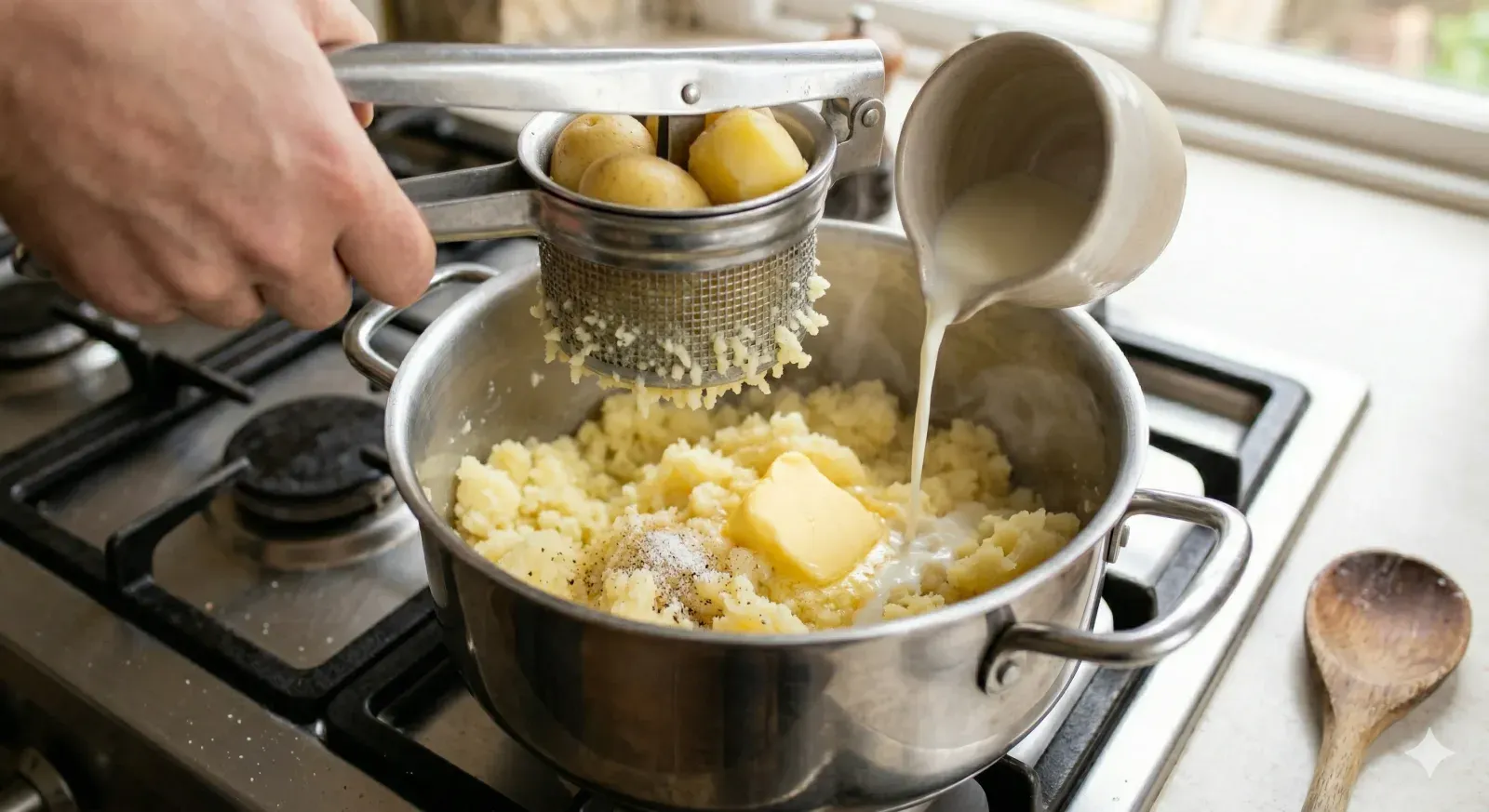
Pro tip: Warm your milk before adding it to the potatoes. Cold milk drops the temperature of the hot potatoes and can make the mash gluey. Also, never use a food processor or blender to mash potatoes. The high speed breaks down the starch and turns fluffy mash into wallpaper paste. A potato ricer or hand masher gives you the best texture every time.
Step-by-Step Instructions
Step 1: Cook the Sausages
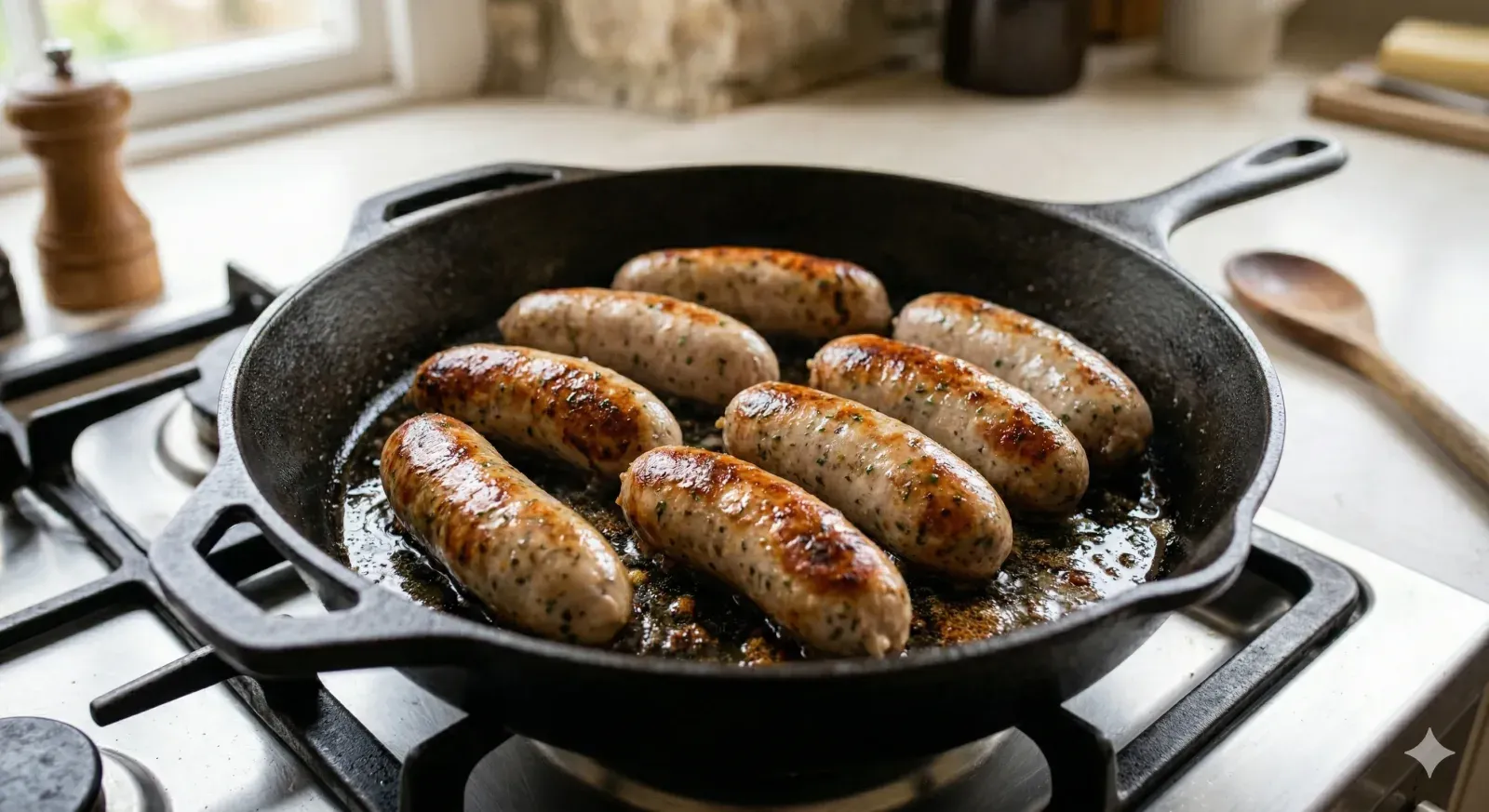
1 Heat the vegetable oil in a large skillet over medium heat. Place the sausages in the pan, leaving space between each one. Do not crowd the pan, because overcrowding traps steam and stops the skin from browning. Cook the bangers for 15 to 20 minutes, turning them every 3 to 4 minutes. You want an even golden brown color on all sides.
Resist the urge to crank the heat up high. Instead, medium heat gives you a slow, even cook. As a result, the sausage skin renders its fat gradually and turns crispy without burning. In contrast, high heat chars the outside while leaving the center raw. Therefore, use a meat thermometer if you are unsure. The internal temperature should read 160 degrees Fahrenheit when done. Once cooked, set the sausages aside on a warm plate and keep the pan with its flavorful drippings. You will use those drippings for the gravy.
Step 2: Prepare the Mashed Potatoes
2 While the sausages cook, peel the potatoes and cut them into even quarters. Place them in a large pot and cover with cold, salted water. Starting in cold water ensures the potatoes cook evenly from the outside in. Then bring the water to a boil, then reduce the heat to a steady simmer.
Cook the potatoes for 15 to 20 minutes until they are fork-tender. A knife should slide in and out with no resistance. Drain them well in a colander, then return them to the hot pot. Let the potatoes sit in the dry pot for a minute. This step drives off extra moisture and prevents watery mash. Next, add the butter and warm milk. Mash with a potato ricer or hand masher until smooth and creamy. Season generously with salt and white pepper. Cover the pot and set it aside while you make the gravy.
Step 3: Make the Onion Gravy
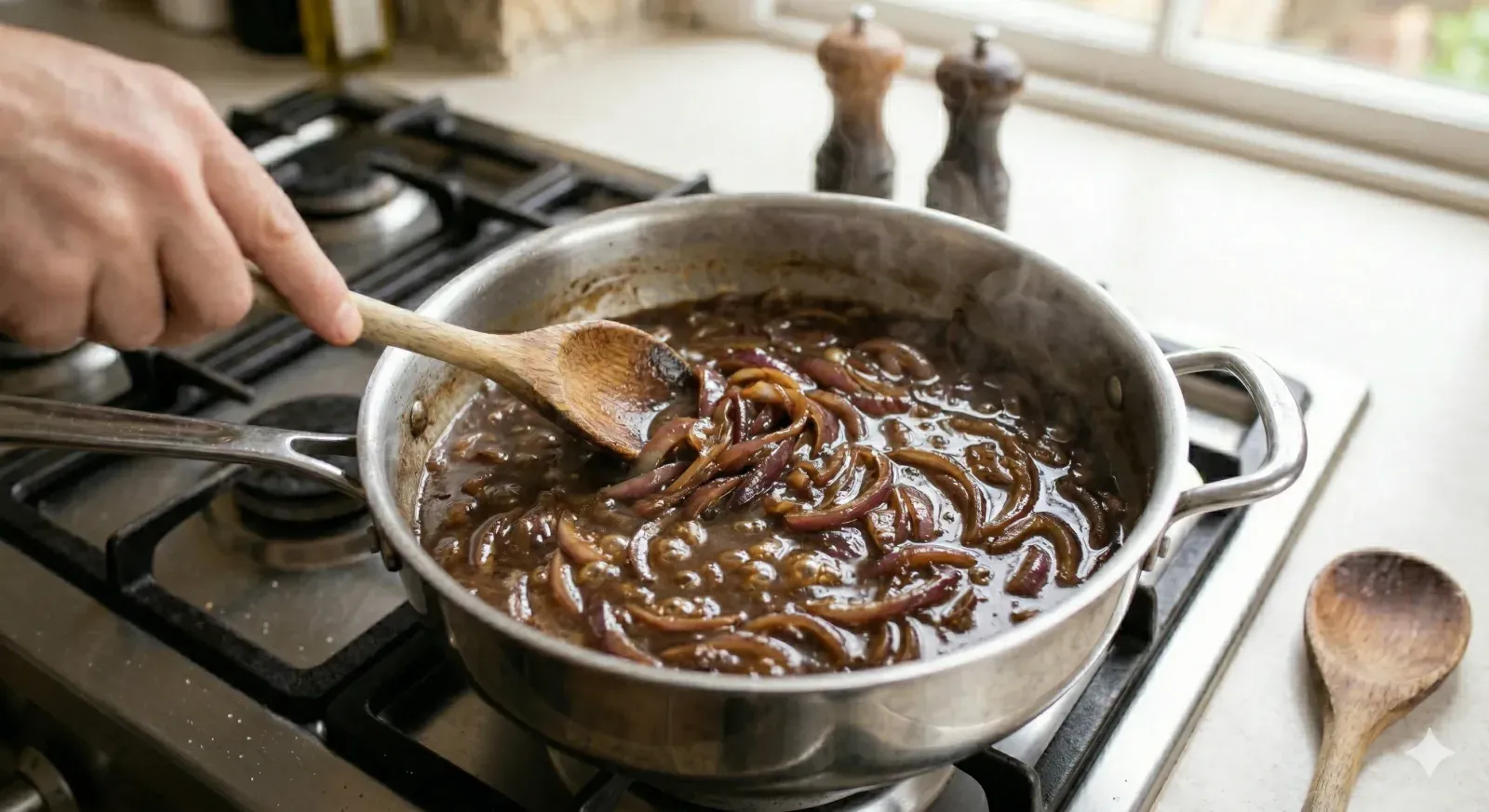
3 Return the skillet with the sausage drippings to medium-low heat. Add a tablespoon of butter and the thinly sliced onions. Stir to coat them in the fat. This is where the magic happens. Cook the onions slowly for 15 to 20 minutes, stirring every few minutes. They will soften first, then turn golden, and finally reach a deep amber brown. However, do not rush this step. Low, slow heat coaxes out the natural sugars through caramelization.
Once the onions are deeply caramelized, sprinkle in the flour. Stir for about a minute to cook out the raw flour taste. Afterwards, gradually pour in the beef stock and chicken stock, whisking constantly to prevent lumps. Add the Worcestershire sauce, Dijon mustard, and balsamic vinegar. Together, these three ingredients add layers of savory depth. Finally, let the gravy simmer for 5 minutes until it thickens enough to coat the back of a spoon. Taste and adjust the salt and pepper. Your gravy is ready.
Step 4: Plate and Serve
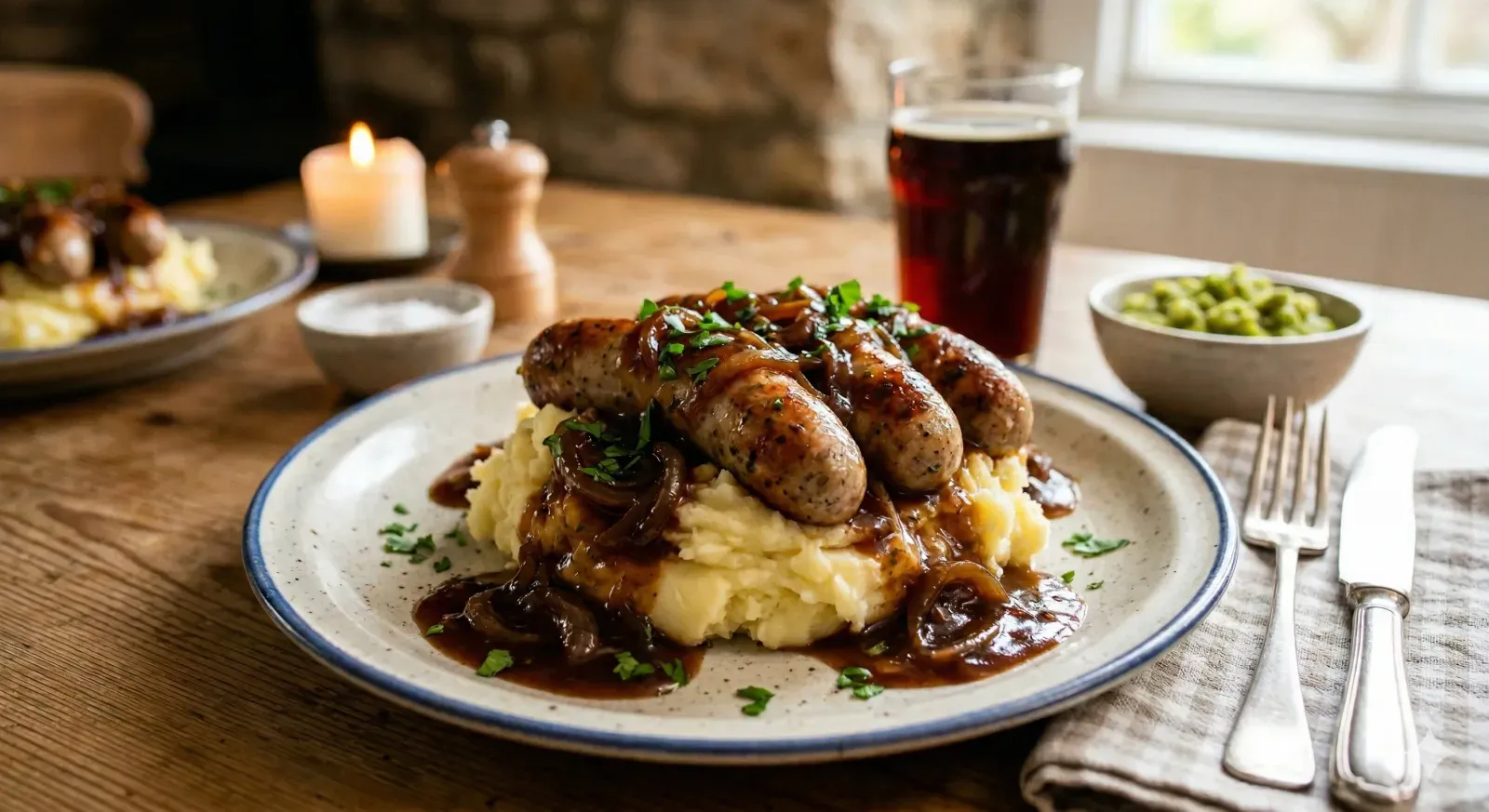
4 Spoon a generous mound of mashed potatoes onto each warmed plate. Lean two sausages against the mash at an angle. This classic presentation is how pubs across England serve the dish. Now pour the onion gravy generously over the sausages and potatoes. Let it pool around the edges of the plate.
Finish with a scattering of fresh chopped parsley for color. Serve immediately while everything is piping hot. The gravy should be thick enough to cling to the sausages but thin enough to soak into the mash. For the best experience, make sure every forkful has a bit of sausage, a scoop of creamy potato, and a swirl of that rich onion gravy. That combination is what makes bangers and mash one of the most satisfying meals in British cooking.
Expert Tips for the Perfect Bangers and Mash
Use the Right Potato Variety
Starchy potatoes make the best mash. Maris Piper is the top choice in Britain, while Yukon Gold is the best equivalent in North America. These varieties break down easily and absorb butter and milk beautifully. Waxy potatoes like new potatoes or red potatoes hold their shape too well. They produce a gluey, dense mash instead of the light and fluffy texture you want.
Build the Gravy in the Sausage Pan
Never wash the skillet after cooking the sausages. Those browned bits stuck to the bottom of the pan are called fond. They are concentrated flavor. When you add the onions and stock, those bits dissolve into the gravy and give it a deep, savory richness that you cannot get any other way. Building the gravy in the same pan is the single biggest flavor secret in this entire recipe.
Do Not Overcrowd the Sausages
Cook the sausages in batches if your pan is not large enough. When sausages touch each other, they steam instead of fry. Steam means soft, pale skin instead of the crispy, golden crust you want. Instead, give each banger at least an inch of space. This allows the heat to circulate evenly and creates a proper sear on every side.
Regional Sausage Comparison
Britain boasts a remarkable variety of regional sausages. Each area takes fierce pride in its local banger. Here is a comparison of the most famous British sausages used in bangers and mash.
| Region | Sausage Style | Key Seasonings | Texture and Notes |
|---|---|---|---|
| Cumbria (Northwest) | Cumberland Sausage | Black pepper, nutmeg, herbs | Coarse grind, sold as one long coil, thick casing |
| Lincolnshire (East) | Lincolnshire Sausage | Sage, thyme, nutmeg | Open, coarse texture with a strong herbal flavor |
| Wiltshire (Southwest) | Wiltshire Sausage | Ginger, sage, mace | Medium grind, mild and slightly sweet |
| Yorkshire (North) | Yorkshire Sausage | White pepper, cayenne, herbs | Coarse grind, spicier than most British sausages |
| Ireland | Irish Pork Sausage | White pepper, mace, breadcrumbs | Fine grind, soft texture, mild flavor |
Serving Suggestions
Bangers and mash is a complete meal on its own, but a few well-chosen sides can elevate it further. Here are the best accompaniments to round out the plate.
Classic Accompaniments:
- Mushy peas: Soft, bright green peas mashed lightly with butter and mint. They add freshness and color to the plate. Mushy peas are the most traditional side in English pubs.
- Steamed garden peas: A simpler alternative to mushy peas. Their sweet, bright flavor balances the richness of the gravy and sausages.
- Braised red cabbage: Slow-cooked with apple and vinegar, this tangy side cuts through the heaviness of the mash and gravy. It adds a beautiful purple color to the plate.
- Colcannon: An Irish twist where cabbage or kale is folded into the mashed potatoes. It adds flavor, texture, and a touch of green. Perfect for a heartier variation of the dish.
Beverage Pairings:
- English bitter (best match): A traditional cask ale with a malty, slightly hoppy profile. Brands like Fuller’s London Pride or Adnams Broadside are perfect alongside bangers and mash.
- Stout or porter: A dark beer like Guinness or a craft porter brings roasty, chocolatey notes. These flavors complement the caramelized onion gravy beautifully.
- English cider: A dry, crisp apple cider from Somerset or Herefordshire pairs well with pork sausages. The acidity refreshes the palate between bites.
- Black tea or sparkling water: For a non-alcoholic option, a strong cup of English breakfast tea works surprisingly well. Sparkling water with lemon also cleanses the palate.
Storage and Reheating
Refrigerator: Store each component separately in airtight containers. Cooked sausages last 3 to 4 days. Mashed potatoes keep for 2 days. Onion gravy stays fresh for up to 4 days. Keeping them separate prevents the mash from absorbing too much gravy and turning soggy.
Freezer: Cooked sausages freeze well for up to 3 months. Mashed potatoes also freeze nicely in sealed bags. Onion gravy can be frozen in portions for up to 2 months. Thaw everything in the fridge overnight before reheating.
Reheating: Warm the sausages in a 350-degree Fahrenheit oven for 10 minutes to restore their crispy skin. Reheat the mash in a saucepan over low heat with a splash of milk and a knob of butter. Warm the gravy in a small pot, adding a little stock if it has thickened too much. Avoid the microwave for the sausages, because it turns the casing rubbery.
Common Mistakes to Avoid
1. Using Low-Quality Sausages
Cheap sausages with less than 60 percent meat content taste bland and fall apart. Consequently, they release water as they cook, which makes the skin pale and soggy. Instead, always check the label for meat content. A good banger has at least 70 percent pork. Better yet, buy from a butcher who grinds and fills them fresh.
2. Rushing the Onion Gravy
The gravy needs time. Caramelizing onions in five minutes is not possible. They need 15 to 20 minutes over medium-low heat to develop deep color and sweetness. Rushing this step gives you pale, crunchy onions in a thin, flavorless gravy. In fact, patience is the difference between good gravy and great gravy.
3. Overworking the Mashed Potatoes
Mashing potatoes too aggressively breaks down the starch molecules. As a result, this releases a sticky substance that turns your mash gluey and dense. Instead, use a potato ricer for the smoothest result. If using a hand masher, stop as soon as there are no lumps. A few small lumps are better than a pot of potato glue.
4. Cooking Sausages on High Heat
High heat burns the casing before the inside cooks through. You end up with a sausage that is black on the outside and pink in the middle. In contrast, medium heat gives a gradual, even cook. The fat renders slowly, the skin crisps naturally, and the meat reaches the safe temperature throughout. Turn the sausages often for even browning.
Frequently Asked Questions
Why are they called bangers?
The name dates back to World War II. During wartime rationing, sausages were padded with extra water and cereal filler to stretch limited meat supplies. When fried, the high water content turned to steam inside the casing. Consequently, this pressure caused the sausages to burst open with a loud bang. The nickname stuck in British culture even though modern sausages rarely burst thanks to their higher meat content.
What is the best type of sausage for bangers and mash?
Cumberland and Lincolnshire sausages are the two most popular traditional options. Cumberland bangers are thick and seasoned heavily with black pepper. Lincolnshire sausages rely on sage for their signature flavor. Both should have a meat content of 70 percent or more. If you cannot find British sausages, look for any thick pork sausage with herbs and a natural casing.
Can I make bangers and mash ahead of time?
Yes, all three components hold up well when stored separately. Cook the sausages and gravy up to 3 days ahead. Prepare the mash up to 2 days ahead. Reheat the sausages in the oven, the mash with extra milk and butter, and the gravy in a saucepan. Assemble the plate just before serving so the textures stay intact.
What can I use instead of pork sausages?
Beef sausages bring a richer, beefier flavor to the dish. Chicken sausages work for a lighter version. For vegetarians, plant-based sausages have improved dramatically and hold up well in this recipe. Lamb sausages with rosemary and garlic make an excellent variation too. Whichever you choose, adjust the gravy seasonings to complement the sausage type.
How do I make the gravy thicker?
If the gravy is thinner than you like, mix one teaspoon of cornstarch with a tablespoon of cold water. Stir this slurry into the simmering gravy. It will thicken within a minute. Another option is to simmer the gravy uncovered for a few extra minutes. The liquid reduces and concentrates, giving you a thicker, more flavorful result.
Is bangers and mash healthy?
A standard portion contains about 580 calories, making it a hearty comfort meal. To lighten it up, use sausages with higher meat content and less filler. Swap some of the butter in the mash for olive oil. Add a side of steamed peas or green beans for extra nutrition. Bangers and mash is indulgent by nature, but small adjustments make a meaningful difference.
Variations and Adaptations
Red Wine and Shallot Gravy:
Replace the onions with thinly sliced shallots for a more refined flavor. Add half a cup of red wine to the pan after the shallots caramelize, and let it reduce by half before adding the stock. This version has a deeper, more complex flavor. It works beautifully when you want to elevate bangers and mash for a dinner party.
Cheesy Mash:
Stir a generous handful of grated mature cheddar into the mashed potatoes along with the butter and milk. The cheese melts into the hot mash and adds a rich, tangy creaminess. A pinch of English mustard powder boosts the cheese flavor even further. Kids and adults alike love this version.
Toad in the Hole Style:
Brown the sausages first, then place them in a baking dish. Pour Yorkshire pudding batter around the sausages and bake at 425 degrees Fahrenheit for 25 minutes until the batter puffs up golden and crispy. Serve with mash and onion gravy. This is another beloved British classic that uses the same sausages in a different format.
Vegetarian Bangers and Mash:
Use plant-based sausages and make the gravy with vegetable stock instead of beef stock. Add a splash of soy sauce for extra savory depth. The mash stays the same, or you can use olive oil instead of butter for a fully vegan option. Modern plant-based bangers crisp up well and hold their shape in the pan.
The Cultural Significance of Bangers and Mash
Bangers and mash holds a unique place in British cultural identity. It is a dish that transcends class, region, and generation. During World War II, it became a symbol of resilience. With meat rationed and ingredients scarce, families stretched what little they had into this simple, filling meal. The sausages were padded with breadcrumbs and water, yet people found comfort in the familiar combination of bangers, mash, and gravy. That wartime association with perseverance and making do has never fully faded.
Today, bangers and mash remains a cornerstone of British pub culture. Walk into almost any pub in England, and you will find it on the menu. It sits alongside fish and chips, pie and mash, and the Sunday roast as one of the defining meals of English cooking. Celebrity chefs like Gordon Ramsay and Jamie Oliver have both championed the dish, proving that even the simplest British food deserves respect and attention to detail.
Beyond the pub, bangers and mash connects to the broader story of British sausage-making heritage. Each region guards its recipe fiercely. Cumberland sausage has applied for EU protected status. Lincolnshire sausage makers have fought to preserve their traditional recipe. These local sausage traditions reflect a deep pride in regional identity. When you sit down to a plate of bangers and mash, you are eating centuries of British food history.
Conclusion
Bangers and mash is British comfort food at its finest. Golden, crispy sausages with a juicy center rest against a cloud of creamy mashed potatoes. Rich onion gravy ties everything together with deep, caramelized sweetness. This recipe gives you every detail for a perfect plate, from choosing the right sausages to building that flavorful gravy in the same pan. Follow these steps and you will create a meal that tastes like it came straight from an English pub kitchen.
Ready to explore more classic British and European dishes? Browse our full collection of European dishes, including shepherd’s pie, colcannon, and Irish stew. Discover recipes from across the continent, each made with the same care and attention to authentic technique.