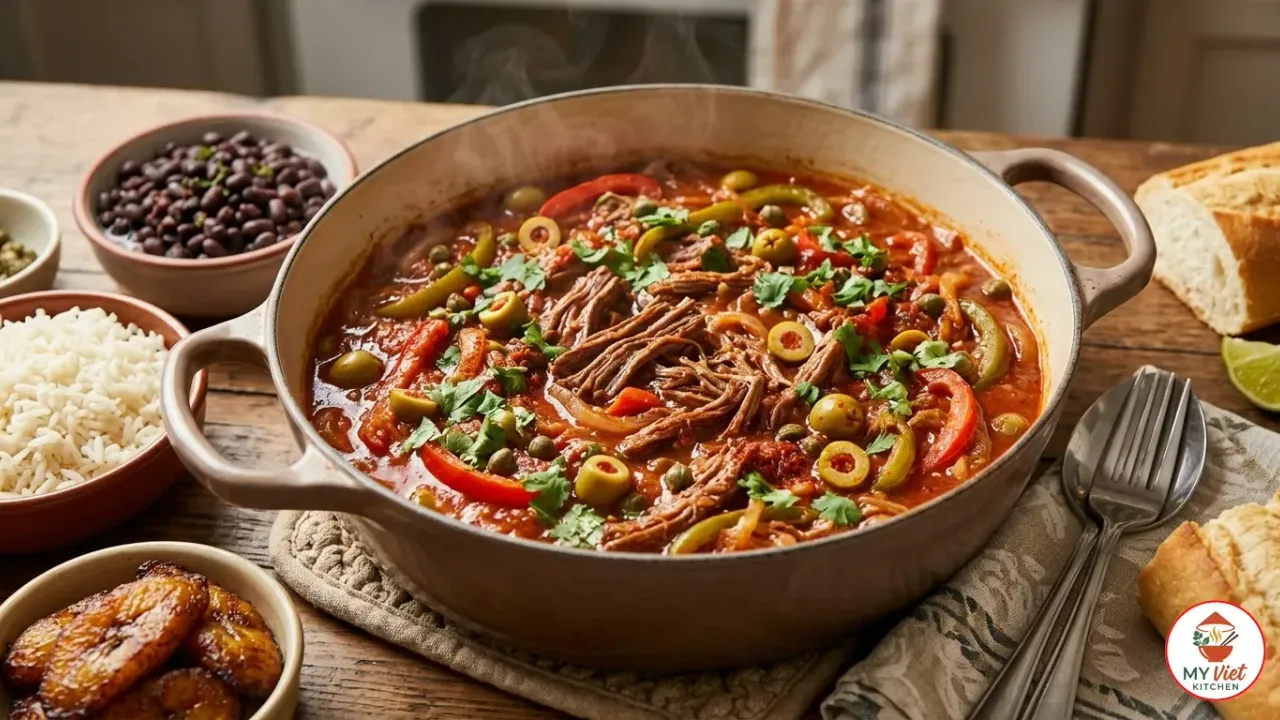
Ropa Vieja is the undisputed national dish of Cuba — a deeply flavorful stew of tender shredded beef braised in a vibrant tomato and bell pepper sauce. The name translates to “old clothes,” a poetic nod to the way the beef falls apart into ragged, cloth-like strands after hours of slow cooking. This recipe delivers an authentic ropa vieja that captures the soul of Cuban home cooking, and you can pull it together with pantry-friendly ingredients and one reliable pot.
Prep Time: 20 minutes | Cook Time: 150 minutes | Servings: 6
Difficulty: Easy | Calories: ~385 per serving
What Makes Ropa Vieja Special?
Ropa vieja stands apart from other braised beef dishes because of the way it balances simplicity with depth. The sauce is not a complex reduction or a spice-heavy curry. Instead, it relies on the interplay between sweet bell peppers, tangy crushed tomatoes, briny olives, and the concentrated beefy flavor that only a long, slow braise can produce. Every element serves a purpose, and nothing competes for attention.
Unlike a pot roast that stays in large chunks, ropa vieja is defined by its shredded texture. The long fibers of flank steak separate into thin, delicate strands that absorb the sauce completely. Each forkful carries the full spectrum of flavor — savory, slightly sweet, and brightened by capers and olives. This texture also makes it remarkably versatile, equally at home over white rice, stuffed into a warm sandwich, or folded into a tortilla.
The dish has deep roots in Cuban identity. Cuba declared it the national dish, and it appears on tables during family gatherings, holidays, and everyday dinners alike. However, its origins stretch back to medieval Spain. Sephardic Jewish communities first developed the concept, and over centuries the recipe traveled across the Atlantic. Cuban cooks then transformed it with local ingredients — bell peppers, cumin, and the olives and capers that give it a distinct island personality.

Choosing the Right Cut of Beef
The cut of beef you select determines the final texture of your ropa vieja. You want a tough, fibrous cut that will break down during the long braise and shred into beautiful strands. Here are the best options.
- Flank steak (best choice): The most traditional pick, with long, pronounced muscle fibers that shred into perfect thin strands. It braises in about 2 to 2.5 hours and delivers the classic ropa vieja texture.
- Skirt steak: Another excellent option with a similar fiber structure. Skirt steak tends to be slightly more tender and can cook about 15-20 minutes faster than flank.
- Brisket flat: A fattier cut that produces richer, more luscious shredded beef. However, it requires 3 to 4 hours of braising and results in slightly thicker strands.
Ingredients for Ropa Vieja
Main Ingredients:
- 2 lbs (900g) flank steak
- 1 large onion, sliced into thin strips
- 1 green bell pepper, sliced into thin strips
- 1 red bell pepper, sliced into thin strips
- 6 cloves garlic, minced
- 2 tablespoons olive oil
For the Braising Sauce:
- 1 can (14 oz) crushed tomatoes
- 2 tablespoons tomato paste
- 1/2 cup dry white wine
- 1 cup beef broth
- 2 bay leaves
For the Spice Blend and Finishing:
- 1 teaspoon ground cumin
- 1 teaspoon smoked paprika
- 1 teaspoon dried oregano
- 1/2 cup pimiento-stuffed green olives
- 2 tablespoons capers, drained
- Salt and black pepper to taste
- Fresh cilantro for garnish
Pro tip: Use dry white wine rather than cooking wine. The alcohol burns off during braising, but a real wine adds acidity and fruit notes that cooking wine cannot match.
Step-by-Step Instructions
Step 1: Season and Sear the Beef
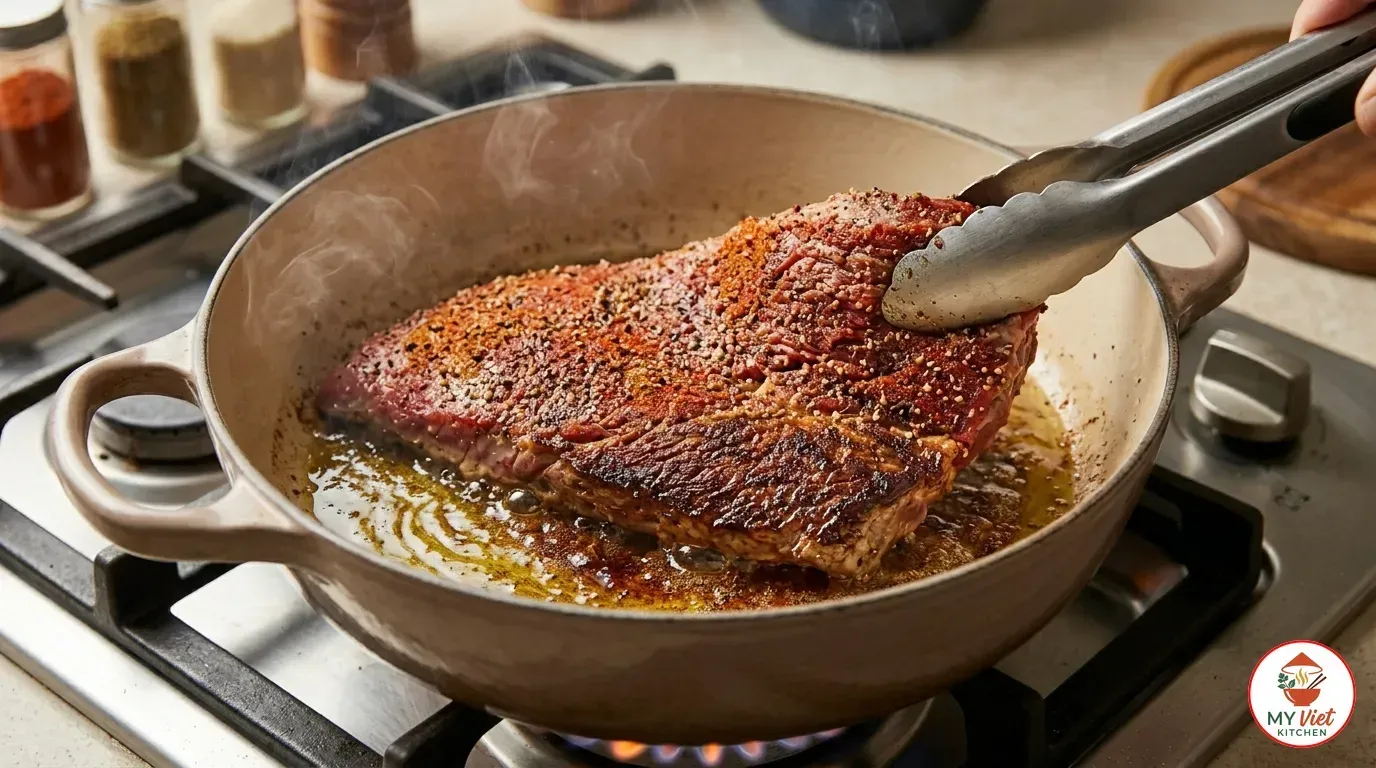
1Season the flank steak generously on both sides with salt, pepper, cumin, and smoked paprika. Heat the olive oil in a large Dutch oven over medium-high heat until the oil shimmers. Sear the steak for 3-4 minutes per side until a deep brown crust forms. This step triggers the Maillard reaction, which builds deep, savory flavor. Do not skip the sear, and do not move the steak while it browns.
Step 2: Build the Sofrito Base
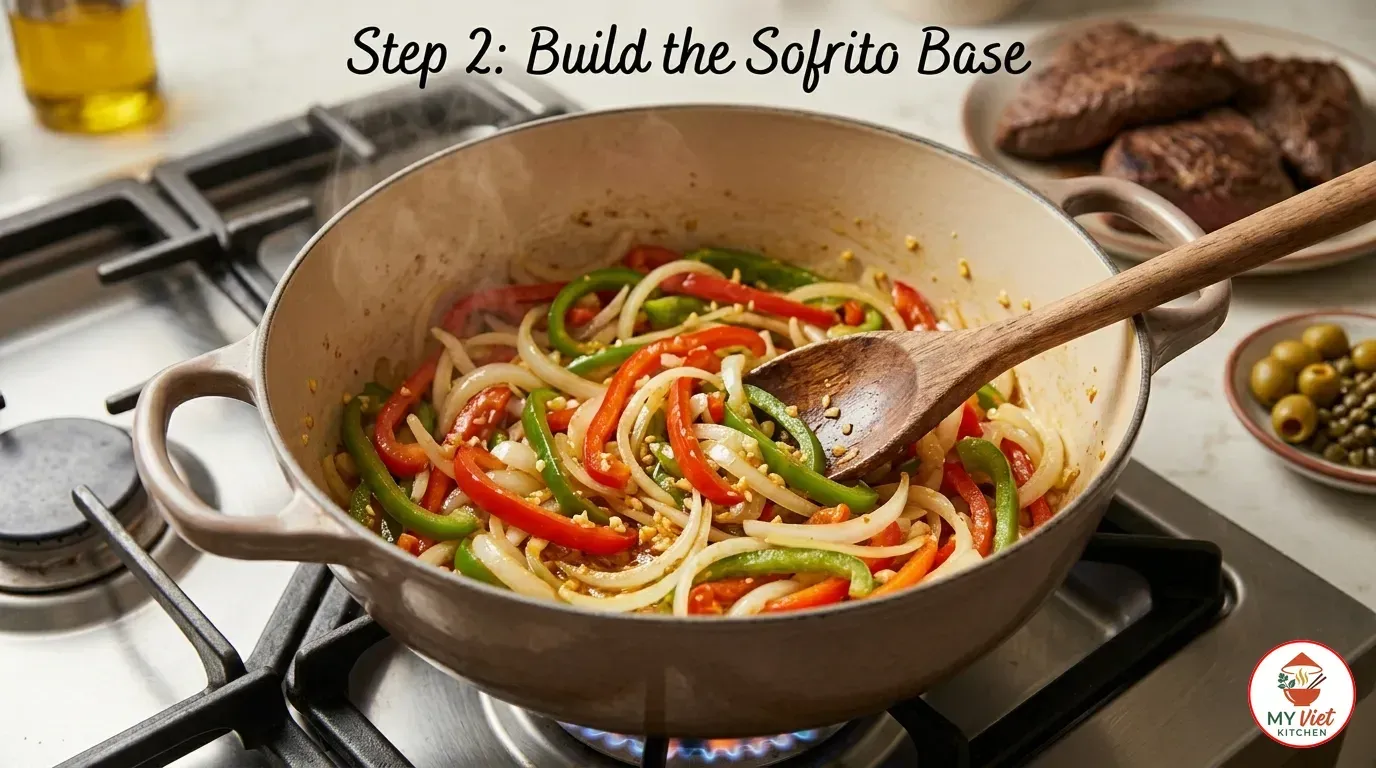
2Remove the seared steak and set it aside on a plate. In the same pot, add the sliced onion, green bell pepper, and red bell pepper. Saute for 5-6 minutes over medium heat until the vegetables soften and the onion turns translucent. Then add the minced garlic and cook for another minute until fragrant. This combination of onion, pepper, and garlic forms the sofrito — the aromatic backbone of Cuban cooking.
Step 3: Deglaze and Combine Liquids
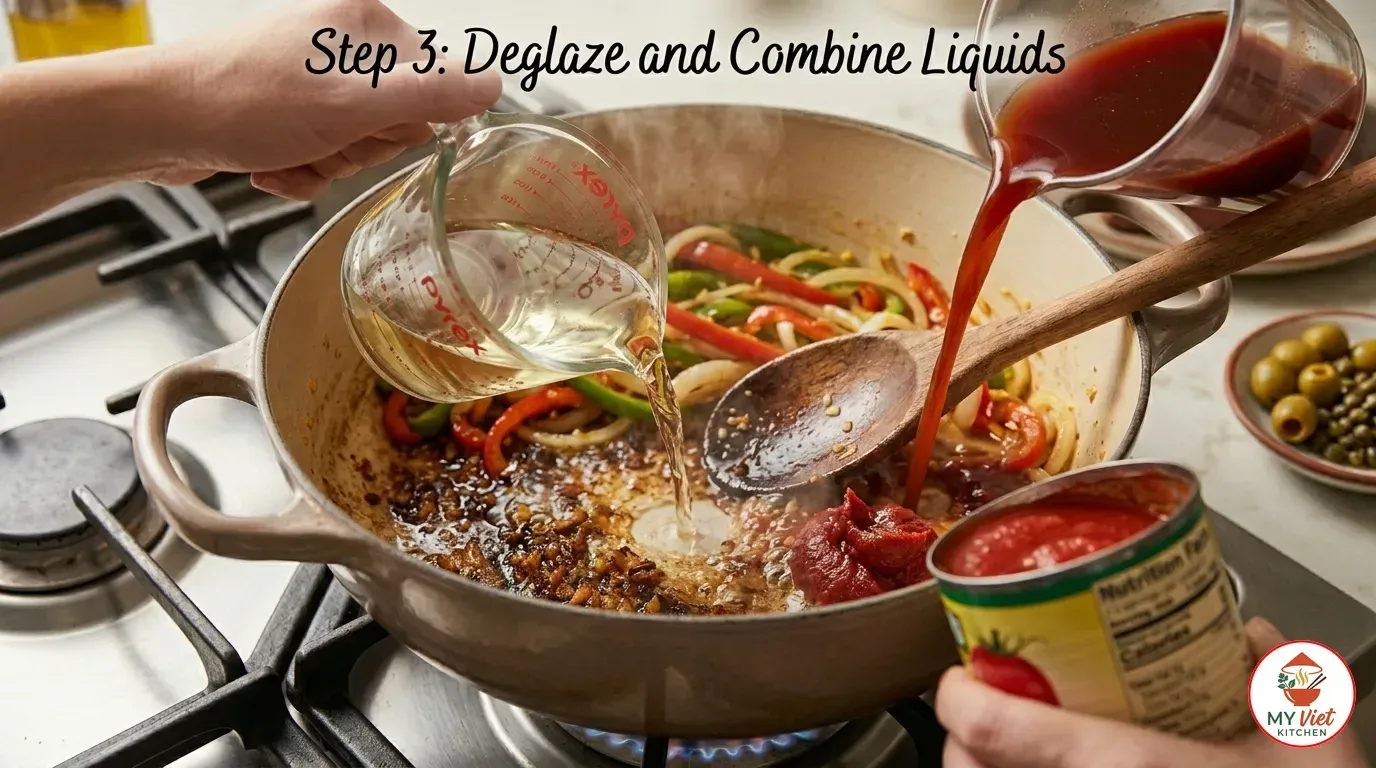
3Pour in the dry white wine and use a wooden spoon to scrape up all the browned bits stuck to the bottom of the pot. These fond bits carry concentrated beefy flavor. Let the wine simmer for about 2 minutes to cook off the alcohol. Then stir in the crushed tomatoes, tomato paste, beef broth, dried oregano, and bay leaves. Bring the mixture to a gentle simmer.
Step 4: Braise Low and Slow
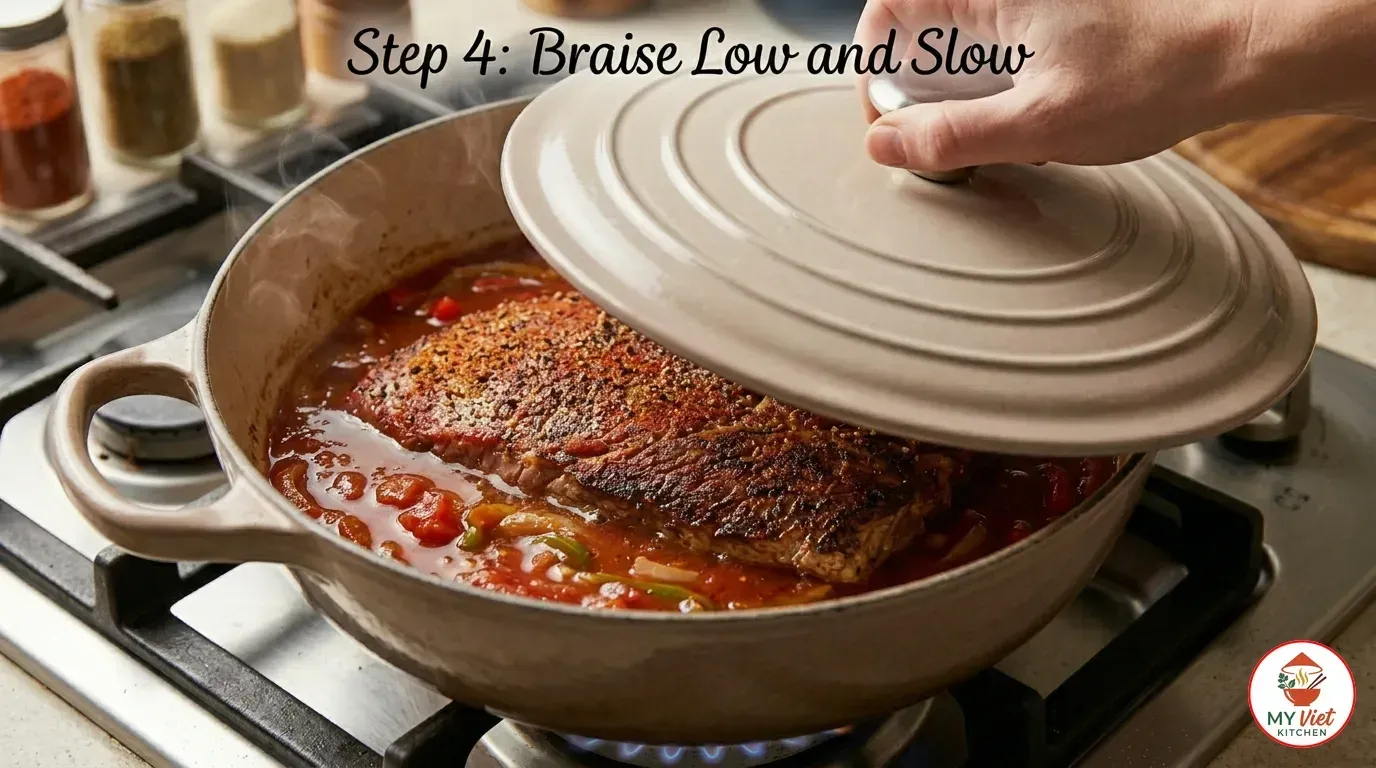
4Return the seared steak to the pot, nestling it into the sauce. Bring the liquid to a boil, then immediately reduce the heat to low. Cover the Dutch oven with a tight-fitting lid and let the beef simmer gently for 2 to 2.5 hours. Turn the meat over once at the halfway mark. The beef is ready when it falls apart easily when prodded with a fork. Patience is everything here — low heat and steady time transform a tough cut into something remarkably tender.
Step 5: Shred the Beef
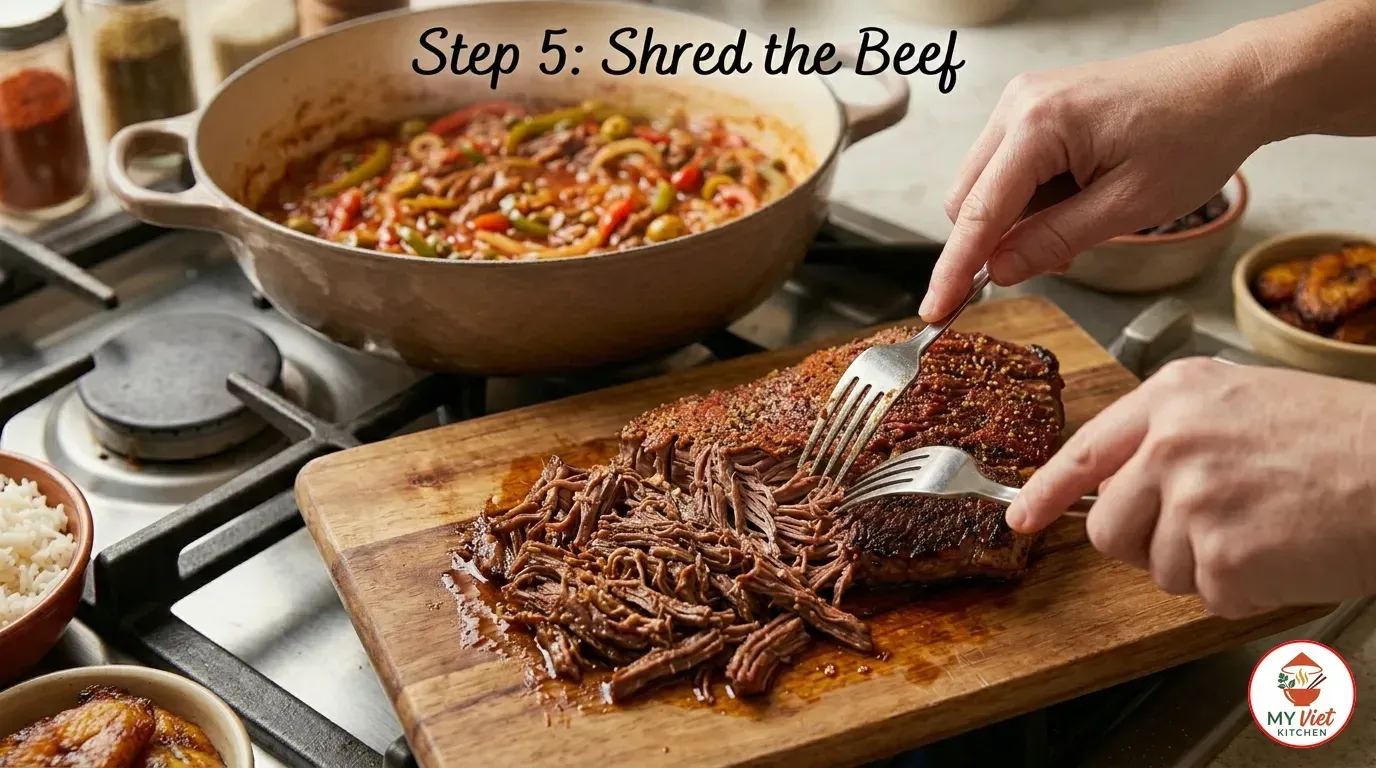
5Transfer the braised steak to a cutting board. Use two forks to pull the meat apart along the grain, shredding it into long, thin strands. Work gently and follow the natural direction of the fibers. The meat should pull apart with very little effort if it has been braised long enough. Return all the shredded beef to the pot and stir it into the sauce so every strand absorbs the rich braising liquid.
Step 6: Add Olives and Capers, Then Finish
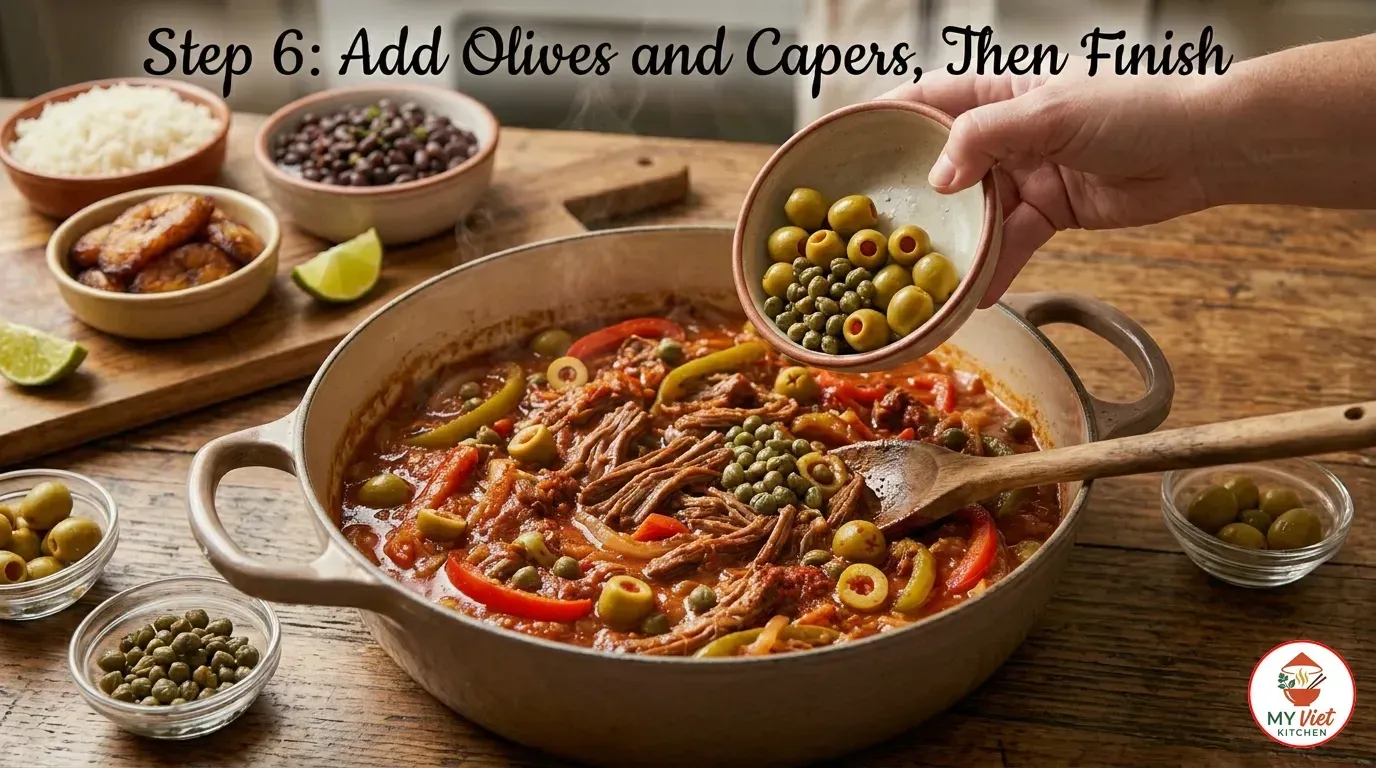
6Stir in the pimiento-stuffed green olives and drained capers. These two ingredients are essential to authentic ropa vieja — they provide the briny, tangy contrast that balances the sweetness of the peppers and tomatoes. Simmer uncovered for 10-15 minutes to let the flavors meld and the sauce thicken slightly. Remove the bay leaves, taste, and adjust salt and pepper as needed. Garnish with fresh cilantro and serve immediately.
Expert Tips for Perfect Ropa Vieja
Sear the Meat Properly
Pat the steak dry with paper towels before searing. Moisture on the surface creates steam instead of browning, and you lose flavor as a result. A very hot pot and a dry steak are the two keys to a great sear.
Keep the Braise at a Gentle Simmer
A hard boil will tighten the muscle fibers and make the beef tough and stringy. You want only a few lazy bubbles breaking the surface. If your stovetop runs hot, try finishing the braise in a 325F (165C) oven instead.
Make It a Day Ahead
Ropa vieja tastes even better the next day after the shredded beef has spent hours soaking in the sauce. The flavors deepen and meld overnight. Simply cool, refrigerate, and reheat gently on the stovetop before serving.
Ropa Vieja: Stovetop vs. Slow Cooker vs. Instant Pot
You can make this Cuban shredded beef using several methods. Here is how they compare so you can choose the approach that fits your schedule.
| Method | Cook Time | Best For |
|---|---|---|
| Dutch Oven (stovetop) | 2-2.5 hours | Best flavor control and fond development |
| Slow Cooker (low) | 8-10 hours | Hands-off cooking on a busy day |
| Slow Cooker (high) | 4-5 hours | Moderate time savings with minimal effort |
| Instant Pot | 45-60 minutes | Fastest method when time is limited |
Serving Suggestions
In Cuba, ropa vieja is nearly always served as a complete plate with starch, beans, and something sweet on the side. Building this traditional plate at home is simple and deeply satisfying.
The Perfect Accompaniments:
- White rice: The classic pairing that soaks up every drop of the tomato sauce. Use long-grain rice for the fluffiest results.
- Black beans: Cuban-style black beans seasoned with cumin and bay leaf complement the beef beautifully and add protein.
- Fried sweet plantains (maduros): Their caramelized sweetness creates a wonderful contrast against the savory, tangy stew.
- Cuban bread: Warm, crusty bread for mopping up the sauce is practically mandatory.
Beverage Pairings:
- Mojito: The mint and lime brighten the rich, meaty flavors and cleanse the palate between bites.
- Tempranillo or Garnacha wine: A medium-bodied Spanish red mirrors the dish’s Iberian roots and matches the tomato base.
- Cuban-style cafe con leche: A strong, sweet coffee served after the meal to close the experience in traditional fashion.
Storage and Reheating
Refrigerator: Store ropa vieja in an airtight container for up to 4 days. The flavor actually improves after a night in the fridge as the beef continues to absorb the braising sauce.
Freezer: Freeze in portioned airtight containers for up to 3 months. Make sure the sauce covers the meat completely to prevent freezer burn. Thaw overnight in the refrigerator before reheating.
Reheating: Warm the ropa vieja gently on the stovetop over medium-low heat, stirring occasionally. Add a splash of beef broth if the sauce has thickened too much. Avoid the microwave if possible, as it can dry out the shredded beef unevenly.
Common Mistakes to Avoid
1. Using the Wrong Cut of Beef
Tender cuts like ribeye or sirloin will not shred properly. They lack the long, tough muscle fibers that make ropa vieja’s signature texture possible. Stick with flank steak, skirt steak, or brisket for the best results.
2. Skipping the Sear
Dropping raw beef directly into the braising liquid produces a pale, flat-tasting stew. The sear builds a layer of caramelized flavor through the Maillard reaction that you cannot replicate any other way. Invest those extra five minutes at the start.
3. Braising at Too High a Temperature
High heat causes the collagen in the beef to contract rapidly, squeezing out moisture and leaving you with dry, chewy strands instead of juicy, tender ones. Keep the heat low and let time do the work.
4. Forgetting the Olives and Capers
Some cooks leave out the olives and capers to simplify the recipe, but these ingredients are essential. They provide the briny punch that distinguishes authentic ropa vieja from a generic beef stew. Without them, the dish loses its Cuban character.
Frequently Asked Questions
What does ropa vieja mean in English?
Ropa vieja translates to “old clothes” in English. The name describes the shredded appearance of the braised beef, which looks like torn, tattered fabric. According to a Spanish legend, a poor man shredded and cooked his old clothes, and they miraculously turned into a delicious meat stew to feed his family.
What cut of meat is best for ropa vieja?
Flank steak is the most traditional and widely recommended cut. Its long muscle fibers shred beautifully into the thin, ragged strands that define the dish. Skirt steak and brisket both work as alternatives, though brisket requires a longer cooking time of 3 to 4 hours.
Can you make ropa vieja in a slow cooker?
Absolutely. Sear the beef and saute the sofrito on the stovetop first for the best flavor, then transfer everything to a slow cooker. Cook on low for 8-10 hours or on high for 4-5 hours. Shred the beef and stir in the olives and capers during the last 30 minutes of cooking.
What do you traditionally serve with ropa vieja?
The classic Cuban plate includes white rice, black beans, and fried sweet plantains (maduros) alongside the ropa vieja. Warm Cuban bread for dipping into the sauce is also a staple. Together, these components create a balanced, deeply satisfying meal.
Can you freeze ropa vieja?
Yes, ropa vieja freezes exceptionally well. Store it in airtight containers with the sauce covering the shredded beef, and it will keep for up to 3 months. Thaw overnight in the refrigerator and reheat gently on the stovetop, adding a splash of broth if needed.
Variations and Adaptations
Slow Cooker Ropa Vieja:
After searing the beef and building the sofrito, transfer everything to a slow cooker. Cook on low for 8-10 hours, then shred the beef directly in the pot. Stir in the olives and capers and let them warm through for 15 minutes before serving. This hands-off approach is ideal for weeknight dinners.
Instant Pot Ropa Vieja:
Use the saute function to sear the beef and cook the sofrito directly in the Instant Pot. Add all braising ingredients, seal the lid, and pressure cook on high for 45 minutes with a natural release. Shred the beef, stir in the olives and capers, and simmer on the saute setting for a few minutes to finish.
Chicken Ropa Vieja:
Substitute bone-in, skin-on chicken thighs for the flank steak. Sear the thighs skin-side down, then braise in the same sauce for about 40-45 minutes. Remove, shred, and return to the pot. The cooking time drops dramatically, making this a faster weeknight option.
Vegan Ropa Vieja:
Replace the beef with young jackfruit (canned in brine, not syrup). Drain and shred the jackfruit, then saute it with the sofrito. Braise in vegetable broth with the same spices for about 30 minutes. The jackfruit’s stringy texture mimics shredded beef surprisingly well, and the sauce does the heavy lifting on flavor.
The Cultural Significance of Ropa Vieja
Ropa vieja is far more than a recipe — it is a symbol of Cuban identity and resilience. The dish tells the story of a cuisine shaped by waves of migration, colonization, and cultural blending. Its roots in medieval Sephardic Spain connect it to centuries of food history. Its Caribbean rebirth reflects the creativity of Cuban cooks who adapted it with local ingredients and bold flavors.
In Cuban households, ropa vieja carries deep emotional weight. It is the dish that grandmothers pass down, the centerpiece of holiday tables, and the meal that Cuban diaspora communities cook to stay connected to home. The dish also reflects a practical philosophy: taking an inexpensive, tough cut of meat and transforming it through patience and technique into something extraordinary. That ethos — making the most of what you have — runs through the heart of Cuban cooking and resonates with home cooks everywhere.
Today, you will find ropa vieja on restaurant menus from Miami to Madrid, but it remains at its best when made at home, slowly, with care. The aroma that fills your kitchen during those two hours of braising is part of the experience, and the reward at the end is a dish that connects you to one of the Caribbean’s richest culinary traditions.
Conclusion
Making authentic ropa vieja at home requires no special equipment and no hard-to-find ingredients — just a good Dutch oven, a quality flank steak, and the patience to let a slow braise work its magic. The technique is forgiving, the flavors are bold, and the results improve with time. Whether you serve it over fluffy white rice for a weeknight dinner or build the full Cuban plate with black beans and sweet plantains for a weekend feast, this dish delivers comfort and flavor in equal measure.
If you love hearty braised dishes, also check out our Bo Kho (Vietnamese Beef Stew) for another take on slow-cooked beef with bold spices. For more Caribbean-inspired recipes, explore our World Cuisines collection for dishes from across the globe.