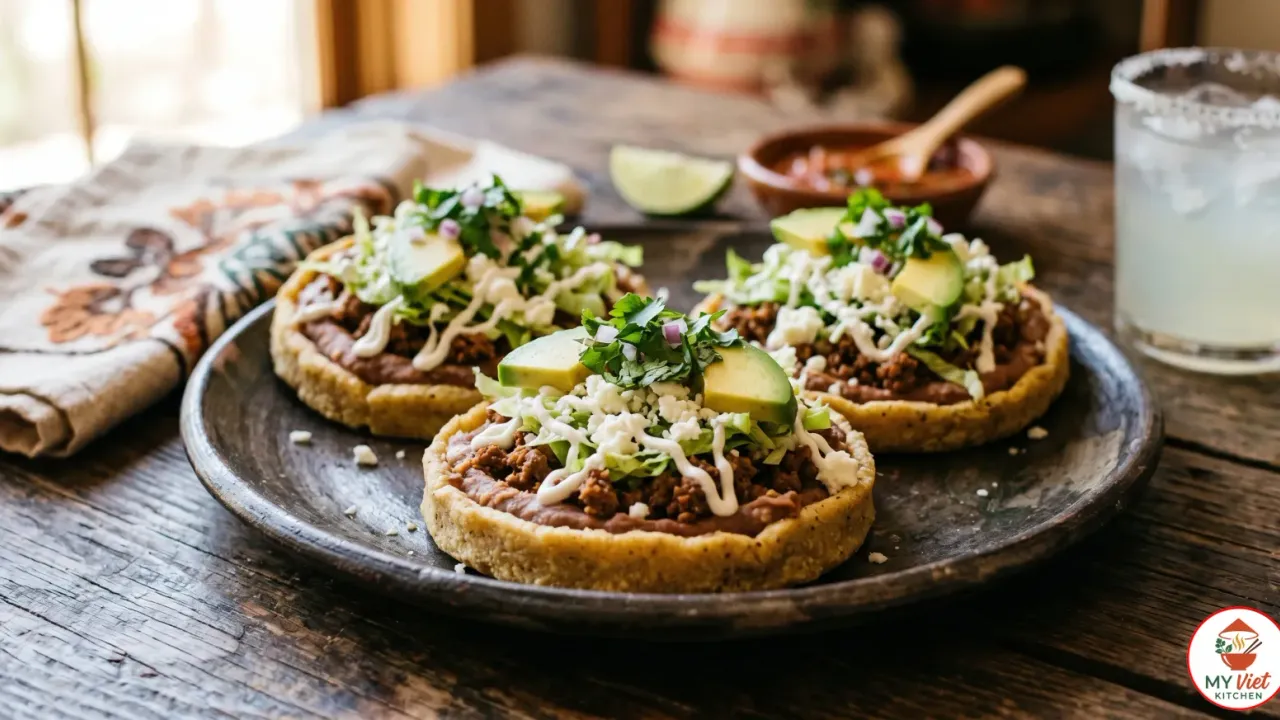
Sopes are one of the most beloved antojitos in Mexican street food, and for good reason. These thick, handmade corn cakes feature a pillowy masa base with pinched edges that cradle layers of refried beans, seasoned meat, crisp lettuce, crumbled queso fresco, and a drizzle of tangy crema. Unlike flat tortillas, sopes hold their toppings in a small edible bowl that delivers every flavor in a single satisfying bite. This step-by-step guide shows you how to make authentic Mexican sopes at home from scratch, with detailed tips for achieving the perfect texture every time.
Prep Time: 30 minutes | Cook Time: 25 minutes | Servings: 12 sopes
Difficulty: Easy | Calories: ~280 per serving
What Makes Sopes Special?
Sopes occupy a special place in Mexican cuisine because they represent the ingenuity of home cooks who transformed simple corn masa into something extraordinary. At their core, sopes are nothing more than thick corn dough cooked on a hot griddle. However, the genius lies in pinching the warm edges upward to create a shallow vessel. This raised border turns a flat disc into an edible plate that holds beans, meats, salsas, and fresh garnishes without spilling. The crispy fried exterior and soft, corn-scented interior create a contrast that tortillas alone cannot match.
The history of sopes stretches back to pre-Hispanic Mexico, where corn was the foundation of daily life. Ancient Mesoamerican cultures ground dried corn on stone metates and shaped the masa into thick cakes cooked over open flames. After the Spanish conquest introduced new ingredients like cheese, lard, and various meats, Mexican cooks layered these additions onto the traditional masa base. Over centuries, regional variations emerged across the country. Jalisco calls them picaditas. Veracruz favors a thinner version called pellizcadas. Meanwhile, Oaxaca serves memelas with a slightly different shape. Despite these regional names, the fundamental technique of pinching a thick corn disc remains the same everywhere.
What separates excellent sopes from mediocre ones comes down to three things. First, the masa dough must have the right hydration level so it stays pliable without cracking. Second, the griddle temperature needs to be high enough to develop golden spots on the surface without drying out the interior. Third, the toppings should balance richness with freshness. Refried beans and seasoned meat provide depth, while lettuce, salsa, and crema add brightness. Master these fundamentals, and your sopes will taste like they came from a street stall in Mexico City.

Choosing the Right Masa Harina for Sopes
Masa harina is the single most important ingredient in sopes, so your choice directly affects the texture and flavor of the final dish. This corn flour comes from dried corn kernels soaked in a lime water solution, a process called nixtamalization. The lime treatment softens the corn, removes the hull, and unlocks nutrients while giving the masa its characteristic earthy, slightly tangy flavor. Regular cornmeal will not work because it lacks this treatment.
- Maseca (best choice): The most widely available masa harina brand in North America. Maseca produces a smooth, easy-to-work dough that yields tender sopes with a clean corn flavor. You can find it in the international aisle of most grocery stores or in any Latin American market.
- Bob’s Red Mill Masa Harina: A reliable alternative with a slightly coarser grind than Maseca. It produces sopes with a more rustic texture and a nuttier corn flavor. This brand is easier to find in health food stores and online.
- Fresh masa from a tortilleria: If you have access to a local tortilleria, fresh masa is the gold standard. It requires no hydration since it already contains the right amount of moisture. Sopes made with fresh masa have a softer, more tender crumb and a deeper corn aroma that dried masa harina cannot fully replicate.
- Regular cornmeal (not recommended): Cornmeal has not been nixtamalized and lacks the binding properties of masa harina. Dough made from cornmeal will crumble and fall apart. Do not substitute it under any circumstances.
For more Mexican antojito recipes that use masa harina, explore our gorditas recipe, which uses the same dough but stuffs the fillings inside the masa pocket instead of layering them on top. You can also learn more about the nixtamalization process that makes masa harina unique.
Ingredients for Sopes
Masa Base:
- 2 cups masa harina (such as Maseca)
- 1 1/4 cups warm water
- 1/2 teaspoon salt
- 1 tablespoon lard or vegetable shortening
Seasoned Meat Topping:
- 1 pound ground beef or shredded chicken
- 1/2 cup diced white onion
- 2 cloves garlic, minced
- 1 teaspoon ground cumin
- 1/2 teaspoon chili powder
- 1/2 teaspoon smoked paprika
- 1 tablespoon vegetable oil
- Salt and black pepper to taste
Toppings and Garnishes:
- 1 cup refried beans, warmed
- 1 cup shredded iceberg lettuce
- 1/2 cup crumbled queso fresco
- 1/2 cup Mexican crema or sour cream
- 1 cup salsa verde or salsa roja
- 1 ripe avocado, sliced
- Fresh cilantro for garnish
- Vegetable oil for frying
Pro tip: Adding a tablespoon of lard or shortening to the masa dough makes the sopes more tender and prevents cracking. If you prefer a vegan option, use coconut oil instead. The fat coats the starch granules in the masa and creates a softer, more pliable texture that holds together beautifully when you pinch the edges.
Step-by-Step Instructions
Step 1: Prepare the Masa Dough
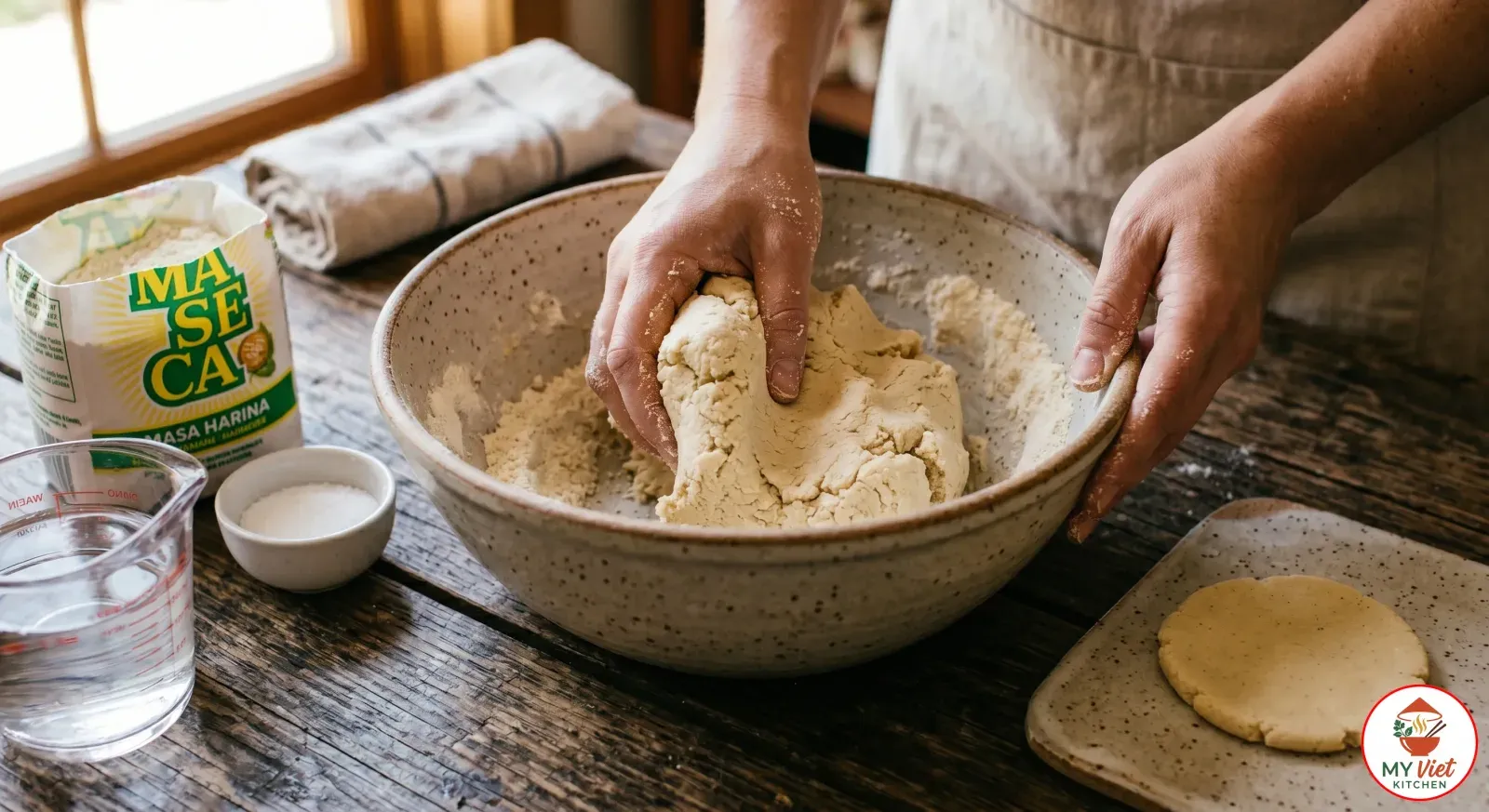
1 In a large mixing bowl, combine the masa harina with the salt. Add the warm water and the lard or shortening. Mix with your hands until a smooth, uniform dough forms. The dough should feel like soft playdough and hold its shape when you press it into a ball. Test the hydration by pressing a small piece flat between your fingers. If the edges crack, the dough is too dry and you should add warm water one tablespoon at a time. If the dough sticks to your hands, sprinkle in a bit more masa harina. Cover the bowl with a damp kitchen towel and let the dough rest for 15 minutes. This rest lets the masa fully absorb the water, making it easier to shape.
Step 2: Shape the Sopes Bases
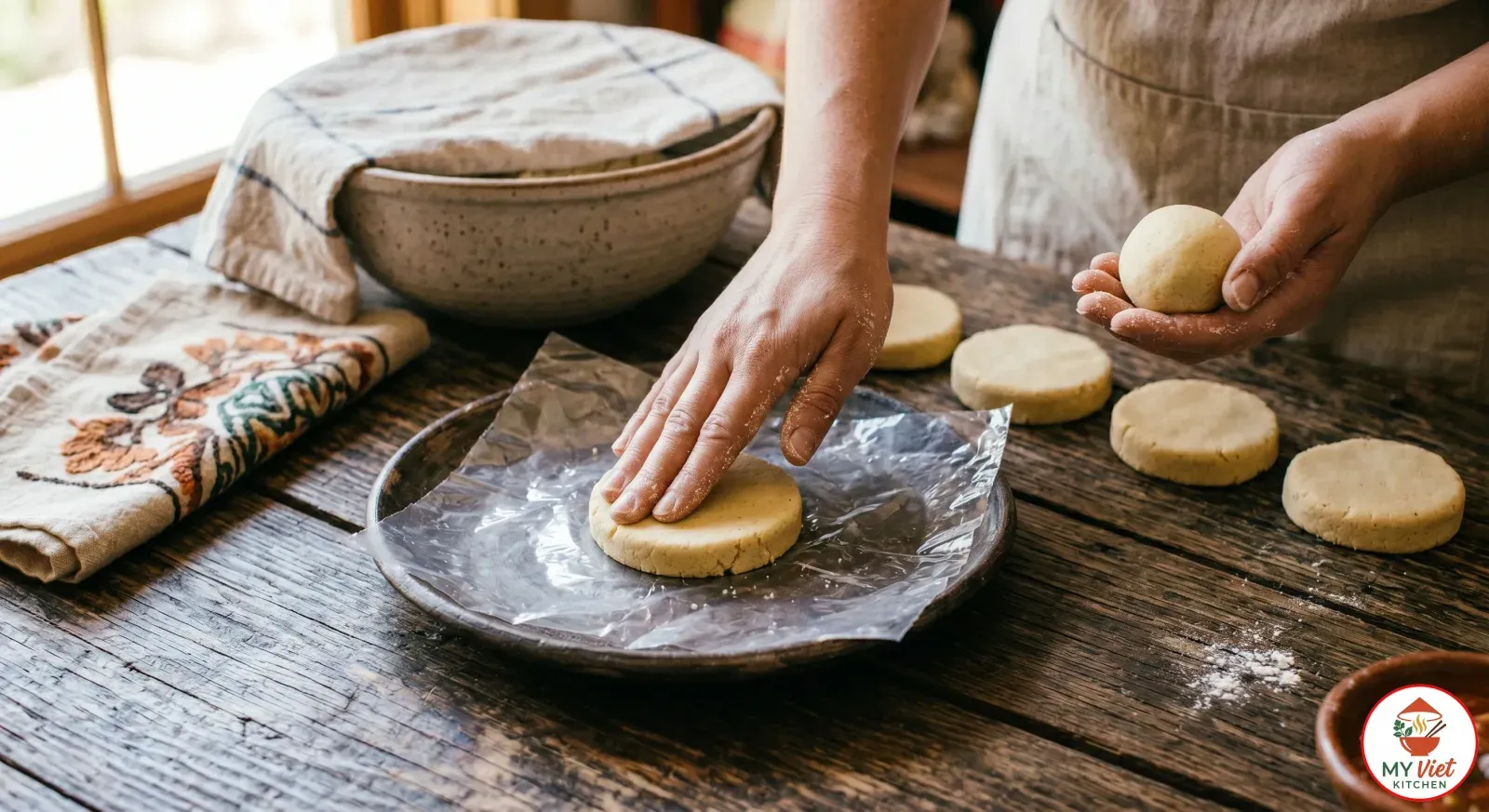
2 Divide the dough into 12 equal portions. Roll each portion into a smooth ball about the size of a golf ball. Place one ball between two sheets of plastic wrap or inside a zip-lock bag that has been cut open along the sides. Press the ball into a thick disc about 3 inches across and 1/4 inch thick using a tortilla press or a heavy flat plate. Sopes should be noticeably thicker than tortillas, so do not press too thin. Too-thin discs crack when pinched and bend under toppings. Repeat with the remaining dough balls, keeping the finished discs covered with a damp towel to prevent drying.
Step 3: Cook and Pinch the Sopes
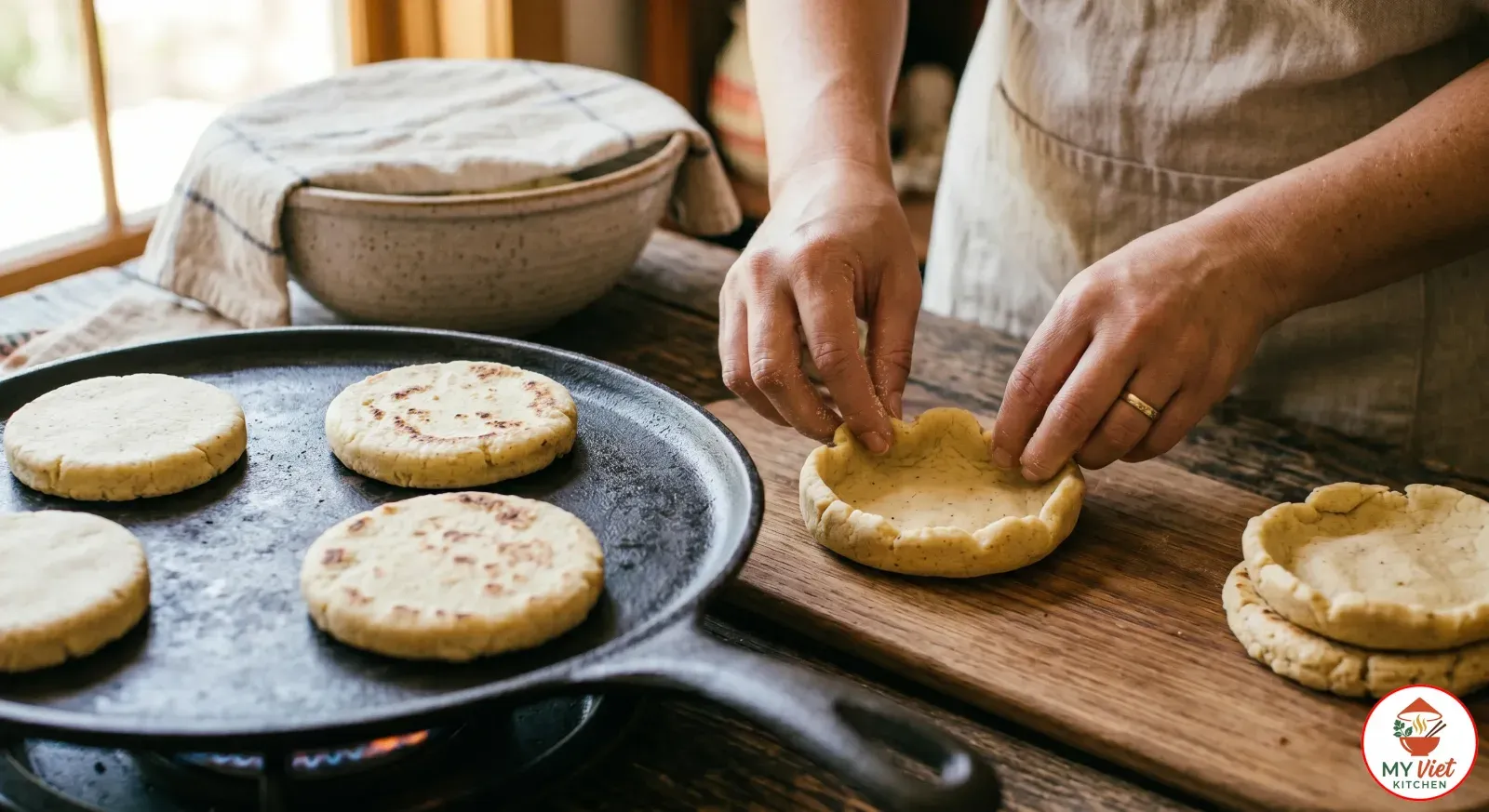
3 Heat a dry comal, cast iron skillet, or griddle over medium-high heat until a drop of water sizzles on contact. Place the masa discs on the hot surface and cook for 2 to 3 minutes on the first side until golden-brown spots appear on the bottom. Flip and cook for another 2 minutes on the second side. The surface should feel firm and dry to the touch. Remove each disc and immediately pinch the edges upward to create a raised border about half an inch high. Work quickly because the masa becomes rigid as it cools. If the discs cool before you can pinch them, return them to the griddle for 30 seconds to warm them back up. The pinched edges form a shallow cup that holds the toppings.
Step 4: Fry the Sopes
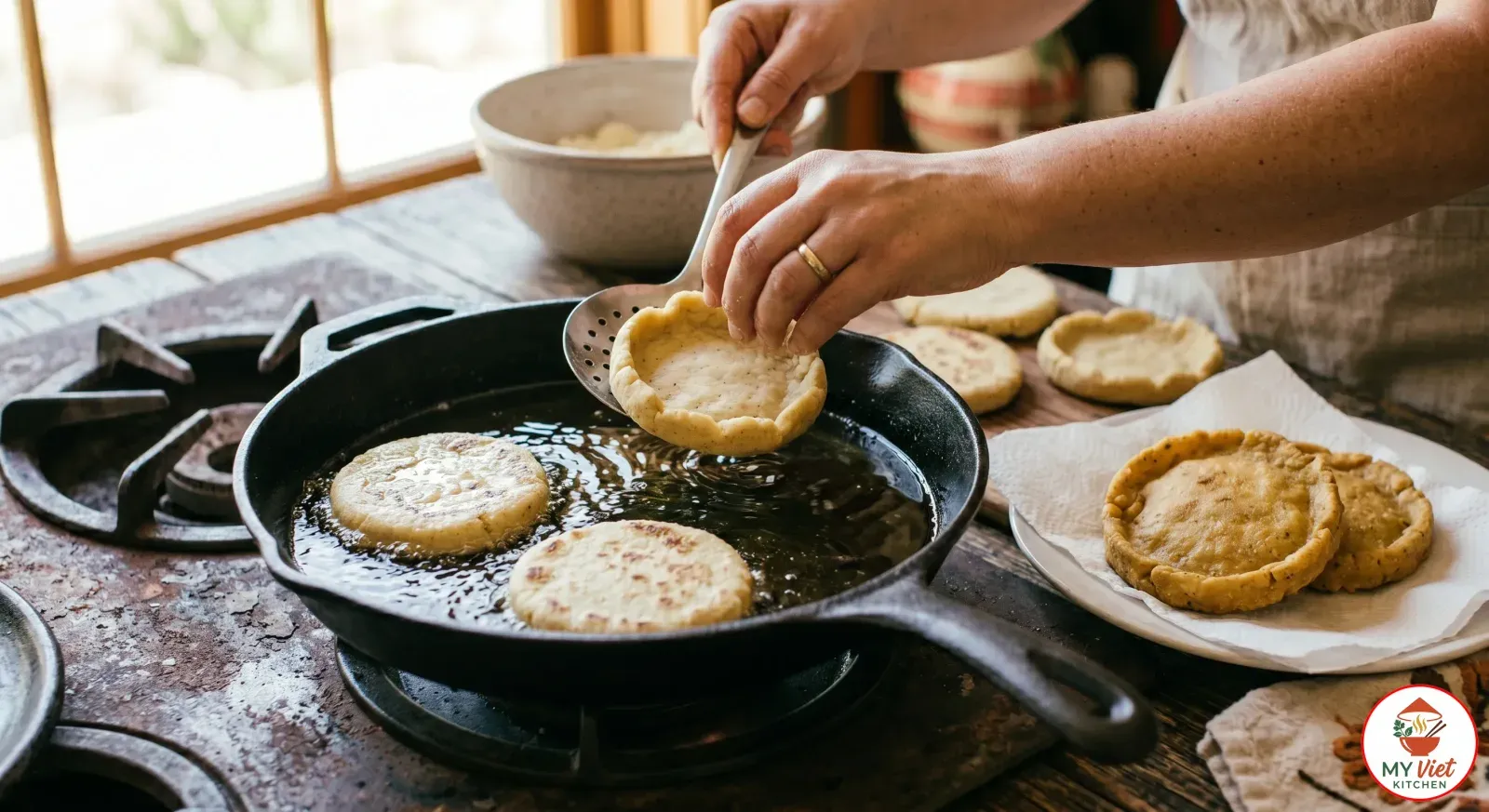
4 Pour vegetable oil into a large skillet to a depth of about half an inch and heat over medium heat until the surface shimmers. Place the pinched sopes into the hot oil in batches of 3 or 4. Fry for 1 to 2 minutes per side until the exterior turns golden and crispy. Use a slotted spoon to remove them and drain on a plate lined with paper towels. Frying adds a satisfying crunch and seals the surface so it stays firm under toppings. If you prefer a lighter version, you can skip frying and serve the sopes directly from the griddle. They will still taste good, but the texture will be softer.
Step 5: Prepare the Seasoned Meat
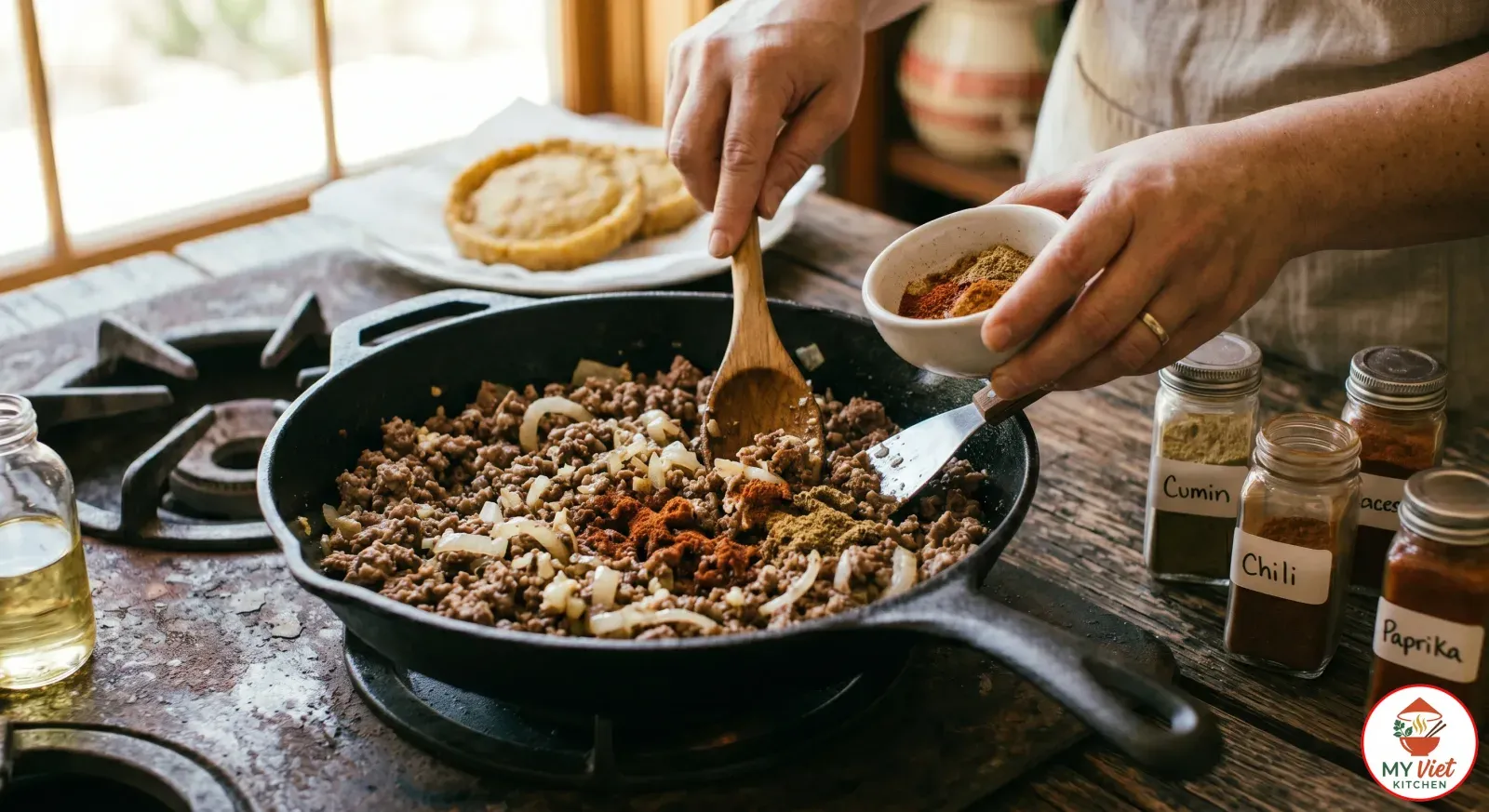
5 While the sopes drain, heat a tablespoon of vegetable oil in a skillet over medium-high heat. Add the diced white onion and cook, stirring occasionally, for 3 minutes until it softens and turns translucent. Stir in the minced garlic and cook for 30 seconds until fragrant. Add the ground beef and break it into fine crumbles. Season with cumin, chili powder, smoked paprika, salt, and pepper. Cook for 8 to 10 minutes until the meat browns evenly. Drain any excess fat from the skillet. For chicken, use shredded poached breast tossed with the same spices.
Step 6: Assemble and Serve
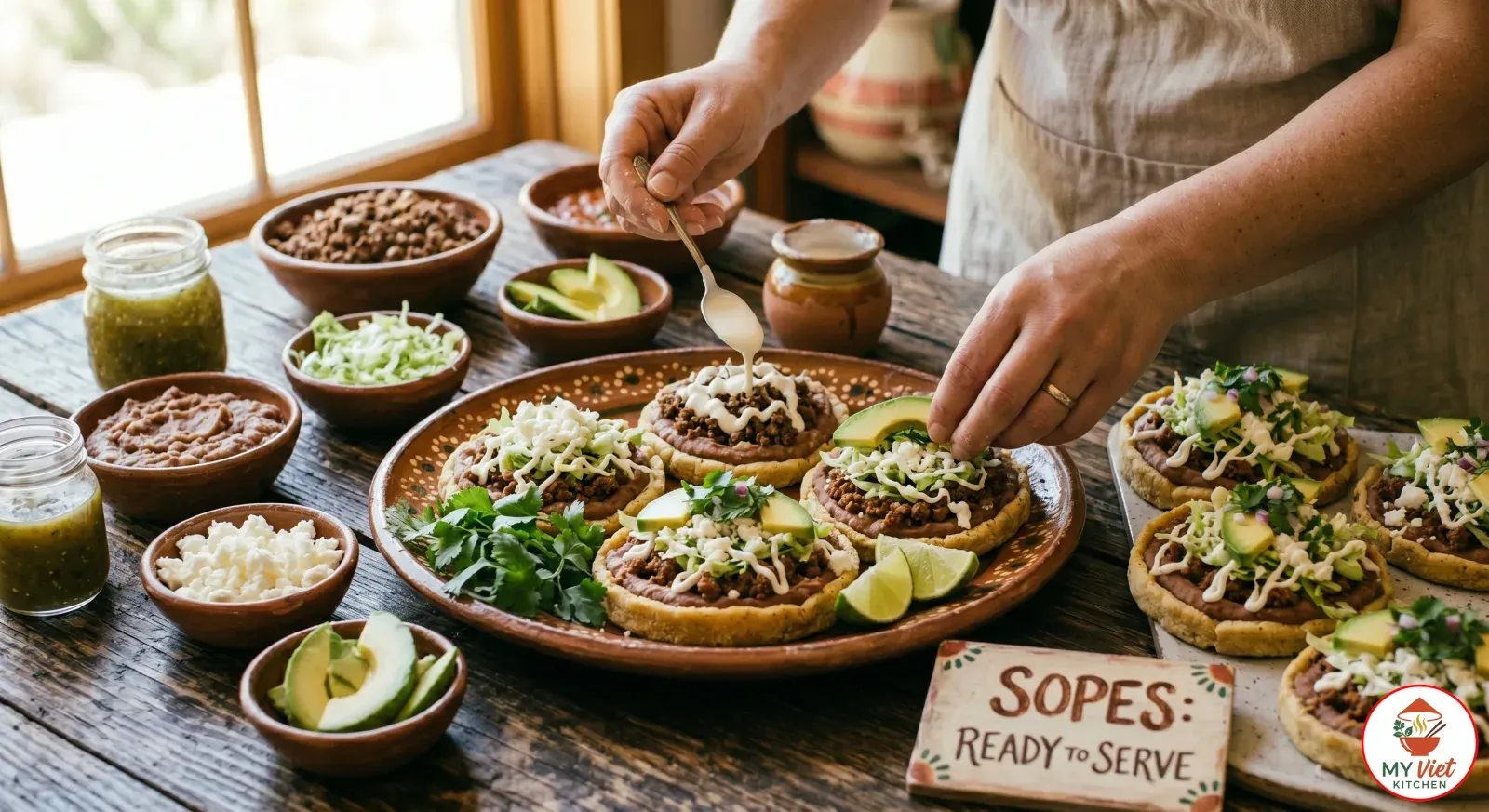
6 Place the warm, fried sopes on a serving platter. Spread a generous tablespoon of warm refried beans onto each sope, using the back of the spoon to create an even layer that reaches the pinched edges. Add a heaping spoonful of the seasoned meat on top of the beans. Layer on shredded lettuce, crumbled queso fresco, a drizzle of crema, salsa, and avocado slices. Finish with a scattering of fresh cilantro leaves. Serve right away while the sopes are warm and the crispy-to-cool contrast is at its peak.
Expert Tips for Perfect Sopes
Get the Dough Hydration Right
The most common failure with sopes is dough that is either too dry or too wet. Dry dough cracks when you try to pinch the edges, ruining the signature shape. Wet dough sticks to your hands and produces sopes that are gummy inside. Start with the amount of water listed in the recipe, then adjust gradually. The perfect masa dough should feel like soft playdough. It should hold together in a ball without sticking to your palms, and a pressed piece should show smooth edges with no cracking.
Pinch While Still Warm
Timing matters when you pinch the edges. The cooked masa discs must be warm and pliable for the edges to hold their shape. Keep a clean kitchen towel nearby and work with one disc at a time. As soon as you remove a disc from the griddle, pick it up and use your thumb and index finger to pinch around the entire perimeter. If you try this with cooled discs, the edges will crack and break off. Skilled sope makers in Mexico do this barehand at speed. You can use a folded towel to protect your fingers.
Control Your Oil Temperature
When frying the sopes, keep the oil at a steady medium heat around 350 degrees Fahrenheit. Oil that is too hot will burn the exterior before the interior crisps properly. Oil that is too cool causes the sopes to absorb excess grease, making them heavy and soggy. Test the temperature by dropping a small piece of masa into the oil. It should sizzle immediately and rise to the surface within a few seconds.
Sopes vs. Other Mexican Antojitos
Mexican cuisine features a family of masa-based dishes that share the same corn foundation but differ in shape, thickness, and how they hold their fillings. Understanding these differences helps you appreciate what makes sopes unique and when to choose one over another.
| Feature | Sopes | Gorditas | Tostadas | Huaraches |
|---|---|---|---|---|
| Shape | Thick disc with pinched edges | Thick puffed pocket | Flat, thin, crispy | Oblong sandal shape |
| Thickness | 1/4 inch | 1/2 inch | Very thin | 1/4 inch |
| Toppings | Layered on top | Stuffed inside | Piled on top | Spread on top |
| Texture | Crispy outside, soft inside | Soft and pillowy | Crunchy throughout | Crispy edges, soft center |
| Frying | Shallow fried after shaping | Cooked on griddle or fried | Deep fried or baked | Cooked on griddle |
Serving Suggestions
Sopes are traditionally served as street food snacks or appetizers in Mexico, but they can easily anchor a full meal when you pair them with the right accompaniments. In Mexican homes, a platter of sopes often appears at family gatherings and celebrations alongside other antojitos like tamales and quesadillas.
The Perfect Accompaniments:
- Mexican rice: A classic side dish that absorbs the flavors from the salsa and crema dripping off the sopes. Tomato-based Mexican rice adds color and substance to the plate.
- Elote or esquites: Grilled corn on the cob or corn in a cup with mayo, chili powder, and lime juice complements the corn flavor in the sopes beautifully.
- Charro beans: These soupy pinto beans with bacon, tomato, and cilantro offer a hearty counterpoint to the crispy sopes.
- Pickled jalapenos and carrots: The acidity cuts through the richness of the meat and beans, refreshing your palate between bites.
Beverage Pairings:
- Agua de Jamaica: This tart hibiscus tea balances the savory richness of the sopes with its fruity acidity.
- Horchata: A sweet, creamy rice drink that cools the palate if you use a spicy salsa on your sopes.
- Mexican lager: A cold Modelo Especial or Pacifico pairs naturally with the fried corn flavor.
- Margarita: The lime and salt in a classic margarita echo the citrus notes in salsa verde.
Storage and Reheating
Refrigerator: Store the cooked, unfilled sopes bases in an airtight container for up to 3 days. Keep the toppings stored separately because assembled sopes become soggy within hours. The seasoned meat stores well for up to 4 days in the refrigerator.
Freezer: Freeze the cooked and pinched sopes bases (before frying) on a parchment-lined tray until solid, then transfer to a freezer bag for up to 2 months. Fry them directly from frozen, adding 1 extra minute per side. The masa dough itself can also be frozen in a ball wrapped tightly in plastic wrap for up to 1 month.
Reheating: The best way to reheat sopes bases is in a skillet with a thin layer of oil over medium heat. This restores the crispy texture in about 2 minutes per side. Avoid the microwave because it turns the masa rubbery and soft. You can also reheat them in a 375-degree oven for 8 minutes on a wire rack, which crisps both sides evenly.
Common Mistakes to Avoid
1. Making the Dough Too Dry
Dry masa dough is the most frequent mistake and it leads to cracked edges, crumbly texture, and sopes that fall apart. Always check hydration before shaping. Press a small piece of dough between your fingers and look at the edges. Smooth edges mean the dough is ready. Cracked edges mean you need more water. Add it one tablespoon at a time and knead thoroughly after each addition.
2. Pressing the Discs Too Thin
Sopes are not tortillas. They need to be thick enough to support toppings and create a substantial bite. Aim for about 1/4 inch thickness and 3 inches in diameter. If you press them too thin, the pinched edges will be fragile and the center will not have enough body to hold the beans and meat without bending or breaking.
3. Waiting Too Long to Pinch the Edges
The window for pinching is narrow. Once the cooked disc cools, the starches in the masa set and the edges become rigid. You need to pinch each sope within 30 seconds of removing it from the griddle. Cook only 2 or 3 discs at a time so you can pinch them before they cool down. Speed and organization make the difference here.
4. Overloading the Toppings
A generous hand is tempting, but too many toppings cause the sope to collapse under the weight. Layer thoughtfully. Start with a thin spread of beans, then a moderate amount of meat, and finish with lighter toppings like lettuce, cheese, and crema. Each layer should be visible, and each bite should include all the elements.
Frequently Asked Questions
What is the difference between sopes and tostadas?
Sopes and tostadas both serve as bases for toppings, but they differ in thickness and texture. Sopes are thick masa discs that are cooked on a griddle, pinched around the edges, and then lightly fried. They have a soft interior with a crispy shell. Tostadas are thin, flat tortillas fried until completely crunchy throughout. Sopes hold toppings more securely thanks to their raised border, while tostadas tend to shatter when you bite into them.
Can you make sopes ahead of time?
You can prepare the sopes bases up to 3 days in advance. Cook them on the griddle, pinch the edges, and store them in the refrigerator in an airtight container. Fry them just before serving to restore crispiness. Do not assemble the toppings until you are ready to eat, because the moisture from beans and salsa will soften the masa.
Are sopes gluten free?
Traditional sopes are naturally gluten free because masa harina comes from nixtamalized corn, not wheat. As long as your toppings and salsa contain no wheat-based ingredients, sopes are safe for people following a gluten-free diet. Check that your masa harina brand is certified gluten free if you have celiac disease.
What other fillings work well on sopes?
Sopes are incredibly versatile. Beyond ground beef, popular toppings include shredded chicken tinga with chipotle, carnitas (slow-cooked pulled pork), chorizo with potatoes, nopales (cactus) with cheese for a vegetarian option, and al pastor style pork with pineapple. The key is to use a well-seasoned, not-too-wet filling so the base stays crispy.
Why are my sopes cracking when I pinch the edges?
Cracking occurs for two main reasons. The dough may lack sufficient moisture, so add warm water gradually until the masa is smooth and pliable. Alternatively, the discs may have cooled too much before you tried to pinch them. Always pinch while the masa is still warm from the griddle. If a disc cools down, return it to the heat for 30 seconds before attempting to shape the border.
Variations and Adaptations
Chicken Tinga Sopes:
Swap the ground beef for shredded chicken in a smoky chipotle tomato sauce. Poach and shred chicken breasts, then simmer them in chipotle peppers in adobo with crushed tomatoes and onion. The smoky heat of the chipotle pairs beautifully with the sweet corn flavor of the masa base. Top with pickled red onion for a bright contrast.
Vegetarian Black Bean Sopes:
For a meatless version, swap the ground beef for seasoned black beans mashed with cumin, garlic, and a splash of lime juice. Top with roasted poblano peppers, crumbled cotija cheese, sliced radishes, and a generous drizzle of salsa verde. This version is naturally vegetarian and packed with protein from the double layer of beans.
Carnitas Sopes:
Slow-cooked pulled pork makes an outstanding sope topping. Braise pork shoulder with orange juice, garlic, and cumin until fork-tender, then shred and crisp the edges in a hot skillet. The caramelized, slightly crispy pork adds rich depth to the sopes. Finish with a bright pineapple salsa and thinly sliced white onion.
Breakfast Sopes:
Sopes make an excellent breakfast platform. Top them with refried beans, scrambled eggs mixed with chorizo, a spoonful of salsa roja, and crumbled queso fresco. In many parts of Mexico, sopes are sold at morning markets as a hearty way to start the day. The combination of eggs, spicy chorizo, and crispy masa is deeply satisfying.
The Cultural Significance of Sopes
Sopes carry deep cultural meaning in Mexico because they represent the unbroken link between modern Mexican cooking and its pre-Hispanic roots. Corn has been sacred in Mesoamerican cultures for thousands of years. The Aztecs and Maya believed that the gods created humanity from corn dough, and this reverence for maize persists in Mexican culture today. Every time a cook grinds corn into masa and shapes it by hand, they participate in a tradition that predates written history.