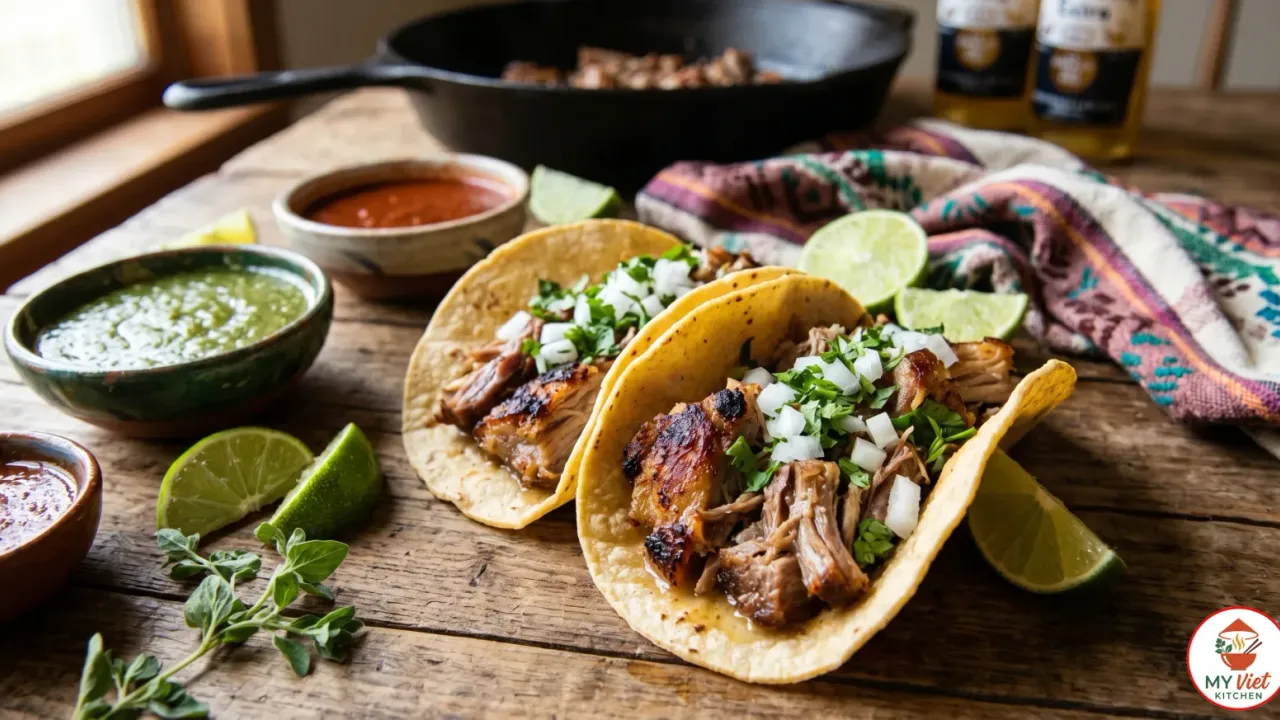
Nothing captures the essence of Mexican street food quite like carnitas. These slow-braised pork pieces deliver a stunning contrast of textures. Crispy, golden edges give way to juicy, tender meat seasoned with citrus, garlic, and warm spices. Originally from the state of Michoacan, carnitas have become one of the most popular taco fillings across Mexico and beyond. This recipe shows you how to make great carnitas at home with simple tools and a patient hand.
Prep Time: 20 minutes | Cook Time: 180 minutes | Servings: 8
Difficulty: Easy | Calories: ~380 per serving
What Makes Carnitas Special?
The word carnitas translates to “little meats” in Spanish, and the name perfectly describes the dish. Chunks of pork shoulder braise slowly in a mixture of their own rendered fat, citrus juices, milk, and aromatics until they become impossibly tender. Then comes the crucial final step: crisping the shredded meat under a broiler until the edges turn golden and crunchy. This two-stage cooking process is what sets carnitas apart from every other braised pork dish.
Unlike American pulled pork that relies on smoke and barbecue sauce, carnitas build their flavor from within. Orange juice, lime juice, and milk create a braising liquid that softens the meat while adding bright acidity and subtle sweetness. As the liquid reduces, the milk solids brown alongside the pork fat. This produces that signature golden crust. In fact, traditional cooks in Michoacan use large copper pots called cazos. The pork confits in its own lard until every piece hits that perfect balance of crispy and tender.
What makes this recipe so rewarding is its simplicity. You do not need rare ingredients or fancy tools. A heavy Dutch oven, a baking sheet, and a few hours of patience will give you carnitas that rival any taqueria in Mexico City. The braising is mostly hands-off, so you can go about your day while the pork transforms.

Choosing the Right Pork for Carnitas
The cut of pork you select will determine the texture and flavor of your carnitas. You need a well-marbled cut with plenty of connective tissue that breaks down during the long braise. Here are the best options to consider.
- Pork shoulder or pork butt (best choice): Despite its name, pork butt actually comes from the upper shoulder. It has the ideal balance of fat, collagen, and lean meat for carnitas. Every piece shreds beautifully and stays juicy.
- Boneless country-style ribs: These are cut from the shoulder blade area and work well as a slightly leaner alternative. They braise quickly and shred easily, though the texture is slightly less rich than a full shoulder roast.
- Pork belly: Some traditional recipes include a small amount of pork belly for extra richness. The high fat content produces incredibly crispy edges, but too much belly will make the dish greasy. Mix it with shoulder in a 1:3 ratio for the best results.
- Avoid pork loin or tenderloin: These lean cuts lack the fat and connective tissue needed for proper carnitas. They dry out during the long braising time and produce stringy, tough meat.
Ingredients for Carnitas
Main Ingredients:
- 4 pounds boneless pork shoulder (pork butt), cut into 2-inch chunks
- 2 tablespoons lard or vegetable oil
- 1 medium white onion, quartered
- 6 cloves garlic, smashed
For the Braising Liquid:
- 1 large orange, juiced (about 1/2 cup)
- 2 limes, juiced (about 3 tablespoons)
- 1 cup whole milk
- 1 cup water or low-sodium chicken broth
For the Spice Blend:
- 1 tablespoon salt, plus more to taste
- 1 teaspoon ground cumin
- 1 teaspoon dried Mexican oregano
- 1/2 teaspoon ground black pepper
- 2 bay leaves
- 1 cinnamon stick
For Serving:
- Corn tortillas, warmed
- Fresh cilantro, chopped
- White onion, finely diced
- Lime wedges
- Salsa verde or salsa roja
- Pickled jalapenos (optional)
Pro tip: Use freshly squeezed orange and lime juice rather than bottled varieties. Fresh citrus juice contains natural enzymes that help tenderize the pork, and the flavor is significantly brighter and more aromatic than anything from a bottle.
Step-by-Step Instructions
Step 1: Season and Sear the Pork
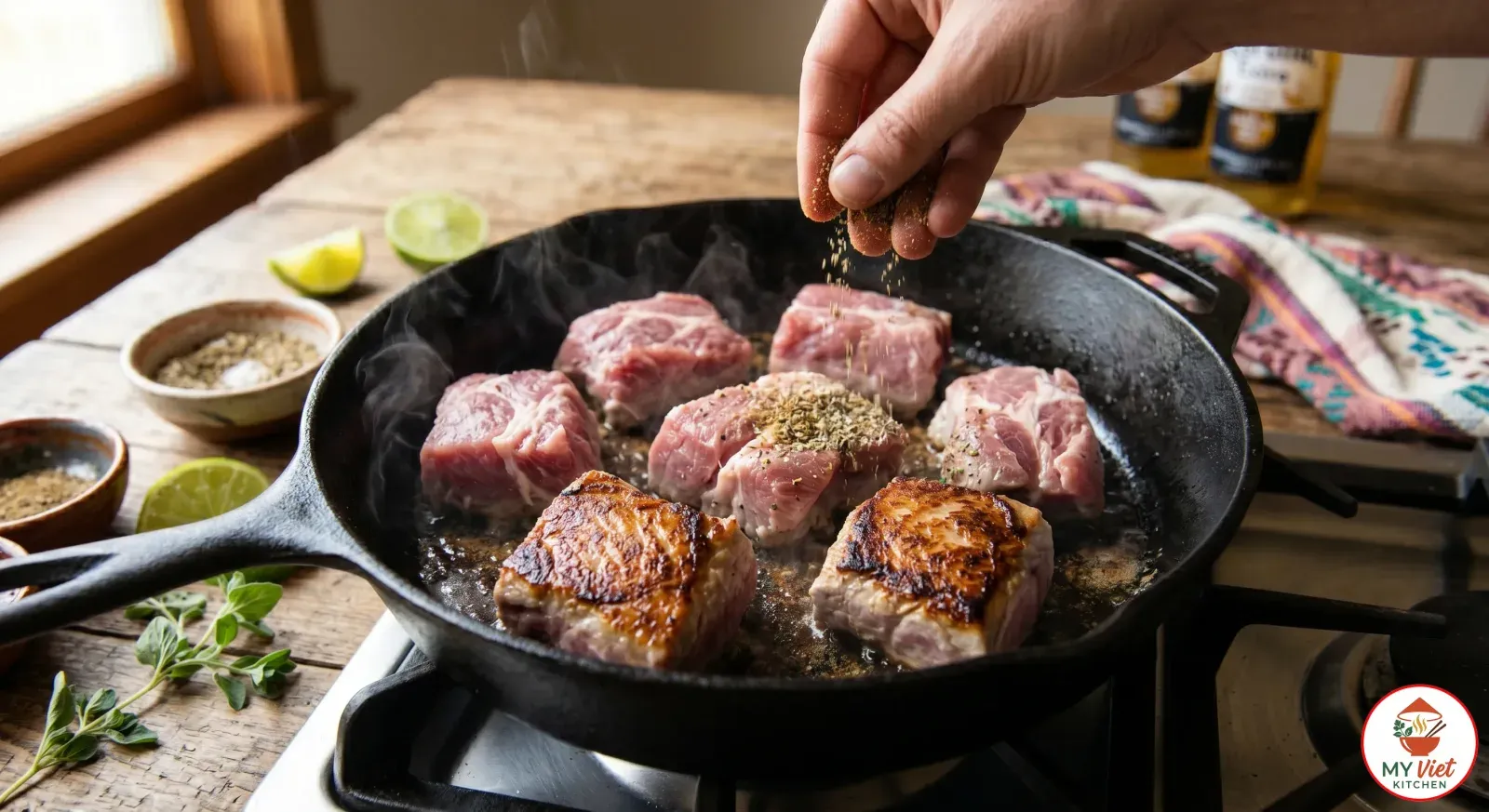
1Cut the pork shoulder into roughly 2-inch chunks. Keep some fat on each piece. In a small bowl, mix the salt, cumin, oregano, and black pepper. Rub this spice blend over the pork on all sides. Heat the lard in a large Dutch oven over high heat until it shimmers. Working in batches, sear the pork for about 3 minutes per side until a deep golden crust forms. This step triggers the Maillard reaction, which builds a base of savory flavor. Transfer each batch to a plate and repeat until all pieces are browned.
Step 2: Add Aromatics and Liquid
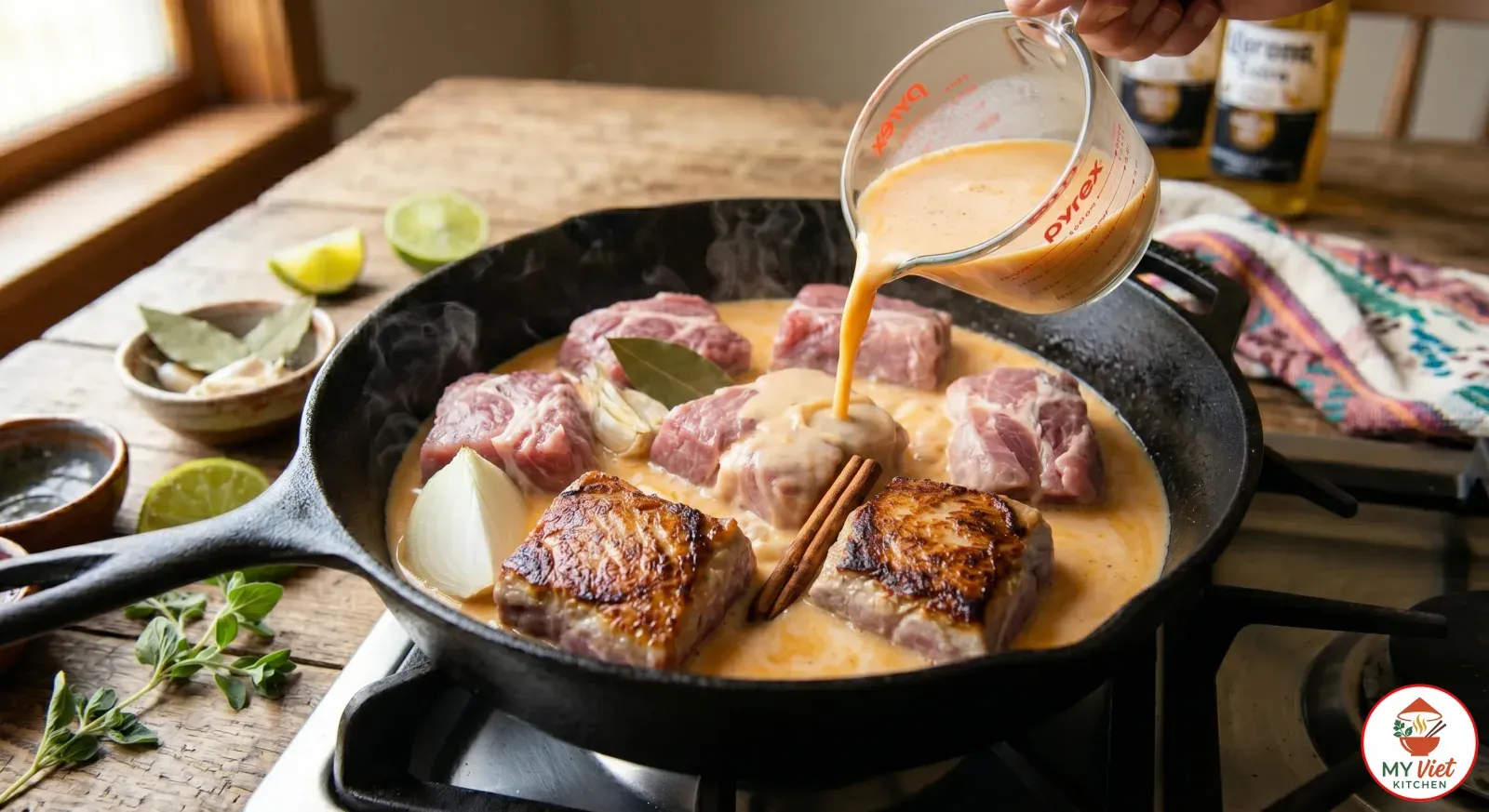
2Return all the seared pork to the Dutch oven. Nestle the onion, garlic, bay leaves, and cinnamon stick among the meat. Pour the fresh orange juice and lime juice over everything, then add the milk and water. The liquid should come about halfway up the sides of the meat. Do not fully cover the pork because the exposed tops will brown as the liquid cooks down. Stir gently to spread the aromatics evenly.
Step 3: Braise Low and Slow
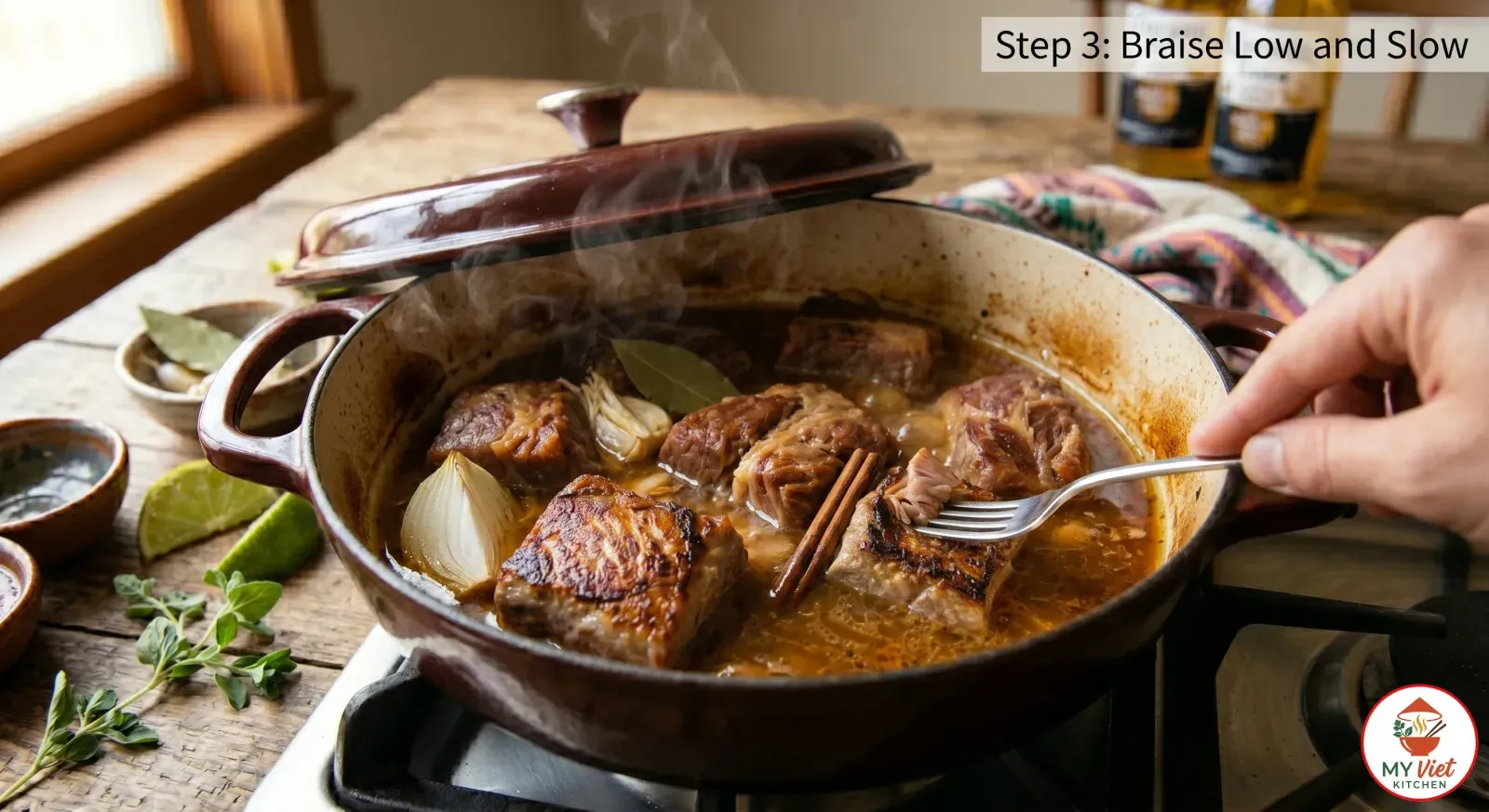
3Bring the liquid to a gentle boil over medium-high heat. Once bubbles rise steadily, lower the heat and partially cover the pot. Leave a small gap for steam to escape. Let the pork simmer for 2 to 2.5 hours. Stir every 30 minutes to ensure even cooking. As the braise goes on, the liquid will shrink and the pork will grow more tender. The carnitas are ready when the meat falls apart at the touch of a fork. By this point, the liquid should have reduced by about half.
Step 4: Shred the Pork
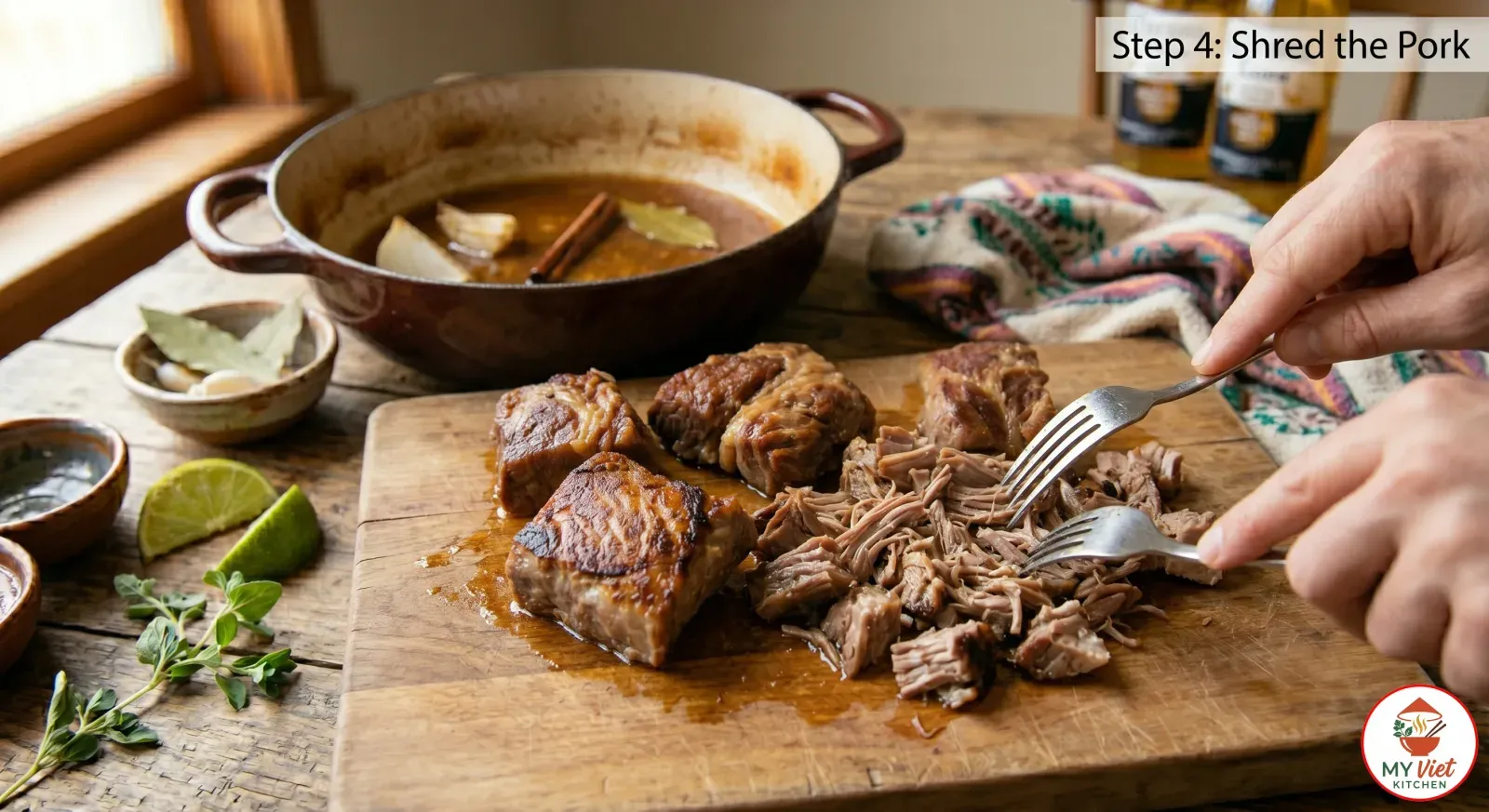
4Using a slotted spoon, move the braised pork to a large board or bowl. Discard the bay leaves, cinnamon stick, and onion from the liquid. Shred the pork into bite-sized pieces with two forks. Some pieces will fall apart on their own. Others may need a gentle pull. Keep a mix of fine shreds and larger chunks for varied texture. Save all the braising liquid because it is key to the next step.
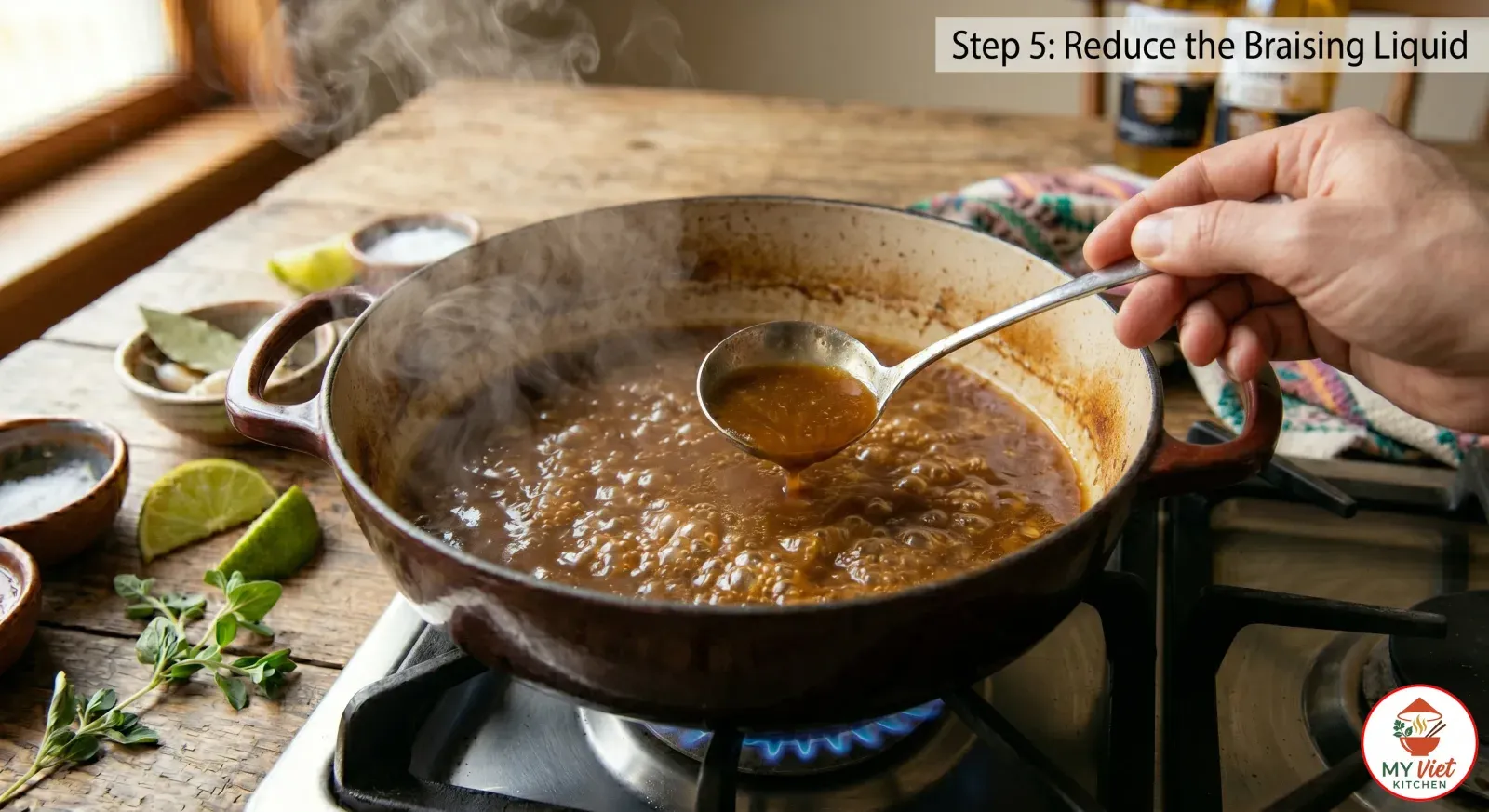
Step 5: Reduce the Braising Liquid
5Place the Dutch oven back on the stove over medium-high heat. Bring the liquid to a strong boil and let it cook down to about half a cup. This takes roughly 10 to 15 minutes. As it thickens, the fats, milk solids, and citrus sugars form a rich glaze. This glaze is the secret that gives carnitas their golden color and deep taste. Watch the pot closely near the end to prevent burning.
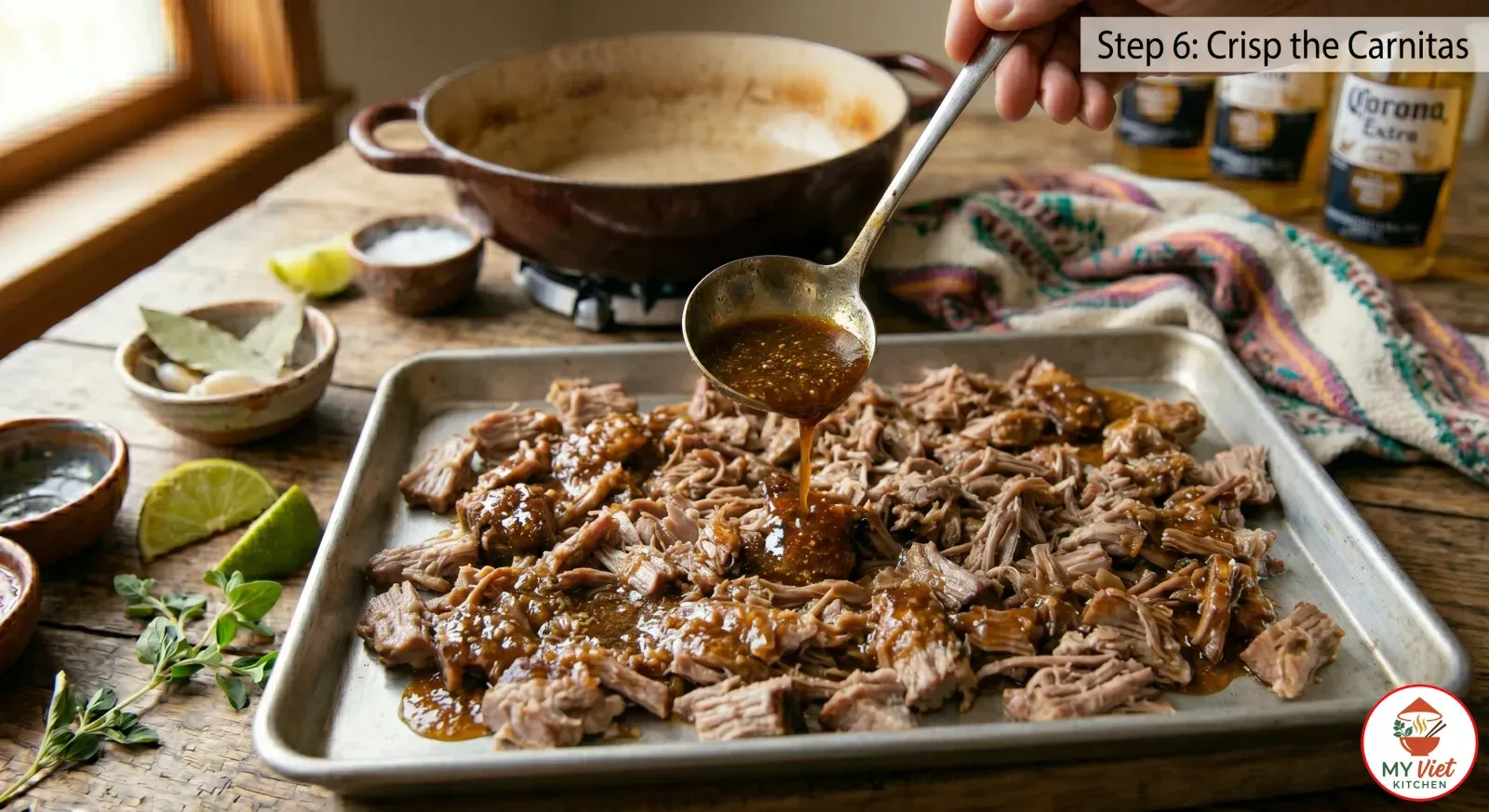
Step 6: Crisp the Carnitas
6Preheat your oven broiler to high. Spread the pork in a single layer on a large rimmed baking sheet. Drizzle the glaze evenly over the meat. Slide the sheet onto the upper rack, about 4 to 6 inches below the heat. Broil for 5 to 8 minutes, watching closely, until the edges turn golden and crispy. You do not need to flip the meat. The goal is a mix of textures: some pieces crunchy and dark, others still soft and juicy. Serve right away in warm corn tortillas with cilantro, diced onion, lime, and your favorite salsa.
Expert Tips for Perfect Carnitas
The Science Behind the Milk
Adding milk to the braising liquid might seem odd, but it serves a key purpose. The casein in milk helps soften pork fibers during the long braise. Even more vital, the lactose and milk solids brown as the liquid reduces. This browning creates the golden color and sweet notes that define real carnitas. Cooks in Michoacan have used this trick for many years.
Keep the Fat
Do not trim all the fat from the pork before braising. That fat melts during cooking and joins the braising liquid. When you reduce the liquid in Step 5, the fat helps crisp the meat under the broiler. Additionally, some of the best bites of carnitas come from pieces where a strip of fat has turned crunchy and golden.
Achieve Maximum Crispiness
For the crispiest carnitas, spread the meat in a thin, even layer on the baking sheet. If you pile it too high, the center pieces will steam rather than crisp. Use a large sheet, or work in two batches. Put the oven rack close to the broiler and keep the door slightly open so you can watch the progress.
Carnitas vs. Other Braised Pork Dishes
Several cultures have their own version of slow-cooked pork, but each uses a distinct technique that produces a different result. Here is how carnitas compare to other popular preparations.
| Feature | Carnitas (Mexico) | Pulled Pork (USA) | Char Siu (China) |
|---|---|---|---|
| Cooking Method | Braised in liquid, then crisped | Smoked low and slow | Roasted with glaze |
| Key Flavors | Citrus, garlic, warm spices | Smoke, vinegar, barbecue sauce | Soy, honey, five-spice |
| Texture | Crispy edges, tender interior | Uniformly soft and shredded | Sticky, charred exterior |
| Typical Serving | Tacos, burritos, tortas | Sandwiches, platters | Rice bowls, bao buns |
| Fat Treatment | Fat renders into braising liquid | Fat drips away during smoking | Fat caramelizes on surface |
Serving Suggestions
Carnitas are one of the most versatile proteins in Mexican cooking. While tacos remain the most popular way to serve them, the crispy, flavorful meat works beautifully in many other preparations as well.
The Perfect Accompaniments:
- Carnitas tacos: Fill warm corn tortillas with crispy carnitas, then top with cilantro, diced onion, and a generous squeeze of lime. Add salsa verde for brightness or salsa roja for heat.
- Burritos: Roll the carnitas in a large flour tortilla with rice, refried beans, cheese, sour cream, and guacamole for a hearty, filling meal.
- Tortas: Stack the crispy pork on a split telera or bolillo roll with refried beans, avocado, pickled jalapenos, and crumbled queso fresco.
- Nachos: Pile carnitas over tortilla chips with melted cheese, black beans, jalapenos, sour cream, and pico de gallo for a crowd-pleasing appetizer.
Beverage Pairings:
- Mexican lager: A cold Modelo Especial or Pacifico cuts through the richness of the pork and refreshes the palate between bites.
- Agua de horchata: This creamy, cinnamon-spiced rice drink provides a cool, sweet contrast to the savory, crispy carnitas.
- Margarita: The lime and salt in a classic margarita echo the citrus notes in the braising liquid, creating a harmonious pairing.
Storage and Reheating
Refrigerator: Store leftover carnitas in an airtight container for up to 5 days. Keep any remaining braising liquid in a separate container. The flavors continue to develop overnight, so leftovers often taste even better than the first serving.
Freezer: Freeze carnitas in portion-sized freezer bags for up to 3 months. Squeeze out excess air before sealing, and include a few spoonfuls of braising liquid in each bag to keep the meat moist when reheated. Thaw overnight in the refrigerator before using.
Reheating: For the best results, reheat carnitas in a hot skillet over medium-high heat with a drizzle of the reserved braising liquid or a small amount of oil. Cook for 3 to 5 minutes, pressing the meat down gently, until the edges crisp up again. Alternatively, spread on a baking sheet and broil for 3 to 4 minutes. Avoid the microwave because it produces soggy results.
Common Mistakes to Avoid
1. Cutting the Pork Too Small
If you cut the pork into pieces smaller than 2 inches, they will overcook and dry out during the long braising time. Larger chunks retain more moisture and give you better shredding texture. You can always break them down further after cooking, but you cannot undo meat that has become dry and stringy.
2. Skipping the Searing Step
Searing creates the Maillard reaction, which produces hundreds of new flavor compounds on the surface of the meat. Without this step, your carnitas will taste flat and lack the deep, savory complexity that makes this dish special. Take the extra 10 minutes to brown every piece properly.
3. Forgetting to Reduce the Liquid
The reduced braising liquid is what gives carnitas their signature golden color and concentrated flavor. If you skip this step and simply broil the dry shredded pork, you will end up with bland, pale meat that lacks character. Always reduce the liquid to a thick, syrupy consistency before drizzling it over the pork.
Frequently Asked Questions
What cut of pork is best for carnitas?
Pork shoulder, also called pork butt, is the ideal cut for carnitas. Its fat and connective tissue melt during the long braise. This produces meat that shreds with ease and stays very juicy. For more richness, mix shoulder with a bit of pork belly. According to Serious Eats, the fat-to-lean ratio of pork shoulder makes it the best choice.
What is the difference between carnitas and pulled pork?
The main difference is the cooking method. Carnitas braise in liquid with citrus and spices, then crisp under a broiler. American pulled pork smokes over wood for many hours, then gets tossed in barbecue sauce. Furthermore, carnitas feature bright citrus and warm spices, while pulled pork leans on smoky, sweet, and tangy notes.
Can I make carnitas in a slow cooker?
A slow cooker works great for carnitas with less effort. Season and sear the pork first, then add it to the slow cooker with all the aromatics and liquid. Cook on low for 8 to 10 hours or on high for 4 to 5 hours. Once tender, shred the meat and spread it on a baking sheet. Broil until the edges crisp up. One note: the liquid may not reduce on its own. Simply boil it down on the stovetop before pouring it over the pork.
Why do you add milk to carnitas?
Milk plays a dual role in carnitas. First, the casein proteins help break down tough muscle fibers during braising, resulting in more tender meat. Second, the lactose sugars and milk solids caramelize as the braising liquid reduces. This caramelization creates the distinctive golden color and subtly sweet flavor that separates great carnitas from ordinary braised pork.
How do you keep carnitas crispy?
Serve carnitas right after broiling to keep them crispy. Spread the pork in a thin, single layer so every piece gets direct heat. If you pile the meat too high, the center will steam. For leftovers, re-crisp them in a hot cast iron skillet with a bit of oil. Skip the microwave because it turns the pork soggy.
Variations and Adaptations
Instant Pot Carnitas:
For a faster version, use a pressure cooker after searing the meat. Add the pork, aromatics, and liquid to the Instant Pot. Cook on high pressure for 45 minutes with a natural release. The results come very close to the classic method. You will cut the cooking time in half. After shredding, finish under the broiler as usual for crispy edges.
Spicy Chipotle Carnitas:
Add 2 to 3 canned chipotle peppers in adobo sauce to the braising liquid. This gives a smoky, spicy twist to the classic recipe. Chop the peppers finely so the heat spreads evenly. The smoky notes pair nicely with the citrus and warm spices.
Beer-Braised Carnitas:
Swap the water or broth for a Mexican lager like Modelo or Negra Modelo. The beer adds malty sweetness and mild bitterness that suit the pork well. Use a dark beer for deeper flavor or a light lager for a softer touch. The fizz also helps soften the meat during braising.
The Cultural Significance of Carnitas
Carnitas hold a special place in Mexican culinary heritage, particularly in the state of Michoacan where the dish originated. For centuries, families in towns like Quiroga and Tacambaro have gathered around large copper cazos to prepare carnitas for festivals, weddings, and community celebrations. The process of making carnitas in a traditional cazo is a social event in itself, with family members taking turns stirring the massive pot as the pork slowly transforms over an open flame.
The copper cazo is more than a cooking pot. It is a symbol of Michoacan identity. Artisans in Santa Clara del Cobre have shaped these vessels by hand for over five hundred years. The copper spreads heat evenly and reacts with the acidic liquid. This adds a trace of mineral flavor that many cooks view as vital to real carnitas. Today, the dish has spread far beyond Michoacan to become one of the most loved street foods in all of Mexico. Just as a Neapolitan guards pizza or a Texas pitmaster protects brisket, Michoacan carnitas cooks take deep pride in their craft. Every taqueria has its own secret recipe. The best ones draw long lines of loyal fans who know that great carnitas simply cannot be rushed.
Conclusion
Making real carnitas at home is simpler than you might think. The process has three stages: sear the pork for deep flavor, braise it low and slow until tender, then crisp it under the broiler for golden edges. Above all, do not rush the braise. The slow shift from tough pork shoulder to tender, juicy meat is what makes carnitas so special.
Ready to explore more global flavors? Check out our full collection of recipes for dishes from around the world. If you love bold Mexican flavors, you might also enjoy our Birria or Tamales recipes.