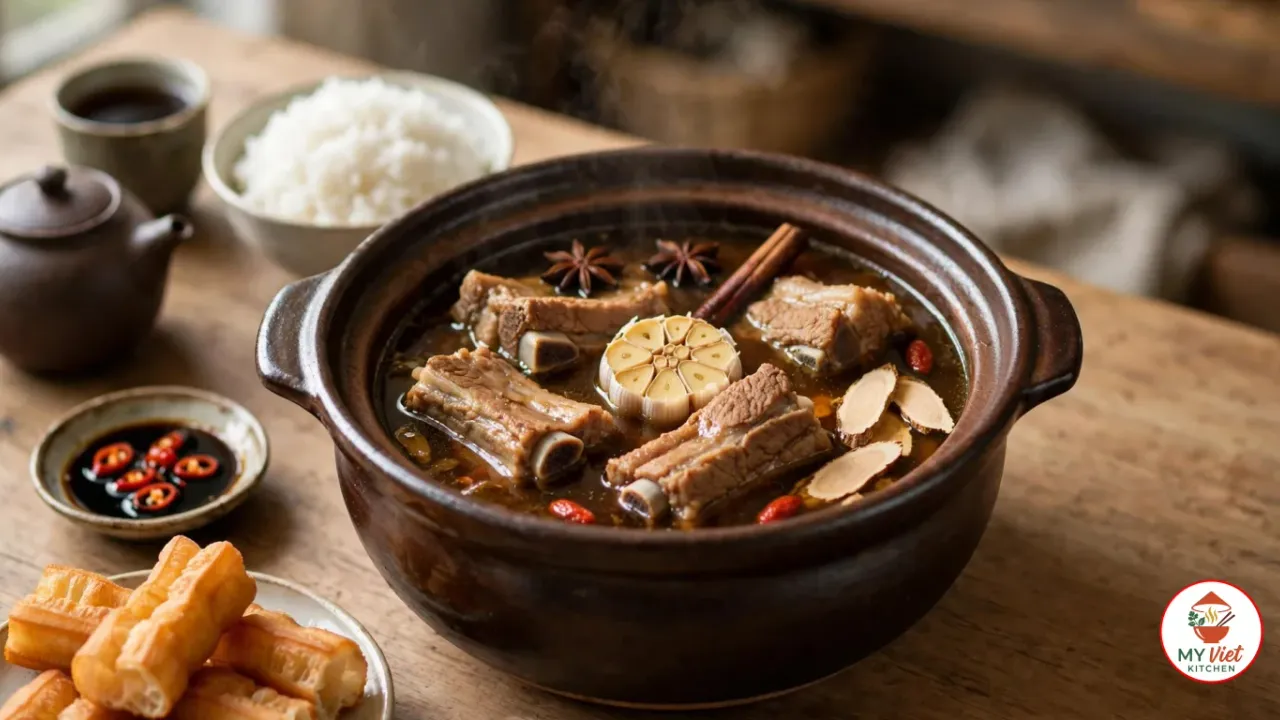
Bak kut teh is a deeply comforting pork rib soup simmered for hours in a fragrant broth of Chinese herbs, whole garlic, and white pepper. Originally created by Chinese immigrants in Malaysia and Singapore, this iconic dish has become one of Southeast Asia’s most beloved comfort foods. Making bak kut teh at home fills your kitchen with an intoxicating herbal aroma and rewards you with a soul-warming soup that tastes even better the next day.
Prep Time: 15 minutes | Cook Time: 90 minutes | Servings: 4
Difficulty: Easy | Calories: ~420 per serving
What Makes Bak Kut Teh Special?
Bak kut teh is special because it transforms simple pork ribs into something extraordinary through the power of slow simmering and Chinese herbal medicine. The combination of dang gui, dang shen, star anise, cinnamon, and cloves creates a broth that is complex, aromatic, and deeply nourishing. Additionally, a generous amount of whole garlic cloves softens during cooking and melts into the broth, adding a sweet, mellow garlic richness.
What truly sets bak kut teh apart is white pepper, which provides the signature warmth that lingers on your palate long after each sip. Unlike black pepper’s sharp bite, white pepper offers a gentler, more earthy heat that builds gradually. In fact, regular customers at bak kut teh restaurants often ask for extra pepper because this warming spice is what makes this herbal soup so addictive, especially on cool mornings.
Furthermore, bak kut teh is a dish with a story. Chinese laborers in the port town of Klang, Malaysia, originally created it as a restorative meal that could be prepared cheaply with bony pork cuts and medicinal herbs. Over generations, it evolved from a working-class breakfast into a celebrated dish that draws food tourists from around the world. Today, legendary herbal soup shops in Klang and Singapore have queues stretching out the door before dawn.

Choosing the Right Pork
The choice of pork affects both the flavor and texture of your bak kut teh. Here are the best options.
- Pork spare ribs (best choice): Cut into individual rib pieces, they have the ideal balance of meat, bone, and fat. The bones enrich the broth while the meat stays tender after long simmering.
- Pork belly: Adds extra richness with its layers of fat and meat. Many restaurants include sliced pork belly alongside ribs for variety.
- Mixed pork cuts: For the most authentic experience, combine ribs with pork belly, kidney, and intestine. This mix of textures is how traditional shops serve it in Klang.
Ingredients for Bak Kut Teh
Main Ingredients:
- 1kg pork spare ribs, cut into pieces
- 1 whole head garlic, halved crosswise with skin on
- 8 cups water
- 2 tablespoons light soy sauce
- 1 tablespoon dark soy sauce
- 2 teaspoons white pepper, coarsely ground
- Salt to taste
For the Herbal Blend:
- 2 star anise
- 1 cinnamon stick
- 5 whole cloves
- 2 tablespoons dang gui (angelica root)
- 2 tablespoons dang shen (codonopsis root)
- 1 tablespoon yu zhu (Solomon’s seal)
- 6 dried goji berries
For Serving:
- Fried dough sticks (youtiao)
- Steamed rice
- Dark soy sauce with sliced chilies (dipping sauce)
- Strong Chinese tea
Pro tip: If sourcing individual herbs feels complicated, buy a pre-packaged bak kut teh herbal packet from any Asian grocery store. Brands like A1 and Yu Yi are reliable choices that contain all the herbs perfectly proportioned. Simply drop the packet into the pot along with your pork and garlic.
Step-by-Step Instructions
Step 1: Blanch the Pork Ribs
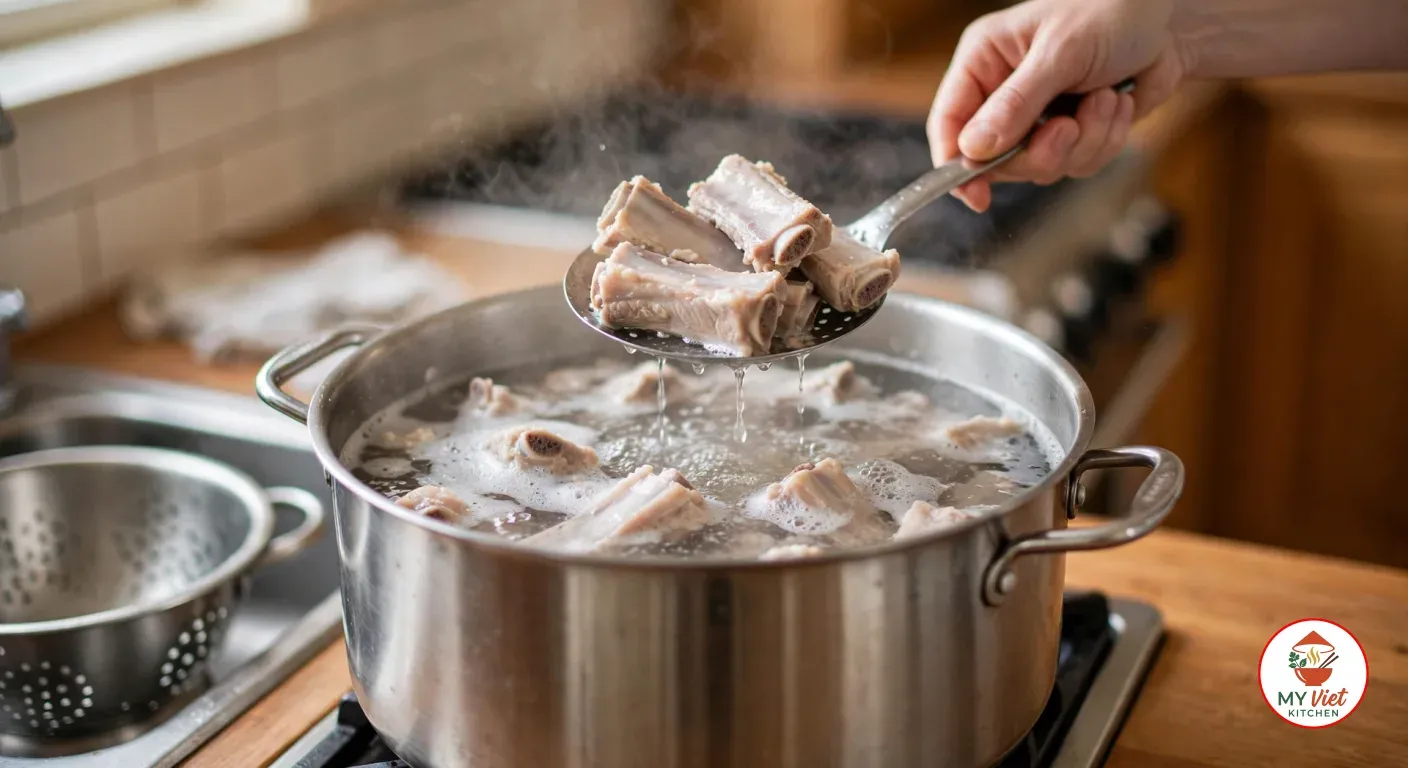
1Bring a large pot of water to a rolling boil. Add the pork rib pieces and blanch them for about 5 minutes. During this time, impurities, blood, and excess fat will rise to the surface as scum. After blanching, drain the ribs and rinse them thoroughly under cold running water. This step is essential because it ensures your final broth will be clean and clear rather than murky. Additionally, blanching removes any off-flavors from the bones.
Step 2: Prepare the Herbs and Aromatics
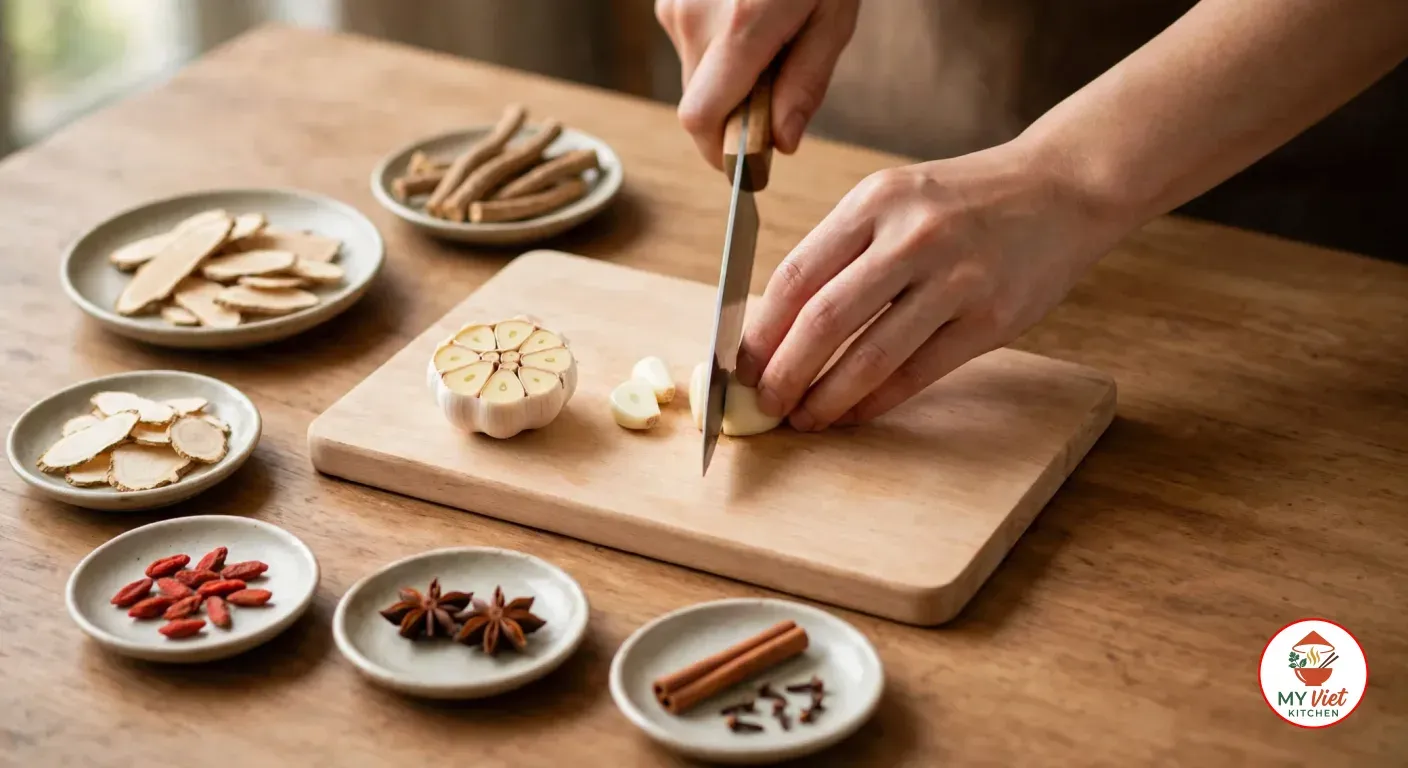
2Rinse the Chinese herbs briefly under running water to remove any dust. Then cut the whole garlic head in half crosswise, keeping the skin on. The skin holds the cloves together during simmering and peels away easily when the garlic is soft. Gather all the spices: star anise, cinnamon stick, and cloves. If using a pre-packaged herbal packet, simply rinse the packet and set it aside. Having everything prepared before building the broth makes the assembly smooth and efficient.
Step 3: Build the Broth
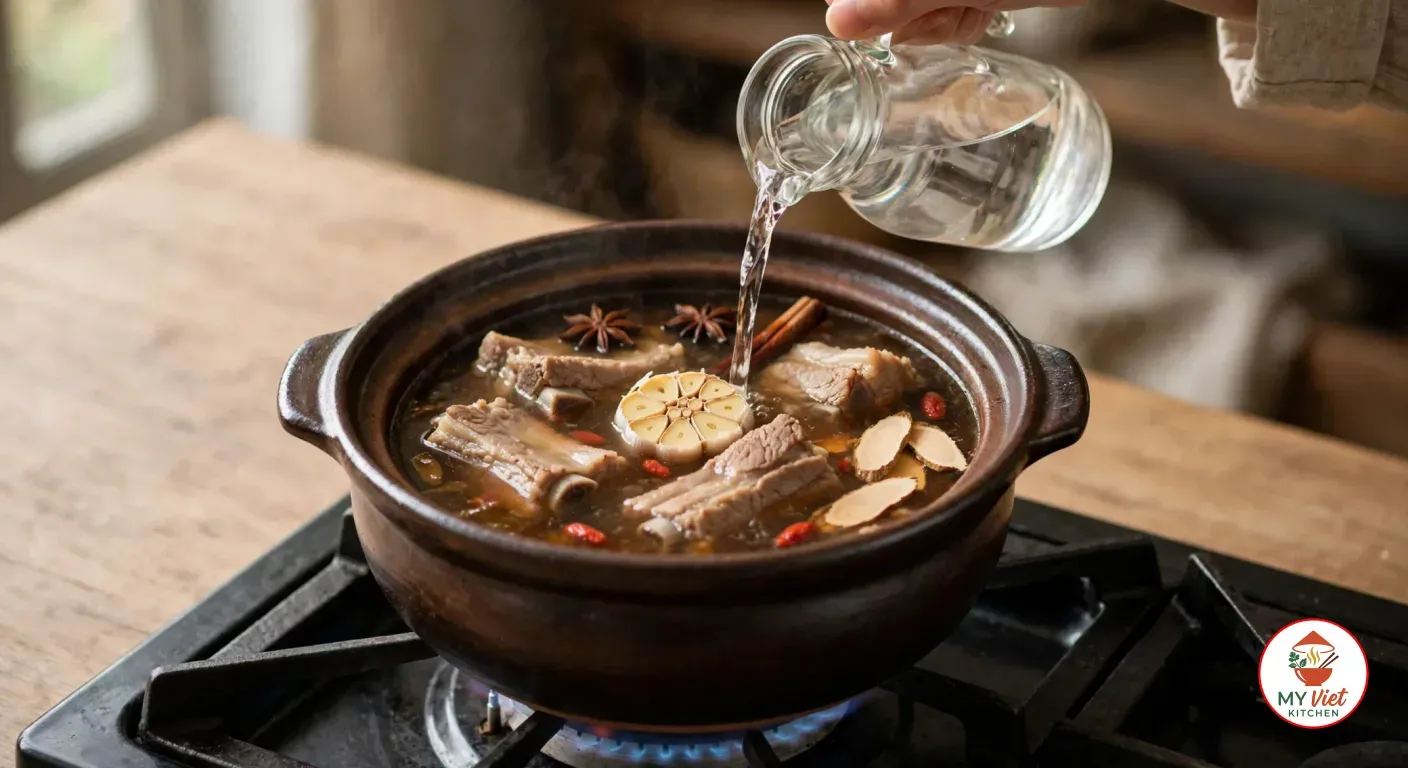
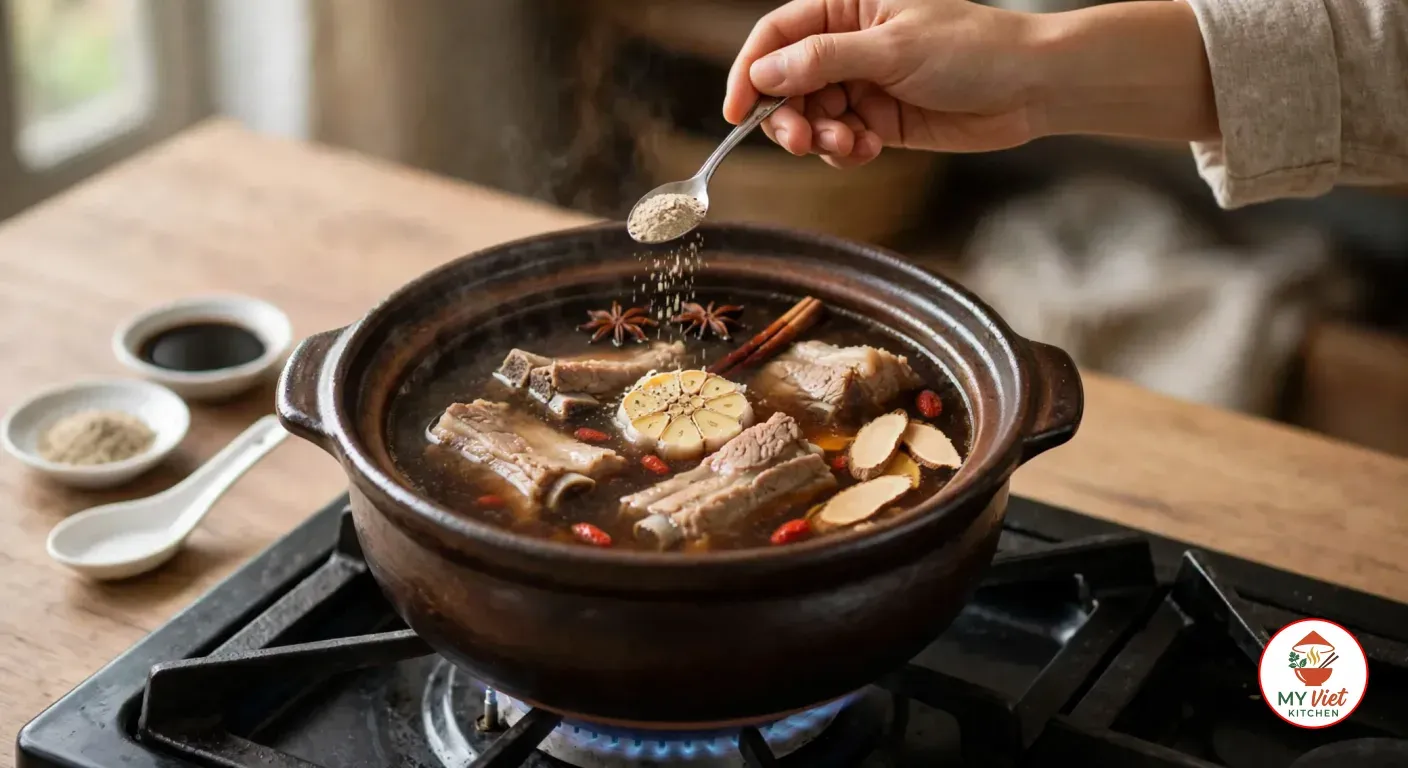
3In a large clay pot or heavy stock pot, combine the blanched ribs, halved garlic head, all the herbs and spices, light soy sauce, dark soy sauce, and ground white pepper. Pour in 8 cups of fresh water. Bring everything to a boil over high heat. The dark soy sauce gives the broth its characteristic deep color, while the light soy sauce provides the primary seasoning. As a result, the broth develops a beautiful amber hue that deepens further during the long simmer.
Step 4: Simmer Low and Slow
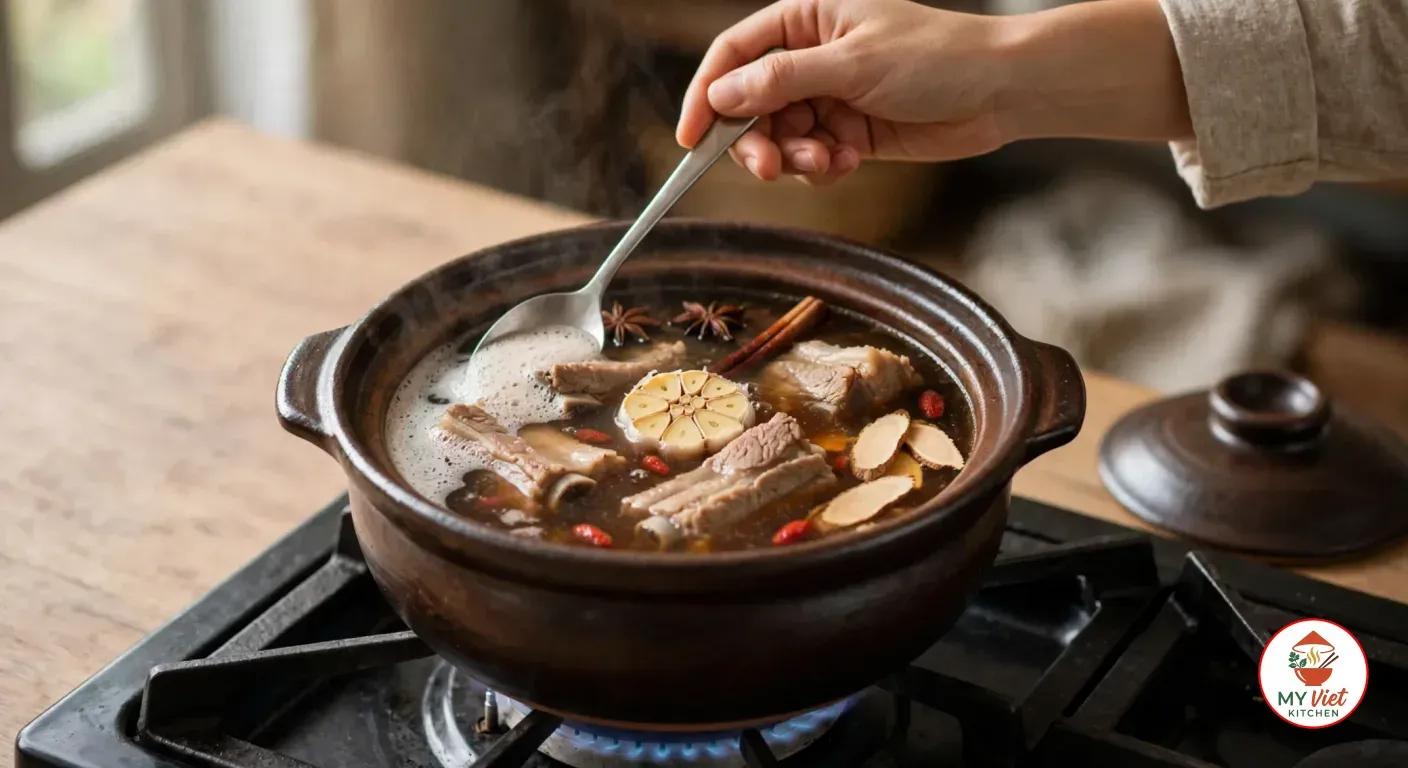
4Once the broth reaches a boil, reduce the heat to the lowest setting and cover with a lid. Let it simmer gently for 1 to 1.5 hours until the ribs are very tender and the meat is starting to pull away from the bones. During this time, skim off any foam or oil that rises to the surface. The slow, patient cooking is what extracts the full depth of flavor from both the pork bones and the herbs. Do not rush this step, because time is the most important ingredient in this great dish.
Step 5: Season and Adjust
5After simmering, taste the broth carefully. It should be fragrant with herbs, warm from white pepper, and deeply savory from the pork and soy sauce. Adjust the seasoning by adding more white pepper for heat, more soy sauce for depth, or salt if needed. Furthermore, remove the large herb pieces and cinnamon stick if you prefer a cleaner presentation. The broth should feel warming and nourishing, like a liquid embrace that comforts from the first sip to the last.
Step 6: Serve with Condiments
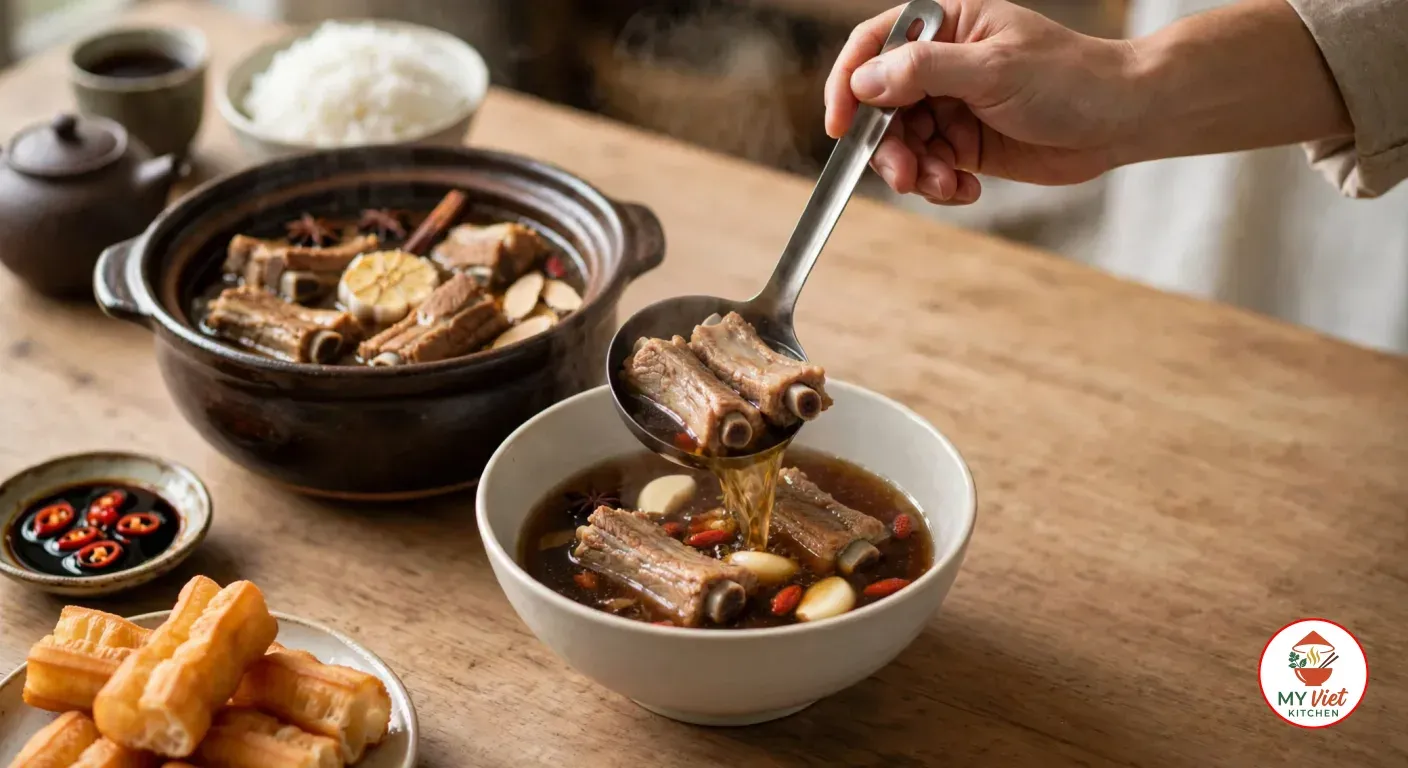
6Ladle the tender ribs and fragrant broth into deep bowls. Serve with a plate of steamed white rice, cut pieces of fried dough sticks for dipping into the broth, and a small dish of dark soy sauce mixed with sliced red chilies as a dipping sauce for the meat. In Malaysia and Singapore, strong Chinese tea is always served alongside this dish because the tannins help cut through the richness. Enjoy this traditional dish with other Asian comfort food favorites.
Expert Tips for Perfect Bak Kut Teh
Use Whole Garlic Generously
Garlic is not just an accent in bak kut teh. It is a primary ingredient. Use an entire head per pot, cut in half with the skin on. After simmering, the garlic cloves become soft and sweet, melting into the broth and adding a mellow richness. Some cooks even add two heads for an extra garlicky version.
Do Not Skip the Blanching Step
Blanching the ribs before building the broth is essential for a clean, clear soup. Without this step, impurities from the bones cloud the broth and can add bitter, off-flavors. The 5 minutes spent blanching and rinsing pays off tremendously in the final quality of your soup.
Be Bold with White Pepper
White pepper is the defining spice of bak kut teh, especially in the Singaporean Teochew style. Do not be shy with it. The warmth from white pepper is what makes the soup so comforting and distinctive. Crack it coarsely rather than using fine ground pepper, since the larger pieces release their heat more gradually.
Malaysian vs. Singaporean Bak Kut Teh
These two neighboring countries have developed distinctly different styles. Here is how they compare.
| Feature | Malaysian (Klang Style) | Singaporean (Teochew Style) |
|---|---|---|
| Broth Color | Dark and rich | Light and clear |
| Dominant Flavor | Herbal and complex | Peppery and garlicky |
| Herb Load | Heavy Chinese herbs | Minimal herbs |
| Pepper | Moderate | Very generous |
| Serving Style | Large shared pot | Individual clay pots |
Serving Suggestions
Bak kut teh is traditionally a breakfast or early lunch dish, though it is enjoyed at all hours. Here are the essential accompaniments.
The Perfect Accompaniments:
- Fried dough sticks (youtiao): Cut into pieces and dipped into the hot broth, they absorb the herbal soup beautifully and add a satisfying crunch.
- Steamed white rice: Plain rice is essential for soaking up the flavorful broth and balancing the rich pork.
- Braised tofu puffs: Added to the broth in the last 10 minutes, they soak up the herbal flavors like sponges.
- Blanched lettuce or watercress: Fresh greens added to the hot broth provide a clean, leafy contrast.
Beverage Pairings:
- Strong Chinese oolong tea: Traditionally served alongside to cut through the richness. The tannins cleanse the palate.
- Chrysanthemum tea: A lighter, floral option that complements the herbal broth.
- Kopi (Malaysian coffee): Strong coffee with condensed milk for an indulgent breakfast pairing.
Storage and Reheating
Refrigerator: Store in an airtight container for up to 4 days. This soup actually improves overnight as the flavors meld and deepen. Many people consider the second-day version to be even better.
Freezer: The broth and ribs freeze excellently for up to 3 months. Remove the herb pieces before freezing for the cleanest flavor when reheated.
Reheating: Reheat on the stovetop over medium heat until the broth is simmering. Add extra white pepper and a splash of soy sauce to refresh the flavors. Fresh youtiao and greens should be prepared at serving time rather than stored.
Common Mistakes to Avoid
1. Rushing the Simmer
Bak kut teh needs at least 90 minutes of gentle simmering to extract the full flavor from the bones and herbs. Boiling vigorously or cutting the time short produces a thin, one-dimensional broth that lacks the depth and body of a properly slow-cooked version.
2. Using Too Few Herbs
The herbal component is what makes bak kut teh different from a simple pork soup. Without enough herbs, the broth tastes plain and unremarkable. Use the full amount specified in the recipe or a proper herbal packet. The herbs should be noticeable in the flavor without being overwhelming.
3. Forgetting the Dipping Sauce
Dark soy sauce with sliced fresh chilies is an essential condiment. Dipping the tender pork into this sauce adds a salty, spicy punch that enhances each bite. Without it, you miss a key part of the dining experience that balances the mellow herbal broth.
Frequently Asked Questions
What does the name mean?
Bak kut teh translates to meat bone tea in the Hokkien Chinese dialect. Despite the name, there is no actual tea in the dish. The name likely refers to the herbal broth’s tea-like appearance or the long tradition of drinking strong Chinese tea alongside this soup to aid digestion and cut through the richness.
What is the difference between the Malaysian and Singaporean versions?
Malaysian bak kut teh, particularly from Klang, uses a darker, more herbal broth with prominent Chinese medicine flavors. In contrast, Singaporean bak kut teh features a lighter, clearer broth with much more white pepper and garlic. Both versions are delicious, but they offer quite different flavor profiles.
Can I buy a spice packet?
Yes, pre-packaged herbal and spice packets are widely available at Asian grocery stores. These packets contain all the dried herbs and spices you need, making preparation much easier. Brands like A1 and Yu Yi are popular choices that consistently produce excellent results.
Can I make this in a slow cooker?
Absolutely. After blanching the ribs, add all ingredients to the slow cooker and cook on low for 6 to 8 hours or on high for 3 to 4 hours. The long, gentle cooking produces incredibly tender ribs and a deeply flavored broth. In fact, many home cooks prefer the slow cooker method for its convenience.
What are the health benefits of the herbs?
In traditional Chinese medicine, the herbs in bak kut teh are believed to improve circulation, boost energy, and strengthen the body. Dang gui supports blood health, dang shen boosts vitality, and goji berries provide antioxidants. While these claims are traditional rather than clinically proven, the herbs undeniably add complex flavors and depth to the soup.
Variations and Adaptations
Dry Bak Kut Teh:
Popular in the Klang Valley, this variation reduces the broth and adds dark soy sauce, dried chilies, and dried cuttlefish for a sticky, savory coating on the ribs. It is drier and more intensely flavored than the soupy version, almost like a braised dish.
Chicken Bak Kut Teh:
Replace the pork ribs with chicken drumsticks or thighs for a lighter version. Chicken cooks faster, so reduce the simmering time to about 45 minutes. The herbal broth pairs beautifully with chicken, and this version is popular among those who do not eat pork.
Vegetarian Bak Kut Teh:
Use a combination of mushrooms, tofu puffs, and firm tofu in place of pork. Mushroom stock replaces the water for umami depth. The herbs and white pepper still create a warming, aromatic broth. This version is increasingly popular at vegetarian restaurants in Malaysia.
The Cultural Significance of Bak Kut Teh
Bak kut teh tells the story of Chinese immigrant resilience in Southeast Asia. Hokkien and Teochew laborers who worked the ports and tin mines of Malaysia in the 19th century created this dish as an affordable, nourishing meal. They used the cheapest cuts of pork, combined them with traditional Chinese medicinal herbs, and slow-cooked everything into a restorative soup that gave them strength for grueling physical labor.
Today, bak kut teh is a cultural icon in both Malaysia and Singapore, with each country proudly claiming it as their own. Legendary shops like Seng Huat in Klang and Song Fa in Singapore have served the same recipes for generations, attracting locals and tourists alike. The early morning ritual of gathering at a herbal soup shop, sharing pots of peppery broth with friends and family, remains a cherished social tradition.
In 2024, Malaysia submitted bak kut teh for UNESCO intangible cultural heritage recognition, highlighting its importance to the nation’s identity. Whether you prefer the dark, herbal Klang style or the peppery, clear Teochew version, bak kut teh represents the best of Southeast Asian comfort food. Explore more of this region’s culinary treasures in our Asian dishes collection.
Conclusion
Making bak kut teh at home requires patience but very little effort. Blanch the ribs, combine everything in a pot with herbs and garlic, and let time do the work. After 90 minutes of gentle simmering, you will have a pot of deeply flavorful, aromatic pork rib soup that warms you from the inside out. Serve it with rice, dough sticks, and strong tea for the complete experience that has comforted millions across Southeast Asia.
If you enjoyed this recipe, explore more Southeast Asian soups like Vietnamese pho and Malaysian laksa.