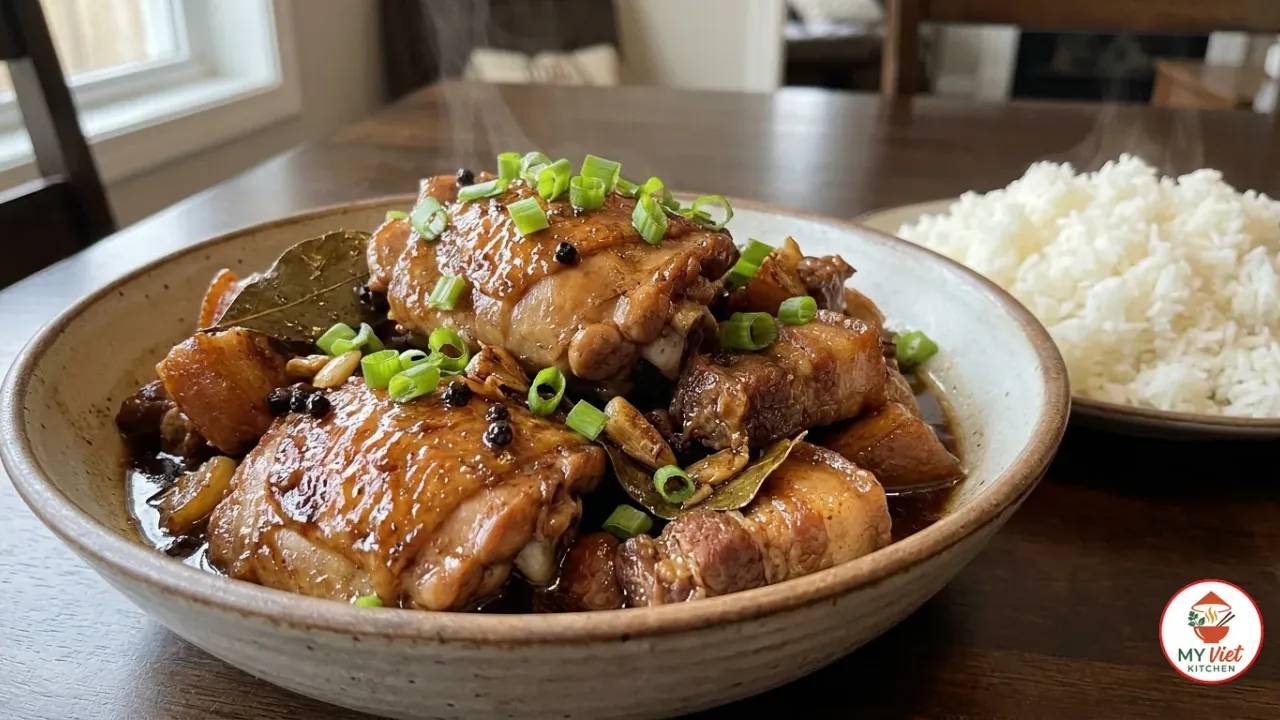
Adobo is the beloved national dish of the Philippines, and for good reason. This hearty braise combines tender chicken and pork in a savory sauce of soy sauce, vinegar, garlic, and bay leaves. As a result, every bite delivers a perfect balance of salty, sour, and garlicky flavors that cling to each piece of meat. Moreover, the dish is surprisingly simple to prepare at home. In this guide, you will learn how to make authentic Filipino adobo with step-by-step instructions, expert tips, and variations that let you customize the recipe to your taste.
Prep Time: 20 minutes | Cook Time: 50 minutes | Servings: 6
Difficulty: Easy | Calories: ~480 per serving
What Makes Adobo Special?
Filipino adobo stands apart from every other braised dish because of its remarkable simplicity. The recipe uses just a handful of pantry staples. Yet those few ingredients create layers of complex flavor. Soy sauce brings a deep umami backbone. Vinegar adds bright acidity that cuts through the richness of the meat. Meanwhile, crushed garlic and bay leaves fill the kitchen with an irresistible aroma as the dish simmers.
The genius of adobo lies in how the braising liquid transforms during cooking. At first, the sauce tastes sharp and salty. However, as the mixture reduces over low heat, the vinegar mellows and the soy sauce concentrates into a glossy, syrupy coating. Consequently, the finished sauce clings to every piece of chicken and pork with a balanced, rounded flavor. This transformation is what separates great adobo from a mediocre one.
Unlike many Asian braises, adobo requires no special ingredients or hard-to-find sauces. You probably have everything in your kitchen right now. Furthermore, the dish tastes even better the next day. The vinegar and soy sauce work as natural preservatives, so leftovers stay fresh for days. This makes adobo ideal for meal prep. It is also one of the most forgiving recipes you can learn. Even beginners can produce outstanding results on their first try.

Choosing the Right Meat for Adobo
The combination of chicken and pork creates the most satisfying version of this dish. Each protein brings something different to the pot. However, you can also make adobo with just one type of meat. Here are your best options for each protein.
- Chicken thighs (bone-in, skin-on): This is the best choice for chicken adobo. Thighs stay moist during braising and absorb the sauce beautifully. The bones add body to the liquid. In addition, the skin renders its fat and becomes golden when seared.
- Pork belly (best choice for pork): Pork belly brings a luxurious richness that balances the tangy sauce perfectly. The layers of fat and meat become silky and tender after braising. As a result, each bite melts on your tongue.
- Pork shoulder: A leaner alternative to pork belly that still holds up well during long braising. It shreds easily and absorbs the adobo sauce thoroughly. This cut works especially well if you prefer less fat in your dish.
Ingredients for Filipino Adobo
Main Proteins:
- 1.5 pounds bone-in chicken thighs, cut into pieces
- 1 pound pork belly, cut into 1-inch cubes
For the Adobo Braising Liquid:
- 1/2 cup soy sauce
- 1/3 cup white cane vinegar or distilled white vinegar
- 1 cup water
- 1 tablespoon brown sugar (optional, for a sweeter sauce)
For the Aromatics:
- 1 whole head garlic, cloves peeled and crushed
- 5 dried bay leaves
- 1 tablespoon whole black peppercorns
- 2 tablespoons cooking oil
- Salt to taste
Pro tip: Use Filipino coconut vinegar (sukang tuba) if you can find it at an Asian grocery store. It has a milder, slightly sweet acidity that many Filipino cooks consider the gold standard for adobo. Otherwise, white cane vinegar works perfectly well.
Step-by-Step Instructions
Step 1: Marinate the Meat
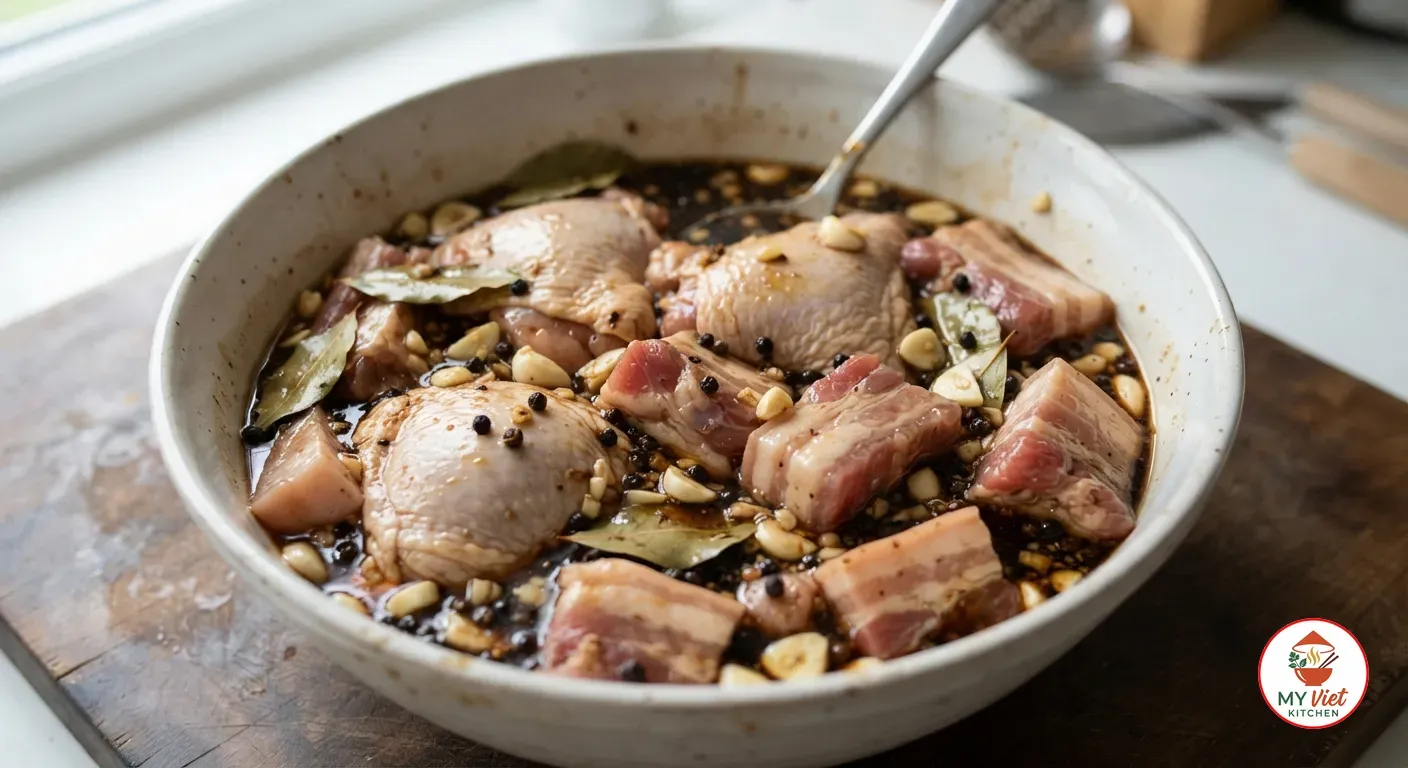
1Place the chicken thighs and pork belly in a large bowl. Pour the soy sauce and vinegar over the meat. Then add the crushed garlic cloves, bay leaves, and whole black peppercorns. Toss everything together until each piece is well coated. Cover the bowl tightly and refrigerate for at least 30 minutes. For the deepest flavor, marinate overnight. During this time, the acid in the vinegar begins to tenderize the meat fibers. At the same time, the soy sauce seasons the meat all the way through. This marinating step is not strictly required. However, it makes a noticeable difference in the final dish.
Step 2: Sear the Meat
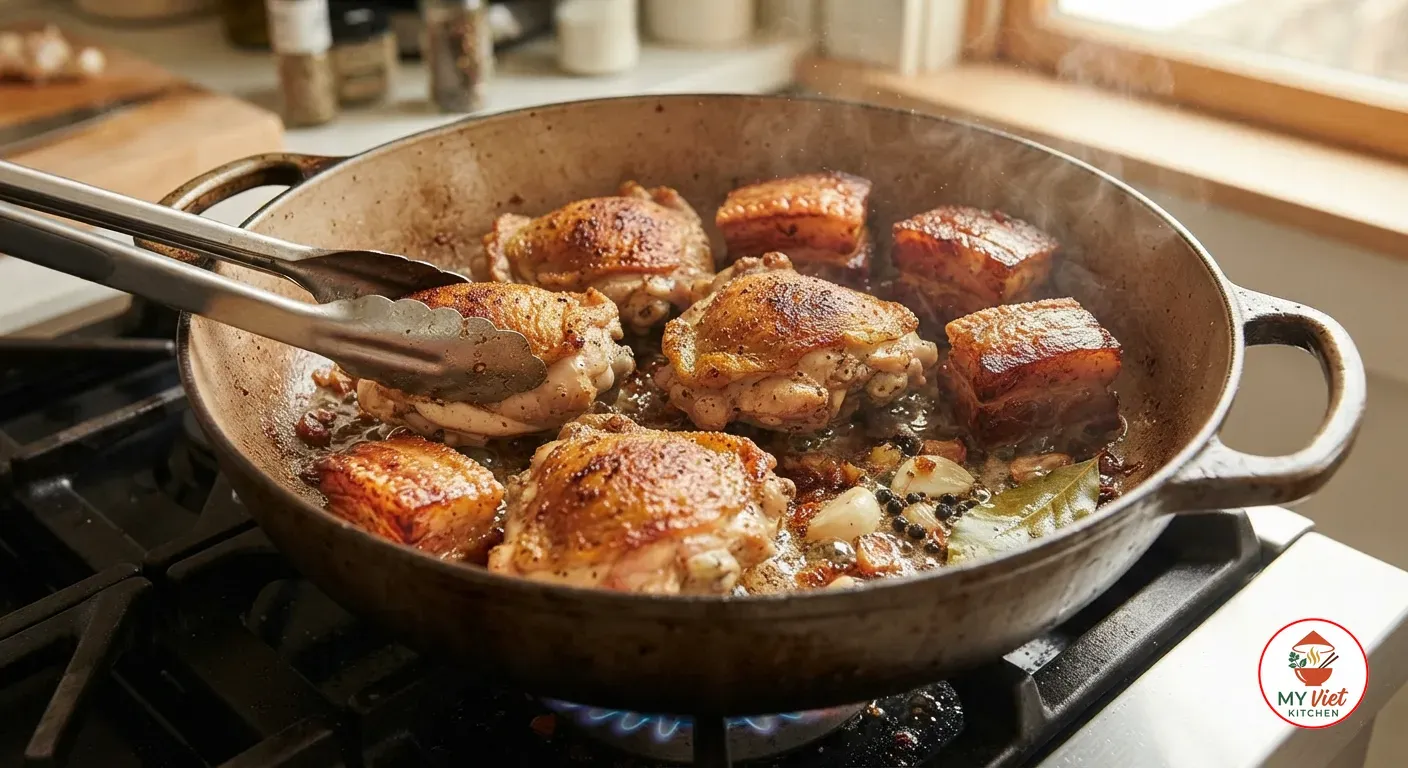
2Remove the chicken and pork from the marinade and set the liquid aside. Do not discard it. Heat two tablespoons of cooking oil in a large Dutch oven or heavy-bottomed pot over medium-high heat. Once the oil shimmers, add the meat in batches. Sear each piece until golden brown on all sides. This takes about 3 to 4 minutes per batch. Avoid crowding the pot, because overcrowding creates steam instead of a sear. The browning builds incredible depth of flavor through the Maillard reaction. Accordingly, this step is worth the extra effort. Transfer each batch to a plate while you sear the remaining pieces.
Step 3: Braise in Adobo Sauce
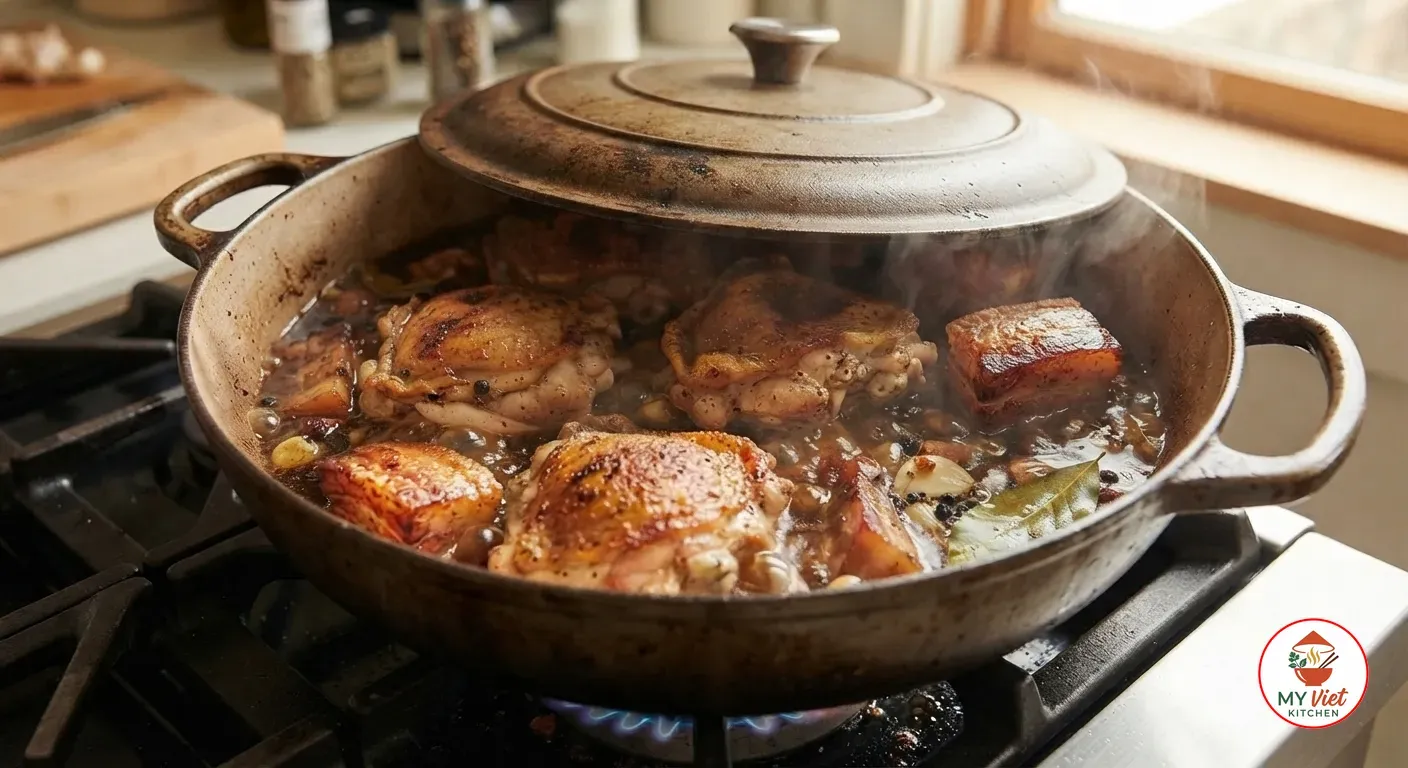
3Return all the seared meat to the pot. Pour the reserved marinade and one cup of water over the meat. Bring the liquid to a rolling boil over high heat. Then reduce the heat to low and cover the pot with a tight-fitting lid. Let the adobo simmer gently for 35 to 40 minutes. During this time, the pork belly becomes fork-tender and the chicken starts to fall off the bone. Stir occasionally to prevent the meat from sticking to the bottom. The low, gentle heat allows the collagen in the meat to break down slowly. As a result, every piece becomes incredibly tender and succulent.
Step 4: Reduce the Sauce
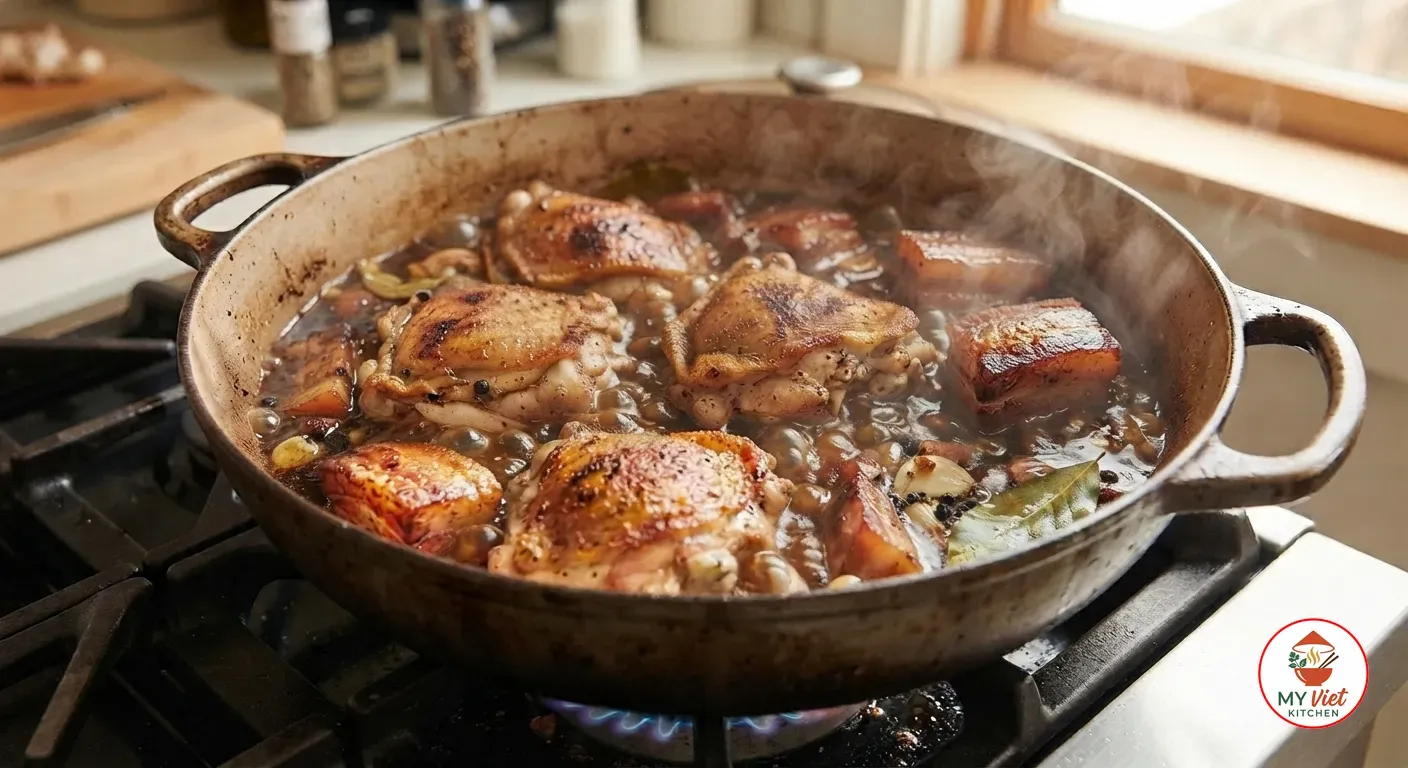
4Remove the lid and increase the heat to medium. Let the sauce bubble and reduce for 8 to 10 minutes. Watch it carefully during this stage. The sauce should thicken until it coats the back of a spoon. If you prefer a slightly sweet adobo, stir in one tablespoon of brown sugar now. The sugar caramelizes and adds a subtle sweetness that balances the vinegar’s tang. Furthermore, the reduced sauce develops a beautiful glossy sheen. Taste the liquid and adjust the seasoning with salt if needed. Some cooks prefer their adobo saucier, while others like it nearly dry. Stop reducing when the consistency matches your preference.
Step 5: Serve the Adobo
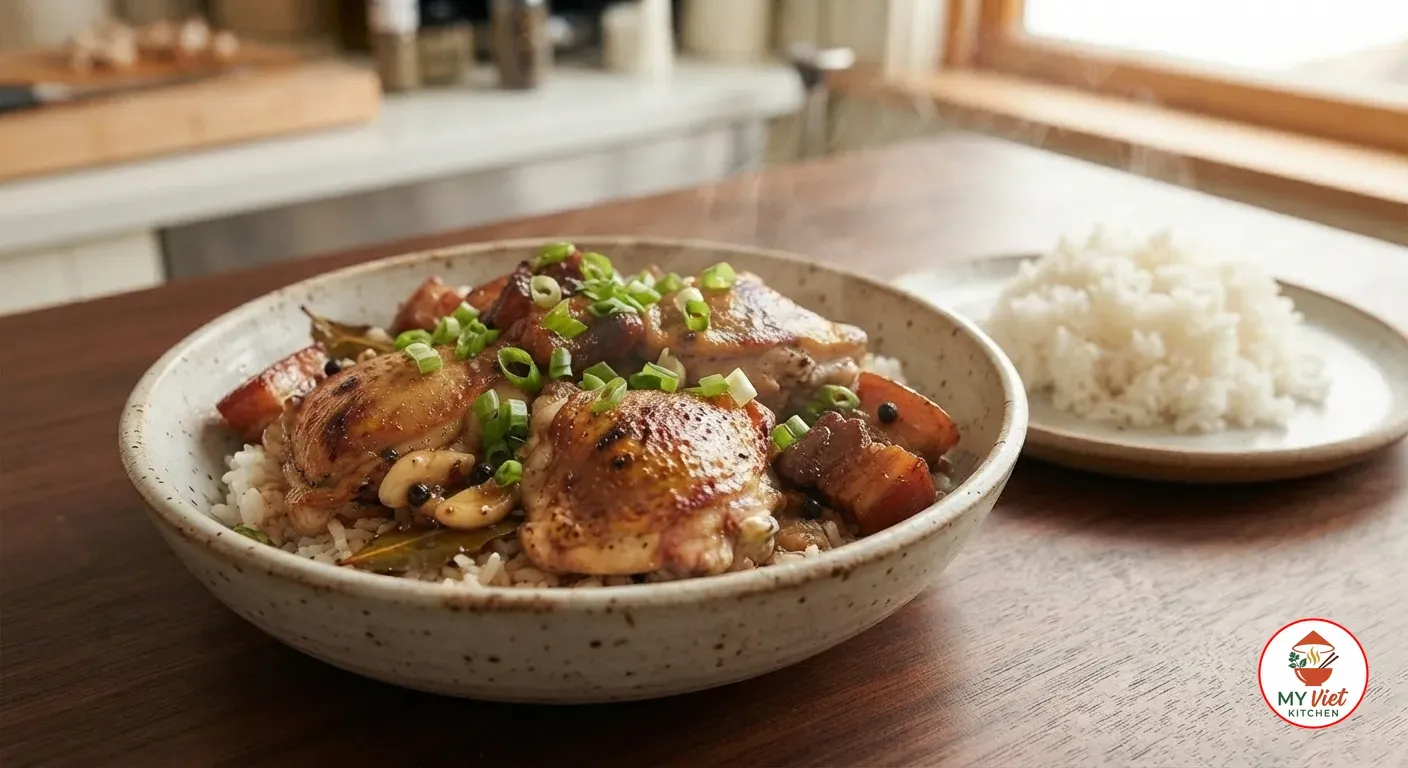
5Transfer the adobo to a warm serving dish. Spoon the reduced sauce generously over each piece of meat. Serve the dish hot with a large mound of steamed jasmine rice. The rice is essential because it soaks up the rich, tangy sauce. You can also garnish with sliced green onions for a pop of color and freshness. Alternatively, scatter fried garlic chips over the top for extra crunch. Your Filipino adobo is now ready to enjoy. Share it family-style for the most authentic experience.
Expert Tips for Perfect Adobo
Do Not Stir After Adding Vinegar
This is a classic Filipino cooking rule. When the vinegar first hits the pot, let it come to a full boil before stirring. Raw vinegar has a harsh, sharp bite. Boiling cooks off the volatile acetic acid and mellows the flavor. If you stir too early, you lock that raw sourness into the meat. Therefore, patience during this step pays off with a smoother, rounder sauce.
Use a Whole Head of Garlic
Adobo is not a dish for garlic shy cooks. A full head of garlic is standard in most Filipino households. The cloves soften during braising and almost dissolve into the sauce. They add a sweet, roasted garlic flavor that underpins the entire dish. Some recipes even call for two heads. In addition, try adding extra crushed garlic in the last five minutes of cooking for a fresh garlic punch.
Choose Your Vinegar Wisely
The type of vinegar shapes the final flavor of your adobo significantly. Coconut vinegar (sukang tuba) gives a mild, slightly sweet tang. White cane vinegar (sukang maasim) is sharper and more common. Distilled white vinegar works as a substitute but tastes more neutral. Each option produces a slightly different version of the dish. Experiment to find your favorite. Nevertheless, avoid strong vinegars like balsamic or red wine vinegar. Their bold flavors overpower the dish.
Chicken Adobo vs. Pork Adobo: A Comparison
Filipino families often debate which meat makes the best adobo. Here is a side-by-side comparison to help you decide. Of course, the best option is to use both together, as this recipe does.
| Feature | Chicken Adobo | Pork Adobo |
|---|---|---|
| Best cuts | Bone-in thighs or drumsticks | Pork belly or shoulder |
| Cooking time | 30 to 35 minutes | 40 to 50 minutes |
| Texture | Tender, falls off the bone | Rich, melt-in-your-mouth |
| Flavor profile | Lighter, absorbs sauce well | Richer, fattier, deeper flavor |
| Calories per serving | ~380 calories | ~550 calories |
| Best for | Quick weeknight dinners | Weekend cooking, gatherings |
| Leftovers | Good for 3 to 4 days | Good for 4 to 5 days |
Serving Suggestions
Adobo is a versatile dish that pairs well with many sides. Traditionally, it is served simply over a bed of hot steamed rice. However, you can also explore creative ways to enjoy it.
The Perfect Accompaniments:
- Steamed jasmine rice: This is the classic pairing. The fluffy rice absorbs the tangy adobo sauce and creates a complete meal. It is the most popular way to eat adobo in the Philippines.
- Garlic fried rice (sinangag): Day-old rice fried with plenty of garlic takes adobo to the next level. This combination is a staple Filipino breakfast.
- Atchara (pickled papaya): This bright, tangy relish cuts through the richness of the pork. It adds a refreshing crunch that contrasts the soft braised meat.
- Sauteed leafy greens: Simple stir-fried bok choy or water spinach (kangkong) adds freshness and color to your plate.
Beverage Pairings:
- San Miguel Pale Pilsen: The classic Filipino beer complements adobo beautifully. Its light, crisp body cleanses the palate between bites.
- Calamansi juice: Freshly squeezed calamansi limeade adds a citrus brightness. It is a refreshing non-alcoholic option.
- Dry Riesling: The wine’s acidity and slight sweetness match the soy-vinegar sauce perfectly. Consequently, it elevates the dish for a more formal setting.
Storage and Reheating
Refrigerator: Store adobo in an airtight container for up to 5 days. The vinegar and soy sauce act as natural preservatives. In fact, the flavors improve significantly after sitting overnight. Many Filipino cooks deliberately make extra so they can enjoy the leftovers the next day.
Freezer: Adobo freezes beautifully for up to 3 months. Portion the cooled adobo into freezer-safe containers. Leave a small gap at the top because the liquid expands when frozen. Thaw overnight in the refrigerator before reheating.
Reheating: Warm the adobo gently on the stovetop over medium-low heat. Add a splash of water if the sauce has thickened too much. Stir occasionally until heated through. Avoid the microwave if possible, as it can dry out the meat unevenly. Alternatively, reheat in a covered pan in a 325-degree Fahrenheit oven for 15 minutes.
Common Mistakes to Avoid
1. Using Too Much Vinegar
More vinegar does not mean more flavor. Too much acid overpowers the soy sauce and garlic. Stick to the 3:2 ratio of soy sauce to vinegar. This proportion creates the ideal balance of salty and sour. If you prefer a tangier adobo, add vinegar one tablespoon at a time and taste as you go.
2. Skipping the Searing Step
Some recipes skip the browning and simply dump everything into the pot. While this approach still produces a tasty dish, you miss out on the deep, caramelized flavor that searing provides. The Maillard reaction creates hundreds of new flavor compounds on the meat surface. Therefore, take the extra five minutes to sear properly. Your taste buds will thank you.
3. Cooking on High Heat Throughout
Adobo needs a gentle, low simmer to become tender. High heat toughens the meat proteins and causes the sauce to reduce too quickly. Keep the heat low after bringing the liquid to a boil. A few lazy bubbles breaking the surface is what you want. Patience is the secret ingredient in every great adobo.
Frequently Asked Questions
What is the difference between Filipino adobo and Mexican adobo?
These two dishes share a name but taste completely different. Filipino adobo braises meat in soy sauce, vinegar, garlic, and bay leaves. In contrast, Mexican adobo uses dried chili peppers, tomatoes, and spices to make a thick red sauce. The Filipino version developed independently. Spanish colonizers simply applied the word “adobo” (meaning marinade or sauce) to the native cooking method they observed.
Can I make adobo without soy sauce?
Yes. “Adobong puti” or white adobo skips the soy sauce entirely. This version relies on vinegar, garlic, salt, and peppercorns alone. The result is a lighter-colored dish with a more pronounced tangy flavor. It was actually the original form of adobo before soy sauce became widely available in the Philippines. You can also use coconut aminos as a soy-free substitute that closely mimics the flavor.
Why does my adobo taste too sour?
The most likely cause is stirring the pot too early after adding vinegar. Let the vinegar boil for 2 to 3 minutes before stirring. Also, check your vinegar-to-soy-sauce ratio. The soy sauce should always be the larger amount. Additionally, a pinch of brown sugar helps round out harsh acidity. Longer cooking time also mellows the sourness. So let the dish simmer a bit longer if the taste is too sharp.
Can I use chicken breast for adobo?
You can, but the results will not be as good. Chicken breast lacks the fat and connective tissue that keep dark meat moist during braising. Breast meat dries out quickly and becomes stringy. If you must use breast, reduce the braising time to 20 minutes and cut the pieces larger to minimize moisture loss. Still, bone-in thighs remain the best choice for texture and flavor.
What is adobo flakes?
Adobo flakes are a popular way to use leftover adobo in the Philippines. Shred the braised meat and fry it in a hot pan until crispy. The edges turn golden and crunchy while the inside stays tender. Serve the flakes over garlic fried rice with a fried egg on top. This combination is called “adobo flakes silog” and is a beloved Filipino breakfast.
Variations and Adaptations
Adobo sa Gata (Coconut Milk Adobo):
This variation from the Bicol region adds coconut milk to the braising liquid. The coconut cream softens the sharp edges of the vinegar and creates a rich, creamy sauce. Add one cup of coconut milk during the last 15 minutes of cooking. The result is milder and slightly sweeter. It works especially well with chicken. If you enjoy Southeast Asian coconut dishes like rendang, you will love this version.
Adobong Puti (White Adobo):
White adobo omits soy sauce completely. It uses only vinegar, garlic, salt, and peppercorns. This produces a lighter, more tangy braise that lets the meat flavor shine. The dish has a pale, almost golden appearance. It is considered the oldest form of Filipino adobo. Try it if you want a cleaner, sharper taste profile.
Dry Adobo (Adobong Tuyo):
For this style, you cook the sauce down until almost no liquid remains. The meat fries in its own rendered fat and the remaining sauce caramelizes on the surface. The pieces become slightly crispy on the outside while staying moist within. This version delivers a more concentrated, intense flavor. It travels well and makes an excellent packed lunch.
Vegetable and Seafood Adobo:
The adobo method works with nearly any protein or vegetable. Squid adobo (adobong pusit) uses the squid’s own ink for a dramatic black sauce. Kangkong (water spinach) adobo is a popular vegetarian option. Tofu adobo gives a plant-based twist with firm tofu that soaks up the tangy sauce. Each version keeps the core soy-vinegar-garlic combination. Simply adjust the cooking time to suit your chosen ingredient.
The Cultural Significance of Adobo
Adobo is far more than a recipe in the Philippines. It is a cultural touchstone that connects generations of Filipino families. Every household has its own version. Grandmothers pass down their specific ratios and techniques. Heated debates over vinegar types and cooking methods happen at every family gathering. The dish represents the resourcefulness and creativity of Filipino cuisine.
The cooking method predates Spanish colonization by centuries. Early Filipino cooks discovered that cooking meat in vinegar preserved it in the tropical heat. When the Spanish arrived in the 16th century, they encountered this technique and called it “adobo” from the Spanish word “adobar,” meaning to marinate. However, the Filipino dish existed long before the name. Soy sauce entered the recipe later through Chinese trade influences. This blend of indigenous, Spanish, and Chinese elements makes adobo a perfect reflection of Filipino cultural history.
Today, adobo represents Filipino identity around the world. Filipino communities from Los Angeles to Dubai cook adobo to stay connected to home. The dish appears at birthday parties, holiday feasts, and simple Tuesday dinners alike. Its enduring popularity comes from its perfect combination of simple ingredients, satisfying flavors, and deep cultural meaning. In many ways, to understand adobo is to understand the Filipino spirit of making something extraordinary from humble beginnings. If you enjoy exploring the rich traditions of Asian cuisine, you might also love dishes like ramen, satay, or pad thai.
Conclusion
Filipino adobo proves that the best dishes often come from the simplest ingredients. With just soy sauce, vinegar, garlic, and a handful of aromatics, you can create a deeply flavorful braise that satisfies every time. The key techniques are straightforward. Sear the meat for color and depth. Braise low and slow for tenderness. Then reduce the sauce until it turns glossy and concentrated. These three steps will give you restaurant-quality adobo at home.
Whether you make it with chicken, pork, or both, adobo rewards you with incredible flavor and easy leftovers. Try it this week and discover why millions of Filipino families consider this their most cherished recipe. For more Asian comfort food favorites, explore our collection of recipes including nasi goreng, tom yum goong, and Hainanese chicken rice.