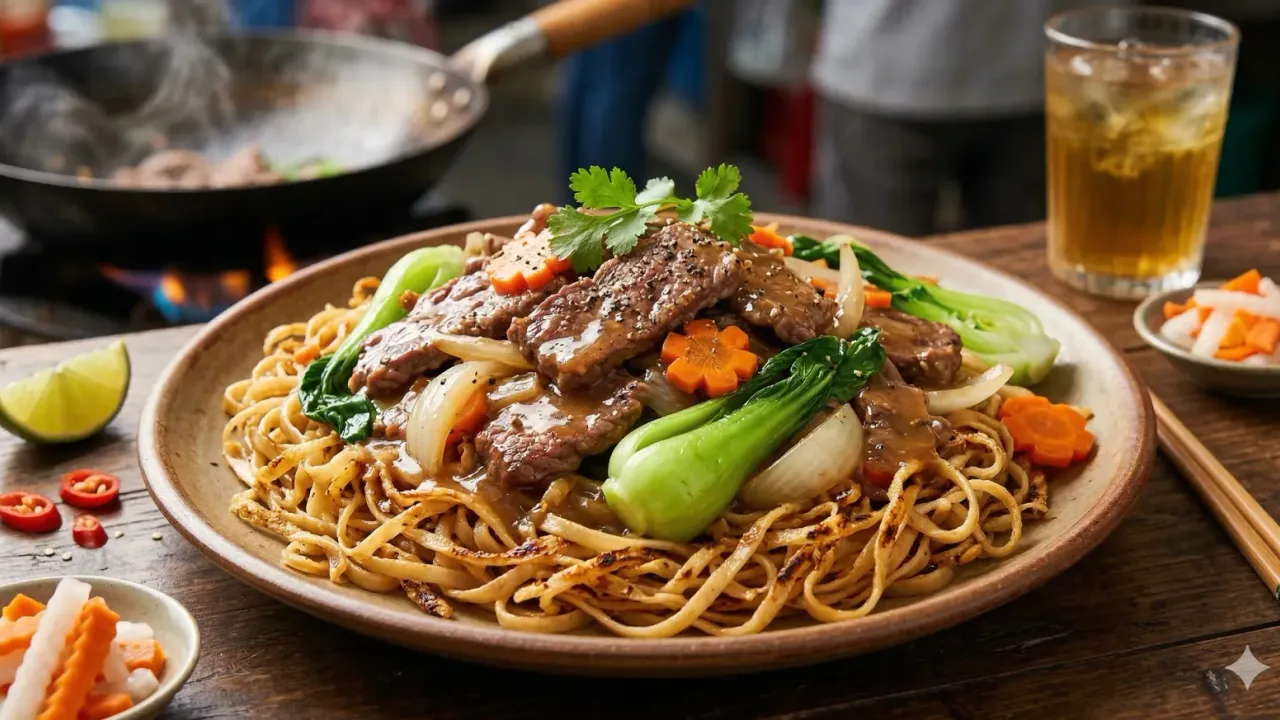
Pho Xao (Phở Xào) is Vietnamese stir-fried pho noodles with beef — a beloved Hanoi street food. It transforms the familiar rice noodles of phở into something new. The noodles get crispy edges. Meanwhile, the centers stay tender and chewy. Then seared beef, fresh vegetables, and a savory gravy join the plate. This Pho Xao recipe delivers restaurant-quality results in just 35 minutes.
Prep Time: 15 minutes | Cook Time: 20 minutes | Servings: 4
Difficulty: Easy | Calories: ~386 per serving
What Makes Pho Xao Special?
Most of the world knows phở as Vietnam’s iconic noodle soup. However, Vietnamese home cooks enjoy these silky rice noodles in many other ways. Pho Xao literally means “stir-fried pho.” Also, it is a dry preparation where the noodles are wok-fried with beef and vegetables. In fact, it is hugely popular street food in Hanoi. Furthermore, vendors set up portable woks in the Old Quarter on chilly winter evenings.
What sets a great Pho Xao apart is the contrast of textures. First, the noodles should have slightly crispy, caramelized edges from the wok. Meanwhile, the centers stay soft and chewy. Next, the beef is seared fast over roaring heat. As a result, it stays tender and juicy. Finally, a glossy, cornstarch-thickened gravy coats every strand and ties the dish together.
Western stir-fries toss everything together at once. However, authentic Vietnamese Pho Xao follows a sequential wok technique. First, the noodles are fried and plated. Then the beef and vegetables are cooked separately. Finally, they are spooned on top with the gravy. Therefore, this layered approach gives the dish its distinctive look. It also ensures every component is perfectly cooked.

Choosing the Right Pho Noodles
The noodles are the star of this dish, so choosing the right type makes a real difference. You have three main options:
- Fresh pho noodles (bánh phở tươi) — best choice: These are soft, pliable, and hold up beautifully in the wok. They separate easily and develop gorgeous crispy edges. Look for them in the refrigerated section of Asian grocery stores.
- Dried pho noodles (bánh phở khô): A widely available alternative. Cook them about 1 minute less than the package instructions, then drain and toss with oil immediately. They work well but are more fragile than fresh noodles.
- Semi-dried / refrigerated pho noodles: Found vacuum-packed in some stores. Microwave them briefly with a damp paper towel to soften before separating. A good middle ground between fresh and dried.
Pho Xao Ingredients (Phở Xào Thịt Bò)
Main Ingredients:
- 500g fresh pho rice noodles (bánh phở)
- 200g beef (flank steak or sirloin), thinly sliced against the grain
- 1/2 carrot, thinly sliced into decorative shapes
- 1/2 onion, cut into wedges
- 1 bunch baby bok choy or choy sum (cải ngọt), cut into short pieces
- 1 cup beef broth or stock (optional but recommended)
- Cooking oil for stir-frying
- Minced garlic (about 3-4 cloves)
For the Noodle Marinade:
- 2 tablespoons soy sauce
- 1 teaspoon salt
- 1 teaspoon cooking oil
- 1/2 teaspoon chicken bouillon powder (hạt nêm)
For the Beef Marinade:
- 1 teaspoon soy sauce
- 1/2 teaspoon chicken bouillon powder
- 1/2 teaspoon freshly ground black pepper
- 1/2 tablespoon minced garlic
- 1 teaspoon cooking oil
- 1/2 teaspoon cornstarch
For the Gravy:
- 1/2 tablespoon cornstarch dissolved in 2 tablespoons water
Pro tip: Marinating the pho noodles before stir-frying is the key Vietnamese technique most recipes miss. The soy sauce seasons the noodles all the way through and gives them a beautiful golden color in the wok.
Step-by-Step Instructions
Step 1: Marinate the Noodles
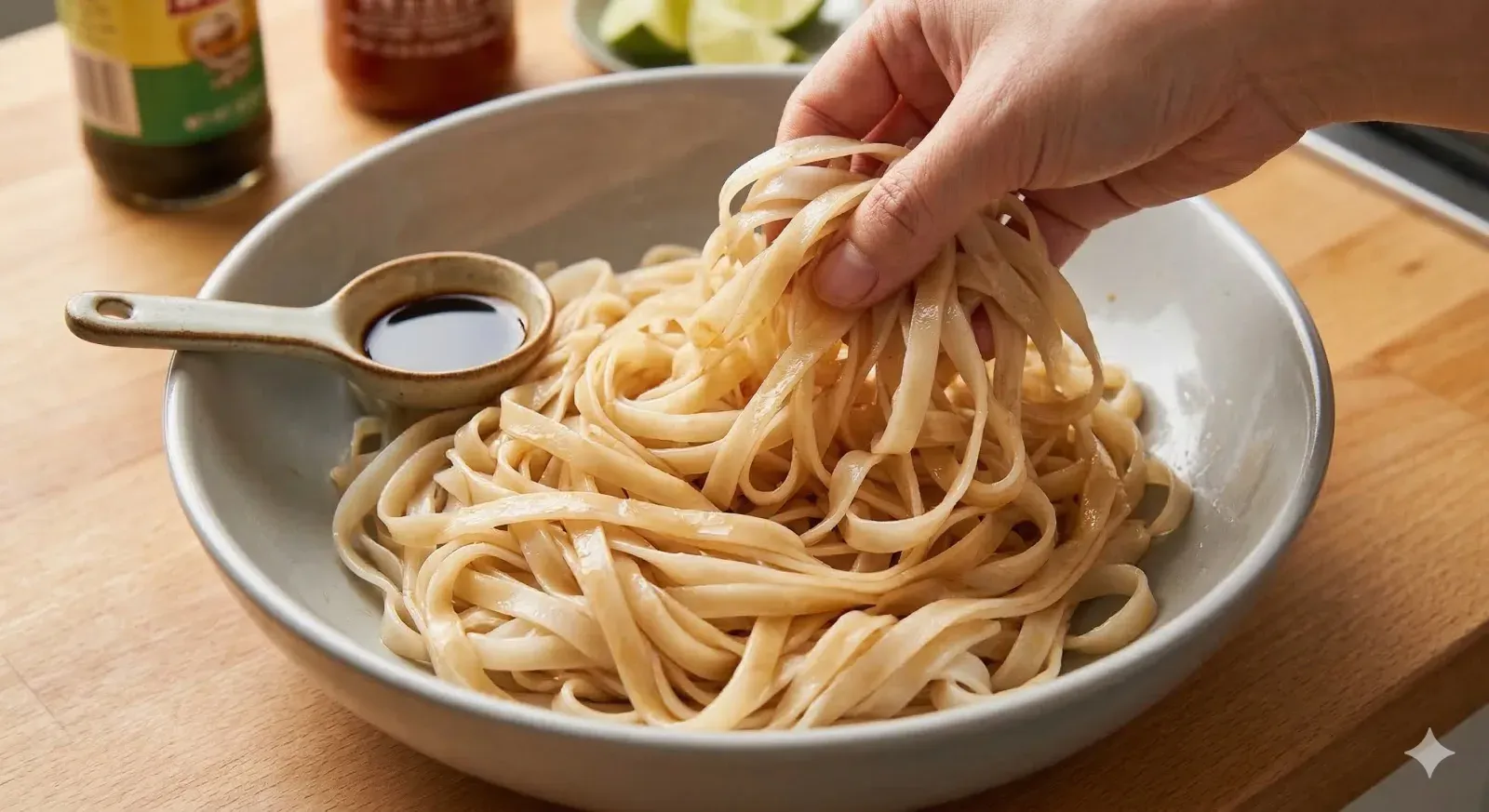
1Gently separate the fresh pho noodles with your hands until they are loose and individual strands. In a large bowl, combine the noodles with 2 tablespoons soy sauce, 1 teaspoon salt, 1 teaspoon cooking oil, and 1/2 teaspoon chicken bouillon powder. Toss everything together gently so each strand is evenly coated. Let this sit while you prepare the other ingredients — even 10 minutes of marinating helps the noodles absorb flavor and develop a richer color during stir-frying.
Step 2: Marinate the Beef
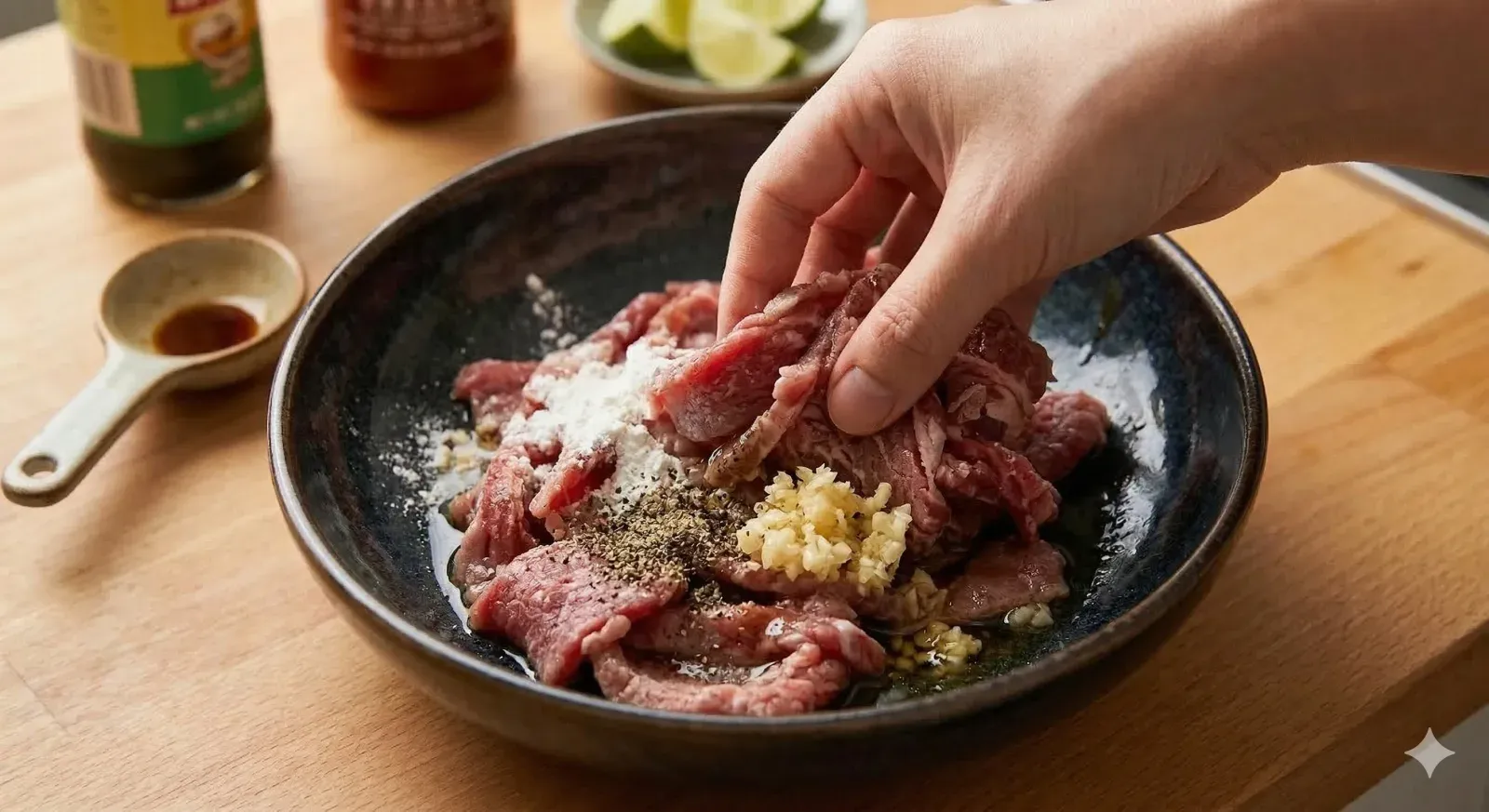
2First, slice the beef thinly against the grain. This step is essential for tenderness. Next, grab a separate bowl. Add the beef with 1 tsp soy sauce, 1/2 tsp chicken bouillon, and 1/2 tsp black pepper. Also add 1/2 tbsp minced garlic, 1 tsp oil, and 1/2 tsp cornstarch. Then mix thoroughly. The oil prevents the beef from drying out. Meanwhile, the cornstarch creates a light coating. As a result, it seals in juices. Important: Do not add salt directly. Salt draws moisture out of the meat. Therefore, use soy sauce for seasoning instead.
Step 3: Prepare the Vegetables
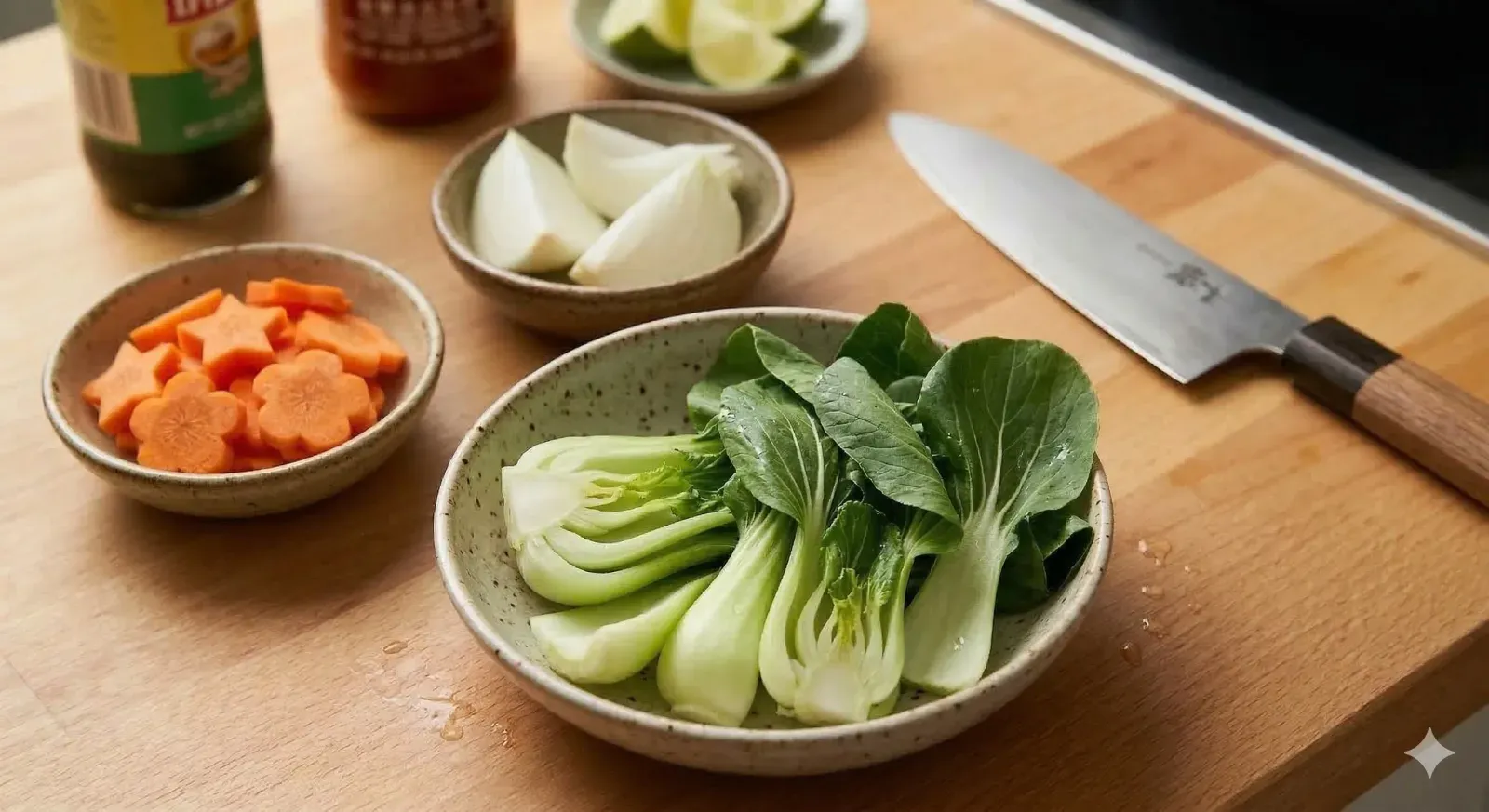
3First, cut the carrot into thin slices. You can shape them into flowers or stars for a prettier look. This is common in Vietnamese cooking. Next, slice the onion into wedges. This shape holds up well in the wok. Also, it adds a pleasant crunch. Then wash the baby bok choy thoroughly. Cut it into short pieces, about 5-6 cm long. Finally, separate the stems from the leaves since the stems need more time.
Step 4: Stir-Fry the Noodles
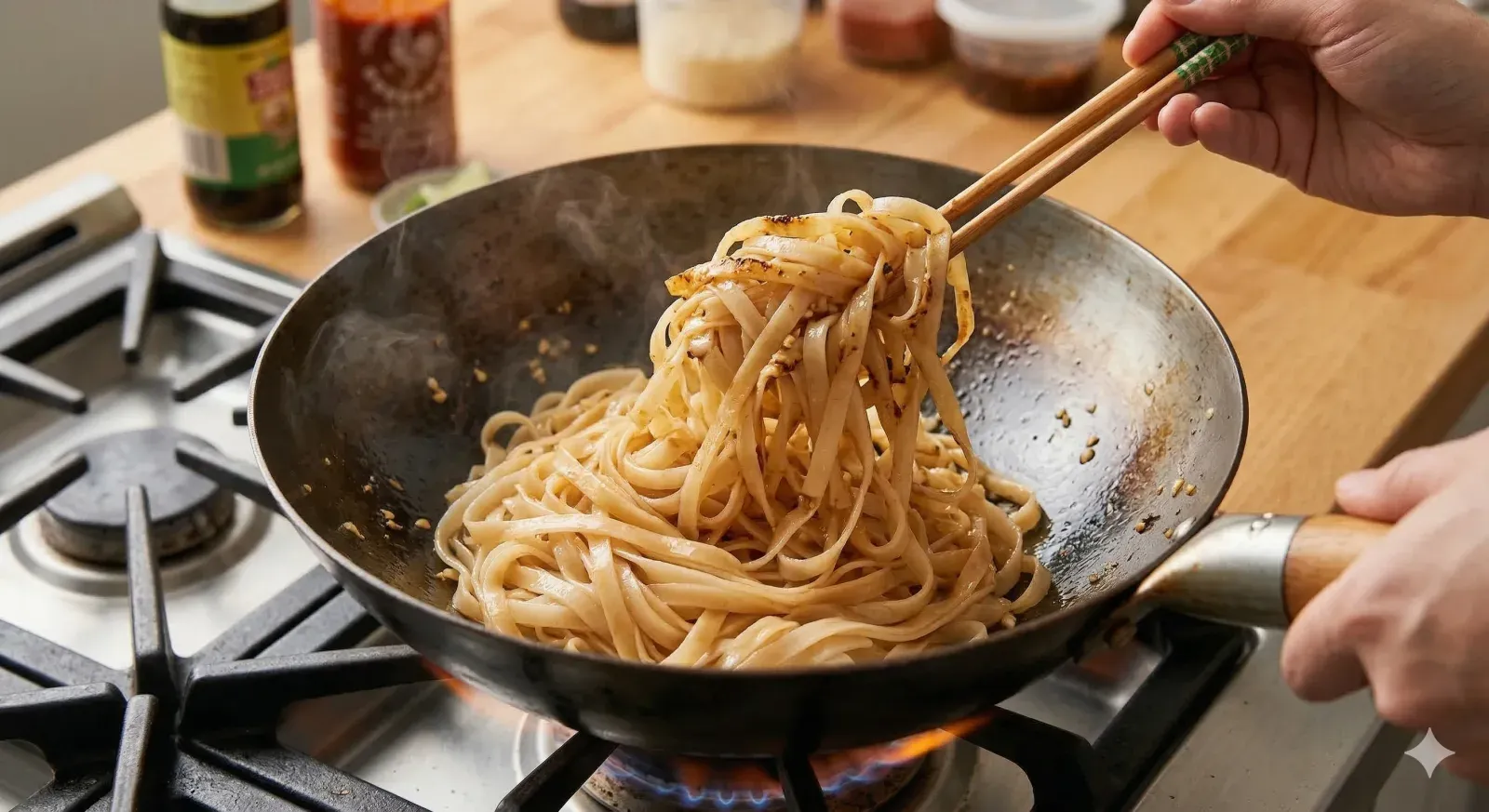
4First, heat oil in a wok over medium heat. Next, add minced garlic and sauté until fragrant, about 15 seconds. Then add the marinated pho noodles to the wok. Use chopsticks or tongs to gently toss and separate the strands. However, avoid stirring too aggressively or the noodles will break. Let them sit undisturbed for 30-60 seconds at a time. As a result, the edges develop a slight char. This is where the magic happens. Finally, transfer the noodles to a serving plate once they are heated through and golden.
Step 5: Sear the Beef
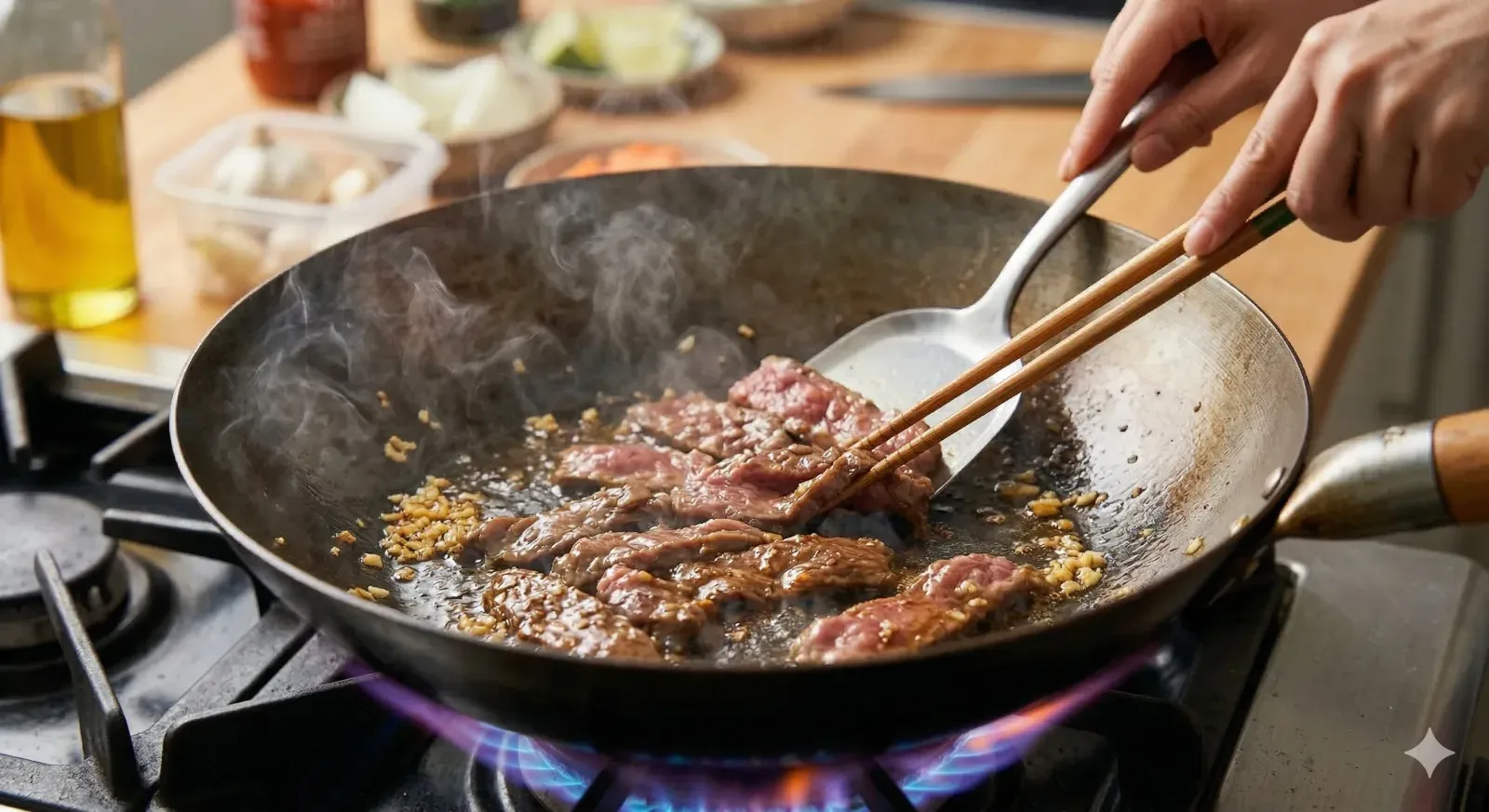
5This step requires confidence and high heat. First, add a tablespoon of oil to the wok. Then crank the heat to maximum. Once the oil is shimmering, sauté garlic briefly. Next, add the marinated beef in a single layer. Let it sear undisturbed for about 30 seconds. Then flip and stir-fry for another 30 seconds. Remove the beef when it is about 80% cooked. It will finish cooking from residual heat. As a result, this rapid searing keeps the beef tender and juicy.
Step 6: Cook the Vegetables
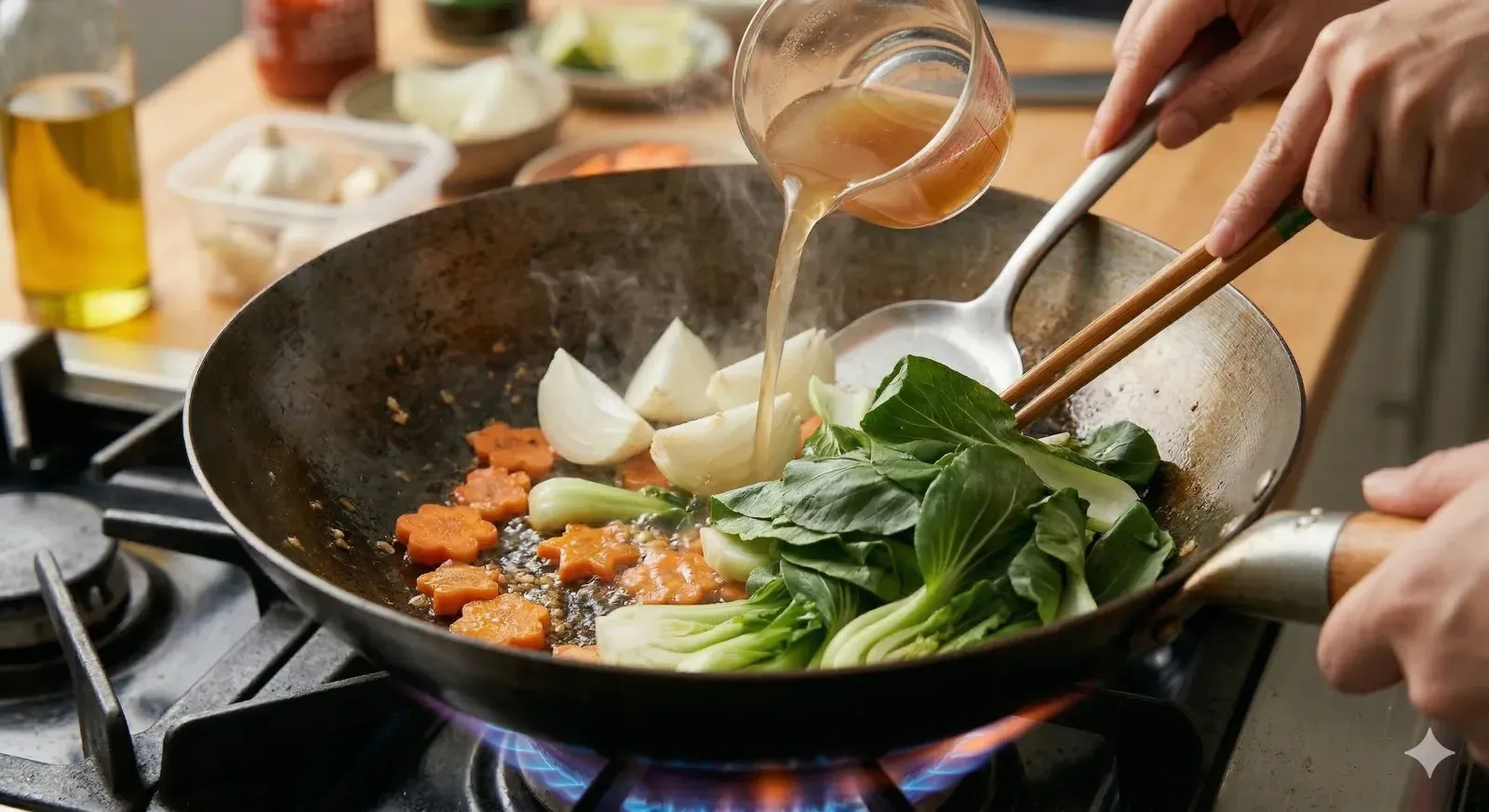
6Use the same wok. Don’t wash it — those beef drippings are flavor gold. First, add the carrot slices and bok choy stems since they need more time. Stir-fry for about 1 minute. Then pour in the cup of beef broth. Let everything simmer for 1-2 minutes until tender-crisp. Next, add the onion wedges and bok choy leaves. Finally, taste and adjust the seasoning with more soy sauce or bouillon as needed.
Step 7: Combine and Finish with Gravy
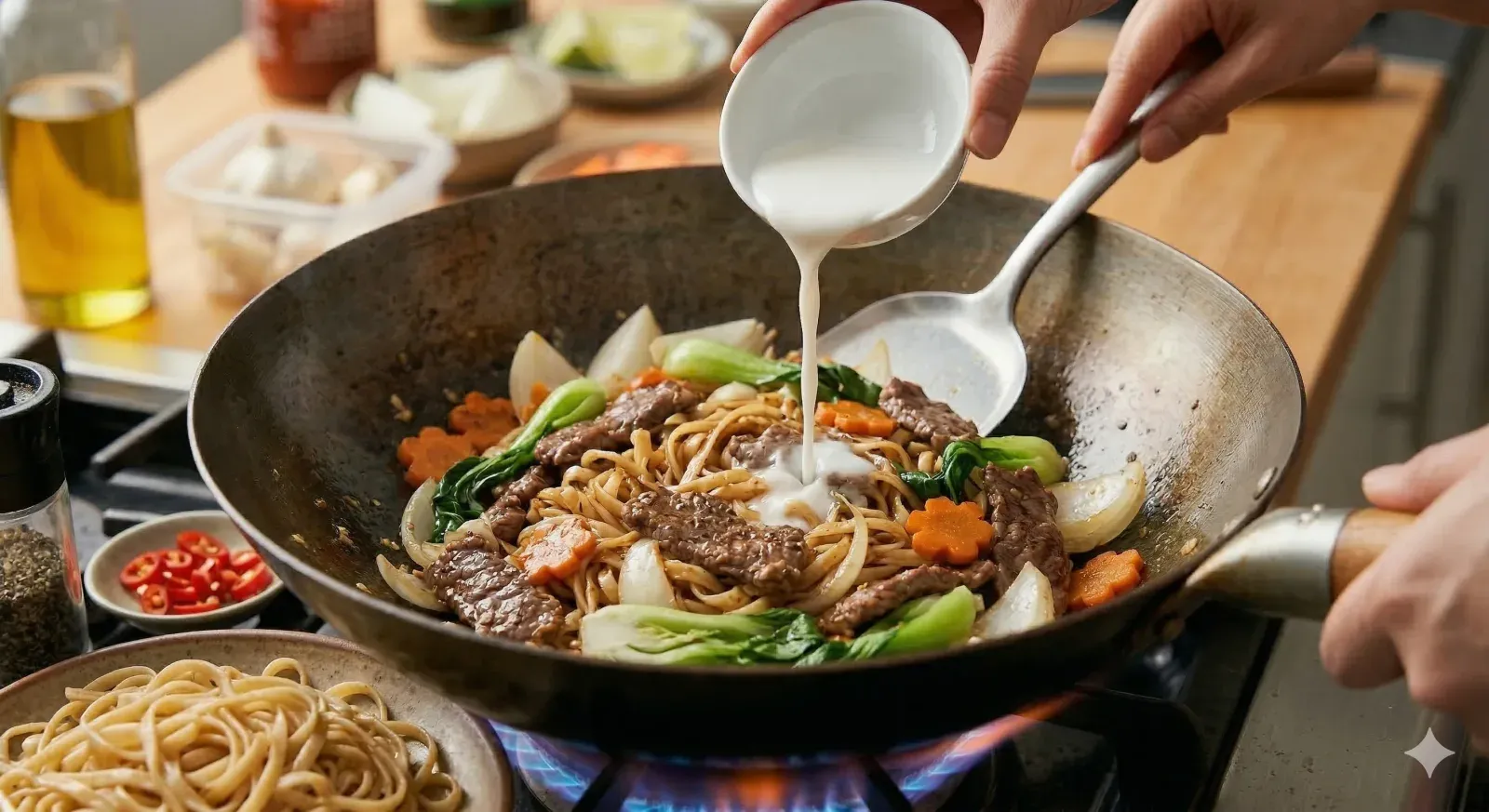
7First, return the seared beef to the wok. Toss everything together quickly. Next, mix 1/2 tbsp cornstarch with 2 tbsp water in a small bowl. Then pour this slurry into the wok. Stir constantly for about 30 seconds. As a result, the sauce turns glossy and thick. Turn off the heat immediately. Finally, spoon the beef, vegetables, and gravy over your plate of stir-fried pho. Finish with black pepper and sliced chili if you like heat. Serve right away while piping hot.
Expert Tips for Perfect Pho Xao
The Secret to Crispy-Soft Noodles
The defining texture of great Pho Xao — crispy on the edges, soft in the middle — comes from two things: medium heat and patience. If the heat is too high, the noodles will burn before they get that golden char. If you stir too much, they will never develop crispiness. Let the noodles sit undisturbed in the wok for short intervals, then gently flip. Think of it more like pan-frying than stir-frying.
Keep Your Beef Tender
Three non-negotiable rules for tender stir-fried beef: (1) Slice against the grain as thinly as possible — partially freezing the beef for 20-30 minutes makes this much easier. (2) Never add raw salt to the marinade — use soy sauce instead, because salt draws out moisture. (3) Stir-fry on the highest heat your stove can produce, and do not overcook. Remove the beef while it still has a touch of pink.
Why Cornstarch Matters Twice
You will notice cornstarch appears in both the beef marinade and the gravy. In the marinade, a small amount creates a protective coating around each beef slice — called “velveting” in Chinese cooking — that locks in moisture and creates a silky texture. In the gravy, cornstarch thickens the sauce so it clings to the noodles instead of pooling at the bottom of the plate. These are small additions that make a huge difference.
Pho Xao vs. Phở Áp Chảo: What’s the Difference?
These two dishes use the same pho noodles but the cooking technique creates completely different results. Here is a quick comparison:
| Feature | Phở Xào (Stir-Fried Pho) | Phở Áp Chảo (Pan-Fried Pho) |
|---|---|---|
| Noodle texture | Soft with crispy edges, individual strands | Crispy cake on outside, chewy inside |
| Cooking method | Stir-fried in wok with sauce | Pressed flat and pan-fried in oil, then topped |
| Topping style | Beef and vegetables with gravy spooned on top | Saucy stir-fry poured over the crispy noodle cake |
| Difficulty | Easy — great for beginners | Medium — requires patience to crisp the noodle cake evenly |
| Best for | Quick weeknight dinners | Impressive dinner party presentation |
Serving Suggestions
Pho Xao is traditionally served as a complete one-plate meal in Vietnam. However, you can easily build a more elaborate spread around it.
The Perfect Accompaniments:
- Fresh chili and lime wedges: A squeeze of lime and some sliced chili on top brightens the entire dish and cuts through the richness of the gravy.
- Pickled vegetables (đồ chua): Quick-pickled daikon and carrot add a tangy, refreshing crunch that balances the savory flavors perfectly.
- A light soup: In Vietnam, it is common to serve a simple clear broth or egg drop soup alongside stir-fried noodle dishes.
- Extra soy sauce or fish sauce on the side: Let each person adjust the seasoning to their own taste.
Beverage Pairings:
- Vietnamese iced tea (trà đá): The classic pairing for any Vietnamese street food.
- Light beer: A cold Bia Hà Nội or any crisp lager works beautifully with the savory, slightly smoky noodles.
- Salted lemonade (chanh muối): The salty-sour-sweet combination of preserved lemon drink is a refreshing match.
Storage and Reheating
Refrigerator: Store leftovers in an airtight container for up to 3 days. The noodles will lose their crispiness but the flavor actually deepens overnight — many Vietnamese people enjoy leftover Pho Xao the next day.
Freezer: Not recommended. Pho noodles become mushy and lose their texture after freezing and reheating.
Reheating: The best method is a quick stir-fry in a hot wok with a splash of water or broth. This revives the noodles and restores some of their original texture. Microwaving works in a pinch — heat in 30-second intervals, stirring between each.
Common Mistakes to Avoid
1. Skipping the Noodle Marinade
This is the most common shortcut that ruins the dish. Unmarinated noodles taste bland and stay pale — the soy sauce marinade seasons them from within and gives them that appetizing golden-brown color. Even 10 minutes of marinating makes a noticeable difference.
2. Salting the Beef Directly
Raw salt is the enemy of stir-fried beef. Salt draws out the natural juices, so when the beef hits the hot wok it steams instead of searing — resulting in tough, grey, dry meat. Always use soy sauce for seasoning your beef marinade.
3. Overcrowding the Wok
If you pile too much into the wok at once, the temperature drops dramatically and everything steams instead of frying. Cook in batches — the noodles first, then the beef, then the vegetables. Each component gets its own dedicated wok time at the right temperature.
4. Stirring the Noodles Too Much
Constant stirring prevents the noodles from developing any crispiness and often breaks them into short pieces. Let them sit in the hot wok undisturbed for 30-60 seconds between gentle flips. Use chopsticks or tongs to carefully lift and turn rather than aggressively stirring with a spatula.
Frequently Asked Questions
Can I use dried pho noodles instead of fresh?
Yes, dried pho noodles work fine. Cook them according to the package instructions but remove them about 1 minute earlier than recommended. Drain thoroughly, rinse with cold water to stop the cooking, and toss with a little cooking oil to prevent sticking. They are more fragile than fresh noodles, so handle them gently in the wok.
Why is my stir-fried beef tough and chewy?
Three likely culprits: you added salt directly to the marinade (use soy sauce instead), your wok was not hot enough (the beef steamed rather than seared), or you overcooked it. Remember to remove the beef at 80% doneness — it will continue cooking from residual heat. Adding cornstarch to the marinade also helps lock in juices.
What cut of beef is best for Pho Xao?
Flank steak is the most popular choice in Vietnam — it has great beefy flavor and stays tender when sliced thin against the grain. Sirloin, skirt steak, and ribeye are also excellent options. For easier slicing, partially freeze the beef for 20-30 minutes first. Avoid stewing cuts like chuck or brisket.
Can I make Pho Xao without beef?
Absolutely. Chicken breast or thigh, pork loin, shrimp, or even tofu all work as substitutes. Interestingly, pork heart (tim lợn) is a traditional variation in Vietnam — it has a unique, slightly crunchy texture that pairs wonderfully with the noodles. For a vegetarian version, simply load up on extra vegetables like mushrooms, bell peppers, and snap peas.
What is the difference between Pho Xao and Phở Áp Chảo?
Pho Xao is stir-fried pho with soft noodles that have slightly crispy edges. Phở áp chảo is pan-fried pho where the noodles are pressed into a flat cake and fried until crispy on both sides, then topped with a saucy stir-fry. Both are delicious Hanoi classics, but they deliver very different eating experiences.
Variations and Adaptations
Pork Heart Pho Xao (Phở Xào Tim Lợn):
A traditional Hanoi variation. Slice pork heart thinly and marinate the same way as beef. The heart has a pleasant, slightly firm texture and mild flavor that absorbs the sauce beautifully. It is one of those Vietnamese combinations that sounds unusual but tastes absolutely incredible.
Seafood Pho Xao (Phở Xào Hải Sản):
Replace the beef with a mix of shrimp, squid, and scallops. The seafood cooks even faster than beef, so have everything ready before you heat the wok. The broth gravy pairs especially well with the natural sweetness of the shellfish.
Vegetable-Loaded Version:
Add mushrooms (shiitake or oyster mushrooms are excellent), bell peppers, snap peas, corn, and broccoli. Use vegetable broth instead of beef broth and mushroom seasoning powder instead of chicken bouillon for a fully vegetarian dish.
The Cultural Significance of Pho Xao in Vietnam
Pho Xao holds a special place in Hanoi’s food culture. While phở soup is the breakfast staple, Pho Xao belongs to the afternoon and evening hours. It is the dish that warms you up on a cold Hanoi winter night. Meanwhile, street vendors set up compact cooking stations with a single burner and a well-seasoned wok. As a result, they turn out plate after plate with remarkable speed.
The dish reflects a core philosophy of Vietnamese home cooking: using the same humble ingredients in different ways to create entirely new experiences. The same rice noodles that swim in broth for breakfast become a sizzling stir-fry for dinner. Nothing is wasted, everything is transformed, and the cook’s skill makes all the difference — not expensive ingredients.
Conclusion
This Pho Xao recipe gives you everything you need to recreate authentic Hanoi-style stir-fried pho noodles at home. First, marinate your noodles for flavor and color. Next, keep your beef tender with soy sauce (never salt) and cornstarch. Then cook each component separately in the wok. Finally, finish with the glossy cornstarch gravy that ties everything together. As a result, you get a simple Pho Xao dish that rewards good technique in just 35 minutes.
If you enjoy this Pho Xao recipe, also check out our other Vietnamese dishes and Asian noodle dishes — including Bún Bò Huế, Mì Xào, and the classic Phở Bò soup.