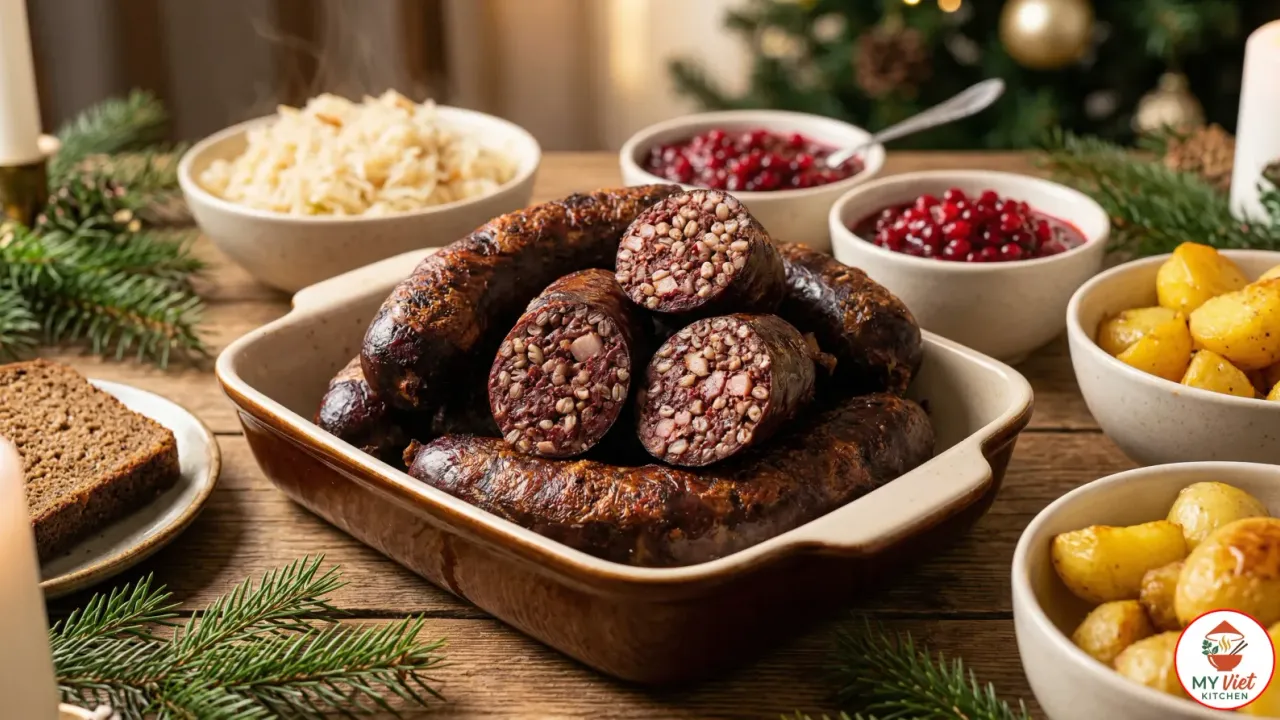
Verivorst is the classic Estonian blood sausage made with pork blood, barley groats, and warm spices. It is one of the most loved dishes in Baltic cooking. Also called verevorst in some dialects, this hearty sausage has a dark, rich filling inside a natural pork casing that turns crispy when baked. This verivorst recipe follows the true Estonian method: mix blood with pearl barley, pork, and spices, then stuff, poach, and bake. Whether you make it for a Christmas feast or a cold winter night, every bite brings the deep, earthy warmth that has made verivorst a key part of Estonian holiday meals for ages.
Prep Time: 45 minutes | Cook Time: 60 minutes | Servings: 12
Difficulty: Medium | Calories: ~320 per serving
What Makes Verivorst Special?
Verivorst is far more than a simple blood sausage. It is the star of the Estonian Christmas table, a dish so tied to the culture that December in Estonia feels wrong without it. Walk into any Estonian store from late November onward, and you will find whole sections full of freshly made verivorst. Families buy them by the kilo. Many home cooks still make their own using recipes passed down through the years.
What sets Estonian verivorst apart from other blood sausages is the heavy use of pearl barley groats. German Blutwurst relies on bread or rice. British black pudding uses oatmeal. But verivorst packs its casing with cooked barley that soaks up the blood and swells into a chewy, grainy filling. Because of this, the texture feels hearty and full rather than smooth or pasty. Each bite gives you clear grains wrapped in the rich, mild sweetness of pork blood.
Moreover, the spice mix in verivorst shows its Baltic roots. Marjoram is the key herb. It gives a warm, slightly sweet scent that cuts through the richness of the blood and fat. Allspice and cloves add depth but no heat, while black pepper brings just enough bite. Together, these spices make a flavor that is earthy, cozy, and purely Estonian. The final baking step crisps the casing into a dark, snappy shell that pairs well with the soft, moist inside.

Choosing the Right Pork Blood for Verivorst
The blood is the base of verivorst, so quality matters. Fresh pork blood gives the best flavor, but frozen blood works nearly as well if you thaw it the right way. Here are your best options for finding this key part.
- Fresh pork blood from a butcher (best choice): Ask your local butcher to save fresh pork blood during processing. Fresh blood has the cleanest, mildest taste and makes the smoothest filling. It should look dark red and liquid, with no off smells. Use it within 24 hours, and keep it cold at all times.
- Frozen pork blood: Many Asian grocery stores and online shops sell frozen pork blood in quart-size tubs. Thaw it in the fridge, not at room heat. After thawing, stir the blood well to break up any clots before you add it to the filling. Frozen blood works nearly the same as fresh in the final sausage.
- Pig blood curd (as a last resort): Some stores sell blood curd in blocks. You can blend the curd with a bit of water until smooth. However, the texture will be a bit different since the blood has already set. For the best results, stick with liquid blood when you can.
Ingredients for Verivorst
Main Ingredients:
- 2 cups pork blood, fresh or frozen and thawed
- 1 cup pearl barley groats, cooked until tender
- 1 pound pork shoulder, cut into small cubes
- 8 ounces pork back fat, diced into small pieces
- 6 feet natural pork casings, rinsed and soaked for 30 minutes
For the Seasoning:
- 2 medium onions, finely chopped
- 2 tablespoons butter for frying the onions
- 1 teaspoon salt
- 1/2 teaspoon freshly ground black pepper
- 1/2 teaspoon dried marjoram
- 1/4 teaspoon ground allspice
- 1/4 teaspoon ground cloves
For Serving:
- Sauerkraut, warmed
- Lingonberry jam
- Roasted or boiled potatoes
Pro tip: Cook the barley until it is tender but still has a slight bite in the center. Overcooked barley turns mushy inside the sausage and loses its appealing chewy texture. The grains continue to soften during poaching and baking, so aim for al dente at this stage.
Step-by-Step Instructions
Step 1: Cook the Barley and Prepare the Filling Base
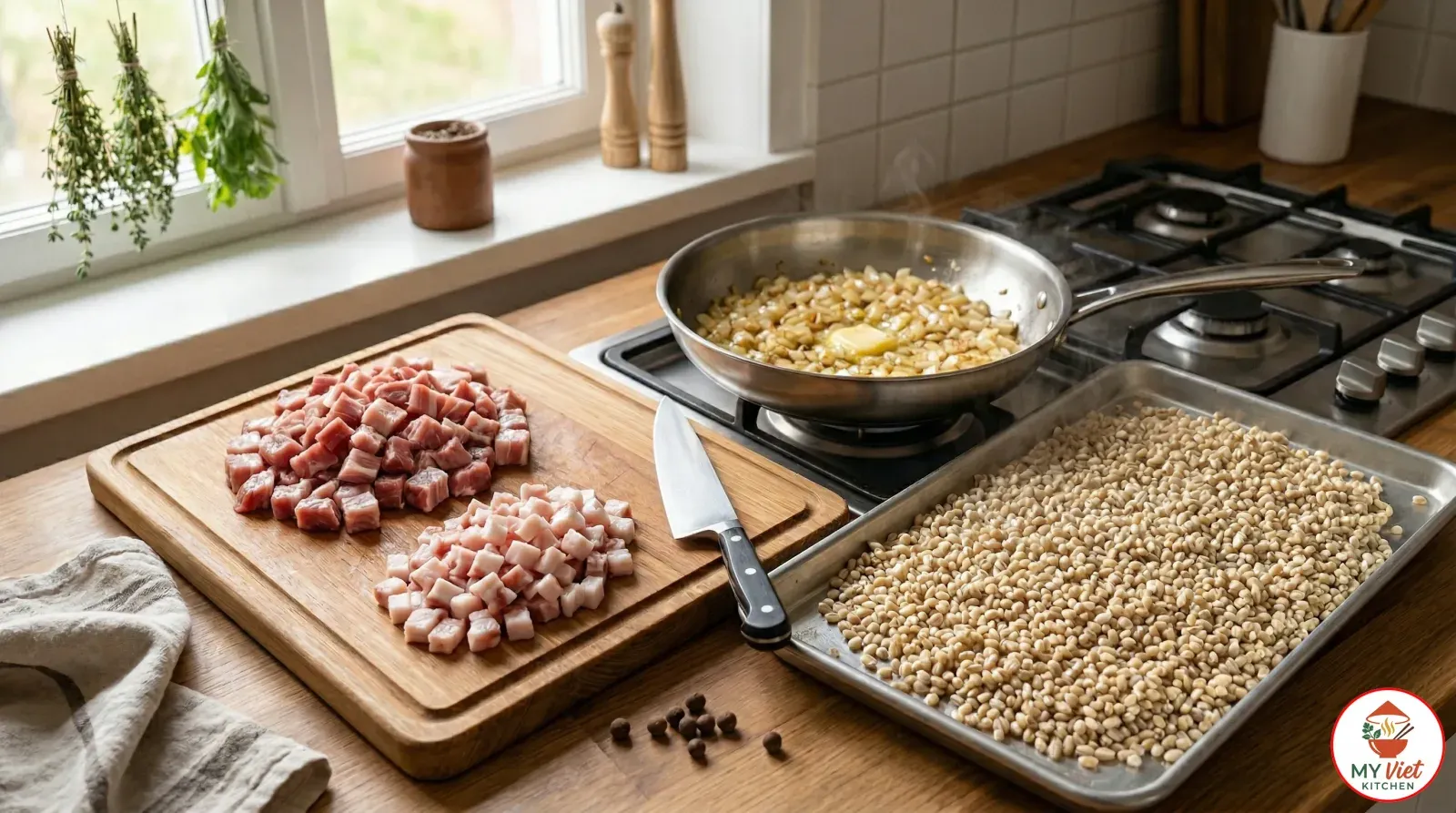
1 Start by cooking the pearl barley in a pot of salted boiling water for about 25 minutes until the grains are tender but still slightly firm in the center. Drain the barley thoroughly and spread it on a tray to cool. While the barley cooks, melt the butter in a skillet over medium heat and saute the chopped onions until they turn golden and soft, which takes roughly 10 minutes. Stir occasionally to prevent burning.
At the same time, cut the pork into cubes no larger than half an inch. Dice the back fat into pieces of the same size. Small cuts spread evenly through the sausage, so every slice has a good mix of meat, fat, and grain. Let all the parts cool fully before you mix them with the blood. Warm items can cause the blood to clot too early.
Step 2: Mix the Blood and Filling Together
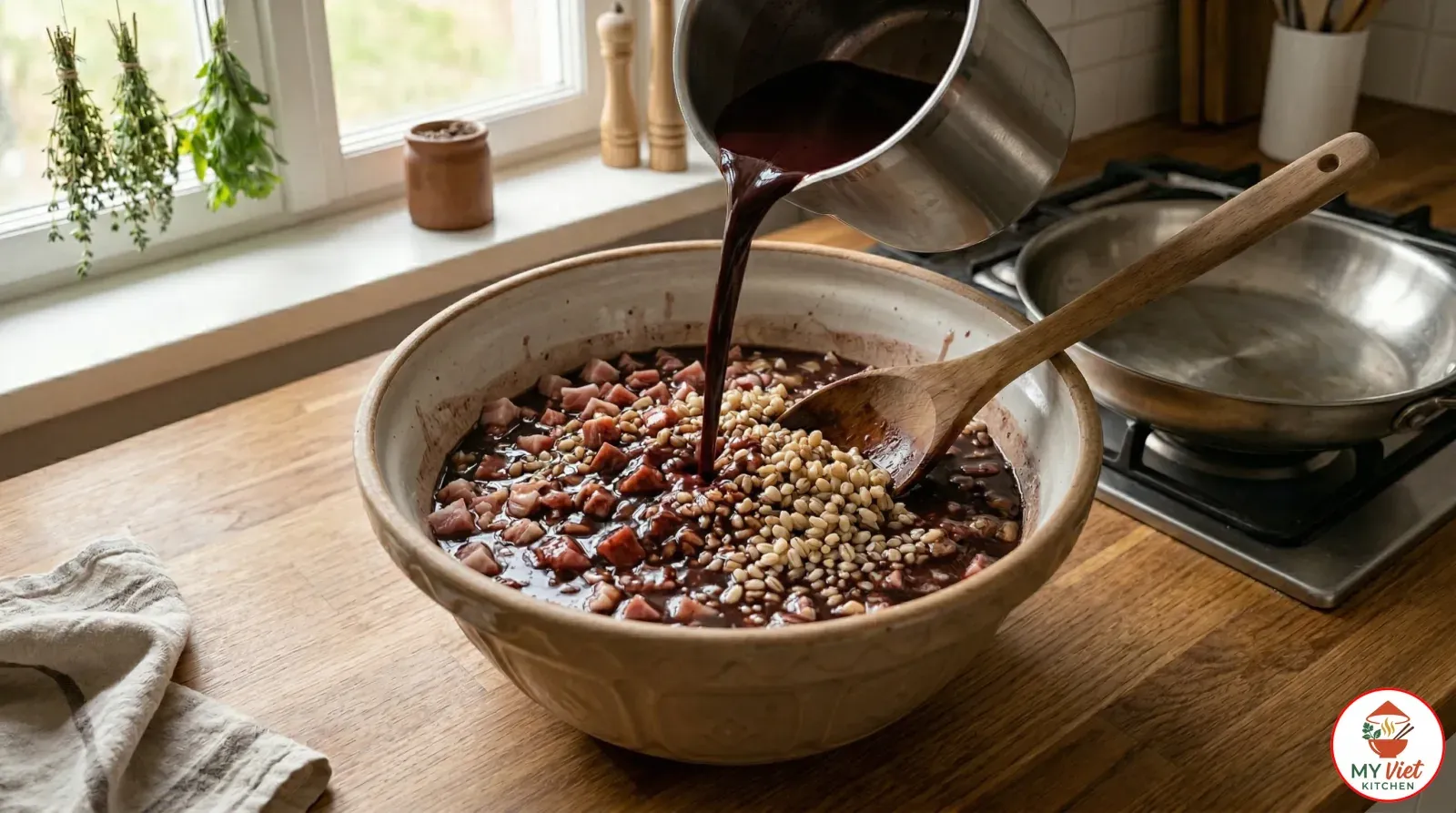
2 Pour the pork blood into a large mixing bowl. If the blood has any clots, strain it through a fine mesh sieve first to ensure a smooth liquid. Then add the cooled barley, cubed pork, diced back fat, and sauteed onions. Sprinkle in the salt, black pepper, marjoram, allspice, and ground cloves.
Stir it all with a large spoon until the blood coats every piece evenly. The mix should look dark, loose, and blended. Taste a tiny bit of the raw filling to check the salt and spice levels, then adjust if needed. Estonian cooks often add a pinch more marjoram since it is the key flavor of verivorst. Once the filling tastes right, let it rest for 10 minutes so the barley soaks up some of the blood.
Step 3: Stuff the Casings
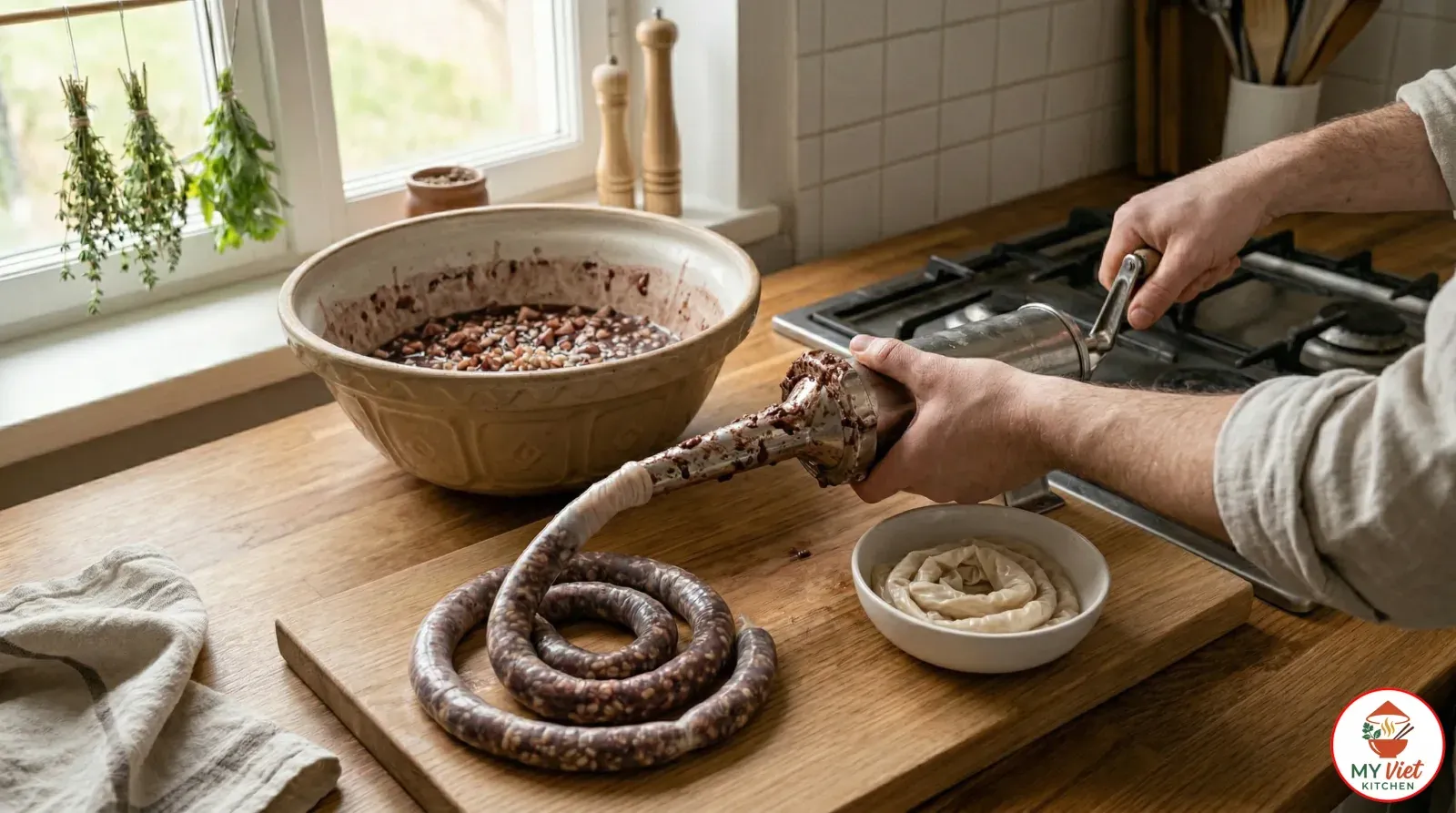
3 Rinse the soaked pork casings under cold running water, both inside and outside, to remove any salt. Slide one end of a casing onto the nozzle of your sausage stuffer or a wide kitchen funnel. Tie a secure knot at the other end of the casing. If you do not own a sausage stuffer, a funnel with a wide opening works well for small batches.
Fill the casing loosely with the blood and barley mix. This is the most vital part of the stuffing step. The barley swells more during cooking, so you need to leave room inside. If you pack it too tight, the sausages will burst in the pot. Aim for a filling that feels soft when you squeeze it gently. Twist or tie the casing with twine every 6 to 8 inches to form links. Then prick each sausage once or twice with a needle to let out trapped air.
Step 4: Poach the Sausages Gently
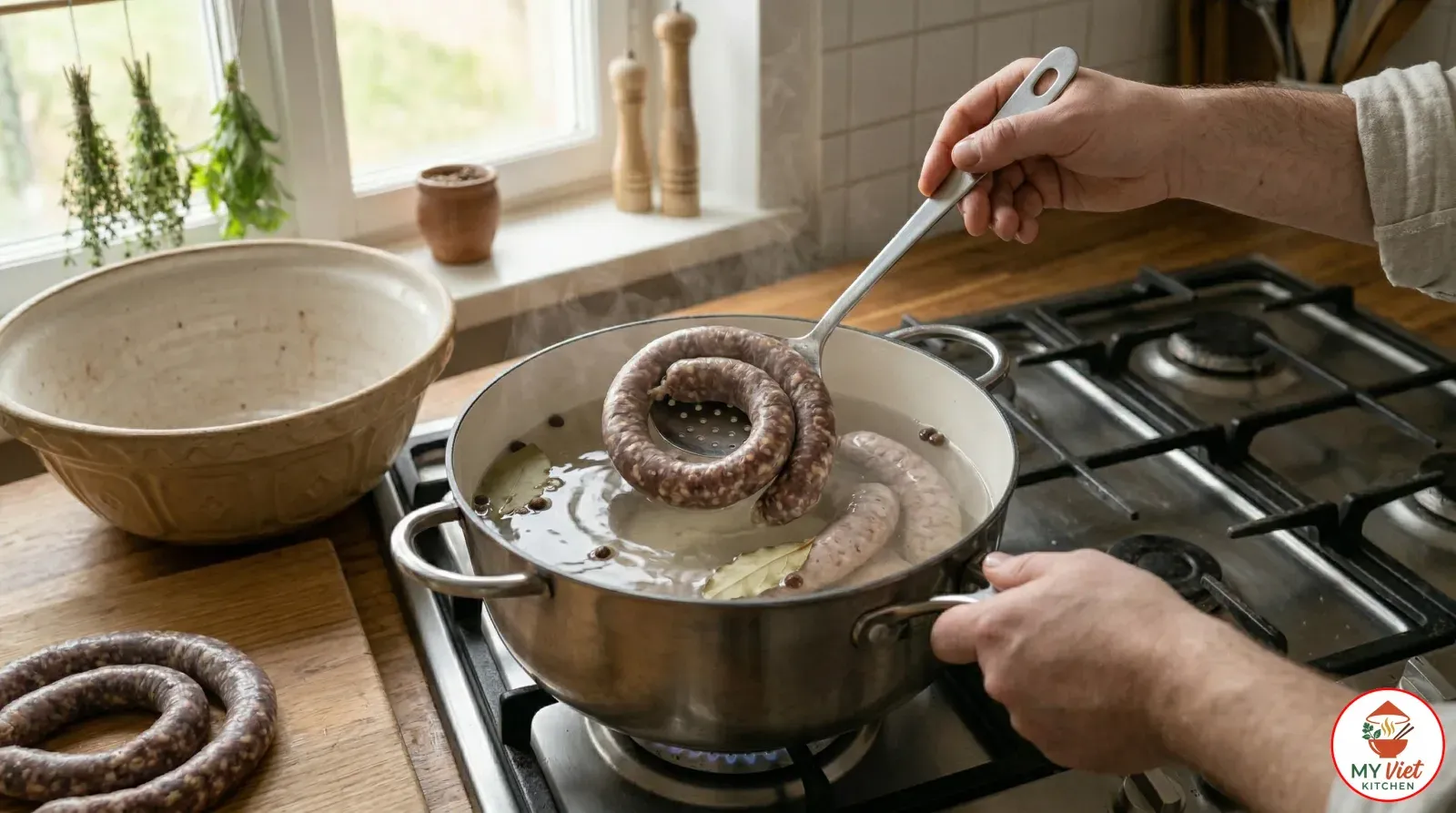
4 Fill a large, wide pot with water and heat it to a gentle simmer at around 175 degrees Fahrenheit. The water should show small bubbles along the bottom but never reach a rolling boil. Carefully lower the sausages into the pot using a slotted spoon. Poach them for 20 minutes, keeping the temperature steady and low.
Steady heat matters here. Boiling water will burst the casings and spill the filling into the pot. If the water starts to bubble hard, turn the heat down right away. After 20 minutes, the sausages should feel firm but still have some give in the center. Lift them out with a slotted spoon and set them on a wire rack to cool and drain. At this point, the verivorst is fully cooked and safe to eat, but baking takes it to the next level.
Step 5: Bake Until Dark and Crispy
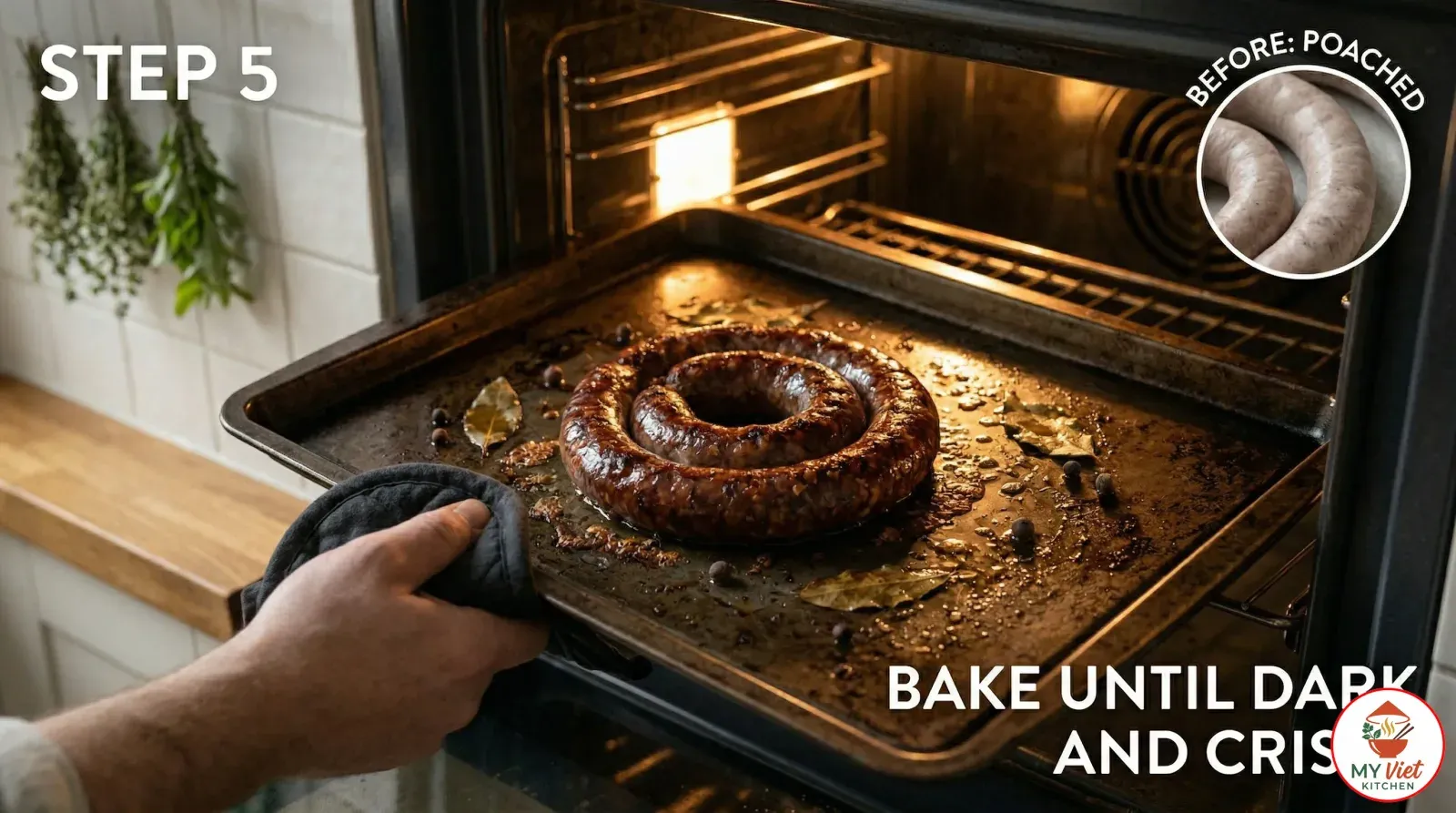
5 Preheat your oven to 400 degrees Fahrenheit. Place the poached sausages on a lightly greased baking sheet, leaving space between each one for air to circulate. Bake for 25 to 30 minutes, turning the sausages once at the halfway mark so they brown evenly on all sides.
The verivorst is done when the casing turns deep, dark brown and feels crispy to the touch. The hot oven melts the fat inside while crisping the outside. This gives you a great contrast between the snappy shell and the soft, moist filling. Take the sausages out and let them rest for 5 minutes. Then slice them on the diagonal and place them on a platter with sauerkraut, lingonberry jam, and roasted potatoes for the full Estonian spread.
Expert Tips for Perfect Verivorst
Do Not Overstuff the Casings
This is the most common mistake when making verivorst at home. The barley soaks up liquid and swells during poaching, so casings packed too full will burst in the pot. Fill them to about two-thirds full instead. The sausage should feel soft when you handle it, not drum-tight. A loosely filled verivorst holds its shape, cooks evenly, and has a better texture than one that is packed too full.
Keep the Poaching Water Below a Boil
Gentle heat is key during the poaching step. Water that boils hard creates motion that can tear the casings apart. Aim for 170 to 180 degrees, which looks like small bubbles at the bottom of the pot with light wisps of steam. A clip-on thermometer helps you keep the right heat. If the water starts to boil too fast, add a splash of cold water to cool it down.
Use Marjoram Generously
Marjoram is the soul of real verivorst. Estonian cooks use it freely because it softens the rich, iron taste of the blood with its warm, slightly sweet scent. If you are new to blood sausage, extra marjoram helps tone down any flavors that feel too strong. Dried marjoram works well, but fresh is even better when you can find it. Rub the dried herb between your palms before adding it to bring out more of its oils.
Verivorst vs. Other European Blood Sausages
Blood sausage is found all across Europe, and each country puts its own spin on this old dish. The key differences come down to the grain, the spices, and how the sausage is cooked. Here is how Estonian verivorst stacks up next to its closest cousins.
| Sausage | Country | Grain Filler | Key Difference |
|---|---|---|---|
| Verivorst | Estonia | Pearl barley | Baked after poaching for crispy casing |
| Black pudding | Britain | Oatmeal | Sliced and pan-fried, softer texture |
| Blutwurst | Germany | Bread or rice | Often smoked, smoother filling |
| Boudin noir | France | None or rice | Creamier, often uses cream and apple |
| Morcilla | Spain | Rice or onion | Heavily spiced with paprika and cumin |
| Mustamakkara | Finland | Rye or barley | Closest relative, served with lingonberry |
Serving Suggestions
In Estonia, verivorst comes to the table as part of a big spread of hearty winter dishes. The sausage is rich and savory, so the sides that go with it help to balance those deep flavors. You can serve it sliced as a main course or cut it into smaller pieces for a shared holiday platter.
The Perfect Accompaniments:
- Sauerkraut (hapukapsas): The most essential pairing. Estonian-style sauerkraut is slow-cooked with onions and a touch of sugar until it softens and turns slightly sweet. Its acidity cuts through the richness of the blood sausage and refreshes the palate between bites.
- Lingonberry jam: The tart, fruity brightness of lingonberry jam contrasts beautifully with the earthy, savory character of verivorst. A small spoonful alongside each bite lifts the flavors and adds a touch of sweetness that makes the sausage sing.
- Roasted or boiled potatoes: Simple potatoes round out the meal and soak up the juices from the sausage. Estonians often serve them boiled with a knob of butter, though roasted potatoes with a crispy exterior work just as well.
- Rye bread: Dark Estonian rye bread, dense and slightly sour, complements verivorst with its earthy grain flavor. A thick slice of rye bread spread with butter alongside a few slices of blood sausage makes a satisfying meal on its own.
Beverage Pairings:
- Estonian dark beer: A malty, full-bodied dark lager or porter echoes the roasted, earthy notes of the blood sausage. Brands like A. Le Coq Porter or Saku Tume pair wonderfully with the rich flavors of the holiday table.
- Mulled wine (hoglogi): Warm, spiced wine with cinnamon and cloves mirrors the warm spices in the verivorst and adds a festive touch to the Christmas table.
- Apple cider: The crisp acidity and fruit sweetness of cider balance the richness of the sausage. Both still and sparkling cider work well here.
- Rye kvass: A traditional fermented rye drink with a mild, bread-like flavor. Its gentle sourness pairs naturally with blood sausage and sauerkraut, making it the most authentically Estonian choice on this list.
Storage and Reheating
Refrigerator: Store cooked verivorst in an airtight container for up to 5 days. The flavors deepen over the first day or two as the spices meld with the blood and barley. In fact, many Estonian cooks consider day-old verivorst even better than freshly made because the marjoram and allspice have time to fully bloom.
Freezer: Verivorst freezes beautifully for up to 3 months. Wrap individual sausages tightly in plastic wrap, then place them in a freezer bag with the air pressed out. Thaw overnight in the refrigerator before reheating. You can also freeze the raw, stuffed sausages before poaching if you want to prepare them ahead of time.
Reheating: The oven is the best method for reheating verivorst because it restores the crispy casing. Place the sausages on a baking sheet and heat at 375 degrees Fahrenheit for 12 to 15 minutes, turning once. The casing crisps up again while the inside warms through gently. Avoid the microwave because it softens the casing and turns it rubbery. Pan-frying in a little butter also works well, giving the exterior a golden, crispy finish in about 8 minutes.
Common Mistakes to Avoid
1. Overstuffing the Casings
Barley expands as it absorbs liquid during cooking. If you pack the casings too tightly, they will split open in the poaching water, and the filling will escape into the pot. Always leave the casing about one-third empty so the barley has room to swell. The finished sausage should feel soft when raw. It firms up during poaching and gets its final structure in the oven.
2. Boiling Instead of Poaching
Vigorous boiling destroys verivorst. The turbulent water tears the delicate casings apart and causes the blood to separate from the filling. Always poach at a gentle simmer between 170 and 180 degrees Fahrenheit. The surface of the water should barely move. If you see active bubbling, reduce the heat immediately. Patience at this stage is what gives you intact, perfectly cooked sausages.
3. Skipping the Baking Step
Some recipes stop at poaching, but Estonian tradition calls for baking the sausages afterward. The oven’s dry heat renders excess fat, crisps the casing into a snappy shell, and concentrates the flavors inside. Without baking, verivorst tastes flat and the casing feels soft and chewy. The 25 to 30 minutes in a hot oven transforms a good blood sausage into a great one. So do not skip this step.
4. Using Pre-Ground Spices Past Their Prime
Stale spices produce flat, lifeless verivorst. Marjoram, allspice, and cloves all lose their potency within six months of opening. Since these spices define the flavor of Estonian blood sausage, use fresh ones whenever possible. Smell your marjoram before adding it. If it barely has an aroma, it will barely have flavor. Replace old spices or grind whole ones fresh for the best results.
Frequently Asked Questions
What does verivorst taste like?
Verivorst has a rich, earthy flavor with a subtle sweetness from the blood and a nutty depth from the barley groats. The marjoram and allspice provide warm, aromatic notes that balance the mineral richness of the pork blood. The texture combines a creamy, grain-studded interior with a crispy baked casing. Compared to most blood sausages, verivorst tastes milder and more complex because the barley absorbs and mellows the iron-rich flavor.
Where can I buy pork blood for verivorst?
Many Asian grocery stores sell fresh or frozen pork blood, and it is often the most affordable option. Specialty butcher shops and Eastern European delis frequently carry it as well. You can also order food-grade frozen pork blood online from specialty meat suppliers. If you have a good relationship with a local farm or butcher, ask them to reserve blood during processing. Always check that the blood has been properly refrigerated and handled.
Can I make verivorst without a sausage stuffer?
Absolutely. A wide kitchen funnel works well for small batches. Slide the casing onto the funnel spout and push the filling through with a spoon handle. The process takes longer than a proper stuffer, but the results are just as good. Alternatively, you can skip casings entirely and press the mixture into a loaf pan lined with strips of bacon. Then bake at 350 degrees until firm. This approach gives you a sliceable blood sausage loaf that tastes nearly identical to the traditional version.
What is the difference between verivorst and black pudding?
The main difference lies in the grain filler and the finishing method. Verivorst uses pearl barley, while black pudding relies on oatmeal. This gives verivorst a chewier, more distinct grain texture compared to the smoother interior of black pudding. Additionally, Estonian verivorst is baked after poaching for a crispy casing, whereas black pudding is typically sliced and pan-fried. The spice profiles also differ, with verivorst favoring marjoram and allspice while black pudding often uses thyme or pennyroyal.
Is verivorst only eaten at Christmas in Estonia?
While Christmas is the peak season for verivorst, Estonians enjoy it throughout the colder months from late October through February. Supermarkets and butcher shops stock fresh verivorst during this entire period. However, the Christmas table is where it holds the most cultural significance. Nearly every Estonian family includes verivorst alongside sauerkraut, roasted pork, and potatoes as part of the traditional holiday feast.
How long does verivorst keep in the refrigerator?
Cooked verivorst stores well in the refrigerator for up to 5 days in an airtight container. The flavors actually improve after the first day as the spices continue to infuse the blood and barley. For longer storage, freeze individual sausages for up to 3 months. Thaw them in the refrigerator overnight and then reheat in the oven at 375 degrees for 15 minutes to restore the crispy casing.
Variations and Adaptations
Buckwheat Verivorst:
Replace the pearl barley with cooked buckwheat groats for a nuttier, more robust flavor. Buckwheat adds an earthy depth that pairs beautifully with the blood and marjoram. Cook the buckwheat until just tender, and follow the rest of the recipe as written. This variation appears in some rural Estonian households where buckwheat grows more readily than barley.
Verivorst Patties (No Casing):
If you cannot find natural casings or prefer a simpler approach, shape the blood and barley mixture into thick patties about half an inch tall. Pan-fry them in butter over medium heat for 4 to 5 minutes per side until a dark, crispy crust forms. These patties give you the same flavors as traditional verivorst without the stuffing step. They also make an excellent appetizer when cut into smaller rounds.
Smoked Verivorst:
After poaching, smoke the sausages over alder or birch wood at 225 degrees Fahrenheit for one to two hours instead of baking. The smoke adds a layer of complexity that deepens the earthy character of the blood and barley. Some Estonian farmstead producers still make smoked verivorst this way, and it is considered a delicacy. If you own a smoker, this variation is well worth the extra time.
Oven-Baked Blood Sausage Loaf:
Press the filling into a parchment-lined loaf pan and bake at 350 degrees Fahrenheit for about 50 minutes until firm. This method eliminates the need for casings and sausage-stuffing equipment entirely. Once cooled, the loaf slices neatly and can be pan-fried for a crispy exterior. It works especially well when you want to introduce verivorst flavors to guests who may be hesitant about traditional sausage presentation.
The Cultural Significance of Verivorst
Verivorst holds a place in Estonian culture that goes far beyond normal food. It comes from centuries of Baltic farm life where nothing from the autumn butchering went to waste. Blood, barley, and pork fat came together out of need, but Estonian cooks turned this simple mix into something worth loving. Today, verivorst stands as a symbol of Estonian pride, thrift, and deep respect for what the land provides. Indeed, it is one of the few old foods that modern Estonians still defend with real passion.
The bond between verivorst and Estonian Christmas runs deep. The holiday feast, called joululaud, features verivorst as one of its main dishes alongside roast pork, sauerkraut, and potatoes. Families sit around the table, and the blood sausage comes with lingonberry jam in a pairing that has stayed the same for ages. For many Estonians living abroad, the taste of verivorst is the taste of home. It brings back memories of cold December nights, warm kitchens, and the family meals that define the season.
Furthermore, verivorst links Estonia to a wider Nordic and Baltic blood sausage tradition. Finland has mustamakkara. Sweden has blodkorv. Latvia has its own version too. Together, these dishes form a thread that ties northern Europe through shared farm life. Yet each version shows its own national character. Estonian verivorst, with its barley and marjoram, tastes purely of the land and people who made it. In the end, making verivorst at home is not just about cooking a sausage. It is about keeping a living tradition alive, one that links the past to the present through the simplest of foods.
Conclusion
This verivorst recipe gives you all you need to make real Estonian blood sausage from scratch. The keys are well-cooked barley, a loose and tasty blood filling, gentle poaching at low heat, and a final bake in a hot oven to crisp the casing. These four steps give you the classic contrast of a snappy, dark shell and a moist, grainy inside that defines true verivorst. Whether you make it for Christmas or just to try a great food tradition, this Estonian blood sausage brings bold, earthy, and deeply warming flavors to your table.
Ready to explore more European sausage and meat traditions? Browse our European dishes collection for recipes like bangers and mash, kielbasa, and beef stroganoff. Each one brings a taste of a different culinary tradition to your kitchen table.