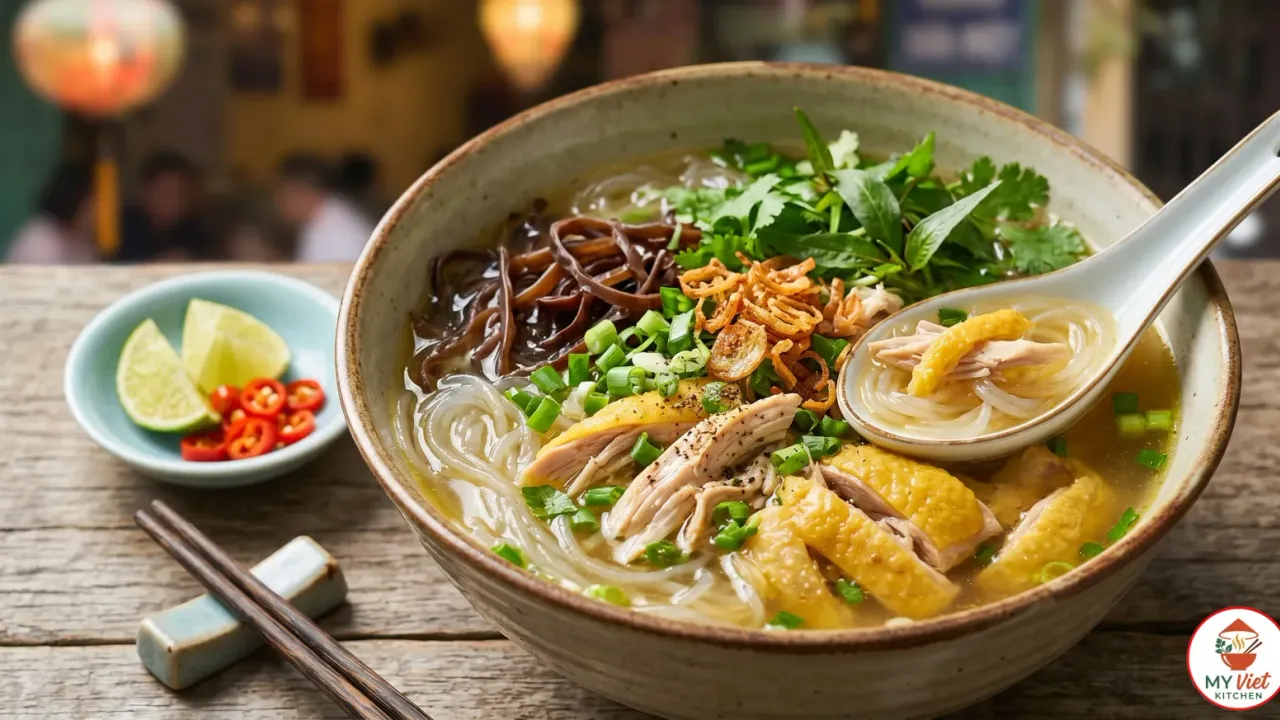
Mien ga is the quiet star of northern Vietnamese soups. This fragrant Vietnamese chicken glass noodle soup, known in full as miến gà, brings together a clean, golden broth, slippery mung bean noodles, tender shredded chicken, and crunchy wood ear mushrooms. In this guide, you will learn how to make authentic mien ga at home from scratch. Every step is here, from poaching a whole chicken to building a deep broth and assembling bowls that feel just like the ones at any Hanoi street corner.
Prep Time: 20 minutes | Cook Time: 90 minutes | Servings: 4
Difficulty: Easy | Calories: ~380 per serving
What Makes Mien Ga Special?
Mien ga stands apart from every other Vietnamese soup because of its texture. Each strand of glass noodle stays light and slippery, while the wood ear mushrooms add a satisfying crunch in every spoonful. Most importantly, the broth is clean and golden rather than rich and heavy, since cooks gently poach a whole chicken instead of boiling bones for hours. As a result, mien ga feels comforting without ever feeling heavy on the stomach.
The dish has its roots in northern Vietnam. Hanoi families first developed mien ga as a clever way to use leftover poached chicken broth from special meals. Because the broth is already loaded with chicken flavor, all you need is a handful of dry noodles, a few mushrooms, and fresh herbs to turn it into a full second meal. Today, street stalls across Hanoi serve mien ga from sunrise until late at night, often as a light comfort dinner.
What makes a great bowl of mien ga is balance. A clear broth, perfectly cooked noodles, and a vibrant pile of fresh herbs are the trio that defines the dish. If you love light, broth-based Vietnamese soups, you will also enjoy our recipes for pho ga and chao ga. According to the Wikipedia entry on cellophane noodles, mung bean glass noodles have been a staple across Asia for over a thousand years, although Vietnamese cooks have given them a uniquely fresh, herb-forward style.
Choosing the Right Noodles for Mien Ga
Great mien ga starts with the right glass noodles. Not every cellophane noodle is the same, and a wrong pick can ruin the whole bowl. Look for thin, clear strands made from mung bean or arrowroot starch. Here are the best options to look for at your local Asian market.
- Vietnamese arrowroot noodles, mien dong (the classic): These ivory-colored strands hold their bite beautifully in hot broth. They are the traditional pick for mien ga in northern Vietnam and never turn mushy.
- Mung bean glass noodles, mien dau xanh (most common abroad): Clear and slippery, these noodles cook in seconds and stay tender. Choose a brand labeled bean thread or cellophane noodle for the closest texture to a Hanoi bowl.
- Sweet potato starch noodles (last resort): Use these only if no other option is available. They are thicker and chewier than mung bean noodles, so cut the bundle short and cook briefly.
- Korean dangmyeon (avoid): Skip these for mien ga. Korean glass noodles are too thick, chewy, and dark for the soup. They behave more like japchae noodles and overpower the delicate broth.
Ingredients for Mien Ga
For the Chicken Broth:
- 1 whole chicken, about 3 pounds (or chicken parts with bones)
- 9 cups cold water
- 2 teaspoons salt
- 4 medium shallots, peeled and lightly smashed
- 1 thumb-sized piece of ginger, smashed
- 4 scallions, white and green parts separated
For the Noodles and Mushrooms:
- 6 ounces dried mung bean glass noodles or arrowroot mien
- 0.5 ounce dried wood ear mushrooms
- 4 dried shiitake mushrooms
- 1/3 cup dried lily flowers (optional, for a sweet floral note)
For Seasoning:
- 1 1/2 teaspoons fish sauce, plus more to taste
- 1 tablespoon vegetable oil
- 1 tablespoon minced shallot
- 1/2 teaspoon ground black pepper
For Garnish and Serving:
- Vietnamese coriander (rau ram), chopped
- Fresh cilantro, chopped
- Crispy fried shallots
- Lime wedges and sliced bird’s eye chilies
Pro tip: Pick a free-range or kosher chicken if you can find one. Free-range birds carry more flavor in the bones and skin, so the broth turns deeper and more golden with the same effort.
Step-by-Step Instructions for Mien Ga
Step 1: Rehydrate the Mushrooms
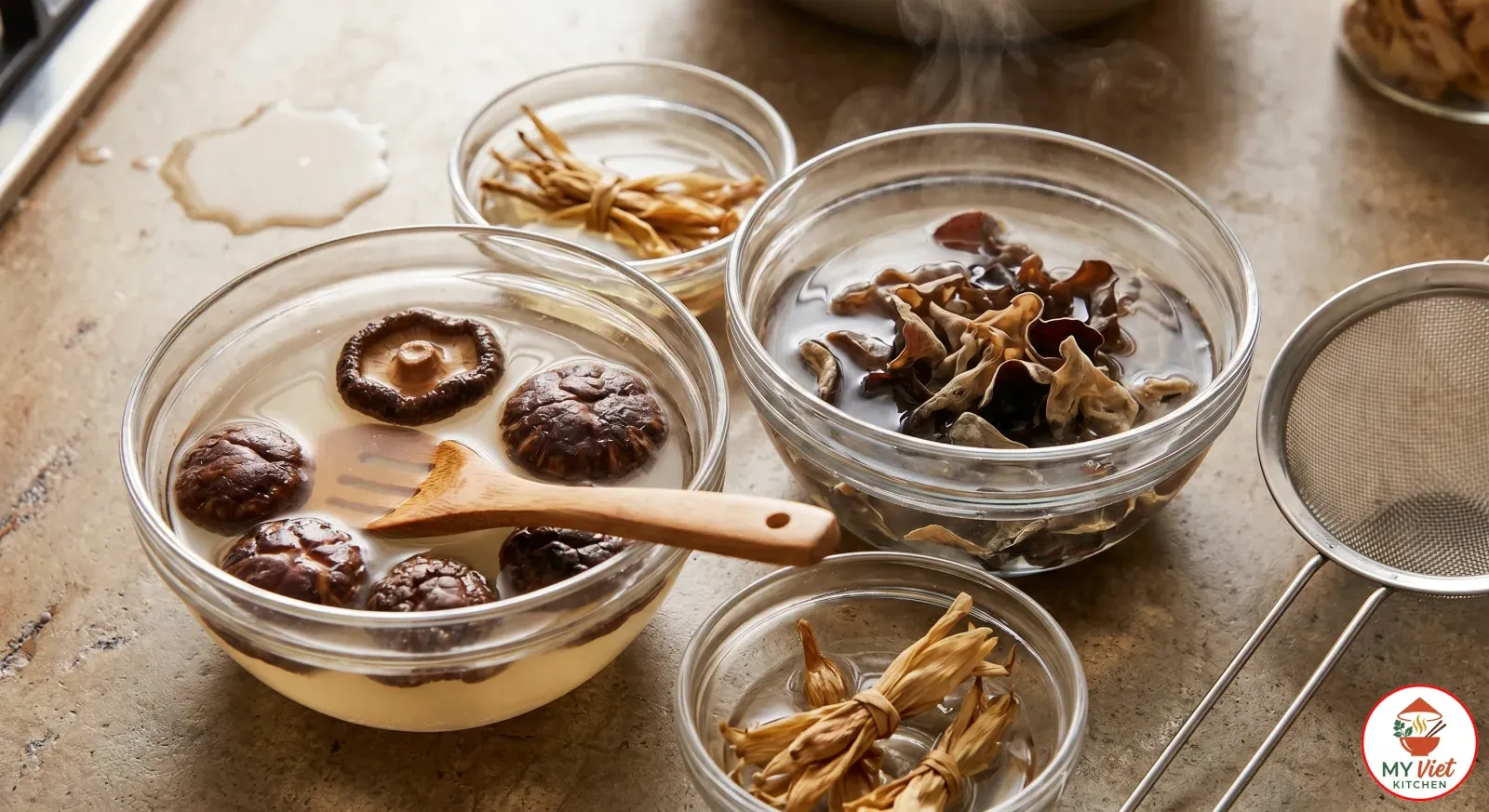
1 Soak the wood ear mushrooms and shiitake separately in hot water for 15 minutes until soft. Drain and rinse both under cold water to wash off any grit. Stack the wood ears, then julienne them into thin strips. Trim the shiitake stems and keep the caps whole, since they will simmer in the broth later for extra umami.
The mushroom soaking water often holds tiny bits of dirt and sand. As a result, you should toss it out rather than save it for the broth. If you also use dried lily flowers, soak them in a separate bowl for 10 minutes, then trim off the tough ends and tie each stem into a small knot. Set everything aside while you start the broth.
Step 2: Build the Chicken Broth
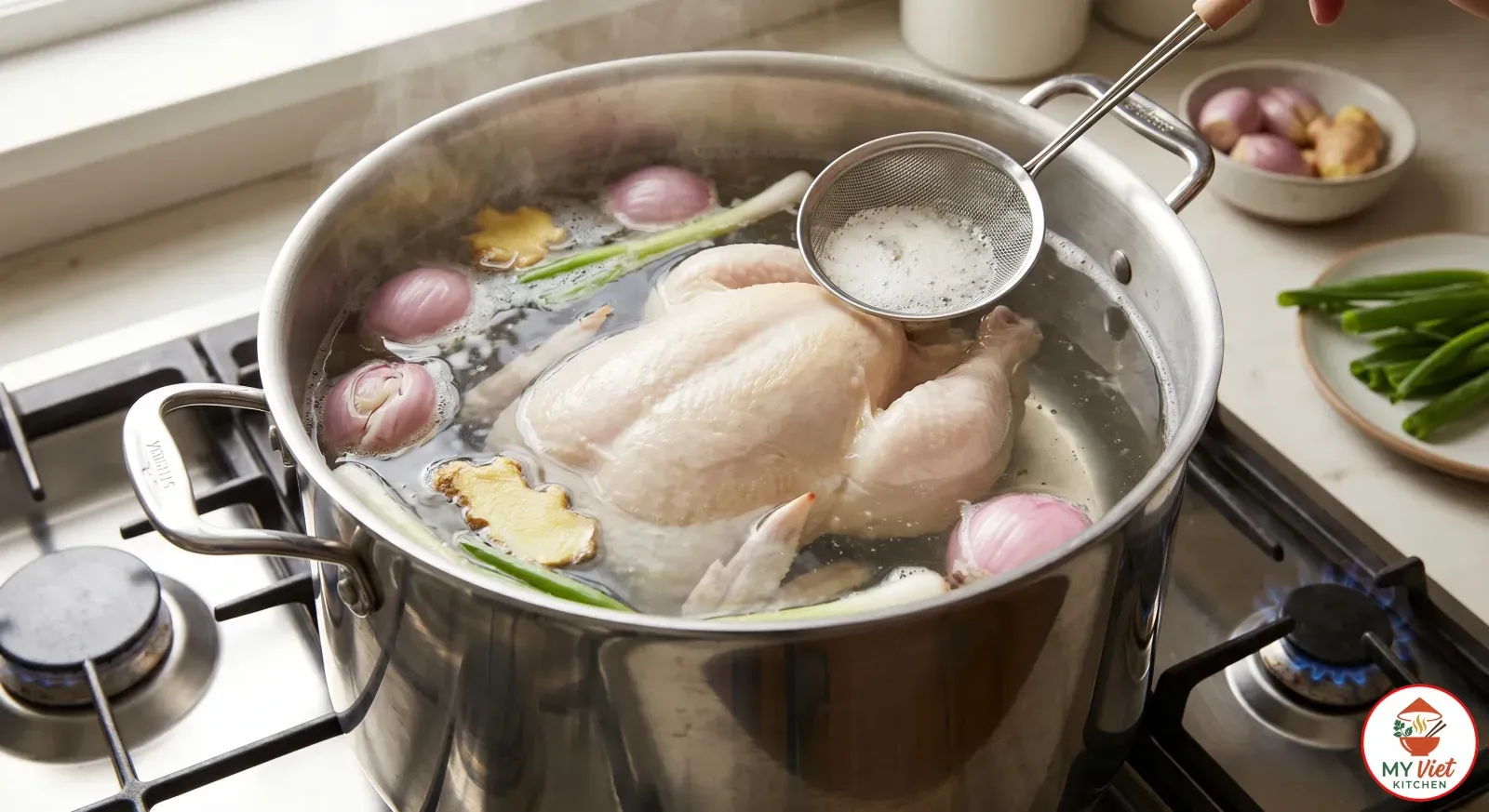
2 Bring a large pot of water to a rolling boil. Drop the whole chicken in for 1 minute, then drain and rinse the bird under cold water. This quick parboil washes off blood and impurities, so the final broth will turn out clear and clean. Skipping the step often leads to a cloudy soup, no matter how carefully you simmer afterward.
Place the rinsed chicken in a clean pot with 9 cups of cold water, salt, smashed shallots, ginger, and scallion whites. Bring to a boil over high heat, then lower to a gentle simmer. Skim any foam that rises during the first 15 minutes. Poach the chicken for 25 minutes until cooked through. The thickest part of the thigh should reach 165°F when pierced with a thermometer.
Step 3: Shred the Chicken and Simmer the Bones
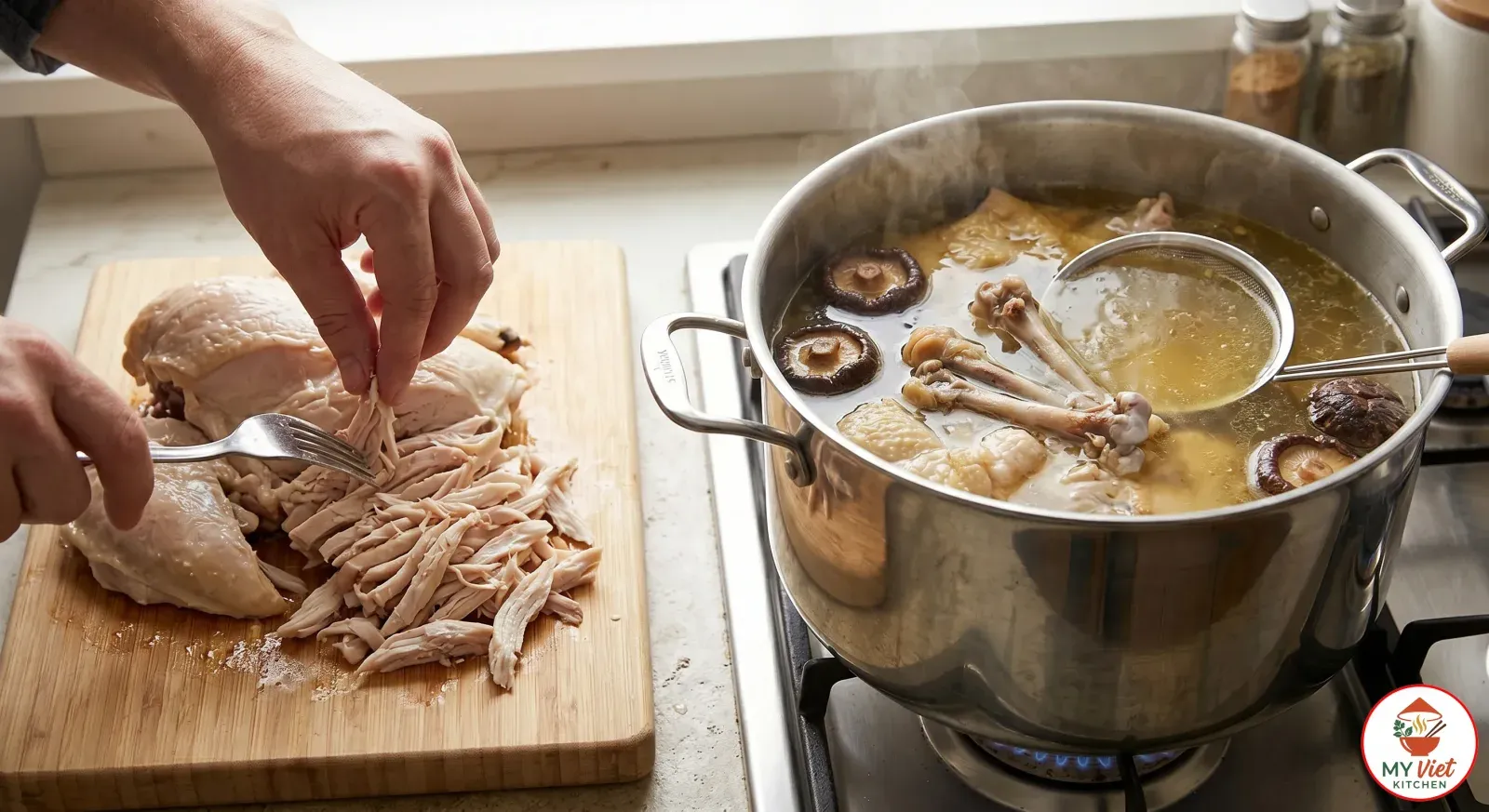
3 Lift the cooked chicken out of the pot and plunge it into a large bowl of ice water for 5 minutes. The cold shock keeps the meat juicy and gives the skin that signature firm, slightly snappy texture you find in northern Vietnamese poached chicken. Drain on a plate while the broth keeps simmering.
Pull the meat off the bones and shred it into thin, bite-sized strips. Drop the bones, the shiitake caps, and any saved chicken skin back into the broth. Simmer gently for another 45 to 60 minutes for a deeper, more golden flavor. Strain the broth through a fine-mesh sieve and discard the solids before assembling the bowls.
Step 4: Saute the Wood Ear Mushrooms
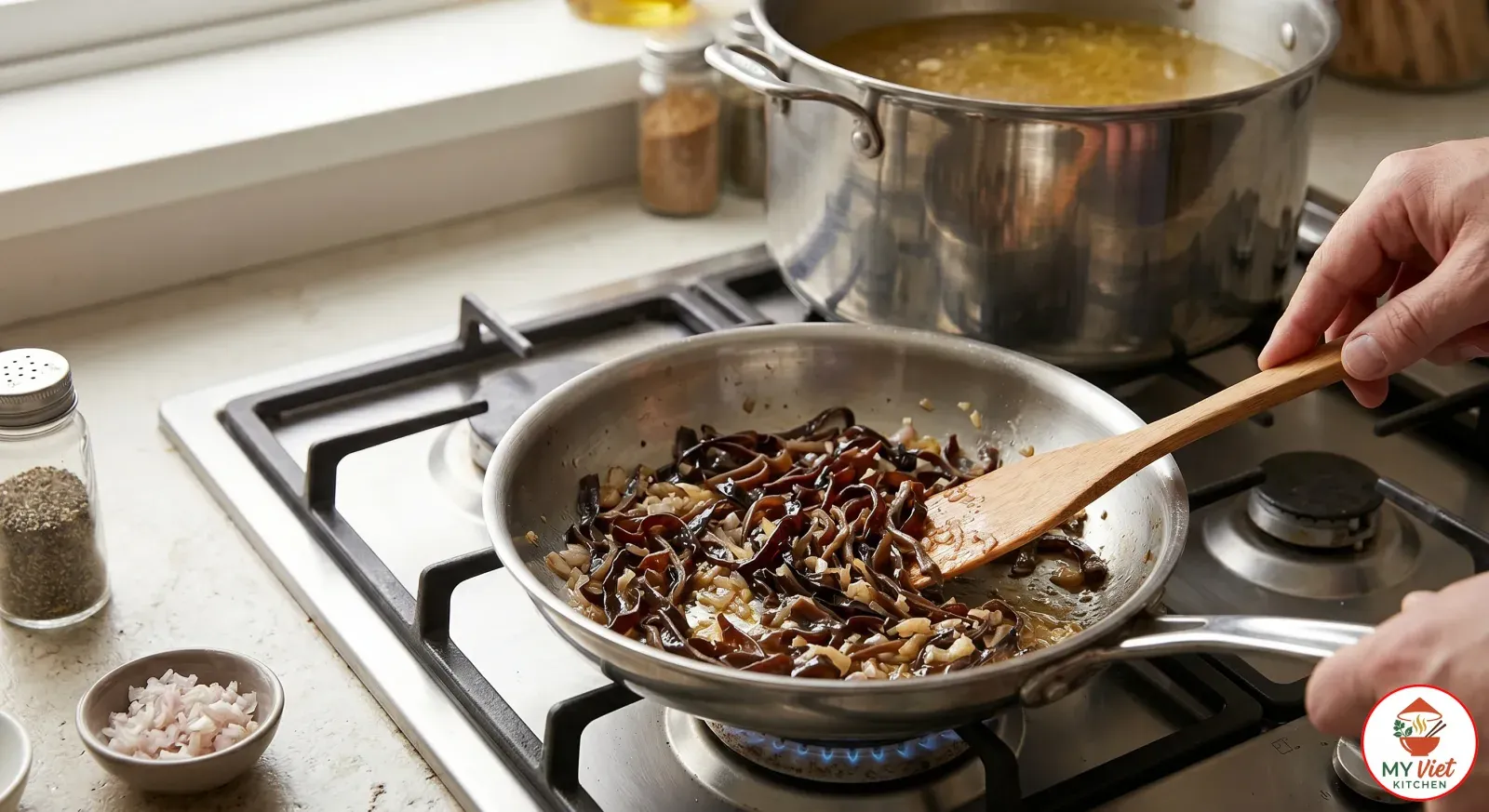
4 Heat the vegetable oil in a small skillet over medium heat. Add the minced shallot and stir for about 30 seconds until fragrant and golden. Toss in the julienned wood ear mushrooms, fish sauce, and a pinch of black pepper. Saute for 2 minutes until the mushrooms turn shiny and slightly chewy.
This quick saute is what gives mien ga its signature savory bite. Without it, the wood ears taste flat and rubbery in the soup. Some northern Vietnamese cooks also stir in a teaspoon of soaking liquid from the shiitake here for extra depth. Set the pan aside while the broth finishes simmering.
Step 5: Soak the Glass Noodles
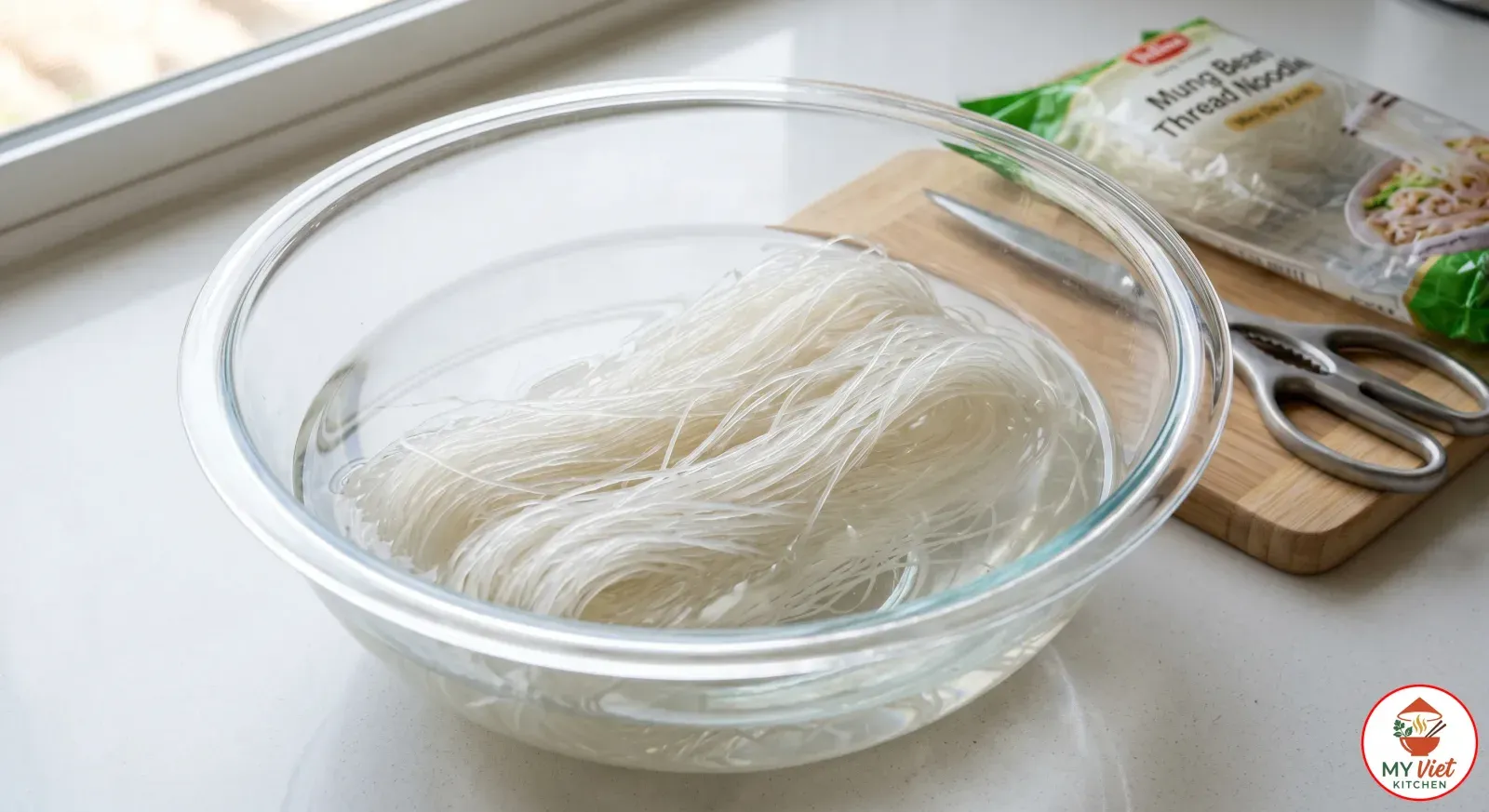
5 Place the dried glass noodles in a large bowl of room-temperature water. Soak for 20 minutes until the strands turn pliable but still firm. Avoid hot water, since boiling water can cook the noodles too fast and leave them mushy. Snip the soaked bundle into shorter pieces with kitchen scissors so they fit comfortably in a bowl.
Drain the noodles and set them next to the stove. The final cook in the broth happens in seconds, so you want everything close at hand. If you plan to serve in two rounds, divide the noodles in half and cook each batch fresh. Glass noodles continue to absorb liquid as they sit, so timing matters.
Step 6: Assemble the Bowls
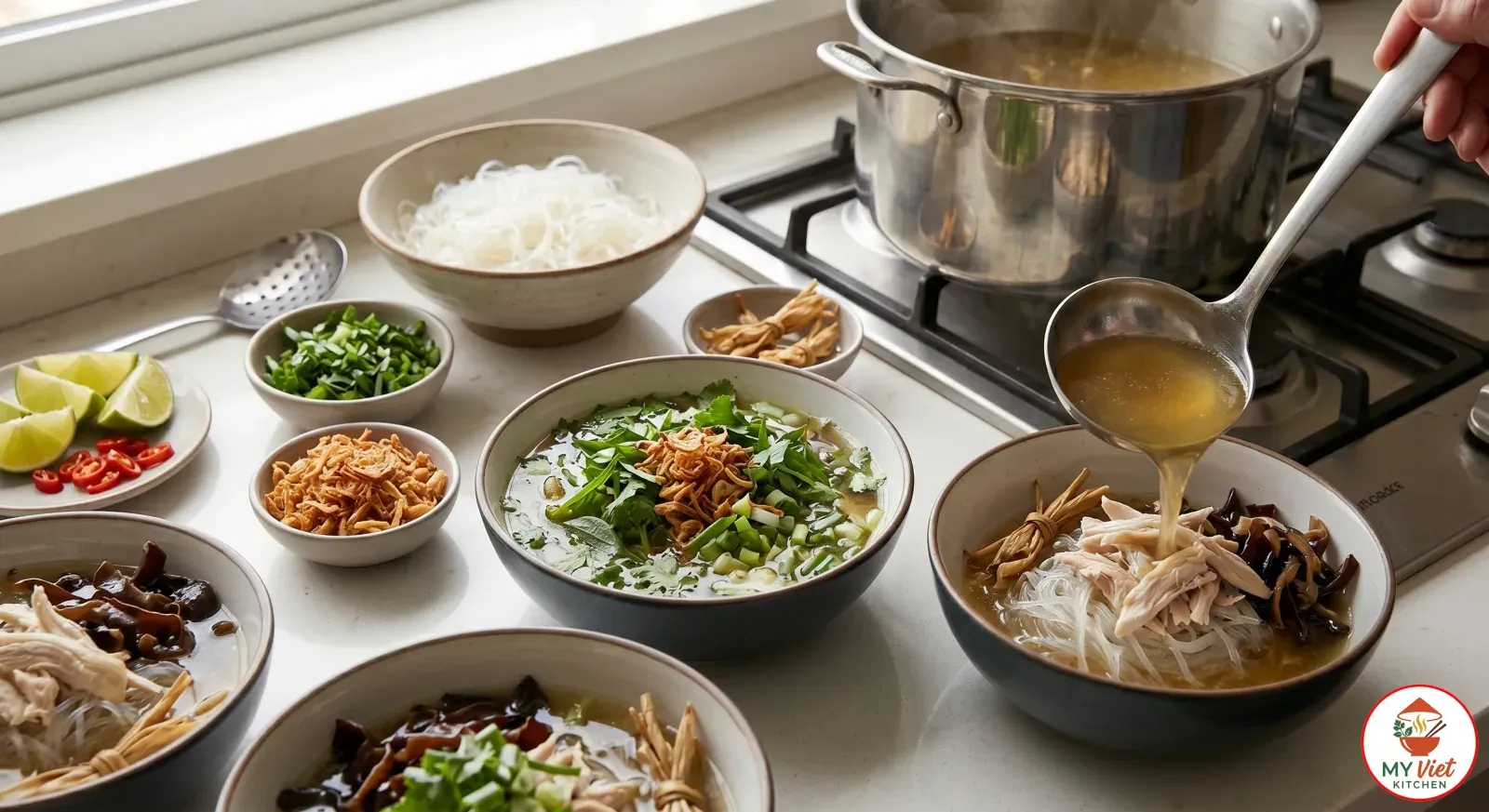
6 Strain the finished broth into a clean pot and bring it back to a strong simmer. Drop the soaked noodles into the broth and cook for just 30 to 45 seconds, until they turn translucent. Lift them out with a slotted spoon and divide among 4 deep bowls. Pile shredded chicken, sauteed wood ears, and lily flower knots on top.
Scatter chopped scallion greens, cilantro, Vietnamese coriander, and a generous pinch of crispy fried shallots over each bowl. Ladle the hot broth right over the toppings until the noodles are barely covered. Serve right away, with lime wedges and sliced chilies on the side. Each guest can squeeze lime, add chili, and stir before the first slurp.
Expert Tips for Perfect Mien Ga
Always Parboil the Chicken First
Skipping the 1-minute parboil is the most common cause of cloudy mien ga broth. The quick blanch washes off blood and impurities, so the final soup turns out clear and golden. After all, a clean broth is half the joy of this dish. Take the extra minute and your bowl will look like the ones at a Hanoi street stall.
Cook Glass Noodles Briefly
Glass noodles soak up broth fast and turn soft within seconds. Cook them for only 30 to 45 seconds in the simmering broth, then serve right away. If you need to hold the soup for late guests, keep the noodles separate and cook them only when each guest sits down. This single habit keeps the noodles springy and slippery.
Saute Wood Ears Before Adding
Many home cooks toss raw wood ears straight into the broth. As a result, the mushrooms taste rubbery and bland. A quick saute in oil with shallot and fish sauce wakes up the flavor and adds a savory edge. Take the extra two minutes for a noticeably better bowl of mien ga.
Mien Ga vs. Pho Ga: A Quick Comparison
Vietnam has two beloved chicken noodle soups. Mien ga uses glass noodles, while pho ga uses flat rice noodles. Both are delicious, although they offer very different eating experiences. Here is how the two compare side by side.
| Feature | Mien Ga (Glass Noodle) | Pho Ga (Rice Noodle) |
|---|---|---|
| Noodles | Mung bean or arrowroot glass | Flat rice noodles (banh pho) |
| Broth flavor | Clean, light, herbal | Slightly sweet, spice-driven |
| Spices | None, just shallots and ginger | Star anise, cinnamon, cloves |
| Cook time | About 90 minutes | About 2 hours |
| Toppings | Wood ear mushrooms, lily flowers | Bean sprouts, Thai basil, lime |
| Calories | About 380 per bowl | About 350 per bowl |
| Best for | Tet, banquets, light dinners | Breakfast, weekend brunch |
Serving Suggestions for Mien Ga
Mien ga is a complete meal on its own, although the way you serve it shapes the whole experience. In Vietnam, the soup almost always reaches the table with a tray of fresh herbs and a small dish of lime and chili. Diners squeeze, sprinkle, and stir to suit their own taste before eating.
The Perfect Accompaniments:
- Vietnamese coriander (rau ram): Peppery and citrusy, this herb brightens the soup with every bite.
- Fresh cilantro and scallion greens: Classic herbs that round out the broth and add visual color.
- Crispy fried shallots: A handful of golden, crunchy shallots adds savory depth and texture.
- Lime wedges and bird’s eye chilies: A squeeze of lime and a few chili rings let each guest fine-tune the bowl.
Beverage Pairings:
- Iced jasmine tea: Light and floral, it cleanses the palate between sips of broth.
- Fresh sugarcane juice: Naturally sweet and grassy, it pairs beautifully with the savory chicken broth.
- Salted plum soda (xi muoi): Tangy and lightly fizzy, it balances the rich umami of mien ga.
- Hot Vietnamese green tea: The traditional Hanoi pairing for any clear chicken soup.
Storage and Reheating
Refrigerator: Store the broth, shredded chicken, and noodles in separate airtight containers. The broth keeps for 4 days and tastes even better the next day. Cooked chicken stays fresh for 3 days. Always store noodles dry or in their soaking water, never in the hot broth.
Freezer: Mien ga broth freezes beautifully for up to 3 months. Pour cooled broth into freezer-safe containers or ice cube trays for easy portioning. Cooked chicken also freezes well in zip-top bags. Avoid freezing cooked glass noodles, since the texture turns strange.
Reheating: Bring the broth to a strong simmer on the stove. Soak fresh noodles for each new batch and cook them for 30 seconds in the hot broth. Place chicken and herbs in the bowl as usual, then ladle broth over the top. Avoid the microwave for the broth, since it can dull the bright flavor.

Common Mistakes to Avoid
1. Skipping the Parboil
Many home cooks try to save time by skipping the 1-minute parboil. As a result, blood and impurities cloud the final broth. Always parboil the chicken first, then drain and rinse before the real simmer begins. This single step is the biggest factor in clear, golden mien ga broth.
2. Boiling the Broth Too Hard
A hard boil churns fat and proteins into the liquid, which makes the broth cloudy and a bit greasy. Lower the heat once the pot reaches a boil, since a gentle simmer is what produces a clean, clear broth. You should see only a few bubbles rising every couple of seconds.
3. Cooking the Glass Noodles Too Long
Glass noodles go from perfect to mushy in seconds. Cook them for only 30 to 45 seconds in the simmering broth. They should look translucent but still feel slightly firm to the bite. Pulling them out a touch early is always safer than leaving them in too long.
4. Using the Wrong Type of Glass Noodle
Korean dangmyeon and sweet potato starch noodles look similar to mung bean noodles, but they cook very differently. As a result, your soup will turn out chewy and gummy. Always check the package for the words mung bean, bean thread, or arrowroot before you buy.
Frequently Asked Questions about Mien Ga
What is mien ga in Vietnamese cuisine?
Mien ga is a Vietnamese chicken glass noodle soup that traces its roots to northern Vietnam. The dish features clear, springy mung bean noodles in a fragrant chicken broth, topped with shredded poached chicken, julienned wood ear mushrooms, scallions, and fresh herbs.
What kind of glass noodles should I use?
Use Vietnamese or Chinese mung bean glass noodles, sometimes labeled bean thread or cellophane. They cook in seconds and stay light and slippery. Avoid Korean glass noodles, since those are thicker and chewier and behave more like sweet potato starch noodles.
Can I make mien ga with leftover chicken broth?
Yes. In fact, this is the traditional way many Vietnamese families serve mien ga during Tet. After serving a poached whole chicken at the holiday meal, cooks reuse the rich poaching liquid as the soup base. Just bring the broth back to a simmer and add the noodles and toppings as usual.
Why do my glass noodles turn mushy?
Glass noodles soak up a lot of liquid quickly, so they turn mushy if they sit in hot broth too long. Cook them for only 30 to 45 seconds in the broth, then serve right away. Soaking the noodles in cool water before cooking also helps.
Can I use store-bought chicken broth?
Yes, although homemade broth tastes far cleaner and richer. If you use store-bought stock, choose a low-sodium option and simmer it with shallots, ginger, and dried shiitake for 30 minutes to deepen the flavor. Then add a poached chicken breast for the topping.
What is the difference between mien ga and pho ga?
Mien ga uses thin glass noodles and a clean, lightly seasoned broth. Pho ga uses flat rice noodles and warm spices like star anise, cinnamon, and cloves. Mien ga also features wood ear mushrooms, while pho ga relies on fresh herbs and bean sprouts at the table.
Variations and Adaptations
Mien Mang Ga (with Bamboo Shoots):
Add 8 ounces of soaked dried bamboo shoots to the soup for a chewy, earthy variation popular in northern Vietnam. Boil the shoots in fresh water for 30 minutes to remove any strong smell, then saute them with shallots and fish sauce alongside the wood ears. The bamboo gives every spoonful a satisfying bite.
Mien Tron Ga (Dry Mixed Style):
Skip the soup and toss the soaked noodles with shredded chicken, sauteed wood ears, fish sauce, lime juice, and herbs. Serve the broth on the side as a small sipping bowl. This dry version is a beloved late-night snack in Hanoi and works well in summer.
Quick Weeknight Mien Ga:
Use poached chicken breast and store-bought low-sodium broth simmered with ginger and shiitake. The whole soup comes together in 30 minutes. Although less rich than the full version, it still tastes fresh and satisfying for a busy night.
Vegetarian Mien Chay:
Replace the chicken with extra shiitake mushrooms, soft tofu, and dried seaweed. Build a clean broth with kombu, ginger, shallot, and dried shiitake. Skip the fish sauce and use light soy sauce or mushroom seasoning instead. The result feels just as comforting on a cool night.
The Cultural Significance of Mien Ga
Mien ga is more than a soup in northern Vietnam. It is a marker of family gatherings and special meals. Most Vietnamese banquets, especially Lunar New Year feasts, feature a poached whole chicken at the center of the table. Once the meal is over, the cook turns the leftover poaching liquid into a pot of mien ga the next morning. As a result, the soup carries the memory of a celebration into the everyday meal that follows.
The dish also holds a quieter role as a comfort food. When a family member catches a cold, a bowl of mien ga is the first thing many Vietnamese mothers reach for. The broth is gentle, the noodles slip down easily, and the warmth feels healing. Even in homes far from Vietnam, the smell of poached chicken and ginger broth instantly transports children of the diaspora back to a grandmother’s kitchen.
Modern Vietnamese chefs continue to honor mien ga while putting their own spin on the dish. Some add fresh corn, while others enrich the broth with chicken feet for a glossier finish. Whether you serve it for Tet, a Sunday dinner, or a sniffly winter morning, every bowl of mien ga ties you to that long Vietnamese tradition of feeding people with love. For more comforting Vietnamese soups, try our guides to pho ga, chao ga, and bun thang.
Conclusion
Making mien ga at home is easier than the elegant final bowl suggests. The keys to success are simple: parboil the chicken first, simmer the broth gently, and cook the glass noodles for only 30 to 45 seconds. Master these three steps and you will turn out a clean, golden soup that rivals any street stall in Hanoi. The rest is just shredding, soaking, and assembling.
Once you taste your first homemade mien ga, you will understand why Vietnamese families turn to it for both special days and quiet nights. The fragrant broth, the slippery noodles, and the bright herbs hit every note in a single spoonful. So pick up a bird, grab a pack of glass noodles, and enjoy a bowl of mien ga tonight. Your kitchen will smell amazing, and your family will ask for seconds. For more Vietnamese favorites, explore our guides to pho, com tam, and banh mi.