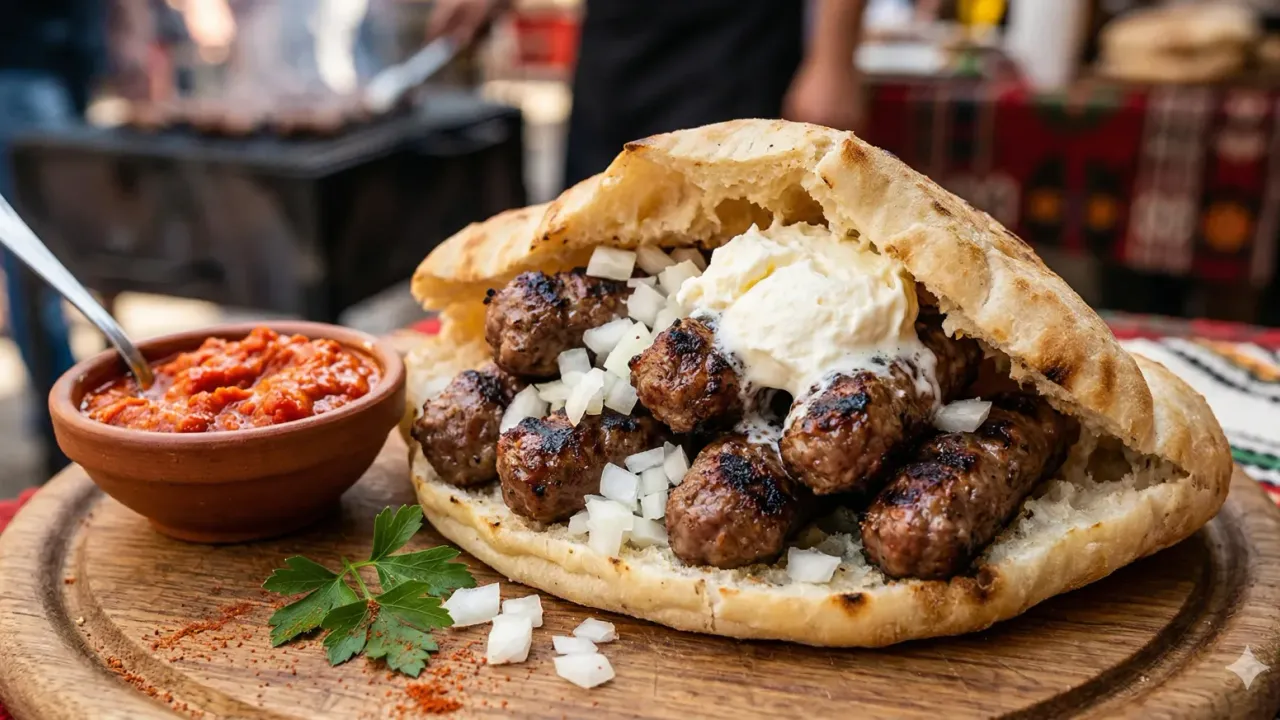
Cevapi are the most beloved street food in the Balkans, and this recipe brings those smoky, juicy grilled minced meat sausages straight to your kitchen. These small, finger-shaped rolls of seasoned meat are grilled over high heat until charred on the outside and tender within. Tucked into warm flatbread with raw onions and creamy kajmak, cevapi deliver bold, satisfying flavor in every bite. This guide walks you through the authentic method step by step.
Prep Time: 25 minutes | Cook Time: 15 minutes | Servings: 6
Difficulty: Easy | Calories: ~380 per serving
What Makes Cevapi Special?
Walk through any town in Bosnia, Serbia, or Croatia and you will smell cevapi before you see them. The scent of charcoal smoke and sizzling meat fills the narrow streets around every cevapi shop. These small grilled sausages are the Balkans’ answer to the kebab, yet they have a character entirely their own. However, unlike kebabs that use skewers, cevapi are shaped by hand and grilled without any casing. The result is a tender, loose-textured bite with a smoky, charred exterior.
What sets cevapi apart from other grilled meats is the blend. Most recipes combine beef and lamb, and some add pork for extra fat and moisture. The meat is seasoned simply with garlic, salt, pepper, and paprika. Additionally, a small amount of baking soda is the secret ingredient. It tenderizes the protein and helps the surface caramelize on the grill. This creates that signature crust that cracks open to reveal soft, juicy meat inside.
The tradition of eating cevapi goes back centuries in the Balkans. Cevapi evolved from the grilled meat dishes brought to southeastern Europe during the Ottoman period. Over time, each Balkan country developed its own version. As a result, today cevapi are more than food. They are a cultural symbol, a source of regional pride, and the center of friendly debates about whose recipe is the best.

Choosing the Right Meat Blend
The meat blend is the foundation of great cevapi. Your choice of meats determines the flavor, texture, and juiciness of the final result. Here are the best options for building your blend.
- Beef and lamb combination (best choice): This is the classic Bosnian blend. Beef provides structure and a rich, meaty base. Lamb adds depth, a slight gaminess, and extra fat that keeps the cevapi moist on the grill. Use a ratio of about 60 percent beef to 40 percent lamb for the most balanced flavor.
- Beef, lamb, and pork triple blend: Adding pork brings sweetness and additional fat. This three-meat blend is common in Serbian and Croatian versions. The pork rounds out the flavor and makes the mixture even juicier. Use equal parts of each, or lean heavier on the beef.
- All beef: Some Serbian recipes use only beef. The result is a firmer, more straightforward flavor. Choose ground beef with at least 20 percent fat content. Lean beef produces dry, crumbly cevapi that fall apart on the grill. Fat is not the enemy here; it is the flavor.
- Lamb and veal: A lighter option that works well in spring and summer. Veal is tender and mild, while lamb brings the essential Balkan character. This blend grills beautifully and has a more delicate taste than the heavier beef versions.
Ingredients for Cevapi
Meat Mixture:
- 1 pound ground beef (80/20 fat ratio)
- 1 pound ground lamb
- 1/2 pound ground pork
- 4 cloves garlic, finely minced
- 1 teaspoon baking soda
- 1 teaspoon salt
- 1/2 teaspoon black pepper
- 1 teaspoon sweet paprika
- 1/2 teaspoon cayenne pepper (optional)
- 2 tablespoons sparkling mineral water
For Serving:
- 6 pieces lepinja flatbread or pita bread
- 1 medium onion, finely diced
- Kajmak or cream cheese
- Ajvar (roasted red pepper relish)
Optional Extras:
- Sour cream
- Chopped fresh parsley
- Pickled hot peppers
- Sliced tomatoes and cucumbers
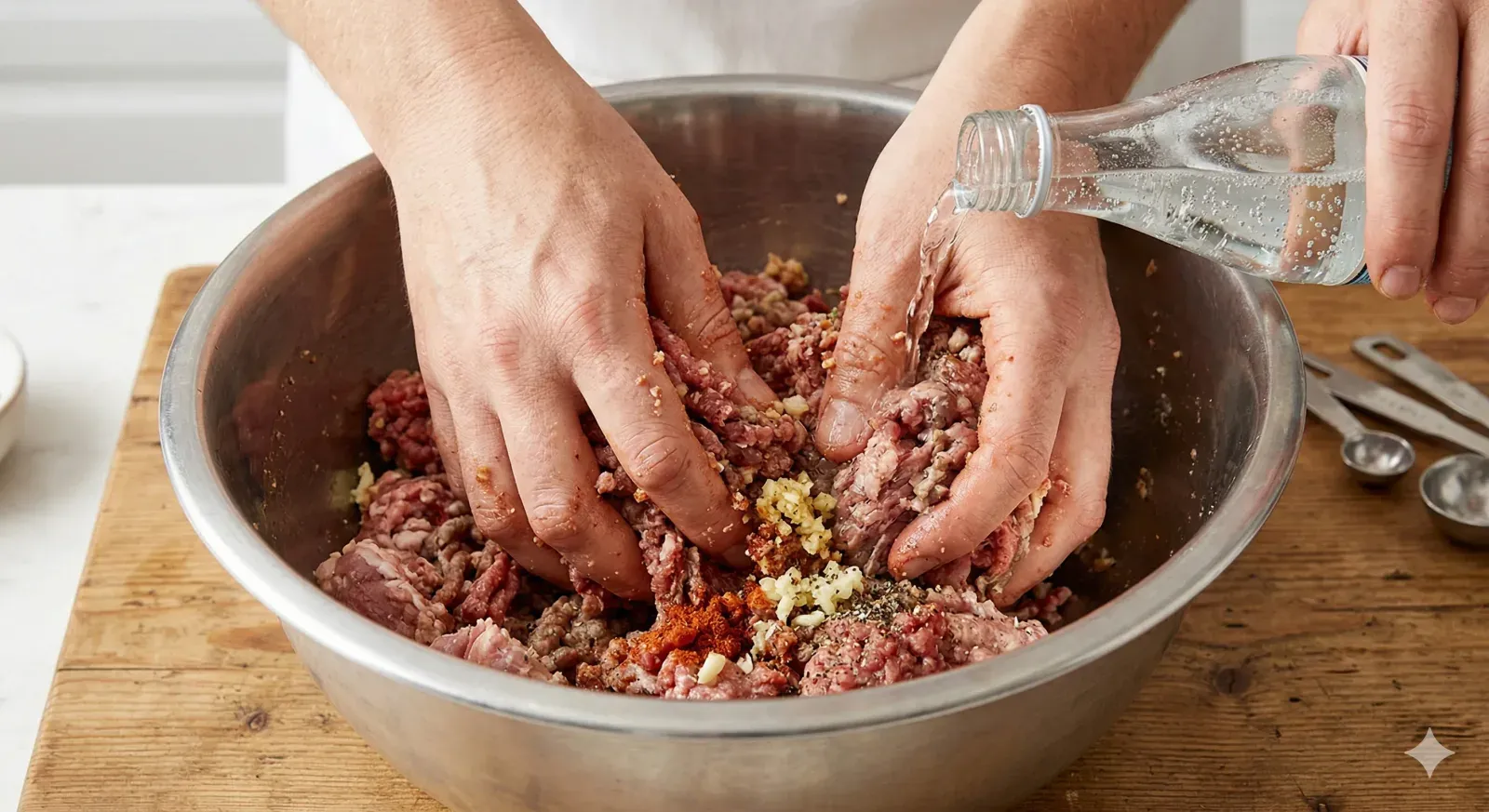
Pro tip: Always use sparkling mineral water instead of still water in the meat mixture. The carbonation aerates the meat and creates tiny air pockets that make the cevapi lighter and more tender after grilling. This is a well-known trick among Balkan butchers, and it makes a noticeable difference in texture.
Step-by-Step Instructions
Step 1: Mix the Meat Blend
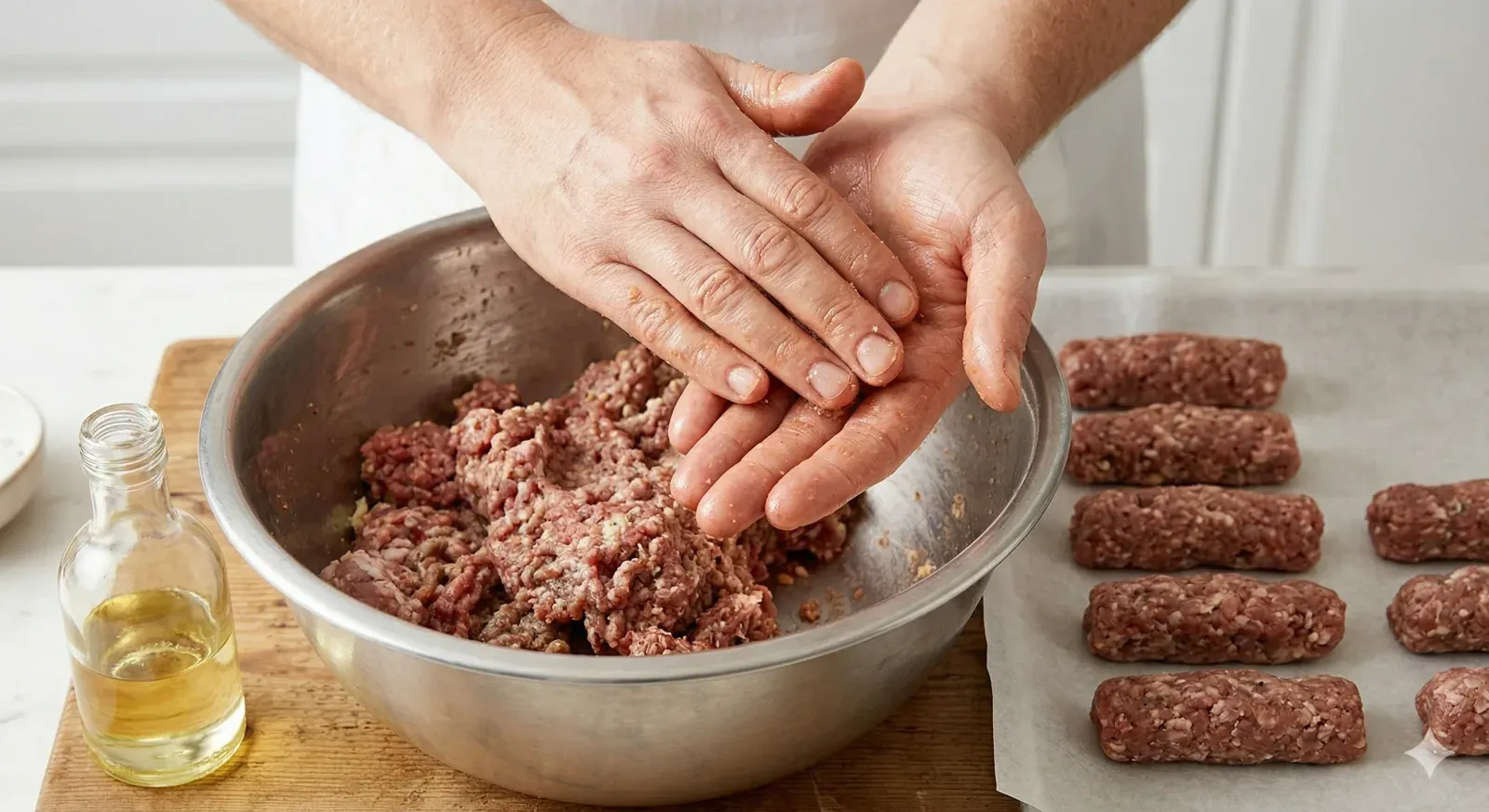
1 Combine the ground beef, lamb, and pork in a large mixing bowl. Add the minced garlic, baking soda, salt, black pepper, sweet paprika, and sparkling mineral water. Now use your hands to mix everything together. Knead and squeeze the meat for 3 to 5 minutes. You want the mixture to become sticky, cohesive, and almost paste-like. This kneading develops the proteins and ensures the cevapi hold their shape on the grill.
Once mixed, cover the bowl tightly with plastic wrap. Place it in the refrigerator for at least 2 hours. Overnight is even better. Furthermore, the resting time allows the salt and baking soda to penetrate the meat fully. It also firms the mixture, which makes shaping much easier. Cold meat grips the grill grates instead of falling through them.
Step 2: Shape the Cevapi
2 Take the chilled meat from the fridge. Lightly oil your hands with vegetable oil to prevent sticking. Pinch off a small portion of meat, about 2 tablespoons worth. Roll it between your palms into a cylinder shape roughly 3 inches long and 3/4 inch thick. Think of the size of your index finger. That is the traditional shape.
Place each shaped cevapi on a tray lined with parchment paper. Leave a small gap between each one so they do not stick together. You should get about 40 to 50 pieces from this amount of meat. Therefore, work quickly and keep the remaining meat cold while you shape each batch. Warm meat becomes soft and hard to handle.
Step 3: Preheat the Grill
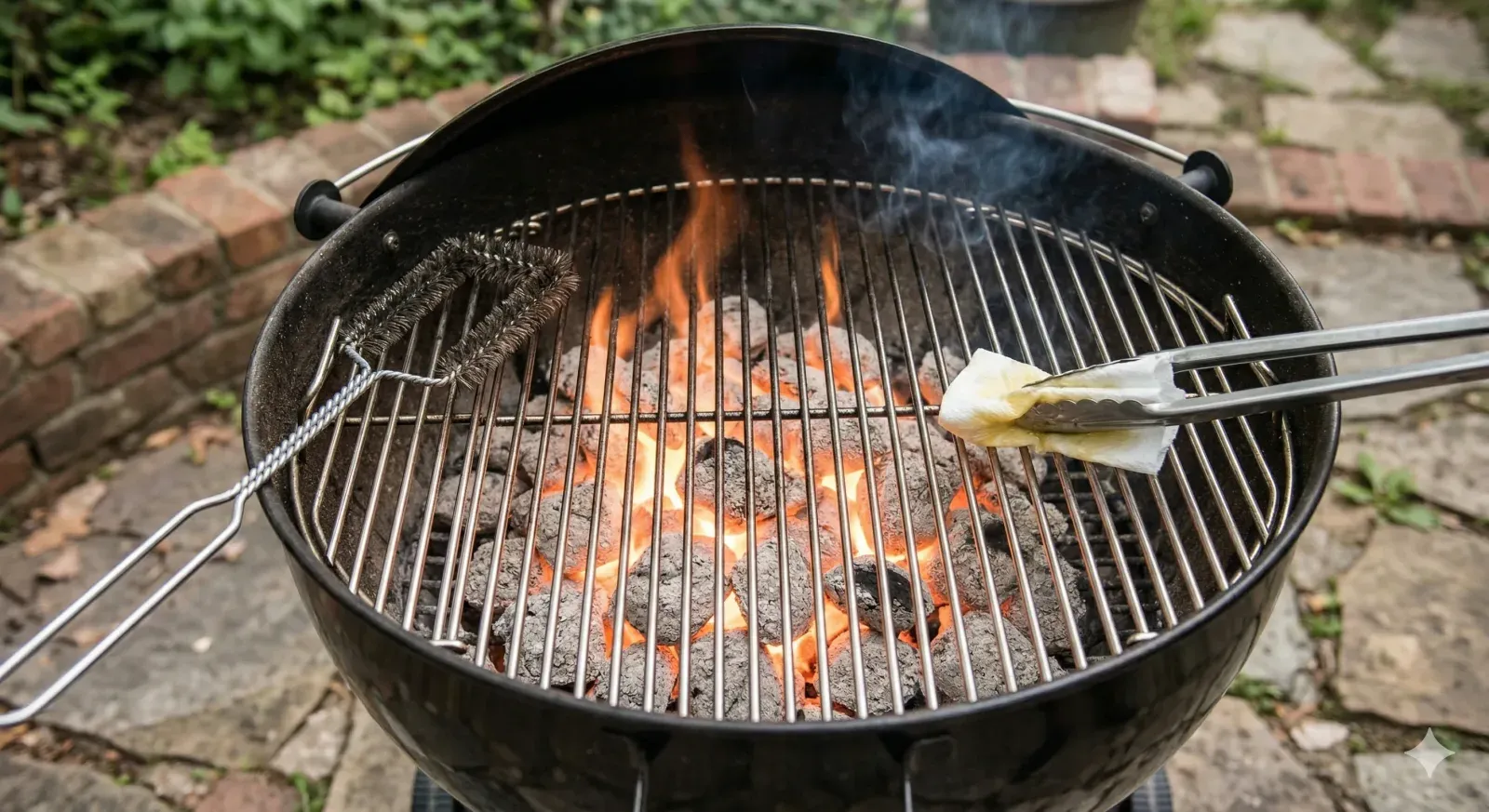
3 Preheat your grill to high heat, around 450 degrees Fahrenheit. If you are using a charcoal grill, wait until the coals are white-hot and covered in ash. Clean the grill grates thoroughly with a wire brush. Then oil them well using a folded paper towel dipped in vegetable oil. Hold the towel with long tongs to avoid burns.
High heat is essential for cevapi. It sears the outside quickly and locks the juices inside. A cool grill leads to sticking, steaming, and pale, sad sausages with no char. Charcoal gives the most authentic smoky flavor. However, a gas grill or a cast iron grill pan on the stove also produces excellent results.
Step 4: Grill the Cevapi
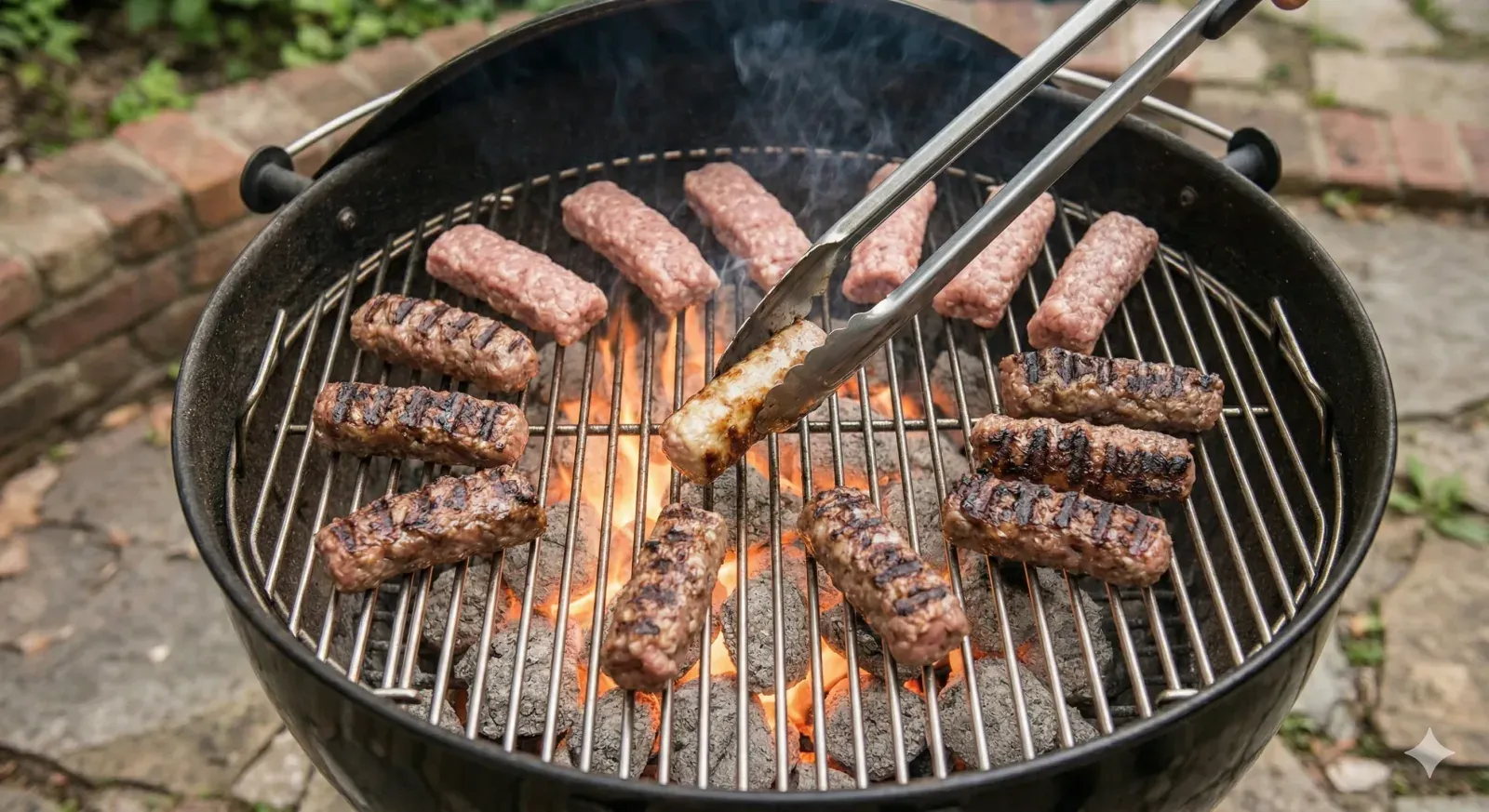
4 Place the cevapi on the hot grill in a single layer. Leave about half an inch between each piece. Do not move them for the first 3 to 4 minutes. Let the heat do its work and build a charred crust on the bottom side. Then use tongs to turn each one carefully. Grill for another 3 to 4 minutes on the second side.
The cevapi are done when the outside has dark grill marks and a light char. The inside should be fully cooked with no pink remaining. Do not press down on the cevapi with a spatula. That forces out the juices you worked so hard to keep inside. A gentle touch is all they need. Remove them to a warm plate and let them rest for 2 minutes before serving.
Step 5: Serve with Traditional Accompaniments
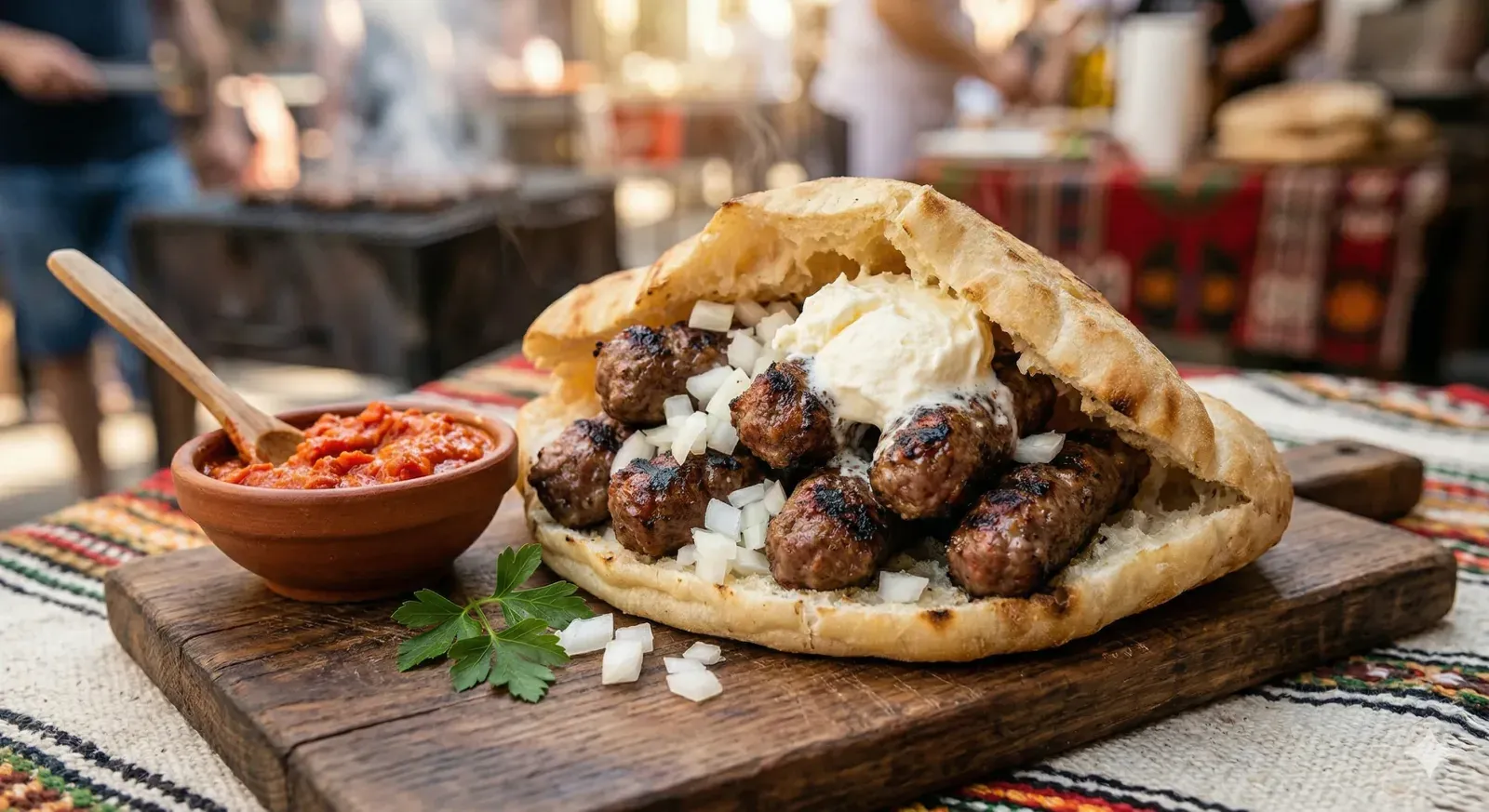
5 Warm the lepinja flatbread on the grill for about 30 seconds per side. Split it open like a pocket. Pile 8 to 10 hot cevapi inside the bread. Top with a generous handful of finely diced raw onion. Add a thick spoonful of kajmak or cream cheese on top of the hot sausages so it starts to melt.
Serve ajvar on the side for dipping. The sweet, smoky flavor of the roasted pepper relish is the perfect match for the charred meat. Some people also add sour cream or pickled hot peppers. In the Balkans, cevapi are always eaten immediately while the bread is warm and the meat is still sizzling. This is not a dish that waits.
Expert Tips for Perfect Cevapi
Knead the Meat Thoroughly
The biggest difference between good cevapi and great cevapi is the kneading. When you mix the meat for 3 to 5 minutes, the proteins bind together and create a cohesive texture. In contrast, under-mixed meat falls apart on the grill. You should be able to pick up a shaped cevapi without it crumbling. That sticky, almost springy quality means you kneaded enough.
Rest the Meat Overnight
Two hours is the minimum, but overnight is ideal. The extended resting time allows the flavors to meld deeply. Moreover, it lets the baking soda fully tenderize the proteins. Cold meat shapes more easily and holds together better on a hot grill. Many cevapi shops in Sarajevo mix their meat the day before and grill fresh every morning.
Get the Grill Screaming Hot
Cevapi need intense, direct heat. A blazing hot grill sears the outside instantly and traps moisture inside. Low or medium heat causes the meat to steam rather than char. Consequently, the charred crust is what gives cevapi their defining flavor. Without it, you just have grilled meatballs. Patience during the preheating phase pays off in every bite.
Use the Right Fat Ratio
Lean meat is the enemy of cevapi. Aim for at least 20 percent fat content in your meat blend. Fat keeps the sausages moist during high-heat grilling. In fact, it also carries flavor. If your butcher offers extra-lean ground beef, ask for regular ground instead. You can always trim fat later, but you cannot add moisture back to a dry cevapi.
Cevapi Across the Balkans
Every Balkan country has its own version of cevapi. The differences are subtle but meaningful. Here is how the most popular regional styles compare.
| Country | Meat Blend | Size | Key Feature | Traditional Serving |
|---|---|---|---|---|
| Bosnia | Beef and lamb | Small, finger-sized | Served in groups of 5 or 10 in lepinja bread | With kajmak, raw onion, and somun bread |
| Serbia | Beef and pork, or all beef | Larger, thicker rolls | Often spicier with more paprika | With urnebes (spicy cheese spread) and kajmak |
| Croatia | Beef and pork | Medium, uniform cylinders | Milder seasoning, served with mustard | With ajvar, onion, and bread |
| North Macedonia | Beef and lamb | Small and thin | More heavily spiced with cumin | With shopska salad and flatbread |
| Romania | Beef and pork (called mici) | Slightly larger, plumper | Contains thyme and anise | With mustard and fresh bread |
Serving Suggestions
In the Balkans, cevapi are never served alone. They always come with a carefully chosen set of accompaniments that balance the rich, smoky meat. Here is how to build the perfect cevapi plate at home.
The Perfect Accompaniments:
- Lepinja or somun flatbread: This soft, pillowy bread is the traditional vehicle for cevapi. It absorbs the meat juices and holds the onions and kajmak in place. Warm pita is a good substitute if you cannot find lepinja.
- Kajmak (clotted cream spread): A rich, tangy dairy spread that melts over the hot cevapi. Its creamy texture cools the heat and adds a luscious richness. Mix cream cheese with sour cream as a quick alternative.
- Ajvar (red pepper relish): A smoky, slightly sweet condiment made from roasted red peppers and eggplant. It complements the charred flavor of the meat beautifully. Every Balkan household makes their own version each autumn.
- Raw diced onion: Fresh, sharp, and crunchy. The raw onion cuts through the richness of the meat and dairy. Use white or yellow onion, finely diced. It is not optional in the Balkans; it is essential.
- Shopska salad: A bright mix of diced tomatoes, cucumbers, onions, and peppers topped with grated white cheese. This fresh salad is the ideal counterpoint to the heavy, smoky cevapi.
Beverage Pairings:
- Jelen or Lav lager (Serbian beer): Light, crisp lagers that cleanse the palate between bites of rich, charred meat. Any European-style pilsner works well here.
- Rakija (plum brandy): The traditional Balkan spirit. A small glass before the meal is customary. Its strong, fruity warmth prepares the stomach for the feast ahead.
- Ayran (yogurt drink): A chilled, salted yogurt beverage popular across Turkey and the Balkans. Its cool tanginess is a perfect match for smoky grilled meats. Simply blend yogurt with cold water and a pinch of salt.
- Sparkling mineral water: The most common non-alcoholic choice at Balkan cevapi shops. Still or sparkling, water with a slice of lemon keeps things refreshing.
Storage and Reheating
Refrigerator: Cooked cevapi keep well in the fridge for 3 to 4 days. Store them in a sealed container. They make excellent quick lunches reheated with fresh bread and onions.
Freezer: Both raw and cooked cevapi freeze beautifully for up to 3 months. For raw cevapi, arrange them on a parchment-lined tray and freeze until solid. Then transfer to a freezer bag. Grill directly from frozen, adding an extra minute per side.
Reheating: The best method is a hot grill pan or skillet over high heat for 2 to 3 minutes per side. This restores the crispy char on the outside. You can also reheat them under the broiler for 3 minutes. Avoid the microwave entirely, because it turns the texture soft and rubbery.
Common Mistakes to Avoid
1. Not Kneading the Meat Enough
A quick stir is not enough. The meat must be kneaded for several minutes until it becomes sticky and cohesive. Without proper kneading, the cevapi crumble on the grill and fall through the grates. In fact, this is the most common mistake home cooks make. Take the time to work the meat properly.
2. Using Lean Meat
Extra-lean ground beef produces dry, tough cevapi. Fat is essential for moisture and flavor. Choose ground beef with at least 20 percent fat. When combined with lamb and pork, the fat content balances itself. Furthermore, lean meat also sticks to the grill more aggressively because it lacks the natural lubrication that fat provides.
3. Grilling Over Low Heat
Low heat is the enemy of great cevapi. It causes the meat to steam and turn gray instead of charring. The grill must be blazing hot before the cevapi go on. High heat creates the Maillard reaction that produces the deep, complex flavors and dark crust that define this dish. Be patient and wait for the grill to reach full temperature.
4. Skipping the Resting Time
Shaping and grilling the meat immediately after mixing gives poor results. The mixture is too soft, the flavors have not developed, and the sausages fall apart easily. However, even 2 hours in the fridge transforms the texture dramatically. Plan ahead and give the meat its resting time. Your patience will be rewarded.
Frequently Asked Questions
What meat is cevapi made from?
Traditional cevapi use a blend of ground beef and lamb. Some Bosnian recipes also include pork for added juiciness. Serbian versions often rely on beef alone. The combination of two or three meats gives cevapi their signature rich, complex flavor. A single meat cannot replicate that depth.
What is the difference between cevapi and cevapcici?
They are the same dish. Cevapcici is the diminutive form, meaning “small cevapi.” In Bosnia, cevapi is standard. In Serbia and Croatia, cevapcici is more common. The recipe, shape, and cooking method remain identical. Think of it like the difference between “fries” and “French fries” — same thing, different name.
Why do you add baking soda to cevapi?
Baking soda raises the pH of the meat. This helps it retain moisture during the intense heat of grilling. The result is a juicier, more tender cevapi. Additionally, it promotes better browning on the surface. Use only a small amount — about 1 teaspoon per 2.5 pounds of meat. Too much will leave a soapy aftertaste.
Can I cook cevapi without a grill?
Absolutely. A cast iron grill pan or heavy skillet works very well. Heat it over high heat until it is nearly smoking, then cook the cevapi for 3 to 4 minutes per side. Broiling in the oven is another good option. Place them on the top rack for 4 minutes per side. While charcoal gives the best smoky taste, a hot pan produces results that are still very satisfying.
How long should cevapi meat rest before grilling?
A minimum of 2 hours is necessary. Overnight in the refrigerator is ideal. During this time, the salt and baking soda work on the proteins. The meat becomes more cohesive, easier to shape, and holds together better on the grill. Cold meat also sears more cleanly because it does not warm up and soften before the crust forms.
What is kajmak and can I substitute it?
Kajmak is a creamy, mildly tangy Balkan dairy spread. It is made by slowly heating milk and skimming the cream. Finding it outside the Balkans can be difficult. A mixture of equal parts cream cheese and sour cream is the closest substitute. Mascarpone also works in a pinch. The goal is a rich, slightly tangy cream that melts over hot meat.
Variations and Adaptations
Spicy Serbian Style:
Double the paprika and add a full teaspoon of cayenne pepper to the meat mixture. Serve with urnebes, a fiery Serbian cheese spread made from feta, roasted peppers, and chili. This version brings serious heat. It is popular in southern Serbia where spicy food is a point of pride.
Chicken or Turkey (Lighter Version):
Replace the beef, lamb, and pork with ground chicken or turkey thighs. Use thigh meat specifically because it has more fat than breast. Add an extra tablespoon of olive oil to the mixture to compensate for the lower fat content. The flavor will be lighter, but the technique stays the same.
Romanian Mici Style:
Add 1/2 teaspoon of dried thyme and a pinch of ground anise to the meat mixture. Shape the rolls slightly larger and plumper than standard cevapi. Serve with yellow mustard instead of kajmak. Mici are Romania’s national grilled meat, and they taste fantastic alongside cold beer on a summer evening.
Pleskavica Burger Style:
Use the same meat mixture but flatten it into large, thin patties instead of sausage shapes. Grill for 4 to 5 minutes per side. Serve in a large flatbread with all the traditional toppings. Pleskavica is essentially a cevapi burger. It is the other great grilled meat dish of the Balkans and uses an identical spice blend.
The Cultural Significance of Cevapi
In Bosnia and Herzegovina, cevapi are far more than a meal. They are a national institution. The city of Sarajevo alone has dozens of cevapi shops, many of which have been run by the same families for generations. Locals argue passionately about which shop makes the best version. Entire friendships have been tested over the question of Zeljo versus Hodza, two legendary cevapi restaurants in Sarajevo’s old town.
The cevapi tradition connects to the broader story of Ottoman culinary influence in southeastern Europe. When the Ottoman Empire ruled the Balkans for centuries, grilled meat dishes spread across the region and took root in local culture. Over time, each community adapted the recipes to their own tastes and ingredients. What started as a shared tradition became a source of unique regional identity.
Today, cevapi remain the great equalizer of Balkan society. Presidents and taxi drivers eat at the same counters. Students and professors share the same plastic tables. The act of sitting together with a plate of hot cevapi, a pile of onions, and a cold drink crosses every social boundary. This dish brings people together in a way that few other foods can match. It is the taste of community, grilled over charcoal and served with love.
Conclusion
This cevapi recipe gives you everything you need to make authentic Balkan grilled sausages at home. The keys are straightforward: use a quality meat blend, knead it well, rest it overnight, and grill over high heat. These small steps produce a dish with enormous flavor. The charred crust, the juicy interior, the contrast of creamy kajmak and sharp raw onion — it all comes together in a way that is deeply satisfying.
Whether you grill them outdoors on charcoal or use a cast iron pan in your kitchen, cevapi reward your effort generously. Make a double batch and freeze the extras for quick weeknight meals. Once you taste homemade cevapi, the store-bought version will never compare. Explore more European grilling traditions and classic dishes in our European dishes collection.