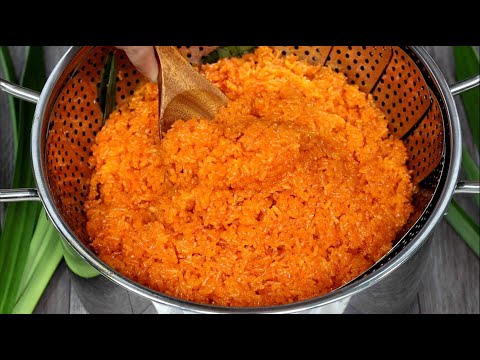
Xoi gac is the brightest dish on every Vietnamese New Year table. This stunning red sticky rice, known in full as xôi gấc, draws its vivid color from the gac fruit, a spiny tropical melon native to Vietnam. In this guide, you will learn how to make authentic xoi gac at home from scratch. Every step is here, from picking the right gac arils to mashing them with rice wine and steaming the grains until each one glows with that signature crimson shine.
Prep Time: 15 minutes (plus 4 hours soak) | Cook Time: 35 minutes | Servings: 6
Difficulty: Easy | Calories: ~320 per serving
What Makes Xoi Gac Special?
Xoi gac stands apart from every other Vietnamese sticky rice because of its color. Each grain glows a deep, glossy red that comes entirely from fruit, not from food dye or paste. Most importantly, the gac fruit gives the dish a gentle sweetness and a soft, nutty aroma that you cannot get any other way. As a result, xoi gac feels like both a celebration and a piece of edible art.
The dish has its roots in northern Vietnam. Home cooks first developed it as a way to bring color and good fortune to special meals. Because red stands for luck, joy, and prosperity in Vietnamese culture, xoi gac shows up at weddings, Tet feasts, and ancestral offerings. Today, families across Vietnam still set aside time before Lunar New Year to make a fresh batch for the household altar.
What makes a great xoi gac is balance. The rice should be soft and glossy, but never wet or gummy. Each grain must hold its bold red color without tasting bitter from too much fruit. Finally, a touch of coconut milk and sugar at the end rounds out the flavor without taking over. If you love bright Vietnamese rice plates, you will also enjoy our recipes for com tam and banh chung. According to the Wikipedia entry on gac, the fruit is so prized that some farmers call it “the fruit from heaven.”
Choosing the Right Gac Fruit for Xoi Gac
Great xoi gac starts with the right gac fruit. The arils give the dish its color, flavor, and meaning, so quality matters more than anything else. Look for ripe fruit or high-quality frozen seeds. Here are the best options to look for at your local Asian market or online.
- Fresh ripe gac fruit (the gold standard): Look for fruit that feels heavy, soft to the touch, and bright red on the outside. The spiny skin should yield slightly when pressed. Fresh gac usually appears in Vietnamese markets in the weeks before Tet.
- Frozen gac arils with seeds (most common): These are the easiest pick for cooks outside Vietnam. They keep their color and flavor for months. Thaw a 1-pound bag in the fridge overnight before cooking.
- Frozen whole gac fruit (special occasions): Some Asian markets carry whole frozen gac. The presentation is dramatic, although you will need to scoop the arils out yourself once thawed.
- Gac powder (last resort): Some online stores sell freeze-dried gac powder as a substitute. Use sparingly, since the flavor is more concentrated and the color tends to look slightly artificial.
Ingredients for Xoi Gac
For the Sticky Rice:
- 2 cups glutinous (sticky) rice, also called sweet rice
- Cold water for soaking
For the Gac Paste:
- 1 cup gac arils, fresh or thawed from frozen (about 7 ounces)
- 2 tablespoons rice wine, sake, or dry white wine
- 1/2 teaspoon fine sea salt
- 2 teaspoons neutral oil (vegetable, canola, or rice bran)
For the Final Steam:
- 3 tablespoons sugar (adjust to taste)
- 1/3 cup full-fat coconut milk
For Garnish and Serving:
- 2 tablespoons toasted sesame seeds
- Banana leaves or parchment paper for plating
- Vietnamese ham (giò), braised pork belly, or peanut-sesame salt for the side
Pro tip: Save the seeds you pull out of the arils. Vietnamese tradition says the dark seeds bring good fortune to the year ahead, so many home cooks tuck a few into the household altar before Tet.
Step-by-Step Instructions for Xoi Gac
Step 1: Soak the Sticky Rice
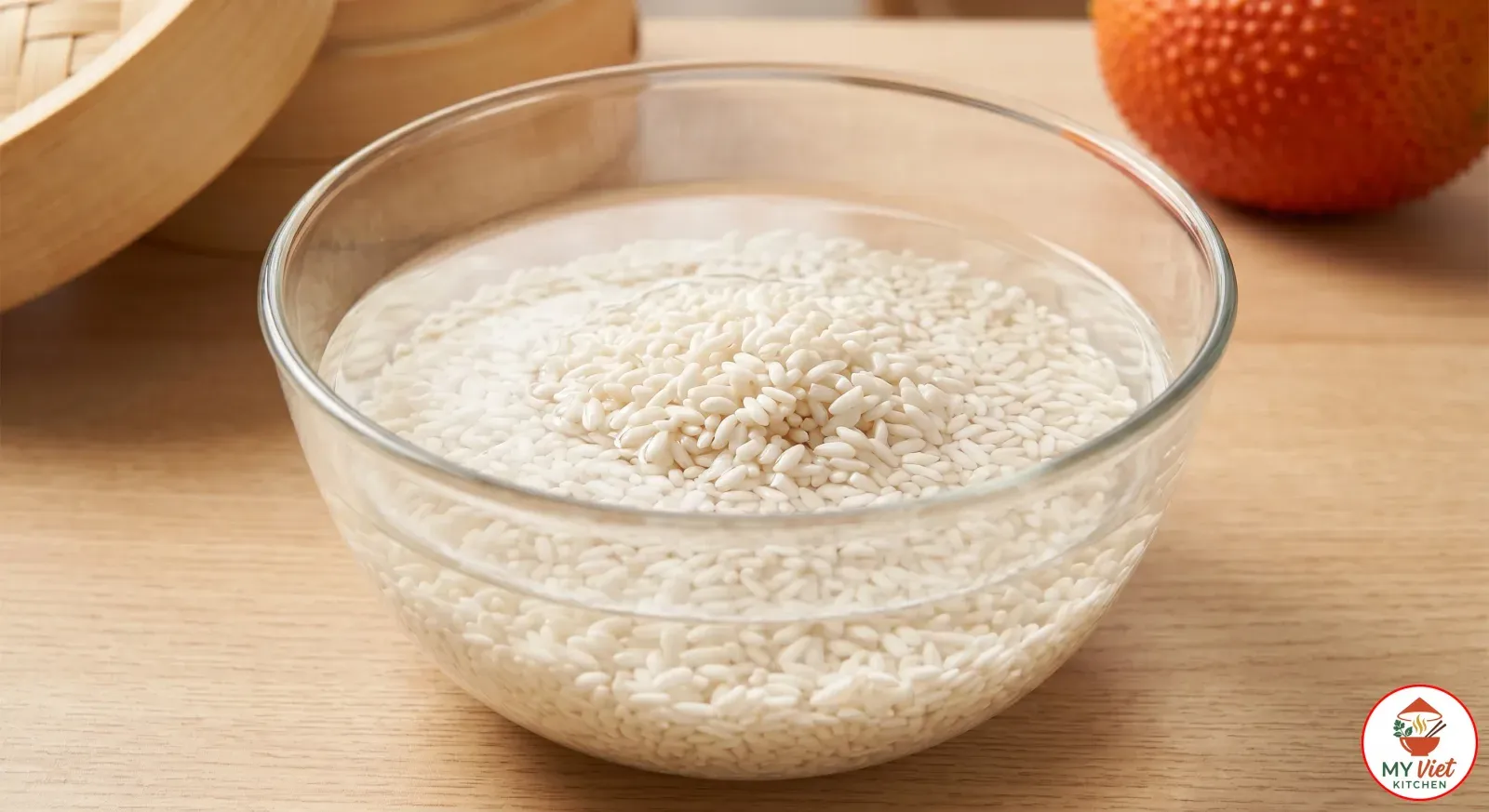
1 Rinse the glutinous rice three times in cold water until the water runs clear. This step washes off the surface starch that can turn the cooked rice into a paste. Cover the cleaned rice with fresh cold water by at least 2 inches. Soak for at least four hours, although overnight is even better.
Long soaking is the secret behind tender, evenly cooked sticky rice. Without it, the grains stay chalky in the middle no matter how long you steam them. After soaking, drain the rice in a strainer and shake off any extra water. Let the grains rest for 5 minutes so any clinging moisture drips away before you mix in the gac paste.
Step 2: Make the Gac Paste
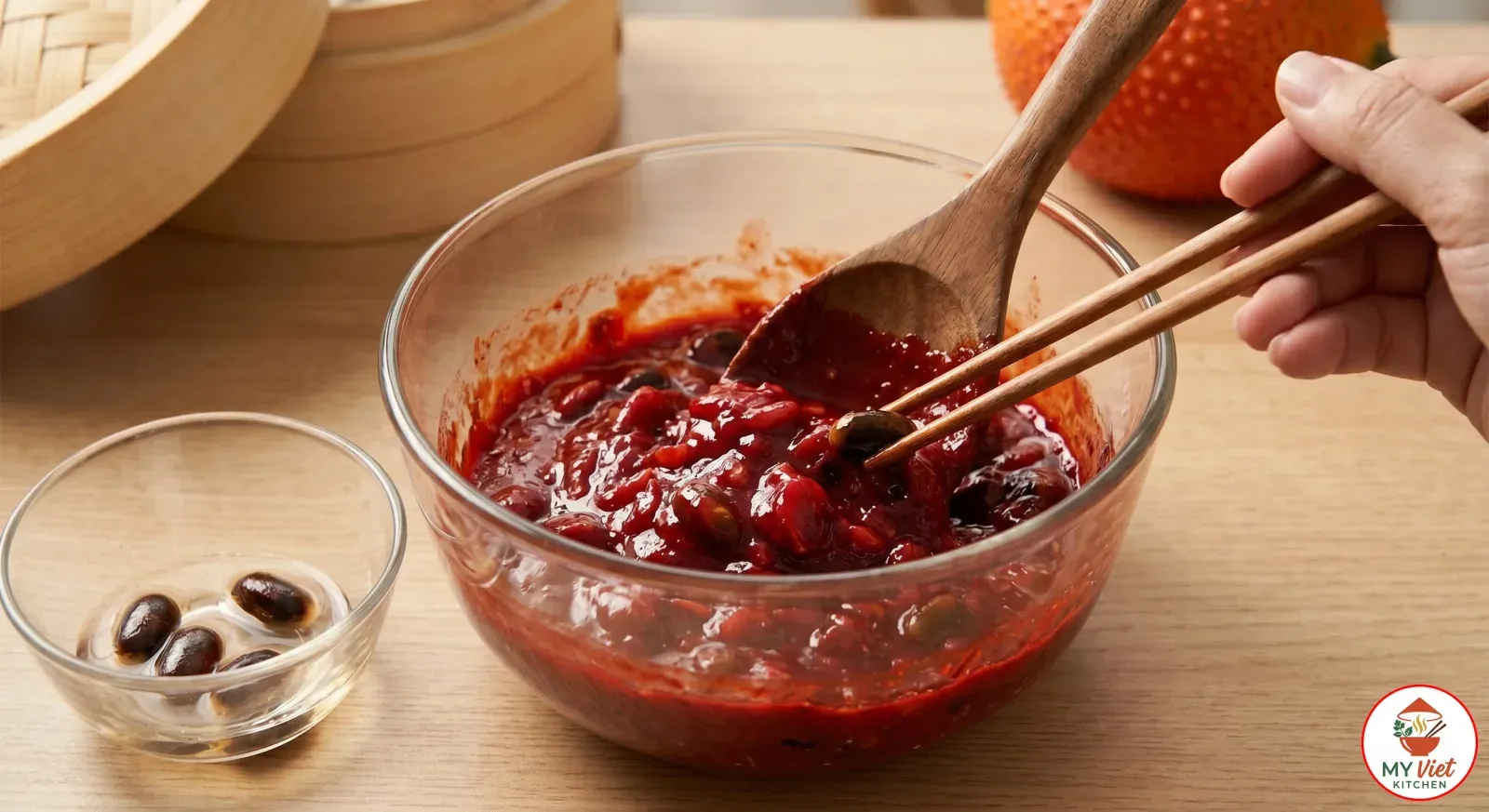
2 Place the gac arils in a large mixing bowl. Add the rice wine, salt, and oil. Use a sturdy wooden spoon to mash and stir for 3 to 5 minutes. The red flesh will start to peel away from the dark seeds and form a glossy, paint-like paste. Keep working until the seeds are mostly clean and the paste looks rich and even.
The wine is the secret that gives xoi gac its bold color. Alcohol pulls more pigment out of the arils than water, since the gac color compounds dissolve better in spirits. As a result, the rice ends up brighter and more uniform. Once the paste is ready, pluck out the cleaned dark seeds and discard or save them for the altar.
Step 3: Coat the Rice
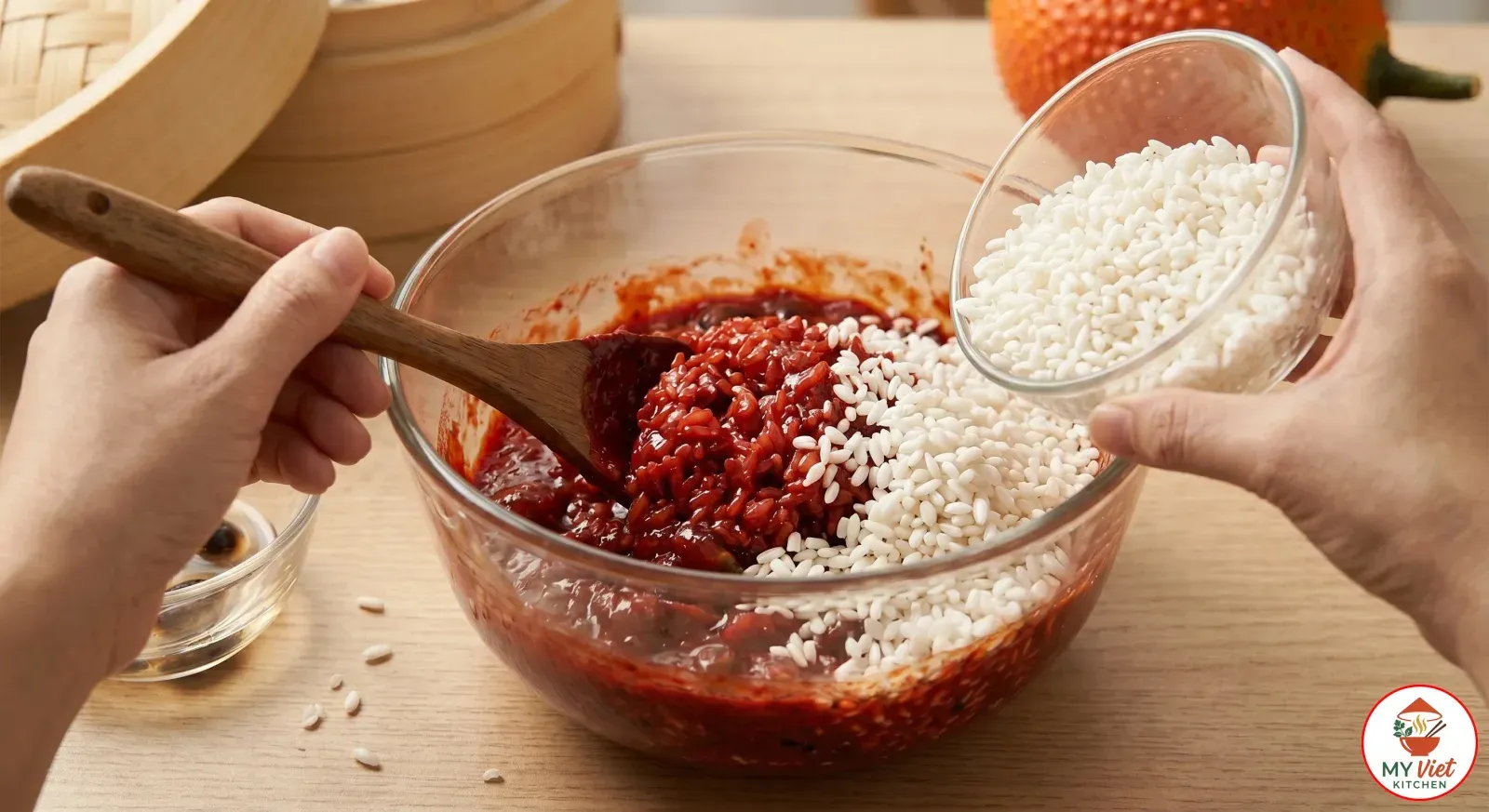
3 Add the drained sticky rice to the bowl of gac paste. Toss with clean hands or a wooden spoon until every grain turns a deep, even red. Take your time here, since uneven mixing leads to patches of pale rice in the final dish. Let the rice rest in the bowl for 5 full minutes so the color sets into each grain.
If your rice still looks pale after mixing, simply add another tablespoon of gac arils and toss again. The amount of color depends on the ripeness and freshness of your fruit, so trust your eyes more than the recipe. Aim for a bright, uniform crimson with no white patches. After all, the visual drama is half the joy of xoi gac.
Step 4: Steam in Two Rounds
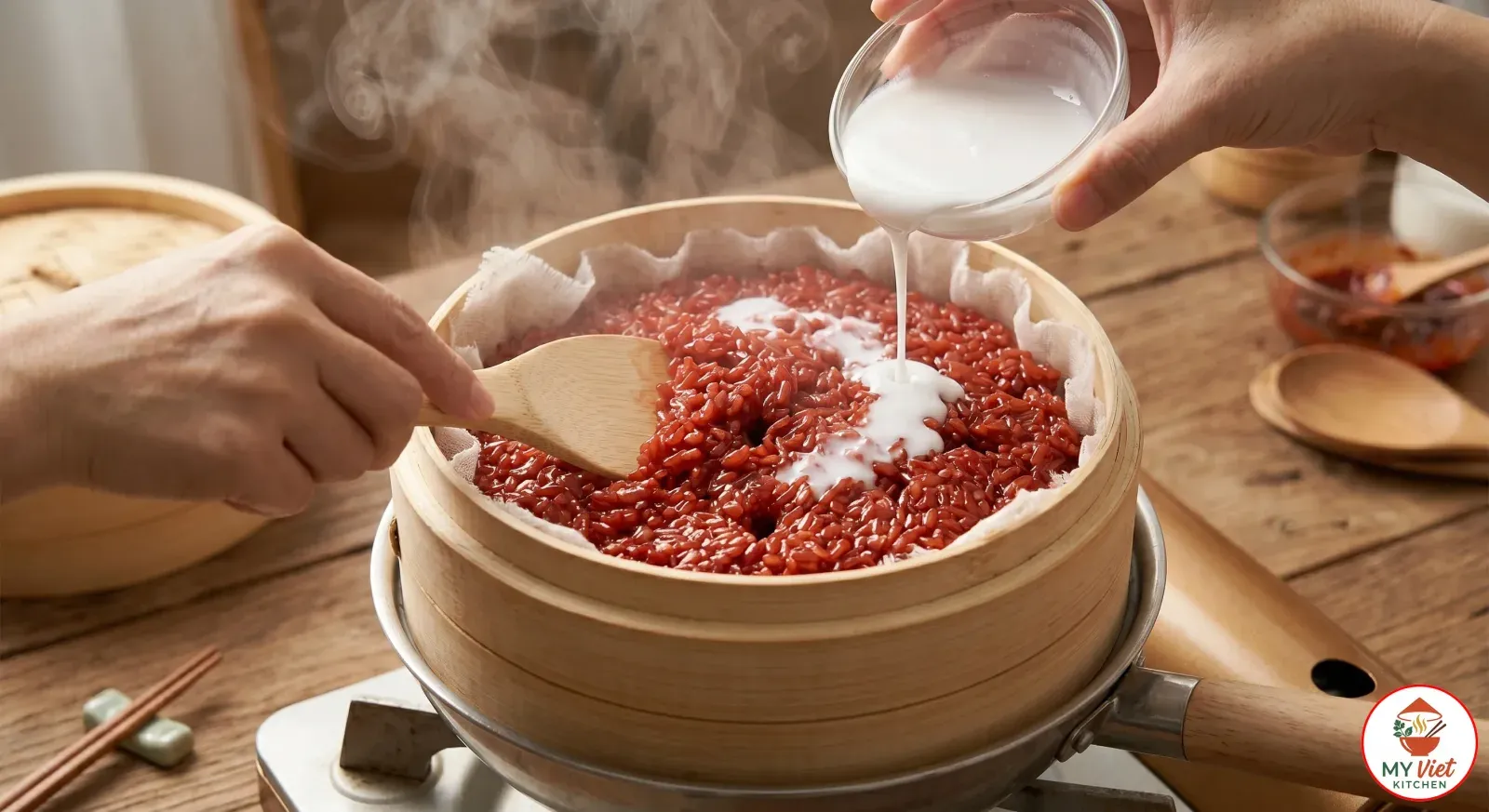
4 Line a steamer basket with cheesecloth or a clean cotton towel. Spread the red rice in an even layer about an inch thick, then poke a few small holes through the rice with a chopstick to let steam pass through. Place the basket over a pot of rapidly boiling water and steam for 20 minutes. The rice should look glossy and feel tender to the bite.
Lift the lid and drizzle the coconut milk over the rice. Sprinkle the sugar across the surface and stir gently with a paddle. Cover and steam another 10 to 15 minutes until the grains turn fully soft and a little shiny. Taste and adjust the sugar if needed. The finished rice should taste lightly sweet, faintly nutty, and rich from the coconut milk.
Step 5: Shape and Serve
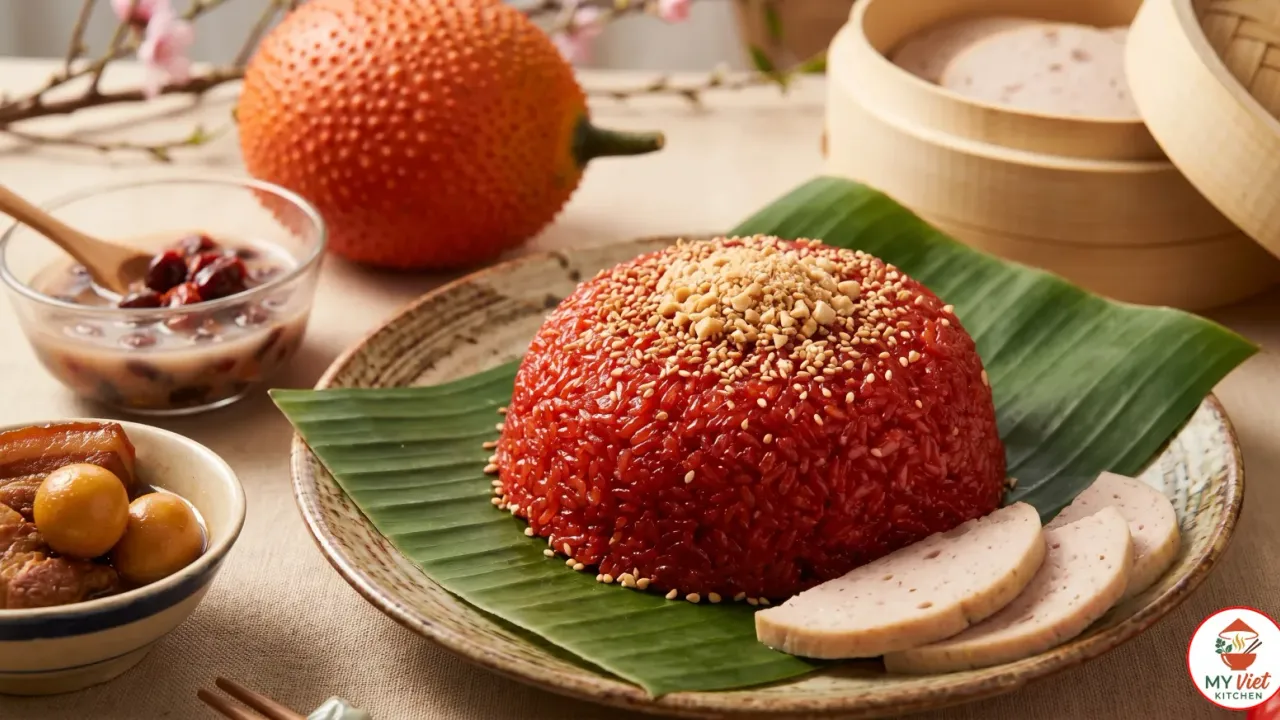
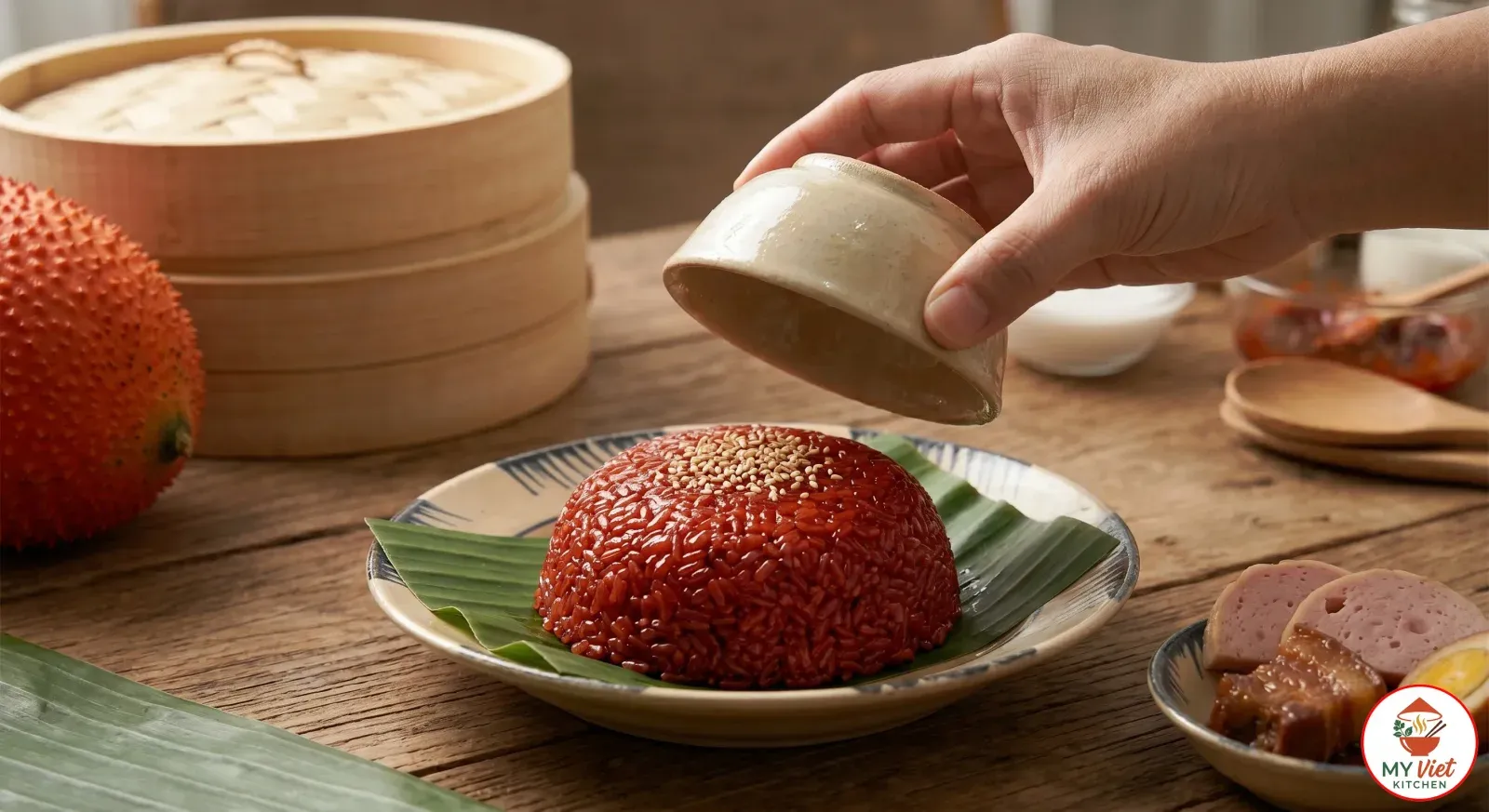
5 Pack the warm rice firmly into a small lightly oiled bowl. Press down with the back of a spoon to make a smooth, flat surface. Flip the bowl onto a serving plate and lift it off to release a glossy red dome. The classic Tet shape resembles a small mountain of luck on the table.
Sprinkle a generous pinch of toasted sesame seeds across the top for a nutty crunch. Serve right away while the rice is still warm and tender. Place a few slices of Vietnamese ham, a portion of braised pork belly, or a small bowl of peanut-sesame salt on the side. The savory pairings balance the gentle sweetness perfectly.
Expert Tips for Perfect Xoi Gac
Soak the Rice Long Enough
A four-hour soak is the minimum, although overnight is even better. Glutinous rice that goes into the steamer dry will turn out chalky in the middle and refuse to absorb the gac color evenly. Plan to start the soak the night before, since this single step has the biggest effect on texture.
Use Rice Wine for Bigger Color
Many home cooks skip the rice wine, but they end up with a paler, duller red. Alcohol pulls more pigment out of the gac arils than water alone. Even a tablespoon of dry white wine or sake makes a clear visible difference. The alcohol cooks off during steaming, so the dish stays family-friendly.
Add Coconut Milk Late
Pouring coconut milk over the rice at the start can prevent the grains from absorbing the gac color. Instead, wait until the second steam. By then, the color is locked in and the coconut milk simply soaks into each tender grain. The result is a richer, glossier finish.
Steamer Method vs. Rice Cooker Method: A Quick Comparison
You can make xoi gac on the stovetop with a steamer, or in a rice cooker with the sticky rice setting. Both methods work, although they give slightly different textures. Here is how the two compare side by side.
| Feature | Steamer Method | Rice Cooker Method |
|---|---|---|
| Cook time | About 35 minutes total | About 30 minutes total |
| Texture | Firm, chewy grains | Slightly softer, moist |
| Color uniformity | Bright and even | Slightly uneven on bottom |
| Equipment | Steamer basket and pot | Standard rice cooker |
| Hands-on time | Stirring twice for sugar | One mid-cook stir |
| Best for | Tet altars and big platters | Quick weeknight bowls |
| Difficulty | Medium | Easy |
Serving Suggestions for Xoi Gac
Xoi gac is a star on its own, but the way you serve it shapes the whole experience. In Vietnam, the dish almost always reaches the table with a savory protein on the side. The salty pairing keeps the rice from feeling one-note and brings out its gentle sweetness.
The Perfect Accompaniments:
- Vietnamese ham (gio lua): A few thin slices of pink, bouncy pork ham balance the sweet rice with their salty, savory bite.
- Braised pork belly and eggs (thit kho tau): Rich, caramel-glazed pork is the classic Tet partner for xoi gac.
- Peanut-sesame salt (muoi vung): A simple pounded mix of peanuts, sesame seeds, and salt adds crunch and umami.
- Roasted or poached chicken: Plain chicken keeps the focus on the gac and works beautifully on the altar plate.
Beverage Pairings:
- Hot lotus tea: The gentle floral aroma matches the soft sweetness of xoi gac without competing.
- Iced jasmine tea: A chilled, fragrant cup is the everyday Vietnamese partner for sticky rice.
- Fresh young coconut water: Cool and lightly sweet, it echoes the coconut milk in the rice itself.
- Vietnamese rice wine (ruou nep): Used in the recipe and also a festive sipper at Tet feasts.
Storage and Reheating
Refrigerator: Store leftover xoi gac in an airtight container for up to 2 days. The grains will firm up as they cool, although the color stays just as bright. Press a piece of plastic wrap directly against the rice surface to keep moisture in.
Freezer: Pack cooled xoi gac into freezer-safe portions and freeze for up to 2 months. The texture holds up well thanks to the coconut milk. Thaw overnight in the fridge before reheating.
Reheating: Place the rice in a heat-safe bowl with a damp paper towel on top. Microwave for 90 seconds, or steam for 5 minutes until soft and warm. The rice will return to its tender, glossy state. Avoid dry oven heat, since it can crack the surface.
Common Mistakes to Avoid
1. Using Unripe Gac Fruit
Underripe gac has pale orange flesh and weak color. As a result, your rice will turn out dull and lightly stained instead of vibrant red. Always wait until fresh gac feels soft and looks deeply red on the outside, or buy frozen arils that are clearly bright crimson in the bag.
2. Skipping the Rice Soak
Many home cooks rush by skipping the long soak. Without a four-hour soak, the rice steams unevenly and stays chalky in the middle. Plan ahead and start the soak the night before. Patience here is what gives the dish its tender, glossy texture.
3. Adding Sugar Too Early
If you stir sugar into the rice before steaming, the grains stay tough and refuse to soften. Sugar pulls moisture out of the rice and slows down cooking. Always wait until the second steam to add the sugar and coconut milk together for a soft, glossy finish.
4. Forgetting the Wine Trick
Without a splash of rice wine, your xoi gac will look pale instead of bright crimson. The alcohol pulls more pigment out of the gac arils than water alone. Even a tablespoon of dry white wine makes a clear difference, since it dissolves the gac color compounds far more efficiently.
Frequently Asked Questions about Xoi Gac
What does xoi gac mean in Vietnamese?
Xoi gac means gac fruit sticky rice in Vietnamese. The dish takes its bold red color from the arils that surround the seeds of the gac fruit. The vivid red hue stands for luck, happiness, and prosperity, which is why xoi gac shows up on every Tet table.
Where can I find gac fruit outside Vietnam?
Frozen gac fruit is the easiest option for home cooks abroad. Most Vietnamese grocery stores carry it in the freezer aisle, either as whole fruit or as bagged arils. Online Asian grocers also ship frozen gac to most regions.
Why does the recipe call for rice wine?
Rice wine is the secret behind a deeply red, fragrant xoi gac. Alcohol pulls more pigment out of the gac arils than water, which gives the rice that signature crimson glow. White wine or sake are good substitutes if you cannot find rice wine.
Can I make xoi gac in a rice cooker?
Yes. Place the gac-coated rice in a rice cooker with about a half cup of water and use the sticky rice setting if your model has one. Stir in the coconut milk and sugar after 15 minutes, then close the lid and let the cooker finish.
Is xoi gac sweet or savory?
Xoi gac sits on the sweet-savory border. Sugar and coconut milk lightly sweeten the rice, but Vietnamese families serve it with salty proteins like braised pork or Vietnamese ham. You can dial the sugar up or down to suit your taste.
How long does xoi gac last in the fridge?
Stored in an airtight container, xoi gac stays fresh for 2 days in the refrigerator. The grains harden as they cool, but a quick steam or microwave with a damp paper towel revives the soft texture. Freeze portions for up to 2 months for longer storage.
Variations and Adaptations
Xoi Gac with Mung Bean (Tet Classic):
Layer cooked sweet mung bean paste between two layers of red xoi gac for a striking dual-color slice. The mild, nutty bean paste pairs beautifully with the sweet rice and adds extra protein. This version often appears at northern Vietnamese weddings and ancestral feasts.
Vegan Xoi Gac:
The base recipe is already vegan-friendly. Skip the Vietnamese ham on the side and serve with peanut-sesame salt or grilled tofu instead. The dish stays festive, satisfying, and full of color for plant-based New Year tables.
Mini Xoi Gac Cakes:
Pack the cooled rice into small molds or ramekins for individual serving cakes. Wrap each one in banana leaf and tie with a bamboo string. These miniature parcels make beautiful gifts for Lunar New Year and travel well to potluck dinners.
Pandan-Coconut Xoi Gac:
Add a knotted pandan leaf to the steamer for a soft, grassy aroma. Some southern Vietnamese cooks also add an extra splash of coconut cream over the finished rice for a richer plate. The result feels closer to a tropical dessert.
The Cultural Significance of Xoi Gac
Xoi gac is more than a dish in Vietnam. It is a symbol of luck and family. Vietnamese culture treats the color red as a marker of joy, prosperity, and good fortune. As a result, every important moment of life calls for something red on the table. Weddings, housewarmings, ancestral offerings, and Lunar New Year feasts all feature a glossy red dome of xoi gac at the center.
The dish also carries a quieter meaning. Because gac fruit only ripens once a year, in late winter, the timing matches perfectly with Tet. Families across Vietnam still grow gac vines on backyard fences for this very reason. When the fruit turns red, the new year is close. Each batch of xoi gac becomes a small, edible calendar that links cooking, family, and the seasons.
Beyond tradition, xoi gac is enjoying a quiet modern revival. Health writers now praise the gac fruit for its high beta-carotene and lycopene content, far above tomatoes or carrots. As a result, young Vietnamese cooks are bringing xoi gac back to weeknight tables, not just festive ones. Whether you serve it for Tet or a Sunday family dinner, every bite of xoi gac connects you to that long Vietnamese love of color, fortune, and shared food. For more festive Vietnamese recipes, try our guides to banh tet, thit kho tau, and cha lua.
Conclusion
Making xoi gac at home is easier than the bold color suggests. The keys to success are simple: soak the rice for at least four hours, mash the gac with a splash of rice wine, and add coconut milk only at the second steam. Master these three steps and you will turn out a glossy red dome that would make any Vietnamese grandmother proud. The rest is just shaping and serving.
Once you taste your first homemade xoi gac, you will see why Vietnamese families bring it out for big moments. The bright color, the soft chew, and the quiet sweetness all hit at once. So pick up a bag of frozen gac, soak your rice tonight, and surprise your family with a Tet-style platter tomorrow. Your kitchen will glow with red, and your table will feel a little more festive. For more Vietnamese favorites, explore our guides to com tam, pho, and banh mi.