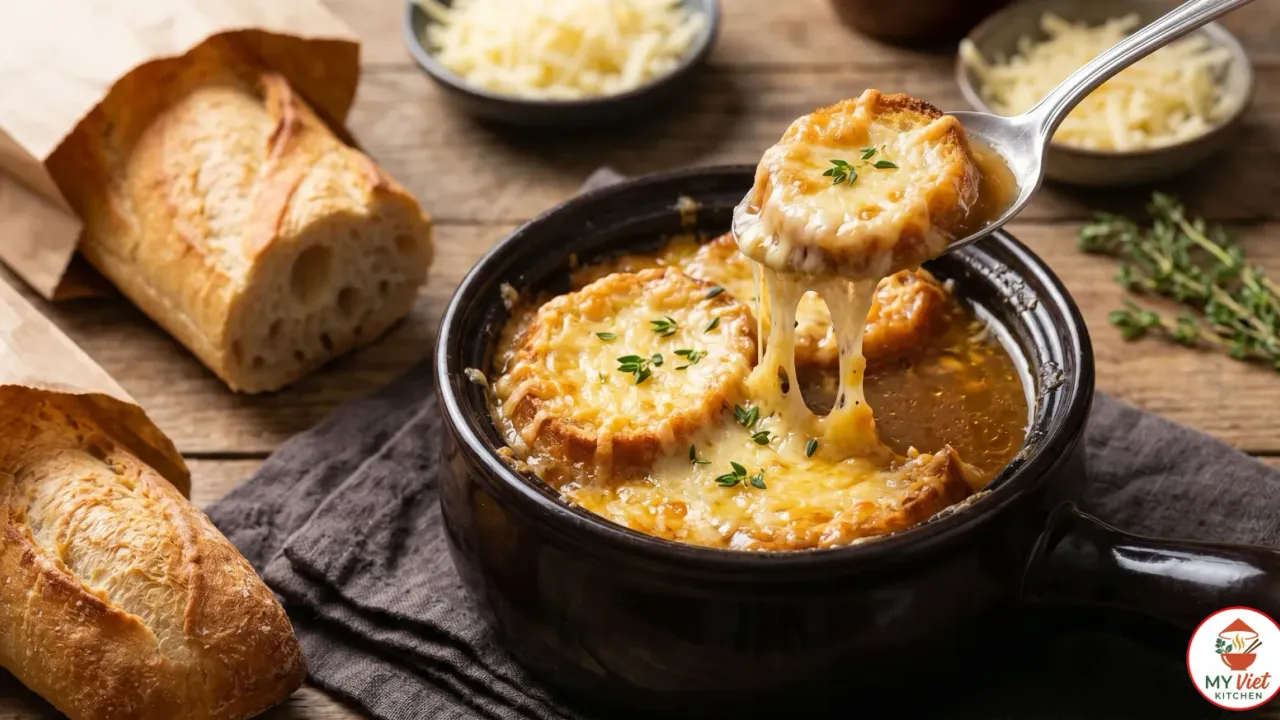
French onion soup is the ultimate comfort dish from the heart of French bistro cooking. Known in France as soupe a l’oignon, this classic soup transforms humble yellow onions into a deeply savory, sweet, and soul-warming bowl. Moreover, the golden cap of melted Gruyere cheese over toasted bread makes every spoonful truly unforgettable. This recipe walks you through each step to achieve restaurant-quality french onion soup at home.
Prep Time: 20 minutes | Cook Time: 75 minutes | Servings: 6
Difficulty: Medium | Calories: ~380 per serving
What Makes French Onion Soup Special?
At its core, this soup relies on one main ingredient: onions. Specifically, pounds of thinly sliced yellow onions cook low and slow until they caramelize into something entirely new. The natural sugars break down through the Maillard reaction, creating deep, complex sweetness. As a result, the finished broth tastes far richer than anything you would expect from such simple ingredients.
Furthermore, the gratinee topping is what sets this soup apart from every other onion soup in the world. A thick slice of toasted bread floats on the surface. Then a generous blanket of Gruyere cheese melts over everything under a hot broiler. The cheese bubbles, browns, and forms a golden crust. Consequently, each serving delivers a perfect contrast of crunchy bread, stretchy cheese, and silky broth.
French onion soup also carries centuries of culinary history. Indeed, variations of onion soup have fed Parisians since at least the 18th century. Workers at the Les Halles market ate bowls of it in the early morning hours to warm up. Today, this soup remains a beloved staple on bistro menus across France and around the globe. If you enjoy French classics, also try our coq au vin or beef bourguignon for more hearty comfort.
Choosing the Right Onions
The type of onion you use shapes the flavor of the entire soup. Not all onions behave the same way during long cooking. Below are the best options, along with what each brings to the pot.
- Yellow onions (best choice): These are the gold standard for french onion soup. They have a strong raw bite that mellows completely during caramelization. Additionally, their high sugar content produces deep golden color and balanced sweetness. Most French recipes call for yellow onions exclusively.
- Sweet onions (Vidalia, Walla Walla): These start milder and sweeter than yellow onions. However, they contain more water, so they take longer to brown. Also, the finished soup can taste overly sweet without enough savory depth. Use them if you prefer a gentler flavor profile.
- Red onions: They add a striking purple-pink color to the broth. Yet red onions can develop a slightly bitter edge during extended cooking. Some chefs mix a small amount of red onion with yellow for visual interest. Nevertheless, yellow onions alone give the most authentic result.
Ingredients for French Onion Soup
Soup Base:
- 6 large yellow onions (about 3 pounds), thinly sliced
- 4 tablespoons (60g) unsalted butter
- 1 tablespoon olive oil
- 1 teaspoon granulated sugar
- 1 teaspoon fine sea salt
- 1/2 teaspoon freshly ground black pepper
- 1/2 cup (120ml) dry white wine or dry sherry
- 8 cups (1.9L) beef broth, preferably low-sodium
- 2 teaspoons fresh thyme leaves or 1 teaspoon dried thyme
- 2 bay leaves
- 1 tablespoon all-purpose flour (optional, for extra body)
For the Gratinee Topping:
- 6 thick slices of French baguette or country bread, toasted
- 2 cups (200g) shredded Gruyere cheese
- 1/4 cup (25g) grated Parmesan cheese (optional)
Pro tip: Use homemade beef stock or a high-quality store-bought version for the richest flavor. Thin, watery broth will leave the soup tasting flat. Specifically, look for broth with deep amber color and a slightly sticky texture when cooled. That stickiness means it has plenty of gelatin and body.
Step-by-Step French Onion Soup Instructions
Step 1: Caramelize the Onions
1 First, melt the butter with olive oil in a large Dutch oven or heavy-bottomed pot over medium heat. The oil prevents the butter from burning during the long cooking process. Next, add all the sliced onions at once. They will fill the pot to the brim, but do not worry. The onions shrink dramatically as they release moisture. Stir them well to coat every slice with fat.
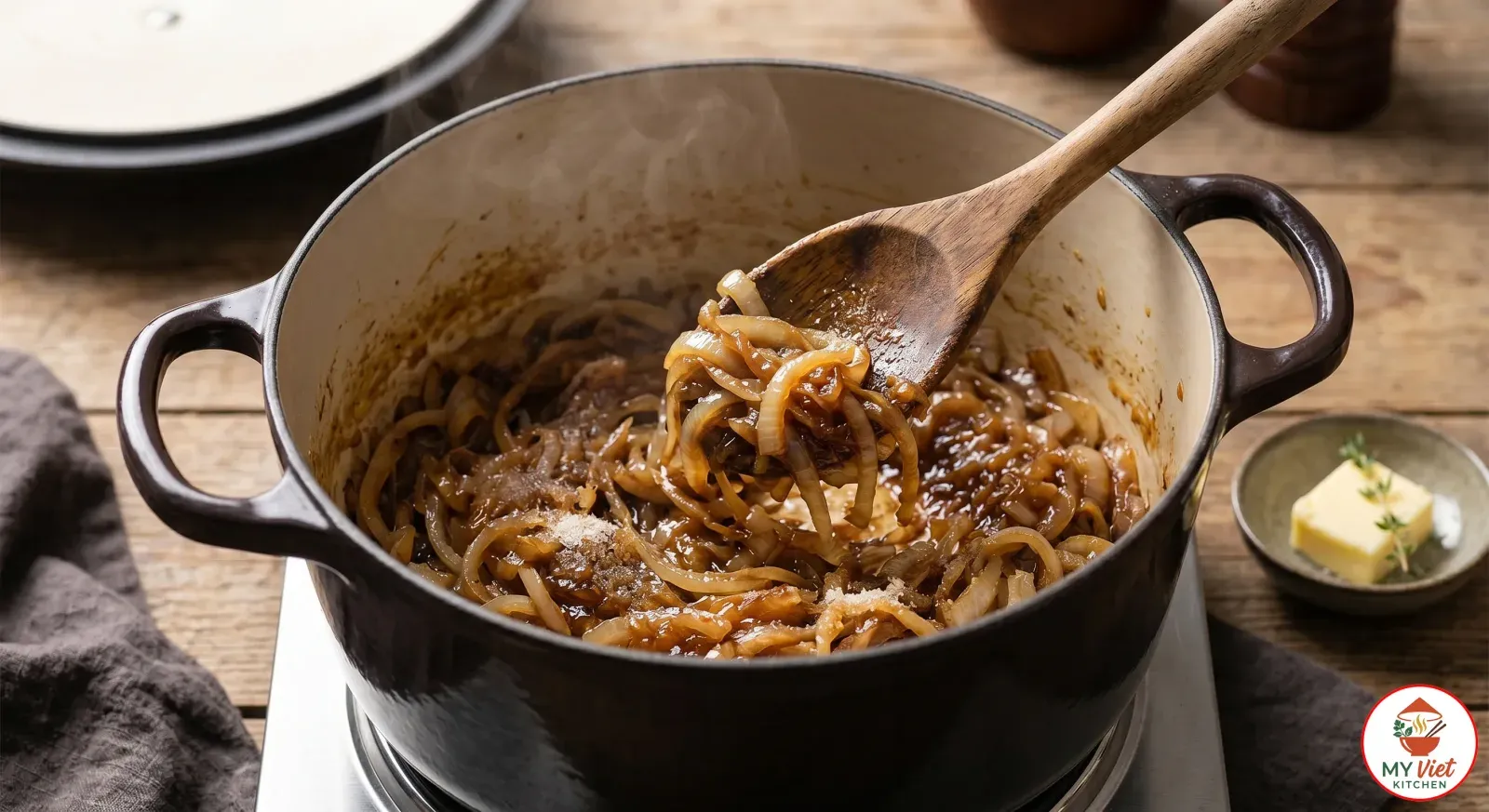
Then cook the onions for 40 to 50 minutes, stirring every 3 to 5 minutes. After the first 10 minutes, add the sugar and salt. The salt draws out moisture while the sugar speeds up browning. During this stage, the onions gradually soften, turn translucent, and then develop a deep golden brown color. Be patient. Rushing this step on high heat creates burnt patches rather than true caramelization. Indeed, this slow process is the foundation of great french onion soup.
If the onions start sticking, add a splash of water and scrape the bottom. Those browned bits are packed with flavor. Accordingly, you want to dissolve them back into the onions rather than let them burn. The finished onions should look jammy, dark amber, and reduced to about one-fifth of their original volume.
Step 2: Deglaze and Build the Broth
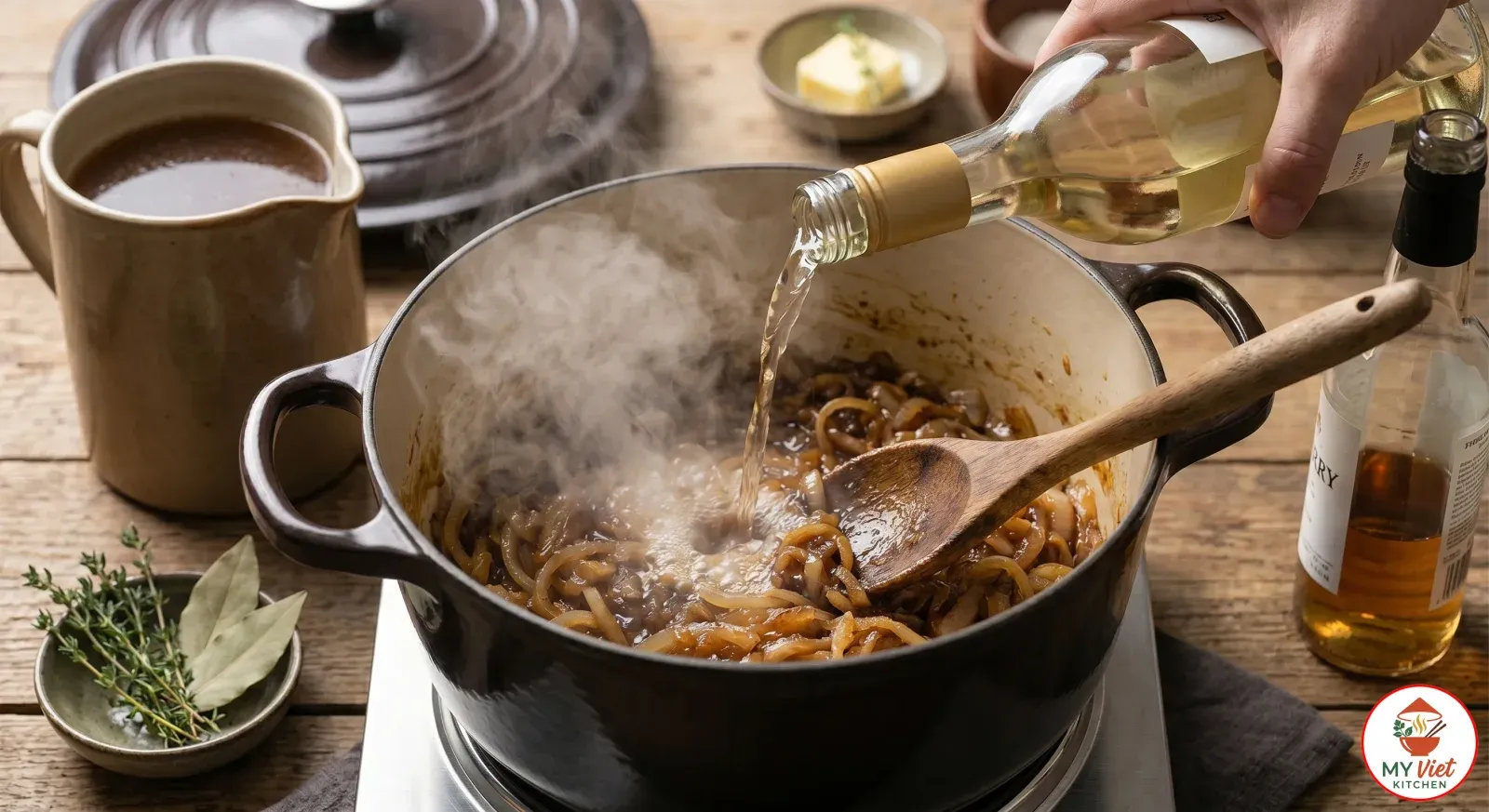
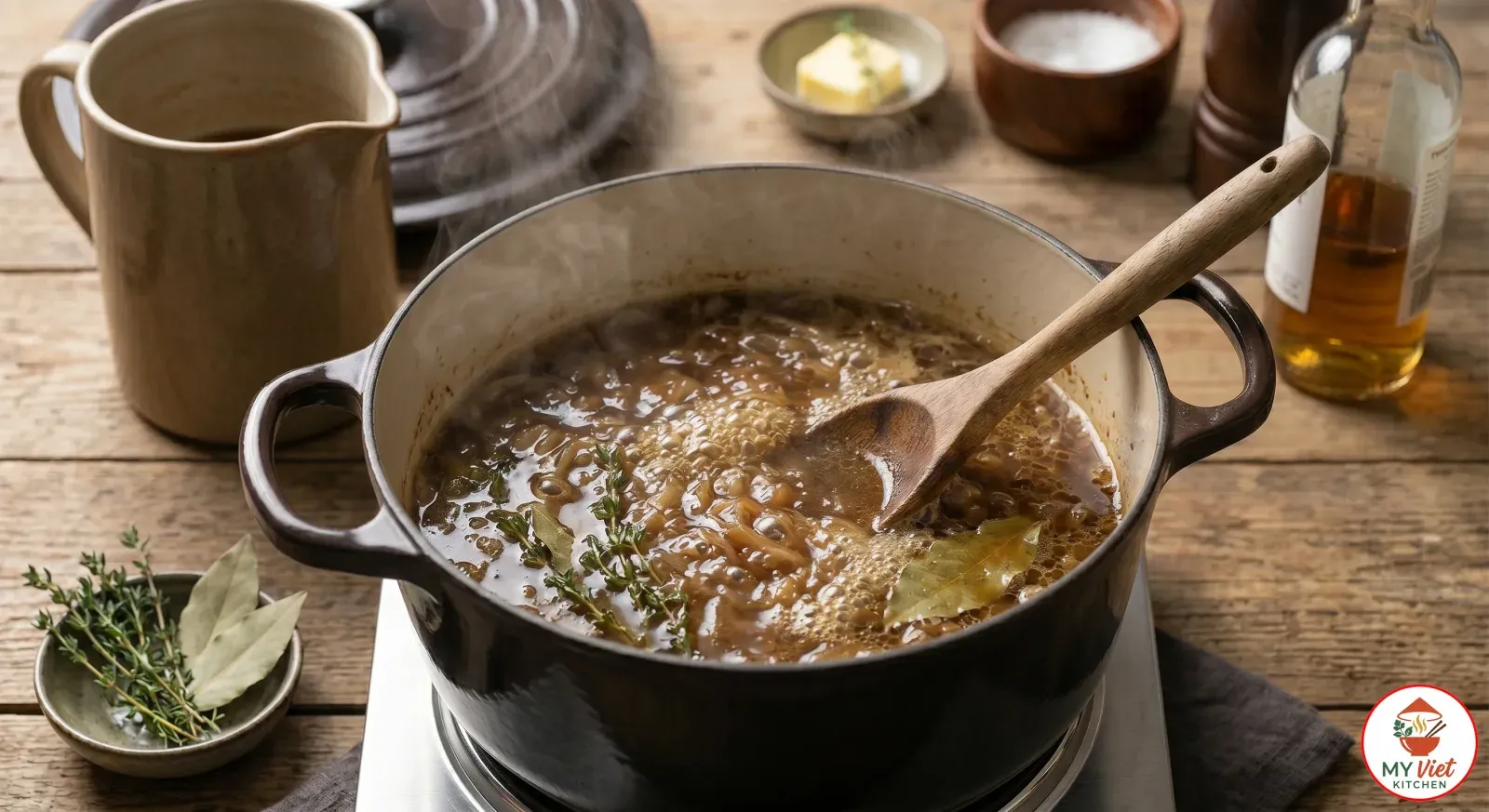
2 Once the onions reach deep golden brown, pour in the white wine or dry sherry. The liquid will sizzle and steam immediately. Use a wooden spoon to scrape up every bit of caramelized fond from the bottom of the pot. This step is called deglazing, and it captures all the concentrated flavor that stuck to the surface. Then let the wine cook down by about half, which takes roughly 2 minutes.
If you choose to use flour for extra body, sprinkle it over the onions now. Stir constantly for about 1 minute so the flour cooks and loses its raw taste. Subsequently, pour in the beef broth in a steady stream while stirring. Add the thyme and bay leaves. Bring the soup to a gentle boil. The broth should turn a rich, dark amber color from the caramelized onions. At this point, the kitchen will smell absolutely incredible.
Step 3: Simmer the Soup
3 Reduce the heat to low and let the soup simmer gently for 20 to 25 minutes. During this time, the onion flavor infuses deeply into the broth. Meanwhile, the thyme and bay leaves add a subtle herbal backbone. Stir occasionally and skim off any foam that rises to the surface.
After simmering, taste the broth and adjust the seasoning. You may need more salt or a pinch of pepper. Also consider a tiny splash of sherry vinegar or balsamic vinegar. A small amount of acid brightens the flavors and prevents the soup from tasting one-dimensional. Finally, remove the bay leaves and discard them. The soup base is now complete and ready for its signature topping.
Step 4: Toast the Bread
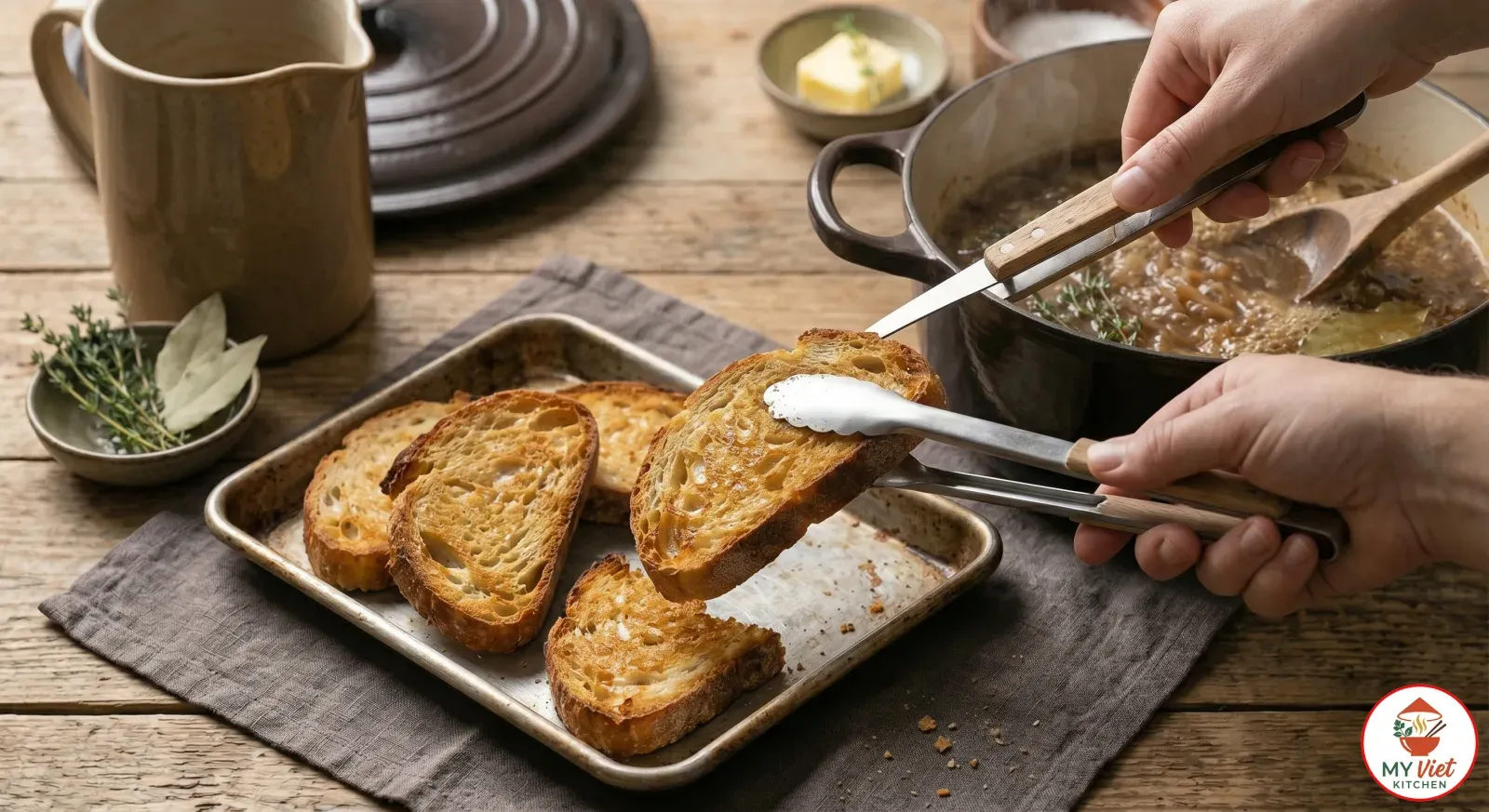
4 While the soup simmers, prepare the bread for the gratinee topping. Cut a French baguette into thick slices, about 1 inch each. Then arrange them on a baking sheet and toast in the oven at 375 degrees Fahrenheit for 5 to 7 minutes per side. You want them dry and crisp all the way through.
The bread must be sturdy enough to hold up under the melted cheese without turning soggy. Therefore, day-old bread actually works better than fresh. Soft bread absorbs broth too quickly and collapses. Additionally, toasting creates a barrier that keeps the bread crunchy longer once it sits on top of the hot soup. This textural contrast is essential to a proper french onion soup experience.
Step 5: Assemble and Broil with Cheese
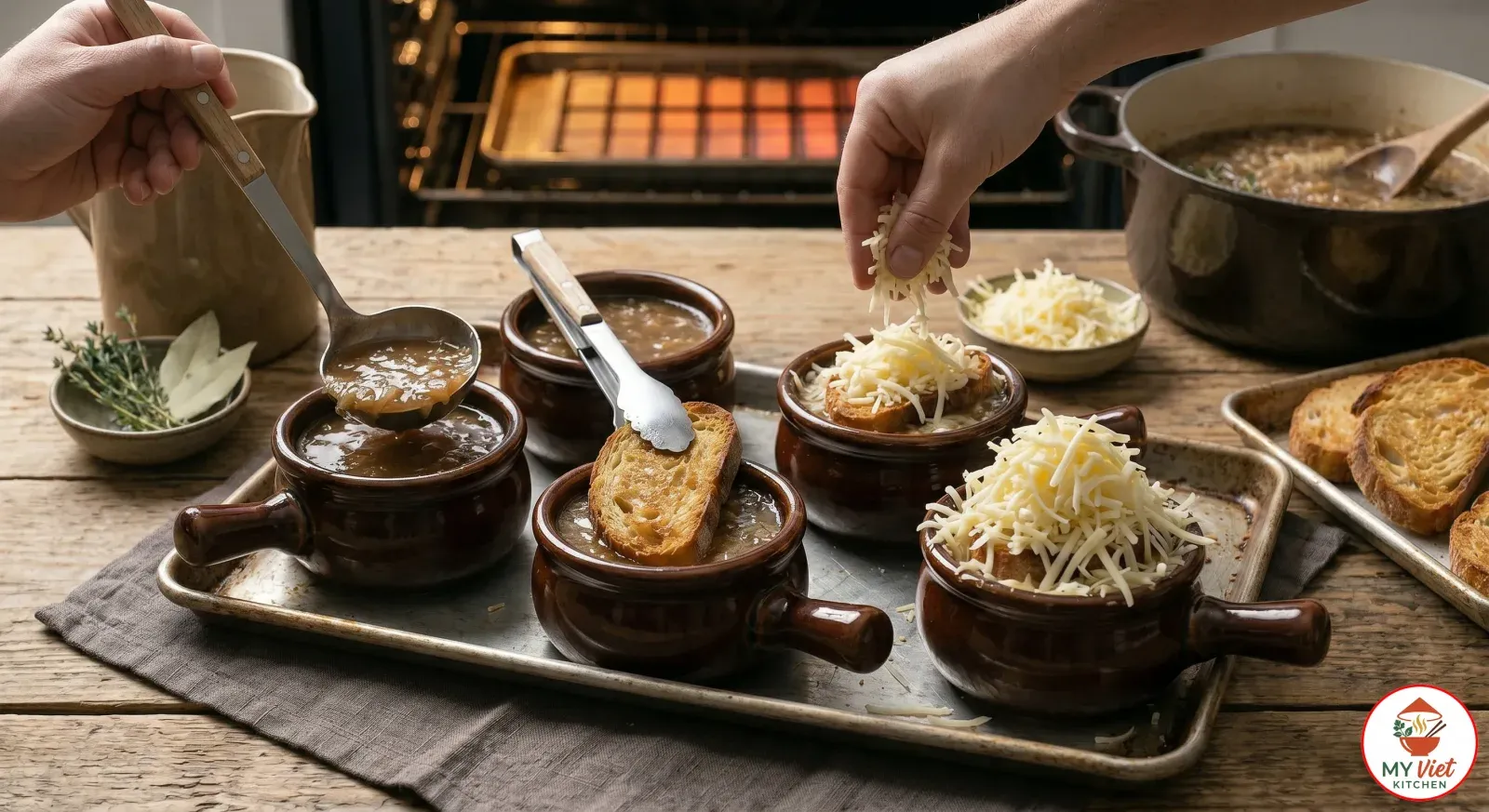
5 Preheat your broiler to high. Ladle the hot soup into oven-safe crocks or ramekins, filling them about three-quarters full. Then place a toasted bread round on top of each bowl. The bread should sit above the broth level so it stays partly crisp. Next, pile a generous handful of shredded Gruyere over the bread. Add a sprinkle of Parmesan for extra sharpness if desired.
Place the filled crocks on a sturdy baking sheet for easy handling. Then slide them under the broiler for 3 to 5 minutes. Watch closely because the cheese can go from golden to burnt in seconds. The Gruyere should melt completely, bubble vigorously, and develop brown spots across the top. Subsequently, remove the baking sheet from the oven with care. The crocks will be extremely hot. Let them rest for 2 to 3 minutes before serving. The cheese continues to set slightly as it cools.
Expert Tips for Perfect French Onion Soup
Do Not Rush the Caramelization
This is the most important tip in the entire recipe. True caramelization needs at least 40 minutes on medium heat. Turning the heat to high creates charred spots while the bulk of the onions stay pale and crunchy. In contrast, slow and steady cooking allows the natural sugars to develop evenly. The onions should melt into soft, golden strands. Consequently, the broth gains a depth of flavor that no amount of seasoning can replicate.
Use a Heavy Pot
A Dutch oven or heavy-bottomed pot distributes heat evenly across the surface. Thin pots create hot spots that scorch the onions in some areas while undercoking them in others. Furthermore, cast iron and enameled pots retain heat well. This means the onions cook at a consistent temperature throughout. So invest in a good Dutch oven if you do not already own one.
Choose the Right Cheese
Gruyere is the traditional cheese for this soup because it melts beautifully and has a nutty, slightly sweet flavor. Additionally, it browns well under the broiler without becoming rubbery. Pre-shredded bagged cheese often contains anti-caking agents that prevent smooth melting. Therefore, always shred your Gruyere from a block for the best results. A little grated Parmesan mixed in adds a salty, umami boost.
French Onion Soup vs. Other Onion Soups
Onion soup exists in many cultures, but each version has its own character. Below is a comparison showing how classic french onion soup differs from similar soups around the world.
| Soup | Origin | Broth Base | Topping | Key Difference |
|---|---|---|---|---|
| French Onion Soup | France | Beef broth | Gruyere and bread | Caramelized onions, gratinee topping |
| Italian Onion Soup (Carabaccia) | Italy | Chicken broth | Toasted almonds | Includes cinnamon and vinegar |
| English Onion Soup | England | Beef or chicken | Bread slices | Simpler, no cheese gratinee |
| Beer and Onion Soup | Belgium | Beer-based | Cheese croutons | Uses dark Belgian beer |
| Japanese Onion Soup | Japan | Dashi or chicken | Scallions, fried onions | Light, clear broth style |
Serving Suggestions
French onion soup works beautifully as a starter or as a full meal on its own. In French bistros, it often opens a multi-course dinner. However, a large bowl with extra bread makes a satisfying lunch or light supper. Here are the best ways to round out the meal.
The Perfect Accompaniments:
- Green salad with Dijon vinaigrette: A crisp salad cuts through the richness of the cheese and broth. The mustard in the dressing echoes classic French flavors. Together, the two dishes create a balanced meal.
- Quiche Lorraine: Pairing soup with quiche is a timeless French combination. The eggy, bacon-studded quiche complements the savory sweetness of the onion soup perfectly.
- French crepes: Savory buckwheat crepes filled with ham and cheese turn this into a full bistro-style meal. Alternatively, serve sweet crepes for dessert after the soup course.
Beverage Pairings:
- Burgundy red wine: A medium-bodied Pinot Noir from Burgundy mirrors the French origin of the soup. Its earthy fruit notes complement the caramelized onions beautifully.
- Dry white wine: A Chardonnay or Chablis provides a crisp contrast to the rich cheese topping. The acidity cleanses the palate between spoonfuls.
- French cider: Hard apple cider from Normandy pairs unexpectedly well with onion soup. The apple sweetness and gentle fizz cut through the heaviness.
- Warm herbal tea: A cup of thyme or chamomile tea extends the comforting warmth of the soup. This is a lovely alcohol-free option for cold evenings.
Storage and Reheating
Refrigerator: Store the soup base without the bread and cheese topping in an airtight container for up to 4 days. In fact, the flavor improves after a day in the fridge. The onions continue to release sweetness into the broth as it rests. Simply reheat on the stovetop and add the gratinee topping fresh before serving.
Freezer: The soup base freezes well for up to 3 months. Let it cool completely before transferring to freezer-safe containers. Leave some room at the top because liquid expands as it freezes. Thaw overnight in the refrigerator, then reheat gently on the stove. However, do not freeze the bread and cheese topping because the bread turns mushy when thawed.
Reheating: Warm the soup on the stove over medium-low heat until it bubbles gently. Then ladle it into oven-safe crocks and add fresh bread and cheese. Broil until golden and bubbly. Accordingly, the topping always tastes best when prepared fresh. Avoid microwaving the assembled soup because the bread becomes soggy and the cheese turns rubbery.
Common Mistakes to Avoid
1. Cooking Onions on High Heat
High heat chars the outside of the onions while the inside stays raw and crunchy. You end up with bitter, unevenly cooked onions that have no sweetness. Instead, keep the heat at medium or medium-low. Stir every few minutes. Expect the process to take 40 to 50 minutes, but the deep, rich flavor is worth every minute. Patience is the only path to proper caramelization.
2. Using Weak Broth
The broth is the second pillar of this soup after the onions. Watery, bland broth produces a watery, bland soup. Therefore, use a high-quality beef stock with real body and color. Homemade is ideal. If you use store-bought, choose a brand with deep amber color. Additionally, low-sodium versions give you better control over the final seasoning. Never use bouillon cubes alone because they taste artificial.
3. Using the Wrong Bread
Soft sandwich bread dissolves into the soup within minutes. It cannot support the weight of the cheese. So use a sturdy French baguette or rustic country bread instead. Slice it thick, about 1 inch, and toast it thoroughly. Day-old bread works even better because it has less moisture. Ultimately, the bread must be crisp enough to hold up under melted cheese and hot broth.
4. Skipping the Deglazing Step
Those dark brown bits on the bottom of the pot are concentrated flavor called fond. If you skip deglazing with wine, all that flavor stays stuck to the metal. Even worse, it eventually burns and turns bitter. Always add the wine and scrape thoroughly. As a result, every drop of caramelized goodness ends up in the broth where it belongs.
Frequently Asked Questions
What is the best onion for French onion soup?
Yellow onions are the best choice for this recipe. They have a balanced sweetness that deepens during long caramelization. Sweet onions like Vidalia work too. However, they contain more water and can make the soup overly sweet. Red onions add color but may taste slightly bitter after extended cooking. For the most authentic flavor, stick with standard yellow onions.
Can I make French onion soup without wine?
Yes, you can absolutely make this soup without wine. Simply replace the wine with an equal amount of extra beef broth. Then add a teaspoon of red wine vinegar or balsamic vinegar to replicate the acidity. The vinegar helps lift the caramelized fond from the pot just like wine does. Consequently, the soup still tastes rich and well-balanced without any alcohol.
How long does it take to caramelize onions properly?
True caramelization takes 40 to 50 minutes over medium to medium-low heat. The onions must first release their moisture, which takes about 15 minutes. After that, they gradually brown through the Maillard reaction. Stirring every 3 to 5 minutes prevents burning. Notably, recipes that claim to caramelize onions in 10 minutes are misleading. Proper caramelization cannot be rushed without sacrificing flavor.
What cheese can I use instead of Gruyere?
Swiss cheese, Emmental, Comte, or Jarlsberg all make excellent substitutes. They melt smoothly and share a similar nutty flavor profile. Provolone or fontina work well too if you prefer a milder taste. On the other hand, avoid mozzarella because it melts too stringy and lacks the complex flavor this soup deserves. Also skip cheddar, as it can separate and become greasy under the broiler.
Can I make French onion soup ahead of time?
Absolutely. The soup base keeps well in the fridge for up to 4 days. In fact, it tastes even better the next day. The flavors meld and deepen as the onions continue to soften in the broth. Simply reheat on the stove when ready. Then add the toasted bread and cheese. Broil just before serving for a fresh, bubbly, golden topping every time.
Variations and Adaptations
Vegetarian French Onion Soup:
Replace the beef broth with rich vegetable broth or mushroom broth. Mushroom broth works especially well because it provides a deep, umami-rich base that mimics the savory quality of beef stock. Additionally, add a splash of soy sauce or a tablespoon of miso paste for extra depth. The caramelized onions still deliver plenty of flavor. Keep the Gruyere topping, as it is already vegetarian.
French Onion Soup with Beer:
Swap the white wine for a dark Belgian ale or stout. The malty sweetness of the beer pairs wonderfully with caramelized onions. This variation is popular in northern France and Belgium. Furthermore, the beer adds a deeper, more robust flavor to the broth. Use about half a cup of beer for deglazing. If you enjoy Belgian cuisine, try our carbonnade flamande which also uses beer as a braising liquid.
Slow Cooker Version:
For a hands-off approach, caramelize the onions on the stovetop first. Then transfer them to a slow cooker with the broth, thyme, and bay leaves. Cook on low for 6 to 8 hours or on high for 3 to 4 hours. The long, gentle heat produces an incredibly deep-flavored broth. However, you still need the oven broiler for the cheese topping at the end. So this method saves active effort but not total equipment.
Gluten-Free Adaptation:
Simply replace the baguette with thick slices of gluten-free bread. Toast it well so it holds up under the cheese. Also, skip the optional flour thickener. The soup has plenty of body from the caramelized onions and rich broth alone. Gruyere cheese is naturally gluten-free. Accordingly, only the bread needs substitution to make this soup safe for gluten-sensitive diners.
The Cultural Significance of French Onion Soup
French onion soup has humble origins despite its now-classic status. Legend attributes its creation to King Louis XV, who supposedly made the first version with onions, butter, and Champagne when his hunting lodge pantry was nearly bare. While this story is likely a myth, it captures the spirit of the dish. Indeed, french onion soup was born from scarcity. Onions were cheap and plentiful, and a good broth stretched them into a nourishing meal.
By the 19th century, the soup became strongly associated with the Les Halles market in Paris. Workers and revelers alike ate steaming bowls of it in the early morning hours. The soup was filling, warm, and affordable. Particularly, the rich gratinee topping turned a simple bowl of broth into something hearty enough to sustain long hours of physical labor. This working-class origin gives the dish an authenticity that fancier French recipes sometimes lack.
Today, french onion soup appears on bistro menus from Paris to New York, Tokyo to Melbourne. Its global popularity speaks to a universal truth about cooking. Simple ingredients, treated with patience and respect, produce extraordinary results. The same philosophy drives many other French classics like cassoulet, duck confit, and escargot. Furthermore, this soup proves that you do not need expensive ingredients to create something truly memorable.
Conclusion
This french onion soup recipe shows that patience and good ingredients are all you need. Master the slow caramelization of onions and everything else follows naturally. Rich beef broth carries all that concentrated sweetness. Toasted bread provides structure. Finally, bubbly Gruyere cheese ties it all together. Overall, this is comfort food at its finest, simple to make yet deeply satisfying.
Give this recipe a try and discover why french onion soup has endured for centuries. For more French classics, explore our collection of European dishes including coq au vin, beef bourguignon, and creme brulee. Each recipe features the same detailed, step-by-step approach to bring world cuisine into your kitchen.