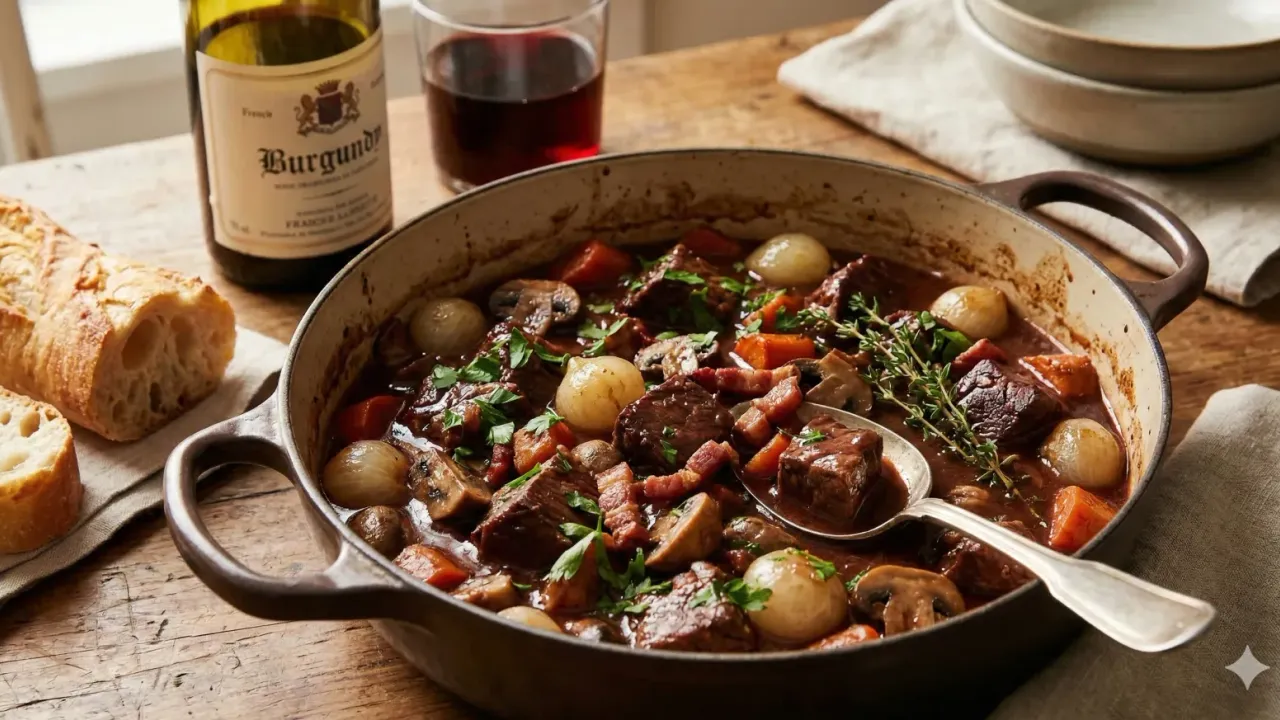
Beef bourguignon is the crown jewel of French comfort food, and this recipe brings its deep, wine-soaked richness to your home kitchen. Tender cubes of beef braised for hours in a full bottle of red wine, smoky bacon, earthy mushrooms, and sweet pearl onions create a stew that feels both rustic and refined. Originally a peasant dish from Burgundy, beef bourguignon has earned its place among the greatest recipes in the world. Follow this step-by-step guide to make it perfectly every time.
Prep Time: 30 minutes | Cook Time: 3 hours | Servings: 6
Difficulty: Medium | Calories: ~580 per serving
What Makes Beef Bourguignon Special?
At its core, beef bourguignon is a lesson in patience. Tough cuts of beef transform into silky, fork-tender pieces through hours of gentle braising. The wine reduces and concentrates, building a sauce with remarkable depth. Bacon lardons add smokiness. Pearl onions melt into sweet little gems. Mushrooms contribute an earthy richness. Together, these ingredients create layers of flavor that no quick-cooking method can match.
The dish traces its roots to the Burgundy region of eastern France, where local cooks used the area’s famous red wine to braise cheaper cuts of meat. What started as a thrifty farmhouse meal eventually caught the attention of Auguste Escoffier and other chefs who refined the technique. Julia Child then introduced beef bourguignon to American home cooks in the 1960s through her cookbook “Mastering the Art of French Cooking.” Since then, it has remained one of the most beloved French dishes worldwide.
What truly sets beef bourguignon apart from ordinary beef stew is the wine. An entire bottle goes into the pot, and as it simmers for hours, the alcohol cooks off while the fruity, complex flavors remain. The result is a glossy, velvety sauce that coats every piece of meat and vegetable. This is not a weeknight shortcut meal. Instead, it is a dish that rewards you for taking your time. Every slow hour in the oven pays off in flavor.

Choosing the Right Beef for Beef Bourguignon
The cut of beef you choose will make or break your bourguignon. You need a tough, well-marbled cut that becomes tender during the long braise. Lean cuts simply dry out. Here are your best options for an outstanding result.
- Chuck roast (best choice): This is the gold standard for beef bourguignon. Chuck comes from the shoulder, which works hard and develops rich flavor. It has plenty of intramuscular fat and connective tissue that melts into gelatin during braising. Cut it into generous 2-inch cubes for the best texture.
- Short ribs (bone-in or boneless): Short ribs are incredibly rich and flavorful. The bones add extra body to the sauce as they release collagen. They take slightly longer to cook, but the payoff is extraordinary. Remove the bones before serving.
- Brisket: The flat cut of brisket has long muscle fibers that become beautifully tender when braised low and slow. It is leaner than chuck, so the texture is slightly different. The flavor holds up well against the bold wine sauce.
- Lean cuts like sirloin or tenderloin (not recommended): These cuts lack the fat and connective tissue needed for braising. They turn dry and stringy after hours in the oven. Save them for grilling or pan-searing instead. Your bourguignon demands a tougher, fattier cut.
Ingredients for Beef Bourguignon
Beef and Bacon:
- 3 pounds beef chuck roast, cut into 2-inch cubes
- 6 slices thick-cut bacon, cut into 1/2-inch lardons
- Salt and black pepper to taste
Vegetables:
- 8 ounces cremini mushrooms, quartered
- 1 cup pearl onions, peeled
- 2 medium carrots, cut into 1-inch pieces
- 2 stalks celery, diced
- 4 cloves garlic, minced
Sauce and Herbs:
- 1 bottle (750ml) dry red wine, such as Burgundy or Pinot Noir
- 2 cups beef broth
- 2 tablespoons tomato paste
- 3 tablespoons all-purpose flour
- 2 tablespoons butter
- 2 tablespoons olive oil
- 4 sprigs fresh thyme
- 2 bay leaves
- 2 tablespoons fresh parsley, chopped
Pro tip: Cut your beef into generous 2-inch cubes, not smaller. Large pieces stay juicy during the long braise and hold their shape. Small cubes shrink too much and can turn mealy. Also, pat each cube bone-dry with paper towels before searing. Wet beef steams instead of browning, and that golden crust is where most of the sauce’s flavor comes from.
Step-by-Step Instructions
Step 1: Render the Bacon and Sear the Beef
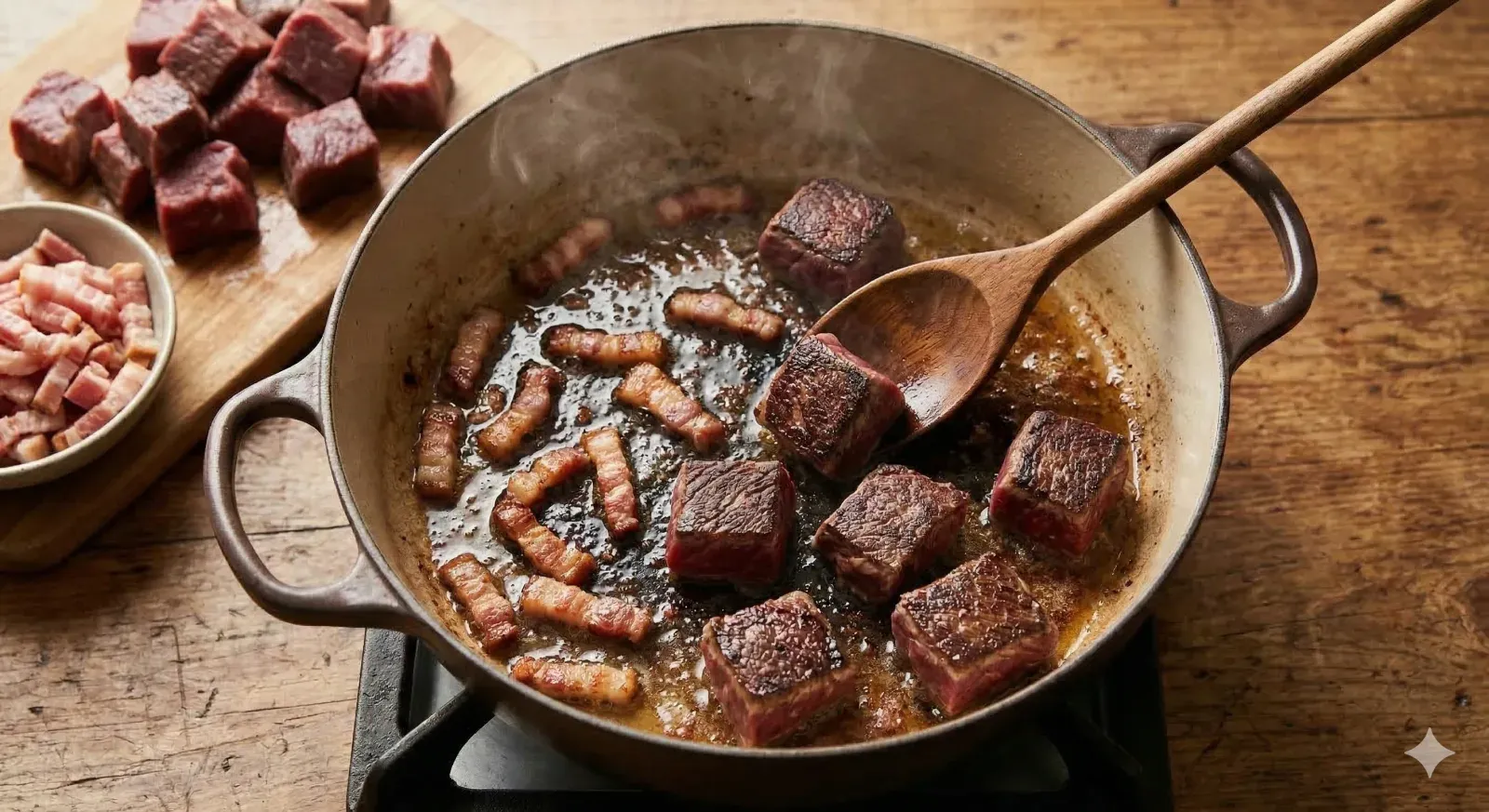
1 Place a large Dutch oven over medium heat. Add the bacon lardons and cook for 6 to 8 minutes, stirring occasionally, until crispy and golden. Remove the bacon with a slotted spoon and set it aside on a paper-towel-lined plate. However, leave the rendered fat in the pot because it carries incredible flavor.
Pat the beef cubes dry with paper towels. Season them generously with salt and pepper. Working in small batches so the pot is not crowded, sear the beef in the hot bacon fat. Cook for about 3 to 4 minutes per side until each piece develops a deep, dark brown crust. Do not move the pieces while they sear. Then transfer the browned beef to a plate. This step takes patience, but it builds the flavor foundation for the entire dish.
Step 2: Build the Aromatic Base
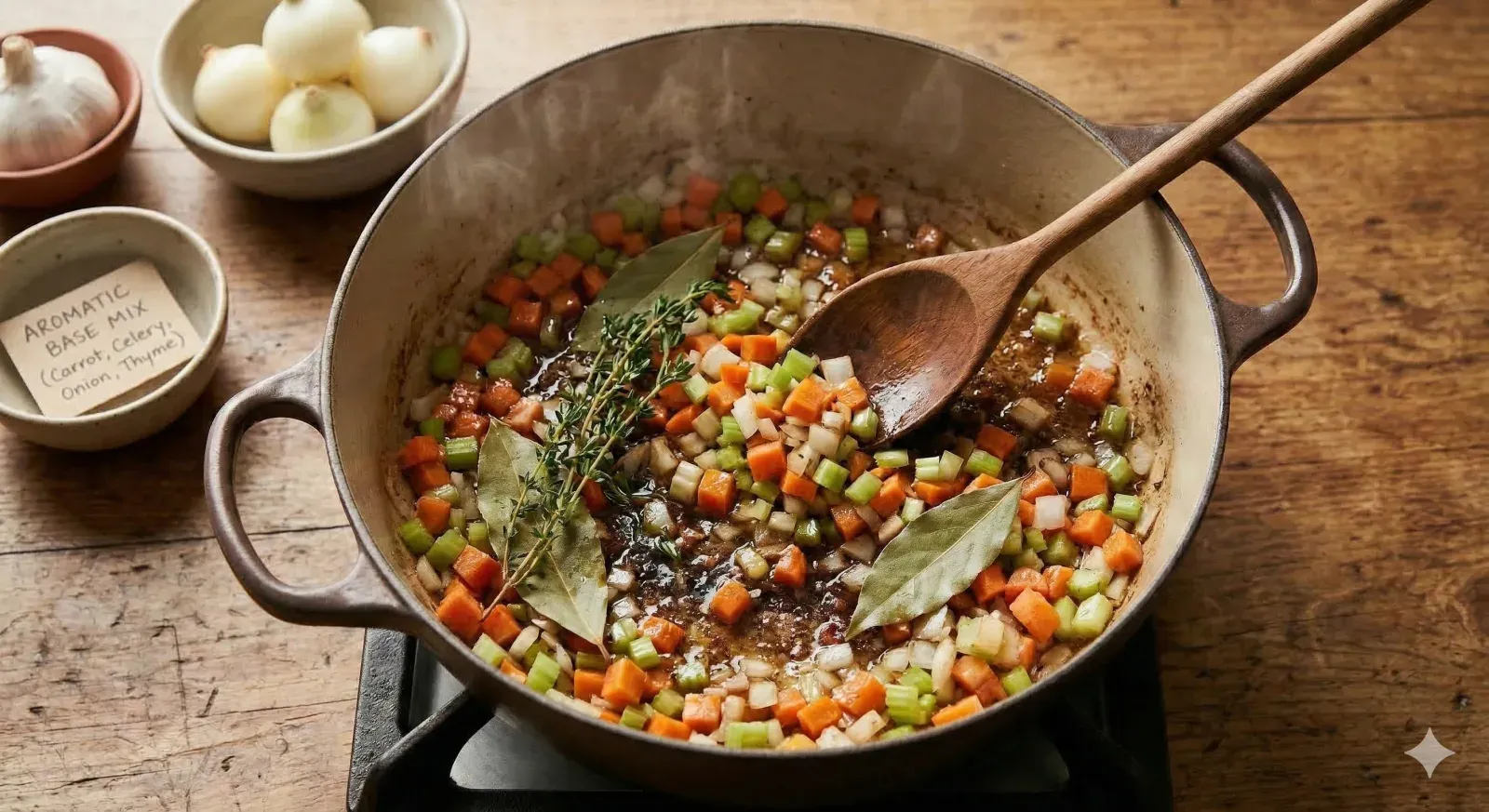
2 Pour off all but 2 tablespoons of fat from the pot. Add the pearl onions, carrots, and celery. Cook over medium heat for 5 minutes, stirring often, until the vegetables begin to soften and pick up a little color. Then add the minced garlic and tomato paste. Stir constantly for 1 minute until the garlic smells fragrant and the paste darkens a shade.
Sprinkle the flour over the vegetables and stir for another minute. Cooking the flour now removes its raw, starchy taste. Additionally, it will thicken the sauce during braising, giving you that signature glossy consistency. This technique is similar to making a roux, and it is essential for a proper beef bourguignon.
Step 3: Deglaze, Combine, and Braise
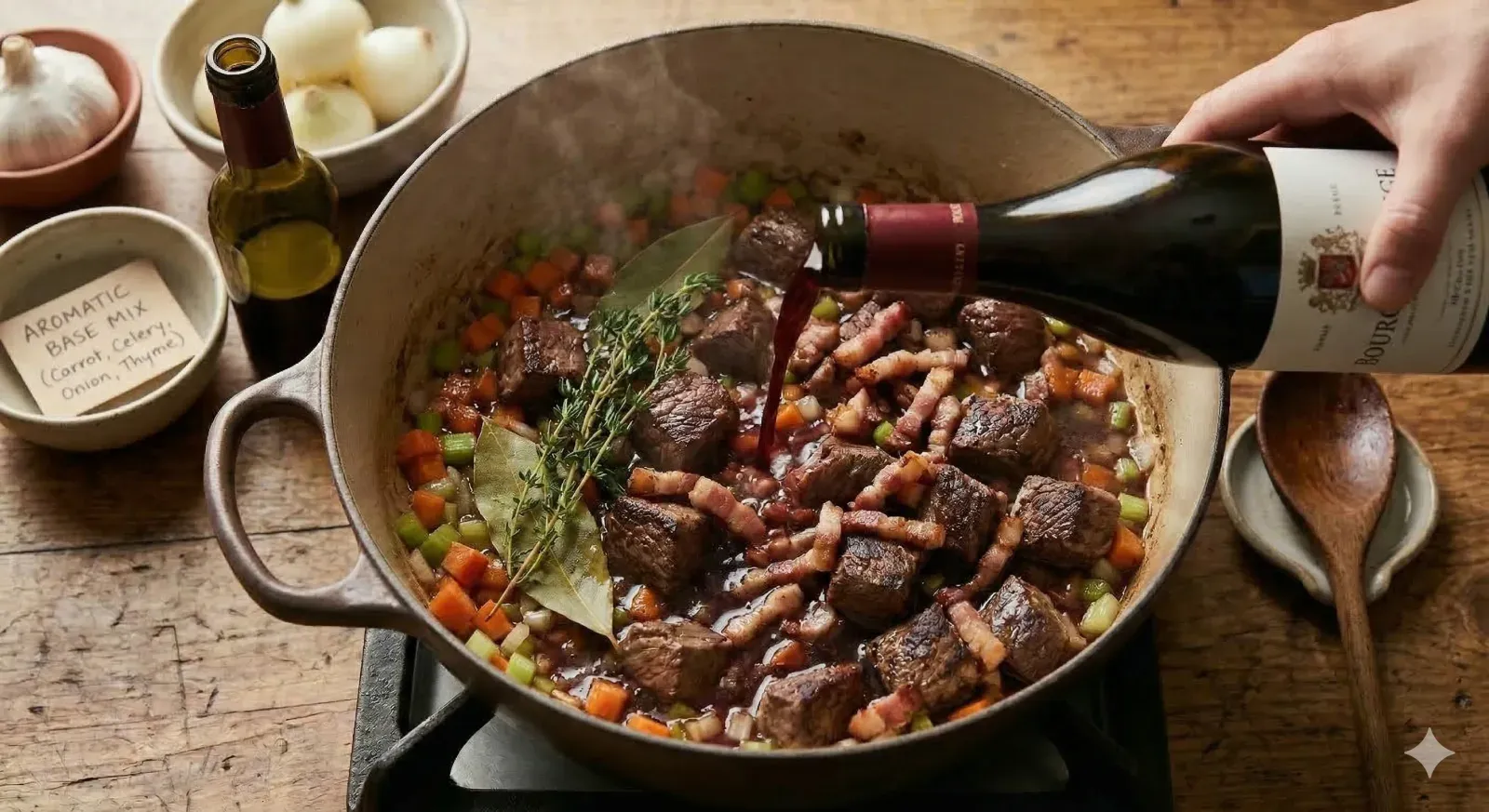
3 Pour in the full bottle of red wine and the beef broth. Use a wooden spoon to scrape up every browned bit stuck to the bottom of the pot. These dark bits, called fond, hold concentrated flavor that will dissolve into the sauce. Then bring the liquid to a boil, then reduce the heat to a gentle simmer.
Add the thyme sprigs, bay leaves, and crispy bacon back to the pot. Nestle the seared beef cubes into the liquid so they are mostly submerged. Cover the Dutch oven with a tight-fitting lid. Transfer the pot to a preheated 325-degree Fahrenheit oven. Braise for 2.5 to 3 hours until the beef is completely fork-tender. Check once around the 2-hour mark to make sure the liquid is at a lazy simmer, not a hard boil. The low, even heat of the oven gives you the most consistent results.
Step 4: Saute the Mushrooms and Finish
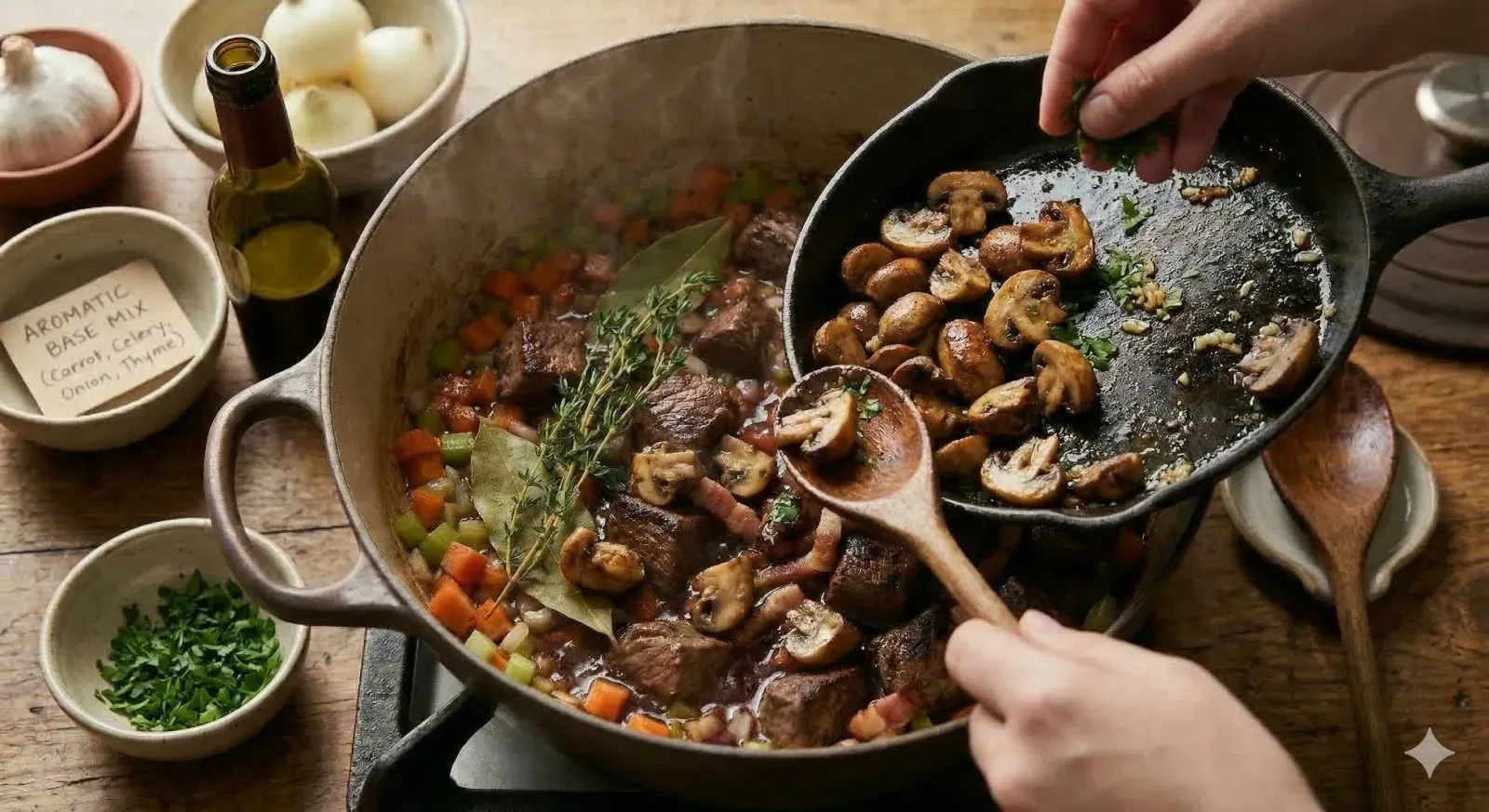
4 About 30 minutes before the braising finishes, melt the butter in a separate skillet over medium-high heat. Add the quartered mushrooms in a single layer. Let them cook undisturbed for 3 to 4 minutes until the bottoms turn golden. Stir and cook for another 2 minutes. Finally, season with a pinch of salt, then add the mushrooms to the Dutch oven for the final 30 minutes of cooking.
When the braising is complete, remove the pot from the oven. Discard the bay leaves and thyme stems. Taste the sauce and adjust the salt and pepper as needed. If the sauce seems thin, remove the beef and vegetables with a slotted spoon. Place the pot on the stove over medium-high heat and reduce the sauce for 10 to 15 minutes until it thickens and coats the back of a spoon. Return the beef and vegetables to the pot. Scatter fresh parsley over the top and serve immediately.
Expert Tips for Perfect Results
Sear in Small Batches
Crowding the pot is the most common mistake home cooks make with beef bourguignon. Too many pieces at once drop the pan temperature, causing the beef to steam instead of sear. As a result, you get gray, bland meat instead of a rich, caramelized crust. Instead, work in batches of 5 to 6 cubes at a time. Give each piece room to breathe. The Maillard reaction needs high, direct heat to produce those deep brown flavors that define a great bourguignon.
Braise in the Oven, Not on the Stove
Stovetop braising creates hot spots at the bottom of the pot. These can scorch the sauce and cook the beef unevenly. An oven, by contrast, wraps the pot in even heat from all sides. Set it to 325 degrees Fahrenheit and forget about it. The gentle, consistent temperature breaks down the collagen in chuck roast slowly and evenly. Your reward is beef so tender it falls apart at the touch of a fork.
Use a Full Bottle of Wine
A full 750ml bottle sounds generous, but it is essential. The wine reduces by nearly half during the braise, concentrating its fruity and tannic flavors into a rich, complex sauce. Skimping on the wine produces a thin, watery stew. Therefore, pour in every last drop and trust the process. As the alcohol cooks off, only the deep, rounded wine flavor remains.
Let It Rest Before Serving
After pulling the pot from the oven, let the beef bourguignon rest for 10 to 15 minutes before serving. During this time, the meat reabsorbs some of the surrounding liquid. The sauce also settles and thickens slightly. Consequently, this short rest makes a noticeable difference in both texture and flavor. Patience, once again, is the key.
French Braised Beef: A Regional Comparison
France is home to many slow-braised beef dishes, each shaped by local ingredients and traditions. Beef bourguignon is the most famous, but it has plenty of worthy cousins. Here is how the major French braised beef dishes compare.
| Dish | Region | Key Liquid | Defining Ingredients |
|---|---|---|---|
| Beef Bourguignon | Burgundy | Red wine (full bottle) | Bacon, pearl onions, mushrooms, thyme |
| Daube Provencale | Provence | Red wine, orange zest | Olives, tomatoes, herbes de Provence, orange peel |
| Pot-au-Feu | National (France) | Water/broth | Marrow bones, leeks, turnips, simple broth |
| Carbonnade Flamande | Flanders/Nord | Dark beer | Onions, mustard, brown sugar, Belgian ale |
| Boeuf en Daube | Southern France | Red or white wine | Anchovies, capers, dried mushrooms, carrots |
Serving Suggestions
Beef bourguignon deserves the right supporting cast. The rich, wine-soaked sauce calls for something starchy to soak it up and something fresh to balance the heaviness. Here are the best ways to serve this classic dish.
Classic Accompaniments:
- Mashed potatoes: Creamy, buttery mashed potatoes are the definitive pairing. Use Yukon Gold for a naturally smooth, rich texture. Spoon the glossy wine sauce right over the top for pure comfort on a plate.
- Crusty French bread: A warm baguette is non-negotiable at a French table. Tear off hunks and drag them through every drop of sauce on your plate. Nothing should go to waste.
- Egg noodles: Wide, buttered egg noodles catch the sauce beautifully in their folds. This is a popular choice that turns the stew into a complete, hearty meal.
- Steamed green beans: Simply seasoned green beans add a bright crunch that cuts through the rich, heavy sauce. A squeeze of lemon lifts everything on the plate.
- Pommes puree: For a more refined presentation, serve with silky French potato puree enriched with butter and cream. It creates an elegant base for the stew.
Beverage Pairings:
- Burgundy Pinot Noir: Serve the same wine you cooked with. The flavors echo each other and create a harmonious match at the table.
- Cotes du Rhone: A fuller-bodied red with peppery, earthy notes that stand up to the rich beef and bacon. An excellent alternative to Burgundy.
- Beaujolais: A lighter, fruity red that keeps the meal from feeling too heavy. Chill it slightly for the best effect on a warm evening.
- Sparkling water with lemon: A crisp palate cleanser between bites. The bubbles and citrus cut right through the richness of the sauce.
Storage and Reheating
Refrigerator: Beef bourguignon keeps beautifully in the fridge for up to 4 days. In fact, it tastes even better the next day as the flavors meld and deepen overnight. Store the beef and sauce together in a sealed container. Any solidified fat on the surface can be scraped off before reheating.
Freezer: This stew freezes exceptionally well for up to 3 months. Let it cool completely, then portion into freezer-safe containers. Leave a half inch of space at the top since the liquid expands. Thaw overnight in the refrigerator before reheating.
Reheating: Warm the stew gently on the stove over low heat. Stir occasionally to prevent sticking and heat it evenly. Add a splash of beef broth if the sauce has thickened too much. Bring it to a gentle simmer, not a rolling boil. Microwave reheating works in a pinch, but the stove gives you better control over the texture.
Common Mistakes to Avoid
1. Cutting the Beef Too Small
Small cubes shrink dramatically during the long braise. After 3 hours, they can turn dry and mealy. Cut your beef into generous 2-inch chunks instead. Larger pieces retain more moisture, hold their shape, and have a better ratio of caramelized exterior to tender interior. This simple detail makes a major difference in the final dish.
2. Using Cheap Cooking Wine
Grocery store cooking wine is loaded with salt and preservatives. It produces a harsh, metallic-tasting sauce. Since wine is the primary flavor in beef bourguignon, quality matters. Pick a $10 to $15 Pinot Noir or Burgundy that you would happily drink. Pour a glass for yourself while you cook the rest.
3. Skipping the Searing Step
Dropping raw beef into the pot saves time but costs you enormous flavor. Searing triggers the Maillard reaction, creating hundreds of new flavor compounds on the surface of the meat. Those dark, crusty bits dissolve into the sauce during braising. Without them, your bourguignon will taste flat and one-dimensional. Always sear first.
4. Braising at Too High a Temperature
A hard boil tightens the muscle fibers in the beef and squeezes out moisture. The result is tough, chewy meat in a cloudy sauce. Keep the temperature at 325 degrees in the oven or at a bare simmer on the stove. Tiny bubbles should rise lazily to the surface. This gentle heat dissolves collagen into gelatin, which is what makes the beef melt-in-your-mouth tender.
Frequently Asked Questions
What is the best cut of beef for beef bourguignon?
Beef chuck roast is the best choice for bourguignon. It has excellent marbling and plenty of connective tissue that breaks down into silky gelatin during braising. Short ribs and brisket also work well. Avoid lean cuts like sirloin or tenderloin, because they dry out over the long cooking time. The fat and collagen in chuck are what give this dish its signature tender, melt-in-your-mouth quality.
What wine should I use for beef bourguignon?
A dry red Burgundy or Pinot Noir is the most authentic choice. Pick a bottle in the $10 to $15 range that tastes good on its own. Cotes du Rhone and Merlot also produce great results. Stay away from cooking wines, which are too salty and give the sauce a harsh flavor. You will need the full 750ml bottle, so buy one you would enjoy drinking.
How long does beef bourguignon take to cook?
Expect about 30 minutes of hands-on prep and 2.5 to 3 hours of braising. The total time runs around 3 to 3.5 hours. Long braising is essential because it breaks down the tough collagen in chuck roast into smooth gelatin. Rushing the process leads to chewy beef. Plan ahead and give the dish the time it needs.
Can I make beef bourguignon in a slow cooker?
Absolutely. Brown the beef and bacon on the stove first to build flavor, then transfer everything to the slow cooker. Cook on low for 8 to 10 hours or on high for 5 to 6 hours. The sauce may end up thinner since less liquid evaporates. If so, pour it into a pot and reduce it on the stove for 10 minutes before serving.
Can I make beef bourguignon ahead of time?
Yes, and many French cooks insist it tastes better the next day. The flavors continue to meld and deepen as the stew rests overnight in the fridge. Make it a day ahead, cool it down, and store it in a sealed container. Reheat gently on the stove the following day. Add a splash of broth if the sauce has thickened too much during storage.
What is the difference between beef bourguignon and regular beef stew?
The key difference is wine. Beef bourguignon uses an entire bottle of red wine as the braising liquid, while standard beef stew relies mostly on broth. Bourguignon also features bacon lardons, pearl onions, and mushrooms sauteed in butter. These components create a richer, more complex dish. Regular stew is simpler and usually includes potatoes cooked directly in the broth, which bourguignon does not.
Variations and Adaptations
Slow Cooker Beef Bourguignon:
For a hands-off approach, sear the beef and bacon on the stove, then transfer everything to a slow cooker. Add the wine, broth, and aromatics. Cook on low for 8 to 10 hours. Saute the mushrooms separately and stir them in during the last hour. The texture is slightly different from the oven version, but the flavor is still outstanding. This method works perfectly for busy weekdays.
Instant Pot Bourguignon:
Use the saute function to brown the beef and build the base. Lock the lid and pressure cook on high for 35 to 40 minutes. Quick release the pressure, then stir in sauteed mushrooms. The total time drops to about 90 minutes. While the sauce lacks some of the depth from a long oven braise, the beef comes out remarkably tender. It is a solid weeknight shortcut.
Vegetarian Bourguignon:
Replace the beef with a mix of portobello mushrooms, root vegetables, and white beans. Use vegetable broth instead of beef broth. Smoked paprika and soy sauce can substitute for the bacon’s smoky depth. Braise for 45 to 60 minutes until everything is tender. The wine still does the heavy lifting, so do not skimp on it. The result is hearty, satisfying, and deeply flavored.
The Cultural Significance of Beef Bourguignon
Beef bourguignon tells the story of French cooking itself. It began as a practical farmhouse solution in Burgundy, where cooks braised tough, inexpensive beef in the local wine to make it edible. Nothing fancy, nothing wasted. Over centuries, professional chefs refined the technique, and the dish climbed from peasant kitchens to restaurant menus. Auguste Escoffier codified the recipe in his landmark cookbook, cementing its place in the French culinary canon.
Julia Child changed everything when she published her beef bourguignon recipe in 1961. Suddenly, American home cooks saw that this grand French dish was within their reach. Her straightforward instructions demystified French cooking and sparked a revolution in home kitchens across the country. The dish became a symbol of what was possible when you combined good ingredients, solid technique, and a willingness to take your time.
Today, beef bourguignon holds a special place in the hearts of cooks everywhere. It shows up at dinner parties, holiday tables, and cozy Sunday suppers. In Burgundy, it remains a source of regional pride. Restaurants serve their own versions alongside the local Pinot Noir, and families pass down personal recipes through generations. More than just a stew, beef bourguignon represents the French belief that even the humblest ingredients can become something extraordinary with care and patience.
Conclusion
This beef bourguignon recipe delivers everything the classic promises: fork-tender beef, a glossy wine sauce, and layers of flavor that only hours of slow braising can create. The keys are straightforward. Sear the beef well. Use a full bottle of good wine. Braise low and slow until the meat surrenders to your fork. Follow these steps, and you will have a pot of rich, deeply satisfying French comfort food that fills your kitchen with an incredible aroma.
Ready to explore more French and European classics? Browse our European dishes collection for recipes like coq au vin, ratatouille, and bouillabaisse. Each one brings a taste of the Old World to your table.