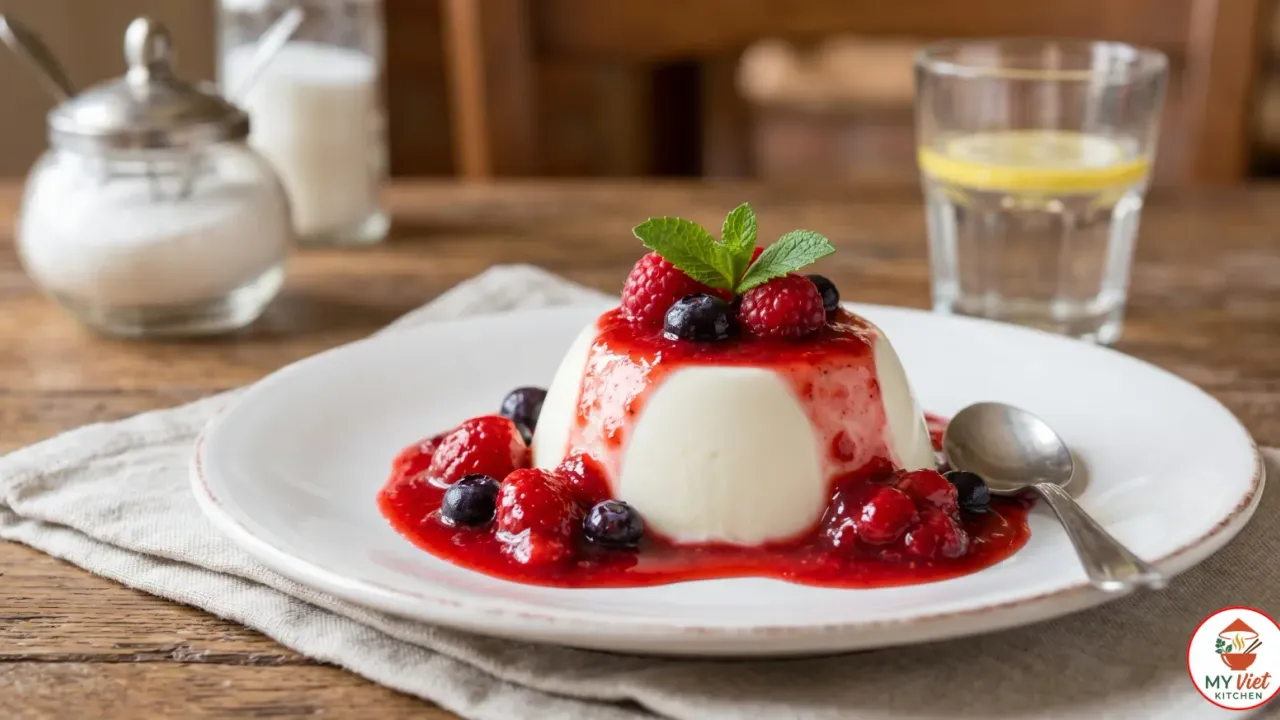
Panna cotta is the elegant Italian dessert that proves simplicity and sophistication can share the same plate. This classic panna cotta recipe transforms just a handful of ingredients into a silky, wobbling cream dessert that melts on your tongue. Literally translated as “cooked cream,” panna cotta originated in the Piedmont region of northern Italy and has since become one of the most celebrated desserts in the world. Whether you top it with a bright berry sauce, a drizzle of caramel, or a spoonful of espresso, this recipe delivers a restaurant-worthy result every single time.
Prep Time: 15 minutes | Cook Time: 10 minutes | Servings: 6
Difficulty: Easy | Calories: ~320 per serving
What Makes Panna Cotta Special?
Unlike most cream-based desserts, panna cotta requires no baking and no eggs. The cream is gently heated, sweetened, flavored with vanilla, and then set with a small amount of gelatin. This approach produces a texture that sits somewhere between custard and mousse. It wobbles on the plate with a gentle jiggle, yet holds its shape beautifully when unmolded. The absence of eggs means the flavor of pure cream and vanilla comes through without competition.
What truly sets panna cotta apart is its remarkable versatility. The neutral cream base works as a canvas for almost any topping or flavor infusion you can imagine. Fresh fruit, chocolate ganache, citrus curd, salted caramel, or even savory preparations with herbs and olive oil all pair well. Moreover, it is one of the few elegant desserts that actually benefits from being made ahead. The texture improves after a full night of chilling, which makes it ideal for entertaining.
Italian grandmothers have passed this recipe down through generations, and part of its enduring appeal lies in its forgiving nature. You do not need special equipment or advanced pastry skills. As long as you measure the gelatin correctly and avoid boiling the cream, the result is almost guaranteed to be delicious. Consequently, panna cotta is one of the first desserts taught in Italian culinary schools. It teaches restraint, balance, and the importance of quality ingredients over complicated technique.
Choosing the Right Cream for Panna Cotta
The cream is the star of this dessert, so selecting the right type is essential. Since panna cotta contains no eggs to add richness, the fat content of your cream determines the final texture and flavor. Below are the best options for making panna cotta at home.
- Heavy cream (best choice): Heavy cream with at least 35% fat content produces the most luxurious panna cotta. It sets into a velvety, melt-in-your-mouth texture that defines the authentic Italian version. For the ideal balance, combine it with whole milk in a 2:1 ratio. This gives you richness without the dessert feeling overly heavy.
- Whole milk blend: Mixing heavy cream with whole milk lightens the dessert while keeping the creamy mouthfeel intact. Our recipe uses this approach. The milk adds a clean dairy flavor that lets the vanilla shine through. As a result, the finished panna cotta tastes elegant rather than dense.
- Coconut cream (dairy-free alternative): Full-fat coconut cream works surprisingly well as a substitute for those avoiding dairy. It contains enough natural fat to mimic the richness of heavy cream. However, expect a noticeable coconut flavor in the finished dessert. This variation is popular in tropical-inspired presentations.
Ingredients for Panna Cotta
Cream Base:
- 2 cups (480ml) heavy cream
- 1 cup (240ml) whole milk
- 1/2 cup (100g) granulated sugar
- 2 1/2 teaspoons (1 envelope) unflavored powdered gelatin
- 3 tablespoons cold water
- 1 vanilla bean, split and scraped, or 2 teaspoons pure vanilla extract
- 1 pinch of fine sea salt
For the Berry Sauce:
- 2 cups fresh mixed berries (strawberries, raspberries, blueberries)
- 2 tablespoons granulated sugar
- 1 tablespoon fresh lemon juice
Equipment You Will Need:
- 6 ramekins, small glasses, or silicone molds (6-ounce capacity)
- A medium saucepan
- A fine mesh sieve
- Plastic wrap
Pro tip: Use sheet gelatin instead of powdered if you can find it. Soak 4 sheets in cold water for 5 minutes, squeeze out excess water, and stir them into the warm cream. Sheet gelatin produces a slightly smoother, more delicate set than powdered gelatin. Professional pastry chefs prefer it for this reason.
Step-by-Step Instructions
Step 1: Bloom the Gelatin
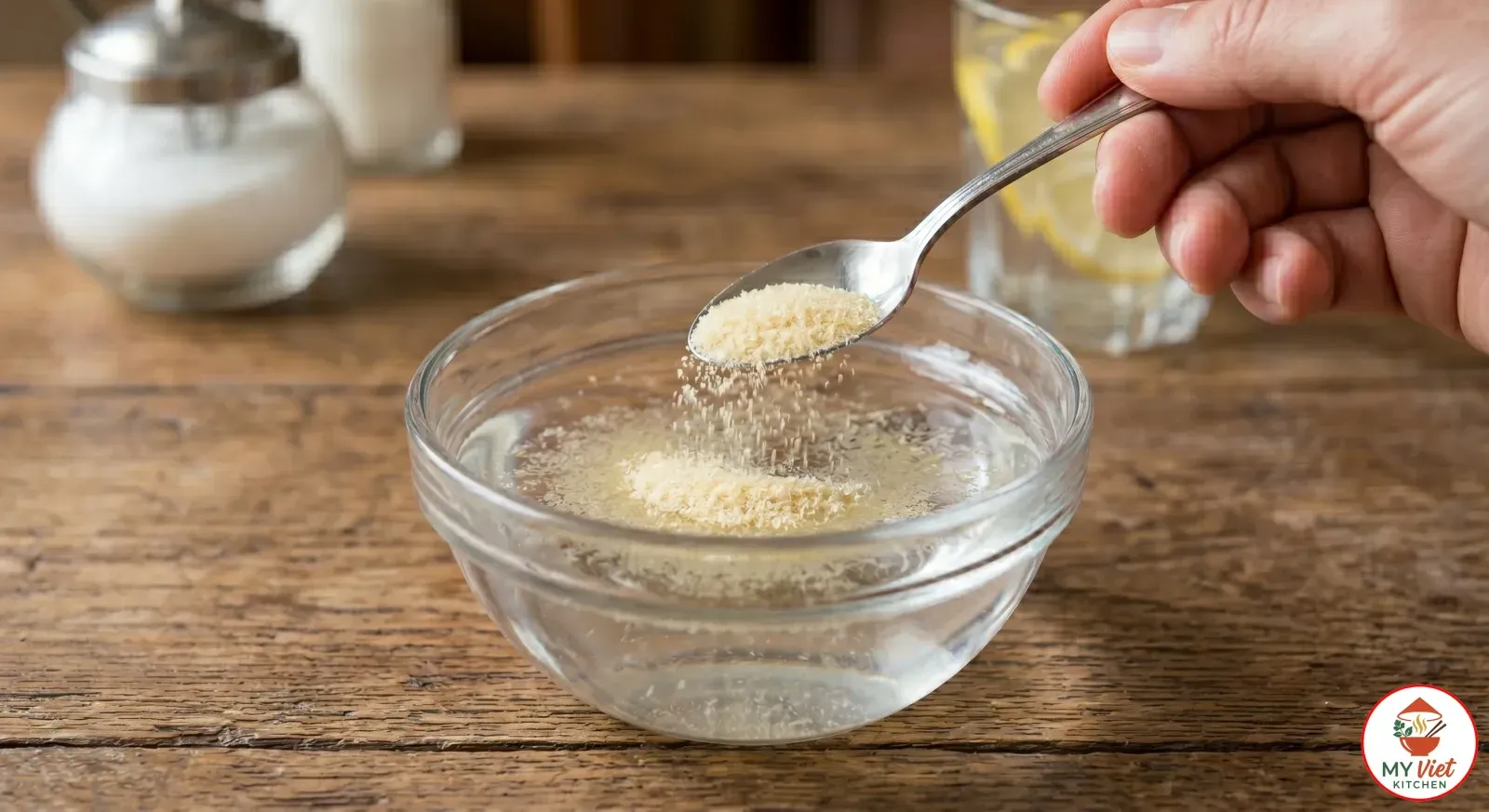
1 Sprinkle the unflavored powdered gelatin evenly over 3 tablespoons of cold water in a small bowl. Let it sit undisturbed for 5 minutes. During this time, the gelatin granules absorb the water and swell into a soft, spongy mass. This process is called blooming, and it is essential for ensuring the gelatin dissolves smoothly into the cream later.
Skipping this step causes clumps of undissolved gelatin in your finished dessert. Always use cold water, because warm or hot water activates the gelatin prematurely and creates an uneven texture. Furthermore, make sure the gelatin sits in a thin layer across the water surface rather than dumped in a pile. A wider bowl helps the granules hydrate evenly. After 5 minutes, the mixture should look like a solid, translucent gel.
Step 2: Heat the Cream Mixture
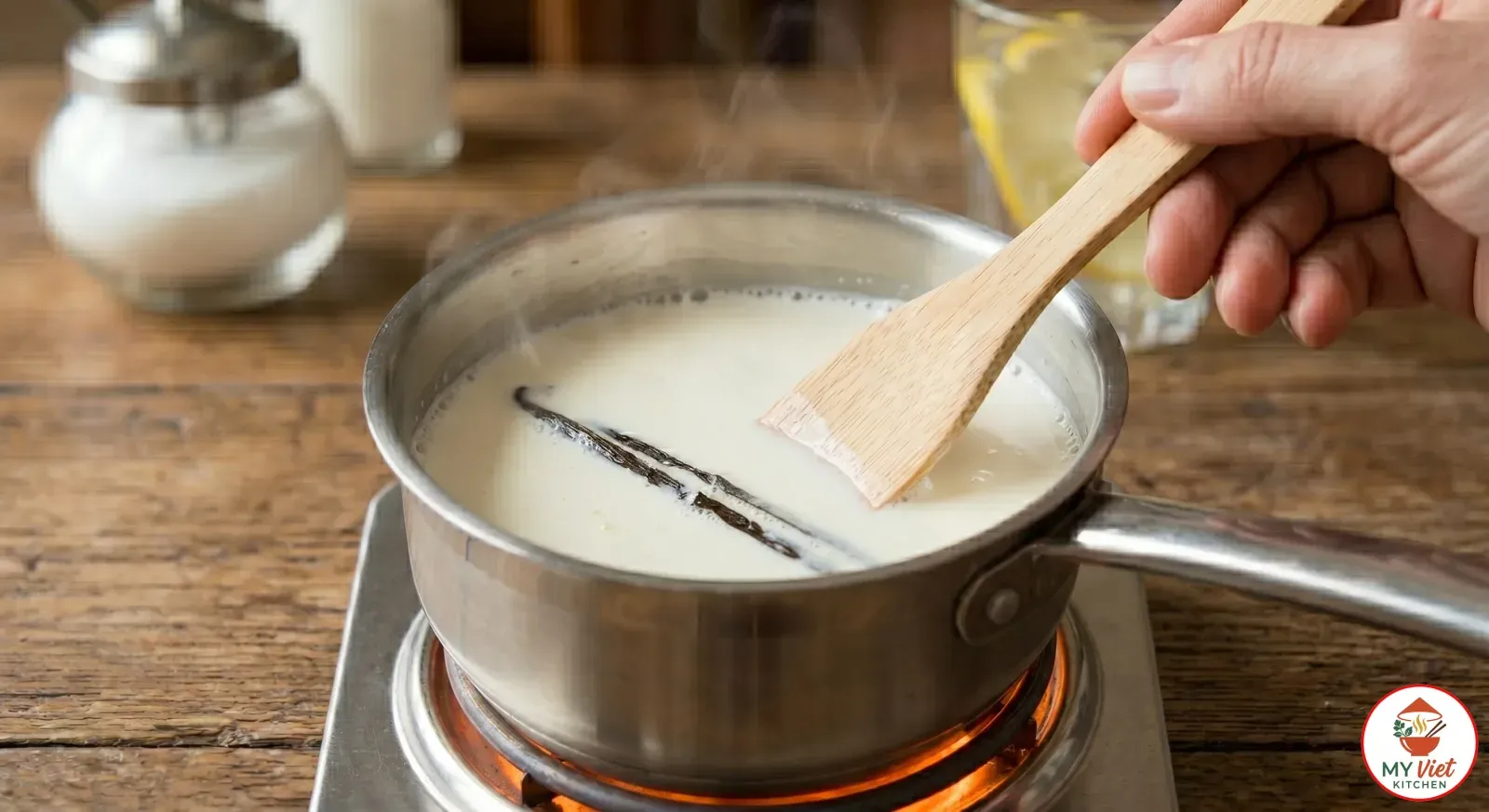
2 Combine the heavy cream, whole milk, sugar, salt, and vanilla bean seeds along with the scraped pod in a medium saucepan. Place the pan over medium heat and stir occasionally with a wooden spoon or silicone spatula. Heat the mixture until the sugar dissolves completely and small bubbles begin to form around the edges of the pan. This takes about 5 to 7 minutes.
Do not let the cream boil. Boiling changes the proteins in the cream and can cause the finished panna cotta to develop a slightly grainy texture. You want the liquid just below a simmer, which is hot enough to dissolve the sugar and extract the vanilla flavor. If you are using vanilla extract instead of a bean, wait and add it after the cream cools slightly. High heat evaporates the volatile flavor compounds in extract. Additionally, stir gently to avoid creating air bubbles that leave tiny holes in the set dessert.
Step 3: Dissolve the Gelatin into the Cream
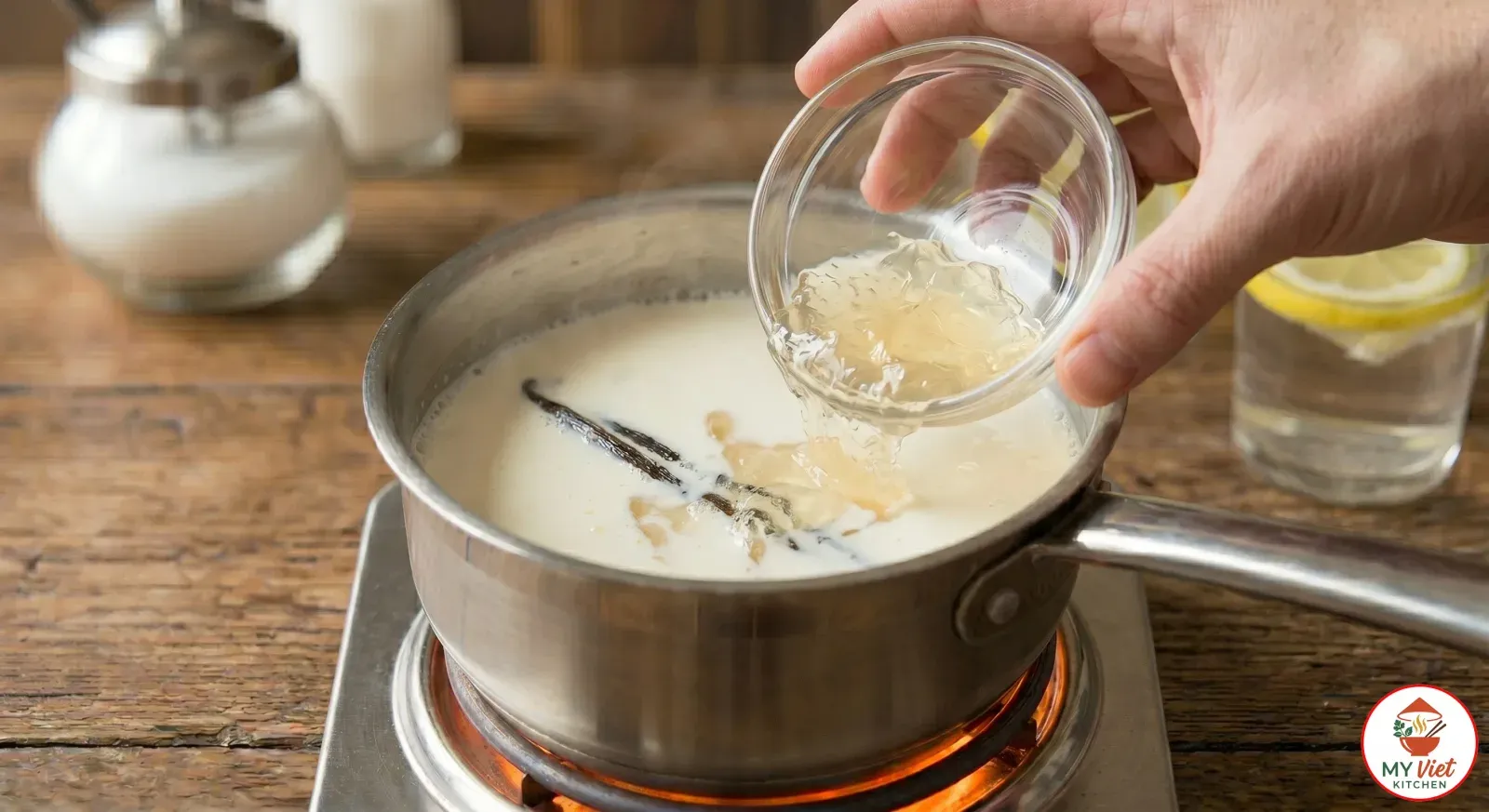
3 Remove the saucepan from the heat and let it cool for about 2 minutes. The cream should still be very warm but no longer steaming. Then add the bloomed gelatin to the warm cream. Stir gently with a spatula for about 1 minute until the gelatin dissolves completely. You should not see any granules or lumps remaining.
The reason you let the cream cool slightly before adding gelatin is important. Extremely hot liquid can weaken gelatin’s setting power. On the other hand, if the cream is too cool, the gelatin will not dissolve properly. The ideal temperature for dissolving gelatin is between 130 and 150 degrees Fahrenheit. After stirring, remove the vanilla pod and pour the entire mixture through a fine mesh sieve into a clean bowl or large measuring cup. Consequently, straining removes any undissolved gelatin specks and gives you a perfectly smooth base.
Step 4: Pour into Molds and Chill
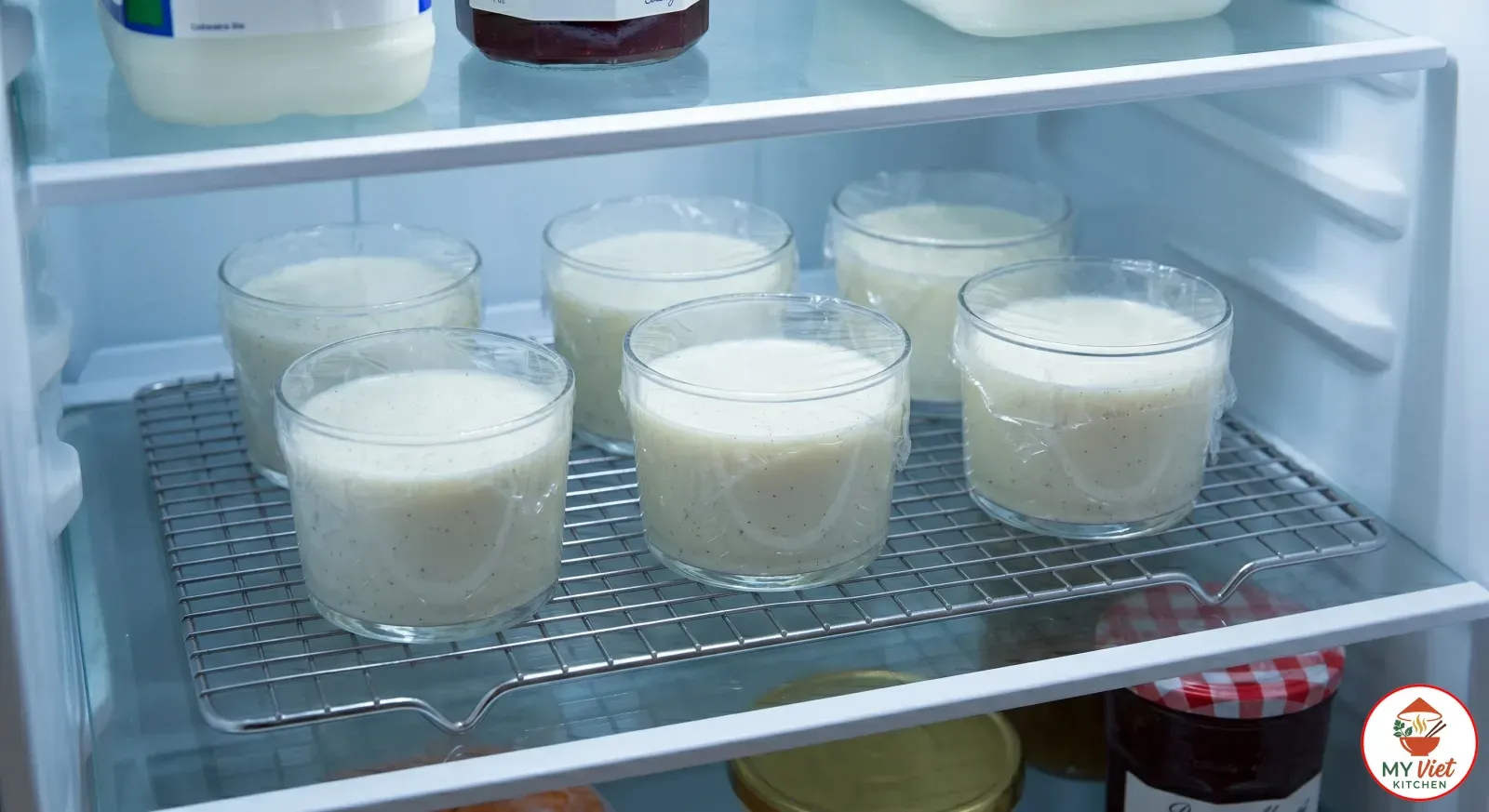
4 Divide the strained cream mixture evenly among six ramekins, glasses, or silicone molds. Each should hold about 1/2 cup of liquid. If you see any air bubbles on the surface, pop them with a toothpick or gently tap the mold on the counter. Then cover each one with plastic wrap to prevent a skin from forming on top.
Place the molds in the refrigerator and chill for at least 4 hours. Overnight chilling produces the best results because the gelatin sets fully and the flavors meld together. The panna cotta is ready when it holds its shape but wobbles gently when you tap the side of the mold. A properly set panna cotta should jiggle like a soft pillow rather than bounce like rubber. Therefore, resist the temptation to add extra gelatin for a firmer set. The delicate wobble is exactly what makes this dessert special.
Step 5: Make the Berry Sauce
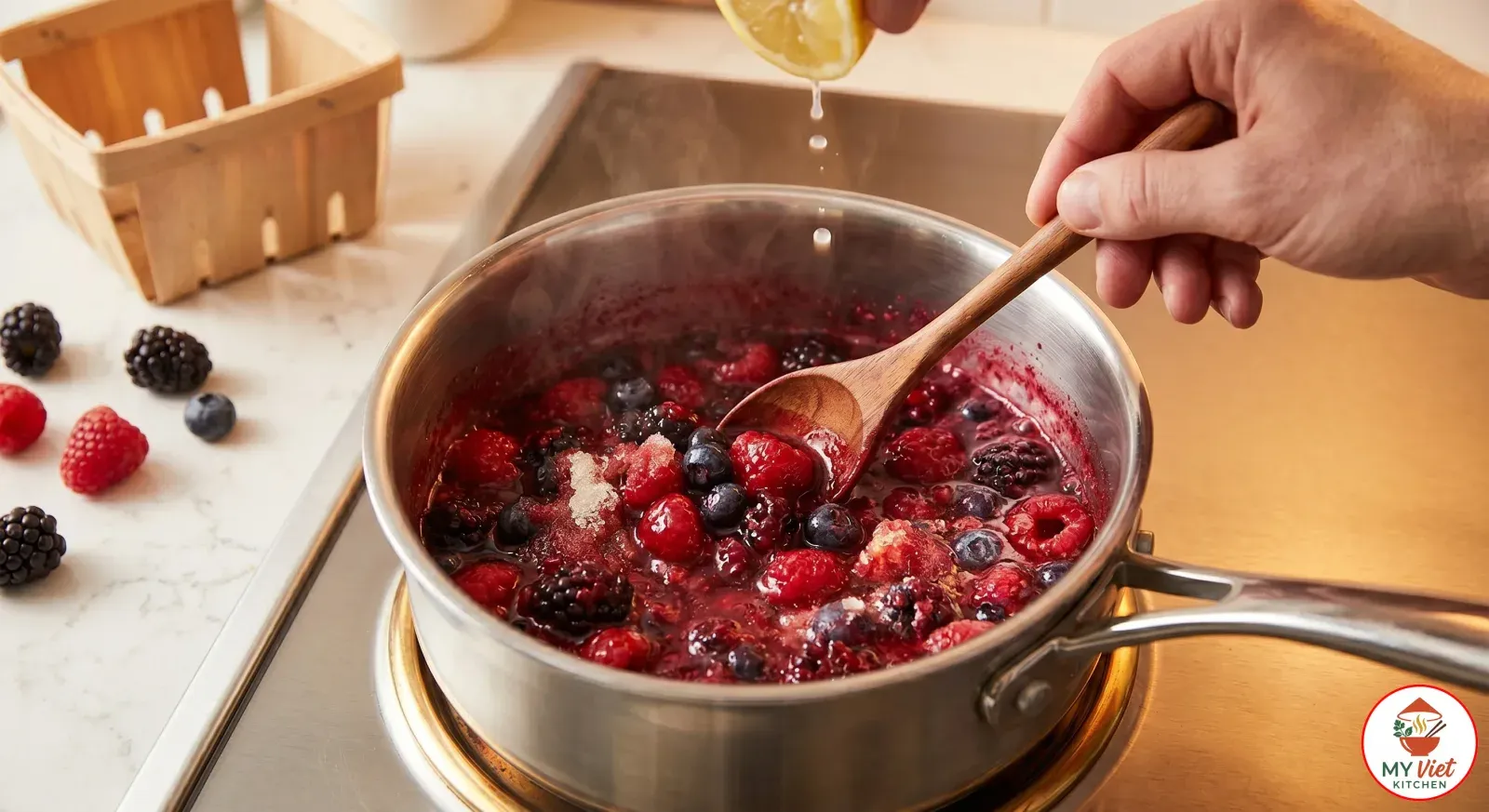
5 While the panna cotta chills, prepare the berry sauce. Combine the fresh berries, sugar, and lemon juice in a small saucepan over medium heat. Stir gently as the berries begin to soften and release their natural juices. Cook for 5 to 7 minutes until about half the berries have broken down and the sauce thickens slightly.
The lemon juice serves two purposes. First, it brightens the flavor of the berries and prevents the sauce from tasting flat. Second, the acidity helps balance the richness of the cream. Remove the sauce from heat and let it cool to room temperature. You can also make this sauce a day ahead and store it in the fridge. Moreover, if you prefer a smoother sauce, blend it and pass it through a sieve to remove the seeds. Both chunky and smooth versions work beautifully with panna cotta.
Step 6: Unmold and Serve
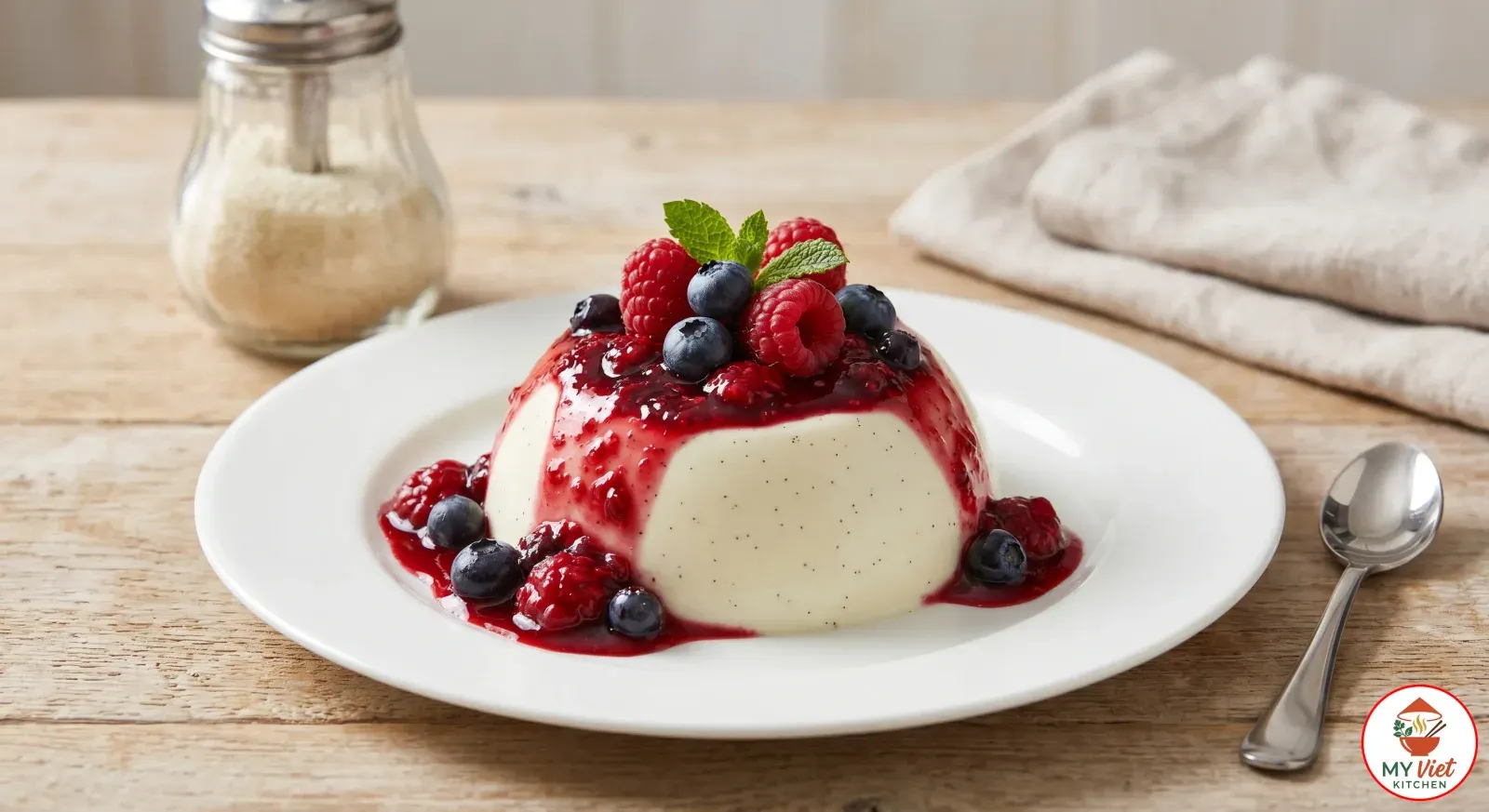
6 To unmold the panna cotta, fill a bowl with warm water (not hot). Dip each ramekin into the water for about 10 seconds. This gently loosens the edges without melting the dessert. Then run a thin knife or offset spatula around the inside rim. Place a serving plate upside down on top of the ramekin, flip both together, and give a gentle shake. The panna cotta should slide out with a satisfying wobble.
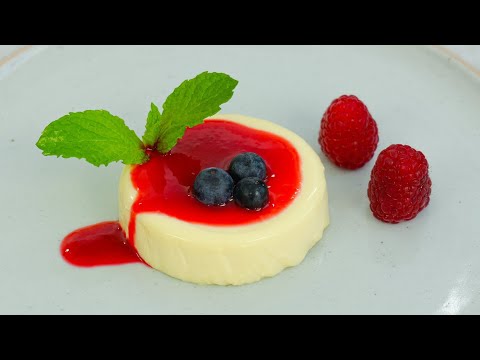
Spoon the berry sauce generously over and around the unmolded panna cotta. Garnish with a few fresh berries and a small mint leaf if you like. Alternatively, you can skip the unmolding entirely and serve the panna cotta directly in the glass or ramekin with the sauce spooned on top. In fact, many Italian restaurants serve it this way for a more casual, rustic presentation. Either approach looks beautiful on the table.
Expert Tips for Perfect Panna Cotta
Get the Gelatin Ratio Right
The single most important factor in panna cotta is the gelatin-to-liquid ratio. Too much gelatin creates a rubbery, bouncy texture that feels more like jelly than a refined dessert. Too little and the panna cotta collapses when unmolded. The ideal ratio is one envelope (2 1/2 teaspoons or 7 grams) of powdered gelatin per 3 cups of total liquid. Our recipe uses exactly this proportion. Measure the gelatin carefully, because even a half teaspoon too much changes the texture noticeably.
Do Not Boil the Cream
Bringing the cream to a full boil is the second most common mistake. Boiling causes the cream proteins to denature, which results in a slightly gritty texture and a cooked milk taste. You only need enough heat to dissolve the sugar and warm the liquid for the gelatin. Small bubbles around the edges of the pan are your signal to remove it from the heat. Additionally, boiling reduces the volume of liquid through evaporation, which throws off the gelatin ratio and produces a firmer set than intended.
Use Quality Vanilla
Because panna cotta has such a simple flavor profile, every ingredient matters. A real vanilla bean provides the deepest, most complex flavor with beautiful black specks throughout the white cream. If vanilla beans are unavailable, use pure vanilla extract rather than imitation. Vanilla bean paste is another excellent option that combines convenience with real vanilla seeds. Regardless of which form you choose, always add extract or paste after removing the cream from heat to preserve the delicate flavor compounds.
Panna Cotta vs. Other Cream Desserts
Several classic European desserts share similarities with panna cotta, but each has distinct characteristics that set it apart. Understanding these differences helps you choose the right dessert for any occasion. Here is how panna cotta compares to its closest relatives from around the world.
| Dessert | Origin | Base Ingredients | Setting Method | Key Difference |
|---|---|---|---|---|
| Panna Cotta | Italy | Cream, milk, sugar | Gelatin | No eggs, no baking required |
| Creme Brulee | France | Cream, egg yolks, sugar | Baked in water bath | Caramelized sugar crust on top |
| Creme Caramel (Flan) | France/Spain | Milk, eggs, sugar | Baked in water bath | Liquid caramel sauce around it |
| Bavarian Cream | Germany | Cream, eggs, sugar | Gelatin and whipped cream | Folded whipped cream makes it airy |
| Blancmange | England | Milk, sugar, cornstarch | Cornstarch thickening | Starch-based, no gelatin or eggs |
Serving Suggestions
Traditional Italian panna cotta is served unmolded on a plate with a sauce spooned around it. The white dome shape against a colorful sauce makes for a visually striking presentation. However, serving in the glass or ramekin is equally popular and eliminates the stress of unmolding. Below are some pairing ideas to make your panna cotta shine.
The Perfect Accompaniments:
- Fresh berry sauce: A mix of raspberries, strawberries, and blueberries cooked briefly with sugar creates a vibrant, tangy topping. The acidity of the berries cuts through the richness of the cream and adds a burst of color to the plate.
- Caramel sauce: A drizzle of warm salted caramel transforms panna cotta into something deeply indulgent. The bittersweet caramel and smooth cream complement each other perfectly.
- Passion fruit coulis: The tropical tartness of passion fruit creates a stunning contrast against the mild vanilla cream. This pairing is especially popular in modern Italian restaurants.
- Balsamic reduction: A drizzle of aged balsamic vinegar from Modena is a classic Piedmontese pairing. The sweet-sour complexity of balsamic pairs surprisingly well with the gentle cream.
Beverage Pairings:
- Moscato d’Asti: This lightly sparkling, sweet Italian wine is the classic match for panna cotta. Its gentle fizz and floral notes complement the vanilla cream without overwhelming it.
- Espresso: A strong shot of Italian espresso served alongside panna cotta provides a bitter, roasted counterpoint to the sweet cream. This combination is a staple at Italian trattorie.
- Prosecco: The crisp bubbles and light fruitiness of Prosecco cleanse the palate between bites of rich cream. Choose a brut style to balance the sweetness of the dessert.
- Limoncello: A chilled glass of limoncello after the dessert rounds out an Italian meal beautifully. The sharp lemon flavor refreshes the palate after the richness of the cream.
Storage and Make-Ahead Tips
Refrigerator: Store panna cotta covered with plastic wrap in the fridge for up to 3 days. The texture holds beautifully throughout this period, and the flavors actually deepen after a full day of chilling. Keep the berry sauce in a separate container and add it just before serving for the freshest presentation.
Freezer: Panna cotta does not freeze well. The gelatin structure breaks down during freezing and thawing, resulting in a grainy, weepy texture. Instead, prepare the cream mixture up to 2 days ahead and store it in the fridge. Reheat gently until just liquid, pour into molds, and chill again. The berry sauce freezes well for up to 2 months.
Make-ahead strategy: Panna cotta is one of the best desserts for entertaining because it must be made in advance. Prepare and chill it the day before your event. On the day of serving, simply unmold and add the topping. This eliminates all last-minute stress and lets you focus on the rest of the meal. Moreover, the overnight chilling gives the dessert its ideal, firmly set texture.
Common Mistakes to Avoid
1. Using Too Much Gelatin
This is the most frequent error and it produces a rubbery, bouncy dessert that feels more like a gelatin mold than an elegant Italian panna cotta. One envelope (2 1/2 teaspoons) per 3 cups of liquid is the correct ratio. Measure carefully using proper measuring spoons. If you prefer a softer set that does not hold its shape when unmolded, reduce the gelatin by 1/4 teaspoon. Conversely, if you must unmold the dessert for a formal presentation, use the full amount.
2. Adding Gelatin to Boiling Cream
Dropping gelatin directly into boiling liquid damages its setting ability. The extreme heat breaks down the protein strands that form the gel network. Always remove the cream from heat and let it cool for 1 to 2 minutes before adding the bloomed gelatin. Stir gently until dissolved. Vigorous whisking creates air bubbles that remain trapped in the set dessert and mar the smooth surface.
3. Not Blooming the Gelatin
Sprinkling dry gelatin powder straight into warm cream leads to lumps that never fully dissolve. Those lumps create gritty spots in the finished dessert. The blooming step hydrates each granule so it melts seamlessly into the warm liquid. Take the full 5 minutes for this step. It may seem like a small detail, but it makes the difference between a smooth panna cotta and a flawed one.
4. Unmolding Too Aggressively
Panna cotta is delicate by nature. Shaking the mold too hard or running a knife too deeply around the edges can tear or crack the surface. Dip the ramekin in warm water for no more than 10 seconds. Then use a thin knife to gently break the seal along the rim. A slow, confident inversion is all you need. If the panna cotta does not release immediately, dip it again for another 5 seconds rather than forcing it.
Frequently Asked Questions
What is the difference between panna cotta and creme brulee?
Panna cotta is an Italian no-bake dessert made by setting sweetened cream with gelatin. Creme brulee is a French baked custard made with egg yolks and topped with a layer of caramelized sugar. The textures differ significantly. Panna cotta has a light, jiggly wobble, while creme brulee is denser and richer due to the egg yolks. Furthermore, panna cotta requires no oven and no torch, making it the simpler option for home cooks.
Can I make panna cotta without gelatin?
Yes, agar-agar is the best vegetarian substitute for gelatin. Use about 1 teaspoon of agar-agar powder per 2 cups of liquid. Unlike gelatin, agar-agar needs to be boiled to activate, so bring your cream mixture to a gentle boil when using it. The texture will be slightly firmer and less melt-in-your-mouth than gelatin-based panna cotta. Nevertheless, it produces a beautiful result that holds its shape well.
How long does panna cotta need to set?
A minimum of 4 hours in the refrigerator is necessary for the gelatin to set properly. However, overnight chilling gives the best texture and firmest set. You can tell panna cotta is ready when it jiggles gently like a soft pillow when you tap the mold. If the center still looks liquid after 4 hours, give it more time. The dessert holds well in the fridge for up to 3 days.
Why is my panna cotta rubbery?
A rubbery texture is almost always caused by too much gelatin. The correct ratio for a tender, creamy set is 2 1/2 teaspoons of powdered gelatin per 3 cups of liquid. Measure carefully using level measuring spoons. Another cause is boiling the cream, which reduces the liquid volume and effectively increases the gelatin concentration. Stick to a gentle heat below simmering and measure your liquids accurately.
Can I use low-fat milk instead of heavy cream?
You can replace some of the cream with whole milk, as our recipe does, but avoid using only low-fat or skim milk. The fat in heavy cream gives panna cotta its signature silky richness and smooth mouthfeel. A dessert made entirely with low-fat milk will taste thin and bland. The 2:1 ratio of cream to whole milk in this recipe strikes the ideal balance between richness and lightness.
Variations and Adaptations
Chocolate Panna Cotta:
Stir 4 ounces of finely chopped dark chocolate into the warm cream until completely melted and smooth. The chocolate adds a bittersweet depth that transforms the delicate vanilla base into a rich, indulgent treat. Reduce the sugar by 1 tablespoon to account for sweetness in the chocolate. This variation pairs exceptionally well with whipped cream and shaved chocolate on top. It also makes a stunning visual with its dark color against a white plate.
Coffee Panna Cotta:
Replace 1/2 cup of the whole milk with freshly brewed espresso, or dissolve 2 tablespoons of instant espresso powder into the warm cream. The coffee flavor melds beautifully with the cream and produces a dessert that tastes like a sophisticated latte in solid form. Serve it with a drizzle of caramel sauce and a dusting of cocoa powder. This version is especially popular as a finale to Italian dinner parties.
Lemon Panna Cotta:
Add the zest of 2 lemons to the cream during heating and stir in 2 tablespoons of fresh lemon juice after removing from heat. The citrus brightens the cream and creates a refreshing dessert perfect for warm weather. Strain out the zest before pouring into molds. Serve this variation with a simple blueberry compote or a sprinkle of crushed pistachios. The lemon version is lighter on the palate and works well after a heavy meal.
Coconut Panna Cotta (Dairy-Free):
Replace the heavy cream and milk with 3 cups of full-fat coconut cream for a completely dairy-free version. The coconut adds a tropical flavor that pairs wonderfully with mango coulis or toasted coconut flakes. Use the same amount of gelatin, or substitute agar-agar for a fully vegan dessert. The texture is slightly different from traditional panna cotta but still creamy and satisfying in its own right.
The Cultural Significance of Panna Cotta
The origins of panna cotta trace back to the Piedmont region of northern Italy, where dairy farming has been central to the local economy for centuries. While the exact date of its invention remains debated, the dessert gained widespread recognition across Italy during the 1960s. By the 1990s, it had appeared on restaurant menus throughout Europe and North America. Today, panna cotta stands alongside tiramisu as one of the two most iconic Italian desserts in the world.
In Italian food culture, panna cotta represents the philosophy that great cooking starts with exceptional ingredients rather than elaborate technique. Piedmontese dairy farmers understood that when you have access to fresh, rich cream, you do not need to complicate things. The dessert requires no special skills, no fancy equipment, and no extensive training. Instead, it asks only that you choose quality cream, measure your gelatin with care, and trust the process. This approach reflects a broader truth in Italian cuisine: restraint and respect for ingredients matter more than complexity.
Modern chefs around the globe have embraced panna cotta as a blank canvas for creative expression. From traditional Piedmontese versions served with wild berries to avant-garde presentations with exotic spices and molecular gastronomy techniques, the dessert continues to evolve. Yet the heart of panna cotta remains unchanged: pure cream, gentle sweetness, and a texture that disappears on the tongue. Its global popularity proves that the simplest ideas, when executed with precision, resonate across every culture and cuisine.
Conclusion
This panna cotta recipe shows that one of the world’s most elegant desserts is also one of the easiest to make at home. Master the gelatin ratio, heat the cream gently, and give it time to set in the fridge. Those three simple principles are all you need to produce a flawless result. The silky vanilla cream topped with vibrant berry sauce will impress everyone at your table, and the make-ahead convenience means you can enjoy the moment right along with your guests.
Looking for more beloved Italian and European desserts? Explore our European dishes collection for classics like tiramisu, creme brulee, and Sachertorte. Each recipe features the same detailed, step-by-step approach to bring world cuisine to your kitchen.