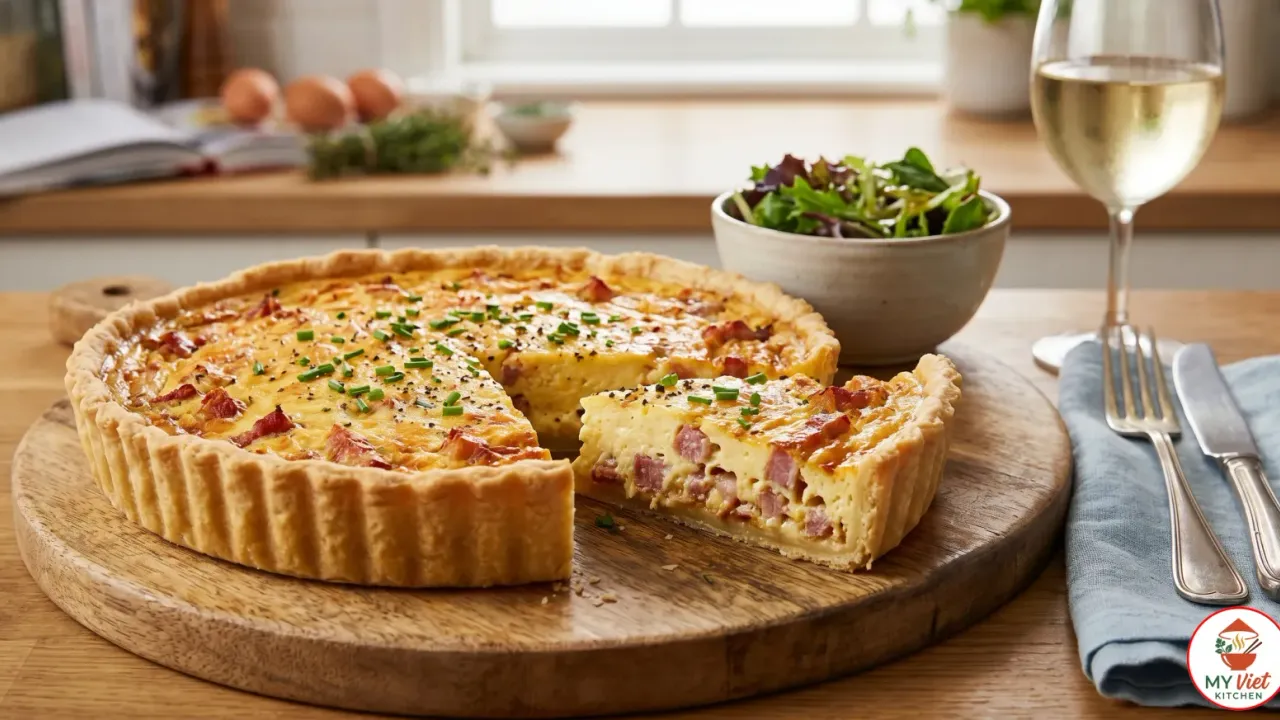
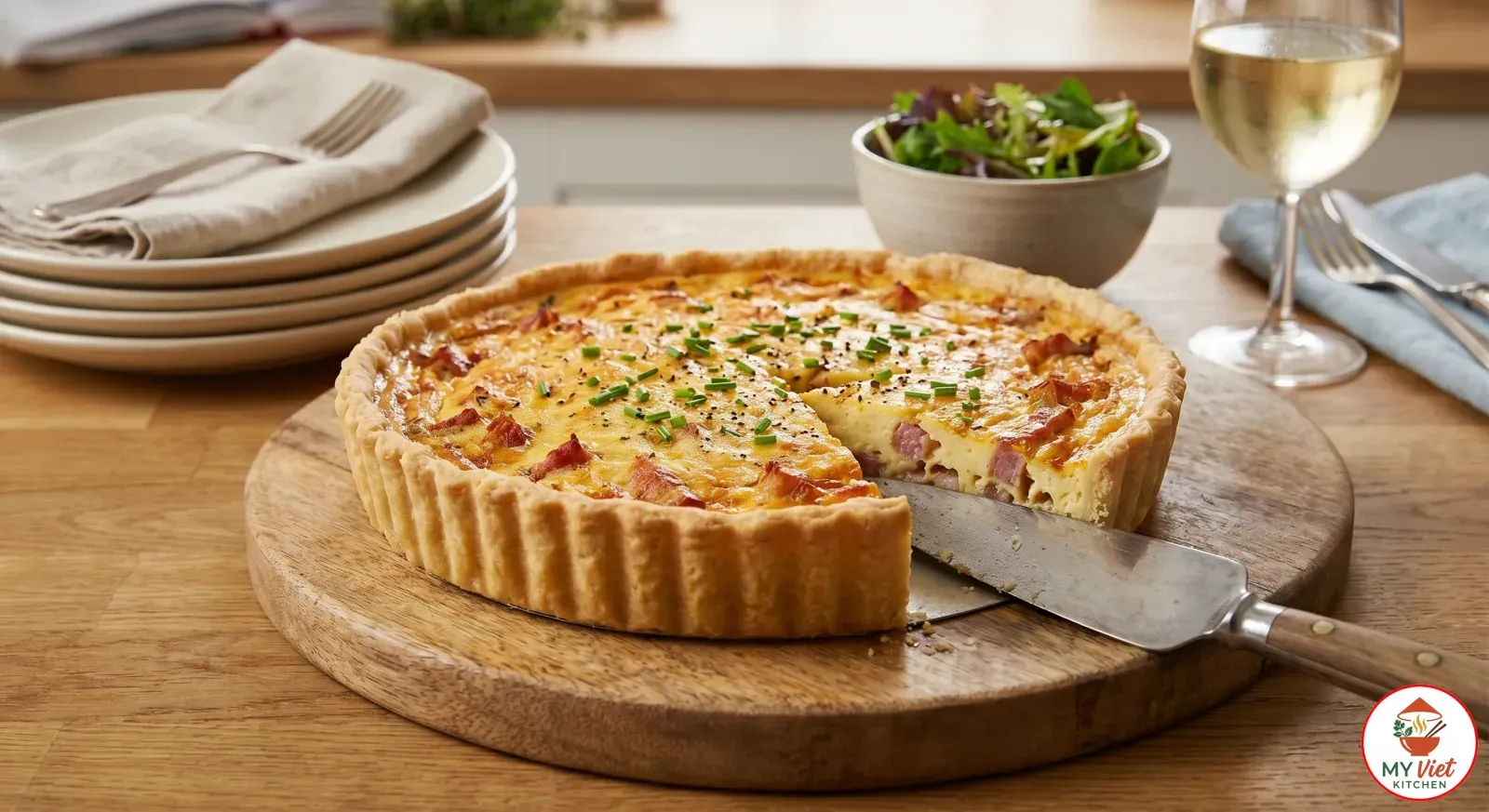
Quiche Lorraine is the iconic French savory tart that combines flaky butter pastry with a silky egg custard and smoky bacon. This quiche Lorraine recipe guides you through every step, from making the shortcrust dough to baking a perfectly golden custard filling. With simple ingredients and straightforward technique, you can bring this beloved classic from the Lorraine region of France straight to your table.
Prep Time: 30 minutes | Cook Time: 45 minutes | Servings: 8
Difficulty: Medium | Calories: ~420 per serving
What Makes Quiche Lorraine Special?
This tart stands apart from other egg dishes because of its refined balance. First, the pastry shell provides a crisp, buttery base. Then, the custard filling delivers a smooth, creamy center. Additionally, the bacon adds salty depth and a pleasant chew. Together, these three layers create a dish that feels both homey and elegant at once.
Quiche Lorraine originated in the medieval German kingdom of Lothringen, which later became the Lorraine region of northeastern France. The earliest versions used bread dough rather than pastry. Over time, French bakers replaced the bread with rich shortcrust pastry. Eventually, they also refined the filling into a delicate egg and cream custard. As a result, the dish evolved from a humble peasant meal into a staple of French cuisine.
What truly defines an authentic quiche Lorraine is restraint. The traditional recipe uses only three filling ingredients: bacon, eggs, and cream. There is no cheese, no onion, and no vegetable. This simplicity allows each element to shine. In other words, the smoky pork plays against the gentle custard without competition. Consequently, every bite delivers clean, focused flavor.

Choosing the Right Bacon for Quiche Lorraine
The bacon is the star of this dish, so choosing the right type matters greatly. Indeed, different styles of bacon produce noticeably different results. Here are the best options for your quiche Lorraine.
- Slab bacon (best choice): Thick-cut slab bacon gives you control over the size of your lardons. Cut it into chunky strips about 1/4-inch thick. These pieces hold their shape during baking and add satisfying meaty bites throughout the custard.
- Smoked streaky bacon: This is the most common option in most grocery stores. It works well when cut into short strips. However, choose thick-cut slices over thin ones. Thin bacon can become too crispy and lose its texture inside the moist custard.
- Lardons or pancetta: French lardons are small, thick strips of cured pork belly. They deliver an authentic, slightly chewy texture. Pancetta serves as a good Italian substitute. Both options render less fat than American bacon, so the filling stays cleaner.
Ingredients for Quiche Lorraine
For the Shortcrust Pastry:
- 1 1/4 cups (160g) all-purpose flour
- 1/2 cup (115g) cold unsalted butter, cubed
- 1 large egg yolk
- 2-3 tablespoons ice water
- 1/4 teaspoon fine sea salt
For the Filling:
- 8 ounces (225g) thick-cut bacon, cut into lardons
- 4 large eggs
- 1 cup (240ml) heavy cream
- 1/2 cup (120ml) whole milk
- 1/4 teaspoon freshly grated nutmeg
- 1/4 teaspoon white pepper
- 1/2 teaspoon fine sea salt
Optional Modern Addition:
- 1 cup (100g) Gruyere cheese, grated
Pro tip: Keep the butter as cold as possible when making the pastry. Cold butter creates steam pockets during baking, and those pockets give the crust its signature flaky layers. If the butter softens too much while you work, put the dough back in the fridge for 10 minutes before rolling.
Step-by-Step Instructions
Step 1: Make the Shortcrust Pastry
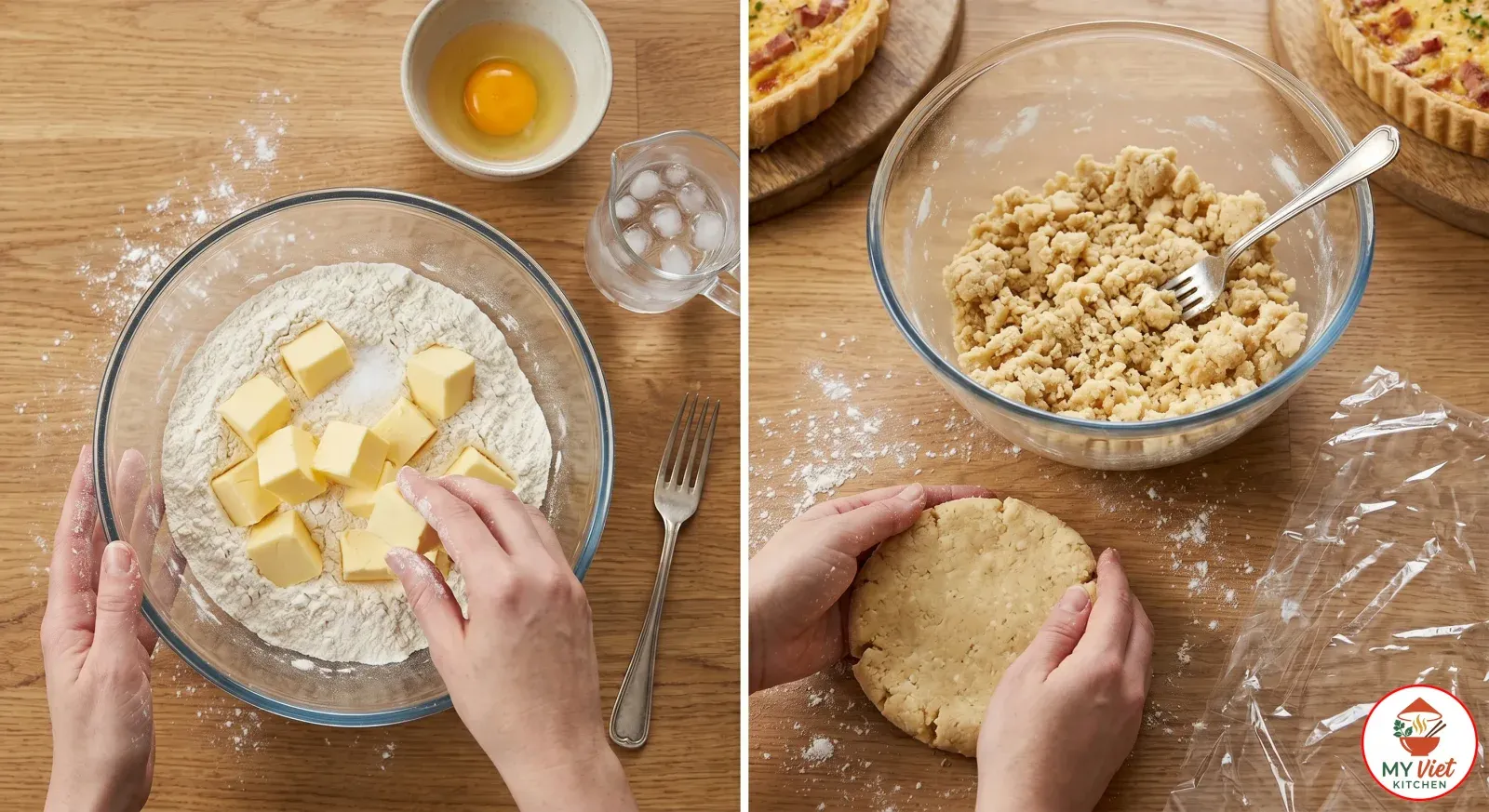
1 Combine the flour and salt in a large mixing bowl. Add the cold cubed butter and rub it into the flour using your fingertips. Work quickly so the butter stays cold. Eventually, the mixture will look like coarse breadcrumbs with some pea-sized pieces of butter still visible. Those larger pieces will melt during baking and create flaky pockets in the crust.
Next, add the egg yolk and 2 tablespoons of ice water. Stir with a fork until the dough just starts to clump together. If it feels too dry, add another tablespoon of water. Do not overwork the dough because too much mixing develops gluten, which makes the pastry tough instead of tender. After that, shape the dough into a flat disc, wrap it in plastic, and refrigerate for at least 30 minutes. This rest relaxes the gluten and firms up the butter again.
Step 2: Blind Bake the Crust
2 Preheat your oven to 375 degrees Fahrenheit (190 degrees Celsius). Roll the chilled dough into a 12-inch circle on a lightly floured surface. Carefully transfer it to a 9-inch tart pan with a removable bottom. Press the dough gently into the corners and up the sides. Trim any excess dough hanging over the edge.
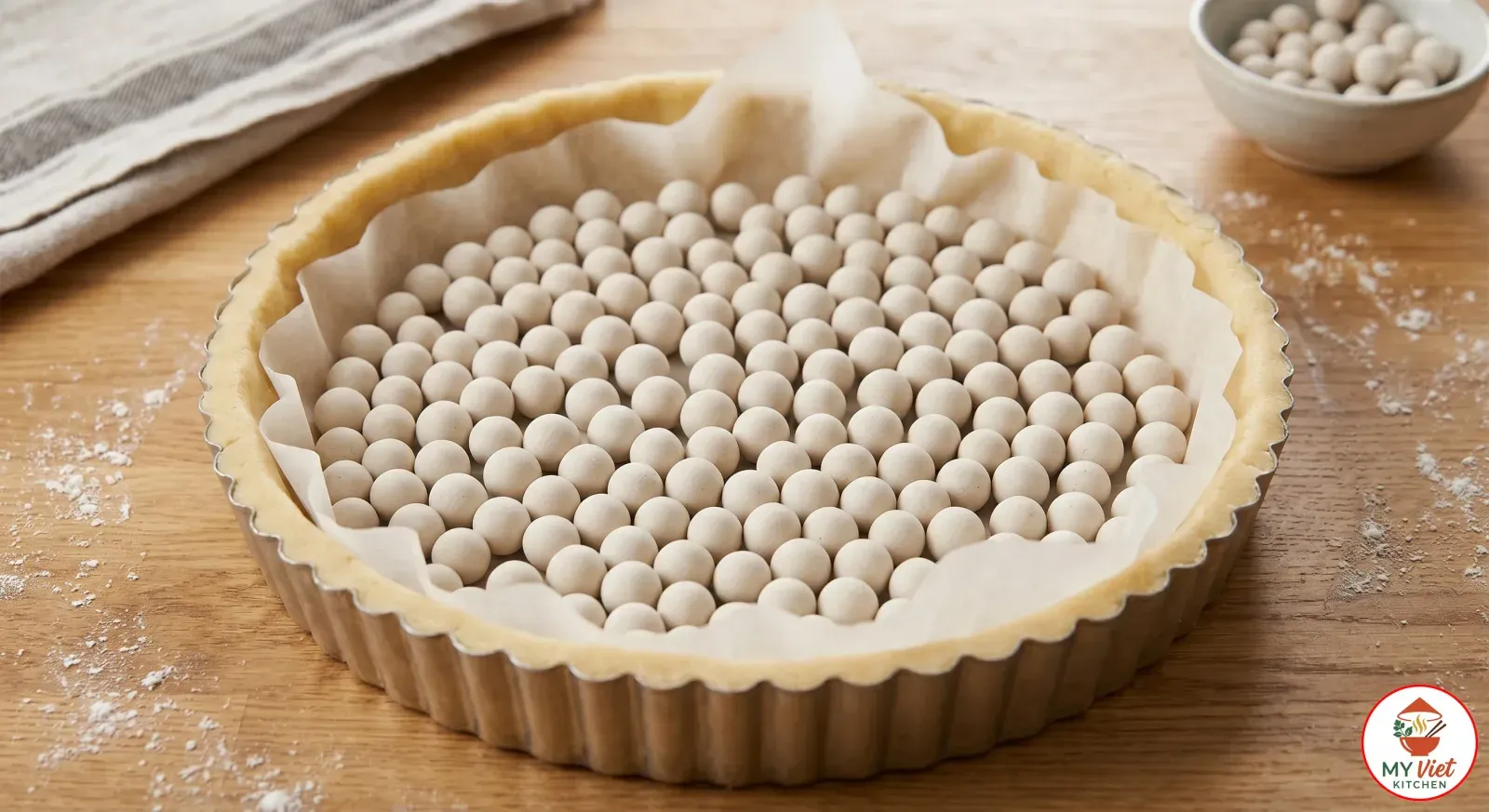
Prick the base all over with a fork to prevent air bubbles from forming. Then line the pastry with parchment paper and fill it with pie weights or dried beans. This step is called blind baking. It pre-cooks the crust so it stays crisp under the wet custard filling. Bake for 15 minutes with the weights in place. After that, remove the parchment and weights and bake for 5 more minutes until the surface looks dry and lightly golden. Furthermore, brushing the hot crust with a thin layer of beaten egg creates a seal that blocks moisture even better.
Step 3: Cook the Bacon
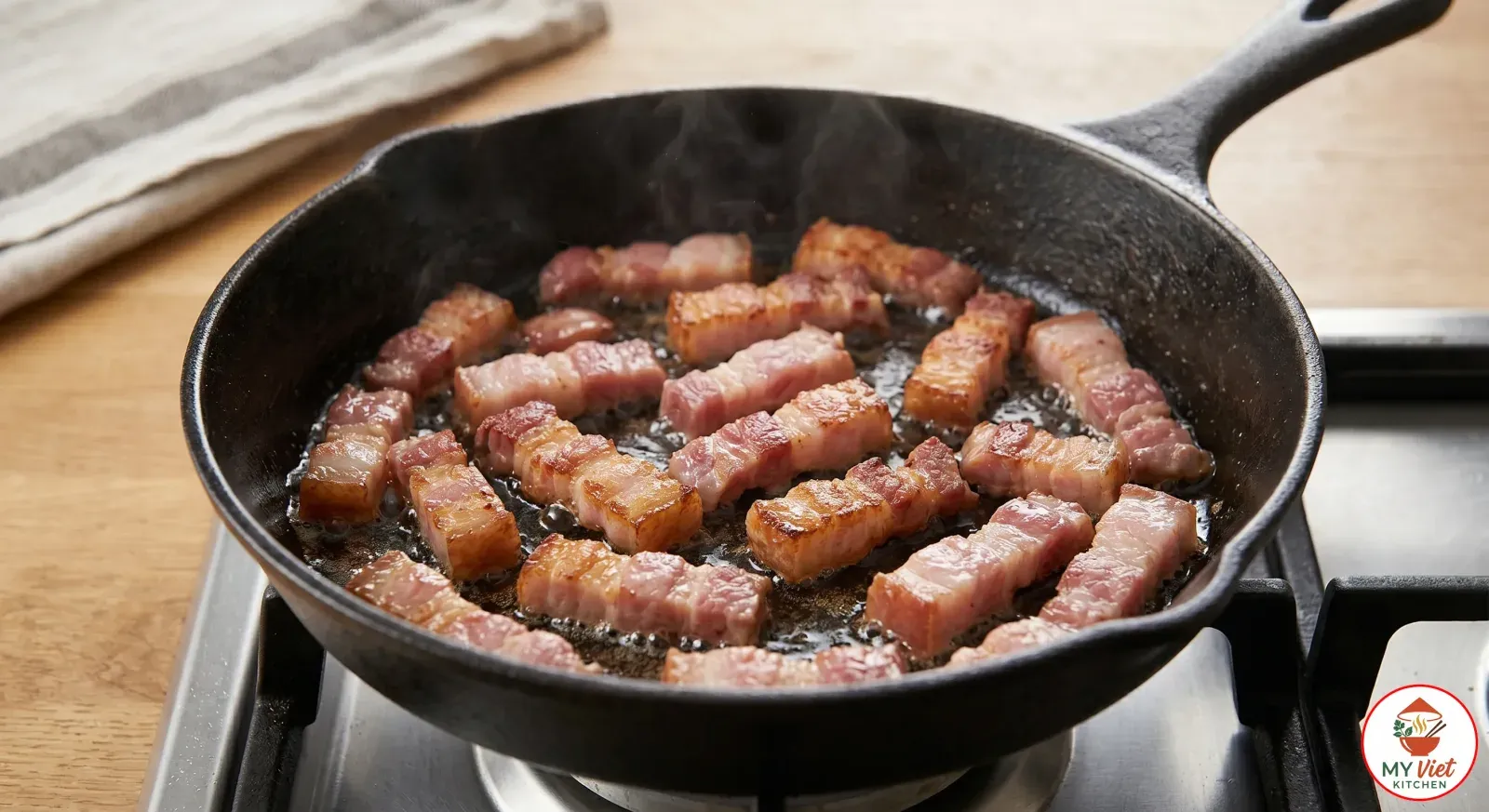
3 While the crust bakes, cook the bacon lardons in a skillet over medium heat. Stir them occasionally until they turn golden and slightly crispy around the edges. Generally, this takes about 8 to 10 minutes. Do not cook the bacon until it is fully crunchy because it will bake further inside the quiche. You want pieces that still have a slight chew to them.
Transfer the cooked bacon to a plate lined with paper towels. Let the excess fat drain away for a few minutes. Otherwise, greasy bacon can make the custard filling oily and heavy. Additionally, save a tablespoon of the rendered bacon fat. You can brush it onto the blind-baked crust for extra flavor before adding the filling.
Step 4: Prepare the Custard Filling
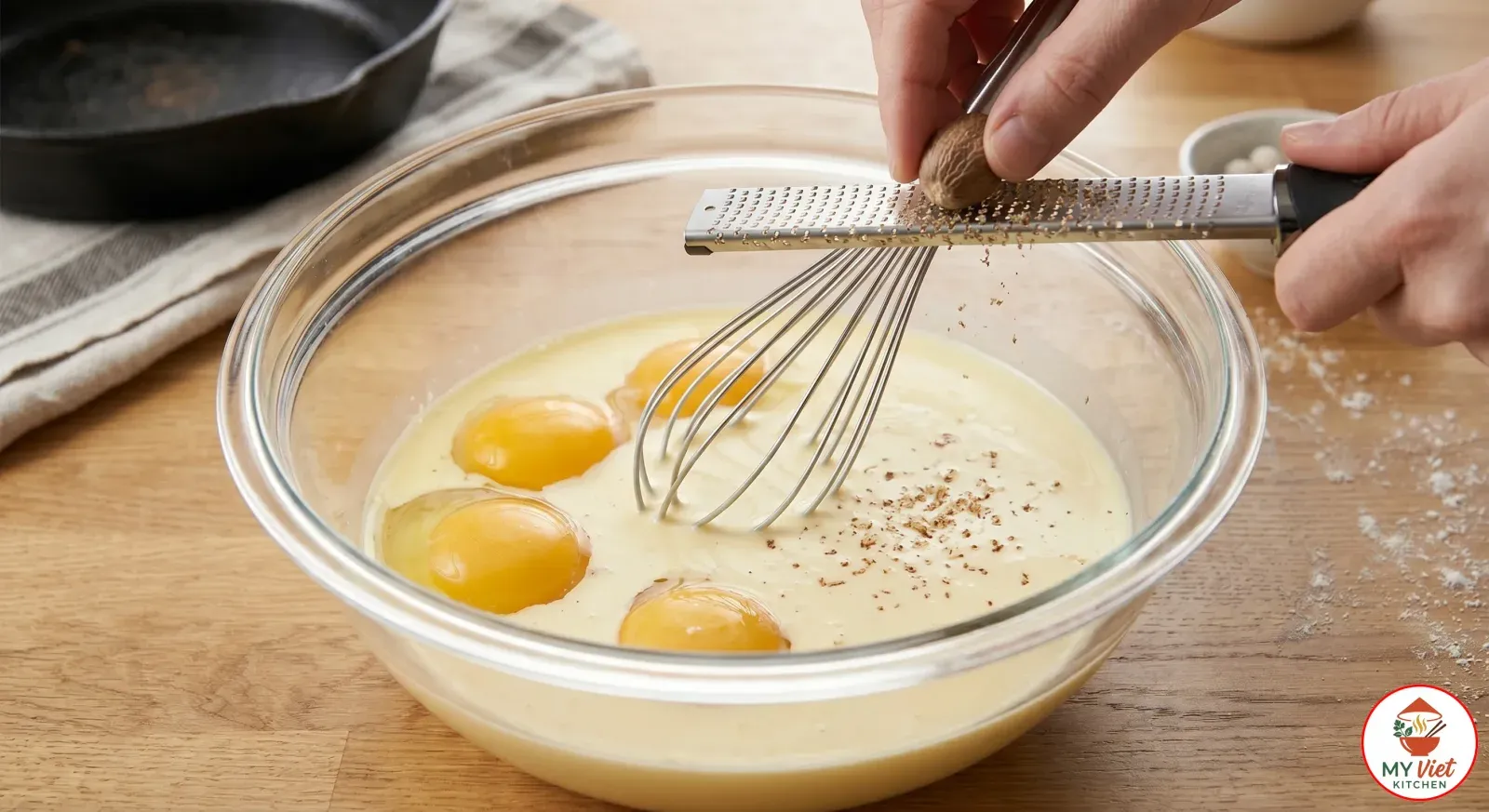
4 In a large bowl, whisk together the eggs, heavy cream, whole milk, nutmeg, white pepper, and salt. Whisk until the mixture is smooth and uniform in color. However, avoid overbeating because too many air bubbles create an uneven, puffed texture during baking. The custard should be silky and pour easily.
The ratio of eggs to dairy is essential for the right texture. Four eggs to one and a half cups of dairy produces a custard that sets firmly enough to slice but remains creamy inside. Too many eggs make the filling rubbery. Similarly, too much cream makes it soft and difficult to cut. This balanced ratio gives you the best of both worlds. Moreover, the nutmeg adds a warm, subtle spice that enhances the bacon without overpowering it.
Step 5: Assemble and Bake the Quiche
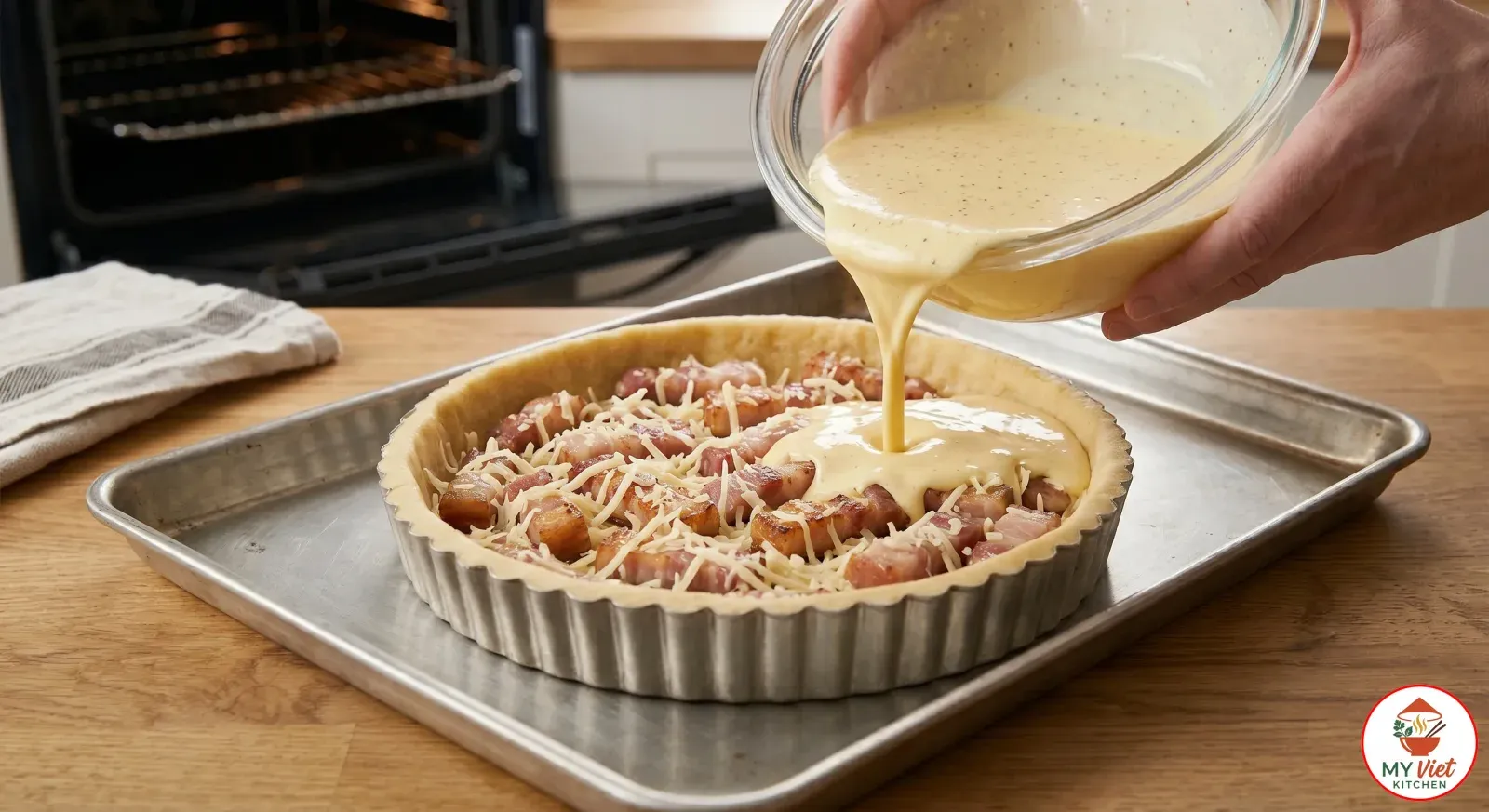
5 Reduce the oven temperature to 350 degrees Fahrenheit (175 degrees Celsius). Scatter the drained bacon evenly across the bottom of the blind-baked crust. If you are using Gruyere cheese, sprinkle it over the bacon in an even layer. Then carefully pour the custard mixture over the filling. Fill it to just below the rim of the crust.
Place the tart pan on a baking sheet to catch any drips. Bake for 35 to 40 minutes until the top turns golden and the center sets with just a slight jiggle. The quiche should puff up slightly during baking. Afterwards, it will settle as it cools. In addition, rotating the pan halfway through baking ensures even browning on all sides.
Step 6: Rest and Serve
6 Remove the quiche from the oven and let it rest on a wire rack for at least 15 minutes. This resting time allows the custard to firm up and hold its shape when sliced. Cutting too early results in a runny filling that collapses on the plate. Once rested, remove the outer ring of the tart pan and transfer the quiche to a serving board.
Serve the quiche Lorraine warm or at room temperature. Both options taste excellent. In fact, many French cooks prefer it at room temperature because the flavors become more pronounced as the custard cools slightly. Slice it into eight wedges using a sharp knife for clean cuts.
Expert Tips for Perfect Quiche Lorraine
Always Blind Bake First
Skipping the blind bake is the most common cause of a soggy quiche bottom. The wet custard filling soaks into raw pastry and prevents it from ever crisping. Pre-baking the crust creates a solid, golden barrier. As a result, the pastry stays flaky even after the custard is poured in. This single step makes the biggest difference in the final texture.
Use Room Temperature Eggs
Cold eggs straight from the fridge do not blend as smoothly with warm cream. Let the eggs sit at room temperature for 20 minutes before whisking. They will incorporate more evenly and create a silkier custard. Furthermore, room temperature eggs set more gently in the oven, which reduces the risk of curdling around the edges.
Do Not Overbake
The center of the quiche should still jiggle slightly when you tap the pan. Residual heat continues cooking the custard after you remove it from the oven. Overbaking produces a dry, cracked surface and a rubbery texture. Trust the jiggle test and pull the quiche out while the middle still wobbles gently. Consequently, you will get a creamy, smooth filling every time.
Quiche Lorraine vs. Other Popular Quiches
Quiche comes in many varieties, but each has a distinct character. Understanding how quiche Lorraine compares to other versions helps you choose the right one for your meal. Here is a side-by-side comparison of the most popular types.
| Quiche Type | Key Filling | Origin | Cheese | Best Served |
|---|---|---|---|---|
| Quiche Lorraine | Bacon, eggs, cream | Lorraine, France | None (traditional) | Brunch, lunch |
| Quiche Florentine | Spinach, eggs, cream | France (Italian-inspired) | Gruyere or Swiss | Light lunch |
| Quiche Alsacienne | Onions, bacon, eggs | Alsace, France | Emmental | Dinner, winter |
| Quiche Provencale | Tomato, herbs, olives | Provence, France | Goat cheese | Summer lunch |
| Mushroom Quiche | Mixed mushrooms, thyme | France (modern) | Comte or Gruyere | Autumn meals |
Serving Suggestions
Quiche Lorraine works beautifully for brunch, lunch, or a light dinner. Its versatility makes it a reliable dish for any time of day. So pair it with the right sides and drinks to create a complete French-inspired meal.
The Perfect Accompaniments:
- Mixed green salad: A simple salad dressed with Dijon vinaigrette cuts through the richness of the quiche. The fresh greens and tangy dressing balance every creamy bite perfectly.
- Roasted tomatoes: Halved cherry tomatoes roasted with olive oil and herbs bring a sweet, acidic contrast. Their bright flavor complements the smoky bacon in the filling.
- Crusty baguette: A slice of warm French bread is the traditional side. It soaks up any loose custard on the plate and adds a satisfying crunch alongside the flaky pastry.
- Fresh fruit: A bowl of seasonal berries or sliced melon adds lightness to the meal. The natural sweetness works well alongside the savory filling.
Beverage Pairings:
- Chardonnay or dry white Burgundy: A crisp, unoaked Chardonnay mirrors the creamy texture of the custard while its acidity refreshes the palate between bites.
- Light Pinot Noir: A cool-climate Pinot Noir from Burgundy pairs beautifully with the smoky bacon. Its light body does not overpower the delicate egg custard.
- Sparkling water with lemon: A simple, refreshing option that cleanses the palate and lets the quiche flavors take center stage.
- Coffee or tea: For brunch service, a strong coffee or English breakfast tea complements the savory filling. The bitterness balances the richness of the cream and butter.
Storage and Reheating
Refrigerator: Store leftover quiche covered with plastic wrap or in an airtight container for up to 3 days. In fact, the flavor actually improves on the second day as the custard firms up and the bacon seasons the filling further. Bring it to room temperature before serving, or reheat gently.
Freezer: Wrap the cooled quiche tightly in plastic wrap and then aluminum foil. It freezes well for up to 2 months. Thaw overnight in the refrigerator before reheating. Also, freezing sliced portions individually makes it easy to grab a single serving when needed.
Reheating: Warm slices in a 325 degree oven for 10 to 15 minutes until heated through. The oven method keeps the crust crisp, unlike a microwave which makes it soggy. Furthermore, cover loosely with foil if the top starts browning too much during reheating.
Common Mistakes to Avoid
1. Skipping the Blind Bake
Pouring wet custard into a raw crust guarantees a soggy bottom. The pastry never gets a chance to crisp up because the moisture prevents proper browning. Instead, always blind bake with pie weights first. Then remove the weights and bake for a few more minutes until the surface looks dry. This extra step takes only 20 minutes but transforms the final result completely.
2. Using Low-Fat Dairy
Substituting skim milk or light cream for heavy cream produces a thin, watery custard. The fat in heavy cream is what gives quiche Lorraine its luxurious texture. Use full-fat dairy to get that silky, rich filling. Specifically, the combination of heavy cream and whole milk strikes the ideal balance between richness and lightness.
3. Overfilling the Crust
Pouring custard all the way to the top of the crust causes it to overflow in the oven. The filling expands slightly as it bakes. So leave about a quarter inch of space below the rim. If you have extra filling, bake it in a small ramekin alongside the quiche for a crustless snack.
4. Cutting Too Soon
Slicing into the quiche right out of the oven leads to a runny mess. The custard needs at least 15 minutes to set and firm up. This resting period is not optional. It allows the proteins in the eggs to finish setting from residual heat. Therefore, patience at this stage rewards you with clean, beautiful slices.
Frequently Asked Questions
What is the difference between quiche Lorraine and regular quiche?
Traditional quiche Lorraine uses only bacon, eggs, and cream in the filling. It does not include cheese or vegetables. Regular quiche is a broader term that covers any savory custard tart with various fillings. Quiche Lorraine is the original French version from the Lorraine region. However, over time, cooks have added cheese and other ingredients, but purists keep the recipe simple and focused on the bacon-custard combination.
Can I make quiche Lorraine without a crust?
Yes, a crustless version works well for those avoiding gluten or cutting calories. Simply grease a pie dish and pour the bacon and custard filling directly into it. The baking time stays the same. Still, the buttery pastry crust is a defining feature of the dish. Removing it changes the eating experience significantly. If you want a lighter option, consider using a pre-made puff pastry instead.
Why is my quiche Lorraine watery?
A watery quiche usually comes from three sources. First, skipping the blind bake allows moisture to soak into the raw pastry. Second, using too much liquid in the custard ratio throws off the set. Third, underbaking leaves the center too soft. Stick to four eggs per one and a half cups of dairy. Drain the bacon well. And always blind bake the crust. Together, these three steps prevent a watery result.
Can I freeze quiche Lorraine?
Absolutely. Let the baked quiche cool completely before wrapping tightly in plastic and foil. It stores in the freezer for up to 2 months. Thaw it overnight in the refrigerator. Then reheat in a 325 degree oven for 15 to 20 minutes. The crust keeps its texture well through freezing. Plus, you can also freeze individual slices for easy single servings.
Does authentic quiche Lorraine have cheese?
No. The original recipe from the Lorraine region contains only bacon, eggs, and cream. Adding Gruyere or Emmental is a modern adaptation that became popular in the 20th century. Many home cooks now include cheese because it adds richness and helps the filling set more firmly. Both versions taste delicious. Nevertheless, if you want the authentic experience, leave the cheese out and let the bacon and cream speak for themselves.
Variations and Adaptations
Quiche Lorraine with Gruyere:
Adding one cup of grated Gruyere cheese is the most popular modern twist. Sprinkle the cheese over the bacon before pouring in the custard. The Gruyere melts into nutty, stretchy pockets throughout the filling. It also helps the custard set more firmly, which makes slicing easier. This version has become so widespread that many people consider it the standard recipe.
Leek and Bacon Quiche:
Saute two sliced leeks in butter until soft and golden before adding them alongside the bacon. Leeks bring a mild, sweet onion flavor that pairs naturally with the smoky pork. This combination is especially popular in northern France during spring when leeks are at their peak. Moreover, the leeks also add a lovely green color to each slice.
Vegetarian Quiche:
Replace the bacon with roasted mushrooms, caramelized onions, or sun-dried tomatoes. Add a handful of fresh herbs like thyme or chives to compensate for the lost smoky flavor. While this is no longer a true quiche Lorraine, it follows the same custard technique. The result is a satisfying vegetarian tart that works well for mixed-diet gatherings.
Mini Quiche Lorraine:
Press rounds of pastry into a muffin tin to create individual mini quiches. Fill each cup with a piece of bacon and a tablespoon of custard. Bake at 375 degrees for 15 to 18 minutes. Notably, these bite-sized versions are perfect for party appetizers or packed lunches. They also freeze well for quick reheating on busy mornings.
The Cultural Significance of Quiche Lorraine
The story of quiche Lorraine begins in the medieval kingdom of Lothringen, a German-speaking territory that bordered France. The word “quiche” itself comes from the German word “kuchen,” meaning cake. Early versions used a simple bread dough filled with an egg and cream mixture. When France gained control of the region in the 17th century, French bakers transformed the rustic dish by introducing buttery shortcrust pastry and refined techniques.
Throughout the 20th century, quiche Lorraine became a symbol of French home cooking. It appeared on bistro menus across Paris and eventually traveled to kitchens worldwide. In the 1970s and 1980s, quiche became so popular in America that it was served everywhere from diners to formal dinner parties. According to Saveur magazine, this widespread adoption cemented the dish as one of the most recognized French exports in culinary history.
Today, quiche Lorraine remains a cornerstone of French cuisine. It embodies the philosophy that great food does not need dozens of ingredients or elaborate techniques. A well-made quiche Lorraine proves that quality butter, fresh eggs, good cream, and honest bacon are enough to create something truly memorable. This commitment to simplicity is what makes French cooking timeless.
Conclusion
This quiche Lorraine recipe shows that a restaurant-quality French tart is well within reach at home. Master the blind bake for a crisp crust, nail the egg-to-cream ratio for a silky filling, and let the quiche rest before slicing. Those three fundamentals guarantee a flawless result every time. The golden pastry, creamy custard, and smoky bacon create a dish that impresses at brunch, lunch, or dinner.
Looking for more classic French and European recipes? Explore our European dishes collection for favorites like creme brulee, coq au vin, French crepes, and cassoulet. Each recipe features the same detailed, step-by-step approach to bring world cuisine to your kitchen.