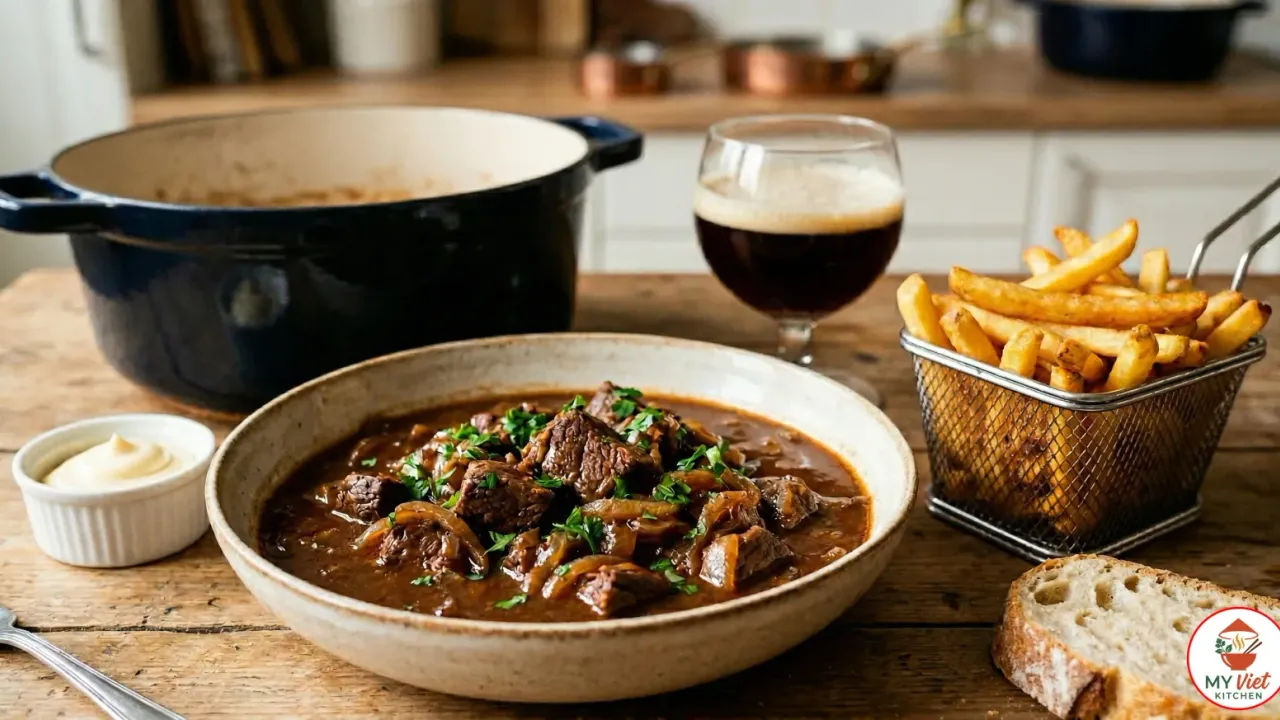
Carbonnade flamande is Belgium’s answer to the long-braised beef stew, and it might just be the most satisfying dish you have never tried. Tender chunks of beef simmer for hours in dark Belgian ale, buried under a mountain of deeply caramelized onions, sharp mustard, and a touch of brown sugar. This Flemish classic, also known as stoofvlees or stoverij, trades the wine of French cooking for the rich, malty beer that defines Belgian cuisine. Follow this step-by-step guide to make authentic carbonnade flamande at home.
Prep Time: 30 minutes | Cook Time: 2 hours 30 minutes | Servings: 6
Difficulty: Medium | Calories: ~520 per serving
What Makes Carbonnade Flamande Special?
At its heart, carbonnade flamande is a celebration of beer and onions. While most braised beef stews rely on wine, this Flemish masterpiece uses dark Belgian ale as its braising liquid. The beer brings malty sweetness, caramel depth, and a gentle bitterness that wine simply cannot replicate. Combined with a staggering amount of slow-cooked onions that melt into the sauce, the result is a stew with a flavor profile entirely its own.
The dish comes from Flanders, the Dutch-speaking northern region of Belgium, where brewing traditions stretch back centuries. Naturally, Flemish cooks reached for beer instead of wine when braising tough cuts of meat. Over time, the recipe evolved into a refined yet rustic staple that appears on every Belgian table during the colder months. In fact, many Belgian families consider carbonnade flamande their national dish, more beloved even than mussels and frites.
What truly sets this stew apart is the technique of laying mustard-spread bread on top of the simmering pot. As the bread dissolves during braising, it thickens the sauce naturally and infuses a sharp, tangy note throughout. This clever trick eliminates the need for a separate roux and gives the finished dish its signature velvety consistency. Combined with a splash of red wine vinegar and dark brown sugar, the sauce strikes a perfect balance of sweet, sour, bitter, and savory.

Choosing the Right Beer for Carbonnade Flamande
Beer is the soul of this dish, so your choice matters enormously. In fact, the wrong beer can ruin the entire pot. You want a dark, malty Belgian ale with caramel and toffee notes. Avoid anything excessively hoppy or light, because hops turn bitter during long braising and light lagers lack the depth you need.
- Belgian abbey dubbel (best choice): Beers like Chimay Red, Westmalle Dubbel, or St. Bernardus Prior 8 offer the ideal combination of malty sweetness, dried fruit notes, and moderate alcohol. They create a sauce with remarkable complexity and a beautiful dark color.
- Flemish brown ale: Traditional Flemish oud bruin from breweries like Liefmans or Rodenbach has a natural tartness that adds another layer of flavor. These ales are actually the most historically authentic choice for this dish.
- Belgian dark strong ale: Beers like Chimay Blue or Rochefort 10 are fuller and more intense. They produce a richer, sweeter sauce. Use them if you want a more pronounced beer flavor in the final dish.
- Hoppy IPAs or light lagers (not recommended): IPAs become aggressively bitter during the long braise, overwhelming every other flavor. Light lagers like pilsners lack the body, sweetness, and character to build a proper sauce. Save those for drinking alongside the meal instead.
Ingredients for Carbonnade Flamande
Beef and Aromatics:
- 3 pounds beef chuck roast, cut into 2-inch cubes
- 4 large yellow onions, thinly sliced into half-moons
- 4 cloves garlic, minced
- Salt and black pepper to taste
Beer and Sauce:
- 2 bottles (750ml total) Belgian dark ale or abbey dubbel
- 2 tablespoons Dijon mustard
- 2 tablespoons whole grain mustard
- 2 tablespoons dark brown sugar
- 2 tablespoons red wine vinegar
- 2 tablespoons tomato paste
- 2 tablespoons all-purpose flour
Herbs and Finishing:
- 2 tablespoons butter
- 2 tablespoons vegetable oil
- 4 sprigs fresh thyme
- 2 bay leaves
- 2 slices thick-cut bread, spread with Dijon mustard
- Fresh parsley for garnish
Pro tip: Slice the onions thin and do not rush the caramelization. The onions need a full 20 to 25 minutes over medium heat to develop deep golden color and concentrated sweetness. They form the backbone of the entire sauce. Pale, half-cooked onions produce a flat and watery stew.
Step-by-Step Instructions
Step 1: Sear the Beef
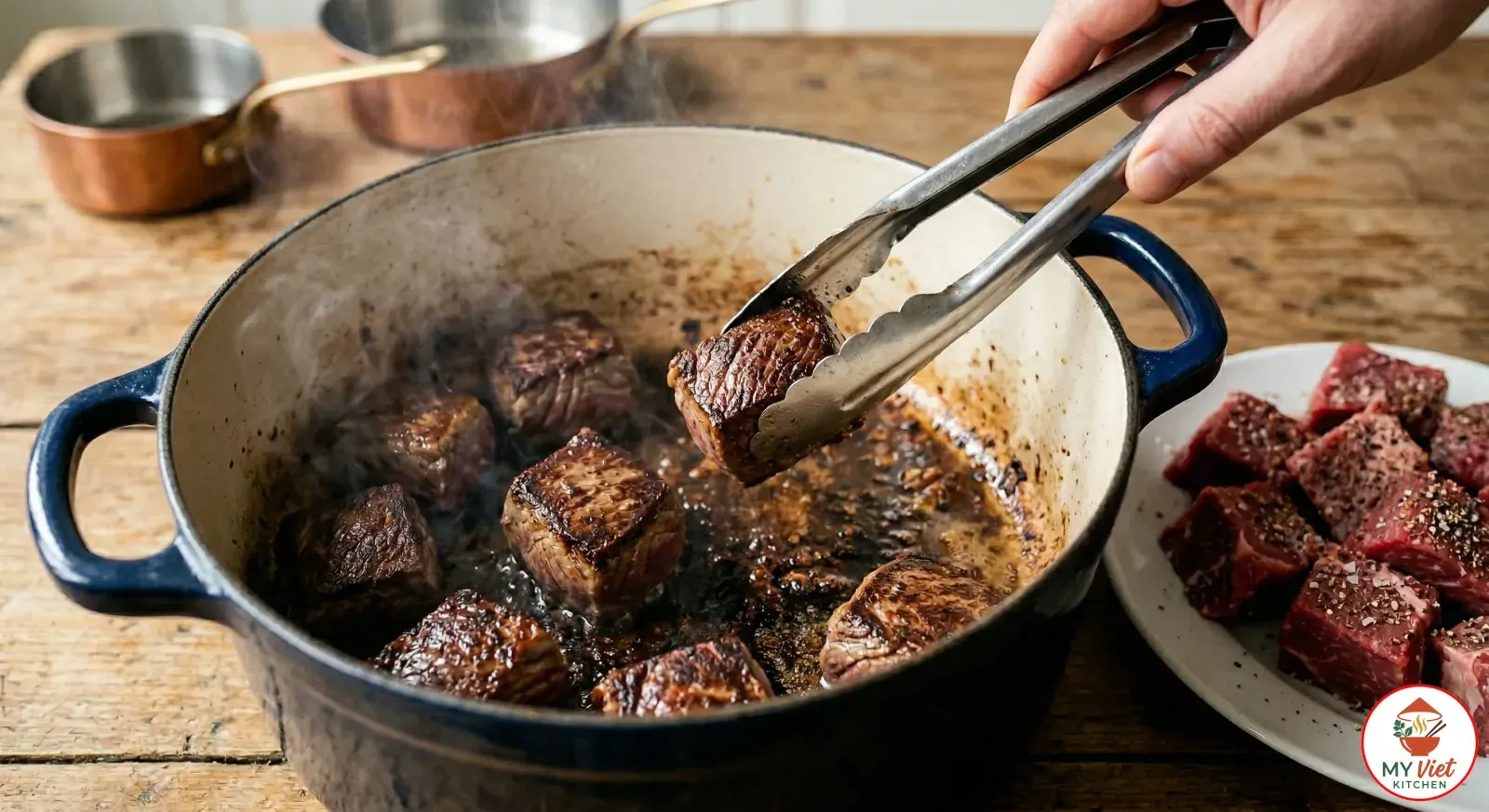
1 Pat the beef cubes completely dry with paper towels. Season them generously with salt and pepper on all sides. Heat the vegetable oil in a large Dutch oven over high heat until it shimmers. Working in small batches so the pot is not crowded, sear the beef for 3 to 4 minutes per side until each piece develops a dark, crusty brown exterior.
Do not move the pieces while they sear, because the Maillard reaction requires direct, sustained contact with the hot surface. After all the beef is browned, transfer it to a plate and set it aside. However, leave the browned bits on the bottom of the pot because they hold concentrated flavor that will dissolve into the sauce later.
Step 2: Caramelize the Onions
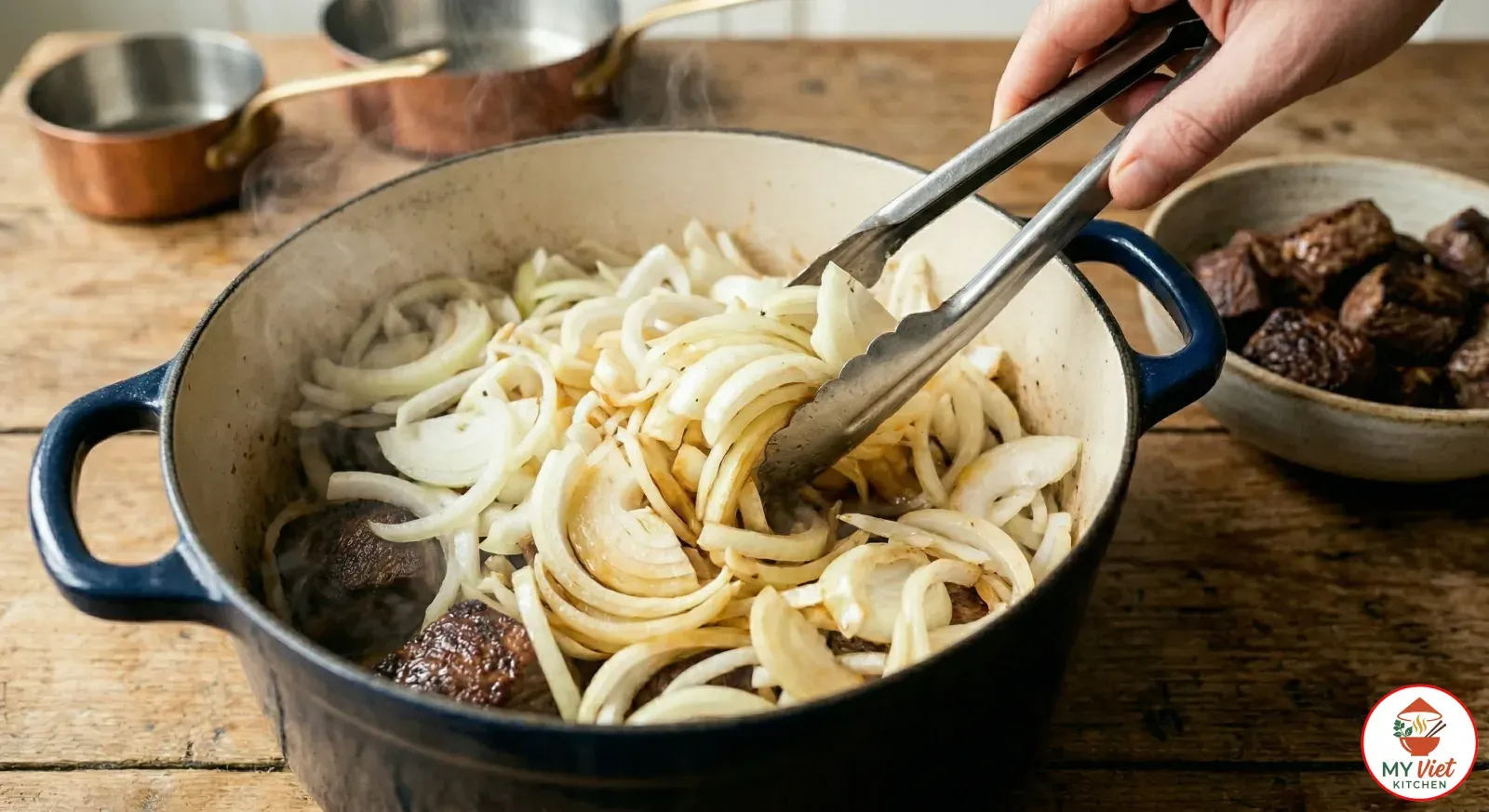
2 Reduce the heat to medium and add the butter to the pot. Once it melts and foams, add all the sliced onions. Stir to coat them in the fat and the browned bits. Cook for 20 to 25 minutes, stirring every few minutes, until the onions turn a deep golden brown. Eventually, they will shrink dramatically as they release moisture and their natural sugars caramelize.
Patience here is essential. The onions transform from sharp and pungent to sweet and silky during this slow process. Once they reach a rich amber color, add the minced garlic and tomato paste. Stir for 1 minute until the garlic becomes fragrant. Then sprinkle the flour over the onions and stir for another minute to cook out the raw starch taste.
Step 3: Deglaze with Beer and Build the Sauce
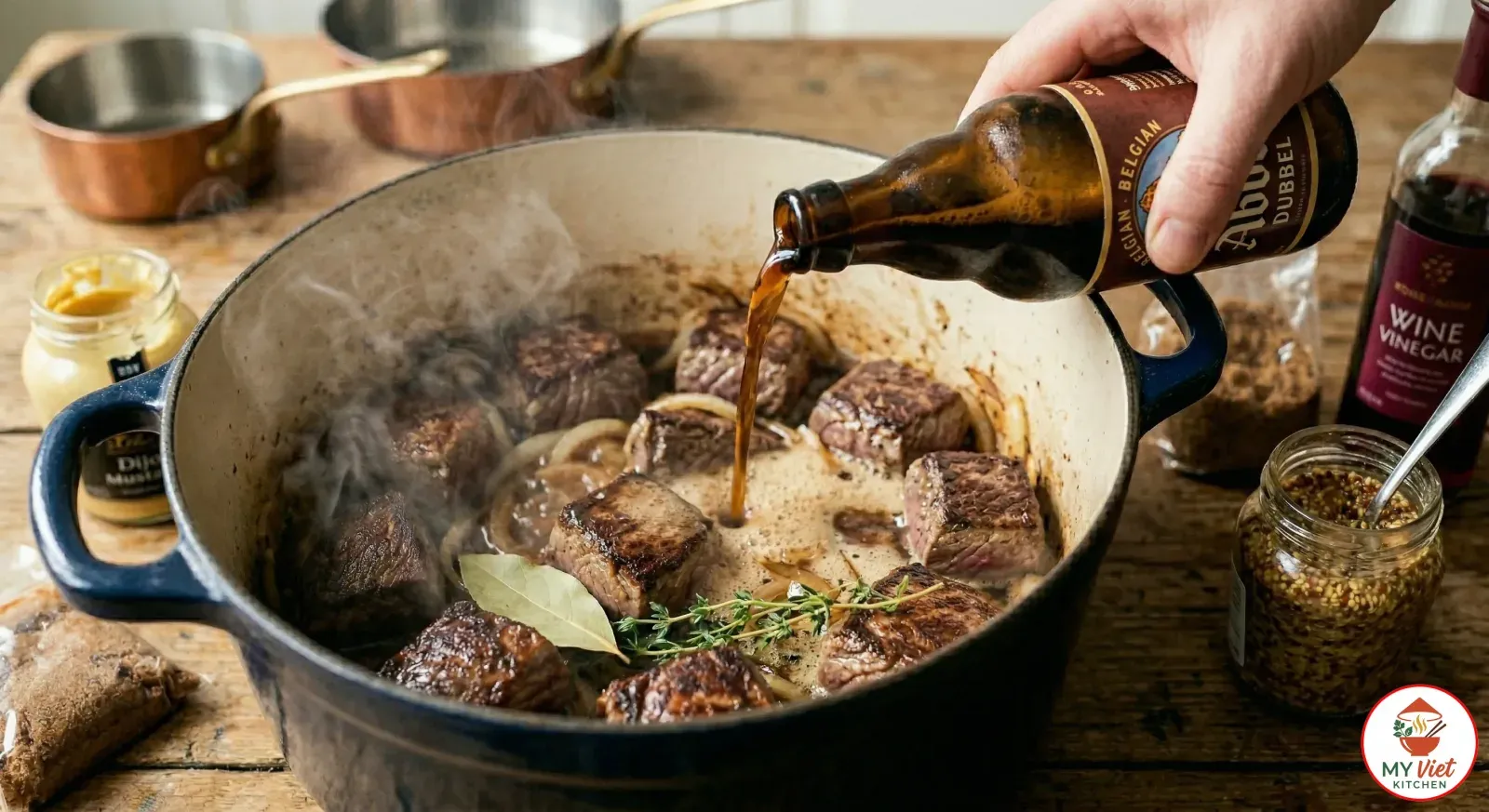
3 Pour in both bottles of Belgian dark ale. Use a wooden spoon to scrape up every browned bit stuck to the bottom of the pot. These dark bits, called fond, contain intense flavor that dissolves into the liquid. Stir in the dark brown sugar, red wine vinegar, Dijon mustard, and whole grain mustard. Bring the mixture to a boil.
Then return the seared beef to the pot. Nestle the cubes into the liquid and onions. Add the thyme sprigs and bay leaves. The beef should sit mostly submerged in the dark, fragrant sauce. Take the two slices of bread, spread them generously with Dijon mustard, and press them into the top of the stew, mustard side down. The bread will dissolve during braising, naturally thickening the sauce while adding a tangy mustard bite.
Step 4: Braise Low and Slow
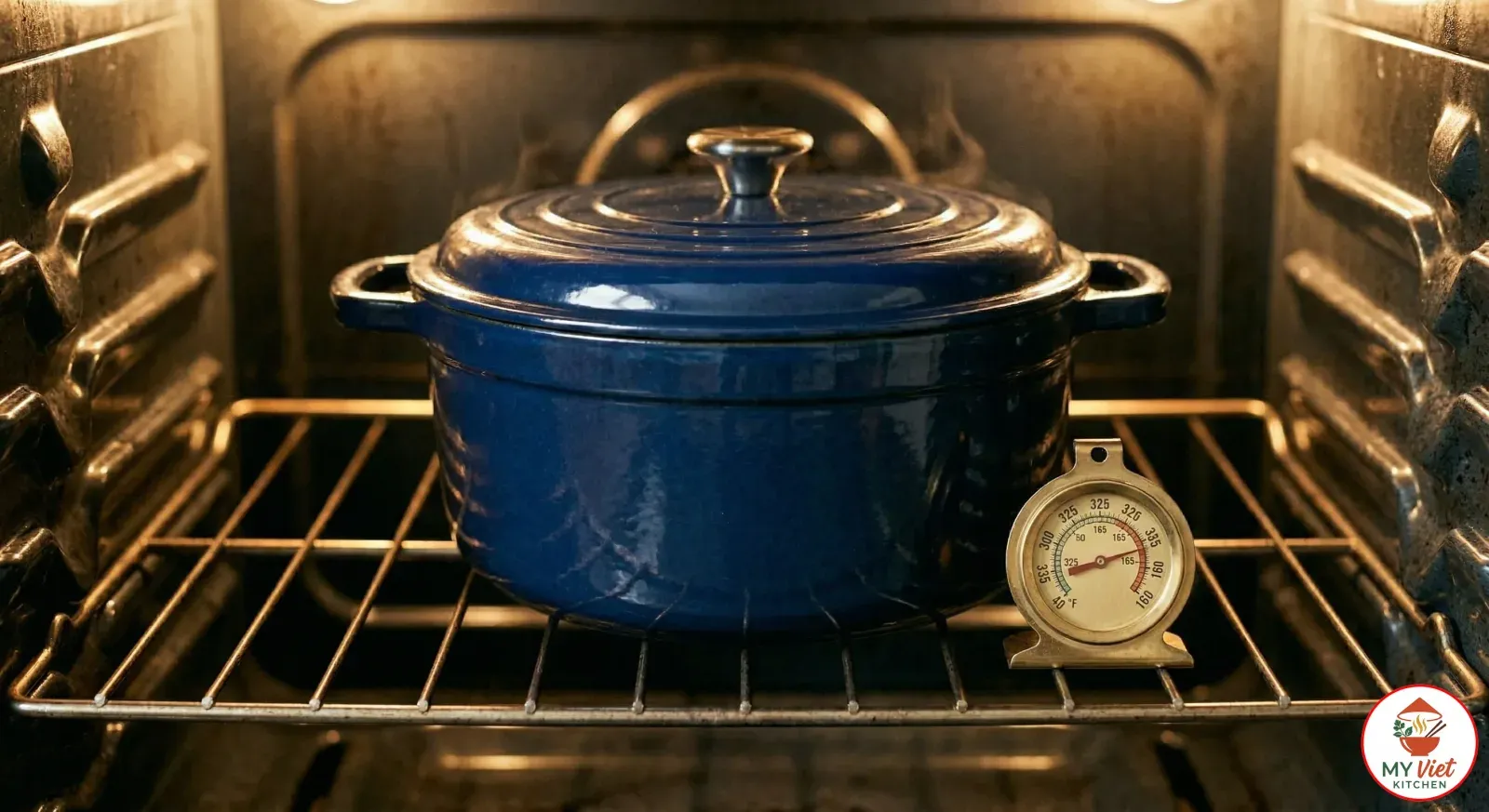
4 Cover the Dutch oven with a tight-fitting lid. Transfer the pot to a preheated 325-degree Fahrenheit oven. Braise for 2 to 2.5 hours until the beef is completely fork-tender and the sauce has thickened into a rich, dark gravy. Meanwhile, check once around the 90-minute mark to ensure the liquid maintains a gentle simmer.
When the braising is complete, remove the pot from the oven. Discard the bay leaves and thyme stems. Taste the sauce and adjust the seasoning as needed. If it tastes slightly flat, add another splash of red wine vinegar to brighten the flavors. If the sauce seems thin, place the pot on the stove over medium heat and simmer uncovered for 10 minutes until it reaches your desired consistency. Scatter fresh parsley over the top before serving.
Expert Tips for Perfect Carbonnade Flamande
Do Not Rush the Onions
The onions are the foundation of this entire dish. Proper caramelization takes 20 to 25 minutes of patient cooking. When done right, the onions melt completely into the sauce, creating a thick, sweet base that distinguishes carbonnade flamande from every other beef stew. If you rush this step, the stew will taste thin and lack depth. Give the onions the time they deserve.
Balance Sweet, Sour, and Bitter
The magic of carbonnade flamande lies in its balance. Brown sugar adds sweetness. Red wine vinegar provides acidity. The beer contributes bitterness. Mustard brings sharpness. Together, these elements create a sauce with extraordinary complexity. Taste the sauce at the end and adjust accordingly. If it leans too sweet, add a splash more vinegar. If it tastes too bitter, stir in a pinch of brown sugar. Small adjustments make a big difference.
Use Enough Onions
Four large onions may seem excessive, but they cook down to a fraction of their original volume. After caramelization, those four onions will practically disappear into the sauce. Skimping on onions produces a watery, beer-heavy stew without enough body. The onion-to-beef ratio is critical. Trust the recipe and slice all four.
Carbonnade Flamande vs. Other European Beef Stews
Europe has a long tradition of slow-braised beef stews, and each country puts its own stamp on the technique. Here is how carbonnade flamande compares to the most popular variations across the continent.
| Dish | Country | Key Liquid | Defining Ingredients |
|---|---|---|---|
| Carbonnade Flamande | Belgium | Dark Belgian beer | Caramelized onions, mustard, brown sugar, bread |
| Beef Bourguignon | France | Red wine (full bottle) | Bacon, pearl onions, mushrooms, thyme |
| Goulash | Hungary | Beef broth | Paprika, peppers, caraway seeds, potatoes |
| Beef Stroganoff | Russia | Sour cream, broth | Mushrooms, sour cream, onions, egg noodles |
| Stifado | Greece | Red wine, tomatoes | Whole shallots, cinnamon, cloves, vinegar |
Serving Suggestions
In Belgium, carbonnade flamande is never served alone. The rich, thick sauce demands something starchy to absorb it, and tradition dictates some very specific pairings. Here are the best ways to enjoy this classic Flemish stew at the table.
Classic Accompaniments:
- Belgian frites with mayonnaise: This is the definitive pairing. Crispy, double-fried Belgian frites dipped in mayonnaise alongside a bowl of dark, beefy stew is one of the great comfort food combinations in the world. The crunch and creaminess contrast perfectly with the tender meat and thick sauce.
- Buttery mashed potatoes: Creamy Yukon Gold mashed potatoes create a rich, smooth base for the stew. Spoon the dark sauce directly over the potatoes and let it pool around the edges. This is the home-cooked version Belgians eat on cold winter evenings.
- Crusty bread: A warm loaf of country bread is essential for mopping up every last drop of that dark beer sauce. Tear off thick chunks and drag them through the gravy. Nothing should remain on the plate.
- Steamed green vegetables: Simple steamed green beans, Brussels sprouts, or buttered peas provide a fresh, bright contrast to the rich stew. A squeeze of lemon juice over the vegetables lifts the entire plate.
- Belgian endive salad: A crisp salad of Belgian endive with walnuts, blue cheese, and a light vinaigrette cuts through the richness beautifully. The slight bitterness of the endive echoes the beer notes in the stew.
Beverage Pairings:
- Belgian abbey dubbel: Serve the same style of beer you cooked with. The malty, caramel flavors echo the sauce and create a harmonious match at the table.
- Flemish red ale: The natural tartness of a Flemish red ale like Rodenbach Grand Cru provides a refreshing counterpoint to the rich, sweet stew. An outstanding pairing.
- Belgian tripel: A lighter, golden tripel with its fruity and spicy notes offers a brighter contrast to the dark, heavy stew. Chill it well before serving.
- Sparkling water with lemon: A crisp palate cleanser between bites. The bubbles and citrus cut through the richness of the beer sauce.
Storage and Reheating
Refrigerator: Carbonnade flamande keeps beautifully in the fridge for up to 5 days. Like most braised dishes, it tastes even better the next day. The flavors continue to meld and deepen as the stew rests overnight. Store the beef and sauce together in a sealed container.
Freezer: This stew freezes exceptionally well for up to 3 months. Let it cool completely, then portion into freezer-safe containers. Leave a half inch of space at the top since the liquid expands during freezing. Thaw overnight in the refrigerator before reheating.
Reheating: Warm the stew gently on the stove over low heat. Stir occasionally to prevent sticking and heat it evenly. Add a splash of beer or beef broth if the sauce has thickened too much during storage. Bring it to a gentle simmer rather than a rolling boil. The microwave works in a pinch, but the stove gives you better control.
Common Mistakes to Avoid
1. Using the Wrong Beer
This is the single biggest mistake people make with carbonnade flamande. For instance, hoppy IPAs, pale ales, or cheap light lagers will ruin the dish. The hops intensify and turn aggressively bitter during the long braise, while light beers lack the body and character to build a proper sauce. Always choose a dark, malty Belgian ale with caramel and toffee notes. The beer is the star ingredient, so treat it accordingly.
2. Undercooking the Onions
Pale, half-cooked onions produce a sharp, watery sauce that lacks body and sweetness. Instead, proper caramelization requires 20 to 25 minutes of patient, attentive cooking. The onions should turn a deep golden brown and feel soft and jammy before you add the beer. Resist the urge to rush this step by raising the heat, because high heat burns the sugars and creates bitter, blackened patches.
3. Skipping the Mustard Bread
The mustard-spread bread is not optional. It is a defining technique of authentic carbonnade flamande. As the bread dissolves, it thickens the sauce to a velvety consistency and infuses a tangy mustard flavor throughout the stew. Without it, the sauce stays too thin and misses that signature pungent note. Use thick-cut country bread and spread it generously with Dijon mustard on both sides.
4. Forgetting the Vinegar
Red wine vinegar plays a crucial role in balancing the sweetness of the caramelized onions and brown sugar. Without it, the stew can taste cloyingly sweet and one-dimensional. The acid brightens the sauce, cuts through the richness of the beef, and brings all the flavors into focus. Therefore, two tablespoons during cooking plus a splash at the end can transform a good carbonnade into a great one.
Frequently Asked Questions
What is the best beer for carbonnade flamande?
A Belgian dark ale or abbey dubbel works best. Look for beers like Chimay Red, Westmalle Dubbel, Leffe Brune, or St. Bernardus Prior 8. These beers bring malty sweetness, caramel notes, and body to the sauce. Flemish brown ales like Liefmans Goudenband are historically authentic choices too. Avoid hoppy IPAs and light lagers, as they create a bitter or thin sauce that undermines the dish.
What is the difference between carbonnade flamande and beef bourguignon?
The fundamental difference is the braising liquid. Carbonnade flamande uses dark Belgian beer, while beef bourguignon uses red wine. Carbonnade relies on caramelized onions and mustard for its flavor base, whereas bourguignon features bacon, pearl onions, and mushrooms. The carbonnade is a Belgian dish, and bourguignon comes from France. Both are slow-braised beef stews, but they taste completely different.
How long does carbonnade flamande take to cook?
Plan for about 30 minutes of preparation and 2 to 2.5 hours of braising. The total time runs around 3 hours. Most of that time is hands-off while the stew sits in the oven. The long braise transforms tough chuck roast into fork-tender meat and allows the beer and onions to meld into a thick, rich sauce.
Can I make carbonnade flamande in a slow cooker?
Absolutely. Sear the beef and caramelize the onions on the stove first to build a proper flavor base. Transfer everything to the slow cooker, then cook on low for 8 to 10 hours or on high for 5 to 6 hours. The sauce may end up thinner since less liquid evaporates in a slow cooker. Pour it into a pot and reduce it on the stove for 10 minutes if needed.
Why do you put bread with mustard in carbonnade flamande?
The mustard-spread bread is a traditional Belgian thickening technique. During braising, the bread dissolves completely into the sauce, giving it body and a velvety texture without any lumps. Meanwhile, the mustard melts into the liquid, distributing a sharp, tangy flavor throughout the stew. This elegant solution replaces the need for a roux or cornstarch slurry.
What should I serve with carbonnade flamande?
The classic Belgian pairing is crispy Belgian frites with mayonnaise. Buttery mashed potatoes are another excellent choice for soaking up the rich beer sauce. Crusty bread is essential for mopping up every last drop. Add steamed green beans, Brussels sprouts, or a Belgian endive salad for a fresh counterpoint that balances the richness of the stew.
Variations and Adaptations
Slow Cooker Carbonnade Flamande:
For a hands-off approach, sear the beef and caramelize the onions on the stove. Transfer everything to a slow cooker along with the beer, mustard, brown sugar, vinegar, and herbs. Skip the mustard bread and instead stir in a tablespoon of Dijon mustard and a tablespoon of flour mixed into a paste during the last hour. Cook on low for 8 to 10 hours. The result is deeply flavorful with remarkably tender beef.
Instant Pot Carbonnade:
Use the saute function to brown the beef and caramelize the onions directly in the pot. Add all remaining ingredients, lock the lid, and pressure cook on high for 40 minutes. Allow a natural pressure release for 15 minutes. The total time drops to about 90 minutes. Stir in an extra tablespoon of mustard at the end for brightness. While the sauce lacks some of the depth from a long oven braise, the beef comes out remarkably tender.
Vegetarian Carbonnade:
Replace the beef with a mix of portobello mushrooms, root vegetables like parsnips and carrots, and white beans. Use vegetable broth in place of any beef additions. The beer, caramelized onions, and mustard carry enough flavor on their own to create a satisfying vegetarian stew. Braise for 45 to 60 minutes until the vegetables are tender. As a result, the dark beer sauce coats the mushrooms beautifully.
The Cultural Significance of Carbonnade Flamande
Carbonnade flamande is more than a recipe. It is a declaration of Flemish identity. In a country where French-speaking Wallonia and Dutch-speaking Flanders maintain fiercely distinct culinary traditions, this beer-braised stew belongs unmistakably to the north. Where French cooks reach for wine, Flemish cooks reach for beer. This preference stretches back centuries to when the Flanders region was one of the greatest brewing centers in medieval Europe.
The dish also reflects the Belgian philosophy of Burgundian living, a cultural belief in the good life through fine food, good drink, and generous hospitality. Belgians take their comfort food seriously. A proper carbonnade flamande appears at family Sunday dinners, neighborhood bistros, and Michelin-starred restaurants alike. It connects generations, because grandmothers pass their personal versions down through families with fierce pride and occasional secrecy about their exact proportions of mustard and sugar.
Today, carbonnade flamande stands alongside moules-frites, Belgian waffles, and chocolate as a symbol of Belgian culinary excellence. It represents the country’s unique position at the crossroads of French refinement and Germanic heartiness. Every pot of carbonnade tells the story of a small nation with an outsized love for food, beer, and the slow pleasures of a meal shared with people you care about.
Conclusion
This carbonnade flamande recipe delivers everything the Belgian classic promises: fork-tender beef, a thick and glossy dark beer sauce, and layers of sweet, sour, and savory flavor that only patient braising can create. The keys are simple. Caramelize the onions fully. Choose a good dark Belgian ale. Braise low and slow until the meat surrenders to your fork. Follow these steps, and you will produce a pot of rich, deeply satisfying Flemish comfort food that fills your kitchen with an irresistible aroma.
Ready to explore more European classics? Browse our European dishes collection for recipes like beef bourguignon, Hungarian goulash, and Belgian waffles. Each one brings a taste of the Old World to your table.