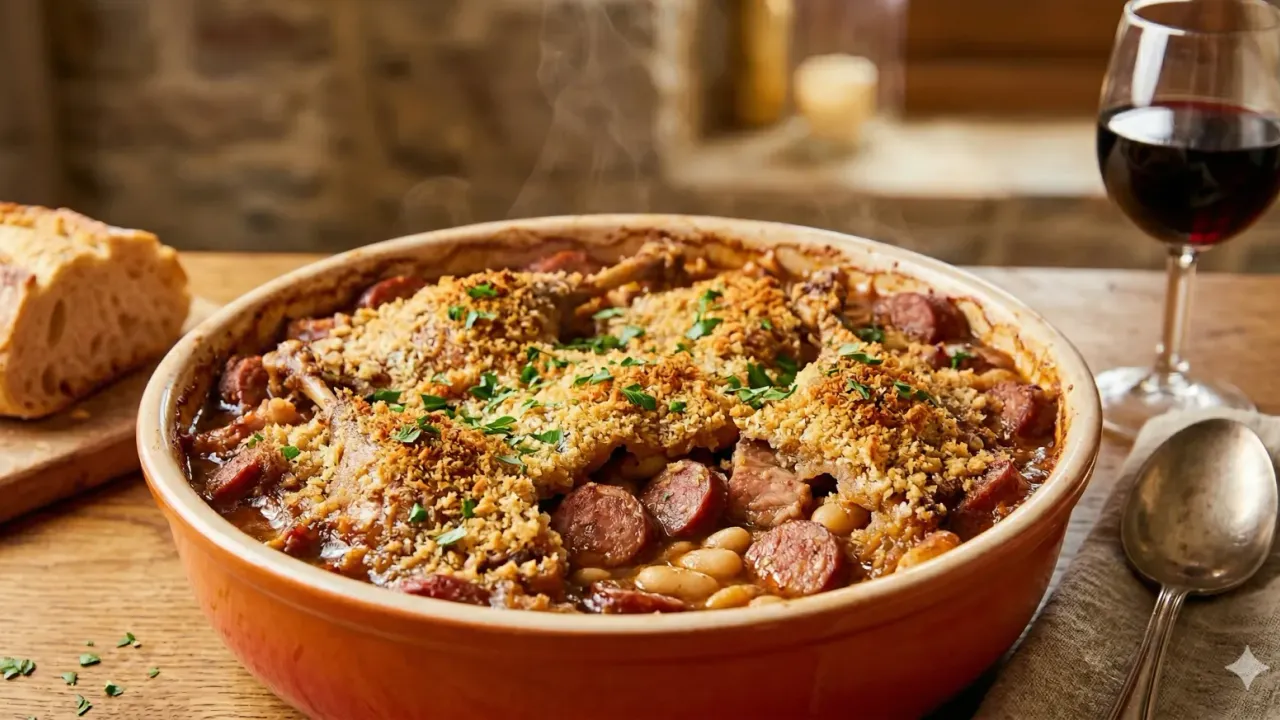
Cassoulet is the crown jewel of French country cooking, and this cassoulet recipe brings its hearty, soul-warming magic to your home kitchen. Layers of creamy white beans, tender duck confit, savory pork sausages, and a golden breadcrumb crust bake together for hours in a slow oven. The result is a dish that fills the house with the most incredible aroma you have ever smelled. This cassoulet is not fast food. It is a labor of love that rewards patience with every single bite.
Prep Time: 45 minutes | Cook Time: 3 hours | Servings: 8
Difficulty: Medium-High | Calories: ~680 per serving
What Makes Cassoulet Special?
Cassoulet stands apart from other bean stews because of its slow-baked crust. As the dish bakes, breadcrumbs form a golden layer on top. Cooks break this crust and push it down into the beans, then let a new crust form. This process happens several times during the long bake. Each layer adds flavor and body to the stew below. No other dish in the world uses this technique quite the same way.
The combination of meats sets cassoulet apart as well. Duck confit brings richness and depth that ordinary chicken cannot match. Toulouse sausages add garlic and spice. Salt pork melts into the beans and makes them silky. Together, these three meats create a layered, complex flavor profile. Every spoonful tastes slightly different depending on which meat you hit.
At its core, cassoulet is peasant food born in southwestern France. Farmers needed hearty meals to get through cold winters, so they combined whatever preserved meats they had with locally grown white beans. Over centuries, this simple survival dish became a point of fierce regional pride. Three towns still argue over which version is the real cassoulet. That kind of passion tells you everything about how deeply this dish matters to the people who make it.
Choosing the Right Beans for Cassoulet
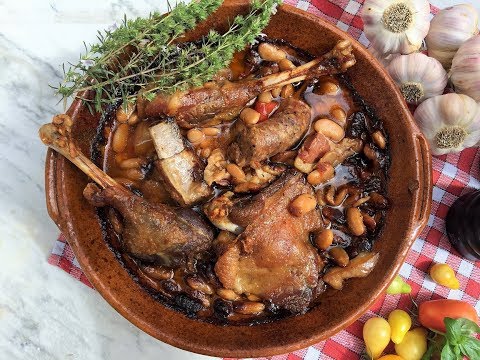
The beans are the foundation of any great cassoulet. Picking the wrong type will leave you with mushy, broken beans or a bland stew. Here are your best options for this cassoulet recipe.
- Tarbais beans (best choice): These are the traditional beans from the Tarbes region near the Pyrenees. They have a paper-thin skin and a creamy, almost buttery interior. Tarbais beans hold their shape during long baking while still absorbing all the meaty broth around them. Order them online if your local store does not carry them.
- Cannellini beans (great substitute): Widely available and very similar in texture to Tarbais beans. Cannellini beans are slightly firmer, which helps them survive the long bake without turning to mush. They soak up flavors well and produce a rich, creamy stew.
- Great Northern beans (good backup): Smaller than Tarbais or cannellini, but still creamy and mild. They work well in cassoulet and are easy to find in any grocery store. Their compact size means they cook a bit faster, so watch the timing.
- Canned beans (not recommended): Already soft from processing, canned beans will fall apart during the 2-plus hours of baking. The stew turns into a thick paste instead of distinct, creamy beans in a rich broth. Always start with dried beans for this dish.
Ingredients for Cassoulet
Beans:
- 1 pound dried white beans (Tarbais, cannellini, or Great Northern)
- Water for soaking and parcooking
Meats:
- 4 duck confit legs
- 1 pound Toulouse sausages or garlic pork sausages
- 8 ounces salt pork or thick-cut bacon, cut into chunks
Aromatics and Broth:
- 1 large onion, diced
- 4 cloves garlic, minced
- 2 medium carrots, diced
- 2 celery stalks, diced
- 1 can (14 ounces) crushed tomatoes
- 4 cups chicken broth
- 1 cup dry white wine
- 3 sprigs fresh thyme
- 2 bay leaves
- 4 whole cloves
- 1 teaspoon black pepper
- Salt to taste
Topping:
- 1 cup coarse breadcrumbs
- 2 tablespoons duck fat or butter
- Fresh parsley for garnish
Pro tip: Save every drop of duck fat from the confit legs. That golden fat is liquid gold for cassoulet. Toss the breadcrumbs in melted duck fat before spreading them on top, and the crust will turn deeply golden and impossibly crispy. Duck fat also adds a subtle richness that butter simply cannot match. Store extra duck fat in the fridge for up to three months.
Step-by-Step Instructions
Step 1: Soak and Parcook the Beans
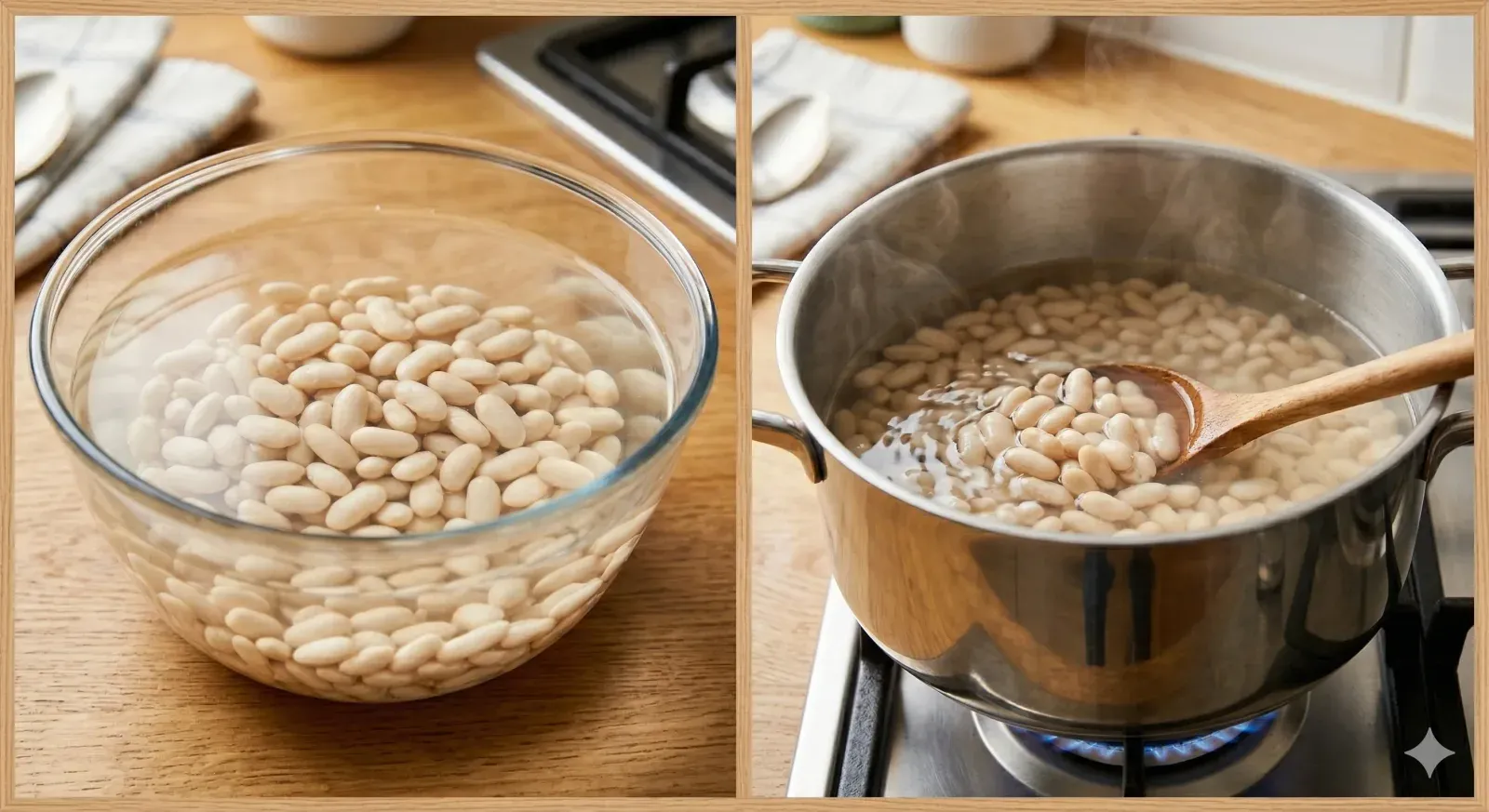
1 Place the dried white beans in a large bowl and cover them with cold water by at least 3 inches. Let them soak overnight, or for at least 8 hours. The beans will double in size as they absorb water. As a result, this step softens the skins and cuts the final cooking time significantly.
Drain the soaked beans and transfer them to a large pot. Cover with fresh cold water by 2 inches. Bring to a boil over high heat, then reduce to a gentle simmer. Cook for 40 to 45 minutes until the beans are just tender but still firm in the center. They should give slightly when squeezed between your fingers. Drain well and set aside. Furthermore, the beans will finish cooking during the long bake in the oven.
Step 2: Brown the Meats
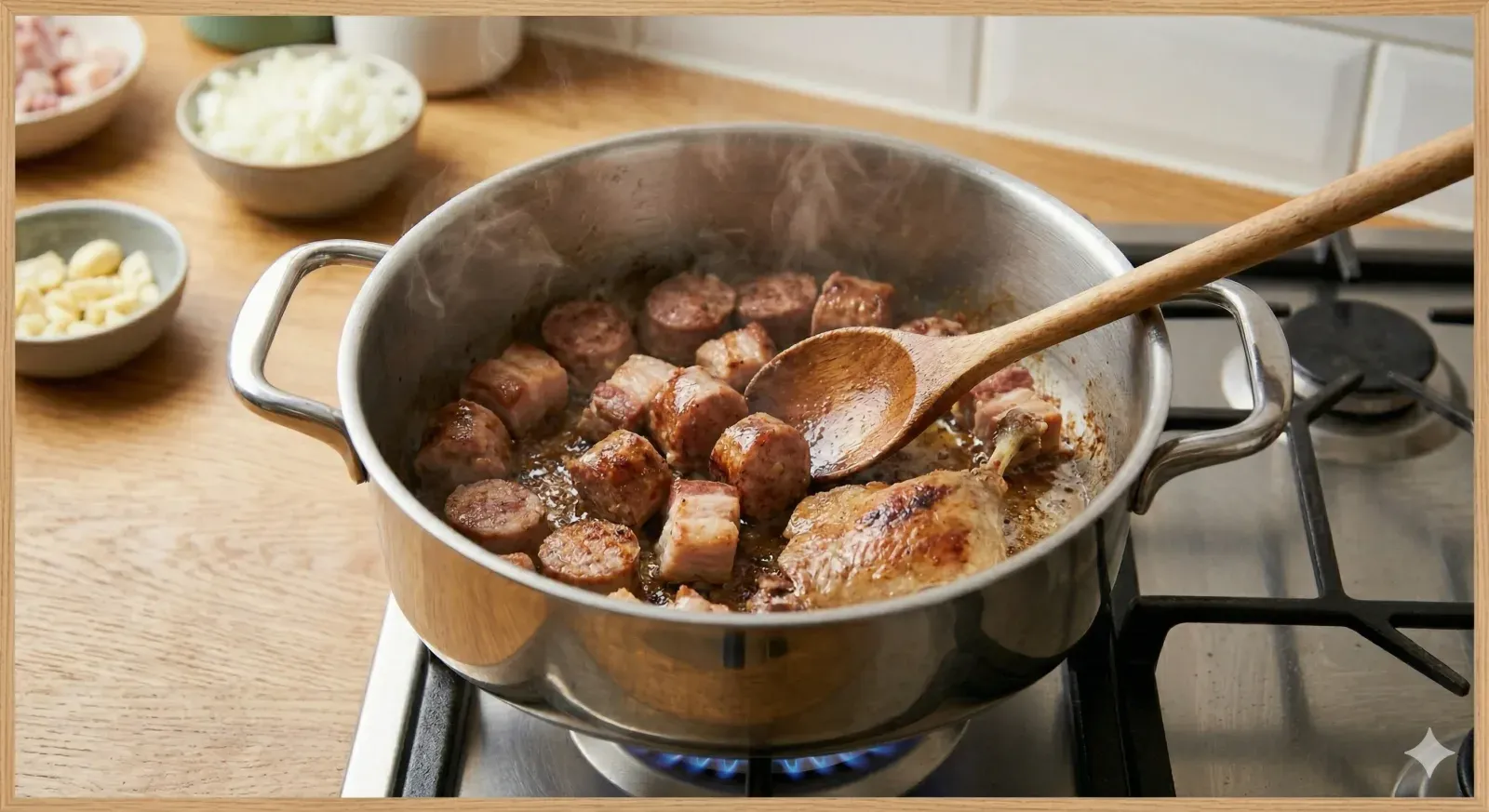
2 Set a large Dutch oven over medium heat. Add the salt pork chunks and cook for 8 to 10 minutes, turning them occasionally. Gradually, the fat renders out as the pork turns golden and crispy on all sides. Remove the salt pork with a slotted spoon and set it aside on a plate.
In the same pot with the rendered fat, add the Toulouse sausages. Brown them on all sides for about 6 minutes total. You want a deep golden crust, not fully cooked sausages. Remove and slice them into thick rounds, about 1 inch each. Next, take the duck confit legs and shred the meat from the bones. Set the shredded duck aside. Additionally, reserve the crispy duck skin separately because it adds great texture later.
Step 3: Build the Aromatic Base
3 Pour off all but 3 tablespoons of fat from the pot. Add the diced onion, carrots, and celery. Cook for 8 minutes over medium heat, stirring often, until the vegetables soften and the onion turns translucent. Then add the minced garlic and stir for 1 minute until fragrant.
Pour in the crushed tomatoes and white wine. Scrape up any browned bits from the bottom of the pot. These bits carry deep, savory flavor from the meats. Then add the chicken broth, thyme sprigs, bay leaves, cloves, and black pepper. Bring the liquid to a simmer and let it cook for 10 minutes. The broth should taste rich and slightly meaty. Therefore, taste it now and adjust the salt. Remember, the beans will absorb a lot of seasoning during baking.

Step 4: Assemble the Cassoulet
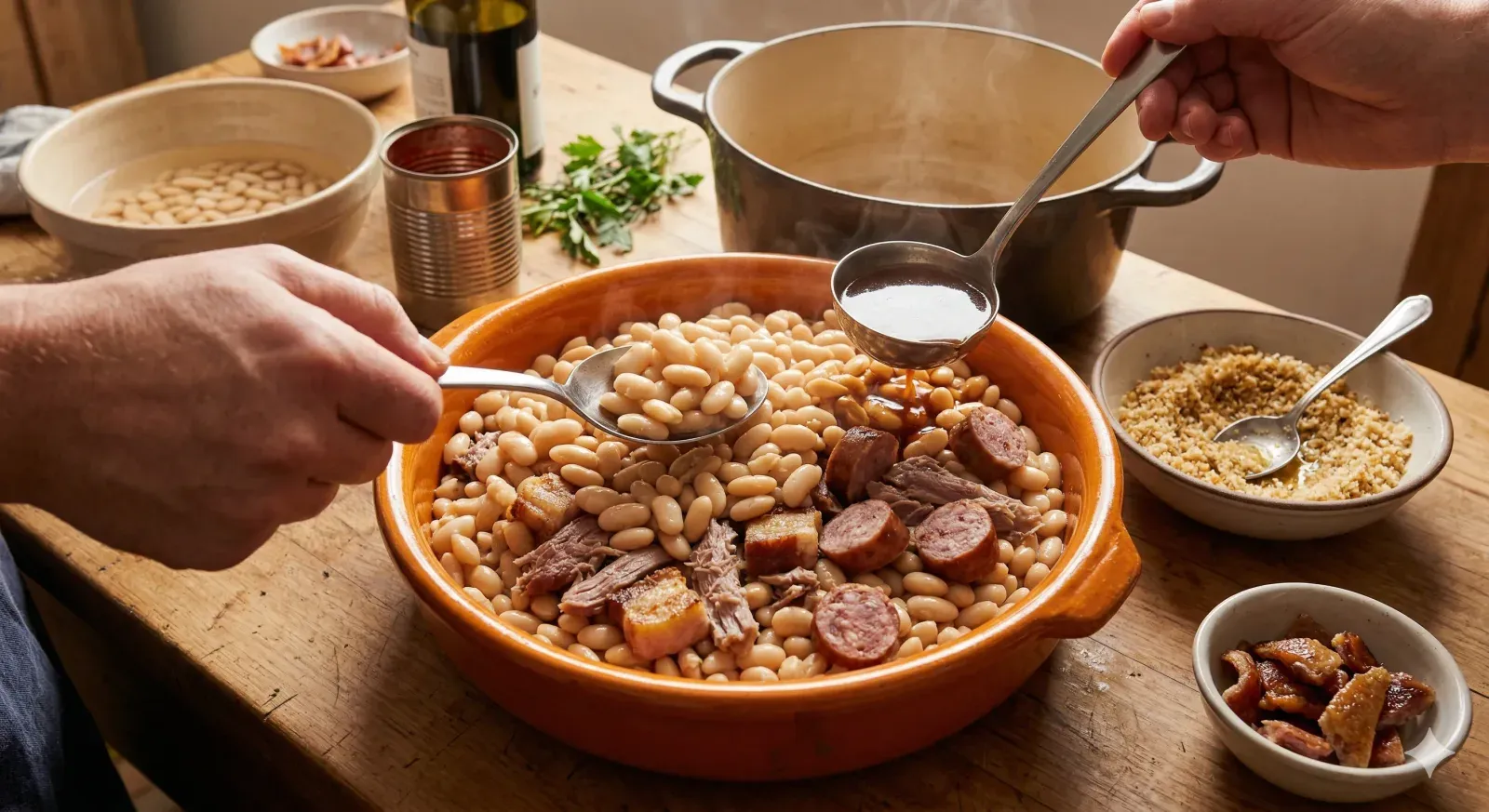
4 Preheat your oven to 325 degrees Fahrenheit. Grab a large, deep baking dish or keep everything in the Dutch oven. Spread half of the parcooked beans across the bottom in an even layer. Scatter the salt pork chunks, half the sausage rounds, and half the shredded duck over the beans.
Add the remaining beans on top. Nestle the rest of the sausages and duck into this layer. Remove the bay leaves, thyme stems, and cloves from the broth. Pour the aromatic broth over everything until the liquid just barely covers the beans. You may not need all of the broth. Toss the breadcrumbs with melted duck fat or butter. Spread them evenly across the top. Tuck pieces of crispy duck skin into the crust for extra richness.
Step 5: Bake Low and Slow
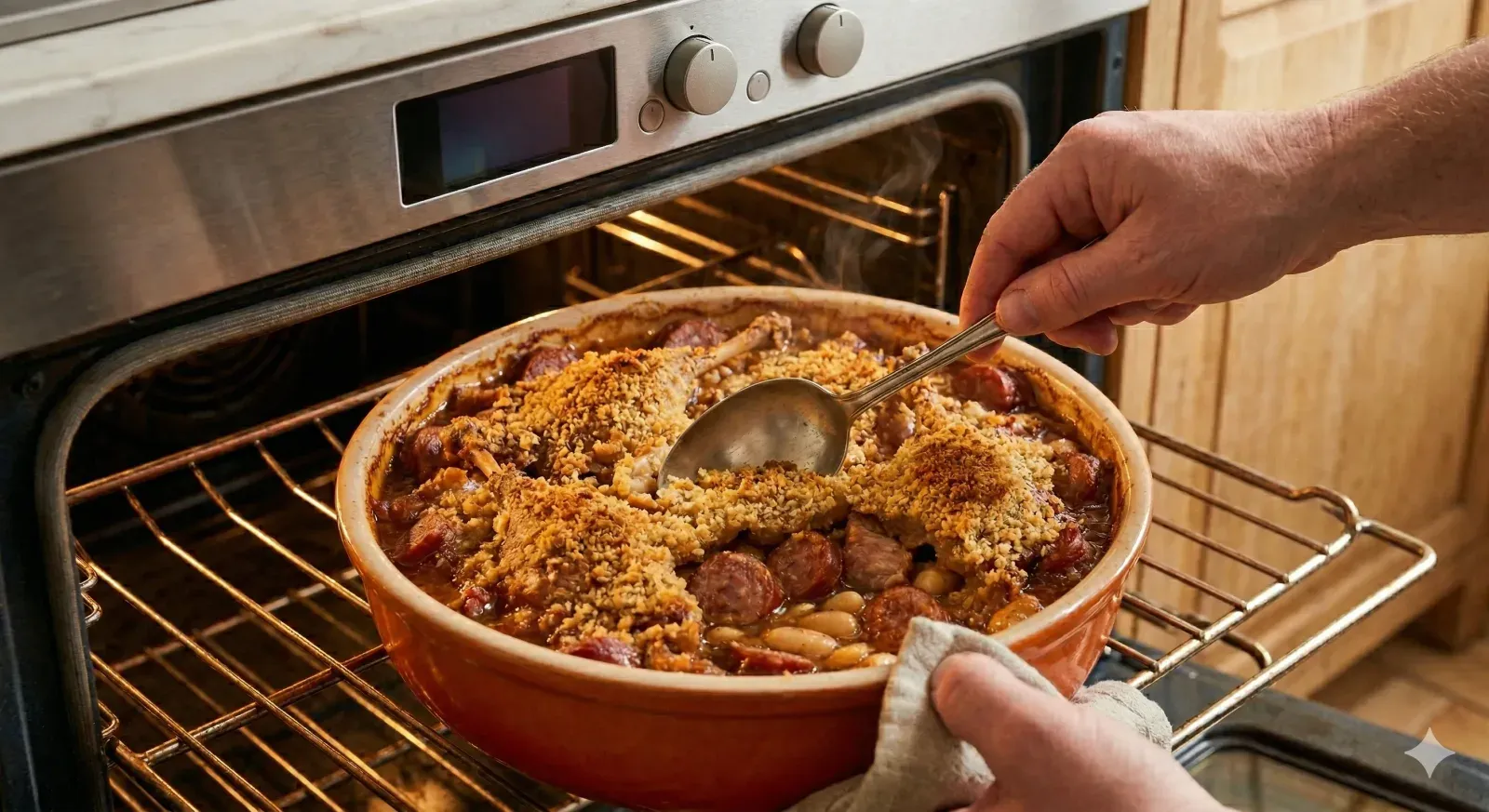
5 Place the cassoulet in the center of the oven. Bake uncovered at 325 degrees Fahrenheit for 2 to 2.5 hours. After the first 30 minutes, a golden crust will form on the surface. Use the back of a spoon to gently break this crust and push it down into the beans. Let a new crust form, then break it again. Repeat this process every 30 minutes.
Each broken crust dissolves into the stew and adds body and flavor. If the beans start to look dry at any point, ladle a bit of warm broth along the edges. The final crust should be deep golden brown and crispy. The beans underneath should be very creamy and thick. Let the cassoulet rest for 15 minutes after pulling it from the oven. Scatter fresh parsley on top and bring it to the table in the baking dish.
Expert Tips for the Perfect Cassoulet
Do Not Overcook the Beans Before Baking
The beans spend over two hours in the oven after the initial parcook. If you cook them until fully soft on the stove, they will turn to mush during baking. Pull them from the boiling water when they are still slightly firm in the center. They should have a bit of resistance when you bite one. Instead, the long oven time will finish the job perfectly.
Break the Crust Multiple Times
Cassoulet earns its depth through the crust-breaking ritual. Each golden layer that sinks into the beans adds thickness and flavor to the stew. Some traditional cooks break the crust up to seven times during a very long bake. However, for a home version, three to four times is plenty. Use the back of a large spoon and press gently so you do not disturb the layers below too much.
Render the Fat Properly
Rushing the fat-rendering step gives you chewy, rubbery salt pork and pale sausages. Start over medium heat and let the fat melt out slowly. In fact, good rendering takes 8 to 10 minutes for the salt pork alone. That golden, liquid fat is the cooking medium for everything that follows. It flavors the aromatics, enriches the broth, and builds the foundation of the dish.
Regional Cassoulet: A Comparison
Three towns in southwestern France each claim to make the one true cassoulet. The rivalry has lasted for centuries, and each version has loyal supporters. Here is how the major regional styles compare.
| Region | Primary Meats | Distinguishing Feature | Style |
|---|---|---|---|
| Castelnaudary | Pork, pork sausages, pork rind | Considered the birthplace; pork only, no duck | Simple and pure |
| Toulouse | Duck confit, Toulouse sausages, pork | Adds duck or goose confit; richest version | Rich and layered |
| Carcassonne | Lamb or mutton, pork, sausages | Includes red meat alongside pork; heartier | Bold and robust |
This cassoulet recipe follows the Toulouse style, which is the most popular version outside of France. The combination of duck confit and sausages gives you the richest, most complex flavor. However, you can easily adapt it to the Castelnaudary or Carcassonne style by swapping the meats.
Serving Suggestions
Cassoulet is a meal unto itself. The beans, meats, and rich broth cover most of your bases. Still, a few simple sides and the right drink elevate the experience. Keep the accompaniments light because the stew is very filling.
Classic Accompaniments:
- Crusty French bread: A warm baguette is all you really need alongside cassoulet. Tear off chunks and dip them into the rich bean stew. The bread soaks up the meaty broth and contrasts the creamy beans with a satisfying crunch.
- Simple green salad: Toss mixed greens with a sharp vinaigrette of Dijon mustard, red wine vinegar, and olive oil. The acidity and freshness cut through the richness of the cassoulet. Keep the salad simple so it does not compete with the main dish.
- Cornichons and pickled onions: Small, tangy pickles add a bright, acidic bite that balances the heavy, meaty stew. Set a small dish of them on the table for guests to pick at between bites.
Beverage Pairings:
- Cahors Malbec: This bold, dark red wine from the same region as cassoulet is the classic pairing. Its tannins and black fruit flavors stand up to the rich meats and creamy beans. A bottle in the $12 to $18 range works perfectly.
- Minervois or Corbieres: These southern French reds offer earthy, herbal notes that match the thyme and garlic in the dish. They are medium-bodied, so they complement the stew without overwhelming it.
- Dry sparkling cider: For a non-alcoholic option, dry French cider has enough acidity and effervescence to cut through the richness. Serve it chilled in a wine glass.
- Sparkling water with lemon: Simple bubbly water refreshes the palate between bites. The lemon adds a subtle brightness that keeps each spoonful tasting as good as the first.
Storage and Reheating
Refrigerator: Cassoulet keeps beautifully in the fridge for up to 5 days. The flavors actually improve overnight as the beans absorb the meaty broth. Store it in a sealed container or cover the baking dish tightly with foil. The stew thickens as it cools, which is perfectly normal.
Freezer: This dish freezes well for up to 3 months. Let it cool completely before portioning into freezer-safe containers. Leave a half inch of space at the top because the liquid expands. Thaw overnight in the fridge before reheating. The texture stays remarkably good after freezing.
Reheating: Warm leftover cassoulet in a 325-degree oven for 30 to 40 minutes. Add a splash of chicken broth to loosen the thickened stew. The crust will crisp up again during reheating. Avoid the microwave if possible because it makes the beans mealy and the crust soggy. Stovetop reheating over low heat also works in a pinch.
Common Mistakes to Avoid
1. Using Canned Beans
Canned beans are already fully cooked and very soft. They cannot survive 2 or more hours of baking. Within the first hour, they break down into a thick, starchy paste. The cassoulet loses its texture entirely. Always start with dried beans and soak them overnight. Parcook them until just barely tender, and the oven will do the rest.
2. Skipping the Meat Browning
Dumping raw meats into the baking dish saves a few minutes but costs you enormous flavor. Browning triggers the Maillard reaction, which creates hundreds of complex flavor compounds. Those golden crusts on the sausages and salt pork dissolve into the broth during baking. Without browning, the cassoulet tastes flat and one-dimensional.
3. Baking at Too High a Temperature
Cranking the oven above 350 degrees makes the crust burn before the beans cook through. The top goes dark brown while the center stays raw. Keep the oven at 325 degrees and trust the process. Low, steady heat lets the beans absorb the broth slowly. It also gives the crust time to form and reform naturally. Patience is the most important ingredient.
4. Not Breaking the Crust
Leaving the crust intact the entire bake robs the cassoulet of its signature layered flavor. The breadcrumbs on top need to dissolve into the beans to thicken and enrich the stew. Breaking the crust every 30 minutes creates new layers. Each layer adds more body and depth. This single technique separates a good cassoulet from a great one.
Frequently Asked Questions
What beans are best for cassoulet?
Tarbais beans from southwestern France are the traditional and best choice. They have thin skins that stay intact during the long bake while the insides turn creamy. If you cannot find Tarbais, use cannellini or Great Northern beans. Both are widely available and produce excellent results. Just avoid canned beans because they disintegrate during baking.
Can I make cassoulet without duck confit?
Yes, bone-in chicken thighs are a good substitute. Brown them well to build flavor before layering them into the cassoulet. The dish will still taste rich and satisfying. Some cooks use lamb shoulder instead of duck for a heartier, Carcassonne-style cassoulet. The key is choosing fatty, flavorful cuts that can withstand the long baking time.
Why do you break the crust on cassoulet?
Breaking the crust is the heart of the cassoulet technique. As you push each golden breadcrumb layer into the beans, it dissolves and thickens the stew. A fresh crust then forms on the surface. Repeating this process three to four times builds layers of flavor and creates the thick, rich texture that defines cassoulet. Traditional cooks may break the crust seven times for the deepest flavor.
How long does cassoulet take to make?
From start to finish, plan for about 4 hours of active and passive time. The overnight bean soak is extra. Prep takes roughly 45 minutes, and the oven does the rest over 2 to 2.5 hours. Most of the work is hands-off. You can prepare all the components a day ahead and assemble everything just before baking.
Is cassoulet better the next day?
Without a doubt. Overnight, the beans absorb even more of the meaty broth. The flavors meld together and become deeper and more unified. Reheat it in a 325-degree oven for 30 to 40 minutes with a splash of broth. The crust crisps up again beautifully. Many French cooks deliberately make cassoulet a day ahead for exactly this reason.
What is the difference between cassoulet from Toulouse, Castelnaudary, and Carcassonne?
Castelnaudary is considered the birthplace of cassoulet and uses pork only. Toulouse adds duck or goose confit alongside the pork and sausages, making it the richest version. Carcassonne includes lamb or mutton for a bolder, heartier stew. All three share the same white bean base and slow-baking technique. The debate over which is best has fueled friendly arguments in France for centuries.
Variations and Adaptations
Vegetarian Cassoulet:
Replace the meats with hearty vegetables like roasted mushrooms, root vegetables, and smoked tofu. Use vegetable broth instead of chicken broth. Add a tablespoon of smoked paprika to mimic the smoky depth of the salt pork. The beans still form the base, and the crust technique stays the same. This version is lighter but still deeply satisfying.
Quick Weeknight Cassoulet:
Use canned cannellini beans (drained and rinsed) and skip the overnight soak. Replace duck confit with rotisserie chicken. Brown your sausages, build a quick broth, and bake at 375 degrees for 45 minutes. The result is not traditional, but it captures the spirit of cassoulet on a tight schedule. The breadcrumb crust still forms nicely in the shorter bake time.
Cassoulet with Lamb:
Follow the Carcassonne tradition and add 1 pound of bone-in lamb shoulder, cut into chunks. Brown the lamb alongside the salt pork in the first step. Lamb adds a rich, slightly gamey flavor that pairs wonderfully with white beans. Keep the sausages but skip the duck confit. The lamb fat enriches the broth in the same way the duck fat does.
The Cultural Significance of Cassoulet
Cassoulet is far more than a bean stew in southwestern France. It is a symbol of regional identity, and the rivalry between Castelnaudary, Toulouse, and Carcassonne runs deep. Each town holds festivals, competitions, and even formal societies dedicated to preserving their version of the dish. The Grande Conferie du Cassoulet de Castelnaudary, founded in 1970, works to protect the original recipe from what it considers lesser imitations.
Legend traces cassoulet back to the Hundred Years War. Besieged townspeople in Castelnaudary supposedly pooled their remaining food into one massive pot. Beans, pork, sausages, and whatever else they had went into the communal stew. The meal gave them strength to fight off the English attackers. Whether the story is true or not, it captures the spirit of cassoulet perfectly. It is a dish born from necessity that became a source of fierce pride.
Today, cassoulet connects the past to the present. Every fall and winter, families across the Languedoc region gather around steaming pots of this ancient stew. The recipe passes from one generation to the next, always with small personal touches. Making cassoulet at home is not just cooking. It is participating in a living tradition that has fed people through wars, famines, and celebrations for over six hundred years.
Conclusion
This cassoulet recipe brings a taste of southwestern France to your table. The keys are straightforward: start with good dried beans, brown your meats properly, and bake low and slow while breaking the golden crust. Follow each step with patience, and you will end up with a pot of creamy, meaty, deeply savory goodness that fills your entire kitchen with warmth. Cassoulet rewards the cook who takes their time, and every hour you invest pays off in flavor.
Ready to explore more French and European classics? Browse our European dishes collection, including coq au vin, beef bourguignon, and bouillabaisse. Each recipe brings another corner of European cooking to your home kitchen.