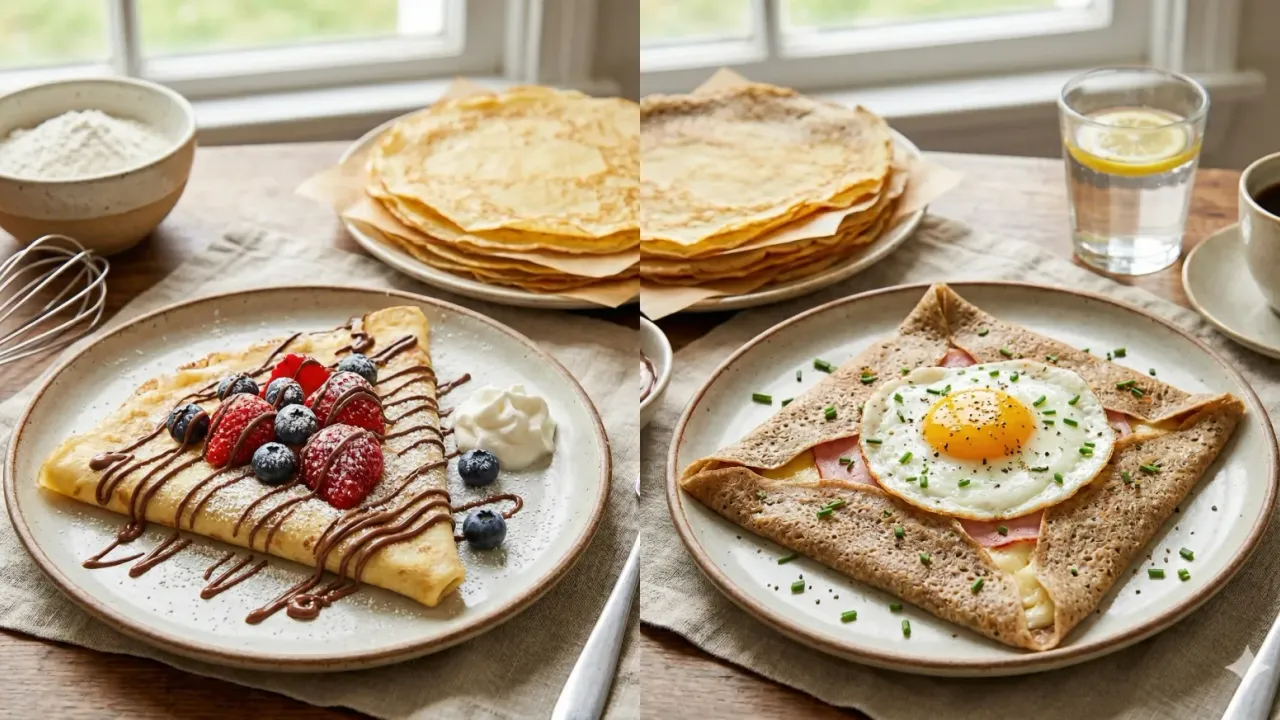
Crepes are thin, delicate French pancakes that have charmed kitchens around the world for centuries. This crepes recipe delivers perfectly golden, lacy rounds with a tender bite and buttery flavor. Whether you fill them with Nutella and strawberries or stuff them with ham and cheese, these versatile beauties work for breakfast, lunch, dinner, and dessert. Making them at home is surprisingly simple once you know the technique.
Prep Time: 10 minutes | Cook Time: 20 minutes | Servings: 12 crepes
Difficulty: Easy | Calories: ~120 per crepe
What Makes Crepes Special?
The magic of crepes lies in their elegant simplicity. Five basic pantry ingredients come together to form a batter thinner than any American pancake mix. When that batter hits a hot, buttered pan, it spreads into a paper-thin circle that cooks in under two minutes. The result is a soft, slightly chewy wrapper with crisp, lacy edges. Furthermore, no other flatbread offers such a perfect balance between structure and delicacy.
What sets French crepes apart from similar dishes is their incredible versatility. In fact, they serve as a blank canvas for both sweet and savory creations. A street vendor in Paris might fold one around Nutella and sliced bananas. Meanwhile, a Breton grandmother fills hers with egg, ham, and melted Gruyère. This dual nature makes crepes one of the few foods that work equally well at every meal of the day. Additionally, their thin profile means they never feel heavy or overly filling.
The science behind a great crepe is straightforward yet precise. The batter contains just enough flour to hold together and just enough liquid to stay pourable. Eggs provide structure and richness. Melted butter adds flavor while also keeping the crepe from sticking. However, the real secret is resting the batter. During this time, the flour fully hydrates and the gluten relaxes, producing a tender crepe that does not tear when you flip it. Consequently, patience rewards you with a noticeably better texture.

Choosing the Right Flour for Crepes
The type of flour you pick directly shapes the texture and flavor of your crepes. Not all flours behave the same way in a thin batter. Therefore, choosing wisely matters more here than in thicker baked goods. Below are your best options for making crepes at home.
- All-purpose flour (best choice): This is the standard for classic sweet crepes. It has moderate protein content, which gives the crepe enough structure to hold fillings without turning rubbery. You can find it in any grocery store, and it produces consistent results every time.
- Buckwheat flour: Traditional in Brittany for savory galettes, buckwheat brings a nutty, earthy flavor. It is naturally gluten-free and darker in color. However, it produces a more fragile crepe. Many cooks blend it with all-purpose flour at a 50/50 ratio for easier handling.
- Cake flour: With lower protein than all-purpose, cake flour makes an ultra-tender crepe. The trade-off is less structural strength. As a result, these crepes tear more easily when filled with heavy ingredients. Use it only for lightly topped sweet crepes.
- Gluten-free blend: For those avoiding gluten, a good rice-flour-based blend works reasonably well. Add an extra egg to compensate for the missing gluten structure. The texture will be slightly different, but the flavor stays close to the original.
Ingredients for Crepes
Batter Essentials:
- 1 cup (125g) all-purpose flour
- 2 large eggs, at room temperature
- 1 cup (240ml) whole milk
- 1/2 cup (120ml) water
- 2 tablespoons unsalted butter, melted, plus more for cooking
- 1/4 teaspoon fine sea salt
For Sweet Crepes:
- 1 tablespoon granulated sugar
- 1 teaspoon pure vanilla extract
For Savory Crepes (Galettes):
- Omit sugar and vanilla
- Add 1 tablespoon of fresh herbs (chives, parsley, or dill), finely chopped
- Optional: replace half the flour with buckwheat flour
Pro tip: Use room-temperature eggs and milk for the smoothest batter. Cold ingredients create lumps that refuse to blend. Besides that, room-temperature batter spreads more evenly in a hot pan. Pull your eggs and milk from the fridge 30 minutes before you start mixing.
Step-by-Step Instructions
Step 1: Mix the Batter
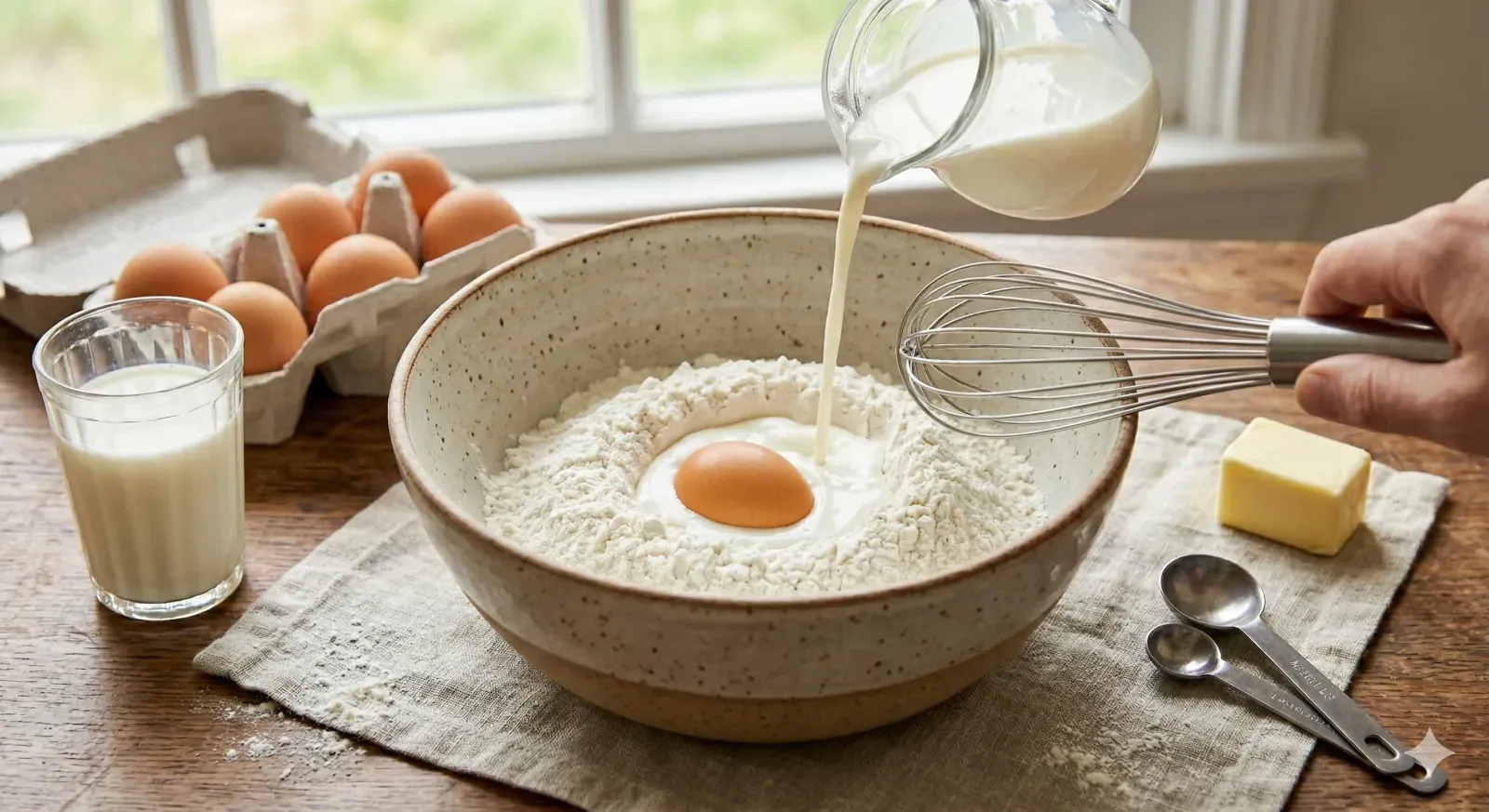
1 Place the flour in a large mixing bowl and make a well in the center. Crack the eggs into the well and whisk them gently. Gradually pour in the milk and water while whisking from the center outward. This method prevents lumps from forming. Then add the melted butter, salt, sugar, and vanilla. Whisk until the batter is completely smooth.
The finished batter should have the consistency of heavy cream. If it seems too thick, add a splash of water. Moreover, straining the batter through a fine mesh sieve catches any stubborn lumps. Cover the bowl with plastic wrap and refrigerate for at least 30 minutes. This resting step hydrates the flour and relaxes the gluten for a tender result.
Step 2: Heat the Pan
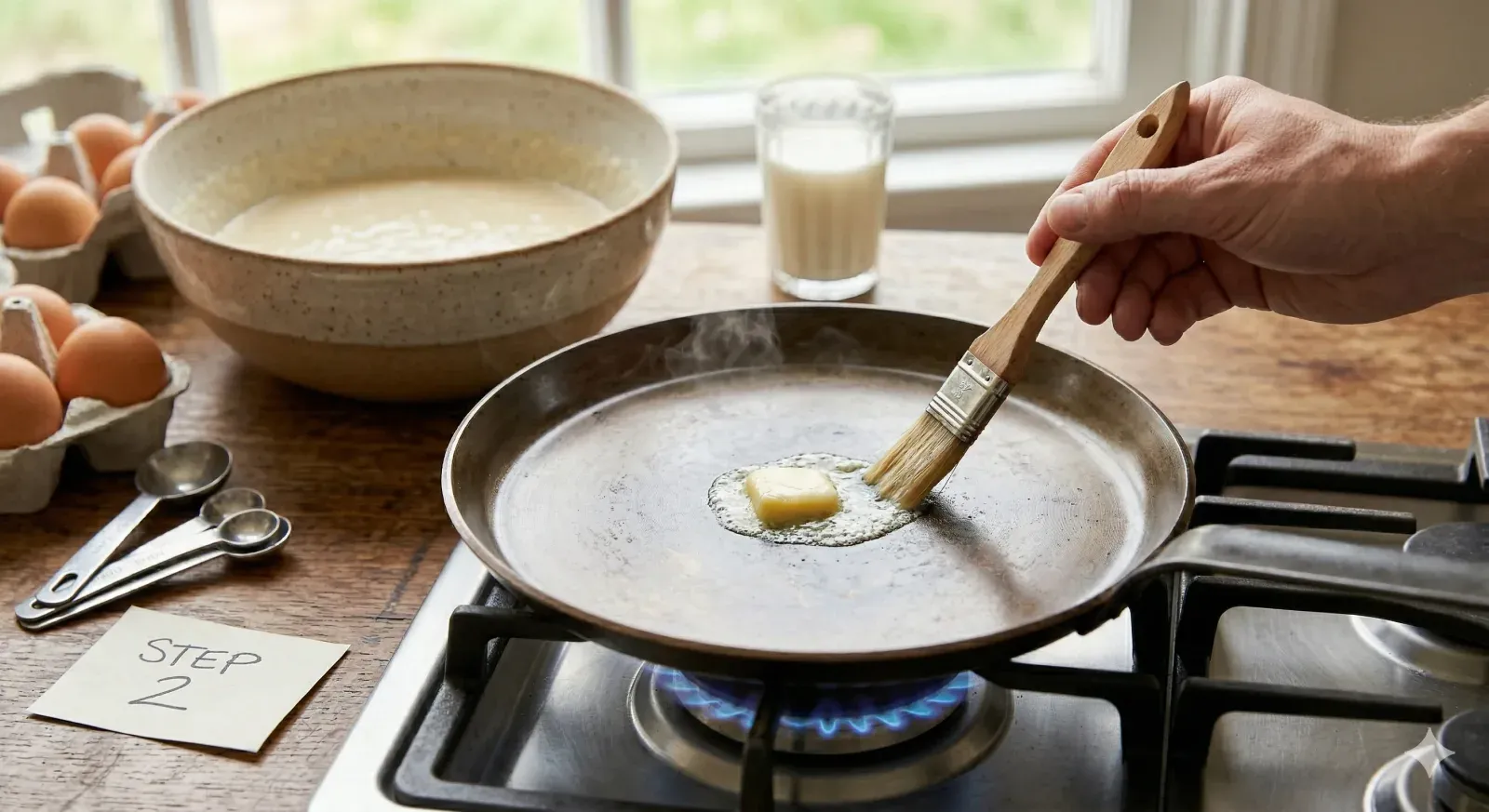
2 Set a 10-inch non-stick skillet or crepe pan over medium heat. Allow the pan to warm for about 2 minutes. Brush a thin layer of melted butter across the cooking surface using a pastry brush or folded paper towel. The pan is ready when a tiny drop of batter sizzles on contact.
Temperature control matters more here than with most cooking tasks. If the pan runs too hot, the batter sets before it can spread. Likewise, a cold pan gives you thick, pale crepes. Medium heat is your target throughout the entire batch. Additionally, re-butter the pan lightly between every two or three crepes to maintain a non-stick surface.
Step 3: Pour and Swirl
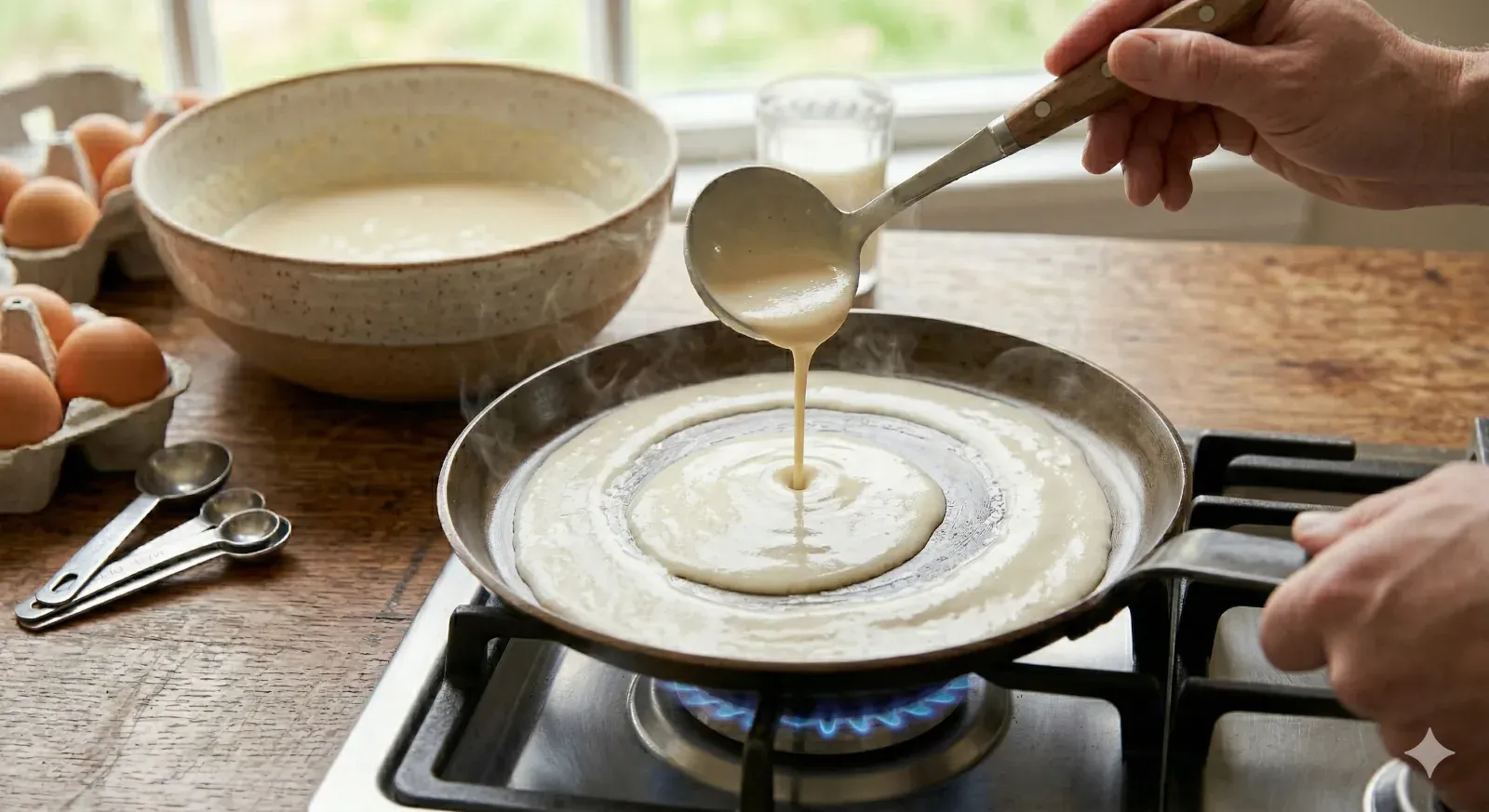
3 Pour about 3 tablespoons (a scant 1/4 cup) of batter into the center of the hot pan. Immediately lift the pan off the burner. Tilt and rotate it in a smooth circular motion so the batter coats the bottom in a thin, even layer. Work quickly because the batter starts to set within seconds.
Cook the crepe for 1 to 2 minutes without touching it. The edges will turn golden and begin to curl away from the pan. Furthermore, the surface will shift from shiny and wet to matte and dry. These visual cues tell you the first side is done. Do not flip too early, or the crepe will fold over on itself and tear.
Step 4: Flip and Finish
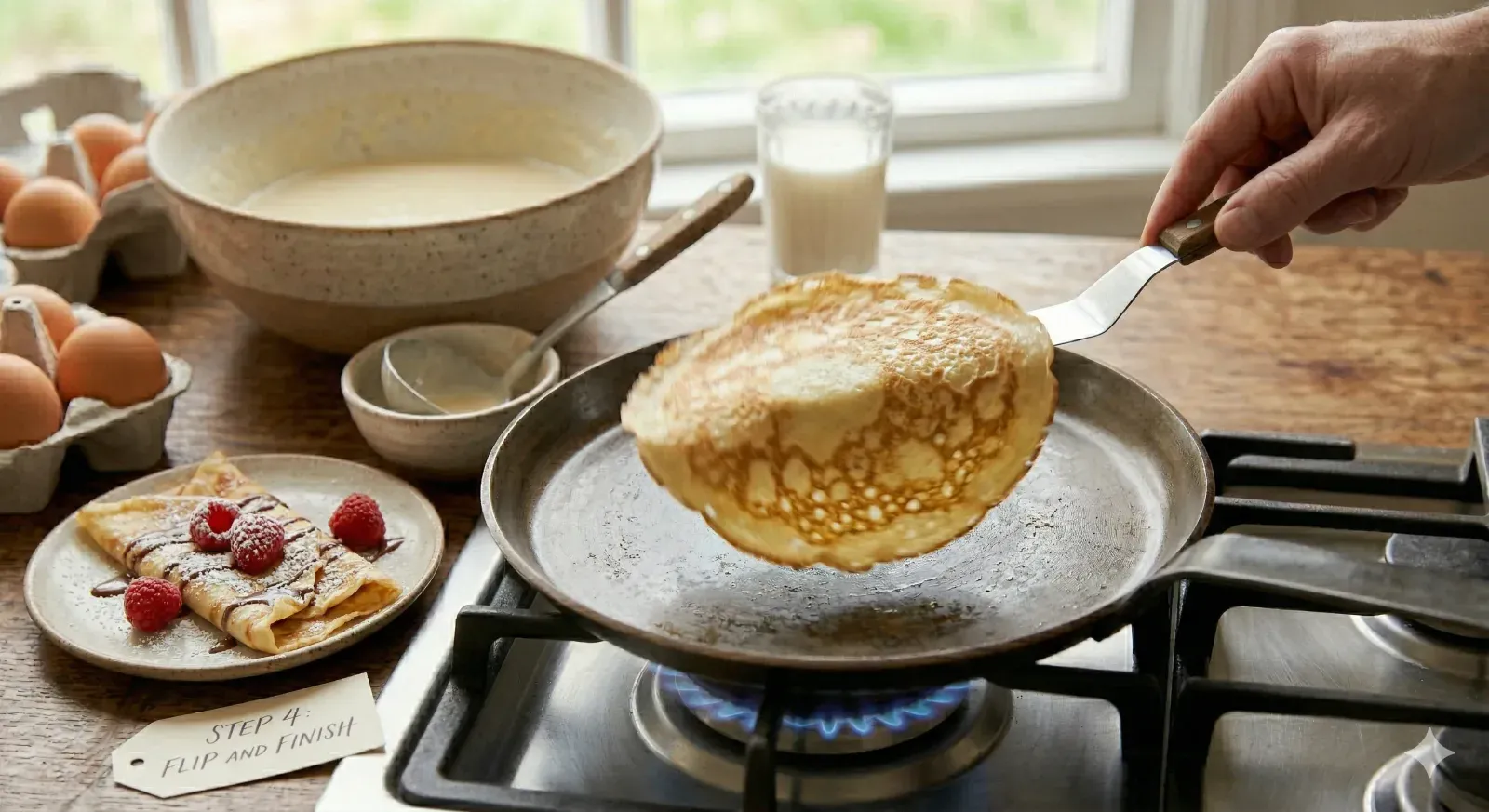
4 Slide a thin spatula or butter knife under the crepe edge. Loosen it gently all the way around. Then, using your fingers or the spatula, flip the crepe in one quick motion. Cook the second side for just 30 to 45 seconds. This side cooks much faster because the batter is already warm.
Slide the finished crepe onto a plate. Repeat with the remaining batter, stacking each crepe on top of the last. Place a small square of parchment paper between layers to prevent sticking. In total, this batch yields about 12 crepes. The first one often looks uneven, and that is perfectly normal. French cooks traditionally eat the first crepe as the cook’s snack. Consequently, your technique improves with each one you make.
Expert Tips for Perfect Crepes
Always Rest Your Batter
A 30-minute rest in the fridge transforms your batter. During this time, flour particles absorb liquid fully and gluten strands unwind. The result is a smoother pour and a more tender crepe. For even better results, rest the batter overnight. Many professional crepe makers in France prepare their batter the evening before. Therefore, planning ahead pays off with noticeably silkier crepes.
Master the Swirl Technique
Speed is everything when you pour and swirl. Lift the pan off the heat immediately after pouring. Then rotate your wrist in one smooth circle. Hesitation creates thick spots and uneven edges. Practice with the first two or three crepes until the motion becomes natural. In contrast, pouring too much batter gives you a thick pancake instead of a thin crepe.
Keep the Heat Steady at Medium
High heat burns the crepe before it can spread. Low heat prevents the lacy, golden edges that define a good crepe. Medium heat gives you the best of both worlds. You want the batter to sizzle gently, not smoke or sit silently. Similarly, maintaining consistent heat across the entire batch ensures every crepe looks and tastes the same.
Crepes Around the World: A Comparison
Thin pancakes appear in nearly every culinary tradition. Although the French crepe is the most famous, many cultures have their own beloved version. Here is how they compare across different regions.
| Dish | Country | Key Difference | Common Filling |
|---|---|---|---|
| Crêpe | France | Wheat flour, very thin, sweet or savory | Nutella, ham and cheese, lemon sugar |
| Galette | France (Brittany) | Buckwheat flour, savory only | Egg, ham, Gruyère, mushrooms |
| Blini | Russia | Yeasted batter, small and thick | Sour cream, caviar, smoked salmon |
| Dosa | India | Fermented rice and lentil batter | Spiced potato, chutneys, sambar |
| Palatschinke | Austria | Similar to crepes, slightly thicker | Apricot jam, chocolate, curd cheese |
Serving Suggestions
French crepes shine brightest when paired with thoughtful toppings and sides. The beauty of this dish lies in its ability to adapt to any mood or occasion. Below are some classic ways to serve your freshly made crepes.
Sweet Filling Ideas:
- Nutella and banana: Spread a thin layer of Nutella on the warm crepe. Add sliced banana and fold into quarters. This is the most popular street crepe in Paris for good reason.
- Lemon and sugar: Squeeze fresh lemon juice over the crepe and sprinkle with caster sugar. Roll it up tightly. This classic combination is simple yet addictive.
- Fresh berries and cream: Fill with mixed berries and a dollop of whipped cream or crème fraîche. The tartness of the fruit balances the rich crepe beautifully.
- Crepes Suzette: The famous dessert version features a warm orange-butter sauce flambéed with Grand Marnier. It transforms a simple crepe into a showstopper.
Savory Filling Ideas:
- Ham and Gruyère: Layer thin slices of ham and grated Gruyère cheese. Fold and warm in the pan until the cheese melts. Crack an egg on top for a complete galette.
- Smoked salmon and crème fraîche: Spread crème fraîche on a cooled crepe. Top with smoked salmon, capers, and fresh dill. Roll gently and serve as an elegant appetizer.
- Sautéed mushrooms and spinach: Cook mushrooms with garlic until golden. Wilt fresh spinach alongside. Fill the crepe, fold, and finish with a drizzle of truffle oil.
Beverage Pairings:
- French press coffee: A bold, dark roast cuts through the richness of butter-laden crepes. This is the classic Parisian breakfast pairing.
- Brut cider from Brittany: Dry apple cider is the traditional Breton drink with crepes and galettes. Its slight acidity refreshes the palate between bites.
- Fresh-squeezed orange juice: For a morning meal, the brightness of orange juice pairs wonderfully with sweet crepes filled with berries or jam.
- Champagne or Crémant: For a special brunch, sparkling wine adds festive elegance. The bubbles contrast nicely with the soft, warm crepe texture.
Storage and Reheating
Refrigerator: Stack your crepes with parchment paper between each layer. Wrap the stack tightly in plastic wrap or place it in an airtight container. They keep well in the fridge for up to 3 days. In fact, some French cooks prefer day-old crepes because they firm up slightly and hold fillings better.
Freezer: Crepes freeze beautifully for up to 2 months. Stack them with parchment between layers and seal in a freezer bag. Press out all the air before sealing. Thaw overnight in the refrigerator. Alternatively, separate frozen crepes carefully and microwave individual ones for 15 seconds.
Reheating: Warm crepes briefly in a dry skillet over medium-low heat. Cook each side for about 20 seconds. You can also microwave them for 10 to 15 seconds under a damp paper towel. However, the skillet method gives you the best texture, with slightly crisp edges and a warm, pliable center.
Common Mistakes to Avoid
1. Skipping the Resting Time
Impatient cooks pour the batter right away and wonder why their crepes tear. Resting allows the flour to absorb liquid completely. It also relaxes the gluten so the batter flows smoothly. Without this step, you get rubbery, uneven crepes that stick and break. Always rest for at least 30 minutes. Overnight is even better.
2. Using Too Much Batter
A crepe should be paper-thin. Pouring too much batter creates something closer to a thick pancake. Use a scant 1/4 cup per crepe in a 10-inch pan. The batter should barely coat the bottom. Instead of adding more, tilt the pan faster to stretch what you have. Less batter always produces a better crepe.
3. Cooking on High Heat
High heat scorches the crepe before the batter can spread fully. You end up with brown edges and a raw center. Medium heat gives the batter time to flow into a thin, even layer. Besides that, a moderate temperature produces the golden color and lacy pattern that define a proper French crepe.
4. Forgetting to Butter the Pan
Even with a non-stick pan, a light brush of butter prevents sticking. More importantly, butter adds flavor and creates those signature golden spots. A dry pan produces flat, pale crepes with no character. Brush a thin coat between every two to three crepes. Use melted butter rather than oil for the most authentic taste.
Frequently Asked Questions
What is the difference between crepes and pancakes?
Crepes are much thinner than American pancakes. They contain no leavening agent like baking powder, so they stay flat and delicate. Pancakes are thick, fluffy, and meant to be stacked. In contrast, crepes are meant to be filled, folded, or rolled. The batter is thinner, and the cooking time is much shorter. Although both start with flour, eggs, and milk, the final result is completely different.
Why do crepe batter need to rest?
Resting the batter does two important things. First, it lets the flour fully absorb the liquid, creating a smoother consistency. Second, it relaxes the gluten that formed during mixing. Relaxed gluten means a tender, pliable crepe that bends without breaking. For the best results, rest for 30 minutes at minimum. An overnight rest in the fridge gives you the silkiest batter possible.
Can I make crepes without a special pan?
Absolutely. Any non-stick skillet with low, sloping sides works well. A 10-inch pan is the ideal size for standard crepes. The low sides make swirling and flipping much easier. A traditional cast-iron crepe pan is wonderful to own. However, it is not required for excellent homemade crepes. Most home cooks achieve great results with a basic non-stick skillet.
How do I prevent crepes from sticking to the pan?
Three things prevent sticking. First, use a non-stick or well-seasoned pan. Second, brush a thin layer of melted butter before each crepe. Third, make sure the pan reaches medium heat before you pour. If the first crepe sticks, your pan likely needs more butter or a small temperature boost. Consequently, the second and third crepes almost always turn out better than the first.
Can crepes be made ahead of time?
Yes, and they are perfect for meal prep. Stack cooked crepes with parchment paper between layers. Wrap the stack tightly and store in the fridge for up to 3 days. You can also freeze them for up to 2 months. Reheat in a warm skillet for 20 seconds per side. Therefore, making a big batch on Sunday sets you up for quick meals throughout the week.
What are the best fillings for French crepes?
Sweet crepes love Nutella with bananas, lemon juice with sugar, fresh berries with cream, and salted caramel. For savory versions, try ham and Gruyère, smoked salmon with crème fraîche, or sautéed mushrooms with herbs. The possibilities are nearly endless. Moreover, you can turn crepes into a full dinner by filling them with ratatouille or creamy chicken. Experiment freely to find your favorites.
Variations and Adaptations
Buckwheat Galettes (Savory):
Replace all or half of the all-purpose flour with buckwheat flour. Omit the sugar and vanilla. The batter produces darker, nuttier crepes with an earthy bite. In Brittany, these galettes are the traditional base for savory fillings like the famous “complète” with ham, cheese, and a sunny-side egg. Buckwheat is naturally gluten-free, making this a great option for sensitive eaters.
Chocolate Crepes:
Add 2 tablespoons of cocoa powder and an extra tablespoon of sugar to the batter. The crepes turn a deep brown with a subtle chocolate flavor. Fill them with whipped cream, sliced strawberries, or peanut butter. Chocolate crepes are a hit at brunch parties and dessert tables alike. Furthermore, they look stunning when dusted with powdered sugar.
Vegan Crepes:
Swap the eggs for a flax egg (1 tablespoon ground flaxseed mixed with 3 tablespoons water per egg). Use plant-based milk like oat or almond. Replace butter with melted coconut oil or vegan butter. The crepes will be slightly less elastic than the original. However, they still taste delicious and hold fillings well. This version works for both sweet and savory preparations.
Crepes Suzette:
This famous French dessert elevates plain crepes with a warm orange-butter sauce. Melt butter with sugar, add fresh orange juice and zest, then flame with Grand Marnier. Fold the crepes into quarters and bathe them in the sauce. The theatrical flambé makes this a spectacular finish to any dinner party. Although it looks complex, the technique is surprisingly straightforward once you try it.
The Cultural Significance of Crepes
Crepes hold a deeply rooted place in French culture that goes far beyond the kitchen. Every February 2nd, the French celebrate La Chandeleur, also known as Crêpe Day. Families gather to make crepes together, following a beloved tradition. According to custom, you hold a coin in one hand while flipping a crepe with the other. A successful flip promises good luck and prosperity for the year ahead.
Brittany, in the northwest of France, claims crepes as its signature dish. The region’s cool climate favored buckwheat cultivation for centuries. Breton cooks transformed this humble grain into galettes that fed entire families. Over time, wheat-flour crepes joined the tradition for sweet preparations. Today, creperies line the streets of towns like Quimper and Rennes, serving locals and visitors alike. Meanwhile, Parisian street vendors have made crepes one of the world’s most recognizable street foods.
The global spread of crepes speaks to their universal appeal. Japanese crepes feature elaborate fillings wrapped in a cone shape. Brazilian creperies fill them with tropical fruits and condensed milk. Scandinavian versions use cardamom-spiced batter. Each culture adds its own twist while honoring the original concept. In other words, the simple French crepe has become a worldwide canvas for creativity and flavor.
Conclusion
This crepes recipe proves that extraordinary food often starts with the simplest ingredients. Flour, eggs, milk, butter, and a little patience are all you need. Master the swirl technique, rest your batter, and keep the heat at medium. Those three principles will give you golden, paper-thin crepes every single time. Whether you go sweet with Nutella and berries or savory with ham and cheese, these French classics never disappoint.
Ready to explore more beloved European recipes? Browse our European dishes collection for classics like coq au vin, ratatouille, and fondue. Each recipe features the same detailed, step-by-step approach to bring world cuisine to your kitchen.