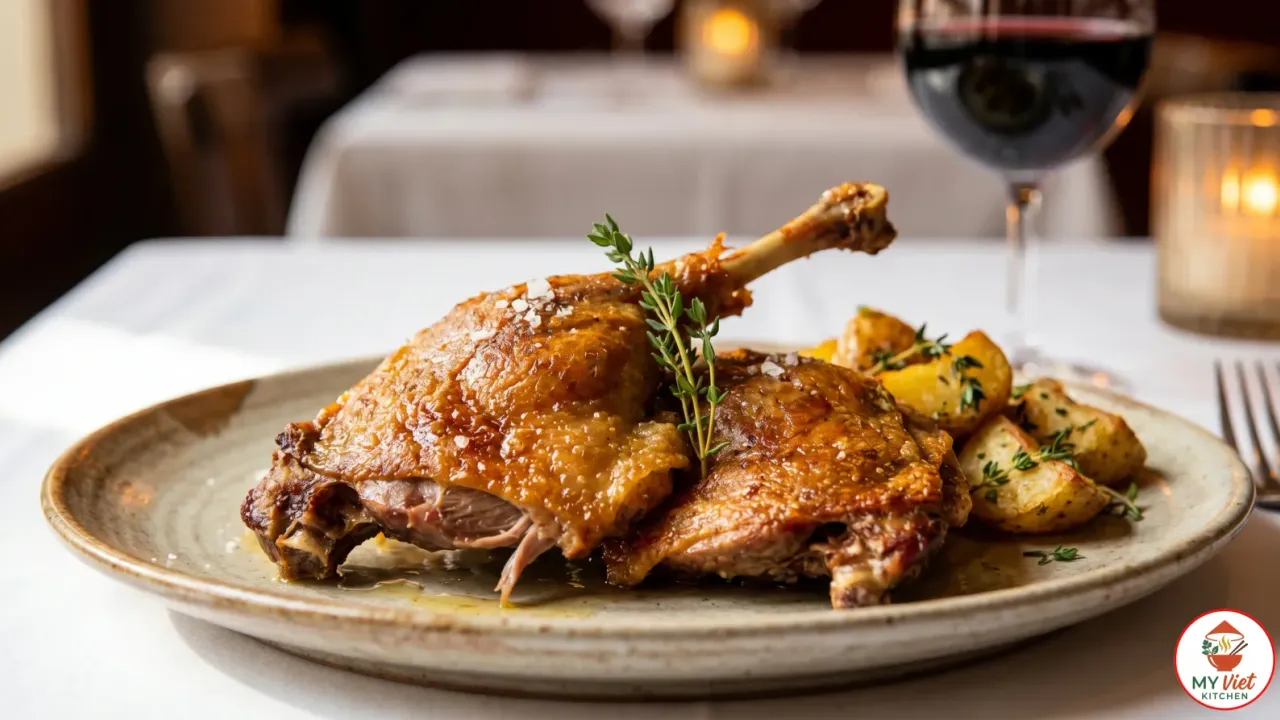
Duck confit is one of the most celebrated dishes in all of French cuisine. This duck confit recipe teaches you how to cure, slow cook, and crisp duck legs to absolute perfection at home. Known in France as confit de canard, this dish transforms tough duck legs into silky, fall-off-the-bone meat beneath shatteringly crispy skin. While the process takes time, the technique is surprisingly simple. Furthermore, the results rival anything you would find in a Parisian bistro.
Prep Time: 30 minutes (plus 24-hour cure) | Cook Time: 3 hours | Servings: 4
Difficulty: Medium | Calories: ~540 per serving
What Makes Duck Confit Special?
Duck confit stands apart from other cooking methods because of how it treats tough cuts. Duck legs are full of connective tissue and collagen. In a regular roast, they often turn chewy. However, the confit method solves this problem completely. Low heat and a long bath in fat break down the collagen into gelatin. As a result, the meat becomes impossibly tender while staying moist and flavorful.
The salt cure is equally important. Before any cooking begins, the duck legs rest in salt and aromatics for 24 hours. During this time, the salt draws moisture from the surface. It also seasons the meat all the way to the bone. This deep seasoning is something a quick sprinkle of salt before cooking simply cannot achieve. Indeed, the cure is what gives duck confit its distinctive savory depth.
Historically, confit was a preservation technique in southwestern France. Before refrigeration, cooks needed ways to store meat through long winters. They discovered that meat cooked and stored in its own fat lasted for months. The fat created an airtight seal that kept bacteria out. Today, we make duck confit for its flavor, not survival. Yet the technique remains unchanged after centuries.

Choosing the Right Duck for Confit
The quality of your duck determines the final result. Not all duck is created equal. So here are your best options for making duck confit at home.
- Moulard duck legs (best choice): Moulard ducks are a cross between Muscovy and Pekin breeds. They have large, meaty legs with a thick layer of fat under the skin. This breed is what French producers use for traditional confit. The legs are substantial enough to serve one per person.
- Muscovy duck legs (excellent): Muscovy ducks carry rich, dark meat with a pronounced flavor. Their legs are slightly leaner than Moulard but still perfect for confit. The meat has a deeper, more gamey taste that many cooks prefer.
- Pekin duck legs (widely available): Pekin ducks are the most common breed at grocery stores. Their legs are smaller and milder in flavor. They work well for confit, although you may want to serve two legs per person. Additionally, they cook slightly faster due to their smaller size.
Ingredients for Duck Confit
Main Ingredients:
- 4 whole duck legs (leg and thigh attached)
- 4 cups rendered duck fat
For the Salt Cure:
- 3 tablespoons coarse sea salt
- 1 teaspoon black pepper
- 4 cloves garlic, lightly crushed
- 4 sprigs fresh thyme
- 2 bay leaves
- 1/2 teaspoon ground allspice (optional)
- 1 teaspoon juniper berries, lightly crushed (optional)
Pro tip: Buy more duck fat than you think you need. The legs must be fully submerged during cooking. If you run short, the exposed portions will dry out and turn tough. You can also render your own duck fat by slowly cooking duck skin trimmings over low heat. Moreover, leftover duck fat is perfect for roasting potatoes, frying eggs, or making cassoulet.
Step-by-Step Duck Confit Instructions
Step 1: Cure the Duck Legs
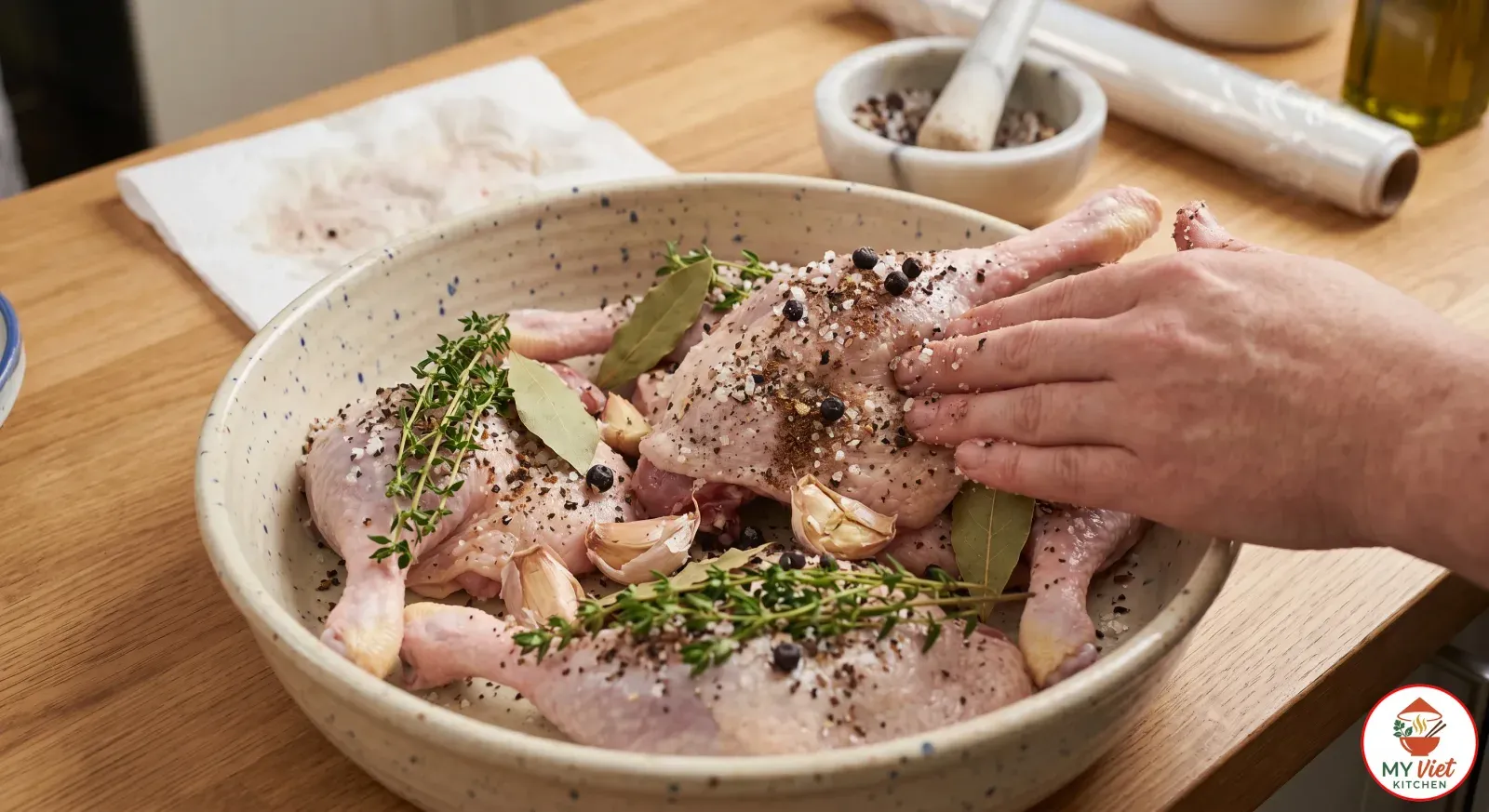
1 Pat the duck legs completely dry with paper towels. Mix the coarse sea salt with black pepper, allspice, and crushed juniper berries if using. Rub this mixture generously over every surface of the duck legs. Then press the crushed garlic cloves, thyme sprigs, and bay leaves against the meat.
Place the seasoned legs in a single layer in a glass or ceramic dish. Cover tightly with plastic wrap. Refrigerate for exactly 24 hours. During this time, the salt penetrates deep into the meat. Specifically, it breaks down proteins and creates the savory flavor that defines duck confit. Do not cure for longer than 36 hours, or the meat will become overly salty.
Step 2: Rinse and Dry the Duck
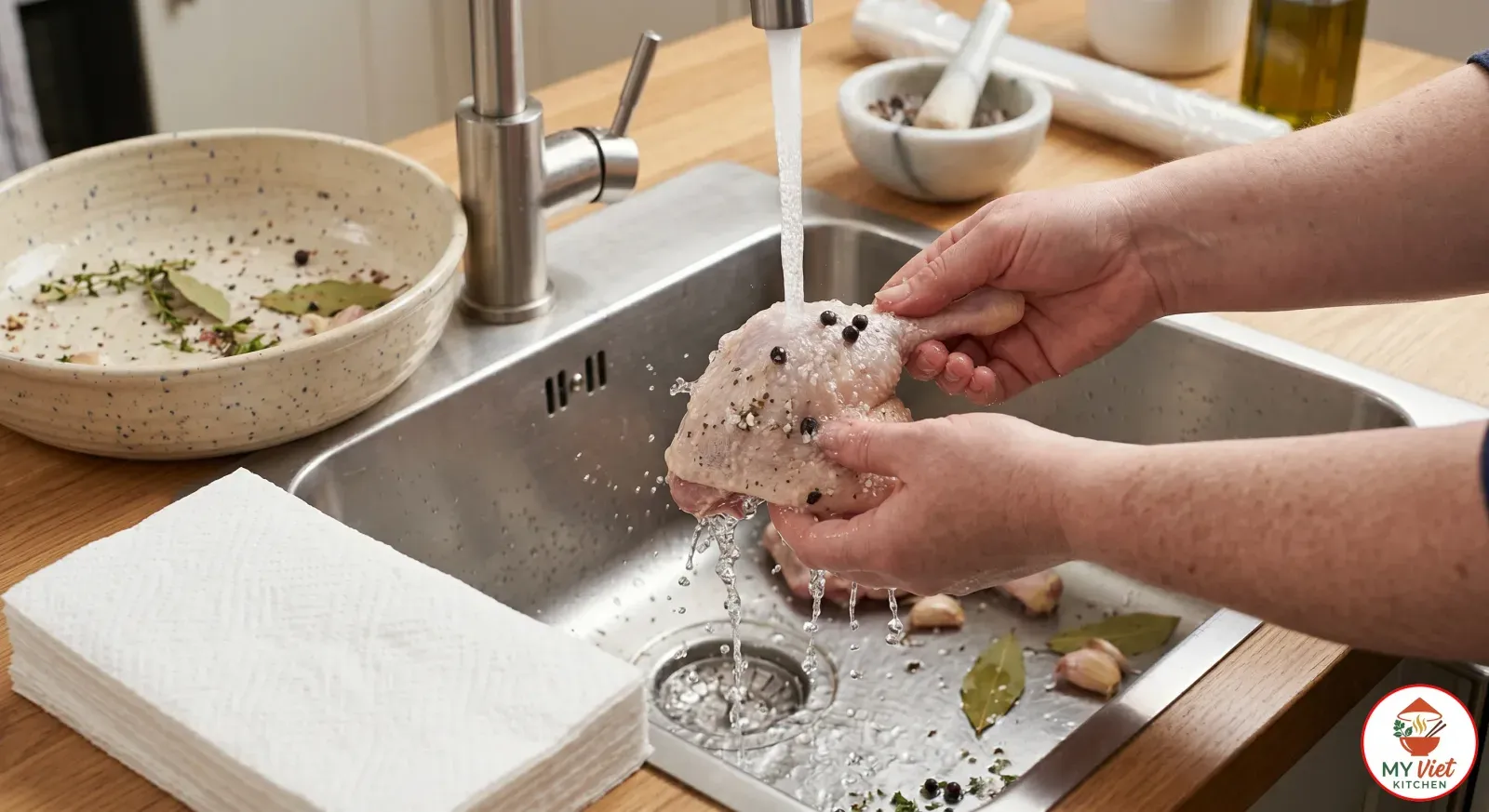
2 Remove the duck legs from the dish. Brush off all the herbs, garlic, and salt. Rinse each leg thoroughly under cold running water. This step is essential because it prevents the finished confit from tasting too salty. Afterwards, pat the legs completely dry with fresh paper towels.
Removing surface moisture matters for two reasons. First, water causes the fat to sputter when the legs go into the pot. Second, dry skin produces a better crust when you sear the confit later. Take your time with this step. Consequently, you will get a much better final texture on both the meat and the skin.
Step 3: Submerge in Duck Fat
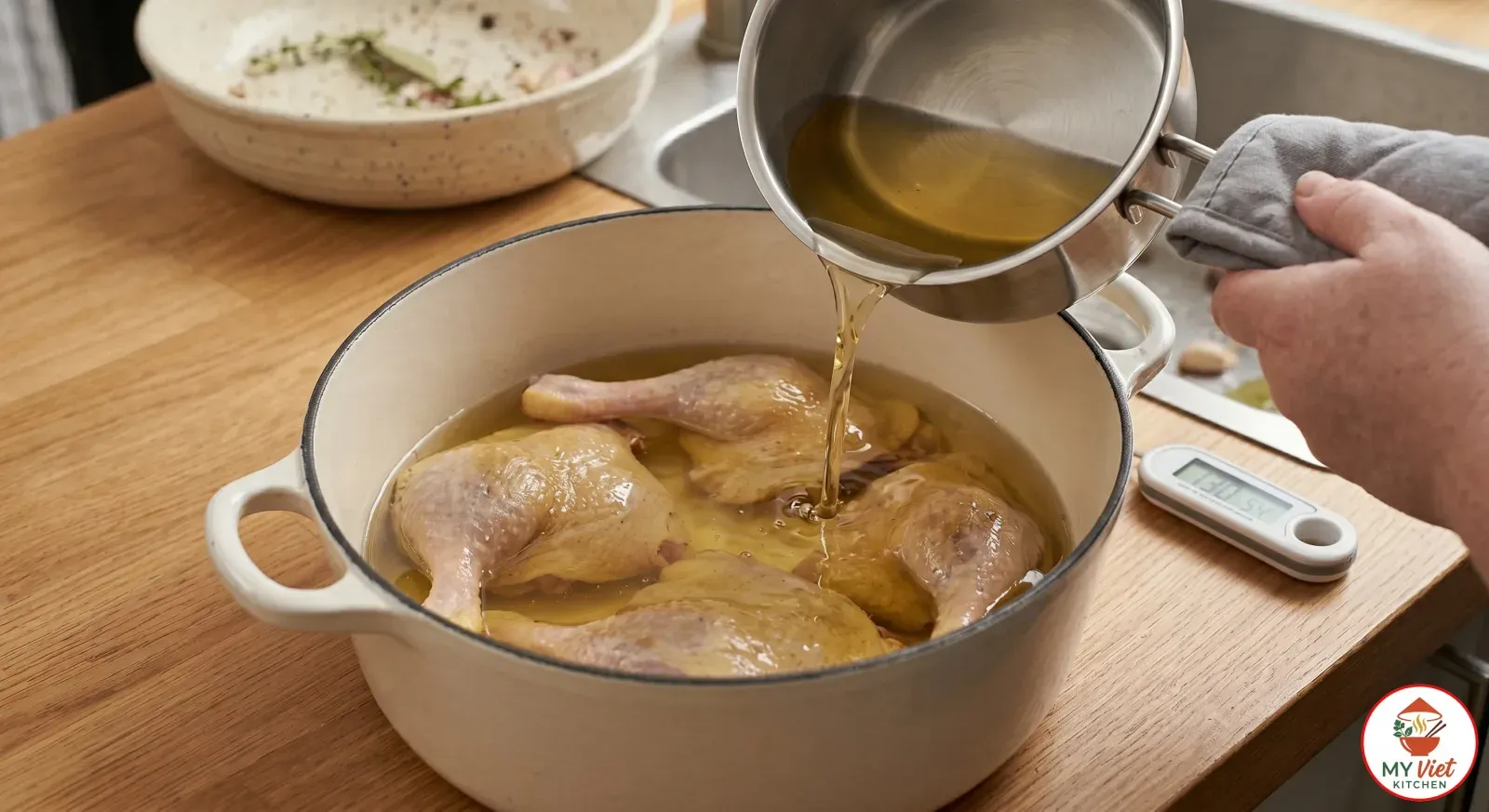
3 Preheat your oven to 285 degrees Fahrenheit. Arrange the duck legs in a snug, oven-safe pot or Dutch oven. The legs should fit in a single layer without overlapping. Indeed, a tight fit means you need less fat to cover them fully.
Melt the duck fat in a separate pot over low heat. Pour the warm liquid fat over the duck legs until they are completely submerged. The fat should cover the meat by at least half an inch. If any part of a leg pokes above the surface, add more fat. Meanwhile, check that the fat is warm but not hot when you pour it. Extremely hot fat will start cooking the outside before the oven even begins its work.
Step 4: Slow Cook in the Oven
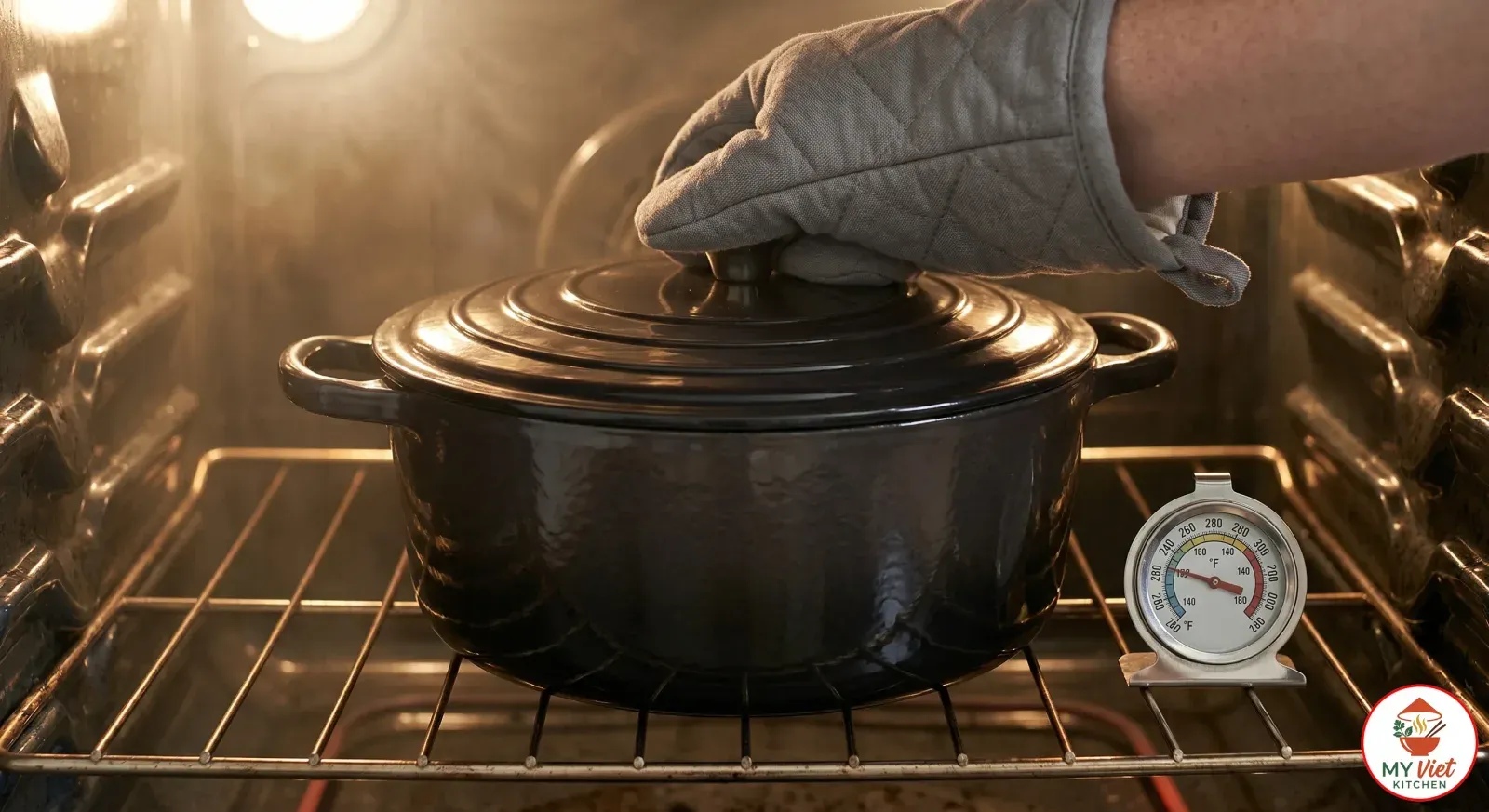
4 Cover the pot with a tight-fitting lid. Place it in the center of the oven. Cook at 285 degrees Fahrenheit for 2.5 to 3 hours. The fat should barely bubble during the entire cooking time. So if you see vigorous bubbling, lower the temperature by 10 degrees.
The duck confit is done when the meat pulls away from the bone easily. Test it by wiggling a drumstick. It should move freely in the joint. The skin will look pale and soft at this point. Do not worry about the appearance now. After all, the crisping step comes next. In fact, this slow, gentle cooking is what transforms tough leg meat into something silky and tender.
Step 5: Crisp the Skin
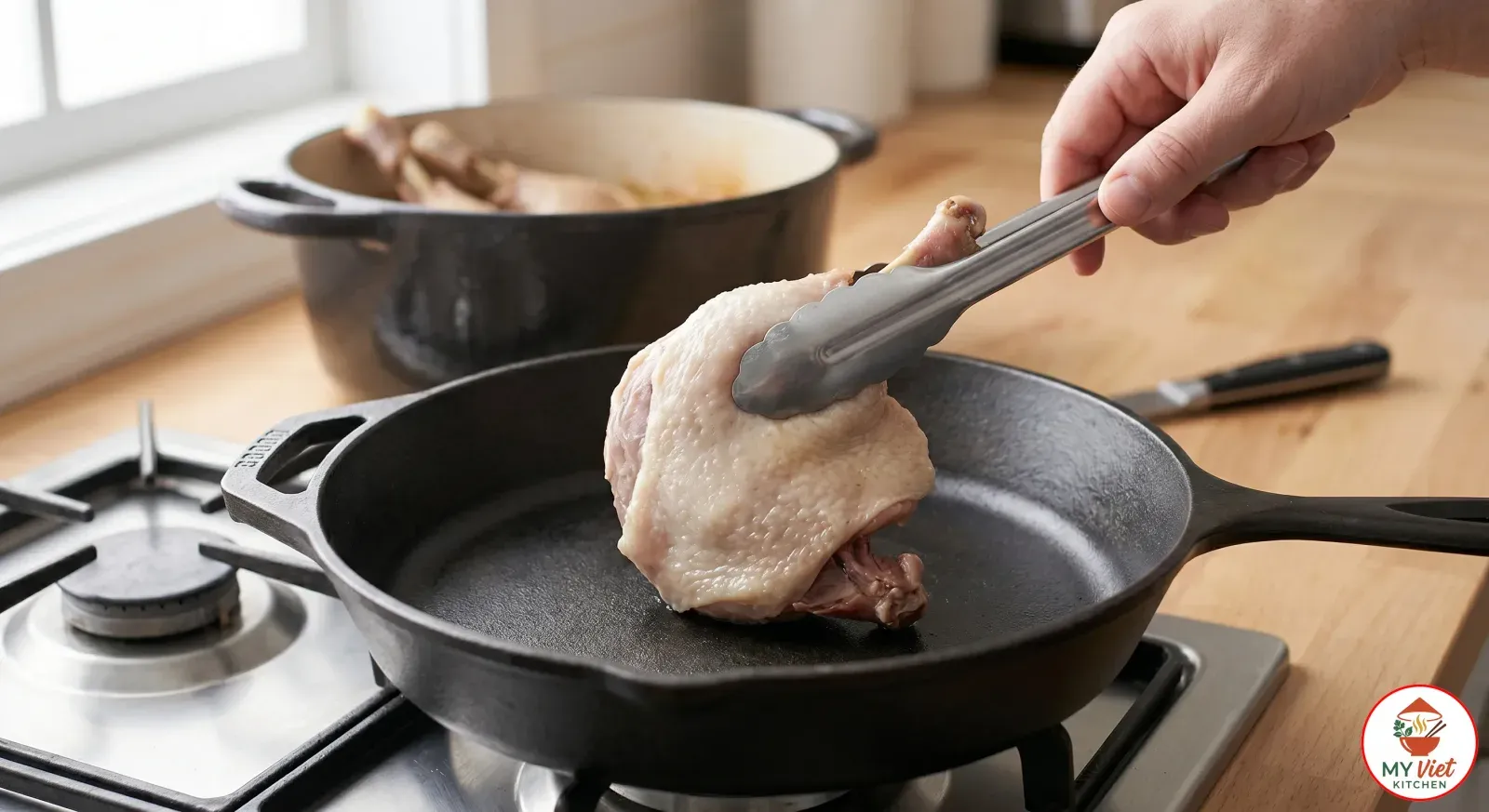
5 Carefully lift the duck legs from the fat using a slotted spoon. Let excess fat drip off for a moment. Next, place the legs skin-side down in a cold, dry skillet. Starting in a cold pan is important. It allows the fat under the skin to render slowly as the pan heats up.
Turn the heat to medium. Cook for 6 to 8 minutes without moving the legs. The skin will gradually turn deep golden brown and crackling crisp. You will hear it sizzle and pop. Then flip each leg and sear the other side for 2 minutes. The contrast between the crispy skin and the meltingly tender meat is what makes duck confit so extraordinary. Therefore, do not rush this step.
Step 6: Serve or Store
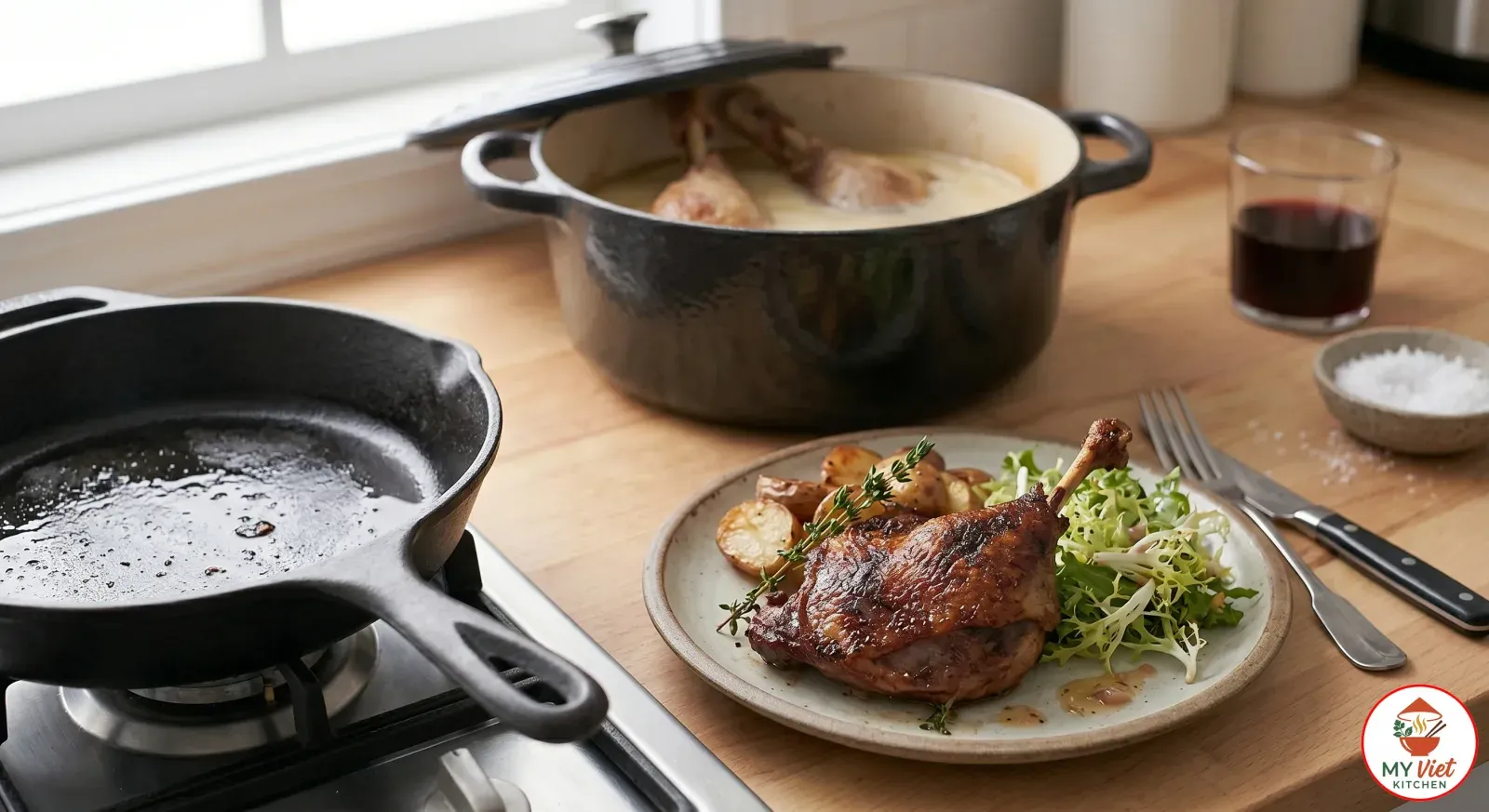
6 Serve the duck confit immediately while the skin is still crackling. Place each leg on a warm plate with your chosen sides. Alternatively, you can store the confit for later. Let the cooked legs cool slightly. Then place them in a clean container and pour the strained duck fat over them until fully covered. Seal tightly and refrigerate for up to one month.
Expert Tips for Perfect Duck Confit
Control the Temperature Carefully
The magic of duck confit happens between 275 and 300 degrees Fahrenheit. Too high, and the meat dries out despite being surrounded by fat. Too low, and the collagen never fully breaks down. Use an oven thermometer to verify your temperature. Also, the fat should show only occasional tiny bubbles. Vigorous bubbling means the heat is too high.
Start Crisping in a Cold Pan
Placing duck confit into a hot skillet causes the outside to burn before the fat under the skin renders. Starting cold gives the subcutaneous fat time to melt out gradually. This produces an evenly crispy skin without any burnt spots. Additionally, the rendered fat bastes the meat as it cooks, keeping it moist and flavorful.
Do Not Over-Cure
The 24-hour cure is the sweet spot for flavor and seasoning. Going beyond 36 hours makes the meat unpleasantly salty. Even rinsing cannot fully remove excess salt after a long cure. Set a timer or alarm so you do not forget about the legs in the fridge. Ultimately, precision in the cure determines the final taste.
Duck Confit vs. Other Duck Cooking Methods
Duck can be prepared many ways, yet confit produces a unique texture no other method matches. Here is how the main techniques compare side by side.
| Method | Temperature | Cook Time | Texture | Best For |
|---|---|---|---|---|
| Duck Confit | 285 F in fat | 2.5-3 hours | Silky, fall-off-the-bone | Legs and thighs |
| Roasting | 375-425 F dry heat | 1.5-2 hours | Crispy outside, firm inside | Whole duck, breast |
| Pan Searing | Medium-high heat | 15-20 minutes | Crispy skin, medium-rare | Breast only |
| Braising | 325 F in liquid | 2-3 hours | Tender but can be watery | Legs and wings |
| Smoking | 225-250 F with smoke | 3-4 hours | Firm, smoky, chewy skin | Whole duck, breast |
As the table shows, confit is the only method that produces truly silky, melt-in-your-mouth meat from duck legs. Braising comes close, yet the water-based liquid dilutes the flavor. Confit fat, on the other hand, infuses the meat with richness at every stage. This is why French chefs have relied on confit for centuries.
Serving Suggestions
Duck confit is versatile enough to anchor a simple weeknight dinner or a formal dinner party. The rich, savory meat pairs beautifully with both rustic and refined sides. Keep accompaniments simple so the duck remains the star.
Classic Accompaniments:
- Duck fat potatoes: Roast cubed potatoes in the leftover duck fat at 400 degrees until golden and crispy. They absorb the savory duck flavor and develop a crunchy exterior that is absolutely addictive. This is the most traditional pairing in France.
- Frisee salad with warm vinaigrette: Toss frisee lettuce with a warm shallot vinaigrette. The bitter greens and tangy dressing cut through the richness of the duck. A classic bistro combination that never fails.
- White beans: Slow-cooked white beans with garlic and herbs complement the duck perfectly. In fact, this pairing is the foundation of cassoulet, one of the greatest French dishes ever created.
- Braised lentils: French green lentils braised with onion and thyme provide an earthy base. Their firm texture contrasts the tender duck beautifully.
Beverage Pairings:
- Pinot Noir from Burgundy: A medium-bodied Burgundy has enough acidity to cut through the fat. Its earthy, cherry notes complement the savory duck. Also try a good Oregon Pinot Noir as an alternative.
- Cahors Malbec: Bold and tannic, this wine from the same region as duck confit stands up to the rich meat. The dark fruit flavors pair naturally with the gamey duck.
- Dry Riesling: The acidity and mineral quality of a dry Alsatian Riesling refreshes the palate between bites. It is an unexpectedly wonderful match.
- Belgian-style ale: A rich, malty Belgian dubbel or abbey ale works beautifully for beer lovers. Its caramel notes echo the deep flavors in the duck.
Storage and Reheating
Refrigerator: Store cooked duck confit submerged in duck fat for up to 1 month. The fat creates an airtight seal that preserves the meat. Without the fat covering, the confit keeps for about 5 days in a sealed container. Accordingly, always ensure full fat coverage for long-term storage.
Freezer: Duck confit freezes beautifully for up to 6 months. Wrap each leg tightly in plastic wrap, then foil. Alternatively, freeze the legs submerged in fat in a freezer-safe container. Thaw overnight in the refrigerator before reheating.
Reheating: The best method is to warm the legs in a 300-degree oven for 15 minutes. Then crisp the skin in a hot skillet for 5 minutes. Avoid the microwave because it makes the skin rubbery and destroys the texture you worked so hard to achieve. Nevertheless, stovetop reheating alone works well if you start in a cold pan.
Common Mistakes to Avoid
1. Cooking at Too High a Temperature
The most common mistake is baking the duck above 300 degrees. High heat causes the outside to overcook before the collagen inside breaks down. The meat turns stringy instead of silky. Instead, keep your oven at 285 degrees. Low and slow is the entire point of confit. Patience delivers the tender, melt-in-your-mouth result you want.
2. Not Fully Submerging the Duck
Any meat above the fat line cooks differently from the submerged portion. It dries out, toughens, and turns stringy. Use a snug pot so you need less fat. If a drumstick pokes out, weigh it down with a small oven-safe plate. Alternatively, add more fat until everything stays below the surface throughout cooking.
3. Skipping the Curing Step
Some recipes skip the salt cure to save time. However, this shortcut produces bland, underseasoned meat. The cure does far more than add salt. It changes the protein structure, improves moisture retention, and builds the deep savory flavor that defines confit. Always allow a full 24 hours for the cure.
Frequently Asked Questions
What does confit mean in French cooking?
Confit comes from the French word “confire,” meaning to preserve. In cooking, it refers to slowly cooking meat submerged in its own fat at low temperature. Originally, French cooks developed confit to preserve duck and goose before refrigeration. The fat-sealed meat lasted through entire winters. Today, confit is valued more for its incredible silky texture and deep flavor than for preservation.
Can I reuse duck fat after making duck confit?
Absolutely. Strain the fat through a fine mesh sieve to remove solids. Then store it in the refrigerator for up to 3 months or in the freezer for 6 months. Each batch of confit adds more flavor to the fat. In fact, many French cooks maintain a supply of confit fat they reuse for years. Use it for roasting potatoes, searing vegetables, or making your next batch of confit.
How long does duck confit last in the fridge?
Submerged in duck fat in a sealed container, duck confit lasts up to one month in the refrigerator. The fat acts as a natural seal that blocks air and bacteria. Without the fat covering, cooked duck confit keeps for about 5 days. For the longest storage, ensure every surface of the meat stays below the fat line.
Can I make duck confit without duck fat?
Yes, although the flavor will differ. Olive oil is the most common substitute. You can also use a mixture of lard and olive oil. Some cooks render fat from duck skin trimmings to supplement store-bought fat. Still, the texture will be excellent since the low, slow cooking method does most of the work. Nevertheless, duck fat produces the most authentic and richest flavor.
What temperature should duck confit be cooked at?
Cook duck confit at 285 degrees Fahrenheit for the best results. This temperature allows collagen to break down into gelatin without drying the meat. The fat should show only gentle, occasional bubbles. If you see vigorous boiling, reduce the heat immediately. Temperatures above 325 degrees will toughen the meat despite the surrounding fat.
Variations and Adaptations
Spiced Duck Confit:
Add warm spices to the salt cure for a twist on the classic. Star anise, cinnamon stick, and orange zest create an aromatic version that works wonderfully in Asian-inspired dishes. Use the same cooking method but add the spices during the cure. Consequently, the results pair beautifully with stir-fried noodles or steamed rice.
Duck Confit for Cassoulet:
Make a large batch of duck confit specifically for use in cassoulet. Skip the final crisping step. Instead, shred the tender meat from the bones. Layer the shredded confit with white beans, sausages, and salt pork. The confit adds incredible depth to this slow-baked French bean stew.
Duck Confit Salad:
Shred leftover duck confit over a warm salad of frisee, lardons, and a poached egg. Dress it with warm sherry vinaigrette. The rich duck, bitter greens, and runny egg yolk create a perfect balance. This classic French bistro salad turns leftover confit into an elegant lunch.
The Cultural Significance of Duck Confit
Duck confit is deeply rooted in the Gascony and Perigord regions of southwestern France. For centuries, these areas raised ducks and geese for foie gras production. The legs, a byproduct of the foie gras industry, needed to be preserved. Resourceful cooks developed the confit technique to make use of every part of the animal. What began as thrifty preservation became one of the most revered dishes in French gastronomy.
Today, duck confit appears on menus from Paris bistros to fine dining restaurants worldwide. It remains a cornerstone of southwestern French identity. Markets in Sarlat and Perigueux sell jars of homemade confit alongside fresh truffles and foie gras. Families pass down their confit recipes through generations. The dish connects modern cooks to a tradition that stretches back to medieval times.
Duck confit also plays a starring role in other legendary French dishes. It is essential in cassoulet, the hearty bean stew from Toulouse. It enriches salads, pastas, and even sandwiches. Some bistros serve it alongside creme brulee as part of a classic southwestern French meal. From humble preservation to global acclaim, duck confit remains a testament to the ingenuity of French country cooking.
Conclusion
This duck confit recipe proves that great cooking does not require complexity. The method is simple: cure, submerge, slow cook, and crisp. Yet the results are extraordinary. Silky, tender meat beneath shatteringly crispy skin is a combination few dishes can match. The 24-hour cure demands patience, but every hour of waiting pays off in flavor and texture.
Ready to explore more French classics? Try our coq au vin for another slow-cooked masterpiece, or our beef bourguignon for rich, wine-braised perfection. For a lighter option, explore our quiche Lorraine recipe. Browse our full European dishes collection for more inspiration from across the continent.