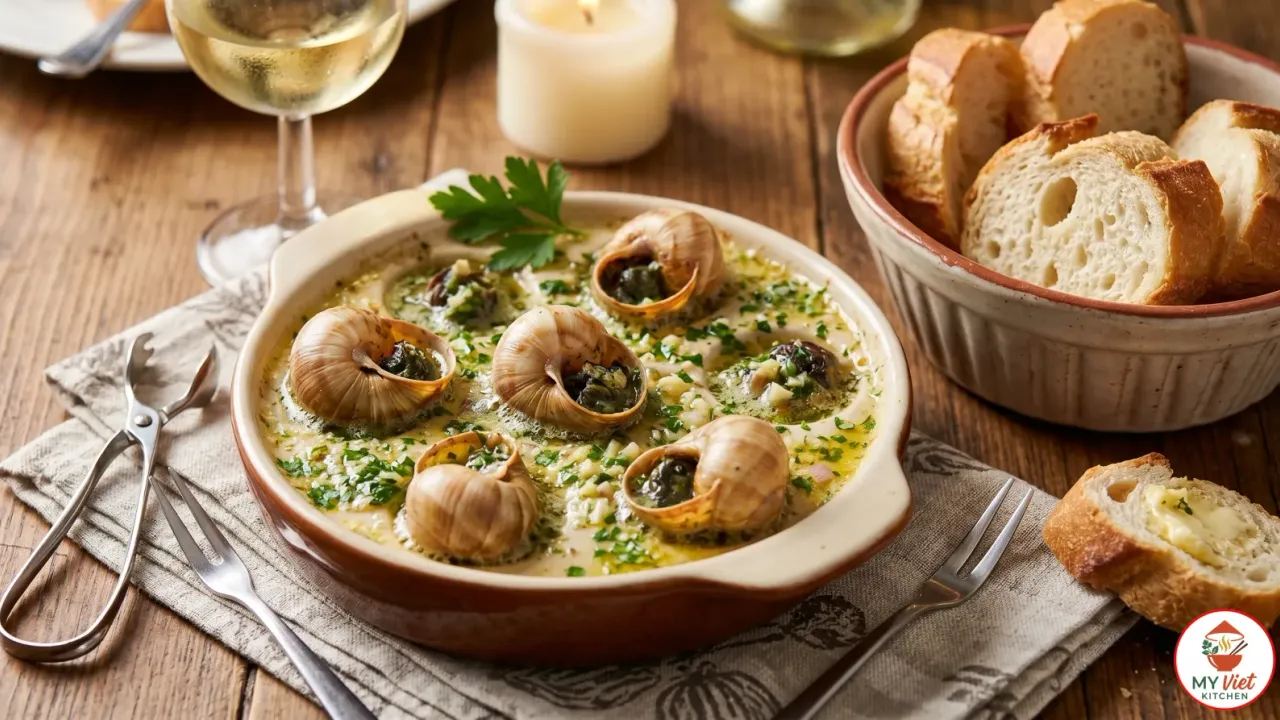
Escargot is the classic French appetizer that transforms humble snails into a luxurious dish with garlic herb butter. This escargot recipe shows you how to make perfectly tender Burgundy snails baked in a rich compound butter with fresh parsley, garlic, and shallots. Additionally, you do not need special skills or hard-to-find ingredients. In fact, with canned snails and a few pantry staples, you can serve this elegant French starter at home in under 40 minutes.
Prep Time: 25 minutes | Cook Time: 15 minutes | Servings: 4
Difficulty: Easy | Calories: ~320 per serving
What Makes Escargot Special?
Few dishes carry as much culinary prestige as escargot. This iconic French appetizer has graced the tables of Parisian bistros and fine dining restaurants for centuries. Moreover, it remains one of the most recognized symbols of French gastronomy worldwide. The dish delivers an experience that goes far beyond simply eating snails. It is about savoring garlic-infused butter, crusty bread, and a sense of occasion.
The magic of escargot lies in its compound butter. Specifically, a generous blend of softened butter, fresh garlic, parsley, and shallots transforms the mild snail meat into something extraordinary. Furthermore, the butter bubbles and sizzles in the oven, creating an irresistible aroma that fills the kitchen. Then it pools around each snail, becoming a rich sauce meant for soaking up with bread.
What surprises most first-time tasters is how approachable escargot actually is. The snail itself has a tender texture similar to clams or mushrooms. Consequently, the dish tastes far more like garlic butter bread than anything exotic. Indeed, many people who hesitate at the idea of eating snails become devoted fans after their first bite. The combination of garlic, herbs, and butter is universally appealing.

A Brief History of Escargot in French Cuisine
Humans have eaten snails for thousands of years. Archaeological evidence from Spain shows snail consumption dating back over 30,000 years. However, the French elevated snail eating into an art form. According to Britannica, the modern escargot preparation originated in the Burgundy region of France during the 19th century. Chef Marie-Antoine Careme is often credited with popularizing the garlic butter recipe we know today.
The Burgundy snail, known scientifically as Helix pomatia, became the gold standard for the dish. Also called the Roman snail, this species is large and meaty with a subtle flavor. As a result, it pairs beautifully with rich butter sauces. Today, France consumes approximately 30,000 tons of snails per year. That devotion speaks to how deeply escargot is woven into the country’s food culture.
Choosing the Right Snails for Escargot
Selecting quality snails is the first step toward excellent escargot. Fortunately, you do not need to forage for live snails in your garden. Instead, canned snails offer consistent quality and are much easier to prepare. Below are your main options for sourcing snails.
- Canned Burgundy snails (best choice): These large, tender snails come pre-cooked and ready to use. Simply drain and rinse them before stuffing into shells. Brands like Roland and Helix are widely available. Moreover, canned Burgundy snails have a consistently mild flavor that works perfectly with garlic butter.
- Canned petit gris snails: Smaller than Burgundy snails but equally delicious. These come from the species Cornu aspersum. They have a slightly more pronounced earthy taste. Additionally, their smaller size means you may want to serve more per person.
- Fresh or frozen snails: Available at specialty food shops and some farmers markets. Fresh snails require extensive cleaning and purging before cooking. Therefore, they are best suited for experienced cooks who want the most authentic experience.
Ingredients for Escargot
Garlic Herb Compound Butter:
- 1/2 cup (115g) unsalted butter, softened to room temperature
- 4 cloves garlic, finely minced
- 2 tablespoons fresh flat-leaf parsley, finely chopped
- 1 tablespoon shallot, finely minced
- 1 tablespoon dry white wine
- 1 teaspoon fresh lemon juice
- 1/4 teaspoon fine sea salt
- 1/8 teaspoon freshly ground black pepper
- 1 pinch of nutmeg
Snails and Serving:
- 24 canned Burgundy snails, drained and rinsed
- 24 escargot shells (or a ceramic escargot plate)
- 1 crusty French baguette, sliced
Equipment You Will Need:
- Escargot plate or baking dish with crumpled foil
- Escargot tongs and forks (optional but traditional)
- Mixing bowl and fork for compound butter
- Small spoon or piping bag for filling shells
Pro tip: Make the compound butter a day ahead and refrigerate it. The flavors will meld together overnight, producing a more complex and aromatic butter. Also, bring the butter back to room temperature before stuffing the shells so it spreads easily.
Step-by-Step Escargot Instructions
Step 1: Prepare the Garlic Herb Butter
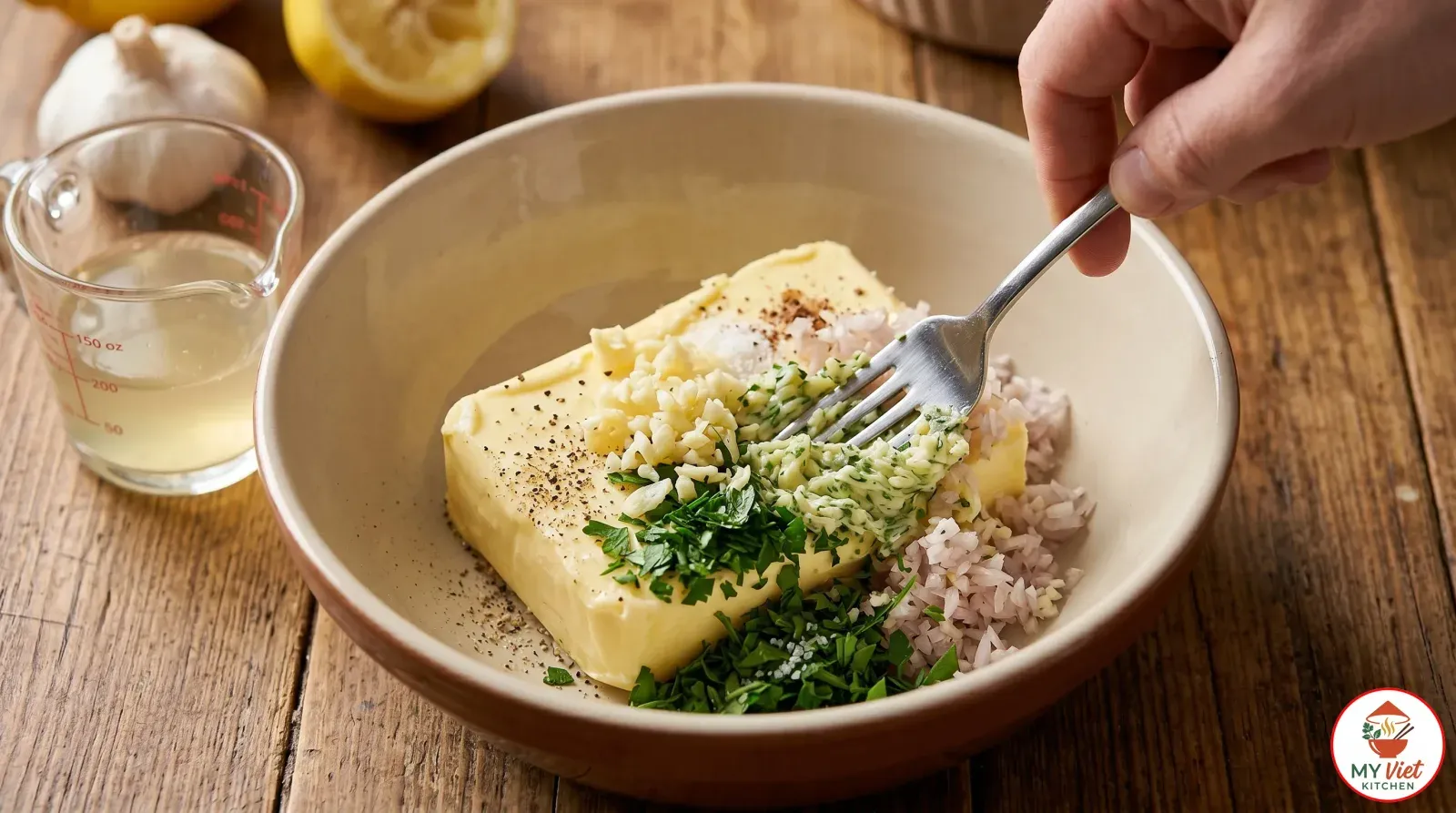
1 Place the softened butter in a medium bowl. Then add the minced garlic, chopped parsley, minced shallot, white wine, lemon juice, salt, pepper, and nutmeg. Use a fork to mash and stir everything together until the herbs and garlic are evenly distributed throughout the butter.
The butter must be truly soft for proper mixing. If it is too cold, the ingredients will not blend evenly. Specifically, the garlic and herbs should be visible in every bite-sized portion. Furthermore, the wine and lemon juice add brightness that balances the richness of the butter. As a result, the finished compound butter should look green-flecked and smell intensely aromatic.
Step 2: Prepare the Snails
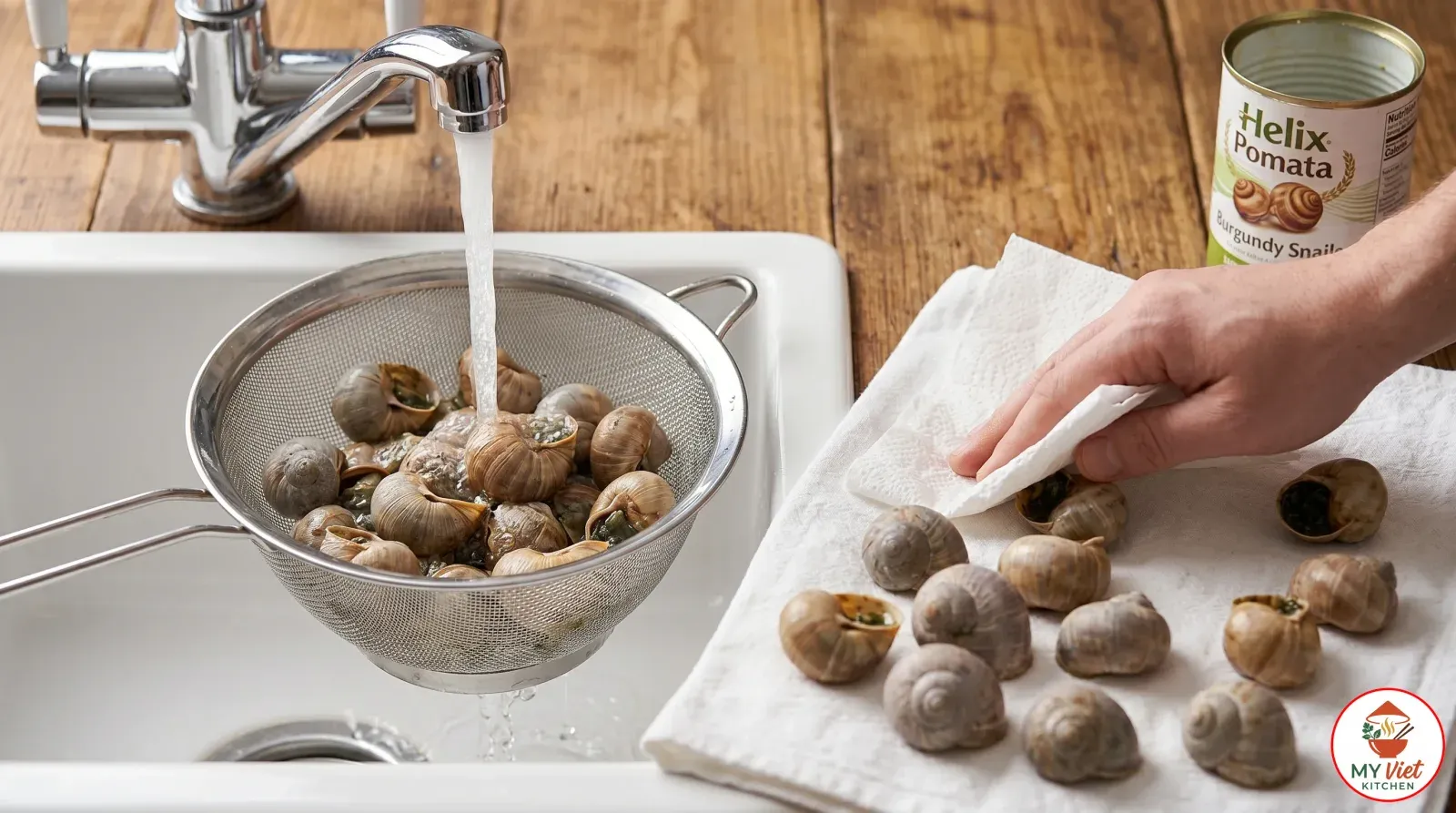
2 Open the can of snails and pour them into a colander. Rinse them thoroughly under cold running water for about 30 seconds. Next, spread the snails on a clean kitchen towel or paper towels. Pat them completely dry. Removing excess moisture is important because water will cause the butter to splatter in the oven.
While the snails dry, take a moment to inspect them. Discard any that seem unusually soft or have an off smell. However, properly canned snails almost never have quality issues. Also, if your snails came packed in a court bouillon or brine, the rinse removes any metallic or preserved taste. Consequently, the finished dish will taste clean and fresh.
Step 3: Stuff the Shells
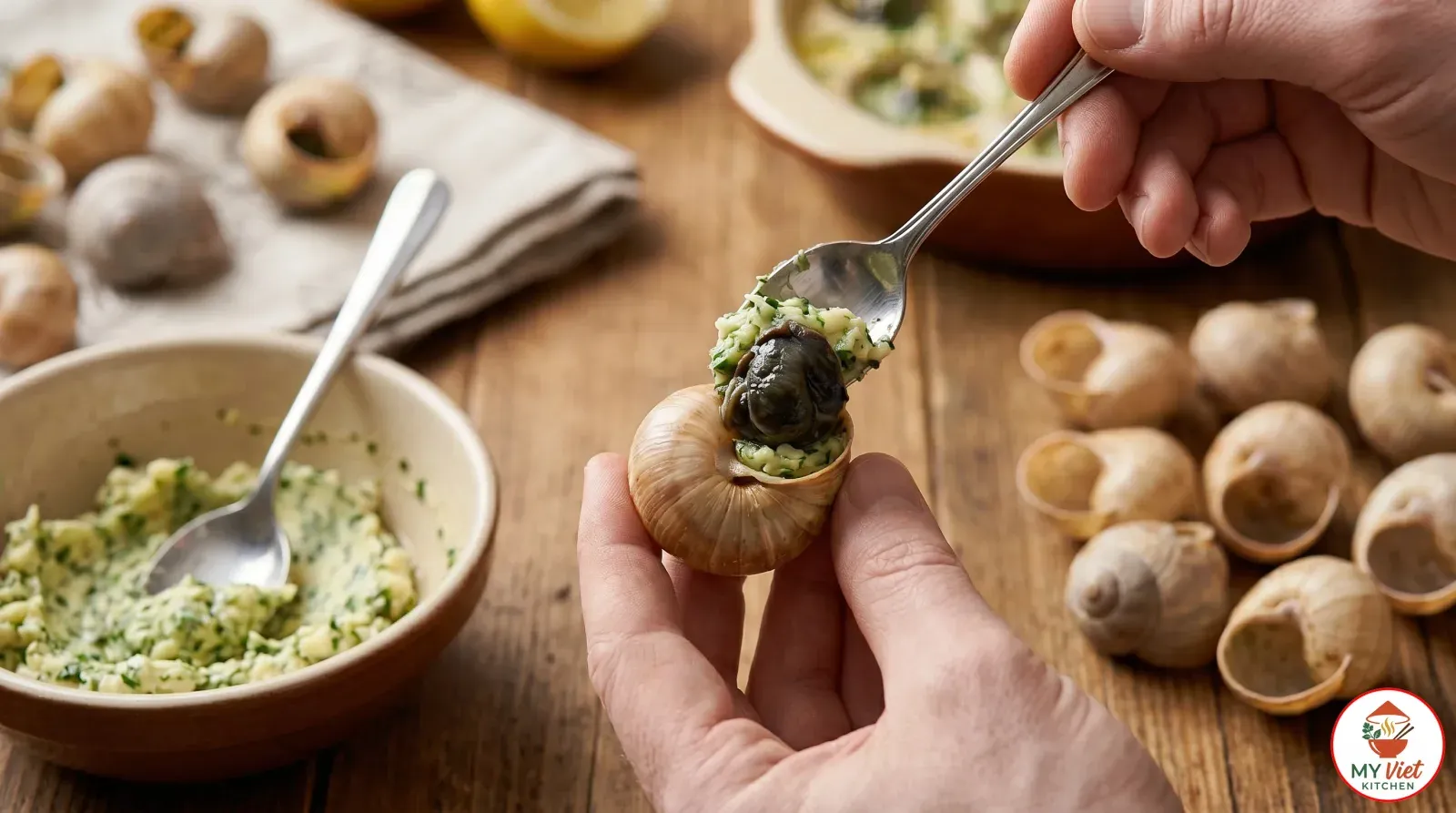
3 First, place a small dab of compound butter inside each escargot shell. Then tuck one snail into the shell, pressing it gently against the butter. Finally, pack more compound butter on top to seal the opening completely. The butter should fill the shell opening and sit flush with the edge.
Use about one teaspoon of butter per shell as a general guide. Be generous because the butter is the star of this dish. If you run short, mix a bit more butter with garlic and parsley. Alternatively, if you do not have shells, place the snails in a ceramic escargot plate and top each one with a generous spoonful of butter. Indeed, many home cooks prefer the shell-free method because it is faster and easier.
Step 4: Arrange and Bake
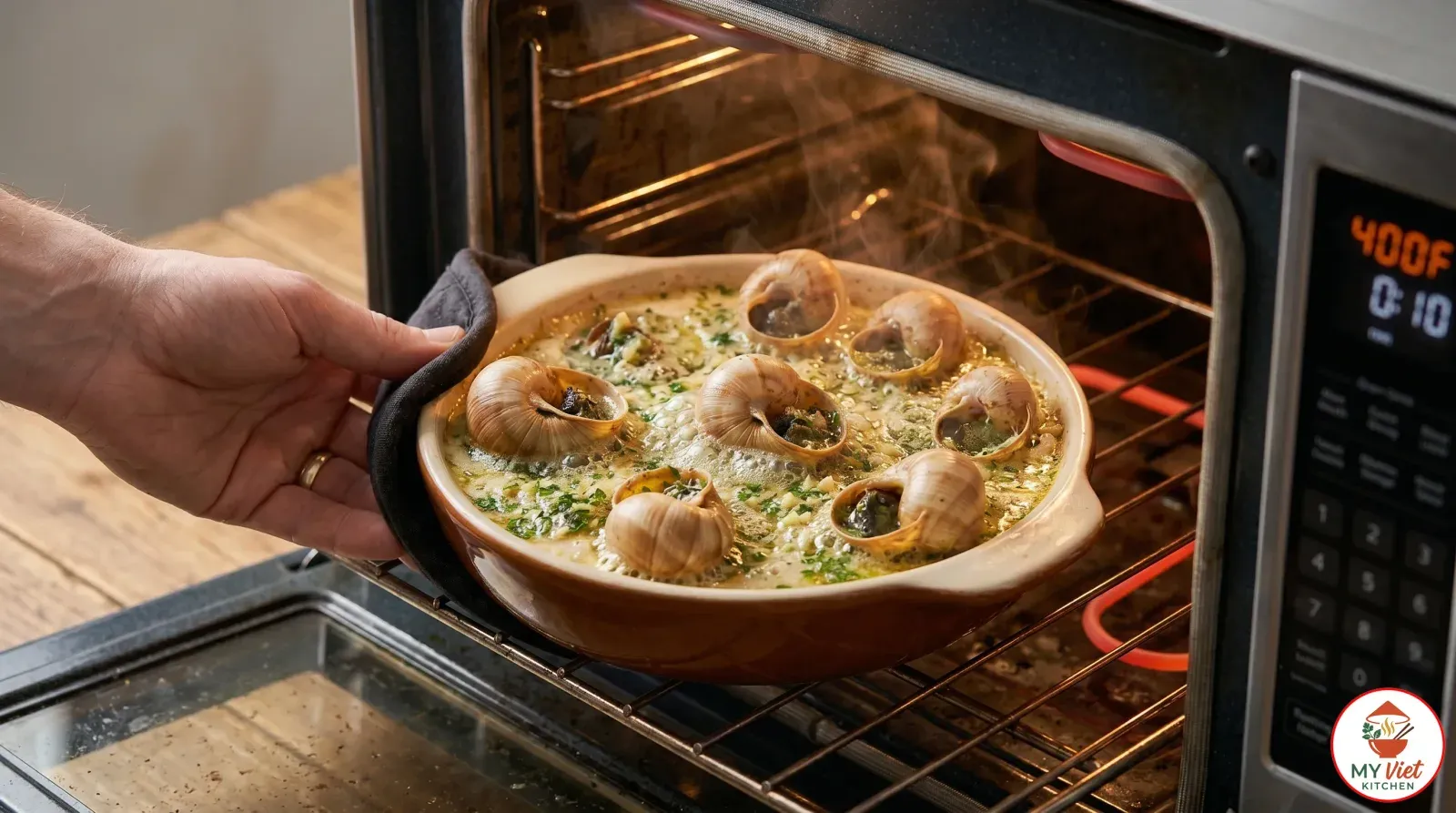
4 Preheat your oven to 400 degrees Fahrenheit (200 degrees Celsius). Meanwhile, arrange the stuffed shells open-side up in an escargot plate or baking dish. If using a regular baking dish, crumple a sheet of aluminum foil on the bottom to create little nests that keep the shells from tipping over.
Then place the dish in the hot oven and bake for 10 to 12 minutes. Watch for the butter to bubble vigorously around the edges. The garlic should smell fragrant but not turn brown. Specifically, the butter should be golden and sizzling when you pull the dish out. Overbaking will cause the garlic to burn, which creates a bitter taste. Therefore, set a timer and check at the 10-minute mark.
Step 5: Rest and Serve Immediately
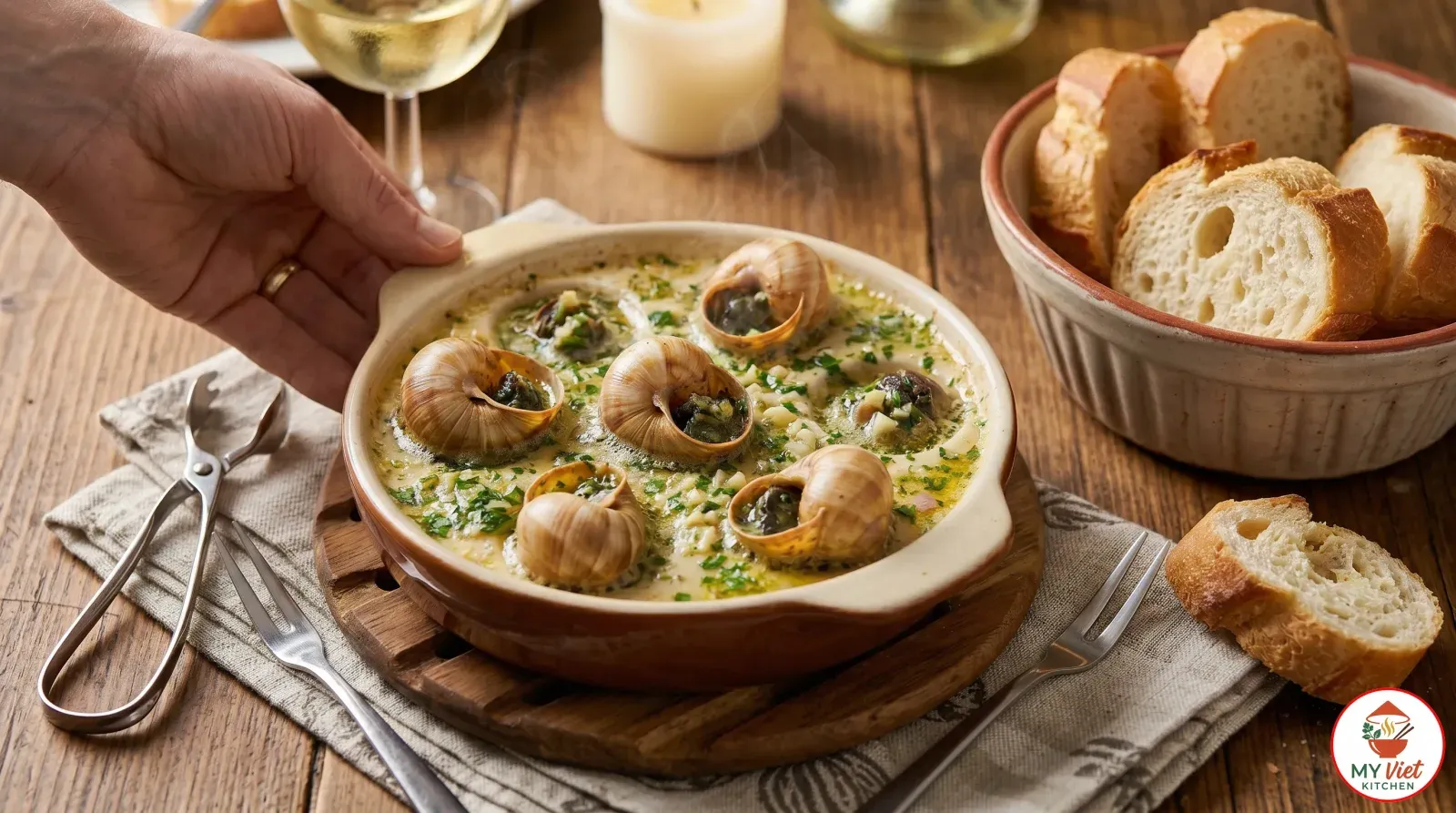
5 Remove the escargot from the oven and let the dish rest for 2 minutes. The butter will continue to sizzle during this time. Then serve immediately on the baking plate with sliced crusty baguette alongside. The bread is essential for soaking up the pools of garlic herb butter.
If you have traditional escargot tongs and forks, place them at each setting. Otherwise, regular small forks work perfectly. Furthermore, provide small plates or napkins because the butter can drip. Notably, the escargot must be eaten hot. As the butter cools, it solidifies and loses its luxurious, saucy quality. So bring the dish to the table while it still sizzles.
Expert Tips for Perfect Escargot
Use Quality Butter
Since butter is the dominant ingredient, its quality matters enormously. European-style butter with higher fat content produces a richer, more flavorful result. Specifically, look for butter with at least 82% butterfat. Brands like Plugra, Kerrygold, or any French butter work beautifully. In contrast, standard American butter has more water content, which makes the sauce thinner and less luxurious.
Do Not Skip the Wine
The tablespoon of dry white wine in the compound butter is small but important. It adds acidity that cuts through the richness. Moreover, the wine brings a subtle complexity that elevates the overall flavor. Use a dry white like Chablis or Sauvignon Blanc. If you prefer not to cook with wine, substitute an equal amount of lemon juice instead.
Control the Oven Temperature
A hot oven at 400 degrees Fahrenheit ensures the butter bubbles quickly without overcooking the snails. However, going above 425 degrees risks burning the garlic before the snails heat through. Also, placing the escargot on the middle rack gives the most even heat distribution. Additionally, avoid using the broiler because it scorches the butter surface while leaving the snails cold in the center.
Escargot Preparation Methods Compared
There are several ways to prepare and serve escargot at home. Each method has its own advantages. The table below compares the most popular approaches so you can choose the best one for your situation.
| Method | Equipment Needed | Difficulty | Presentation | Best For |
|---|---|---|---|---|
| Traditional shells | Escargot shells, tongs, forks | Easy | Authentic and elegant | Dinner parties |
| Ceramic escargot plate | Specialized plate with indentations | Very easy | Classic bistro style | Regular home cooking |
| Mushroom caps | Large button mushrooms, baking sheet | Easy | Rustic and creative | Shell-free alternative |
| Individual ramekins | Small oven-safe ramekins | Very easy | Modern and casual | Appetizer course |
| Puff pastry cups | Puff pastry, muffin tin | Medium | Impressive and crunchy | Special occasions |
Serving Suggestions
Escargot is traditionally served as a first course in French dining. The dish works beautifully as a standalone appetizer or as part of a multi-course French meal. Furthermore, the rich garlic butter pairs well with many side dishes and wines. If you are planning a full French dinner, consider starting with escargot before a main course like coq au vin or beef bourguignon.
The Perfect Accompaniments:
- Crusty French baguette: Absolutely essential for soaking up the garlic butter. Slice it thick and serve it warm.
- Mixed green salad: A light salad with vinaigrette provides a fresh contrast to the rich butter.
- Roasted potatoes: Small roasted fingerling potatoes complement the garlic flavors beautifully.
- French onion soup: Starting with escargot and following with soup creates a classic bistro experience.
Beverage Pairings:
- White Burgundy (Chablis): The traditional match. Its crisp acidity cuts through the butter perfectly.
- Champagne or sparkling wine: Bubbles cleanse the palate between bites of rich butter.
- Sauvignon Blanc: Its herbal notes echo the parsley in the compound butter.
- Dry rose: A Provencal rose offers refreshing contrast on warm evenings.
For dessert after an escargot appetizer, a classic creme brulee or delicate French crepes would complete the meal wonderfully.
Storage and Reheating
Refrigerator: Store leftover escargot in an airtight container for up to 2 days. The garlic butter will solidify when chilled. Also, you can prepare the stuffed shells ahead of time and refrigerate them unbaked for up to 24 hours. Then just add 2 to 3 extra minutes of baking time since they start cold.
Freezer: Freeze the unbaked stuffed shells for up to 1 month. Arrange them on a parchment-lined tray and freeze until solid. Next, transfer them to a freezer bag. Bake directly from frozen at 400 degrees Fahrenheit for 14 to 16 minutes. Alternatively, you can freeze the compound butter alone in a log wrapped in plastic wrap for up to 3 months.
Reheating: Reheat leftover escargot in a 375-degree oven for 6 to 8 minutes until the butter melts and bubbles again. Avoid the microwave because it makes the snails rubbery. Furthermore, microwaved garlic butter often splatters and does not develop the same sizzling texture.
Common Mistakes to Avoid
1. Burning the Garlic
This is the most frequent mistake when making escargot. Garlic turns bitter very quickly once it passes golden. Therefore, watch the oven closely after the 10-minute mark. If the garlic starts to darken, remove the dish immediately. Also, finely minced garlic cooks faster than coarsely chopped garlic. So keep your mince fine but watch the timing carefully.
2. Not Drying the Snails
Wet snails cause the butter to splatter and pop in the oven. Moreover, the extra moisture dilutes the compound butter and makes it watery instead of rich. Consequently, always pat the snails thoroughly dry with paper towels after rinsing. This small step makes a significant difference in the final texture.
3. Using Cold Butter
Cold butter is impossible to mix properly with garlic and herbs. The ingredients clump instead of distributing evenly. As a result, some bites will be pure butter while others will be all garlic. To avoid this, set the butter out at room temperature for at least 30 minutes before mixing. Alternatively, microwave it for 8 to 10 seconds to slightly soften it.
4. Skimping on the Butter
Escargot is not a dish for restraint. The compound butter is the main attraction. Therefore, fill each shell generously. You want pools of sizzling butter around each snail when it comes out of the oven. Indeed, the bread-dipping experience depends on having plenty of butter to soak up.
Frequently Asked Questions
What does escargot taste like?
Escargot has a mild, slightly earthy flavor similar to clams or mussels. The snail meat is tender and absorbs the flavors around it. In the classic French preparation, the garlic herb butter dominates the taste. Most people find that escargot tastes much more like buttery garlic bread than anything unusual. So if you enjoy garlic butter, you will likely love escargot.
Can you make escargot without shells?
Yes, you can absolutely make escargot without traditional shells. Use a ceramic escargot plate with indentations, mushroom caps, small ramekins, or even a muffin tin. The key is having a vessel that holds the butter around each snail while it bakes. Specifically, mushroom caps are a popular alternative because they add extra flavor and eliminate the need for specialized equipment.
Where can I buy escargot snails?
Canned escargot is available at most well-stocked grocery stores in the international or gourmet aisle. You can also find them at specialty food shops or online retailers. Brands like Roland and Helix offer quality canned Burgundy snails. Additionally, some stores carry frozen escargot that is already stuffed with garlic butter for an even easier option.
Are escargot healthy to eat?
Snails themselves are quite nutritious. They are high in protein and low in fat before the butter is added. A serving of plain snails provides about 16 grams of protein with only 1 gram of fat. Furthermore, they are a good source of iron, magnesium, and vitamin B12. However, the garlic butter preparation adds significant calories from fat. So the dish is best enjoyed as an occasional indulgence rather than a daily meal.
How do you eat escargot properly?
Hold the shell with escargot tongs in one hand. Then use a small escargot fork to pull the snail out with the other hand. Eat the snail in one bite. Next, tip the shell to sip the garlic butter or pour it onto bread. If the escargot is served without shells, simply use a regular fork. Meanwhile, always keep crusty bread nearby to mop up every last drop of butter.
Variations and Adaptations
Escargot in Mushroom Caps:
Replace the shells with large button or cremini mushroom caps. First, remove the stems and hollow out the caps slightly. Then place a dab of compound butter in each cap, add a snail, and top with more butter. Bake at 400 degrees for 12 to 14 minutes. The mushrooms release their own juices and create a delicious blend with the garlic butter. This variation also works well as a passed appetizer at parties.
Blue Cheese Escargot:
Add 2 tablespoons of crumbled Roquefort or Stilton to the compound butter. The tangy blue cheese creates a bolder, more complex flavor profile. Additionally, it melts beautifully into the butter during baking. This variation pairs especially well with a full-bodied white Burgundy.
Pesto Escargot:
Swap the parsley and garlic butter for basil pesto mixed with softened butter. Use 3 tablespoons of prepared pesto blended into the butter. The result is an Italian-French fusion that tastes bright and herbaceous. Moreover, pine nuts in the pesto add a subtle crunch that contrasts nicely with the tender snails.
Spicy Escargot:
For a kick of heat, add 1/2 teaspoon of red pepper flakes or a finely minced fresh chili to the compound butter. The spice pairs surprisingly well with the rich butter and garlic. Also, a squeeze of extra lemon juice helps balance the heat. This version works well alongside other bold French dishes like cassoulet or duck confit.
The Cultural Significance of Escargot
Escargot holds a unique place in French culinary identity. It represents the French ability to transform humble ingredients into something extraordinary through technique and seasoning. Moreover, the dish embodies the French philosophy that eating is an experience, not just nourishment. The ritual of using special tongs and forks, the drama of sizzling butter, and the communal nature of sharing a plate all contribute to its significance.
In France, escargot is most commonly served during the holiday season, particularly at Christmas and New Year celebrations. However, Parisian bistros and brasseries serve it year-round as a beloved appetizer. The dish has also spread across the globe and is now a staple of French restaurants everywhere. Indeed, ordering escargot has become a rite of passage for food lovers exploring French cuisine for the first time.
The Burgundy region remains the spiritual home of escargot. Consequently, the best preparations still follow the Burgundian tradition of garlic, parsley, and butter. While modern chefs have created countless variations, the classic recipe endures because it is simply perfect. The balance of rich butter, sharp garlic, fresh herbs, and tender snail meat needs no improvement.
More French Recipes to Try
If you love this escargot recipe, explore more classic French dishes on the site. Try a rich and comforting coq au vin for your next dinner party. Alternatively, bake a savory quiche Lorraine for brunch. For dessert, our creme brulee pairs beautifully after a French appetizer course. Also, try tender French crepes for a lighter finish.
Conclusion
Making escargot at home is far easier than most people expect. The entire dish comes together in under 40 minutes with simple, accessible ingredients. Moreover, the compound butter technique is straightforward enough for any home cook. The key is using quality butter, fresh garlic, and not being shy with the portions.
Once you master this classic French garlic butter escargot recipe, it will become your go-to impressive appetizer. Whether you serve it at a dinner party or enjoy it as a treat for two, the sizzling butter and tender snails never fail to delight. So grab a baguette, open a bottle of white Burgundy, and bring a taste of France to your own kitchen.
For more French-inspired recipes, browse our collection of European dishes and discover your next favorite meal.