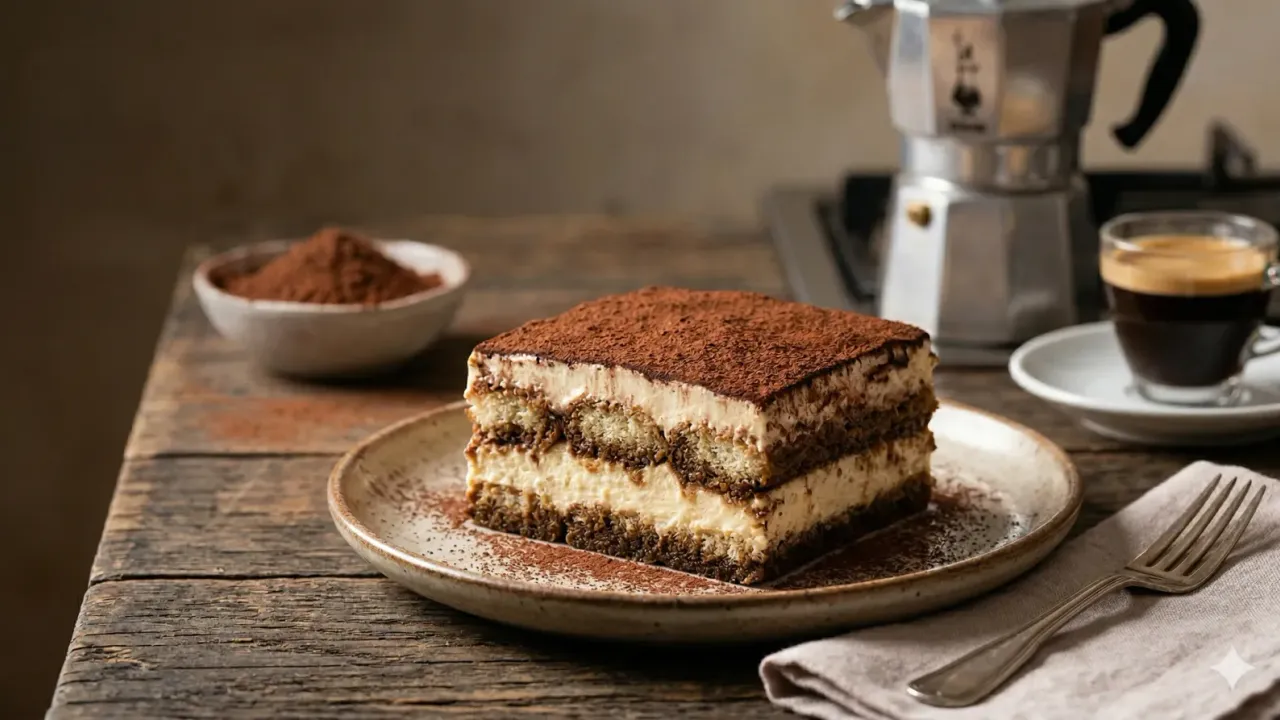
Tiramisu is Italy’s most beloved no-bake dessert, and this recipe brings every layer of its coffee-soaked magic to your kitchen. Silky mascarpone cream alternates with espresso-dipped ladyfingers in a dish that tastes like it came from a Roman trattoria. You do not need an oven, and the technique is far simpler than most people expect. A generous dusting of cocoa powder finishes the whole thing beautifully.
Prep Time: 30 minutes | Cook Time: 0 minutes (no bake) | Chill Time: 6-24 hours | Servings: 8
Difficulty: Medium | Calories: ~380 per serving
What Makes Tiramisu Special?
Tiramisu stands apart from other desserts because of its layered architecture. Each bite delivers three distinct textures at once. The ladyfingers contribute a soft, sponge-like base that melts on your tongue. Meanwhile, the mascarpone cream adds cloud-like richness. On top, bitter cocoa powder provides a sharp contrast that pulls everything into balance. No single component carries the dish alone. Instead, the layers depend on one another to create something greater than their parts.
The flavor profile of tiramisu is equally complex. Strong espresso brings deep, roasted bitterness. Sugar tempers that bitterness and rounds out the cream. Mascarpone delivers a mild tang with extraordinary smoothness. A touch of coffee liqueur or rum adds warmth and depth. Furthermore, the overnight chill allows these flavors to meld and deepen. You taste something different with every spoonful because the espresso saturates the ladyfingers unevenly. Consequently, some bites lean more toward coffee while others favor the sweet cream.
What truly sets tiramisu apart is its simplicity. There is no baking involved. You do not need a mixer, a springform pan, or a candy thermometer. The dessert comes together in about 30 minutes of active work, and then the refrigerator does the rest. Despite this ease, the result looks and tastes like the work of a pastry chef. That contrast between effortless preparation and stunning presentation is exactly why tiramisu has become one of the most famous desserts in the world.

Choosing the Right Mascarpone for Tiramisu
Mascarpone is the heart of every great tiramisu. This Italian cream cheese has a higher fat content than regular cream cheese, which gives the dessert its signature silky texture. Not all brands perform equally, so choosing wisely makes a noticeable difference. Below are your best options and what to consider.
- Imported Italian mascarpone (best choice): Brands like Galbani or BelGioioso deliver the smoothest texture and most authentic flavor. They contain just cream and citric acid, with no stabilizers or gums. The result is a cream that folds effortlessly and melts on the tongue.
- Domestic mascarpone: Many local brands work well for tiramisu. Check the label for minimal ingredients. Avoid any brand that lists carrageenan or locust bean gum, as these thickeners create a gummy texture. Domestic mascarpone typically costs less and is easier to find in regular grocery stores.
- Cream cheese substitute: If mascarpone is unavailable, blend 8 ounces of cream cheese with a quarter cup of heavy cream and 2 tablespoons of sour cream. This mixture approximates mascarpone’s richness. However, the flavor will be tangier and the texture slightly denser than the original.
- Temperature matters: Always bring mascarpone to room temperature before using it. Cold mascarpone creates lumps when mixed with the egg yolk base. Pull it from the fridge at least 30 minutes ahead. Room-temperature mascarpone blends into a perfectly smooth cream without any effort.
Ingredients for Tiramisu
Mascarpone Cream:
- 6 large egg yolks
- 3/4 cup (150g) granulated sugar
- 16 oz (450g) mascarpone cheese, at room temperature
- 2 cups (480ml) heavy whipping cream
- 1 teaspoon pure vanilla extract
- Pinch of fine sea salt
Espresso Dip:
- 2 cups (480ml) strong brewed espresso, cooled to room temperature
- 3 tablespoons coffee liqueur (such as Kahlua) or dark rum (optional)
Assembly:
- 1 package (7 oz / 200g) Italian savoiardi ladyfingers, about 30 pieces
- 2-3 tablespoons unsweetened cocoa powder, for dusting
Pro tip: Use freshly brewed espresso rather than instant coffee for the richest flavor. Brew it strong and let it cool completely before dipping. Warm espresso melts the ladyfingers on contact and creates a mushy layer. Additionally, the coffee liqueur is optional but highly recommended. It adds a subtle warmth that elevates the entire dessert without making it taste boozy.
Step-by-Step Instructions
Step 1: Make the Mascarpone Cream
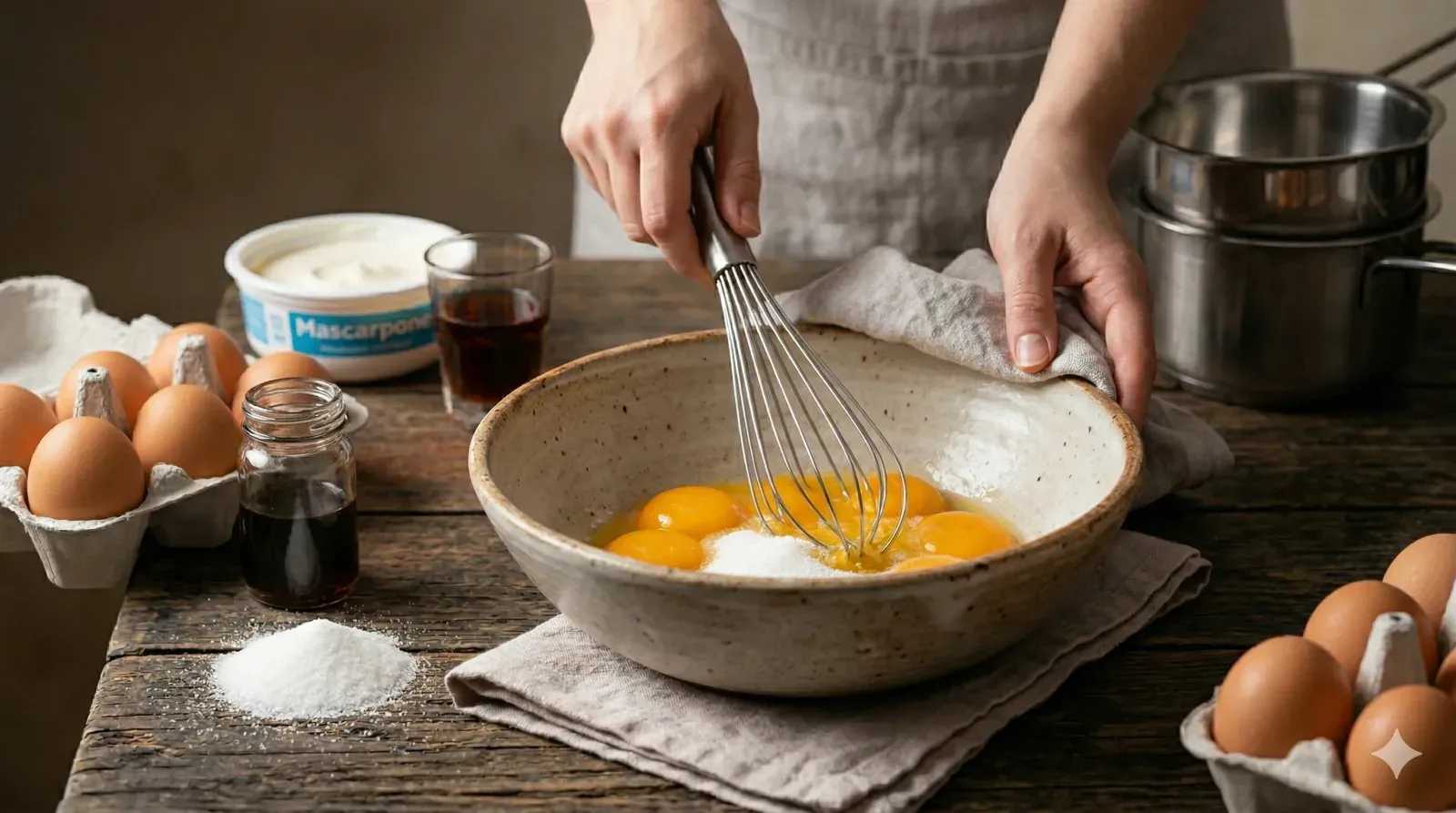
1 Place the egg yolks and sugar in a large heatproof bowl. Whisk them together vigorously until the mixture turns pale yellow and thickens slightly. This takes about 2 minutes of steady whisking. Set the bowl over a pot of gently simmering water. The bottom of the bowl should not touch the water directly.
Continue whisking over the steam for 8 to 10 minutes. The mixture will expand in volume and reach 160 degrees Fahrenheit. This step pasteurizes the egg yolks, making them safe to eat without further cooking. Remove the bowl from the heat and let it cool for 5 minutes. Then add the mascarpone and vanilla extract. Fold gently with a rubber spatula until completely smooth. Avoid overmixing, as mascarpone can become grainy if worked too hard.
Step 2: Whip the Cream
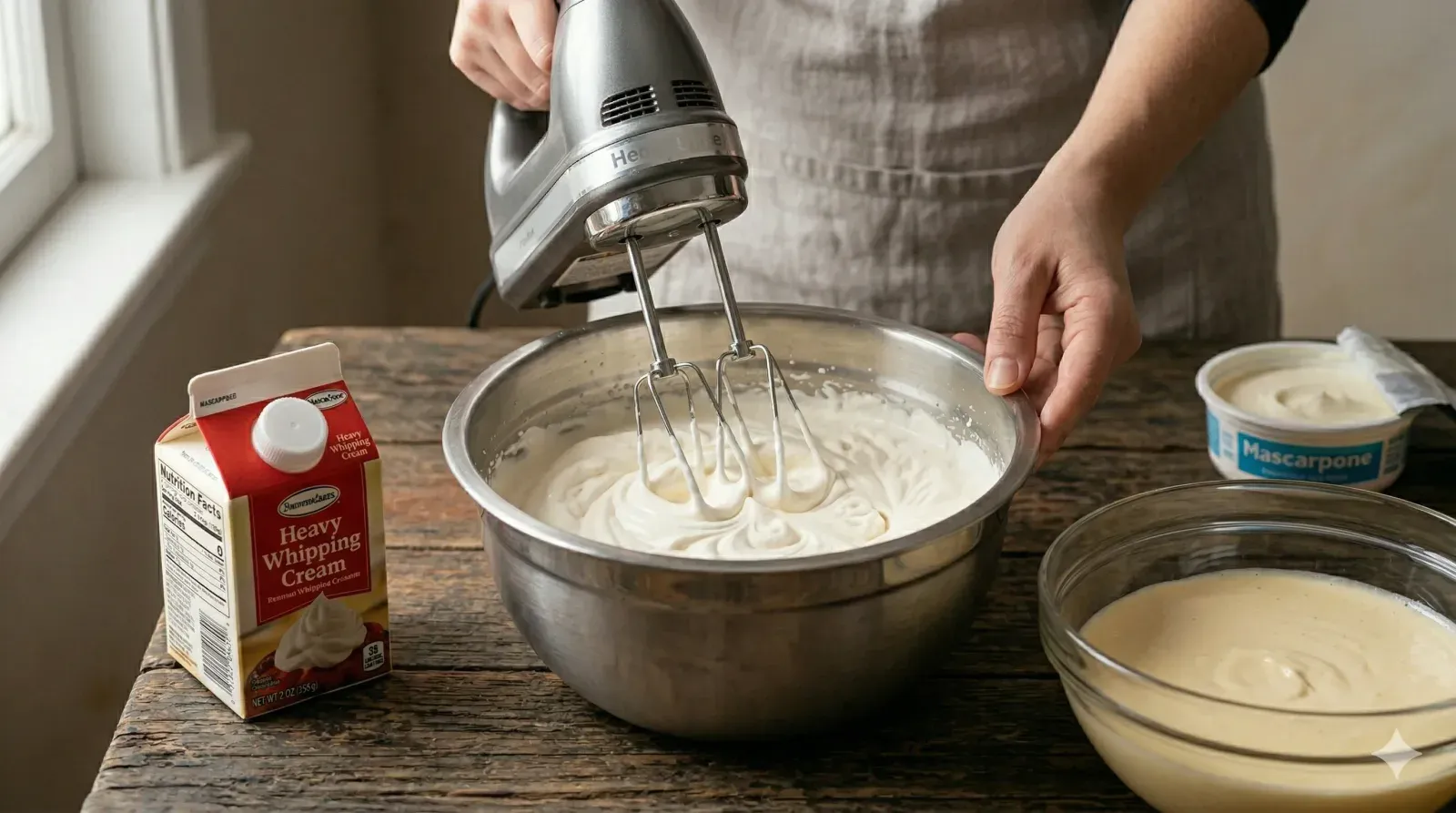
2 Pour the heavy cream and a pinch of salt into a large, chilled bowl. Use a hand mixer or stand mixer to beat the cream on medium-high speed. Whip until stiff peaks form, which usually takes 3 to 4 minutes. The cream should hold its shape firmly when you lift the beaters.
Now fold the whipped cream into the mascarpone mixture. Add it in three separate additions rather than all at once. Use a large rubber spatula and cut down through the center, then sweep along the bottom and up the side. Rotate the bowl a quarter turn and repeat. This folding technique preserves the air you whipped into the cream. As a result, the final filling stays light and mousse-like rather than dense and heavy.
Step 3: Prepare the Espresso Dip
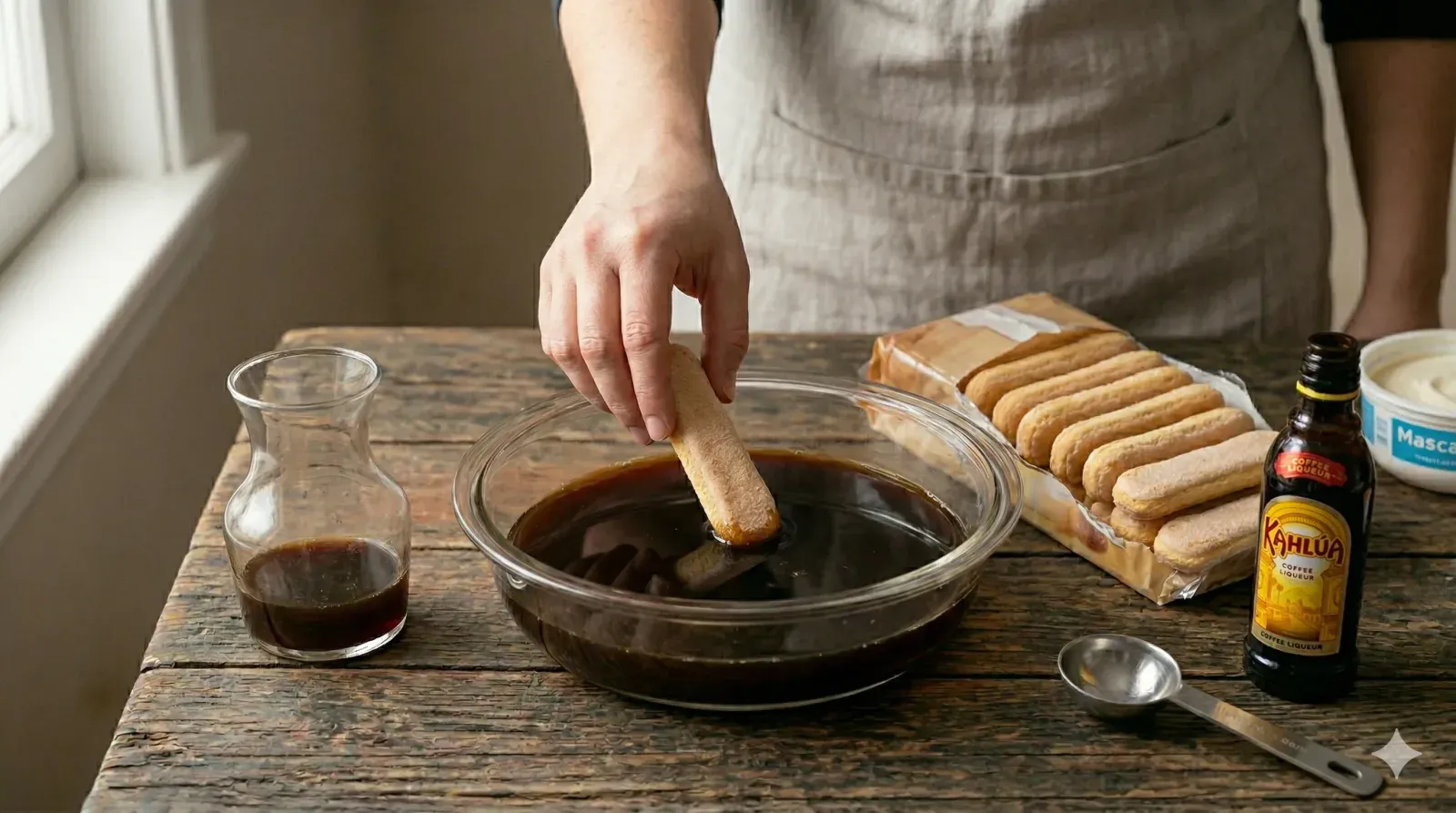
3 Pour the cooled espresso into a shallow dish or wide bowl. Stir in the coffee liqueur if using. Take one ladyfinger at a time and dip it quickly into the espresso. Submerge each side for just 1 to 2 seconds. The ladyfinger should absorb some coffee but remain firm enough to handle.
This step requires restraint. Soaking the ladyfingers too long is the most common mistake in making tiramisu. Oversaturated cookies disintegrate during assembly and create a soggy bottom layer. In contrast, a quick dip gives you ladyfingers that soften gradually as the dessert chills. They absorb moisture from the cream over several hours. Therefore, the final texture is soft and yielding without ever turning mushy. Work quickly and resist the temptation to let them sit in the espresso.
Step 4: Assemble and Chill
4 Arrange a single layer of dipped ladyfingers in the bottom of a 9x13-inch dish. Place them snugly side by side. Spread half of the mascarpone cream evenly over the top using an offset spatula. Smooth the surface gently without pressing down on the ladyfingers beneath.
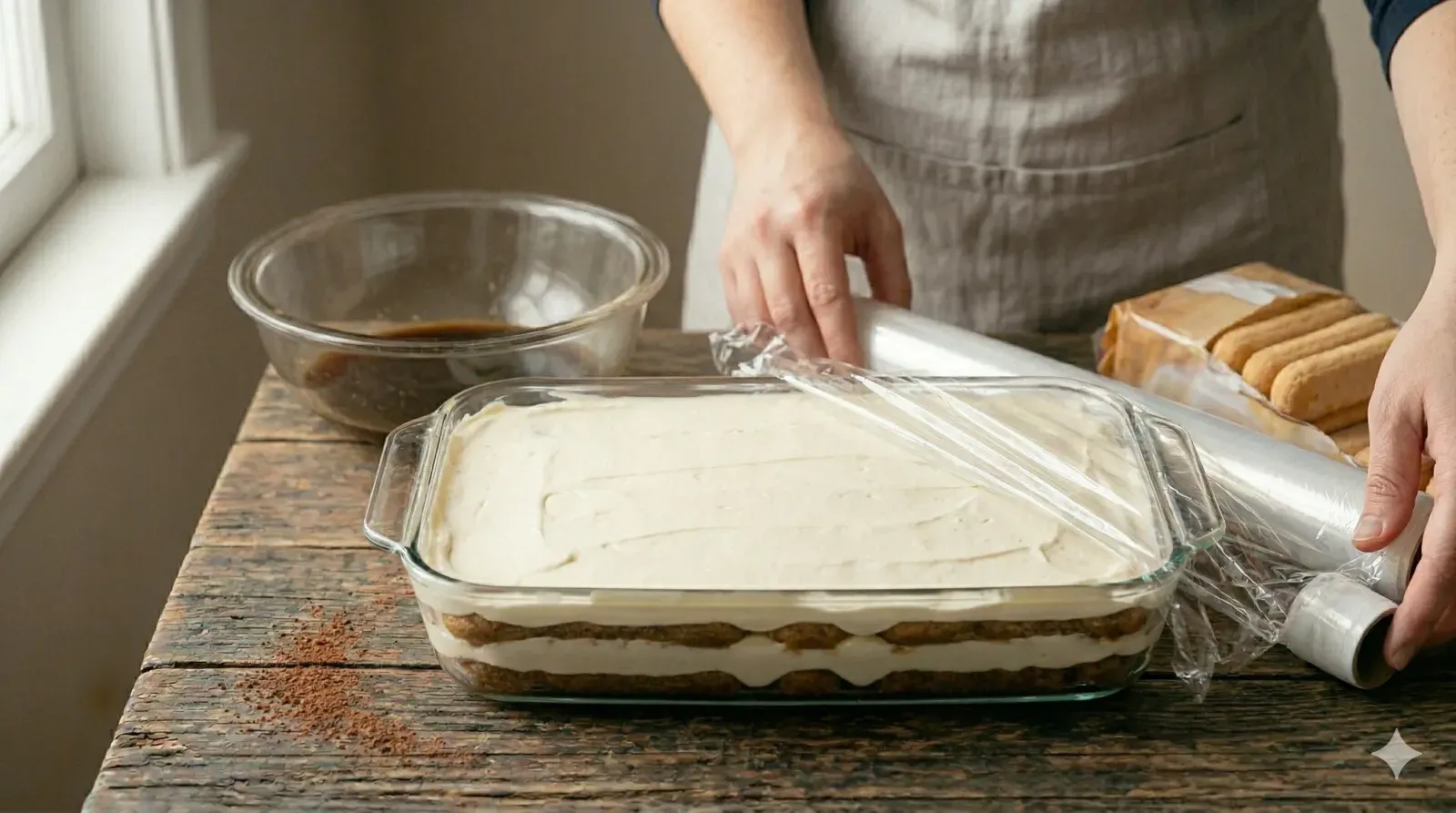
Repeat with a second layer of dipped ladyfingers, followed by the remaining mascarpone cream. Smooth the top layer carefully. Sift a generous amount of cocoa powder over the entire surface through a fine mesh strainer. Cover the dish tightly with plastic wrap. Refrigerate for a minimum of 6 hours. However, overnight chilling of 12 to 24 hours delivers the best flavor and texture. During this time, the espresso migrates through the layers and the cream firms into a sliceable consistency.
Expert Tips for Perfect Tiramisu
Use Real Espresso, Not Instant
The coffee component defines the character of your tiramisu. Real espresso has a concentrated, bittersweet depth that instant coffee simply cannot match. Instead, brew a strong batch using a moka pot, espresso machine, or even a French press with finely ground dark roast. Let it cool completely before dipping. If you only have instant coffee, dissolve 3 tablespoons of high-quality instant espresso in 2 cups of hot water. Nevertheless, fresh-brewed espresso produces a noticeably superior result.
Dip the Ladyfingers Quickly
Speed matters during the dipping step. Therefore, hold each ladyfinger horizontally and submerge it for no more than 2 seconds per side. The dry, airy texture of savoiardi absorbs liquid incredibly fast. Even a few extra seconds turns them from pleasantly soft to completely waterlogged. A quick dip leaves the center slightly dry, which is exactly what you want. After all, the cream and resting time handle the rest of the softening process.
Chill Overnight for Best Results
Patience transforms good tiramisu into great tiramisu. While 6 hours in the fridge sets the cream enough to slice, an overnight chill takes the dessert to another level. The espresso distributes more evenly through the ladyfingers. The mascarpone cream firms to a perfect consistency. Moreover, the flavors marry together so that no single element dominates. Plan to assemble your tiramisu the day before you intend to serve it. Your future self will thank you for the wait.
Tiramisu Around the World: A Regional Comparison
While tiramisu originated in northern Italy, the dessert has inspired countless variations across different regions and countries. Each version brings its own twist to the classic formula. Here is how the most popular styles compare.
| Style | Region / Country | Key Difference | Signature Element |
|---|---|---|---|
| Classic Tiramisu | Veneto, Italy | Traditional recipe with raw or pasteurized egg yolks | Savoiardi, espresso, mascarpone, cocoa |
| Piemontese Tiramisu | Piedmont, Italy | Uses zabaglione (warm egg custard with Marsala wine) | Marsala wine in the cream layer |
| Strawberry Tiramisu | Modern Italian / International | Replaces espresso with strawberry puree | Fresh berries, no coffee component |
| Matcha Tiramisu | Japan | Green tea replaces espresso entirely | Matcha-soaked ladyfingers, matcha dusting |
| Limoncello Tiramisu | Southern Italy | Lemon curd and limoncello replace coffee | Bright citrus flavor, summer dessert |
Serving Suggestions
Tiramisu is rich enough to serve on its own. However, thoughtful pairings elevate the experience even further. Consider the occasion and your guests when deciding how to present this classic Italian dessert.
Plating Ideas:
- Family-style from the dish: Bring the entire 9x13 dish to the table and scoop portions at the table. This casual approach works perfectly for dinner parties and family gatherings.
- Individual glass portions: Layer the tiramisu in clear glasses, wine goblets, or mason jars for an elegant single-serve presentation. Guests can see the beautiful layers of cream and coffee-soaked ladyfingers.
- Garnish options: Add chocolate shavings, a few whole coffee beans, or fresh berries on top right before serving. A mint sprig adds a pop of color. Dust with fresh cocoa powder at the table for dramatic effect.
Beverage Pairings:
- Espresso: A small cup of espresso alongside tiramisu doubles down on the coffee flavor. The bitter, concentrated shot cleanses the palate between rich, creamy bites. This is the most traditional Italian pairing.
- Vin Santo: This Tuscan dessert wine has notes of honey, apricot, and toasted nuts. Its sweetness complements the bitterness of the cocoa and espresso beautifully. Serve it slightly chilled for the best balance.
- Prosecco: The lively bubbles of a dry prosecco cut through the richness of the mascarpone. This pairing feels festive and light. It works especially well at celebrations and holiday gatherings.
- Amaretto or Frangelico: A small glass of either Italian liqueur echoes the nutty, sweet flavors in the dessert. Sip it slowly alongside your tiramisu for a truly Italian end to the meal.
Storage and Reheating
Refrigerator: Cover the dish tightly with plastic wrap and store in the fridge for up to 4 days. The tiramisu actually improves on the second and third day as the flavors continue to develop. Keep it away from strong-smelling foods, as mascarpone absorbs odors easily. Dust with fresh cocoa powder just before serving each portion.
Freezer: Tiramisu freezes well for up to 2 months. Cover the dish first with plastic wrap, then with a layer of aluminum foil. Thaw overnight in the refrigerator. The texture will be slightly softer than fresh, but the flavor remains excellent. Add a fresh dusting of cocoa powder after thawing. In addition, individual portions freeze and thaw more evenly than a full pan.
Reheating note: Tiramisu is served cold and should never be heated. Simply remove it from the fridge 10 to 15 minutes before serving. This brief rest at room temperature allows the cream to soften slightly and the flavors to open up. A too-cold tiramisu tastes muted, while one left out too long loses its structure. Therefore, a short rest on the counter is the perfect finishing touch.
Common Mistakes to Avoid
1. Over-Soaking the Ladyfingers
This is the number one mistake that ruins homemade tiramisu. Ladyfingers that sit in espresso for more than a few seconds absorb too much liquid. They fall apart during assembly and create a soggy, shapeless mess at the bottom. Instead, dip each one quickly and move on. The cream and chilling time provide plenty of additional moisture. Trust the process and keep your dips brief.
2. Using Cold Mascarpone
Cold mascarpone straight from the fridge forms stubborn lumps when mixed with the egg yolk base. These lumps never fully dissolve, leaving grainy patches in your cream. Instead, set the mascarpone on the counter at least 30 minutes before you begin. Room-temperature cheese blends smoothly into a silky, uniform mixture. On the other hand, overworking cold mascarpone to remove lumps can deflate the cream entirely.
3. Skipping the Chilling Time
Serving tiramisu too early gives you a sloppy, runny dessert that falls apart when scooped. In fact, the chilling period is not optional. During those hours, the cream firms up and the ladyfingers reach their ideal texture. A minimum of 6 hours is necessary. Overnight is better. Cutting corners on chill time undermines all the careful work you put into assembly.
4. Using the Wrong Ladyfingers
Soft, cake-like ladyfingers sold in the bakery section are not suitable for tiramisu. Unfortunately, they dissolve instantly in espresso. You need savoiardi, the dry, crunchy Italian ladyfingers sold in a package. Their firm texture withstands the dip and softens gradually during chilling. Look for them in the cookie aisle or the Italian food section. Savoiardi are widely available at most grocery stores and online.
Frequently Asked Questions
Does tiramisu contain raw eggs?
Traditional tiramisu uses raw egg yolks in the mascarpone cream. However, this recipe heats the yolks with sugar over a double boiler to 160 degrees Fahrenheit. That temperature pasteurizes them completely. You get the same silky richness without any food safety concerns. This method is especially important when serving tiramisu to children, elderly guests, or anyone with a compromised immune system.
How long does tiramisu need to set in the fridge?
A minimum of 6 hours in the refrigerator is essential. During this time, the ladyfingers absorb moisture from the cream and espresso, creating the signature soft texture. The cream also firms enough to hold its shape when sliced. For the best results, chill the tiramisu overnight for 12 to 24 hours. The flavors meld together more fully, and the texture becomes beautifully uniform from top to bottom.
Can I make tiramisu without coffee or alcohol?
Absolutely. Replace the espresso with strong brewed decaf coffee for a caffeine-free version. You can also use warm milk mixed with 2 tablespoons of cocoa powder for a completely coffee-free alternative. The coffee liqueur in this recipe is already listed as optional. For a family-friendly version, simply skip the alcohol and use plain espresso or decaf. The dessert still tastes wonderful without it.
What can I use instead of mascarpone cheese?
Blend 8 ounces of cream cheese with a quarter cup of heavy cream and 2 tablespoons of sour cream. Process until smooth. This combination closely mimics mascarpone’s creamy texture and mild tang. Whipped ricotta is another option, though it produces a lighter, grainier filling. Nevertheless, authentic mascarpone delivers the smoothest consistency and best flavor for a proper tiramisu.
How long does homemade tiramisu last in the fridge?
Homemade tiramisu keeps well for up to 4 days when covered tightly. The texture actually peaks on day 2 or 3 as the espresso distributes evenly and the flavors mature. After day 4, the ladyfingers begin to break down and the cream softens excessively. Always cover the dish with plastic wrap to prevent the cream from absorbing fridge odors. Consequently, making tiramisu a day ahead is actually the best strategy.
Can I freeze tiramisu?
Yes, tiramisu freezes beautifully for up to 2 months. Wrap the dish in plastic wrap and then aluminum foil to prevent freezer burn. Thaw it overnight in the refrigerator before serving. The texture will be slightly softer than fresh tiramisu. However, the flavor remains excellent. Dust with a fresh layer of cocoa powder after thawing for the best visual presentation. Individual portions also freeze well in sealed containers.
Variations and Adaptations
Strawberry Tiramisu:
Replace the espresso dip entirely with pureed fresh strawberries mixed with a tablespoon of sugar. Dip the ladyfingers in this berry mixture for a fruity, coffee-free version. Layer sliced strawberries between the mascarpone cream. This variation is perfect for spring and summer gatherings. It also works well for guests who avoid caffeine. The bright pink layers look stunning when served in clear glasses.
Matcha Tiramisu:
Dissolve 2 tablespoons of high-quality matcha powder in warm milk for the dipping liquid. Add another tablespoon of matcha to the mascarpone cream for color and flavor. Dust the top with matcha instead of cocoa powder. This Japanese-inspired twist delivers a delicate, earthy sweetness. The vibrant green color makes it a showstopper at any dinner party. Furthermore, matcha provides a gentler caffeine boost than espresso.
Limoncello Tiramisu:
Swap the espresso for a mixture of lemon juice, water, and limoncello. Add lemon zest and a tablespoon of lemon curd to the mascarpone cream. This southern Italian variation is bright, refreshing, and perfect for warm weather. Skip the cocoa dusting and top with powdered sugar and candied lemon peel instead. The citrus cuts through the richness of the mascarpone beautifully.
Chocolate Tiramisu:
Melt 4 ounces of dark chocolate and fold it into the mascarpone cream for an intensely rich version. Keep the espresso dip as written. Add a thin layer of chocolate ganache between the ladyfinger and cream layers. Top with both cocoa powder and chocolate shavings. This variation satisfies serious chocolate cravings while still honoring the original tiramisu format. Serve small portions, as the richness is considerable.
The Cultural Significance of Tiramisu
Tiramisu holds a special place in Italian culinary heritage. The name translates to “pick me up” or “lift me up,” a nod to the espresso and sugar that provide a gentle energy boost. While the exact origin is debated, most food historians trace it to the Veneto region in the 1960s or 1970s. The restaurant Le Beccherie in Treviso and several establishments in Friuli Venezia Giulia each claim to have invented the dish. Regardless of who made it first, tiramisu quickly became a national treasure.
By the 1980s, tiramisu had spread beyond Italy to restaurants across Europe and North America. Its appeal was universal. The dessert required no special equipment, used ingredients available in most Western countries, and tasted extraordinary. Italian immigrants and traveling chefs introduced it to new audiences who fell in love immediately. Within a decade, tiramisu appeared on dessert menus from New York to Tokyo. Today it ranks consistently among the most searched dessert recipes worldwide.
In modern Italy, tiramisu remains a staple of home cooking and restaurant menus alike. Nonnas pass their personal recipes down through generations. Regional variations reflect local tastes and available ingredients. Southern versions might use limoncello, while northern ones stay true to the espresso-and-mascarpone original. Every Italian family believes their version is the best. That passionate sense of ownership speaks volumes about how deeply this dessert is woven into the fabric of Italian life and identity.
Conclusion
This tiramisu recipe delivers an authentic Italian dessert that rivals anything you would find in Rome or Venice. The technique is straightforward. Whisk the egg yolks, fold in the mascarpone and whipped cream, dip the ladyfingers quickly, and layer everything in a dish. Then let the refrigerator do the heavy lifting overnight. The result is a dessert with layers of coffee-soaked sponge, billowy mascarpone cream, and a bitter cocoa finish that lingers beautifully.
Ready to explore more beloved European recipes? Browse our European dishes collection for classics like carbonara, risotto alla Milanese, and crepes. Each recipe features the same detailed, step-by-step approach to bring world cuisine to your kitchen.