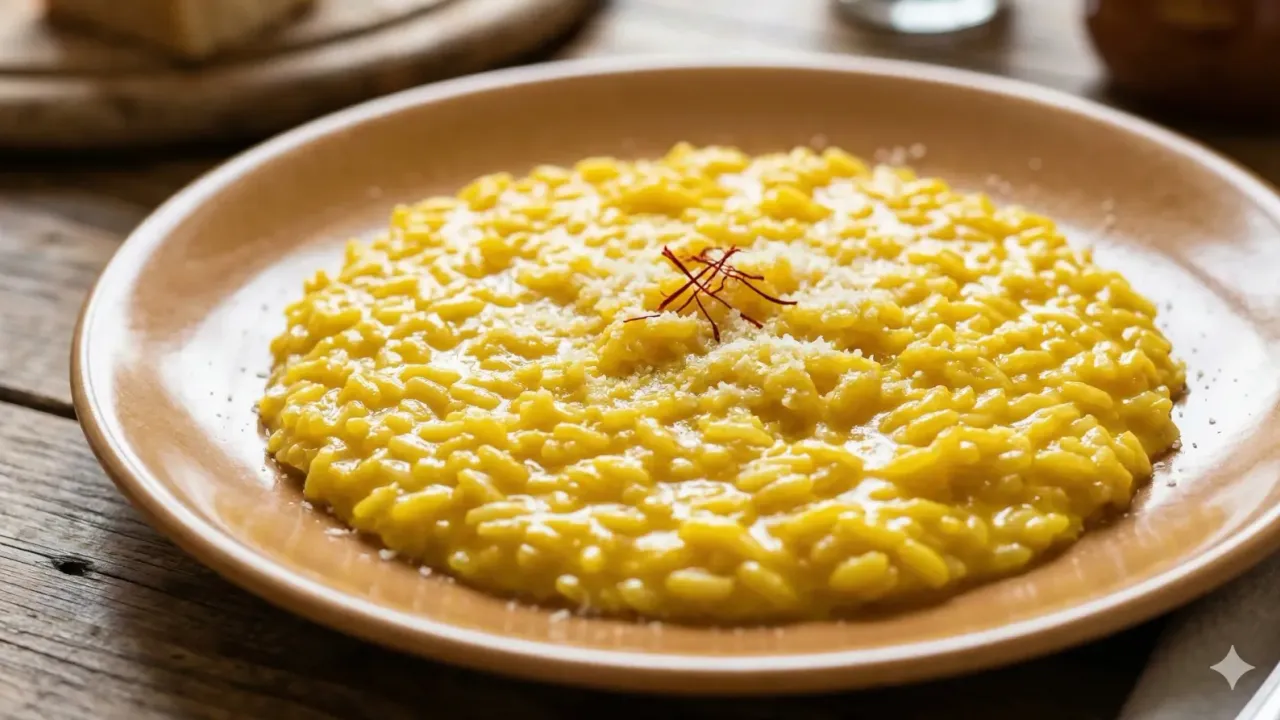
Risotto alla milanese is the golden crown jewel of Milanese cooking, a dish so revered in northern Italy that tampering with its simplicity is considered almost heretical. This saffron risotto recipe produces a plate of extraordinary beauty: grains of carnaroli rice suspended in a glossy, golden-hued cream, perfumed by the world’s most expensive spice. Unlike busier risottos loaded with mushrooms or seafood, risotto alla milanese strips the dish down to its essence — rice, saffron, butter, broth, and Parmigiano-Reggiano — and trusts that technique will elevate these few ingredients into something unforgettable.
Prep Time: 10 minutes | Cook Time: 25 minutes | Servings: 4
Difficulty: Medium | Calories: ~480 per serving
What Makes Risotto alla Milanese Special?
Risotto alla milanese is not simply risotto with saffron sprinkled in. It is a specific dish with a defined technique, rooted in the kitchens of Milan since at least the 16th century. The legend says that a glassblower’s apprentice in the Milan Cathedral, who used saffron to color stained glass, added the spice to rice at a wedding feast as a joke. The golden rice was such a sensation that it became a permanent fixture of Milanese tables. Whether the story is true or not, the dish has endured for centuries because the combination of saffron’s floral, honey-like warmth with rich bone marrow butter and sharp Parmigiano-Reggiano creates a flavor profile that is at once delicate and deeply satisfying.
What separates a great risotto alla milanese from a mediocre one is the technique called mantecatura — the final off-heat step where cold butter and cheese are beaten into the rice to create a creamy emulsion. This is not a step you can skip or rush. The vigorous stirring forces the starch released by the rice to bind with the fat from butter and cheese, forming a velvety sauce that coats every grain. A properly made risotto alla milanese should flow like lava across the plate when served, not sit in a stiff pile. Italians call this consistency “all’onda” — like a wave.
The other non-negotiable element is the saffron itself. Real saffron threads from Crocus sativus flowers give the dish its signature color and a complex flavor that sits somewhere between honey, hay, and metallic earth. No substitute — not turmeric, not safflower, not annatto — replicates the actual taste of saffron. This is a dish worth buying the real thing for, and a small pinch goes a long way.
Choosing the Right Rice for Risotto alla Milanese
The rice you use makes or breaks this dish. Italian risotto rice varieties have a high amylopectin starch content that dissolves during cooking and creates the characteristic creaminess. Here are your options, ranked from best to acceptable.
- Carnaroli (best choice): Known as the “king of risotto rice” in Italy. Carnaroli has the highest starch content and a firm core that resists overcooking. It gives you the widest window of doneness, meaning you are less likely to end up with mush. This is the rice that Milanese chefs reach for.
- Arborio (widely available): The most common risotto rice outside of Italy. Arborio is plump and starchy but softens faster than carnaroli. It makes a good risotto alla milanese, though you need to watch the timing more closely to avoid overcooking. Available in most supermarkets.
- Vialone Nano (Veneto favorite): A shorter, rounder grain that absorbs broth quickly and produces a looser risotto. It is the traditional choice in the Veneto region. It works well for risotto alla milanese if you prefer a slightly soupier consistency.
Ingredients for Risotto alla Milanese
Main Ingredients:
- 1 1/2 cups (300g) carnaroli or arborio rice
- 1/4 teaspoon saffron threads (about 30 threads)
- 5 cups warm chicken or beef bone broth
- 1 medium yellow onion, finely diced
- 3 tablespoons unsalted butter, divided (1 tbsp for cooking, 2 tbsp cold for mantecatura)
- 2 tablespoons beef bone marrow (optional but traditional)
- 1/2 cup dry white wine (such as Pinot Grigio or Soave)
- 3/4 cup freshly grated Parmigiano-Reggiano, plus extra for serving
- 1 tablespoon extra virgin olive oil
- Salt to taste
- Freshly ground black pepper to taste
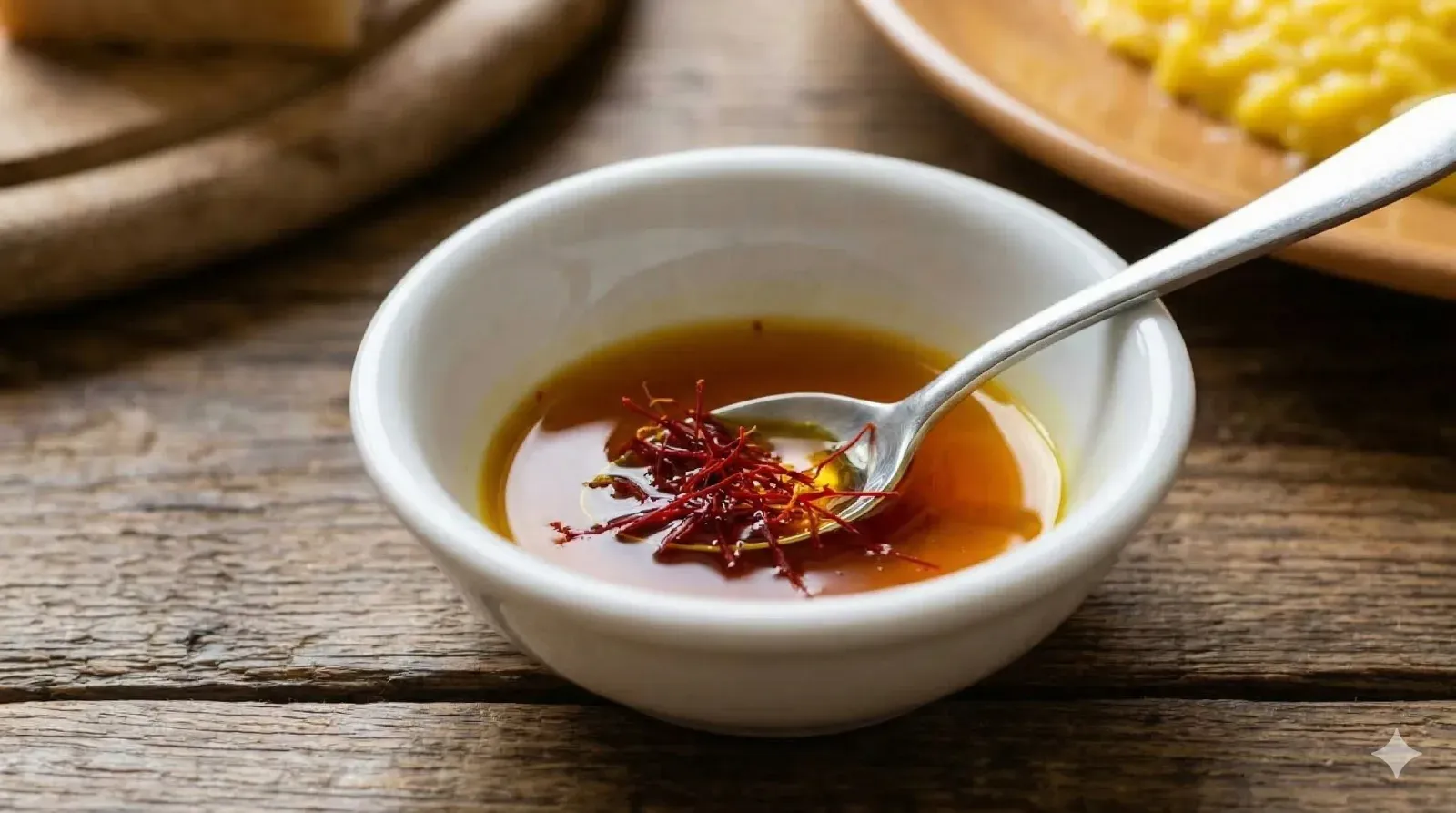
Pro tip: Always bloom your saffron in warm liquid before adding it to the risotto. Dropping dry threads straight into the pot wastes half the color and flavor. Steeping the threads for at least 10 minutes extracts the crocin (color), picrocrocin (flavor), and safranal (aroma) compounds. The liquid should turn a deep reddish-amber before you add it to the rice.
Step-by-Step Instructions
Step 1: Bloom the Saffron
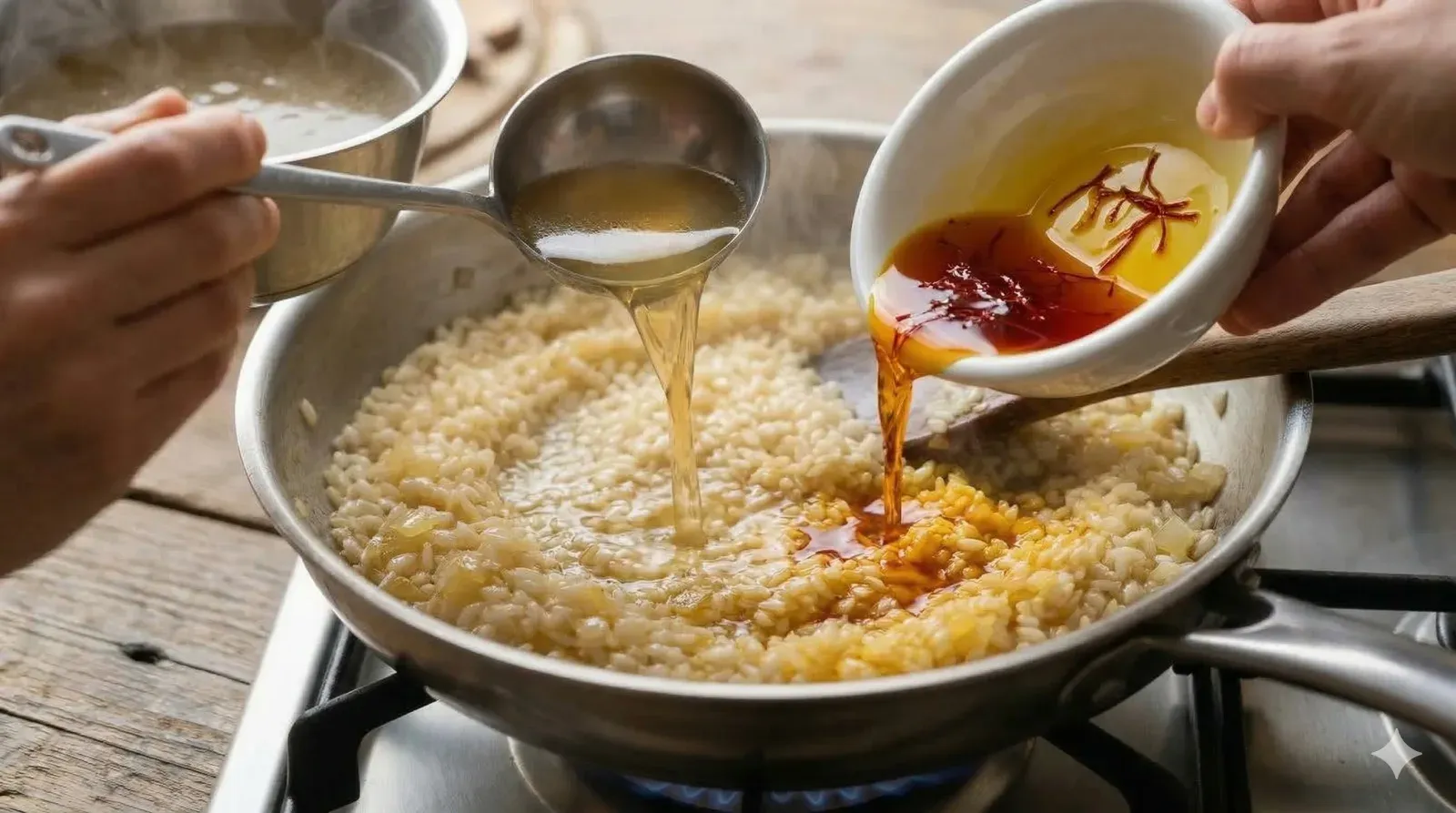
1 Warm 2 tablespoons of broth in a small bowl or cup. Drop in the saffron threads and let them steep for at least 10 minutes while you prepare the rest of the ingredients. The liquid will transform from clear to a deep, vibrant amber-gold. Gently press the threads with the back of a spoon to help release more color. This blooming step is the single most important thing you can do to get the full impact of saffron in your risotto alla milanese. Skipping it means dull color and muted flavor.
Step 2: Soffritto and Toast the Rice
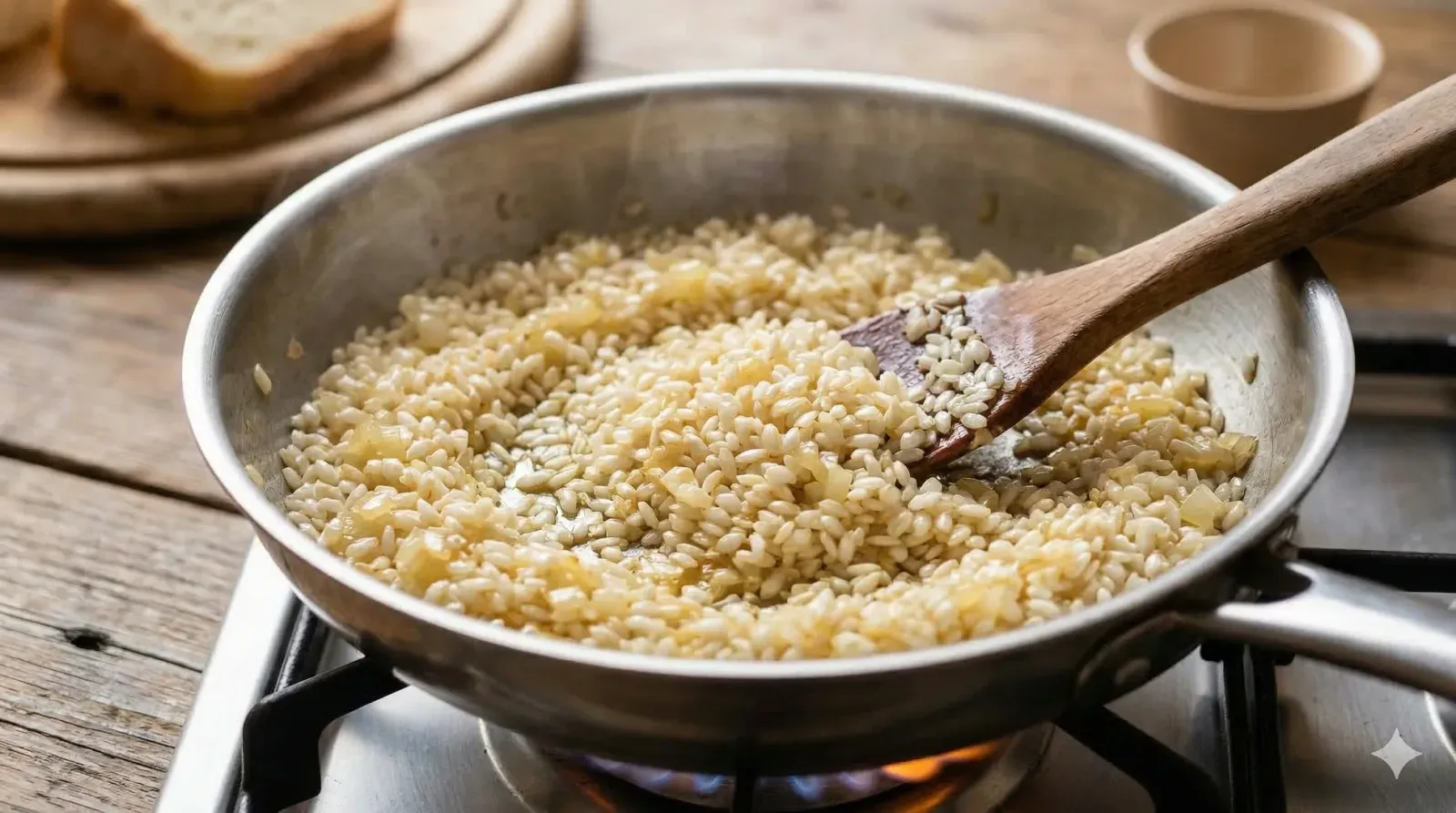
2 Set a heavy-bottomed saucepan or wide skillet over medium heat. Add the olive oil and 1 tablespoon of butter. If using bone marrow, add it now and let it melt into the fat. Once the butter foams, add the finely diced onion and cook for 3 to 4 minutes, stirring occasionally, until soft and translucent. Do not let the onion brown — you want sweetness, not caramelization. Traditional risotto alla milanese uses only onion for the soffritto. No garlic, no celery, no carrot. The purity of flavors is the point.
Add the rice to the pan and stir for 1 to 2 minutes. Each grain should be coated in the fat, and you will notice the edges turning slightly translucent while the center stays opaque. This toasting step, called tostatura, seals the outer starch layer and helps the rice maintain its structure throughout the long cooking process. You should hear a gentle clicking sound as the grains move in the pan.
Step 3: Deglaze with Wine
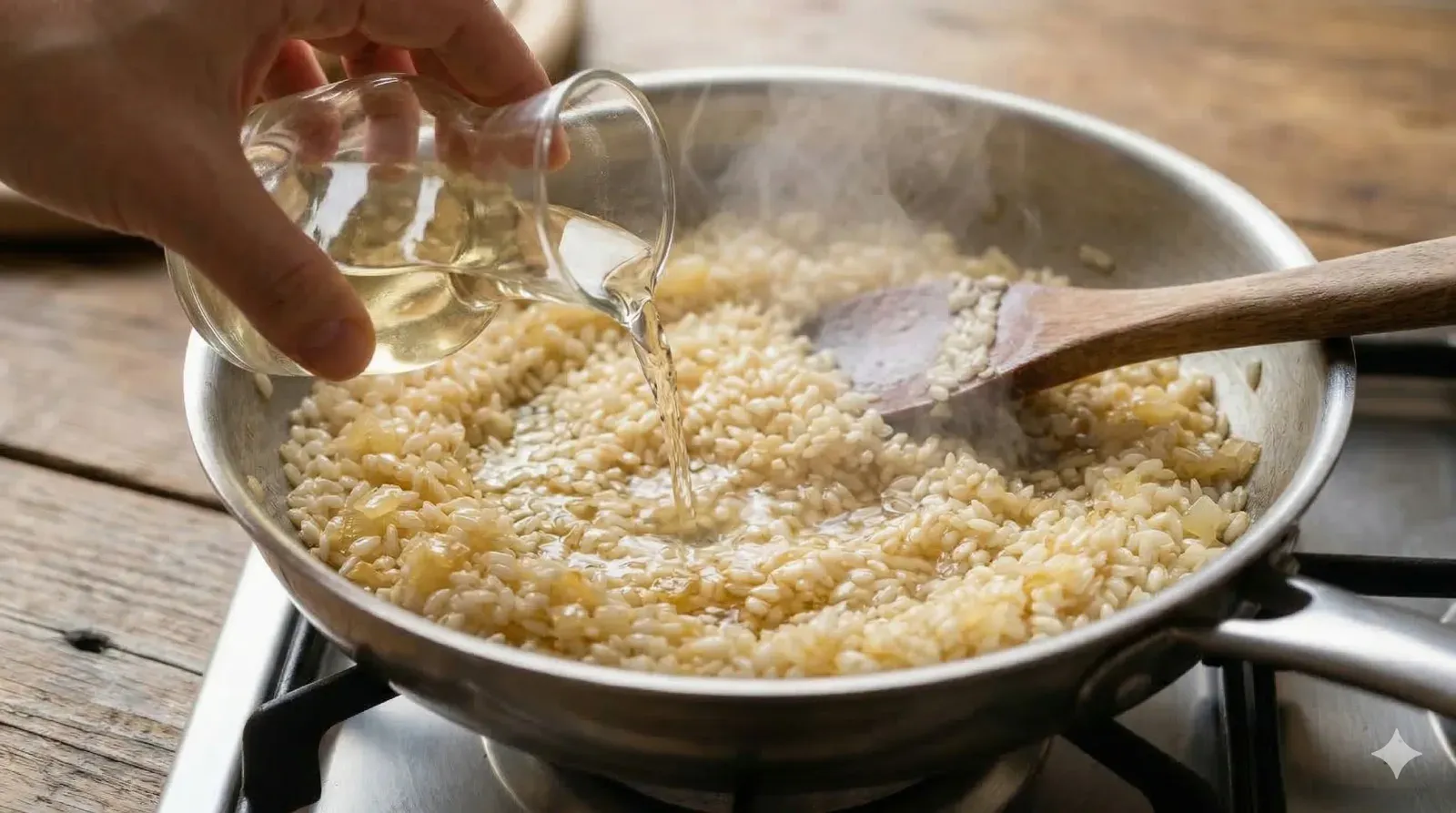
3 Pour in the white wine all at once. It will sizzle and steam as it hits the hot pan. Stir the rice continuously until the wine is fully absorbed, about 1 to 2 minutes. The wine serves two purposes: its acidity brightens the overall flavor of the risotto, and the alcohol helps dissolve flavor compounds that are not water-soluble. Use a dry, unoaked white wine. Pinot Grigio, Soave, or Vermentino all work well. Avoid anything sweet or heavily oaked, as it will throw off the delicate balance of the saffron risotto.
Step 4: Add Broth Gradually and Stir in Saffron
4 Begin adding the warm broth one ladleful at a time. Stir frequently — not frantically, but with steady, rhythmic movements that keep the rice moving without crushing the grains. Wait until each addition of broth is mostly absorbed before adding the next. The surface of the rice should look creamy with just a thin film of liquid, not soupy and not dry. Keep the heat at a steady medium. If the broth boils too hard, it evaporates before the rice can absorb it.
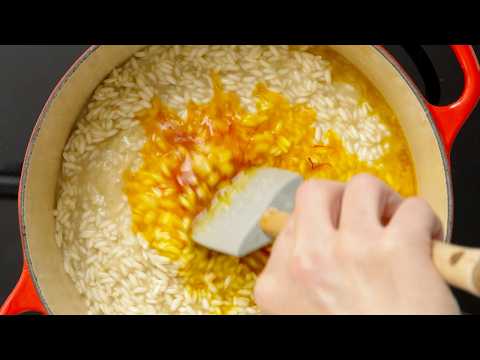
After about 10 minutes and roughly half the broth has been added, stir in the bloomed saffron along with all of its liquid. Watch the risotto transform from white to a radiant gold. Continue adding broth and stirring for another 8 to 10 minutes. The total cooking time from the first ladle of broth should be about 18 to 20 minutes. Taste a grain of rice. It should be tender on the outside with a tiny firm point in the very center — this is al dente. You may not need all the broth, or you may need slightly more. Let the rice tell you.
Step 5: Mantecatura (The Final Creaming)
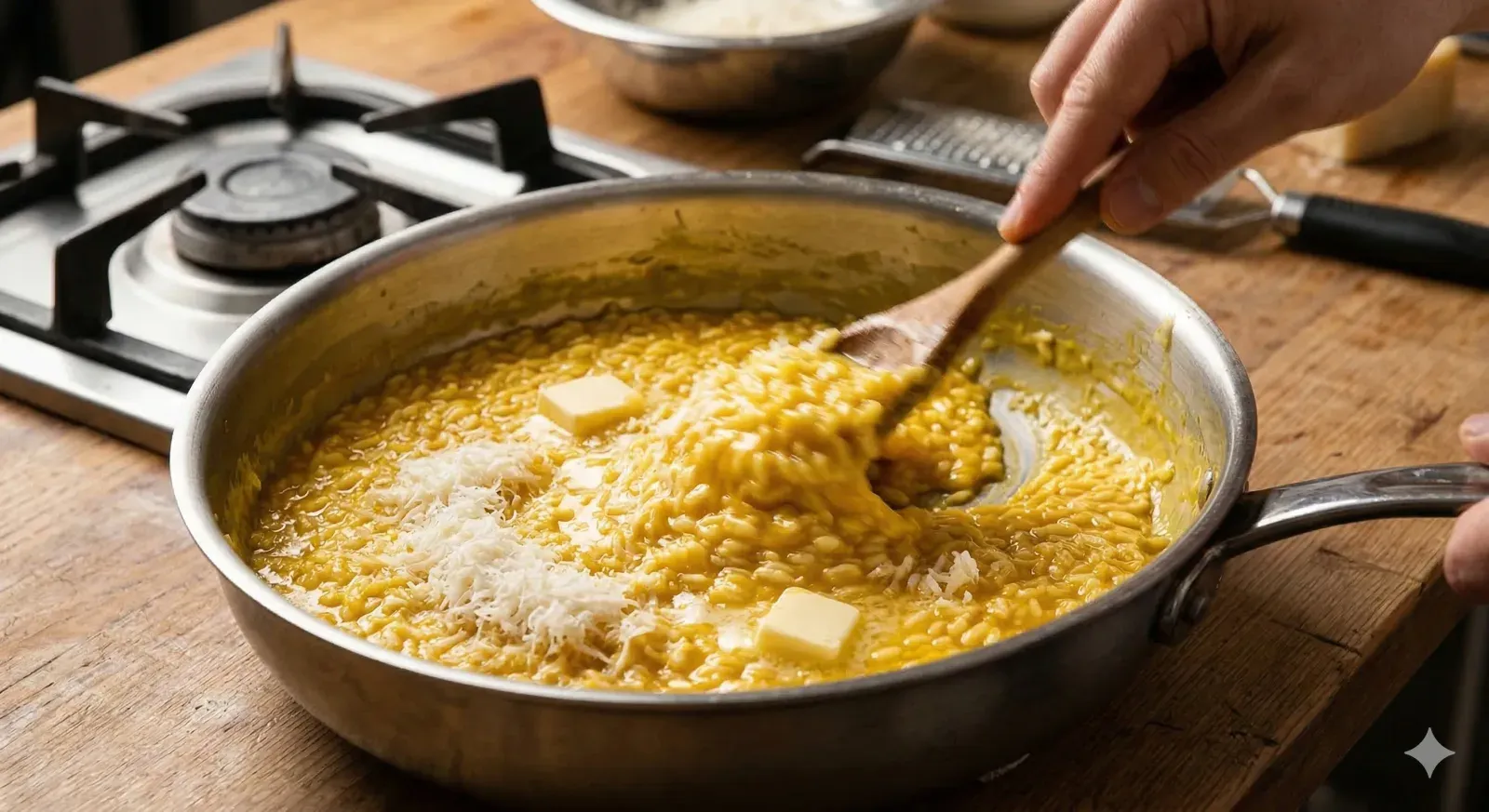
5 Remove the pan from the heat. This step is critical — mantecatura must happen off the heat so the butter emulsifies into the starch rather than melting into a greasy puddle. Add the remaining 2 tablespoons of cold butter, cut into small cubes, and all of the grated Parmigiano-Reggiano. Stir vigorously with a wooden spoon or spatula for a full 1 to 2 minutes. The risotto will tighten, then loosen into a glossy, flowing cream. The texture should be luxurious and velvety. Season with salt and a few grinds of black pepper.
Mantecatura is the technique that separates a true Italian risotto from rice cooked in broth. The cold butter creates an emulsion, and the Parmigiano adds both salt and umami depth. The starch released during cooking acts as the binder that holds this emulsion together. When done right, the risotto should coat the back of a spoon and flow in a slow wave when you tilt the pan.
Step 6: Rest and Serve
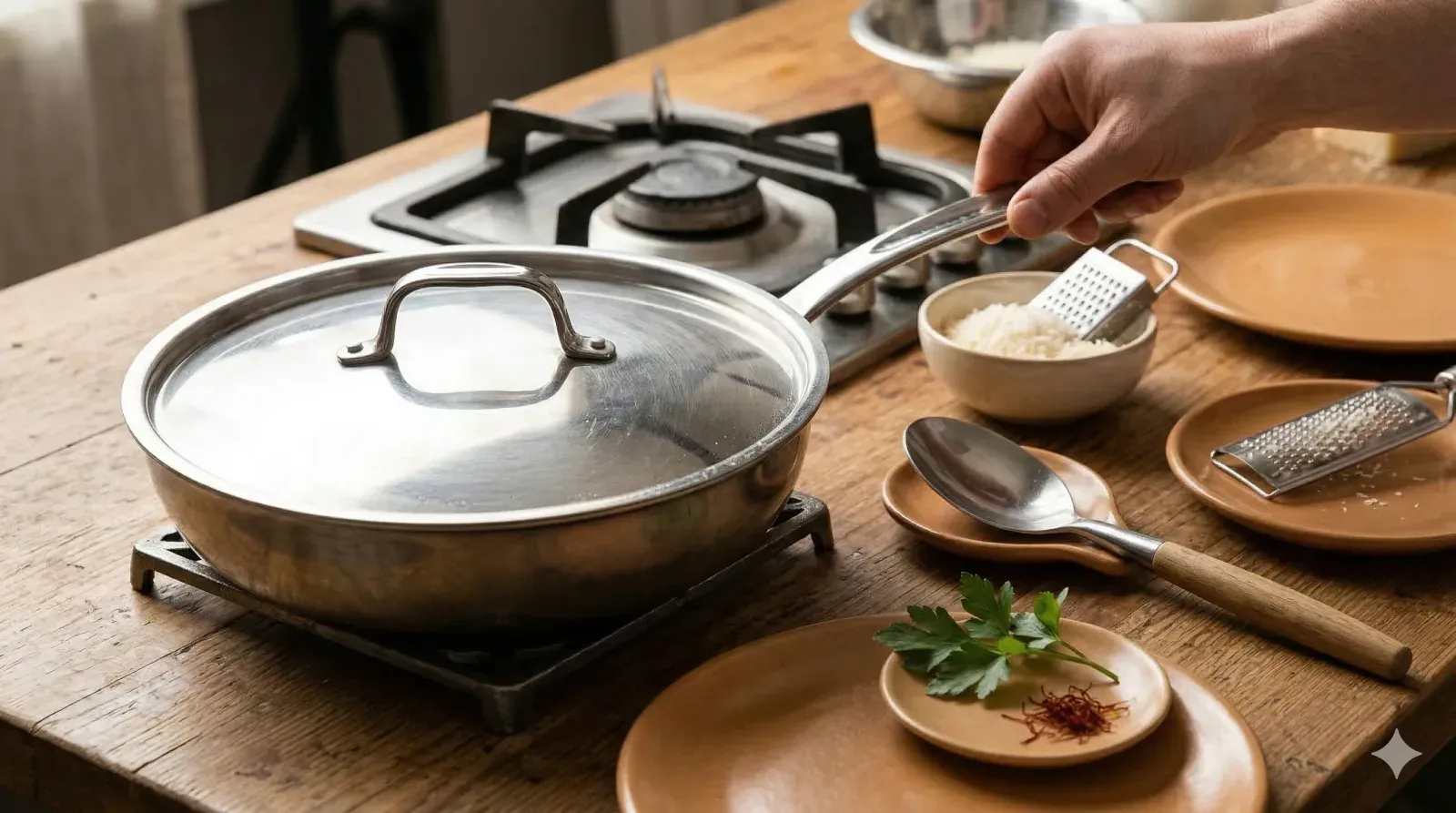
6 Cover the risotto and let it rest for 1 to 2 minutes. This brief pause allows the starches to settle and the flavors to meld. Serve immediately on warmed plates — cold plates cool the risotto too fast and it stiffens. Spoon the risotto onto the center of each plate and gently tap the plate or shake it so the rice spreads in a natural wave. It should not need any help from a spoon to flatten. If it sits in a mound and refuses to move, it is too thick — stir in another splash of warm broth before plating. Finish with a shower of extra Parmigiano-Reggiano.
Expert Tips for Perfect Risotto alla Milanese
Keep the Broth Warm
Always have your broth at a gentle simmer in a separate pot before adding it to the rice. Cold broth drops the temperature of the pan and shocks the rice, which disrupts the starch release and makes the cooking uneven. Warm broth keeps the process smooth and continuous. The rice should never stop cooking between additions.
Use a Wide, Heavy Pan
A wide pan gives the rice more surface area, which means more even cooking and better starch release. In contrast, a narrow saucepan forces the rice into a deep pile where the grains at the bottom overcook while the top stays firm. For best results, use a 3-quart or 4-quart heavy-bottomed saute pan or braiser for your risotto alla milanese.
Do Not Wash the Rice
Rinsing risotto rice washes away the surface starch that creates the creamy texture. Unlike Asian rice preparations where you rinse to get fluffy, separate grains, risotto depends on that loose starch to build body and creaminess. Take the rice straight from the bag to the hot pan.
Invest in Real Saffron
There is no substitute for real saffron in risotto alla milanese. Turmeric gives color but tastes nothing like saffron. Good saffron should smell like honey and dried hay, and the threads should be deep red with slightly lighter orange tips. Buy from a reputable source. Spanish La Mancha saffron and Iranian saffron are both excellent. A small jar goes a long way since you only need a pinch per batch.
Italian Risotto Styles Compared
Italy has dozens of regional risotto styles, each showcasing local ingredients and traditions. Here is how risotto alla milanese compares to other iconic Italian risottos.
| Risotto Style | Region | Key Ingredients | Character |
|---|---|---|---|
| Risotto alla Milanese | Lombardy (Milan) | Saffron, bone marrow, butter, Parmigiano | Golden, creamy, delicate, served with osso buco |
| Risotto ai Funghi Porcini | Piedmont / Tuscany | Dried and fresh porcini mushrooms, garlic | Earthy, woodsy, deeply savory |
| Risotto al Nero di Seppia | Veneto | Cuttlefish ink, cuttlefish, white wine | Jet black, briny, dramatic presentation |
| Risotto alla Pescatora | Coastal Italy | Mixed shellfish, tomato, white wine | Seafood-rich, no cheese added |
| Risotto al Barolo | Piedmont | Barolo red wine, sausage, radicchio | Deep purple, bold, wine-forward |
Serving Suggestions
Risotto alla milanese is traditionally served as a primo (first course) in Italian dining, but its richness makes it a satisfying main dish on its own. Here are the best ways to serve it.
Classic Accompaniments:
- Osso buco: The legendary Milanese pairing. Braised veal shanks with gremolata served right on top of the saffron risotto. The rich braising juices melt into the rice, creating one of Italy’s most celebrated flavor combinations.
- Grilled veal chop (cotoletta alla milanese): A breaded and fried veal cutlet is another classic Milanese dish that pairs beautifully with the golden risotto. The crispy coating contrasts the creamy rice.
- Simple arugula salad: A lightly dressed salad of peppery arugula, shaved Parmigiano, and lemon juice cuts through the richness of the risotto and cleanses the palate between bites.
- Roasted vegetables: Roasted asparagus, grilled zucchini, or sauteed spinach provide a fresh, green contrast to the golden rice without competing for attention.
Beverage Pairings:
- Franciacorta (sparkling): This Lombardy sparkling wine made in the traditional method is the local choice. Its crisp acidity and fine bubbles cut through the richness of the butter and cheese perfectly.
- Nebbiolo (red wine): If serving with osso buco, a Nebbiolo from Piedmont or a Langhe Nebbiolo has the structure and acidity to match both the braised meat and saffron rice.
- Vermentino or Soave (white wine): A dry, mineral white wine keeps things light and lets the saffron flavor shine. These are ideal when serving the risotto as a standalone course.
- Sparkling water with lemon: For a non-alcoholic option, a good sparkling mineral water with a twist of lemon cleanses the palate between rich, buttery bites of risotto.
Storage and Reheating
Refrigerator: Store leftover risotto alla milanese in an airtight container for up to 2 days. The rice will absorb the remaining liquid and become thick and firm. This is normal and actually opens up a delicious second-day option.
Reheating on the stovetop: Add a splash of warm broth to the cold risotto and reheat gently over medium-low heat, stirring constantly. The broth loosens the rice and revives the creamy texture. Finish with a small pat of butter and a sprinkle of Parmigiano. It will not be quite as silky as freshly made, but it will still taste excellent.
Turn leftovers into arancini: Cold risotto alla milanese makes outstanding arancini — golden, fried rice balls. Take a spoonful of cold risotto, press a cube of mozzarella into the center, roll it into a ball, coat in flour, beaten egg, and breadcrumbs, then deep-fry at 350 degrees Fahrenheit until golden and crispy. The saffron color makes these arancini especially beautiful.
Freezing: Risotto does not freeze well. The texture breaks down and becomes grainy when thawed. It is best to make only what you plan to eat within two days.
Common Mistakes to Avoid
1. Adding Cold Broth
Pouring cold broth into a hot pan of rice drops the cooking temperature and shocks the starch. As a result, this leads to uneven cooking where some grains are mushy and others are still hard. Keep a pot of broth at a gentle simmer next to your risotto pan. Every ladle should be warm when it hits the rice. This is the most common mistake home cooks make with risotto alla milanese.
2. Skipping the Tostatura
Toasting the rice in fat before adding liquid is not optional. Indeed, the tostatura creates a thin, sealed layer of starch on the outside of each grain. This barrier controls how fast the grain absorbs liquid, which gives you the al dente texture at the center. Without it, the rice absorbs broth too quickly and turns soft throughout, leaving you with a porridge instead of a risotto.
3. Over-Stirring or Under-Stirring
Constant, aggressive stirring breaks the rice grains and makes the risotto gummy. However, leaving it alone means the bottom scorches and the starch does not release evenly. The correct approach is frequent, gentle stirring — a few strokes every 30 seconds or so. Think of it as keeping the rice moving, not beating it into submission.
4. Using Cheap or Fake Saffron
Bargain saffron is often adulterated with safflower petals, turmeric, or even dyed corn silk. Consequently, these give color but none of the complex flavor that defines risotto alla milanese. Real saffron threads are deep crimson-red with occasional orange tips and smell distinctly of honey and hay. If the price seems too good to be true, it is not real saffron. A small container of quality saffron costs between 8 and 15 dollars and lasts for many batches.
Frequently Asked Questions
What type of rice is best for risotto alla milanese?
Carnaroli is the top choice among Italian chefs for risotto alla milanese. It has the highest starch content of the Italian risotto rices and maintains a firm, al dente core even with extended cooking. Arborio is easier to find and makes a very good risotto, but it overcooks more easily. Vialone Nano is excellent if you prefer a looser, soupier consistency. Never use long-grain rice like basmati or jasmine — they lack the amylopectin starch needed for creaminess.
Can I use saffron powder instead of threads?
Although saffron powder works, threads are preferred for risotto alla milanese because you can see and control exactly how much you are adding. Powder dissolves instantly and can be easy to overdo, making the dish bitter. If using powder, use about half the volume of threads and add it directly to the broth. Be wary of cheap saffron powder, as it is frequently adulterated with fillers that taste nothing like real saffron.
Why is my risotto gummy or sticky?
Gummy risotto usually comes from over-stirring, which breaks the grains and releases too much starch at once. Additionally, it can happen if you add all the broth at once instead of gradually. The gradual addition is what controls the starch release. Using the wrong rice is another culprit — short-grain sushi rice or round pudding rice releases starch differently and creates a sticky, gluey texture instead of creamy risotto.
Is risotto alla milanese gluten-free?
Yes, risotto alla milanese is naturally gluten-free. Rice, saffron, butter, and Parmigiano-Reggiano contain no gluten. The only potential issue is the broth — some store-bought broths contain wheat-based thickeners or additives. Check the label or make your own broth to be safe. The wine is also gluten-free. This makes risotto alla milanese an excellent choice for gluten-free dinner parties.
What is the traditional pairing for risotto alla milanese?
Risotto alla milanese is traditionally served alongside osso buco alla milanese — braised cross-cut veal shanks with a gremolata garnish of lemon zest, garlic, and parsley. Together, these two dishes form the most iconic plate in Milanese cuisine. The saffron risotto soaks up the rich, gelatinous braising liquid from the veal, and the bright gremolata lifts the entire combination with citrus and herb notes.
How much saffron should I use?
For 4 servings, use about a quarter teaspoon of saffron threads — roughly 30 individual threads. This gives a rich golden color and a clear but balanced saffron flavor. Using too much saffron makes the risotto taste medicinal and metallic. Saffron is one of those rare ingredients where restraint matters more than generosity. Start with less, and add more bloomed saffron toward the end of cooking if the color is not deep enough.
Variations and Adaptations
Vegetarian Risotto alla Milanese:
Simply replace the chicken or beef broth with a rich vegetable broth. Also, skip the bone marrow and use an extra tablespoon of butter instead. The saffron, wine, and Parmigiano carry enough flavor to make a satisfying vegetarian version. For a vegan adaptation, use plant-based butter and nutritional yeast in place of Parmigiano, though purists would argue this is no longer risotto alla milanese.
Risotto alla Milanese with Osso Buco:
For the full Milanese experience, first braise veal shanks in white wine, tomatoes, and aromatics for 2 hours until the meat falls off the bone. Serve the osso buco directly on top of the saffron risotto. Spoon the braising liquid over both. Top with gremolata — a raw mixture of finely minced lemon zest, garlic, and flat-leaf parsley. This is the dish that Milan is most famous for.
Saffron Risotto with Seafood:
Although not traditional Milanese, saffron risotto pairs beautifully with pan-seared scallops or grilled shrimp. Cook the risotto as directed, then arrange seared seafood on top just before serving. Use fish stock instead of chicken broth for a more cohesive flavor. Omit the Parmigiano if you are using shellfish — the Italian rule of no cheese with seafood exists for good reason, as cheese can overwhelm delicate shellfish flavors.
Leftover Arancini di Riso:
Cold leftover saffron risotto is perfect for making arancini. To begin, scoop tablespoon-sized portions, press a cube of mozzarella or fontina cheese into the center, and roll into tight balls. Coat in flour, dip in beaten egg, roll in fine breadcrumbs, and deep-fry at 350 degrees Fahrenheit for 3 to 4 minutes until golden and crispy. The saffron color makes these fried rice balls stunning. Serve with a simple marinara dipping sauce.
The Cultural Significance of Risotto alla Milanese
Risotto alla milanese is more than a recipe. It is the edible identity of Milan. In a city known for fashion, finance, and design, this golden plate of rice stands as proof that Milanese culture values elegance in simplicity. The dish appears on the menus of Milan’s oldest trattorias and its most modern fine-dining restaurants with equal pride. In fact, it is served at family Sunday lunches and at formal banquets. No other single dish defines a city the way risotto alla milanese defines Milan.
Saffron’s history in Lombardy is intertwined with the region’s economic power. During the Renaissance, this precious spice was as valuable as gold, and Milan’s wealthy merchant class used it lavishly in their cooking. Over time, the dish became a symbol of prosperity and refinement. Even today, ordering risotto alla milanese at a restaurant in Milan carries an unspoken statement: you know the city, you respect its traditions, and you trust the kitchen’s ability to execute something that has no place to hide behind complicated ingredients.
Risotto alla milanese also represents a broader truth about Italian cooking: the best dishes are often the simplest ones, and simplicity demands precision. With only a handful of ingredients, every element must be perfect. The broth must be rich and well-seasoned. Your saffron must be real. Every pat of butter must be good. Most importantly, the cheese must be freshly grated Parmigiano-Reggiano, never pre-grated powder from a can. This philosophy — respect for ingredients and trust in technique — is the heart of Italian and European cuisine.
Conclusion
Risotto alla milanese rewards patience and attention with a plate of golden, creamy rice that few other dishes can match for sheer elegance. Master the tostatura, respect the gradual broth addition, bloom your saffron properly, and finish with a confident mantecatura — these are the four pillars that separate a memorable risotto alla milanese from forgettable rice. With good carnaroli, real saffron threads, and quality Parmigiano-Reggiano, you have everything you need to bring a piece of Milan into your kitchen tonight.
Looking for more Italian and European classics? Explore our collection of European dishes for recipes like osso buco, carbonara, and tiramisu. If you try this risotto alla milanese recipe, leave a rating and let us know how it turned out.