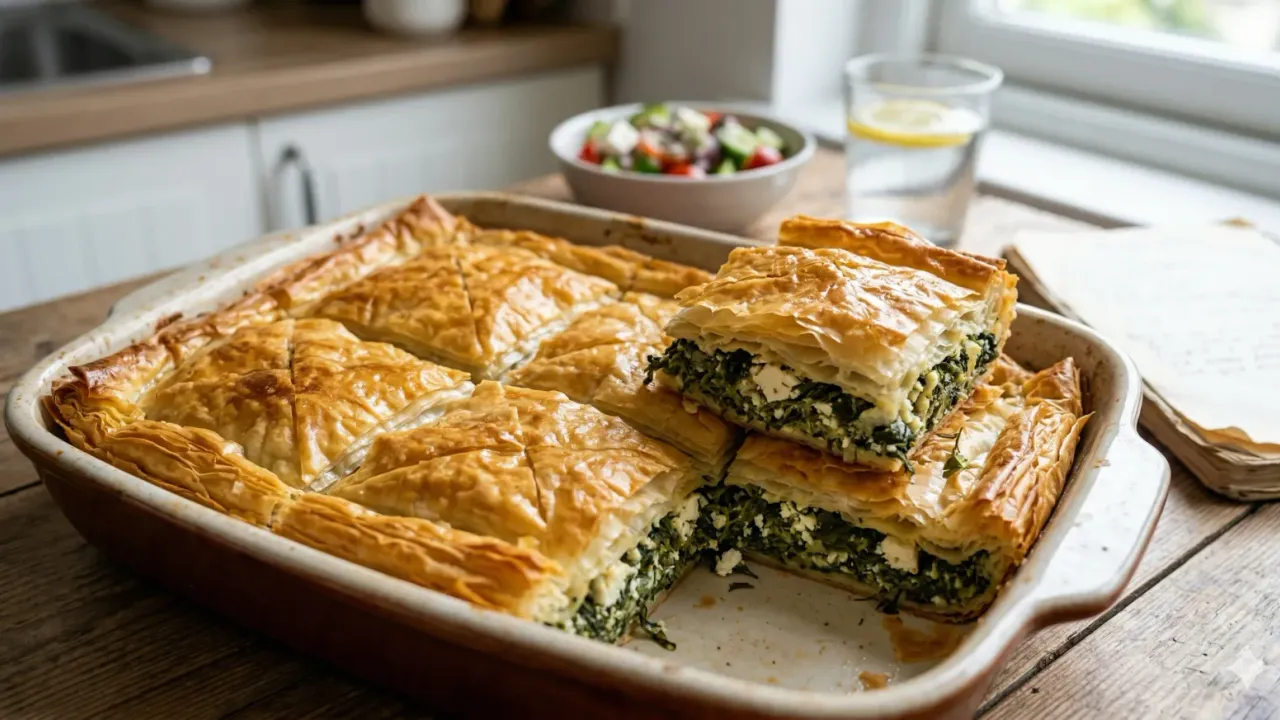
Spanakopita is one of the most iconic dishes in Greek cuisine, and this recipe shows you exactly how to make it at home. Layers of shatteringly crisp phyllo dough enclose a savory filling of fresh spinach, tangy feta cheese, and fragrant dill. Every bite delivers a satisfying crunch followed by a warm, herbaceous center. This is comfort food at its finest, straight from the Greek kitchen to yours.
Prep Time: 30 minutes | Cook Time: 45 minutes | Total Time: 1 hour 15 minutes | Servings: 8
Difficulty: Medium | Calories: ~320 per serving
What Makes Spanakopita Special?
Spanakopita earns its place among Greece’s most treasured recipes through a masterful contrast of textures. The outer shell shatters like glass when you bite through it. Beneath that golden crust lies a filling that is soft, savory, and deeply aromatic. Phyllo dough is the secret weapon here. Each paper-thin sheet crisps independently in the oven, creating dozens of flaky layers. No other pastry dough achieves this level of delicate crunch. Meanwhile, the spinach and feta filling stays moist and flavorful, protected by those very same layers.
The flavor profile is remarkably balanced. Fresh spinach brings an earthy, mineral quality that anchors the dish. Feta cheese contributes sharp, salty tang that cuts through the richness of the olive oil. Fresh dill and a whisper of nutmeg add aromatic depth. Together, these ingredients create a filling that tastes clean yet complex. Furthermore, the olive oil brushed between the phyllo sheets adds fruity richness. It also promotes even browning across the entire surface of the pie.
What truly elevates spanakopita is its versatility. Serve it as a main course alongside a Greek salad for a complete meal. Cut it into small triangles for an elegant appetizer at dinner parties. Pack it cold for picnics and lunches. It tastes equally good warm from the oven or at room temperature hours later. Few dishes transition so effortlessly from casual family dinner to formal gathering. That adaptability, combined with its stunning appearance and satisfying flavors, is why spanakopita has captivated food lovers worldwide.

Choosing the Right Feta for Spanakopita
Feta cheese is the soul of every great spanakopita. Not all feta is created equal, and the type you choose directly affects the taste and texture of your filling. Here is what to look for when shopping.
- Greek sheep’s milk feta (best choice): Authentic Greek feta is made from sheep’s milk or a blend of sheep and goat milk. It has a creamy yet crumbly texture with a distinctly tangy, slightly sharp flavor. Brands like Dodoni, Mt. Vikos, and Athenos Greek-style deliver excellent results. This type melts slightly in the oven, creating pockets of salty richness throughout the filling.
- Block feta versus pre-crumbled: Always buy feta in a block and crumble it by hand. Pre-crumbled feta contains anti-caking agents like cellulose that prevent it from melting properly. Block feta also stays fresher longer in its brine. The hand-crumbled texture gives you uneven pieces. As a result, some bites have larger pockets of cheese while others blend smoothly into the spinach.
- Bulgarian and French feta: Bulgarian feta tends to be creamier and milder than the Greek variety. French feta is often made entirely from sheep’s milk and has a smoother texture. Both work well in spanakopita if Greek feta is unavailable. However, they produce a slightly softer filling with less tang.
- Domestic cow’s milk feta: Many supermarket brands use cow’s milk, which produces a drier, less flavorful feta. The taste is blander and the texture can be chalky. If this is your only option, consider adding an extra tablespoon of ricotta to compensate for the lack of creaminess. Nevertheless, seek out sheep’s milk feta for the most authentic result.
Ingredients for Spanakopita
Spinach and Cheese Filling:
- 1 lb (450g) fresh spinach, washed and roughly chopped
- 8 oz (225g) crumbled feta cheese (Greek sheep’s milk preferred)
- 4 oz (115g) ricotta cheese
- 1 large yellow onion, finely diced
- 4 green onions (scallions), thinly sliced
- 3 large eggs, lightly beaten
- 1/4 cup fresh dill, finely chopped
- 2 tablespoons fresh flat-leaf parsley, chopped
- 1/4 teaspoon freshly grated nutmeg
- Salt and freshly ground black pepper to taste
Phyllo Assembly:
- 1 package (16 oz / 450g) frozen phyllo dough, thawed according to package directions
- 1/2 cup (120ml) extra virgin olive oil
- 3 tablespoons unsalted butter, melted
Pro tip: Squeeze every last drop of water from the cooked spinach before adding it to the filling. Excess moisture is the number one cause of soggy spanakopita. Wrap the wilted spinach in a clean kitchen towel and wring it tightly over the sink. The spinach should feel almost dry to the touch. Additionally, mixing olive oil with melted butter for brushing the phyllo gives you the best of both worlds. The olive oil adds Greek flavor while the butter promotes deep, even browning.
Step-by-Step Instructions
Step 1: Prepare the Spinach Filling
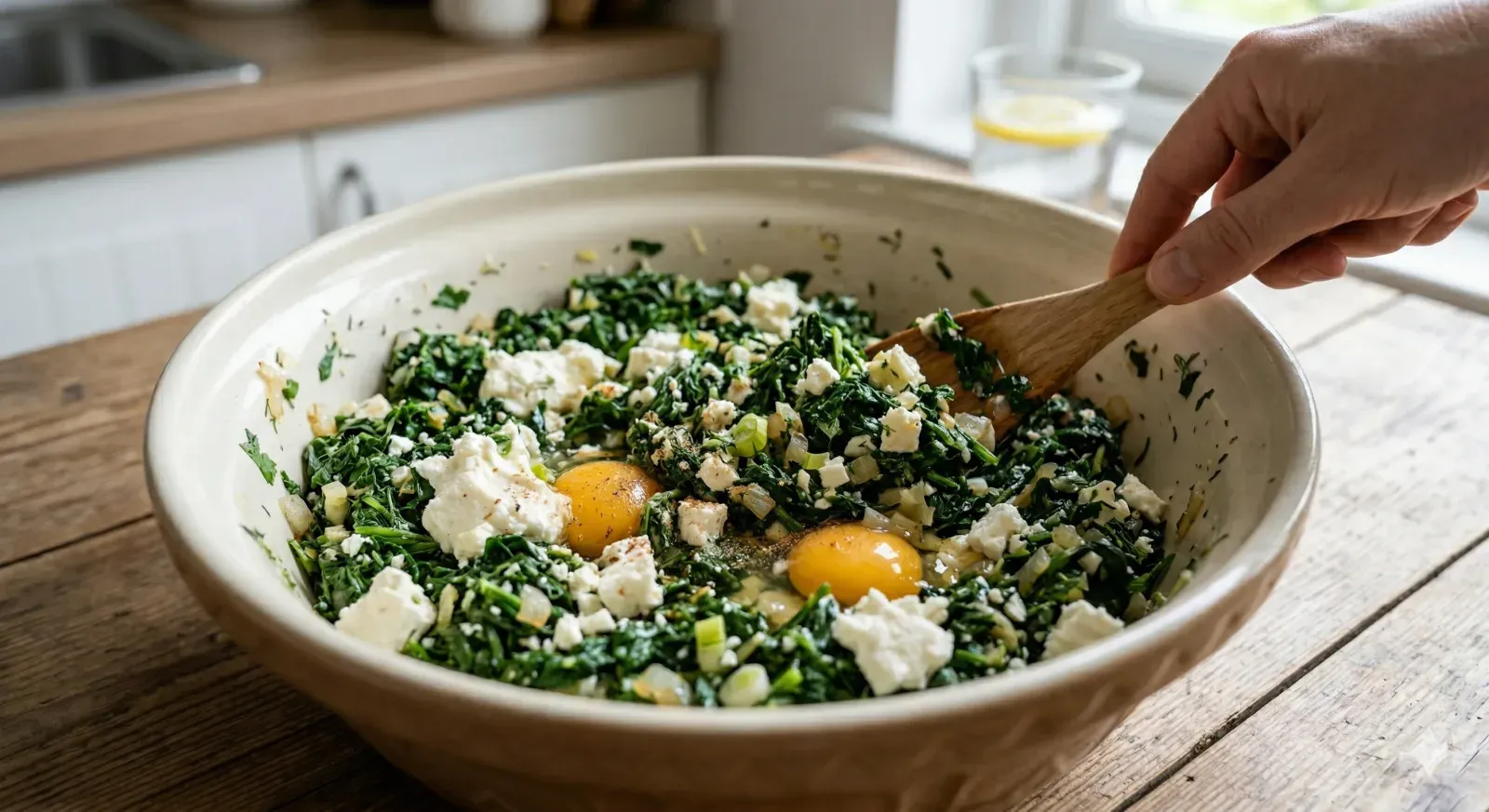
1 Heat a large skillet over medium heat. Add the fresh spinach in batches, allowing each handful to wilt before adding the next. The spinach will reduce dramatically in volume. This process takes about 3 to 4 minutes total. Transfer the wilted spinach to a colander. Press it firmly with the back of a wooden spoon to release as much liquid as possible.
Once cool enough to handle, wrap the spinach in a clean kitchen towel. Twist and squeeze until no more water drips out. Chop the drained spinach finely. Place it in a large mixing bowl. In a small skillet, saute the diced onion in a tablespoon of olive oil until soft and translucent, about 5 minutes. Add the cooked onion, sliced green onions, crumbled feta, ricotta, beaten eggs, dill, parsley, and nutmeg to the spinach. Season with salt and pepper. Stir until the filling is evenly combined.
Step 2: Prepare the Phyllo Layers
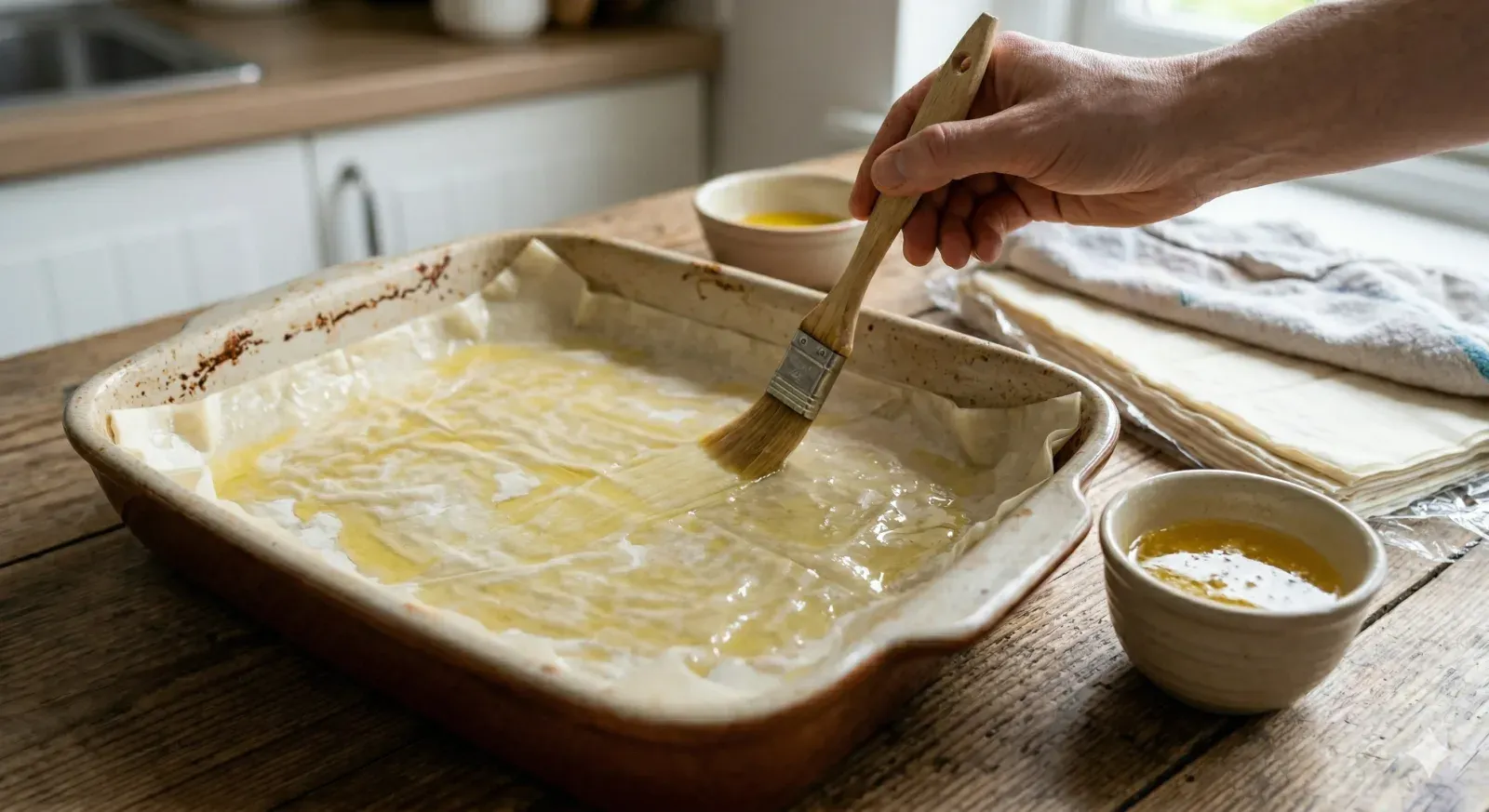
2 Preheat your oven to 375 degrees Fahrenheit (190 degrees Celsius). Combine the olive oil and melted butter in a small bowl. Stir them together until blended. Brush the bottom and sides of a 9x13-inch baking dish generously with this mixture. Unroll the phyllo dough onto a clean, dry surface. Cover the sheets immediately with plastic wrap and then a lightly dampened kitchen towel.
Lay one sheet of phyllo in the prepared baking dish. Let the edges hang over the sides of the pan. Brush the sheet lightly with the oil and butter mixture. Repeat this process with 7 more sheets, brushing each one individually. The layers build up a sturdy base that will hold the filling without becoming soggy. Work quickly to prevent the phyllo from drying out. However, do not worry about small tears. The multiple layers cover any imperfections naturally.
Step 3: Fill and Top the Pie
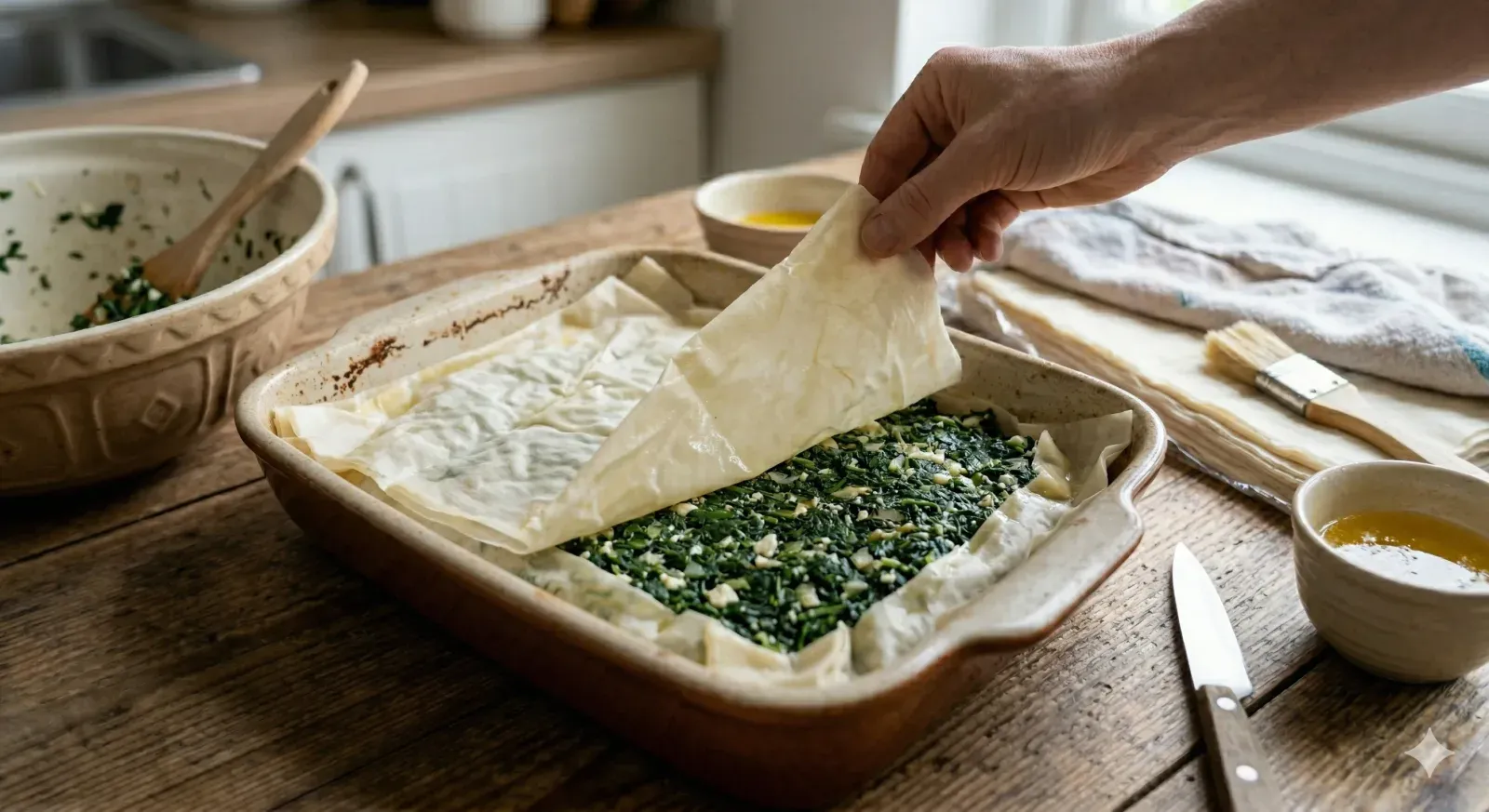
3 Spread the spinach and feta filling evenly over the layered phyllo base. Use a spatula to distribute it into the corners. The filling should form an even layer without any gaps. Fold the overhanging edges of the bottom phyllo sheets inward over the filling. This creates a neat border that seals in the mixture.
Now layer 8 more sheets of phyllo on top of the filling. Brush each sheet with the oil and butter mixture before adding the next. Tuck the edges of the top sheets neatly down the inside walls of the baking dish. Use a sharp knife to score the top layers into squares or diamonds. Cut through only the top phyllo layers, not into the filling. This scoring allows steam to escape during baking. It also creates clean cutting lines for serving later. Sprinkle a few drops of cold water over the surface to prevent the corners from curling.
Step 4: Bake Until Golden
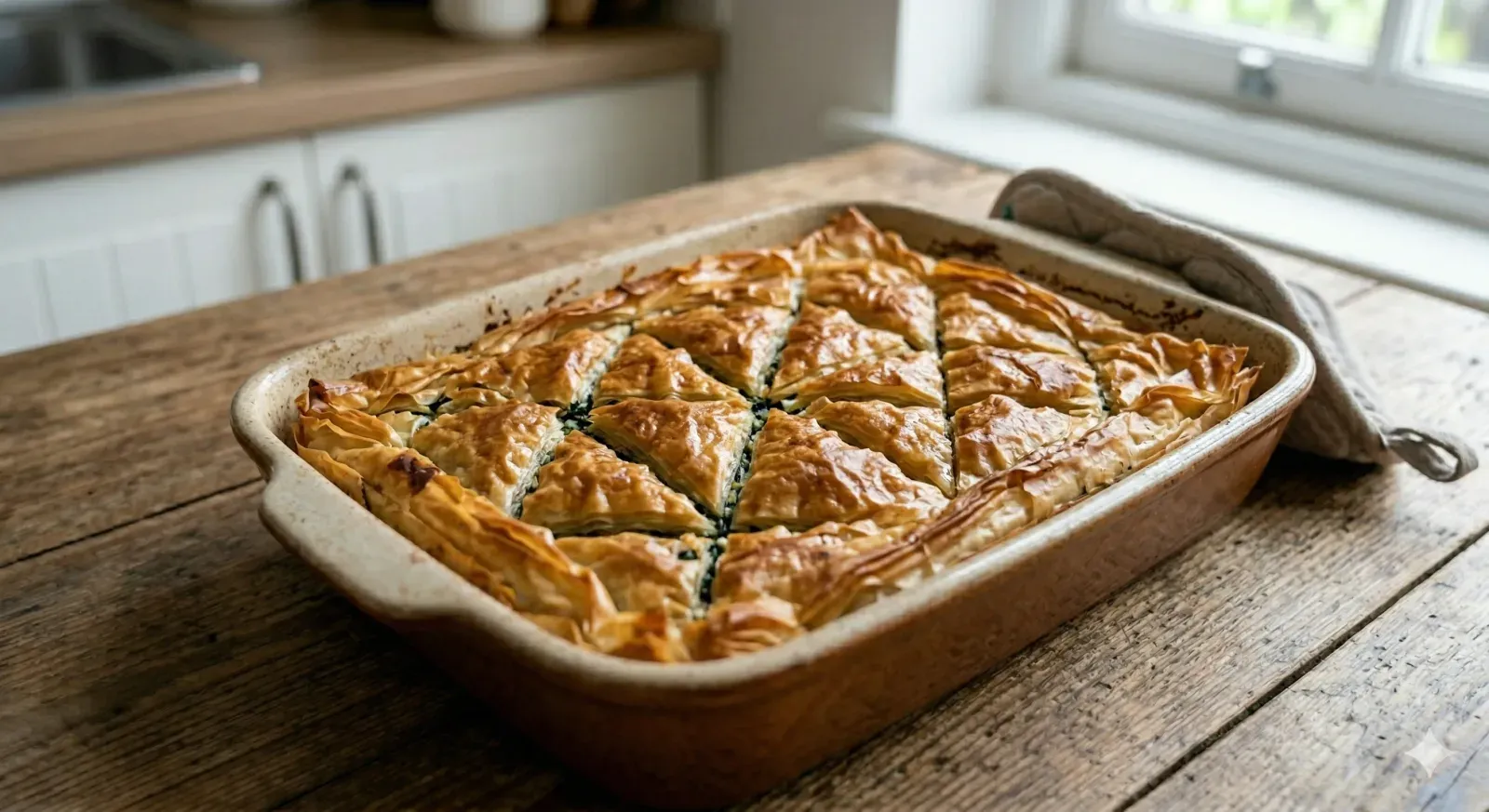
4 Place the baking dish on the center rack of the preheated oven. Bake at 375 degrees Fahrenheit for 40 to 45 minutes. The spanakopita is done when the top turns a deep golden brown. The edges will appear darker and especially crispy. You should hear the phyllo crackling slightly as it cools.
Remove the dish from the oven. Let the spanakopita rest for 10 to 15 minutes before cutting. This resting period is essential. It allows the filling to set firmly. Cutting too early releases steam and causes the layers to separate. After resting, slice along the scored lines with a sharp serrated knife. Consequently, each piece lifts out cleanly with intact layers of golden phyllo on top and bottom.
Expert Tips for Perfect Spanakopita
Drain the Spinach Thoroughly
This single step determines whether your spanakopita turns out crispy or soggy. Fresh spinach contains a tremendous amount of water. Even after wilting, it holds enough moisture to ruin the phyllo. Therefore, drain the spinach aggressively. Press it in a colander first, then squeeze it in a kitchen towel until completely dry. The filling should feel almost crumbly. During baking, the eggs and cheese release just enough moisture to keep things tender. Trust the recipe and remove every drop of water beforehand.
Work Quickly with Phyllo Dough
Phyllo dough dries out within minutes of being exposed to air. Once dry, it becomes brittle and cracks instead of folding. Consequently, always keep unused sheets covered with plastic wrap and a damp towel. Pull one sheet at a time, brush it, and lay it in the dish immediately. Speed is more important than perfection here. Small tears or wrinkles disappear once the pie bakes. In contrast, dry, cracked sheets cannot be salvaged.
Score Before Baking
Scoring the top phyllo layers before the pie enters the oven serves two purposes. First, it lets steam escape during baking. Trapped steam creates bubbles and uneven browning on the surface. Second, scoring gives you clean, defined cutting lines. Trying to cut through crispy phyllo after baking shatters the layers. As a result, you end up with messy, crumbling pieces. A sharp knife drawn gently through the top 3 to 4 layers before baking solves both problems.
Spanakopita Around the World: A Regional Comparison
Savory spinach and cheese pastries appear in many Mediterranean and Balkan cuisines. Each culture brings its own twist to this beloved concept. Below is how the most popular versions compare to the Greek original.
| Dish | Country | Key Difference | Signature Element |
|---|---|---|---|
| Spanakopita | Greece | Spinach and feta wrapped in phyllo dough | Dill, nutmeg, olive oil brushed phyllo |
| Borek | Turkey | Uses yufka dough, various fillings including meat | Thicker dough, often includes egg wash |
| Byrek | Albania | Spinach, cheese, or meat in layered pastry | Often made with homemade dough, tomato additions |
| Banitza | Bulgaria | Eggs and sirene cheese with phyllo | Yogurt-based filling, coiled or layered |
| Pita Zeljanica | Bosnia | Spinach rolled in thin dough spirals | Spiral shape, cottage cheese blend |
Serving Suggestions
Spanakopita shines as both a main course and an appetizer. Its rich filling pairs beautifully with bright, acidic sides that cut through the feta and olive oil. Consider the occasion when choosing your accompaniments.
Side Dishes:
- Greek salad (horiatiki): Chunks of tomato, cucumber, red onion, and Kalamata olives dressed with olive oil and oregano. This classic salad provides a refreshing contrast to the warm, rich pie. The acidity of the tomatoes cleanses the palate between bites.
- Tzatziki: Cool, creamy cucumber-yogurt sauce complements spanakopita perfectly. The garlic and lemon in tzatziki brighten the spinach filling. Serve it as a dipping sauce alongside each slice.
- Roasted lemon potatoes: Greek-style roasted potatoes with oregano, lemon juice, and garlic turn spanakopita into a hearty, complete meal. The crispy potato edges echo the crunch of the phyllo layers.
Beverage Pairings:
- Assyrtiko (Greek white wine): This crisp, mineral-driven white wine from Santorini pairs beautifully with spanakopita. Its high acidity cuts through the richness of the feta and phyllo. Citrus and saline notes echo the lemon and sea-salt flavors in the filling.
- Ouzo: The traditional Greek anise-flavored aperitif complements the herbal notes of dill and parsley in the filling. Serve it chilled over ice alongside a plate of spanakopita triangles. Sip slowly, as ouzo packs considerable strength.
- Greek mountain tea: For a non-alcoholic option, brew a cup of sideritis, the beloved Greek herbal tea. Its mild, slightly floral flavor pairs gently with the savory pie. This combination is a common afternoon snack across rural Greece.
- Sparkling water with lemon: A simple, refreshing choice that lets the flavors of the spanakopita take center stage. The effervescence cleanses the palate between bites. Add a squeeze of fresh lemon for a bright finish.
Storage and Reheating
Refrigerator: Cover leftover spanakopita tightly with aluminum foil or plastic wrap. Store it in the fridge for up to 4 days. The filling actually develops deeper flavor on the second day as the herbs and feta meld together. However, the phyllo will lose its crispness in the refrigerator. A quick reheat in the oven restores much of that original crunch.
Freezer: Spanakopita freezes exceptionally well for up to 3 months. Wrap individual portions in plastic wrap, then aluminum foil. For best results, freeze the pie before baking. Assembled unbaked spanakopita goes directly from freezer to oven. Add 10 to 15 extra minutes to the baking time. Already-baked portions reheat from frozen in about 20 minutes at 375 degrees Fahrenheit.
Reheating: Never microwave spanakopita if you value crispy phyllo. Instead, reheat slices on a baking sheet at 350 degrees Fahrenheit for 12 to 15 minutes. The oven method re-crisps the outer layers while warming the filling through. A toaster oven works equally well for single servings. Let the reheated pieces cool for 2 minutes before eating. Therefore, the phyllo has time to firm up again after leaving the oven.
Common Mistakes to Avoid
1. Skipping the Spinach Draining Step
Wet spinach is the most common reason homemade spanakopita fails. Even a small amount of excess moisture seeps into the phyllo and turns it limp. The bottom layers become soggy and gummy instead of crisp. Always drain the spinach twice. First press it in a colander. Then squeeze it in a towel. This extra effort pays off enormously in the final texture of your pie.
2. Letting the Phyllo Dry Out
Uncovered phyllo dough becomes unusable within minutes. It cracks, tears, and refuses to lay flat. Many home cooks underestimate how quickly this happens. Keep the phyllo covered with plastic wrap and a damp towel at all times. Pull only one sheet at a time. Brush it and place it immediately. Speed and protection are your best tools when working with this delicate dough.
3. Cutting Too Soon After Baking
Impatience leads to messy, falling-apart slices. The filling needs 10 to 15 minutes of resting time to set properly. Hot filling is essentially liquid. Cutting into it immediately causes it to flow out between the layers. As a result, the pieces collapse on the plate. Wait for the rest period. The spanakopita will still be warm enough to enjoy. Meanwhile, the filling firms to a sliceable consistency.
4. Using Too Much Oil Between Layers
Generous brushing sounds like a good idea, but too much oil creates heavy, greasy phyllo. A light, even coat on each sheet is all you need. The goal is a thin film that promotes browning and separation. Excess oil pools at the bottom of the pan and makes the base soggy. Use a pastry brush and apply just enough to coat each sheet without any dripping. Moderation produces the crispiest, lightest results.
Frequently Asked Questions
What is the difference between spanakopita and borek?
Spanakopita is a specifically Greek dish made with spinach and feta in phyllo dough. Borek is a broader category of pastries found across Turkey, the Balkans, and the Middle East. Borek uses similar layered dough but accepts many different fillings. These include ground meat, potatoes, and various cheeses. While both share historical roots in Ottoman cuisine, spanakopita has a distinctly Greek flavor profile. The combination of dill, feta, and fresh spinach sets it apart from its regional cousins.
Can I make spanakopita with frozen spinach?
Frozen spinach is a perfectly acceptable substitute for fresh. Use two 10-ounce packages, thawed completely. However, thorough draining becomes even more critical with frozen spinach. It releases significantly more water than fresh. Wring it out in a clean kitchen towel until absolutely dry. The flavor will be slightly less bright than fresh spinach. Nevertheless, the convenience factor makes frozen spinach a popular choice for weeknight cooking.
How do I keep phyllo dough from drying out?
Cover the unused sheets with plastic wrap immediately after unrolling. Place a lightly dampened kitchen towel over the plastic. Only remove one sheet at a time. Work quickly to brush and position each sheet before pulling the next. Phyllo dries out in as little as two to three minutes. Keep your work area close to the baking dish. In addition, avoid working near fans, open windows, or heating vents that accelerate drying.
Can I make spanakopita ahead of time?
Absolutely. Assemble the entire pie up to 24 hours before baking. Cover it tightly with plastic wrap and refrigerate. When ready to bake, place it directly in the preheated oven. Add 5 to 10 extra minutes to the baking time since the pie starts cold. You can also freeze the assembled unbaked spanakopita for up to 3 months. Bake from frozen at 375 degrees Fahrenheit for 55 to 65 minutes. This make-ahead flexibility makes spanakopita ideal for entertaining.
What type of feta cheese is best for spanakopita?
Greek feta made from sheep’s milk delivers the most authentic results. It has a tangy, creamy flavor with a crumbly texture that distributes well through the filling. Avoid pre-crumbled feta in tubs. It often contains anti-caking agents that affect texture and flavor. Instead, buy a block of feta packed in brine. Crumble it by hand for the best distribution. Greek brands like Dodoni and Mt. Vikos are excellent choices available in most well-stocked grocery stores.
Is spanakopita healthy?
Spanakopita offers a solid nutritional profile for a pastry dish. Spinach provides iron, vitamin K, vitamin A, and folate in generous amounts. Feta contributes protein and calcium. The olive oil adds heart-healthy monounsaturated fats that are a cornerstone of the Mediterranean diet. Each serving contains roughly 320 calories. For a lighter version, reduce the oil between phyllo layers. You can also increase the spinach-to-cheese ratio for more vegetables and fewer calories per slice.
Variations and Adaptations
Spanakopita Triangles:
Cut phyllo sheets into 3-inch-wide strips. Place a tablespoon of filling at the bottom corner. Fold the phyllo diagonally into a triangle, then continue folding upward like folding a flag. Brush the outside with oil and bake at 375 degrees Fahrenheit for 20 to 25 minutes. These individual portions make fantastic appetizers. They also freeze beautifully for quick snacks. Kids especially love the handheld format.
Vegan Spanakopita:
Replace the feta with crumbled firm tofu seasoned with lemon juice, nutritional yeast, and salt. Substitute the eggs with a mixture of 3 tablespoons of chickpea flour whisked with 6 tablespoons of water. Use only olive oil for brushing the phyllo. The result is surprisingly close to the original in both texture and flavor. The nutritional yeast adds a savory, slightly cheesy quality that mimics feta remarkably well.
Mixed Greens Version:
Combine spinach with Swiss chard, kale, and wild greens for a more complex flavor. This approach is common in rural Greece, where cooks use whatever greens are available from the garden. The bitter notes from kale and chard add depth to the filling. Blanch tougher greens separately before mixing with the spinach. Use the same ratio of total greens to cheese and proceed with the recipe as written.
Spanakopita with Leeks:
Add 2 large leeks, sliced and sauteed, to the filling for a sweeter, more aromatic version. Leeks bring a gentle onion flavor that complements the spinach beautifully. Clean the leeks thoroughly to remove trapped sand. Saute them in olive oil until soft before mixing with the spinach and feta. This variation is popular on the Greek islands, where leeks grow abundantly in the mild climate.
The Cultural Significance of Spanakopita
Spanakopita holds deep cultural meaning in Greek life. It appears on tables during holidays, family gatherings, Sunday dinners, and simple weekday meals. Greek grandmothers pass their personal recipes down through generations. Each family claims their version is the best. The dish connects modern Greeks to centuries of culinary tradition. In many households, making spanakopita together is a bonding ritual that brings parents, children, and grandparents into the kitchen at the same time.
The origins of spanakopita trace back to the Byzantine era and the Ottoman influence on Greek cuisine. Phyllo dough itself has ancient roots in the Eastern Mediterranean. Over centuries, Greek cooks refined the technique of layering thin pastry with local ingredients. Spinach, feta, and olive oil became the defining combination. During Lent, many Greek families prepare a version without eggs or cheese. This tradition demonstrates how the dish adapts to religious and seasonal requirements while remaining central to the table.
Today, spanakopita represents Greek cuisine on the global stage. It appears in bakeries from Melbourne to Montreal, wherever Greek diaspora communities have settled. Frozen versions line supermarket shelves worldwide. Despite this commercial popularity, homemade spanakopita remains in a class of its own. The crispness of freshly baked phyllo and the aroma of warm dill and feta filling a kitchen cannot be replicated by any factory process. Making it from scratch connects you to a living culinary tradition that spans centuries and continents.
Conclusion
This spanakopita recipe delivers an authentic Greek spinach pie with layers of shattering phyllo, tangy feta, and earthy spinach. The technique is straightforward once you understand the essentials. Drain the spinach thoroughly. Keep the phyllo covered. Brush each layer lightly with oil. Score before baking. Then let your oven transform these simple ingredients into something extraordinary. The golden, flaky result tastes like it came from a bakery on the streets of Athens.
Ready to explore more beloved European recipes? Browse our European dishes collection for classics like moussaka, souvlaki, and tiramisu. Each recipe features the same detailed, step-by-step approach to bring world cuisine to your kitchen.