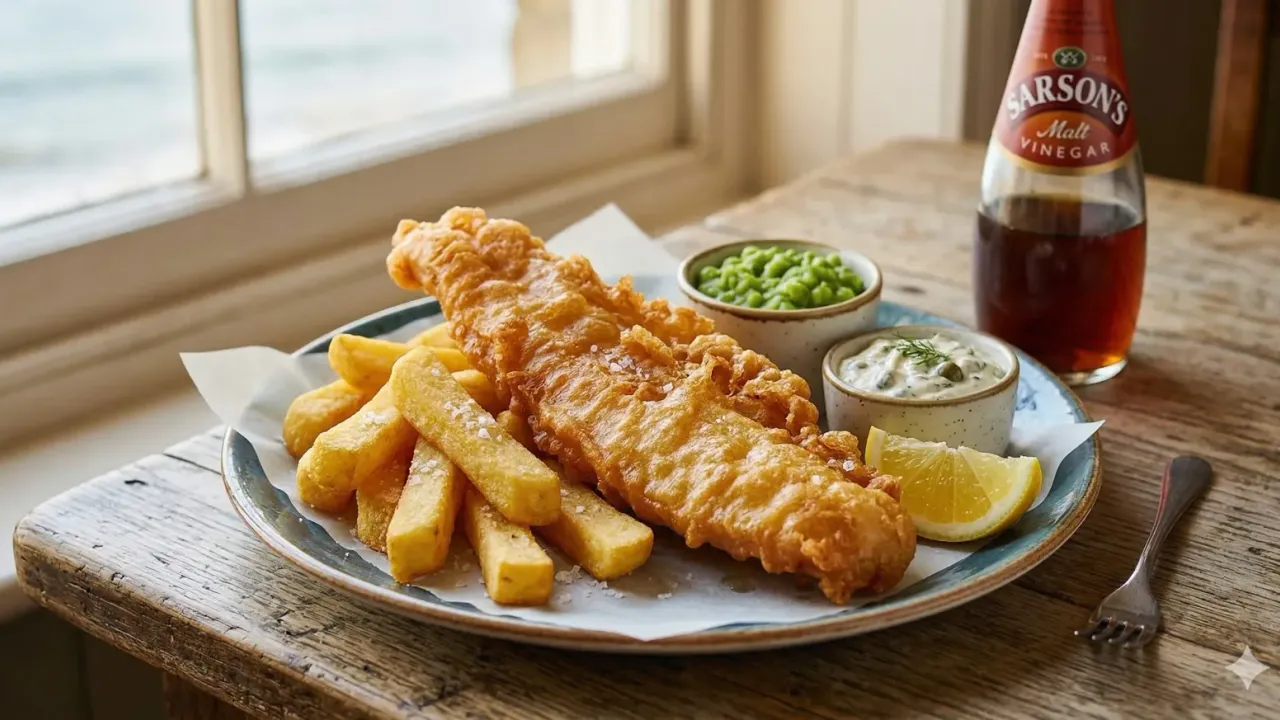
There are few dishes more iconic than fish and chips — England’s beloved national dish of golden, crispy beer-battered fish served alongside thick-cut, double-fried chips. Whether wrapped in paper from a seaside chippy or plated at a gastropub, this humble pairing has been a cornerstone of British food culture for over 150 years. This recipe brings authentic chippy-quality fish and chips to your home kitchen with a foolproof beer batter and the double-frying technique that separates good chips from truly great ones.
Prep Time: 25 minutes | Cook Time: 30 minutes | Servings: 4
Difficulty: Medium | Calories: ~680 per serving
What Makes Fish and Chips Special?
Fish and chips is far more than a simple fried dish — it is woven into the fabric of English identity. Originating in the 1860s when fried fish from Jewish immigrants in London met the chipped potatoes popular in the industrial north of England, the combination quickly became the working-class meal of choice across the country. By the early 1900s, there were over 25,000 fish and chip shops in Britain, and the dish was considered so essential to national morale that it was one of the few foods never rationed during World War II.
What sets a truly great plate of fish and chips apart is contrast. The batter should shatter when you bite through it, giving way to pearly white, steaming flakes of fish that fall apart at the touch of a fork. The chips should be golden and crunchy on the outside with a soft, fluffy interior — and the only way to achieve this is with the double-frying method used by the best chip shops in England. A generous splash of malt vinegar and a sprinkle of sea salt complete the experience.
While you can find fried fish in many cuisines around the world, the English version stands apart with its beer batter. The carbonation from the beer creates an impossibly light, airy coating that puffs up during frying, giving that signature crunch without a heavy, doughy texture. Paired with the right fish — traditionally cod or haddock — and served with mushy peas and tartar sauce, it is comfort food at its absolute finest.

Choosing the Right Fish
The fish you choose will make or break this dish. You want a white fish with firm, thick flesh that holds together during frying and produces large, satisfying flakes. Oily or thin-fleshed fish will fall apart in the hot oil and won’t deliver the right texture.
- Cod (the classic choice): The most traditional option with thick, meaty fillets and large flakes. Its mild flavor lets the batter and seasoning shine. This is what most chip shops in southern England serve.
- Haddock (best for flavor): Slightly sweeter and more delicate than cod, haddock is the preferred choice in northern England and Scotland. It has a firmer texture that fries beautifully and pairs wonderfully with malt vinegar.
- Pollock: A budget-friendly, sustainable alternative that performs surprisingly well. The flesh is slightly softer than cod but still produces good results with proper handling.
- Hake: Popular in some regions of England and widely used in European fish-frying traditions. Delicate, sweet flesh that works nicely with a light batter.
Ingredients for Fish and Chips
For the Fish:
- 4 cod fillets (6 oz each), skinless and boneless
- 1/2 cup all-purpose flour (for dusting)
- Salt and black pepper to taste
For the Beer Batter:
- 1 cup all-purpose flour
- 1/2 cup cornstarch
- 1 teaspoon baking powder
- 1 teaspoon salt
- 1/2 teaspoon black pepper
- 1/2 teaspoon garlic powder
- 1/4 teaspoon turmeric (for golden color)
- 1 cup cold beer (lager or pale ale)
- 1 tablespoon white vinegar
For the Chips:
- 2 pounds Maris Piper or Russet potatoes
- Vegetable oil or beef dripping for deep frying
- Flaky sea salt for finishing
For Serving:
- Malt vinegar
- Lemon wedges
- Tartar sauce
- Mushy peas (optional)
Pro tip: Keep the beer as cold as possible — even storing it in the freezer for 15 minutes before mixing. The temperature difference between the cold batter and the hot oil is what creates the lightest, crispiest coating.
Step-by-Step Instructions
Step 1: Prepare the Chips
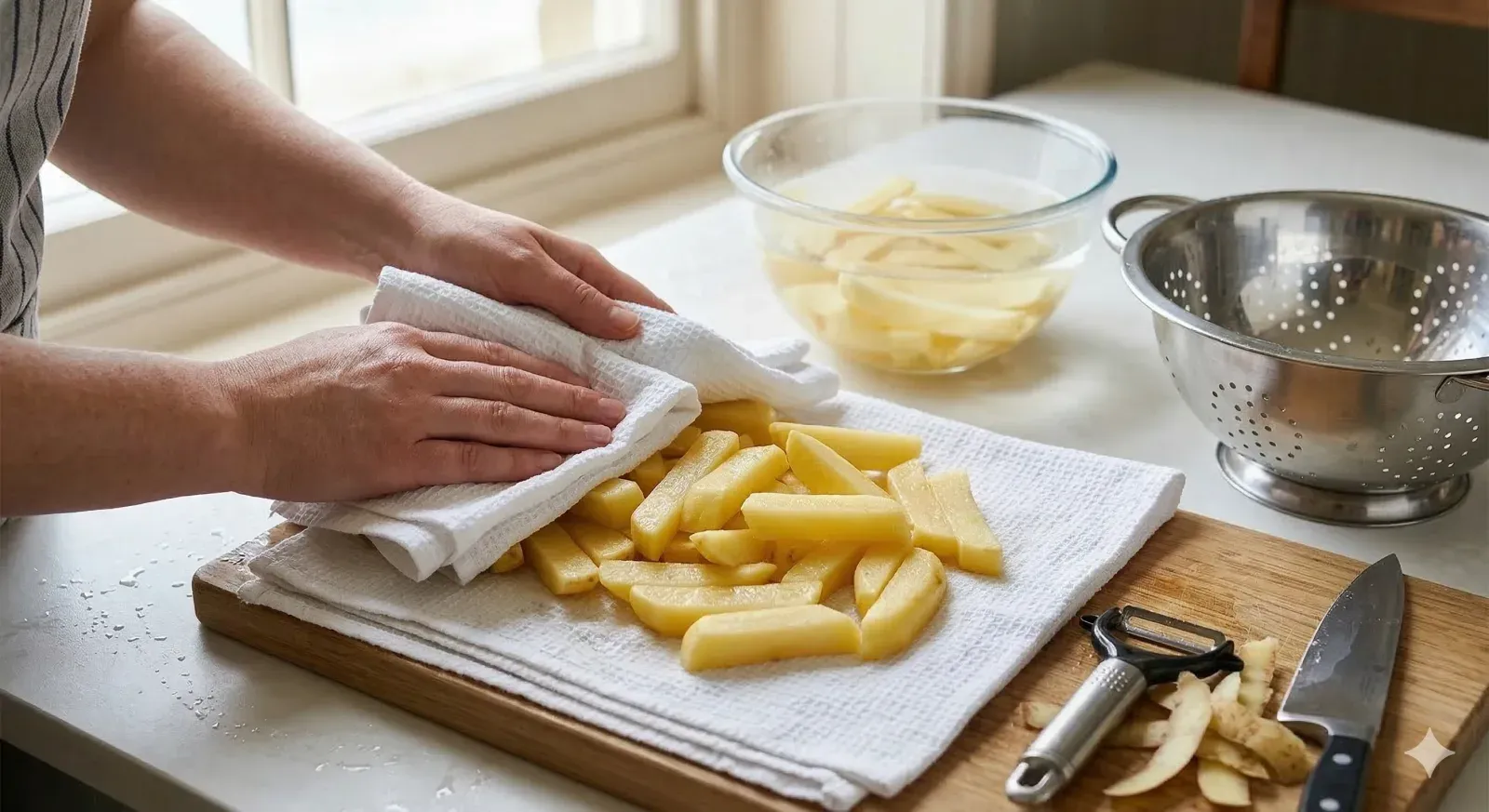
1Peel the potatoes and cut them into thick chips, roughly 1.5 cm (about half an inch) wide. You want them chunky — thin fries won’t give you the fluffy interior that makes proper English chips so satisfying. Rinse the cut chips under cold running water to wash away surface starch, then transfer them to a bowl of cold water and soak for at least 30 minutes. This step removes excess starch, which prevents the chips from sticking together and helps them crisp up during frying. When ready, drain the chips thoroughly and pat them completely dry with clean kitchen towels. Any remaining moisture will cause dangerous splattering when they hit the hot oil.
Step 2: Par-Cook the Chips (First Fry)
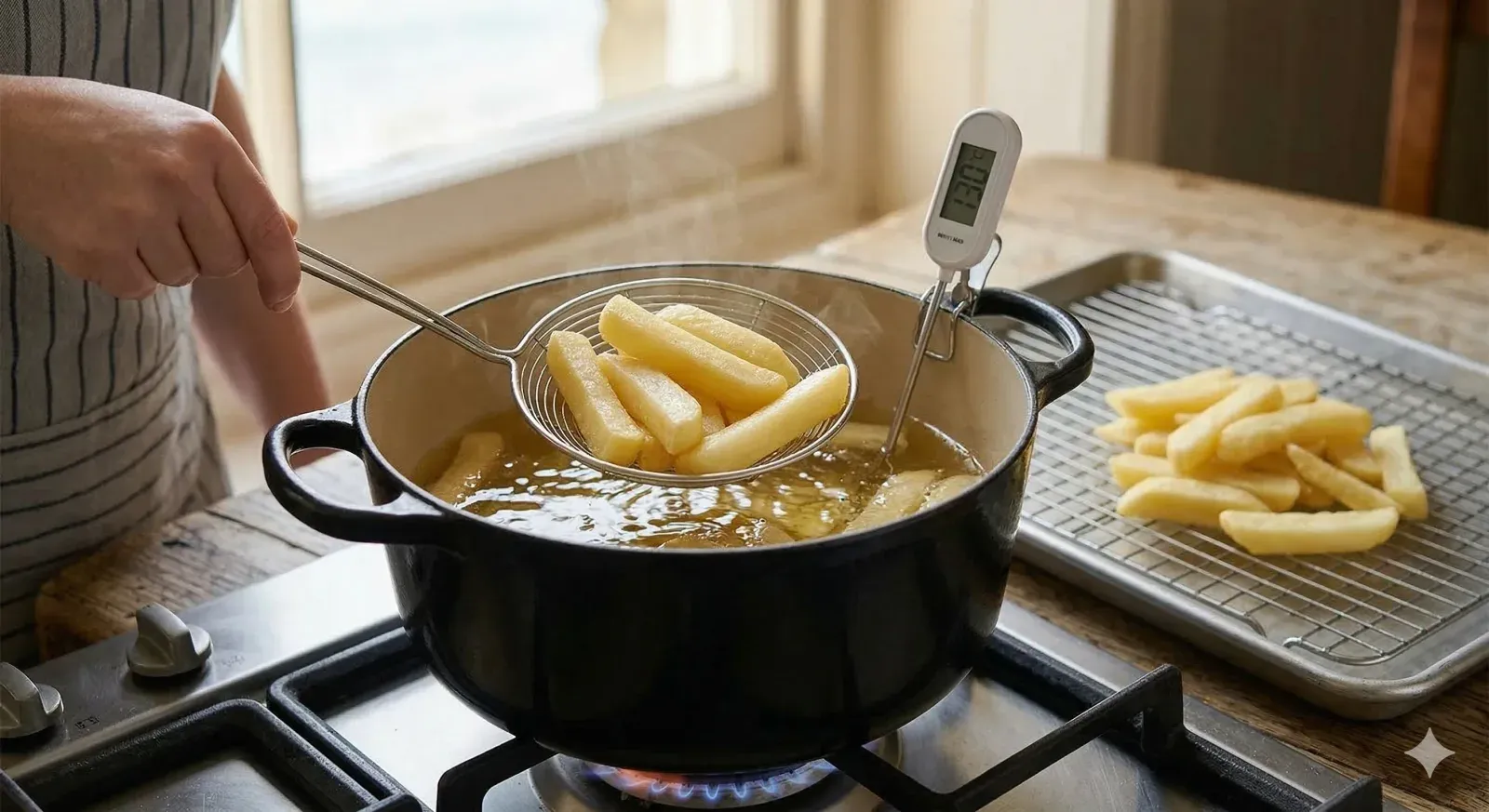
2Heat your oil to 130°C (266°F) in a deep fryer or a heavy-bottomed pot filled no more than halfway. Working in batches to avoid overcrowding, carefully lower the chips into the oil and fry for 6 to 8 minutes. The chips should be cooked all the way through and just starting to turn a very pale golden color, but they should not be crispy yet. Remove them with a slotted spoon or spider and place them on a wire rack to drain. This first fry cooks the potato interior and dries the surface, setting the stage for the second fry that will create the perfect crunch.
Step 3: Make the Beer Batter
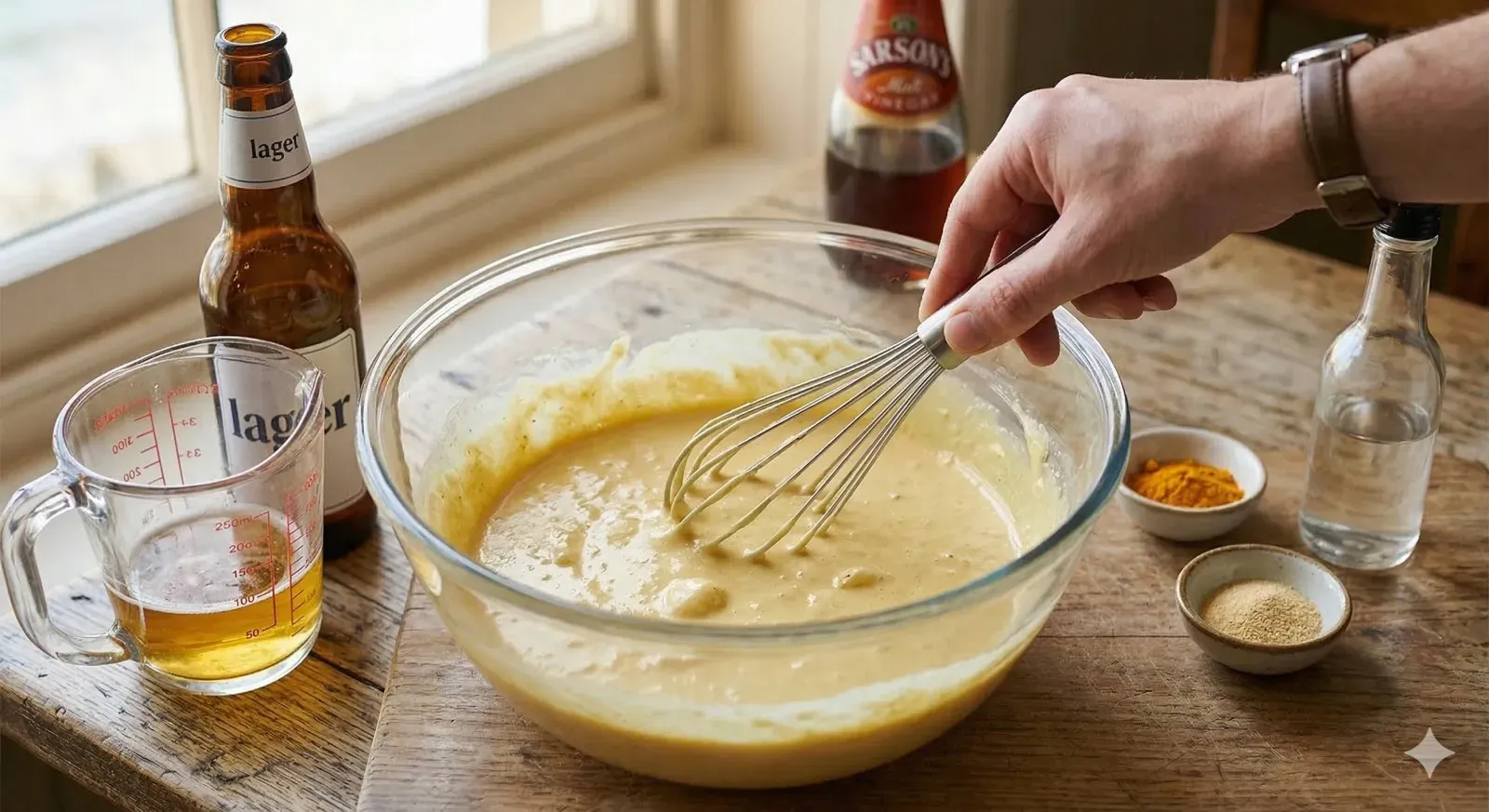
3In a large mixing bowl, whisk together the flour, cornstarch, baking powder, salt, pepper, garlic powder, and turmeric. Create a well in the center and pour in the cold beer and white vinegar. Whisk from the center outward until the dry ingredients are just incorporated — do not overmix. A few small lumps are perfectly fine and actually desirable. Overmixing develops the gluten in the flour, which will make the batter tough and chewy instead of light and crispy. The batter should have the consistency of thick cream. Place it in the refrigerator while you prepare the fish to keep it as cold as possible.
Step 4: Prepare and Batter the Fish
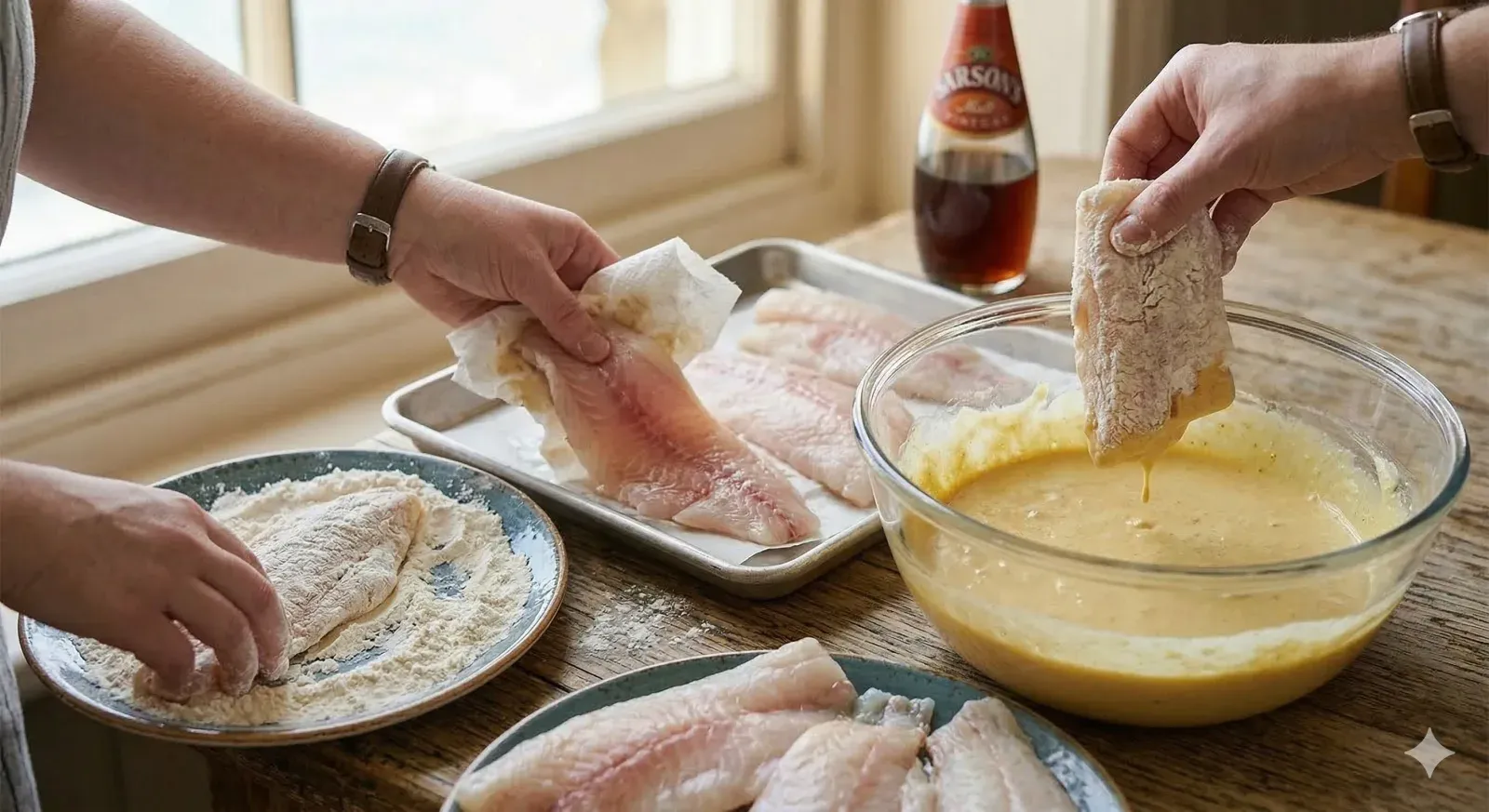
4Pat the cod fillets completely dry with paper towels — this is essential because moisture prevents the batter from adhering properly. Season each fillet lightly with salt and pepper. Place the dusting flour on a plate and dredge each fillet, coating all sides evenly and shaking off any excess. The thin flour layer acts as a glue between the fish and the batter. Now dip each floured fillet into the cold beer batter, letting the excess drip off for a few seconds before transferring to the hot oil.
Step 5: Fry the Fish
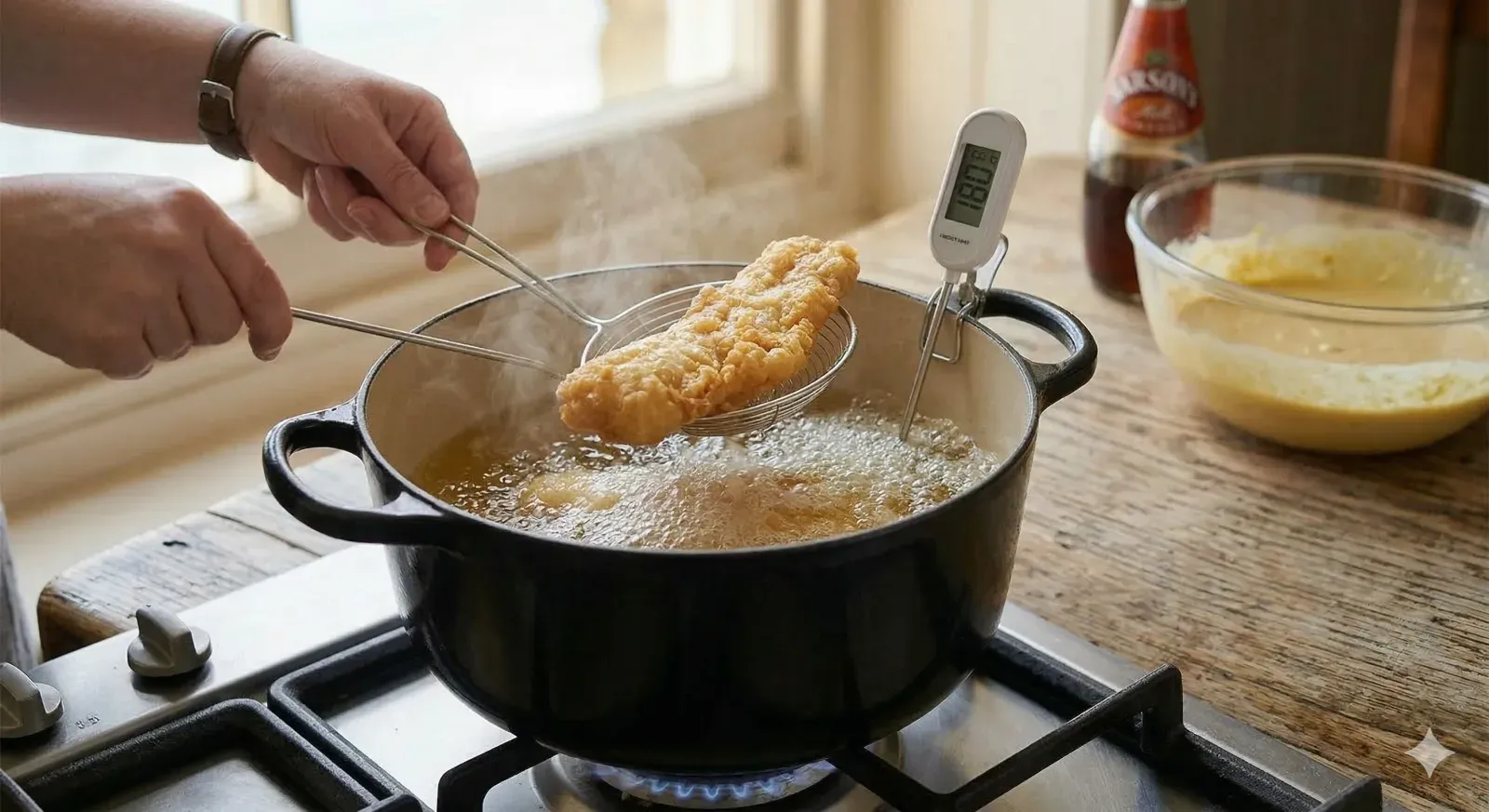
5Increase the oil temperature to 180°C (356°F). Carefully lower each battered fillet into the hot oil, laying it away from you to prevent splashing. Fry no more than two pieces at a time to maintain the oil temperature. Cook for 6 to 8 minutes, gently turning once with a slotted spoon or tongs halfway through, until the batter is a deep, rich golden brown and the fish is cooked through. The batter should be audibly crispy when tapped. Remove the fish and place it on a wire rack set over a baking sheet — never on paper towels, which will trap steam and make the bottom soggy.
Step 6: Finish the Chips (Second Fry)
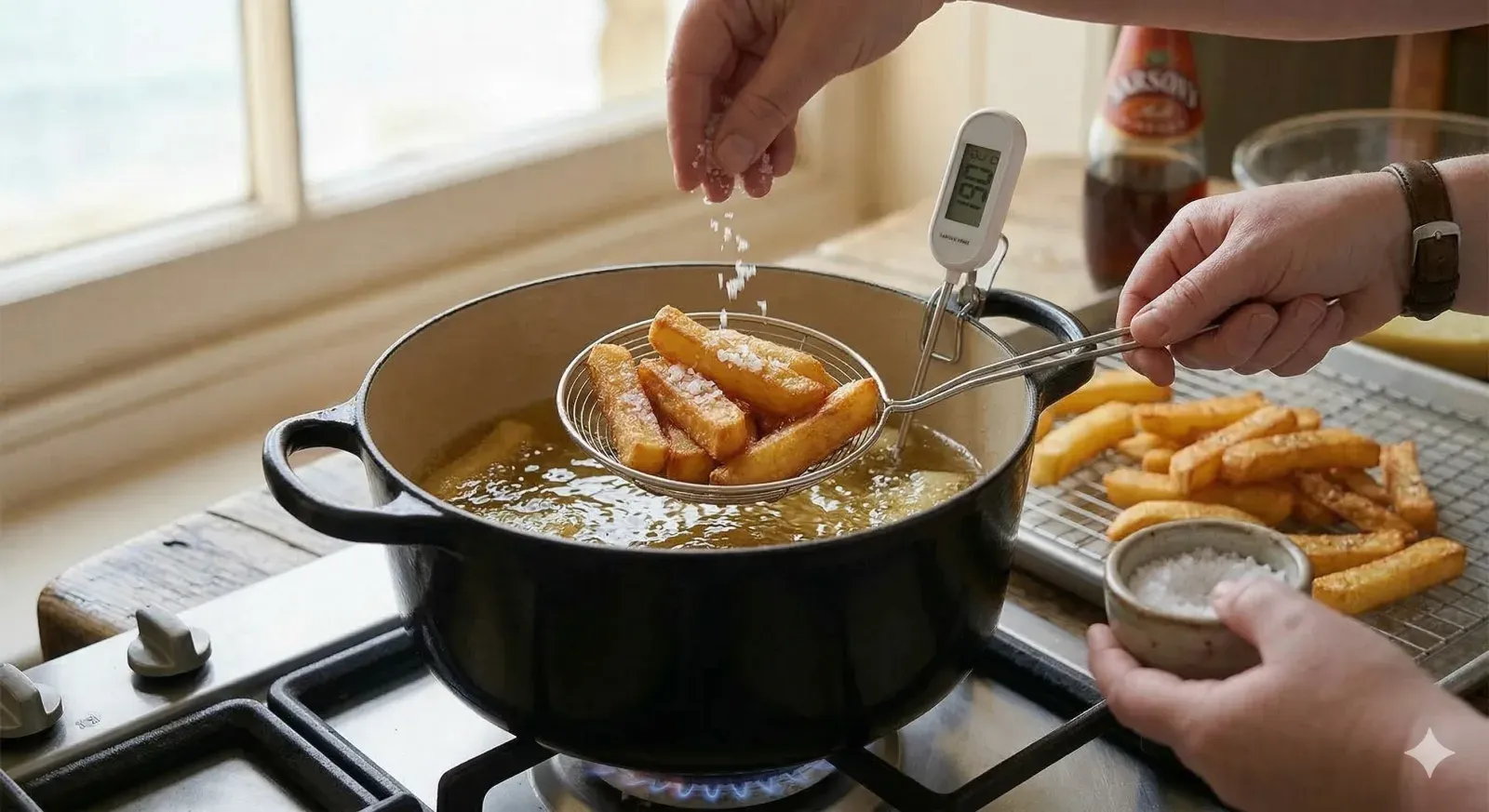
6Increase the oil temperature to 190°C (375°F). Return the par-cooked chips to the hot oil in batches and fry for 3 to 4 minutes until they are a beautiful deep golden color and irresistibly crispy on the outside. Remove with a slotted spoon and drain briefly on a wire rack. Season immediately and generously with flaky sea salt while the chips are still glistening with hot oil — this is when the salt adheres best and you get the most flavor.
Step 7: Serve Immediately
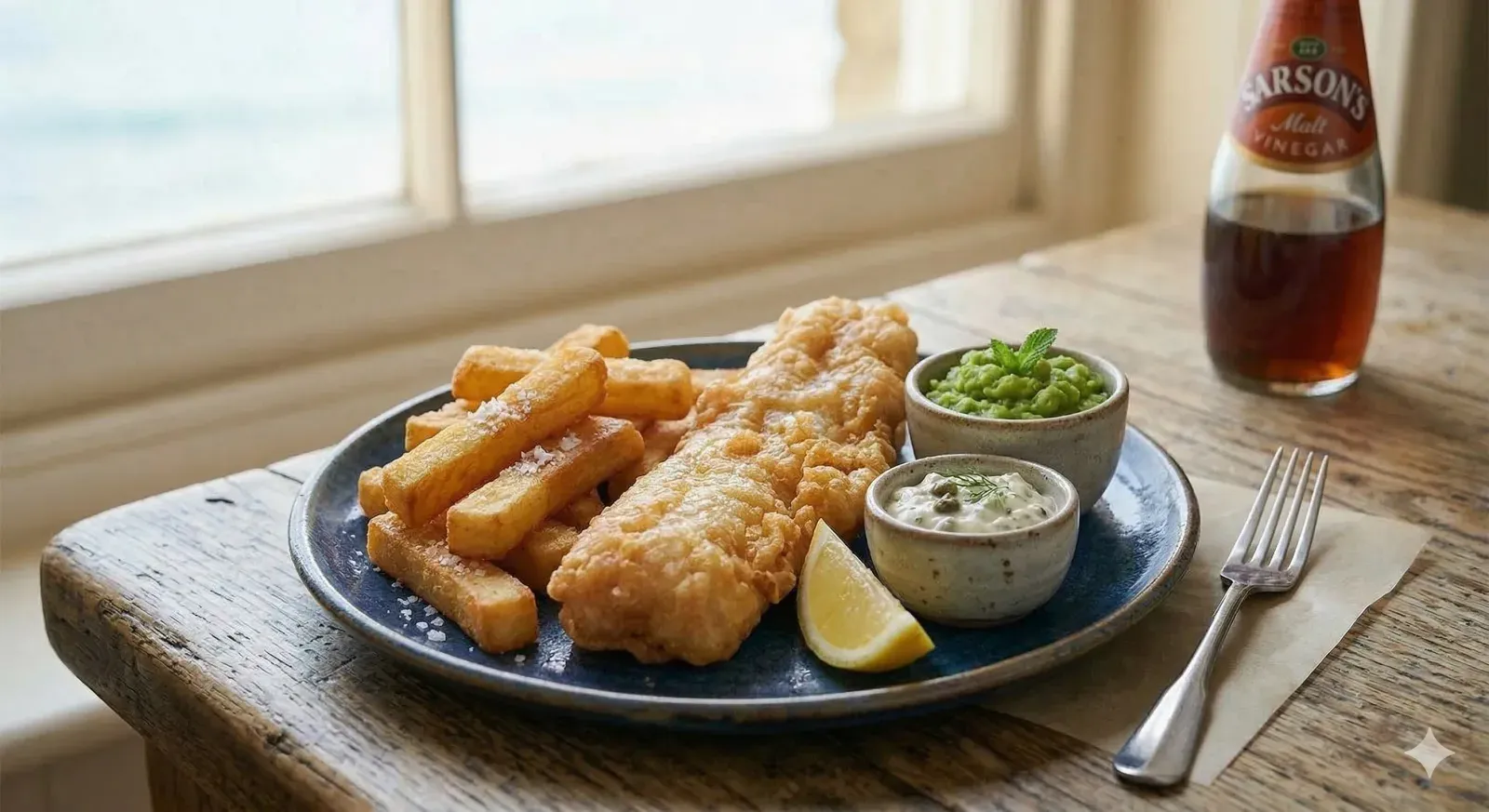
7Plate the crispy fish alongside a generous pile of golden chips. Serve with malt vinegar, lemon wedges, tartar sauce, and a side of mushy peas for the complete experience. Fish and chips are best eaten immediately while everything is hot and crispy. For the full British chippy experience, lay them out on a sheet of parchment paper and eat with your fingers — no fork required.
Expert Tips for Perfect Results
Keep Everything Cold
The secret to shatteringly crispy batter is temperature contrast. Keep the beer ice cold, chill the batter in the fridge, and make sure the oil is at the correct temperature before frying. When cold batter hits hot oil, the moisture evaporates rapidly, creating the tiny air pockets that give the coating its incredible crunch. Some chip shop veterans even add a couple of ice cubes to the batter right before frying.
Don’t Overcrowd the Fryer
Adding too much food to the oil at once drops the temperature dramatically, resulting in greasy, soggy fish and limp chips. Fry in small batches and give the oil time to recover between rounds. A kitchen thermometer is your best friend here — invest in one if you don’t already have it.
Drain on a Wire Rack, Not Paper Towels
Paper towels trap steam underneath the fish and chips, making the bottom soggy within minutes. A wire rack allows air to circulate on all sides, keeping everything uniformly crispy. Place the rack over a baking sheet to catch drips and keep your kitchen clean.
Fish and Chips: Regional Styles Across England
While the basic concept remains the same across the country, different regions of England have their own traditions and preferences when it comes to fish and chips. Here is a quick comparison of the most notable regional variations.
| Feature | Southern England | Northern England |
|---|---|---|
| Preferred fish | Cod | Haddock |
| Frying fat | Vegetable oil | Beef dripping (traditional) |
| Batter style | Thicker, crunchier | Lighter, lacier |
| Chip size | Medium-cut | Thick-cut, chunky |
| Condiments | Tartar sauce, ketchup | Gravy, curry sauce, mushy peas |
| Serving style | On a plate or tray | Wrapped in paper |
| Side extras | Pickled onion, gherkin | Scraps (crispy batter bits) |
Serving Suggestions
In England, fish and chips is served as a complete meal on its own. However, there are certain accompaniments that elevate the experience from good to unforgettable. The right condiments and sides balance the richness of the fried fish and add layers of flavor and texture.
The Perfect Accompaniments:
- Mushy peas: A staple at every chip shop in England. These soft, seasoned marrowfat peas add a sweet, earthy contrast to the crispy fish and salty chips.
- Tartar sauce: The creamy, tangy classic. Homemade tartar sauce with capers, gherkins, and fresh dill is a step above the store-bought version.
- Curry sauce: A popular chippy choice, especially in the north of England. The mild, slightly sweet curry sauce is surprisingly addictive with hot chips.
- Pickled onions: A traditional British accompaniment that cuts through the richness of the fried food with sharp, vinegary bite.
- Coleslaw: A fresh, creamy coleslaw provides a cool, crunchy contrast to the hot, crispy fish and chips.
Beverage Pairings:
- English pale ale or bitter: The traditional pub pairing. The bitterness of the ale cleanses the palate between bites of crispy, salty fish.
- Crisp lager: A cold, fizzy lager is refreshing alongside rich fried food and is always a crowd-pleaser.
- Sparkling water with lemon: A non-alcoholic option that refreshes the palate. The bubbles and citrus cut through the oil beautifully.
- English breakfast tea: For a quintessentially British experience, a strong cup of tea is a surprisingly satisfying pairing.
Storage and Reheating
Refrigerator: Store leftover fish and chips separately in airtight containers for up to 2 days. Keep the fish and chips in different containers to prevent the chips from absorbing moisture from the fish.
Freezer: Cooked fish and chips can be frozen for up to 1 month. Freeze them in a single layer on a baking sheet first, then transfer to freezer bags once solid. This prevents them from sticking together.
Reheating: The best method is using your oven. Preheat to 200°C (400°F) and place the fish and chips on a wire rack set over a baking sheet. Heat for 10 to 15 minutes until crispy and heated through. Avoid the microwave at all costs — it will make everything soft and rubbery. An air fryer at 190°C (375°F) for 5 to 7 minutes also produces excellent results.
Common Mistakes to Avoid
1. Using Warm Beer for the Batter
Warm batter produces a dense, heavy coating that absorbs oil. Always use beer straight from the refrigerator — or even colder. The temperature shock when the cold batter hits the hot oil is exactly what creates a light, airy, crispy crust.
2. Not Drying the Fish Thoroughly
Moisture is the enemy of crispy batter. If the fish is wet, the batter will slide right off during frying, leaving you with bare, unevenly coated fish. Take the time to pat each fillet bone-dry with paper towels before dusting with flour and dipping into the batter.
3. Skipping the Double Fry for Chips
Single-frying chips at high heat will give you a browned exterior but a hard, dry interior. The double-fry technique — first at low heat to cook through, then at high heat to crisp — is the only way to achieve chips that are crunchy on the outside and fluffy on the inside. Do not skip this step.
4. Overcrowding the Oil
Dropping too many pieces into the fryer at once causes the oil temperature to plummet. This leads to greasy, soggy results because the food steams instead of frying. Work in small batches and allow the oil to return to the target temperature between each round.
Frequently Asked Questions
What is the best fish for fish and chips?
Cod is the most traditional and widely used fish for fish and chips in England. Its thick, flaky fillets hold together perfectly during frying. Haddock is the other classic choice, especially popular in northern England. Both are excellent options with slightly different textures and flavors.
Can I make fish and chips without beer?
Yes — you can substitute the beer with an equal amount of sparkling water or club soda. The carbonation is the key element that makes the batter light and crispy. The flavor will be slightly different without the malty notes from the beer, but the texture will still be excellent.
Why are my chips soggy?
Soggy chips are usually caused by one of three issues: not soaking and drying the potatoes properly before frying, frying at too low a temperature, or skipping the double-fry method. Make sure you soak the cut potatoes in cold water for at least 30 minutes, pat them completely dry, and fry twice at the temperatures specified in this recipe.
What type of potatoes should I use?
Maris Piper potatoes are the gold standard in England for making chips — they have the perfect balance of starch and moisture. If you cannot find Maris Piper, Russet (Idaho) potatoes are the best substitute. Avoid waxy varieties like red potatoes or fingerlings, as they do not produce fluffy interiors.
How much oil do I need for deep frying?
You need enough oil to fully submerge the fish and chips — typically about 2 to 3 liters (roughly half a gallon to three-quarters of a gallon) depending on the size of your pot or fryer. Never fill a pot more than halfway with oil to leave room for the food and to prevent dangerous overflow. Oil can be strained and reused 3 to 4 times if stored properly.
Variations and Adaptations
Gluten-Free Fish and Chips:
Replace the all-purpose flour with a gluten-free flour blend and use cornstarch as normal. Substitute the beer with gluten-free beer or sparkling water. The batter may be slightly less airy than the traditional version, but it still produces a satisfying crunch.
Air Fryer Fish and Chips:
For a lighter version, spray the battered fish generously with cooking oil and air fry at 200°C (400°F) for 12 to 14 minutes, flipping once. For the chips, toss in a tablespoon of oil and air fry at the same temperature for 18 to 20 minutes, shaking the basket halfway through. The results are lighter and still delicious.
Oven-Baked Fish and Chips:
Place battered fish on a preheated, well-oiled baking sheet and bake at 220°C (425°F) for 20 to 25 minutes, flipping once. Bake the chips separately on another sheet at the same temperature for 35 to 40 minutes, turning halfway. Drizzle with malt vinegar and season with salt for a healthier take on the classic.
Spicy Cajun Fish and Chips:
Add 1 teaspoon of cayenne pepper, 1/2 teaspoon of smoked paprika, and a pinch of Old Bay seasoning to the batter mixture. Serve with a spicy remoulade sauce instead of tartar sauce for a Southern American twist on the English classic.
The Cultural Significance of Fish and Chips
Fish and chips holds a unique place in English culture that few other dishes can match. It is simultaneously a street food, a pub staple, a seaside tradition, and a national symbol. The dish emerged in the 1860s when two separate street food traditions — fried fish from London’s East End Jewish community and chipped potatoes from the industrial towns of Lancashire — came together to create something entirely new. The combination was affordable, filling, and satisfying, and it spread rapidly across the country during the industrial revolution.
During both World Wars, fish and chips was considered so vital to British morale and nutrition that it was one of the few foods the government chose not to ration. Winston Churchill famously referred to the dish as “the good companions,” and chip shops stayed open through the Blitz, serving workers and families who depended on this affordable, hot meal. At its peak, there were over 35,000 fish and chip shops across Britain — one for every 1,300 people.
Today, fish and chips remains deeply woven into British life. Seaside towns like Whitby, Aldeburgh, and Brighton are famous for their chippies, and a trip to the English coast is considered incomplete without a portion of fish and chips eaten on the promenade. The dish transcends class, age, and background — enjoyed equally in gastropubs with craft beer and from paper wrapping on a park bench. It is a dish that carries the warmth of tradition, the simplicity of honest cooking, and the unmistakable taste of England.
Conclusion
Making authentic British fish and chips at home is entirely within reach, and the results are well worth the effort. The keys to success are simple: use the freshest, thickest white fish you can find, keep the beer batter ice cold, and always double-fry your chips. Master these three techniques and you will produce fish and chips that rival the best seaside chippy in England.
Whether you serve it on a plate with tartar sauce and mushy peas or wrapped in paper with a generous dousing of malt vinegar, this dish is pure comfort food at its finest. Once you have tasted the crunch of homemade beer batter and the fluffy perfection of double-fried chips, there is simply no going back to frozen fish sticks. Give this recipe a try and bring a piece of England into your kitchen — you will not be disappointed.
Looking for more classic European recipes? Check out our Authentic Spanish Paella or explore our full collection of European recipes for your next culinary adventure.