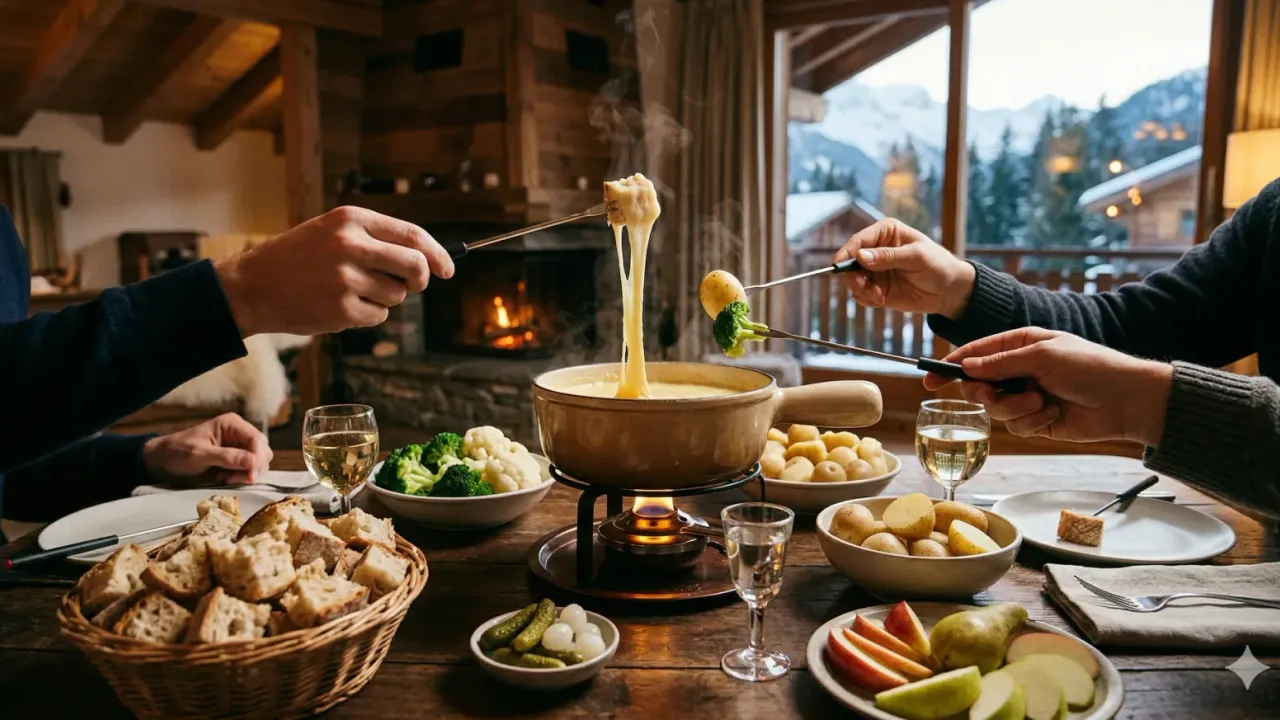
Fondue is the ultimate Swiss comfort food, and this fondue recipe brings the warmth of a Swiss Alpine chalet straight to your kitchen table. Imagine a bubbling pot of melted Gruyere and Emmental cheese, seasoned with garlic and white wine, waiting for you to dip crusty bread into its golden depths. This communal dish has been the centerpiece of Swiss gatherings for centuries. Moreover, it is surprisingly simple to prepare at home with just a handful of quality ingredients.
Prep Time: 15 minutes | Cook Time: 20 minutes | Servings: 4
Difficulty: Easy | Calories: ~580 per serving
What Makes Fondue Special?
At its heart, fondue is a celebration of simplicity. You melt cheese with wine, season it lightly, and share it from a single pot. However, what separates a great fondue from a mediocre one comes down to technique and ingredient quality. The Swiss have spent centuries perfecting the balance of cheese, acidity, and heat. As a result, every aspect of this dish serves a purpose. The garlic rub flavors the pot. Meanwhile, the wine provides acidity that keeps the cheese smooth. Similarly, cornstarch prevents the proteins from clumping together.
Additionally, fondue is one of the few dishes where the cooking happens at the table. Everyone gathers around the pot, dipping bread and vegetables into the warm, flowing cheese. This shared experience turns a simple meal into an event. In fact, Swiss households consider fondue a winter tradition that brings families closer together. The slow, social pace of the meal encourages conversation and connection. No one rushes through a fondue dinner.
The science behind great fondue is fascinating as well. Cheese is an emulsion of fat, protein, and water. When you heat it too fast, the proteins seize and the fat separates. Therefore, the figure-eight stirring pattern and gradual addition of cheese are not just tradition. They are essential food science principles that keep the emulsion stable. Fondue originated in the Swiss canton of Fribourg and became a national symbol after the Swiss Cheese Union promoted it in the 1930s. Today, it remains one of the most recognized Swiss dishes worldwide.

Choosing the Right Cheese for Fondue
The cheese blend you choose determines the flavor and texture of your fondue. Not every cheese melts well, so selecting the right types is essential. Here are the best options for a silky, flavorful pot.
- Gruyere (essential): This is the backbone of Swiss fondue. Gruyere has a rich, nutty flavor with a slight sweetness that deepens as it ages. It melts smoothly and provides the robust taste that defines the dish. Look for cave-aged Gruyere AOP for the best results. Furthermore, its firm texture makes it easy to shred evenly.
- Emmental (classic blend partner): Emmental balances the intensity of Gruyere with its mild, slightly sweet flavor. It melts beautifully and adds a stretchy, gooey quality to the pot. The classic Swiss ratio is equal parts Gruyere and Emmental. Meanwhile, some cooks prefer a heavier ratio of Gruyere for a bolder taste.
- Vacherin Fribourgeois (regional alternative): In the Fribourg canton, fondue is made with Vacherin alone or mixed with Gruyere. This cheese is softer and creamier, producing a fondue with a more delicate, buttery flavor. It melts at a lower temperature. Consequently, it requires less stirring and is more forgiving for beginners.
- Appenzeller (flavor booster): Adding a small portion of Appenzeller gives the fondue a tangy, herbaceous kick. Use it sparingly, as its flavor is strong. A ratio of 40% Gruyere, 40% Emmental, and 20% Appenzeller creates a complex, layered fondue that impresses even Swiss purists.
Ingredients for Fondue
Cheese Blend:
- 8 ounces Gruyere cheese, shredded
- 8 ounces Emmental cheese, shredded
- 1 tablespoon cornstarch
Liquid Base:
- 1 cup dry white wine (Fendant or Sauvignon Blanc)
- 1 tablespoon fresh lemon juice
- 1 tablespoon kirsch (cherry brandy)
Seasonings:
- 1 clove garlic, halved
- Pinch of freshly grated nutmeg
- Freshly ground black pepper to taste
For Dipping:
- 1 large crusty bread loaf, cut into 1-inch cubes
- Blanched broccoli and cauliflower florets
- Baby potatoes, boiled and halved
- Cornichons for serving
- Sliced apples and pears
Pro tip: Shred the cheese yourself instead of buying pre-shredded bags. Pre-shredded cheese contains anti-caking agents like cellulose that prevent smooth melting. Freshly grated cheese melts into a silkier, creamier fondue every single time. Besides, the extra five minutes of grating is well worth the effort for a noticeably better result.
Step-by-Step Instructions
Step 1: Prepare the Cheese Mixture
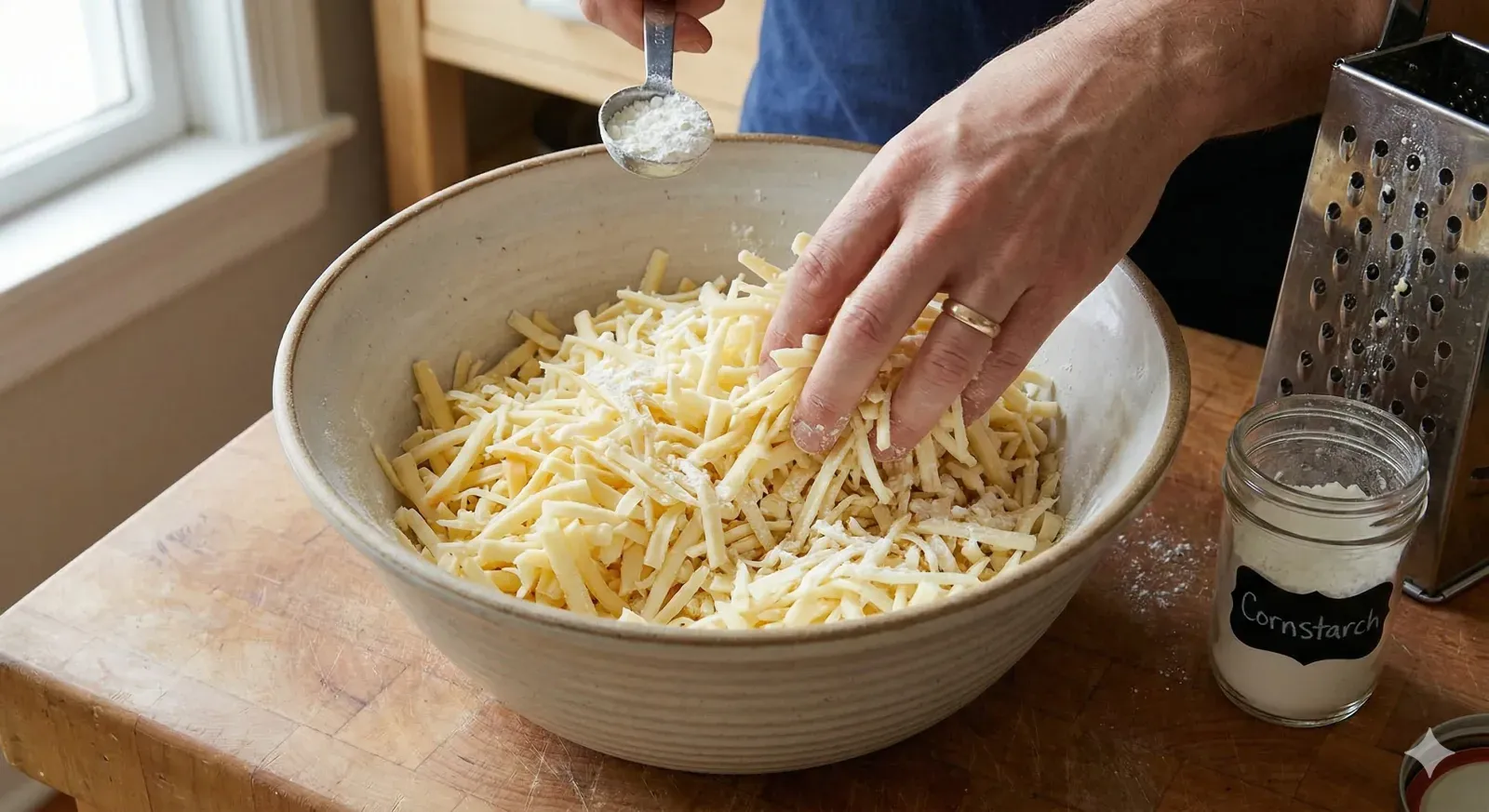
1 Shred the Gruyere and Emmental cheese using the large holes of a box grater. Place both cheeses in a large bowl. Add the cornstarch and toss everything together until the cheese shreds are evenly coated. This step is critical for a smooth fondue. The cornstarch acts as a stabilizer that prevents the cheese proteins from clumping.
Moreover, the starch molecules absorb moisture and create a buffer between the melting cheese and the wine. Without it, you risk a grainy, separated mess. Some recipes skip the cornstarch, but Swiss home cooks almost always include it. Therefore, do not leave it out, especially if you are making fondue for the first time. Set the coated cheese aside while you prepare the pot.
Step 2: Heat the Wine and Garlic
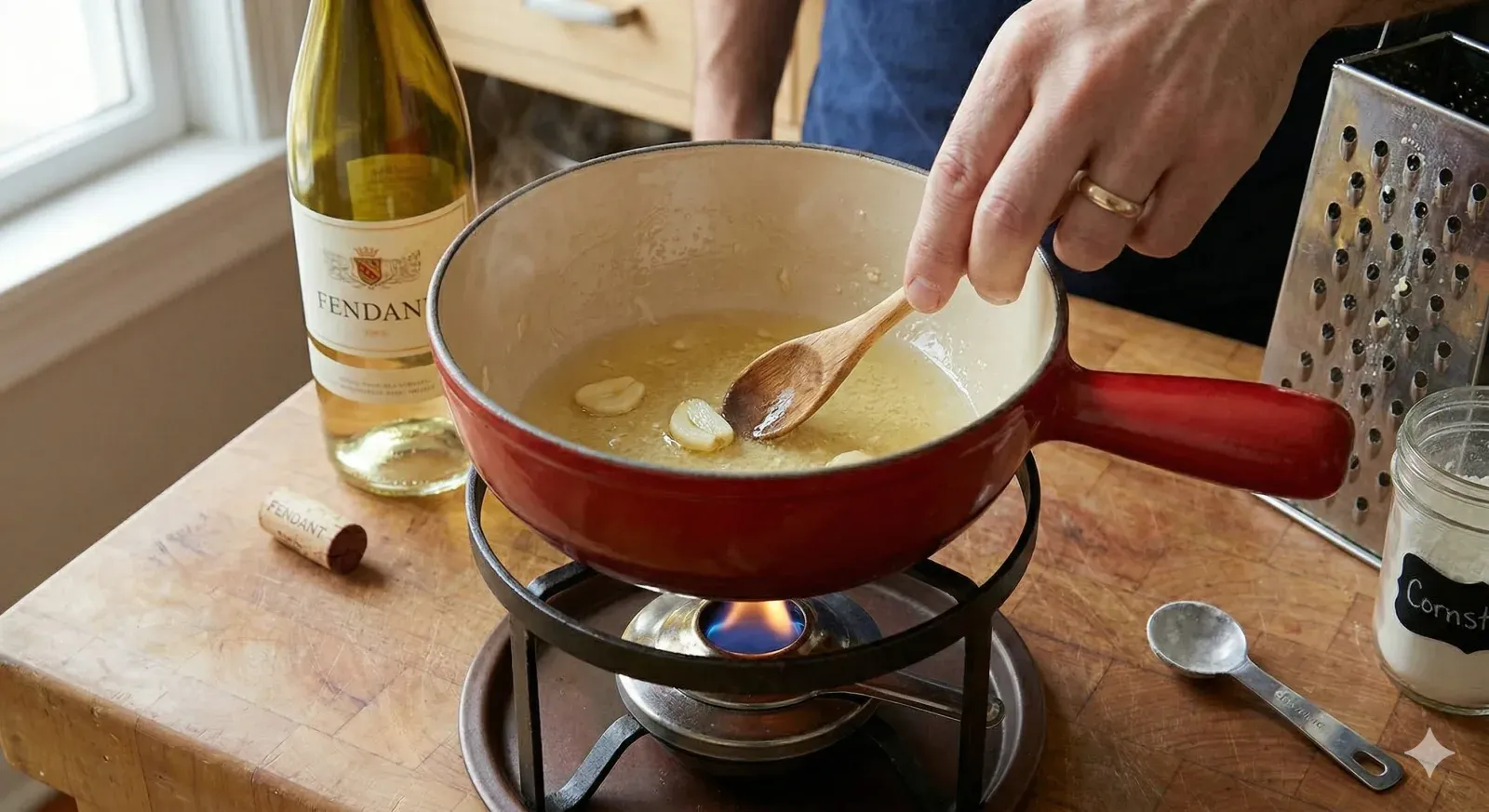
2 Cut a garlic clove in half. Rub the cut side vigorously across the entire inside surface of your fondue pot or caquelon. This leaves behind a subtle garlic flavor that infuses the cheese as it melts. Next, pour in the dry white wine and lemon juice. Place the pot over medium heat on your stovetop.
Heat the wine until small bubbles appear around the edges. However, do not let it reach a full rolling boil. Boiling wine becomes harsh and bitter, which would ruin the fondue’s delicate flavor. A gentle simmer is what you want. The wine’s acidity plays a vital role in the chemistry of fondue. It lowers the pH, which helps the cheese proteins unwind and blend smoothly into the liquid. Consequently, the acid is not just for flavor. It is the key to a silky texture.
Step 3: Melt the Cheese Gradually
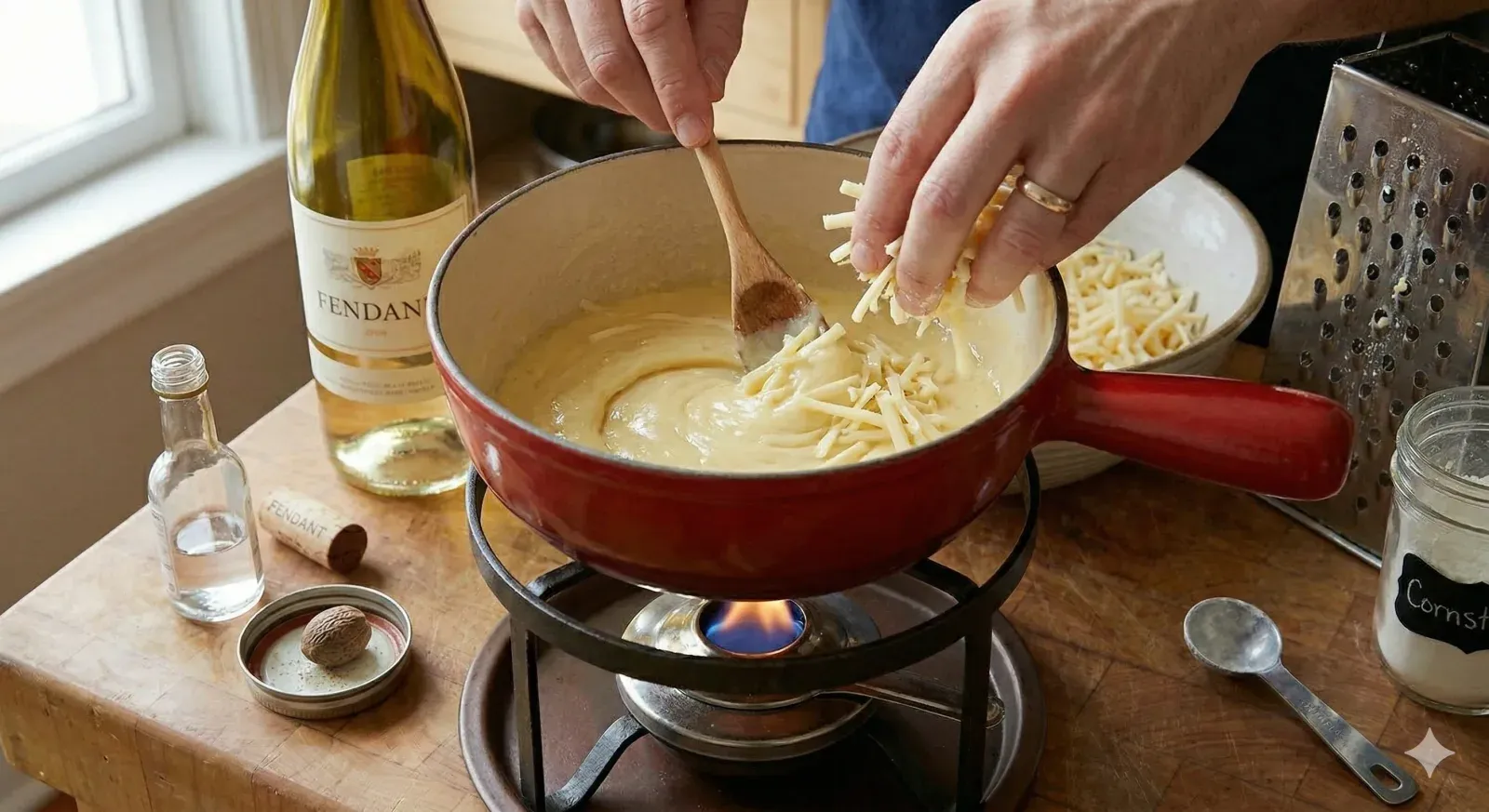
3 Grab a handful of the cornstarch-coated cheese and drop it into the simmering wine. Stir constantly in a figure-eight pattern using a wooden spoon or silicone spatula. Wait until each handful dissolves completely before adding the next one. This gradual process takes about 8 to 10 minutes total. Patience is essential here.
Furthermore, the figure-eight motion is not a random tradition. It ensures that you reach every part of the pot, preventing cheese from sticking to the bottom or sides. Circular stirring tends to push cheese to the edges. In contrast, the figure-eight pattern distributes heat and melting evenly across the entire surface. Once all the cheese has melted, stir in the kirsch and a pinch of freshly grated nutmeg. The kirsch adds a subtle fruity aroma. Meanwhile, the nutmeg provides warmth without overpowering the cheese.
Step 4: Transfer and Serve
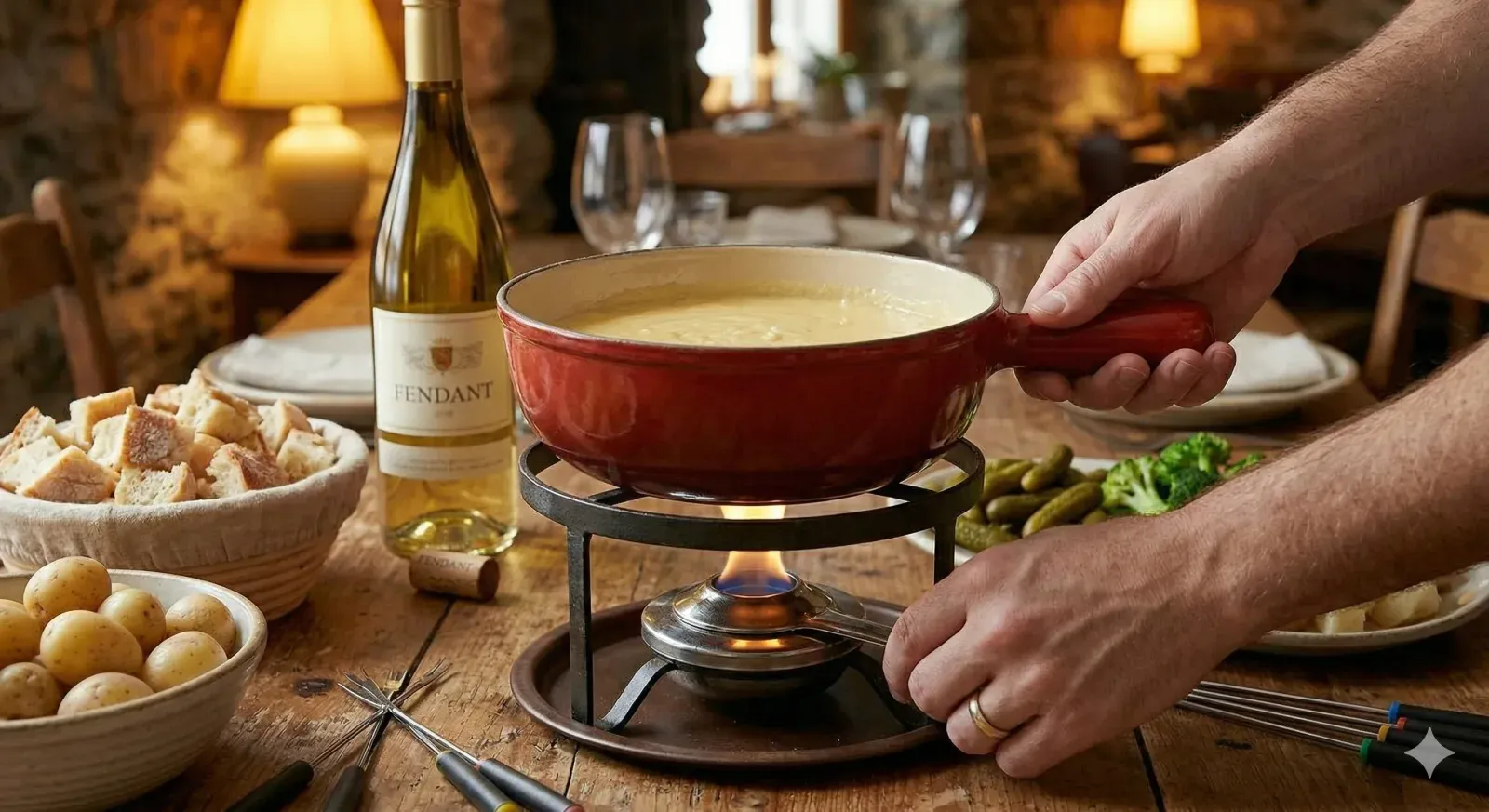
4 Carefully move the fondue pot to a lit burner or fondue stand at the center of your table. Adjust the flame to the lowest setting. You want just enough heat to keep the cheese gently bubbling. Too much flame will scorch the bottom and cause the cheese to separate. A low, steady warmth is ideal.
Arrange the bread cubes, boiled potatoes, blanched vegetables, cornichons, and sliced fruit around the pot. Give each guest a fondue fork. Spear a bread cube, dip it into the cheese, and swirl it gently. Then let the excess drip for a moment before eating. Additionally, stir the pot every few minutes to keep the fondue smooth and prevent a skin from forming on top. The crusty layer that develops at the bottom of the pot is called “la religieuse.” Swiss diners consider it the best part. Scrape it out at the end of the meal and share it among your guests.
Expert Tips for the Perfect Fondue
Always Use Room-Temperature Cheese
Cold cheese straight from the fridge is harder to melt smoothly. Take the shredded cheese out at least 20 minutes before you begin cooking. At room temperature, the cheese softens slightly and melts more evenly into the wine. Consequently, you get fewer lumps and a creamier final result. This small step makes a significant difference in texture.
Stir in One Direction Only
Switching stirring directions can break the emulsion. Once you start your figure-eight pattern, maintain the same path throughout. The consistent motion keeps the cheese proteins aligned and blended. Similarly, use a flat-bottomed wooden spoon rather than a whisk. A whisk introduces air bubbles that can make the fondue frothy instead of smooth.
Choose the Right Wine
The wine you use matters more than many people realize. A dry, crisp white wine with good acidity is essential. Sweet wines will make the fondue taste odd. Likewise, heavily oaked Chardonnay can overpower the cheese. Swiss Fendant (Chasselas) is the traditional choice. Sauvignon Blanc and Pinot Grigio also work beautifully. Use the same wine for cooking and drinking with the meal.
Fondue Styles Across Switzerland
Although fondue seems like a single dish, it varies significantly across Swiss cantons. Each region has its own preferred cheese blend and preparation method. Here is how the major styles compare.
| Style | Cheese Used | Key Characteristics | Region |
|---|---|---|---|
| Moitie-Moitie | 50% Gruyere, 50% Vacherin Fribourgeois | Creamy, mild, buttery with a soft texture | Fribourg |
| Neuchateloise | 100% Gruyere | Bold, nutty, firm body with strong cheese flavor | Neuchatel |
| Vaudoise | Gruyere with Emmental | Classic balanced blend, slightly sweet | Vaud |
| Appenzeller Style | Appenzeller with Gruyere | Tangy, herbal, more pungent than others | Appenzell |
| Central Swiss | Sbrinz with Gruyere | Hard cheese base, intensely savory | Lucerne area |
Serving Suggestions
A proper fondue dinner is more than just bread and cheese. The right accompaniments transform it into a complete, balanced meal. Here is what to serve alongside your fondue pot for the best experience.
Classic Dippers and Sides:
- Crusty bread cubes: Day-old sourdough or country bread works best. The firmer texture holds up on the fondue fork without crumbling. Cut the cubes so each piece has some crust attached. The crust gives you something to grip while dipping.
- Boiled baby potatoes: Small waxy potatoes add substance to the meal. They soak up the cheese beautifully. Furthermore, their mild flavor lets the cheese shine without competing for attention.
- Cornichons and pickled onions: The tangy acidity is essential for cutting through the richness. Without these palate cleansers, the cheese becomes overwhelming after a few bites. Never skip them.
- Fresh green salad: A simple salad dressed with light vinaigrette adds freshness and fiber. It provides a welcome contrast to the heavy cheese and keeps the meal balanced.
Beverage Pairings:
- Fendant (Chasselas) white wine: The traditional Swiss pairing. Its crisp acidity and mineral character complement the cheese without fighting it. Serve it at cellar temperature for the best match.
- Hot black tea: Swiss tradition holds that warm beverages aid digestion during a fondue meal. Black tea is the most popular non-alcoholic option. Cold water is traditionally avoided during the meal.
- Kirsch (cherry brandy): A small glass between dipping rounds is a Swiss custom. The spirit is believed to help break down the cheese in your stomach. Nevertheless, it is perfectly optional and a matter of personal taste.
- Dry Riesling or Pinot Gris: If Swiss wine is unavailable, these alternatives offer similar crisp acidity. Their light fruit notes complement the nutty cheese flavors nicely. Avoid heavy reds, because they clash with the fondue.
Storage and Reheating
Refrigerator: Let leftover fondue cool completely in the pot. Transfer it to an airtight container and refrigerate for up to 2 days. The cheese will solidify into a firm block. However, it reheats well if you follow the right method. Label the container with the date so you use it promptly.
Reheating: Place the solidified fondue in a saucepan over low heat. Add a splash of white wine or milk, about 2 tablespoons at a time. Stir constantly until the cheese melts back into a smooth consistency. Do not rush this process with high heat. Instead, keep the flame low and add liquid gradually. The result will be nearly as good as fresh fondue.
Freezer: Fondue does not freeze well. The emulsion breaks down during freezing, and the texture becomes grainy upon thawing. For the best experience, make only as much as you plan to eat. If you do have significant leftovers, use them for fondue toast under the broiler instead of trying to freeze the mixture.
Common Mistakes to Avoid
1. Adding Cheese Too Quickly
Dumping all the cheese into the pot at once is the most common fondue mistake. The proteins seize up and form tough clumps that refuse to melt smoothly. Instead, add one small handful at a time and stir until fully melted. This patience pays off with a velvety, lump-free texture. Rushing the process almost guarantees a lumpy result.
2. Using Pre-Shredded Cheese
Bagged pre-shredded cheese contains cellulose and starch coatings that prevent clumping in the package. Unfortunately, those same coatings also prevent smooth melting in your pot. The fondue ends up grainy and gritty. Always buy block cheese and shred it yourself. The texture difference is dramatic and immediately noticeable.
3. Overheating the Pot
High heat causes the cheese fat to separate from the proteins. You end up with an oily slick on top and a rubbery mass at the bottom. Keep the heat at medium during melting and low once you transfer to the table burner. A gentle simmer is all you need. Besides, fondue is meant to be enjoyed slowly. There is no reason to rush the heat.
4. Forgetting the Acid
Wine and lemon juice are not optional flavor additions. They serve a chemical function in the fondue. The acid lowers the pH, which prevents the casein proteins in the cheese from bonding too tightly. Without acid, the cheese seizes into a stringy, rubbery ball. Therefore, always include both the wine and the lemon juice for a properly smooth fondue.
Frequently Asked Questions
What is the best cheese for fondue?
The classic Swiss fondue uses a blend of Gruyere and Emmental cheese. Gruyere provides a rich, nutty depth. Emmental adds a mild sweetness and smooth melting quality. A 50/50 ratio works best for beginners. However, some Swiss regions add Appenzeller or Vacherin Fribourgeois for extra complexity. The key is using freshly shredded cheese from blocks rather than pre-shredded bags.
Why did my fondue turn lumpy or stringy?
Lumpy fondue usually results from adding cheese too quickly or using too high a heat. Always add cheese one handful at a time while stirring constantly. Tossing the shredded cheese in cornstarch before melting also prevents clumping. If your fondue does become stringy, add a splash of lemon juice and stir vigorously. The acid helps break up the protein bonds and restore smoothness.
Can I make fondue without alcohol?
Yes, you can absolutely make fondue without wine. Replace the white wine with an equal amount of unsweetened apple juice mixed with one tablespoon of lemon juice. The acidity is essential for the chemistry, so the lemon juice is not optional. Skip the kirsch entirely or replace it with a teaspoon of vanilla extract. The fondue will taste slightly different but still delicious.
What do you dip in fondue besides bread?
Beyond crusty bread cubes, popular fondue dippers include boiled baby potatoes, blanched broccoli and cauliflower florets, apple and pear slices, roasted mushrooms, and steamed asparagus. Cherry tomatoes and cornichons also work well. The key is choosing items sturdy enough to stay on the fondue fork. Soft items that fall apart will sink into the pot and create a messy situation.
What wine pairs best with cheese fondue?
Dry white wines work best both in the pot and in your glass. Swiss Fendant, made from the Chasselas grape, is the traditional pairing. Sauvignon Blanc, dry Riesling, and Pinot Gris are excellent alternatives that you can find at most wine shops. Avoid oaky or heavily buttered Chardonnays. Their bold flavors clash with the delicate cheese. Hot tea and kirsch are also traditional Swiss beverage choices.
How do I reheat leftover fondue?
Reheat leftover fondue gently over low heat on the stovetop. Add a splash of white wine or milk to restore the creamy consistency. Stir constantly to prevent scorching on the bottom. Alternatively, spread the solidified fondue on bread slices and broil until bubbly for a quick fondue toast. Leftover fondue keeps in the refrigerator for up to 2 days in a sealed container.
Variations and Adaptations
Truffle Fondue:
Add one tablespoon of truffle oil and a small amount of finely chopped black truffle to your finished fondue. Stir gently to incorporate. The earthy, luxurious truffle flavor elevates the cheese to restaurant quality. Use a light hand, though. Truffle flavor is potent, and too much will overwhelm the cheese. This variation works especially well for a special dinner or holiday celebration.
Tomato Fondue:
Stir in two tablespoons of tomato paste and a pinch of smoked paprika after the cheese has fully melted. The tomato adds a subtle tanginess and a beautiful warm color to the pot. This style is popular in some Swiss mountain restaurants. It pairs particularly well with roasted vegetables and grilled sausage slices as dippers instead of bread alone.
Beer Fondue:
Replace the white wine with an equal amount of light lager or wheat beer. The beer creates a slightly malty, more robust flavor profile. This version is popular in German-speaking cantons of Switzerland. It pairs wonderfully with pretzel bread cubes and bratwurst slices. Likewise, it makes a fantastic option for casual gatherings where beer is already the drink of choice.
The Cultural Significance of Fondue
Fondue holds a unique place in Swiss national identity. In the 1930s, the Swiss Cheese Union actively promoted it as a national dish to boost domestic cheese consumption. The campaign was remarkably successful. By the mid-20th century, fondue had become a symbol of Swiss unity and Alpine culture. The Swiss military even included fondue recipes in its army cookbook to strengthen a sense of shared identity among soldiers from different cantons.
Beyond marketing, fondue reflects deep Swiss values. The communal pot represents equality at the table. Everyone eats from the same source. There are no individual portions or hierarchies. The slow pace of the meal encourages dialogue and togetherness. In fact, Swiss families often have unwritten fondue rules and traditions passed down through generations. Dropping your bread in the pot, for example, traditionally earns a penalty, usually a round of drinks or a song.
Today, fondue remains central to Swiss winter culture. Restaurants across the country serve it from October through March. Ski lodges and mountain huts feature it on every menu. Street vendors in cities like Zurich and Bern offer portable fondue cups during the holiday season. Although the dish has gained worldwide popularity, the Swiss maintain a protective pride over their creation. It is not merely food to them. It is a ritual, a gathering, and a piece of national heritage that connects the present to centuries of Alpine tradition.
Conclusion
This fondue recipe gives you everything you need to create an authentic Swiss cheese experience at home. The keys are straightforward: use quality Gruyere and Emmental, shred the cheese yourself, melt it gradually into warm wine, and stir in a steady figure-eight pattern. With just 15 minutes of prep and 20 minutes of cooking, you can bring the warmth of a Swiss chalet to your own dinner table.
Ready to explore more classic European comfort food? Browse our full collection of European dishes, including Swiss raclette, Hungarian goulash, and French ratatouille. Each recipe is tested, detailed, and ready for your kitchen.