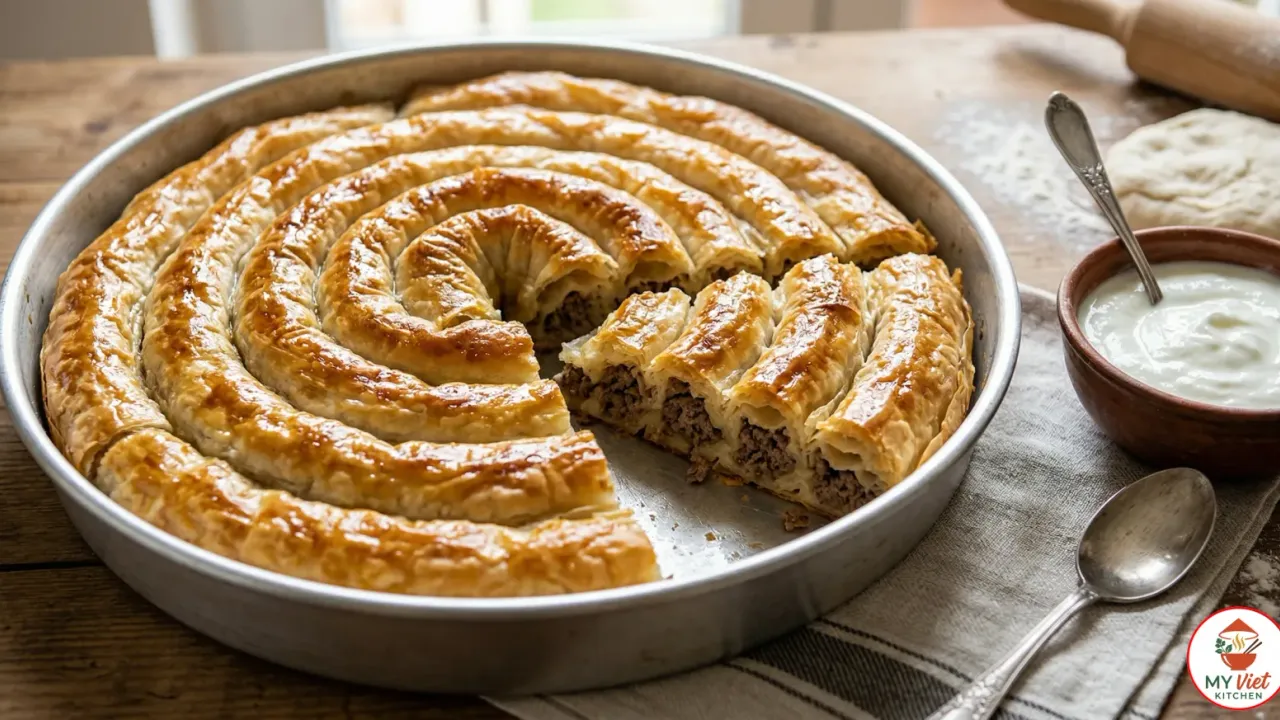
Burek is the iconic pastry of the Balkans, and this recipe shows you how to make it from scratch with handmade dough and a savory meat filling. Layers of impossibly thin, hand-stretched pastry wrap around seasoned ground beef or lamb, then coil into a golden spiral and bake until every bite shatters with flaky crispness. This burek recipe captures the authentic technique passed down through generations in Bosnia, Serbia, and across the region. Whether you grew up eating it from a neighborhood bakery or you are discovering it for the first time, this guide walks you through every step.
Prep Time: 60 minutes | Cook Time: 45 minutes | Servings: 8
Difficulty: Medium | Calories: ~420 per serving
What Makes Burek Special?
Burek is more than a filled pastry. It is the soul food of the Balkans. Walk into any burekdznica, a shop dedicated entirely to this one dish, and you will find rows of golden coils turning slowly in massive round pans. The aroma of butter-soaked dough and spiced meat fills the air. People line up before dawn to grab a warm slice alongside a cup of cold yogurt. No other pastry in the region commands this level of devotion.
What sets burek apart from other filled pastries is the dough itself. Unlike commercial phyllo, which shatters into brittle sheets, traditional burek dough stretches by hand over a large table until it becomes nearly translucent. You should be able to read a newspaper through it. This hand-stretched dough has a slightly elastic, almost chewy quality that balances beautifully against the crispy outer layers. The combination of textures is what makes burek unforgettable.
The filling stays deliberately simple. Ground beef or lamb, softened onion, salt, pepper, and sometimes a touch of paprika. Nothing more. The Balkan philosophy here is restraint. When your dough technique is perfect, you do not need to mask it with complicated seasonings. Every bite should deliver the rich taste of butter-brushed pastry alongside the savory warmth of well-seasoned meat. That balance is the entire point.

Choosing the Right Dough for Burek
The dough is where burek succeeds or fails. You have three approaches, and each produces a different texture. Your choice depends on how much time you have and what result you want.
- Homemade hand-stretched dough (best choice): This is the traditional method. A simple mixture of flour, water, oil, and salt rests until the gluten relaxes, then stretches paper-thin over a large surface. The result is a pastry with layers that are both crispy on the outside and slightly chewy within. It takes practice, but the texture is unmatched.
- Store-bought phyllo dough: A solid shortcut that saves about 45 minutes of work. Layer two or three sheets together, brush generously with butter, add filling, and roll. The pastry comes out crispier and more brittle than the handmade version. It still tastes great, especially for your first attempt.
- Yufka sheets (Turkish flatbread): If you can find yufka at a Middle Eastern grocery, it sits between phyllo and homemade dough in texture. It is slightly thicker and more pliable than phyllo, which makes it easier to roll without tearing. Brush with butter and use exactly like stretched dough.
Ingredients for Burek
For the Dough:
- 3 cups all-purpose flour
- 1 teaspoon salt
- 1 cup warm water
- 2 tablespoons vegetable oil
- Additional flour for dusting
For the Meat Filling:
- 1 pound ground beef, ground lamb, or a mix of both
- 1 medium onion, finely diced
- 1/2 teaspoon black pepper
- 1/2 teaspoon paprika
- Salt to taste
- 1/4 cup warm water or meat broth
- 1 tablespoon vegetable oil for cooking
For Assembly and Baking:
- 1/2 cup butter, melted
- 1/4 cup vegetable oil for brushing
- 1 egg yolk mixed with 1 tablespoon milk for egg wash
- 1/2 cup plain yogurt for serving
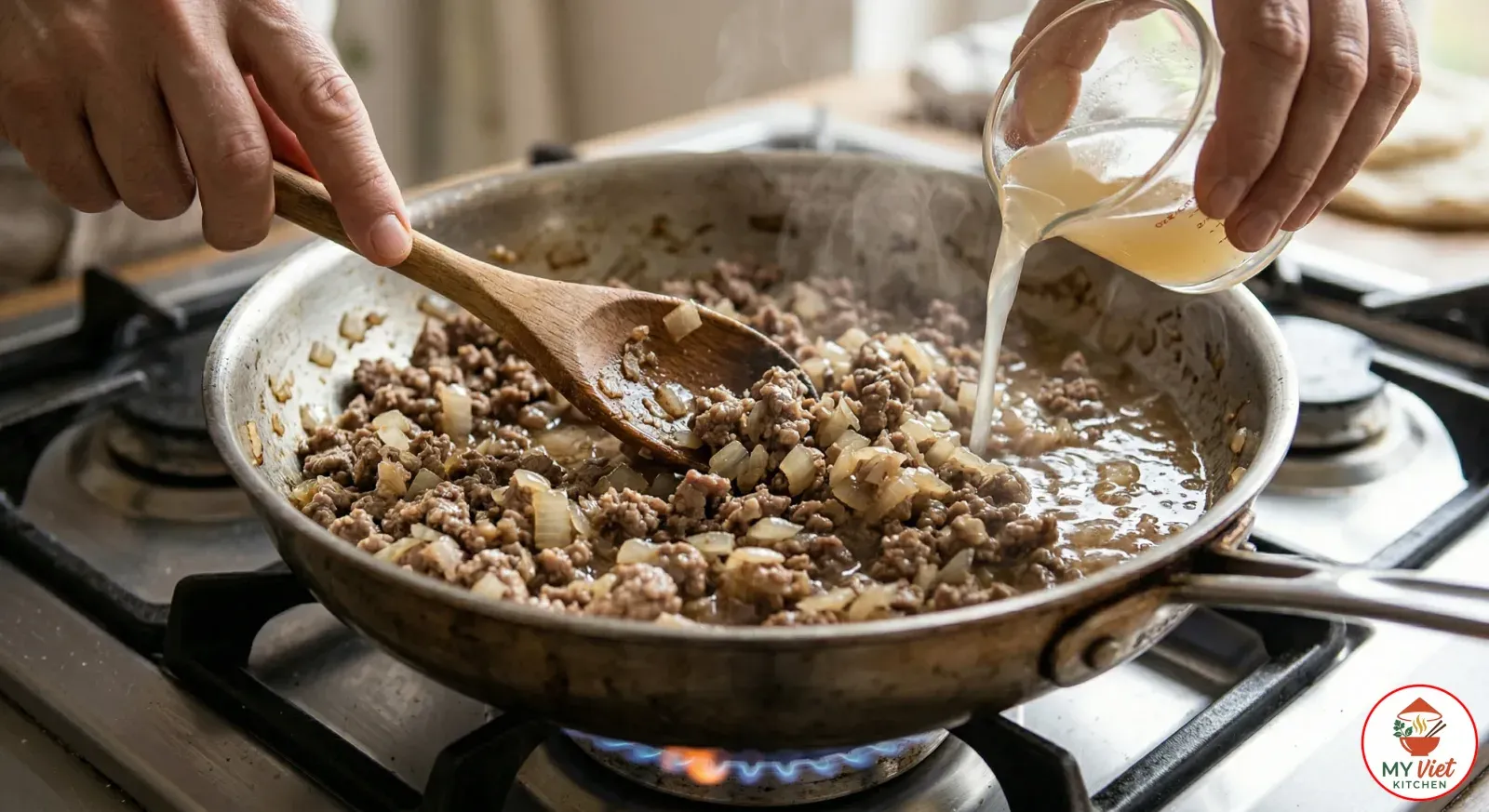
Pro tip: Add a splash of warm water or broth to the cooked meat filling. This keeps the filling moist during baking and prevents the burek from drying out. The steam from the liquid also helps create additional flaky layers inside the pastry.
Step-by-Step Instructions
Step 1: Make the Dough
1 Combine the flour and salt in a large mixing bowl. Create a well in the center. Pour in the warm water and oil gradually while mixing with your other hand or a wooden spoon. Once the dough comes together into a shaggy mass, turn it out onto a lightly floured surface.
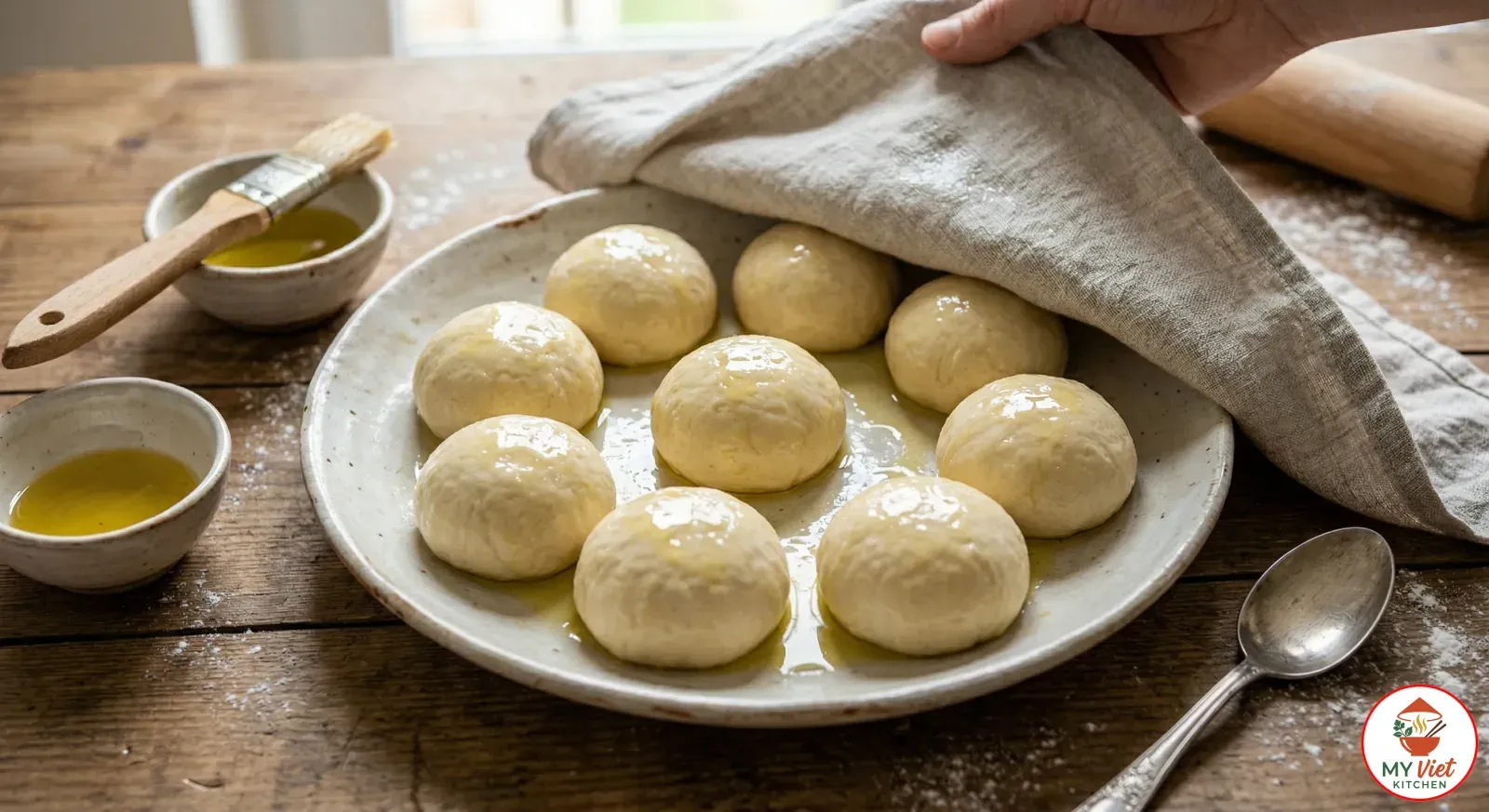
Knead the dough firmly for 10 minutes. Push it forward with the heel of your palm, fold it back, and rotate. The dough should become smooth, elastic, and slightly tacky but not sticky. If it clings to your hands, dust with a small amount of flour. Divide the dough into 8 equal balls, brush each one generously with oil, place them on a plate, cover with a damp cloth, and let them rest for at least 30 minutes. This resting period relaxes the gluten, which is essential for stretching the dough thin without tearing.
Step 2: Prepare the Filling
2 Heat a tablespoon of oil in a skillet over medium heat. Add the diced onion and cook for 4 to 5 minutes until soft and translucent. Then add the ground meat, breaking it apart with a wooden spoon into small, even crumbles. Season with salt, black pepper, and paprika.
Cook the meat for 8 to 10 minutes, stirring occasionally, until it is no longer pink and most of the moisture has evaporated. Add a quarter cup of warm water or broth and stir well. This liquid keeps the filling juicy during baking. Remove the skillet from the heat and let the filling cool to room temperature. Hot filling will make the dough soggy and difficult to handle.
Step 3: Stretch the Dough Paper-Thin
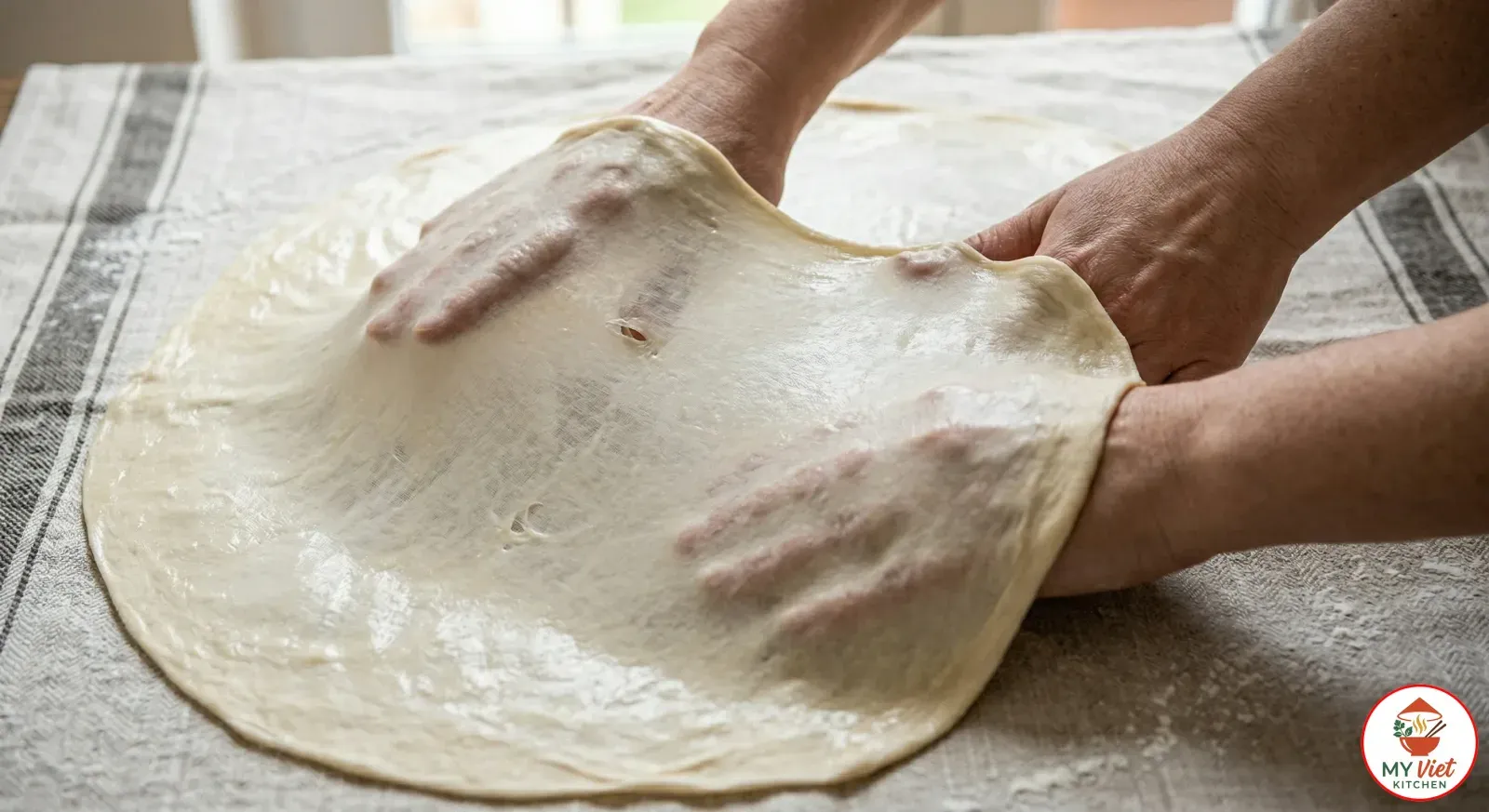
3 Cover a large table or countertop with a clean cloth and dust it lightly with flour. Take one dough ball and roll it out with a rolling pin into a rough circle about 10 inches wide. Then switch to your hands. Slide both hands under the dough, palms facing down, and use the backs of your hands to stretch it gently from the center outward.
Work slowly and evenly, walking around the table as you stretch. The dough should become so thin that you can see the cloth pattern through it. Small tears are perfectly normal and will not ruin the final product. Once stretched, brush the entire surface generously with a mixture of melted butter and oil. This fat layer is what creates the signature flaky separation between the pastry layers during baking.
Step 4: Fill, Roll, and Coil
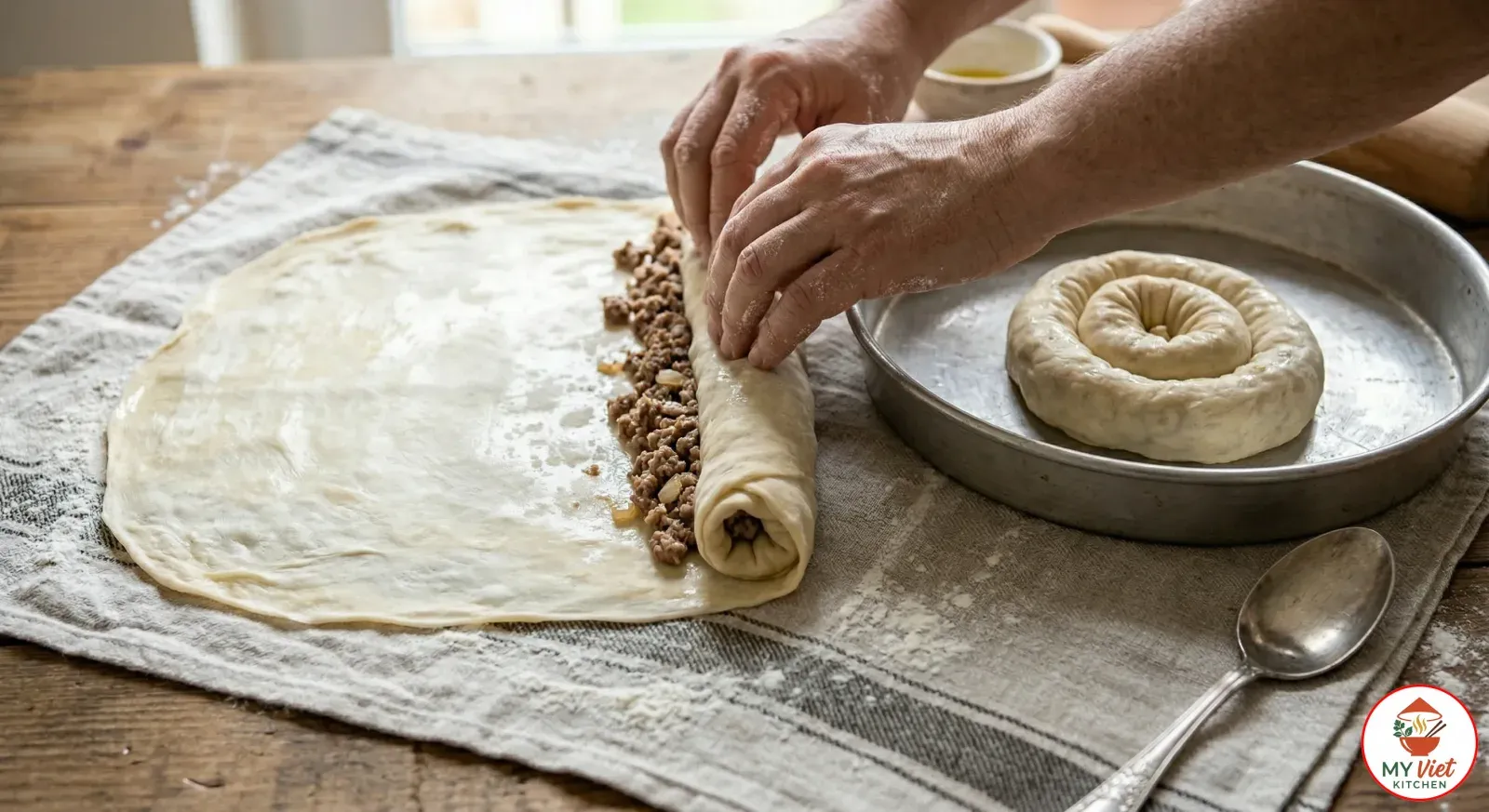
4 Spoon a thin line of the cooled meat filling along one long edge of the stretched dough. Do not overfill. A thin, even line works best because the burek needs room for the dough layers to puff and crisp. Fold the edge of the dough over the filling, then roll it into a long, thin log. Keep the roll fairly loose rather than tight, since a loose roll allows steam to escape and creates better layers.
Grease a round baking pan with butter. Take the first rolled log and coil it into a spiral starting from the center of the pan. When you finish that log, start the next one where the previous one ended, continuing the spiral outward. Repeat until all 8 dough balls are filled, rolled, and coiled into one large continuous spiral that fills the pan. Brush the top generously with egg wash for a glossy golden crust.
Step 5: Bake Until Deep Golden Brown
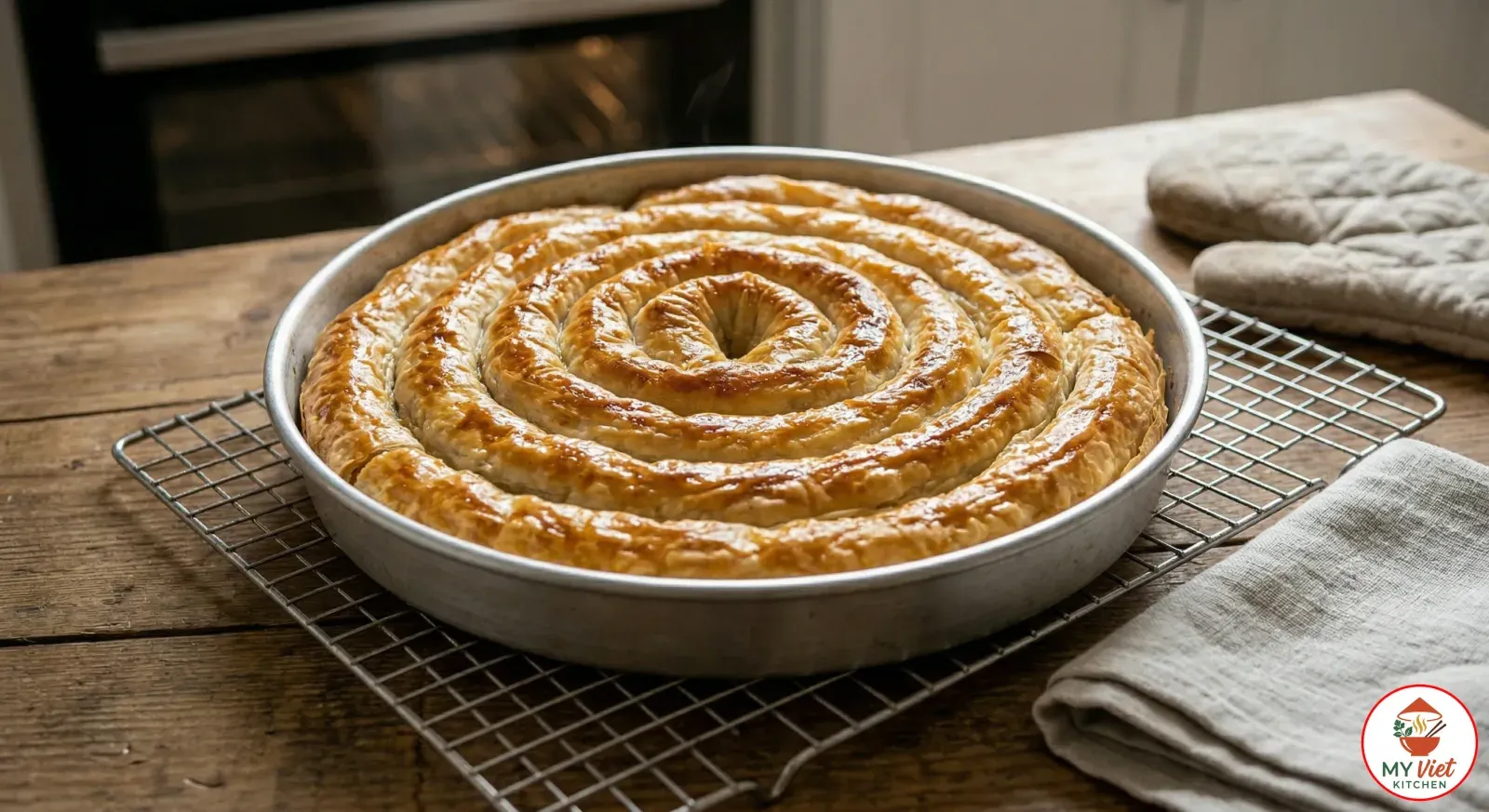
5 Place the pan in an oven preheated to 375 degrees Fahrenheit. Bake for 40 to 45 minutes, rotating the pan halfway through for even browning. The burek is ready when the top turns a deep golden brown and the pastry feels crisp to the touch. The layers should look puffy and slightly separated, with a rich, buttery sheen.
Remove the pan from the oven and let the burek rest for 10 minutes. Some bakers drape a clean kitchen towel over the hot burek for a few minutes. This traps a small amount of steam that softens the very top layer just enough to make cutting easier, while the inner layers stay perfectly crisp. Cut into wedges and serve warm with a bowl of cold, thick yogurt on the side.
Expert Tips for Perfect Burek
Let the Dough Rest Longer Than You Think
Thirty minutes is the minimum rest time, but an hour or even two hours produces dramatically better results. Resting allows the gluten network to relax fully. Tight, unrested dough fights back when you stretch it and tears easily. Well-rested dough practically stretches itself. If you have the time, err on the side of more rest. Cover the balls with plastic wrap or a damp towel so they do not dry out.
Use the Backs of Your Hands, Not Your Fingers
Fingertips poke holes. The flat backs of your hands distribute pressure evenly across the dough, which allows you to stretch it thin without puncturing it. Slide your hands under the dough, make loose fists, and gently pull outward. Gravity helps as the dough drapes over your knuckles. This technique takes a few tries to master, but it is the traditional method used by Balkan bakers for centuries.
Keep the Rolls Loose
A tight roll traps steam inside and creates a gummy, dense interior. A loose roll lets hot air circulate between the layers, which puffs them apart and makes them crispy. Think of it like a cinnamon roll rather than a tight burrito. The slight gaps between the layers are where the magic happens during baking.
Generous Butter Makes All the Difference
Do not skimp on the melted butter between layers. The fat serves two critical purposes in burek. First, it waterproofs each layer, preventing them from fusing into a single thick sheet. Second, it fries the dough from within during baking, creating that irresistible golden crunch. Mix the melted butter with a little oil to keep it liquid and easy to brush evenly.
Burek Across the Balkans: A Regional Comparison
Every Balkan country has its own version of burek, and each one inspires fierce local pride. The name, the shape, and even the acceptable fillings vary depending on where you are. Here is how burek differs across the region.
| Country | Name | Shape | Traditional Fillings |
|---|---|---|---|
| Bosnia | Burek (meat only) | Coiled spiral | Ground beef or lamb with onion |
| Serbia | Burek | Coiled spiral or layered | Meat, cheese, or mixed fillings |
| Turkey | Borek | Many shapes | Cheese, spinach, potato, meat |
| Croatia | Burek | Rolled or layered | Meat or cheese |
| North Macedonia | Burek / Maznik | Coiled or round layers | Meat, cheese, leek |
| Albania | Byrek | Layered in pan | Meat, spinach, tomato, cheese |
Serving Suggestions
In the Balkans, burek is most often eaten as a complete meal on its own. The combination of rich pastry and savory filling is hearty enough to need very little else on the plate. However, a few simple accompaniments elevate the experience.
The Perfect Accompaniments:
- Cold plain yogurt: This is the essential pairing. The cool, tangy yogurt cuts through the richness of the butter-soaked pastry and balances the savory meat filling. In Bosnia, ordering burek without yogurt is almost unheard of.
- Kajmak (clotted cream): A thick, slightly sour dairy spread found throughout the Balkans. Dollop it on top of a warm slice, and it melts into the layers. If you cannot find kajmak, a good-quality creme fraiche works as a substitute.
- Fresh tomato and cucumber salad: A light Balkan salad called Shopska, made with diced tomatoes, cucumbers, onion, and crumbled white cheese, provides a refreshing contrast to the heavy pastry.
- Pickled peppers or ajvar: Roasted red pepper relish, known as ajvar, adds a sweet, smoky note that complements the meat filling beautifully.
Beverage Pairings:
- Turkish-style coffee: Strong, unfiltered coffee served in small cups is the traditional Balkan pairing. The bitter, intense flavor of the coffee stands up to the rich pastry.
- Ayran (yogurt drink): A cold, salted yogurt beverage that doubles down on the dairy pairing. It refreshes the palate between bites and aids digestion.
- Rakija (fruit brandy): The signature spirit of the Balkans. A small glass of plum or grape rakija before or alongside burek is a deeply traditional choice.
- Light lager beer: A crisp, cold beer works surprisingly well with the rich, buttery pastry. Choose something clean and simple that will not compete with the flavors.
Storage and Reheating
Refrigerator: Store leftover burek in an airtight container for up to 3 days. The pastry softens in the fridge, but reheating in the oven restores much of its crispness. Keep slices in a single layer if possible to prevent them from sticking together.
Freezer: Burek freezes exceptionally well for up to 2 months. You can freeze it before or after baking. For unbaked burek, assemble the full spiral, wrap tightly in plastic wrap and foil, then freeze. Bake directly from frozen at 375 degrees for 50 to 55 minutes. For already-baked burek, cool completely before wrapping and freezing.
Reheating: Always reheat burek in a 350-degree Fahrenheit oven for 10 to 15 minutes. The dry heat of the oven crisps the pastry layers again, which is the whole point of this dish. Avoid the microwave at all costs, because it turns the flaky layers into a soft, chewy mess. If the pastry seems dry, sprinkle a few drops of water on top before reheating to create gentle steam.
Common Mistakes to Avoid
1. Not Resting the Dough Long Enough
Impatient stretching is the top reason burek fails at home. Freshly kneaded dough has tight, elastic gluten that snaps back and tears when you try to stretch it thin. Give the dough balls at least 30 minutes of rest, ideally longer. The gluten relaxes during this time, and the dough becomes soft and pliable. Skipping this step guarantees thick, doughy burek instead of thin, flaky layers.
2. Overfilling the Rolls
More filling does not mean better burek. In fact, too much meat makes the pastry heavy, soggy, and difficult to roll. A thin, even line of filling along one edge is all you need. The beauty of burek lies in the ratio of crispy dough to savory filling. When the balance tips too far toward filling, you lose the delicate texture that makes this dish special.
3. Rolling Too Tightly
A tight roll compresses the dough layers together and traps steam. During baking, the interior steams instead of crisping, which results in a dense, gummy texture. Roll the filled dough into a loose log with visible air pockets. These gaps allow hot air to circulate during baking and create the separate, flaky layers that define great burek.
4. Baking at Too Low a Temperature
A low oven temperature gives the butter time to soak into the dough rather than frying it crispy. The result is a greasy, soft pastry that lacks crunch. Bake at 375 degrees Fahrenheit, which is hot enough to quickly set and crisp each layer while the butter sizzles between them. If your oven runs cool, bump the temperature up to 385 or even 400 degrees for the last 10 minutes to ensure a deep golden top.
Frequently Asked Questions
What is the difference between burek and borek?
Both words share the same Ottoman Turkish root, but their meanings differ by region. In Turkey, borek is a broad category that includes any filled pastry regardless of shape or filling. In the Balkans, burek refers specifically to a coiled, meat-filled pastry. Bosnians are especially strict about this distinction. If it has cheese, they call it sirnica. If it has spinach, they call it zeljanica. Only the meat version gets the name burek.
Can I use store-bought phyllo dough for burek?
Yes, and it is a perfectly acceptable shortcut. Layer two or three sheets of phyllo together, brush generously with melted butter, spread a thin line of filling along one edge, and roll into a log. The result will be crispier and more shatteringly flaky than the handmade version. Homemade dough has a slightly chewier, more bread-like quality that phyllo cannot replicate, but both versions taste excellent.
What filling is traditional for burek?
Traditional burek in Bosnia and much of the Balkans uses ground beef or lamb seasoned simply with onion, salt, and pepper. Some regions add paprika for a touch of color and warmth. The filling is intentionally minimalist. The focus is on the dough technique and the balance between crispy pastry and savory meat. Cheese and spinach versions exist throughout the region but technically carry different names in Bosnia.
Why is my burek dough tearing when I stretch it?
The most likely cause is insufficient resting time. Dough that has not rested for at least 30 minutes still has tight, elastic gluten that resists stretching. Let it rest longer, up to 2 hours for the best results. Also make sure you are using the backs of your hands rather than your fingertips, which concentrate pressure and poke holes. Work gently from the center outward, and accept that a few small tears are completely normal.
How do you reheat burek without it getting soggy?
Always use the oven, never the microwave. Preheat to 350 degrees Fahrenheit and reheat the burek for 10 to 15 minutes until the pastry crisps up again. The dry heat of the oven drives out moisture and re-crisps the layers. If the burek seems slightly dried out, sprinkle a few drops of water over the top before placing it in the oven. This generates a small amount of steam that refreshes the pastry without making it soggy.
Can I freeze burek before baking?
Yes, burek freezes beautifully either before or after baking. For the unbaked version, assemble the entire spiral in the pan, wrap it tightly with plastic wrap and foil, and freeze for up to 2 months. When you are ready to bake, place it directly in the oven from the freezer. Add 10 to 15 extra minutes to the baking time. There is no need to thaw it first.
Variations and Adaptations
Sirnica (Cheese Burek):
Replace the meat filling with a mixture of crumbled feta cheese, cottage cheese, and one beaten egg. The egg binds the cheese and creates a creamy, slightly custardy filling when baked. Some versions add a handful of fresh parsley for color. Cheese burek is popular across the entire Balkans and makes an excellent vegetarian option. Use the same dough and rolling technique as the meat version.
Zeljanica (Spinach Burek):
Wilt a pound of fresh spinach, squeeze out all excess moisture, then mix it with crumbled feta and a beaten egg. Season with salt, pepper, and a pinch of nutmeg. The spinach provides an earthy, slightly bitter note that pairs beautifully with the salty cheese. This version is lighter than meat burek and works well as a side dish or appetizer. Make sure to squeeze the spinach thoroughly, because excess water will make the dough soggy.
Krompirusha (Potato Burek):
Boil and mash two large potatoes, then mix with sauteed onion, salt, pepper, and a tablespoon of butter. Some cooks add a handful of crumbled cheese to the potato filling for extra richness. Potato burek is a comforting, hearty option that is naturally meat-free. The creamy, starchy filling contrasts nicely with the crispy pastry. It is especially popular in Serbia and North Macedonia.
Store-Bought Phyllo Shortcut:
If hand-stretching dough feels too ambitious for your first attempt, use store-bought phyllo sheets. Lay three sheets on a work surface, brush each one with melted butter, and stack them. Place the filling along one long edge and roll into a log. Coil the logs into a pan just like the handmade version. The baking time and temperature stay the same. This shortcut cuts about 45 minutes off the total preparation time.
The Cultural Significance of Burek
Burek arrived in the Balkans with the Ottoman Empire in the 15th century and never left. As the Ottomans expanded across southeastern Europe, they brought their pastry traditions with them. Local bakers adopted the technique, adapted it to regional tastes, and made it their own. Over the following centuries, burek became so deeply embedded in Balkan culture that its Ottoman origins faded into the background. Today, Bosnians, Serbians, Croatians, and Macedonians all claim burek as their national dish.
In Bosnia and Herzegovina, burek holds an almost sacred status. The burekdznica, a shop that sells only burek and its variations, is a cornerstone of daily life. Workers stop in before their morning shift. Families pick up trays for weekend gatherings. Late-night crowds line up after an evening out. The burekdznica is a social institution as much as a food business, and the quality of a city’s burek is a matter of civic pride.
The debate over what constitutes “real” burek is one of the Balkans’ most passionate and enduring food arguments. In Bosnia, calling a cheese-filled pastry “burek” can provoke genuine offense. Burek means meat, full stop. Everything else has its own name. In Serbia and other neighboring countries, the word applies more broadly to any filled pastry of this type. These disagreements may seem trivial to outsiders, but they reveal how deeply food shapes identity in this part of the world. Burek is not just something people eat. It is something people belong to.
Conclusion
This burek recipe gives you everything you need to create the authentic Balkan pastry at home, from handmade dough to the final golden spiral. The keys are patience with the dough, restraint with the filling, and generous butter between every layer. Let the dough rest until it stretches like silk. Keep the rolls loose so the layers puff and crisp in the oven. Serve warm with cold yogurt, and you will understand why millions of people across the Balkans start their mornings with this remarkable pastry.
Ready to explore more European and global pastry traditions? Browse our European dishes collection for recipes like spanakopita, empanadas, and pierogi. Each one brings a taste of a different culinary tradition to your table.