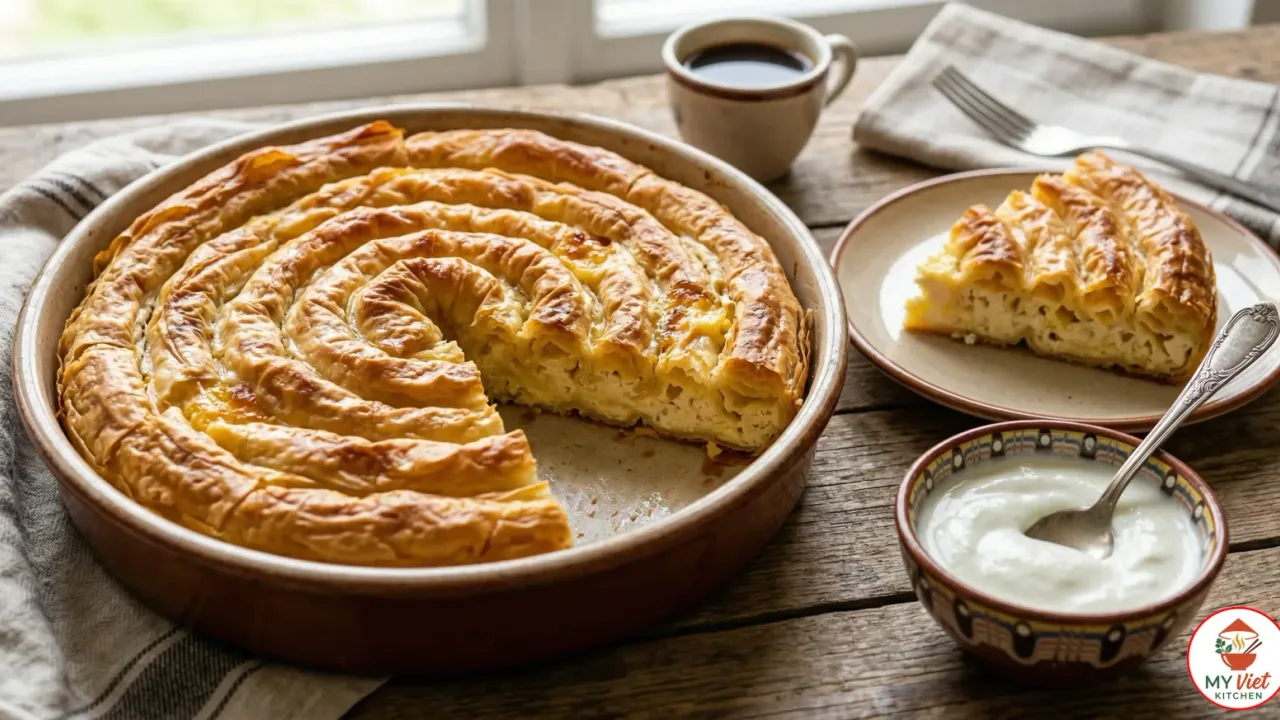
Banitza is the golden, flaky cheese pastry that sits at the heart of Bulgarian cuisine, and this recipe teaches you how to make it at home with store-bought phyllo and a rich filling of sirene cheese, eggs, and yogurt. Also spelled banitsa, this coiled pastry delivers layers of crispy phyllo wrapped around a creamy, custard-like cheese filling that puffs and sets during baking. This banitza recipe follows the traditional technique passed down through generations of Bulgarian home cooks. Whether you enjoy it warm from the oven for breakfast or as an afternoon snack, every bite combines the satisfying crunch of buttered pastry with the tangy richness of Bulgarian white cheese.
Prep Time: 25 minutes | Cook Time: 40 minutes | Servings: 8
Difficulty: Easy | Calories: ~350 per serving
What Makes Banitza Special?
Banitza is not just another cheese pastry. It is the national comfort food of Bulgaria, eaten at breakfast tables, holiday celebrations, and casual gatherings across the entire country. Walk into any Bulgarian bakery at seven in the morning, and you will see trays of freshly baked banitza flying off the counter while customers line up with cups of boza or strong coffee in hand. No other dish commands this level of daily devotion in Bulgarian culture.
So what separates banitza from other phyllo-based pastries? It all comes down to the filling method. Instead of placing dry cheese between layers, Bulgarian cooks create a wet mix of beaten eggs, thick yogurt, and crumbled sirene cheese. This liquid seeps into the phyllo as it bakes, so the inside turns custardy and moist while the outer layers stay crisp. As a result, you get a contrast of soft, tangy filling and golden, buttery shell that makes banitza truly unforgettable.
Moreover, the yogurt plays a role that goes well beyond flavor. Bulgarian yogurt, known as kiselo mlyako, has thick, tangy traits thanks to its unique bacterial cultures. When you mix it with eggs and baking soda, it forms a light batter that puffs as it bakes. Because of this reaction, airy pockets form between the phyllo layers. In the end, the pastry feels much lighter than it looks, even with all the cheese and butter involved.

Choosing the Right Cheese for Banitza
The cheese is the soul of this pastry, so your choice shapes the flavor of the entire dish. Bulgarian cooks use sirene, a brined white cheese that sits between feta and a mild farmer cheese. Here are your best options based on what you can find.
- Sirene (Bulgarian white cheese, best choice): This is the authentic option. Sirene has a mild, slightly tangy flavor with a crumbly texture that melts beautifully when baked. It is less salty than feta and has a creamier, more delicate taste. Look for it at Eastern European grocery stores or online specialty shops.
- Feta cheese: The most widely available substitute. Feta is saltier and sharper than sirene, so reduce any added salt in the filling. For a closer match to the original flavor, mix feta with an equal amount of ricotta or cottage cheese. This tones down the saltiness and adds the creamy quality that sirene naturally provides.
- Cottage cheese and feta blend: Combine crumbled feta with drained cottage cheese in a 1:1 ratio. This blend mimics the texture and mildness of sirene better than feta alone. Drain the cottage cheese well to avoid excess moisture in the filling. Many Bulgarian cooks living abroad use this combination with excellent results.
Ingredients for Banitza
Main Ingredients:
- 1 pound phyllo dough (about 20 sheets)
- 14 ounces sirene cheese or crumbled feta
- 4 large eggs
- 1 cup plain yogurt (full-fat for best results)
For the Butter Mixture:
- 1/2 cup butter, melted
- 1/4 cup sunflower oil or vegetable oil
Additional Ingredients:
- 1/2 teaspoon baking soda
- 1/4 teaspoon salt (reduce if using feta)
- 1/4 cup sparkling water or plain soda water
Pro tip: Add a quarter cup of sparkling water to the egg and yogurt mixture. The carbonation reacts with the baking soda during baking, which creates extra lift and produces lighter, airier layers inside the banitza. This is a traditional Bulgarian trick that many recipes overlook.
Step-by-Step Instructions
Step 1: Prepare the Cheese Filling
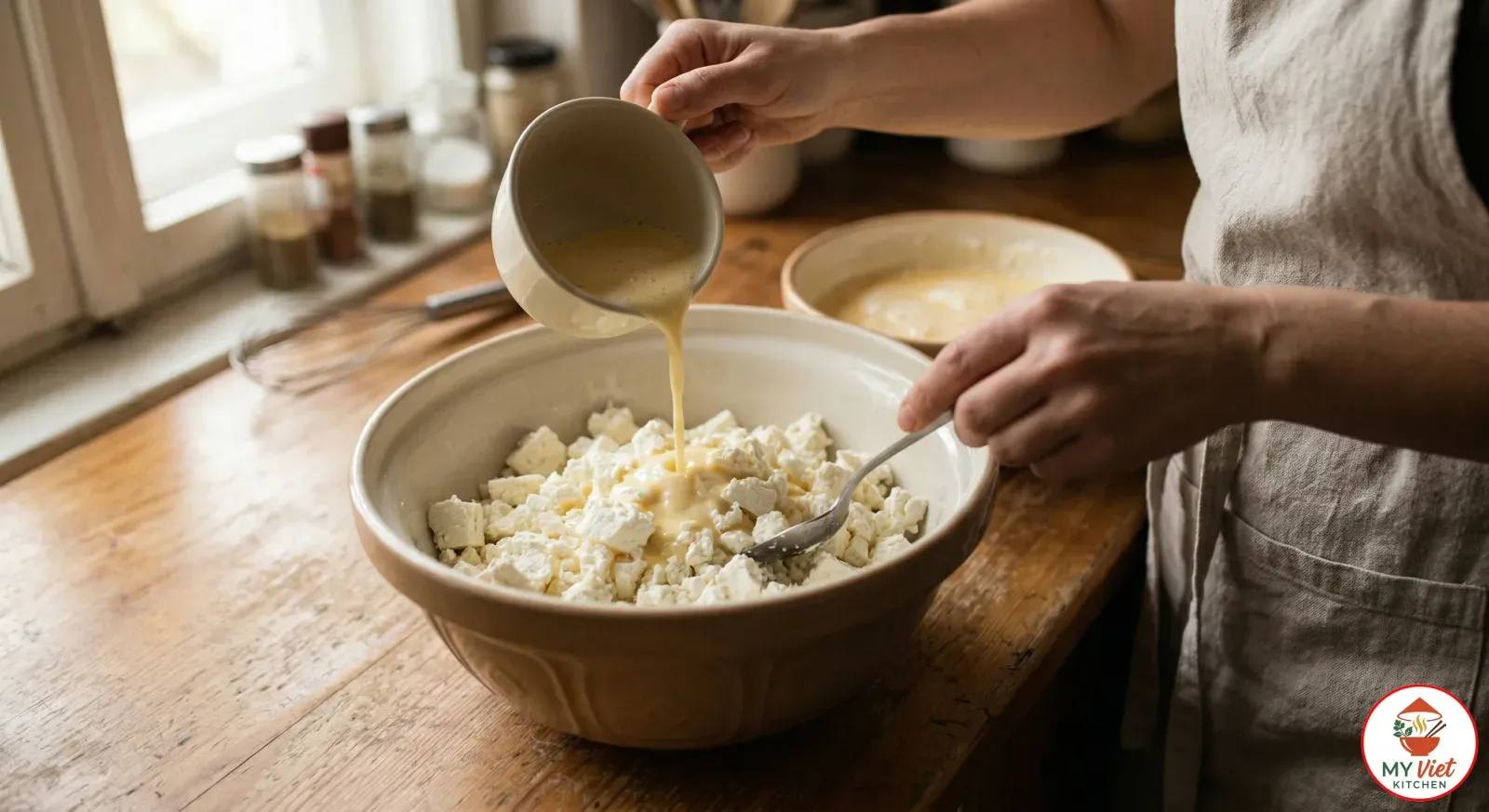
1 First, crumble the sirene cheese into a large mixing bowl. You want chunky pieces rather than a fine powder, because the chunks form pockets of melted cheese in the baked pastry. In a separate bowl, beat the four eggs until smooth. Then add the yogurt, baking soda, sparkling water, and salt. Whisk until the mix is even and slightly frothy.
Pour the egg and yogurt mixture over the crumbled cheese. Stir gently with a spoon, folding rather than mashing. You want the cheese to stay in distinct pieces surrounded by the liquid batter. This filling should look loose and pourable. If it seems too thick, add another splash of yogurt or sparkling water. Set the bowl aside while you prepare the phyllo sheets.
Step 2: Prepare the Phyllo Sheets
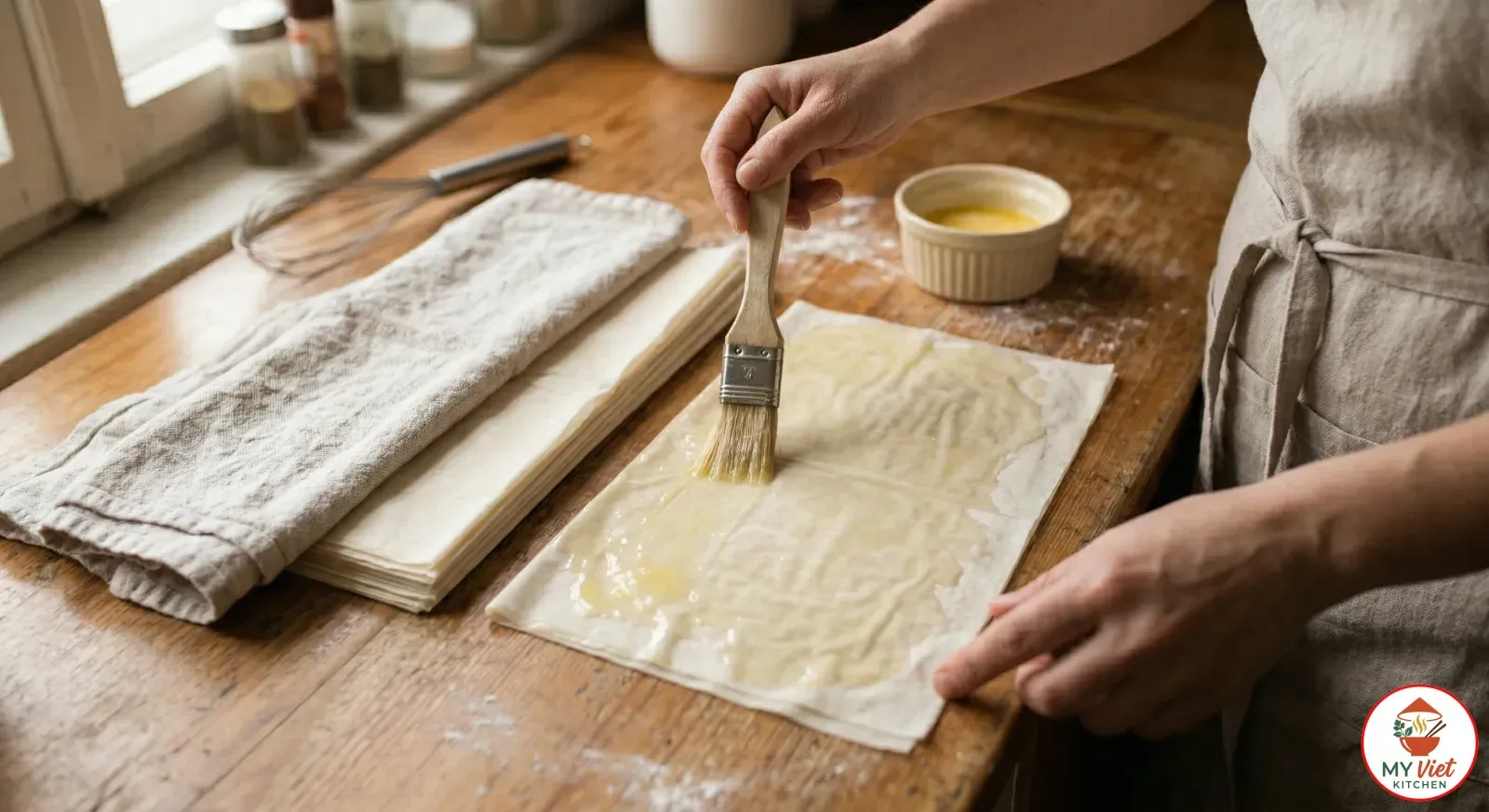
2 Unroll the phyllo dough carefully onto a clean, dry surface. Cover the stack immediately with a slightly damp kitchen towel. Phyllo dries out within minutes when exposed to air, and dry sheets crack and crumble instead of rolling smoothly. Mix the melted butter with the sunflower oil in a small bowl. This combination stays liquid longer than butter alone, which makes brushing easier and more even.
Take one sheet of phyllo from under the towel and lay it flat on your work surface. Brush it well with the butter-oil mix, all the way to the edges. The fat does two things here. First, it seals each layer so they stay apart and crisp as they bake. Second, it fries the phyllo from the inside when the oven heat hits it. So do not be shy with the butter. Every sheet needs a good coating.
Step 3: Fill and Roll Each Sheet
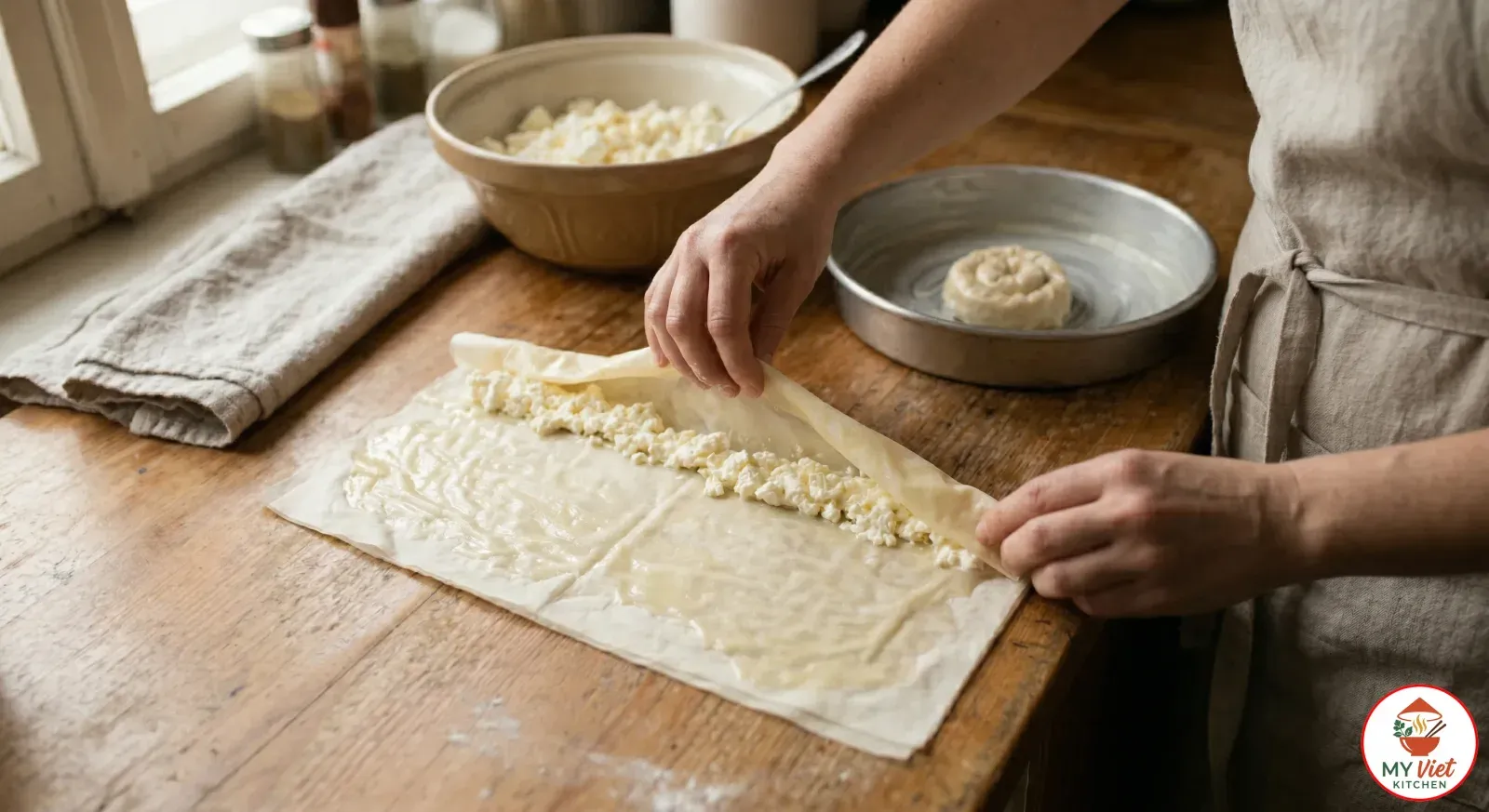
3 Spoon two to three tablespoons of the cheese filling along the long edge of the buttered phyllo sheet, leaving about an inch of space on each end. The filling should form a thin, even line rather than a thick pile. Too much filling in one spot makes the pastry heavy and prevents the phyllo from crisping properly around it.
Next, roll the phyllo loosely around the filling to form a thin log. Keep the roll gentle and relaxed, not tight. A loose roll lets steam escape as it bakes, which puffs the layers apart and gives you that flaky texture. Once you have a log, coil it into a spiral shape. Then place the first coil in the center of a greased round baking pan. Continue with each sheet, joining each new coil to the end of the last one. The goal is one long spiral that fills the whole pan.
Step 4: Add the Remaining Filling and Rest
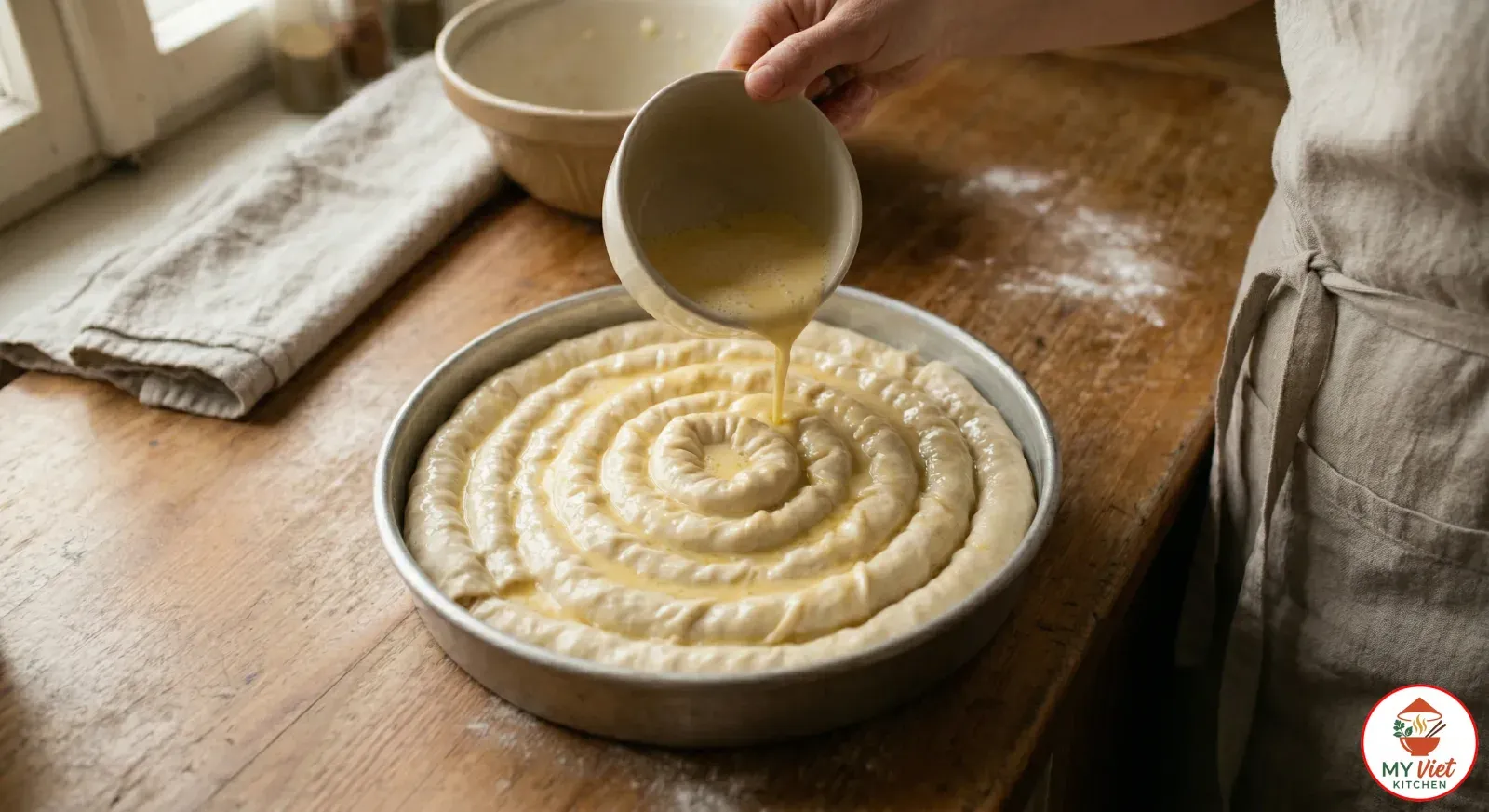
4 Once all the phyllo coils sit in the pan, pour any leftover cheese and egg mix evenly over the top. Then tilt the pan gently so the liquid seeps into the gaps between the coils. This step is key because the liquid soaks into the phyllo from above, which creates the moist, custardy inside that defines real banitza. Without it, you end up with dry, crunchy pastry instead of that soft-inside, crisp-outside contrast.
After that, brush the surface with the rest of the melted butter and oil. Then let the banitza rest for 10 minutes at room temperature before it goes in the oven. This brief rest lets the phyllo absorb some liquid, which helps it bake evenly and keeps the bottom from getting soggy. Some Bulgarian grandmothers let it sit for up to 20 minutes for an even creamier result.
Step 5: Bake Until Deep Golden Brown
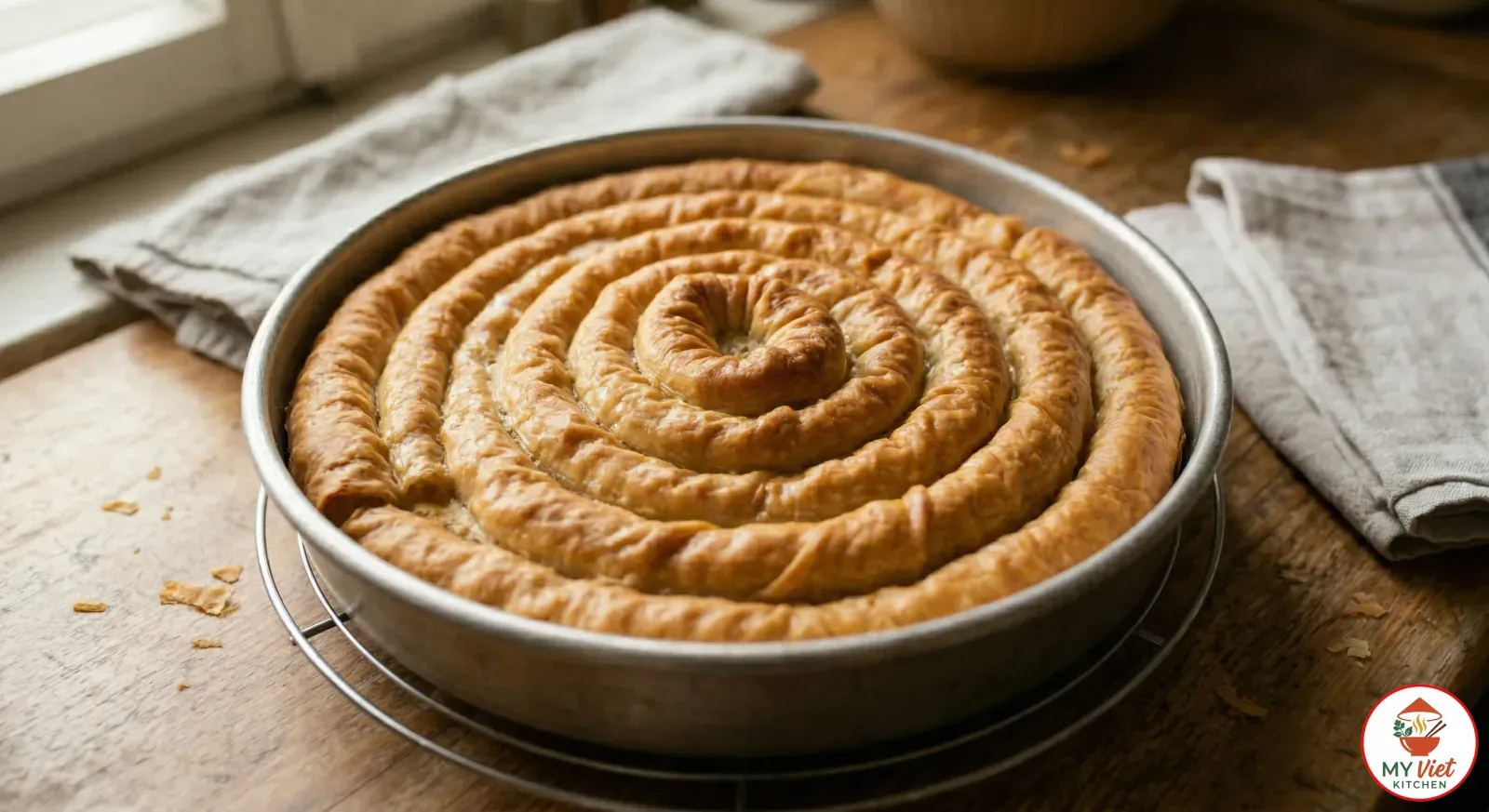
5 Place the pan in an oven preheated to 375 degrees Fahrenheit. Bake for 35 to 40 minutes, rotating the pan halfway through for even browning. The banitza is ready when the top turns a deep, rich golden brown and the phyllo layers feel firm and crisp to a gentle touch. The edges should pull slightly away from the sides of the pan.
Remove the pan from the oven and cover it right away with a clean kitchen towel. Let the banitza rest for 10 minutes under the towel. This traps steam that softens the top layer just enough to make cutting easy, while the inside and bottom stay crisp. After resting, cut into wedges or squares and serve warm. Banitza tastes best within the first hour, when the contrast between crispy outside and creamy inside is at its peak.
Expert Tips for Perfect Banitza
Keep the Phyllo Covered at All Times
Phyllo dough dries out in just a few minutes. Once it dries, it cracks and crumbles rather than rolling smoothly. Because of this, you should always keep the unused sheets under a damp towel. Also, work quickly with each sheet, brushing and filling it before pulling the next one. If a sheet tears, do not toss it. Instead, overlap the torn edges, brush with extra butter, and carry on. The layers hide small flaws with ease.
Use Full-Fat Yogurt for Authentic Flavor
Low-fat or fat-free yogurt gives you a thinner, less tasty filling. Instead, use full-fat yogurt for the thick, rich body that Bulgarian cooks need to get that creamy inside. Greek yogurt also works well since it has a similar thickness. However, avoid yogurts with added sugar or fruit. The yogurt in banitza should be plain, tangy, and thick enough to coat the back of a spoon.
Pour the Filling Over the Assembled Pastry
This step surprises many first-time banitza makers, but it is essential. After you arrange all the coils in the pan, pour the rest of the liquid filling over the top. Then, the mix seeps down into every gap, soaking into the phyllo from above. During baking, this liquid sets into a soft, custard-like layer between the crispy sheets. If you skip this step, you end up with dry, crunchy banitza that lacks the moist inside.
Let It Rest Before and After Baking
First, rest the banitza for 10 minutes before baking so the phyllo can absorb the filling evenly. After baking, cover it with a towel for another 10 minutes to soften the top just enough to cut cleanly. Both resting periods improve the final texture. Indeed, many Bulgarian cooks consider these resting steps just as vital as the baking itself.
Banitza vs. Other Phyllo Pastries: A Comparison
Banitza belongs to a large family of phyllo-based pastries found across southeastern Europe and the Mediterranean. Each country puts its own spin on the concept, and the differences go well beyond just the name. Here is how banitza compares to its closest relatives.
| Pastry | Country | Filling Style | Key Difference |
|---|---|---|---|
| Banitza | Bulgaria | Wet (eggs, yogurt, cheese) | Custardy interior from yogurt and egg soak |
| Burek | Balkans | Dry (meat, cheese, or spinach) | Hand-stretched dough, no egg or yogurt batter |
| Spanakopita | Greece | Spinach and feta | Layered flat rather than coiled into spiral |
| Borek | Turkey | Varies widely | Many shapes including layered, rolled, and triangle |
| Tiropita | Greece | Cheese and egg | Similar filling but typically layered flat in pan |
| Gibanica | Serbia | Cheese, eggs, cream | Crumpled phyllo rather than coiled spiral |
Serving Suggestions
Bulgarians eat banitza at almost any time of day, but it appears most often at the breakfast table. The pastry is rich and satisfying enough to serve as a standalone meal, especially when paired with a few simple accompaniments that complement its tangy, cheesy flavor.
The Perfect Accompaniments:
- Plain Bulgarian yogurt (kiselo mlyako): The most traditional pairing. Bulgarian yogurt is thicker and tangier than most Western yogurts. A spoonful alongside a warm slice of banitza balances the richness of the butter and cheese perfectly.
- Fresh tomato and cucumber salad (Shopska salata): Diced tomatoes, cucumbers, onion, and peppers topped with grated sirene cheese. The fresh, crisp vegetables cut through the heaviness of the pastry and provide a refreshing contrast.
- Lyutenitsa (Bulgarian pepper relish): A thick, slightly spicy relish made from roasted red peppers and tomatoes. Its smoky sweetness pairs naturally with the salty, tangy cheese filling of banitza.
- Honey and walnuts: For a sweet twist, drizzle warm banitza with honey and scatter crushed walnuts on top. This combination turns the pastry into a dessert-like treat that works beautifully for brunch or an afternoon snack.
Beverage Pairings:
- Boza: A thick, slightly sweet fermented grain drink that Bulgarians have enjoyed alongside banitza for centuries. Its mild, malty flavor complements the tangy cheese filling without overpowering it.
- Bulgarian coffee: Strong, dark coffee served in small cups. The bitterness of the coffee provides an excellent counterpoint to the rich, buttery pastry.
- Ayran (yogurt drink): A cold, salted yogurt beverage that reinforces the dairy theme and refreshes the palate between bites of rich cheese pastry.
- White wine: A crisp Bulgarian white wine such as Dimyat or Misket pairs wonderfully with the tangy cheese. The acidity of the wine mirrors the tang of the yogurt and sirene in the filling.
Storage and Reheating
Refrigerator: Store leftover banitza in an airtight container for up to 3 days. The phyllo softens during refrigeration, but the filling actually improves as the flavors meld together. Many Bulgarians prefer day-old banitza straight from the fridge as a cold snack.
Freezer: Banitza freezes well for up to 2 months, either before or after baking. For the unbaked version, assemble it completely in the pan, wrap tightly with plastic wrap and foil, then freeze. Bake directly from frozen at 375 degrees for 45 to 50 minutes. For already-baked banitza, cool completely before wrapping and freezing individual portions.
Reheating: Reheat banitza in a 350-degree Fahrenheit oven for 10 to 12 minutes until the phyllo crisps up again. The oven’s dry heat restores the flaky exterior while keeping the custardy interior soft. Avoid the microwave, because it turns the crispy phyllo layers into a soft, chewy sheet. If the pastry seems dry after reheating, a few drops of water sprinkled on top before it goes in the oven creates gentle steam that refreshes the layers.
Common Mistakes to Avoid
1. Letting the Phyllo Dry Out
Dry phyllo is the most common reason banitza fails. Once phyllo sheets lose their moisture, they crack, crumble, and refuse to roll smoothly. Always keep the unused sheets under a damp towel while you work. Move quickly when assembling each roll. If you notice the edges starting to dry, brush them immediately with the butter-oil mixture to rehydrate them. Prevention is easier than fixing dry sheets after the fact.
2. Making the Filling Too Thick
The cheese and egg mix should be loose and easy to pour, not thick like a paste. If it is too dense, the filling will not seep into the phyllo layers. As a result, you get dry pastry with thick pockets of cheese. To fix this, add more yogurt or a splash of milk to thin it out. The liquid quality of this filling is what gives banitza its custardy texture.
3. Skipping the Final Pour
After you arrange all the coils in the pan, you must pour the rest of the filling over the top. This is not optional. The liquid soaks down through the layers and sets into a soft, creamy core as it bakes. If you skip this step, your banitza will taste like a dry, crunchy phyllo roll. So always save enough filling for this final pour.
4. Baking at Too Low a Temperature
A low oven gives the butter time to soak into the phyllo rather than crisping it. As a result, you get greasy, limp pastry without any crunch. Instead, bake at 375 degrees Fahrenheit so the heat sets each layer fast and fries the butter between them. If your oven runs cool, bump it up to 385 degrees. Watch for the deep golden color that tells you the phyllo has crisped all the way through.
Frequently Asked Questions
What is the difference between banitza and borek?
Banitza uses a distinctive wet filling of beaten eggs, yogurt, and cheese that soaks into the phyllo layers before and during baking. This creates a moist, custardy interior that borek does not have. Borek typically uses drier fillings placed between or rolled into the dough layers without any liquid batter. The texture difference is significant. Banitza feels creamy inside with a crispy shell, while borek is flaky throughout with distinct filling layers.
Can I use feta cheese instead of sirene for banitza?
Feta works well as a substitute, though it is saltier and sharper than sirene. To compensate, mix crumbled feta with an equal amount of ricotta or well-drained cottage cheese. This blend softens the salt level and adds creaminess that mimics the milder character of sirene. Also reduce or eliminate any additional salt in the filling when using feta. Many Bulgarian cooks abroad rely on this combination successfully.
What is the traditional filling for banitza?
The classic filling combines crumbled sirene cheese, beaten eggs, and Bulgarian yogurt. These three ingredients create the custard-like texture that defines authentic banitza. Some regions add spinach for a green variation called spanachena banitza. Pumpkin filling, known as tikvenik, appears during autumn months. Sweet versions with rice and sugar exist as well, but the cheese and egg version remains the most beloved and widely prepared.
Why did my banitza turn out dry instead of creamy inside?
Dry banitza usually comes from too little filling or skipping the final pour of egg mix over the pastry. The filling should be loose so it seeps into every layer. Also, make sure you brush each phyllo sheet well with butter. Another cause is overbaking. Once the top turns deep golden, the banitza is done. If you leave it longer, the inside dries out. Covering with a towel right after baking also helps keep it moist.
Can I make banitza ahead of time?
Yes, and in fact many Bulgarian cooks prefer it this way. Assemble the banitza the night before, cover the pan with plastic wrap, and put it in the fridge. The extra rest lets the phyllo soak up more of the egg mix, which makes the inside even creamier. Then bake it fresh in the morning straight from the fridge, adding 5 extra minutes. You can also freeze the raw pastry for up to 2 months and bake it right from the freezer.
What do Bulgarians traditionally serve with banitza?
The essential pairing is plain Bulgarian yogurt, known as kiselo mlyako. This yogurt is thicker and tangier than most Western varieties, and it balances the richness of the buttery pastry beautifully. A glass of boza, a mildly fermented grain drink, is another traditional companion. For a full Bulgarian breakfast, add a simple salad of tomatoes and cucumbers alongside your banitza and yogurt.
Variations and Adaptations
Spanachena Banitza (Spinach Banitza):
Simply add a pound of wilted, well-drained spinach to the cheese and egg filling. The spinach brings an earthy note that pairs well with the tangy cheese. However, squeeze out every drop of water from the spinach first, because extra moisture makes the phyllo soggy. This green version is especially popular in spring when fresh spinach is at its peak.
Tikvenik (Pumpkin Banitza):
Replace the cheese filling with grated raw pumpkin mixed with sugar, cinnamon, and crushed walnuts. This sweet autumn version appears on Bulgarian tables from October through December. The pumpkin releases moisture during baking, which keeps the phyllo layers soft inside while they crisp on the outside. Dust the finished tikvenik with powdered sugar before serving.
Lazy Banitza (Klyonova Banitza):
For a faster version, tear or crumple phyllo sheets and scatter them in a baking dish rather than rolling each one. Then pour the cheese and egg filling over the sheets, making sure the liquid reaches every layer. This method takes half the time and gives you a rustic texture with crispy edges and soft, custardy centers. As a result, many busy Bulgarian families rely on this shortcut for weeknight meals.
New Year Banitza (Fortune Banitza):
On New Year’s Eve, Bulgarian families make a special banitza with small paper fortunes, coins, or lucky charms tucked inside the coils. Each person receives a slice, and the items they find predict their fortune for the coming year. A coin means wealth, a dogwood bud means health, and a piece of paper with a written wish means that wish will come true. This tradition makes banitza the centerpiece of Bulgarian New Year celebrations.
The Cultural Significance of Banitza
Banitza holds a place in Bulgarian culture that few other foods can match. It is the first thing many Bulgarians learn to cook, taught by grandmothers who measure nothing and work by feel alone. Indeed, every family has its own recipe, and every family believes theirs is the best. Debates over whether to coil or layer, whether to use oil or butter, and how much yogurt to add have fueled kitchen talks for ages. Ultimately, the pastry goes beyond its simple parts to become something deeply personal.
The connection between banitza and Bulgarian identity runs especially deep during the holidays. On Christmas Eve, banitza appears on the table alongside other traditional dishes as part of the fasting meal. On New Year’s Eve, it transforms into a fortune-telling tradition where hidden charms predict each family member’s luck for the coming year. During Sirni Zagovezni, the last day before the Great Lent, Bulgarians eat banitza loaded with extra cheese as a final indulgence. Each holiday gives the pastry a different meaning, but the message is always the same: banitza means family, tradition, and home.
Furthermore, banitza shapes daily life well beyond the home kitchen. Bakeries called banitsarnitsi sell fresh pastry from early morning until the trays run out, which often happens before noon. For instance, office workers grab a slice on their way to work, while students eat it between classes. Grandparents bring it to family events wrapped in paper, still warm from the oven. In the end, banitza remains the one dish that every Bulgarian eats, loves, and argues about with equal passion.
Conclusion
This banitza recipe gives you everything you need to create the authentic Bulgarian cheese pastry at home. The keys are generous butter on every phyllo sheet, a loose and pourable cheese filling, and the crucial final pour of egg mixture over the assembled pastry before baking. These three steps produce the signature contrast of crispy, golden phyllo on the outside and creamy, custardy cheese on the inside. Whether you serve it for breakfast, brunch, or as a snack alongside yogurt and coffee, banitza rewards you with a pastry that tastes like it came straight from a Bulgarian grandmother’s kitchen.
Ready to explore more European pastry traditions? Browse our European dishes collection for recipes like burek, spanakopita, and pierogi. Each one brings a taste of a different culinary tradition to your kitchen table.