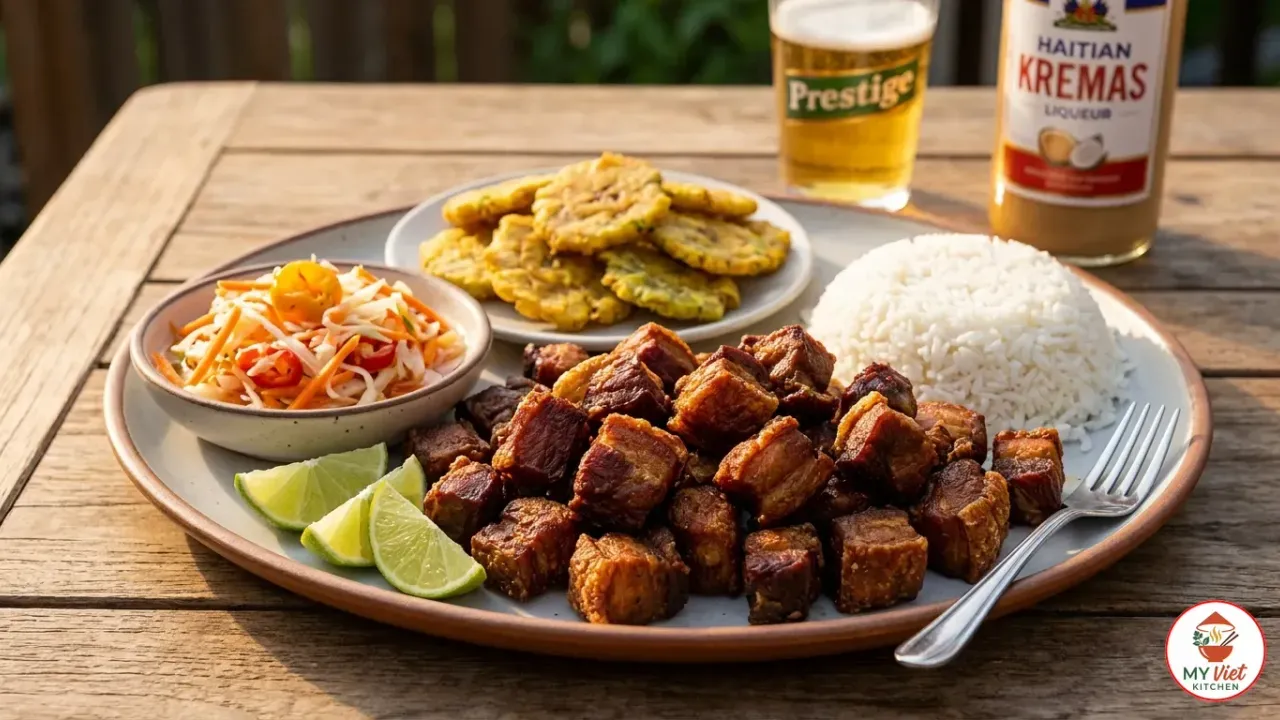
Griot is the undisputed king of Haitian cuisine, and one bite reveals exactly why. This extraordinary dish transforms humble pork shoulder into something magnificent through a three-stage process: a citrus-and-spice marinade, a slow braise, and a final deep fry that shatters into golden, crispy perfection. Also known as griyo in Haitian Creole, this beloved Haitian fried pork dish anchors every celebration from weddings to holiday feasts. This easy griot recipe gives you clear steps for every stage so you can nail it at home.
Prep Time: 30 minutes | Cook Time: 90 minutes | Servings: 6
Difficulty: Medium | Calories: ~480 per serving
What Makes Griot Special?
Griot stands apart from every other fried pork dish because of its unique two-phase cooking method. For example, chicharrones go straight into hot oil. Similarly, Southern fried pork relies on a flour coating. However, griot takes a different path entirely. The pork is first braised low and slow in its own marinade. As a result, every cube absorbs the bright, tangy sour orange juice, the warmth of garlic, and the slow burn of Scotch bonnet pepper. Only after the pork becomes fork-tender does it meet the fryer.
This braise-then-fry method gives griot its defining contrast. First, a golden crust shatters at the first bite. Then, inside, the meat is tender and packed with flavor. Furthermore, the braising liquid reduces into a thick glaze that caramelizes during frying. This creates layers of taste that no single method can match. The citrus also means the pork never tastes greasy. As a result, the acidity cuts through the richness in every bite.
In Haiti, griot is far more than a recipe. It is the dish that brings families together, the centerpiece of every party, and the flavor that Haitians in the diaspora crave most. Whether served at a backyard gathering in Port-au-Prince or a family kitchen in Miami, this Haitian fried pork carries the soul of an entire culinary tradition.

Choosing the Right Pork for Griot
The cut of pork you select determines whether your griot turns out tender and juicy or dry and tough. Haitian cooks are very specific about this, and for good reason. Here are your best options.
- Boneless pork shoulder (best choice): This is the traditional and ideal cut for griot. Pork shoulder has generous marbling and connective tissue that breaks down during the braise, producing meat that stays moist even after deep frying. Cut it into 1.5-inch cubes for the perfect ratio of crispy exterior to tender interior.
- Bone-in pork shoulder: Some Haitian cooks prefer bone-in pieces because the bones add richness to the braising liquid. However, bone-in cuts require longer braising time and are harder to fry evenly. If you use this option, add 15 to 20 extra minutes to the braise.
- Pork loin (not recommended): Although pork loin is leaner and cooks faster, it lacks the fat content needed for proper griot. Lean cuts dry out during the frying stage and produce a tough, chewy result instead of the juicy tenderness you want.
Ingredients for Griot
Main Ingredients:
- 3 pounds boneless pork shoulder, cut into 1.5-inch cubes
- 1 cup water or chicken broth
- 2 tablespoons vegetable oil for the pot
- Vegetable oil for deep frying (about 3 cups)
For the Marinade:
- 3 Seville oranges, juiced (or 2 regular oranges plus 2 limes)
- 1 large onion, diced
- 4 cloves garlic, minced
- 2 shallots, minced
- 1 Scotch bonnet pepper, seeded and minced
- 3 scallions, chopped
- 2 tablespoons fresh thyme leaves
- 1 tablespoon Epis (Haitian seasoning base)
- 1 tablespoon white vinegar
- 1 tablespoon salt
- 1 teaspoon black pepper
- 1/2 teaspoon ground cloves
For Serving:
- Pikliz (Haitian pickled vegetable relish)
- Fried plantains (bannann peze)
- White rice
- Fresh lime wedges
Pro tip: Seville oranges (also called sour oranges or bitter oranges) are the secret weapon in authentic griot. Their unique tart-bitter juice tenderizes the pork while adding a citrus depth that regular oranges cannot match. Look for them at Caribbean or Latin grocery stores. If unavailable, the combination of regular orange juice and lime juice is the best substitute.
Step-by-Step Instructions
Step 1: Cut and Season the Pork
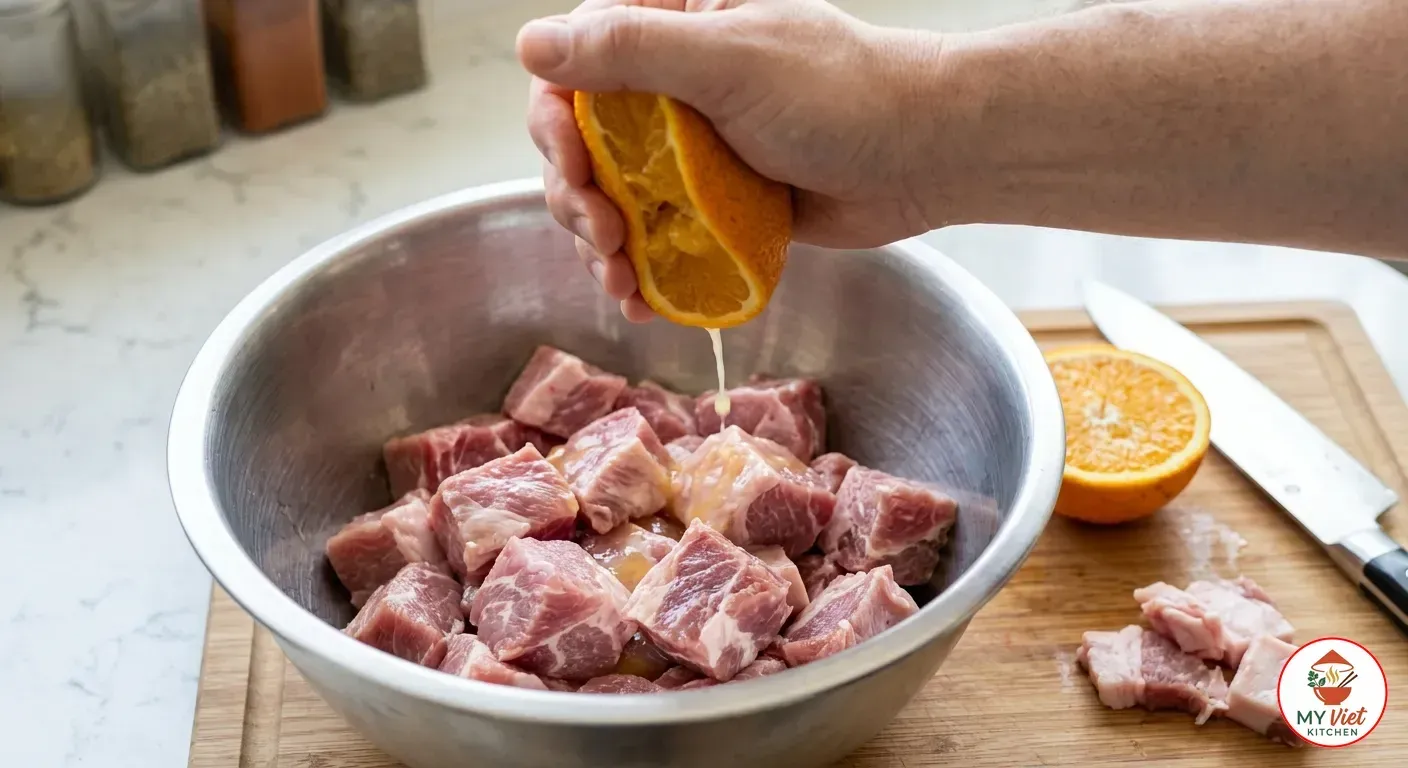
1 Cut the boneless pork shoulder into 1.5-inch cubes. Trim away any large pieces of hard fat, but leave some marbling intact for moisture. Place the pork in a large bowl and squeeze the Seville orange juice over the meat. Toss well so every piece gets coated. The citric acid immediately begins breaking down the muscle fibers, which tenderizes the pork from the very first minute. If you are using regular oranges and limes, combine both juices before adding them to the bowl.
Step 2: Build the Marinade
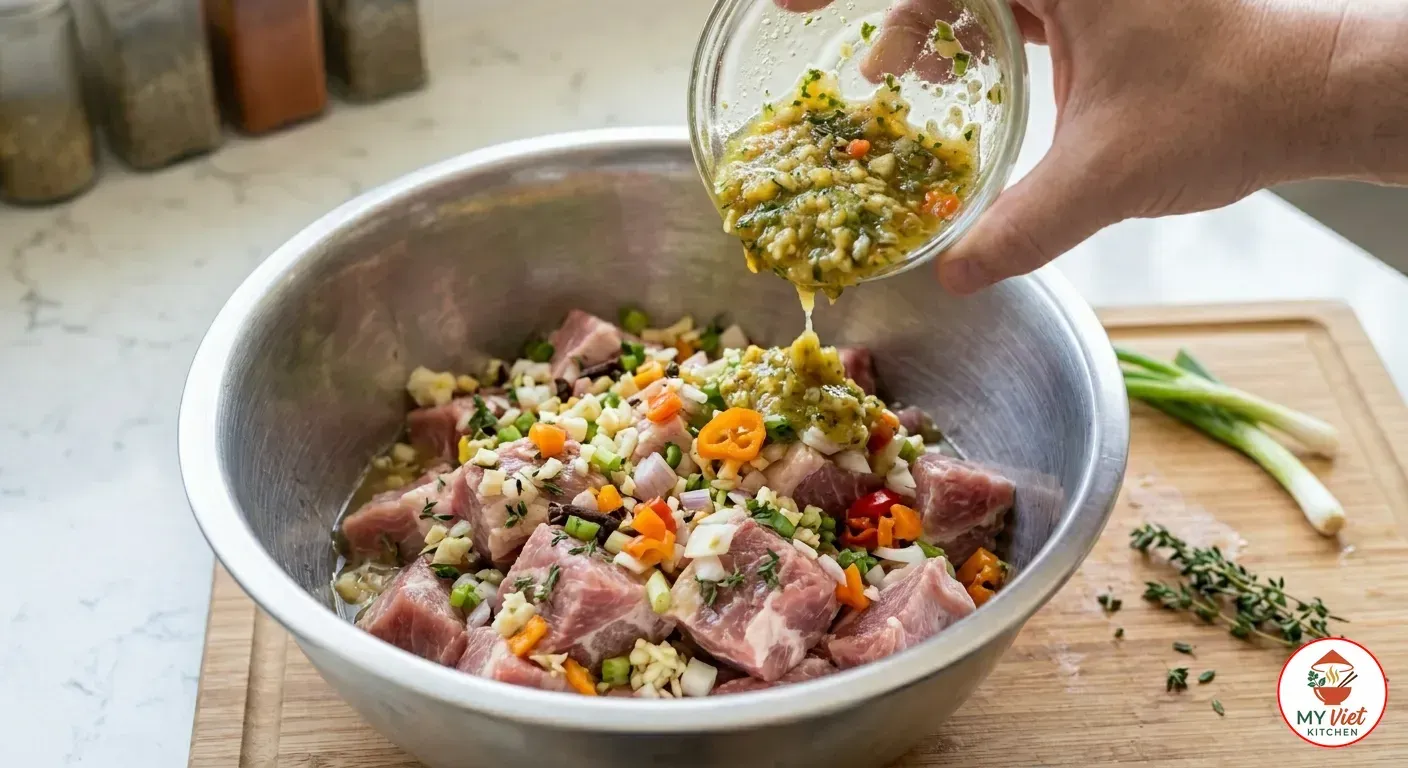
2 Add the diced onion, minced garlic, shallots, Scotch bonnet pepper, chopped scallions, and fresh thyme to the pork. Then add the Epis, white vinegar, salt, black pepper, and ground cloves. Mix everything together with your hands so that every cube is thoroughly coated in the aromatic paste. Cover the bowl tightly with plastic wrap and refrigerate for at least 4 hours. For the best results, marinate overnight. The longer the pork sits in this citrus-spice bath, the deeper the flavor penetrates.
Step 3: Braise the Pork
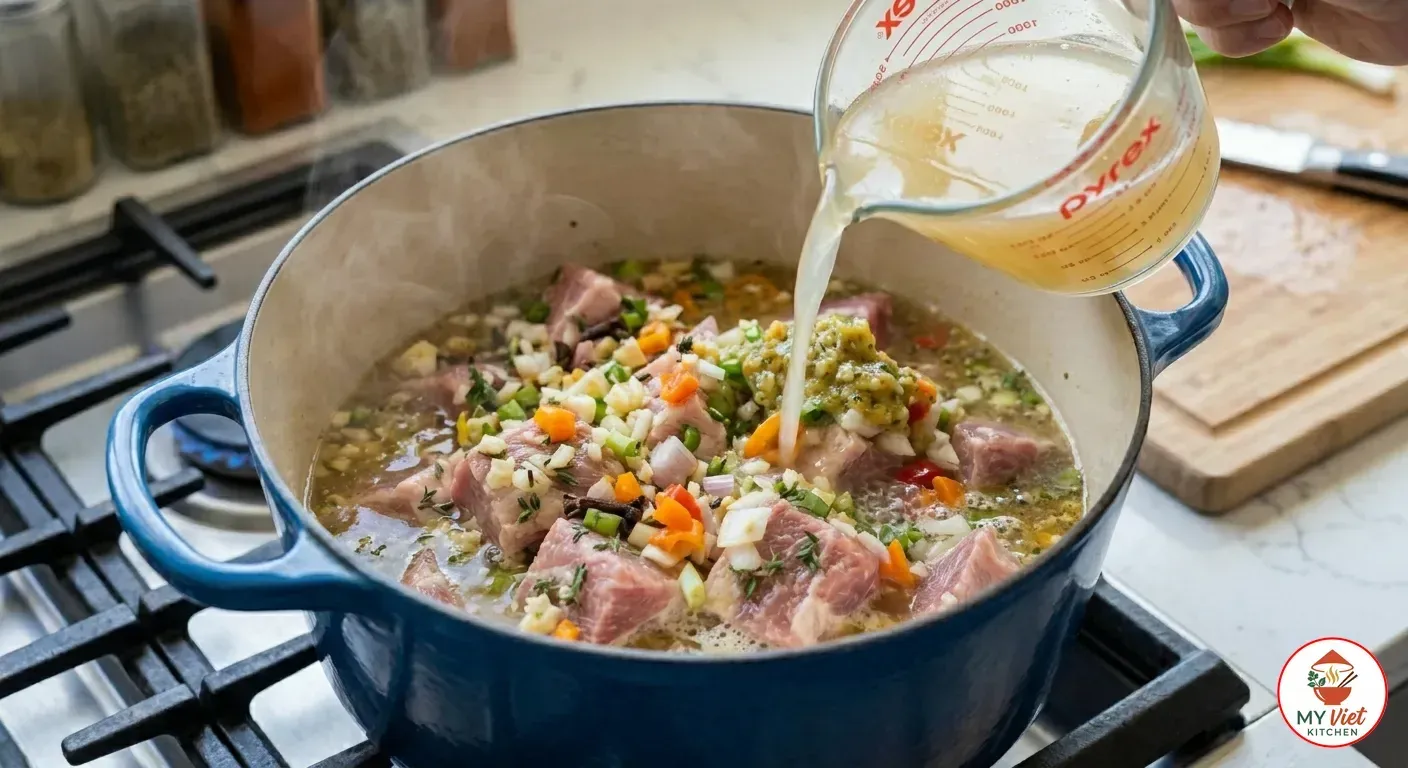
3 Transfer the entire contents of the bowl, including all the marinade and aromatics, into a large heavy-bottomed pot or Dutch oven. Add 1 cup of water or chicken broth. Bring the mixture to a boil over medium-high heat. Once boiling, reduce the heat to a gentle simmer and cover with a tight-fitting lid.
Cook for 45 to 60 minutes, checking once or twice. The pork is ready when it is fork-tender and pulls apart with ease. During this braise, the tough tissue in the shoulder melts into gelatin. This is what creates the moist interior that defines great griot. Additionally, the citrus, spices, and pork juices meld into a rich braising liquid.
Step 4: Reduce the Braising Liquid
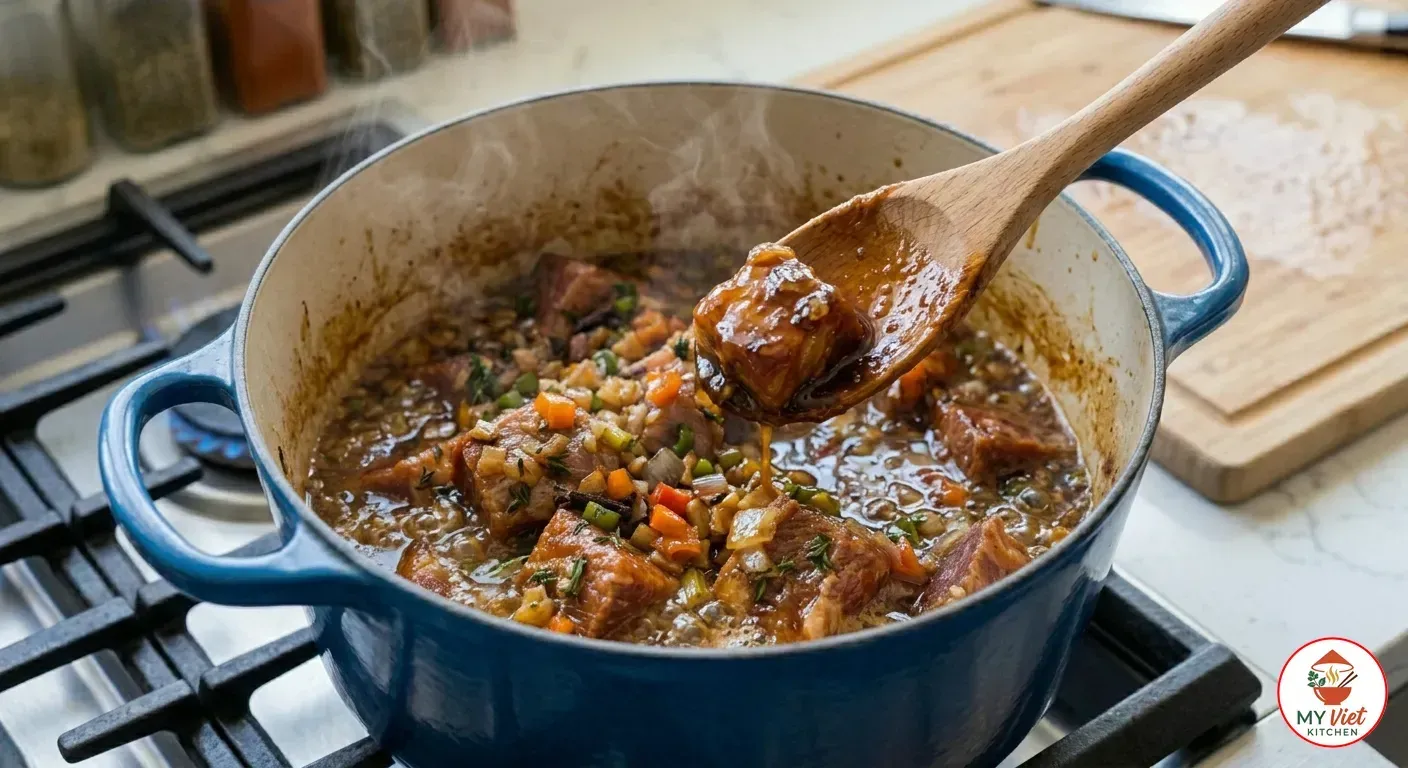
4 Once the pork is tender, remove the lid and increase the heat to medium-high. Let the braising liquid bubble and reduce until it thickens into a sticky glaze that coats each piece. Stir occasionally to prevent sticking. This step typically takes 10 to 15 minutes.
This step is critical. It turns all the citrus, garlic, and spice flavors into a sticky coating. When this glaze hits the hot oil, it turns into a savory, slightly sweet crust. Therefore, do not skip this step or rush it. The glaze is what makes great griot stand apart from plain fried pork.
Step 5: Fry the Pork Until Crispy
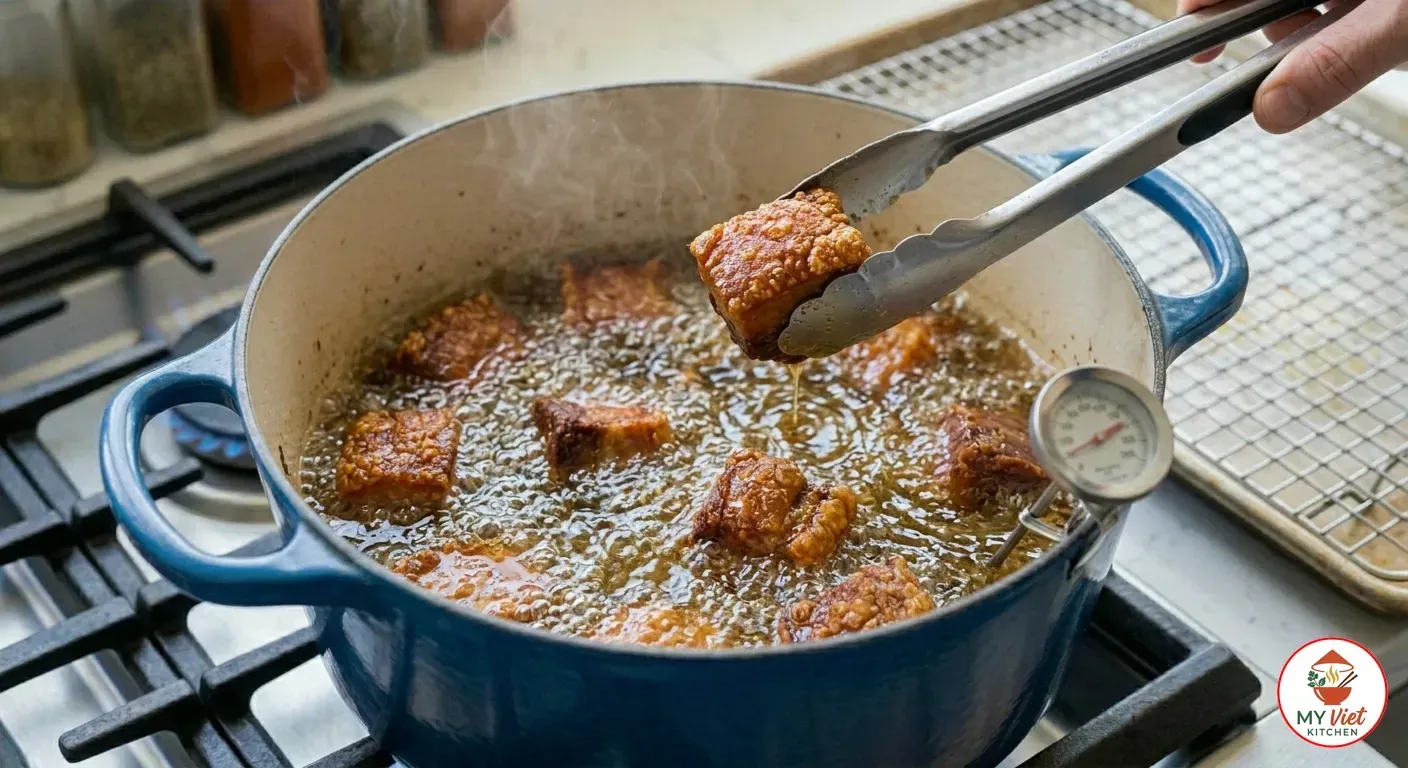
5 Heat about 3 cups of vegetable oil in a deep skillet or Dutch oven to 350 degrees Fahrenheit. Use a thermometer to monitor the temperature, because accuracy matters here. Carefully add the glazed pork pieces in small batches, leaving space between them. Overcrowding drops the oil temperature and causes steaming instead of frying.
Fry each batch for 5 to 8 minutes, turning the pieces occasionally with tongs. The griot is done when each cube develops a deep golden-brown crust that crackles when tapped. Transfer the finished pieces to a wire rack set over a baking sheet. A wire rack is better than paper towels because it allows air to circulate and keeps the bottom from getting soggy.
Step 6: Serve the Griot
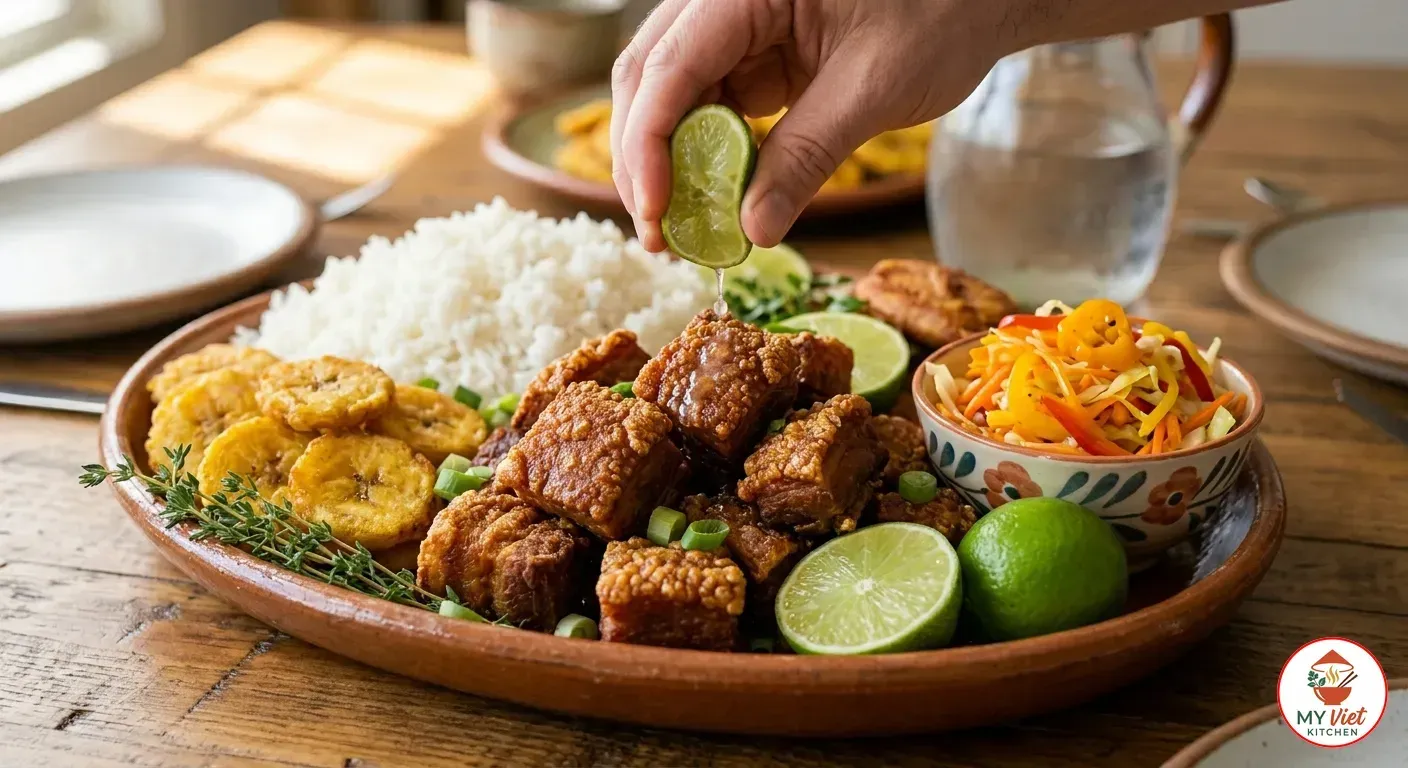
6 Arrange the crispy griot on a large serving platter. Squeeze fresh lime wedges over the top for a final burst of citrus. Serve immediately alongside pikliz, fried plantains, and fluffy white rice. The combination of the crunchy, savory pork with the sharp, spicy pikliz and the sweet plantains creates a harmony of flavors and textures that is pure Haitian joy.
Expert Tips for Perfect Griot
Marinate Overnight for Maximum Flavor
While 4 hours of marination produces decent griot, an overnight soak transforms the dish completely. The sour orange acid penetrates deep into the pork fibers. This breaks down tough proteins and infuses every bite with citrus flavor. Haitian grandmothers insist on overnight marination, and they are absolutely right.
Use a Thermometer When Frying
Keeping the oil at 350 degrees Fahrenheit is key for crispy griot. If the oil is too cool, the pork soaks up grease and turns soggy. If it is too hot, the outside burns before the glaze can set. A simple clip-on thermometer takes out all the guesswork. It gives you steady results every batch.
Do Not Skip the Braising Liquid Reduction
The thick glaze from the reduced braising liquid creates the crust on griot. If you fry the pork while it is still wet, the oil will splatter and the crust will be pale and bland. Cook the liquid down until it is thick and sticky. This step takes patience. However, it makes the gap between good griot and great griot.
Griot vs. Other Caribbean Fried Pork Dishes
Caribbean cuisine features many fried pork traditions. Each island brings its own techniques and flavor profiles. Here is how Haitian griot compares to other popular versions.
| Dish | Country | Method | Key Flavor |
|---|---|---|---|
| Griot | Haiti | Marinate, braise, then deep fry | Sour orange, garlic, thyme |
| Chicharron | Dominican Republic | Boil, then deep fry | Lime, oregano, garlic |
| Lechon Asado | Cuba / Puerto Rico | Marinate, then slow roast | Mojo (sour orange, cumin, garlic) |
| Fritay (Fried Pork) | Haiti | Season and fry directly | Quick-seasoned, street food style |
| Pork Crackling | Jamaica | Boil with spices, then deep fry | Scotch bonnet, allspice, scallion |
Serving Suggestions
In Haiti, griot is never served alone. It arrives at the table surrounded by a generous spread of sides and condiments that complement the rich, crispy pork. The classic Haitian plate follows a time-honored combination that balances flavors, textures, and colors.
The Perfect Accompaniments:
- Pikliz (Haitian pickled relish): This fiery, vinegary condiment of shredded cabbage, carrots, and Scotch bonnet is essential. Its acidity cuts through the richness of the fried pork perfectly.
- Bannann peze (fried plantains): Twice-fried green plantains provide a starchy, slightly sweet crunch. They are the most traditional side for griot in Haiti.
- Diri blan (white rice): Simple steamed white rice absorbs the juices and creates a neutral base. Some cooks serve diri kole ak pwa (rice and beans) for a heartier plate.
- Salade russe (Haitian potato salad): A creamy, beet-tinted potato salad that adds a cool, refreshing contrast to the hot, crispy griot.
Beverage Pairings:
- Kremas (Haitian cream liqueur): A rich, coconut-based rum drink spiced with cinnamon, nutmeg, and vanilla. It is festive and smooth alongside griot.
- Prestige beer: Haiti’s beloved lager is light, crisp, and refreshing enough to cleanse the palate between bites of rich fried pork.
- Jus de corossol (soursop juice): A tropical, creamy juice that provides a sweet and mellow contrast to the savory, spicy griot.
- Fresh lime juice with sugar: A simple, classic Haitian refreshment. The tartness echoes the citrus in the griot marinade and ties the meal together.
Storage and Reheating
Refrigerator: Store leftover griot in an airtight container for up to 4 days. The flavors actually deepen in the fridge as the spices continue to meld with the pork. However, the crispy crust softens during storage.
Freezer: Griot freezes well for up to 3 months. Place cooled pieces in a single layer on a baking sheet and freeze for 1 hour. Then transfer to a freezer bag. This prevents the pieces from sticking together. Thaw overnight in the refrigerator before reheating.
Reheating: The best method is re-frying in a skillet with a thin layer of oil over medium-high heat for 3 to 4 minutes per side. This restores the crispy crust. Alternatively, spread the pieces on a baking sheet and reheat in a 400-degree oven for 10 to 12 minutes. Avoid the microwave, because it makes the griot soggy.
Common Mistakes to Avoid
1. Skipping the Braise
Some cooks try to save time by frying the raw marinated pork directly. This produces tough, chewy griot with a burnt exterior and undercooked interior. The braising step is not optional. It is what makes the pork fork-tender before frying. Without it, you lose the signature contrast of crispy outside and melting inside.
2. Using Lean Cuts of Pork
Lean pork loin or tenderloin dries out quickly during both the braise and the fry. In contrast, pork shoulder has the right amount of fat and connective tissue. These elements melt during cooking and keep the meat juicy. Therefore, always choose pork shoulder for griot, even though it takes longer to cook.
3. Overcrowding the Frying Pan
Adding too many pieces at once drops the oil temperature by 50 degrees or more. The pork then steams instead of frying. As a result, you get pale, greasy cubes with no crust. Fry in small batches. Each piece needs room and direct contact with the hot oil to develop that beautiful golden crust.
4. Not Reducing the Braising Liquid
Frying wet, dripping pork causes dangerous oil splatters and prevents crust formation. The braising liquid must reduce to a thick, sticky glaze before frying. This concentrated coating is what caramelizes in the oil and creates the signature dark golden color and intense flavor of authentic griot.
Frequently Asked Questions
What is griot in Haitian cuisine?
Griot (pronounced gree-OH, also spelled griyo) is Haiti’s most iconic pork dish. Cubes of pork shoulder are marinated in sour orange juice with garlic, shallots, scallions, and Scotch bonnet pepper. The meat is then braised until tender and finally deep-fried until the outside turns golden and crispy. It is traditionally served with pikliz, fried plantains, and white rice at celebrations and family gatherings.
What is the difference between griot and tasso?
Both griot and tasso use the same braise-then-fry technique that defines Haitian cooking. However, griot uses pork while tasso uses beef or goat. The marinades differ slightly as well. Tasso often includes additional spices like allspice and uses a more aggressive chili heat. Both dishes are cornerstones of Haitian cuisine and frequently appear together on the same platter.
What can I use instead of Seville oranges?
If you cannot find Seville oranges, mix the juice of 2 navel oranges with the juice of 2 limes. This blend copies the sour-bitter taste of Seville oranges closely. You can also use bottled naranja agria (sour orange juice) from Latin grocery stores. Do not use only lemon juice. It lacks the orange sweetness that the marinade needs.
Can I make griot in an air fryer?
Yes, air frying is a popular modern adaptation. After braising and reducing the liquid, brush the pork pieces lightly with oil. Then air fry at 400 degrees Fahrenheit for 15 to 20 minutes, shaking the basket halfway through. The result is slightly less crispy than traditional deep-fried griot but still delicious and significantly lower in fat.
How long should I marinate pork for griot?
A minimum of 4 hours is needed for the citrus and spices to penetrate the pork. However, overnight marination of 12 to 24 hours produces the best results by far. The sour orange acid continues to tenderize the meat and the aromatics develop deeper complexity over time. Most Haitian cooks start the marinade the night before they plan to cook.
What is pikliz and why is it served with griot?
Pikliz is a spicy Haitian pickled relish. Cooks shred cabbage, carrots, bell peppers, and Scotch bonnet peppers, then pickle them in white vinegar with lime juice and spices. Its sharp tang and fiery heat cut through the rich fried pork. Most Haitian cooks consider griot incomplete without it. The vinegar base also aids digestion.
Variations and Adaptations
Oven-Baked Griot:
After braising and reducing the liquid, spread the glazed pork cubes on a baking sheet in a single layer. Bake at 425 degrees Fahrenheit for 25 to 30 minutes, flipping once at the halfway point. The high heat caramelizes the glaze and creates a satisfying crust without any deep frying. This method is ideal for those who prefer less oil. The result is slightly different from traditional griot but still captures the essence of the dish.
Griot with Pineapple Glaze:
Add half a cup of fresh pineapple juice to the marinade for a tropical twist. The bromelain enzyme in pineapple is a powerful natural tenderizer. It complements the sour orange beautifully. During the reduction step, the pineapple sugars caramelize into a slightly sweeter, more complex glaze. This variation is popular at summer gatherings and pairs exceptionally well with grilled plantains.
Spicy Griot with Extra Scotch Bonnet:
For heat lovers, double the Scotch bonnet pepper in the marinade and add a sliced habanero to the braising liquid. Keep the seeds in for maximum spice. Additionally, serve with an extra-hot pikliz. This version delivers serious Caribbean heat. It is not for the timid, but it is wildly popular at Haitian parties where bold flavors are celebrated.
Chicken Griot:
Replace the pork shoulder with bone-in, skin-on chicken thighs for a lighter alternative. Use the same marinade and braising technique, but reduce the braising time to 25 to 30 minutes since chicken cooks faster. Fry until the skin turns golden and crispy. Chicken griot is common in Haitian households during weeknight dinners when a quicker meal is needed.
The Cultural Significance of Griot
Griot holds a place of honor in Haitian culture that few dishes can match. It is the dish that appears at every major life event, from baptisms and weddings to New Year’s celebrations and family reunions. In Haiti, the quality of the griot at a gathering reflects the host’s skill and generosity. Serving exceptional griot is a point of deep personal pride.
The dish has roots in both African and French food traditions that merged during Haiti’s colonial era. African methods of slow braising and bold spicing combined with French cooking skill to create something new. After Haiti’s independence in 1804, griot evolved into a symbol of national identity. It represents resilience, creativity, and the ability to transform simple ingredients into something extraordinary.
In Miami, New York, Montreal, and Paris, griot remains the strongest food link to home for Haitians abroad. Haitian restaurants around the world list it as their top dish. In fact, it is often the first thing people ask for when they return home. Simply put, griot is more than food. It is cultural memory you can taste.
In the wider world of Caribbean cuisine, griot stands as one of the most unique dishes. Every island has its own fried pork tradition. Yet the Haitian version is special because of its three-stage process. This method shows a love of patience, layered flavor, and the belief that great food cannot be rushed.
Conclusion
This griot recipe delivers the authentic Haitian fried pork experience in your own kitchen. The three essential stages, citrus marination, slow braising, and high-heat frying, work together to create pork that is impossibly tender on the inside and shatteringly crispy on the outside. Follow each step faithfully, especially the overnight marinade and the braising liquid reduction. These two steps are what separate average griot from the kind that makes people close their eyes and smile. Once you master this recipe, you will understand why griot is the pride of Haitian cooking.
Ready to explore more Caribbean and global flavors? Browse our collection of Caribbean dishes, including jerk chicken, ropa vieja, and mofongo. Also, discover our pork recipes from around the world for more inspiration.