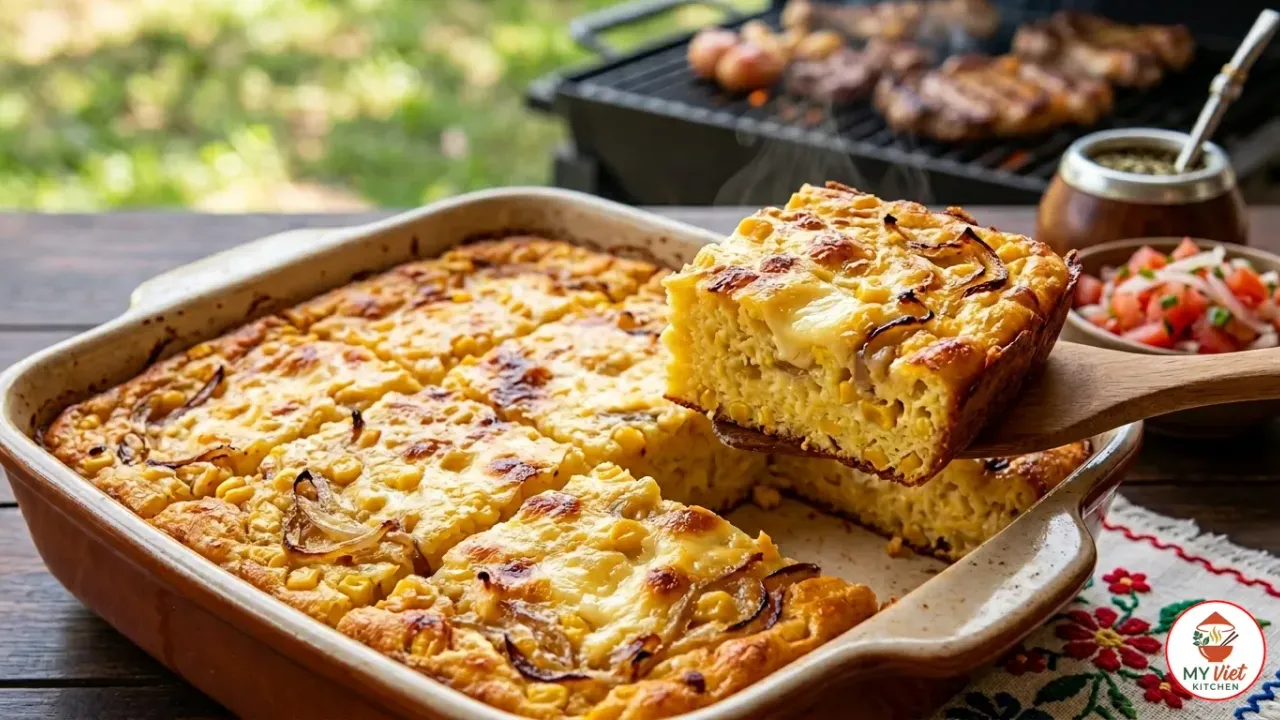
Sopa Paraguaya is the golden, cheese-laden cornbread that stands as the undisputed national dish of Paraguay. Despite its name, which means “Paraguayan soup,” this is not a soup at all. It is a dense, savory corn cake packed with onions, eggs, and two kinds of cheese. This sopa paraguaya recipe walks you through every step, from slowly softening the onions to pulling a perfectly golden loaf from the oven. You need only simple pantry staples and no special gear to bring one of South America’s best comfort foods to your kitchen.
Prep Time: 20 minutes | Cook Time: 45 minutes | Total Time: 1 hour 5 minutes | Servings: 8
Difficulty: Easy | Calories: ~320 per serving
What Makes Sopa Paraguaya Special?
The brilliance of sopa paraguaya lies in its unexpected identity. The word “sopa” means soup in Spanish, yet this dish arrives at the table as a firm, golden bread that you cut into squares. According to popular legend, the dish was born by accident during the 19th century. A cook was making corn soup for President Carlos Antonio Lopez. Too much cornmeal and cheese went into the pot, and the liquid turned thick. Rather than toss it out, the cook baked the mixture. The result was so tasty that it became a staple on every Paraguayan table. Even so, the ironic name “sopa” stuck as a nod to its soupy origins.

Cheese and Onion: The Heart of the Dish
What sets sopa paraguaya apart from other cornbreads around the world is the sheer volume of cheese and onion worked into the batter. While American cornbread might add a handful of cheese as an option, sopa paraguaya treats cheese as a core part of the structure. Two full cups of shredded queso paraguayo melt into the corn base. This creates pockets of gooey richness in every slice. Additionally, a heap of slowly cooked onions adds sweet, savory depth that balances the eggs and butter. The result tastes more like a savory custard set inside a golden corn crust.
In Paraguay, sopa paraguaya appears at virtually every significant gathering. Families serve it at birthday parties, holiday meals, and Sunday asados alongside grilled meats. Street vendors sell it by the slice from glass cases in markets across Asuncion. It is comfort food in the truest sense. Simple items become something far greater through patience and heat. Furthermore, it travels well and tastes great at room temperature. As a result, sopa paraguaya is the go-to dish for picnics and potlucks.
Choosing the Right Cornmeal for Sopa Paraguaya
Your choice of cornmeal directly affects the texture and flavor of sopa paraguaya. Paraguayan cooks use a finely ground corn flour. Picking the right grind at home will decide if your bread turns out dense and smooth or gritty and dry. Below are the best options for home bakers.
- Fine yellow cornmeal (best choice): This produces the closest texture to authentic sopa paraguaya. Fine cornmeal absorbs the milk and eggs evenly, creating a smooth batter that bakes into a tender crumb. Look for stone-ground fine cornmeal for the best corn flavor. As a result, this option consistently delivers the most balanced texture and taste.
- Harina de maiz or pre-cooked corn flour (such as P.A.N.): Widely available in Latin American grocery stores, this pre-cooked corn flour dissolves easily into the batter and produces a very smooth texture. Its flavor is milder than stone-ground cornmeal. Even so, the ease of use and steady results make it a popular choice. Many Paraguayan families abroad use it often.
- Medium-grind cornmeal: This works but gives a grittier texture with more corn punch. Some cooks like this rustic quality for its hearty bite. However, soak medium-grind cornmeal in the milk for 15 minutes first. This softens the bits. Otherwise, the bread may feel sandy on the tongue.
Ingredients for Sopa Paraguaya
Main Ingredients:
- 2 cups (300g) fine cornmeal or corn flour
- 1 cup (240ml) whole milk
- 4 large eggs
- 1/2 cup (115g) unsalted butter, melted and slightly cooled
- 1 teaspoon salt
- 1/2 teaspoon freshly ground black pepper
For the Cheese and Onion Filling:
- 2 cups (200g) shredded queso paraguayo or mild mozzarella
- 1/2 cup (120g) queso fresco or farmer cheese, crumbled
- 2 large onions, finely diced (about 2 cups)
- 1 cup (150g) fresh or frozen corn kernels
- 2 tablespoons vegetable oil or lard
Optional Additions:
- 1/4 cup chopped fresh scallions
- 1/2 cup crumbled bacon or chopped chorizo
- 1 tablespoon fresh oregano leaves
- Pinch of ground cumin
Pro tip: The onions are the soul of any great sopa paraguaya. Cook them low and slow until they turn completely soft and translucent, which takes a full 8 to 10 minutes. Rushing this step with high heat produces a harsh, sharp onion bite instead of the sweet, mellow flavor that defines the authentic dish.
Step-by-Step Sopa Paraguaya Instructions
Step 1: Cook the Onions
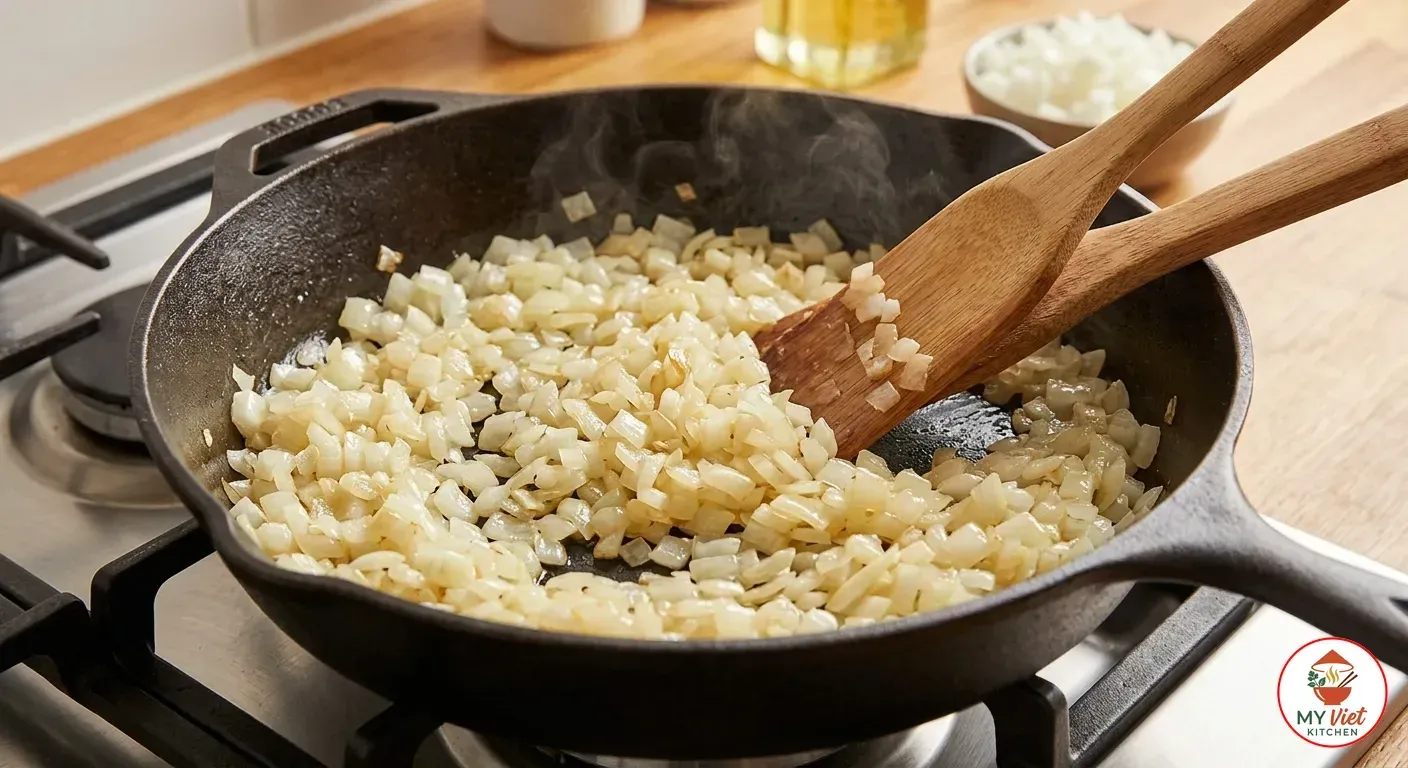
1 Heat the vegetable oil or lard in a large skillet over medium heat. Add the finely diced onions and stir to coat them in the fat. Cook for 8 to 10 minutes, stirring occasionally, until the onions turn completely soft and translucent. You want them tender and sweet, not browned or caramelized. Slow cooking breaks down the harsh sulfur in the onion and turns it into sugar. This gives sopa paraguaya its sweet, mellow flavor.
Remove the skillet from the heat and let the onions cool to room temperature. This cooling step matters because hot onions would scramble the eggs in the batter. While the onions cool, you can prep the rest. Consequently, this is a good time to shred the cheese, measure the cornmeal, and crack the eggs into a bowl.
Step 2: Prepare the Wet Mixture
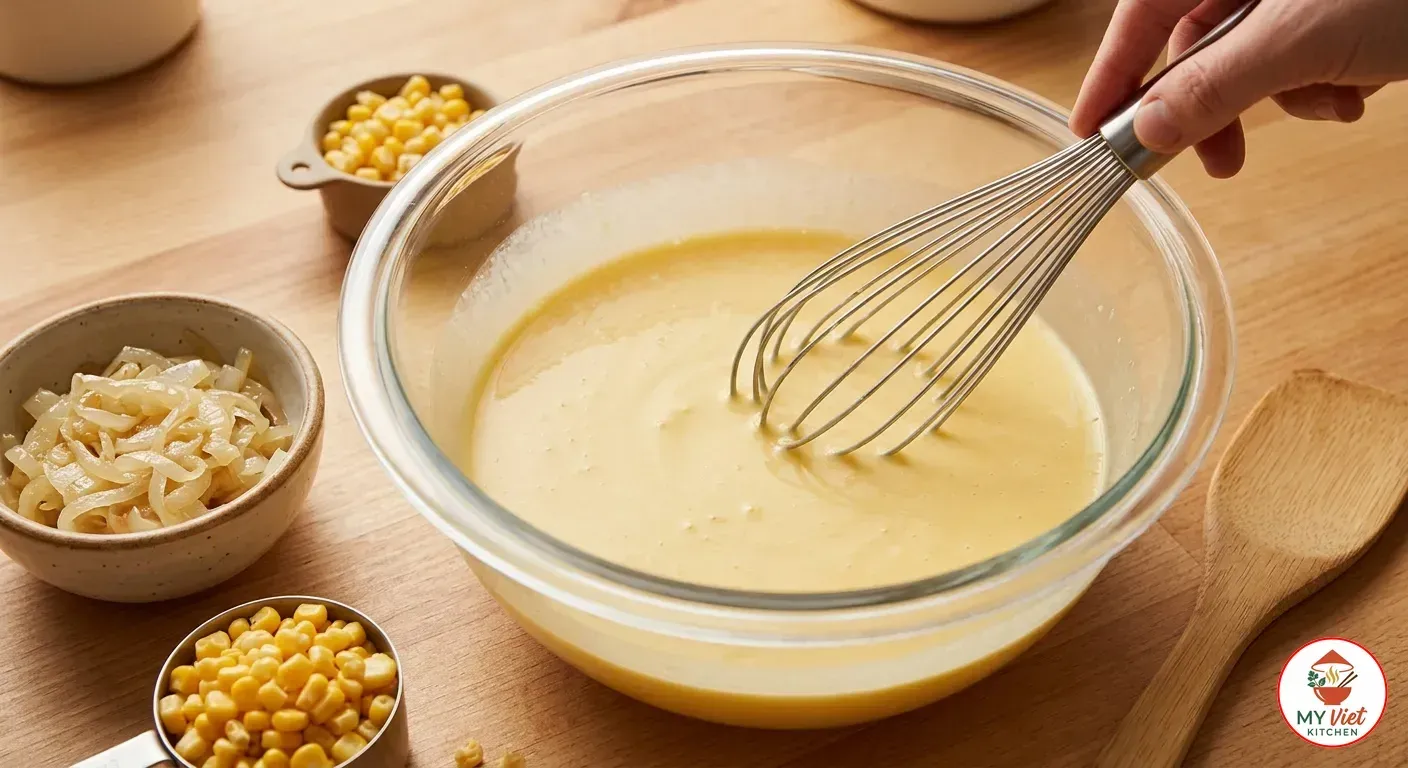
2 In a large mixing bowl, whisk together the four eggs, melted butter, and whole milk until the mixture is smooth and uniform. The butter should feel warm but not hot enough to cook the eggs. If you melted the butter on the stove, let it sit for 5 minutes before adding it. Then stir in the cooled onions and corn kernels until they distribute evenly throughout the liquid.
Together, eggs, butter, and milk create the rich, custard-like quality that separates sopa paraguaya from drier cornbreads. Each ingredient plays a specific role. Eggs provide structure and help the bread hold together when sliced. Butter contributes richness and keeps the crumb tender. Meanwhile, milk adds moisture and helps the cornmeal hydrate properly. All three wet ingredients work in concert to transform plain cornmeal into something luxurious.
Step 3: Combine Dry and Wet Ingredients
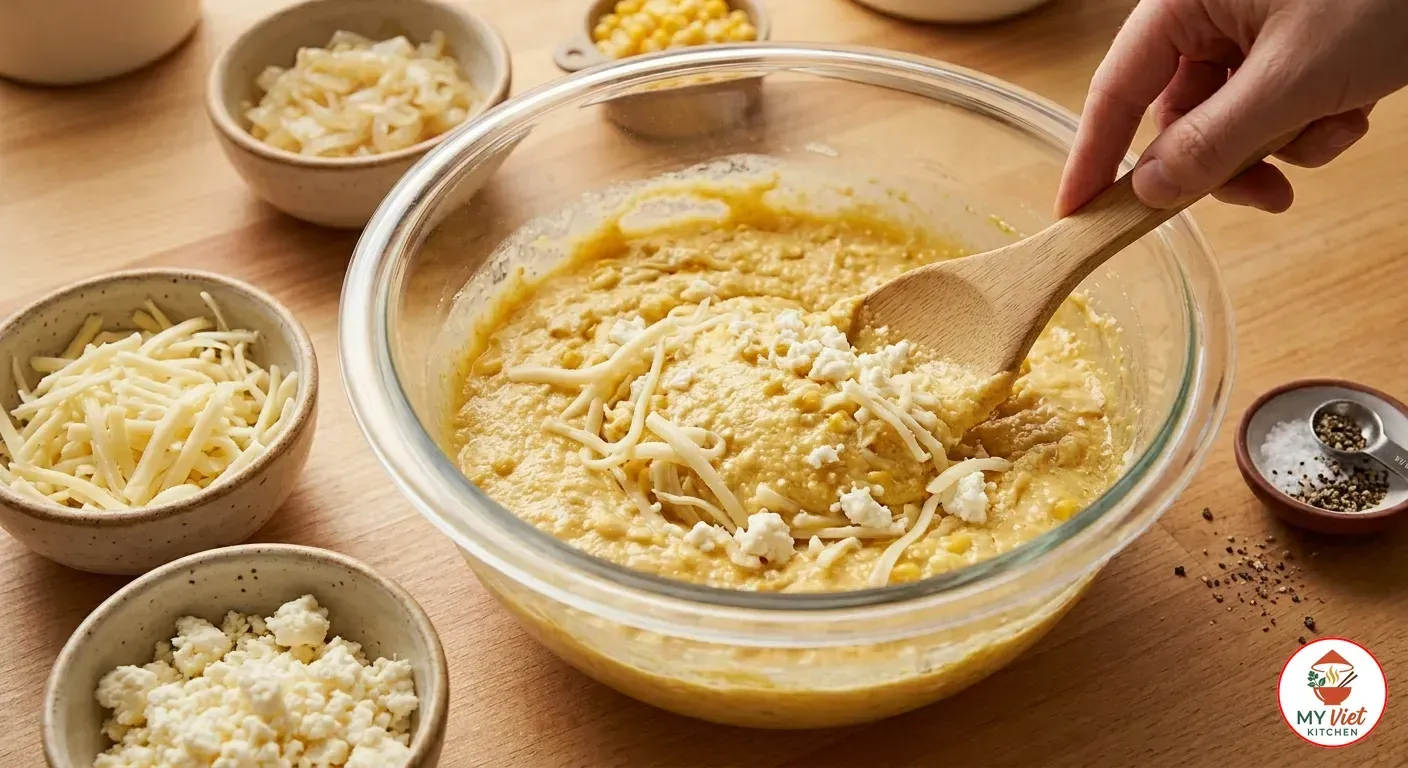
3 Add the cornmeal, salt, and black pepper to the wet mixture. Stir with a wooden spoon or spatula until a thick, smooth batter forms with no dry streaks or lumps. The batter should feel dense but still pourable, like a thick cake batter. If it seems too stiff, add milk one tablespoon at a time until it loosens. However, do not make it thin or runny. A thick batter is key for the bread to hold its shape.
Now fold in the shredded queso paraguayo and crumbled queso fresco. Stir gently until the cheese distributes throughout the batter. You should see visible pieces of cheese suspended in the corn mixture. These pockets will melt during baking and create the gooey, stretchy interior that makes sopa paraguaya so satisfying. Indeed, the cheese is not just a flavoring agent here. It acts as a binding element that holds the crumb together and adds moisture to the finished bread.
Step 4: Pour Into the Baking Dish
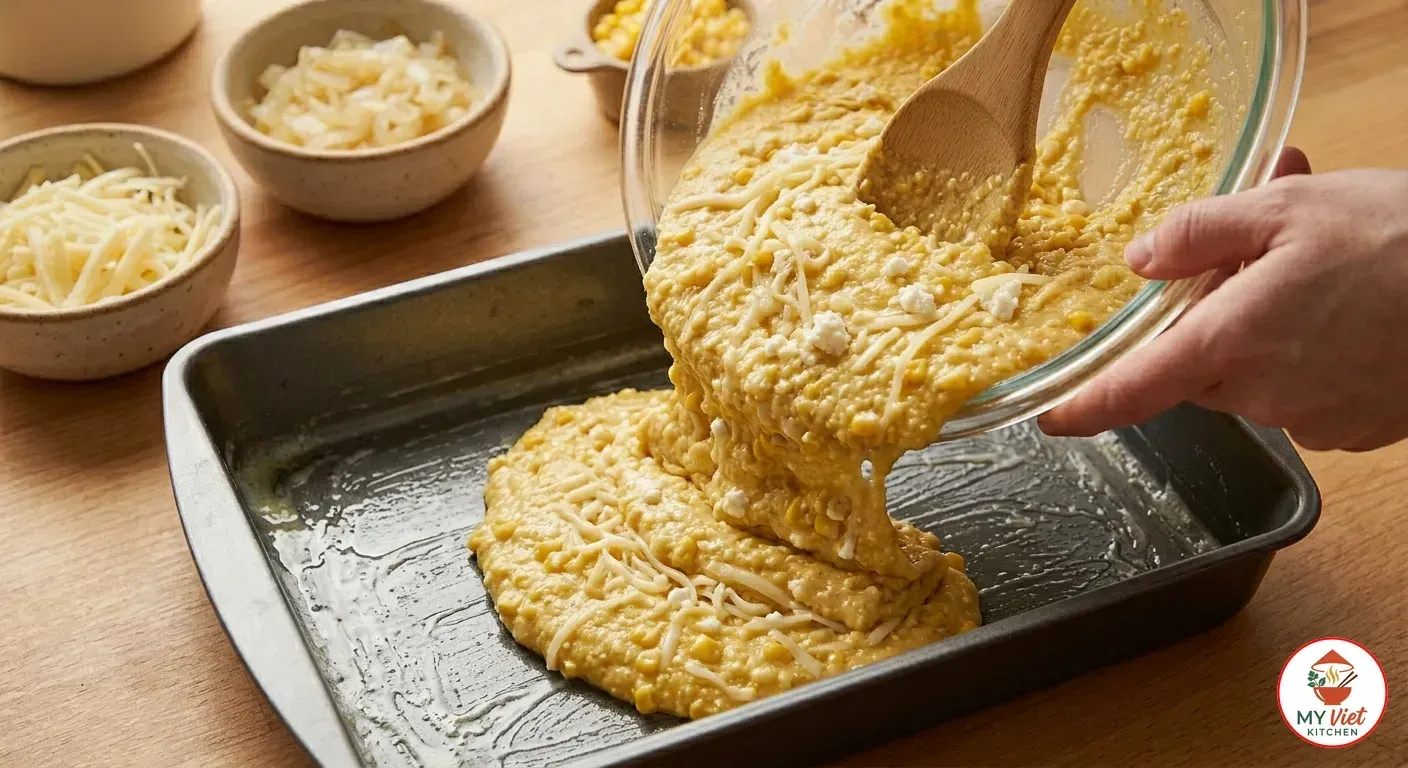
4 Preheat your oven to 375 degrees Fahrenheit (190 degrees Celsius). Grease a 9x13-inch baking dish generously with butter or lard, making sure to coat the bottom and sides completely. Pour the batter into the prepared dish and spread it evenly with a spatula. The batter should sit about 1.5 inches thick. Tap the pan firmly on the counter two or three times to release any trapped air bubbles.
The choice of baking dish matters for sopa paraguaya. A metal pan heats fast and gives you a crispier crust on the bottom and sides. By contrast, a glass or ceramic dish bakes gently and makes a softer crust. In Paraguay, cooks often use a cast iron skillet or a clay dish called a tatakua. For home bakers, a standard metal pan works best. It gives you golden edges and a moist center.
Step 5: Bake Until Golden
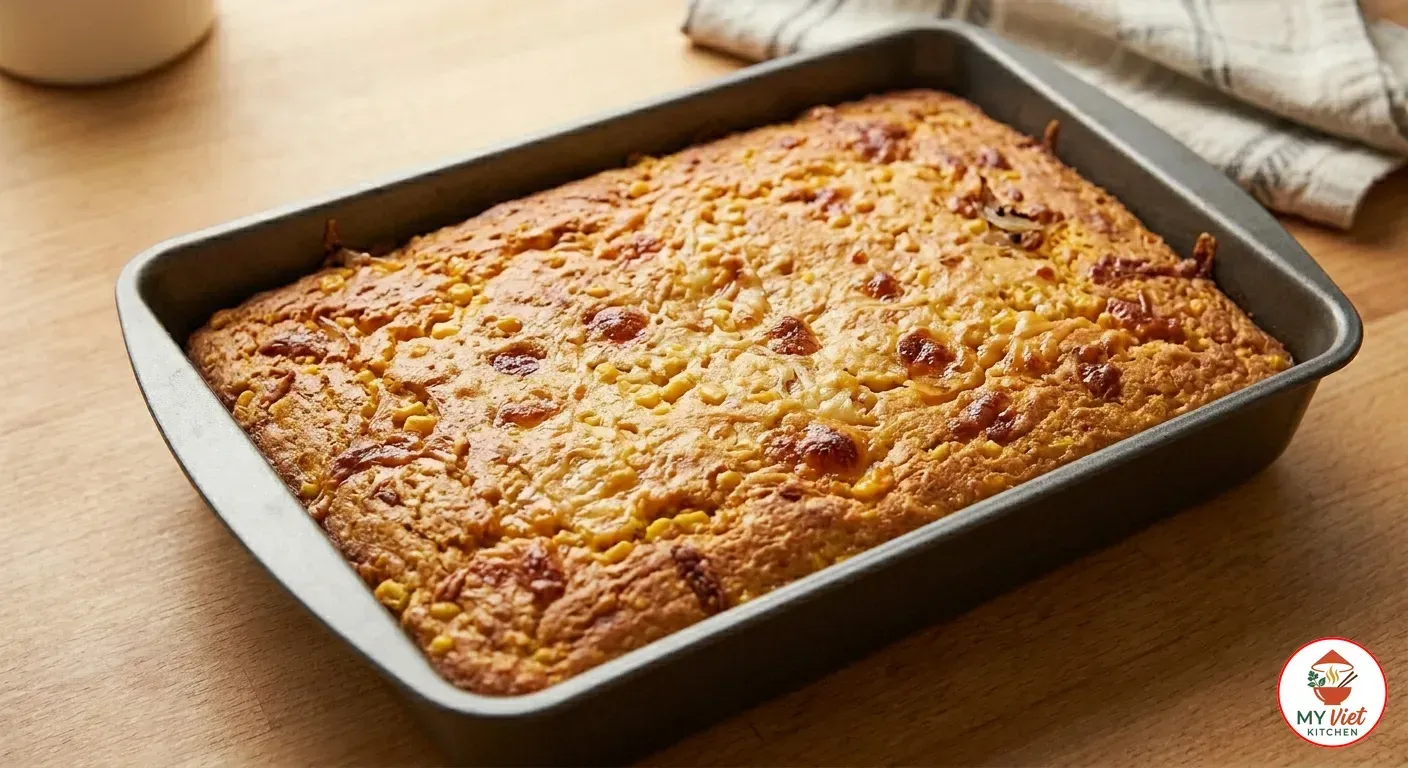
5 Place the baking dish on the middle rack of the preheated oven. Bake for 40 to 45 minutes until the top develops a deep golden brown color and a toothpick inserted in the center comes out clean. The edges should pull slightly away from the sides of the pan, which indicates that the bread has set completely. If the top browns too quickly before the center sets, tent it loosely with aluminum foil for the last 10 minutes.
Remove the pan from the oven and let the sopa paraguaya cool for 10 to 15 minutes before cutting. This rest lets the cheese firm up, which makes cleaner slices. Cutting too early lets steam escape and can leave the center gooey. Therefore, wait those 10 minutes and you will get neat squares that hold their shape well. Serve warm or at room temperature. Many Paraguayan families agree that sopa paraguaya actually tastes better after it has rested for an hour because the flavors deepen and meld together.
Expert Tips for Perfect Sopa Paraguaya
Get the Onion Ratio Right
Authentic sopa paraguaya uses a generous amount of onion, roughly equal in volume to the cornmeal. Some home bakers cut the onions back, thinking the amount seems like too much. However, onions provide moisture, sweetness, and flavor that nothing else can match. So cook them until completely soft, and do not skip this step by using raw onions. Otherwise, raw onions release moisture during baking and create soggy pockets in the bread.
Use Two Types of Cheese
Traditional sopa paraguaya combines a melting cheese like queso paraguayo with a crumbly fresh cheese. This dual-cheese approach creates two different textures in the finished bread. Specifically, the melting cheese forms stretchy pockets, while the crumbled cheese adds small bursts of tangy flavor. If you use only one type, the bread loses that textural complexity. Mozzarella paired with queso fresco is the most accessible combination for home bakers outside South America.
Do Not Overbake
Sopa paraguaya should be moist and almost custardy in the center. Overbaking dries out the crumb and eliminates the rich, creamy quality that defines this dish. So check the bread at 40 minutes and pull it from the oven as soon as the toothpick test comes out clean. In fact, a few moist crumbs on the toothpick are actually preferable to a completely dry pick. The residual heat will continue cooking the center for several minutes after you remove the pan.
Sopa Paraguaya vs. Other Latin American Corn Breads
Several South American countries have their own version of corn-based bread or cake. Knowing the differences helps you see what makes sopa paraguaya stand out. Here is how they compare.
| Dish | Country | Key Ingredients | Texture |
|---|---|---|---|
| Sopa Paraguaya | Paraguay | Dried cornmeal, cheese, onions, eggs | Dense, moist, bread-like |
| Chipa Guazu | Paraguay | Fresh corn kernels, cheese, eggs | Softer, custard-like |
| Arepa | Venezuela / Colombia | Pre-cooked corn flour, water, salt | Firm patty, crispy outside |
| Humita | Argentina / Bolivia | Fresh corn, onion, wrapped in husk | Soft, tamale-like |
| American Cornbread | United States | Cornmeal, flour, buttermilk, sugar | Light, crumbly, often sweet |
Serving Suggestions
In Paraguay, sopa paraguaya rarely appears alone on the plate. It is almost always part of a larger spread that revolves around grilled meat. Its rich, cheesy flavor pairs well with smoky, charred meats. Below are the best ways to serve this Paraguayan cornbread.
The Perfect Accompaniments:
- Asado (Paraguayan barbecue): This is the most traditional pairing. Slices of sopa paraguaya sit alongside grilled beef ribs, chorizo, and morcilla. The bread absorbs the smoky meat juices and provides a starchy counterpoint to the rich protein. In fact, an asado without sopa paraguaya is considered incomplete in Paraguay.
- So’o ku’i (Paraguayan beef soup): This hearty meat and rice soup pairs beautifully with thick slices of sopa paraguaya on the side. The bread serves as a dipper, soaking up the savory broth. Together, they make a satisfying weeknight dinner.
- Fresh salad: A simple tomato, onion, and lettuce salad dressed with lemon and olive oil cuts through the richness of the bread. The acidity and freshness balance the butter and cheese perfectly.
- Grilled vegetables: Charred peppers, zucchini, and eggplant complement the corn flavor of sopa paraguaya. This combination works especially well for a vegetarian meal where the bread serves as the centerpiece.
Beverage Pairings:
- Terere (cold yerba mate): Paraguay’s national drink pairs naturally with sopa paraguaya. The bitter, herbal notes of the yerba mate cut through the richness of the cheese and butter. This is the most authentic pairing you can make.
- Malbec or Tannat wine: A medium-bodied South American red wine stands up to the savory richness of the bread. The tannins help cleanse the palate between bites of the cheese-laden cornbread.
- Cold lager beer: A crisp, light beer refreshes the palate and complements the salty, savory flavors. This is the most popular pairing at Paraguayan asados and casual gatherings.
Storage and Reheating
Room temperature: Sopa paraguaya stores beautifully at room temperature for up to 2 days when covered tightly with plastic wrap or placed in an airtight container. The cheese and butter keep the crumb moist. In fact, many Paraguayan families prefer it the next day because the flavors get richer overnight.
Freezer: Wrap individual slices or the entire bread tightly in plastic wrap, then in aluminum foil. Sopa paraguaya freezes well for up to 2 months. Thaw at room temperature for 1 to 2 hours before reheating. The texture holds up well after freezing. As a result, this bread is great for meal prep.
Reheating: Warm slices in a 325-degree Fahrenheit oven for 8 to 10 minutes. This brings back the golden crust and keeps the inside moist. You can also reheat slices in a dry skillet over medium-low heat for 3 minutes per side. Avoid the microwave. It makes the bread rubbery and turns the cheese stringy and tough. For the best results, brush a thin layer of melted butter on the surface before reheating in the oven.
Common Mistakes to Avoid
1. Skipping the Onion Cooking Step
Raw onions release water as they bake, creating wet pockets in the bread and leaving a harsh, sharp bite. Always cook the onions until soft and clear before adding them to the batter. This takes only 10 minutes but makes a big difference. Slow heat turns the onion’s sharp bite into mellow sweetness.
2. Using the Wrong Cornmeal Grind
Coarse-ground cornmeal or polenta grits produce a gritty, sandy texture that falls apart when sliced. Instead, sopa paraguaya requires fine cornmeal or corn flour that absorbs moisture quickly and bakes into a cohesive crumb. If you can only find medium-grind cornmeal, soak it in the milk for 15 minutes before mixing to soften the particles. Avoid instant polenta, as it has a different texture and absorbency.
3. Adding Hot Butter to the Eggs
Pouring boiling melted butter directly into raw eggs scrambles them instantly, creating lumps of cooked egg in the batter. Instead, let the melted butter cool for 5 minutes until it feels warm but comfortable to the touch. Then whisk it slowly into the beaten eggs. This gradual tempering ensures a smooth, uniform batter. Similarly, make sure the cooked onions have cooled before adding them to the egg mixture.
Frequently Asked Questions
Why is sopa paraguaya called a soup if it is a bread?
The name traces back to a famous culinary accident. According to Paraguayan tradition, a cook preparing corn soup for President Carlos Antonio Lopez added too much cornmeal and cheese. Rather than waste the thickened mixture, the cook baked it in the oven. The resulting bread was so popular that it became a national staple. The name “sopa” stuck as an ironic reminder of the dish’s origins. Today, every Paraguayan knows that sopa paraguaya is a bread, not a soup, and the name itself has become a source of national pride and humor.
What is the difference between sopa paraguaya and chipa guazu?
Both dishes come from Paraguay and use corn as their base, but they differ in a fundamental way. Sopa paraguaya uses dried cornmeal or corn flour, which gives it a denser, more bread-like texture. Chipa guazu uses fresh corn kernels that are blended or grated into the batter, producing a softer, moister, almost custard-like consistency. Sopa paraguaya also relies more heavily on cheese and onions for flavor, while chipa guazu lets the sweetness of fresh corn take center stage.
Can I make sopa paraguaya without queso paraguayo?
Yes, finding queso paraguayo outside of South America can be challenging. The best substitutes are mild mozzarella, Muenster cheese, or a blend of mozzarella and Monterey Jack. These cheeses melt smoothly and provide a similar mild, creamy flavor without overpowering the corn. Avoid sharp cheddar or aged Gouda. Strong cheeses compete with the corn flavor instead of blending with it.
Is sopa paraguaya naturally gluten-free?
Traditional sopa paraguaya is naturally gluten-free because the base is cornmeal rather than wheat flour. This makes it an excellent option for people with celiac disease or gluten sensitivity. However, always check the labels on your cornmeal and pre-shredded cheese to ensure they do not contain wheat starch or gluten-based anti-caking agents. When all ingredients are confirmed gluten-free, sopa paraguaya is a safe and delicious choice for gluten-free diets.
Can I prepare sopa paraguaya ahead of time?
Absolutely, and many Paraguayan families do exactly that. Bake the bread in the morning and serve it at room temperature later in the day. The flavor actually improves as it rests because the cheese and onion flavors meld together more completely. You can also assemble the batter up to 12 hours ahead and refrigerate it. When ready to bake, let the batter come to room temperature for 20 minutes, then pour it into the greased pan and bake as directed. This make-ahead quality is one reason sopa paraguaya is so popular at gatherings.
Variations and Adaptations
Sopa Paraguaya con Carne (Meat Version):
Add 1 cup of cooked, shredded beef or crumbled ground beef to the batter before baking. The meat adds protein and makes the bread hearty enough to serve as a main course. Some cooks also fold in cooked bacon or chopped chorizo for a smoky, spicy variation. First, brown the meat well and drain any extra fat. This keeps the bread from turning greasy.
Vegan Sopa Paraguaya:
Use flax eggs instead of regular eggs. Mix 1 tablespoon of ground flax with 3 tablespoons of water per egg and let it rest for 5 minutes. Then swap in plant butter and oat milk for the dairy. For cheese, use nutritional yeast plus vegan mozzarella shreds. The texture will differ a bit, but the corn and onion flavors still shine. This version makes sopa paraguaya friendly for plant-based diets.
Spicy Sopa Paraguaya:
For a kick of heat, add 1 to 2 finely diced locoto peppers or jalapenos to the onion mixture during cooking. You can also stir in 1 teaspoon of aji amarillo paste for a fruity, Andean heat that complements the corn flavor. A pinch of smoked paprika in the batter adds warmth without overwhelming spiciness. These tweaks bring new heat to the classic recipe while staying true to South American flavor.
The Cultural Significance of Sopa Paraguaya
Sopa paraguaya is far more than a recipe in Paraguay. It is a symbol of national identity, a thread connecting modern Paraguayan families to the Guarani indigenous traditions that shaped the country’s cuisine. Corn has been central to Guarani cooking for thousands of years. In turn, sopa paraguaya represents the fusion of that indigenous corn culture with Spanish colonial dairy farming. Cheese and eggs came from European cattle. Corn came from the Americas. So this bread is, quite literally, two worlds meeting on a single plate.
In contemporary Paraguay, sopa paraguaya holds a ceremonial importance. No birthday party, wedding reception, or holiday table is complete without it. Families pass down their recipes for generations. In fact, debates about whose grandmother makes the best version are common and spirited. The bread also appears at nearly every asado, the Paraguayan barbecue tradition that brings communities together around fire and meat. Notably, when Paraguayans move abroad, sopa paraguaya is often one of the first dishes they learn to recreate. It carries the taste of home in every bite, and its cultural significance rivals that of any national dish on Earth.
Beyond history, sopa paraguaya reflects a deeper philosophy about Paraguayan cooking: simplicity, generosity, and community. Its ingredients are humble. Its technique is forgiving. And its portions are always large enough to share. Making sopa paraguaya is an act of hospitality, a way of saying “you are welcome at my table.” This spirit of abundance and warmth runs through all of Paraguayan cuisine, and sopa paraguaya embodies it perfectly.
Conclusion
This sopa paraguaya recipe proves that extraordinary food can come from the simplest ingredients. Cook the onions low and slow, use plenty of two cheeses, and let the corn soak up all that richness. The result is a dish that has nourished Paraguayan families for generations and will bring something genuinely new and exciting to your table. Serve it with grilled meats or eat it on its own. Either way, sopa paraguaya brings comfort in every warm, cheesy bite.
Looking for more beloved South American and world recipes? Explore our South American dishes collection for authentic classics from across the continent. Every recipe uses the same clear, step-by-step style to bring great food to your home.