Asado is far more than a meal in Argentina — it is a sacred ritual of fire, smoke, and patience. This iconic Argentine BBQ tradition transforms simple cuts of beef, coarse salt, and hardwood coals into some of the most flavorful grilled meat on earth. Known across South America as the ultimate expression of live-fire cooking, asado demands no fancy rubs, no sweet sauces, and no shortcuts. Only quality beef, a well-built fire, and the steady hand of an asador (grill master) standing watch for hours. This recipe brings authentic Argentine asado to your backyard grill.
Prep Time: 30 minutes | Cook Time: 3 hours | Servings: 8
Difficulty: Intermediate | Calories: ~580 per serving
What Makes Asado Special?
Asado stands apart from every other grilling tradition because of its radical simplicity. While American BBQ relies on dry rubs with a dozen spices and sticky finishing sauces, Argentine asado uses only coarse salt. As a result, this minimalist approach puts the beef quality and fire skill at center stage. In other words, there is nowhere to hide behind heavy seasoning. So every bite speaks of the animal, the wood, and the flame. Consequently, asado demands the best beef you can find and absolute attention to the fire.
The tradition stretches back to the gauchos, the legendary horsemen of the Argentine pampas. These cattle herders spent months on open grasslands, cooking whole sides of beef over fires built from local hardwood. Because of this, they built a deep grasp of heat that modern asadores still follow today. Indeed, the gaucho approach was practical and resourceful. Since no marinades were available on the plains, salt preserved the meat and boosted its natural flavor. Time and fire did the rest. Over centuries, this practical campfire cooking evolved into Argentina’s most treasured culinary tradition.
What truly elevates asado is the communal experience surrounding it. An Argentine asado is never rushed. First, the fire takes 30 to 40 minutes to reach the right stage. Then the meat cooks for hours. During that time, guests gather around the grill, sharing wine and conversation while the asador tends the coals. Chorizo sausages and grilled provoleta cheese arrive first as appetizers. After that, the main cuts follow in stages. As a result, this unhurried flow turns a simple meal into an all-day celebration. In Argentina, asking someone to share an asado is among the highest expressions of friendship and hospitality.

Choosing the Right Beef Cuts for Asado
Beef is the foundation of every asado. Because the cuts you pick shape the whole meal, it helps to know how Argentine butchery differs from American or European systems. Below are the key asado cuts and their closest equivalents at your local butcher.
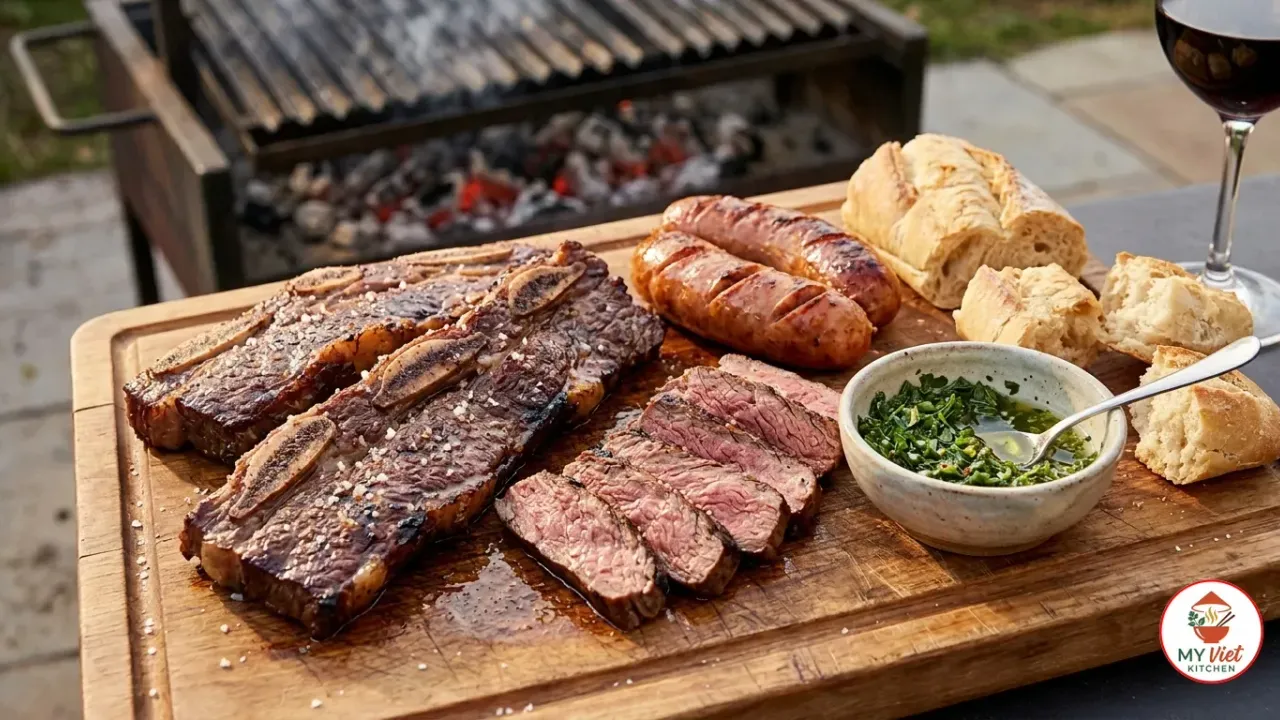
- Tira de asado (cross-cut beef short ribs — essential): This is the signature cut of Argentine asado. Short ribs are sliced across the bone into strips about 1.5 inches thick. Because of the mix of meat, fat, and bone, they produce amazing flavor during the long, slow cook. Meanwhile, the marrow renders into the meat, and the tissue breaks down into gelatin. Ask your butcher to cut flanken-style short ribs for the closest match to tira de asado.
- Vacio (flank steak — highly recommended): This loose-textured cut comes from the bottom of the rib cage. It has a rich beefy flavor that gets even better over high heat. Also, vacio cooks faster than short ribs and offers a new texture. It should finish medium-rare to medium for the best results. American flank steak is the closest equivalent, though Argentine vacio tends to be thicker.
- Chorizo criollo (fresh Argentine sausage — essential): These fresh pork and beef sausages are mildly seasoned with garlic, paprika, and nutmeg. They serve as the opening act of the asado. If needed, Italian sweet sausage is the best substitute. However, avoid Spanish chorizo, which is a cured, dry sausage with a very different texture. Argentine chorizo should be fresh and juicy.
- Entraña (skirt steak — optional for variety): This thin, intensely flavored cut cooks quickly over direct heat. It has a pronounced mineral, beefy taste that many asado enthusiasts consider the most flavorful cut on the grill. Slice it against the grain into thin strips for serving.
Ingredients for Asado
For the Grill:
- 4 pounds (1.8kg) bone-in beef short ribs (tira de asado), cut flanken-style
- 1 pound (450g) Argentine-style chorizo sausages
- 1 pound (450g) beef flank steak (vacio)
- Coarse salt (sal parrillera) to taste, about 1 tablespoon per pound of meat
- Hardwood lump charcoal or split quebracho wood
For the Chimichurri:
- 1 cup fresh flat-leaf parsley, finely chopped
- 4 cloves garlic, minced
- 1 small shallot, finely minced
- 1 teaspoon dried oregano
- 1/2 teaspoon red pepper flakes
- 1/2 cup extra virgin olive oil
- 3 tablespoons red wine vinegar
- 2 tablespoons warm water
- Salt and black pepper to taste
For Serving:
- Crusty French or Italian bread
- Grilled provoleta cheese (optional)
- Simple mixed green salad
- Malbec wine or cold beer
Pro tip: Salt the beef short ribs at least 30 minutes before grilling, or ideally the night before. Early salting allows the coarse salt to dissolve, penetrate the meat, and season it deeply throughout. Salting at the last minute only flavors the surface. Additionally, use coarse salt rather than fine table salt. The larger crystals dissolve more slowly and create a better crust on the meat surface during grilling. Argentine butchers sell a specific coarse salt called sal parrillera designed for this purpose.
Step-by-Step Instructions
Step 1: Prepare the Fire
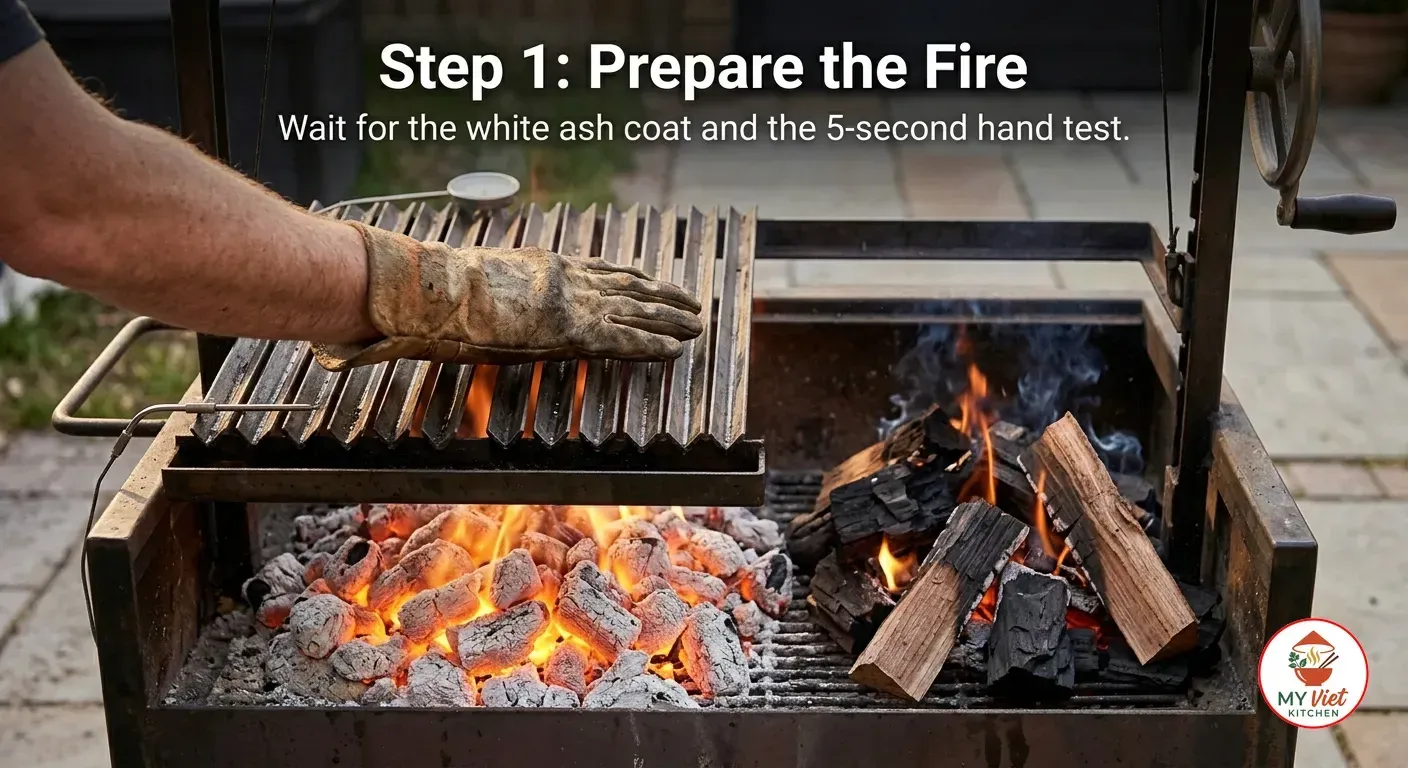
1 Build your fire 30 to 40 minutes before you plan to start grilling. If using a parrilla, pile hardwood lump charcoal or split quebracho wood on one side of the fire pit. Then let the flames burn down until the coals glow orange and grow a coat of white ash. Once that ash forms, it means the bad compounds have burned off and the coals will give clean, steady heat.
Next, create a two-zone setup by spreading coals across one half of the grill for direct heat and leaving the other half empty. Because the short ribs cook slowly, they will spend most of their time over the indirect zone. For a kettle grill, bank all coals against one side and place a drip pan on the empty side. Ideally, the indirect zone should hold at 250 to 275 degrees Fahrenheit. To test, hold your hand 6 inches above the grate. If you can last about 5 seconds, the heat is right. If you pull away sooner, let it settle for 10 more minutes before grilling.
Step 2: Season the Meats
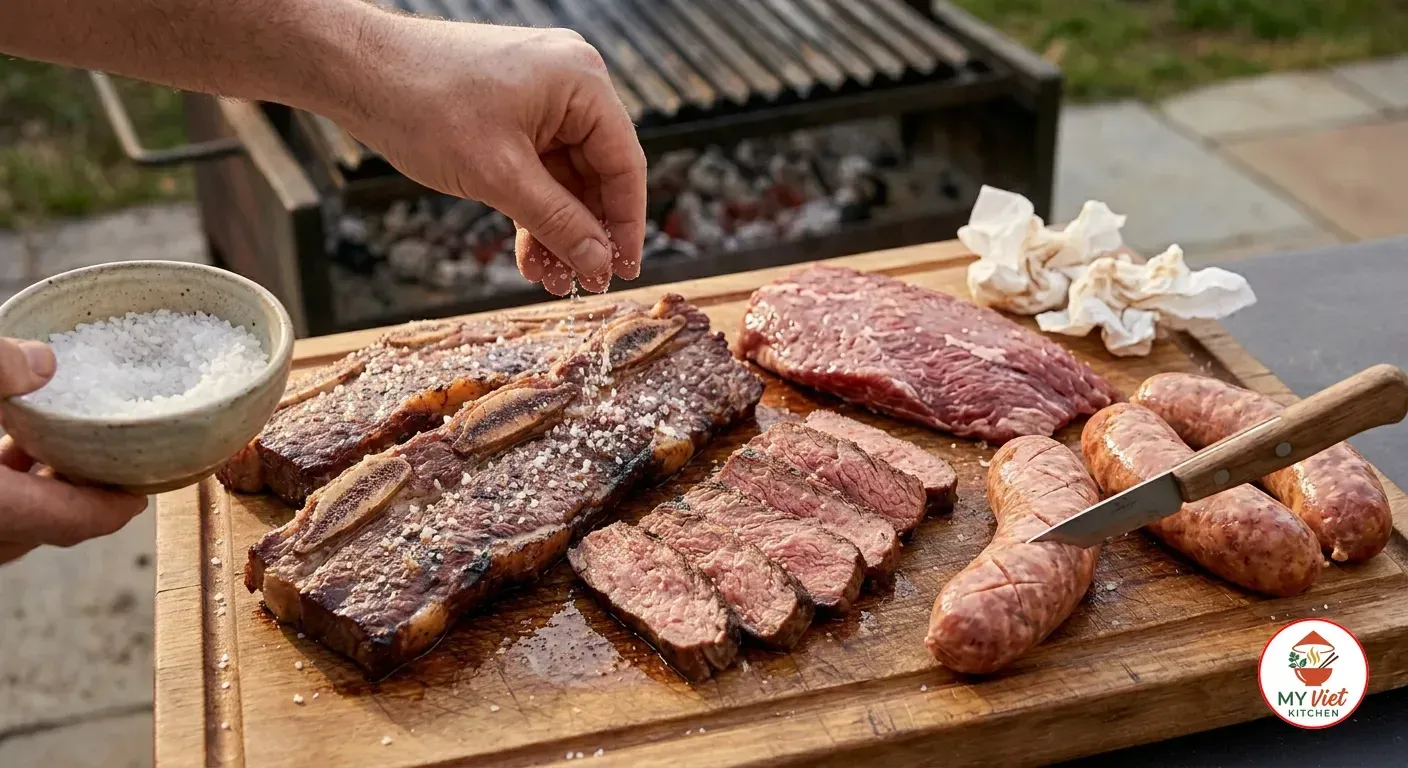
2 Take the beef short ribs and flank steak out of the refrigerator. Pat them dry with paper towels. Then coat every surface with coarse salt. Use about 1 tablespoon of coarse salt per pound of meat. After that, the salt should look like an even, visible layer on the surface. Let the seasoned meat sit at room temperature for 20 to 30 minutes while the fire develops.
During this rest, the salt draws moisture to the surface. In turn, that moisture dissolves the salt into a strong brine. Then the brine soaks back into the muscle fibers, so the meat gets seasoned from within. Furthermore, this process helps build a great crust during grilling. Meanwhile, score the chorizo sausages with shallow diagonal cuts about 1 inch apart. These slashes prevent the casings from bursting under pressure as the filling expands on the hot grill. Do not cut too deep, or the juices will leak out and dry the sausages.
Step 3: Make the Chimichurri
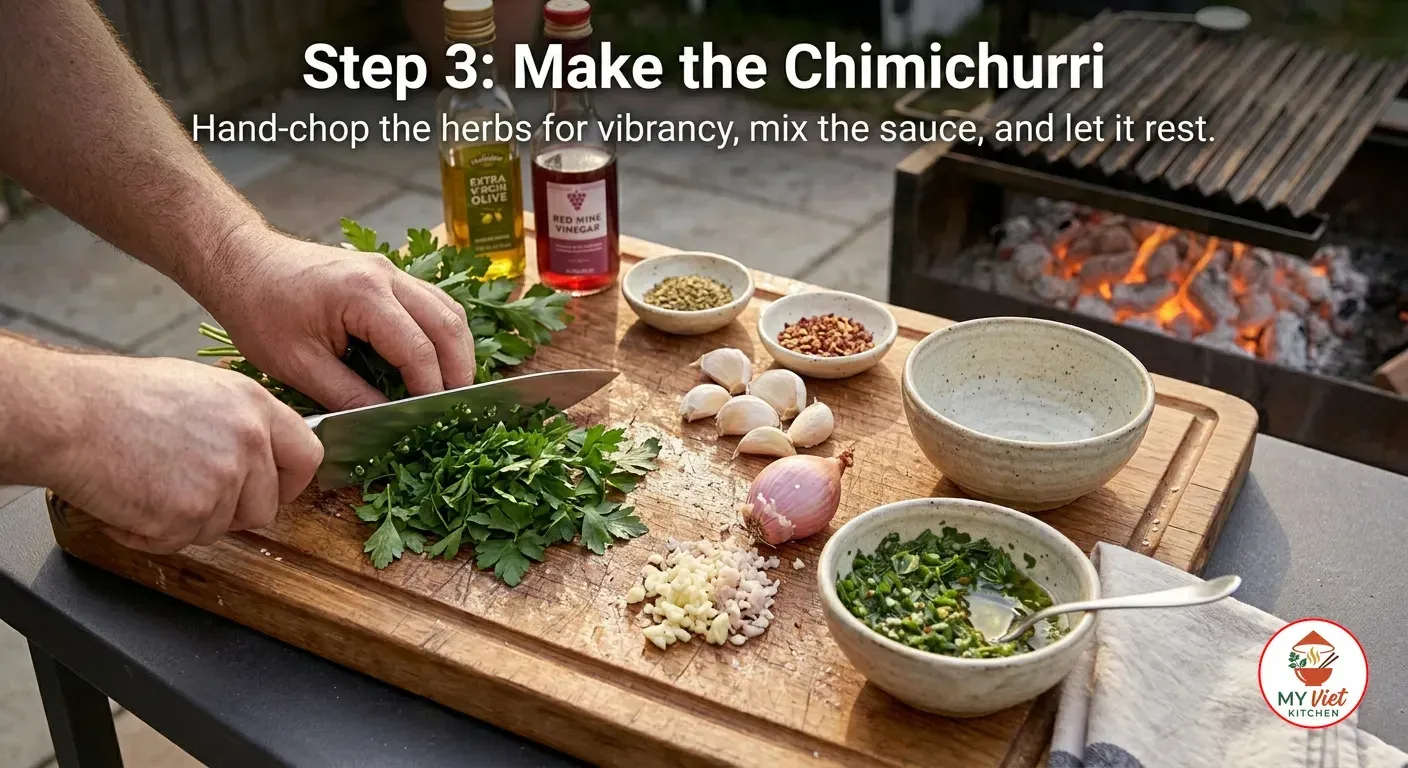
3 While the meat rests and the fire builds, prepare the chimichurri sauce. First, chop the fresh parsley by hand rather than in a food processor. A knife gives a clean cut that keeps the herb’s green color and fresh flavor. In contrast, a food processor bruises the leaves and turns the sauce muddy.
Combine the chopped parsley, minced garlic, minced shallot, dried oregano, and red pepper flakes in a medium bowl. Then pour in the olive oil and red wine vinegar. Also add the warm water to loosen it a bit. Stir well with a fork and season with salt and pepper. Ideally, the sauce should be loose and pourable, like a thin pesto. After that, let it rest at room temperature for at least 20 minutes. This rest allows the garlic and oregano to infuse the oil. Notably, chimichurri should never be heated or cooked. It always arrives at the table raw and vibrant.
Step 4: Grill the Short Ribs Low and Slow
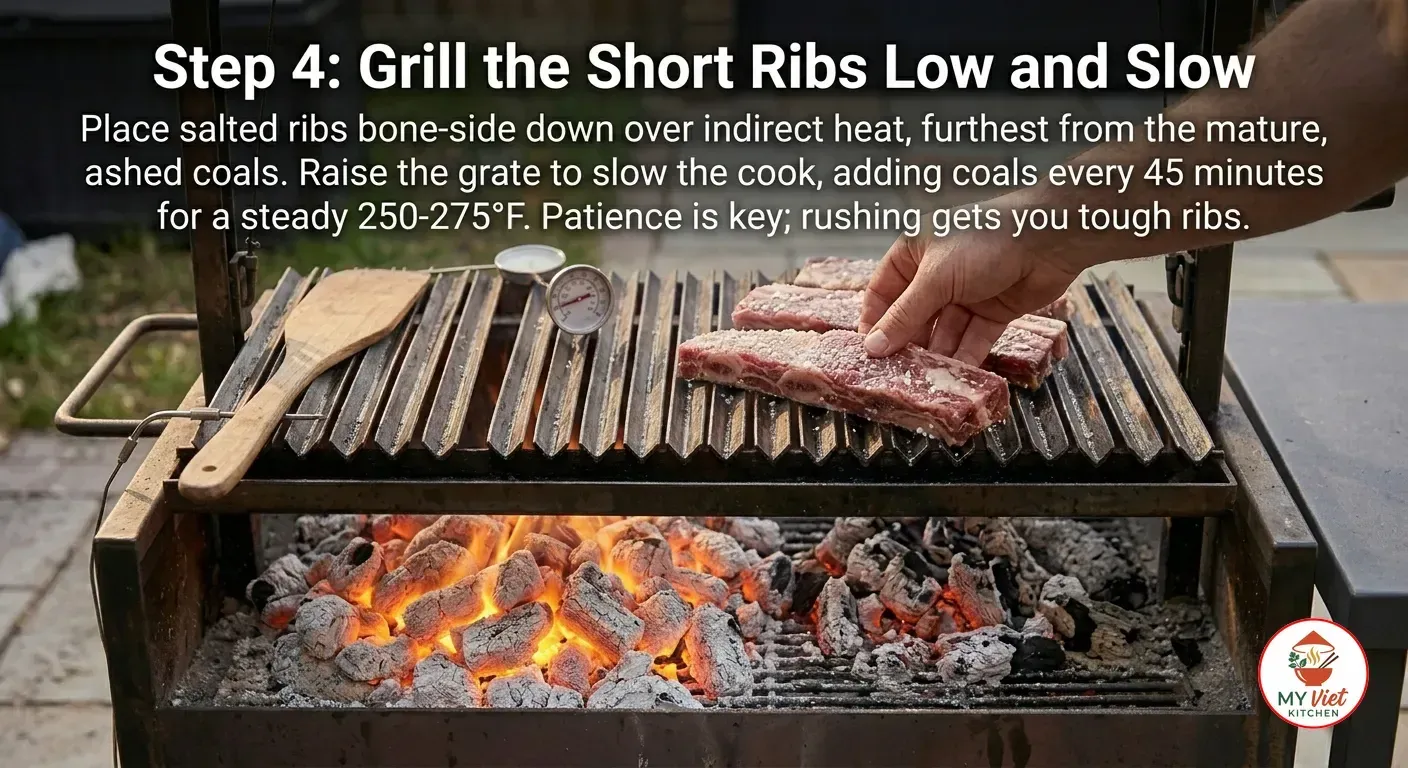
4 Place the salted beef short ribs bone-side down on the indirect heat zone of the grill. Then position them as far from the coals as you can. Next, close the lid to trap heat and create convection. If using an open parrilla, raise the grate to its highest setting to slow the cook.
Cook the ribs for 2 to 2.5 hours, turning them every 30 to 40 minutes. Because the bones act as a heat shield, keep the bone side facing the coals for most of the cook. Also, add fresh coals every 45 minutes to hold a steady heat. Eventually, the internal temp should hit 195 to 205 degrees Fahrenheit, and the tissue should turn to soft gelatin. At that point, the meat pulls from the bone with ease. Above all, patience is key in asado. If you rush this step with high heat, you get tough, chewy ribs instead of tender ones.
Step 5: Grill the Chorizo and Flank Steak
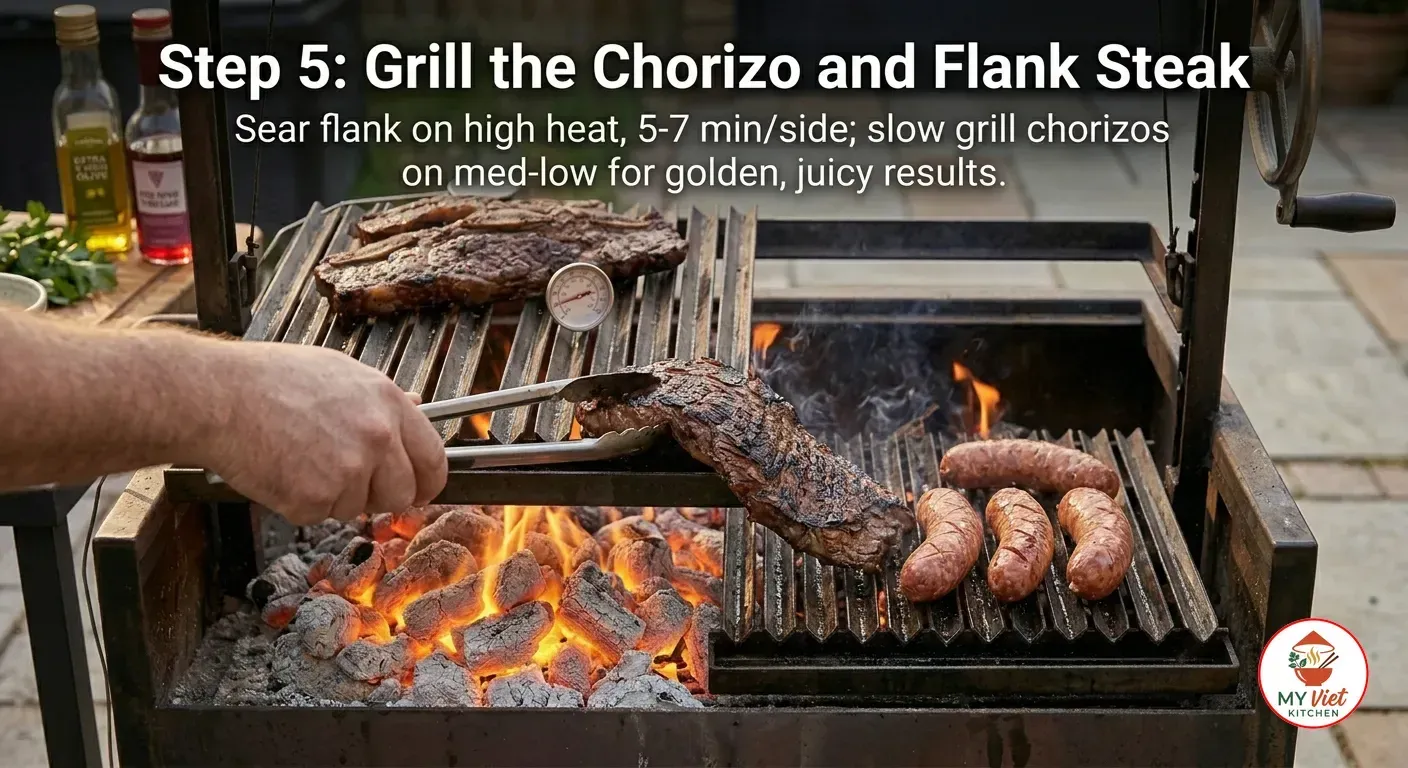
5 About 30 minutes before the short ribs finish cooking, place the scored chorizo sausages over medium-low heat on the grill. Cook them slowly, turning every 3 to 4 minutes, for 15 to 20 minutes total. Eventually, the casings should turn golden and crispy. Also check that the inside hits 160 degrees Fahrenheit. Because slow grilling renders fat bit by bit, the sausages stay juicy. In contrast, high heat bursts the casings and dries the filling.
During the last 15 minutes of the cook, place the flank steak directly over the hot coals. Sear it for 5 to 7 minutes per side for a medium-rare finish. Since flank steak has long, loose fibers, it toughens fast past medium. So pull it off once the temp hits 130 degrees Fahrenheit. Then carryover heat will bring it to a perfect 135 during rest. After that, move all meats to a large wooden board. Let them rest for a full 10 minutes before you slice. This pause allows the juices to spread evenly through the meat.
Step 6: Carve and Serve
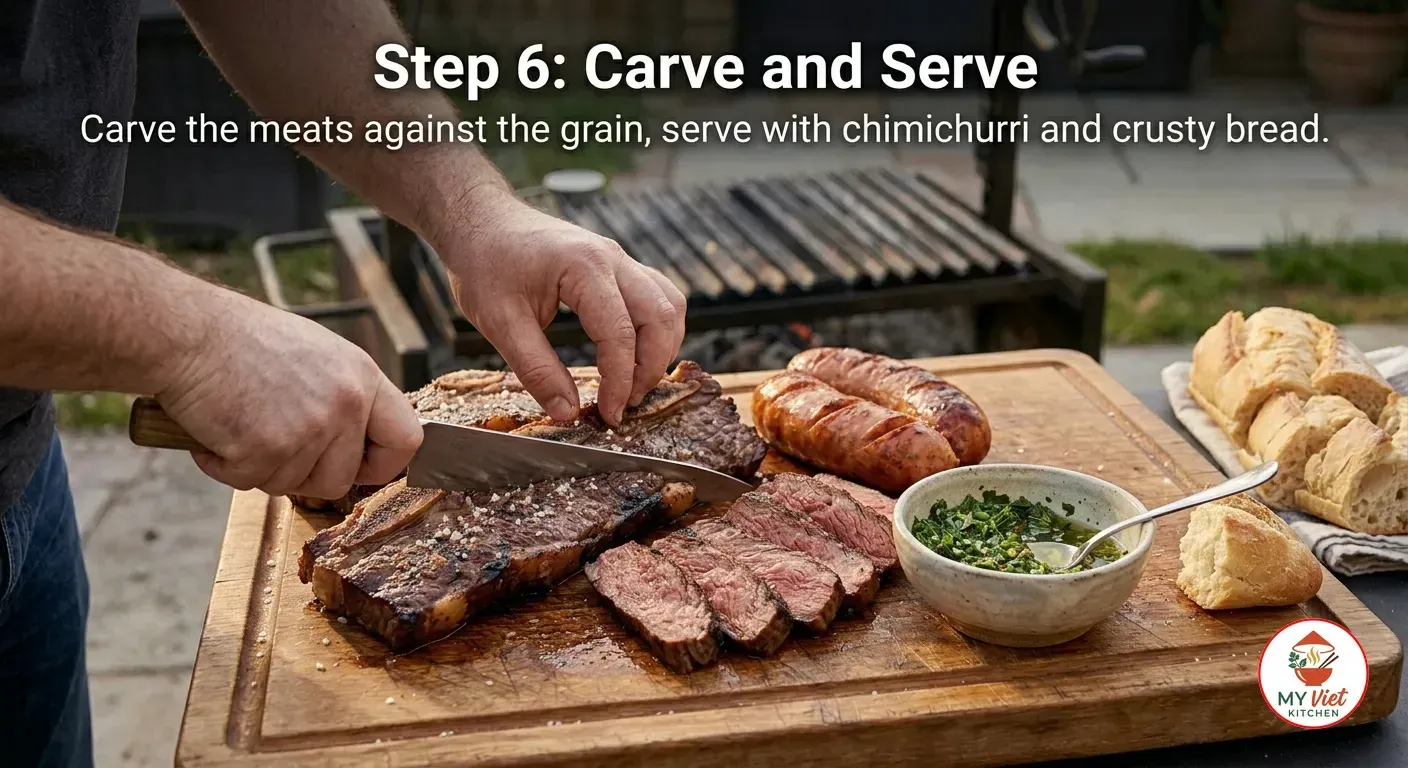
6 First, slice the rested short ribs between the bones into portions. Each piece should have bone with tender, rich meat still attached. Then cut the flank steak against the grain into thin strips. Because slicing against the grain shortens the fibers, every bite turns out tender.
Next, arrange all the meats on a large wooden board. Place the chimichurri in a small bowl with a spoon alongside. In Argentina, the asador never puts sauce on the meat ahead of time. Instead, each guest picks their cuts and adds chimichurri to taste. Serve with crusty bread for soaking up the chimichurri, a simple green salad dressed with olive oil and lemon, and a generous pour of Malbec wine. The contrast of smoky, salt-crusted beef with bright, herbaceous chimichurri is one of the great flavor combinations in all of world cuisine.
Expert Tips for Perfect Asado
Master the Fire Before the Meat
The single most important skill in asado is fire management. Essentially, a well-built fire with ashed coals gives consistent heat. If you place meat over raw, flaming coals, you will scorch the outside while the inside stays raw. Therefore, wait until every coal has a layer of white ash before you start cooking. Furthermore, keep extra lit coals burning on the side. When the cooking coals start to fade, move fresh ones under the grate. As a result, you hold a steady temp without heat spikes that can ruin the ribs.
Use Coarse Salt Only
Authentic Argentine asado uses nothing but coarse salt. So resist garlic powder, pepper, or spice rubs. Because good beef on a well-managed fire needs no help, extra spices just get in the way. In fact, coarse salt forms a mineral crust that boosts the Maillard reaction. By contrast, fine table salt dissolves too fast and draws out moisture. Instead, the large crystals of sal parrillera sit on the surface and build a better texture. If you have chimichurri and good beef, then no other seasoning is needed.
Rest the Meat Properly
Resting meat after grilling is not optional. During cooking, heat pushes juices toward the center. If you slice right away, those juices pour onto the board instead of staying in the meat. However, a 10-minute rest lets the temp even out. As a result, the juices spread back through the cut, and every slice stays moist. Additionally, this rest gives the asador time to set up the platter. Indeed, a well-rested piece of asado loses almost no liquid when you slice it.
Asado Compared to Global BBQ Traditions
Asado belongs to a worldwide family of live-fire cooking traditions. Each culture has developed its own approach to grilling meat over flames. The following comparison highlights how Argentine asado differs from other celebrated BBQ styles around the world.
| BBQ Style | Country | Key Characteristics | Primary Seasoning |
|---|---|---|---|
| Asado | Argentina | Low and slow over hardwood coals, open grill (parrilla) | Coarse salt only |
| American BBQ | United States | Enclosed smoker, low temperature, long smoke exposure | Dry rubs and sauces |
| Braai | South Africa | Hardwood fire, boerewors sausage, varied meats and seafood | Marinades and spice rubs |
| Churrasco | Brazil | Skewered meats rotated over coals, rodizio-style service | Rock salt |
| Yakitori | Japan | Small cuts on bamboo skewers over binchotan charcoal | Tare sauce or salt |
Serving Suggestions
Argentine asado is a complete meal centered on the meat itself. However, a few well-chosen sides and accompaniments elevate the experience from a simple grill session to a proper asado feast. Traditionally, the accompaniments are kept simple so they never compete with the star of the show.
Classic Accompaniments:
- Chimichurri sauce: The essential asado condiment. Its bright acidity and fresh herb flavor cut through the richness of the grilled beef. Always serve it at room temperature on the side, never heated or poured over the meat in advance.
- Provoleta (grilled provolone cheese): A thick disc of provolone cheese grilled directly on the parrilla until bubbly and golden on top. Sprinkle it with dried oregano and red pepper flakes. Provoleta arrives before the main meats as a shared appetizer. It is one of the most beloved elements of any Argentine asado.
- Crusty bread: A simple baguette or rustic loaf serves as the vehicle for chimichurri. Guests tear off pieces and dip them into the sauce between bites of meat. The bread also absorbs the flavorful juices on the cutting board.
- Ensalada mixta: A simple mixed salad of lettuce, tomato, and onion dressed with olive oil and red wine vinegar. The crisp, light salad provides a refreshing contrast against the heavy, smoky meats. Keep the dressing minimal.
Beverage Pairings:
- Argentine Malbec: This is the definitive wine pairing for asado. Malbec from Mendoza has firm tannins, dark fruit flavors, and a smoky undertone that mirrors the charred beef. The wine’s bold structure stands up to the richness of the short ribs without overwhelming the palate. Serve it slightly below room temperature at about 60 to 65 degrees Fahrenheit.
- Quilmes or Patagonia beer: For a more casual asado, a cold Argentine lager provides a crisp, refreshing counterpoint. The carbonation cleanses the palate between bites of fatty, smoky meat. Beer is arguably the most popular asado beverage in everyday Argentine gatherings.
- Soda water with lemon: A non-alcoholic option that works beautifully with grilled meats. The bubbles refresh the palate. The lemon adds a bright acid note that echoes the vinegar in the chimichurri. Argentines drink large quantities of soda water during asado.
Storage and Reheating
Refrigerator: Store leftover asado meats in an airtight container for up to 3 to 4 days. Also keep the chimichurri in a separate sealed jar. In fact, the sauce gets even better after a day, since the garlic and vinegar keep melding. Additionally, wrap the short ribs in foil so they stay moist. Because the grilled flavor holds up well, leftovers work great for sandwiches, salads, and tacos.
Freezer: Grilled short ribs freeze well for up to 2 months. Simply wrap each portion in plastic wrap, then in foil. Label with the date and thaw in the fridge before reheating. However, flank steak does not freeze as well because its thin slices dry out. So eat the flank steak within the first few days. Meanwhile, chimichurri freezes nicely in ice cube trays for up to 3 months.
Reheating: Warm leftover ribs in a 300-degree oven for 15 to 20 minutes, wrapped in foil with a splash of broth. Because low heat keeps the meat tender, avoid going higher. Alternatively, reheat slices in a hot skillet to bring back the crust. However, skip the microwave, since it steams the meat and kills the smoky crust. Finally, bring chimichurri to room temp before serving it alongside.
Common Mistakes to Avoid
1. Cooking Over Flames Instead of Coals
Active flames make uneven heat and leave soot on the meat. Because soot tastes bitter, it ruins the flavor. In contrast, ashed coals give steady heat that cooks the meat evenly. So always wait until flames die down and white ash covers the coals. Truly, this patience sets a real asado apart from a rushed grill session. If flames flare up from dripping fat, simply move the meat to the cool zone until the flare fades.
2. Using Too Much Seasoning
Adding garlic powder, pepper, paprika, or commercial rub mixes contradicts the asado philosophy. These seasonings mask the beef’s natural flavor, which is the entire point of the tradition. Argentine beef from grass-fed cattle has a distinctive, mineral-rich taste that coarse salt enhances perfectly. If you start with quality beef, coarse salt, and a clean-burning fire, no additional seasoning is needed. The chimichurri sauce provides all the herbal and acidic contrast at the table.
3. Rushing the Cooking Process
Asado cannot be hurried. If you crank up the heat, you get tough, dry ribs that are charred outside and raw inside. Because the collagen in short ribs needs gentle heat over 2 hours to become gelatin, there is no shortcut. Instead, if guests are hungry, serve chorizo and provoleta as starters while the main cuts keep cooking. After all, this staggered approach is how every proper Argentine asado unfolds.
4. Slicing Without Resting
If you cut the meat right off the grill, you lose the juices you spent hours building. Also, the temp still rises by about 5 degrees during rest. Meanwhile, the muscle fibers relax and pull moisture back from the center. So a 10-minute rest is the bare minimum. Simply cover the meat with loose foil to keep it warm. After resting, your first cut should show moist, pink meat with no juice puddle on the board.
Frequently Asked Questions
What is the difference between asado and American BBQ?
Argentine asado and American BBQ differ in seasoning and gear. Specifically, asado uses only coarse salt on an open grill over hardwood coals. By contrast, American BBQ involves dry rubs, sauces, and enclosed smokers. While the Argentine way celebrates the beef’s own flavor, American BBQ builds layers through spice and smoke. Furthermore, asado is a social ritual that lasts several hours. During that time, the asador tends the fire and serves cuts in stages.
What wood is best for Argentine asado?
Quebracho is the classic choice for Argentine asado. Because this dense hardwood burns hot and slow, it makes long-lasting coals perfect for the long cook times. If quebracho is hard to find, oak is the best backup. Hickory and mesquite also work, though they add stronger smoke. However, avoid softwoods like pine or cedar. Since their resin makes smoke that tastes bitter, they ruin the meat. For most home cooks, hardwood lump charcoal is the easiest option and still gives great results.
What cuts of meat are used in traditional asado?
A traditional asado features tira de asado (cross-cut short ribs), vacio (flank steak), and entraña (skirt steak). Additionally, chorizo criollo and morcilla (blood sausage) serve as starters. Often, provoleta cheese opens the meal too. For a grand asado, you might also add mollejas (sweetbreads) and kidneys. Above all, the tira de asado is the star, cooked low and slow for the longest time.
Can I make asado on a regular charcoal grill?
Yes, a standard kettle grill works great for asado when set up right. First, bank all coals to one side for a hot zone and a cool zone. Then place the short ribs on the cool side with the lid on. Also, add fresh coals every 45 minutes to hold the temp. Because hardwood lump charcoal burns cleaner than briquettes, it gives a more real flavor. Overall, the results rival a parrilla for all but the largest cuts.
How long does it take to cook asado?
Plan for 3 to 4 hours from fire to table. First, building the coals takes 30 to 40 minutes. Then the short ribs need 2 to 2.5 hours of slow, indirect heat. After that, chorizo takes 15 to 20 minutes, and flank steak needs just 10 to 14 minutes. Because asado is social by nature, sausages and cheese come out as starters while the main cuts keep cooking slowly.
What is chimichurri and how do you serve it with asado?
Chimichurri is a raw herb sauce made from parsley, garlic, oregano, olive oil, and red wine vinegar. Essentially, it is the must-have condiment for Argentine asado. Because it adds bright acid against the smoky, salty beef, every bite improves. Always serve it at room temperature in a small bowl. Then each guest spoons it over their own cuts. Never cook the sauce or pour it on before serving. Also, let it rest at least 20 minutes after mixing so the flavors blend fully.
Variations and Adaptations
Gas Grill Asado:
While purists insist on charcoal or wood, a gas grill can still make solid asado. First, set one burner to low and leave the rest off for an indirect zone. Then place a foil packet of soaked wood chips over the lit burner for smoke. Cook the ribs on the unlit side with the lid closed. Although the results lack the true char of hardwood coals, the ease makes this great for weeknight dinners. Also, add smoked salt at the end to make up for the missing wood smoke.
Oven-Braised Asado:
If you lack grill access, the oven works well for short ribs. First, season the ribs with coarse salt. Then sear them in a hot cast-iron skillet until deeply browned. After that, transfer to a roasting pan, cover with foil, and braise at 300 degrees for 2.5 to 3 hours. Because the collagen breaks down the same way as on a grill, the meat still gets tender. Finally, broil for 5 minutes to crisp the top. Although it lacks smoky char, the result is rich and deeply flavorful.
Asado with Lamb:
In Patagonia, lamb takes the place of beef at the asado. Whole lamb gets mounted on iron crosses and angled toward a big wood fire. It cooks for 3 to 4 hours with nothing but salted water as a baste. As a result, the meat turns out very tender with subtle smoke. At home, use bone-in lamb shoulder or leg. Then cook it low and slow over indirect heat for about 2.5 hours per pound. Ultimately, this style shows how versatile the asado tradition truly is.
Vegetable Asado:
Increasingly, Argentine cooks add grilled vegetables to the asado spread. Bell peppers, eggplant, zucchini, and corn all grill well next to the meats. Simply place them on the cool side and cook until charred and soft. Then dress them with chimichurri for a bright side dish. For vegetarian guests, grilled provoleta cheese makes a filling option. In this way, the adaptation honors the live-fire spirit while welcoming everyone to the table.
The Cultural Significance of Asado
Asado holds a place in Argentine culture that no other food can match. Indeed, it is the centerpiece of family Sundays, the go-to for birthdays and holidays, and the ritual that defines friendships. According to Taste Atlas, asado ranks among the most celebrated dishes in the world and is widely recognized as Argentina’s national culinary treasure. Notably, the person who manages the fire, known as the asador, holds a role of honor. In fact, being asked to serve as asador at a gathering is a true mark of respect.
The roots of asado lie in the gaucho culture of the Argentine pampas. For over three hundred years, these horsemen cooked beef over fires on the grasslands. Although their methods were born of need, they became art through time and practice. Today, that gaucho legacy lives on in every Argentine yard where coals glow and meat sizzles. Because asado links modern people to their pastoral roots, it feels visceral and direct. Even now, the smell of quebracho smoke and salted beef stirs a deep cultural pride. In the end, every asado is both a meal and an act of memory.
Conclusion
Ultimately, asado proves that great cooking needs very few ingredients. With quality beef, coarse salt, hardwood coals, and patience, you can make one of the world’s best grilled meals. Because tough short ribs slowly turn tender over a managed fire, the process satisfies both cook and eater. So master the fire, trust the salt, and let time work. Once you try a true asado, you will see why Argentines call it the peak of culinary art.
Ready to explore more grilled dishes from around the world? Browse our full collection of Latin American dishes for recipes like feijoada, ceviche, and empanadas. If you try this asado recipe, leave a rating and share your experience in the comments below.