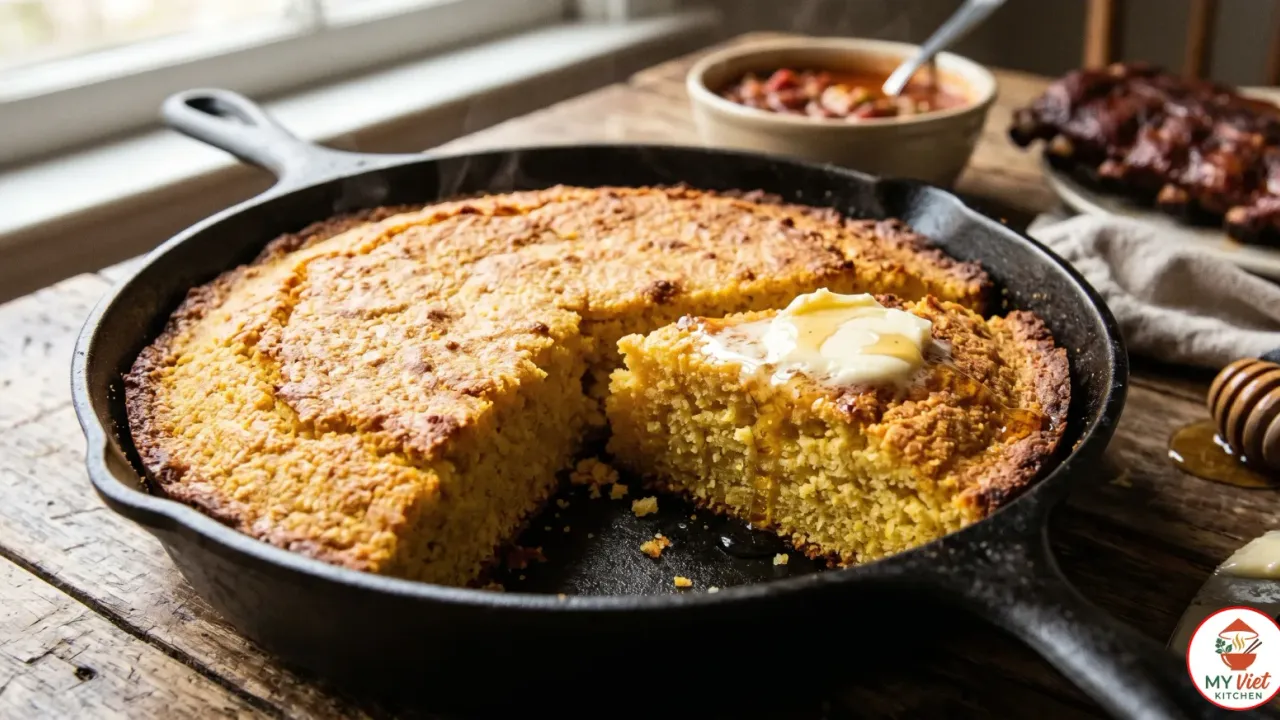
Golden, buttery, and beautifully rustic, cornbread is one of America’s most treasured comfort foods. This classic Southern cornbread recipe delivers a shatteringly crispy crust and a tender, moist crumb by using a preheated cast iron skillet and real buttermilk. Unlike the overly sweet, cake-like versions you find in many restaurants, this recipe keeps the focus on the earthy, toasted flavor of yellow cornmeal. Whether you serve it alongside a bowl of chili, a plate of barbecue, or simply slathered with butter and honey, this cornbread will quickly become a staple in your kitchen.
Prep Time: 10 minutes | Cook Time: 25 minutes | Servings: 8
Difficulty: Easy | Calories: ~210 per serving
What Makes This Cornbread Special?
Cornbread holds a special place in American food history. According to food historians, Native Americans baked corn-based breads long before European settlers arrived. Over time, Southern cooks refined the recipe with buttermilk, lard, and cast iron skillets. As a result, cornbread became a daily staple across the South. Families served it at nearly every meal, from breakfast to supper.
What truly sets this recipe apart is the hot skillet trick. You preheat the skillet with bacon fat or oil in the oven. This creates a searing hot surface that crisps the batter the moment it hits the pan. The result is that golden crust that shatters with every bite. Meanwhile, the buttermilk keeps the inside moist and adds a subtle tang that balances the corn flavor.
Furthermore, this recipe uses just a small touch of sugar. True Southern cornbread lets the corn flavor shine, and this version follows that rule. The bit of sugar softens the edges without turning the bread into cake. In contrast, many modern recipes pile on the sugar and lose the savory taste that makes cornbread such a great side dish.

Choosing the Right Cornmeal
Picking the right cornmeal is the most important choice you will make for this recipe. The grind, color, and how it was milled all affect the texture and flavor of your cornbread. Here is a look at the best options.
- Yellow Cornmeal (medium grind): This is the classic choice for Southern cornbread. It provides a slightly coarse texture and a robust corn flavor that holds up beautifully during baking.
- Stone-Ground Cornmeal (best choice for flavor): Stone-ground cornmeal retains the hull and germ, which gives it a deeper flavor and a heartier texture. It produces the most authentic, rustic cornbread.
- White Cornmeal: Popular in parts of the Deep South, white cornmeal has a milder, more delicate flavor. It works well if you prefer a subtler corn taste in your bread.
Ingredients for Cornbread
Main Dry Ingredients:
- 1 1/2 cups yellow cornmeal (medium grind)
- 1/2 cup all-purpose flour
- 1 tablespoon granulated sugar
- 1 tablespoon baking powder
- 1/2 teaspoon baking soda
- 1 teaspoon salt
Wet Ingredients:
- 1 1/3 cups buttermilk (at room temperature)
- 2 large eggs
- 4 tablespoons unsalted butter (melted and slightly cooled)
For the Skillet:
- 2 tablespoons bacon drippings or vegetable oil
Pro tip: Bring your buttermilk and eggs to room temperature before mixing. Cold ingredients slow down the leavening reaction and can result in a denser crumb. Simply set them on the counter 30 minutes before you start cooking.
Step-by-Step Instructions
Step 1: Preheat the Skillet
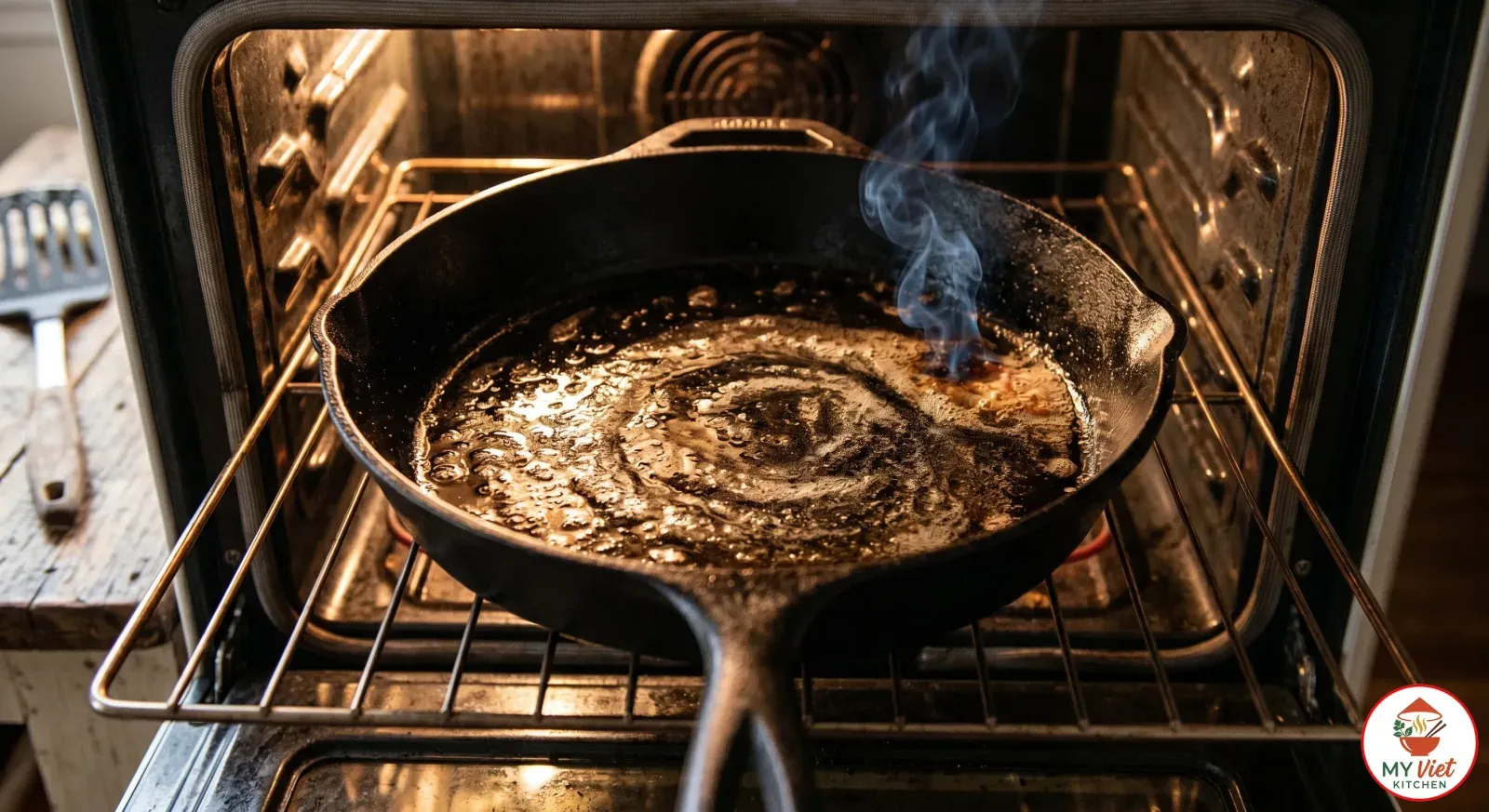
1First, place a 10-inch cast iron skillet in the oven. Then, preheat the oven to 425F (220C). Add 2 tablespoons of bacon drippings or vegetable oil to the skillet and let everything heat together for at least 10 minutes. The fat should shimmer and nearly smoke when the skillet is ready. This blazing hot surface is the secret to achieving that legendary crispy crust on the bottom and sides of your cornbread.
Step 2: Mix the Dry Ingredients
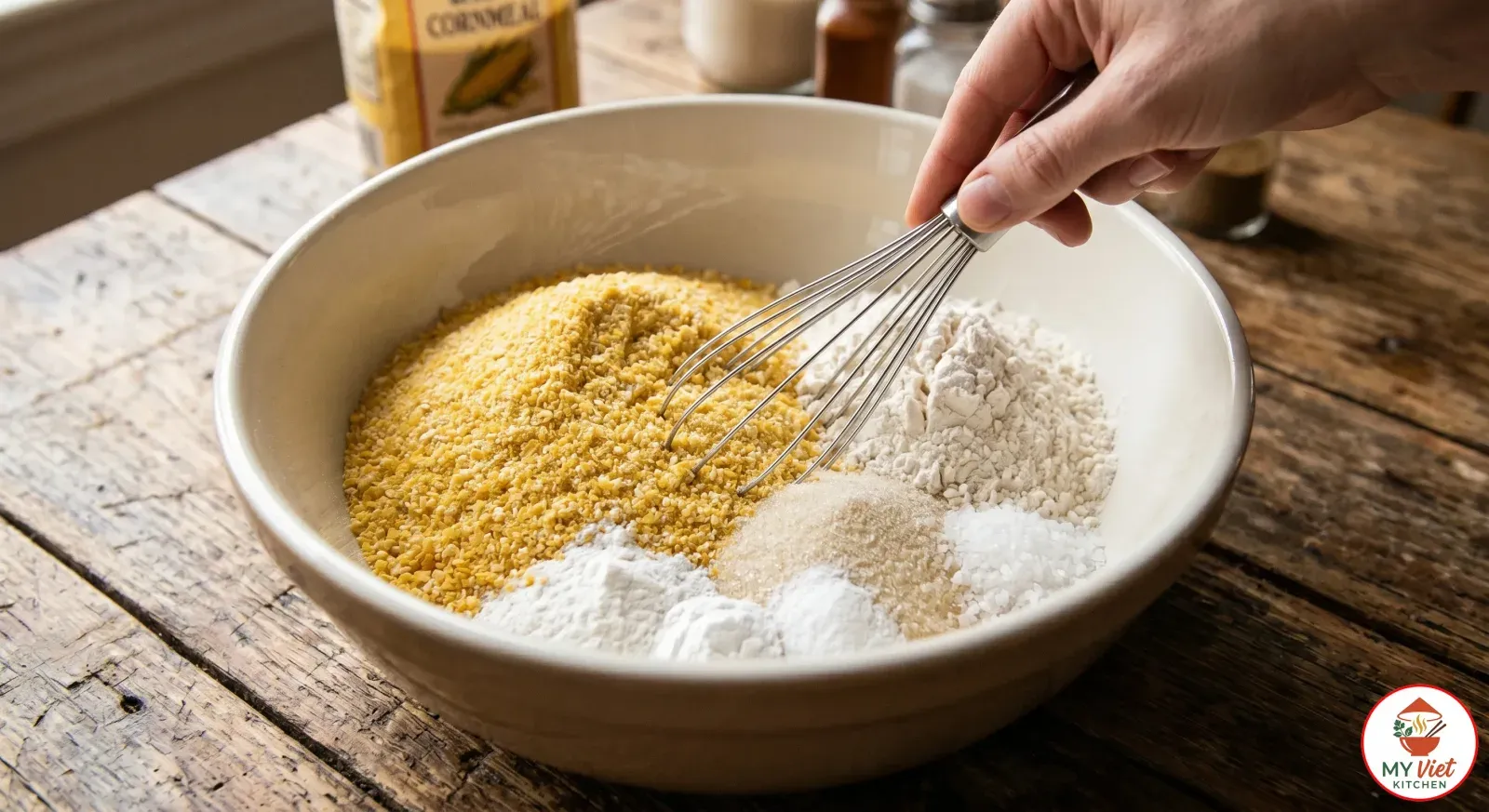
2Meanwhile, whisk together the cornmeal, flour, sugar, baking powder, baking soda, and salt in a large mixing bowl. Make sure the leavening agents distribute evenly throughout the cornmeal because clumps of baking powder create bitter spots in the finished bread. This step takes only a minute, but it ensures consistent rise and flavor in every slice.
Step 3: Combine Wet and Dry Ingredients
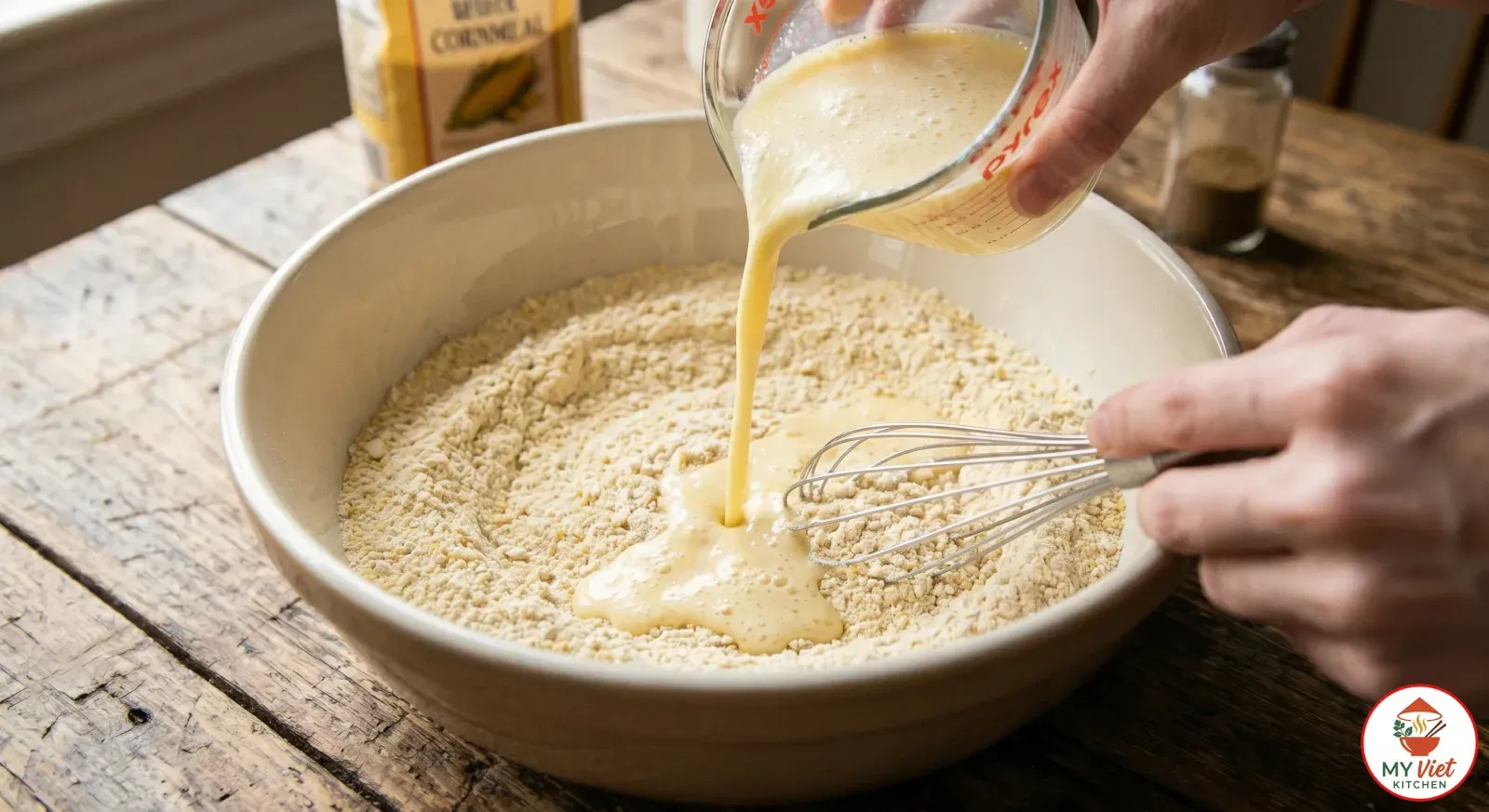
3Next, whisk the buttermilk, eggs, and melted butter together in a separate bowl. Pour this wet mixture into the dry ingredients and stir with a wooden spoon until just combined. You should still see a few small lumps in the batter. Overmixing activates the gluten in the flour, which makes the cornbread tough and chewy instead of tender. As soon as the dry flour disappears, stop stirring.
Step 4: Pour and Bake
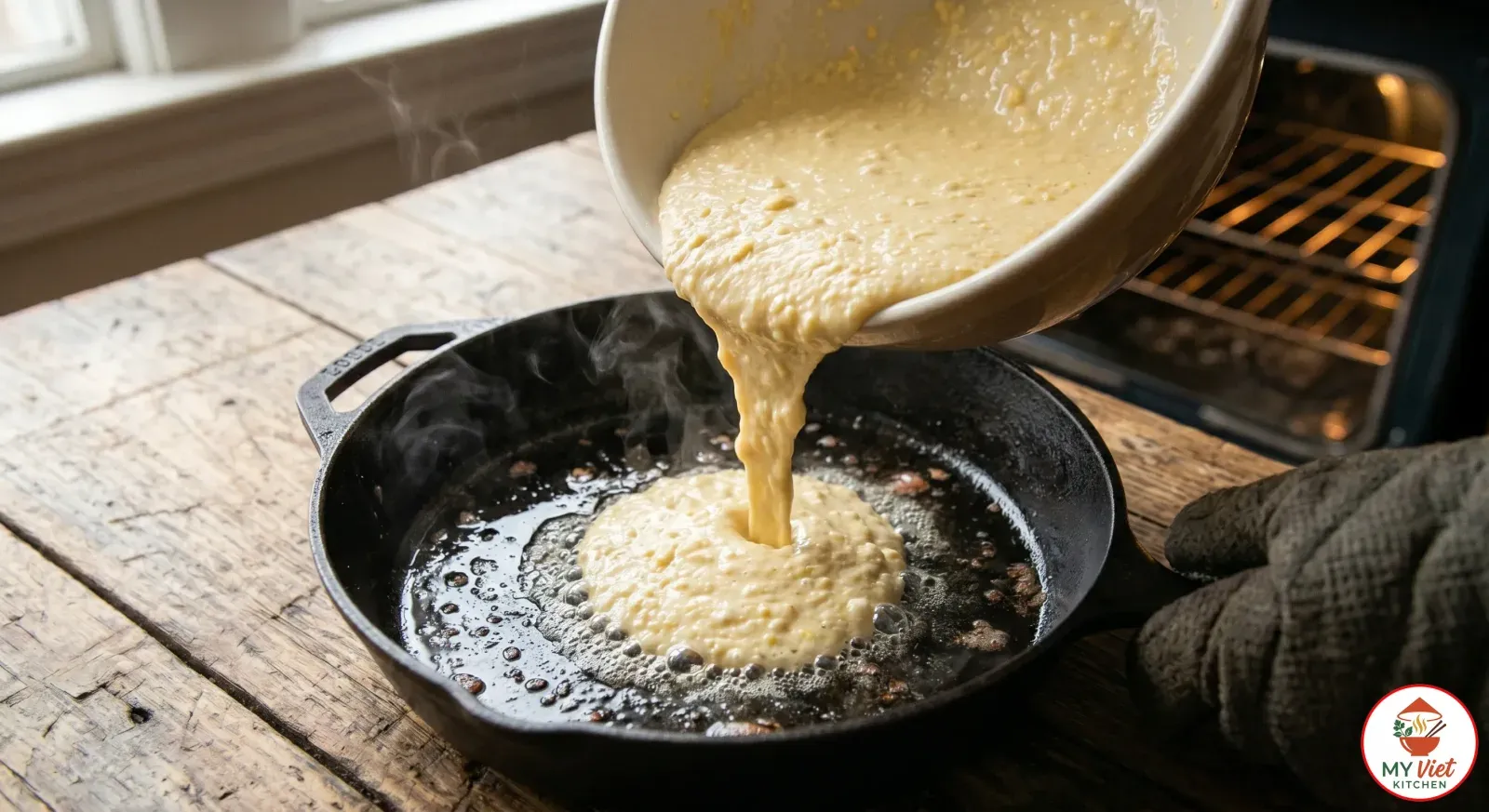
4Finally, carefully remove the screaming hot skillet from the oven using thick oven mitts. Swirl the melted fat around the sides to coat them completely. Then, pour the batter directly into the center of the skillet. It should sizzle loudly on contact, and that sizzle tells you the crust is already forming. Bake at 425F for 20 to 25 minutes until the top turns deep golden brown and a toothpick inserted in the center comes out clean. Let the cornbread cool in the skillet for 10 minutes before slicing.
Expert Tips for Perfect Cornbread
The Hot Skillet Method
A hot cast iron skillet is the key to great cornbread. The high heat from the pan starts a quick browning on the bottom of the batter. This creates that dark golden, almost toasted crust that defines real Southern cornbread. If you skip this step, the bottom stays soft and pale. You also lose the crispy contrast that makes every bite so good.
Use Real Buttermilk
Buttermilk does more than add tangy flavor. Its acid reacts with the baking soda to make tiny bubbles, which give the bread lift and a tender crumb. Moreover, the acid in buttermilk softens gluten, so the bread stays light rather than turning chewy. While you can use regular milk with a splash of vinegar in a pinch, real buttermilk gives much better results in both texture and taste.
Northern vs. Southern Cornbread
The great cornbread debate splits the nation along a clear regional line. Each style reflects the food traditions and tastes of its home region. Here is a side-by-side look at the key differences.
| Feature | Southern Style (this recipe) | Northern Style |
|---|---|---|
| Sugar | Little to none | Generous, cake-like sweetness |
| Primary Grain | Cornmeal-heavy | Equal parts cornmeal and flour |
| Texture | Coarse, crumbly, crispy crust | Soft, fluffy, cakey |
| Fat | Bacon drippings or lard | Butter or vegetable oil |
| Baking Vessel | Cast iron skillet | Square baking pan |
| Color | Often yellow or white cornmeal | Yellow cornmeal with golden hue |
Serving Suggestions
Cornbread is one of the most versatile sides in American cooking. It pairs well with soups, stews, grilled meats, and even breakfast. Here are some of the best ways to enjoy your fresh cornbread.
The Perfect Accompaniments:
- Chili: A thick, hearty bowl of chili is the classic partner for cornbread. The bread soaks up the rich, spicy sauce and adds a wonderful textural contrast.
- BBQ Ribs: Smoky, tender barbecue ribs and cornbread make an unbeatable Southern combination. Try our BBQ ribs recipe for the perfect match.
- Collard Greens: The earthy, slightly bitter greens pair beautifully with the sweet, buttery cornbread for a soul food classic.
- Honey Butter: Simply slather warm cornbread with a generous pat of butter and a drizzle of honey for an irresistible treat.
- Fried Chicken: Crispy fried chicken and cornbread is a Southern Sunday dinner tradition that never disappoints.
Beverage Pairings:
- Sweet Iced Tea: The quintessential Southern beverage complements cornbread with its refreshing sweetness and cold, crisp finish.
- Amber Ale: A malty amber ale echoes the toasted corn flavors and adds a pleasant bitterness that balances the richness.
- Lemonade: The bright acidity of fresh lemonade cuts through the butter and provides a refreshing counterpoint.
Storage and Reheating
Room Temperature: Store leftover cornbread in an airtight container or wrapped tightly in plastic wrap for up to 2 days. The crust will soften over time, but the flavor remains excellent.
Refrigerator: For longer storage, refrigerate cornbread for up to 5 days. Wrap it well to prevent it from absorbing other flavors in the fridge.
Freezer: Cornbread freezes beautifully for up to 3 months. Slice it before freezing so you can thaw individual portions as needed. Wrap each slice in plastic wrap, then place them in a freezer bag.
Reheating: Warm slices in a 350F oven for 8 to 10 minutes to restore the crispy crust. Alternatively, toast individual slices in a skillet with a pat of butter for an even crispier finish. Avoid the microwave because it makes the bread rubbery and soggy.
Common Mistakes to Avoid
1. Skipping the Skillet Preheat
Many home cooks pour their batter into a cold or warm pan. Without a hot skillet, the bottom crust never forms right. As a result, the cornbread sticks to the pan and lacks that great crunch. Always heat your cast iron with fat for at least 10 minutes at 425F before you add the batter.
2. Overmixing the Batter
Stirring the batter too hard builds up extra gluten, which makes your cornbread tough and chewy. Instead, mix the wet and dry parts until they are barely combined. A few small lumps are fine and even welcome. Those lumps vanish during baking, and the gentle mixing gives you a tender, soft crumb.
3. Using Too Much Sugar
Adding too much sugar turns cornbread into cake. While one tablespoon softens the flavor, more than that hides the natural corn taste. If you want it sweeter, drizzle honey on top after baking instead. This way, you control the sweetness without losing the savory side of the bread.
Frequently Asked Questions
What is the difference between Northern and Southern cornbread?
Southern cornbread uses little sugar and relies mostly on cornmeal for a coarse, savory result. It is baked in a cast iron skillet with bacon fat. On the other hand, Northern cornbread uses more sugar and flour, which gives it a soft, sweet, cake-like texture. Both styles have loyal fans across the country.
Can I make cornbread without buttermilk?
Yes, you can make a quick swap by adding one tablespoon of white vinegar or lemon juice to a cup of regular milk. Let the mix sit for 5 minutes until it curdles a bit. However, real buttermilk gives a richer tang and better texture, so use it when you can for the best results.
Why does my cornbread fall apart?
Crumbly cornbread usually comes from too much cornmeal and not enough binders. The flour in this recipe adds gluten that holds the bread together. Additionally, eggs act as a glue that firms up the crumb. Make sure you let the cornbread cool for at least 10 minutes before you cut it, because slicing too early makes it fall apart.
Do I need a cast iron skillet for cornbread?
A cast iron skillet gives the best results because it holds heat so well and cooks evenly. Nevertheless, you can use a 9-inch round cake pan or an 8x8 inch baking dish instead. Grease the pan well and preheat it with fat in the oven for a crispy crust. The bake time may change a bit based on the pan you pick.
How do you store leftover cornbread?
Wrap leftover cornbread tightly in plastic wrap or store it in an airtight container. At room temperature, it stays fresh for up to 2 days. In the refrigerator, it lasts up to 5 days. For the longest storage, freeze individual slices for up to 3 months and reheat them in the oven or a skillet when ready to serve.
Variations and Adaptations
Jalapeno Cheddar Cornbread:
Fold 1 cup of shredded sharp cheddar cheese and 2 diced jalapeno peppers into the batter before pouring it into the skillet. The cheese melts into gooey pockets throughout the bread, while the jalapenos add a pleasant kick of heat. This variation pairs especially well with chili and barbecue.
Honey Cornbread:
Swap the sugar for 3 tablespoons of honey to make a sweeter, moister cornbread with a golden hue. The honey adds a floral note that goes well with the earthy corn flavor. Brush the top with extra honey right after baking for a glossy, sticky finish.
Gluten-Free Cornbread:
Use fine cornmeal or a gluten-free flour blend in place of the all-purpose flour. Since cornmeal has no gluten on its own, this swap is simple. However, the bread will be a bit more crumbly without the gluten, so add an extra egg to help bind it.
The Cultural Significance of Cornbread
Cornbread is more than just a recipe. It is a piece of American history that goes back thousands of years. Native American tribes ground corn into meal and baked it into breads long before Europeans arrived. When settlers came, they adopted these methods and slowly built the recipes we know today. In the South, cornbread became the bread of daily life because corn grew well while wheat was scarce and costly.
In particular, cornbread holds deep meaning in Southern and African American food traditions. During hard times, cornbread served as a cheap, filling staple that families passed down for generations. Today, it appears on holiday tables, at church suppers, and next to every bowl of soup and plate of greens across the South. Moreover, cornbread stands for grit, skill, and the lasting power of simple foods made great by caring hands.
Conclusion
Making perfect homemade cornbread is simpler than you might think. The key techniques are easy to master: preheat your cast iron skillet until it is screaming hot, use real buttermilk for tenderness, mix the batter gently, and bake at high heat for a golden crust. These four steps guarantee a cornbread that is crispy on the outside, tender on the inside, and full of authentic corn flavor.
Now it is your turn to heat up that skillet and bake a batch of golden cornbread for your family. For more delicious American recipes, browse our full collection at My Viet Kitchen. If you love Southern comfort food, you might also enjoy our creamy mac and cheese or our BBQ ribs for your next meal.